The Healthcare Industry’s Unrecognized Cancer

The Untreated Cancer of Health Informatics Leads to Painful and Unrestrained Growth

By D. Kellus Pruitt DDS

A few days ago, Daniel Palestrant MD, Founder of par8o & SERMO, compared the American healthcare system to a patient with cancer.

The clinically blunt article includes a graphic photo of a fresh tumor the size of a cantaloupe, labeled “AMA.” It is appropriately titled, “I Know Cancer When I See It.”

I believe him. What’s more, Dr. Palestrant shows no respect for cancerous growth in healthcare. That’s Hippocratic cool.

http://par8o.com/wordpress/i-know-cancer-when-i-see-it/

I think we all know which presidential candidate’s think tank is to blame for selfishly stimulating metastasis of their harmful information. Like the American Medical Association, the ADA unwittingly developed informatics cancer years ago. Now, a similar, energy-sapping tumor is becoming increasingly difficult for stoic ADA officials to quietly schlepp around.

My Dental Analogy

If one replaces every mention of “AMA” in Dr. Palestrant’s excerpt below with “ADA,” every “CPT® code” with “CDT® code” and every “physician” with “dentist,” his analogy becomes strikingly similar to one I wore out long ago, but without an ugly photo (My apology to Dr. Palestrant):

1. Divert resources – The ADA’s CDT system creates a maze of payment infrastructure and rules that diverts resources to administration and makes transparency impossible.

2. Fool the immune system – The ADA has fooled the American public into believing they represent the opinion of America’s dentists.

3. Self perpetuate – Like a cancer, the ADA perpetuates itself through special interest lobbying, and most importantly, by updating the CDT codes as frequently as possible and forcing the entire dentalcare system to use them.

Assessment

If it weren’t for CDT® copyright royalties, ADA members’ dues would double – undoubtedly causing members to naturally demand better accountability to their patients’ welfare instead of HIT goals even Newt Gingrich abandoned a few months ago.

He’s a smart politician – arguably smarter than dentistry’s embarrassed leaders who own autographed photos of him.

Conclusion

And so, your thoughts and comments on this ME-P are appreciated. Please review our top-left column, and top-right sidebar materials, links, URLs and related websites, too. Then, subscribe to the ME-P. It is fast, free and secure.

Link: http://feeds.feedburner.com/HealthcareFinancialsthePostForcxos

Speaker: If you need a moderator or speaker for an upcoming event, Dr. Darrell K. Pruitt and Dr. David E. Marcinko MBA – Publisher-in-Chief of the Medical Executive-Post – is available for seminar or speaking engagements. Contact: MarcinkoAdvisors@msn.com

Our Other Print Books and Related Information Sources:

Health Dictionary Series: http://www.springerpub.com/Search/marcinko

Practice Management: http://www.springerpub.com/product/9780826105752

Physician Financial Planning: http://www.jbpub.com/catalog/0763745790

Medical Risk Management: http://www.jbpub.com/catalog/9780763733421

Healthcare Organizations: www.HealthcareFinancials.com

Physician Advisors: www.CertifiedMedicalPlanner.com

Subscribe Now: Did you like this Medical Executive-Post, or find it helpful, interesting and informative? Want to get the latest ME-Ps delivered to your email box each morning? Just subscribe using the link below. You can unsubscribe at any time. Security is assured.

Link: http://feeds.feedburner.com/HealthcareFinancialsthePostForcxos

Sponsors Welcomed: And, credible sponsors and like-minded advertisers are always welcomed.

Link: https://healthcarefinancials.wordpress.com/2007/11/11/advertise

Product Details

How to Prevent Hospital Re-Admissions?

Join Our Mailing List

ME-P Reader Survey

[By Dr. David Edward Marcinko MBA CMP™]

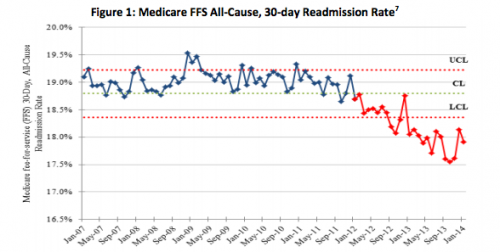
As our physician readers are aware, beginning in 2013, CMS will penalize hospitals for excess readmission rates.

Initial focus will be on readmissions for heart failure, acute myocardial infarction and pneumonia — data that is already reported on the CMS Hospital Compare web site, as previously noted on this ME-P forum.

How to Reduce Hospital Re-Admissions

As private payers follow CMS’s reimbursement and reporting leads, healthcare organizations must take bold steps to reduce avoidable readmissions.

A Call to Action

And so, we invite our medical professional readers to report on their initiatives and tips in this area, and deliver actionable data in order to help hospitals and healthcare organizations reduce avoidable readmissions.

Assessment

Please tell us and your colleagues, what you are doing and plan to do, in the changing future of healthcare.

Re

Conclusion

Your thoughts and comments on this ME-P are appreciated. Feel free to review our top-left column, and top-right sidebar materials, links, URLs and related websites, too. Then, subscribe to the ME-P. It is fast, free and secure.

Link: http://feeds.feedburner.com/HealthcareFinancialsthePostForcxos

Speaker: If you need a moderator or speaker for an upcoming event, Dr. David E. Marcinko; MBA – Publisher-in-Chief of the Medical Executive-Post – is available for seminar or speaking engagements. Contact: MarcinkoAdvisors@msn.com

OUR OTHER PRINT BOOKS AND RELATED INFORMATION SOURCES:

   Product Details

Health Plans Under Pressure to Deliver Affordable and High Quality Care

Join Our Mailing List

US Healthcare Expenditures Reaching Unsustainable Levels

[By Sam Muppalla]

Vice President: McKesson Health Solutions, Network Performance Management (NPM)

Expenditures on healthcare in the United States continue to increase and are rapidly reaching unsustainable levels. Pressures by businesses, households and the government to address these escalating costs and ensure high-quality healthcare are multiplying.

This is the first in a series of six essays that examine the challenges facing health plans and the ways that network design can unlock affordable care by aligning products, care models, and reimbursement.

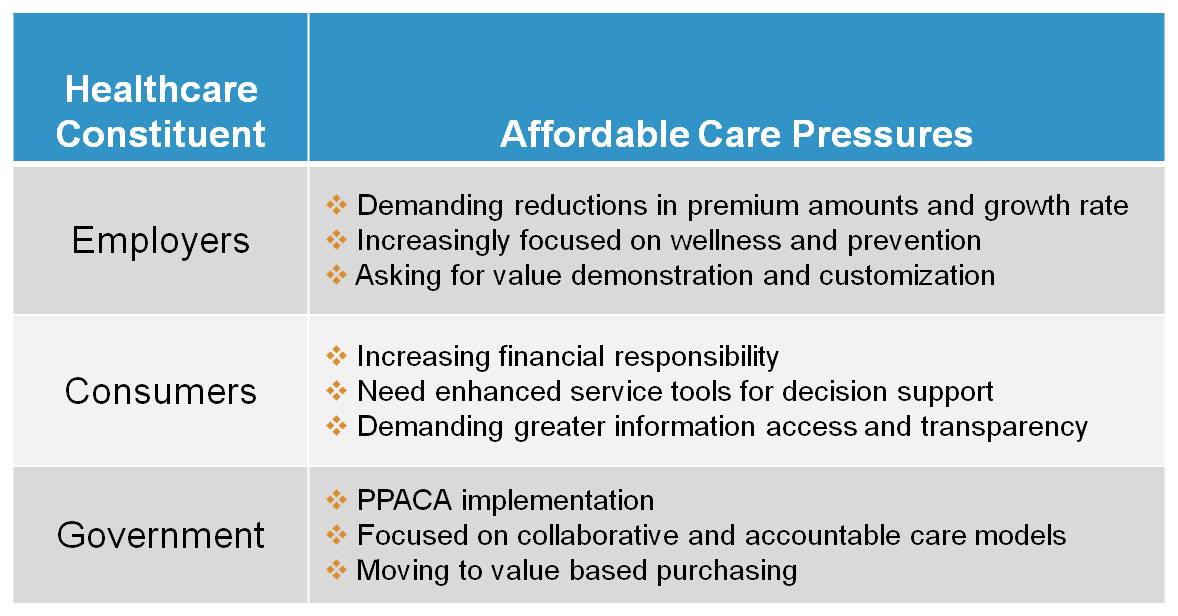
Health insurance companies are faced with addressing a rapidly changing healthcare environment on multiple fronts. These changes are being driven by the goal of achieving a more affordable, higher quality healthcare system. Shifting market needs, increased regulatory initiatives, and a demand for administrative efficiency are requiring innovative approaches to unlocking affordable care. These pressures are originating from key healthcare stakeholders—employers, members and the government (Figure 1).

Employer Pressure

As the competition for the group insurance market increases, health plans need to respond to employer demands for products that deliver greater value. Delivering high value requires products which are tailored to the health of the employer’s specific population and emphasize wellness and prevention. An employer that can offer benefits and programs tailored to meet their employee needs can both improve their workforce productivity and optimize their healthcare spend. The employer’s insistence for reduction in premiums and decrease in the rate of premium growth is challenging health plans to develop more innovative strategies.

Consumer/Member Pressure

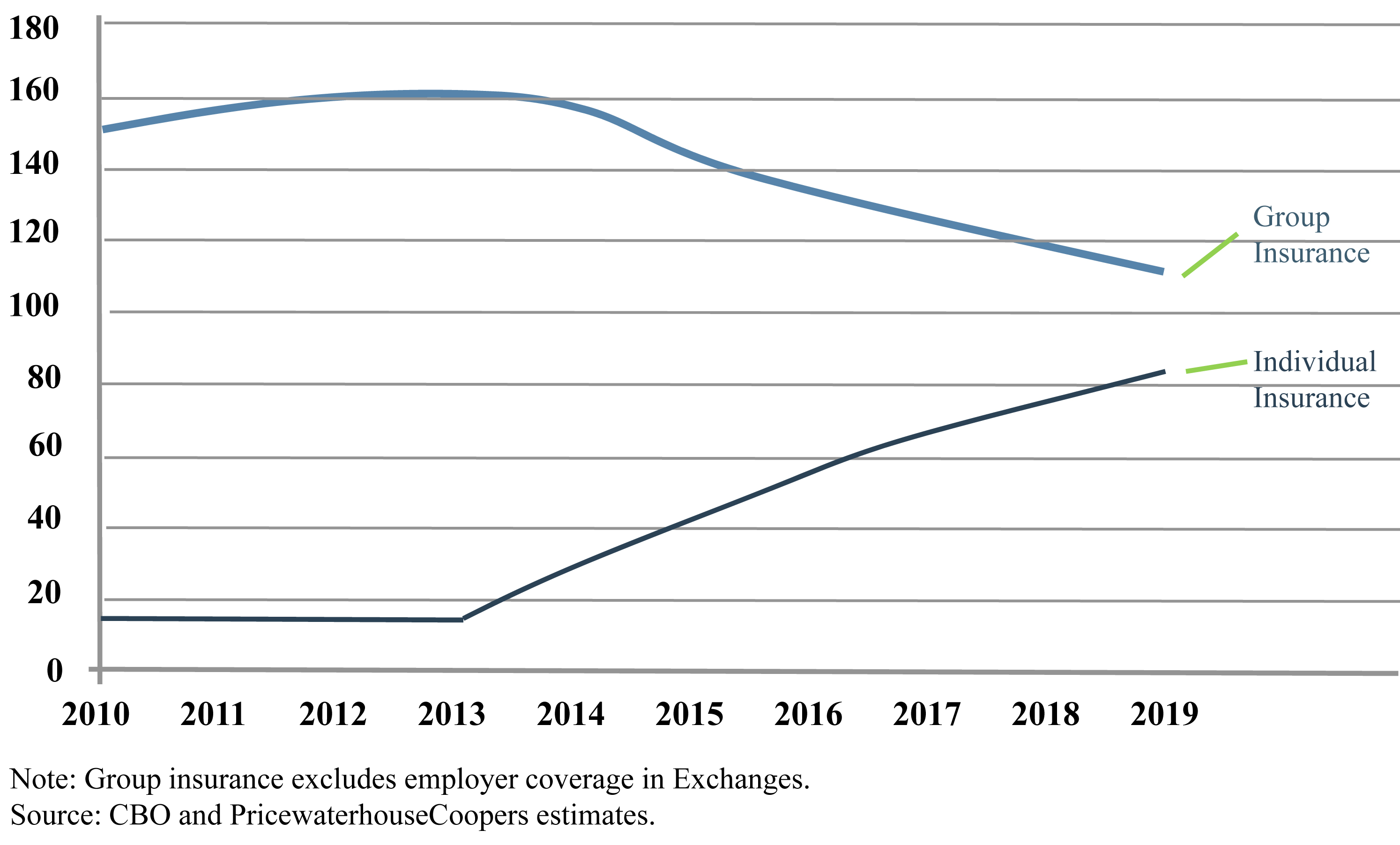
With the passage of the Patient Protection and Affordable Care Act of 2010 (PPACA), the Congressional Budget Office (CBO) estimates (Figure 2) that approximately 32 million more individuals will require access to healthcare services. This represents a significant increase in the number of new healthcare consumers at a time when health insurance companies are required to guarantee issue and re-newability of coverage. Steering this influx of new members to the right care teams will be a very critical core competency for health plans to develop. It is one of the few risk management tools left in the plan’s arsenal in a guaranteed access world. The growth of the individual market is also being accompanied by an increase in member financial responsibility. Members are increasingly demanding greater transparency into their provider quality, performance and cost information.

Government/Regulatory Pressure

Evolving healthcare regulation puts still more pressure on health plans. New regulations within the PPACA Section 9016, stipulate an 80% MLR cap for small groups (fewer than 100 lives) and an 85% Medical Loss Ratio (MLR) cap for large groups (more than 100 lives). These regulations also cap the percentage of revenues that can be earmarked for operational and administrative expenses at 15-20%. This poses a unique challenge for health plans; it requires plans to innovate in the areas of products, care models, and reimbursement designs without increasing the administrative and operational overhead.

There are roughly eighteen additional PPACA provisions that put further pressure on health plans by promoting increased collaboration (sections: 6301, 4201, 3027, 3011, 3021, 10333, 3022, 3024) and accountability (sections: 2705, 3006 & 10301, 3001, 3025, 2706, 2704, 3023, 3004, 3008 and 3002). The Bureau of National Affairs best summarized these provisions by stating,

“The comprehensive provisions in the act regarding payment and delivery reform reflect both the payment system continuum—from fee-for-service to bonus incentives for quality to bundled payments to partial and full global payments as well as the delivery system continuum—from independent clinicians and hospitals to small group practices to multi-provider networks to partially or virtually integrated organizations to fully integrated systems with common ownership and employment.”

These demands mean that health plans need to offer new high-value products that incorporate outcome-based reimbursement to drive quality outcomes and not pay for potentially avoidable costs.

According to studies by the Robert Wood Johnson Foundation and Prometheus Payment (2009), “Up to 40 cents of every dollar spent on chronic conditions and 15 to 20 cents of every dollar spent on acute hospitalization and procedures are attributable to potentially avoidable complications (PACs).”

With evidence like this health plans are taking a new, hard look at when and how care is delivered.

Assessment

Next time, we’ll be looking at how health plans are responding to these challenges with innovations in products, care models, and reimbursement structures. Visit the blog next week for “The Three Levers of Innovation for Care Affordability.”

If you can’t wait, you can read the entire Unlocking Affordable Care by Aligning Products white paper now; it’s available on our website.

A Webinar 

On December 8th, we’ll be hosting a webinar on Lean Provider Lessons for Post Reform Success. Plan to attend this free webinar for more insights into designing for affordable high-quality care.

Channel Surfing the ME-P

Have you visited our other topic channels? Established to facilitate idea exchange and link our community together, the value of these topics is dependent upon your input. Please take a minute to visit. And, to prevent that annoying spam, we ask that you register. It is fast, free and secure.

Conclusion

Your thoughts and comments on this ME-P are appreciated. Feel free to review our top-left column, and top-right sidebar materials, links, URLs and related websites, too. Then, subscribe to the ME-P. It is fast, free and secure.

Speaker: If you need a moderator or speaker for an upcoming event, Dr. David E. Marcinko; MBA – Publisher-in-Chief of the Medical Executive-Post – is available for seminar or speaking engagements. Contact: MarcinkoAdvisors@msn.com

OUR OTHER PRINT BOOKS AND RELATED INFORMATION SOURCES:

Product DetailsProduct DetailsProduct Details

Product Details  Product Details

   Product Details

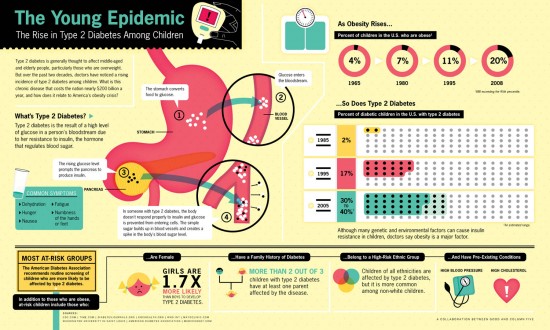
What is the Young Epidemic?

The Rise of Obesity and Type 2 Diabetes in Children

Join Our Mailing List

Over the past two decades, scientists have noticed a rising incidence of type 2 diabetes—which once affected almost exclusively middle-aged and elderly people—in obese children.

Source: GOOD

Assessment

What is this chronic disease, and how does it relate to America’s obesity crisis?

Conclusion

Your thoughts and comments on this ME-P are appreciated. Feel free to review our top-left column, and top-right sidebar materials, links, URLs and related websites, too. Then, subscribe to the ME-P. It is fast, free and secure.

Speaker: If you need a moderator or speaker for an upcoming event, Dr. David E. Marcinko; MBA – Publisher-in-Chief of the Medical Executive-Post – is available for seminar or speaking engagements. Contact: MarcinkoAdvisors@msn.com

OUR OTHER PRINT BOOKS AND RELATED INFORMATION SOURCES:

Product DetailsProduct DetailsProduct Details

US Government Glossed Over Cancer Concerns As It Rolled Out Airport X-Ray Scanners

Radiation Safety Concerns

By Michael Grabell
ProPublica, November 1st, 2011, 1:06 pm

On Sept. 23rd, 1998, a panel of radiation safety experts gathered at a Hilton hotel in Maryland to evaluate a new device that could detect hidden weapons and contraband. The machine, known as the Secure 1000, beamed X-rays at people to see underneath their clothing.

One after another, the experts convened by the Food and Drug Administration raised questions about the machine because it violated a longstanding principle in radiation safety — that humans shouldn’t be X-rayed unless there is a medical benefit.

“I think this is really a slippery slope,” said Jill Lipoti, who was the director of New Jersey’s radiation protection program. The device was already deployed in prisons; what was next, she and others asked — courthouses, schools, airports? “I am concerned … with expanding this type of product for the traveling public,” said another panelist, Stanley Savic, the vice president for safety at a large electronics company. “I think that would take this thing to an entirely different level of public health risk.”

The machine’s inventor, Steven W. Smith, assured the panelists that it was highly unlikely that the device would see widespread use in the near future. At the time, only 20 machines were in operation in the entire country.

“The places I think you are not going to see these in the next five years is lower-security facilities, particularly power plants, embassies, courthouses, airports and governments,” Smith said. “I would be extremely surprised in the next five to 10 years if the Secure 1000 is sold to any of these.”

US Marching Millions thru Body Scanners

Today, the United States has begun marching millions of airline passengers through the X-ray body scanners, parting ways with countries in Europe and elsewhere that have concluded that such widespread use of even low-level radiation poses an unacceptable health risk. The government is rolling out the X-ray scanners despite having a safer alternative that the Transportation Security Administration says is also highly effective.

ProPublica Investigates

A ProPublica/PBS NewsHour investigation of how this decision was made shows that in post-9/11America, security issues can trump even long-established medical conventions. The final call to deploy the X-ray machines was made not by the FDA, which regulates drugs and medical devices, but by the TSA, an agency whose primary mission is to prevent terrorist attacks.

Research suggests that anywhere from six to 100 U.S.airline passengers each year could get cancer from the machines. Still, the TSA has repeatedly defined the scanners as “safe,” glossing over the accepted scientific view that even low doses of ionizing radiation — the kind beamed directly at the body by the X-ray scanners — increase the risk of cancer.

“Even though it’s a very small risk, when you expose that number of people, there’s a potential for some of them to get cancer,” said Kathleen Kaufman, the former radiation management director in Los AngelesCounty, who brought the prison X-rays to the FDA panel’s attention.

About 250 X-ray scanners are currently in U.S.airports, along with 264 body scanners that use a different technology, a form of low-energy radio waves known as millimeter waves.

Robin Kane, the TSA’s assistant administrator for security technology, said that no one would get cancer because the amount of radiation the X-ray scanners emit is minute. Having both technologies is important to create competition, he added.

“It’s a really, really small amount relative to the security benefit you’re going to get,” Kane said. “Keeping multiple technologies in play is very worthwhile for the U.S.in getting that cost-effective solution — and being able to increase the capabilities of technology because you keep everyone trying to get the better mousetrap.”

Determined to fill a critical hole in its ability to detect explosives, the TSA plans to have one or the other operating at nearly every security lane in America by 2014. The TSA has designated the scanners for “primary” screening: Officers will direct every passenger, including children, to go through either a metal detector or a body scanner, and the passenger’s only alternative will be to request a physical pat-down.

How did the United States swing from considering such X-rays taboo to deeming them safe enough to scan millions of people a year?

A new wave of terrorist attacks using explosives concealed on the body, coupled with the scanners’ low dose of radiation, certainly convinced many radiation experts that the risk was justified.

But other factors helped the machines gain acceptance.

Gaining Acceptance

Because of a regulatory Catch-22, the airport X-ray scanners have escaped the oversight required for X-ray machines used in doctors’ offices and hospitals. The reason is that the scanners do not have a medical purpose, so the FDA cannot subject them to the rigorous evaluation it applies to medical devices.

Still, the FDA has limited authority to oversee some non-medical products and can set mandatory safety regulations. But the agency let the scanners fall under voluntary standards set by a nonprofit group heavily influenced by industry.

As for the TSA, it skipped a public comment period required before deploying the scanners. Then, in defending them, it relied on a small body of unpublished research to insist the machines were safe, and ignored contrary opinions from U.S. and European authorities that recommended precautions, especially for pregnant women. Finally, the manufacturer, Rapiscan Systems, unleashed an intense and sophisticated lobbying campaign, ultimately winning large contracts.

Both the FDA and TSA say due diligence has been done to assure the scanners’ safety. Rapiscan says it won the contract because its technology is superior at detecting threats. While the TSA says X-ray and millimeter-wave scanners are both effective, Germanydecided earlier this year not to roll out millimeter-wave machines after finding they produced too many false positives.

Most of the news coverage on body scanners has focused on privacy, because the machines can produce images showing breasts and buttocks. But the TSA has since installed software to make the images less graphic. While some accounts have raised the specter of radiation, this is the first report to trace the history of the scanners and document the gaps in regulation that allowed them to avoid rigorous safety evaluation.

Little research on Cancer Risk

Humans are constantly exposed to ionizing radiation, a form of energy that has been shown to strip electrons from atoms, damage DNA and mutate genes, potentially leading to cancer. Most radiation comes from radon, a gas produced from naturally decaying elements in the ground. Another major source is cosmic radiation from outer space. Many common items, such as smoke detectors, contain tiny amounts of radioactive material, as do exit signs in schools and office buildings.

As a result, the cancer risk from any one source of radiation is often small. Outside of nuclear accidents, such as that at Japan’s Fukushima plant, and medical errors, the health risk comes from cumulative exposure.

In Rapiscan’s Secure 1000 scanner, which uses ionizing radiation, a passenger stands between two large blue boxes and is scanned with a pencil X-ray beam that rapidly moves left to right and up and down the body. In the other machine, ProVision, made by defense contractor L-3 Communications, a passenger enters a chamber that looks like a round phone booth and is scanned with millimeter waves, a form of low-energy radio waves, which have not been shown to strip electrons from atoms or cause cancer.

Only a decade ago, many states prohibited X-raying a person for anything other than a medical exam. Even after 9/11, such non-medical X-raying remains taboo in most of the industrialized world. In July, the European Parliament passed a resolution that security “scanners using ionizing radiation should be prohibited” because of health risks. Although the United Kingdom uses the X-ray machine for limited purposes, such as when passengers trigger the metal detector, most developed countries have decided to forgo body scanners altogether or use only the millimeter-wave machines.

While the research on medical X-rays could fill many bookcases, the studies that have been done on the airport X-ray scanners, known as backscatters, fill a file no more than a few inches thick. None of the main studies cited by the TSA has been published in a peer-reviewed journal, the gold standard for scientific research.

Those tests show that the Secure 1000 delivers an extremely low dose of radiation, less than 10 microrems. The dose is roughly one-thousandth of a chest X-ray and equivalent to the cosmic radiation received in a few minutes of flying at typical cruising altitude. The TSA has used those measurements to say the machines are “safe.”

Most of what researchers know about the long-term health effects of low levels of radiation comes from studies of atomic bomb survivors in Hiroshima and Nagasaki. By charting exposure levels and cancer cases, researchers established a linear link that shows the higher the exposure, the greater risk of cancer.

Some scientists argue the danger is exaggerated. They claim low levels stimulate the repair mechanism in cells, meaning that a little radiation might actually be good for the body.

National Academy of Sciences

But, in the authoritative report on low doses of ionizing radiation, published in 2006, the National Academy of Sciences reviewed the research and concluded that the preponderance of research supported the linear link. It found “no compelling evidence” that there is any level of radiation at which the risk of cancer is zero.

Radiation experts say the dose from the backscatter is negligible when compared to naturally occurring background radiation. Speaking to the 1998 FDA panel, Smith, the inventor, compared the increased risk to choosing to visit Denver instead of San Diegoor the decision to wear a sweater versus a sport coat.

Using the linear model, even such trivial amounts increase the number of cancer cases. Rebecca Smith-Bindman, a radiologist at the University of California, San Francisco, estimated that the backscatters would lead to only six cancers over the course of a lifetime among the approximately 100 million people who fly every year. David Brenner, director of Columbia University’s Center for Radiological Research, reached a higher number — potentially 100 additional cancers every year.

“Why would we want to put ourselves in this uncertain situation where potentially we’re going to have some cancer cases?” Brenner asked. “It makes me think, really, why don’t we use millimeter waves when we don’t have so much uncertainty?”

But even without the machines, Smith-Bindman said, the same 100 million people would develop 40 million cancers over the course of their lifetimes. In this sea of cancer cases, it would be impossible to identify the patients whose cancer is linked to the backscatter machines.

How the scanners avoided strict oversight

Although they deliberately expose humans to radiation, the airport X-ray scanners are not medical devices, so they are not subject to the stringent regulations required for diagnostic X-ray machines.

If they were, the manufacturer would have to submit clinical data showing safety and effectiveness and be approved through a rigorous process by the FDA. If the machines contained radioactive material, they would have to report to the Nuclear Regulatory Commission.

But because it didn’t fit into either category, the Secure 1000 was classified as an electronic product. The FDA does not review or approve the safety of such products. However, manufacturers must provide a brief radiation safety report explaining the dose and notify the agency if any overexposure is discovered. According to the FDA, no such incidents have been reported.

Under its limited oversight of electronic products, the FDA could issue mandatory safety regulations. But it didn’t do so, a decision that flows from its history of supervising electronics.

Regulation of electronic products in the United States began after a series of scandals. From the 1930s to the 1950s, it was common for a child to go to a shoe store and stand underneath an X-ray machine known as a fluoroscope to check whether a shoe was the right fit. But after cases arose of a shoe model’s leg being amputated and store clerks developing dermatitis from putting their hands in the beam to adjust the shoe, the practice ended.

In 1967, General Electric recalled 90,000 color televisions that had been sold without the proper shielding, potentially exposing viewers to dangerous levels of radiation. The scandal prompted the creation of the federal Bureau of Radiological Health.

“That ultimately led to a lot more aggressive program,” said John Villforth, who was the director of the bureau. Over the next decade, the bureau created federal safety standards for televisions, medical X-rays, microwaves, tanning beds, even laser light shows.

But in 1982, the FDA merged the radiological health bureau into its medical-device unit.

“I was concerned that if they were to combine the two centers into one, it would probably mean the ending of the radiation program because the demands for medical-device regulation were becoming increasingly great,” said Villforth, who was put in charge of the new Center for Devices and Radiological Health. “As I sort of guessed, the radiation program took a big hit.”

The new unit became stretched for scarce resources as it tried to deal with everything from tongue depressors to industrial lasers. The government used to have 500 people examining the safety of electronic products emitting radiation. It now has about 20 people. In fact, the FDA has not set a mandatory safety standard for an electronic product since 1985.

As a result, there is an FDA safety regulation for X-rays scanning baggage — but none for X-rays scanning people at airports.

Meanwhile, scientists began developing backscatter X-rays, in which the waves are reflected off an object to a detector, for the security industry.

The Secure 1000 people scanner was invented by Smith in 1991 and later sold to Rapiscan, then a small security firm based in southern California. The first major customer was the California prison system, which began scanning visitors to prevent drugs and weapons from getting in. But the state pulled the devices in 2001 after a group of inmates’ wives filed a class-action lawsuit accusing the prisons of violating their civil liberties.

***

***

US Customs Service

The U.S. Customs Service deployed backscatter machines for several years but in limited fashion and with strict supervision. Travelers suspected of carrying contraband had to sign a consent form, and Customs policy prohibited the scanning of pregnant women. The agency abandoned them in 2006, not for safety reasons but because smugglers had learned where the machines were installed and adapted their methods to avoid them, said Rick Whitman, the radiation safety officer for Customs until 2008.

Yet, even this limited application of X-ray scanning for security dismayed radiation safety experts. In 1999, the Conference of Radiation Control Program Directors, a nongovernmental organization, passed a resolution recommending that such screening be stopped immediately.

The backscatter machines had also caught the attention of the 1998 FDA advisory panel, which recommended that the FDA establish government safety regulations for people scanners. Instead, the FDA decided to go with a voluntary standard set by a trade group largely comprising manufacturers and government agencies that wanted to use the machines.

“Establishing a mandatory standard takes an enormous amount of resources and could take a decade to publish,” said Dan Kassiday, a longtime radiation safety engineer at the FDA.

In addition, since the mid-1990s, Congress has directed federal safety agencies to use industry standards wherever possible instead of creating their own.

The FDA delegated the task of establishing the voluntary standards to the American National Standards Institute. A private nonprofit that sets standards for many industries, ANSI convened a committee of the Health Physics Society, a trade group of radiation safety specialists. It was made up of 15 people, including six representatives of manufacturers of X-ray body scanners and five from U.S. Customs and the California prison system. There were few government regulators and no independent scientists.

In contrast, the FDA advisory panel was also made up of 15 people — five representatives from government regulatory agencies, four outside medical experts, one labor representative and five experts from the electronic products industry, but none from the scanner manufacturers themselves.

“I am more comfortable with having a regulatory agency — either federal or the states — develop the standards and enforce them,” Kaufman said. Such regulators, she added, “have only one priority, and that’s public health.”

A representative of the Health Physics Society committee said that was its main priority as well. Most of the committee’s evaluation was completed before 9/11. The standard was published in 2002 and updated with minor changes in 2009.

Ed Bailey, chief of California’s radiological health branch at the time, said he was the lone voice opposing the use of the machines. But after 9/11, his views changed about what was acceptable in pursuit of security.

“The whole climate of their use has changed,” Bailey said. “The consequence of something being smuggled on an airplane is far more serious than somebody getting drugs into a prison.”

Are Inspections Independent?

While the TSA doesn’t regulate the machines, it must seek public input before making major changes to security procedures. In July, a federal appeals court ruled that the agency failed to follow rule-making procedures and solicit public comment before installing body scanners at airports across the country. TSA spokesman Michael McCarthy said the agency couldn’t comment on ongoing litigation.

The TSA asserts there is no need to take additional precautions for sensitive populations, even pregnant women, following the guidance of the congressionally chartered National Council on Radiation Protection & Measurements.

But other authorities have come to the opposite conclusion. A report by France’s radiation safety agency specifically warned against screening pregnant women with the X-ray devices. In addition, the Federal Aviation Administration’s medical institute has advised pregnant pilots and flight attendants that the machine, coupled with their time in the air, could put them over their occupational limit for radiation exposure and that they might want to adjust their work schedules accordingly.

No similar warning has been issued for pregnant frequent fliers.

Even as people scanners became more widespread, government oversight actually weakened in some cases.

Inspections of X-ray equipment in hospitals and industry are the responsibility of state regulators — and before 9/11, many states also had the authority to randomly inspect machines in airports. But that ended when the TSA took over security checkpoints from the airlines.

Instead, annual inspections are done by Rapiscan, the scanners’ manufacturer.

“As a regulator, I think there’s a conflict of interest in having the manufacturer and the facility inspect themselves,” Kaufman said.

Last year, in reaction to public anger from members of Congress, passengers and advocates, the TSA contracted with the Army Public Health Command to do independent radiation surveys. But email messages obtained in a lawsuit brought by the Electronic Privacy Information Center, a civil liberties group, raise questions about the independence of the Army surveys.

One email sent by TSA health and safety director Jill Segraves shows that local TSA officials were given advance notice and allowed to “pick and choose” which systems the Army could check.

That email also suggests that Segraves considered the Army inspectors a valuable public-relations asset: “They are our radiation myth busters,” she wrote to a local security director.

Some TSA screeners are concerned about their own radiation exposure from the backscatters, but the TSA has not allowed them to wear badges that could measure it, said Milly Rodriguez, health and safety specialist for the American Federation of Government Employees, which represents TSA officers.

“We have heard from members that sometimes the technicians tell them that the machines are emitting more radiation than is allowed,” she said.

McCarthy, the TSA spokesman, said the machines are physically incapable of producing radiation above the industry standard. In the email, he said, the inspections allow screeners to ask questions about radiation and address concerns about specific machines.

TSA Video: http://en.wikipedia.org/wiki/File:TSA-_How_It_Works.ogv

The company’s lobbying campaign

While the TSA maintains that the body scanners are essential to preventing attacks on airplanes, it only began rolling them out nine years after 9/11.

After the attempted shoe-bombing in December 2001, the federal government conducted a trial of a Rapiscan backscatter at the Orlando International Airport. But the revealing images drew protests that the machines amounted to a virtual strip search.

The TSA considered the scanners again after two Chechen women blew up Russian airliners in 2004. Facing a continued outcry over privacy, the TSA instead moved forward with a machine known as a “puffer” because it released several bursts of air on the passengers’ clothes and analyzed the dislodged particles for explosives. But after discovering the machines were ineffective in the field and difficult to maintain, the TSA canceled the program in 2006.

Around that time, Rapiscan began to beef up its lobbying on Capitol Hill. It opened a Washington,D.C., office and, according to required disclosures, more than tripled its lobbying expenditures in two years, from less than $130,000 in 2006 to nearly $420,000 in 2008. It hired former legislative aides to Rep. David Price, D-N.C., then chairman of the homeland security appropriations subcommittee, and to Sen. Trent Lott, R-Miss.

It started a political action committee and began contributing heavily to Price; Rep. Bennie Thompson, D-Miss., then head of the homeland security committee; Rep. Jane Harman, D-Calif., also on that committee; and Sen. Thad Cochran, R-Miss., the top Republican on the Senate appropriations committee.

In addition, it opened a new North Carolina plant in Price’s district and expanded its operations in Ocean Springs, Miss., and at its headquarters in Torrance, Calif., in Harman’s district.

“Less than a month after U.S. Senator Trent Lott and other local leaders helped officially open Rapiscan Systems’ new Ocean Springs factory,” Lott’s office announced in a news release in late 2006, “the company has won a $9.1 million Department of Defense contract.”

But Rapiscan still hadn’t landed a major contract to roll out its X-ray body scanners in commercial airports. Indeed, in 2007, with new privacy filters in place, the TSA began a trial of millimeter-wave and backscatter machines at several major airports, after which the agency opted to go with the millimeter-wave machines. The agency said health concerns weren’t a factor.

But with the 2009 federal stimulus package, which provided $300 million for checkpoint security machines, the TSA began deploying backscatters as well. Rapiscan won a $173 million, multiyear contract for the backscatters, with an initial $25 million order for 150 systems to be made inMississippi.

Three other companies — American Science & Engineering, Tek84 Engineering Group and Valley Forge Composite Technologies — make X-ray scanners, but none are used by the TSA. Peter Kant, executive vice president for Rapiscan, said the company expanded its lobbying because its business was increasingly affected by the government.

“There’s a lot of misinformation about the technology; there’s a lot of questions about how various inspection technologies work,” he said. “And we needed a way to be able to provide that information and explain the technology and how it works, and that’s what lobbying is.”

The lawmakers either declined to comment or said the lobbying, campaign contributions and local connections had nothing to do with the TSA’s decision to purchase Rapiscan machines. The TSA said the contract was bid competitively and that the winning machines had to undergo comprehensive research and testing phases before being deployed.

While the scanners were appearing in more and more airports, few passengers went through them, because they were used mostly for random screening or to resolve alarms from the metal detector.

That changed on Christmas Day 2009, when a Nigerian man flying toDetroittried to ignite a pouch of explosives hidden in his underwear.

Following the foiled “Great Balls of Fire” suicide bombing, as the New York Post dubbed it, Homeland Security Secretary Janet Napolitano ramped up plans to roll out body scanners nationwide. Members of Congress and aviation security experts also pushed heavily for the TSA to install more machines that could detect explosives on passengers.

Harman sent a letter to Napolitano, noting that Rapiscan was in her district.

“I urge you to expedite installation of scanning machines in key airports,” Harman wrote in the letter, which was first reported by the website CounterPunch. “If you need additional funds, I am ready to help.”

Michael Chertoff, who had supported body scanners while secretary of Homeland Security, appeared frequently on TV advocating their use. In one interview, he disclosed that his consulting firm, Chertoff Group, had done work for Rapiscan, sparking accusations that he was trying to profit from his time as a government servant.

Despite the criticism, little has been revealed about the relationship. Rapiscan dismissed it, asserting that the consulting work had to do with international cargo and port security issues — not aviation.

“There was nothing that was not above board,” Kant said. “His comments about passenger screening and these machines were simply his own and was nothing that we had engaged the Chertoff Group for.”

In a statement, the Chertoff Group said it “played no role in the sale of whole body imaging technology to TSA” and that Chertoff “was in no way compensated for his public statements.”

A public records request by ProPublica turned up empty: The Department of Homeland Security said it could not find any correspondence to or from Chertoff related to body scanners. DHS also said Chertoff did not use email.

Assessment

The TSA plans to deploy 1,275 backscatter and millimeter-wave scanners covering more than half its security lanes by the end of 2012 and 1,800 covering nearly all the lanes by 2014.

According to annual reports filed with the Securities and Exchange Commission, OSI Systems, the parent company of Rapiscan, has seen revenue from its security division more than double since 2006 to nearly $300 million in fiscal year 2011.

Link: http://www.propublica.org/article/u.s.-government-glossed-over-cancer-concerns-as-it-rolled-out-airport-x-ray.

Miles O’Brien and Kate Tobin of PBS News Hour contributed to this report.

Related Stories:

New Army Study Says Radiation From Airport Body Scanners Is Minor

by Michael Grabell, ProPublica, July 14

TSA Airport Scanners Wouldn’t Catch an Implant Bomber

by Michael Grabell, ProPublica, July 6

Scientists Cast Doubt on TSA Tests of Full-Body Scanners

by Michael Grabell, ProPublica, May 16

Conclusion                

And so, your thoughts and comments on this ME-P are appreciated. Feel free to review our top-left column, and top-right sidebar materials, links, URLs and related websites, too. Then, subscribe to the ME-P. It is fast, free and secure.

Link: http://feeds.feedburner.com/HealthcareFinancialsthePostForcxos

Our Other Print Books and Related Information Sources:

Health Dictionary Series: http://www.springerpub.com/Search/marcinko

Practice Management: http://www.springerpub.com/product/9780826105752

Physician Financial Planning: http://www.jbpub.com/catalog/0763745790

Medical Risk Management: http://www.jbpub.com/catalog/9780763733421

Healthcare Organizations: www.HealthcareFinancials.com

Physician Advisors: www.CertifiedMedicalPlanner.com

Subscribe Now: Did you like this Medical Executive-Post, or find it helpful, interesting and informative? Want to get the latest ME-Ps delivered to your email box each morning? Just subscribe using the link below. You can unsubscribe at any time. Security is assured.

Link: http://feeds.feedburner.com/HealthcareFinancialsthePostForcxos

Sponsors Welcomed: And, credible sponsors and like-minded advertisers are always welcomed.

Link: https://healthcarefinancials.wordpress.com/2007/11/11/advertise

Product DetailsProduct DetailsProduct Details

Product Details  Product Details

   Product Details

How Do Health Plans Measure Patient Satisfaction?

Join Our Mailing List

With … Data of Course

[By Dr. Brent A. Metfessel MS]

Patient satisfaction is a subjective measure of what the patient perceives in terms of the level of service quality and care provided by the clinician. Many health plans consider patient satisfaction an important measure of physician quality.

Now, although not a direct measure of clinical quality, many researchers link patient satisfaction to clinical outcomes. This data, however, is also resource-intensive to collect and requires commitment on the part of the patient to fill out the forms and return them in the mail or on-line.

Selection Bias

However, selection bias may occur in terms of patient satisfaction data, in that patients who choose to fill out and return the forms may in some cases not be representative of the overall patient population for a physician.

Enter the CAHPS® Consortium

More recently, the field has been moving from measuring “satisfaction” to elucidating a more validated and specific “patient experience of care”.  The Consumer Assessment of Healthcare Providers and Systems (CAHPS®), funded and administered by the Agency for Healthcare Quality (AHRQ), is a part of a national initiative to measure, report on, and improve health care quality from the viewpoint of patients and other consumers. Separate surveys are used for evaluating ambulatory care and facility or hospital care.

In addition, the National CAHPS Benchmarking Database contains over 10 years of CAHPS survey data from commercial and Medicaid plans and is designed to facilitate comparative analysis of individual CAHPS survey results with benchmarks, including national or regional averages. The CAHPS program works closely with other public and private research agencies, known collectively as the CAHPS Consortium, for continued review and enhancement of the survey tools.

Pre-Order Book Now [more from this author]

We are now preparing the next edition of our book:
“Hospitals and Healthcare Organizations”  [Operational Management Strategies, Tools, Techniques and Case Studies].

In-Process from: (c) Productivity Press 2012
http://www.crcpress.com/product/isbn/9781439879900 

About the Author

Brent A. Metfessel, MD MS is currently Senior Medical Informaticist in Clinical Analytics at UnitedHealthcare, where he designs physician measurement algorithms and statistical methods and leads the application of risk adjustment methodologies to various health care quality and cost-efficiency measurement initiatives. He also has a decade of experience in general computer science, statistical analysis, artificial intelligence, and computational biology. Dr. Metfessel received his Masters of Science Degree in health informatics from the Universityof Minnesota and his Medical Doctorate from the Universityof California, San Diego. 

Conclusion

Your thoughts and comments on this ME-P are appreciated. Feel free to review our top-left column, and top-right sidebar materials, links, URLs and related websites, too. Then, subscribe to the ME-P. It is fast, free and secure.

Link: http://feeds.feedburner.com/HealthcareFinancialsthePostForcxos

Speaker: If you need a moderator or speaker for an upcoming event, Dr. David E. Marcinko; MBA – Publisher-in-Chief of the Medical Executive-Post – is available for seminar or speaking engagements. Contact: MarcinkoAdvisors@msn.com

OUR OTHER PRINT BOOKS AND RELATED INFORMATION SOURCES:

DICTIONARIES: http://www.springerpub.com/Search/marcinko
PHYSICIANS: www.MedicalBusinessAdvisors.com
PRACTICES: www.BusinessofMedicalPractice.com
HOSPITALS: http://www.crcpress.com/product/isbn/9781466558731
CLINICS: http://www.crcpress.com/product/isbn/9781439879900
BLOG: www.MedicalExecutivePost.com
FINANCE: Financial Planning for Physicians and Advisors
INSURANCE: Risk Management and Insurance Strategies for Physicians and Advisors

Product DetailsProduct DetailsProduct Details

Why Doctors Need to be Entrepreneurs

New Practice Business Paradigms Emerging

By Dr. David Edward Marcinko MBA CMP™

[Editor-in-Chief]

It is more important than ever for private practice physicians to sharpen their entrepreneurial edge, and I mean that in a good way. And, with the various healthcare reform options being discussed today, I hear a recurrent theme that in order to bring healthcare costs down, and the quality of patient care up, physicians are going to have to be smarter, more efficient and results driven.

Think like an Entrepreneur

In other words, think like an entrepreneur running your practice. I use “entrepreneur” in its positive sense: innovative, creative, nimble, frugal, and so on. For some, the word entrepreneurial is negative, as in greedy or always distracted by the financial aspects of work, but I disagree with that negative interpretation.

The Past Paradigm

In the past perhaps, starting and managing a medical practice was pretty standard stuff. Get your medical degree, hang out your shingle, and you stayed in business as long as you took good care of your patients.

THINK: Marcus Welby MD

The Future Paradigm

But, there’s no doubt the classic private practice paradigm of the last 50 years will disappear and new practice models will evolve. It’s fair to say, I think, that no two practices will be completely alike and instead there will be many versions.

THINK: Micro-medical practices, retail clinics, Just-in-Time and lean medical management, tele-health and e-health, house-call doctors and social networks, group office visits, ambulists and intensivists, etc.

Another Opinion

Some of the “reformers” might argue that all medical and healthcare practices should operate like McDonald’s and in some practice settings maybe that wouldn’t be such a bad approach.

But, to counter that opinion and state the obvious, patients are individuals, and require tailored specific care, unlike a hamburger that gets cooked exactly 90 seconds on each size. The tailored-care approach makes much more sense to me.

Personalized care will be the new paradigm, in biotechnology, pharmaceuticals, stem-cell solutions to diseases and in every direction healthcare is improving and evolving today. Private practices can deliver personalized tailored care better than any other practice model. Practices should partner with the government, private entities, or big institutions, to benefit from their resources of scale, as the private practice will be the best vehicle to deliver the personalized care of the (near) future to our large and diverse population.

THINK: A different vision.

Modern Times

Physicians as entrepreneurs can, and will, make the future of health care happen. These are heady and exciting times.

For an example of what I mean, just ask Herb Rogove DO.  As an “early adopter” of the intensivist, the hospitalist and the telemedicine models – and as someone who saw the potential to leverage his knowledge of these different areas – Dr Rogove has been able to create a mashup of his passions in his entrepreneurial physician start-up business, c3o Medical Group.

THINK: Protean

Assessment

See the “Power of Me-Inc” for Physicians

Link: https://medicalexecutivepost.com/2009/06/03/the-power-of-me-inc-for-physicians/

Conclusion

And so, your thoughts and comments on this ME-P are appreciated. Feel free to review our top-left column, and top-right sidebar materials, links, URLs and related websites, too. Then, subscribe to the ME-P. It is fast, free and secure.

Link: http://feeds.feedburner.com/HealthcareFinancialsthePostForcxos

Speaker: If you need a moderator or speaker for an upcoming event, Dr. David E. Marcinko; MBA – Publisher-in-Chief of the Medical Executive-Post – is available for seminar or speaking engagements. Contact: MarcinkoAdvisors@msn.com

Subscribe Now: Did you like this Medical Executive-Post, or find it helpful, interesting and informative? Want to get the latest ME-Ps delivered to your email box each morning? Just subscribe using the link below. You can unsubscribe at any time. Security is assured.

Link: http://feeds.feedburner.com/HealthcareFinancialsthePostForcxos

Sponsors Welcomed: And, credible sponsors and like-minded advertisers are always welcomed.

Link: https://healthcarefinancials.wordpress.com/2007/11/11/advertise

Product DetailsProduct DetailsProduct Details

     Product Details

Invite Dr. Marcinko

***

The AMA says “Power to the Patient” … Finally!

The American Medical Association Recognizes Shared Decision Making

By Staff Reporters

Join Our Mailing List 

Some readers of the ME-P may be surprised to learn that the American Medical Association [AMA] now “recognizes” shared decision making.  A document recommending precisely that is available for your reading pleasure here.

Assessment

The AMA also recognizes that shared decision making can make the physician-patient relationship stronger, opposes any effort to link it to insurance coverage and supports more pilot programs.

Of course, with AMA influence waning at less than 18% of allopathic members, and health 2.0 strategic initiatives rising along with a plethora of other related medical professionals, was there even a choice? 

As one doctor we interviewed said:Congratulations AMA for recognizing the obvious and abandoning your command-control philosophy … and welcome to Y 2012.” 

Conclusion

And so, your thoughts and comments on this ME-P are appreciated. Feel free to review our top-left column, and top-right sidebar materials, links, URLs and related websites, too. Then, subscribe to the ME-P. It is fast, free and secure.

Link: http://feeds.feedburner.com/HealthcareFinancialsthePostForcxos

Speaker: If you need a moderator or speaker for an upcoming event, Dr. David E. Marcinko; MBA – Publisher-in-Chief of the Medical Executive-Post – is available for seminar or speaking engagements. Contact: MarcinkoAdvisors@msn.com

Our Other Print Books and Related Information Sources:

Health Dictionary Series: http://www.springerpub.com/Search/marcinko

Practice Management: http://www.springerpub.com/product/9780826105752

Physician Financial Planning: http://www.jbpub.com/catalog/0763745790

Medical Risk Management: http://www.jbpub.com/catalog/9780763733421

Healthcare Organizations: www.HealthcareFinancials.com

Physician Advisors: www.CertifiedMedicalPlanner.com

Subscribe Now: Did you like this Medical Executive-Post, or find it helpful, interesting and informative? Want to get the latest ME-Ps delivered to your email box each morning? Just subscribe using the link below. You can unsubscribe at any time. Security is assured.

Link: http://feeds.feedburner.com/HealthcareFinancialsthePostForcxos

Sponsors Welcomed: And, credible sponsors and like-minded advertisers are always welcomed.

Link: https://healthcarefinancials.wordpress.com/2007/11/11/advertise

Product Details

The Eight Types of Waste in Healthcare Processes Today

 The Industry Must Identify and Avoid These Traps

By Mark Matthews MD

www.Creative-Healthcare.com

Operative Definitions:

Noun:
Processes: A series of actions or steps taken to achieve an end.


Verb:
  1. Perform a series of mechanical or chemical operations on (something) in order to change or preserve it: “the stages in processing the wool”.
  2. Walk or march in procession: “they processed down the aisle”.


Waste in healthcare processes can be classified into 8 different subtypes:

  • Overproduction: This term refers to the performance of redundant work. Examples include duplicate charting, multiple forms with the same information, copies of reports being sent automatically, and multiple caregivers asking the patient for the same information.
  • Motion: This term refers to the extra steps taken by employees in order to complete a task (part or all of a process). People working in healthcare facilities or offices often spend a large part of their day moving around the environment searching for people or information, gathering supplies, moving items, dropping off records, etc.
  • Waiting: This is epidemic in most healthcare settings and is often referred to as “queuing.” Waiting for items like medical records or radiographs, or a patient waiting for providers is simply inactive time with no value content at all.
  • Transport: The unnecessary movement of patients, supplies or materials that are necessary for, involved in or produced by a process. Examples include delivery of medication from a distant central pharmacy, procurement of an unexpected surgical pack to the operating room, staff needing to travel a great distance to retrieve supplies, or transporting patients large distances from the emergency room to obtain diagnostic tests. This movement adds time to a process and contains no value.
  • Over-processing: Excess processes that do not add value from the patient’s perspective. The most prevalent example of this in healthcare is the processing of regulatory paperwork or the inclusion of extra steps merely to satisfy a regulatory condition. Also included are activities like order clarification due to poor handwriting or erroneous abbreviations, missing medications from a pharmacy area leading to a delay in treatment, and redundant charting or paperwork.
  • Inventory waste: Seen when too much product is acquired ahead of actual demand. This leads to a risk that items may become outdated or expired, leading to waste and excess cost. This is most often seen in healthcare in association with poor inventory management. Inspection of the average hospital storeroom will yield many items that will not be needed for months to years ahead. In addition, catering to the individual needs of all surgeons in the operating room leads to the accumulation of multiple trays and costly instruments that are used infrequently.
  • Rework: This term refers to work that contains errors or defects that require correction. In healthcare, this is seen in coding and billing errors requiring reprocessing, medication errors requiring additional reconciliation, patient mishaps requiring reporting and perhaps additional treatment, and surgical errors requiring re-operation.
  • Not using people to their full potential capabilities: This is often referred to as the “8th form of waste” because it was described after the original 7 forms of waste related to manufacturing were defined. It refers to a mismatch of a particular task to the skill set of the person assigned to perform that task. It is common to see significant variation in the ways different people will perform the same task. This often arises when there is an unclear expectation set forth by management or a lack of standard processes. Matching tasks to skill sets can lead to improved quality of work, employee satisfaction, and employee loyalty.

Pre-Order Book Now [more from this author]

We are now preparing the next edition of our book:
“Healthcare Organizations” [Management Strategies, Tools, Techniques and Case Studies].

In-Process from: (c) Productivity Press 2012
http://www.crcpress.com/product/isbn/9781439879900

About the Author

Dr. Mark Mathews has 20 years of active clinical practice in the field of Anesthesiology. Located in Scottsdale, Arizona, he has served on the management board of his large multi-specialty anesthesiology group in the Phoenix area as well as various committees within the Scottsdale Healthcare System. Currently, he is developing simulation models mimicking various medical inpatient and outpatient processes with an emphasis on improving Patient Safety through the application of Lean and Six Sigma analysis. After receiving his Bachelor of Science and Medical Degrees from the University of Arizona, Dr. Mathews completed his residency training in Anesthesiology at the University of Minnesota. Subsequently, he received specialized fellowship training in Neuroanesthesiology from the Barrow Neurological Institute in Phoenix, Arizona. Currently, he is a Diplomat of the American Board of Anesthesiology and maintains numerous memberships in professional medical societies. 

Conclusion

Your thoughts and comments on this ME-P are appreciated. Feel free to review our top-left column, and top-right sidebar materials, links, URLs and related websites, too. Then, subscribe to the ME-P. It is fast, free and secure.

Link: http://feeds.feedburner.com/HealthcareFinancialsthePostForcxos

Speaker: If you need a moderator or speaker for an upcoming event, Dr. David E. Marcinko; MBA – Publisher-in-Chief of the Medical Executive-Post – is available for seminar or speaking engagements. Contact: MarcinkoAdvisors@msn.com

OUR OTHER PRINT BOOKS AND RELATED INFORMATION SOURCES:

DICTIONARIES: http://www.springerpub.com/Search/marcinko
PHYSICIANS: www.MedicalBusinessAdvisors.com
PRACTICES: www.BusinessofMedicalPractice.com
HOSPITALS: http://www.crcpress.com/product/isbn/9781466558731
CLINICS: http://www.crcpress.com/product/isbn/9781439879900
BLOG: www.MedicalExecutivePost.com
FINANCE: Financial Planning for Physicians and Advisors
INSURANCE: Risk Management and Insurance Strategies for Physicians and Advisors

Product DetailsProduct DetailsProduct Details

Product Details  Product Details

   Product Details


Healthcare Videos Worth Watching for 2011 [A Parody]

At Least According to … FierceHealthcare.com

By Staff Reporters

Join Our Mailing List 

What do “Top Gun,” “The Terminator” and “West Side Story” all have in common with the healthcare industry? Each is parodied in videos that make the HealthcareFinance 2011 list of must-watch YouTube clips from the medical realm.

(Check out our previous must-watch list of healthcare videos)

Deeper Value

Although each video–five in all–clearly has high entertainment value (for example, you’ll never be able to listen to Johnny Cash’s “Ring of Fire” in the same way again), some do have messages that go beyond the wackiness portrayed on the parody surface … to reveal a deeper more insightful truth or value!

Link: Click here to get started

Assessment of the Parody

“Many a true word is spoken in jest” and “Some truths, too painful or too likely to provoke, can be spoken only when the listener has been disarmed by laughter” are proverbial truths.

The idea appears to have been recorded first by Geoffrey Chaucer with the line, “A man may seye full sooth (truth) in game and pley” in his “The Canterbury Tales” (circa 1387).

In “King Lear” (1605), William Shakespeare wrote,”Jesters do oft prove prophets”; and some years later, the modern version was rendered in the “Roxburghe Ballad” (circa 1665): “Many a true word hath been spoken in jest.”

Conclusion

And so, your thoughts and comments on this ME-P are appreciated. Feel free to review our top-left column, and top-right sidebar materials, links, URLs and related websites, too. Then, subscribe to the ME-P. It is fast, free and secure.

Link: http://feeds.feedburner.com/HealthcareFinancialsthePostForcxos

Speaker: If you need a moderator or speaker for an upcoming event, Dr. David E. Marcinko; MBA – Publisher-in-Chief of the Medical Executive-Post – is available for seminar or speaking engagements. Contact: MarcinkoAdvisors@msn.com

Our Other Print Books and Related Information Sources:

Health Dictionary Series: http://www.springerpub.com/Search/marcinko

Practice Management: http://www.springerpub.com/product/9780826105752

Physician Financial Planning: http://www.jbpub.com/catalog/0763745790

Medical Risk Management: http://www.jbpub.com/catalog/9780763733421

Healthcare Organizations: www.HealthcareFinancials.com

Physician Advisors: www.CertifiedMedicalPlanner.com

Subscribe Now: Did you like this Medical Executive-Post, or find it helpful, interesting and informative? Want to get the latest ME-Ps delivered to your email box each morning? Just subscribe using the link below. You can unsubscribe at any time. Security is assured.

Link: http://feeds.feedburner.com/HealthcareFinancialsthePostForcxos

Sponsors Welcomed: And, credible sponsors and like-minded advertisers are always welcomed.

Link: https://healthcarefinancials.wordpress.com/2007/11/11/advertise

Product DetailsProduct DetailsProduct Details       

Product Details  Product Details

   Product Details

Why I Rue the Hospital “Team-Based Medicine” Approach to In-Patient Care

Join Our Mailing List

Or, Whose Patient is it – Anyway?

By Dr. David Edward Marcinko MBA, CMP™

www.CertifiedMedicalPlanner.org

[ME-P Publisher-in-Chief]

Ok, I admit it; I may be an aging curmudgeon [just ask my wife and daughter] who has not regularly seen patients in the office for the last decade. A consult here, Independent Medical Examination [IME] there, or a surgical assist when needed has been the extent of my patient experience since my transition out of direct care medicine in 2000-01.

Moreover, I admit to not being an ardent fan of hospital-based medicine [with all due respect to colleague and uber-hospitalist Robert Wachter MD, who I admire and have frequently mentioned in my books, white papers, speaking engagements and here on this Medical-Executive Post].

I am also not completely in favor of the many new-fangled “specialties” and medical business models.  And, as recent models and linguistic evolution occurred, the nomenclature designation of hospitalist was followed by that of hospital-intensivist, hospital-proceduralist and hospital-nocturnalist, etc [http://medinnovationblog.blogspot.com and personal communication Richard L. Reece MD].

Enter the Team-Based Hospital Doctors

And now – for the last five years or so on my radar – there is a new term to add to the lexicon: team-based hospital medicine [practice], or similar. But, I ask, whose patient is it? Who is accountable? Where does the buck of responsibility stop?

The Quintessential Example

On Friday, May 9, 2003, a 5-year-old boy was undergoing diagnostic testing for his epilepsy at Children’s Hospital in Boston when he suffered a massive seizure. Two days later, on Mother’s Day, he died. Despite the fact that he was in intensive care at one of the world’s leading pediatric hospitals, none of the physicians caring for him ordered the treatment that could have saved his life.

The death was tragic, but even more troubling from an organizational perspective was the series of events that led up to it. The Massachusetts Department of Public Health investigated the death, and The Boston Globe reported on the results that, “the investigation portrays a situation where lines of authority were deeply tangled, and where no one person had accountability for the patient. Each of the doctors who initially worked on the case–two at the bedside and one consulting by phone–told investigators that they thought one of the others was in charge.” In the end, no one was in charge.

This is a striking example of how even the most talented clinicians in one of the world’s best hospitals can fail not only to provide adequate care, but to save a savable life—all because the lines of authority were unclear. The lack of clarity resulted in this team’s inability to collaborate effectively at a time when the stakes couldn’t have been higher.

Here are two other benign, but more personal, examples circa 2011.

My Personal Experiences

My Sister

This past summer, my sister was in a VA hospital [extremity injuries, nothing serious] for about a week. She was seen by 13 different physicians who were on her “team”; not to mention the plethora of other allied healthcare “team-members”. Me, my wife [RN], and/or her boyfriend [Army Medic and a PA] were at her bedside at least 12-15 hours each day. She was rarely left alone, by design, as we all recalled the admonition of former AMA President Tom R. Reardon MD, to always have a bedside advocate while in the hospital.

Yet, she was offered the wrong medications on one occasion, personally mis-identified twice, and it was obvious that her team-members rarely communicated or discussed her case [by their own admission], or even reviewed her electronic medical records [vistA system] before rounds. Here, the “system is down” was cited as causative: https://medicalexecutivepost.com/2009/09/21/what-is-a-client-server-system

My Dad

Now, later this same year and under the same patient advocate approach, my dad was in two different hospitals sequentially, both using the “team-based” care model. In each, members did not know, or were loathe acknowledging, who was in charge of his case! Malpractice phobia was apparent despite the coterie of, no doubt brilliant, MD/PhD interns, residents and fellows making daily rounds by starring at their shoes. One physician even cited her hectic return from vacation as the reason she examined my dad – for the first time – without reading his paper chart. “Doctors need vacations, too”, was her flippant response when challenged.

Outcomes

Fortunately, our insider knowledge and – shall we say – “charming swagger” was helpful in avoiding major complications with the continuity-of-care in the above two examples. But, most patients are not so blessed!

Our Newest Book

These stories reflect just one of many difficult collaboration challenges in healthcare, today.

In her textbook chapter, Collaborating to Improve Operating Performance in a Changing Healthcare Landscape [Opportunities for Improvement Widespread], contributing author Jennifer Tomasik MS, Principal at CFAR [Center For Applied Research Inc, in Cambridge, MA], focuses on the increasing need for collaboration among physicians, clinicians, hospital executives, and administrative leaders in the dynamic, complex healthcare environment. She looks specifically at collaboration along three different dimensions, including

  • inter-professional teams,
  • institution to institution, and
  • physicians and administrators.

In each instance, she describes useful tools that can be applied to improve collaboration and overall institutional performance—all in the service of providing better patient care.

Assessment

To me, it seems pretty obvious that “hospital team-based” medical care is an oxy-moron. On one hand, it appears to reduce risk, but on the other hand, it appears to reduce quality care as well. Moreover, it also seems to be an invoice generating machine, and revenue enhancing mechanism

And so, beyond this individual ME-P, and its’ tragic and trivial examples, it is important for hospitals and healthcare organizations to improve collaboration. Our patients depend on us to get the philosophy of “hospital team-based” care right, if it is to continue. Otherwise, it will become another good intention, gone awry, in the changing hospital ecosystem that is domestic health care.

Pre-Order Here:

“Healthcare Organizations” [Management Strategies, Tools, Techniques and Case Studies]

In-Process, 425 pages, est., from (c) Productivity Press 2012
http://www.crcpress.com/product/isbn/9781439879900

Product DetailsProduct Details

Conclusion

Your thoughts and comments on this ME-P are appreciated. Feel free to review our top-left column, and top-right sidebar materials, links, URLs and related websites, too. Then, subscribe to the ME-P. It is fast, free and secure.

Link: http://feeds.feedburner.com/HealthcareFinancialsthePostForcxos

Speaker: If you need a moderator or speaker for an upcoming event, Dr. David E. Marcinko; MBA – Publisher-in-Chief of the Medical Executive-Post – is available for seminar or speaking engagements. Contact: MarcinkoAdvisors@msn.com

OUR OTHER PRINT BOOKS AND RELATED INFORMATION SOURCES:

LEXICONS: http://www.springerpub.com/Search/marcinko
PHYSICIANS: www.MedicalBusinessAdvisors.com
PRACTICES: www.BusinessofMedicalPractice.com
HOSPITALS: http://www.crcpress.com/product/isbn/9781466558731
CLINICS: http://www.crcpress.com/product/isbn/9781439879900
ADVISORS: www.CertifiedMedicalPlanner.org
BLOG: www.MedicalExecutivePost.com

Product DetailsProduct DetailsProduct Details

Product Details  Product Details

   Product Details 

On Practice-Based Research Networks

In Dentistry – if only it were that easy

By D. Kellus Pruitt DDS

I like the concept of a Practice-Based Research Network for teasing out latent miracles from dentalcare data, but I’m afraid any hope of networking success is limited by insurmountable cost and safety concerns of EDRs that few in the dental industry are yet willing to recognize.

Dr. Schleyer 

Titus Schleyer, DMD, PhD, Associate Professor and Director, Center for Dental Informatics, University of Pittsburgh published “The feasibility of an electronic dental practice-based research network” a few days ago.

“The long-term goal of our research is to use data from EDRs to improve patient care and its outcomes. The objective of this project is to develop a generalizable method for extracting EDR data for practice-based clinical research, using Dentrix as the test system.

In our first specific aim, we will determine the utilization of clinical data elements useful for research by practitioners by mining the electronic dental records of 100 Dentrix users and generating summary statistics about patient documentation patterns by data field.

The second specific aim will develop a technical Infrastructure for extracting data from Dentrix and integrating them with manually collected research data. The main outcome of this project will be the electronic Dental Practice-Based Research Network (ePBRN), a generalizable method for extracting clinical data from EDRs and reusing them for practice-based research. This project is a first step in making the increasing amount of electronic clinical data available for improving research, clinical care and patient outcomes.”

-Abstract: September 30, 2011

http://halley.exp.sis.pitt.edu/comet/presentColloquium.do?col_id=2348

I agree with Dr. Schleyer. However, until dentists perceive value in EDRs instead of liabilities, the dreams that he and I share about real-time, evidence-based research on an internet platform will be nothing more than just a cool-sounding fantasy of a handful of geeky dentists hoping to get a better peek at an obscure healthcare niche.

On Transparency 

Transparency in dentistry, rather than NPI numbers, has a better chance of revealing cost-effective solutions for painful and even life-threatening health problems. In addition, nothing is holding down the cost of HIPAA compliance, and data breaches from healthcare facilities – including dental offices – are only becoming more common.

Assessment 

Sidestep liability. De-identify now. If a dentist’s EDR system is breached, yet it contains no Protected Health Information [PHI], who cares?

Conclusion

And so, your thoughts and comments on this ME-P are appreciated. Feel free to review our top-left column, and top-right sidebar materials, links, URLs and related websites, too. Then, subscribe to the ME-P. It is fast, free and secure.

Link: http://feeds.feedburner.com/HealthcareFinancialsthePostForcxos

Our Other Print Books and Related Information Sources:

Health Dictionary Series: http://www.springerpub.com/Search/marcinko

Practice Management: http://www.springerpub.com/product/9780826105752

Physician Financial Planning: http://www.jbpub.com/catalog/0763745790

Medical Risk Management: http://www.jbpub.com/catalog/9780763733421

Healthcare Organizations: www.HealthcareFinancials.com

Physician Advisors: www.CertifiedMedicalPlanner.com

Subscribe Now: Did you like this Medical Executive-Post, or find it helpful, interesting and informative? Want to get the latest ME-Ps delivered to your email box each morning? Just subscribe using the link below. You can unsubscribe at any time. Security is assured.

Link: http://feeds.feedburner.com/HealthcareFinancialsthePostForcxos

Sponsors Welcomed: And, credible sponsors and like-minded advertisers are always welcomed.

Link: https://healthcarefinancials.wordpress.com/2007/11/11/advertise

Product DetailsProduct DetailsProduct Details       

Product Details  Product Details

   Product Details 

Health-Care Reform Rules Would Restrict Public Reporting

 Information Restricted to “qualified entities” Only

By Marshall Allen

ProPublica, Sept 15th, 2011, 10:46 am

Join Our Mailing List

It’s estimated that hundreds of thousands of patients die annually from preventable harm suffered while undergoing medical care. The infections, injuries and errors could rank as a leading cause of death in the United States.

The PP-ACA of 2010

Last year’s sweeping health-care reform law — the Patient Protection and Affordable Care Act — promised to improve the problem by allowing outside groups to use Medicare billing records to analyze and publicly report on the quality of care. But proposed rules that would guide the release of the data are being criticized by consumer groups that say the rules would make independent accountability impossible.

CMS  

Agencies typically adopt rules to administer laws like the health-care act. The rules being developed [1] by the Centers for Medicare & Medicaid Services (CMS) propose restricting the release of Medicare billing data to “qualified entities.” To qualify, a group would have to:

  • Pay up to $200,000 for the data.
  • Have its methods pre-approved before obtaining the data.
  • Already possess billing information from other sources to combine with the Medicare data — an advantage to insurance companies.
  • Limit public reporting to quality measures approved by the health-care industry.
  • Present its reports and findings to every doctor and facility being measured before they are released to the public — a requirement that would make large-scale reports difficult.

Medicare officials declined to discuss the proposed rules because they are being finalized after a public comment period ended Aug. 8th. But interviews and a review of comments show that the rules have sharply divided consumer-oriented groups and health-care providers.

Safe Patient Project

Lisa McGiffert, director of the Safe Patient Project run by Consumers Union, the nonprofit publisher of Consumer Reports magazine, said the new law was seen as “a real opportunity” because, for the first time, Medicare data could be used to tell the public about the performance of doctors. But the proposed rules would make it impossible for Consumers Union to use the data, she said.

“The best-kept secret inAmericais what doctors are doing,” McGiffert said. “People should be able to find out information about outcomes of care, whether their docs are using appropriate practices and whether they’re providing too much of something that people don’t need.”

Bruce Boissonnault, president and CEO of the Niagara Health Quality Coalition, a nonprofit that’s been independently measuring the quality of health care since 1995, said the rules are needlessly complex and designed to suppress freedom of information. He said the rules would make it impossible for all but industry insiders to access the new data, giving them control over what’s released.

“We will only see the scraps of information that the industry wants us to discuss,” Boissonnault said. “It’s advertising wrapped in a lab coat.”

Boissonnault [2] and Consumers Union [3] submitted public comments, urging Medicare to reconsider the restrictions.

Enter the AMA

The American Medical Association submitted comments [4] mostly supporting the access limitations and in some cases urging more restrictive rules. For instance, the proposed rules say doctors would need 30 days to review any analysis before it’s publicly reported, but the AMA wants that review period increased to 90 days. The AMA also wants Medicare to consider complaints by physicians against an organization before allowing the organization access to the data.

Assessment

The Federation of American Hospitals, which represents investor-owned health-care facilities, said in its comment [5] that it is “very troubled” by the proposed rules, despite the increased restrictions, because billing data have a limited ability to measure quality. The federation wants a limit on the number of qualified entities that have access to the data.

Link: http://www.propublica.org/article/health-care-reform-rules-would-restrict-public-reporting

Conclusion

Your thoughts and comments on this ME-P are appreciated. Feel free to review our top-left column, and top-right sidebar materials, links, URLs and related websites, too. Then, subscribe to the ME-P. It is fast, free and secure.

Link: http://feeds.feedburner.com/HealthcareFinancialsthePostForcxos

Speaker: If you need a moderator or speaker for an upcoming event, Dr. David E. Marcinko; MBA – Publisher-in-Chief of the Medical Executive-Post – is available for seminar or speaking engagements. Contact: MarcinkoAdvisors@msn.com

Our Other Print Books and Related Information Sources:

Health Dictionary Series: http://www.springerpub.com/Search/marcinko

Practice Management: http://www.springerpub.com/product/9780826105752

Physician Financial Planning: http://www.jbpub.com/catalog/0763745790

Medical Risk Management: http://www.jbpub.com/catalog/9780763733421

Healthcare Organizations: www.HealthcareFinancials.com

Physician Advisors: www.CertifiedMedicalPlanner.com

Subscribe Now: Did you like this Medical Executive-Post, or find it helpful, interesting and informative? Want to get the latest ME-Ps delivered to your email box each morning? Just subscribe using the link below. You can unsubscribe at any time. Security is assured.

Link: http://feeds.feedburner.com/HealthcareFinancialsthePostForcxos

Sponsors Welcomed: And, credible sponsors and like-minded advertisers are always welcomed.

Link: https://healthcarefinancials.wordpress.com/2007/11/11/advertise

Product DetailsProduct DetailsProduct Details       

Product Details  Product Details

   Product Details

Introducing Child Stats.Gov

Including a Forum

Join Our Mailing List

The website, Child Stats, offers easy access to statistics and reports on children and families, including: family and social environment, economic circumstances, health care, physical environment and safety, behavior, education and health.

The Forum

Their “Forum” fosters coordination, collaboration, and integration of Federal efforts to collect and report data on conditions and trends for children and families.

Assessment

And so, give em’ a click and tell us what you think?

http://www.childstats.gov/index.asp

Conclusion

Your thoughts and comments on this ME-P are appreciated. Feel free to review our top-left column, and top-right sidebar materials, links, URLs and related websites, too. Then, subscribe to the ME-P. It is fast, free and secure.

Speaker: If you need a moderator or speaker for an upcoming event, Dr. David E. Marcinko; MBA – Publisher-in-Chief of the Medical Executive-Post – is available for seminar or speaking engagements. Contact: MarcinkoAdvisors@msn.com

OUR OTHER PRINT BOOKS AND RELATED INFORMATION SOURCES:

Product Details 

How to Take Care of Your Eyes

 Join Our Mailing List 

In celebration of National Eye Health Week we at Ultralase have immersed ourselves in the world of vision in order to produce this handy graphic containing facts and tips to help encourage you, and the rest of the world to Love Your Eyes. Brought to you by www.ultralase.com


Conclusion

And so, your thoughts and comments on this ME-P are appreciated. Feel free to review our top-left column, and top-right sidebar materials, links, URLs and related websites, too. Then, subscribe to the ME-P. It is fast, free and secure.

Link: http://feeds.feedburner.com/HealthcareFinancialsthePostForcxos

Our Other Print Books and Related Information Sources:

Health Dictionary Series: http://www.springerpub.com/Search/marcinko

Practice Management: http://www.springerpub.com/product/9780826105752

Physician Financial Planning: http://www.jbpub.com/catalog/0763745790

Medical Risk Management: http://www.jbpub.com/catalog/9780763733421

Healthcare Organizations: www.HealthcareFinancials.com

Physician Advisors: www.CertifiedMedicalPlanner.com

Subscribe Now: Did you like this Medical Executive-Post, or find it helpful, interesting and informative? Want to get the latest ME-Ps delivered to your email box each morning? Just subscribe using the link below. You can unsubscribe at any time. Security is assured.

Link: http://feeds.feedburner.com/HealthcareFinancialsthePostForcxos

Sponsors Welcomed: And, credible sponsors and like-minded advertisers are always welcomed.

Link: https://healthcarefinancials.wordpress.com/2007/11/11/advertise

Product DetailsProduct DetailsProduct Details       

Product Details  Product Details

   Product Details 

Some Interesting Information on STDs

Join Our Mailing List

By Infographics

[Courtesy Medical Billing and Coding]

Here are some facts about sexually transmitted diseases [STDs].

Conclusion

Your thoughts and comments on this ME-P are appreciated. Feel free to review our top-left column, and top-right sidebar materials, links, URLs and related websites, too. Then, subscribe to the ME-P. It is fast, free and secure.

Link: http://feeds.feedburner.com/HealthcareFinancialsthePostForcxos

Speaker: If you need a moderator or speaker for an upcoming event, Dr. David E. Marcinko; MBA – Publisher-in-Chief of the Medical Executive-Post – is available for seminar or speaking engagements. Contact: MarcinkoAdvisors@msn.com

OUR OTHER PRINT BOOKS AND RELATED INFORMATION SOURCES:

DICTIONARIES: http://www.springerpub.com/Search/marcinko
PHYSICIANS: www.MedicalBusinessAdvisors.com
PRACTICES: www.BusinessofMedicalPractice.com
HOSPITALS: http://www.crcpress.com/product/isbn/9781466558731
CLINICS: http://www.crcpress.com/product/isbn/9781439879900
BLOG: www.MedicalExecutivePost.com
FINANCE: Financial Planning for Physicians and Advisors
INSURANCE: Risk Management and Insurance Strategies for Physicians and Advisors

Product DetailsProduct DetailsProduct Details

What Counts as a Good Doctor-Patient Relationship?

Nuances of Patient-Centricity

By Mario Moussa PhD MBA

By Jennifer Tomasik MS

Join Our Mailing List

Researchers at the University of Pennsylvania are experimenting with an electronic nose that literally smells disease. In the not-too-distant future, it may be able to detect whether a patient has an infection in the lungs or somewhere else. There is no need to be radiated with an X-ray, or to wait anxiously for two days as bacteria sprouts from a biological sample. One simply lies in a hospital bed while the super-sensitive machine monitors the body’s exhalations.

Of Hippocrates

Hippocrates, the founding father of Western medicine, did it differently. He relied on smell, too. But, he used his actual nose. He sniffed and inspected his patients’ stool, as well as their earwax, pus, and phlegm. Then he went further, recording the details of his patients’ diets, the water they drank, the local weather, and even the positioning of their house. He spent a lot of time getting to know the highly personal facts of his patients’ lives. He was an early practitioner of individualized and holistic medicine.

Rise of the Historical Symptoms Review

But, doctors in the Hippocratic tradition have not always had this kind of intimate relationship with their patients. In 17th. and 18th. century Europe, the standards of human dignity imposed limits, especially on physical contact. Health providers were just as likely to scrutinize the story of an illness as its observable symptoms. Dr. John Symcotts, who had a successful practice that encompassed two English villages, captured his patients’ narratives in casebooks that contained vivid descriptions of intense subjective experiences. One patient, Miss Christian Tenum, complained of “a heavy burden or weight continually pressing down upon the top of her head,” a “pulsing of the arteries,” and “images passing before her eyes.” The diagnosis was unclear. Symcotts prescribed a fluid diet and a medicine that helped her expel stones with her urine. The outcome? Miss Tenum was cured.

Subjective Reporting

In Symcotts’ era, physicians treated subjective reporting as a valid source of information. Using an ancestral form of telemedicine, they even based diagnoses on letters. John Morgan, a founder of the University of Pennsylvania’s Medical School in the late 1700s, offered his expert opinion on patients who lived “ a distance from Philadelphia, whenever the history of the case is properly drawn up and transmitted to me for advice.” Why the emphasis on spoken and written first-hand accounts? In the words of one physician, there was a “repugnance” to physical examination that was “natural and proper.”

Link: www.BusinessofMedicalPractice.com

Assessment

Bottom line: intimacy can take strikingly different forms. This is especially important to remember in the world of Health 2.0, where you have so many choices for communicating.

In purely human terms, we think the relationship that Hippocrates had with his patients was neither better nor worse than the one Symcotts had with Miss Tenum or that Morgan had with his epistolary advice-seekers. Hippocrates paid meticulous attention to a patient’s circumstances: emotional outlook, diet, bodily secretions, family relationships and friends, climate, dwelling. Symcotts may not have known his patient in all of these ways, but he could hardly have been more committed to understanding Miss Tenum’s story in her own terms.

Conclusion

And so, your thoughts and comments on this ME-P are appreciated. In different, but equally valid ways, can Hippocrates, Symcotts, and Morgan be considered patient-centered? Feel free to review our top-left column, and top-right sidebar materials, links, URLs and related websites, too. Then, subscribe to the ME-P. It is fast, free and secure.

Link: http://feeds.feedburner.com/HealthcareFinancialsthePostForcxos

Speaker: If you need a moderator or speaker for an upcoming event, Dr. David E. Marcinko; MBA – Publisher-in-Chief of the Medical Executive-Post – is available for seminar or speaking engagements. Contact: MarcinkoAdvisors@msn.com

Our Other Print Books and Related Information Sources:

Health Dictionary Series: http://www.springerpub.com/Search/marcinko 

Practice Management: http://www.springerpub.com/product/9780826105752

Physician Financial Planning: http://www.jbpub.com/catalog/0763745790

Medical Risk Management: http://www.jbpub.com/catalog/9780763733421

Healthcare Organizations: www.HealthcareFinancials.com

Physician Advisors: www.CertifiedMedicalPlanner.com

Subscribe Now: Did you like this Medical Executive-Post, or find it helpful, interesting and informative? Want to get the latest ME-Ps delivered to your email box each morning? Just subscribe using the link below. You can unsubscribe at any time. Security is assured.

Link: http://feeds.feedburner.com/HealthcareFinancialsthePostForcxos

Sponsors Welcomed: And, credible sponsors and like-minded advertisers are always welcomed.

Link: https://healthcarefinancials.wordpress.com/2007/11/11/advertise

   Product Details 

Seeking Director of Quality Improvement

ADVERTISEMENT

Clear Lake Regional Medical Center

By Shawn Harding
National Management Recruiter
USr Healthcare
(615) 445-3035 Office
(800)826-8127 Toll Free
http://www.usrhealthcare.com

The Director of Quality Improvement will direct the hospital wide organizational performance improvement program reporting to the Service Line Director of Quality. The Director of Quality Improvement will be responsible, either personally or through delegation, for coordinating those systems necessary for the identification and resolution of known or suspected problems and opportunities to improve the dimensions of performance in health care. He/she will be responsible for ensuring hospital wide compliance with all accreditation and licensure standards, and will provide guidance and education to facility leadership, clinical personnel, Board of Trustees and Medical Staff members related to performance improvement.

POSITION REQUIREMENTS:

Education:
• At a minimum: Graduate of an accredited school of nursing with a Baccalaureate degree in nursing.
• Masters Degree in a healthcare discipline highly preferred.

Experience:
• Minimum of 5 years of current clinical experience in an acute care facility required as a Director of Quality Management.
• Supervisory and/or management experience required.

Special Qualifications:
• Comfortable and skilled at working with physicians, healthcare providers and other stakeholders in the organization.
• Capable of gaining immediate credibility with individuals through experience, presentation, communication skills, empathy, and compassion.
• Analytical skills including working knowledge of basic statistics and statistical analysis methodologies.
• Knowledge of PC based computer software (i.e., Word, Excel, Access and/or similar systems preferred).
• Ability to work independently and interdependently.
• Knowledge of healthcare-related regulatory and accreditation requirements.

To apply, please go to http://www.usrhealthcare.com and click on the CAREERS tab, or contact Shawn Harding @ 1.800.826.8127, or email your resume to sharding@usrhealthcare.com

Our Other Print Books and Related Information Sources:

Health Dictionary Series: http://www.springerpub.com/Search/marcinko

Practice Management: http://www.springerpub.com/product/9780826105752

Physician Financial Planning: http://www.jbpub.com/catalog/0763745790

Medical Risk Management: http://www.jbpub.com/catalog/9780763733421

Healthcare Organizations: www.HealthcareFinancials.com

Physician Advisors: www.CertifiedMedicalPlanner.com

Subscribe Now: Did you like this Medical Executive-Post, or find it helpful, interesting and informative? Want to get the latest ME-Ps delivered to your email box each morning? Just subscribe using the link below. You can unsubscribe at any time. Security is assured.

Link: http://feeds.feedburner.com/HealthcareFinancialsthePostForcxos

Sponsors Welcomed: And, credible sponsors and like-minded advertisers are always welcomed.

Link: https://healthcarefinancials.wordpress.com/2007/11/11/advertise

Product DetailsProduct DetailsProduct Details       

Product Details  Product Details

   Product Details 

Survey on the Prescription Drug Abuse Prevention Plan

Doctors – How do you feel about the Obama Administration’s New Plan?

Join Our Mailing List

Background Review:

Our Other Print Books and Related Information Sources:

Health Dictionary Series: http://www.springerpub.com/Search/marcinko

Practice Management: http://www.springerpub.com/product/9780826105752

Physician Financial Planning: http://www.jbpub.com/catalog/0763745790

Medical Risk Management: http://www.jbpub.com/catalog/9780763733421

Healthcare Organizations: www.HealthcareFinancials.com

Physician Advisors: www.CertifiedMedicalPlanner.com

Subscribe Now: Did you like this Medical Executive-Post, or find it helpful, interesting and informative? Want to get the latest ME-Ps delivered to your email box each morning? Just subscribe using the link below. You can unsubscribe at any time. Security is assured.

Link: http://feeds.feedburner.com/HealthcareFinancialsthePostForcxos

Sponsors Welcomed:  And, credible sponsors and like-minded advertisers are always welcomed.

Link: https://healthcarefinancials.wordpress.com/2007/11/11/advertise

Product DetailsProduct DetailsProduct Details       

Product Details  Product Details

   Product Details

Launching Partnership for Patients

Better Care, Lower Costs

By Staff Reporters

Join Our Mailing List

Doctors, nurses and other health care providers in America work incredibly hard to deliver the best care possible to their patients.  Unfortunately, an alarming number of patients are harmed by medical mistakes in the health care system and far too many die prematurely as a result.

Just Launched

The Obama Administration has just launched the Partnership for Patients: Better Care, Lower Costs, a new public-private partnership that will help improve the quality, safety, and affordability of health care for all Americans.  The Partnership for Patients brings together leaders of major hospitals, employers, physicians, nurses, and patient advocates along with state and federal governments in a shared effort to make hospital care safer, more reliable, and less costly.

Partnership Goals  

The two goals of this new partnership are to:

  • Keep patients from getting injured or sicker. By the end of 2013, preventable hospital-acquired conditions would decrease by 40% compared to 2010.  Achieving this goal would mean approximately 1.8 million fewer injuries to patients with more than 60,000 lives saved over three years.
  • Help patients heal without complication. By the end of 2013, preventable complications during a transition from one care setting to another would be decreased so that all hospital readmissions would be reduced by 20% compared to 2010.  Achieving this goal would mean more than 1.6 million patients would recover from illness without suffering a preventable complication requiring re-hospitalization within 30 days of discharge.   

Toward a More Sustainable Health Care System

Achieving these goals will save lives and prevent injuries to millions of Americans, and has the potential to save up to $35 billion dollars across the health care system, including up to $10 billion in Medicare savings, over the next three years.  Over the next ten years, it could reduce costs to Medicare by about $50 billion and result in billions more in Medicaid savings.  This will help put our nation on the path toward a more sustainable health care system.

Institute of Medicine

In 1999, the landmark Institute of Medicine study, “To Err is Human,” estimated that as many as 98,000 Americans die every year from preventable medical errors. Despite many successful efforts, this statistic has not improved much in the following decade.  And many more patients get injured or sicker from preventable adverse events after being admitted to a hospital.  After more than a decade of work to understand and address these problems, promising examples of better practices exist, but patients too often are still injured in the course of receiving care.  At any given time, about one in every 20 patients have an infection related to their hospital care.

  • On average, one in seven Medicare beneficiaries is harmed in the course of their care, costing the government an estimated $4.4 billion every year.
  • Nearly one in five Medicare patients discharged from the hospital is readmitted within 30 days – that’s approximately 2.6 million seniors at a cost of over $26 billion every year.

Assessment

There is much more work to be done to prevent unnecessary harm to patients.

Link:  http://www.healthcare.gov/center/programs/partnership/about/index.html

Conclusion

And so, your thoughts and comments on this ME-P are appreciated. Will this initiative be a success or another governmental boondoggle? Feel free to review our top-left column, and top-right sidebar materials, links, URLs and related websites, too. Then, subscribe to the ME-P. It is fast, free and secure.

Link: http://feeds.feedburner.com/HealthcareFinancialsthePostForcxos

Speaker: If you need a moderator or speaker for an upcoming event, Dr. David E. Marcinko; MBA – Publisher-in-Chief of the Medical Executive-Post – is available for seminar or speaking engagements. Contact: MarcinkoAdvisors@msn.com

Our Other Print Books and Related Information Sources:

Health Dictionary Series: http://www.springerpub.com/Search/marcinko

Practice Management: http://www.springerpub.com/product/9780826105752

Physician Financial Planning: http://www.jbpub.com/catalog/0763745790

Medical Risk Management: http://www.jbpub.com/catalog/9780763733421

Healthcare Organizations: www.HealthcareFinancials.com

Physician Advisors: www.CertifiedMedicalPlanner.com

Subscribe Now: Did you like this Medical Executive-Post, or find it helpful, interesting and informative? Want to get the latest ME-Ps delivered to your email box each morning? Just subscribe using the link below. You can unsubscribe at any time. Security is assured.

Link: http://feeds.feedburner.com/HealthcareFinancialsthePostForcxos

Sponsors Welcomed: And, credible sponsors and like-minded advertisers are always welcomed.

Link: https://healthcarefinancials.wordpress.com/2007/11/11/advertise

Product Details 

About the HCUPnet Data Base

An AHRQ Project

HCUPnet is a free, on-line query system based on data from the Healthcare Cost and Utilization Project (HCUP). It provides access to health statistics and information on hospital inpatient and emergency department utilization.

Link: http://hcupnet.ahrq.gov/HCUPnet.jsp

HCUPnet overview

HCUPnet is an on-line query system that gives you instant access to the largest set of all-payer health care databases that are publicly available. Using HCUPnet’s easy step-by-step query system, you can generate tables and graphs on national and regional statistics and trends for community hospitals in the U.S. In addition, community hospital data are available for those States that have agreed to participate in HCUPnet.

Community hospitals are defined as short-term, non-federal, general and other hospitals, excluding hospital units of other institutions (e.g., prisons). National and regional HCUP data include OB-GYN, ENT, orthopedic, cancer, pediatric, public, and academic medical hospitals. They exclude long term care, rehabilitation, psychiatric, and alcoholism and chemical dependency hospitals, but these types of discharges are included if they are from community hospitals.

The HCUP Project

HCUPnet is part of the Healthcare Cost and Utilization Project (HCUP) of the Agency for Healthcare Research and Quality (AHRQ). HCUPnet generates statistics using data from HCUP’s Nationwide Inpatient Sample (NIS), the Kids’ Inpatient Database (KID), the State Inpatient Databases (SID) and the State Emergency Department Databases (SEDD). These databases and HCUPnet would not be possible without the statewide data collection projects that provide data to HCUP. You can purchase many HCUP databases to do more detailed analyses not possible through HCUPnet. For more information on purchasing HCUP data go to: HCUP Central Distributor Web site

HCUPnet also provides statistics based on the AHRQ Quality Indicators (QIs) which have been applied to the HCUP Nationwide Inpatient Sample. These statistics provide insight into potential quality of care problems. You can download software for the QIs from the Quality Indicators Web site and apply them to your own data.

Assessment

Data from the following statewide data organizations appear in HCUPnet as part of the Nationwide Inpatient Sample (NIS), the Kids’ Inpatient Database (KID), State Inpatient Databases (SID) or as State Emergency Department Databases (SEDD):

Conclusion

And so, your thoughts and comments on this ME-P are appreciated. Feel free to review our top-left column, and top-right sidebar materials, links, URLs and related websites, too. Then, subscribe to the ME-P. It is fast, free and secure.

Link: http://feeds.feedburner.com/HealthcareFinancialsthePostForcxos

Speaker: If you need a moderator or speaker for an upcoming event, Dr. David E. Marcinko; MBA – Publisher-in-Chief of the Medical Executive-Post – is available for seminar or speaking engagements. Contact: MarcinkoAdvisors@msn.com

Our Other Print Books and Related Information Sources:

Health Dictionary Series: http://www.springerpub.com/Search/marcinko

Practice Management: http://www.springerpub.com/product/9780826105752

Physician Financial Planning: http://www.jbpub.com/catalog/0763745790

Medical Risk Management: http://www.jbpub.com/catalog/9780763733421

Healthcare Organizations: www.HealthcareFinancials.com

Physician Advisors: www.CertifiedMedicalPlanner.com

Subscribe Now: Did you like this Medical Executive-Post, or find it helpful, interesting and informative? Want to get the latest ME-Ps delivered to your email box each morning? Just subscribe using the link below. You can unsubscribe at any time. Security is assured.

Link: http://feeds.feedburner.com/HealthcareFinancialsthePostForcxos

Sponsors Welcomed: And, credible sponsors and like-minded advertisers are always welcomed.

Link: https://healthcarefinancials.wordpress.com/2007/11/11/advertise

Product DetailsProduct DetailsProduct Details       

Product Details  Product Details

   Product Details 

Take the Accountable Care Act Survey

Please Vote

Join Our Mailing List 

QUERY: Should the Supreme Court decide the future of the Accountable Care Act?

Conclusion

And so, your thoughts and comments on this ME-P are appreciated. Feel free to review our top-left column, and top-right sidebar materials, links, URLs and related websites, too. Then, subscribe to the ME-P. It is fast, free and secure.

Link: http://feeds.feedburner.com/HealthcareFinancialsthePostForcxos

Speaker: If you need a moderator or speaker for an upcoming event, Dr. David E. Marcinko; MBA – Publisher-in-Chief of the Medical Executive-Post – is available for seminar or speaking engagements. Contact: MarcinkoAdvisors@msn.com

Subscribe Now: Did you like this Medical Executive-Post, or find it helpful, interesting and informative? Want to get the latest ME-Ps delivered to your email box each morning? Just subscribe using the link below. You can unsubscribe at any time. Security is assured.

Link: http://feeds.feedburner.com/HealthcareFinancialsthePostForcxos

Sponsors Welcomed: And, credible sponsors and like-minded advertisers are always welcomed.

Link: https://healthcarefinancials.wordpress.com/2007/11/11/advertise

Quality Business Issues in the 21st Century

A  Revisit –  Circa 2011

By Henry H. Goldman PhD, CPCM

[Risk Management Associates International, LLP]

Dear Ms. Ann Miller RN MHA

I’ve attached an article which might be of interest to your ME-P readers, subscribers and clients. 

It’s new and can easily be modified to meet your healthcare needs.

Link: QUALITY ISSUES IN THE 21ST CENTURY[1]

Assessment

Although this essay is not medically specific, the general concepts are applicable to the healthcare industrial complex.

About the Author

Henry H. Goldman PhD

Executive Managing Partner
Risk Management Associates International, LLP
5005 SW Raintree Circle
Lee’s Summit, MO 64082

Henry H. Goldman, Ph.D. is the Managing Director of the GOLDMAN-NELSON GROUP (USA), a global management consulting and executive training organization that he founded in 1981. Dr. Goldman’s areas of expertise include supervisory and management training, decision-making and problem solving, team building, international financial management, and strategic planning. He is frequently invited to facilitate programs and workshops on such diverse subjects as “Leading Organizational Change,” “Decision-Making for Managers,” “Budgeting in the Borderlands,” as well as issues dealing with global business and finance. Goldman recently served as Co-Editor of Taking Stock: A Survey on the Practice and Future of Change Management (Berlin, 2005). He has worked with executives and managers, worldwide, to develop an understanding of management and financial concerns in a global marketplace. He has conducted training programs along the Pacific Rim, Southern Africa, and the Middle East and among the Newly Independent States of the former Soviet Union. His clients include MGM Studios, Lucent Technologies–China, General Motors, Hughes Aircraft Company and Citizens’ Development Corps. He served as adjunct professor of management at the University of Macau, China, where he taught “Team Building” to MBA students. He is currently affiliated with the National Graduate School and Boston University’s Center for Executive Education. Dr. Goldman was recently appointed to the Mine Relief Global Business Council to assist in the remediation of land mines, world-wide, with a particular focus on the Turkey-Syria border.

Conclusion

And so, your thoughts and comments on this ME-P are appreciated. Feel free to review our top-left column, and top-right sidebar materials, links, URLs and related websites, too. Then, subscribe to the ME-P. It is fast, free and secure.

Our Other Print Books and Related Information Sources:

Health Dictionary Series: http://www.springerpub.com/Search/marcinko

Practice Management: http://www.springerpub.com/product/9780826105752

Physician Financial Planning: http://www.jbpub.com/catalog/0763745790

Medical Risk Management: http://www.jbpub.com/catalog/9780763733421

Healthcare Organizations: www.HealthcareFinancials.com

Physician Advisors: www.CertifiedMedicalPlanner.com

Subscribe Now: Did you like this Medical Executive-Post, or find it helpful, interesting and informative? Want to get the latest ME-Ps delivered to your email box each morning? Just subscribe using the link below. You can unsubscribe at any time. Security is assured.

Link: http://feeds.feedburner.com/HealthcareFinancialsthePostForcxos

Sponsors Welcomed: And, credible sponsors and like-minded advertisers are always welcomed.

Link: https://healthcarefinancials.wordpress.com/2007/11/11/advertise

Product DetailsProduct DetailsProduct Details       

Product Details  Product Details

   Product Details 

On eMRs and Disease Management

Join Our Mailing List

One Clinical Area Where Electronic Benefits May Exceed Paper’s Molecules

By Dr. David Edward Marcinko [Publisher-in-Chief]

www.BusinessofMedicalPractice.com

One area where technology assessments, clinical guidelines, and especially eMR aggregated data can make a true difference in patient care is in disease management.

The DMAA

The Disease Management Association of America (DMAA) defines disease management as “a system of coordinated health care interventions and communications for populations with conditions in which patient self-care efforts are significant”. 

Disease management supports the physician-patient relationship and places particular significance on the prevention of exacerbations and complications of chronic diseases using evidence-based clinical guidelines and integrating those recommendations into initiatives to empower patients to be active partners with their physicians in managing their conditions.

Disease Targets

Typically, targets for disease management efforts include chronic conditions such as asthma, diabetes, chronic obstructive pulmonary disease, coronary artery disease, and heart failure, where patients can be active in self-care and where appropriate lifestyle changes can have a significant favorable impact on illness progression.

Link: Front Matter BoMP – 3

Outcomes Measurement

The DMAA also emphasizes the importance of process and outcomes measurement and evaluation, along with using the data to influence management of the condition.

Assessment

Although claims and administrative data can be used to measure and evaluate selected processes and outcomes, eMRs will be needed to capture the full spectrum of data for analyzing illness response to disease management programs and to support necessary changes in care plans to improve both intermediate outcomes (such as lab values), and long-range goals (such as the prevention of illness exacerbations, managing co-orbidities, and halting the progression of complications).

Is this where eMRs can shine far and above traditional ink and paper medical records?

Channel Surfing the ME-P

Have you visited our other topic channels? Established to facilitate idea exchange and link our community together, the value of these topics is dependent upon your input. Please take a minute to visit. And, to prevent that annoying spam, we ask that you register. It is fast, free and secure.

Conclusion

Your thoughts and comments on this ME-P are appreciated. Feel free to review our top-left column, and top-right sidebar materials, links, URLs and related websites, too. Then, subscribe to the ME-P. It is fast, free and secure.

Speaker: If you need a moderator or speaker for an upcoming event, Dr. David E. Marcinko; MBA – Publisher-in-Chief of the Medical Executive-Post – is available for seminar or speaking engagements. Contact: MarcinkoAdvisors@msn.com

OUR OTHER PRINT BOOKS AND RELATED INFORMATION SOURCES:

Product Details 

Understanding the Collaborative Shift in Bedside Manner

Join Our Mailing List

Doctor-Patient Relations in the Modern Era

[By Mario Moussa PhD]

[By Jennifer Tomasik MS]

[By Dr. David E. Marcinko MBA]

www.BusinessofMedicalPractice.com

When it comes to the doctor-patient relationship, Health 2.0 needs guidelines. Several leading health providers have begun to call for them. We think guidelines would, among other things, help define the right mix of virtual and live communication.

Our relationship strategies take a step in this direction. Such a framework can be used to start a productive dialogue among health providers about social media. A hospital committee or some other governing body could easily use Web 2.0 tools—a blog or a wiki—to start the discussion. Before long, there would be ample case material to flesh out general principles.

Health 2.0 Needs Guidelines

Guidelines would also address a big barrier to using Health 2.0: getting paid. Currently reimbursement policies do not cover electronic communication, so physicians have little financial incentive to use it. In a 2003 study, only 9% of physicians were willing to use e-mail to communicate with patients. This has something to do with old habits. But it has a lot to do with payment schedules, too. Guidelines should feature the research that shows the positive health outcomes of strong physician-patient relationships and how social media tools help build relationships. In today’s “pay for performance” market, these outcomes help build credibility for wired communication.

Training Support

We also think Health 2.0 guidelines need to be supported by training. Studies show that training in interviewing and interpersonal skills produces substantial differences in the quality of care. Training in Health 2.0 communication would likely have a similar impact.

Assessment

Paradoxically, as patients can access and control more data, they have a greater need for trusted physicians who communicate well using various mediums. As Ted Epperly, President of the American Academy of Family Physicians, has said, patients need “wise counsel” in sifting through the prodigious amounts of information available via Health 2.0. And physicians as well as patients need to learn how to navigate this environment. No longer the sole authoritative source of medical information, physicians need to adapt, becoming an experienced partner and guide for inquiring patients. Training can help doctors get comfortable in this new role.

Conclusion

And so, your thoughts and comments on this ME-P are appreciated. Feel free to review our top-left column, and top-right sidebar materials, links, URLs and related websites, too. Then, subscribe to the ME-P. It is fast, free and secure.

Speaker: If you need a moderator or speaker for an upcoming event, Dr. David E. Marcinko; MBA – Publisher-in-Chief of the Medical Executive-Post – is available for seminar or speaking engagements. Contact: MarcinkoAdvisors@msn.com and http://www.springerpub.com/Search/marcinko

Subscribe Now: Did you like this Medical Executive-Post, or find it helpful, interesting and informative? Want to get the latest ME-Ps delivered to your email box each morning? Just subscribe using the link below. You can unsubscribe at any time. Security is assured.

Link: http://feeds.feedburner.com/HealthcareFinancialsthePostForcxos

Sponsors Welcomed: And, credible sponsors and like-minded advertisers are always welcomed.

Link: https://healthcarefinancials.wordpress.com/2007/11/11/advertise


Anderson, James G., Eysenbach, Gunther, and Rainey, Michelle R. “The Impact of CyberHealthcare on the Physician–Patient Relationship.” Journal of Medical Systems. 27 (2003): 67 – 84.

Kaplan, Sherrie H., Greenfield, Sheldon, Gandek, Barbara, et al. “Characteristics of physicians with participatory decision-making styles.” Annals of Internal Medicine. 124.5 (1996): 497–504

Product DetailsProduct DetailsProduct Details

Product Details

Why We’re Publishing and Advertising at the ME-P

And, Where We Stand on Funding

By Ann Miller RN MHA

MarcinkoAdvisors@msn.com

[Executive-Director]

Join Our Mailing List 

Starting next month, the Medical Executive-Post will begin publishing advertising on its web site, and likely soon we’ll include it in our daily emails, special offerings and send-outs, etc.

Why?

We’re doing this for the usual reason: to help raise revenue that can fuel our operations, promoting what people in the corporate world call “sustainability.”

Philanthropically Driven

The ME-P, as you probably know, has been funded almost entirely by philanthropy. Much of that has come from our founding donors and the Institute of Medical Business Advisors, Inc. www.MedicalBusinessAdvisors.com 

More recently, some has come from people able to make small gifts. And, important support has also come from readers who have contributed what they can. In fact, you may support us right here.

Donation Link: www.e-junkie.com/ecom/gb.php?c=cart&i=641232&cl=109140&ejc=2

Assessment

We wish top remain stand-alone and independent. “Un-biased” and Un-bought” as we like to say around the water cooler.  Advertising will help us get there. But, if you’re interested in advertising directly, please let me know.

Advertise With Us

Conclusion

And so, your thoughts and comments on this ME-P are appreciated. Feel free to review our top-left column, and top-right sidebar materials, links, URLs and related websites, too. Then, subscribe to the ME-P. It is fast, free and secure.

Speaker: If you need a moderator or speaker for an upcoming event, Dr. David E. Marcinko; MBA – Publisher-in-Chief of the Medical Executive-Post – is available for seminar or speaking engagements. Contact: MarcinkoAdvisors@msn.com and http://www.springerpub.com/Search/marcinko

Get our Widget: Get this widget!

Our Other Print Books and Related Information Sources:

Health Dictionary Series: http://www.springerpub.com/Search/marcinko

Practice Management: http://www.springerpub.com/product/9780826105752

Physician Financial Planning: http://www.jbpub.com/catalog/0763745790

Medical Risk Management: http://www.jbpub.com/catalog/9780763733421

Healthcare Organizations: www.HealthcareFinancials.com

Physician Advisors: www.CertifiedMedicalPlanner.com

Subscribe Now: Did you like this Medical Executive-Post, or find it helpful, interesting and informative? Want to get the latest ME-Ps delivered to your email box each morning? Just subscribe using the link below. You can unsubscribe at any time. Security is assured.

Link: http://feeds.feedburner.com/HealthcareFinancialsthePostForcxos

Sponsors Welcomed: And, credible sponsors and like-minded advertisers are always welcomed.

Link: https://healthcarefinancials.wordpress.com/2007/11/11/advertise

Product DetailsProduct DetailsProduct Details       

Product Details  Product Details

   Product Details 

Has the ADA Ever Mentioned Quality Control?

About My Tell-All Book?

By D. Kellus Pruitt DDS

One day, I’m going to write a tell-all book about quality control dentistry …  But, for all I’ve been told, it might be fiction.

The Quality Mandate 

Here’s something I find entertaining about the “quality” reporting mandate that was quietly written into HIPAA about the time President Clinton amended the 1966 Freedom of Information Act – making doctors’ records no longer proprietary business information. The 1996 HIPAA Rule is modular, and around every corner, we’ve learned there is an exploding surprise that was slipped into a thick bill long ago. The bolus technique of passing difficult legislation is not unlike the way the 2000 page healthcare reform bill was handled. It gets crap through the system too quick to be read, understood and debated by principals in healthcare who aren’t paying attention anyway. It’s a rule-making policy that simply favors stakeholders rather than doctors and patients. Depending on the campaign contributions, silliness can catch fire like a Madoff investment.

Dental Quality Compliance 

I don’t know about physicians, but dentists have never been warned about the quality control part of compliance. Now that it’s an integral part of healthcare reform’s imaginary funding, it’s a sure bet that no ADA official is willing to discuss the egregious blunder even anonymously.

ADA Department of Informatics

Soon enough, ADA members will learn about the clandestine quality control efforts of the ADA Department of Informatics – the brainchild of former ADA Sr. Vice President Dr. John Luther, who I hear is no longer part of the organization. Although I’m a persistent, nosey outsider peeking into a secretive not-for-profit organization (?), from what I can tell, the ADA’s interest in quality control began about 6 years ago following a visit to the ADA Headquarters by Newt Gingrich – which evidently favored the ADA Department of Dental Informatics with federal funding to replace dependence on finicky members’ dues. Had ADA members who were busy treating dental patients actually known the directions the ADA took the ADA’s mission statement for easy money, Dr. Luther’s career with the organization would have been even shorter.

Anonymous ADA Leaders 

Knowing that anonymous ADA leaders’ blunders no longer stay hidden forever, don’t you find the shyness of today’s dental leaders amusing? Don’t you just know the trusting early-adopters of interoperable eDRs will be pissed off when they discover that long ago, the ADA could have warned them about ambitious stakeholders’ plans for the profession?

Assessment

Who’s going to break the sweet news to dues-paying members before CMS, insurers, and quality control consultants (today’s dental insurance consultants), are granted a back door to HIPAA-compliant dentists’ interoperable computers allowing access for real-time quality control authorities, as well as fraud, HIPAA, FTC and other inspectors working on commission? It’s a dark tale.

Conclusion

And so, your thoughts and comments on this ME-P are appreciated. Feel free to review our top-left column, and top-right sidebar materials, links, URLs and related websites, too. Then, subscribe to the ME-P. It is fast, free and secure.

Our Other Print Books and Related Information Sources:

Health Dictionary Series: http://www.springerpub.com/Search/marcinko

Practice Management: http://www.springerpub.com/product/9780826105752

Physician Financial Planning: http://www.jbpub.com/catalog/0763745790

Medical Risk Management: http://www.jbpub.com/catalog/9780763733421

Healthcare Organizations: www.HealthcareFinancials.com

Physician Advisors: www.CertifiedMedicalPlanner.com

Subscribe Now: Did you like this Medical Executive-Post, or find it helpful, interesting and informative? Want to get the latest ME-Ps delivered to your email box each morning? Just subscribe using the link below. You can unsubscribe at any time. Security is assured.

Link: http://feeds.feedburner.com/HealthcareFinancialsthePostForcxos

Sponsors Welcomed: And, credible sponsors and like-minded advertisers are always welcomed.

Link: https://healthcarefinancials.wordpress.com/2007/11/11/advertise

Product DetailsProduct DetailsProduct Details       

David B. Nash MD MBA FACP

ADVERTISEMENT
Product Details

Hospitals & Healthcare Organizations

FOREWORD 

David Nash MD MBA

It should come as no surprise to our readers that the nation faces a financial crisis in healthcare. 

Currently, the United States spends nearly 16% of the world’s largest economy on providing healthcare services to its citizens.  Another way of looking at this same information is to realize that we spend nearly $6,500 per man, woman, and child per year to deliver health services.  And, what do we get for the money we spend?  

This is an important policy question and the answer is disquieting.  Although the man and woman on the street may believe we have the best health system in the world, on an international basis, using well-accepted epidemiologic outcome measures, our investment does not yield much!  

According to information from the World Health Organization and other international bodies, the United States of America ranks somewhere towards the bottom of the top fifteen developed nations in the world, regarding the outcome in terms of improved health for the monies we spend on healthcare. 

From a financial and economic perspective then, it appears as though the 16% of the GDP going to healthcare may not represent a solid investment with a good return. 

It is then timely that our colleagues at the Institute of Medical Business Advisors, Inc. have brought us their greatest work: Healthcare Organizations: [Financial Management Strategies]; a two-volume set of nearly 1,200 pages.  

Certainly, this comprehensive manual, and its quarterly updates, is not for everyone. It is intended only for those executives and administrators who understand that clinics, hospitals and healthcare organizations are complex businesses, with advances in science, technology, management principles and patient/consumer awareness often eclipsed by regulations, rights, and economic restrictions.  Navigating a course where sound organizational management is intertwined with financial acumen requires a strategy designed by subject matter experts. Fortunately, Healthcare Organizations: [Financial Management Strategies] provides that blueprint.

Allow me to outline its strengths and put it into context relative to other policy works around the nation. 

For nearly two years, the research team at iMBA, Inc., has sought out the best minds in the healthcare industrial complex to organize the seemingly impossible-to-understand strategic financial backbone of the domestic healthcare system.   

The periodical print-guide is organized into two volumes in order to appropriately cover many of the key topics at hand.  It has a natural flow, starting with Competitive Strategy and moving through Asset Management, Cost Management, and Claims Management.  

Volume 1, most especially the Competitive Strategy section, has broad appeal and would be of interest to most people in the health insurance industry, including managed care, hospitals, third party benefit managers and the pharmaceutical industry. 

Volume 2 continues in a well-organized theme, progressing from Risk Management and Compliance to Health Policy, Information Technology, and most importantly, Financial Benchmarking. 

Volume 2 would be of greater interest to those in the policy sphere, both in Washington, DC, in state legislatures, consulting companies, medical colleges, and graduate schools of health administration, public health and related fields. Every day colleagues ask me to help explain the seemingly incomprehensible financial design of our healthcare system.  These two volumes would go a long way toward answering their queries. 

I also believe both volumes would be appropriate as text books and reference tools in graduate level courses taught in schools of business, public health, health administration, and medicine. 

In my travels about the nation, many faculty members would also benefit from the support of these two volumes as it is nearly impossible, even for experts in the field, to grasp all of the rapidly evolving details. 

On a personal level, I was particularly taken with the Competitive Strategy section and it brought back enjoyable memories of my work nearly twenty-five years ago at the Wharton School, on the campus of the University of Pennsylvania.  There, I was exposed to some of the best economic minds in the healthcare business and it was a watershed event for me forming some of my earliest opinions about the healthcare system. 

I also very much enjoyed the section on Health Policy, most especially, the section on the Sarbanes-Oxley Act for hospitals and healthcare organizations.  I believe we have not fully embraced the comprehensive nature of Sarbanes-Oxley on the hospital side, and envision a day when hospital boards will be held accountable for quality, in the same way that proprietary corporations are held accountable for the strength and comprehensiveness of their audit reports. Simply put, Sarbanes-Oxley for quality is around the corner and this volume goes a long way toward preparing our basic understanding of the Act and its potential future implications. Congratulations to all authors, but this one in particular deserves specific mention. As a board member for a major national integrated delivery system, I am happy that there appears to be a greater interest in the intricacies of Sarbanes-Oxley on the healthcare side of the ledger. 

In summary, Healthcare Organizations: [Financial Management Strategies] represents a unique marriage between the Institute of Medical Business Advisors, Inc., and its many contributors from across the nation.  As its mission statement suggests, I believe this massive interpretive text carries out its vision to connect healthcare financial advisors, hospital administrators, business consultants, and medical colleagues everywhere. It will help them learn more about organizational behavior, strategic planning, medical management trends and the fluctuating healthcare environment; and consistently engage everyone in a relationship of trust and a mutually beneficial symbiotic learning environment.  

Editor-in-Chief and healthcare economist Dr. David Edward Marcinko and his colleagues at the Institute of Medical Advisors, Inc should be complimented for conceiving and completing this vitally important project. There is no question that Healthcare Organizations: [Journal of Financial Management Strategies] will indeed enable us to leverage our cognitive assets and prepare a future generation of leaders capable of tackling the many challenges present in our healthcare economy.  

My suggestion therefore, is to “read it, refer to it, recommend it, and reap.”  

David B. Nash MD, MBA
The Dr. Raymond C and Doris N. Professor and
Chair of the Department of Health Policy
Jefferson Medical College
Thomas Jefferson University
Philadelphia, Pa, USA
 

Conclusion

Your thoughts and comments on this ME-P are appreciated. Feel free to review our top-left column, and top-right sidebar materials, links, URLs and related websites, too. Then, subscribe to the ME-P. It is fast, free and secure.

Link: http://feeds.feedburner.com/HealthcareFinancialsthePostForcxos

Speaker: If you need a moderator or speaker for an upcoming event, Dr. David E. Marcinko; MBA – Publisher-in-Chief of the Medical Executive-Post – is available for seminar or speaking engagements. Contact: MarcinkoAdvisors@msn.com

OUR OTHER PRINT BOOKS AND RELATED INFORMATION SOURCES:

LEXICONS: http://www.springerpub.com/Search/marcinko
PHYSICIANS: www.MedicalBusinessAdvisors.com
PRACTICES: www.BusinessofMedicalPractice.com
HOSPITALS: http://www.crcpress.com/product/isbn/9781466558731
CLINICS: http://www.crcpress.com/product/isbn/9781439879900
ADVISORS: www.CertifiedMedicalPlanner.org
BLOG: www.MedicalExecutivePost.com

Product Details

Understanding Patient [Client] Satisfaction

The Fine Art of Exceeding Expectations

By Dr. David E. Marcinko MBA, CMP™

By Dr. Gary L. Bode CPA

www.BusinessofMedicalPractice.com

Join Our Mailing List 

Patient [client] satisfaction occurs when patient perceptions exceed their expectations. They get an intangible “something extra” from the visit, above what they paid for.  We’ll concentrate on managing patient perceptions of their physicians in this ME-P.  It is applicable to financial advisors [FAs], as well.

Note that when patient expectations match their perceptions, mutual obligations are fulfilled, making both practitioner and patient “even”.

Clinical Results

The clinical result, within a relevant range, is only part of the patient’s perceptions.  Numerous unconscious impressions comprise the remainder.  We’ve all had patients love us despite a less than optimal result.  We’ve all had patients angrily leave the practice over some non-clinical matter like a trivial billing dispute. A patient’s perception of any health care service is colored by a vast array of prior experiences that set up current expectations.  The patient is pleased to the extent that his current perceptions exceed his pre existing expectations.  This encompasses far more than the clinical result (within a relevant range), and includes such non-treatment issues as the demeanor of the staff, condition of the physical premises, psychological comfort during the visit, etc.

Patients Talk

Remember, all patients talk about you anyway. In the past, a happy patient told four others about what a nice doctor you are. Today, patients post website comments or blogs immediately after their visits. They are more likely to complete treatment and follow instructions, thus obtaining a better medical outcome, and, generating additional fees for the practice. They pay quicker, cause less bad-debt and help create a pleasant environment for us to work in.

Un-Happy Patients [Clients]

An unhappy patient vehemently tells nine others, onground or online, what a nasty greedy rip-off artist you are. Sad, but true!  They are not as likely to complete treatment, thus incurring a less than optimal result, and generate fewer fees.  They pay slower, if at all, create a stressed environment and detrimentally affect the attitude of other patients in the office.

Try to eliminate problems that might cause negative perceptions (i.e., a filthy restroom) and implement controls that help assure positive perceptions.

A Soft Science

Patient satisfaction is a soft managerial science.  It is a numbers game.  Most patients don’t pre- define what would be “acceptable” from this encounter, but have vaguely defined ranges of prior expectations anyway, gleaned from a lifetime of health care related experience.  Any variance between these this “acceptable” range of expectations and each trivial encounter invokes some degree positive or negative feeling in the patient.

Total Perceptions

The total perception of the office experience is an aggregate of multiple trivial, often subliminal, observations. Patient satisfaction is an intangible and amorphous process complicated by:

  • Inter patient variables:  Significant differences between patients in their “expectations”. 
  • Intra patient variables: A single patient can perceive the same thing or situation differently at different times, depending on uncontrollable variables like mood, or, context of occurrence which may (sometimes and/or partially) be controllable by the practice.
  • Luck of the draw” in physical variables: Does Sally or Mary escort the patient to the exam room?  Was it the blue or green exam room?  Did the last patient to use the rest room, five minutes ago, leave a disgusting mess?
  • Heterogeneous staff variables: Even with appropriate training, people are not machines and have their own quirks.

A Multi-Faceted Amorphous Subject

By proactively anticipating the entire visit, from the patient’s perspective, the practitioner can structure and arrange things such that most patients have, mostly positive perceptions, most of the time.  This can be done despite all the potential heterogenicity of the above factors. Patient satisfaction can be improved in any office, and can be done by anyone.

Because patient satisfaction is a multi-faceted amorphous subject, there are multiple correct approaches to the subject and no “cook book” recipe on how to proceed.  Try and get the big picture.  Identify the worst areas and fix them.  Identify the best areas and reinforce them.  Proceed slowly.  It can be done one facet at a time.  Adapt things to your own managerial style and personality.  Be completely open to suggestion and change.  Be aware that patient relationship and satisfaction implementation strategies frequently overlap.

Assessment

The tone of this post is equally applicable to financial advisors and medical management consultants.

Conclusion

And so, your thoughts and comments on this ME-P are appreciated. How do you define patient [medical professionals] or client [FAs] satisfaction? Feel free to review our top-left column, and top-right sidebar materials, links, URLs and related websites, too. Then, subscribe to the ME-P. It is fast, free and secure.

Speaker: If you need a moderator or speaker for an upcoming event, Dr. David E. Marcinko; MBA – Publisher-in-Chief of the Medical Executive-Post – is available for seminar or speaking engagements. Contact: MarcinkoAdvisors@msn.com and http://www.springerpub.com/Search/marcinko

Get our Widget: Get this widget!

Our Other Print Books and Related Information Sources:

Health Dictionary Series: http://www.springerpub.com/Search/marcinko

Practice Management: http://www.springerpub.com/product/9780826105752

Physician Financial Planning: http://www.jbpub.com/catalog/0763745790

Medical Risk Management: http://www.jbpub.com/catalog/9780763733421

Healthcare Organizations: www.HealthcareFinancials.com

Physician Advisors: www.CertifiedMedicalPlanner.com

Subscribe Now: Did you like this Medical Executive-Post, or find it helpful, interesting and informative? Want to get the latest ME-Ps delivered to your email box each morning? Just subscribe using the link below. You can unsubscribe at any time. Security is assured.

Link: http://feeds.feedburner.com/HealthcareFinancialsthePostForcxos

Sponsors Welcomed: And, credible sponsors and like-minded advertisers are always welcomed.

Link: https://healthcarefinancials.wordpress.com/2007/11/11/advertise

Product DetailsProduct DetailsProduct Details       

Product Details  Product Details

   Product Details 

Celebrating National “Opt-Out” Day with Video

Wednesday – November 24, 2010

From the Electronic Privacy Information Center

National Opt Out of the Airport Scanners Day

Today is the day that ordinary citizens stand up for their rights, stand up for liberty, and protest the federal government’s desire to virtually strip us naked or submit to an “enhanced pat down” that touches people’s breasts and genitals. You should never have to explain to your children, “Remember that no stranger can touch or see your private area, unless it’s a government employee, then it’s OK.”  

Goals and Objectives

The goal of National Opt-Out Day is to send a message to our lawmakers that we demand change.  No naked body scanners, no government-approved groping. We have a right to privacy and buying a plane ticket should not mean that we’re guilty until proven innocent. This day is needed because many people do not understand what they consent to when choosing to fly.

The Details

Here are the details:

Who?

You, your family and friends traveling by air on Wednesday, November 24th 2010 

What?

National Opt-Out Day.  While the government doesn’t always like to advertise this, you have the ability to opt-out of the naked body scanner machines (AIT, or Advanced Imaging Technology, as the government calls it). All you have to do is say “I opt out” when they tell you to go through one of the machines.  You will then be given a pat down.

Where?

At an air-port near you.  

When?

Wednesday, November 24, 2010.  That’s right: November 24 – one of the busiest travel days of the year! We want families to sit around the dinner table, eating turkey, talking about how a government employee molested them at the airport.  We hope the outrageous experience then propels people to write their Member of Congress and the airlines to demand change.  

Why?

We are sick of “security-theater.”  These naked body scanners do not make us a more secure nation. In fact, the scanners, which use radiation, may not even be safe for our long-term health. The government should not have the ability to virtually strip search anyone it wants. Why should a government employee get to see a naked scan of a passenger, and do who knows what in the back room while viewing that image?   We have already heard stories of TSA officials laughing at small genitals and making certain women go through the machines or taking off extra clothes, reducing them to tears. This is absolutely sick behavior. If you don’t like it and don’t want to be virtually strip searched, then too bad says the government. To try and make everyone comply with the naked body scanners, the government has made the alternative worse! With their enhanced pat downs, TSA now touches the genitals and private areas of men, women and children with the front of the hand! We do not believe the government has a right to see you naked or feel you up just because you bought an airline ticket. There are better, less invasive security measures that can be taken.

How?

By saying “I opt out” when told to go through the bodying imaging machines and submitting to a pat down. Also, be sure to have your pat down by TSA in full public – do not go to the back room when asked.  Every citizen must see for themselves how the government treats law-abiding citizens.

More info:

For more information on these machines and to read stories of what happens when you use the naked body scanners or opt out, please visit:

Assessment

To file an incident report, use the Electronic Privacy Information Center’s site: http://www.optoutday.com/

Editor’s Note: The ME-P staff, and our team of medical and nursing professionals, believe that there is no safe threshold for ionizing radiation; including flat plate medical and dental X-rays, CT scans and AIT, etc. The epidemic of diagnostic radiation pollution must stop!

Conclusion

And so, your thoughts and comments on this ME-P are appreciated. Feel free to review our top-left column, and top-right sidebar materials, links, URLs and related websites, too. Then, subscribe to the ME-P. It is fast, free and secure.

Speaker: If you need a moderator or speaker for an upcoming event, Dr. David E. Marcinko; MBA – Publisher-in-Chief of the Medical Executive-Post – is available for seminar or speaking engagements. Contact: MarcinkoAdvisors@msn.com and http://www.springerpub.com/Search/marcinko

Get our Widget: Get this widget!

Our Other Print Books and Related Information Sources:

Health Dictionary Series: http://www.springerpub.com/Search/marcinko 

Practice Management: http://www.springerpub.com/product/9780826105752

Physician Financial Planning: http://www.jbpub.com/catalog/0763745790

Medical Risk Management: http://www.jbpub.com/catalog/9780763733421

Healthcare Organizations: www.HealthcareFinancials.com

Physician Advisors: www.CertifiedMedicalPlanner.com

Subscribe Now: Did you like this Medical Executive-Post, or find it helpful, interesting and informative? Want to get the latest ME-Ps delivered to your email box each morning? Just subscribe using the link below. You can unsubscribe at any time. Security is assured.

Link: http://feeds.feedburner.com/HealthcareFinancialsthePostForcxos

Sponsors Welcomed: And, credible sponsors and like-minded advertisers are always welcomed.

Link: https://healthcarefinancials.wordpress.com/2007/11/11/advertise

Product DetailsProduct DetailsProduct Details       

Product Details  Product Details

   Product Details 

1 in 7 Hospitalized Medicare Beneficiaries Harmed by their Health Care?

According to a New Government Report

By Marian Wang

ProPublica, Nov: 16, 2010, 3:30 pm

Join Our Mailing List 

One out of every seven hospitalized Medicare beneficiaries experiences an “adverse event,” which means the patient is harmed as a result of medical care. That’s according to a study released today [1] by the Department of Health and Human Services’ inspector general. The “adverse events” contribute to an estimated 15,000 patient deaths [2] each month and add at least $4.4 billion [3] to the government’s annual Medicare expenses, the report projected. These findings were based on a nationally representative random sample taken from the nearly 1 million Medicare beneficiaries discharged from hospitals in October 2008.

The report’s findings were “consistent with previous studies” but “nonetheless disturbing [4],” Carolyn Clancy, director of the Agency for Healthcare Research and Quality, said in a written response to the report.

Medicare and Medicaid chief Donald Berwick, in a separate response, said that his agency is working to improve care not only for hospitalized patients, but is also trying to address “issues in dialysis centers and ambulatory and long term care settings.”

Inspector General Report

It’s interesting that he mentions this. Because the inspector general report only covered hospital care, the statistics it contains don’t include many of the adverse events we’ve reported on in a particular subset of Medicare beneficiaries—patients receiving care in dialysis clinics [5].

Examples:

But, the report did highlight the story of one hospitalized dialysis patient who almost died when the tube feeding blood back into his body dislodged—an incident that as we’ve noted, is potentially deadly but also preventable [6]: [O]ne beneficiary had excessive bleeding after his kidney dialysis needle was inadvertently removed, which resulted in circulatory shock, a transfer to the intensive care unit, and emergency insertion of a tube into the trachea (windpipe) to ease breathing. When the tube was removed the following day, the patient aspirated (inhaled foreign material into his lungs), which required a life-sustaining intervention.

Assessment

Of the adverse events it identified, the inspector general’s report judged about 44 percent to be preventable. The inspector general called on both the Centers for Medicare and Medicaid Services and the Agency for Healthcare Research and Quality to broaden the definition of adverse events and better measure such incidents, noting that “to date, no adverse event reporting system exists, and there are no Federal standards regarding State systems.”

Link: http://www.propublica.org/blog/item/read-govt-report-showing-1-in-7-hospitalized-medicare-beneficiaries-harmed-

Conclusion

And so, your thoughts and comments on this ME-P are appreciated. Feel free to review our top-left column, and top-right sidebar materials, links, URLs and related websites, too. Then, subscribe to the ME-P. It is fast, free and secure.

Speaker: If you need a moderator or speaker for an upcoming event, Dr. David E. Marcinko; MBA – Publisher-in-Chief of the Medical Executive-Post – is available for seminar or speaking engagements. Contact: MarcinkoAdvisors@msn.com and http://www.springerpub.com/Search/marcinko

Get our Widget: Get this widget!

Our Other Print Books and Related Information Sources:

Health Dictionary Series: http://www.springerpub.com/Search/marcinko

Practice Management: http://www.springerpub.com/product/9780826105752

Physician Financial Planning: http://www.jbpub.com/catalog/0763745790

Medical Risk Management: http://www.jbpub.com/catalog/9780763733421

Healthcare Organizations: www.HealthcareFinancials.com

Physician Advisors: www.CertifiedMedicalPlanner.com

Subscribe Now: Did you like this Medical Executive-Post, or find it helpful, interesting and informative? Want to get the latest ME-Ps delivered to your email box each morning? Just subscribe using the link below. You can unsubscribe at any time. Security is assured.

Link: http://feeds.feedburner.com/HealthcareFinancialsthePostForcxos

Sponsors Welcomed: And, credible sponsors and like-minded advertisers are always welcomed.

Link: https://healthcarefinancials.wordpress.com/2007/11/11/advertise

Product DetailsProduct DetailsProduct Details       

Product Details  Product Details

   Product Details 


Useful Managed Care Patterns and Procedural Utilization Trends

Join Our Mailing List

Part One of Two

By Dr. David Edward Marcinko MBA

[Publisher-in-Chief]

If you read this ME-P regularly or have read my earlier blogs, you know that I am writing a book on practice management for the private medical practitioner.

The Business of Medical Practice [Transformational Health 2.0 Skills for Doctors]; third edition: www.BusinessofMedicalPractice.com

Link: Front Matter BoMP – 3

And, a recent story in the Chicago Tribune on the difficult business life of private practitioners today reminds me that I need to keep my nose to the grindstone.

For example, knowing your medical contract negotiation objectives, gathering information on the choices of contracts and discount payment systems, and understanding the pitfalls to watch for when evaluating a contract are the keys to any successful negotiation process.

Reimbursement Contract Negotiations

According to the sanofi-aventis Pharmaceutical Company Managed Care Digest Series, for 2008-10, the following pattern and trend comparative information has been empirically determined and may provide a basic starting point for practitioners to share business management, facilities, personnel, and other records for enhanced contract negotiation success.

www.managedcaredigest.com

hos

Procedural Utilization Trends

  • Among all physicians in a single-specialty group practice, invasive cardiologists averaged the most encounters with total hospital inpatient admissions down from the prior year. However, encounters rose for cardiologists in multispeciality group practices.
  • Echocardiography was the most commonly performed procedure on HMO seniors, followed by coronary artery bypass graft surgery. Group practices performed cardiovascular stress tests for circulatory problems most often.
  • CT studies of the brain and chest were the most common studies for HMO seniors, while MRI head studies were the most common diagnostic test on commercial HMO members.
  • Colonoscopy was the most common digestive system procedure on senior HMO members, while barium enemas were more common on commercial members.
  • Hospital admission volume decreased for allergists, family practitioners, internists, OB/GYNs, pediatricians, and general surgeons.
  • Internists ordered more in-hospital laboratory procedures than any other physicians in single-specialty groups.
  • Non-hospital MD/DOs used in-hospital radiology services most frequently, continuing a three-year upward trend.
  • Pediatricians averaged the most ambulatory encounters, down from the prior year.
  • Non-hospitalist internists ordered a higher number of in-hospital laboratory procedures than any other single medical specialty group, but allergists and immunologists increased their laboratory usage.
  • The number of ambulatory encounters increased for general surgeons, while group surgeons had the most cases. Capitated surgeons, of all types, had a lower mean number of surgical cases than surgeons in groups without capitation. Surgeons in internal medical groups also had more cases than those in multi-specialty groups.
  • The average number of total office visits per commercial and senior HMO visits fell, along with the number of institutional visits for both commercial and senior HMO members.
  • The average length of hospital stay for all commercial HMO members increased to 3.6 days but decreased to 6 days for all HMO members.
  • The total number of births increased for commercial HMO members served by medical group practices, and decreased for solo practitioners.
  • More than one-third of all medical groups use treatment protocols, rising from the year before. Multi-specialty groups were more likely to use them than single-specialty groups, who often develop their own protocols. The use of industry benchmarks to judge the quality of healthcare delivery also increased.
  • Outcome studies are most common at larger medical groups, and multi-specialty groups pursue quality assurance activities more often than single-specialty groups.
  • Provider interaction during office visits is increasingly coming under scrutiny. Patients approve of cardiologists more frequently than allergists and ophthalmologists.

Assessment

Obviously, the above information is only a gauge since regional differences, and certain medical sub-specialty practices and carve-outs, do exist.

Part Two: Useful Managed Care Provider, Staffing, Activity and Financial Trends

Conclusion

Your thoughts and comments on this ME-P are appreciated. Feel free to review our top-left column, and top-right sidebar materials, links, URLs and related websites, too. Then, subscribe to the ME-P. It is fast, free and secure.

Speaker: If you need a moderator or speaker for an upcoming event, Dr. David E. Marcinko; MBA – Publisher-in-Chief of the Medical Executive-Post – is available for seminar or speaking engagements. Contact: MarcinkoAdvisors@msn.com

OUR OTHER PRINT BOOKS AND RELATED INFORMATION SOURCES:

Product DetailsProduct DetailsProduct Details

Product Details  Product Details

   Product Details 

Higher Spending on Healthcare Doesn’t Always Deliver Quality

Join Our Mailing List

Law of Diminishing Returns

[By Staff Reporters] 

Health plans that spend the most on care don’t always deliver the best quality, concludes a new report from the National Committee for Quality Assurance (NCQA).

The Costly Chronic Illnesses

Insurers said they spend most on five costly, common chronic illnesses–asthma, cardiovascular disease, chronic obstructive pulmonary disease, diabetes and hypertension.

However, there was a high degree of variation among plans and no clear correlation between resource use and quality.

Quality Medial Management

Assessment

Sources:

http://www.fiercehealthpayer.com/story/insurers-high-spending-care-doesnt-always-deliver-quality/2010-10-15?utm_medium=nl&utm_source=internal

http://theincidentaleconomist.com/wordpress/how-do-we-rate-the-quality-of-the-us-health-care-system-%e2%80%93-infrastructure/?utm_source=feedburner&utm_medium=email&utm_campaign=Feed%3A+TheIncidentalEconomist+%28The+Incidental+Economist+%28Posts%29%29

Is this like the domestic public education system, or a modification of the Laffer Curve in economics?

Conclusion

Your thoughts and comments on this ME-P are appreciated. Feel free to review our top-left column, and top-right sidebar materials, links, URLs and related websites, too. Then, subscribe to the ME-P. It is fast, free and secure.

Speaker: If you need a moderator or speaker for an upcoming event, Dr. David E. Marcinko; MBA – Publisher-in-Chief of the Medical Executive-Post – is available for seminar or speaking engagements. Contact: MarcinkoAdvisors@msn.com

OUR OTHER PRINT BOOKS AND RELATED INFORMATION SOURCES:

Product DetailsProduct DetailsProduct Details

Product Details  Product Details

   Product Details 

Dealing With Uncertainty in Practice Measurement

Understanding Variations in Medical Care Quality

By Brent A. Metfessel MD, CMP™

www.BusinessofMedicalPractice.com

Due to high-profile concerns in terms of the variation in quality of care as well as its affordability, practice pattern measurement is here to stay.  And, until further advances in this area are created, physicians with unexpectedly poor performance ratios, especially in the area of cost-efficiency, should review their data to determine if there are opportunities to improve as well as potential outlier cases contributing to an aberrant value, as well as looking at the health plan methodology for statistical analysis and outlier exclusions. 

Communication is Key

It is important for the physician or other provider being measured to communicate any issues to health plan personnel where possible. Physicians need to remember that practice pattern analysis is a continually evolving field. 

Assessment

Given the state of the art, physicians, specialty societies, and other advocacy groups have a responsibility to work with health plans or other practice measurement agencies to make sure quality improvement is at the forefront, that they are active in giving feedback on health plan practice measurement methods, and that as much as possible a collaborative approach is used in working with health plans and other measurement organizations.

Conclusion

And so, your thoughts and comments on this ME-P are appreciated. Feel free to review our top-left column, and top-right sidebar materials, links, URLs and related websites, too. Then, subscribe to the ME-P. It is fast, free and secure.

Get our Widget: Get this widget!

Our Other Print Books and Related Information Sources:

Practice Management: http://www.springerpub.com/prod.aspx?prod_id=23759

Physician Financial Planning: http://www.jbpub.com/catalog/0763745790

Medical Risk Management: http://www.jbpub.com/catalog/9780763733421

Healthcare Organizations: www.HealthcareFinancials.com

Physician Advisors: www.CertifiedMedicalPlanner.com

Subscribe Now: Did you like this Medical Executive-Post, or find it helpful, interesting and informative? Want to get the latest ME-Ps delivered to your email box each morning? Just subscribe using the link below. You can unsubscribe at any time. Security is assured.

Link: http://feeds.feedburner.com/HealthcareFinancialsthePostForcxos

Sponsors Welcomed: And, credible sponsors and like-minded advertisers are always welcomed.

Link: https://healthcarefinancials.wordpress.com/2007/11/11/advertise

About Medically Induced Trauma Support Services

Dealing with Unexpected Medical Outcomes

By Staff Reporters

Join Our Mailing List 

Medically Induced Trauma Support Services (MITSS), Inc. is a non-profit organization founded in June of 2002 whose mission is “To Support Healing and Restore Hope” to patients, families, and clinicians who have been affected by an adverse medical event.

Definition

Medically induced trauma is defined as an unexpected outcome that occurs during medical and/or surgical care that affects the emotional well being of the patient, family member, or clinician. According to its’ website, MITSS achieves its mission thru the following:

  • Creating Awareness and Education: Since 2002, MITSS has been educating the healthcare community on the uniqueness of medical trauma, the broad scope of its impact, and the crucial need for support services through participation in forums, local and national conferences, and through the media.
  • Direct Support Services to Patients, Families, and Clinicians: MITSS provides educational support groups for patients and their families who have been affected by medical error or unanticipated outcomes led by a clinical psychologist.  MITSS also provides support groups for nursing professionals finding themselves at the “sharp end” of an adverse medical event.
  • Advocacy for Action: MITSS encourages and consults with healthcare institutions in developing infrastructures for clinician peer support systems. They also assist in developing a referral process to the MITSS program for patients and families

Purpose

MITSS aims to create awareness, promote open and honest communication, and to provide services to patients, families, and clinicians affected by medically induced trauma.

Vision

The vision of MITSS is for all those involved in a medically induced trauma to have access to support services.  Their goal is a more compassionate, people-centered healthcare system.

Assessment

Lean more: http://www.mitss.org

Conclusion

And so, your thoughts and comments on this ME-P are appreciated. Give em’ a click and tell us what you think? Are the credit relationships at your healthcare institution proactive or retro-active? Feel free to review our top-left column, and top-right sidebar materials, links, URLs and related websites, too. Then, subscribe to the ME-P. It is fast, free and secure.

Speaker: If you need a moderator or speaker for an upcoming event, Dr. David E. Marcinko; MBA – Publisher-in-Chief of the Medical Executive-Post – is available for seminar or speaking engagements. Contact: MarcinkoAdvisors@msn.com

Get our Widget: Get this widget!

Our Other Print Books and Related Information Sources:

Practice Management: http://www.springerpub.com/prod.aspx?prod_id=23759

Physician Financial Planning: http://www.jbpub.com/catalog/0763745790

Medical Risk Management: http://www.jbpub.com/catalog/9780763733421

Healthcare Organizations: www.HealthcareFinancials.com

Health Administration Terms: www.HealthDictionarySeries.com

Physician Advisors: www.CertifiedMedicalPlanner.com

Subscribe Now: Did you like this Medical Executive-Post, or find it helpful, interesting and informative? Want to get the latest ME-Ps delivered to your email box each morning? Just subscribe using the link below. You can unsubscribe at any time. Security is assured.

Link: http://feeds.feedburner.com/HealthcareFinancialsthePostForcxos

Sponsors Welcomed: And, credible sponsors and like-minded advertisers are always welcomed.

In-House Cultural Change and the Medical Quality Paradigm Shift

Leadership Concepts for Physicians and Healthcare CXOs

By Dr. David Edward Marcinko MBA

[Editor-in-Chief]

The toughest part of implementing any medical quality improvement program is changing the healthcare organization’s culture. The physician-executive or chief executive officer must be committed to change, not just give lip service to it. The core to TQM or, for that matter, any of the several new popular quality programs, like six-sigma, is the buy-in of senior management to change the culture of the practice organization to support the individual’s pursuit of quality.

Re-Frame the Situation

The cultural change requires a complete reorientation of job descriptions and duties. It requires a collaborative rather than an adversarial work force. The phrase, “it’s not my job,” cannot work in a quality healthcare environment. Medical quality programs cannot work where employees refuse to be “their brothers’ keepers.” This collaborative working system is difficult to implement, but not impossible to achieve. It involves certain basic changes to the traditional American work ethic of “rugged individualism.” It suggests that the individual employee must become a partner in the healthcare enterprise and be just as concerned about quality as the CEO. Quality really does become everybody’s business.

Assessment

Quality requires new thinking about the relationships that have traditionally existed between labor [nurses, therapists, assistants, and aides, etc] and management [physician-owner, CEO, clinic administrator, managers, etc]. It requires a new direction; a new partnership must be forged between management and the clinical floor, between management and administrative staff, and between line and staff management.

Conclusion

Your thoughts and comments on this ME-P are appreciated. Feel free to review our top-left column, and top-right sidebar materials, links, URLs and related websites, too. Then, subscribe to the ME-P. It is fast, free and secure.

Link: http://feeds.feedburner.com/HealthcareFinancialsthePostForcxos

Speaker: If you need a moderator or speaker for an upcoming event, Dr. David E. Marcinko; MBA – Publisher-in-Chief of the Medical Executive-Post – is available for seminar or speaking engagements. Contact: MarcinkoAdvisors@msn.com

OUR OTHER PRINT BOOKS AND RELATED INFORMATION SOURCES:

DICTIONARIES: http://www.springerpub.com/Search/marcinko
PHYSICIANS: www.MedicalBusinessAdvisors.com
PRACTICES: www.BusinessofMedicalPractice.com
HOSPITALS: http://www.crcpress.com/product/isbn/9781466558731
CLINICS: http://www.crcpress.com/product/isbn/9781439879900
BLOG: www.MedicalExecutivePost.com
FINANCE: Financial Planning for Physicians and Advisors
INSURANCE: Risk Management and Insurance Strategies for Physicians and Advisors

Product DetailsProduct Details

Product Details

Gulf Cleanup Training Ignores Advice from Health Agency

Join Our Mailing List

Concerned Workplace Safety Experts 

By Sasha Chavkin, ProPublica – June 17, 2010 2:05 pm EDT

As we’ve reported, workplace safety experts have expressed concern that Gulf oil spill responders aren’t getting enough safety training [1]. On Wednesday, we spoke with a federal official who said the four-hour safety course that BP is providing to Gulf cleanup workers lacks basic information on health risks and is too short to cover the necessary material.

Joseph Hughes, director of the worker training program at the National Institute for Environmental Health Sciences, said the course fails to incorporate important information. Among the subjects not included are chemical inhalation, the health effects of dispersants, and the risks of direct contact with weathered crude oil.

Hughes’ agency, part of the Department of Health and Human Services, helped develop the training. “We tried to recommend what we thought the right training topics were, but all of those were not included,” he said.

ProPublica Reports

As we reported on Wednesday, cleanup workers are continuing to suffer health problems [2] [2] that they believe to be related to chemical exposure, including vomiting, dizziness, and nose and throat irritation.

Hughes also said the course’s four-hour duration — a fraction of the 24-hour training usually required for cleanup workers [3] [3] who may be exposed to hazardous materials — is insufficient and rests upon a faulty interpretation of safety regulations. In 1990, the Occupational Safety and Health Administration issued a directive following the Exxon-Valdez disaster that allowed the minimum training to be cut to four hours [4] [4] for workers performing low-risk tasks such as beach cleanup.

“The idea of the Exxon-Valdez exemption is that they would not have direct contact with crude oil or weathered oil,” Hughes said. However, he said that some spill responders receiving the four-hour training, such as booming and skimming workers on vessels, are “definitely having direct oil contact.”

The BP Spokesman

BP spokesman Toby Odone stated that the safety trainings are appropriate for the work people are doing. “Training for Vessels of Opportunity and shoreline workers is 4+ hours and includes properties of oil, insect bites, heat, marine operations such as laying and collecting boom,” Odone wrote in an e-mail. The Vessels of Opportunity program employs local boat operators and crews in cleanup activities.

Odone also wrote that workers going into oiled areas are accompanied by a technician with 40 hours of training, and that the training was approved by the government. “It was developed with OSHA and approved by OSHA and the US Coast Guard,” he wrote.

OSHA is in charge of monitoring workplace safety for the cleanup. We at ProPublica have been trying to get in touch with officials there since Monday to discuss the safety trainings, but haven’t yet gotten a response.

Hughes said that his office is pressing Unified Command — the interagency spill response team that consists of BP, Transocean, the Coast Guard and numerous federal agencies — to implement an eight-hour training course for those at greater risk of contact with hazardous materials. The course would include the chemical exposure curriculum that is not provided in the current trainings.

“The group that I’m still concerned about is the booming and skimming workers,” Hughes said. “There’s an effort under way to increase the training of those workers that’s being discussed at the highest level.”

On Wednesday, Aubrey Miller, senior medical adviser in Hughes’ agency, testified to a House subcommittee that OSHA is “working with BP to develop a new eight-hour curriculum [5] [5] for worker safety and health training,” according to a transcript of his remarks provided by the agency.

Hughes said he had not heard any dates for when this eight-hour training program would start.

wind

Assessment

As it stands, Hughes said the training goes against the precautionary principle — the concept that the possibility of harm is enough to warrant action to reduce the risks to public health.

We thought it was backwards,” he said of the current curriculum,“that it had a reduced amount of protection for workers.”

Link: http://www.propublica.org/feature/gulf-cleanup-training-ignores-advice-from-health-agency-official-says

Conclusion

Your thoughts and comments on this ME-P are appreciated. Feel free to review our top-left column, and top-right sidebar materials, links, URLs and related websites, too. Then, subscribe to the ME-P. It is fast, free and secure.

Speaker: If you need a moderator or speaker for an upcoming event, Dr. David E. Marcinko; MBA – Publisher-in-Chief of the Medical Executive-Post – is available for seminar or speaking engagements. Contact: MarcinkoAdvisors@msn.com

OUR OTHER PRINT BOOKS AND RELATED INFORMATION SOURCES:

Product DetailsProduct DetailsProduct Details


Why Hospital IT is Almost like a Retail Mall

Hospital Bar-Coding Systems

By Brent A. Metfessel; MD, MIS

www.HealthcareFinancials.com

Given anticipated benefits in patient safety, the FDA required in April 2006, that bar codes be installed on all medications used in hospitals and dispensed based on a physician’s order.  The bar code must contain at least the National Drug Code (NDC) number, which specifically identifies the drug. 

Unfortunately, by 2008 only about 18% of hospitals used bedside bar coding systems. Nevertheless, this ruling heightened the priority of implementing hospital-wide systems for patient/drug matching using bar codes and implementation that is still growing rapidly today.

Procedures

Conceptually, the procedure for bar coding is as follows:

  • The drug is given to the nurse or other provider for administration to the patient.
  • Once in the patient’s room, the provider scans the bar code on the patient’s identification badge, which positively identifies the patient.
  • The medication container is then passed through the scanner, which then identifies the drug.
  • The computer matches the patient to the drug order.  If there is not a match, including drug, dosage, and time of administration, an alert is displayed in real-time, enabling correction of the error prior to drug administration.

Enter the FDA

The FDA estimates that over 500,000 fewer adverse events will occur over the next 20 years, a result of an expected 50% decrease in drug dispensing and administration errors. The decrease in pain, suffering, and lengths of stay from drug errors is estimated to result in $93 billion in savings over the next 20 years. 

Avoidance of litigation, decreased malpractice premiums, reduction in inventory carrying costs, and increase in revenue from more accurate billing result from the improvement in quality and efficiency of care.

This makes implementation of bar coding technology relatively low-risk, although there needs to be sufficient informatics capability to capture and store drug orders.

Estimated Cost Savings

For a bar coding system, a 300-bed hospital may expect up-front costs of $700,000 to $1.5 million with about $150,000 in maintenance fees annually.  The returns, however, in terms of improved patient safety and cost of care make an investment in bar coding technology one of the more cost-effective information systems investments.

Assessment

Also, given the increasing consumerism in healthcare, prospective patients will be more assured of care quality from a hospital investing in state-of-the-art technology in this area, giving the medical center a competitive advantage.

Conclusion

Thus, hospitals are becoming more like retail businesses every day … finally!

And so, your thoughts and comments on this ME-P are appreciated. Feel free to review our top-left column, and top-right sidebar materials, links, URLs and related websites, too. Then, be sure to subscribe. It is fast, free and secure.

Speaker: If you need a moderator or speaker for an upcoming event, Dr. David E. Marcinko; MBA – Publisher-in-Chief of the Medical Executive-Post – is available for seminar or speaking engagements. Contact: MarcinkoAdvisors@msn.com

Get our Widget: Get this widget!

Our Other Print Books and Related Information Sources:

Practice Management: http://www.springerpub.com/prod.aspx?prod_id=23759

Physician Financial Planning: http://www.jbpub.com/catalog/0763745790

Medical Risk Management: http://www.jbpub.com/catalog/9780763733421

Healthcare Organizations: www.HealthcareFinancials.com

Health Administration Terms: www.HealthDictionarySeries.com

Physician Advisors: www.CertifiedMedicalPlanner.com

Subscribe Now: Did you like this Medical Executive-Post, or find it helpful, interesting and informative? Want to get the latest ME-Ps delivered to your email box each morning? Just subscribe using the link below. You can unsubscribe at any time. Security is assured.

Link: http://feeds.feedburner.com/HealthcareFinancialsthePostForcxos

Sponsors Welcomed

And, credible sponsors and like-minded advertisers are always welcomed.

Link: https://healthcarefinancials.wordpress.com/2007/11/11/advertise

Product DetailsProduct DetailsProduct Details     

Some Dental Consultants Say the Most Incredible Things

Are Dentists like … Rodney Dangerfield? 

By Darrell Kellus Pruitt; DDS

“Let’s face it — in our world dentists do not get the respect they deserve. They are not perceived to be ‘real’ doctors … Perhaps the lack of sex appeal in dentistry is part of why dental coverage for everyone is an afterthought in the national health care conversation.”

Gary Kadi DDS, DentistryiQ

http://www.dentaleconomics.com/index/display/article-display/4196579430/articles/dental-economics/volume-100/issue-5/features/the-cavity_in_the.html

Even if Dr. Kadi is correct, and the barrier between a 12 year old and his toothbrush is a world-wide lack of respect of dentistry, that hardly means that electronic dental records (eDR) are going to make the kid brush any better. Experience tells me that if mom’s nagging won’t motivate the stinker, the computer won’t either.

eDR Rationalization?

For those who read the article, did you notice how Dr. Kadi, a dental practice consultant, attempts to subtly insert a fat rationalization for adopting eDRs into the middle of a comment lamenting dentistry’s lack of respect? Tricks like Kadi’s make stakeholders look silly at times, and it bothers me that hardly anyone notices and appreciates the humor that these pros bring to marketplace conversation. That’s why I like to point out mistakes like Kadi’s when I come across them. It’s getting harder to find these kinds of articles about eDRs. My pleasure!

Working Both Sides of the Consulting Fence

As far as I can tell, all but a few dental consultants work both sides of the fence in order to please vendors who give them good deals, as well as dentists who pay for unbiased help. Sponsorship by vendors is the bottom level of a consultant career if one chooses to make a living at selling advice. In this way, the dental consultant business is a lot like the financial advice business. Some advisors push their favorite investments that serve them well no matter what happens to their clients’ money. If a client wants advice, but prefers not to pay full price, interested vendors can be counted on to quietly chip in on an advisor’s bill. And that is why the customer must always be cynical. What’s more, it is arguably one’s community obligation to publicly challenge such artists by luring them out into the open to explain further what they meant to say to naïve people. Dr. Kadi begins:

“The national health-care debate cannot be complete unless we include dental care as part of the discourse.”

He then presents oft-repeated, convincing findings which support the widely held conclusion that one’s overall health is dependent on one’s oral health. Even though this chunk of common sense has recently been supported with well-respected research, the news isn’t a revelation. Other stakeholders have proclaimed the findings as an example of ultra-modern “Evidence-Based Dentistry,” and proof of the need for thousands of their dental products. However, let’s not kid ourselves. A healthy mouth has less to do with computerization than the proper application of a low-tech toothbrush. 10,000 years ago, even buzzards recognized that bad breath from advanced gum disease smells like imminent death from a long way off if the wind is right. The results Dr. Kadi leans his reasons against only confirm traditional Evidence-Based Superstition.

eDR Lobbying 

By half-way through the article Dr. Kadi turned “The cavity in the health-care debate” into a PR piece for eDRs. He’s in so deep that he cannot recognize that his misplaced concerns about image have nothing to do with dental patients’ oral health. Image is only cosmetic.

“A validation [of bringing “sex appeal” to the profession] is the inclusion of dentistry in the recently mandated National Healthcare Information Infrastructure (NHII). The purpose of the NHII is to create an information network to facilitate the creation of an electric health record [eHR] for all aspects of health care. The primary impetus is to achieve interoperability of health information technologies used in the mainstream delivery of health care.”

Note: Dr. Kadi admits that the goal is HIT, and sharing health information is the tool – not the other way around. As anyone can see, that kind of nonsense will never work out well in the US. Why that would be as foolish as stuffing a certifying commission for eHRs with industry, government and academic leaders rather than providers – and then tossing billions of dollars that could otherwise be used for treating disease out in the street for the biggest and fastest stakeholders who grab the most. That would be simply ridiculous.

Dr. Kadi bravely continues: “This will enable an individual’s health care information to be shared by all the necessary health care parties in a secure manner, including dentistry. It will improve patient care and reduce the number of patients, currently 100,000 plus, who die each year due to a lack of accurate, complete, or timely information. The federal government estimates a cost savings of $85 billion to $100 billion per year with electronic health records [eHR].”

Is HIT – Or any IT – Really Secure? 

In a secure manner – really? There are so many other misleading statements in this paragraph as well. First of all, how can an eDR improve a dentist’s chance of successfully extracting a molar in one piece? It can’t. Secondly, how many of the alleged 100,000 victims died because of lack of electronic DENTAL records? Third, how many patients will die because of faulty information in interoperable records that would not have occurred if the records were paper? Fourth, to insinuate that patient information can only be shared over the Internet is plain silly. Telephone, fax and the US mail have been sufficient for dentistry for decades, and none involve HIPAA. Finally, the $85 to $100 billion in savings Dr. Kadi casually throws out is based on a five year old Rand study that’s been widely trashed for being biased in favor of the stakeholders who funded the research. That happens. It just amazes me that anyone in the healthcare industry who knows anything about HIT is foolish enough to still shop discarded garbage. And once again, regardless of the success of electronic medical records, how will eDRs save even $10 in dentistry? It’s impossible without re-defining “savings.”

Cost Savings

“Dentists and hygienists will play a vital role in this cost savings because people who go for regular cleanings will have their medical history updated in the shared system during each visit. In some cases, dental cleanings may be the only medical attention a person receives yearly.”

“Cost savings”? Where have I heard that term? And why didn’t Dr. Kadi simply say “savings”?

Now I remember. It was Dr. Robert Ahlstrom, the ADA’s eDR expert, who coined the handy buzzword in his testimony describing the benefits of paperless dental practices for the US Department of Health and Human Services in July of 2007. “Cost savings to providers and plans will translate in less costly health care for consumers. Premiums and charges will be lowered.” That would be the seventh of his 11 reasons that are each one so lame that other than Dr. Kadi, stakeholders never borrow them. Although it is undeniable that electronic records benefit insurers and the government more than the patient, if Ahlstrom hadn’t been coy, and had clearly stated that eDRs will save money in dentistry, his testimony would have been false. By calling it a “cost savings,” Ahlstrom technically concedes that using eDRs will indeed require an increase in cost of overhead – which dental patients will ultimately have to pay to obtain dental care. The saving part comes from “what could have been.” Whatever that could possibly mean, HHS Secretary Michael Leavitt bought it.

The PennWell Article

Because of a situation beyond my control, I am unable to provide a link, but to find more of my opinion of Ahlstrom’s testimony that is still used by lawmakers to establish national policy, simply google “Dr. Robert Ahlstrom.” My PennWell article from a year ago or so, “Dr. Robert H. Ahlstrom’s controversial HIPAA testimony,” is probably still his first hit. It could be on his first page the rest of his life.

Join Our Mailing List

Assessment

If necessary, I’ll make a few more examples of insensitive HIT stakeholders who know better than to offer such crap to the nation’s lawmakers as well as providers who are too busy to pay attention to the welfare of their profession. The ADA should reassure the nation that there are cheap, effective low-tech ways dental patients can stay healthy that don’t risk their identities and won’t bankrupt a dental practice because of a stolen computer. But; they won’t do it.

Conclusion

Your thoughts and comments on this ME-P are appreciated. Feel free to review our top-left column, and top-right sidebar materials, links, URLs and related websites, too. Then, subscribe to the ME-P. It is fast, free and secure.

Link: http://feeds.feedburner.com/HealthcareFinancialsthePostForcxos

Speaker: If you need a moderator or speaker for an upcoming event, Dr. David E. Marcinko; MBA – Publisher-in-Chief of the Medical Executive-Post – is available for seminar or speaking engagements. Contact: MarcinkoAdvisors@msn.com

OUR OTHER PRINT BOOKS AND RELATED INFORMATION SOURCES:

DICTIONARIES: http://www.springerpub.com/Search/marcinko
PHYSICIANS: www.MedicalBusinessAdvisors.com
PRACTICES: www.BusinessofMedicalPractice.com
HOSPITALS: http://www.crcpress.com/product/isbn/9781466558731
CLINICS: http://www.crcpress.com/product/isbn/9781439879900
ADVISORS: www.CertifiedMedicalPlanner.org
PODIATRISTS: www.PodiatryPrep.com
BLOG: www.MedicalExecutivePost.com
FINANCE: Financial Planning for Physicians and Advisors
INSURANCE: Risk Management and Insurance Strategies for Physicians and Advisors

Product DetailsProduct DetailsProduct Details

The DDS / Doctor [Salesman] will See [Up-Sell] you Now

Blurring the Line between Medical Professionalism … and Mercantilism

By Dr. David Edward Marcinko; MBA, CMP™

[Publisher-in-Chief]

Concerns and complaints about pushy dentists are apparently becoming more numerous among consumers, as elective cosmetic treatments and marginally effective tests and modalities are increasingly available from the same providers that patients formerly turned to for unbiased dental advice and oral healthcare. All for a price!

http://www.msnbc.msn.com/id/37198272/ns/health-oral_health

So, enter the cosmetic [rank-and-file] dentists and the elective renaissance of the profession – at least economically. An entire industry has even sprung up teaching dentists how to sell various products, and up-sell related services and procedures.

[picapp align=”none” wrap=”false” link=”term=dentists&iid=166771″ src=”0163/1731b859-b744-4a0e-b055-a9e985ad8673.jpg?adImageId=12959860&imageId=166771″ width=”372″ height=”459″ /]

Root-Cause [pun intended]  

Why is this happening? Economics of course! Dental profession success in eradicating cavities, caries and other common mouth disorders – which used to comprise 80% of dental procedures and income – is now a two-edge sword working against their financial self interests … damn!

In fact, I recall about three decades ago when the situation first became acute, as more than a few of our nation’s dental schools closed for lack of interest in matriculation. Right here in Atlanta, the prestigious Emory University School of Dentistry closed its doors while I myself was a patient there; and employed as a surgical resident at a nearby acute care hospital. Contemporaneous cocktail party talk and medical gossip centered on the “death of dentistry” as I exhaled a sigh of relief at my career choice.

Going forward, years later, far too many managed care contracts reimbursed so poorly that they became a loss-leader [access portal to a patient population] for dental practitioners. In other worlds, lose money or break-even on the covered services contract, but profit handsomely by offering [pushing] non-covered services to cohort contract members … and their sphere of influence.

One Word from Mrs. Robinson – Plastics

Plastic surgeons, of course, are still the doctors most commonly associated with non-covered and purely cosmetic and elective treatments such as Botox injections, facelifts and tummy tucks. But, similar elective procedures — which generally aren’t covered by insurance — are being offered by a wide variety of medical specialists.

For example, many dermatologists, who treat patients for skin cancer and other diseases, also promote treatments to smooth wrinkles, lighten age spots and remove hair. Otolarnygologists, who care for patients with conditions of the ear, nose and throat, commonly perform nose jobs, brow lifts and eyelid surgery. And, podiatrists, who are often experts at foot reconstructive, diabetic and ankle surgery, sell shoes, shoe-inserts, laser beam treatments for fungus toenails and various cosmetic and prosthetic devices for deformed toenails and crooked digits.

Medicare Limits – Privates Don’t

At least Medicare requires an ABN [advanced beneficiary notice] for non-covered medical services, and limits non-participating doctors to 115% of the Medicare fee schedule for all providers. Increasingly, some private health plans are doing and proposing, same.  

Practice Management Guru

Now, I have no issue with efficient medical practice management operations, for any specialty. In this era of managed care and health 2.0, governmental intervention is onerous, competition is fierce and patient empowerment is reversing the aging command-control medical establishment. Nor, do I have a problem with offering the entire range of therapeutic and/or elective options to any patient. This is a “good – better – best” elective marketing concept.

In fact, the third edition of our best-selling book, the Business of Medical Practice [Transformational Health 2.0 Skills for Doctors] will soon be released this autumn www.BusinessofMedicalPractice.com. In it, we seek to educate doctors about modern business, management and economics practices; as well as the emerging participatory health 2.0 philosophy and information technology skills. Our goal is enhancing the survival potential of the independent practicing medical professional.

But, the ever expanding menu of treatment options – promoted by a trusted medical professional – should include procedural risks and complications, period of recovery and alternatives, including benign neglect [watchful waiting], marginal benefit and marginal utility, as well as price transparency.

Call this new-wave litany, a type of “informed patient business consent”.

[picapp align=”none” wrap=”false” link=”term=doctor+money&iid=182012″ src=”0178/66353b45-9776-48b9-9bdd-2993a48f32bf.jpg?adImageId=12959922&imageId=182012″ width=”372″ height=”459″ /]

Aphorisms of the Past

Over the years, we have heard phrases like the following from all sorts of independent specialists. I know I have, and so have you. Many are the butt of “insider” jokes:

MD: I’m sure that appendix is hot – I have a car payment to make

DPM: Even the normal foot can be surgically improved

DO: Now, I can bill like a real MD

DDS: We can straighten out – the straightest teeth

DC: I’ll crack your back in only forty sessions … and I finance

But, these are aphorisms of the last-generation. Today we are responsible adults. Let’s grow up and become medical professionals and “DOCTORS” again … not healthcare merchants, sales sharks or equipment shills that offer strategic competitive advantages; but not real patient benefits.  

Join Our Mailing List

Assessment

The old practice management business adage of yesteryear – to work longer hours, see more patients quicker, up-sell marginally effective procedures, or do more treatments in order to realize more income – will not necessarily hold true in the modern era.

http://www.washingtonpost.com/wp-dyn/content/article/2010/05/17/AR2010051703034.html

According to colleague, financial advisor and ME-P thought leader Brian J. Knabe MD – a primary care physician and current www.CertifiedMedicalPlanner.com matriculant – and textbook chapter 27 co-author on physician compensation and salary:

In the environment of Healthcare 2.0, those doctors who embrace efficiency, innovation and appropriate business models will be better positioned to optimize their incomes. 

http://businessofmedicalpractice.com/chapter-27-salary-compensation-2/

Conclusion

Comments from our dental – and other – physician readers are requested. And, so are your general or specific thoughts on this ME-P. Feel free to review our top-left column, and top-right sidebar materials, links, URLs and related websites, too. Then, be sure to subscribe. It is fast, free and secure.

Speaker: If you need a moderator or speaker for an upcoming event, Dr. David E. Marcinko; MBA – Publisher-in-Chief of the Medical Executive-Post – is available for seminar or speaking engagements. Contact: MarcinkoAdvisors@msn.com

Get our Widget: Get this widget!

Our Other Print Books and Related Information Sources:

Practice Management: http://www.springerpub.com/prod.aspx?prod_id=23759

Physician Financial Planning: http://www.jbpub.com/catalog/0763745790

Medical Risk Management: http://www.jbpub.com/catalog/9780763733421

Healthcare Organizations: www.HealthcareFinancials.com

Health Administration Terms: www.HealthDictionarySeries.com

Physician Advisors: www.CertifiedMedicalPlanner.com

Subscribe Now: Did you like this Medical Executive-Post, or find it helpful, interesting and informative? Want to get the latest ME-Ps delivered to your email box each morning? Just subscribe using the link below. You can unsubscribe at any time. Security is assured.

Link: http://feeds.feedburner.com/HealthcareFinancialsthePostForcxos

Sponsors Welcomed

And, credible sponsors and like-minded advertisers are always welcomed.

Link: https://healthcarefinancials.wordpress.com/2007/11/11/advertise

Why Healthcare Variations are Expensive

The Cost of Medical Quality

By Daniel L. Gee; MD MBA

The cost of medical quality actually goes up when the variation and error rate of a process goes up. For example, the costs of pharmaceutical errors alone, in terms of lives and money, are huge. Consider the legal implications of incorrect procedures to an institution. Coding errors that lead to variability in reimbursements costs physicians and other providers, lost revenue.

Think also of the cost of additional safeguards, such as inspectors, that must be put into place to oversee defective processes. When a process is improved, the cost of quality goes down. There are fewer costs due to redundancy, lost time and lost labor.

A Variations Analogue

The concept of looking at medical variations in a process is analogous to the process of teaching a child to ride a bicycle for the first time. The child will be wobbly when he or she gets on the bicycle, at first and, may even fall, several times. As long as you are watching closely, to help the child back on the bicycle, help steer a little and provide encouragement, the child soon learns to ride smoothly and it appears all so natural. The child soon learns to balance from the feedback gained from you and the internal feedback from the brain. After studying the learning process closer, you may find the child to be more successful learning on a set of training wheels or on a bicycle a little smaller in size.

Regardless, the closed loop feedback, analysis, and monitoring by a teacher or process “champion,” keeps the child from wobbling too much and to stay on a straight and narrow course.

A Closed Feedback Loop

Businesses and medical practices wobble too in their processes and, in Six Sigma terminology, this wobbling is the variation that needs continual feedback to help correct and stabilize. Unlike riding a bike, where when once learned it becomes natural and smooth, businesses continue to wobble in their processes and may fall without ever being able to get back up. The institution of Six Sigma methodology is a closed feedback loop to prevent instability in processes.

More: http://businessofmedicalpractice.com/bonus-e-material/

Assessment

Virtual perfection may not be as easily attainable in an industry – like medicine – as computer chips coming off an assembly line; and the healthcare industry certainly has its share of “wobbliness;”

It is, nonetheless, the desire to constantly improve operations, perfect the way healthcare business is done – and tune in to what the patient needs – that separates the Six Sigma Sx improvement method from those QI techniques that have come before.

Moreover, the benefits of setting high performance goals, is a strategic decision to accelerate improvement, promote continual learning and sustaining efforts to succeed. It is a cultural change in medical mind-set to attain quality at its highest level.

Join Our Mailing List

Conclusion

And so, your thoughts and comments on this ME-P are appreciated. What is your SS experience with medical variations? How should we define cost; in economic or human terms? Feel free to review our top-left column, and top-right sidebar materials, links, URLs and related websites, too. Then, be sure to subscribe. It is fast, free and secure.

Speaker: If you need a moderator or speaker for an upcoming event, Dr. David E. Marcinko; MBA – Publisher-in-Chief of the Medical Executive-Post – is available for seminar or speaking engagements. Contact: MarcinkoAdvisors@msn.com

Our Other Print Books and Related Information Sources:

Practice Management: http://www.springerpub.com/prod.aspx?prod_id=23759

Physician Financial Planning: http://www.jbpub.com/catalog/0763745790

Subscribe Now: Did you like this Medical Executive-Post, or find it helpful, interesting and informative? Want to get the latest ME-Ps delivered to your email box each morning? Just subscribe using the link below. You can unsubscribe at any time. Security is assured.

Link: http://feeds.feedburner.com/HealthcareFinancialsthePostForcxos

Sponsors Welcomed

And, credible sponsors and like-minded advertisers are always welcomed.

Link: https://healthcarefinancials.wordpress.com/2007/11/11/advertise

Product DetailsProduct DetailsProduct Details

Product Details  Product Details

Product Details

Become a Whistle Blower in the Healthcare Industrial Complex

Have You Ever Worked in the Medical Profession?

By Ann Miller; RN, MHA

[Executive-Director]

Join Our Mailing List

If you ever worked for a private medical practice, health insurance company, third party administrator or payer, hospital, public health clinic, VA or anywhere else in the healthcare space, we’d like to hear from you.

Tell the Medical Executive-Post about your work conditions, doctors or nurses, management shenanigans, or the politics and your observations of what is happening at your healthcare organization. Gossip, insider information, knowledge, personal opinion, insight or related hearsay – both positive and negative – is sought.

The clinical, financial, legal, insurance, pharma or administrative scenes are all fertile grounds for exposure and transparency. You may remain an anonymous tipster, or we will publish your identity upon request for additional credibility.

Please email MarcinkoAdvisors@msn.com or call us at: 770.448.0769

Please contact us today: MarcinkoAdvisors@msn.com

Conclusion

Your thoughts and comments on this ME-P are appreciated. Feel free to review our top-left column, and top-right sidebar materials, links, URLs and related websites, too. Then, subscribe to the ME-P. It is fast, free and secure.

Link: http://feeds.feedburner.com/HealthcareFinancialsthePostForcxos

Speaker: If you need a moderator or speaker for an upcoming event, Dr. David E. Marcinko; MBA – Publisher-in-Chief of the Medical Executive-Post – is available for seminar or speaking engagements. Contact: MarcinkoAdvisors@msn.com

OUR OTHER PRINT BOOKS AND RELATED INFORMATION SOURCES:

LEXICONS: http://www.springerpub.com/Search/marcinko
PHYSICIANS: www.MedicalBusinessAdvisors.com
PRACTICES: www.BusinessofMedicalPractice.com
HOSPITALS: http://www.crcpress.com/product/isbn/9781466558731
CLINICS: http://www.crcpress.com/product/isbn/9781439879900
ADVISORS: www.CertifiedMedicalPlanner.org
BLOG: www.MedicalExecutivePost.com

Product DetailsProduct DetailsProduct Details

About URAC

Accrediting Healthcare Organizations 

By Staff Reporters

URAC, formerly known as the Utilization Review Accreditation Commission, promotes healthcare quality by accrediting healthcare organizations.

An Independent Nonprofit

URAC, an independent, nonprofit organization is well known as a leader in promoting healthcare quality through its accreditation, education, and measurement programs. URAC offers a wide range of quality benchmarking programs and services that keep pace with the rapid changes in the healthcare system, and provide a symbol of excellence for organizations to validate their commitment to quality and accountability.

Mission

URAC’s mission is to promote continuous improvement in the quality and efficiency of health care management through processes of accreditation and education.

Assessment

Through its broad-based governance structure and an inclusive standards development process, URAC ensures that all stakeholders are represented in establishing meaningful quality measures for the entire healthcare industry.

For more information, visit www.urac.org.

Conclusion

And so, your thoughts and comments on this ME-P, and URAC, are appreciated. Feel free to review our top-left column, and top-right sidebar materials, links, URLs and related websites, too. Then, be sure to subscribe. It is fast, free and secure.

Link: http://feeds.feedburner.com/HealthcareFinancialsthePostForcxos

Speaker: If you need a moderator or speaker for an upcoming event, Dr. David E. Marcinko; MBA – Publisher-in-Chief of the Medical Executive-Post – is available for seminar or speaking engagements. Contact: MarcinkoAdvisors@msn.com

Get our Widget: Get this widget!

Our Other Print Books and Related Information Sources:

Practice Management: http://www.springerpub.com/prod.aspx?prod_id=23759

Physician Financial Planning: http://www.jbpub.com/catalog/0763745790

Medical Risk Management: http://www.jbpub.com/catalog/9780763733421

Healthcare Organizations: www.HealthcareFinancials.com

Health Administration Terms: www.HealthDictionarySeries.com

Physician Advisors: www.CertifiedMedicalPlanner.com

Subscribe Now: Did you like this Medical Executive-Post, or find it helpful, interesting and informative? Want to get the latest ME-Ps delivered to your email box each morning? Just subscribe using the link below. You can unsubscribe at any time. Security is assured.

Link: http://feeds.feedburner.com/HealthcareFinancialsthePostForcxos

Sponsors Welcomed

And, credible sponsors and like-minded advertisers are always welcomed.

Link: https://healthcarefinancials.wordpress.com/2007/11/11/advertise

How You Can Investigate Your State’s Oversight of Its Nurses

Reporting Recipe

By Charles Ornstein and Tracy Weber, ProPublica – March 3, 2010 5:38 pm EDT

cropped-me-p-mast-head-nurses.jpg

Nursing boards – and other agencies that oversee such professionals as pharmacists, dentists and mortgage brokers – do not get nearly enough scrutiny. These boards are charged with protecting consumers from unscrupulous or incompetent professionals, but some provide almost no public information about what they do or how they’re run. They are sometimes led by ill-qualified political appointees and lack sufficient personnel. But should these boring bureaucracies fail, the implications for your health, finances, and home can be dire.

Assessment

We realize that many newsrooms face competing priorities and limited resources, so we’re making our reporting recipe public.

Visit our special site with our complete how-to investigation guide [1], with information on all 50 states.

Conclusion

And so, your thoughts and comments on this ME-P are appreciated.

Get our Widget: Get this widget!

Our Other Print Books and Related Information Sources:

Practice Management: http://www.springerpub.com/prod.aspx?prod_id=23759

Physician Financial Planning: http://www.jbpub.com/catalog/0763745790

Medical Risk Management: http://www.jbpub.com/catalog/9780763733421

Healthcare Organizations: www.HealthcareFinancials.com

Health Administration Terms: www.HealthDictionarySeries.com

Physician Advisors: www.CertifiedMedicalPlanner.com

Subscribe Now: Did you like this Medical Executive-Post, or find it helpful, interesting and informative? Want to get the latest ME-Ps delivered to your email box each morning? Just subscribe using the link below. You can unsubscribe at any time. Security is assured.

Link: http://feeds.feedburner.com/HealthcareFinancialsthePostForcxos

Sponsors Welcomed

And, credible sponsors and like-minded advertisers are always welcomed.

Link: https://healthcarefinancials.wordpress.com/2007/11/11/advertise