Dr. Marcinko Appointed to “Medblob” Advisory Board

Professor Marcinko Appointed to Medblob Advisory Board

By Richard S. Tannenbaum; MS

[Co-Founder and Chief Financial Officer]

www.Medblob.com

At Medblob, we manage healthcare data for patients, providers, and research organizations. Our leadership team is from multi-disciplinary back grounds, including medicine, software and research. And, our advisors have broad experience and training in clinical medicine, insurance and healthcare information technology companies.

So, we are pleased to announce that Dr. David Edward Marcinko MBA CMP® has just been appointed to the Advisory Board of our company.

About Medblob™ 

The Challenge:

One of the biggest challenges for providers is having all of the patient’s medical information, at the point of care.

The Solution:

Medblob™ is an emerging and secure military encrypted and HIPAA compliant health information exchange and data warehouse, known as HealthFile™, that aims to have medical information available at the point-of-care so clinicians are able to make better decisions to improve their patients’ health.

The Outcome:

MedBlob™ solves a major cause of medical errors and preventable death: inaccurate or missing health information.

Assessment

Member of Medblob’s Advisory Board composed of medical, legal, and financial experts assisting the management team in the company’s mission of improving public health and outcomes for patients. Medblob Advisory Board was chartered to provide advice to the executive team regarding the company’s strategy, development, market positioning, and growth trajectory. LifeBook is Medblob’s military-grade secure patient electronic health record that acts as a single source of truth health record, medical data platform, and Network as a Service (NaaS).

Board of Advisors Link: http://www.medblob.com/board-of-advisors/

More: Please contact us to get involved in the future of healthcare information technology!

***

 DAVID EDWARD MARCINKO

Robots Used in Chinese 3D Printed Dental Implant Surgery

Robots Used in Chinese 3D Printed Dental Implant Surgery

[By Bertalan Meskó MD PhD]

Two 3D printed dental implants have been autonomously placed in the mouth of a volunteer patient by the world’s first autonomous surgical robot.

The hour-long procedure, supervised by surgeons from the Fourth Military Medical Institute took place in Xi’an, central China, and used a robot jointly developed by the hospital and the robotics department at Beijing’s Beihang University.

***

Robot used in Chinese 3D printed dental implant surgery

Conclusion

Your thoughts and comments on this ME-P are appreciated. Feel free to review our top-left column, and top-right sidebar materials, links, urls and related websites, too. Then, subscribe to the ME-P. It is fast, free and secure.

Speaker: If you need a moderator or speaker for an upcoming event, Dr. David E. Marcinko; MBA – Publisher-in-Chief of the Medical Executive-Post – is available for seminar or speaking engagements.

Contact: MarcinkoAdvisors@msn.com

Subscribe: MEDICAL EXECUTIVE POST for curated news, essays, opinions and analysis from the public health, economics, finance, marketing, I.T, business and policy management ecosystem.

***

The “Net Promoter Score”

What it is – How it works

[By staff reporters]

According to Wikipedia, the Net Promoter Score (NPS) is a management tool that can be used to gauge the loyalty of a firm’s customer relationships. It serves as an alternative to traditional customer satisfaction research and is claimed to be correlated with revenue growth. NPS has been widely adopted with more than two thirds of Fortune 1000 companies using the metric. The tool aims to measure the loyalty that exists between a provider and a consumer. The provider can be a company, employer or any other entity. The provider is the entity that is asking the questions on the NPS survey.

The consumer is the customer, employee, or respondent to an NPS survey. An NPS can be as low as −100 (every respondent is a “detractor”) or as high as +100 (every respondent is a “promoter”). NPS scores vary across different industries, but a positive NPS (i.e., one that is higher than zero) is generally deemed good, a NPS of +50 is generally deemed excellent, and anything over +70 is exceptional.

***

NPS.png

***

The metric was developed by (and is a registered trademark of) Fred Reichheld, Bain & Company and Satmetrix. It was introduced by Reichheld in his 2003 Harvard Business Review article “One Number You Need to Grow”.

Credibility?

But, how accurate is the NPS?

MORE: https://labs.openviewpartners.com/big-problems-with-net-promoter-score/#.XN1nFYdYYqQ

Assessment

Your thoughts are appreciated.

***

Product DetailsProduct Details

***

Are You Providing Pro Bono Financial Advice? [Voting Poll and Survey]

Is Less or More Planned in 2020?

[By Staff Reporters]

Join Our Mailing List 

It is well known that the flash crash of 2008-09, and the continuing hangover from the recent recession, is a drag on the income of many financial advisors; especially those who derive their salary from some percentage of assets under management. But, the markets have bounced back in the last decade to near all time highs, in 2019!

Business Models and Definitional Haze  

Regardless of definitional haze, it seems that commissioned salesman, stock-brokers, financial planners, insurance agents and financial advisors of all stripes – and business models –  have been economically hurt as the nation’s unemployment rate hovers at just under ten percent.

No One Immune

Broker-Dealers [BDs] and Registered Investment Advisors [RIA] are not immune; as this voting poll was first launched in 2011.

Are You Providing “Pro Bono” Financial Advice in 2019?

Conclusion

And so, as a financial professional, do you plan on providing less or more pro bono work in 2011?

Your thoughts and comments on this ME-P are appreciated. Feel free to review our top-left column, and top-right sidebar materials, links, URLs and related websites, too. Then, subscribe to the ME-P. It is fast, free and secure.

Speaker: If you need a moderator or speaker for an upcoming event, Dr. David E. Marcinko; MBA – Publisher-in-Chief of the Medical Executive-Post – is available for seminar or speaking engagements. Contact: MarcinkoAdvisors@msn.com

OUR OTHER PRINT BOOKS AND RELATED INFORMATION SOURCES:

Product Details  Product Details

Are You Providing Pro Bono Medical Care? [A Voting Poll and Survey]

Is Less or More Planned in 2022?

[By Staff Reporters]

Join Our Mailing List 

A survey in 2011 suggested that more than 40% of the country’s doctors are doing less pro-bono work due to managed care, and the resulting decrease in personal income.  Today, some pundits wonder if the exacerbated cause was the ACA?

AAFP Intervenes

To combat this unintended economic phenomenon today, the organization Volunteers in Healthcare – now with the American Academy of Family Physicians – offers a free information patient record system to track the medical care given to the uninsured. The system allows physicians to track and store information on patients, visits, providers, clinics, referrals and more.  It is guide-driven with sample reports that can be reconstituted to provide summary statistics on patients and providers.

Original Link: http://www.aafp.org/fpm/20030100/52prov.html

WILL YOU PROVIDE MORE OR LESS “PRO-BONO” MEDICAL CARE IN 2022?

Assessment

And so, as a doctor, do you plan on doing less or more Pro Bono medical work in 2019 and beyond?

Conclusion

Your thoughts and comments on this ME-P are appreciated. Feel free to review our top-left column, and top-right sidebar materials, links, URLs and related websites, too. Then, subscribe to the ME-P. It is fast, free and secure.

Speaker: If you need a moderator or speaker for an upcoming event, Dr. David E. Marcinko; MBA – Publisher-in-Chief of the Medical Executive-Post – is available for seminar or speaking engagements. Contact: MarcinkoAdvisors@msn.com

OUR OTHER PRINT BOOKS AND RELATED INFORMATION SOURCES:

Product DetailsProduct DetailsProduct Details

Product Details  Product Details

   Product Details 

Take the “Crack Cancer” Challenge

”Crack Cancer Challenge”

 Willie Strong Foundation bring awareness to pediatric brain cancer

***

LINK

http://www.fox5dc.com/good-day/crack-cancer-challenge-willie-strong-foundation-bring-awareness-to-pediatric-brain-cancer

***

Invite Dr. Marcinko

***


What is the Feres Doctrine of Medical Malpractice?

The Feres Doctrine

A doctrine that bars claims against the federal government by members of the armed forces and their families for injuries arising from or in the course of activity incident to military service.

***

***

https://en.wikipedia.org/wiki/Feres_v._United_States

***

Risk Management, Liability Insurance, and Asset Protection Strategies for Doctors and Advisors: Best Practices from Leading Consultants and Certified Medical Planners™  Risk Management, Liability Insurance, and Asset Protection Strategies for Doctors and Advisors: Best Practices from Leading Consultants and Certified Medical Planners™

***

LINK: http://www.msn.com/en-us/news/us/dying-us-soldier-fighting-for-the-right-to-sue-military-over-medical-malpractice/ar-AAAZ09p?li=BBnb7Kz

UPDATES

LINK: https://connectingvets.radio.com/articles/feres-doctrine-closer-being-overturned-supreme-court

***

Invite Dr. Marcinko

***

Geographic Variations in C-Section Prices

FY 2016

By http://www.MCOL.com

***

***

Assessment

Your thoughts are appreciated.

***

Risk Management, Liability Insurance, and Asset Protection Strategies for Doctors and Advisors: Best Practices from Leading Consultants and Certified Medical Planners™8Comprehensive Financial Planning Strategies for Doctors and Advisors: Best Practices from Leading Consultants and Certified Medical Planners™

***

Small Companies Get Tax Breaks, Too!

How can this possibly be fair?

By Rick Kahler MS CFP®

An April 29th headline in The New York Times got my attention: “Profitable Giants Like Amazon pay $0 in Corporate Taxes. Some Voters Are Sick of It.” My immediate reaction was outrage. Amazon had a 0% tax rate. My company’s overall tax rate was 24%, and its net profit was less than 0.000025% of Amazon’s. How can this possibly be fair?

The Times article, by Stephanie Saul and Patricia Cohen, gave few specifics but left the impression that Amazon simply gets out of paying taxes on its profits because of a legal, but unfair, manipulation of the tax code afforded only to wealthy corporations, leaving the heavy lifting to the rest of us poor saps.

I wanted to know how Amazon did it, so I did some research

First, let’s put the $11.1 billion profit into perspective. The past 18 months are the first time Amazon has shown any meaningful profit since 2011. Many of those years saw them losing billions of dollars.

The total value (market capitalization) that shareholders have invested in Amazon is $954 billion as of April 29, 2019. That means the 2018 profit of $11.1 billion represents an earnings yield of 1.16% return on investors’ money. The average earnings yield on a large US company is 4.5%, significantly higher than Amazon’s. While $11.1 billion sounds like a lot of money in dollar terms, when viewed in the amount of money it takes to generate those profits, Amazon’s financials are significantly subpar.

Amazon reduced their taxes to zero by primarily doing four things:

  1. They reinvested their profits in equipment and buildings, and were able to deduct a portion of these expenses. They will have to repay the taxes they deferred on these purchases when they sell the equipment or property. And the money spent was not available for distribution to their shareholders.
  2. They received a tax credit for spending on research and development. This credit is an incentive for any company to help offset the high risk of the up-front costs of developing new ideas, not all of which pay off.
  3. They paid some employees in the form of stock, rather than cash. While still a real cost to the company, this is used to minimize cash outflows, while giving employees an opportunity to reap the rewards of their hard work in future profits.
  4. In their start-up years, Amazon lost billions of dollars. Out of fairness, the tax code allows any business to carry losses over into future years to offset profits, when and if they ever materialize. This type of “write off” is real money that was lost.

The article cited a carpet layer who had a profit of $18,000 and paid more in taxes than Amazon. He was so upset at this injustice that he joined the Socialist Party.

The article failed to mention that many of the same write-offs used by Amazon were available to him, too. If his business was incorporated, the tax bill on his profits was probably 21%, or $3,780. If he had reinvested his profit in a new carpet cleaning machine, had losses from previous years to carry forward, spent money on developing a new type of carpet cleaner, or paid his employees in stock, he would have paid nothing in taxes.

***

***

Assessment

Critics of big corporations might say such strategies would not be realistic for a one-person company. Yet I have seen many small business owners use them, particularly carrying forward losses that result from the essential start-up costs. The corporate tax code generally applies equally to all businesses and is meant to encourage small companies as well as large ones to take the risks necessary to create new jobs.

Conclusion

Your thoughts are appreciated.

***

Risk Management, Liability Insurance, and Asset Protection Strategies for Doctors and Advisors: Best Practices from Leading Consultants and Certified Medical Planners™8Comprehensive Financial Planning Strategies for Doctors and Advisors: Best Practices from Leading Consultants and Certified Medical Planners™

***


Celebrate National Nurses Week 2019

CONGRATULATIONS!

***

May 6 – 12

National Nurses Week 2019 – What Health

CELEBRATE!

The Anthem Meme in Atlanta – Oh No!

Blue Cross / Blue Shied of Georgia

By Anonymous

***

***

The Back Story

Most ME-P readers may know that Blue Cross Shield of Georgia has been spending millions of dollars for a new rebranding initiative to Anthem? It has been all over the local news, TV, internet, with phone cold calls, etc.

The Photog

Well, a single Metropolitan Atlanta Rapid Transit Authority [MARTA] subway rider apparently snapped the attached photo at the Mid-Town Atlanta, station; posted it on the internet, as it promptly went viral and virtually destroying the entire multi-channel marketing campaign.

So, is Anthem now the local, and GA statewide, marketing faux paus laughing stock?

Assessment

Wasn’t it Peter Drucker who said that: “culture eats strategy for lunch.”

Just thought you might enjoy the visual meme. Feel free to comment.
***
Product DetailsProduct Details
***

Invite Dr. Marcinko

***

Physician Shortage Projections

FY 2032

By: http://www.MCOL.com

***

***

Risk Management, Liability Insurance, and Asset Protection Strategies for Doctors and Advisors: Best Practices from Leading Consultants and Certified Medical Planners™8Comprehensive Financial Planning Strategies for Doctors and Advisors: Best Practices from Leading Consultants and Certified Medical Planners™

***

Invite Dr. Marcinko

***

Fifty Shades of Warren Buffet -OR- New Year in Omaha

A POD-Cast

By Vitaliy Katsenelson CFA

50 Shades of Warren Buffet or Next Year In Omaha

***

Risk Management, Liability Insurance, and Asset Protection Strategies for Doctors and Advisors: Best Practices from Leading Consultants and Certified Medical Planners™8Comprehensive Financial Planning Strategies for Doctors and Advisors: Best Practices from Leading Consultants and Certified Medical Planners™

***


Absolute VERSUS Relative Risk in Medicine

Understanding the Difference

[By staff reporters]

Absolute Risk. The observed or calculated probability of the occurrence of an event, X—e.g., toxic exposure, infection, etc.—in a population relative to its exposure to a specific hazard or pathogen. Absolute risk is risk stated without any context whatsoever.

The relative risk (also called the risk ratio) of something happening is where you compare the odds for two groups against each other. For example, you could have two groups of women: one group has a mother, sister or daughter who has had breast cancer. The other group does not have any close female relatives who have had the disease. The group with close family members who have had the disease are more likely to develop breast cancer (National Cancer Institute). Relative risk is usually reported as a percentage (i.e. 10% more likely) but you’ll also see it written as “x times more likely” (i.e. ten times more likely). Although relative risk does provide some information about risk, it doesn’t say anything about the actual odds of something happening; on the other hand, absolute risk does.

***

***

Risk Management, Liability Insurance, and Asset Protection Strategies for Doctors and Advisors: Best Practices from Leading Consultants and Certified Medical Planners™ Risk Management, Liability Insurance, and Asset Protection Strategies for Doctors and Advisors: Best Practices from Leading Consultants and Certified Medical Planners™

Invite Dr. Marcinko

***

AJPH Showcase Articles on Pubic Health

A SPECIAL FEATURE

Dear Dr. David Marcinko

By Alfredo Morabia MD, PhD

This month, AJPH showcases articles on Public Health WINS, research on texting-while-driving, and twitter and health guidelines.

So, please feel free top visit ajph.org for these and other articles from our May 2019 issue:

The mission of the journal is to advance public health research, policy, practice and education. Toward that goal, the journal also produces monthly podcasts in English, Spanish and Chinese.

Be on the lookout for more timely research from AJPH, and consider subscribing or becoming an APHA member for full access.

Sincerely,

Alfredo Morabia, MD, PhD

Editor-in-chief, AJPH

@AlfredoMorabia

@AMJPublicHealth

***

The Economic Burden of Diabetes

FY 2017

By http://www.MCOL.com

***

***

Assessment

Your thoughts are appreciated.

***

Product DetailsProduct Details

***

Invite Dr. Marcinko

***


Asking questions others won’t

About Digital X-ray Manipulation!

[By Darrell K. Pruitt DDS]

Today, I shared a video which revealed how images produced by Computerized Axial Tomography [CAT] scanners can be imperceptibly manipulated for nefarious purposes.

Kinda like so-called “Photo-Shopping”

 Injecting and Removing Cancer from CT Scans

While this scary article is on my mind, I will ask a taboo question which will make me even less popular with most dentists: Can images of digital dental radiographs be manipulated to fool insurers into paying for unnecessary treatment?

If so, is there a technical solution capable of protecting the public from unnecessary dentistry based on doctored images? As harsh as it sounds, if it is possible to photoshop digital radiographs, it would be foolish to assume it is not being done.

***

ImageProxy

Injecting and Removing Cancer from CT Scans

Assessment

There. I said it. Your thoughts are appreciated.

***

Product DetailsProduct Details

***

On PBM Business Practices

Unfair -OR- Not?

[By staff reporters]

PBMs, like Prime Theraputics, Optum, CVS/Caremark, Walgreens/prime Mail and Express Scripts, Bring no value but huge expense to pharmaceutical medication prices.

The Trump administration and Congress must repeal the GPO and PBM safe harbor that allows them to extort pharmaceutical manufacturers to the tune of $200 billion a year.

***

***

Assessment:

Your thoughts are appreciated.

Product DetailsProduct Details

***

What is the “Ichimoku Cloud”?

No More “Candle Stick” Technical Stock Charts

[By Staff reporters]

The Ichimoku Cloud is a collection of technical indicators that show support and resistance levels, as well as momentum and trend direction. It does this by taking multiple averages and plotting them on the chart. It also uses these figures to compute a “cloud” which attempts to forecast where the price may find support or resistance in the future.

***

***
***
***
Free Healthcare for All?

IN INDIA

By President Ram Nath Kovind of India

***

***

MORE: N. Baum MD for DEM

Assessment

Your thoughts are appreciated.

***

Product DetailsProduct Details

***

Invite Dr. Marcinko

***

Understanding the Next Generation of “Symptom-Checkers”?

Will SCs  become one of the killer applications in digital health?
***
By Ralf Jahns [Berlin, Germany]
***
Dear David and ME-P Readers,
***
Next generation of symptom checkers are entering the healthcare market with the intention to disrupt the way health services are provided. Symptoms checkers have a chance to belong to the set of killer applications within digital health market next to telehealth, e-prescription and chronic health management solutions. Market potential differs significantly country per country and could go up as high as 8 Bn EUR p.a. Payer and pharma companies must hurry up to close partnership deals as prices go up quickly.
***
Symptom Checkers
***
There are hundreds of symptom checker solutions available in the market for long. Quite a few have gone out of business or changed their business model (e.g. Medlanes) due to having started too early in a market either using B2B or B2C business models. Over the last few years a new generation of symptom checkers have been launched. These tools are building on AI for data management and a chat bot functionality for user communication. They also expanded into other service areas not only concentrating on offering expertise medical diagnostic advice, but also allowing to search for a doctor, remote HCP consultations, or shopping features for over-the-counter medicines.

Symptoms checkers have the potential to belong to the solution suite that will open up the traditional healthcare system for digital health solutions, similar to telehealth or chronic patient’s self-management services. They not only allow patients to remotely 24/7 access advice on their symptoms but are more and more used also by HCPs to support their diagnosing process.

The following list of next generation of symptom checkers shows current ranges of services, reach and business models.

  • Ada Health – a free symptom checker exclusively available as a mobile app. The app provides symptom advice for more than 6,000 diseases. The ADA app has 6 million users and 10 million assessments completed, it’s available in 5 languages and ranked as #1 medical app in over 130 countries. The Berlin-based company employs 130 workers and over 40 doctors and medical editors.
  • Your.MD – symptom checker and health tracker. The app for diagnosis, partners with online medical service providers and refers its apps users to pharmacies, test centers, doctors’ offices or recommends other medical apps which are suitable for them.
  • Sensely – an app for pre-diagnosis, video doctor consultation, allows remote monitoring, links user with local medical services and self-care resources. Currently Sensely app is available by an access code from an employer/health plan.
  • Infermedica – Symptomate is a suite of web, mobile and voice apps that help patients assess their symptom when they feel sick. The solution covers 13 languages and is available in three major voice platforms: Amazon Alexa, Microsoft Cortana and Google Assistant. According to the company the audience includes mainly young adults and more than 55% of the users are aged 18 – 30. Some of the most commonly reported symptoms include headaches, back pains, mild abdominal pains and overall fatigue.
  • Ask NHS – Virtual Assistant” app (powered by Sensely). A virtual assistant named Olivia asks questions about the symptoms and suggests what the problem is. If needed, Olivia arranges a call back from a “111 nurse” to discuss the symptoms further. Patients can also search NHS approved healthcare advice, and schedule GP appointments.
  • Isabel is a similar solution to Ada or Symptomate. The end users are patients, but the company – Isabel Healthcare – also makes the APIs available to others to integrate the symptom checker into their own systems.
In general, market readiness seems to be more advanced in terms of payer and user willingness to use and pay compared to few years back. Also, symptoms checkers are now seen as tools which not only substitute or shorten HCP visits by remote, anonymous and free-of-charge health assessments, but which also enable patient activation tools for pharma companies and enhance products by tech-companies.
***
Research2Guidance Cost Savings Potential Opportunity For Sympoms Checkers Vary Between 0,5 BN and 8 BN Euros

***

Market potential is big. 400 million people especially in developing economies lack access to essential health services. The situation in developed economies is different. Shortage of doctors, especially in rural areas also exists but the problem that symptoms checkers could address is the large amount of doctor visits. In the USA alone there are around 1.3 Bn visits to GPs in a year. Japan has an even higher GP visit numbers as people tend to go 3 times more often to a doctor compared to their US counterparts.By reducing the number of HCP visits (here only GP visits are shown), symptom checkers promise to have a significant impact on healthcare costs within each country. Regardless whether 5% or 10% of GP visits will be made obsolete, the cost saving potential is enormous. In the US alone a 5% reduction would lead to annual cost savings of 8 Bn EUR! Second biggest market opportunities are in Japan with potential cost savings of 6 Bn EUR, followed by Germany and Canada (1 Bn EUR).

Not surprisingly payer organizations in western countries have started to offer symptoms checker solutions to their member base but also to HCPs. For example, Ada and German health insurer Techniker Krankenkasse(TK) are offering the symptoms checker in emergency rooms. Patients insured by TK might be asked to complete in a waiting room an assessment on Ada. Depending on the results, the patient may be redirected to a nurse or a doctor. In another trial run with a large NHS GP clinic, 14% of patients that completed an Ada assessment in the waiting room said that if they had used Ada at home, they would not have felt the need to come to see the doctor that day.”

Babylon a telehealth service also using symptoms checkers is now embedded into Samsung Health, which is available on millions of Samsung mobile devices in the UK and US, and has recently signed major partnership agreements with Tencent, Bupa and Prudential.

Companies wanting to enter the market should hurry up as development times of symptoms checkers are long and existing players are closing deals with payers and tech companies at high speed. Ada, for example, claims to have spent seven years to build up their database of symptoms and recommendations, while integrating more than 6.000 diseases linked to symptoms including 1,100 rare diseases curated by HCPs.

On the other side, payerspharmahospitals and tech companies that want to enrich their service offering with next generation of symptoms checkers are urged to start selection and further on integration process of next generation symptoms checkers as prices go up quickly and flexibility to incorporate specific change requests will go down with increasing success of symptoms checkers.

P.S. If you need any insights or quotes about the digital health, digital diabetes and / or the digital respiratory markets, please do not hesitate to contact me. I will be happy to provide you with reliable data and latest market insights.

[HOSPITAL OPERATIONS, ORGANIZATIONAL BEHAVIOR AND FINANCIAL MANAGEMENT COMPANION TEXTBOOK SET]

Product Details

Product Details

***

Level 5 Drug Setting and Price Trends

FY:  2009 – 2017

By www. MCOL.com

******

Invite Dr. Marcinko

***

Product DetailsProduct Details

***


My Upcoming Trip to Tuskegee University in Alabama

VISITING WORLD FAMOUS TUSKEGEE UNIVERSITY

Dr. David E. Marcinko MBA

Just a quick announcement that I will be at Tuskegee University on Friday April 12th to keynote a niche seminar on biological sciences, medical education and contemporary healthcare career trends.

Link: https://www.tuskegee.edu/programs-courses/colleges-schools/cas/office-of-the-dean-cas

The gracious invitation was extended by College of Arts & Sciences Dean Channa Prakash PhD and Assistant Dean Dr. Joe Jimmeh; with renowned faculty and basic science researchers Dr. Marcia Martinez, Dr. Richard Whittington, Dr. Albert Russell, Dr. Clayton Yates; and Professor of Mathematics Dr. Mohammad Qazi to attend. 

Link: https://www.tuskegee.edu/programs-courses/colleges-schools/cas/cas-faculty-and-staff

I am especially eager to tour the historic TU campus, and meet two-time graduate Dr. Roberta Troy who is Founding Director of the Health Disparities Institute for Research and Education (HDIRE). As a native of Baltimore, Maryland, this is an important issue to me. And, Dr. Troy was just appointed new University Provost. I understand she is a true academic dynamo and congratulate her, collegially.

Of course, I will be sure to order a slice of Dorothy Restaurant’s specialty key-lime pie at the Kellogg Conference Center during the post-reception dinner. Yummy!

HOPE TO SEE YOU, THERE!

tuskegee_university_campus_01


***

Invite Dr. Marcinko

***

What is the Einstellung Effect?

What it is – How it works?

[By Staff reporters]

Einstellung is the development of a mechanized state of mind. Often called a problem solving set, Einstellung refers to a person’s predisposition to solve a given problem in a specific manner even though better or more appropriate methods of solving the problem exist.

The Einstellung effect is the negative effect of previous experience when solving new problems.

***

Hospital Spend Concerns and Top Planned Cuts

The Top Five [5] for Healthcare Organizations

By http://www.MCOL.com

***

***
Product DetailsProduct Details

Invite Dr. Marcinko

***

On Stock Investing Fear!

vitaly

By Vitaliy Katsenelson CFA

Stock Investors: You Have Nothing to Fear but Fear Itself


This article is Part 1 of a 3-part series discussing how investors can avoid acting irrationally. Read Part 2 and Part 3.

Risk Management, Liability Insurance, and Asset Protection Strategies for Doctors and Advisors: Best Practices from Leading Consultants and Certified Medical Planners™8Comprehensive Financial Planning Strategies for Doctors and Advisors: Best Practices from Leading Consultants and Certified Medical Planners™

***

Inflation is Higher Than You Think

Consumer Price Index

By Forbes Wealth

***

cpi

Inflation is Higher Than You Think

Macro-Economics and What the ‘Chained CPI’ Could Mean for Social Security?

MORE: https://forbeswealthblog.ca/2019/01/11/how-high-can-interest-rates-go-2019/

***

Risk Management, Liability Insurance, and Asset Protection Strategies for Doctors and Advisors: Best Practices from Leading Consultants and Certified Medical Planners™

Comprehensive Financial Planning Strategies for Doctors and Advisors: Best Practices from Leading Consultants and Certified Medical Planners™

***

Invite Dr. Marcinko

***

Bitcoin

The Beginners Guide

By Forbes Wealth

***

crypto

Bitcoin Part 1: The Beginners Guide

***

Comprehensive Financial Planning Strategies for Doctors and Advisors: Best Practices from Leading Consultants and Certified Medical Planners™

Risk Management, Liability Insurance, and Asset Protection Strategies for Doctors and Advisors: Best Practices from Leading Consultants and Certified Medical Planners™

***

Invite Dr. Marcinko

***

Medicare and Medicaid Overall Penetration

Population by State

By http://www.MCOL.com

***

***

Invite Dr. Marcinko

BUSINESS, ORGANIZATIONAL BEHAVIOR & FINANCE FOR DOCTORS:

THANK YOU

***

What is the Overton Window?

Is it a metaphor for other Industries?

[By Dr. David E. Marcinko MBA]

According to Wikipedia, the Overton Window is the range of ideas tolerated in public discourse, also known as the window of discourse.

The term is named after political scientist Joseph P. Overton, who claimed that an idea’s political viability depends mainly on whether it falls within a range acceptable to the public, rather than on politicians’ individual preferences.

According to Overton, the window contains the range of policies that a politician can recommend without appearing too extreme to gain or keep public office in the current climate of public opinion.

***

***

Assessment:

How does the Overton Window relate to the following?

  • Education
  • Healthcare
  • Parenting
  • Athletics; etc.

In fact, what does it NOT relate to? Your thoughts are appreciated.

***

Invite Dr. Marcinko


Consider Taxes Before Retiring Abroad

Physicians Considering Retirement in Another Country?

By Rick Kahler CFP®

One way for a retiring doctor to stretch a retirement nest egg is to relocate your retirement nest. Finding a place with a lower cost of living can include considering retirement in another country.

International Living

According to International Living, Panama is one of the best options for Americans looking for affordable living costs, good medical services, and an appealing climate. Costa Rica, Mexico, and Belize are also good possibilities.

Before you pack your sunhat and flip-flops and head for a low-cost retirement haven like Panama, however, take a look at all the factors affecting your retirement income and expenses. One of those is taxes.

Taxes

Moving out of the country does not mean your tax bill to the US government or your current state will decrease. Short of giving up your US passport, there is nothing you can do to escape paying US taxes on your income, even if you don’t live in the US. We are one of two countries worldwide—the other is Eritrea—that taxes our citizens based on both residence and citizenship.

You might assume, however, that moving out of the country would end your liability for state income taxes. That isn’t always the case. Some states still want to tax your income even though you don’t live there. According to Vincenzo Villamena in a December 2018 article for International Living magazine titled “How to Minimize Your State Tax Bill as an Expat,” it’s especially problematic if you end up returning to your old address in the state and start filing an income tax return. Eventually, he says, “the state will see the gap” and may require you to pay taxes on the missing years.

You have nothing to worry about if you live in one of the seven states with no income tax: South Dakota, Wyoming, Nevada, Washington, Texas, Florida, and Alaska. Tennessee and New Hampshire aren’t bad, either, as they don’t tax your earnings but they do tax your investment income. Most other states will let you off the hook if you submit evidence that your residence is in another country and you haven’t lived in the state for a while.

Then there are the states that won’t let go of their former residents easily. Those are California, Virginia, New Mexico, South Carolina, North Carolina, Massachusetts, and Maryland. Assuming that when you leave you will be coming back, they require that you continue to pay state tax on your income.

***

Solutions?

The solution to this issue takes a little financial planning and some extra time. The best way to escape paying taxes to a state you no longer live in is to move to a state with no income tax first before relocating abroad. You must prove to your old state that you have left and have no intention of ever coming back.

***

***
This means moving for real—cutting as many ties to your old state as possible and establishing as many as possible in your new state. You will want to sell your home, close bank accounts, cancel any mailing addresses, change healthcare providers and health insurance companies (including Medicare), be sure no dependents remain in the state, and register to vote and get a driver’s license in the new state. As a final good-bye you will want to notify the tax authorities that you are filing a final tax return for your last year that you lived in the state.

Assessment

In case you need a good state from which to launch your leap into expat status, consider South Dakota. Not only would my income tax-free home state let you go easily, it would welcome you back if you should decide to return to the US.

Your thoughts are appreciatedBook of Month

[PHYSICIAN FOCUSED FINANCIAL PLANNING AND RISK MANAGEMENT COMPANION TEXTBOOK SET]

Comprehensive Financial Planning Strategies for Doctors and Advisors: Best Practices from Leading Consultants and Certified Medical Planners™

Risk Management, Liability Insurance, and Asset Protection Strategies for Doctors and Advisors: Best Practices from Leading Consultants and Certified Medical Planners™

***

A ‘Flawed’ SEC Program [A Retrospective “April Fool’s Day” Analysis]

Join Our Mailing List

SEC Failed to Rein in Investment Banks [April Fool’s Day – 2015]

By Ben Protess, ProPublica – October 1, 2008 5:01 pm EDT

Editor’s Note: This investigative report was first published ten years ago. And so, we ask you to consider – on this April Fool’s Day 2019 – how [if] things have changed since then?  

***

Flag MOney

***

The Securities and Exchange Commission [SEC] last week abolished the special regulatory program that it applied to Wall Street’s largest investment banks. Known as the “consolidated supervised entities” program, it relaxed the minimum capital requirements for firms that submitted to the commission’s oversight, and thus, in the view of some experts, helped create the current global financial crisis.

But, the SEC’s decision to ax the program currently affects no one, since three of the five firms that voluntarily joined the program previously collapsed and the other two reorganized.

The Decision – 18 Months Ago

The decision came last Friday, one day after the commission’s inspector general released a report [1] (PDF) detailing the program’s failed oversight of Bear Stearns before the firm collapsed in March. The commission’s chairman, Christopher Cox, a longtime opponent of industry regulation, said in a statement [2] that the report “validates and echoes the concerns” he had about the program, which had been voluntary for the five Wall Street titans since 2004.

The report found that the SEC division that oversees trading and markets was “not fulfilling its obligations. “These reports are another indictment of failed leadership,” said Sen. Charles Grassley (R-Iowa) who requested the inspector general’s investigation.

The SEC program, approved by the commission in 2004 under Cox’s predecessor, William Donaldson, allowed investment banks to increase their amount of leveraged debt. But, there was a tradeoff: Banks that participated allowed their broker-dealer operations and holding companies to be subject to SEC oversight. Previous to 2004, the SEC only had authority to oversee the banks’ broker dealers.

Longstanding SEC rules required the broker dealers to limit their debt-to-net-capital ratio and issue an early warning if they began to approach the limit. The limit was about 15-to-1, according to the inspector general report, meaning that for every $15 of debt, the banks were required to have $1 of equity.

But the 2004 “consolidated supervised entities” program revoked these limits. The new program also eliminated the requirement that firms keep a certain amount of capital as a cushion in case an asset defaults.

Bear Sterns

As a result, the oversight program created the conditions that helped cause the collapse of Bear Stearns. Bear had a gross debt ratio of about 33-to-1 prior to its demise, the inspector general found. The inspector general also found that Bear was fully compliant with the programs’ requirements when it collapsed, which raised “serious questions about whether the capital requirement amounts were adequate,” the report said.

The report quoted Lee Pickard, a former SEC official who helped write the original debt-limit requirements in 1975 and now argues the 2004 program is largely to blame for the current Wall Street crisis.

“The SEC gave up the very protections that caused these firms to go under,” Pickard said in an interview with ProPublica. “The SEC in 2004 thought it gained something in oversight, but in turn it gave up too much public protection. You don’t bargain in a way that causes you to give up serious protections.”

Pickard, now a senior partner at a Washington, D.C.-based law firm, estimated that prior to the 2004 program most firms never exceeded an 8-to-1 debt-to-net capital ratio.

The previous program “had an excellent track record in preserving the securities markets’ financial integrity and protecting customer assets,” Pickard wrote [3] in American Banker this August. The new program required “substantial SEC resources for complex oversight, which apparently are not always available.”

Asked if he believes the 2004 program was a direct cause of the current crisis, Pickard told ProPublica, “I’m afraid I do.”

The New York Times reported Saturday that the SEC created the program after “heavy lobbying” for the plan from the investment banks. The banks favored the SEC as their regulator, the Times reported, because that let them avoid regulation of their fast-growing European operations by the European Union, which has been threatening to impose its own rules since 2002.

SEC Spokesman

A SEC spokesman declined to comment for this article, referring inquires to Chairman Cox’s statement. In the statement, Cox admitted the program “was fundamentally flawed from the beginning.” But Cox, a former Republican congressman from California, offered mild support for the program as recently as July when he testified before the House Committee on Financial Services. The program, among other oversight efforts, Cox said, had “gone far to adapt the existing regulatory structure to today’s exigencies.” He added that legislative improvements were necessary as well, and has since told Congress that the program failed.

More Questions

So why did the commission not end the program sooner? Some say that the program’s flaws only recently became apparent. “As late as 2005, the program seemed to make a lot of sense,” said Charles Morris, a former banker who predicted the current financial crisis in his book written last year, The Trillion Dollar Meltdown [4]. The SEC “didn’t know it didn’t work until we had this stress.”

And leverage does not always spell trouble. In a strong economy, leverage can also be attractive because it can increase the profitability of banks through lending.

In his recent statement, Cox said the inspector general’s findings reflect a deeper problem: “the lack of specific legal authority for the SEC or any other agency to act as the regulator of these large investment bank holding companies.”

Secretary of the Treasury Henry Paulson has called for a refining of the regulatory structure to reflect the global and interconnected nature of today’s financial system. In any case, the program’s failure can be seen in the disappearance of the participating banks: Bear Stearns, Lehman Brothers, Merrill Lynch, Morgan Stanley and Goldman Sachs.

skeleton-jpeg1

***

Assessment

Merrill Lynch’s leverage ratio was possibly as high as 40-to-1 this year and Lehman Brothers faced a ratio of about 30-to-1, according to Bloomberg [5].

The Fed and Treasury Department forced Bear Stearns into a merger with JPMorgan Chase in March. And the last two months, Lehman Brothers went bankrupt and sold their core U.S. business to British bank Barclays PLC, and Merrill Lynch was acquired by Bank of America. Morgan Stanley and Goldman Sachs, the two remaining large independent investment banks, changed their corporate structures to become bank holding companies, which are regulated by the Federal Reserve.

As these banks have folded or reorganized over the last several months, the Federal Reserve has largely assumed the SEC’s oversight responsibilities, though the commission will still have the power to regulate broker dealers.

Original Essay: http://www.propublica.org/article/flawed-sec-program-failed-to-rein-in-investment-banks-101

Conclusion

Your thoughts and comments on this ME-P are appreciated. Feel free to review our top-left column, and top-right sidebar materials, links, URLs and related websites, too. Then, subscribe to the ME-P. It is fast, free and secure.

Link: http://feeds.feedburner.com/HealthcareFinancialsthePostForcxos

Speaker: If you need a moderator or speaker for an upcoming event, Dr. David E. Marcinko; MBA – Publisher-in-Chief of the Medical Executive-Post – is available for seminar or speaking engagements. Contact: MarcinkoAdvisors@msn.com

OUR OTHER PRINT BOOKS AND RELATED INFORMATION SOURCES:

Product DetailsProduct DetailsProduct Details

Comprehensive Financial Planning Strategies for Doctors and Advisors: Best Practices from Leading Consultants and Certified Medical Planners(TM)

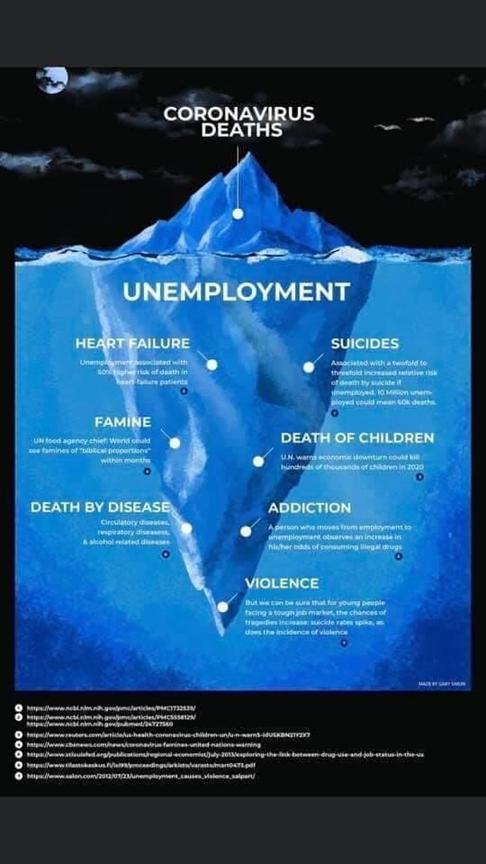
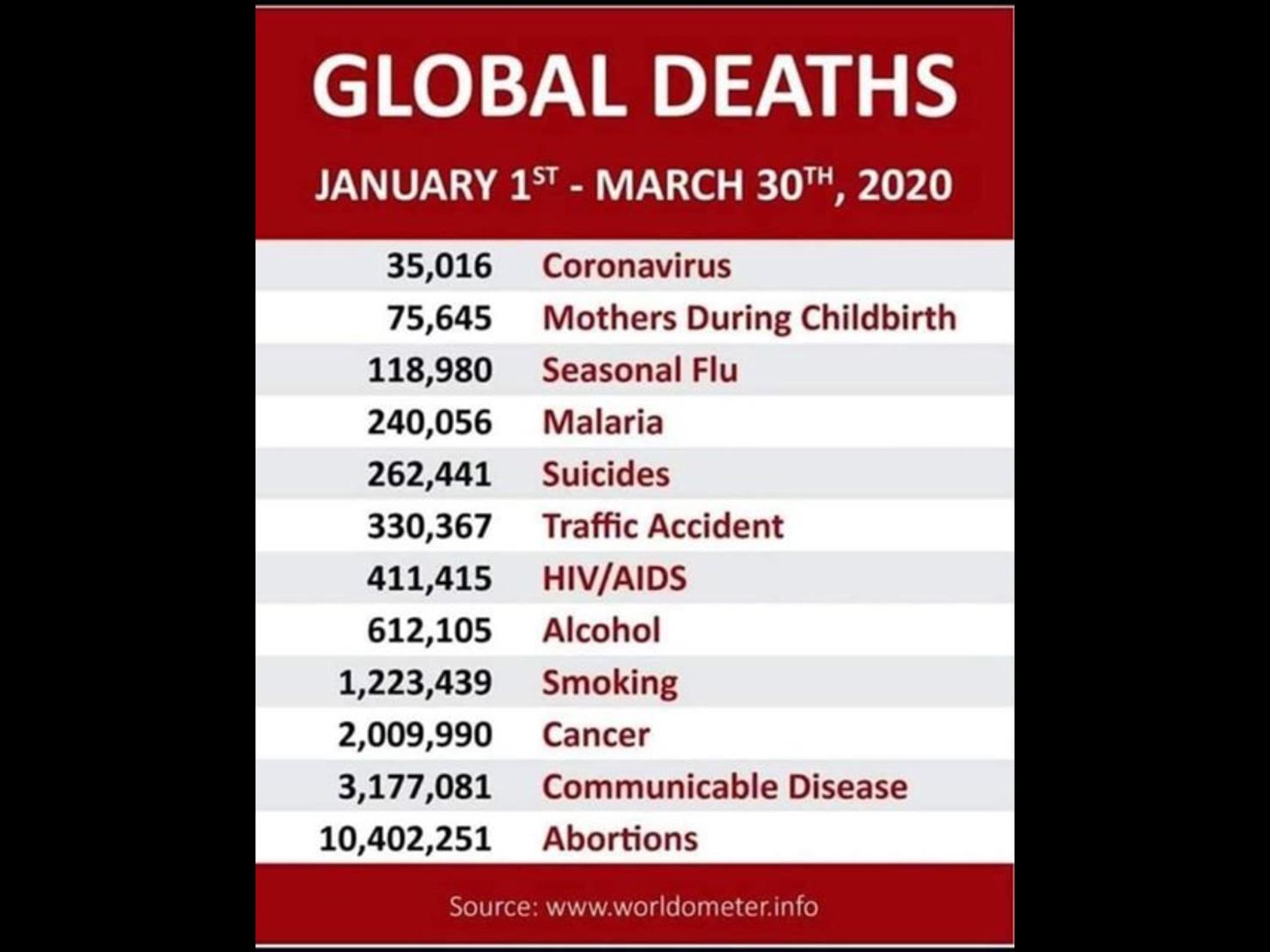
Annual Causes of Death in the USA

On Physical versus Behavioral CoDs

[By staff reporters]

BEHAVIORAL EPIDEMIOLOGY?

[Number 1 – Compared to Numbers 2, 3, 4, 5 and 6]

What it is – How it works?

http://ezinearticles.com/?A-Clear-Definition-of-Evidence-Based-Behavioral-Epidemiology&id=6270461

***

ANATOMICAL versus SELF-INFLICATION

***

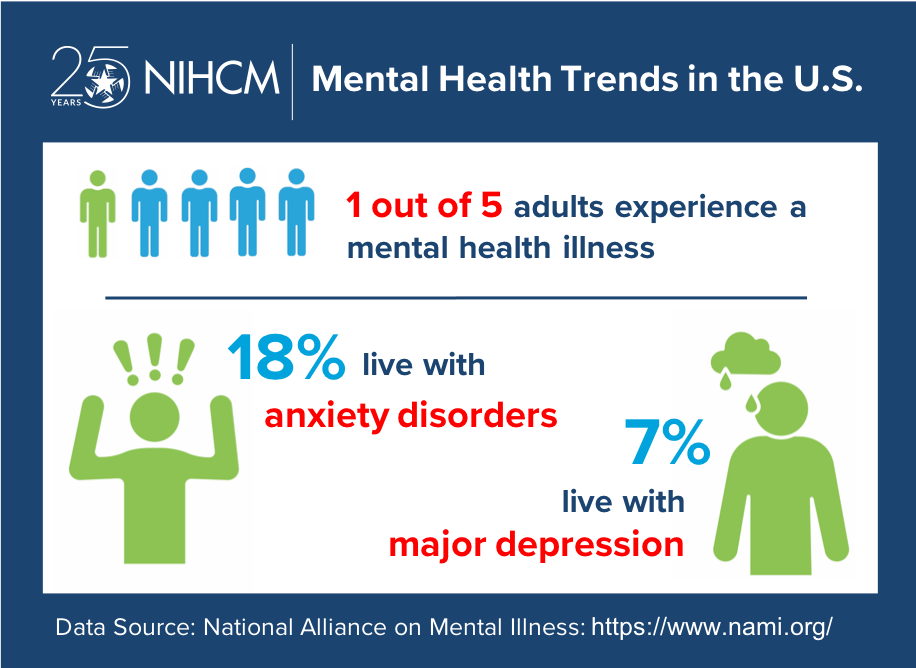
Mental Health DR. MARCINKO

Product Details

Invite Dr. Marcinko

***

Geographic Variations in Opioid Prescription Rates

For 2017

By http://www.MCOL.com

***

***

Invite Dr. Marcinko

BUSINESS, ORGANIZATIONAL BEHAVIOR & FINANCE FOR DOCTORS:

THANK YOU

***

How to Prepare for a Recession in 2019

Is Canada an Impending Metaphor for the USA?

[By staff reporters]

In economics, a recession is a business cycle contraction which results in a general slowdown in economic activity. Macroeconomic indicators such as GDP (gross domestic product), investment spending, capacity utilization, household income, business profits, and inflation fall, while bankruptcies and the unemployment rate rise.

Definition: https://www.amazon.com/Dictionary-Health-Economics-Finance-Marcinko/dp/0826102549/ref=sr_1_6?ie=UTF8&s=books&qid=1254413315&sr=1-6

But, what about the USA?

***

How to Prepare for a Recession in Canada – 2019

***

Risk Management, Liability Insurance, and Asset Protection Strategies for Doctors and Advisors: Best Practices from Leading Consultants and Certified Medical Planners™8Comprehensive Financial Planning Strategies for Doctors and Advisors: Best Practices from Leading Consultants and Certified Medical Planners™

***

Invite Dr. Marcinko

***

On the Clinical Efficacy of the Apple Watch?

New Studies Seek to Define Clinical Efficacy

[By Catalyst @ Health 2.0]

Preliminary results from the Apple Heart Study show the potential health benefits of wearables. Researchers from the Stanford University School of Medicine partnered with Apple to conduct a virtual observational study with more than 400,000 participants. The study used the Apple Watch’s irregular rhythm notification (IRN) system to detect atrial fibrillation (AFib). The results showed 0.5% of participants received irregular rhythm notifications. For those who were notified, 21% received and wore an ECG patch. Of those, Afib was confirmed 34% of the time. The positive predictive value of the overall study was 71%, however, this increased to 84% for the subgroup who also used an ECG patch. It should be noted that the study has not yet been published in a peer-reviewed journal.

Johnson & Johnson’s HEARTLINE Study aims to build on the Apple Heart Study. Announced back in January, the virtual clinical trial will enroll 150,000 Americans 65 years and older to detect AFib and collect outcomes data. Participants will be randomized to either receive the Apple Watch 4 or no watch at all. Compared to the Apple Heart Study, one key technical design difference allows the HEARTLINE Study to draw a clearer connection between AFib observance and confirmation. Instead of waiting for an ECG patch to be mailed to the participant, the ECG app on the user’s Apple Watch 4 will be engaged once the “IRN software detects five out of six consecutive irregular rhythms each lasting one minute.” Both the IRN software and the ECG app are FDA cleared for AFib detection. Although the clinical efficacy of wearables is far from conclusive, the innovative use of virtual clinical trials will likely be commonplace in the future with the continued proliferation of consumer-driven health technologies.

Healthcare Executives Under Threat of Business Model Disruption

Healthcare executives are increasingly worried about business model disruption due to the influx of new entrants, processes, and technologies into the healthcare industry. According to Change Healthcare’s 9th Annual Industry Pulse Survey, 13.3% of 185 healthcare leaders believe that innovations in care delivery will lead to potential advancement within the industry and 11.1% believe that refinement of customer experience will create disruptive change. Other potential disruptors include supply chain innovations (9%), launch of vertical one-stop healthcare companies (8%), and advances in artificial capabilities (7%). However, the survey findings also suggest that healthcare leaders are increasingly embracing healthcare technologies. Thirty percent of leaders indicate that EHRs are their leading source of clinical data and another 30% of respondents say that analytics are “extremely effective” or “very effective” at increasing workflow productivity.

Health systems are also jumping into the digital age, with patients portals employed by 73% and telehealth solutions employed by 54% of all surveyed respondents. Twenty percent of respondents indicate they currently use machine learning and 51% plan to employ the technology in the future. Interestingly, the survey reveals a marked lack of attention toward cybersecurity. Even while 40% of healthcare leaders see cybercrime as a potential risk, 38% answered that there are “too many competing priorities” to warrant the level of attention that cybersecurity needs. Nevertheless, the threat of disruption has charged healthcare leaders to intensify its commitment to combating new market entrants.

***

a1b52ded-7730-4995-b27a-8ac36e8bf1e4

***

Assessment

Your thoughts are appreciated.

Product DetailsProduct Details

***

Influenza Vaccination Prevalence

For FY 2018

By http://www.MCOL.com

***

***

Invite Dr. Marcinko

Product DetailsProduct Details

***

MYSPACE:- Music Loss – EHR Metaphor?

Twelve Years of Tunes Just Vanished

A Metaphor for EHRs?

[By staff reporters]

According to the MIT Technology Review, MySpace has lost all the music uploaded during its first 12 years

The company’s data protection officer blamed it on a server migration, and said it had lost over 50 million songs from 14 million artists.

A while coming:

All music on MySpace (aw, remember?) from 2015 and earlier stopped working about a year ago. Originally, the company said it was working on the issue, but it has been forced to admit all the data has been lost (no, it didn’t have any backups.)

A niche issue:

Okay, most people don’t keep their only copy of a particular record on MySpace. But the fact that so much material can be lost in one fell swoop is a reminder that the internet is not an archive. If you don’t have a physical backup, files can be lost, regardless of how unlikely that might feel.

***

***

EHRs: https://www.healthcareitnews.com/projects/biggest-healthcare-data-breaches-2018-so-far

Assessment: Any thoughts relative to this topic or the emerging FB situation? How about electronic medical records [EMRs], etc?

***


Forget Retiring Early, Get Back to Work

Forget Retiring Early, Get Back to Work

[PHYSICIAN FOCUSED FINANCIAL PLANNING AND RISK MANAGEMENT COMPANION TEXTBOOK SET]

Comprehensive Financial Planning Strategies for Doctors and Advisors: Best Practices from Leading Consultants and Certified Medical Planners™

Risk Management, Liability Insurance, and Asset Protection Strategies for Doctors and Advisors: Best Practices from Leading Consultants and Certified Medical Planners™

***

Assessment

What about doctors? Is this true or not-so-much?

[Dr. Cappiello PhD MBA] *** [Foreword Dr. Krieger MD MBA]

Front Matter with Foreword by Jason Dyken MD MBA

Retirement Medical Costs Not So Scary?

When Seen Yearly

By Rick Kahler CFP®

Have you ever worried yourself into a frenzy over something, only to find out you were worrying about the wrong thing?

For example, researchers say that Baby Boomers are more worried about being financially devastated by unexpected health costs in retirement than they are about outliving their retirement savings.

But isn’t the cost of health care a legitimate worry?

We all have heard the stories of people who lost their homes, savings, and retirement portfolios paying for exorbitant medical expenses due to an unforeseen health problem. Just recently Fidelity reported that the average couple will spend $280,000 on health care in retirement.

What is often overlooked is that medical expenses before retirement are inherently more volatile than those after retirement. Before retirement, the variation in medical insurance premiums plays a huge role in the cost of medical care. Those who suffer the greatest losses from unexpected catastrophic medical expenses are often those who are uninsured.

The PP-ACA

The Affordable Care Act was designed to make it unusual for those with health insurance to suffer a catastrophic loss from unforeseen medical expenses. Still, the cost of paying for adequate health care can be staggering if you don’t qualify for a subsidy. In South Dakota, the monthly cost of providing health care for a family of four runs between $1,800 and $3,000 a month, depending on whether you hit the maximum annual out-of-pocket threshold.

While that cost alone could be considered catastrophic for some, the difference is that the potential cost is known and can be budgeted for. This is where Health Savings Accounts (HSAs) can be so effective, allowing a couple to put aside $7,000 in tax-deductible savings to use toward funding family out-of-pocket expenses. Any unused funds can be carried forward indefinitely to fund future out-of-pocket costs.

In the same way that insurance helps mitigate catastrophic health costs before retirement, so does Medicare almost eliminate unexpected health care costs after retirement. While it is true the average couple will spend $280,000 on health care in retirement, “the reality is that health care costs in retirement aren’t needed as a ‘lump sum’ on the day of retirement,” notes financial researcher Michael Kitces. In an October 2018 article, “Getting Real About (Annual) Health Care Costs In Retirement,” he points out that the Medicare system actually makes retirement health care costs a remarkably stable annual cost that can be planned for.

Example:

For example, a 65-year old couple with an income of under $170,000 will pay $270 a month in Medicare part B premiums. A Medicare Supplement plan to cover costs not paid by Medicare can run another $300 a month. This puts the monthly out-of-pocket expenses at $570 per month. Let’s further assume an additional $135 a month for ancillary expenses like dental and vision, for a total of $705 per month, or $8460 per year.

If we assume both spouses live for 23 more years after age 65, and we factor for inflation, they will spend $280,000 in retirement for medical expenses.

When we view retirement medical costs as ongoing monthly expenses rather than lumping 23 years into one large number, they are not that scary. As Kitces notes, “Of course, individual health care costs may still vary… but it turns out they vary in rather predictable and plannable ways.”

***

***
Assessment

With that bit of knowledge, Baby Boomers can now stop worrying about being financially devastated by catastrophic medical expenses. Those who still need something to worry about can focus instead on what really counts: sufficient retirement income. This means saving enough for retirement and managing their income after retirement so they will have enough money to provide for the rest of their lives.

Conclusion

Your thoughts and comments on this ME-P are appreciated. Feel free to review our top-left column, and top-right sidebar materials, links, URLs and related websites, too. Then, subscribe to the ME-P. It is fast, free and secure.

Speaker: If you need a moderator or speaker for an upcoming event, Dr. David E. Marcinko; MBA – Publisher-in-Chief of the Medical Executive-Post – is available for seminar or speaking engagements.

Book Marcinko: https://medicalexecutivepost.com/dr-david-marcinkos-bookings/

Subscribe: MEDICAL EXECUTIVE POST for curated news, essays, opinions and analysis from the public health, economics, finance, marketing, IT, business and policy management ecosystem.

HOSPITALS:

“Financial Management Strategies for Hospitals” https://tinyurl.com/yagu567d

“Operational Strategies for Clinics and Hospitals” https://tinyurl.com/y9avbrq5

Product Details***

Risk Management, Liability Insurance, and Asset Protection Strategies for Doctors and Advisors: Best Practices from Leading Consultants and Certified Medical Planners™8Comprehensive Financial Planning Strategies for Doctors and Advisors: Best Practices from Leading Consultants and Certified Medical Planners™


Contribute to a Leading Physician Focused Practice Management and Financial Planning Resource

Join Our Mailing List

Get Published – Get Known

By Ann Miller RN MHA [Executive Director] MarcinkoAdvisors@msn.com

The ME-P is one of the leading online and onground resources for medical professionals, financial advisors and medical management consultants.

Want to Contribute Your Thought Leadership?

By submitting a guest article, video, infographic, or case study/report related to our forum, you can:

  • Raise your personal/company’s brand visibility/awareness
  • Build your social influence
  • Garner a larger audience
  • Spark a networkeffect to exponentially reach potential viewers across the healthcare and financial services industry.

Article/Guest Post Submission Guidelines

  1. All articles submitted for publication should be the guest author’s original work
  2. Articles should be reviewed for clarity, spelling, punctuation and grammar
  3. Articles should be between 350 – 1000 words. Longer articles will be accepted depending upon content relevance
  4. We reserves the right to revise any submission to meet the needs of the readers
  5. Include a brief bio about yourself and a company link with a brief summary about your business or website.

Submission Process

  1. Please submit all articles via email to: MarcinkoAdvisors@msn.com
  2. We will respond to your submission within 3 business days of receipt.
  3. Once accepted, your article will run at our discretion. All accepted articles retain full rights to every article, which can be published on their own site as well. If you have any additional questions about the submission guidelines, feel free contact us.

The ME-P also welcomes the submission of all white papers and case studies that will be posted in the appropriate channel section of the site.

Article/Guest Post Writing Tips

  1. Articles/Guest Posts should be well written, informative, engaging and relevant to the industries we serve.
  2. Please provide specific examples to illustrate your point through recent reports, studies, surveys, case studies, etc.
  3. We encourage using photos, tables, charts or figures as effective methods of providing documentation and support to your point of view. Please remember to cite your sources as necessary providing proper attribution.

Conclusion

Your thoughts and comments on this ME-P are appreciated. Feel free to review our top-left column, and top-right sidebar materials, links, URLs and related websites, too. Then, subscribe to the ME-P. It is fast, free and secure.

Link: http://feeds.feedburner.com/HealthcareFinancialsthePostForcxos

Speaker: If you need a moderator or speaker for an upcoming event, Dr. David E. Marcinko; MBA – Publisher-in-Chief of the Medical Executive-Post – is available for seminar or speaking engagements. Contact: MarcinkoAdvisors@msn.com

OUR OTHER PRINT BOOKS AND RELATED INFORMATION SOURCES:

DICTIONARIES: http://www.springerpub.com/Search/marcinko
PHYSICIANS: www.MedicalBusinessAdvisors.com
PRACTICES: www.BusinessofMedicalPractice.com
HOSPITALS: http://www.crcpress.com/product/isbn/9781466558731
CLINICS: http://www.crcpress.com/product/isbn/9781439879900
BLOG: www.MedicalExecutivePost.com
FINANCE: Financial Planning for Physicians and Advisors
INSURANCE: Risk Management and Insurance Strategies for Physicians and Advisors

Product DetailsProduct DetailsProduct Details

Product Details Product Details

Product Details

The 10 Worst Technologies of the 21st Century?

 MIT Technology Review

****

 MIT Technology Review

The latest issue, MIT Technology Review revealed 10 breakthrough technologies, chosen by Bill Gates, that he thinks will change the world for the better. We thought it only fair (and fun) to come up with a corresponding list of 10 “bad” technologies.

A hard choice: What makes them bad? Well, it could be because they fail to achieve good aims, or succeed in wicked ones. They could be harmful, flawed, or ahead of their time.

Sad: The Segway turned out to be an expensive scooter that makes you look silly. Google Glass, on the other hand, makes the list as a decent technology that just lacked decent enough uses when it launched.

Bad: Electronic voting made the cut for making elections more vulnerable. The CRISPR babies born in November 2018 are on there too, because indiscriminate uses of the technology should worry us. Data trafficking, where our data is shared and used without our control, is undermining freedom and democracy—it had to be one there.

Mad: Of course, some inventions have no redeeming features whatsoever. May we present: selfie sticks.

AssessmentRead the full list here.

BEWARE THE IDES OF MARCH

Dictionary of Health Information Technology and Security

 [Foreword Dr.Mata MD CIS]

***

How to Compare Cost-of-Living Benefits?

On Career Advancements and New Jobs

By Rick Kahler MSFS CFP®

As a doctor, nurse or allied healthcare professional; suppose you’re ready to take your career up a step, and you’re exploring opportunities in various parts of the country. You may easily be misled by the money script that a higher salary equates to a higher standard of living; however this is not necessarily always true.

What can you do to expand and reframe this money script?

Here are a few things to consider:

1. If the salary isn’t published, ask the money question right up front. Many candidates leave the inquiry into salary and benefits until the last step when both they and the potential employer have invested time and perhaps money into the interview process. Asking earlier avoids this wasted time, as well as allowing you to do your research on the front end and avoid potentially passing up other opportunities.

2. Get a clear picture of the lifestyle the salary will buy.  One of the best ways to do this is at bestplaces.net, which offers a cost-of-living calculator to compare the relative locations and salaries you are considering. For example, if you compare Rapid City, SD, and Redwood City, CA, you will find the latter costs 259% more than the former. That means you need to multiply the Rapid City salary by 3.59 to find the equivalent salary in Redwood City.

The “City Compare” tab also allows you to compare specific categories. For example, health care is 10% more in Rapid City than Redwood City, while housing in Redwood City costs over eight times as much. You can also compare factors like crime rate, climate, air quality, and tax rates. Pay particular attention to taxes; needing to pay both state and city income taxes, for example, could make a significant difference in your cost of living.

3. Investigate surrounding areas that have a lower cost of living. A 45-minute to one-hour commute each way from La Honda to Redwood City would result in a 37% decrease in the cost of living. A salary of $140,000 would buy a lifestyle in La Honda equivalent to that provided by $222,222 in Redwood City.

4. Examine your own beliefs about various areas. Look beyond salary amounts to your perceptions and assumptions about factors such as amenities, city-vs-rural living, lifestyles, status, etc. Then investigate the realities of those factors—both their value to you and the probability that you could take advantage of them. If a city offers professional sports, theatre productions, and concerts, for example, could you realistically afford the time and money to attend regularly? Would available public transportation fit your lifestyle and work schedule?

5. Consider your short-term and long-term family circumstances. Is a big-city lifestyle what you want as a young adult but not for raising a family? Would a given location fit your spouse’s needs as well as your own? Are your kids toddlers or about to leave home? Do you have aging parents that might need help?

6. If you choose a job in an area with a high cost of living, consider ways to reduce your budget. Thesimpledollar.com has 40 great tips on how to save money on monthly expenses.

Assessment

Finally, put all your research together and do your best to imagine year-round daily living in various locations. Envision yourself in the different routines and possibilities, whether they might include a daily two-hour commute, a city apartment, or a home in the woods with your own snow blower. Look beyond the financial cost of living to the emotional benefits and costs of living in various places. The most important lifestyle factor is finding the place where you will feel most at home.

***

***

Conclusion

Your thoughts and comments on this ME-P are appreciated. Feel free to review our top-left column, and top-right sidebar materials, links, URLs and related websites, too. Then, subscribe to the ME-P. It is fast, free and secure.

Speaker: If you need a moderator or speaker for an upcoming event, Dr. David E. Marcinko; MBA – Publisher-in-Chief of the Medical Executive-Post – is available for seminar or speaking engagements.

Book Marcinko: https://medicalexecutivepost.com/dr-david-marcinkos-bookings/

Subscribe: MEDICAL EXECUTIVE POST for curated news, essays, opinions and analysis from the public health, economics, finance, marketing, IT, business and policy management ecosystem.

DOCTORS:

“Insurance & Risk Management Strategies for Doctors” https://tinyurl.com/ydx9kd93

“Fiduciary Financial Planning for Physicians” https://tinyurl.com/y7f5pnox

“Business of Medical Practice 2.0” https://tinyurl.com/yb3x6wr8

HOSPITALS:

“Financial Management Strategies for Hospitals” https://tinyurl.com/yagu567d

“Operational Strategies for Clinics and Hospitals” https://tinyurl.com/y9avbrq5

***

Risk Management, Liability Insurance, and Asset Protection Strategies for Doctors and Advisors: Best Practices from Leading Consultants and Certified Medical Planners™

Product Details

***

Two Different Personal IRA Investing Strategies?

Based on Tax Considerations?


By Dr. David Edward Marcinko MBA

LINK: https://medicalexecutivepost.com/schedule-a-consultation/

One personal investing strategy is to place more conservative investments (those with lower expected returns) in a tax-deferred traditional IRA, 401-k, 403-b or similar, and more aggressive (higher-earning) assets in a taxable brokerage account or Roth IRA.

WHY? Each account is thus working hard but in very different ways.

HOW? The conservative funds in the traditional IRA or retirement accounts would fill any needs for safety as they grow more slowly – and the higher tax rate won’t take out as big of a bite.

Meanwhile, the more aggressive funds in a taxable brokerage accounts would grow more quickly, but be taxed at a lower rate.

Assessment: Any thoughts?

Subscribe: MEDICAL EXECUTIVE POST for curated news, essays, opinions and analysis from the public health, economics, finance, marketing, IT, business and policy management ecosystem.

MORE FOR DOCTORS:

“Insurance & Risk Management Strategies for Doctors” https://tinyurl.com/ydx9kd93

“Fiduciary Financial Planning for Physicians” https://tinyurl.com/y7f5pnox

“Business of Medical Practice 2.0” https://tinyurl.com/yb3x6wr8

***

Comprehensive Financial Planning Strategies for Doctors and Advisors: Best Practices from Leading Consultants and Certified Medical Planners™

Risk Management, Liability Insurance, and Asset Protection Strategies for Doctors and Advisors: Best Practices from Leading Consultants and Certified Medical Planners™


More on High Deductible Health Plans

Consumer Characteristics and Behaviors

By http://www.MCOPL.com

***

***

Conclusion

Your thoughts and comments on this ME-P are appreciated. Feel free to review our top-left column, and top-right sidebar materials, links, URLs and related websites, too. Then, subscribe to the ME-P. It is fast, free and secure.

Speaker: If you need a moderator or speaker for an upcoming event, Dr. David E. Marcinko; MBA – Publisher-in-Chief of the Medical Executive-Post – is available for seminar or speaking engagements.

Book Marcinko: https://medicalexecutivepost.com/dr-david-marcinkos-bookings/

Subscribe: MEDICAL EXECUTIVE POST for curated news, essays, opinions and analysis from the public health, economics, finance, marketing, IT, business and policy management ecosystem.

DOCTORS:

“Insurance & Risk Management Strategies for Doctors” https://tinyurl.com/ydx9kd93

“Fiduciary Financial Planning for Physicians” https://tinyurl.com/y7f5pnox

“Business of Medical Practice 2.0” https://tinyurl.com/yb3x6wr8

HOSPITALS:

“Financial Management Strategies for Hospitals” https://tinyurl.com/yagu567d

“Operational Strategies for Clinics and Hospitals” https://tinyurl.com/y9avbrq5

***

Risk Management, Liability Insurance, and Asset Protection Strategies for Doctors and Advisors: Best Practices from Leading Consultants and Certified Medical Planners™

Resetting our Defaults for 2019

Random Drivel?

[By Vitaly Katsenelson CFA]

What I am about to share with you is somewhat random drivel about a topic that has been very important to me in 2018 – time.

I am anything but an expert on it; and in fact, as you’ll see, this is something I fail in and am trying to fail less.

 ***

Resetting Defaults 

Conclusion

Your thoughts and comments on this ME-P are appreciated. Feel free to review our top-left column, and top-right sidebar materials, links, URLs and related websites, too. Then, subscribe to the ME-P. It is fast, free and secure.

Speaker: If you need a moderator or speaker for an upcoming event, Dr. David E. Marcinko; MBA – Publisher-in-Chief of the Medical Executive-Post – is available for seminar or speaking engagements.

Book Marcinko: https://medicalexecutivepost.com/dr-david-marcinkos-bookings/

Subscribe: MEDICAL EXECUTIVE POST for curated news, essays, opinions and analysis from the public health, economics, finance, marketing, IT, business and policy management ecosystem.

DOCTORS:

“Insurance & Risk Management Strategies for Doctors” https://tinyurl.com/ydx9kd93

“Fiduciary Financial Planning for Physicians” https://tinyurl.com/y7f5pnox

“Business of Medical Practice 2.0” https://tinyurl.com/yb3x6wr8

HOSPITALS:

“Financial Management Strategies for Hospitals” https://tinyurl.com/yagu567d

“Operational Strategies for Clinics and Hospitals” https://tinyurl.com/y9avbrq5

***

Risk Management, Liability Insurance, and Asset Protection Strategies for Doctors and Advisors: Best Practices from Leading Consultants and Certified Medical Planners™8Comprehensive Financial Planning Strategies for Doctors and Advisors: Best Practices from Leading Consultants and Certified Medical Planners™

About “Posts” – On the Medical Executive-Post

Laughing Out Loud

[By staff reporters]

***

****

Conclusion

Your thoughts and comments on this ME-P are appreciated. Feel free to review our top-left column, and top-right sidebar materials, links, URLs and related websites, too. Then, subscribe to the ME-P. It is fast, free and secure.

Speaker: If you need a moderator or speaker for an upcoming event, Dr. David E. Marcinko; MBA – Publisher-in-Chief of the Medical Executive-Post – is available for seminar or speaking engagements.

Book Marcinko: https://medicalexecutivepost.com/dr-david-marcinkos-bookings/

Subscribe: MEDICAL EXECUTIVE POST for curated news, essays, opinions and analysis from the public health, economics, finance, marketing, IT, business and policy management ecosystem.

THANK YOU


What are the Most Impactful Technologies in Healthcare Today?

A Survey

By: http://www.MCOL.com

***

***

Subscribe: MEDICAL EXECUTIVE POST for curated news, essays, opinions and analysis from the public health, economics, finance, marketing, IT, business and policy management ecosystem.

DOCTORS:

“Insurance & Risk Management Strategies for Doctors” https://tinyurl.com/ydx9kd93

“Fiduciary Financial Planning for Physicians” https://tinyurl.com/y7f5pnox

“Business of Medical Practice 2.0” https://tinyurl.com/yb3x6wr8

***

Risk Management, Liability Insurance, and Asset Protection Strategies for Doctors and Advisors: Best Practices from Leading Consultants and Certified Medical Planners™  Risk Management, Liability Insurance, and Asset Protection Strategies for Doctors and Advisors: Best Practices from Leading Consultants and Certified Medical Planners™


What is Knowledge?

A Binary Proposition in the Past – Not so much, Today? 

dem

By Dr. David E. Marcinko MBA

Common Knowledge is a familiarity, awareness or understanding of someone or something, such as facts, information, descriptions, or skills, which is acquired through experience or education by perceiving, discovering, or learning.

***

Google

LINK: https://en.wikipedia.org/wiki/Knowledge

The CURSE of Knowledge?

Medical Knowledge is the body of information about diseases, mechanisms and pathogenesis, therapies and interactions, and interpretation of lab tests, which is broadly applicable to decisions about multiple patients and public health policies, in contrast to patient-specific data.

***

GOOGLE MD

LINK: https://en.wikipedia.org/wiki/Medicine

What is the Dunning–Kruger effect?

Assessment

Beware! No one person or medical specialty physician is immune! So, where do you fit in on this binary schematic?

Conclusion

Your thoughts and comments on this ME-P are appreciated. Feel free to review our top-left column, and top-right sidebar materials, links, URLs and related websites, too. Then, subscribe to the ME-P. It is fast, free and secure.

Speaker: If you need a moderator or speaker for an upcoming event, Dr. David E. Marcinko; MBA – Publisher-in-Chief of the Medical Executive-Post – is available for seminar or speaking engagements.

Book Marcinko: https://medicalexecutivepost.com/dr-david-marcinkos-bookings/

Subscribe: MEDICAL EXECUTIVE POST for curated news, essays, opinions and analysis from the public health, economics, finance, marketing, IT, business and policy management ecosystem.

***

google31

***

DOCTORS:

“Insurance & Risk Management Strategies for Doctors” https://tinyurl.com/ydx9kd93

“Fiduciary Financial Planning for Physicians” https://tinyurl.com/y7f5pnox

“Business of Medical Practice 2.0” https://tinyurl.com/yb3x6wr8

Product Details

***

Out-Patient Spending Trends

FY 2013- 2017

By http://www.MCOL.com

***

***

[HOSPITAL OPERATIONS, ORGANIZATIONAL BEHAVIOR AND FINANCIAL MANAGEMENT COMPANION TEXTBOOK SET]

Product DetailsProduct Details

[Foreword Dr. Phillips MD JD MBA LLM] *** [Foreword Dr. Nash MD MBA FACP]

***