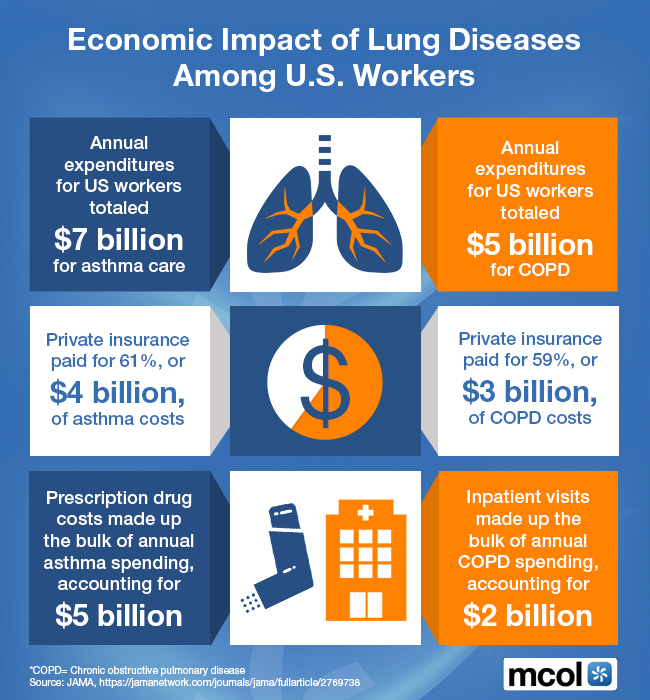
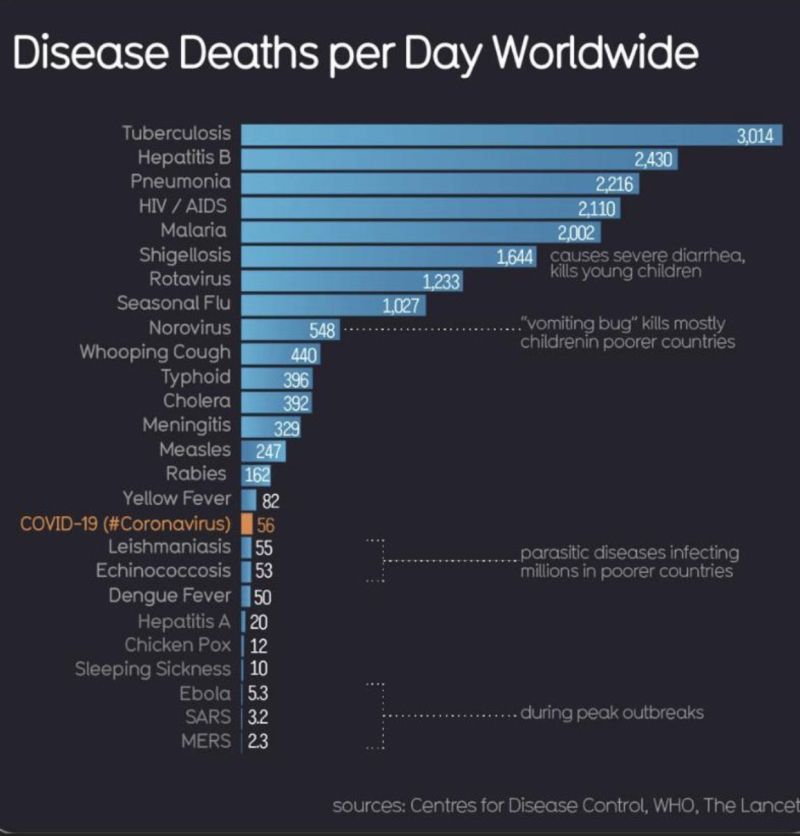
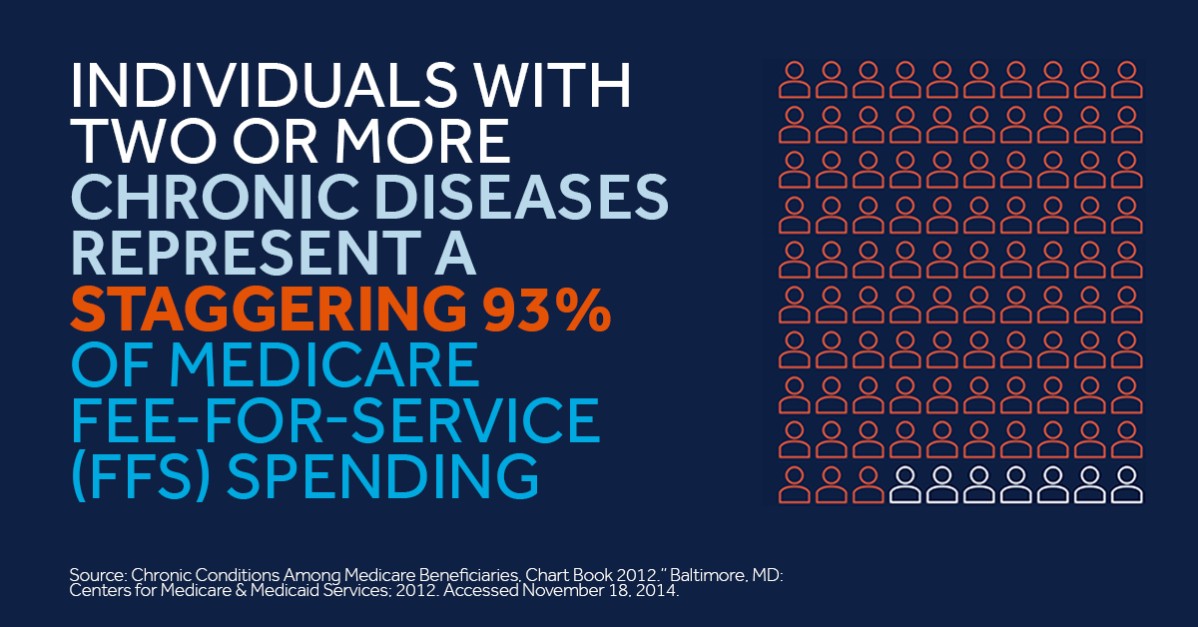
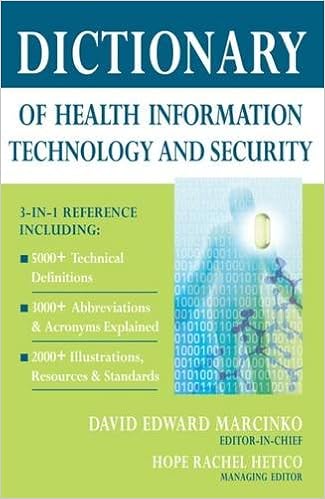
On PHYSICIAN OWNED DISTRIBUTORSHIPs

WHAT IS A PHYSICIAN OWNED DISTRIBUTORSHIP [P.O.D]?

By Dr. David E. Marcinko MBA

[More on Medical Ethics]

Back in the day, when I was a young surgeon, I was approached by a group of older colleagues to join a POD. I was flattered, of course. Playing with the “big boys.” But, after leaning what it was, I declined. Although perhaps technically legal, it just felt creepy to me although I sure needed the money at the time.

***

***

DEFINITION: A POD is a group of doctors, usually surgeons, who agree to purchase implanted devices such as joint prostheses or orthopedic hardware (screws, plates and rods), etc. Physicians profit financially by participating in the sale of devices intended for their own patients; thus creating the opportunity for them to profit from self-referrals.

LINK: https://lnkd.in/e9AmEhd

QUERY: But, are PODS ethical? Read what the Association for Medical Ethics [AME] has to say about PODs.

LINK: https://lnkd.in/eV2Smjp

MORE: https://lnkd.in/egtRe9T

Your thoughts are appreciated.

MEDICAL PRACTICE MANAGEMENT TEXTs:

1 – “The Business of Medical Practice 2.0” https://lnkd.in/ewJPTJs

Product DetailsProduct Details

***

On Physician Fees

Lifestyle Laughs

By TCA 2019

***

***

READ MORE:

Click to access aamc-vizient-fpscwebinarslidescy2019medicarephysicianfeeschedul.pdf

***

Product DetailsProduct Details

***

How to Fix Health Care?

Ten [10] Most Popular Solutions

By “Fixing Healthcare”

***

***

Product DetailsProduct Details

***

On-Premise Software VERSUS Cloud Computing?

The Cloud Lowers the Total Cost of Ownership

[By staff reporters]

***

***

***

Assessment: But, what about health information technology?

Your thoughts are appreciated.

***

Product DetailsProduct Details

***

Employee Healthcare Cost Trends

2018 – 2020 Est.

By http://www.MCOL.com

***

***

Product DetailsProduct Details

***

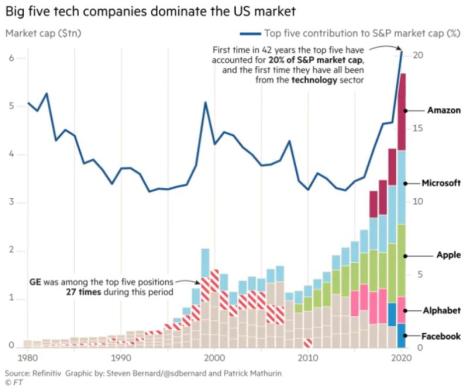
Not a Good Day for Domestic Capitalism

The Equity Markets

[August 14, 2019]

By staff reporters

***

***

READ HERE

http://www.msn.com/en-us/money/markets/dow-closes-800-points-lower-in-worst-day-of-2019/ar-AAFzdHm?li=BBnbfcL

***

***

Risk Management, Liability Insurance, and Asset Protection Strategies for Doctors and Advisors: Best Practices from Leading Consultants and Certified Medical Planners™8Comprehensive Financial Planning Strategies for Doctors and Advisors: Best Practices from Leading Consultants and Certified Medical Planners™

***

Annuities Do Not Belong In 401(k) Plans

Here is Why?

By Rick Kahler CFP

Several weeks ago I wrote about the Setting Every Community Up for Retirement Enhancement (SECURE) Act, which will reform various aspects of US retirement laws. The Act was passed by the House in May and is currently stalled in the Senate.

One of the most troubling of the SECURE Act’s 29 provisions is that it will ease regulations to make it easier for financial salespeople to sell annuities to 401(k) plan participants.

This is alarming, as the act creates a safe harbor for annuities inside 401(k) plans. That means companies choosing to offer annuities would be shielded from liability—no matter how terrible an investment the annuity products may be. This provision has great potential for harm.

Annuities seem always to be a hot financial product in the market place. It’s rare when I interview a new client that they don’t have at least one in their portfolio. Often, it’s the only investment they own. Annuities are not hot because consumers are clamoring to buy them, but rather because annuity sales people love to sell them.

While I rarely recommend them, there are some good things about annuities, especially that earnings grow tax deferred until distributed. They can be useful in this regard in special situations—when stripped of their high fees and commissions. Therein lies the problem.

Sales

Most annuities sold by salespeople inherently contain high fees, big commissions, and high penalties to consumers for taking money out early. What that means for the investor is low returns. For those reasons, the negative aspects of annuities far outweigh any good.

Even worse, annuities have no place being owned by an IRA or, as the SECURE Act would allow, a 401(k) plan. Regardless of fees or commissions, no annuity belongs in a retirement plan. One of my top pet peeves as a financial planner is so-called “financial advisors” who sell people fixed and variable annuities for a retirement account. This makes no sense.

An annuity is a tax-deferred container to put investments in, not an investment itself. It’s what investments are inside it that matters. The same is true of  IRAs and 401(k) retirement plans. Since a retirement plan is already a tax-deferred investment container, it makes no sense to put an annuity—another tax-deferred investment container—inside of it. The silliness of this is obvious to even the most casual observer, unless your livelihood comes from selling these products.

Agents and their companies spare no expense in developing convincing storylines, half-truths, and slight-of-hand explanations of why it makes perfect sense for a retirement plan to own an annuity.

The bottom line is that annuities are sold, they are not bought. The only reason annuities are purchased in someone’s retirement account is because the salesperson receives a much higher commission from the transaction than selling a mutual fund, individual stocks, or CDs.

Why?

So why did our Representatives vote 417-3 to open up investors’ 401(k) plans to these high-cost, high-commissioned, financially disastrous products? I can only surmise that most of them didn’t fully understand what they were voting on and that the insurance lobby did their normal amazing job of selling the alleged benefits of annuities. Oh, and maybe there was a campaign contribution or two.

Assessment

Most annuities are expensive investment vehicles that benefit the salesperson and the company far more than they benefit you. If you are thinking of buying one, or in the future your 401(k) offers the option of buying an annuity, do some digging before you sign on the dotted line. Make sure you get advice first from someone other than the annuity salesperson—someone with no vested interest in selling you this product.

Your thoughts are appreciated.

Risk Management, Liability Insurance, and Asset Protection Strategies for Doctors and Advisors: Best Practices from Leading Consultants and Certified Medical Planners™8Comprehensive Financial Planning Strategies for Doctors and Advisors: Best Practices from Leading Consultants and Certified Medical Planners™

***


Here’s Why Drug-Distribution and Pharmacy Stocks are Bargains Now

On Drug-Distribution and Pharmacy Stocks

Vitaliy Katsenelson, CFA
  Student of Life

These pharnacy stocks are good businesses. In general they have solid balance sheets, above-average returns on capital, and they generate a lot of cash, which is used to pay dividends and buy back stock.

But, these defensive features have not mattered much lately, as we are entering the 10th year of uninterrupted economic expansion.

Accordingly, these companies are significantly undervalued. How under valued? Let’s answer that question by examining two stocks in our portfolio in closer detail.

***

Prescription Pill Bottles

***

Here’s Why Drug-Distribution and Pharmacy Stocks are Bargains Now

***

Comprehensive Financial Planning Strategies for Doctors and Advisors: Best Practices from Leading Consultants and Certified Medical Planners™

***


All About Medical Inflatable Exhibits; Inc.

Introducing Medical Inflatable Exhibits, Inc.

[By Dr. David E. Marcinko MBA]

A regular reader and subscriber to this ME-P alerted us about this company. As a physician executive, health educator and wellness communicator, we decided to immediately post about it. And so, well done Lauren Hill; President and Founder.

***

Medical Inflatables is a privately held, woman owned, Texas-based corporation operating out of Houston, home to the largest medical complex in the world, the Texas Medical Center.  They seek to provide high-quality, interactive, educational models of the human anatomy to help teach people about the risks, symptoms, nature, and causes of various diseases. They also hope to shed light on prevention of the diseases depicted and the latest medical treatments to mitigate or cure the diseases.

***

***

Medical Inflatables provides inflatable, portable, larger-than-life models that promote learning. The models engage people of all ages as they walk through the organ replicas. And, they work closely with a team of board-certified medical professionals to ensure the accuracy of our exhibits and the information conveyed.

***

LINK: https://www.medicalinflatables.com/about-us/

***

VIDEO: https://www.medicalinflatables.com/exhibits/mega-heart/mega-heart-videos/

Assessment: Your thoughts are appreciated.

***

Product DetailsProduct Details

***


On the “Uncanny Valley”

What it is – How it works
By staff reporters
***
“Originally coined by Masahiro Mori in 1970, the term “uncanny valley” describes our strange revulsion toward things that appear nearly human, but not quite right.”  He is a Japanese roboticist noted for his pioneering work in the fields of robotics and automation, his research achievements in humans’ emotional responses to non-human entities, as well as for his views on religion.
**
According to Wikipeida, the “uncanny valley” is a hypothesis in the field of aesthetics which holds that when features look and move almost, but not exactly, like natural beings, it causes a response of revulsion among some observers.
***
***
The “valley” refers to the dip in a graph of the comfort level of beings as subjects move toward a healthy, natural likeness described in a function of a subject’s aesthetic acceptability.
***
Asessment: Here are some creepy examples.
***
***
Your thoughts are appreciated.
***
Risk Management, Liability Insurance, and Asset Protection Strategies for Doctors and Advisors: Best Practices from Leading Consultants and Certified Medical Planners™
***

The True Cost of Medication Non-Adherence

In the Modern Value-Based-Care Environment

By http://www.MCOL.com

***

***

Product DetailsProduct Details

***

Arrest V. Attack V. Stroke

Matters of the Heart

***

***

MORE: Have a “Heart”

***

Product DetailsProduct DetailsProduct Details

***

Health Insurance Company CEO Compensation

FY: 2014

***

***

Product DetailsProduct Details

***

STOCK MARKETS – August 5, 2019

A Round-Up with “Sick” Infographic

***

***

***

Risk Management, Liability Insurance, and Asset Protection Strategies for Doctors and Advisors: Best Practices from Leading Consultants and Certified Medical Planners™8Comprehensive Financial Planning Strategies for Doctors and Advisors: Best Practices from Leading Consultants and Certified Medical Planners™

***

Invite Dr. Marcinko

***

Preventable Patient Harm Prevalence

“First Do No Harm”

By http://www.MCOL.com

***

***

Risk Management, Liability Insurance, and Asset Protection Strategies for Doctors and Advisors: Best Practices from Leading Consultants and Certified Medical Planners™

***

Invite Dr. Marcinko

***

“FLAT LAND”

A Romance of Many Dimensions

[By staff reporters]

Flatland is an 1884 satirical novella by Edwin Abbott Abbott.
***
A Romance of Many Dimensions is a satirical novella by the English schoolmaster Edwin Abbott Abbott, first published in 1884 by Seeley & Co. of London.
***
Written pseudonymously by “A Square”, the book used the fictional two-dimensional world of Flatland to comment on the hierarchy of Victorian culture, but the novella’s more enduring contribution is its examination of dimensions.
***
Several films have been made from the story, including the feature film Flatland (2007).
***
***

Invite Dr. Marcinko

Did Psychologist B.F. Skinner Really Raise His Daughter in a Skinner’s Box?

On Classical Conditioning VERSUS Operant Conditioning

By David Mikkelson

***

Classical conditioning (also known as Pavlovian or respondent conditioning) is a learning process in which an innate response to a potent stimulus comes to be elicited in response to a previously neutral stimulus; this is achieved by repeated pairings of the neutral stimulus with the potent stimulus.
VERSUS

Operant conditioning (also “instrumental conditioning”) is a learning principle in which environmental contingencies—or more specifically, discriminative stimuli (antecedents) influencing its consequences—are controlled and manipulated to change behavior.

***

***

LINK: https://www.snopes.com/fact-check/one-man-and-a-baby-box/

Traditional Finance VERSUS Behavioral Finance

LINK: https://medicalexecutivepost.com/2019/07/08/on-traditional-v-behavioral-finance/

***

Risk Management, Liability Insurance, and Asset Protection Strategies for Doctors and Advisors: Best Practices from Leading Consultants and Certified Medical Planners™8Comprehensive Financial Planning Strategies for Doctors and Advisors: Best Practices from Leading Consultants and Certified Medical Planners™

***

What Happens in an Internet Minute?

Circa 2019

***

***

Product DetailsProduct DetailsProduct Details

***

High-Risk Surgery Volume Standards

Leapfrog Group

By http://www.MCOL.com

***

***

Product DetailsProduct Details

***

HAV.GEN.SX.PRINCIPLES

A Gallery of Famous Smokers

What is a Cigarette?

[By staff reporters]

A Narrow Cylinder

A cigarette, also known colloquially as a fag in British English, is a narrow cylinder containing psychoactive material, usually tobacco, that is rolled into thin paper for smoking. Most cigarettes contain a “reconstituted tobacco” product known as “sheet”, which consists of “recycled stems, stalks, scraps, collected dust, and floor sweepings”, to which are added glue, chemicals and fillers; the product is then sprayed with nicotine that was extracted from the tobacco scraps, and shaped into curls.

***

The cigarette is ignited at one end, causing it to smolder; the resulting smoke is orally inhaled via the opposite end. Most modern cigarettes are filtered, although this does not make them safer. Cigarette manufacturers have described cigarettes as a drug administration system for the delivery of nicotine in acceptable and attractive form. Cigarettes are addictive and cause cancer, chronic obstructive pulmonary disease, heart disease, and other health problems.

LINK: http://www.jusonline.nl/smokers/gallery01.html

Conclusion: Your thoughts are appreciated.

Risk Management, Liability Insurance, and Asset Protection Strategies for Doctors and Advisors: Best Practices from Leading Consultants and Certified Medical Planners™8Comprehensive Financial Planning Strategies for Doctors and Advisors: Best Practices from Leading Consultants and Certified Medical Planners™

***

On Prioriting Money Beliefs

“Money is supposed to be spent!” “Money is supposed to be saved!”

By Rick Kahler CFP®

We may not hear talk-show participants shouting these opposing views at each other with the same level of anger that characterizes some of our political rhetoric. Yet the core polarization that pervades so much of today’s society also shows up in people’s beliefs about money.

I saw this polarization recently in a conversation with a group of friends in Europe. The topic of money came up, as it usually does when people find out one of my specialties as a financial advisor is financial therapy. The thinking of my friends was that money is meant to be spent, not saved. They felt that people who saved money were faithless and greedy hoarders who by their saving threatened the economic system.

At the other extreme, I know other people who strongly believe a person’s first duty is to save and invest. According to them, those who don’t save as much as possible for emergencies and retirement are foolish, deluded, irresponsible, and destined to live out their last days in poverty.

My friends who embrace the money script that “money is to be spent, not saved” are likely to also hold a money script that “the universe will provide.” They tend to fall into a category we label Money Avoiders. Those who embrace the money scripts that “money is to be saved and not spent,” who also believe “one can never really have enough money,” are in the category of Money Worshipers.

Like most other forms of polarized thinking, neither of these extremes is right. Nor is either belief wrong.

Money does need to be spent. The health of our economic system depends on transactions. It’s important that money flows through the selling and buying of goods and services. When a significant number of consumers stop spending, economic activity grinds to a halt. We saw the effect of this in the financial crises of 2008. It’s also important to spend money to take care of ourselves and our families. Saving or investing money to a point that we go without adequate food, shelter, health care, or similar necessities is not healthy.

 ***

***

Money also needs to be saved to provide a cushion against emergencies and to provide for our needs in retirement. My European friends enjoy a higher certainty of adequate income in retirement. For them, this is the universe providing, a strong government security net. However, those that live in many Asian countries are assured very little, if anything, in the way of retirement income. For them, the universe comes up short and depends upon the generosity of family to provide. Saving in an Asian culture is therefore much more important than if you live in a Scandinavian country.

Saving and investing for retirement is important for those of us in the US, as well. Without it, we face two dubious prospects: we can depend on family to provide or we can eke out a meager living on a Social Security payment of around $2,000 a month in retirement.

Those who are not polarized around money understand that both spending and saving are important for financial health. They can balance their spending and saving, applying both when necessary in their own lives.

Assessment

Ideally, from this balanced middle ground, someone can also see past the limitations of others who are polarized. Those who believe “Money is meant to be spent” or “Money is meant to be saved” have a world view that results in such an extreme position. Labeling them as “wrong” is not a useful way to try to shift anyone’s polarized beliefs.

Conclusion: Your thoughts are appreciated.

***

Risk Management, Liability Insurance, and Asset Protection Strategies for Doctors and Advisors: Best Practices from Leading Consultants and Certified Medical Planners™8Comprehensive Financial Planning Strategies for Doctors and Advisors: Best Practices from Leading Consultants and Certified Medical Planners™

***

Have a “Heart”

“Fix” a Heart

[By Staff Reporters]

***

***

***

***

Blood Clot Video

https://dms.licdn.com/playlist/C5605AQGhWF1EycMXEg/feedshare-captions-thumbnails-dualWrite-inhouse-mp4_h264_aac_3300k/0?e=1566694800&v=beta&t=7o4z7ylSoGXjYWkPC84fkJbVcKvlVoGAe1agdFWAXHE

***

https://www.forbes.com/sites/nicholasfearn/2019/09/12/artificial-intelligence-detects-heart-failure-from-one-heartbeat-with-100-accuracy/#550505fa7ac9

***

***

Flabby Heart Autopsy

ANGIOGRAM

***

***

***

***

***

0

***

***

heart

***

Risk Management, Liability Insurance, and Asset Protection Strategies for Doctors and Advisors: Best Practices from Leading Consultants and Certified Medical Planners™8Comprehensive Financial Planning Strategies for Doctors and Advisors: Best Practices from Leading Consultants and Certified Medical Planners™

***

Physician Specialists Salaries

And … Demand

By http://www.MCOL.com

***

***

[PRIVATE MEDICAL PRACTICE BUSINESS MANAGEMENT TEXTBOOK – 3rd.  Edition]

Product DetailsProduct Details

Financial Stress in Times of Transition

Financial Stress Adaptation

By Rick Kahler CFP®

Stress is what happens when something you care about is at stake. This definition comes from Susan Bradley, CFP, author of Sudden Money and a specialist in the financial aspect of life transitions.

The stress around these transitions is a common reason that people seek out financial advice. We tend to be driven to consult advisors as a result of stressful changes in our lives, such as a divorce, a sudden money event like an inheritance or insurance settlement, an investment or job loss, retirement, or the death of a loved one.

While all these life events certainly have financial components, it’s almost always the emotional components of the change—how we respond to them—that are the cause of the stress.

Any change includes three stages: an ending, a period of passage while we relate and adapt to the change, and a new beginning. This period of transition can be fraught with emotion and behaviors that can trip us up in many ways, including financially.

Susan identifies nine such emotions and behaviors that she sees commonly in people in transition.

1. Lack of identity. If the transition results in the loss of a familiar role—spouse or employee, for example—you may struggle with “Who am I now? “There is often confusion and ambivalence about the future, and an inability to make decisions.

2. Confusion/Overwhelm/Fog. There is a sense of defeat by everything. You may physically slump, have a glazed-over look, and ask others to repeat a lot. It’s hard to understand, be present, respond, focus, or move forward.

3. Hopelessness. You may have a sense of having given up, not being in control of your fate, or being a victim. It may seem that there is nothing you can do to change yourself or the outcome. Financial decision-making is very difficult.

4. Invincibility. This can happen with a big positive change in your finances. You may think everything is going to turn out fine. You may feel euphoric, confident, and smarter than your advisors. You may spend more and take greater investment risks.

5. Mental and Physical Fatigue. Change can be exhausting, and the exhaustion can go undetected by others and even yourself. You may have difficulty following an agenda and tasks.

6. Numb/Withdrawn. You may feel ambivalent about and indifferent to exploring the changes in your life, what you want, and what the future may hold. You don’t give much feedback and are withdrawn and non-expressive. You may miss or not return phone calls or emails. The planning process often comes to a standstill.

7. Narrow or Fractured Focus. You may either be preoccupied with one area that excludes everything else or have an inability to focus on anything. In either case, focusing on what’s important becomes difficult or impossible.

8. Inconsistent Behavior. This is the inability to hold to one position. Instead, you may change your mind repeatedly or switch between opposite positions. You are uncertain and often embrace opposites in your wants and desires in the same breath. Making decisions become impossible.

9. Combative. You may hold on to feelings of anger, resentment, victimization, and rage regardless of the facts. You are outwardly emotionally expressive and challenging. You don’t respond well to logic and practicality. A combative person doesn’t have problems making decisions, but does have difficulty making good decisions that are in their best interests.

Assessment

Emotions and behaviors like these are generally temporary. Financial decisions made in the midst of transition-based stress, though, can have lasting negative consequences. The support of trustworthy advisors can be invaluable in navigating through both painful and joyful life changes.

***

Risk Management, Liability Insurance, and Asset Protection Strategies for Doctors and Advisors: Best Practices from Leading Consultants and Certified Medical Planners™8Comprehensive Financial Planning Strategies for Doctors and Advisors: Best Practices from Leading Consultants and Certified Medical Planners™

***

What is an Euler’s Disk?

A.K.A The Oiler’s Disk

[By staff reporters]

A Euler’s Disk is a scientific educational toy, used to illustrate and study the dynamic system of a spinning disk on a flat surface (such as a spinning coin), and has been the subject of a number of scientific papers.

The apparatus is known for a paradoxical dramatic speed-up in spin rate as the disk loses energy and approaches a stopped condition.

***

***

Potential Energy: In physics, potential energy is the energy that an object has due to its position in a force field or that a system has due to the configuration of its parts.

Kinetic Energy: In physics, potential energy is the energy held by an object because of its position relative to other objects, stresses within itself, its electric charge, or other factors.

Video: http://www.dudeiwantthat.com/entertainment/games/eulers-disk-of-infinite-spin-sound.asp

Assessment: Your thoughts are appreciated.

**

Risk Management, Liability Insurance, and Asset Protection Strategies for Doctors and Advisors: Best Practices from Leading Consultants and Certified Medical Planners™ Comprehensive Financial Planning Strategies for Doctors and Advisors: Best Practices from Leading Consultants and Certified Medical Planners™

***

Invite Dr. Marcinko

***


Medicare for All?

Taxes for All?

[By Rick Kakler CFP®]

As the recent debates among the Democratic presidential candidates emphasized, the idea of government-managed health care is gaining popularity. “Medicare for all” or some form of “free” universal health care is certainly an appealing idea. Who among us wouldn’t appreciate someone else paying our medical bills?

I certainly would. My family’s personal health care costs, including premiums and out-of-pocket expenses, run just over $3,000 a month. If my health care were free, I could find a lot of uses for the savings.

But my skeptical side, and probably yours as well, knows that there is no such thing as a free medical procedure. Someone, by some means, has to pay for insurance coverage, doctor visits, hospitalizations, and other medical costs.

The tax tab for providing “Medicare for all,” as envisioned by Sen. Bernie Sanders, is $3 trillion a year, according to several analysts. Currently, the cost for Medicare is about one-sixth that amount, or $583 billion a year.

Sanders and other presidential candidates tell us the wealthy will pay this tab. The reality is that when we look at other countries that have similar universal health care plans, it isn’t just the wealthy that are paying for it.

Raising the more than $3 trillion needed annually to fund “Medicare for all” would require doubling all personal and corporate income taxes or tripling payroll taxes. This analysis comes from Marc Goldwein, a senior vice president at the non-partisan Committee for a Responsible Federal Budget. He was cited in a May 9, 2019, Bloomberg article by Laura Davison, “Tax hikes on wealthy alone can’t pay for Medicare for all plan.” “There is a lot of money out there, but there isn’t $30 trillion [over 10 years] sitting around from high earners,” Goldwein said. “It just doesn’t exist.”

I did a little investigating of the tax rates of European countries that have universal health care and found Goldwein’s statement to be true. For example, Denmark taxes income over $7,000, with rates starting at 40%. The US rate starts at 10%. This would indicate a doubling or tripling of income taxes or payroll taxes on the lowest earners is not a politically-skewed scare tactic, but an economic reality.

The top rate in Denmark is 56%, while the top rate in the US is 50% (37% federal and 13% state). This is just one of many examples I found in my searching that strongly indicate other countries that have universal health care haven’t found much room left to tax the wealthy. Based on their experience, the majority of the cost will need to come from lower income earners.

Sadly, this message is not being disseminated to voters by proponents of universal health care. While I am not advocating for or against universal health care here, I am advocating for full disclosure and transparency.

A topic as significant as this deserves a great deal of discussion based on clear, complete disclosure of facts and educated analysis. It requires the best available answers to questions like who will be covered, what will be covered, how much the program will cost, and who will pay for it.

***

***

Assessment

Raising six times what we are currently spending for Medicare would be a huge task. Transferring one-eighth of the US economy from the private sector pocket to the public sector one would not be easy or painless. Making the transition to some form of tax-funded universal health care would be a major shift in direction for this country that would have a significant impact on all Americans. It is not a decision to make based on inadequate information, political rhetoric, or unreasonably optimistic assumptions.

***

Risk Management, Liability Insurance, and Asset Protection Strategies for Doctors and Advisors: Best Practices from Leading Consultants and Certified Medical Planners™8Comprehensive Financial Planning Strategies for Doctors and Advisors: Best Practices from Leading Consultants and Certified Medical Planners™

[Foreword Dr. Krieger MD MBA]

 Foreword by Jason Dyken MD MBA

Book of Month

***


Understanding the “Golden Ratio”

What it is – How it works!

[By staff reporters]

***

***

Phi is the basis for the Golden Ratio, Section or Mean

The ratio, or proportion, determined by Phi (1.618 …) was known to the Greeks as the “ dividing a line in the extreme and mean ratio ” and to Renaissance artists as the “ Divine Proportion ”

It is also called the Golden Section, Golden Ratio and the  Golden Mean.

MORE :https://www.goldennumber.net/what-is-phi/

Assessment: Your thoughts are appreciated.

***

Risk Management, Liability Insurance, and Asset Protection Strategies for Doctors and Advisors: Best Practices from Leading Consultants and Certified Medical Planners™8Comprehensive Financial Planning Strategies for Doctors and Advisors: Best Practices from Leading Consultants and Certified Medical Planners™

***


On Emerging Technologies from 2018

The Hype Cycle of 2018

[By staff reporters]

***

***

Invite Dr. Marcinko

***


Spending on Low and High Value Medical Services

Healthcare in 2015

[By http://www.MCOL.com]

***

***

Product DetailsProduct Details

***

Money to Burn on the Fourth of July 2019

Join Our Mailing List

The Complete Guide to July 4th Fireworks

Gather your novelty flag apparel and preheat your grills: Independence Day 2019 week is upon us. And, what’s a July 4th celebration without some explosions in the sky?


Assessment

Our latest infographic takes a closer look at the less glamorous side of fireworks — from the dollars that go up in smoke to the fingers we burn.

***

[via MedPub]

Happy Fourth ME-P readers; please light responsibly!

Conclusion

Your thoughts and comments on this ME-P are appreciated. Feel free to review our top-left column, and top-right sidebar materials, links, URLs and related websites, too. Then, subscribe to the ME-P. It is fast, free and secure.

Speaker: If you need a moderator or speaker for an upcoming event, Dr. David E. Marcinko; MBA – Publisher-in-Chief of the Medical Executive-Post – is available for seminar or speaking engagements. Contact: MarcinkoAdvisors@msn.com

OUR OTHER PRINT BOOKS AND RELATED INFORMATION SOURCES:

Product DetailsProduct DetailsProduct Details

On Healthcare Legislation and M-4-A

Proposed Medicare-for-All Syndrome

***

***

Product DetailsProduct Details

***

Contribute to a Roth 401k WHILE Working in a High Tax State?

How and Why?

By Josh @HeritageWealthPlanning.com

I’ve attached a quick / short analysis that pits a Roth retirement approach versus a pre-tax 401 approach. I’m a bit surprised at the outcome.

Here are the assumptions.

1. Married employee in both cases.
2. An employee who is 55 years old invests $25,000 into the company’s retirement account.
a. $19,000 limit, plus
b. $6,000 over 50 catch-up
3. One employee pays the taxes up-front and invests the net of $16,088 into a Roth.
4. Another employee avoids / defers the taxes and invests the entire $25,000 into a 401.
5. Both investments earn the same return.
6. After 10 years the 401 will be converted over to a Roth.
c. This conversion signals the retirement of the individual in a non-income tax state which is one difference between the two approaches. Their working career was in an income taxed state while they both retire in a non-taxed state.
7. The analysis is taxing the 401 at the same tax-rate level minus any state income tax. If you execute your conversions at a lower tax rate, say 12% the results could even be more divergent.(emphasis mine).

d. Also, the reason I’ve taxed the entire Roth amount at 22% Federal is because that is the bracket the employee’s income tops out at. For the retiree when any Roth conversions is likely to take place the taxes would be on a stepped approach topping out at possible 12%.

Assessment

What am I missing here? If this analysis is correct it seems advantageous to invest in the 401 and convert to a Roth when you are either in a lower tax bracket, in a non-income tax state or both.

LINK: https://heritagewealthplanning.com/contribute-to-a-roth-401k-while-working-in-a-high-tax-state/

***

Conclusion: Your thoughts are appreciated.

***

Risk Management, Liability Insurance, and Asset Protection Strategies for Doctors and Advisors: Best Practices from Leading Consultants and Certified Medical Planners™8Comprehensive Financial Planning Strategies for Doctors and Advisors: Best Practices from Leading Consultants and Certified Medical Planners™

***

Child Health Measures and Rankings

For FY 2017

By http://www.MCOL.com

***

***

Product DetailsProduct DetailsProduct Details

***

Playing with the FIRE Movement

“What do you think of the FIRE movement?”

[By Rick Kahler CFP]

“What do you think of the FIRE movement?” a reporter asked me recently. I told her I was ambivalent about it.

The FIRE acronym in this context stands for “Financial Independence, Retire Early.” While a Harris poll done in late 2018 found most people over 45 had never heard of the FIRE movement, it apparently has caught fire among millennials.

The focus of FIRE adherents is lifestyle more than finances. Two books are the foundation of the FIRE movement: Your Money or Your Life, written in 1992 by Vicki Robin and Joe Dominguez, and Early Retirement Extreme, written in 2010 by Jacob Lund Fisker. The concept was popularized in 2011 by blogger Peter Adeney (Mr. Money Mustache), who lives in Longmont, CO. At the age of 30, Adeney and his wife retired with a retirement fund of $600,000 and a paid-for home.

According to the reporter who interviewed me, many advisors have strong opinions against the FIRE movement. This may seem odd. After all, financial independence and retiring early is often a goal of those seeking financial planning. That was certainly one of my goals when I was the age of today’s millennials.

I find very little to criticize about adopting a frugal lifestyle and saving as much as possible. For decades I have suggested living on half of what you make, with a goal of reaching financial freedom as soon as possible. Some FIRE proponents do save up to 50% of their income, which is five times more than their peers, according to a January 21, 2019, InvestmentNews article by Greg Iacurci, “Advisors throw cold water on FIRE Movement.”

What makes many financial planners uncomfortable is the definition of “early.” In my day, early was age 50, not 30. In terms of FIRE, Adeney promotes a lifestyle of aggressive frugality with the goal of retiring as soon as possible, using a 4% withdrawal rate as a guideline to determine the nest egg you need to accumulate.

***

***

This raises two obvious issues that need clarification.

First, you need to earn enough to be able to live on 50 percent of your income. Relatively few young adults make that much. There is no magic income number, since the cost of living varies so much across the country.

One’s definition of frugality is also important. To some that may mean setting the thermostat at 68 all winter or driving a small fuel-efficient vehicle. For  others it may mean chopping your own wood to heat your living space only with a wood-burning stove or doing without a car altogether. As with many things, the wisdom is knowing when frugality crosses the line to dangerous deprivation.

Finally, the earlier you retires the longer your retirement nest egg must last. With a 4% withdrawal rate, someone retiring at age 70 has a much higher probability of seeing their investment portfolio last for their lifetime than someone retiring at age 30. Also, the rate of return on the portfolio is critical. The higher the rate of return the longer the funds will last. If there is any potential problem with the FIRE formula it’s probably this.

Since the average 30 year old may live another 60 years, and assuming a 4% return net of mutual fund and advisor fees, I would make a strong argument for a 2 percent withdrawal rate. Someone age 50 could reasonably withdraw 3%, while someone age 60 or above could probably be safe at 4%.

Assessment:

As with any conflagration, playing with FIRE irresponsibly can end up burning down the house. But used wisely, it can sustain life and make living much more rewarding.

Risk Management, Liability Insurance, and Asset Protection Strategies for Doctors and Advisors: Best Practices from Leading Consultants and Certified Medical Planners™8Comprehensive Financial Planning Strategies for Doctors and Advisors: Best Practices from Leading Consultants and Certified Medical Planners™

***

What is a Portmanteau?

Word Play, Anyone?

[By staff reporters]

***

A portmanteau or portmanteau word is a linguistic blend of words, in which parts of multiple words, or their phones (sounds), and their meanings are combined into a new word.
***
***
Originally, the word “portmanteau” refers to a suitcase that opens into two equal sections.
***
***
***
Assessment: Can you think of any others; or construct de-novo?
***
Product DetailsProduct DetailsProduct Details
***

Severity and Price of ER Visits

Severity Level – 2017

By http://www.MCOL.com

***

***

Conclusion: Your thoughts are appreciated.

***

Product DetailsProduct Details

***

What is Doxxing?

Can You Avoid It?

[By staff reporters]

Doxing (from dox, abbreviation of documents), or doxxing, is the Internet-based practice of researching and broadcasting personally identifiable information about an individual.

The methods employed to acquire this information include searching publicly available databases and social media websites (like Facebook), hacking, and social engineering.

***

***

Doxing is therefore a standard tactic of online harassment and has been used by people associated with 4chan and in the Gamergate and vaccine controversies.

The ethics of doxing by journalists, on matters that they assert are issues of public interest, is an area of much controversy. Many authors have argued that doxing in journalism blurs the line between revealing information in the interest of the public and releasing information about an individual’s private life against their wishes.

MORE: https://www.gohacking.com/what-is-doxing-and-how-it-is-done/

THINK: HIPAA

Conclusion: Your thoughts are appreciated.

**

Risk Management, Liability Insurance, and Asset Protection Strategies for Doctors and Advisors: Best Practices from Leading Consultants and Certified Medical Planners™

***


What is Cryonics?

Cryonics: Using low temperatures to care for the critically ill

By Aschwin de Wolf

Introduction

In contemporary medicine terminally ill patients can be declared legally dead using two different criteria: whole brain death or cardiorespiratory arrest. Although many people would agree that a human being without any functional brain activity, or even without higher brain function, has ceased to exist as a person, not many people realize that most patients who are currently declared legally dead by cardiorespiratory criteria have not yet died as a person. Or to use conventional biomedical language, although the organism has ceased to exist as a functional, integrated whole, the neuroanatomy of the person is still intact when a patient is declared legally dead using cardiorespiratory criteria.

It might seem odd that contemporary medicine allows deliberate destruction of the properties that make us uniquely human (our capacity for consciousness) unless one considers the significant challenge of keeping a brain alive in a body that has ceased to function as an integrated whole. But what if we could put the brain “on pause” until a time when medical science has become advanced enough to treat the rest of the body, reverse aging, and restore the patient to health?

Myths: https://www.alcor.org/cryomyths.html#myth6

MORE: https://www.alcor.org/

Assessment

Your thoughts are appreciated.

Risk Management, Liability Insurance, and Asset Protection Strategies for Doctors and Advisors: Best Practices from Leading Consultants and Certified Medical Planners™8Comprehensive Financial Planning Strategies for Doctors and Advisors: Best Practices from Leading Consultants and Certified Medical Planners™

***


Medicare Part D – Drug Plan Enrollment

Distribution 2019

By http://www.MCOL.com

***

***

Product DetailsProduct Details

***

On Immigrant Health Care Workers

CIRCA – 2017

By http://www.MCOL.com

***

***

Assessment

Your thoughts are appreciated.

Product DetailsProduct Details

***

Is Value Investing Dead?


Vitaliy Katsenelson CFA

Is Value Investing Dead?

***

MORE: http://www.msn.com/en-us/money/topstocks/value-stocks-are-trading-at-the-steepest-discount-in-history/ar-AACuYES?li=BBnbfcN

***

Risk Management, Liability Insurance, and Asset Protection Strategies for Doctors and Advisors: Best Practices from Leading Consultants and Certified Medical Planners™8Comprehensive Financial Planning Strategies for Doctors and Advisors: Best Practices from Leading Consultants and Certified Medical Planners™

***

Prescription Drug Uses and Costs

Seclected Facts: 2015-2016

***

***

Product DetailsProduct Details

***

Out-Of-Pocket Spending Among People with Employer Health Insurance Coverage

Circa 2016-2017

By http://www.MCOL.com

***

***

Risk Management, Liability Insurance, and Asset Protection Strategies for Doctors and Advisors: Best Practices from Leading Consultants and Certified Medical Planners™8Comprehensive Financial Planning Strategies for Doctors and Advisors: Best Practices from Leading Consultants and Certified Medical Planners™

***

Ten “Unusual” ICD-11 Codes

You May not Have Known

By http://www.MCOL.com

***

***

Product DetailsProduct Details

MORE:

https://www.medicaleconomics.com/health-law-policy/20-bizarre-new-icd-10-codes

***

The “Good Deal Exemption” for Financial Advisors is No Joke

The “Rules”

[By Rick Kahler CFP®]

In the business of selling financial products, the “good deal exemption” may be one of the most widely used “rules” most people have never heard of. You can’t find it in any rule book or statute. Even Google has never heard of it. Yet it is used on a daily basis.

The rules and laws surrounding the sale of financial products are complex and voluminous. Even with the best of intentions, it isn’t hard to run afoul of a rule.

Under the good deal exemption, however, a licensee can violate any rule or statute as long as the investment sold to the customer turns out to be a “good deal.” This is a tongue-in-cheek way of saying you can violate any rule you want as long as the customer doesn’t file a complaint or sue you. Which they will rarely do if the deal turns out to make them loads of money.

It’s when investments go bad that customers often complain or sue, not because they were aware of any securities violations, but because they lost money. It’s the ensuing investigation by the regulating body and the customer’s attorney that uncovers any violations.

Example:

Recently, I came across a perfect example of the good deal exemption. A married couple I knew, Arnie and Audrey, invested with Bernie (not his real name) 30 years ago as they neared retirement. He put their entire savings of about $310,000 into mutual funds that invested in common stocks. Because of a pension and Social Security, they didn’t need any income from their investments.

At the same time, Arnie put his investments into a revocable living trust, naming Audrey as the trustee and beneficiary. Eleven years later, when Audrey was 80, Arnie died.

Losing her husband’s pension income and one Social Security check, Audrey needed to start drawing $2,000 a month from the portfolio. While most advisors would have recommended reducing the risk and volatility of the portfolio by investing less in stocks and more in bonds, Bernie kept Audrey invested 100% in stocks. This is aggressive for any 80-year-old needing income from a portfolio. He made no changes as the years went by.

At 85, Audrey started showing signs of dementia. Bernie rightly suggested appointing someone other than herself as trustee. But rather than naming one of her three children (who didn’t trust Bernie and may have transferred the accounts), he convinced her to appoint his wife, who also worked in his office, as trustee. In any broker’s books, this was a serious ethics violation.

In the great recession of 2008-2009, when Audrey was 89, her portfolio lost just under half of its value, falling from $832,507 to $478,820. Had Bernie reallocated the portfolio before the crash to a mix of 50% stocks and 50% bonds, the loss would have been cut in half. To his credit, Bernie told her to stay the course and not sell out.

Recently, at age 99, Audrey died. Her account had done phenomenally well, being 100% invested in US stocks, which for the last 10 years was the best investment class on the planet. Her $478,820 had grown to $1,300,000, providing her a $2000 monthly income and a substantial estate that she left to her children.

Assessment

Despite the inappropriately risky investments and the ethics violations, Bernie and his wife are probably protected by the good deal exemption. Given their substantial inheritance, Audrey’s children are unlikely to sue.

This happy ending was due primarily to luck. Audrey lived long enough and at the right time so her portfolio recovered. However, if luck were a sound investment strategy, Las Vegas would be full of millionaires happily retired on their winnings.

Conclusion

Your thoughts are appreciated.

***

Risk Management, Liability Insurance, and Asset Protection Strategies for Doctors and Advisors: Best Practices from Leading Consultants and Certified Medical Planners™8Comprehensive Financial Planning Strategies for Doctors and Advisors: Best Practices from Leading Consultants and Certified Medical Planners™

***

Behavioral Health Disorders in the USA

For Adults

By http://www.MCOL.com

***

***

Invite Dr. Marcinko

***

On the Unintended Consequences of High Taxes on the Rich

On the two types of tax increases

[By Rick Kahler CFP®]

Two types of tax increases are being promoted by several presidential candidates and members of Congress. The less common idea, which I wrote about recently, is a wealth tax on net worth. The more common proposal is a significant increase in income taxes.

Presidential candidate Bernie Sanders favors a progressive income tax that tops out at 54.2% on incomes over $10 million. Not to be outdone, Congresswoman Alexandria Ocasio-Cortez supports increasing the income tax on the same group to 70%.

If you think these proposals are so radical that only the most liberal of voters would support them, a poll conducted by Hill-HarrisX in January 2019 found that 59% of all voters favored a 70% tax bracket. The survey asked 1001 registered voters if they favored a 70% top rate for “the 10 millionth dollar and beyond for individuals making $10 million a year or more in reportable income.” While predictably most Democrats polled—71%—favored the steep increase, 60% of Independents and 45% of Republicans also supported it.

When you consider how popular the notion of a 70% top income bracket is, it isn’t a stretch by any means to imagine these same voters in the 2020 election giving control of Congress and the Presidency to politicians favorable to hiking taxes. The chance of seeing such massive increases on the wealthy goes from a remote possibility to a real probability.

Promoters of the anticipated windfall revenues from such a tax want to redistribute the proceeds to fund things like free college education, affordable health care for all, high speed rail trains, and converting existing buildings to comply with “green” regulations.

While all these outcomes are well intended, perhaps even desirous, before we forge ahead it may be a good idea to consider unforeseen consequences. Let’s look at how past attempts to fund massive government benefits by raising taxes on the rich have worked.

France

In 2012 France raised the top tax bracket to 75% on individuals earning over $1 million. French economist Thomas Piketty, who really wanted to see the tax at 80%, was so exuberant about the move that he predicted many other countries would follow suit.

Government officials estimated that tax revenues would soar to 30 billion euros in 2013. They were roughly half right: revenues came in at 16 billion euros. One of the reasons the tax revenue windfall didn’t develop was a consequence that politicians had not considered. The wealthy packed their bags and moved, taking their investments and income with them.

By 2015, around 2.5 million French citizens lived in the U.K., Belgium, Singapore, and other countries that had much more competitive tax rates. The French economy ground to a halt, growth stagnated, and unemployment soared to 10%. In 2015 France repealed the ill-fated tax.

England

According to The Times of London in March 2019, one-third of British billionaires have left the country because of high taxes, most in the last ten years.

Maryland

The state of Maryland has had a similar experience due to high state and municipal taxes. In October 2013, the Maryland Public Policy Institute reported on throngs of wealthy retirees  “moving out of Maryland to save money on taxes and leave more to their children. This is costing the state millions in tax revenue.”

***

***

Assessment

If the U.S. enacts a similar tax, it is foolish to assume the outcome will be any different. A plethora of other countries with great amenities and competitive tax rates will appeal to those affected by the tax. Tax policies that regard the wealthy primarily as sources of revenue rather than investors in their communities do little to keep those citizens anchored at home.

And so, your thoughts are appreciated.

***

Risk Management, Liability Insurance, and Asset Protection Strategies for Doctors and Advisors: Best Practices from Leading Consultants and Certified Medical Planners™8Comprehensive Financial Planning Strategies for Doctors and Advisors: Best Practices from Leading Consultants and Certified Medical Planners™

***

The History of [Medical] Workers Memorial Day [OSHA]

Join Our Mailing List

The OSHA Precursor
By Matthew Pelletier

[Director of Public Relations]

Compliance and Safety LLC

ME-P Readers and Subscribers

Workers Memorial Day [WMD] is a commemoration day that is celebrated in the U.S and abroad each year on April 28th. It is meant to remember those who have been killed or left disabled as a result of an injury suffered at work. And, it’s an opportunity to recognize the preventable nature of most workplace accidents and bring greater awareness to safety campaigns and legislation.

OSHA

So, you are more than welcome to read, review and use any of the content from our memorial page on your ME-P website.

http://complianceandsafety.com/blog/workers-memorial-day-2013/

Assessment

Richard Nixon signed the Occupational Safety and Health Act, in 1970, which created OSHA to “assure safe and healthful working conditions for working men and women by setting and enforcing standards and providing training, outreach, education and assistance.”

More:

Conclusion

Your thoughts and comments on this ME-P are appreciated. Feel free to review our top-left column, and top-right sidebar materials, links, URLs and related websites, too. Then, subscribe to the ME-P. It is fast, free and secure.

Link: http://feeds.feedburner.com/HealthcareFinancialsthePostForcxos

Speaker: If you need a moderator or speaker for an upcoming event, Dr. David E. Marcinko; MBA – Publisher-in-Chief of the Medical Executive-Post – is available for seminar or speaking engagements. Contact: MarcinkoAdvisors@msn.com

OUR OTHER PRINT BOOKS AND RELATED INFORMATION SOURCES:

Health Dictionary Series: http://www.springerpub.com/Search/marcinko

Practice Management: http://www.springerpub.com/product/9780826105752

Physician Financial Planning: http://www.jbpub.com/catalog/0763745790

Medical Risk Management: http://www.jbpub.com/catalog/9780763733421

Hospitals: http://www.crcpress.com/product/isbn/9781439879900

Physician Advisors: www.CertifiedMedicalPlanner.org

Product DetailsProduct Details

Is it Time for “HEALTH CARE COLLECTIVISM”©

 Collectivism in Health Care?

By Dr. David Edward Marcinko MBA

Collectivism is the moral stance, political philosophy, ideology, or social outlook that emphasizes the significance of groups—their identities, goals, rights, outcomes, etc.—and tends to analyze issues in those terms.

***

A BIZARRE QUESTION?: Would you subtract one day off your life to collectively help solve the domestic health care crisis?

A crazy question; perhaps not so much as the blog-o-sphere is asking a related query.

THE R.B.G QUESTION?: If it were possible, would you subtract one day off you life and add it to Ruth Bader Ginsburg’s life for one extra day of good health?

LINK: https://twitchy.com/brettt-3136/2019/01/07/not-a-cult-who-wants-to-shave-off-a-day-of-their-life-and-give-it-to-ruth-bader-ginsburg/

FORGET BUSINESS SOLUTIONS

So, forget business solutions and marketplace strategy, SDOH, competitive forces, economics, taxation, SWOT analysis, Medicare-for-All,  and potential new-wave disruptors such as ABJ Health Ventures and related initiatives.

NOTE: ABJ Health Ventures = look it up.

THE HEALTH CARE COLLECTIVISM QUESTION?: If it were possible, would you subtract one day off you life and add it to another’s life for one extra day of good health?

THE HEALTH CARE COLLECTIVISM RESULTS: If just 10,000 people did this, it would add about 27 productive years,  in the aggregate, to all participating individual citizen lives.

ar

Assessment

Your thoughts are appreciated.

NOTE:Health Care Collectivism”© -AND- Healthcare Collectivism”© David Edward Marcinko. All rights reserved, iMBA Inc., USA.

Conclusion

Your thoughts and comments on this ME-P are appreciated. Feel free to review our top-left column, and top-right sidebar materials, links, URLs and related websites, too. Then, subscribe to the ME-P. It is fast, free and secure.

Speaker: If you need a moderator or speaker for an upcoming event, Dr. David E. Marcinko; MBA – Publisher-in-Chief of the Medical Executive-Post – is available for seminar or speaking engagements.

Book Marcinko: https://medicalexecutivepost.com/dr-david-marcinkos-bookings/

Subscribe: MEDICAL EXECUTIVE POST for curated news, essays, opinions and analysis from the public health, economics, finance, marketing, IT, business and policy management ecosystem.

HOSPITALS:

“Financial Management Strategies for Hospitals” https://tinyurl.com/yagu567d

“Operational Strategies for Clinics and Hospitals” https://tinyurl.com/y9avbrq5

Product DetailsProduct Details

***