







 Support our online development, and advance our onground research initiatives in free market economics, as we seek to showcase the brightest Next-Gen minds.
THE ME-P DISCLAIMER: Posts, comments and opinions do not necessarily represent iMBA, Inc., but become our property after submission. Copyright © 2006 to-date. iMBA, Inc allows colleges, universities, medical and financial professionals and related clinics, hospitals and non-profit healthcare organizations to distribute our proprietary essays, photos, videos, audios and other documents; etc. However, please review copyright and usage information for each individual asset before submission to us, and/or placement on your publication or web site. Attestation references, citations and/or back-links are required. All other assets are property of the individual copyright holder.
Support our online development, and advance our onground research initiatives in free market economics, as we seek to showcase the brightest Next-Gen minds.
THE ME-P DISCLAIMER: Posts, comments and opinions do not necessarily represent iMBA, Inc., but become our property after submission. Copyright © 2006 to-date. iMBA, Inc allows colleges, universities, medical and financial professionals and related clinics, hospitals and non-profit healthcare organizations to distribute our proprietary essays, photos, videos, audios and other documents; etc. However, please review copyright and usage information for each individual asset before submission to us, and/or placement on your publication or web site. Attestation references, citations and/or back-links are required. All other assets are property of the individual copyright holder.


By Dr. David Edward Marcinko MBA MEd
SPONSOR: http://www.MarcinkoAssociates.com
***

***
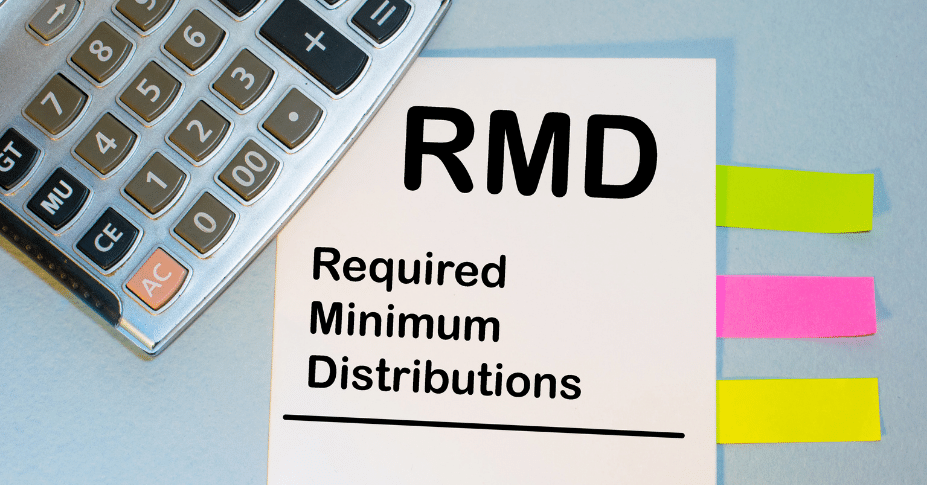
Required Minimum Distributions (RMDs) are mandatory withdrawals from certain retirement accounts that begin at age 73, designed to ensure the IRS collects taxes on previously tax-deferred savings.
Required Minimum Distributions (RMDs) are a critical component of retirement planning in the United States. They represent the minimum amount that retirees must withdraw annually from specific tax-deferred retirement accounts, such as traditional IRAs, 401(k)s, and other qualified plans, once they reach a certain age. As of 2025, individuals must begin taking RMDs at age 73, a change implemented by the SECURE 2.0 Act for those born between 1951 and 1959.
The rationale behind RMDs is rooted in tax policy. Contributions to tax-deferred accounts are made with pre-tax dollars, allowing investments to grow without immediate tax consequences. However, the IRS eventually wants its share. RMDs ensure that retirees begin paying taxes on these funds, preventing indefinite tax deferral. The amount of each RMD is calculated using the account balance at the end of the previous year and a life expectancy factor provided by IRS tables.
Failing to take an RMD can result in steep penalties. Historically, the penalty was 50% of the amount not withdrawn, but recent changes have reduced this to 25%, and potentially 10% if corrected promptly. These penalties underscore the importance of understanding and complying with RMD rules.
Not all retirement accounts are subject to RMDs. Roth IRAs are exempt during the original account holder’s lifetime, and under the SECURE 2.0 Act, Roth 401(k) and Roth 403(b) accounts are also exempt from RMDs while the original owner is alive. However, beneficiaries of these accounts may still face RMD requirements.
***
***
Strategically managing RMDs can help retirees minimize tax impacts and optimize their retirement income. For example, retirees might consider withdrawing more than the minimum in years with lower income to reduce future RMD amounts. Others may choose to convert traditional IRA funds to Roth IRAs before reaching RMD age, thereby reducing future taxable distributions. Additionally, using RMDs to fund charitable donations through Qualified Charitable Distributions (QCDs) can satisfy the RMD requirement while excluding the amount from taxable income.
Timing is also crucial. The first RMD must be taken by April 1 of the year following the year the individual turns 73. Subsequent RMDs must be taken by December 31 each year. Delaying the first RMD can result in two withdrawals in one year, potentially increasing taxable income and affecting Medicare premiums or tax brackets.
In conclusion, RMDs are more than just a tax obligation—they are a planning opportunity. Understanding the rules, calculating the correct amount, and integrating RMDs into a broader retirement strategy can help retirees maintain financial stability and reduce unnecessary tax burdens.
As regulations evolve, staying informed and consulting with financial professionals is essential to make the most of retirement savings.
COMMENTS APPRECIATED
SPEAKING: Dr. Marcinko will be speaking and lecturing, signing and opining, teaching and preaching, storming and performing at many locations throughout the USA this year! His tour of witty and serious pontifications may be scheduled on a planned or ad-hoc basis; for public or private meetings and gatherings; formally, informally, or over lunch or dinner. All medical societies, financial advisory firms or Broker-Dealers are encouraged to submit an RFP for speaking engagements: CONTACT: Ann Miller RN MHA at MarcinkoAdvisors@outlook.com -OR- http://www.MarcinkoAssociates.com
Like, Refer and Subscribe
***
***
Share this:

Filed under: "Ask-an-Advisor", Accounting, economics, Health Economics, Investing, Portfolio Management, Touring with Marcinko | Tagged: Accounting, david marcinko, Investing, IRA, ITAs, personal-finance, Required Minimum Distributions, retirement, retirement planning, RMD, RMDs, Roth IRAs, Secure 2.0 Act, tax | Leave a comment »





 The Leading Business Education Network for Doctors, Financial Advisors and Health Industry Consultants