What is a “DEAD CAT” BOUNCE?

HOW IT WORKS

SPONSOR: http://www.CertifiedMedicalPlanner.org

CMP logo

By Dr. David E. Marcinko MBA CMP®

***

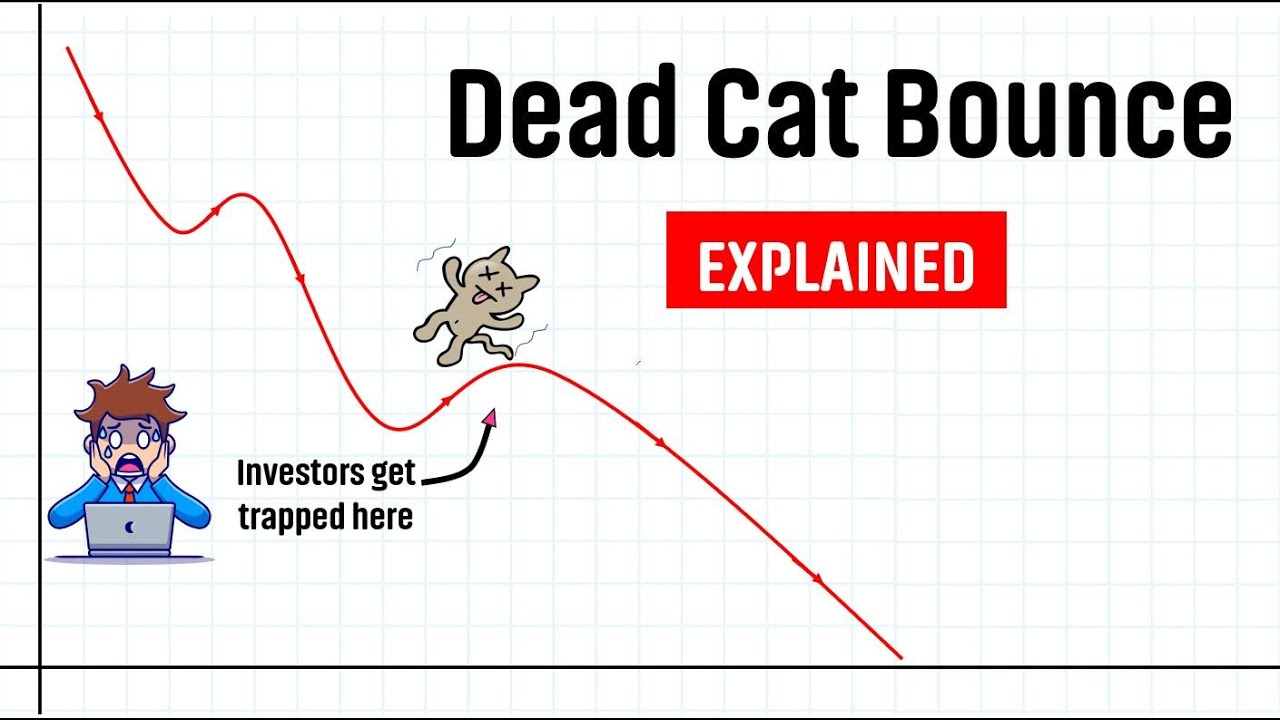
In finance, a dead cat bounce is a small, brief recovery in the price of a declining stock.

****
***

Derived from the idea that “even a dead cat will bounce if it falls from a great height”, the phrase, which originated on Wall Street, is also popularly applied to any case where a subject experiences a brief resurgence during or following a severe decline.

  • The dead cat bounce is a sudden and temporary increase in stock price caused by investors erroneously believing that the stock price’s reached its lowest.
  • The dead cat bounce can only be fully accurately determined with concrete data in hindsight.
  • Both falsely identifying a stock price trough (i.e., falling victim to a dead cat bounce) and falsely identifying a true price trough as a dead cat bounce will result in negative financial consequences.

CITE: https://www.r2library.com/Resource/Title/0826102549

YOUR COMMENTS ARE APPRECIATED.

FINANCE: https://www.amazon.com/Comprehensive-Financial-Planning-Strategies-Advisors/dp/1482240289/ref=sr_1_1?ie=UTF8&qid=1418580820&sr=8-1&keywords=david+marcinko

Thank You

***

What IF the Bear Market is OVER?

***

By Michael A. Gayed, CFA

Portfolio Manager of the ATAC Rotation Funds

***

Bob Farrell is a legendary Wall Street trader and market analyst. He’s perhaps best-known for his “10 rules” of investing that he developed based on his 50-year career in the industry. One of the more popular rules says that “when all the experts and forecasts agree, something else is going to happen.”Right now, almost everyone is expecting a recession driven by high inflation, rising interest rates and geopolitical risks. The S&P 500 is still more than 10% off of its highs, while the NASDAQ 100 is down by more than 20%. Many feel as if more downside is ahead, but what if they’re wrong? What if the bottom is already in? What if the worst is over?

My take? I have no idea. I believe there’s still a bigger and more traditional classic “risk-off” period coming where stocks decline and Treasuries rally in price (which is what historically happens during periods of heightened equity volatility), but the path to get there is what drives investor sentiment. And like everyone else in this business, I can’t tell the future. All I can do is identify conditions in a rules-based fashion that favor an outcome.The important thing to remember here is that the market isn’t the economy. The financial markets are often leading indicators of where investors feel things are going. The actual data is only showing how conditions are or were.

Take the 2020 COVID recession, for example. Once the government announced its multi-trillion dollar stimulus program, stock prices shot higher even though the worst of the economic pain had yet to be experienced.Today, some of the data isn’t even indicating imminent danger.
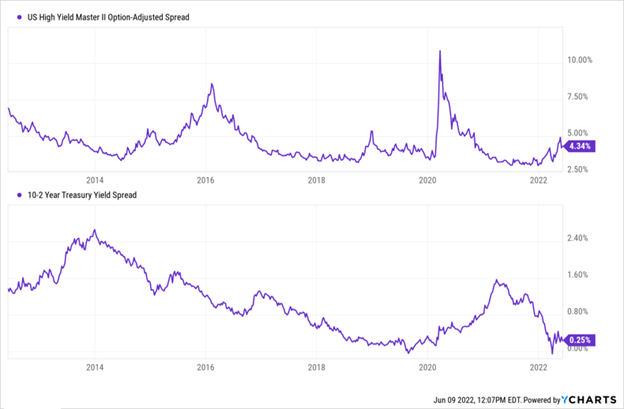
High yield spreads tend to blow out ahead of a recession. They’re currently not at the levels reached during 2016, 2018 or 2020. Investors often view the 10-year/2-year Treasury yield spread as the “recession indicator”. This number did briefly turn negative earlier this year, but has remained in positive territory ever since. While both of these numbers have teased the idea of higher risk conditions ahead, neither has done so in convincing fashion yet.Also consider that the markets tend to be very sensitive to what the Fed does. If the central bank ever decides that recession risk is too high and it hits the pause button on the rate hiking cycle, it could be off to the races again for equity prices. Risk asset prices have the ability to react favorably to looser monetary conditions. Any pivot in that direction could give a big boost to investor sentiment.

If the bear market is over, the ATAC Rotation Fund (ATACX), the ATAC U.S. Rotation ETF (RORO) and the ATAC Credit Rotation ETF (JOJO) could be primed to benefit.We believe all three funds use proven market signals to determine whether they should be positioned either offensively or defensively. Since investors often flock to safety in times of market volatility, the three funds use Treasuries as the “risk-off” or defensive asset class. Admittedly, Treasuries haven’t acted as they historically do relative to equities when in high volatility states. But that doesn’t mean things won’t revert back to historical behavior in the small sample of the here and now.When the signals suggest that conditions are more favorable, the funds can go “risk-on”.

In the case of RORO and ATACX, that could include some combination of large-cap stocks, small-caps and emerging markets. JOJO remains in the fixed income markets and targets junk bonds in this scenario.RORO and ATACX also use leverage, which offers higher return potential. Why? Because leveraging equities when risk-on helps to, over time, counter the impact of being in Treasuries when stocks continue to move higher and with hindsight, risk-off positioning there wasn’t warranted.

Of course this is a double-edged sword, since in a year like this year, the leveraged risk-on position in stocks earlier in the year led to a sizeable decline for both ATACX and RORO. However, over multiple roll of the die, it is that leverage which gives investors the opportunity to capture above average returns in more traditional markets when combined with occasional risk-off periods where Treasuries perform well.High volatility markets don’t need to be feared.

We believe strategies that add and remove market risk based on what the market is telling us give investors the opportunity to earn superior risk-adjusted returns while lowering downside risk. If the markets are ready to begin the next leg higher, the ATAC funds stand ready to benefit while (hopefully) Treasuries get back to doing what they normally would in true risk-off periods .

At some point.

***

COMMENTS APPRECIATED

Thank You

***

FINANCE: https://www.amazon.com/Comprehensive-Financial-Planning-Strategies-Advisors/dp/1482240289/ref=sr_1_1?ie=UTF8&qid=1418580820&sr=8-1&keywords=david+marcinko

***

LECANEMAB: Shows Promise for Alzheimer’s?

By Staff Reporters

***

Alzheimer’s new drug shows promise

Lecanemab, an Alzheimer’s drug from Eisai and Biogen, slowed cognitive decline in patients with early Alzheimer’s by 27% over 18 months in a final-phase trial, the companies said recently.

That rate of decline met the study’s targets and offers hope to the 6 million people in the US with Alzheimer’s that their dementia can be slowed down or delayed. The companies hope lecanemab will fare better commercially than their previous Alzheimer’s drug Aduhelm—which was a flop.

ECONOMIC IMPACT: https://medicalexecutivepost.com/2014/12/06/the-economic-impact-of-alzheimers-disease/

***

COMMENTS APPRECIATED

Thank You

***

INVESTING :https://www.routledge.com/Comprehensive-Financial-Planning-Strategies-for-Doctors-and-Advisors-Best/Marcinko-Hetico/p/book/9781482240283

***

A DENTIST ASKS: How to Invest When There’s Nowhere to Hide?

***

By Vitaliy Katsenelson CFA

***

How to Invest When There’s Nowhere to Hide
I was having lunch with a close friend of mine. He mentioned that he had accumulated a significant sum of money and did not know what to do with it. It was sitting in bonds, and inflation was eating its purchasing power at a very rapid rate.

He is a dentist and had originally thought about expanding his business, but a shortage of labor and surging wages turned expanding into a risky and low-return investment. He complained that the stock market was extremely expensive. I agreed.*

***

CITE: https://www.r2library.com/Resource/Title/082610254

COMMENTS APPRECIATED.

Subscribe to the Medical Executive-Post.

THANK YOU

***

INVESTING: https://www.amazon.com/Comprehensive-Financial-Planning-Strategies-Advisors/dp/1482240289/ref=sr_1_1?ie=UTF8&qid=1418580820&sr=8-1&keywords=david+marcinko

***

BANK OF ENGLAND Quells Stock Market Panic?

By Staff Reporters

***

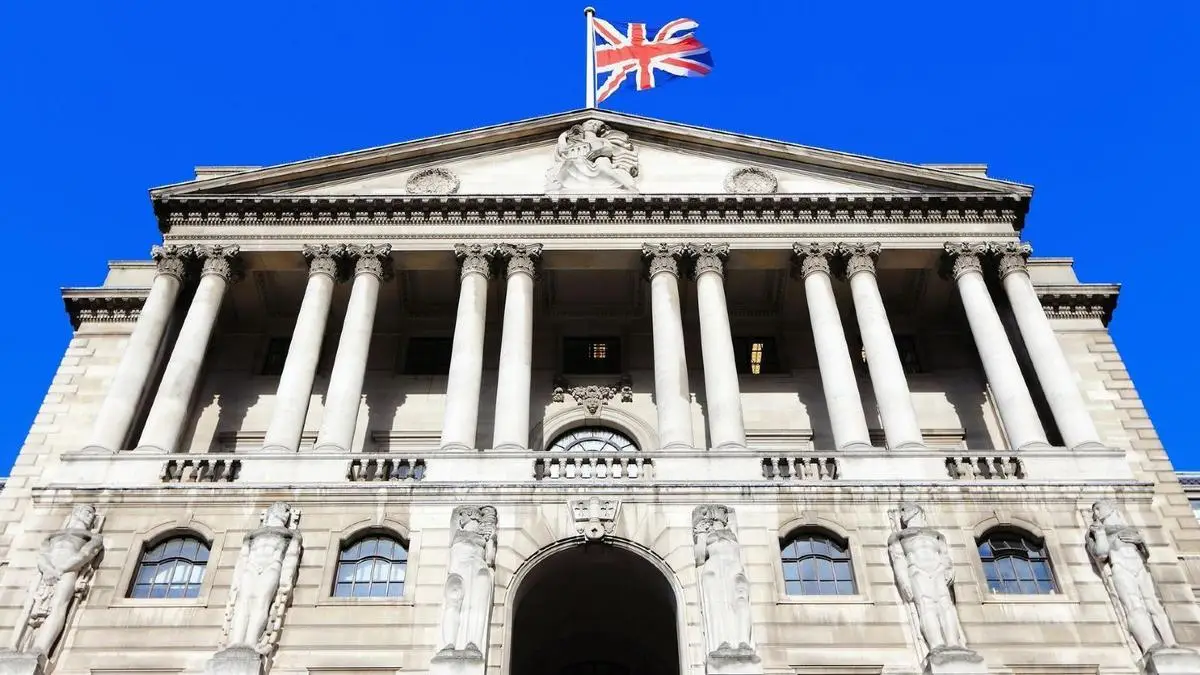
Bank of England steps in to soothe markets. The Bank of England moved to quell the market panic caused by the British government’s recent announcement of major tax cuts, saying it would buy 65 billion pounds ($69 billion) worth of bonds and push off its plans to sell bonds to prevent “a material risk to UK financial stability.”

So, it looks like the central bank did manage to get investors to keep calm and carry on: The pound, which had been crashing, stabilized and bond markets across the globe rallied after the news came out.

***

UPDATE Bounce Fades? https://www.msn.com/en-us/money/markets/dow-futures-down-250-points-as-bank-of-england-intervention-bounce-fades/ar-AA12niPy?cvid=796f8d7fb36c4c5891aaf69bd09e9f22

COMMENTS APPRECIATED

Thank You

INVESTING: https://www.routledge.com/Comprehensive-Financial-Planning-Strategies-for-Doctors-and-Advisors-Best/Marcinko-Hetico/p/book/9781482240283

***

What is Tactical Portfolio Management?

Join Our Mailing List

Re-Thinking Strategic Allocation

[By Dr. David Edward Marcinko MBA]

Dr. David E. Marcinko MBAMany successful physician investors, retirement account managers or endowment fund administrators will establish a “strategic” allocation policy that is intended to guide long-term (greater than one-year) investment decisions.

Thinking Long Term?

This strategic allocation reflects the endowment’s thinking regarding the existence of perceived fundamental shifts in the market. Most endowments will also establish a target range or band for each asset class. The day-to-day managers then have the flexibility to make tactical decisions for a given class so long as they stay within the target range.

Terms

The term “tactical” when used in the context of investment strategy refers to the investor or manager’s ability to take advantage of short-term (under one year) market anomalies such as pricing discrepancies between different sectors or across different styles.

Assessment

Historically, tactical decisions with respect to asset allocation were derided as “market timing.” However, market timing implies moving outside of the target ranges whereas tactical decision making simply addresses the opportunistic deployment of funds within the asset class target range.

So, what do you think?

Online MD investor

Conclusion

Your thoughts and comments on this ME-P are appreciated. Feel free to review our top-left column, and top-right sidebar materials, links, URLs and related websites, too. Then, subscribe to the ME-P. It is fast, free and secure.

Link: http://feeds.feedburner.com/HealthcareFinancialsthePostForcxos

Speaker: If you need a moderator or speaker for an upcoming event, Dr. David E. Marcinko; MBA – Publisher-in-Chief of the Medical Executive-Post – is available for seminar or speaking engagements. Contact: MarcinkoAdvisors@msn.com

SE OUR OTHER PRINT BOOKS AND RELATED INFORMATION SOURCES

***

FINED: Wall $treet Financial Firms

By Staff Reporters

***

***

Wall Street HIT with $2 billion in fines!

The three-martini lunch may dwindle to two after a dozen of the largest finance firms agreed to pay more than two billion dollars to settle probes from the SEC and CFTC.

Those regulators claimed that the banks failed to adequately manage employee communication.

And, for the second time in a decade, Regions Bank was found to have charged illegal overdraft fees, the government in a settlement that will require the bank to repay $141 million to customers and pay an additional $50 million in fees.

MORE: https://www.reuters.com/business/finance/us-fines-16-major-wall-street-firms-11-billion-over-recordkeeping-failures-2022-09-27/

***

COMMENTS APPRECIATED

Thank You

***

INVESTING: https://www.routledge.com/Comprehensive-Financial-Planning-Strategies-for-Doctors-and-Advisors-Best/Marcinko-Hetico/p/book/9781482240283

***

LAW: Introduced to Stop Medicare Physician Pay Cuts

By Health Capital Consultants, LLC

***

***

Law Introduced to Stop Medicare Physician Pay Cuts

On September 13, 2022, Representatives Ami Berra (D-CA-7) and Larry Bucshon (R-IN-8) introduced the Supporting Medicare Providers Act of 2022 (H.R. 8800), which aims to infuse the Medicare Physician Fee Schedule (MPFS) with a 4.42% funding increase for 2023. With a bipartisan coalition of 12 co-sponsors, the bill would have the practical effect of negating the impending 4.42% cut to the MPFS conversion factor. This Health Capital Topics article will review the bill, discuss its support, and examine its potential implications. (Read more…)

***
COMMENTS APPRECIATED

Thank You

***

HOSPITALS: https://www.amazon.com/Financial-Management-Strategies-Healthcare-Organizations/dp/1466558733/ref=sr_1_3?ie=UTF8&qid=1380743521&sr=8-3&keywords=david+marcinko

***