Our Brain, Computer Operating Systems and Financial Decision Making

Join Our Mailing List

Our default brain operating system is programmed to make poor financial decisions?

Rick Kahler MS CFPBy Rick Kahler MS CFP® http://www.KahlerFinancial.com

If you’ve ever struggled to learn new software or unravel a computer problem, you know that part of the frustration of dealing with technology is its logic. Computers respond according to their default operating systems. If we want them to do something different, they need to be reprogrammed.

In the same way, the default operating systems of our brains are actually programmed to make poor financial decisions. This is normal. Making good financial decisions actually takes a deliberate reprogramming of your internal operating system. Here is why.

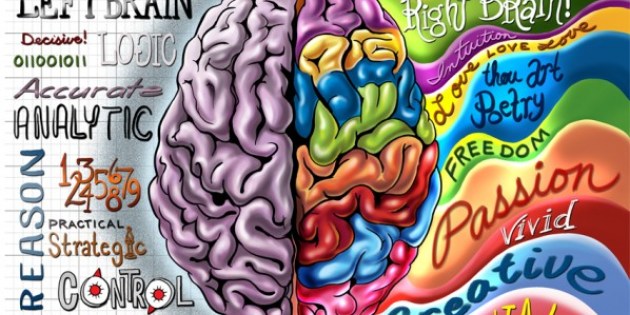
Our brains are divided into three sections: the reptilian brain, the mammalian brain, and the prefrontal cortex.

The reptilian brain is the oldest, most primitive part. In a talk at the Financial Therapy Association’s annual conference in July 2015 in San Jose del Cabo, Mexico, Dr. Ted Klontz explained that the reptilian brain continually scans for threats. It is waiting for death to come walking through the doorway, so it lives in anxiety. Since anything positive is not a threat, it’s oblivious to the positive. It also doesn’t understand the concept of the future, but lives only in this moment.

Left to its own programming, then, of course the reptilian brain might have a problem making monthly contributions to a retirement account. Saving for the future isn’t a concept it even understands. Further, it sees taking money out of the checkbook as a threat because that leaves fewer resources to battle death when it comes through the doorway. Making things even worse, the reptilian brain is nearly impossible to change. The best most of us can do is manage it.

***

Brain view

***

This brings us to the mammalian brain, whose only job is to manage the anxiety of the reptilian brain. It does so in three ways:

  1. Remove the threat (fight),
  2. Run away from the threat (flight),
  3. Get small and disappear to hide from the threat (freeze).

Most of us favor one of these three responses to threats, and according to Dr. Klontz we select our preferred response by the age of six. When the mammalian brain responds, it processes exponentially faster than the thinking part of our brain, the prefrontal cortex. Because of the ease with which the mammalian brain responds to threats, 90% of all decisions—including financial ones—are made here.

With the mammalian brain managing the anxiety of the reptilian brain, we have a more sophisticated response to our potential retirement plan contribution. Some of us will verbally fight and defeat any messenger (article, employer, financial advisor, spouse) that suggests we drain our current resources to send money into a black hole. Others will simply flee the messenger by diverting our attention to the Monday night football game or any task at hand. A portion of us will just freeze into a glassy-eyed stare. Nobody is home.

That leaves us with our only hope, the understanding and thinking part of the brain, the prefrontal cortex. This part of our brain doesn’t fully come on line until the mid-twenties. It functions as the parent of the other two brains, but unfortunately it processes information very slowly and with great effort.

***

brain

***

More:

Assessment

Fortunately, this is the brain that is easiest to change. By training it to become aware when the lower parts of the brain are about to make a hair-trigger decision, we can stop the ensuing action long enough to add logic as well as emotion to the process.

More:

Reprogramming the brain takes time, practice, and using resources like education, mentors, advisors, and counseling. Eventually, wise financial choices like saving for retirement can become the new default programming, even in spite of the reptilian brain.

Conclusion

Your thoughts and comments on this ME-P are appreciated. Feel free to review our top-left column, and top-right sidebar materials, links, URLs and related websites, too. Then, subscribe to the ME-P. It is fast, free and secure.

Speaker: If you need a moderator or speaker for an upcoming event, Dr. David E. Marcinko; MBA – Publisher-in-Chief of the Medical Executive-Post – is available for seminar or speaking engagements. Contact: MarcinkoAdvisors@msn.com

OUR OTHER PRINT BOOKS AND RELATED INFORMATION SOURCES:

***

Comprehensive Financial Planning Strategies for Doctors and Advisors: Best Practices from Leading Consultants and Certified Medical Planners(TM)

***

A primer to tonight’s GOP debate

Join Our Mailing List

Health Entitlements & the Deficit

By Nancy Chockley PhD

NIHCM.org

Congress is poised to pass a budget plan that will raise funding levels for the next two years. While these changes are paid for, the plan does not include structural changes to the health entitlement programs that are a leading driver of our budget deficits and mounting debt.

The GOP presidential candidates are likely to discuss a variety of proposals for structural reforms to these programs during tonight’s debate.

As a primer to this important conversation, this chart story presents essential facts about spending for Medicare, Medicaid and the Affordable Care Act and the impact of these programs on the deficit.

http://www.nihcm.org/health-entitlement-spending-a-growing-threat#one

business-valuation1

See the rest of the story

***

[HEALTH INSURANCE, MANAGED CARE, ECONOMICS, FINANCE AND HEALTH INFORMATION TECHNOLOGY COMPANION DICTIONARY SET]

      Product DetailsProduct DetailsProduct Details

[Mike Stahl PhD MBA] *** [Foreword Dr.Mata MD CIS] *** [Dr. Getzen PhD]

***

On Value Investor Guy Spier

Join Our Mailing List

What I Learned from Value Investor Guy Spier 

By Vitaliy N. Katsenelson CFA

***

A few months ago I was asked by the CFA Institute to give talks to CFA societies in London (October 27), Zurich (October 29) and Frankfurt (November 3). I enjoy giving occasional talks (but only a few a year, otherwise they become a chore). I also love Europe — history, old buildings and cultures, museums, sometimes a mild adventure. But this offer was much more interesting — I was asked to give a joint presentation with Guy Spier.

About  Guy

Guy Spier is a tremendous value investor who happens to be a good friend whose company I truly enjoy. He is the most cosmopolitan person I know. He was born in South Africa, spent his childhood in Iran and Israel, received his bachelor’s degree from Oxford and MBA from Harvard, lived in New York and in 2008 got sick of the New York hedge fund rat race and moved with his family to Zurich. His wife, Lory, is Mexican, so in addition to being fluent in languages of all the above-mentioned countries, he romances in Spanish.

Last year Guy published a book, The Education of a Value Investor: My Transformative Quest for Wealth, Wisdom, and Enlightenment. It is not a traditional investing book. In fact, I’ll say that differently: This is the most untraditional book on investing you’re likely to run into. It is a self-effacing memoir of Guy’s transformation from a Gordon Gekko wannabe who believes that his Ivy League education entitles him to Wall Street riches to a committed follower of Warren Buffett and his sidekick, Charlie Munger.

It must have taken a lot of guts and self-confidence (overcoming a lot of self-doubt) to write this book. To be honest, I am not sure I could have written it. It is one thing to strive for intellectual honesty; it is another to unearth and expose one’s own greed, arrogance and envy. Many of us are trying to hide such character traits in plain sight, never mind telling the world about them in a popular book.

After all, Guy is not writing about a fictional character; he is writing about himself. The humility he displays is what makes the book so effective — you can clearly follow the deliberate transformation of a cockroach (the Wall Street version of a caterpillar) into a butterfly.

This memoir is able to achieve something that many other investments books don’t (including my own): It reveals the real, practical, behavioral side of investing, not the way you read about it in behavioral finance textbooks but the raw emotions every investor experiences.

There are a lot of lessons we can learn from Guy. The first one — and, for me, the most important one — is that environment matters.

***

value

[Eye for Value]

Enter Dan Ariely PhD

Dan Ariely PhD, the well-known behavioral economist, was interviewed on Bloomberg Television and asked, What can one do to lose weight? He said, Start with the environment around you. If you come to work and there is a box of doughnuts on your desk, losing weight is going to be difficult. Also, look in your fridge: All the stuff that is probably not good for your diet is staring you in the face, whereas the fruits and vegetables that are essential to healthy eating are buried in the hard-to-access bottom drawers.

The same applies to investing: We may not notice it, but the environment around us impacts our ability to make good decisions. Guy writes, “We like to think that we change our environment, but the truth is that it changes us. So we have to be extraordinarily careful to choose the right environment — to work with, and even socialize with, the right people.”

I have found that checking the prices of stocks I own throughout the day shrinks my time horizon, impacts my mood and wastes my brain cells as I try to interpret data that have very little information. I am getting better; I am already down checking prices only once a day. My goal is to do it just once every few days.

Guy is ahead of me: He checks them once a week. Recently, I put in price alerts for stocks my firm owns or follows. If a stock price changes more than 10 percent or crosses a certain important (buy or sell) point, I’ll get an e-mail alert.

Guy finds that he isn’t effective when he gets to the office because of external distractions. In his Zurich office he has a quiet room that he calls the library. It doesn’t have phones or computers, and this is where he reads, thinks and naps. Here in Denver, I have a lawn chair (bought at Costco for $50) that I take outside to sit on, put on headphones, and listen to music and read. My friend Chris goes to Starbucks or the local library in the morning for four hours before he goes to his office, and that’s where he does his reading. The key is to figure out what works for you and try not to fight your external environment.

Another lesson I have learned is that misery loves company. I was talking to Guy about his book, and he told me that people who love the book appreciate the fact that he is so honest about the emotions that consume him when he is struggling in the stock market. As investors, we often put on a brave face, but if we aren’t emotionally honest, our opinion of ourselves, our self-worth, may fluctuate with the performance of our portfolio.

Personally, I can really relate to this. When I read Guy’s book the first time (I’ve read it twice), I was going through a tough time with my portfolio. I found this book extremely therapeutic. In fact, I recommended it to a friend of mine who was going through a similar rough patch.

Another lesson:

Surround yourself with the right people. Friendships matter. I’ve been blatantly plagiarizing Guy on this for years. Guy created a conference called VALUEx Zurich, a gathering of like-minded people who get together and share investment ideas. I attended the very first one in 2010, and since then I have hosted a very similar event, VALUEx Vail, every year in June.

Guy has a latticework group of eight investors that meets every quarter and discusses the stock market, the investment process and personal issues. I’ve copied that, too. Four of us got together in Atlanta in October. We visited a few companies and debated stocks, industry trends, diets, women . . . okay, you get the point. That was our first latticework event, but I hope we’ll meet a few times a year.

Attending Guy’s conference in Zurich and organizing VALUEx Vail have resulted in enduring friendships. These conferences allowed me to create a large network of like-minded investors I talk to regularly. Every member of my latticework group I met at VALUEx Vail.

(A short side note: One of the most important things we can do as parents of teenage kids is to make sure they have good friends. That’s paramount. We as parents lose influence on our kids when they become teenagers. Their friends have a disproportionately larger impact on their choices than we do. We can influence the environment around our kids by helping them select friends.)

And then there are thank-you cards. Over the years Guy has written tens of thousands of them. He is indiscriminate about them — at one point he wrote to every employee at a boutique hotel he stayed in. All right, maybe he took it too far that time. But, writing a thank-you card to value investor Mohnish Pabrai changed his life. He attended Pabrai Investment Funds’ annual meeting in Chicago. After the meeting he sent Pabrai a thank-you note. A few months later Pabrai came to New York and invited Guy to dinner. This was the start of the Spier-Pabrai bromance. Thank-you cards work because so few people write them. They leave a lasting impression on the receiver because they say, “I like you. You are important to me.”

***

stock-exchange

[Stock-Exchanges]

Mentors

The last point is, Be yourself. Having mentors is important. For many value investors, Buffett and Munger are our north stars. There are lots of things we can learn from them. But we also have to realize that we must be ourselves, because we are not them. I remember reading a long time ago that Buffett did not do spreadsheets. That impacted me for a few months — I stopped building models and creating spreadsheets. I thought, If Buffett doesn’t do it, I shouldn’t do it either. Wrong.

Buffett is a lot smarter than I am; he is able to analyze companies in his head. He is Buffett. I have found that spreadsheets work for me because they help me think. When Buffett and I look at a company philosophically, we are looking for the same things, but I need a computer to assist me, and he doesn’t.

Mohnish Pabrai owns just a handful of stocks. Guy, on the other hand, knows that he would not be able to be a rational decision maker if he had only a handful of stocks. There will be a significant overlap between Guy’s and Pabrai’s portfolios, but Guy’s will have two or three times as many stocks.

Assessment

Dear ME-P Readers, I spoke with your Editor-in-Chief Dr. Dave Marcinko a few weeks ago, and as you can tell from this ME-P essay, I am a very biased book reviewer. I am not even sure this qualifies as a book review. Despite my biases, I can safely say that The Education of a Value Investor is one of the best books I’ve read in 2015. (I promise you that it is not the only book I’ve read this year.) Before you commit your time and money to this book, watch Guy’s presentation on Talks at Google.

ABOUT

Vitaliy N. Katsenelson, CFA, is Chief Investment Officer at Investment Management Associates in Denver, Colo. He is the author of Active Value Investing (Wiley 2007) and The Little Book of Sideways Markets (Wiley, 2010).  His books have been translated into eight languages.  Forbes called him – the new Benjamin Graham.

Conclusion

Your thoughts and comments on this ME-P are appreciated. Feel free to review our top-left column, and top-right sidebar materials, links, URLs and related websites, too. Then, subscribe to the ME-P. It is fast, free and secure.

Speaker: If you need a moderator or speaker for an upcoming event, Dr. David E. Marcinko; MBA – Publisher-in-Chief of the Medical Executive-Post – is available for seminar or speaking engagements. Contact: MarcinkoAdvisors@msn.com

OUR OTHER PRINT BOOKS AND RELATED INFORMATION SOURCES:

***

Comprehensive Financial Planning Strategies for Doctors and Advisors: Best Practices from Leading Consultants and Certified Medical Planners(TM)

***


Knowing the Difference Between Stock Value and Price

Join Our Mailing List

A Motley Fool Interview

vitaly

ABOUT

Vitaliy N. Katsenelson CFA is Chief Investment Officer at Investment Management Associates in Denver, Colo. He is the author of Active Value Investing (Wiley 2007) and The Little Book of Sideways Markets (Wiley, 2010).  His books were translated into eight languages.  Forbes Magazine called him “The new Benjamin Graham”.  

The Motley Fool,

Our own Editor Dr. Dave Marcinko recently spoke with Vitaliy, as well as The Motley Fool’s James Early and Rana Pritanjali. Vitaliy explained how he helps investors see the difference between a stock’s value and its price, as well how he assesses macroeconomic trends when investing.

Assessment

Plus, Vitaliy predicted the next category Apple will disrupt: the automotive industry.

You can listen and read the full interview here.

PS: You can read Manifesto – The Values of Value Investing, here.

I hope you enjoy it  – Ann Miller RN MHA [Managing Editor]

Conclusion

Your thoughts and comments on this ME-P are appreciated. Feel free to review our top-left column, and top-right sidebar materials, links, URLs and related websites, too. Then, subscribe to the ME-P. It is fast, free and secure.

Speaker: If you need a moderator or speaker for an upcoming event, Dr. David E. Marcinko; MBA – Publisher-in-Chief of the Medical Executive-Post – is available for seminar or speaking engagements. Contact: MarcinkoAdvisors@msn.com

OUR OTHER PRINT BOOKS AND RELATED INFORMATION SOURCES:

Risk Management, Liability Insurance, and Asset Protection Strategies for Doctors and Advisors: Best Practices from Leading Consultants and Certified Medical Planners™                    Comprehensive Financial Planning Strategies for Doctors and Advisors: Best Practices from Leading Consultants and Certified Medical Planners™

Seeking Comments on iMBA Inc’s New Financial Planning and Medical Risk Management Textbooks for Doctors

For DOCTORS Only!

Tell us What You Think?

***

http://www.BusinessofMedicalPractice.com

Join Our Mailing List

***

[PHYSICIAN FOCUSED FINANCIAL PLANNING AND RISK MANAGEMENT COMPANION TEXTBOOK SET]

 Risk Management, Liability Insurance, and Asset Protection Strategies for Doctors and Advisors: Best Practices from Leading Consultants and Certified Medical Planners™Comprehensive Financial Planning Strategies for Doctors and Advisors: Best Practices from Leading Consultants and Certified Medical Planners™

http://www.CertifiedMedicalPlanner.org

[Education and Certification Program for Financial Advisors]

***

Healthcare Costs During Retirement

Join Our Mailing List

Estimations ….

By http://www.MCOL.com

***

ImageProxy.mvc

***

Conclusion

Your thoughts and comments on this ME-P are appreciated. Feel free to review our top-left column, and top-right sidebar materials, links, URLs and related websites, too. Then, subscribe to the ME-P. It is fast, free and secure.

Speaker: If you need a moderator or speaker for an upcoming event, Dr. David E. Marcinko; MBA – Publisher-in-Chief of the Medical Executive-Post – is available for seminar or speaking engagements. Contact: MarcinkoAdvisors@msn.com

OUR OTHER PRINT BOOKS AND RELATED INFORMATION SOURCES:

[HEALTH INSURANCE, MANAGED CARE, ECONOMICS, FINANCE AND HEALTH INFORMATION TECHNOLOGY COMPANION DICTIONARY SET]

      Product DetailsProduct DetailsProduct Details

[Mike Stahl PhD MBA] *** [Foreword Dr.Mata MD CIS] *** [Dr. Getzen PhD]

***

How quickly market Emotions have changed since August – Worry?

Join Our Mailing List

It’s already priced into the markets … according to some experts!

By Arthur Chalekian GEPC [Elite Financial Partners]

ArtThe Markets UPDATE

***
How quickly emotions have changed since August. Worry? Angst? It’s already priced into the markets, according to some experts.
 
Last week, Barron’s published the results of its Big Money Poll, a biannual survey of professional investors and money managers. A majority of those surveyed (55 percent) were bullish about U.S. markets’ prospects through June 2016, 29 percent were neutral, and 16 percent were bearish. That’s a big shift. Last spring, just 45 percent of those polled were bullish and nearly one-half were neutral. This time around, things are different:
 
“After a wild and crazy summer for U.S. stocks, marked by an 11 percent correction in August, Wall Street’s bulls are showing conviction again…the pros expect stocks to rise by as much as 7 percent through the middle of 2016, propelled by a growing economy and gains in corporate profit. The Big Money investors see fresh value in beaten-up energy stocks and financials, as well as dividend-paying blue chips. And, they don’t expect a likely interest-rate hike – when it comes – to break the bull’s stride for long.”
 
Investors who participated in the American Association of Individual Investors’ October 14 Sentiment Survey weren’t quite so optimistic. The survey showed just 34 percent of investors were bullish, 39 percent were neutral, and 27 percent were bearish. The bulls were down 3 percent from the previous week, and the bears gained a percent. Uncertainty seemed to be the name of the game, though, as the number of investors who held neutral opinions increased by 4 percent.
 
As an interesting side note, the professionals surveyed by Barron’s estimated the number of investors who weren’t sure where markets are headed was much larger – 76 percent!
***
businessmen-384741_640
 ***
Assessment
If you’re a contrarian – an investor who does not subscribe to popular opinion – there are a lot of opinions to consider.
***
Conclusion

Your thoughts and comments on this ME-P are appreciated. Feel free to review our top-left column, and top-right sidebar materials, links, URLs and related websites, too. Then, subscribe to the ME-P. It is fast, free and secure.

Speaker: If you need a moderator or speaker for an upcoming event, Dr. David E. Marcinko; MBA – Publisher-in-Chief of the Medical Executive-Post – is available for seminar or speaking engagements. Contact: MarcinkoAdvisors@msn.com

OUR OTHER PRINT BOOKS AND RELATED INFORMATION SOURCES:

Comprehensive Financial Planning Strategies for Doctors and Advisors: Best Practices from Leading Consultants and Certified Medical Planners(TM)

***

What is the Glass-Steagall Act?

Join Our Mailing List

[Staff reporters]

According to NEIL IRWIN; it is the 82-Year-Old Banking Law That Stirred a Debate!

What is the Glass-Steagall Act [Banking Act of 1933]?

When people talk about banking, they are talking about two broad classes of activities.

Commercial banking is what happens at your neighborhood branch: You deposit money in a checking or savings account, and the bank uses those deposits to make loans to consumers or small businesses.

Investment banking refers to the kind of banking activity more common on Wall Street, like helping large companies issue stock or bonds in order to fund themselves, and trading securities in hope of making a profit.

The government’s response was the Banking Act of 1933, commonly known as the Glass-Steagall Act (for the bill’s sponsors, Senator Carter Glass of Virginia and Representative Henry Steagall of Alabama), which required that commercial banking and securities activities be separated, not to take place within the same financial institution.

More: The Three Types of Banks

***

Bank

***

More:

Assessment

So, here is a look at why the Democratic presidential candidates Bernie Sanders and Martin O’Malley want to reinstate it.

TERMS: Investment Banking DR. MARCINKO

Conclusion

Your thoughts and comments on this ME-P are appreciated. Feel free to review our top-left column, and top-right sidebar materials, links, URLs and related websites, too. Then, subscribe to the ME-P. It is fast, free and secure.

Speaker: If you need a moderator or speaker for an upcoming event, Dr. David E. Marcinko; MBA – Publisher-in-Chief of the Medical Executive-Post – is available for seminar or speaking engagements. Contact: MarcinkoAdvisors@msn.com

OUR OTHER PRINT BOOKS AND RELATED INFORMATION SOURCES:

***

Comprehensive Financial Planning Strategies for Doctors and Advisors: Best Practices from Leading Consultants and Certified Medical Planners(TM)

***

The Case for Value Based Medical Care

Join Our Mailing List

Migrating from Volume to … Value

By http://www.MCOL.com

***

ImageProxy

***

Assessment

Conclusion

Your thoughts and comments on this ME-P are appreciated. Feel free to review our top-left column, and top-right sidebar materials, links, URLs and related websites, too. Then, subscribe to the ME-P. It is fast, free and secure.

Speaker: If you need a moderator or speaker for an upcoming event, Dr. David E. Marcinko; MBA – Publisher-in-Chief of the Medical Executive-Post – is available for seminar or speaking engagements. Contact: MarcinkoAdvisors@msn.com

OUR OTHER PRINT BOOKS AND RELATED INFORMATION SOURCES:

***

[PRIVATE MEDICAL PRACTICE BUSINESS MANAGEMENT TEXTBOOK – 3rd.  Edition]

Product Details

  [Foreword Dr. Hashem MD PhD] *** [Foreword Dr. Silva MD MBA]

***

FREE! In Swedish Medicine

Join Our Mailing List

An Interesting Innovation

dan-snapshot

[By Dan Ariely PhD]

I recently learned of an interesting innovation in medical pricing coming from Sweden.

This pamphlet from the healthcare authority states (translated):

“If you have a respiratory problem and you don’t take antibiotics for it during your first visit to the doctor, you have the right to a second visit within five days free of charge”.

Read more about this approach here …

FREE! In Swedish Medicine

More:

Conclusion

Your thoughts and comments on this ME-P are appreciated. Feel free to review our top-left column, and top-right sidebar materials, links, URLs and related websites, too. Then, subscribe to the ME-P. It is fast, free and secure.

***

198174

***

Speaker: If you need a moderator or speaker for an upcoming event, Dr. David E. Marcinko; MBA – Publisher-in-Chief of the Medical Executive-Post – is available for seminar or speaking engagements. Contact: MarcinkoAdvisors@msn.com

OUR OTHER PRINT BOOKS AND RELATED INFORMATION SOURCES:

***

[HEALTH INSURANCE, MANAGED CARE, ECONOMICS, FINANCE AND HEALTH INFORMATION TECHNOLOGY COMPANION DICTIONARY SET]

      Product DetailsProduct DetailsProduct Details

[Mike Stahl PhD MBA] *** [Foreword Dr.Mata MD CIS] *** [Dr. Getzen PhD]

***

Are the ME-P and Ashley Madison Related?

Join Our Mailing List

On Ransom-Ware, Black-Hat Hackers, the Gullible, Guilty … and Personal Cyber Security

A-Special ME-P Report

*** 

DEM white shirt

By Dr. David E. Marcinko MBA MBBS [Hon]

[Publisher-in-Chief]

Your Ashley Madison Account
[Paul recommends to read this email]‏
But … don’t fall for it!

I just received this email message from sharingservices@aol.com: In this time of medical information and financial advisory data cyber security breaches, here is a warning about personal security, too!

If it can happen to me, it can happen to anyone!

*********************************************************************************************************

Unfortunately your data was leaked in the recent hacking of Ashley Madison and I know have your information. I have also used your user profile to find your Facebook page, using this I can now message all of your friends and family members.

If you would like to prevent me from sharing this dirt info with all of your friends and family members (and perhaps even your employers too?) then you need to send 1 bitcoin to the following BTC address.

Bitcoin Address:
1AEJiZFnELwRZVjmVSvDSwUaXNZy4X9bQN

You may be wondering why should you and what will prevent other people from doing the same, in short you now know to change your privacy settings in Facebook so no one can view your friends/family list. So go ahead and update that now (I have a copy if you don’t pay) to stop any future emails like this.

You can buy bitcoin using online exchanges easily. If the bitcoin is not paid within 3 days of 23 Sep 2015 then my system will automatically message all of your friends and family members. The bitcoin address is unique to you.

Consider how expensive a divorce lawyer is. If you are no longer in a committed relationship then think about how this will affect your social standing amongst family and friends. What will your friends and family think about you?

Sincerely,
Paul

***

hackers

*******************************************************************************************************************

An Object lesson to all ME-P readers and subscribers

After review, I noted the following faults with this blast message:

* No sender last name.
* Sender blast email service
* Multiple email addresses
* Poor grammar
* I do not have – or ever had – a Facebook account
* I do not have – or ever had – an AM account

Assessment

Note any other “give-aways“? Don’t fall for this ploy. And, don’t be Gullible or GuiltyForewarned is forearmed.

More:

Conclusion

Your thoughts and comments on this ME-P are appreciated. Feel free to review our top-left column, and top-right sidebar materials, links, URLs and related websites, too. Then, subscribe to the ME-P. It is fast, free and secure.

Speaker: If you need a moderator or speaker for an upcoming event, Dr. David E. Marcinko; MBA – Publisher-in-Chief of the Medical Executive-Post – is available for seminar or speaking engagements. Contact: MarcinkoAdvisors@msn.com

OUR OTHER PRINT BOOKS AND RELATED INFORMATION SOURCES:

***

Product DetailsProduct DetailsProduct Details

Product Details

Product DetailsProduct Details

Risk Management, Liability Insurance, and Asset Protection Strategies for Doctors and Advisors: Best Practices from Leading Consultants and Certified Medical Planners™8Comprehensive Financial Planning Strategies for Doctors and Advisors: Best Practices from Leading Consultants and Certified Medical Planners™

***

R U A Genius?


Join Our Mailing List

Well – Are You?

[By staff reporters]

Assessment

Or – just average?

Conclusion

Your thoughts and comments on this ME-P are appreciated. Feel free to review our top-left column, and top-right sidebar materials, links, URLs and related websites, too. Then, subscribe to the ME-P. It is fast, free and secure.

Speaker: If you need a moderator or speaker for an upcoming event, Dr. David E. Marcinko; MBA – Publisher-in-Chief of the Medical Executive-Post – is available for seminar or speaking engagements. Contact: MarcinkoAdvisors@msn.com

OUR OTHER PRINT BOOKS AND RELATED INFORMATION SOURCES:

Sponsors Welcomed

Credible sponsors and like-minded advertisers are always welcomed.

Advertising Info:

all together

Investors are allowed to change their minds

Join Our Mailing List 
The Markets
Art

By Arthur Chalekian GEPC

[Financial Consultant]

***

They’re investors. They’re allowed to change their minds.
*** 
Just a few weeks ago, on September 17, the Federal Reserve Open Market Committee (FOMC) decided to leave the fed funds rate unchanged. In part, this was because, “Recent global economic and financial developments may restrain economic activity somewhat and are likely to put further downward pressure on inflation in the near term.”
 
The next day, September 18, stock markets tumbled. By the time September was over, many markets had closed on their worst quarter in four years, according to the BBC. The Dow Jones Industrial Average fell by almost 8 percent, Britain’s FTSE 100 was down 7 percent, Germany’s Dax was off by almost 12 percent, and the Shanghai Composite lost more than 24 percent.
 
Last week, on Thursday, the minutes of the FOMC meeting were released. Investors’ response was quite different. Barron’s reported many believe a rate hike during 2015 is less likely than it once was, and that reinvigorated investor optimism:
 
“Going into Friday’s session, global equity markets’ valuations were enriched by some $2.5 trillion, according to Bloomberg calculations. As for U.S. stocks, Wilshire Associates reckons that they tacked on 3.44 percent, or approximately $800 billion, over the full week, based on the gain in the Wilshire 5000 index, their biggest weekly gain in nearly 12 months.”
 
Why does the same news elicit two very different responses? There are many reasons. Foremost among them is the fact a lot of elements influence markets – investor confidence, company valuations, central bank actions, automated trading, and many others.
***
Stock_Market
***
Assessment
 
What does last week’s upward push mean? One analyst cited by Barron’s suggested we’re seeing a bear market rally, but only time will tell.
***
Conclusion

Your thoughts and comments on this ME-P are appreciated. Feel free to review our top-left column, and top-right sidebar materials, links, URLs and related websites, too. Then, subscribe to the ME-P. It is fast, free and secure.

Speaker: If you need a moderator or speaker for an upcoming event, Dr. David E. Marcinko; MBA – Publisher-in-Chief of the Medical Executive-Post – is available for seminar or speaking engagements. Contact: MarcinkoAdvisors@msn.com

OUR OTHER PRINT BOOKS AND RELATED INFORMATION SOURCES:

Risk Management, Liability Insurance, and Asset Protection Strategies for Doctors and Advisors: Best Practices from Leading Consultants and Certified Medical Planners™8Comprehensive Financial Planning Strategies for Doctors and Advisors: Best Practices from Leading Consultants and Certified Medical Planners™

***

How Companies Value Body Parts?

Join Our Mailing List
A ProPublica Price Check
By Lena Groeger and Michael Grabell
   ***
             

        ProPublica

                                                                      ***

Injured workers are entitled to compensation for permanent disabilities under state workers’ comp laws.

More:

***

body

Price Check: How Companies Value Body Parts

***

But – Texas has long allowed companies to opt out and write their own benefit plans.

More:

Assessment

Benefits for the same body part can differ dramatically depending on which company you work for.

Related Story »

Conclusion

Your thoughts and comments on this ME-P are appreciated. Feel free to review our top-left column, and top-right sidebar materials, links, URLs and related websites, too. Then, subscribe to the ME-P. It is fast, free and secure.

Speaker: If you need a moderator or speaker for an upcoming event, Dr. David E. Marcinko; MBA – Publisher-in-Chief of the Medical Executive-Post – is available for seminar or speaking engagements. Contact: MarcinkoAdvisors@msn.com

OUR OTHER PRINT BOOKS AND RELATED INFORMATION SOURCES:

 ***

[HEALTH INSURANCE, MANAGED CARE, ECONOMICS, FINANCE AND HEALTH INFORMATION TECHNOLOGY COMPANION DICTIONARY SET]

Product DetailsProduct DetailsProduct Details

[Mike Stahl PhD MBA] *** [Foreword Dr.Mata MD CIS] *** [Dr. Getzen PhD]

***

Medicine: A Lesson In Efficient Markets

Join Our Mailing List

MEDICINE: A Lesson In Efficient Markets

dan-snapshot

[By Dan Ariely PhD] http://danariely.com

The market for medicine is incredibly interesting. Almost every day we learn something new about a treatment that we thought would work but does not, or about a treatment that we didn’t think would work but does.

Beyond the particular fascination, I think that the medicine market can also teach us important lessons about rationality … read more:

Medicine: A Lesson In Efficient Markets

More:

Conclusion

Your thoughts and comments on this ME-P are appreciated. Feel free to review our top-left column, and top-right sidebar materials, links, URLs and related websites, too. Then, subscribe to the ME-P. It is fast, free and secure.

***

medical-cartoon

***

Speaker: If you need a moderator or speaker for an upcoming event, Dr. David E. Marcinko; MBA – Publisher-in-Chief of the Medical Executive-Post – is available for seminar or speaking engagements. Contact: MarcinkoAdvisors@msn.com

OUR OTHER PRINT BOOKS AND RELATED INFORMATION SOURCES:

[PRIVATE MEDICAL PRACTICE BUSINESS MANAGEMENT TEXTBOOK – 3rd.  Edition]

Product Details

http://www.BusinessofMedicalPractice.com

  [Foreword Dr. Hashem MD PhD] *** [Foreword Dr. Silva MD MBA]

***

It’s open enrollment season for health insurance – Now What!

Join Our Mailing List

How do I compare my health insurance options during open enrollment?

Daniel J. Antokal MBA
[Financial Advisor]

daniel

The decisions you make during open enrollment season regarding health insurance are especially important, since you generally must stick with the options you choose until the next open enrollment season, unless you experience a “qualifying” event such as marriage or the birth of a child. As a result, you should take the time to carefully review the types of plans offered by your employer and consider all the costs associated with each plan.

With most health insurance plans, your employer will pay a portion of the premium and require you to pay the remainder through payroll deductions. When comparing different plans, keep in mind that even though a plan with a lower premium may seem like the most attractive option, it could have higher potential out-of-pocket costs.

You’ll want to review the copayments, deductibles, and coinsurance associated with each plan. This is an important step because these costs can greatly affect what you end up paying out-of-pocket.

When reviewing the costs of each plan, consider the following:

  • Does the plan have an individual or family deductible? If so, what is the amount that will have to be satisfied before your insurance coverage kicks in?
  • Are there copayments? If so what amounts are charged for doctor visits, specialists, hospital visits, and prescription drugs?
  • Will you have to pay any coinsurance once you’ve satisfied the deductible?

Specific features

You should also assess each plan’s coverage and specific features. For example, are there coverage exclusions or limitations that apply? Which expenses are fully or partially covered? Do you have the option to go to doctors who are outside your plan’s provider network? Does the plan offer additional types of coverage for vision, dental, or prescription drugs?

***

healthcare

***

Assessment

In the end, when reviewing your options, you’ll want to balance the coverage and features offered under each plan against the plan’s overall cost to determine which plan offers you the best value for your money. 

Conclusion

Your thoughts and comments on this ME-P are appreciated. Feel free to review our top-left column, and top-right sidebar materials, links, URLs and related websites, too. Then, subscribe to the ME-P. It is fast, free and secure.

Speaker: If you need a moderator or speaker for an upcoming event, Dr. David E. Marcinko; MBA – Publisher-in-Chief of the Medical Executive-Post – is available for seminar or speaking engagements. Contact: MarcinkoAdvisors@msn.com

OUR OTHER PRINT BOOKS AND RELATED INFORMATION SOURCES:

***

[PHYSICIAN FOCUSED FINANCIAL PLANNING AND RISK MANAGEMENT COMPANION TEXTBOOK SET]

  Risk Management, Liability Insurance, and Asset Protection Strategies for Doctors and Advisors: Best Practices from Leading Consultants and Certified Medical Planners™Comprehensive Financial Planning Strategies for Doctors and Advisors: Best Practices from Leading Consultants and Certified Medical Planners™

***

Finally – Why the Healthcare.gov Site Failed?

Join Our Mailing List

No … Really!

By Robert E.H. Khoo MD FRCS(C) FACS

http://www.colondoc.com

***

health care gov

Why the Healthcare.gov Site Failed

***

Conclusion

Your thoughts and comments on this ME-P are appreciated. Feel free to review our top-left column, and top-right sidebar materials, links, URLs and related websites, too. Then, subscribe to the ME-P. It is fast, free and secure.

Speaker: If you need a moderator or speaker for an upcoming event, Dr. David E. Marcinko; MBA – Publisher-in-Chief of the Medical Executive-Post – is available for seminar or speaking engagements. Contact: MarcinkoAdvisors@msn.com

OUR OTHER PRINT BOOKS AND RELATED INFORMATION SOURCES:

***

Product Details

***

EHR Meaningful Use Rules Finalized

Join Our Mailing List 

The CMS Modifications

[By staff reporters]

Source: Joseph Goedert, Health Data Management [10/7/15]
***
Centers for Medicare and Medicaid Services
***
The Centers for Medicare and Medicaid Services has issued a 752-page final rule covering three components of the electronic health records meaningful use program. The rule finalizes modifications to Stages 1 and 2; the 2015 edition of electronic health records certification criteria; and Stage 3 of meaningful use.
Modifications
Under the modifications to Stages 1 and 2, eligible professionals have 10 meaningful use objectives, down from 18 previously. In Stage 3, there are 8 objectives for eligible professionals and hospitals, and more than 60 percent of measures require interoperability.
Assessment
The entire rule is available here.
***
MD with eHR
***
Conclusion
Your thoughts and comments on this ME-P are appreciated. Feel free to review our top-left column, and top-right sidebar materials, links, URLs and related websites, too. Then, subscribe to the ME-P. It is fast, free and secure.
Speaker: If you need a moderator or speaker for an upcoming event, Dr. David E. Marcinko; MBA – Publisher-in-Chief of the Medical Executive-Post – is available for seminar or speaking engagements. Contact: MarcinkoAdvisors@msn.com

EHRs in the News – GAG!

Join Our Mailing List

A Recent Round-Up

1-darrellpruitt[By D. Kellus Pruitt DDS]

“Feds push forward with controversial health rule – The Obama administration is moving ahead with controversial new rules that require doctors to switch to electronic health records or face fees, resisting calls from both parties to delay implementation.”

By Sarah Ferris for The Hill, October 6, 2015

http://thehill.com/policy/healthcare/256120-feds-push-forward-with-controversial-health-it-rule?utm_content=buffer9cd4b&utm_medium=social&utm_source=twitter.com&utm_campaign=buffer

“The Gag Clause is Killing Us – Doctors are barred from discussing safety glitches in software…  And what if doctors — your doctor — is unable to make problems with EHR programs public, due to a so-called ‘gag clause’ written into the contract with the software company, which forbids sharing and publishing, in any form, of potentially dangerous flaws in the IT systems? This is already happening.”

By Deirdre Reilly for HealthZette, October 6, 2015

http://www.lifezette.com/healthzette/gag-clause-is-killing-us/

 “Hackers target Australian health sector, selling records for A$1,000 – Hackers are targeting the Australian health sector, with fully populated digital health records sold on the black market for up to A$1,000 each [$720 US].”

By Beverley Head for ComputerWeekly.com, October 7, 2015

http://www.computerweekly.com/news/4500254986/Hackers-target-Australian-health-sector-selling-records-for-A1000 

 “Electronic health records software often written without doctors’ input – The reason why many doctors find electronic health records (EHR) difficult to use might be that the software wasn’t properly tested, researchers suggests.”

By Kathryn Doyle for Reuters, October 7, 2015

http://www.reuters.com/article/2015/10/07/us-health-software-ehr-idUSKCN0S11OY20151007

 “EHRs provide long-term savings, convenience.”

(no byline), American Dental Association, ADA News, December 6, 2013

http://www.ada.org/en/publications/ada-news/2013-archive/december/ehrs-provide-long-term-savings-convenience

 ***EHR

***

More:

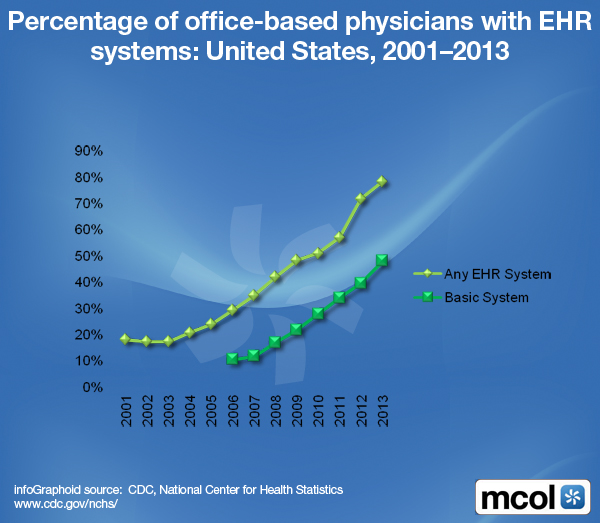
  1. The Percentage of Office-Based Doctors with EHRs
  2. Do Nurses like EHRs?
  3. EHRs – Still Not Ready For Prime Time
  4. The “Price” of eHRs

Conclusion

Your thoughts and comments on this ME-P are appreciated. Feel free to review our top-left column, and top-right sidebar materials, links, URLs and related websites, too. Then, subscribe to the ME-P. It is fast, free and secure.

Speaker: If you need a moderator or speaker for an upcoming event, Dr. David E. Marcinko; MBA – Publisher-in-Chief of the Medical Executive-Post – is available for seminar or speaking engagements. Contact: MarcinkoAdvisors@msn.com

OUR OTHER PRINT BOOKS AND RELATED INFORMATION SOURCES:

***

[HOSPITAL OPERATIONS, ORGANIZATIONAL BEHAVIOR, HIT AND FINANCIAL MANAGEMENT COMPANION TEXTBOOK SET]

Product DetailsProduct Details

[Foreword Dr. Phillips MD JD MBA LLM] *** [Foreword Dr. Nash MD MBA FACP]

***

The third quarter for 2015 was a REAL humdinger!

 Join Our Mailing List
The Markets – Update
Art

By Arthur Chalekian GEPC

[Financial Consultant]

Well, the third quarter for 2015 was a REAL humdinger!
                                            ***
It began with the first International Monetary Fund (IMF) default by a developed country (Greece) and finished with Hurricane Joaquin possibly headed toward the east coast. In between, China’s stock market tumbled, the Federal Reserve tried to interpret conflicting signals, and trade growth slowed globally. After such a stressful quarter, we may see an uptick in the quantity of alcoholic beverages consumed per person around the world. That number had declined (along with economic growth in China) between 2012 and 2014, according to The Economist.
***
No Grexit – for now
Despite defaulting on its IMF loan, rejecting a multi-billion-euro bailout plan, and closing its banks for more than two weeks, Greece was not forced out of the Eurozone. Instead, Europe cooked up a deal that left the IMF unhappy and analysts shaking their heads. The Economist reported the new deal for Greece was an exercise in wishful thinking. The problem is the deal relies on “the same old recipe of austerity and implausible assumptions. The IMF is supposed to be financing part of the bailout. Even it thinks the deal makes no sense.” It’s a recipe we’re familiar with in the United States: When in doubt, defer the problem to the future.
***
A downturn in China
Despite reports from the Chinese government that it hit its economic growth target (7 percent) on the nose during the first two quarters of the year, The Economist was skeptical about the veracity of those claims. During the first quarter.
***
“Growth in industrial production was the weakest since the depths of the financial crisis; the property market, a pillar of the economy, crumbled. China reported real growth (i.e., after accounting for inflation) of 7 percent year-on-year in the first quarter, but nominal growth of just 5.8 percent.”
***
That statistical sleight of hand implies China experienced deflation early in the year. It did not.
On a related note, from mid-June through the end of the third quarter, the Shenzhen Stock Exchange Composite Index fell from 3,140 to about 1,716, according to BloombergBusiness. That’s about a 45 percent decline in value.
***
Red light, green light at the Federal Reserve
Green light: employment numbers. Red light: consumer prices, inflation expectations, wages, and global growth. Late in the quarter, the Federal Reserve decided not to begin tightening monetary policy.
According to Reuters, voting members of the Federal Open Market Committee (FOMC) decided uncertainty in global markets had the potential to negatively affect domestic economic strength. They may have been right. The Wall Street Journal reported, although unemployment remained at 5.1 percent, just 142,000 jobs were added in September. That was significantly below economists’ expectations that 200,000 jobs would be created. The Journal suggested the labor market has downshifted after 18 months of solid jobs creation.
***
Global trade in the doldrums
The global economy isn’t as robust as many expected it to be. According to the Business Standard, the World Trade Organization (WTO) lowered its forecast for global trade growth during 2015 from 3.3 percent to 2.8 percent. Falling demand for imports in developing nations and low commodity prices are translating into less global trade. Expectations are trade growth will be 3.9 percent in 2016, which could help support global economic growth.
***
Coming Change
America’s share of the global economy is potent. Our country accounts for 16 percent (after being adjusted for currency differences) of the world’s gross domestic product (GDP) and 12 percent of merchandise trade.
Again, according to The Economist, we dominate “the brainiest and most complex parts of the global economy.” Our presence is strong in social media, cloud computing, venture capital, and finance. In addition, the dollar is the world’s dominant currency. While the view from the top is pleasing, we may not be there forever. The Economist explained:
***
“In the first change in the world economic order since 1920-45, when America overtook Britain, [America’s] dominance is now being eroded. As a share of world GDP, America and China (including Hong Kong) are neck and neck at 16 percent and 17 percent respectively, measured at purchasing-power parity. At market exchange rates, a fair gap remains with America at 23 percent and China at 14 percent … But any reordering of the world economy’s architecture will not be as fast or decisive as it was last time…the Middle Kingdom is a middle-income country with immature financial markets and without the rule of law. The absence of democracy, too, may be a serious drawback.”
***
It may be hard to believe, in light of recent economic and market events in China, but change is on its way. Regardless, the influence of the United States should continue to be powerful well into the future.

Conclusion

Your thoughts and comments on this ME-P are appreciated. Feel free to review our top-left column, and top-right sidebar materials, links, URLs and related websites, too. Then, subscribe to the ME-P. It is fast, free and secure.

Speaker: If you need a moderator or speaker for an upcoming event, Dr. David E. Marcinko; MBA – Publisher-in-Chief of the Medical Executive-Post – is available for seminar or speaking engagements. Contact: MarcinkoAdvisors@msn.com

OUR OTHER PRINT BOOKS AND RELATED INFORMATION SOURCES:

***

Comprehensive Financial Planning Strategies for Doctors and Advisors: Best Practices from Leading Consultants and Certified Medical Planners(TM)

Front Matter with Foreword by Jason Dyken MD MBA

logos

“BY DOCTORS – FOR DOCTORS – PEER REVIEWED – FIDUCIARY FOCUSED”

***

About DocGraph.Org

Join Our Mailing List

Discover, Create and Analyze Open Healthcare Data
[By staff reporters]
 ***
DocGraph is a community composed of data journalists, scientists, and advocates; with three core iniatives:

I. Community Collaboration 

The DocGraph community includes academics, journalists, doctors, entrepreneurs, statisticians and more. Our members have used DocGraph datasets to restructure provider networks, teach classes, start companies, and report on quality metrics. We welcome anyone with passion for healthcare improvement to join us.

If you write about healthcare data and would like to be featured on our blog, or if you are a data scientist interested in publishing research using DocGraph data, please give us a holler too!

II. Open Healthcare Data Advocacy 

Our efforts led to the first national Provider Referral data release by the US government. The original “DocGraph Data” has helped researchers, journalists, and companies around the nation to provide data-backed healthcare solutions.

We continue to work with federal, state, private, non-profit, and public entities to create and open healthcare datasets. We believe the release of reliable and current data is vital to the improvement of the healthcare system.

III. The DocGraph Alliance 

The DocGraph Alliance is a group of organizations committed to supporting data journalism and data science community efforts.

Its community mission is to encourage an ecosystem of innovators to collaborate and share tools and research methodologies around open healthcare datasets.Support from the Alliance members means the DocGraph Journal can continue providing support for the growing community of data scientists focused on leveraging initiatives of transparency in healthcare.

***

gears

***

Assessment

Visit http://www.docgraph.org today. And, for the premier analytical software built on DocGraph data, visit CareSet.com

Conclusion

Your thoughts and comments on this ME-P are appreciated. Feel free to review our top-left column, and top-right sidebar materials, links, URLs and related websites, too. Then, subscribe to the ME-P. It is fast, free and secure.

Speaker: If you need a moderator or speaker for an upcoming event, Dr. David E. Marcinko; MBA – Publisher-in-Chief of the Medical Executive-Post – is available for seminar or speaking engagements. Contact: MarcinkoAdvisors@msn.com

OUR OTHER PRINT BOOKS AND RELATED INFORMATION SOURCES:

***

[HEALTH INSURANCE, MANAGED CARE, ECONOMICS, FINANCE AND HEALTH INFORMATION TECHNOLOGY COMPANION DICTIONARY SET]

      Product DetailsProduct DetailsProduct Details

[Mike Stahl PhD MBA] *** [Foreword Dr.Mata MD CIS] *** [Dr. Getzen PhD]

***

New Tools for A Healthy Future

Join Our Mailing List

By Terri D. Wright, PhD, MPH                   

***

ImageProxy

***

APHA’s Policy Center Creates Tools for A Healthy Future

DEAR DAVID – The central challenge of the American Public Health Association is to create the healthiest nation in one generation. APHA’s Center for Public Health Policy was established almost 10 years ago to bring together analytical public health expertise and infuse the public health field with expert materials and tools in response to this challenge.

The Center embraces the public health issues that threaten population health. Our work is done through national and state partnerships and by leveraging resources across multiple sectors, including government, philanthropy and non-profit. Fundamental to all that we do: strategies to ensure health equity for all.

We invite you to learn about our work and stay abreast of our progress on producing resources for our members and constituents. The following priorities represent our core work to create a healthy nation:

  • Assuring health equity for all.
  • Promoting systems transformation to integrate public health and health care and improve population health.
  • Improving the natural and built environments to support health and create environmental justice.

We will keep you updated on our priority issues and encourage you to connect with our team.

We invite your feedback as we embark on this journey – phpolicycenter@apha.org

Sincerely,
Terri D Wright Signature

***

[HOSPITAL OPERATIONS, ORGANIZATIONAL [BEHAVIOR AND FINANCIAL MANAGEMENT COMPANION TEXTBOOK SET]

Product DetailsProduct Details

[Foreword Dr. Phillips MD JD MBA LLM] *** [Foreword Dr. Nash MD MBA FACP]

***

How Your Hospital Can Avoid Nomination as a Great Place to Work 

Join Our Mailing List

Are hospitals ranked according to employee happiness?

By Robert EH Khoo MD FRCS FACS  http://www.colondoc.com

SOAR

Earlier this month I read a Wall Street Journal article about Zeynep Ton’s Good Jobs Index. Who is Zeynep Ton? She is a professor at the Massachusetts Institute of Technology’s Sloan School of Management who has ranked retailers on employee happiness. This was so positive. It was good to hear about businesses concerned about employee happiness and not just about profits and shareholders.

Two weeks later I was dismayed to read about the bruising work environment at Amazon in the New York Times. The article described a work environment toxic to workers overseen by a CEO who has blind to this view.

I was curious. I work in a hospital. Are hospitals ranked according to employee happiness? My health system is recognized as a Great Place to Work and the Fortune 100 Best Companies to Work For.

Last year I left a hospital that was an ideal model of health care in the President’s eyes. Time Magazine had published two articles about that hospital. Yet my experience there as an employee was closer to the abusive atmosphere the New York Times detailed about Amazon.

I imagine that my old workplace could continue avoiding accolades from its employees by following these 14 steps:

***

Hospital with paper MRs

How Your Hospital Can Avoid A Nomination as a Great Place to Work 

***

Conclusion

Your thoughts and comments on this ME-P are appreciated. Feel free to review our top-left column, and top-right sidebar materials, links, URLs and related websites, too. Then, subscribe to the ME-P. It is fast, free and secure.

Speaker: If you need a moderator or speaker for an upcoming event, Dr. David E. Marcinko; MBA – Publisher-in-Chief of the Medical Executive-Post – is available for seminar or speaking engagements. Contact: MarcinkoAdvisors@msn.com

OUR OTHER PRINT BOOKS AND RELATED INFORMATION SOURCES:

***

[HOSPITAL OPERATIONS, ORGANIZATIONAL BEHAVIOR AND FINANCIAL MANAGEMENT COMPANION TEXTBOOK SET]

Product DetailsProduct Details

[Foreword Dr. Phillips MD JD MBA LLM] *** [Foreword Dr. Nash MD MBA FACP]

***

An MD’s Venture Back to Microsoft Windows 10

Join Our Mailing List

A Review

By Robert E.H. Khoo MD FRCS(C) FACS

http://www.colondoc.com.

***

disruptive

***

My Venture Back to Microsoft – a Review of Windows 10

Conclusion

Your thoughts and comments on this ME-P are appreciated. Feel free to review our top-left column, and top-right sidebar materials, links, URLs and related websites, too. Then, subscribe to the ME-P. It is fast, free and secure.

Speaker: If you need a moderator or speaker for an upcoming event, Dr. David E. Marcinko; MBA – Publisher-in-Chief of the Medical Executive-Post – is available for seminar or speaking engagements. Contact: MarcinkoAdvisors@msn.com

OUR OTHER PRINT BOOKS AND RELATED INFORMATION SOURCES:

***

[HEALTH INSURANCE, MANAGED CARE, ECONOMICS, FINANCE AND HEALTH INFORMATION TECHNOLOGY COMPANION DICTIONARY SET]

      Product DetailsProduct DetailsProduct Details

[Mike Stahl PhD MBA] *** [Foreword Dr.Mata MD CIS] *** [Dr. Getzen PhD]

***

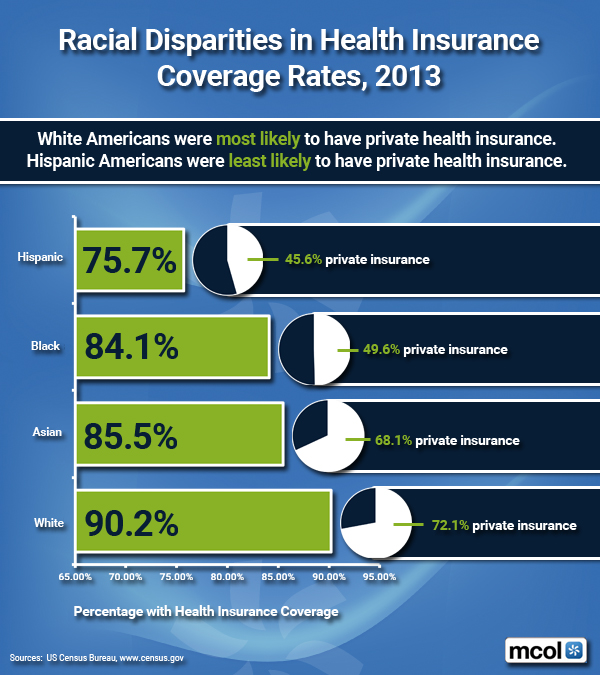
Racial Disparities in Health Insurance Coverage

Join Our Mailing List

For 2013

By http://www.MCOL.com

***

ImageProxy

***

Conclusion

Your thoughts and comments on this ME-P are appreciated. Feel free to review our top-left column, and top-right sidebar materials, links, URLs and related websites, too. Then, subscribe to the ME-P. It is fast, free and secure.

Speaker: If you need a moderator or speaker for an upcoming event, Dr. David E. Marcinko; MBA – Publisher-in-Chief of the Medical Executive-Post – is available for seminar or speaking engagements. Contact: MarcinkoAdvisors@msn.com

OUR OTHER PRINT BOOKS AND RELATED INFORMATION SOURCES:

[HEALTH INSURANCE, MANAGED CARE, ECONOMICS, FINANCE AND HEALTH INFORMATION TECHNOLOGY COMPANION DICTIONARY SET]

      Product DetailsProduct DetailsProduct Details

[Mike Stahl PhD MBA] *** [Foreword Dr.Mata MD CIS] *** [Dr. Getzen PhD]

***

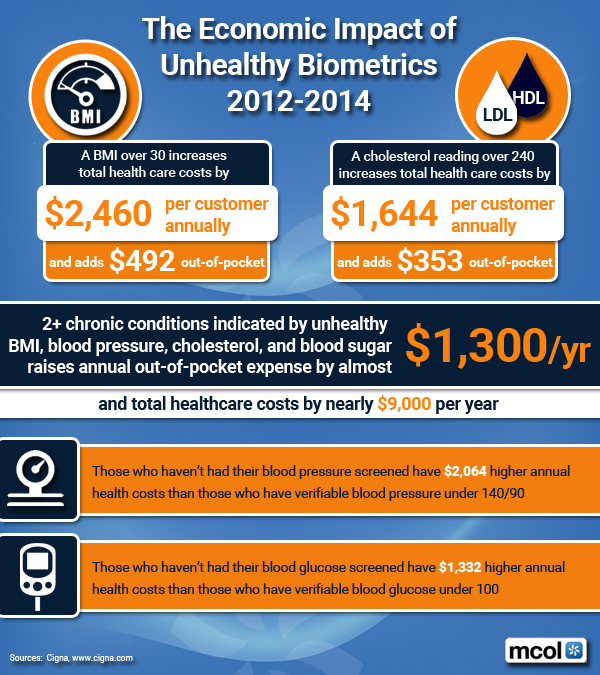
The Economic Impact of UnHealthy Bio-Metrics

Join Our Mailing List

For 20102 – 2014

http://www.MCOL.com

***

ImageProxy

***

Conclusion

Your thoughts and comments on this ME-P are appreciated. Feel free to review our top-left column, and top-right sidebar materials, links, URLs and related websites, too. Then, subscribe to the ME-P. It is fast, free and secure.

Speaker: If you need a moderator or speaker for an upcoming event, Dr. David E. Marcinko; MBA – Publisher-in-Chief of the Medical Executive-Post – is available for seminar or speaking engagements. Contact: MarcinkoAdvisors@msn.com

OUR OTHER PRINT BOOKS AND RELATED INFORMATION SOURCES:

***

[HEALTH INSURANCE, MANAGED CARE, ECONOMICS, FINANCE AND HEALTH INFORMATION TECHNOLOGY COMPANION DICTIONARY SET]

      Product DetailsProduct DetailsProduct Details

[Mike Stahl PhD MBA] *** [Foreword Dr.Mata MD CIS] *** [Dr. Getzen PhD]

***

Ben Bernanke: Buy One Suit, Get Three Free

Join Our Mailing List

Linear thinking is dangerous

vitaly[By Vitaliy Katsenelson, CFA]

Linear thinking is dangerous. It is the easiest form of reasoning, lying on the path of least resistance. The simpler the path, the more readily people will march along it. Linear arguments are easy to make, as they require the least amount of evidence — past data points with a straight line drawn through them.However, the larger the crowd that follows the wrong line of reasoning, the more people pile in, and the greater the consequences if they are proved wrong.

A lot of things in nature, and thus in investing, are not linear. A past trend may or may not persist into the future. Events don’t happen in a vacuum; they are observed, studied and capitalized on — which in the case of investing may preclude a company’s future from resembling its past. As I write this, I think of successful companies whose achievements attracted competition, which then marginalized them.

Some things are inherently nonlinear, their behavior reminiscent of a pendulum’s: The further they swing in one direction, the harder they’ll go in the opposite direction. It is very dangerous to default to linearity with such nonlinear phenomena, as the more confident we become in the swing (the more linearity we observe), the closer we are to the pendulum’s reversing course.

Price-earnings ratios often follow a pendulum behavior. If you look at high-quality dividend-paying stocks — the Coca-Colas and Procter & Gambles of the world — they are now changing hands at more than 20 times earnings. Their recent performance has driven linear thinkers to pile into them, expecting more of the same in the future. Don’t! These stocks were beneficiaries of a swing in the P/E pendulum as it went from low to average and then to above-average levels.

Pattern recognition is an important contributor to success in investing. Mark Twain once said that history doesn’t repeat itself, but it rhymes. If you can identify a rhyme (that is, see a pattern) relating to the current situation, then you can develop a framework to analyze and forecast it. But what if the current situation is very different — if it doesn’t rhyme with anything in the past? This is where the ability to draw parallels becomes helpful. It allows you to overlay rhymes (patterns) from other companies, industries or even fields. Building analogous frameworks is a cure for linear thinking; it helps us see nonlinearity and facilitates the creation of nonlinear mental models.

Then there is pseudolinearity: things that seem to be linear but are forced into linearity by extrinsic factors. This was a subtopic of my presentation at the Valuex Vail investing conference in June. I drew a parallel between two entities that suddenly looked analogous: Jos. A. Bank Clothiers, a Hampstead, Maryland–based retailer of men’s apparel, and the Federal Reserve.

***

rote

***

Jos. A. Bank

Jos. A. Bank has always been a very promotional retailer. It would jack up prices, then run sales for consumers happy to be deceived — a typical American retail tale. But sometime in 2008, Jos. A. Bank went promotional on steroids. You could not watch CNBC for an hour without seeing one of its ads. The company started out by encouraging you to buy one suit and get one free. Then you got two free suits. Finally, it started giving away Android phones with suit purchases. For a while this past March, Jos. A. Bank offered consumers the opportunity to buy one suit and get three free.

There are several problems with the strategy: It does not emphasize the quality of the suits or the company’s great service, and the ads aren’t helping to build a brand but are intended just to pimp sales at Jos. A. Bank, as if it were a grocery store with USDA choice beef on sale.

This brings us to the latest quarter. Jos. A. Bank’s same-store sales dropped 8 percent, but what really piqued my interest was this explanation by its CEO, R. Neal Black, during its earnings call in June: “Since 2008, at the beginning of the financial crisis and the recession, the overall sales picture has been one of volatility, and strong promotional activity has been consistently and effectively driving our sales increases. This strategy was designed with 18 to 24 months of effectiveness in mind, and we stuck with it for more than 60 months since — as the economy remained weak. Now the strategy has become less effective.”

What Jos. A. Bank has really been doing since the financial crisis is running its own version of quantitative easing. The company had a temporary strategy that was supposed to get people into its stores during the recession — much like the Fed’s original QE, which was designed to provide liquidity in a time of crisis — but the recovery that ensued was not to Jos. A. Bank’s liking. So just as the Fed implemented QE2, and then QE3 when the economy did not improve to its satisfaction, the retailer followed with more QE.

It is understandable why Jos. A. Bank’s management did what it did. The company was being responsible to its employees — it didn’t want to close stores or have layoffs — and it had to report quarterly to shareholders. The focus shifted from building a long-term sustainable franchise to using short-term measures to grow earnings the next quarter and the quarter after that.

There are many lessons that one can draw from the parallels between Jos. A. Bank’s behavior and the Fed’s handling of our economy. First, it is very hard to challenge someone who has a linear argument. Let’s say that a year ago you talked to Jos. A. Bank’s management and raised the question of the sustainability of their advertising strategy. They’d have pointed to four years of success, and they’d have been right, at least up to that moment. They would have had four years of data points and a bulletproof linear argument, and you would have had your common sense and little else.

***

suit-869380__180

***

Ben Bernanke

Right now Ben Bernanke looks like a genius. He can show you all the data points in the recovery, but so could Jos. A. Bank, and this leads us to a second lesson: Pain is postponable, but it is cumulative. During Jos. A. Bank’s quarterly call, its CEO also said: “The decline in traffic is because existing customers are returning slightly less frequently. . . . It makes sense when you consider the saturating effect of our intense promotional activity over the past several years.”

With every sale Jos. A. Bank stole its future purchases, because when you buy one suit and get three for free, you may not need to buy another one for a while.But there is also a snowball effect that you cannot ignore: Every ad chipped away at the company’s brand. Now when you show someone that you wear a Jos. A. Bank suit, they don’t think about its quality, just that you have two or three more suits in your closet.

There is a cost to our recovery — a bloated Federal Reserve balance sheet and our addiction to low interest rates. Of course, we spread that addiction globally.

According to Hugh Hendry, founding partner and CIO of London-based hedge fund firm Eclectica Asset Management, rising U.S. bond yields have driven global yields higher. “In Brazil for instance, the biggest emerging debt market, no company has been able to raise debt abroad since mid-May as borrowing costs soared to a four-year high in June, at 7.1 percent,” he wrote in a recent investment letter.

The Fed is betting on George Soros’ theory of reflexivity, in which people’s biases and actions can change the economy: Instead of the wagon being towed by the horse, the wagon, in expectation that it will be towed by the horse, starts moving on its own, thereby motivating the horse to start towing the wagon.Lower interest rates drive people to riskier assets, and as asset values go up, people feel confident and spend money, and the economy grows. But this policy puts us on very shaky ground, because reflexivity cuts both ways: If asset prices start to decline, confidence declines — and so will the economy. Now there are a lot more savers owning riskier assets than they otherwise would have, and their wealth is at risk of getting wiped out.

The third lesson from the parallels between the Fed and Jos. A. Bank: We are in the midst of a game of musical chairs, and when the music stops, no one wants to be left standing around holding risky assets. Everyone is focused on the Fed’s tapering, and they are right to do so. Just as we saw with Jos. A. Bank, economic promotions cannot go on forever. With every sale the company had to increase the ante, giving away more and more to get people to come into its stores. The Fed may continue to buy Treasuries and mortgage securities, but the purchases will be less and less effective. And the music may stop on its own, without the Fed doing anything about it.

Last, pseudolinearity eventually leads to high uncertainty and thus lower valuations. Put yourself in the shoes of an investor analyzing Jos. A. Bank today. Before buying the stock, you’d have to answer the following questions: What is the company’s earnings power? How much did its promotional strategy damage the brand? And how much in future sales did that strategy steal?

Assessment

In the wake of Jos. A. Bank’s own five-year, nonstop version of QE, it is difficult to answer these questions with confidence. The company’s earnings power is uncertain, and investors will be willing to pay less for a dollar of uncertain earnings, thus resulting in a lower P/E. At some point, when U.S. economic activity weakens, investors will have to answer similar questions about the U.S. and global economies. And as they look for answers, they’ll be putting a lower P/E on U.S. stocks.

ABOUT

Vitaliy N. Katsenelson CFA is Chief Investment Officer at Investment Management Associates in Denver, Colo. He is the author of Active Value Investing (Wiley 2007) and The Little Book of Sideways Markets (Wiley, 2010).  His books were translated into eight languages.  Forbes Magazine called him “The new Benjamin Graham”.  

Conclusion

Your thoughts and comments on this ME-P are appreciated. Feel free to review our top-left column, and top-right sidebar materials, links, URLs and related websites, too. Then, subscribe to the ME-P. It is fast, free and secure.

Speaker: If you need a moderator or speaker for an upcoming event, Dr. David E. Marcinko; MBA – Publisher-in-Chief of the Medical Executive-Post – is available for seminar or speaking engagements. Contact: MarcinkoAdvisors@msn.com

OUR OTHER PRINT BOOKS AND RELATED INFORMATION SOURCES:

***

[WHERE LEARNING IS A plus+]

Career Development, Products and Services

“The informed voice of a new generation of fiduciary advisors for healthcare”

CMP logo

http://www.CertifiedMedicalPlanner.org 

 Our New Text – “Take a Peek Inside – Now Available

Comprehensive Financial Planning Strategies for Doctors and Advisors: Best Practices from Leading Consultants and Certified Medical Planners(TM)

                              logos

“BY DOCTORS – FOR DOCTORS – PEER REVIEWED – FIDUCIARY FOCUSED”

***