BOARD CERTIFICATION EXAM STUDY GUIDES Lower Extremity Trauma
[Click on Image to Enlarge]
ME-P Free Advertising Consultation
The “Medical Executive-Post” is about connecting doctors, health care executives and modern consulting advisors. It’s about free-enterprise, business, practice, policy, personal financial planning and wealth building capitalism. We have an attitude that’s independent, outspoken, intelligent and so Next-Gen; often edgy, usually controversial. And, our consultants “got fly”, just like U. Read it! Write it! Post it! “Medical Executive-Post”. Call or email us for your FREE advertising and sales consultation TODAY [678.779.8597] Email: MarcinkoAdvisors@outlook.com
Medical & Surgical e-Consent Forms
ePodiatryConsentForms.com
iMBA Inc., OFFICES
Suite #5901 Wilbanks Drive, Norcross, Georgia, 30092 USA [1.678.779.8597]. Our location is real and we are now virtually enabled to assist new long distance clients and out-of-town colleagues.
ME-P Publishing
SEEKING INDUSTRY INFO PARTNERS?
If you want the opportunity to work with leading health care industry insiders, innovators and watchers, the “ME-P” may be right for you? We are unbiased and operate at the nexus of theoretical and applied R&D. Collaborate with us and you’ll put your brand in front of a smart & tightly focused demographic; one at the forefront of our emerging healthcare free marketplace of informed and professional “movers and shakers.” Our Ad Rate Card is available upon request [678-779-8597].
Posted on July 11, 2024 by Dr. David Edward Marcinko MBA MEd CMP™
MEDICAL EXECUTIVE-POST–TODAY’SNEWSLETTERBRIEFING
***
Essays, Opinions and Curated News in Health Economics, Investing, Business, Management and Financial Planning for Physician Entrepreneurs and their Savvy Advisors and Consultants
“Serving Almost One Million Doctors, Financial Advisors and Medical Management Consultants Daily“
A Partner of the Institute of Medical Business Advisors , Inc.
A day before the June CPI report, major indexes extended their rally amid growing demand for semiconductors and rate cut hopes.
The S&P 500 rose above 5,600 for the first time ever, only a few short days after breaking above 5,500, with the index hitting a new record for the last seven straight trading sessions. The NASDAQ also enjoyed a solid day as well thanks to strong performances by tech stocks, while even the Dow got in on the action and ended the session in the green.
Bond yields stayed almost right where they’ve been all week as investors hold their breath ahead of tomorrow’s key CPI reading.
Gold rose as investors hope for a strong CPI report to point the Fed toward more rate cuts, while oil rose as well thanks to a stronger-than-expected outlook on global demand from OPEC.
***
The Centers for Medicare & Medicaid Services (CMS) announced in June it would recalculate 2024 Medicare Advantage (MA) star ratings for all plans after two court rulings called into question the agency’s method for determining this year’s ratings. The decision is estimated to cost the federal agency roughly $1 billion in additional bonus payments for insurers, according to healthcare analytics firm Cotiviti. The move comes after several large insurers laid off employees in late 2023 after their star ratings decreased.
HIPAA: Some groups are disputing a proposed federal rule that would require hospitals to report cybersecurity incidents, saying they want it to also include insurers and third-party vendors. (Healthcare Dive)
Taiwan Semiconductor rose 3.54% after it reported that its June revenue fell 10% month over month, but its sales rose roughly 33% year over year.
Advanced Micro Devices popped 3.87% on the news it is acquiring Silo AI, the largest private artificial intelligence lab in Europe, for $665 million.
Carvana drove 4.21% higher after Needham analysts upgraded the stock from “hold” to “buy” due in part to new features at checkout highlighting EVs. Competitor CarMax jumped 6.42% in sympathy.
Aehr Test Systems rocketed 24.01% after the semiconductor testing equipment maker raised earnings guidance thanks to strong AI demand.
Smart Global Holdings rose 26.27% thanks to earnings that beat Wall Street expectations in the third quarter and a strong outlook for the rest of the year.
What’s down
LegalZoom plummeted 25.35% to a new all-time low after the company cut its outlook and its CEO stepped down.
HubSpot sank 12.24% on a report that Alphabet is no longer interested in acquiring the company.
Deckers Outdoor fell 4.86% after M Science analysts published a note cautioning that sales for key brands UGG and HOKA fell in June.
Ziff Davis fell 10.32% after the digital media company tried to get ahead of the bad news and pre-announced that second-quarter earnings will fall below analyst expectations.
Fast-casual restaurant stocks continued to sink today as investors grow more concerned about lower consumer spending and higher valuations. CAVA Group fell 5.47%, Sweetgreen dropped 1.72%, and Dutch Bros fell 4.34%.
In a scathing report, the Federal Trade Commission accused [PBMs] pharmacy benefit managers—the companies that act as go-betweens for drug makers and consumers—of jacking up drug prices
Posted on July 9, 2024 by Dr. David Edward Marcinko MBA MEd CMP™
MEDICAL EXECUTIVE-POST –TODAY’SNEWSLETTERBRIEFING
***
Essays, Opinions and Curated News in Health Economics, Investing, Business, Management and Financial Planning for Physician Entrepreneurs and their Savvy Advisors and Consultants
“Serving Almost One Million Doctors, Financial Advisors and Medical Management Consultants Daily“
A Partner of the Institute of Medical Business Advisors , Inc.
The CBOE Volatility Index® (VIX) climbed slightly to 12.37.
The S&P 500 index®(SPX) rose 5.66points (0.1%) to 5,572.85; the Dow Jones Industrial Average® ($DJI) dropped 31.08 points (0.1%) to 39,344.79; the NASDAQ Composite® ($COMP) gained 50.98 points (0.3%) to 18,403.74.
The 10-year Treasury note yield (TNX) was roughly flat at 4.27%.
Intel popped 6.15% after an analyst at Melius Research declared the company could be one of the big AI winners in the second half of this year.
Morphic Holding skyrocketed 75.06% on the news that Eli Lilly will acquire the drugmaker for $3.2 billion in cash.
SolarEdge climbed 9.26% thanks to an upgrade from “underperform” to “neutral” by Bank of America analysts, who see big upside and few downside risks ahead.
Lucid rose 7.85% on the news that its deliveries rose 70% in the second quarter.
What’s down
ServiceNow dipped 5.04% after Guggenheim analysts downgraded the cloud computing company to “sell,” citing growing risks in the second half of this year.
Stat: 27. That’s a tally of some of the hospital mergers, acquisitions, joint ventures, affiliations, and partnerships that have been canceled since January 2022. (Becker’s Hospital Review)
Read: Health insurers received $50 billion from Medicare for diseases that doctors did not treat over three years, according to a recent analysis. (Wall Street Journal)
Posted on July 4, 2024 by Dr. David Edward Marcinko MBA MEd CMP™
MEDICAL EXECUTIVE-POST–TODAY’SNEWSLETTERBRIEFING
***
Essays, Opinions and Curated News in Health Economics, Investing, Business, Management and Financial Planning for Physician Entrepreneurs and their Savvy Advisors and Consultants
“Serving Almost One Million Doctors, Financial Advisors and Medical Management Consultants Daily“
A Partner of the Institute of Medical Business Advisors , Inc.
The S&P 500 broke above 5,500 yesterday and stayed there for the first time in market history, notching yet another all-time high for the index—its 32nd this year alone. With so much bullishness it’s understandable that investors may be wondering if we’re at the top yet, but chartists suggests gains tend to beget gains. The bulls have too much momentum to stop now—and if/when the FOMC cuts rates later this year, it seems likely that we’ll see more all-time highs in 2024? Any thoughts.
The Biden administration has awarded $206.3 million of funding to clinician training programs across 42 universities and provider organizations to bolster the nation’s geriatrics care workforce. Programs will be able to integrate geriatrics training into primary care and will work to educate older adults’ families on their care needs. Health and Human Services, in its announcement, noted that primary care providers are a crucial source of care for much of the aging population.
As Walmart shutters its primary care clinics, the retail giant inked a deal to sell its MeMD telehealth business to health tech startup Fabric. Fabric provides a telemedicine platform for a range of customers, including provider groups, with the goal of improving the clinician and patient experience, as well as operational efficiency. The acquisition will expand its provider network, add virtual behavioral health to the company’s services and build on Fabric’s employer and payer solutions.
And…The U.S. Supreme Court has overturned the Chevron deference, stripping power from federal agencies to interpret and enforce regulations. Courts no longerhave to defer to reasonable agency interpretations. One healthcare attorney told Fierce Healthcare he predicts the Centers for Medicare & Medicaid Services will be under a microscope from the courts going forward, and there will be more scrutiny towards provider reimbursement cuts, drug pricing regulation and the Inflation Reduction Act.
The S&P 500 index®(SPX)rose 28.01 points (0.51%) to 5,537.02; the Dow Jones Industrial Average® ($DJI) fell 23.85 points (-0.1%) to 39,308.00; the NASDAQ Composite® ($COMP) gained 159.54 points (0.9%) to 18,188.30.
The 10-year Treasury note yield (TNX) dropped seven basis points to 4.36%.
The CBOE Volatility Index® (VIX) held steady at 12.09.
What’s up
Tesla rose yet another 6.54% as investors continue to celebrate stronger-than-expected delivery numbers. Much like the company’s self-driving mode, this stock can’t stop.
Nvidia rose 4.57%, with the bulls seemingly beating profit-taking bears heading into the holiday.
MGM Resorts popped 2.24% after BTIG analysts gave the company a “buy” rating and a price target 20% higher than shares trade for today.
Quest Diagnostics rose 3.11% after announcing it will acquire fellow laboratory service provider LifeLabs for $985 million.
What’s down
First Foundation plummeted 23.81% after the bank announced it will raise $225 million to shore up a balance sheet burdened by commercial real estate loans.
Constellation Brands fell 3.76% after the alcoholic beverage maker reported stronger than expected earnings but missed Wall Street’s expectations on revenue.
Simulations Plus slid 14.87% after it reported strong third-quarter earnings but announced it’s cutting its dividend.
CureVac popped then dropped 6.59% after GSKbought the rights to the smaller pharma company’s Covid-19 and flu vaccines for $1.6 billion.
Posted on July 3, 2024 by Dr. David Edward Marcinko MBA MEd CMP™
MEDICAL EXECUTIVE-POST–TODAY’SNEWSLETTERBRIEFING
***
Essays, Opinions and Curated News in Health Economics, Investing, Business, Management and Financial Planning for Physician Entrepreneurs and their Savvy Advisors and Consultants
“Serving Almost One Million Doctors, Financial Advisors and Medical Management Consultants Daily“
A Partner of the Institute of Medical Business Advisors , Inc.
SCOTUS: Two technology company cases involving Texas and Florida laws challenging social-media companies’ content moderation were sent to lower courts. SCOTUS thus effectively granted the companies a victory. The Supreme Court isn’t willing to blow up the internet just yet.
PitchBook released its analysis of digital health venture capital deals done in the first quarter. The first quarter saw downturns in telehealth and digital therapeutics, but opportunities exist in mental health chatbots and care search platforms.
Amedisys, a large home health provider, plans to divest a number of care centers to an affiliate of VitalCaring Group in advance of its planned merger with UnitedHealth Group later this year.
Paramount Global rose 5.97% on a report from the New York Times that Barry Diller’s IAC may be exploring an acquisition of the embattled entertainment company. IAC fell just 0.26%.
Archer Aviation popped 8.92% after the air taxi manufacturer received a $55 million investment from Stellantis.
Oliveda International is up 19.81% today after the olive oil company announced massive quarterly revenue growth at a key subsidiary.
Pure Storage plunged 4.15% after UBS analysts downgraded the stock to “sell,” citing its high valuation and overhyped AI potential.
Homebuilders took a beating after Citi analysts downgraded Lennar and D.R. Horton from “neutral” to “sell,” noting the housing market will remain soft in the second half of the year. Lennar dropped 1.61%, and D.R. Horton fell 1.35%.
Here’s where the major benchmarks ended:
The S&P 500 index rose 33.92 points (0.62%) to 5,509.01; the Dow Jones Industrial Average® ($DJI) climbed 162.33 points (0.41%) to 39,331.85; the NASDAQ Composite® ($COMP) rallied 149.46 points (0.84%) to 18,028.76.
The 10-year Treasury note yield (TNX) dipped four basis points to 4.43%.
The CBOE Volatility Index® (VIX) dropped to 12.03 after earlier trading at its lowest intraday level since late May.
SCOTUS: Health policy leaders say patients, providers, and health systems should brace for more uncertainty and less stability in the healthcare system. Even routine government functions such as deciding the rate to pay doctors for treating Medicare beneficiaries could become embroiled in long legal battles that disrupt patient care or strain providers to adapt.
Posted on June 29, 2024 by Dr. David Edward Marcinko MBA MEd CMP™
MEDICAL EXECUTIVE-POST–TODAY’SNEWSLETTERBRIEFING
***
Essays, Opinions and Curated News in Health Economics, Investing, Business, Management and Financial Planning for Physician Entrepreneurs and their Savvy Advisors and Consultants
“Serving Almost One Million Doctors, Financial Advisors and Medical Management Consultants Daily“
A Partner of the Institute of Medical Business Advisors , Inc.
In an interview with the Wall Street Journal, CEO Tim Wentworth said the pharmacy chain Walgreens will shutter a significant share of its 8,600 locations in the US. The closures are part of a broader attempt to boost the ailing company, which also includes reducing its stake in the primary care business VillageMD. Wentworth said the company can reassign most employees instead of conducting layoffs. Shares cratered yesterday after Walgreens whiffed on Wall Street’s earnings projections due to weak consumer spending.
And, read how some counties reduced opioid overdose deaths during the pandemic. (Politico)
Oliveda International, which makes beauty products from olive oil, rose 38.33% for no apparent reason. Maybe people just really like the feel of extra virgin olive oil on their skin?
Infinera popped 16.38% after Nokia announced it would acquire the telecommunications hardware manufacturer for $2.3 billion.
Synchrony Financial rose 6.17% after a Baird analyst initiated coverage of the financial services company with an outperform rating.
Regional banking stocks rose on the hopes that a good PCE reading means a better chance of the Fed cutting rates soon. RegionsFinancial rose 3.83%, while CitizensFinancialGroup rose 3.16%.
What’s down
Trump Media & Technology Group fell 18.09%, despite initially popping this morning after the first presidential debate.
Accolade bombed 44.29% after the health tech company reported decent earnings but revealed lower guidance for the year ahead than Wall Street expected.
Kura Sushi USA, which is in fact a publicly traded sushi company, plummeted 24.04% due to worse-than-expected earnings, as well as poor full-year guidance.
A late round of selling in the Treasury market sent yields to fresh highs as the day ended so here’s where the major benchmarks ended:
The S&P 500® index (SPX) dipped 22.39 points (0.41%) to 5,460.48; the Dow Jones Industrial Average® ($DJI) fell 45.20 points (0.12%) to 39,118.86; the NASDAQ Composite® ($COMP) lost 126.08 points (0.71%) to 17,732.6.
The 10-year Treasury note yield climbed nine basis points to 4.38%.
The CBOE Volatility Index® (VIX) moved up slightly to 12.43.
Nearly 200 people have been charged for their roles in various health care fraud schemes across the U.S. that federal authorities say amounted to over $2.7 billion in intended losses, the Justice Department announced. Attorney General Merrick Garland said charges against 193 people, including 76 doctors, nurse practitioners, and other licensed medical professionals in 32 different federal districts. The defendants were charged over a two-week sweep involving numerous law enforcement agencies nationwide, resulting in the seizure of more than “$231 million in cash, luxury vehicles, gold, and other assets,” according to Garland.
Posted on November 18, 2023 by Dr. David Edward Marcinko MBA MEd CMP™
By Staff Reporters
***
***
Healthcare Fraud and Abuse Control Program Annual Report Released
In Fiscal Year (FY) 2022, the Department of Justice (DOJ) opened more than 809 new criminal healthcare fraud investigations. Federal prosecutors filed criminal charges in over 419 cases involving at least 680 defendants. More than 477 defendants were convicted of healthcare fraud related crimes during the year. Also, in FY 2022, DOJ opened more than 774 new civil healthcare fraud investigations and had over 1,288 civil healthcare fraud matters pending at the end of the fiscal year.
Federal Bureau of Investigation (FBI) investigative efforts resulted in over 499 operational disruptions of criminal fraud organizations and the dismantlement of the criminal hierarchy of more than 132 healthcare fraud criminal enterprises. In FY 2022, investigations conducted by HHS’s Office of Inspector General (HHS-OIG) resulted in 661 criminal actions against individuals or entities that engaged in crimes related to Medicare and Medicaid, and 726 civil actions, which include false claims, unjust-enrichment lawsuits filed in Federal district court, and civil monetary penalty (CMP) settlements. HHS-OIG excluded 2,332 individuals and entities from participation in Medicare, Medicaid, and other Federal healthcare programs.
Source: U.S. Department of Health and Human Services and U.S. Department of Justice
Posted on January 20, 2023 by Dr. David Edward Marcinko MBA MEd CMP™
By Staff Reporters
***
***
As you likely know, the US spends muchon healthcare ($4.3 trillion in 2021, to be exact). But did you also know that healthcare fraud makes up a not-so-small piece of that pie?
The National Health Care Anti-Fraud Association (NHCAA), a national organization that works to prevent health insurance fraud, conservatively estimates that 3% of the US’s total annual healthcare spend—a hearty $129 billion—is lost to healthcare fraud. Some government agencies estimate that percentage to be as high as 10% (that’s $430 billion), according to the NHCAA.
Overall, Medicare fraud costs the US about $60 billion each year, Nicole Liebau, national resource center director for Senior Medicare Patrol, a government-funded organization designed to help prevent Medicare fraud, told Healthcare Brew, though she added that “the exact figure is impossible to measure.”
While Medicare fraud isn’t new, the US saw a rise in one particular tactic during the pandemic: a durable medical equipment (DME) scheme.
How the schemes work.
In a DME scheme, scammers target Medicare patients—often after a procedure or an injury—and cold-call them to offer free equipment, said Jennifer Stewart, senior associate general counsel and senior director of fraud prevention and investigation at Blue Cross Blue Shield of Massachusetts. The scammers offer consumers items like lidocaine, wheelchairs, walkers, or braces.
The scammers have roped in doctors—who are often unaware they’re working with scammers instead of legitimate medical companies—to sign off on prescriptions that are then used to bill Medicare for the equipment, Stewart said. Sometimes patients actually receive the products, and sometimes they don’t.
“It’s really dangerous because [a prescription like lidocaine] could have reactions with other medications. The durable medical equipment isn’t sized for them, and certainly the doctor who treated their injury didn’t prescribe it […] There is a lot of patient harm involved,” Stewart said. Keep reading here.
Posted on July 10, 2022 by Dr. David Edward Marcinko MBA MEd CMP™
By Staff Reporters
***
***
The Justice Department’s (JD) efforts returned almost $1.9 billion to the federal government or paid it out to private individuals. Of that money, about $1.2 billion went to the Medicare trust fund. About $98.7 million in federal Medicaid money was transferred to CMS. The JD opened 831 criminal healthcare fraud cases last year. Federal prosecutors filed criminal charges in 462 cases involving 741 defendants. A total of 312 defendants were convicted of healthcare fraud during the year. The JD opened 805 civil healthcare fraud investigations and had 1,432 civil healthcare fraud matters pending at the end of last year.
HHS Office of the Inspector General (OIG) investigations resulted in 504 criminal actions against individuals or entities accused of Medicare- and Medicaid-related crimes. The OIG filed 669 civil actions, which included false claims and unjust-enrichment lawsuits filed in federal district courts, and civil monetary penalties. The OIG excluded 1,689 individuals and entities from participating in federal healthcare programs, including Medicare and Medicaid.
Posted on April 24, 2022 by Dr. David Edward Marcinko MBA MEd CMP™
By Staff Reporters
***
***
According to FOX News, a New York physician was charged in an unsealed indictment on Thursday over an alleged $10 million health care fraud scheme. The Department of Justice announced that Elemer Raffai, 56, was charged with health care fraud for his alleged involvement in an alleged scheme between July 2016 and June 2017, signing prescriptions and other order forms for services that weren’t medically necessary, the Department of Justice states.
Raffai allegedly signed prescriptions and other order forms through telemedicine services for durable medical equipment that the Department of Justice claims were not medically necessary.
Justice says that Raffai was partially convinced to make the prescriptions and orders due by the payments of bribes and kickbacks. The indictment also alleges that Raffai and other individuals either submitted or caused $10 million in false and fraudulent claims to be submitted to Medicare, which paid more than $4 million on the claims.
If convicted, the physician faces a maximum of 10 years in prison
Posted on February 4, 2022 by Dr. David Edward Marcinko MBA MEd CMP™
By Staff Reporters
***
***
A recent Johns Hopkins analysis of 676 U.S. health systems found that these 4 health systems contributed to healthcare overuse the most:
• St. Dominic Health Services in Jackson, Mississippi • USMD Health System in Irving, Texas • Community Medical Centers in Clovis, California • Care New England Health System in Providence, Rhode Island
On June 25, 2020 Atlanta’s Piedmont Healthcare, Inc. agreed to pay $16 million to the federal government to resolve two False Claims Act (FCA) allegations of kickbacks and overbilling. The relator, a former Piedmont physician, alleged Stark Law and Anti-Kickback Statute (and subsequent FCA) violations of paying an amount that was above fair market value (FMV) and commercially unreasonable in Piedmont’s 2007 acquisition of Atlanta Cardiology Group (ACG).
Additionally, Piedmont’s payments settle allegations that the hospital admitted patients without medical necessity in order to bill Medicare and Medicaid for inpatient procedures that were recommended to be performed at the less expensive outpatient or observation settings. (Read more…)
Assessment: Your thoughts are appreciated.
NOTE: I was on the courtesy medical staff of Piedmont Hospital in Atlanta for more than a decade = DEM.
“Medical Management and Health Economics Education for Financial Advisors”
Your thoughts and comments on this ME-P are appreciated. Feel free to review our top-left column, and top-right sidebar materials, links, URLs and related websites, too. Then, subscribe to the ME-P. It is fast, free and secure.
Speaker: If you need a moderator or speaker for an upcoming event, Dr. David E. Marcinko; MBA – Publisher-in-Chief of the Medical Executive-Post – is available for seminar or speaking engagements. Contact: MarcinkoAdvisors@msn.com
OUR OTHER PRINT BOOKS AND RELATED INFORMATION SOURCES:
Your thoughts and comments on this ME-P are appreciated. Feel free to review our top-left column, and top-right sidebar materials, links, URLs and related websites, too. Then, subscribe to the ME-P. It is fast, free and secure.
Speaker: If you need a moderator or speaker for an upcoming event, Dr. David E. Marcinko; MBA – Publisher-in-Chief of the Medical Executive-Post – is available for seminar or speaking engagements. Contact: MarcinkoAdvisors@msn.com
OUR OTHER PRINT BOOKS AND RELATED INFORMATION SOURCES:
Miami based Home Health Agency owner guilty of Medicare fraud, The Medicare Fraud Strike Force since its inception in March 2007, is now operating in nine cities across the country, has charged nearly 2,100 defendants who have collectively billed the Medicare program for more than $6.5 billion.
***
***
In addition, the HHS Centers for Medicare & Medicaid Services, working in conjunction with the HHS-OIG, are taking steps to increase accountability and decrease the presence of fraudulent providers.
***
Channel Surfing the ME-P
Have you visited our other topic channels? Established to facilitate idea exchange and link our community together, the value of these topics is dependent upon your input. Please take a minute to visit. And, to prevent that annoying spam, we ask that you register. It is fast, free and secure.
Your thoughts and comments on this ME-P are appreciated. Feel free to review our top-left column, and top-right sidebar materials, links, URLs and related websites, too. Then, subscribe to the ME-P. It is fast, free and secure.
Speaker: If you need a moderator or speaker for an upcoming event, Dr. David E. Marcinko; MBA – Publisher-in-Chief of the Medical Executive-Post – is available for seminar or speaking engagements. Contact: MarcinkoAdvisors@msn.com
OUR OTHER PRINT BOOKS AND RELATED INFORMATION SOURCES:
Have you visited our other topic channels? Established to facilitate idea exchange and link our community together, the value of these topics is dependent upon your input. Please take a minute to visit. And, to prevent that annoying spam, we ask that you register. It is fast, free and secure.
Conclusion
Your thoughts and comments on this ME-P are appreciated. Feel free to review our top-left column, and top-right sidebar materials, links, URLs and related websites, too. Then, subscribe to the ME-P. It is fast, free and secure.
Speaker: If you need a moderator or speaker for an upcoming event, Dr. David E. Marcinko; MBA – Publisher-in-Chief of the Medical Executive-Post – is available for seminar or speaking engagements. Contact: MarcinkoAdvisors@msn.com
OUR OTHER PRINT BOOKS AND RELATED INFORMATION SOURCES:
Your thoughts and comments on this ME-P are appreciated. Feel free to review our top-left column, and top-right sidebar materials, links, URLs and related websites, too. Then, subscribe to the ME-P. It is fast, free and secure.
Speaker: If you need a moderator or speaker for an upcoming event, Dr. David E. Marcinko; MBA – Publisher-in-Chief of the Medical Executive-Post – is available for seminar or speaking engagements. Contact: MarcinkoAdvisors@msn.com
OUR OTHER PRINT BOOKS AND RELATED INFORMATION SOURCES:
Posted on February 28, 2010 by Dr. David Edward Marcinko MBA MEd CMP™
Office of Inspector General
[By Pati Trites MPA, CHBC with Staff Reporters]
The Office of Inspector General [OIG] believes a medical billing company’s written policies and procedures, its educational program and its audit and investigation plans should take into consideration the particular statutes, rules and program instructions that apply to each function or department of the billing company.
Co-ordination Needed
Consequently, coordination between these functions is needed, with an emphasis on areas of special concern that have been identified by the OIG through its investigative and audit functions.
Furthermore, the OIG recommends that billing companies conduct a comprehensive self-administered risk analysis or contract for an independent risk analysis by experienced health care consulting professionals. This risk analysis should identify and rank the various compliance and business risks the company may experience in its daily operations.
Risk Analysis
Once completed, the risk analysis should serve as the basis for the written policies the billing company should develop. The OIG provides the following specific list of particular risk areas that should be addressed by billing companies. It should be noted that this list is not all-encompassing and the risk analysis completed as a result of the company’s audit may provide a more individualized roadmap. Nonetheless, this list is a compilation of several years of OIG audits, investigations and evaluations and should provide a solid starting point for a company’s initial effort.
Problem List
Among the risk areas the OIG has identified as particularly problematic are:
Billing for items or services not actually documented;
Unbundling;
Upcoding, such as, for example, “DRG creep;
Inappropriate balance billing;
Inadequate resolution of overpayments;
Lack of integrity in computer systems;
Computer software programs that encourage billing personnel to enter data in fields indicating services were rendered though not actually performed or documented;
Failure to maintain the confidentiality of information/records;
Knowing misuse of provider identification numbers, which results in improper billing;
Outpatient services rendered in connection with inpatient stays;
Duplicate billing in an attempt to gain duplicate payment;
Billing for discharge in lieu of transfer;
Failure to properly use modifiers;
Billing company incentives that violate the anti-kickback statute or other similar Federal or State statute or regulation;
Joint ventures;
Routine waiver of copayments and billing third-party insurance only; and
Discounts and professional courtesy.
Additional Risk Areas
The physician-executive should understand that a billing company’s prior history of noncompliance with applicable statutes, regulations and Federal health care program requirements may indicate additional types of risk areas where the billing company may be vulnerable and may require necessary policy measures to prevent avoidable recurrence.
Additional risk areas should be assessed by billing companies as well as incorporated into the written policies and procedures and training elements developed as part of their compliance programs.
Assessment
Billing companies that do not code bills should implement policies that require notification to the provider who is coding to implement and follow compliance safeguards with respect to documentation of services rendered.
Moreover, the OIG recommends that billing companies who do not code for their provider clients incorporate in their contractual agreements the provider’s acknowledgment and agreement to address the above coding compliance safeguards.
Conclusion
Your thoughts and comments on this ME-P are appreciated. Feel free to review our top-left column, and top-right sidebar materials, links, URLs and related websites, too. Then, subscribe to the ME-P. It is fast, free and secure.
Speaker: If you need a moderator or speaker for an upcoming event, Dr. David E. Marcinko; MBA – Publisher-in-Chief of the Medical Executive-Post – is available for seminar or speaking engagements. Contact: MarcinkoAdvisors@msn.com
OUR OTHER PRINT BOOKS AND RELATED INFORMATION SOURCES:
Posted on January 4, 2010 by Dr. David Edward Marcinko MBA MEd CMP™
Healthcare Fraud and Abuse Data Collection Program
By Patricia Trites; MPA, CHBC, CPC
The Healthcare Integrity and Protection Data Bank (HIPDB) were created to coordinate information with the National Practitioner Data Bank (NPDB). Currently, health plans, health maintenance organizations, and federal and state agencies are required to report final adverse actions taken against healthcare providers on a monthly basis.
The NP Database
The database operates under the auspices of DHHS, the Health Resources and Services Administration, and the Bureau of Health Professions. The Secretary of DHHS is responsible for operating this data bank in the same fashion as the NPDB.
Adverse Actions
Five types of final adverse actions against a healthcare provider, supplier, or practitioner are reported into this data bank:
1. civil judgments in federal or state court related to the delivery of a healthcare item or service;
2. federal or state criminal convictions related to the delivery of a healthcare item or service;
3. actions by federal or state agencies responsible for licensing and certification;
4. exclusions from participation in a federal or state healthcare program; and
5. any other adjudicated actions or decisions that the secretary of DHHS establishes by regulations.
Assessment
These actions must be reported, regardless of whether the subject of the report is appealing the action. Federal and state agencies, hospitals, and health plans are permitted to query the HIPDB. This will also lead to increased activities by other federal agencies, including the Internal Revenue Service and the Federal Trade Commission, which can lead to civil and criminal penalties.
Conclusion
Your thoughts and comments on this ME-P are appreciated. Feel free to review our top-left column, and top-right sidebar materials, links, URLs and related websites, too. Then, subscribe to the ME-P. It is fast, free and secure.
Speaker: If you need a moderator or speaker for an upcoming event, Dr. David E. Marcinko; MBA – Publisher-in-Chief of the Medical Executive-Post – is available for seminar or speaking engagements. Contact: MarcinkoAdvisors@msn.com
OUR OTHER PRINT BOOKS AND RELATED INFORMATION SOURCES:
Posted on December 4, 2009 by Dr. David Edward Marcinko MBA MEd CMP™
A Joint Project Between the OIG and DOJ
By Patricia Trites; MPA, CHBC, CPC
The Healthcare Fraud and Abuse Control (HCFAC) program is a joint project between the Office of Inspector General [OIG] and the Department of Justice (DOJ).
Functions
The primary functions are to coordinate federal, state, and local enforcement in controlling healthcare fraud, and to conduct investigations relating to delivery and payment of healthcare services, and oversee Medicare and Medicaid exclusions, civil money penalties, and the anti-kickback law. The program is also designed to provide opinions, alerts, and a means for reporting and disclosing final adverse actions against healthcare providers.
HIPAA Policies
HIPAA established the Health Care Fraud and Abuse Control Account within the Medicare Part A Trust Fund and funds DOJ and DHHS activities for operation of the HCFAC. In addition to federal appropriations, the fund receives a portion of funds collected from healthcare fraud and abuse penalties and fines. HIPAA also authorizes funds from general revenues for the Federal Bureau of Investigation (FBI) to combat healthcare fraud and abuse.
Assessment
Anti-fraud and abuse provisions were also included in the Balanced Budget Act of 1997 and the Deficit Reduction Act [DRA] of 2005, and annotated and
Conclusion
Your thoughts and comments on this ME-P are appreciated. Feel free to review our top-left column, and top-right sidebar materials, links, URLs and related websites, too. Then, subscribe to the ME-P. It is fast, free and secure.
Speaker: If you need a moderator or speaker for an upcoming event, Dr. David E. Marcinko; MBA – Publisher-in-Chief of the Medical Executive-Post – is available for seminar or speaking engagements. Contact: MarcinkoAdvisors@msn.com
OUR OTHER PRINT BOOKS AND RELATED INFORMATION SOURCES:
Posted on June 30, 2009 by Dr. David Edward Marcinko MBA MEd CMP™
Spider Webbing Technology May Trip-Up Miscreant Doctors
By Dr. David Edward Marcinko; MBA CMP™
Under the Health Insurance Portability Accountability Act (HIPAA), the U. S. Department of Health and Human Service (HHS) have operated an “Incentive Program for Fraud and Abuse Information.”
Inthis program, HHS pays $100 – $1,000 to Medicare recipients who report abuse in the program.
To assist patients in spotting fraud, HHS has published examples of potential fraud, which include:
medical services not provided;
duplicated services or procedures;
more expenses, services, or procedures claimed for than provided (upcoding/billing);
misused Medicare cards and numbers;
medical telemarketing scams; and
no-medical necessity.
Real Health Fraud Exists
There is no question that real fraud exists. The Office of Inspector General of HHS saved American taxpayers a record $32 billion in 2006, according to Inspector General Glenn A. Fine.Savings were achieved through an intensive and continuing crackdown on waste, fraud, and abuse in Medicare and over 300 other HHS programs. To discourage flagrant allegations, regulations require that reported information directly contribute to monetary recovery for activities not already under investigation. For the DRA in 2009, this includes the following:
employee education about false claims recovery (section 6033);
augmenting the Medicaid Integrity Program (section 6034);
enhancing third party recovery (section 6035); and
“mining” medical claims for potential fraud with the help of sophisticated computer technology algorithms – called “spider-webbing” – which locate a common insurance claim denominator and then follow the thread throughout claims review. Indicators of possible fraud include doctors charging more than peers; providers who administer more tests or procedures per patient; providers who conduct medically “unlikely” procedures; providers who bill for more expensive procedures and equipment when there are cheaper options; and patients who travel long distances for treatment.
Assessment
CMS and private companies are able to save far more money by detecting fraud before claims are paid than recovering the money after the fact. And so, a further erosion of patient confidence can be expected as CMS, and private insurers, assume the “bounty hunter” view of healthcare providers.
Conclusion
Of course, your thoughts and comments on this Medical Executive-Post are appreciated. Do you feel like the hunter; or the hunted? Tell us what you think? Do you ever – or never – fear the spider? Feel free to review our top-left column, and top-right sidebar materials, links, URLs and related websites, too. Then, be sure to subscribe to the ME-P. It is fast, free and secure.
Speaker:If you need a moderator or speaker for an upcoming event, Dr. David E. Marcinko; MBA – Publisher-in-Chief of the Executive-Post – is available for seminar or speaking engagements. Contact: MarcinkoAdvisors@msn.com
Our Other Print Books and Related Information Sources:
Subscribe Now: Did you like this Medical Executive-Post, or find it helpful, interesting and informative? Want to get the latest ME-Ps delivered to your email box each morning? Just subscribe using the link below. You can unsubscribe at any time. Security is assured.
Posted on November 11, 2008 by Dr. David Edward Marcinko MBA MEd CMP™
Understanding Definitional Semantics
[Staff Reporters]
Fraud Defined
Fraudmay be defined as any illegal healthcare activity where someone obtains something of value without paying for, or earning it. In healthcare, this usually occurs when someone bills for services not provided by the physician.
AbuseDefined
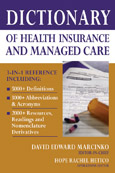
According to the Dictionary of Health Insurance and Managed Care, healthcare abuse is the activity where someone overuses or misuses services. And, according to the Center for Medicare and Medicaid Services [CMS]:
“although some of the practices may be initially considered to be abusive, rather than fraudulent activities, they may evolve into fraud.”
Example:
In the case of healthcare abuse, this may occur when a physician sees the patient for treatment more times than deemed medically appropriate. If there are reported issues or actions from other sources, such as the NPDB or a medical board, a health insurance program can take that opportunity to review healthcare providers’ activities. Most participation agreements allow for this type of scrutiny.
Assessment
And so, now that a workable definition of healthcare fraud and abuse has been proposed, and we have some definitional clarity, any preliminary billing or invoice review program will usually request a sampling of specific medical records. This may progress to an on-site review of any and all medical records of patients that participate in a CMS program.
These activities can be generated by the plan’s quality assurance, or quality improvement program, and often are tied to the credentialing process for a provider’s participation.
Conclusion
Your thoughts and comments on this ME-P are appreciated. Feel free to review our top-left column, and top-right sidebar materials, links, URLs and related websites, too. Then, subscribe to the ME-P. It is fast, free and secure.
Speaker: If you need a moderator or speaker for an upcoming event, Dr. David E. Marcinko; MBA – Publisher-in-Chief of the Medical Executive-Post – is available for seminar or speaking engagements. Contact: MarcinkoAdvisors@msn.com
OUR OTHER PRINT BOOKS AND RELATED INFORMATION SOURCES:







 Support our online development, and advance our onground research initiatives in free market economics, as we seek to showcase the brightest Next-Gen minds.
THE ME-P DISCLAIMER: Posts, comments and opinions do not necessarily represent iMBA, Inc., but become our property after submission. Copyright © 2006 to-date. iMBA, Inc allows colleges, universities, medical and financial professionals and related clinics, hospitals and non-profit healthcare organizations to distribute our proprietary essays, photos, videos, audios and other documents; etc. However, please review copyright and usage information for each individual asset before submission to us, and/or placement on your publication or web site. Attestation references, citations and/or back-links are required. All other assets are property of the individual copyright holder.
Support our online development, and advance our onground research initiatives in free market economics, as we seek to showcase the brightest Next-Gen minds.
THE ME-P DISCLAIMER: Posts, comments and opinions do not necessarily represent iMBA, Inc., but become our property after submission. Copyright © 2006 to-date. iMBA, Inc allows colleges, universities, medical and financial professionals and related clinics, hospitals and non-profit healthcare organizations to distribute our proprietary essays, photos, videos, audios and other documents; etc. However, please review copyright and usage information for each individual asset before submission to us, and/or placement on your publication or web site. Attestation references, citations and/or back-links are required. All other assets are property of the individual copyright holder.



































 The Leading Business Education Network for Doctors, Financial Advisors and Health Industry Consultants