Beware Automobile Identity Theft and Physician Focused Scams

Join Our Mailing List

Check Your Driver’s License

By Dr. David Edward Marcinko MBA

[Editor-in-Chief]

DEM 2013

WARNING: Did you know that identity theft and physician targeted automobile scams are all the rage.

According to recent FBI reports, and the National Motor Vehicle License Organization [NMVLO], now you can see anyone’s driver’s license on the Internet, including your own! And, medical professionals are the targeted group of choice.

The FIA Culprit

The United States amendment to the Freedom of Information Act, enacted on September 3rd 2008, provides public access to motor vehicle driver’s information in an e-format. Under the Motor Vehicle Operator License Identification  Act (MOLIA), all US states are required  to adhere to the Driver’s statute and store an electronic copy of all valid drivers licenses in their state. And, they do their best to make all license photo’s searchable.

Want Proof?

I just searched for my driver’s license and there it was … picture and all. Thanks Homeland Security!

Go to the web site, and check it out. It’s unbelievable. Just enter your name, city and state to see if your license is on file. After your license comes on the screen, click the box marked “Please Remove.” This will remove it from public viewing, but not from law enforcement.

###

Classic XJ-V8-WB Jaguar

My vintage British 2000 Jaguar XJ-V8-LWB touring sedan 

Jaguar Touring sedan XJ-V8-LWB###

Assessment

As an auto [Jaguar] enthusiast, I am appalled at this situation. Please notify all your friends and ME-P colleagues so they can protect themselves, too.  Believe me – they will thank you for it. Here is the link.

Linkhttp://www.license.shorturl.com/>http://www.license.shorturl.com/

Conclusion

Your thoughts and comments on this ME-P are appreciated. Feel free to review our top-left column, and top-right sidebar materials, links, URLs and related websites, too. Then, subscribe to the ME-P. It is fast, free and secure.

Speaker: If you need a moderator or speaker for an upcoming event, Dr. David E. Marcinko; MBA – Publisher-in-Chief of the Medical Executive-Post – is available for seminar or speaking engagements. Contact: MarcinkoAdvisors@msn.com

OUR OTHER PRINT BOOKS AND RELATED INFORMATION SOURCES:

Product Details  Product Details

A New Test For Alzheimers Disease [Video Humor]?

Join Our Mailing List

A MOVING PUZZLE

By Dr. David Edward Marcinko MBA

[Editor-in-Chief]

DEM at Univ of PittsburghLast month, I had the opportunity to visit and tour the University of Pittsburgh and the Tower of Learning.

While there, I was given this brain teaser by one of the graduate students. I was told that if you can put this moving puzzle together; you may just be able to say goodbye to Alzheimer’s Disease!

Now, this is really clever and a bit challenging. So, much as we middle-aged folks are concerned with Alzheimer’s disease, this puzzle may help dispel some fear. Give it a try. Just remember, I was told that if you can put this puzzle together … you probably do not have to fear Alzheimer’s!

CLICK BELOW:

http://www.brl.ntt.co.jp/people/hara/fly.swf

Hint: you can move the puzzle pieces outside of the box to separate them to get a better look. Use left clicker to move the pieces around.

Assessment

It took me about 5 minutes to put it together. What about you?

Conclusion

Your thoughts and comments on this ME-P are appreciated. Feel free to review our top-left column, and top-right sidebar materials, links, URLs and related websites, too. Then, subscribe to the ME-P. It is fast, free and secure.

Link: http://feeds.feedburner.com/HealthcareFinancialsthePostForcxos

Speaker: If you need a moderator or speaker for an upcoming event, Dr. David E. Marcinko; MBA – Publisher-in-Chief of the Medical Executive-Post – is available for seminar or speaking engagements. Contact: MarcinkoAdvisors@msn.com

Our Other Print Books and Related Information Sources:

Health Dictionary Series: http://www.springerpub.com/Search/marcinko

Practice Management: http://www.springerpub.com/product/9780826105752

Physician Financial Planning: http://www.jbpub.com/catalog/0763745790

Medical Risk Management: http://www.jbpub.com/catalog/9780763733421

Hospitals: http://www.crcpress.com/product/isbn/9781439879900

Physician Advisors: www.CertifiedMedicalPlanner.org

Product DetailsProduct DetailsProduct Details

Product Details  Product Details

Product DetailsProduct Details

Letter from the Editor on Sandy Hook Elementary School

Join Our Mailing List

A Painful Op-Ed Piece

By Dr. David Edward Marcinko FACFAS, MBA, CMP™

[Publisher and Editor-in-Chief]

Dr David E Marcinko MBAThe tragedy which struck the Sandy Hook Elementary School in Newtown, Connecticut last Friday left this Medical Executive-Post, and the entire nation, stunned. So many deaths of far too young victims! It is difficult to comprehend, explain or manage. It is not so difficult to feel some of the enormous loss of the parents, families and friends of the victims.

And, I’m sure it is unnecessary for me to encourage you to keep them in your thoughts and prayers. You, like me, have probably thought of little else since Friday.

At the ME-P, we will remember the people and families in Newtown, CT. Like the rest of the nation, our home-page flag will be at half-staff through this week.

If you have children of elementary school age, you may need some opportunities to process their reactions to this tragedy. Perhaps all they need is someone to listen, or to reassure them that these tragedies are rare events. We trust your local clergy, pediatricians and counselors are available to assist you or your child if that would be helpful.

More: www.CertifiedMedicalPlanner.org

In closing, I would like to share with you a Judeo-Christian reading which might bring some comfort during these difficult days:

A Prayer

The Spirit of the Lord God is upon me, because the Lord has anointed me to bring good news to the poor …  to comfort all who mourn; to grant to those who mourn in Zion— to give them a beautiful headdress instead of ashes, the oil of gladness instead of mourning, the garment of praise instead of a faint spirit; that they may be called oaks of righteousness, the planting of the Lord, that he may be glorified.

Assessment

ME-P Textbook: Chapter 07: Workplace Violence

We trust the deep knowledge and expertise on this topic by ME-P thought-leader Gene Schmuckler is available to you, as needed.

Fraternally,

David Edward Marcinko

Conclusion

Your thoughts and comments on this ME-P are appreciated. Feel free to review our top-left column, and top-right sidebar materials, links, URLs and related websites, too. Then, subscribe to the ME-P. It is fast, free and secure.

Product Details

Product Details

Do Clients Trust Financial Advisors More than Doctors or CPAs?

Join Our Mailing List

I Think … Not in My Universe

By Dr. David Edward Marcinko MBA CMP™

[Editor-in-Chief]

www.CertifiedMedicalPlanner.org

Survey after survey has shown that the public does not trust the financial services industry; it was – in fact, the least trusted industry in a recent Rick Edelman survey.

John Hancock?

But, perhaps they were looking at the wrong industries, or maybe investors just don’t trust your firm. A new survey by John Hancock shows that investors with assets of $200,000 or more, trust their financial advisor [FA] more than their primary doctor, accountant, contractor/handyman, boss and real estate agent. It was penned by one young staff writer named Diana Britton.

Link: http://wealthmanagement.com/blog/clients-trust-you-more-doctors-cpas?NL=WM-04&Issue=WM-04_20120611_WM-04_597&YM_RID=marcinkoadvisors%40msn.com&YM_MID=1318408

My View Point is Pretty Unique

Now, I am a doctor and board certified surgeon who held Series #7, #63 and #65 securities licenses, and was a Certified Financial Planner® for more than a decade. I was registered with a BD, SEC and NASD/FINRA, and held life, health and PC insurance licenses. This is the so-called “dual registration” to earn commissions and fees.

And, I’ve got a current partner who is a doctor-CPA who has a Master’s Degree in Accounting.  So, I know from whence I speak.

An Insurance Company!

Now, I resigned all of the above financial services monikers because of their lack of education and fiduciary accountability. These are sales licenses, certifications to hold a certification, and related gimmicks, all. Insurance agents have a duty to the company, not the client. Always ask them to put your best interests ahead of their own – in writing before hire – and watch them run.

Assessment

I suspect this study from an insurance company is less than accurate. How do I know? My gut heuristics tell me. Agency law tells me. No surveys needed or damn statistics for me. How about you? OR, are the marketing and PR gurus winning the public opinion battle with their insurance company advertising chicanery? ie., Hancock’s the future is yours!

If really so, here is my razzy for them.

 
Note: It is for the above reasons, and more, that we started the www.CertifiedMedicalPlanner.org online education program for financial advisors and management consultants that truly want to be trusted.

Conclusion

Your thoughts and comments on this ME-P are appreciated. Diana – call me.  Feel free to review our top-left column, and top-right sidebar materials, links, URLs and related websites, too. Then, subscribe to the ME-P. It is fast, free and secure.

Link: http://feeds.feedburner.com/HealthcareFinancialsthePostForcxos

Speaker: If you need a moderator or speaker for an upcoming event, Dr. David E. Marcinko; MBA – Publisher-in-Chief of the Medical Executive-Post – is available for seminar or speaking engagements. Contact: MarcinkoAdvisors@msn.com

OUR OTHER PRINT BOOKS AND RELATED INFORMATION SOURCES:

DICTIONARIES: http://www.springerpub.com/Search/marcinko
PHYSICIANS: www.MedicalBusinessAdvisors.com
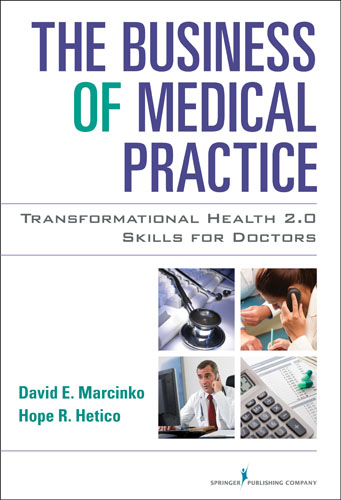
PRACTICES: www.BusinessofMedicalPractice.com
HOSPITALS: http://www.crcpress.com/product/isbn/9781466558731
CLINICS: http://www.crcpress.com/product/isbn/9781439879900
BLOG: www.MedicalExecutivePost.com
FINANCE: Financial Planning for Physicians and Advisors
INSURANCE: Risk Management and Insurance Strategies for Physicians and Advisors

Product DetailsProduct DetailsProduct Details

Product Details  Product Details

Product Details

Tips from a Doctor for Optimizing Automobile Fuel Efficiency to Save Money

Join Our Mailing List

Here’s How I Can Afford Gasoline for My Vintage Jaguar XJ-8-LWB

Dr. Dr. David Edward Marcinko MBA CMP

[Editor-in-Chief]

Dammit Spock! I’m a doctor – not an auto mechanic!

But, as the cost of fuel increases, more and more physician drivers are thinking about ways to maximize their gas mileage. As well as reducing the cost of fuel in the doctor’s pocket, optimizing fuel efficiency helps reduce the environmental impact of driving and conserves a resource that is only getting scarcer. This is especially true when you drive a luxury European touring sedan that has been said to be one of the finest in the world – like me!

There are a number of different ways drivers can increase their gas mileage. Advice and tips on fuel efficiency fall into a number of key categories.

My Tips and Pearls 

1. The car that you drive can make a big difference when it comes to fuel efficiency. Clearly, the larger and more powerful the vehicle is, the lower its gas mileage is likely to be. Car manufacturers are increasingly looking to new technology to help improve fuel efficiency, and if your car is quite old then it might be time to consider switching to a new model. Fuel efficiency statistics are now commonly published and compared on driving websites, and you should consider this before buying a new, or used, car.

2. Ensuring that your car is well-maintained is also a significant factor in the fuel efficiency that you will experience. Something as small and innocuous as spark plugs, for example, can reduce your gas mileage by as much as 12%. Over the course a year, the cost of the gas you waste is likely to be far more than the cost of replacing the part. If you are in doubt, talk to a trusted mechanic about maintenance, and alway have your car serviced at the recommended intervals.

3. Tire pressure can also have a significant impact on fuel efficiency. Low tire pressure can affect the vehicle’s performance, reducing gas mileage markedly. At the same time, it is also worth remembering that having the pressure too high can also have a negative effect. Ensure that you check your tire pressure on a regular basis. Talk to your mechanic if you are unsure about the optimum pressure value for your tires.

4. The way you drive your car also impacts your overall gas mileage. The official U.S. government website for fuel economy recommends that you always observe the speed limit, noting that for each 5 mph that you drive over a 60-mph speed limit, you are likely to paying an additional $0.29 per gallon of gas. Aggressive driving can reduce your gas mileage by as much as 33% on the highway. Carrying unnecessary weight in your car also uses more fuel, and you should always turn off your engine when the car is idle.

5. By changing the way in which you use your car, you can also save money. By combining multiple short trips into single, multi-purpose outings, you can prevent wasted mileage. Commuters can consider car sharing schemes, whereby drivers take it in turns to provide transport for fellow workers, reducing the number of cars on the road. You may even choose to switch to public transport on certain days of the week, to reduce the burden on your car.

6. You can even improve gas mileage by being careful about where and when you purchase fuel. Gas is at its densest during the coolest times of day. That means that by purchasing fuel early in the morning, or after dark, the volume of gas that the pump dispenses per unit will be moderately higher than at other, warmer times of day. Be savvy about prices in your local area too, keeping an eye out for the cheapest gas stations, but don’t go out of your way to purchase fuel. The money that you save at the pump is likely to be wasted on the additional mileage spent driving to the station.

7. As the cost of gas fluctuates on such a frequent basis, learning to optimize your fuel efficiency is a great way to ensure that you get the most out of the money you spend on fuel. Ensure that your vehicle is as efficient as possible, moderate your driving behavior, and moderate the amount of driving that you do to see the biggest improvements in your gas mileage.

Assessment

This ME-P is a follow-up, by reader request, of a prior popular essay of mine. How Smart Doctors Can Save Big at the Pump I appreciate your interest.

More photos: https://medicalexecutivepost.com/wp-content/uploads/2012/04/dems-jaguar.pdf

Conclusion

Your thoughts and comments on this ME-P are appreciated. Feel free to review our top-left column, and top-right sidebar materials, links, URLs and related websites, too. Then, subscribe to the ME-P. It is fast, free and secure.

Speaker: If you need a moderator or speaker for an upcoming event, Dr. David E. Marcinko; MBA – Publisher-in-Chief of the Medical Executive-Post – is available for seminar or speaking engagements. Contact: MarcinkoAdvisors@msn.com

OUR OTHER PRINT BOOKS AND RELATED INFORMATION SOURCES:

Product Details  Product Details

Is Malta a Hedge Fund Haven?

Join Our Mailing List 

Island in the Mediterranean Sea – South of Sicily (Italy)

By Dr. David Edward Marcinko MBA CMP

[Editor-in-Chief]

OK; I’ve written about hedge funds before, on this ME-P and in our www.MedicalBusinessAdvisors.com print publications for various textbooks, handbooks, white papers and journal. And, we discuss the concept in our online educational www.CertifiedMedicalPlanner.org program, as well. Some medical professionals love them, and some financial advisors use them in their work; others do not.

Of course, I’ve written frequently about my colleague – the now retired and newly anointed philanthropist  and uber-hedge fund manager Mike Burry MD; ad nauseam.

Link: https://medicalexecutivepost.com/2010/03/24/video-on-hedge-fund-manager-michael-burry-md/

But, now there is a new wrinkle on the island that I first visited about ten years ago, while on a working vacation

Rising Visibility

Malta–yes, Malta–has quietly leveraged the rising transparency imperative to attract hedge funds. There was a time when the quaint island sought to play on the traditional terrain, offering anonymity and a “laissez-faire regulatory regime,” not to mention very low taxes, as in no capital gains taxes and no taxes on dividends; all while English speaking and USD currency denominated.

Maybe back then, no more today, if this essay is to be believed.

Link: http://www.bloomberg.com/news/2012-01-05/malta-lures-connecticut-hedge-funds-with-300-days-of-sun-aided-by-eu-rules.html

Image 1

Why Malta?

Link: http://www.firstgozo.com/maltafacts.htm

Malta

Assessment

While many leading domiciles for offshore hedge funds remain in the Caribbean–notably the Cayman Islands, the British Virgin Islands, Bermuda, and the Bahamas–the island of Mata is drawing attention, especially from European funds.

Conclusion

Your thoughts and comments on this ME-P are appreciated. Feel free to review our top-left column, and top-right sidebar materials, links, URLs and related websites, too. Then, subscribe to the ME-P. It is fast, free and secure.

Link: http://feeds.feedburner.com/HealthcareFinancialsthePostForcxos

Speaker: If you need a moderator or speaker for an upcoming event, Dr. David E. Marcinko; MBA – Publisher-in-Chief of the Medical Executive-Post – is available for seminar or speaking engagements. Contact: MarcinkoAdvisors@msn.com

OUR OTHER PRINT BOOKS AND RELATED INFORMATION SOURCES:

DICTIONARIES: http://www.springerpub.com/Search/marcinko
PHYSICIANS: www.MedicalBusinessAdvisors.com
PRACTICES: www.BusinessofMedicalPractice.com
HOSPITALS: http://www.crcpress.com/product/isbn/9781466558731
CLINICS: http://www.crcpress.com/product/isbn/9781439879900
BLOG: www.MedicalExecutivePost.com
FINANCE: Financial Planning for Physicians and Advisors
INSURANCE: Risk Management and Insurance Strategies for Physicians and Advisors

Product Details  Product Details

Comprehensive Financial Planning Strategies for Doctors and Advisors: Best Practices from Leading Consultants and Certified Medical Planners™

How Good Looks Lead to Higher [MD] Paychecks

Even for Medical Professionals?

DEM 2

By Dr. David Edward Marcinko MBA CMP™

www.CertifiedMedicalPlanner.org

[Editor-in-Chief]

Beauty seems like enough of a reward in and of itself, but a wealth of research reveals that it comes with extra perks too.

Prettier people earn more money, find higher-earning and more attractive spouses, and even get better mortgage deals!

And, now that more than 40% of young new physicians are seeking employment, do looks really matter?

Assessment

Source: www.onlinembaprograms.net

Conclusion                

Is this controversial thought true for doctors and learned medical professionals? How about publishers and editors? Do you have any real-life examples to share with the ME-P? Your thoughts and comments are appreciated.

Feel free to review our top-left column, and top-right sidebar materials, links, URLs and related websites, too. Then, subscribe to the ME-P. It is fast, free and secure.

Link: http://feeds.feedburner.com/HealthcareFinancialsthePostForcxos

Speaker: If you need a moderator or speaker for an upcoming event, Dr. David E. Marcinko; MBA – Publisher-in-Chief of the Medical Executive-Post – is available for seminar or speaking engagements. Contact: MarcinkoAdvisors@msn.com

Our Other Print Books and Related Information Sources:

Subscribe Now: Did you like this Medical Executive-Post, or find it helpful, interesting and informative? Want to get the latest ME-Ps delivered to your email box each morning? Just subscribe using the link below. You can unsubscribe at any time. Security is assured.

Link: http://feeds.feedburner.com/HealthcareFinancialsthePostForcxos

Sponsors Welcomed: And, credible sponsors and like-minded advertisers are always welcomed.

Link: https://healthcarefinancials.wordpress.com/2007/11/11/advertise

Product Details  Product Details

Product Details

Content Life Cycle and Branding Management for Physicians

Freshness Also Required

By Dr. David Edward Marcinko MBA CMP™

By Eugene Schmuckler PhD, MBA

Join Our Mailing List

Self-Branding in the Modern Era

In 1987 the magazine Fast Company published an article authored by Tom Peters entitled “The Brand Called You.” Although some individuals may shy away from the concept of self-branding in actuality, many of the online social network sites such as Facebook become media by which we in fact brand ourselves.

Peter’s Speaks

In his article, Peter’s stated. “Regardless of position, regardless of the business we happen to be in, all of us need to understand the importance of branding. We are CEOs of their own companies, Me Inc.”

To be in business today, our most important job is to be head marketer for the brand called you. As a medical practitioner how do you differentiate yourself from others in your specialty and why should a new patient choose your practice above those of the others in the field? Branding is about finding your big idea and building your identity and game plan around it. The bottom line: if you can’t explain who you are, and the value you bring to your practice in a short sentence or two, you have work to do.

According to Catherine Kaputa, a personal coach she suggests that there are the objective things: your credentials, the schools you went to, your years of experience, and your skill set, which represent what she refers to as hard power. Then there’s soft power: your image and reputation, your visibility in the community, your network of contacts, supporters and mentors. In today’s competitive marketplace, soft power plays a vital role in attracting people to you and your practice.

Standing Out

Peters suggests that everyone has a chance to stand out. Everyone has a chance to learn, improve, and build up their skills. Everyone has a chance to be a brand worthy of remark. Corporations spend millions of dollars creating and maintaining their distinct brand. The Olympic Rings are representative of a brand which the International Olympic Committee guards zealously. Professional services firms such as McKinsey, foster self-branding among their employees. Major corporations have as employees those individuals who are smart, motivated and talented. Self-branding allows the employees to differentiate themselves from their peers.

For one to engage in self-branding is first necessary to ask the question, “What is it that my practice does that makes it different?” You can begin by identifying the qualities or characteristics that make you distinctive from your competitors-or your colleagues. What have you done lately-this week-to make yourself stand out? What would your healthcare colleagues say is your greatest and clearest strength? What would they say is your most noteworthy personal trait? As a medical practitioner does your customer get dependable, reliable service that meets his or her strategic needs?

In addition, ask yourself: “what do I do that adds remarkable, measurable, distinguished distinctive value.” How do you manage your name brand, and content?

Assessment

Content for online brand visibility needs to be well written, fluid, dynamic, and shared. Source: www.digitalc4.com

Conclusion                

And so, your thoughts and comments on this ME-P are appreciated. Feel free to review our top-left column, and top-right sidebar materials, links, URLs and related websites, too. Then, subscribe to the ME-P. It is fast, free and secure.

Link: http://feeds.feedburner.com/HealthcareFinancialsthePostForcxos

Speaker: If you need a moderator or speaker for an upcoming event, Drs. Gene Schmuckler and David E. Marcinko; MBA – Publisher-in-Chief of the Medical Executive-Post – is available for seminar or speaking engagements. Contact: MarcinkoAdvisors@msn.com

Subscribe Now: Did you like this Medical Executive-Post, or find it helpful, interesting and informative? Want to get the latest ME-Ps delivered to your email box each morning? Just subscribe using the link below. You can unsubscribe at any time. http://feeds.feedburner.com/HealthcareFinancialsthePostForcxos

Sponsors Welcomed: And, credible sponsors and like-minded advertisers are always welcomed. Link: https://healthcarefinancials.wordpress.com/2007/11/11/advertise

Product Details

Stock Market Collapse or Earth Quake?

On the Road, Again!

By Dr. David Edward Marcinko MBA

[Editor-in-Chief]

A 5.8-magnitude earthquake rattled the East Coast on August 23rd and continued to produce aftershocks for several days. At least 18 aftershocks ranging in magnitude from 4.5 to as little as 2.0 followed the strongest earthquake to strike the East Coast since World War II, according to the US Geological Survey.

Aftershocks are smaller tremors that take place in the weeks and possibly months following a major earthquake like the one centered in Mineral, Virginia. They are usually felt in a smaller area than the original quake. The largest of the aftershocks so far was a 4.5-magnitude quake, according to the USGS. Tens of millions of people from Georgia to Canada were jolted by the initial tremor.

We felt it here in Atlanta too, as well as my home town of Fell’s Point, in Baltimore, Maryland [just north of Washington, DC], where I was visiting Johns Hopkins Hospital, engaging clients and lecturing at the time.

St. Patrick’ Church

Here is a reference file photograph of St. Patrick’s Roman Catholic Church in Baltimore, Maryland, before the quake and just down the street a bit from Johns Hopkins Hospital, toward the waterfront district.


Enter the Tremors

Now, here is the church on August 23rd, 2011, after a finial at the top edge of the spire fell, shattering a manhole cover far below.

The Damage Today

Fortunately, no one was injured.

This remaining damage is now the problem on this historic building.

Assessment

However, some ME-P readers and www.MedicalBusinessAdvisors.com clients are wondering if the finial collapse was due solely to the quake, or might the recent world-wide stock market tremors be involved in some way – you decide?

Conclusion

And so, your thoughts and comments on this ME-P are appreciated. Feel free to review our top-left column, and top-right sidebar materials, links, URLs and related websites, too. Then, subscribe to the ME-P. It is fast, free and secure.

Link: http://feeds.feedburner.com/HealthcareFinancialsthePostForcxos

Speaker: If you need a moderator or speaker for an upcoming event, Dr. David E. Marcinko; MBA – Publisher-in-Chief of the Medical Executive-Post – is available for seminar or speaking engagements. Contact: MarcinkoAdvisors@msn.com

Our Other Print Books and Related Information Sources:

Health Dictionary Series: http://www.springerpub.com/Search/marcinko

Practice Management: http://www.springerpub.com/product/9780826105752

Physician Financial Planning: http://www.jbpub.com/catalog/0763745790

Medical Risk Management: http://www.jbpub.com/catalog/9780763733421

Healthcare Organizations: www.HealthcareFinancials.com

Physician Advisors: www.CertifiedMedicalPlanner.com

Subscribe Now: Did you like this Medical Executive-Post, or find it helpful, interesting and informative? Want to get the latest ME-Ps delivered to your email box each morning? Just subscribe using the link below. You can unsubscribe at any time. Security is assured.

Link: http://feeds.feedburner.com/HealthcareFinancialsthePostForcxos

Sponsors Welcomed: And, credible sponsors and like-minded advertisers are always welcomed.

Link: https://healthcarefinancials.wordpress.com/2007/11/11/advertise

Product DetailsProduct DetailsProduct Details       

Product Details  Product Details

   Product Details 

Understanding Client Engagement Letters for Financial Advisors

Review the Basics to Protect Yourself from Liability

By Dr. David Edward Marcinko MBA CMP™

http://www.CertifiedMedicalPlanner.org

[Publisher-in-Chief]

According to the Professional Liability Agents Network (PLAN), a nonprofit association of insurance agencies specializing in risk management and loss prevention, there are two things that FAs should remember about engagement letters: have them and revise them. In fact, according to iMBA Inc’s Dr. Gary L. Bode CPA MSA – an accountant, financial advisor and board certified doctor – not all financial advisors and financial planners use engagement letters. “And, I think they are making a big mistake.”

www.MedicalBusinessAdvisors.com

Moreover, merely having a standard engagement letter is not enough: The changing scope of client service requires advisors and planners to review and update their engagement letters annually. Engagement letters should be updated to reflect changes in the engagement’s scope or timing. Many attorneys also recommend using a separate engagement letter each year to avoid problems of continuous representation and to establish the date of the statute of limitations before the engagement begins (thereby limiting the time period in which a client can file a claim).

The 10 Essential Elements

Even short, simple engagement letters are binding contracts. When creating or updating your engagement letters, make sure several essential provisions are included. Although additional clauses may be necessary, these basic provisions are the framework of your engagement letter.

1. Scope of Services and Limitations

Many doctors and lay professionals think of financial planning as a comprehensive analysis. If your engagement is limited, you must state that clearly in your engagement letter. Courts have held that it is reasonable for a client to expect a comprehensive analysis unless you state otherwise.

2. Client Responsibilities

The client’s role in an engagement is to provide the advisor or planner with certain data and to verify its accuracy. An engagement letter should contain a provision identifying the assistance you expect from your client in providing information and verifying its accuracy. The engagement letter should also specify any timetables applicable to this information.

3. Fees and Billing Procedures

Fee collection suits by advisors and planners against clients can result in professional liability counter-suits. You can prepare for this problem by specifying fees and billing procedures. An important part of this provision is your right to suspend work in progress until unpaid balances are brought current.

4. SEC Provisions for Investment Advisors

Planners who serve in investment advisory roles are required by the SEC to add several clauses to their engagement letters. First, if you collect any part of your fee in advance, you must explain in your engagement letter how a refund of the advance fee will be calculated if the client decides to stop the relationship before you have finished your work.

Second, you must state that you will not assign your responsibilities as a planner to a third party without the written consent of the client.

Finally, you can avoid regulatory responsibilities resulting from your possessing discretionary authority to act on behalf of your client by including in your engagement letter a disclaimer that says you will not exercise your discretionary authority without the client’s express written consent.

5. IRS Requirements

The IRS requires financial advisors and financial planners to have written consent to use a client’s tax return for purposes other than preparing a tax return. Thus, to protect yourself from liability, it’s important to add a “consent to use tax return information” clause in engagement letters.

6. Sharing of Information

Many financial advisors and planners recommend including in engagement letters a clause that allows the planner to receive information from and share information with their client’s other advisors. But, if you’re going to exchange information about a client, you’d better have the client’s affirmation; much like the HIPAA Statutes [business associates agreement].

7. Dispute Resolution

Include an arbitration clause in every engagement letter – arbitration is much faster and cheaper than taking a case through the court system. This theory is supported by PLAN, which recommends including in every engagement letter details about the type of dispute resolution to be used in the case of a disagreement.

8. Limitation of Liability

PLAN recommends that client service professionals require clients to either indemnify them from certain types of claims or establish a dollar limit on their liability. Although this provision has been used successfully in other professions, the SEC position on such clauses seems unclear. So, before adding a limitation of liability or indemnification clause, then, check with your state and federal regulatory agencies about standard procedure.

9. Good Will

Many firms conclude an engagement letter with a “good will” provision that thanks the client for his or her business and offers to discuss the letter and its provisions if the client has questions. While this provision may appear gratuitous, PLAN believes this can be critically important to a defense if a client claims to not know what he or she was signing.

10. Signature

As mentioned above, your engagement letter becomes your contract for professional service. As such, it is important to have it signed by your client http://www.plan.org

Assessment

Much like medical and surgical consent forms, or even treatment plans, client engagement letters for financial services professionals now seem the norm.

Note: Julie Schaeffer, a Chicago-based freelance writer, assisted in the original version of this essay.

Conclusion

Your thoughts and comments on this ME-P are appreciated. Feel free to review our top-left column, and top-right sidebar materials, links, URLs and related websites, too. Then, subscribe to the ME-P. It is fast, free and secure.

Link: http://feeds.feedburner.com/HealthcareFinancialsthePostForcxos

Speaker: If you need a moderator or speaker for an upcoming event, Dr. David E. Marcinko; MBA – Publisher-in-Chief of the Medical Executive-Post – is available for seminar or speaking engagements. Contact: MarcinkoAdvisors@msn.com

OUR OTHER PRINT BOOKS AND RELATED INFORMATION SOURCES:

Product DetailsProduct DetailsProduct Details

Product Details  Product Details

How Investors View Financial Advisors?

ADVERTISEMENT

A Public Opinion Survey

Dr. David Edward Marcinko MBA CMP™

www.CertifiedMedicalPlanner.org

Boston-based Dalbar company is a surveyor of financial information for the mutual fund industry. About a decade ago Dalbar released a nine-part survey on personal financial advice to measure the level of demand for advice that existed back then and to ascertain consumer preferences, expectations, beliefs, and sources for personal financial advice.

Now, please allow me to suggest that all FA colleagues use the results to evaluate your current practices and planed initiatives to determine how current thinking must change to meet today’s and tomorrow’s needs. And so, we now share some of the results of this survey.

Customer Expectations of Personal Financial Advisors

• Investors and prospective investors expect their personal financial advisors to educate them about investments and to minimize the taxes they pay.

• Unrealistic expectations present a major problem to personal financial advisors. The expectations for advisors to produce the highest returns, prevent investing mistakes, and avoid losses set the stage for disappointment in the future, thus undermining the public trust of advisors.

• Advertising, training, compensation, and industry practice is out of step with customer expectations. This survey indicates that emphasis in all these areas should be directed to vastly simplify education, increase use of tax saving strategies, and help investors to define financial goals.

Demand for Personal Financial Advisors

• Of the consumers surveyed, 89% report the need for a personal financial advisor for assets of $100,000 or more. This contradicts the notion that a growing number of people prefer to do-it-themselves. This finding presents the advisor with an opportunity: The demand for advice is higher than the market would suggest.

• The demand for advice, as measured by the Advice Demand Index (ADI) is highest among those who prefer to pay for advice through commissions. The ADI is highest for commission-payers at 93%, followed by those who prefer to pay a percentage of their assets (92.5%). Flat-fee payers have the lowest demand for advice, at just 88.7%.

Importance of Personal Financial Advice Functions

• Consumers unanimously agree that the ability of their advisor to provide clear explanations of investment alternatives, to be available when needed, and to keep them informed of their investment status are the most important financial advice functions.

• Consumers revealed that the delivery of a comprehensive written financial plan is the least important function that their advisor performs.

Assessment

This report was not physician specific so one wonders how applicable it is to medical providers; especially the “no-desire” for a financial plan part?

Conclusion

And so, your thoughts and comments on this ME-P are appreciated. Are the results still valid today; or after the 2008-09 “flash crash”? Feel free to review our top-left column, and top-right sidebar materials, links, URLs and related websites, too. Then, subscribe to the ME-P. It is fast, free and secure.

Speaker: If you need a moderator or speaker for an upcoming event, Dr. David E. Marcinko; MBA – Publisher-in-Chief of the Medical Executive-Post – is available for seminar or speaking engagements. Contact: MarcinkoAdvisors@msn.com and http://www.springerpub.com/Search/marcinko

Get our Widget: Get this widget!

Our Other Print Books and Related Information Sources:

Health Dictionary Series: http://www.springerpub.com/Search/marcinko

Practice Management: http://www.springerpub.com/product/9780826105752

Physician Financial Planning: http://www.jbpub.com/catalog/0763745790

Medical Risk Management: http://www.jbpub.com/catalog/9780763733421

Healthcare Organizations: www.HealthcareFinancials.com

Physician Advisors: www.CertifiedMedicalPlanner.com

Subscribe Now: Did you like this Medical Executive-Post, or find it helpful, interesting and informative? Want to get the latest ME-Ps delivered to your email box each morning? Just subscribe using the link below. You can unsubscribe at any time. Security is assured.

Link: http://feeds.feedburner.com/HealthcareFinancialsthePostForcxos

Sponsors Welcomed: And, credible sponsors and like-minded advertisers are always welcomed.

Link: https://healthcarefinancials.wordpress.com/2007/11/11/advertise

Product Details  Product Details

On Stock Market [Mis]Timing Strategies

Do They Come Up Short?

Dr. David Edward Marcinko MBA CMP™

www.CertifiedMedicalPlanner.com

[Publisher-in-Chief]

Stock market investment rules are notorious for showing profit when tested on the same sample period from which they were developed, and then failing when applied to a new period. According to Professor Roger C. Vergin, it’s dangerous to use the same data to both discover and test the rules.

Of Marty Zweig

Using the “Zweig Strategies” developed by Martin Zweig and published back in 1986 in Winning on Wall Street (WOWS), Professor Vergin shoots some rather sizable holes in Zweig’s indicators by testing them against the 10-year period since WOWS was published. Zweig’s models are applied to various periods from 19 to 33 years, ending in 1985, and they claim to outperform a buy-and-hold strategy with annual rates of return as much as eight times as large, according to some measures. When the author ran these strategies for the 10-year period ending Dec. 5, 1995, not only did they not outperform a buy-and-hold strategy, but they trailed the market averages by a significant amount—9% vs. 14.4% for buy-and-hold.

The “Z” Indicators

Zweig’s indicators include a prime rate indicator, a Federal Reserve indicator, an installment debt indicator, a 4% indicator (market momentum), a monetary model, and a “super” model, which Zweig referred to as “the only investment model you will ever need.” 

Vergin corrects for inconsistencies in the evaluation criteria from one strategy to the next in WOWS and runs the numbers for the original test period first. Zweig’s strategies still outperform buy-and-hold. But, when run against an independent time period, as the author has done, the wheels fall off. Vergin runs the Zweig Strategies against the S&P 500, the Value Line Index, and an index developed by Zweig called ZUPI (all NYSE stocks).

Assessment

Over the 10-year period, none of the six Zweig Strategies outperformed a simple buy-and-hold strategy when compared against any of the three indexes mentioned above. They produced an average return of 9% compared to 14.4% for buy-and-hold.

In fact, Dr. Burton Malkiel’s [personal communication] conclusion in his book A Random Walk Down Wall Street, was that: “market timing is likely, not only to not add value, but to be counterproductive” seems to have borne out again.”

Note: “Market-Timing Strategies: Can You Get Rich?” by Roger C. Vergin. The Journal of Investing, Winter 1996, pp. 79–85, Institutional Investor, Inc. [212] 224-3185)

Conclusion

And so, your thoughts and comments on this ME-P are appreciated. By trying enough patterns against past events, one can always find simple rules that “would have” worked well in the past. But, do they hold up against differing periods of time; like say 2008-09? … At least not yet! What do you think?

Feel free to review our top-left column, and top-right sidebar materials, links, URLs and related websites, too. Then, subscribe to the ME-P. It is fast, free and secure.

Speaker: If you need a moderator or speaker for an upcoming event, Dr. David E. Marcinko; MBA – Publisher-in-Chief of the Medical Executive-Post – is available for seminar or speaking engagements. Contact: MarcinkoAdvisors@msn.com and http://www.springerpub.com/Search/marcinko

Get our Widget: Get this widget!

Our Other Print Books and Related Information Sources:

Health Dictionary Series: http://www.springerpub.com/Search/marcinko 

Practice Management: http://www.springerpub.com/product/9780826105752

Physician Financial Planning: http://www.jbpub.com/catalog/0763745790

Medical Risk Management: http://www.jbpub.com/catalog/9780763733421

Healthcare Organizations: www.HealthcareFinancials.com

Physician Advisors: www.CertifiedMedicalPlanner.com

Subscribe Now: Did you like this Medical Executive-Post, or find it helpful, interesting and informative? Want to get the latest ME-Ps delivered to your email box each morning? Just subscribe using the link below. You can unsubscribe at any time. Security is assured.

Link: http://feeds.feedburner.com/HealthcareFinancialsthePostForcxos

Sponsors Welcomed: And, credible sponsors and like-minded advertisers are always welcomed.

Link: https://healthcarefinancials.wordpress.com/2007/11/11/advertise

Product DetailsProduct DetailsProduct Details       

Product Details  Product Details

The Effects of Healthcare Reform Legislation on Physician Compensation

Is a Future Look Predicated on the Past?

By Dr. Brian J. Knabe; CFP® CMP™

By Dr. David Edward Marcinko; MBA CMP™

By Prof. Hope Rachel Hetico; RN, MHA CPHQ CMP™

www.BusinessofMedicalPractice.com

With the passage of healthcare reform legislation, officially known as the Patient Protection and Affordable Care Act of 2010, many questions remain regarding its effect upon physicians’ livelihood.

Undoubtedly this bill moves the healthcare system several steps closer to a socialized model, but the effects on physicians’ salaries and compensation models are far from clear.

Other Countries

One way to see the effect that this shift may have on compensation is to look to other countries, many of which already have a more socialized system in place.

According to the CRS Report for Congress, US Health Care Spending:  Comparison with Other OECD Countries http://assets.opencrs.com/rpts/RL34175_20070917.pdf) US specialists rank near the top in compensation compared to these other countries, trailing the Netherlands and Australia.  The average specialist in the US made $230,000 in this survey.  The comparable salary in Canada is $161,000, $150,000 in the UK, and $253,000 in the Netherlands.  Generalists in the US are at the top in terms of compensation with an average of $161,000.  This compares to $107,000 in Canada, $118,000 in the UK, and $117,000 in the Netherlands.

Inflation Adjustments

Another indicator of physician salary trends is the change in compensation adjusted for inflation.  According to the American Medical Association, the inflation-adjusted income for the average patient care physician declined from $180,930 to $168,122 from 1995 to 2003, a 7% decrease. And, the inflation adjusted decrease is more substantial given the low interest rate environment thru 2010, and going forward.

Physician Net Income Chart

  Average net income
  1995 2003 Decrease
All patient care physicians $180,930 $168,122 7%
Primary care physicians $135,036 $121,262 10%
Medical specialists $178,840 $175,011 2%
Surgical specialists $245,162 $224,998 8%

Source: http://www.ama-assn.org/amednews/site/free/prsc0724.htm

Given these trends, as well as the fact that an increasing percentage of healthcare payments are coming from dwindling government sources, it is likely that physician salaries will decline as “healthcare reform” legislation is implemented.  In fact, it is likely that this trend will accelerate.  A 15% to 25% inflation-adjusted decline in salaries over the next decade is a reasonable prediction.

Assessment

It is also important to note that the level of student debt in the US continues to rise, while college and medical education are usually subsidized in other countries.  Many foreign physicians graduate with no student loan debt.  The ratio of debt level to salary in the US continues to become more onerous for new physicians.

Conclusion

Your thoughts and comments on this ME-P are appreciated. Feel free to review our top-left column, and top-right sidebar materials, links, URLs and related websites, too. Then, subscribe to the ME-P. It is fast, free and secure.

Link: http://feeds.feedburner.com/HealthcareFinancialsthePostForcxos

Speaker: If you need a moderator or speaker for an upcoming event, Dr. David E. Marcinko; MBA – Publisher-in-Chief of the Medical Executive-Post – is available for seminar or speaking engagements. Contact: MarcinkoAdvisors@msn.com

OUR OTHER PRINT BOOKS AND RELATED INFORMATION SOURCES:

Product Details  Product Details

ME-P Corporate Seminar Information

By Ann Miller RN, MHA

[ME-P Executive-Director]

Our Editor-in-Chief, Dr. David Edward Marcinko MBA, CMP™, enjoys public speaking and gives as many talks each year as possible, at a variety of medical society, pharmaceutical and financial services conferences around the country and world [Cannada, Belgium, Germany and Finland].

These have included lectures and visiting professorships at major academic centers, keynote lectures for hospitals, economic seminars and health systems, keynote lectures at city and statewide financial coalitions, and annual keynote lectures for a variety of internal quarterly and annual meetings for small bio-tech firms as well as big pharma.

Topics of Interest

The presentations of Dr. Marcinko are engaging, iconoclastic, and humorous. His most popular presentations include a diverse variety of topics and typically include those in all iMBA Inc’s textbooks, handbooks, white-papers and our 2-volume quarterly print journal; as well as most topics covered on this Medical Executive-Post blog.

Samples and Examples 

Topics Link: toc_ho

CV Link: dem-formal-cv

Texts Link: imba-inc-health-economics-books-for-physicians

More Topics Link: imba-inc-firm-services

Assessment 

To find out more information about our corporate seminars and workshops, please contact us for details: MarcinkoAdvisors@msn.com.

Join Our Mailing List

Get our Widget: Get this widget! 

Speaker: If you need a moderator or speaker for an upcoming event, Dr. David E. Marcinko; MBA – Publisher-in-Chief of the Medical Executive-Post – is available for seminar or speaking engagements. Contact: MarcinkoAdvisors@msn.com 

Subscribe Now: Did you like this Medical Executive-Post, or find it helpful, interesting and informative? Want to get the latest ME-Ps delivered to your email box each morning? Just subscribe using the link below. You can unsubscribe at any time. Security is assured.

Link: http://feeds.feedburner.com/HealthcareFinancialsthePostForcxos

Sponsors Welcomed: And, credible sponsors and like-minded advertisers are always welcomed.

Link: https://healthcarefinancials.wordpress.com/2007/11/11/advertise

When Investing or Stock Trading Is No Longer Fun

Understanding Obsessive-Compulsive Behavior

By: Dr. David Edward Marcinko; FACFAS, MBA, CMP™

By: Dr. Eugene Schmuckler; MBA, CTS

By: Dr. Kenneth H. Shubin-Stein, CFA

By: Richard B. Wagner; JD, CFP®fp-book1

An obsession is a persistent, recurring preoccupation with an idea or thought. A compulsion is an impulse that is experienced as irresistible. Obsessive-compulsive individuals feel compelled to think thoughts that they say they do not want to think or to carry out actions that they say are against their will. These individuals usually realize that their behavior is irrational, but it is beyond their control. In general, these individuals are preoccupied with orderliness, perfectionism, and mental and interpersonal control, at the expense of flexibility, openness, and efficiency.

Specifically, behaviors such as the following may be seen:

  • Preoccupation with details.
  • Perfectionism that interferes with task completion.
  • Excessive devotion to work and office productivity.
  • Scrupulous and inflexible about morality (not accounted for by cultural or religious identification).
  • Inability to discard worn-out or worthless objects without sentimental value.
  • Reluctance to delegate tasks or to work with others.
  • Adopts a miserly spending style toward both self and others.
  • Demonstrates a rigid, inflexible and stubborn nature.

Most people resort to some minor obsessive-compulsive patterns under severe pressure or when trying to achieve goals that they consider critically important. In fact, many individuals refer to this as superstitious behavior. The study habits required for medical students entail a good deal of compulsive behavior.

Related Addictions

As the above examples suggest, there are a variety of addictions possible. Recent news accounts have pointed out that even high-level governmental officials can experience sex addiction. The advent of the Internet has led to what is referred to as Internet addiction where an individual is transfixed to the computer working for hours on end without a specific project in mind. The simple act of “surfing” offers the person afflicted with the addiction some degree of satisfaction.

The Gambler

Still another form of addictive behavior is that of the compulsive gambler. This is the behavior of an individual who is unable to resist the impulse to gamble. Many reasons have been posited for this type of behavior including the death instinct; a need to lose; a wish to repeat a big win; identification with adults the “gambler” knew as an adolescent; and a desire for action and excitement. There are other explanations offered for this form of compulsive behavior. The act of betting allows the individual to express an immature bravery, courage, manliness, and persistence against unfavorable odds. By actually using money and challenging reality, he puts himself into “action” and intense emotion. By means of gambling, the addicted individual is able to pretend that he is favored by “lady luck,” specially chosen, successful, able to beat the system and escape from feelings of discontent.

Just Plain Greed

Greed is another reason. In fact, a 1987 poll conducted by the Chicago Tribune revealed that people who earned less than $30,000 a year, said that $50,000 would fulfill their dreams, whereas those with yearly incomes of over $100,000 said they would need $250,000 to be satisfied. More recent studies confirm that goals keep getting pushed upward as soon as a lower level is reached. Now, consider Bernie Madoff, and the recent sub-prime mortgage debt fiasco in this light?

Compulsive Doctors

Edward Looney, executive director of the Trenton, New Jersey based Council on Compulsive Gambling (CCG) reports that the number of individuals calling with trading-associated problems is doubling annually. In the mid 1980s, when the council was formed, the number of people calling the council’s hotline (1 – 800 Gambler) with stock-market gambling problems was approximately 1.5 percent of all calls received. In 1998 that number grew to 3 percent and it is projected to rise to 7-8 percent by 2005. Dr. Robert Custer, an expert on compulsive gambling reported, that stock market gamblers represent over 20 percent of the gamblers that he has diagnosed. It is evident that on-line trading presents a tremendous risk to the speculator. The CCG describes some of the consequences:

  • Dr. Fred B. is a 43-year-old Caucasian male physician with a salary above $100,000 and in debt for more than $100,000. He is married with two children. He was a day trader.
  • Michael Q. is a 28-year-old Caucasian male registered nurse. He is married and the father of one (7 month old) child. He earns $65,000 and lost $40,000 savings in day trading and is in debt for $25,000. He has suicidal ideation.

Assessment

Join Our Mailing List

Question: So how much money is enough?

Answer: Just a little bit more.

Conclusion

And so, your thoughts and comments on this Medical Executive-Post are appreciated. Feel free to review our top-left column, and top-right sidebar materials, links, URLs and related websites, too. Then, be sure to subscribe to the ME-P. It is fast, free and secure.

Link: http://feeds.feedburner.com/HealthcareFinancialsthePostForcxos

Speaker: If you need a moderator or speaker for an upcoming event, Dr. David E. Marcinko; MBA – Publisher-in-Chief of the Medical Executive-Post – is available for seminar or speaking engagements. Contact: MarcinkoAdvisors@msn.com

Our Other Print Books and Related Information Sources:

Practice Management: http://www.springerpub.com/prod.aspx?prod_id=23759

Physician Financial Planning: http://www.jbpub.com/catalog/0763745790

Medical Risk Management: http://www.jbpub.com/catalog/9780763733421

Physician Advisors: www.CertifiedMedicalPlanner.org

Subscribe Now: Did you like this Medical Executive-Post, or find it helpful, interesting and informative? Want to get the latest ME-Ps delivered to your email box each morning? Just subscribe using the link below. You can unsubscribe at any time. Security is assured.

Link: http://feeds.feedburner.com/HealthcareFinancialsthePostForcxos

Sponsors Welcomed

And, credible sponsors and like-minded advertisers are always welcomed.

Link: https://healthcarefinancials.wordpress.com/2007/11/11/advertise

Product Details  Product Details