Sources of Scarce Hospital Capital

Tough Funding in Difficult Times

By Calvin Wiese; MBA, CPA

Staff Writersho-journal4

In general, hospitals have three sources of capital available to them: [1] equity from earnings, [2] equity from donations, and [3] long-term debt. And, the general domestic economic cycle may either exacerbate or retard capital raising efforts for all healthcare organizations. Today, the hospital capital funding acquisition scenario is difficult indeed.

Earnings Equity

Earnings generate cash, and a portion of that cash is available to fund capital investments. Besides funding capital investments, cash generated from earnings is used to fund working capital. As operations grow, more working capital is required to fund the difference between the operating receivables and operating payables since days of revenue in receivables tend to be a good deal higher than days of expense in payables. Additionally, cash on hand [COH] should increase as operations grow so that days of cash remain constant or increase. Once working capital has been adequately funded, any remaining cash generated from earnings is available to invest in capital.

Not-for-Profit Entities

Most not-for-profit hospitals engage in active fundraising to generate donations. Donations are a good source of capital in certain markets. Often, fundraising initiatives are less useful than they appear due to the costs expended in the fundraising activities. It is important to ensure that all the costs incurred in fundraising activities are properly attributed.

Borrowing

Borrowing long-term debt has been an important source of capital for hospitals and will continue to be. Debt is particularly attractive due to the low cost associated with borrowing on a tax-exempt basis. Long-term debt, borrowed on a tax-exempt basis, is probably the lowest cost form of capital available to hospitals. Tax-exempt borrowing is fairly complex due to the tax regulations affecting it. Because of its complexity, the costs associated with these transactions are quite high, making it less practical for small borrowings www.HealthcareFinancials.com

Special Borrowing Transactions

Finally, tax-exempt borrowing transactions require many lawyers and high-priced investment bankers. Credit rating agencies and credit enhancers are also typically involved. Accessing the tax-exempt markets requires a good bit of sophistication and expertise. Despite these requirements, this capital is highly attractive to hospitals and should be used whenever possible.

Assessment

Currently, as the adverse business cycle grinds on, and the – now official – recession deepens, credit rating agency Fitch has just changed its not-for-profit hospital sector view to negative, from a previously stable status.  And, Hospital Corporation of America [HCA] is resorting to potentially risky payment in kind (PIK) debt swaps to keep its bonds afloat. 

Conclusion

And so, your thoughts and comments on this Medical Executive-Post are appreciated.

Related Information Sources:

Practice Management: http://www.springerpub.com/prod.aspx?prod_id=23759

Physician Financial Planning: http://www.jbpub.com/catalog/0763745790

Medical Risk Management: http://www.jbpub.com/catalog/9780763733421

Healthcare Organizations: www.HealthcareFinancials.com

Health Administration Terms: www.HealthDictionarySeries.com

Physician Advisors: www.CertifiedMedicalPlanner.com

Speaker: If you need a moderator or speaker for an upcoming event, Dr. David E. Marcinko; MBA – Publisher-in-Chief of the Executive-Post – is available for seminar or speaking engagements. Contact: MarcinkoAdvisors@msn.com  or Bio: www.stpub.com/pubs/authors/MARCINKO.htm

Subscribe Now: Did you like this Medical Executive-Post, or find it helpful, interesting and informative? Want to get the latest E-Ps delivered to your email box each morning? Just subscribe using the link below. You can unsubscribe at any time. Security is assured.

Link: http://feeds.feedburner.com/HealthcareFinancialsthePostForcxos

MD Participant-Directed Investment Menus

Categorizing Investment Options

By Jeffrey Coons; PhD, CFA

By Christopher J. Cummings; CFA, CFP™

This white-paper will examine several different ways of categorizing investment options and discuss their usefulness in an average healthcare participant’s efforts to build a long-term investment program with an appropriate risk/return trade-off.  We will specifically examine the problems associated with manager style classifications (e.g., “growth” versus “value” or “growth & income” versus “growth”, etc.), with the general conclusion that style categories fail to pass the test of the four basic questions listed below.

Paper Excerpt

“The goal of designing a participant-directed investment menu should be to provide enough diversification of roles to allow participants, physician-executives and trustees to make an appropriate trade-off between risk and return, without having so many roles as to create participant confusion.  Ultimately, the burden on plan fiduciaries to adequately educate employees is largely driven by the investment decisions we require them to make in the plan, with more choices necessitating a greater understanding of the fundamental differences between and appropriate role for each choice.”

Option Menu Selection

The logical questions that arise when selecting options on a menu are:

1. Are there clear differences among the options?

2. Are these characteristics inherent to the option or potentially fleeting?

3. Are the differences among options easily communicated to and understood by the typical health investing plan participant?

Assessment

Most importantly, if healthcare participants are given choice among these different options, can the decisions they make reasonably be expected to result in an appropriate long-term investment program?

Read it here: value-or-growth
Conclusions

Your thoughts and comments are appreciated; do we even need a menu selection during this economc meltdown?

Speaker: If you need a moderator or speaker for an upcoming event, Dr. David E. Marcinko; MBA – Publisher-in-Chief of the Executive-Post – is available for seminar or speaking engagements. Contact: MarcinkoAdvisors@msn.com  or Bio: www.stpub.com/pubs/authors/MARCINKO.htm

Subscribe Now: Did you like this Executive-Post, or find it helpful, interesting and informative? Want to get the latest E-Ps delivered to your email box each morning? Just subscribe using the link below. You can unsubscribe at any time. Security is assured.

Link: http://feeds.feedburner.com/HealthcareFinancialsthePostForcxos

Long Term Care Insurance [LTCI] Meltdown

Join Our Mailing List

Only the Beginning

By Dr. David Edward Marcinko; MBA, CMP™

[Publisher-in-Chief]

Dr David E Marcinko MBAAs a Certified Financial Planner™ and licensed insurance agent for more than a decade, I am aware of how much the industry is promoting long term care insurance [LTCI] as one solution to the aging baby boomer crisis. And, there is no doubt that a legion of agents and “advisors”, along with readers of the Medical Executive-Post, are aware of the fat commissions these products produce. Of course, I have been criticized for opinions against this product for some time now, along with a philosophy of personal accountability.

Only the Beginning

And so, it is no surprise that Penn Treaty American Corporation [PTAC], a long-term-care insurance company, recently said it would stop issuing new LTCI policies. PTAC said its primary insurance subsidiary will be considered insolvent unless it can raise at least $100 million by January 1st, and that it will accept letters of interest from prospective investors and purchasers through mid-October, while deciding on a course by the end of the year.

Assessment

According to the Philadelphia Inquirer on October 4, the company needs about $100 million to $120 million to cover reinsurance agreements it intentionally dropped because the cost to keep them was more than the value of the agreements.

Conclusion

Your thoughts and comments on this ME-P are appreciated. Feel free to review our top-left column, and top-right sidebar materials, links, URLs and related websites, too. Then, subscribe to the ME-P. It is fast, free and secure.

Link: http://feeds.feedburner.com/HealthcareFinancialsthePostForcxos

Speaker: If you need a moderator or speaker for an upcoming event, Dr. David E. Marcinko; MBA – Publisher-in-Chief of the Medical Executive-Post – is available for seminar or speaking engagements. Contact: MarcinkoAdvisors@msn.com

OUR OTHER PRINT BOOKS AND RELATED INFORMATION SOURCES:

LEXICONS: http://www.springerpub.com/Search/marcinko
PHYSICIANS: www.MedicalBusinessAdvisors.com
PRACTICES: www.BusinessofMedicalPractice.com
HOSPITALS: http://www.crcpress.com/product/isbn/9781466558731
CLINICS: http://www.crcpress.com/product/isbn/9781439879900
ADVISORS: www.CertifiedMedicalPlanner.org
PODIATRISTS: www.PodiatryPrep.com
BLOG: www.MedicalExecutivePost.com
.

Product Details

Re-Managing Your IRA

Revisiting Retirement Planning, Yet Again!

Staff Reportersfp-book

In this time of Wall Street chaos, GNP economic recession and marketplace turmoil, doctors must realize that not all investments and related activities are appropriate in IRAs for tax, legal, and investment reasons. This philosophy is an old reminder from Richard B. Toolson who wrote the classic article “Which Assets Don’t Belong in an IRA?” 

Yet, funds in IRAs, if invested appropriately, can make a significant difference in securing a safe and comfortable retirement for any physician.

So, how are thing the same, or different today; and how shall we revisit the Individual Retirement Account [IRA] in today’s environment?

Prohibited Activities

A number of prohibited activities, including borrowing from the account, could result in adverse tax consequences, including losing the account’s tax-deferred status.

An IRA also cannot invest in collectibles such as art objects, antiques, or stamps under penalty of having the cost of the items considered a constructive distribution and subject to tax. IRA accounts also need to avoid Unrelated Business Taxable Income (UBTI), which may result from ownership of an interest in a partnership or “S” corporation or from purchasing securities on margin or borrowing to acquire real estate.

Arguable Activities

The author also advises against holding tax-free, tax-deferred, or tax-sheltered vehicles inside an IRA, such as municipal bonds, Series EE U.S. savings bonds, or variable annuities. Conversely, assets that are expected to generate the greatest relative pretax returns should be held in an IRA. This would include fixed-income investments expected to yield high returns, stocks with high dividend yields, stocks expected to be held short term, mutual funds that emphasize stocks paying high dividends, and mutual funds that expect to hold stocks short term.

Assets Outside IRAs

Investments in individual foreign securities or mutual funds that hold primarily foreign securities are ideally left outside IRAs in order to receive tax credits on the foreign taxes paid. These credits reduce the physician-investor’s tax liability on a dollar-for-dollar basis, subject to certain limits. If these securities are held inside an IRA, any taxes withheld by a foreign country merely reduce the IRA’s market value. The option of receiving a tax credit is not available.

IRA Checklists

What to have in an IRA:

Generally, assets that are expected to generate the greatest relative pretax returns, such as:

  • fixed-income investments expected to yield high returns,
  • stocks with high dividend yields,
  • stocks expected to be held short term,
  • mutual funds that emphasize stocks paying high dividends, and;
  • mutual funds that expect to hold stocks short term.

What not to have in an IRA:

  • collectibles (e.g., art objects, antiques, and stamps),
  • tax-free, tax-deferred, or tax-sheltered vehicles (e.g., municipal bonds, Series EE U.S. savings bonds, or variable annuities), and;
  • investments in individual foreign securities or mutual funds that hold primarily foreign securities.

Activities to Avoid in an IRA:

  • borrowing from the account, and;
  • creating unrelated business taxable income, which may result from ownership of an interest in a partnership or S corporation or from purchasing securities on margin or borrowing to acquire real estate.

Assessment

Informed physicians and their financial advisors can play a valuable role in managing IRAs in a way that maximizes the amounts available at retirement.

Conclusion

Your thoughts and comments are appreciated, as the above is sure to generate some controversy.

Related Information Sources:

Practice Management: http://www.springerpub.com/prod.aspx?prod_id=23759

Physician Financial Planning: http://www.jbpub.com/catalog/0763745790

Medical Risk Management: http://www.jbpub.com/catalog/9780763733421

Healthcare Organizations: www.HealthcareFinancials.com

Health Administration Terms: www.HealthDictionarySeries.com

Physician Advisors: www.CertifiedMedicalPlanner.com

Speaker: If you need a moderator or speaker for an upcoming event, Dr. David E. Marcinko; MBA – Publisher-in-Chief of the Executive-Post – is available for seminar or speaking engagements. Contact: MarcinkoAdvisors@msn.com  or Bio: www.stpub.com/pubs/authors/MARCINKO.htm

Subscribe Now: Did you like this Executive-Post, or find it helpful, interesting and informative? Want to get the latest E-Ps delivered to your email box each morning? Just subscribe using the link below. You can unsubscribe at any time. Security is assured.

Link: http://feeds.feedburner.com/HealthcareFinancialsthePostForcxos


Seeking Writers and Contributors

Business of Medical Practice [third edition]

Ann Miller; RN, MHA

Project Manager

As readers of the Executive-Post may know, our textbook the Business of Medical Practice is a best seller.

http://www.springerpub.com/prod.aspx?prod_id=23759

Accordingly, we wish to personally invite all subscribers to contribute to our third edition now in progress. New and prior chapters are still available for updating; for a low-effort but high-yield contribution. We have others ideas for this peer-reviewed publication, as well. 

Our goal is to help physician colleagues and medical executives benefit from nationally known experts as an essential platform for their success in the healthcare industry.  And so, please advise and thanks again for your consideration and possible contributions. Feel free to email me 24/7 for more information MarcinkoAdvisors@msn.com

Practice Management: http://www.springerpub.com/prod.aspx?prod_id=23759

Physician Financial Planning: http://www.jbpub.com/catalog/0763745790

Medical Risk Management: http://www.jbpub.com/catalog/9780763733421

Healthcare Organizations: www.HealthcareFinancials.com

Health Administration Terms: www.HealthDictionarySeries.com

Physician Advisors: www.CertifiedMedicalPlanner.com

Speaker: If you need a moderator or speaker for an upcoming event, Dr. David E. Marcinko; MBA – Publisher-in-Chief of the Executive-Post – is available for seminar or speaking engagements. Contact: MarcinkoAdvisors@msn.com  or Bio: www.stpub.com/pubs/authors/MARCINKO.htm

Subscribe Now: Did you like this Executive-Post, or find it helpful, interesting and informative? Want to get the latest E-Ps delivered to your email box each morning? Just subscribe using the link below. You can unsubscribe at any time. Security is assured.

Link: http://feeds.feedburner.com/HealthcareFinancialsthePostForcxos

Copyright 2008 iMBA Inc: All rights reserved, USA, unless otherwise noted. Use is restricted to Executive-Post subscribers only. No redistribution is allowed. To avoid violation of iMBA Inc copyright restrictions and redistribution policy, please register for your own free Executive-Post membership. Detailed information and registration links are available at:

Link: http://feeds.feedburner.com/HealthcareFinancialsthePostForcxos

Referrals: Thank you in advance for your electronic referrals to the Executive-Post

Asset Allocation Portfolio Decisions

A Historical Perspective for Physicians

[By Jeffery S. Coons; PhD, CFP®]

Managing Principal-Manning & Napier Advisors, Inc

Dr. Jeff Coons

To a large extent, your investment objectives are driven by your investment time horizon and the needs for cash that may arise from now until then. Once these objectives have been set, you must decide how to allocate assets in pursuit of your goals.

Establishing the appropriate asset allocation for a physician’s [any investor] portfolio is widely considered the most important factor in determining whether or not you meet your investment objectives. In fact, academic studies have determined that more than 90% of a portfolio’s return can be attributed to the asset allocation decision.

The following will provide a historical perspective on the risks which need to be balanced when making the asset allocation decision, and the resulting implications regarding the way this important decision is made by investors today.

Growth versus Capital Preservation Balance

The asset allocation decision (i.e., identifying an appropriate mix between different types of investments, such as stocks, bonds and cash) is the primary tool available to manage risk for your portfolio.  The goal of any asset allocation should be to provide a level of diversification for the portfolio, while also balancing the goals of growth and preservation of capital required to meet your objectives.

Allocation Decisions

How do investment professionals make asset allocation decisions? 

One way is a passive approach, in which a set mix of stocks, bonds and cash is maintained based on a historical risk/return tradeoff.  The alternative is an active approach, in which the expected tradeoff between risk and return for the asset classes is based upon the current market and economic environment.

Can any single mix of stocks, bonds and cash achieve your needs in every market environment that may arise over your investment time frame? If such a mix exists, then it is reasonable for you to maintain that particular passive asset allocation. 

On the other hand, if no single mix exists that will certainly meet your objectives over your time frame then some judgment must be made regarding the best mix for you on a forward-looking basis. This case implies that some form of active decision making is required when determining your portfolio’s asset allocation.  To answer this question, let’s consider the historical tradeoff between the pursuit of growth and the need to preserve capital over various investment time frames.

The Need for Growth

Our first conclusion is that you have to be willing to commit a majority of your assets to stocks to pursue capital growth, but even an equity-oriented portfolio is not guaranteed to meet your growth goals over a long-term time period. 

To provide some historical perspective using Ibbotson data, a mix of 50% stocks and 50% bonds provided an 8.9% annualized return from 1926-1998, but failed to surpass what many consider to be a modest return of 8.0% in approximately 49% of the rolling ten and twenty year periods over this time.  In fact, a portfolio of 100% stocks provided an 11.2% annualized return, but failed to surpass 8.0% in almost 1 of every 3 ten-year periods and more than 1 of every 4 twenty-year periods.

This data also reflects the difficulty through history of consistently achieving an 8.0% rate even with an aggressive mix of stocks and bonds.  In this time of high flying stock markets, it is important to keep in mind that taking more risk is no guarantee of higher returns.  However, what is clear from this data is the importance of allowing a manager the flexibility to achieve meaningful exposure to stocks in attractive market environments to pursue the goal of long-term capital growth.

The Need for Capital Preservation

Of course, there is a clear risk of long-term declines in an equity-oriented investment approach, especially for a portfolio dealing with interim cash needs (e.g., a defined benefit plan with ongoing benefit payments, a defined contribution plan with participants having different dates until retirement, or an endowment with ongoing withdrawal needs).

An illustration of the sustained losses that may result from heavy allocations to stocks is the fact that 1 of every 4 one year periods and 1 of every 10 five-year periods resulted in a loss for a portfolio of 100% stocks.  Even the 50% stock and 50% bond portfolio has seen losses in almost 1 of every 5 one-year periods and more than 1 of every 25 five-year periods over the past 73 years of available data.  Thus, it is clear that no single mix of investments is likely to meet all of the needs for a portfolio in every market environment.

The Need for Active Management of Risk

The analysis to this point has discussed the need to balance long-term growth and preservation of capital, and it has summarized the tradeoff between these conflicting goals. There remains, however, an important issue regarding the appropriate stock exposure for you in the current  environment.  Even though returns over the long-term may have been strong for an all-stock portfolio, your returns will be very much dependent on the market conditions at the start of the investment period.

To set up this discussion, consider the risk of failing to achieve a target return of 5%, 8% or 10% in the S&P 500 over the last 44 years.


           FAILURE RATES OF TARGET RETURNS

               IN STOCKS [1955-1998]


1 Year


3 Years


5 Years


10 Years


% Periods with Less Than a 5% Return:


32%


15%


17%


13%


% Periods with Less Than an 8% Return


38%


29%


27%


32%


% Periods with Less Than a 10% Return


41%


41%


41%


44%


Taking the risk of failing to achieve your return goals one step further, does this risk increase with an expensive stock market?  Looking at several different stock valuation measures, the U.S. stock market is currently at historically extreme levels.  As an example, the S&P Industrials price-to-sales ratio was 2.0 at the end of 1998.  High valuation measures are often associated with periods of high volatility in stocks, and a price-to-sales ratio greater than 1.0 (i.e., ½ of current level) has historically been considered high.


FAILURE OF STOCKS TO MEET GOALS WHEN S&P INDUSTRIALS PRICE-TO-SALES RATIO IS GREATER THAN 1.0 [1955-1998]


1 Year


3 Years


5 Years


10 Years


% Periods with Less Than a 5% Return:


42%


26%


24%


45%


% Periods with Less Than an 8% Return


47%


55%


55%


79%


% Periods with Less Than a 10% Return


49%


71%


71%


97%


The data in the table above indicates that high market valuations significantly increase the risk of failing to achieve even moderate return goals.  In all, there were 50 quarters from 1955 to 1998 in which the S&P Industrials price-to-sales ratio was over the 1.0.  During these periods, strong returns were possible, but less likely to be sustained than when there are less optimistic valuations in the market. 

While this does not mean that a major correction or bear market will necessarily occur, the risk of failing to meet your goals is clearly higher than average based upon this data.  Because the market is a discounting mechanism, the positive economic environment we see today may become over discounted, resulting in moderate returns until fundamentals catch up with the optimism.

Assessment

Clearly, history tells us that no single mix of assets may provide both long-term capital growth and stability of market values in all market and economic conditions.

Far too often, physician investors and investment professionals take a passive approach to asset allocation, relying on past average returns and correlations to determine asset allocation without a full understanding of the long periods of time in history over which there are significant deviations from long-term averages.

Conclusion

Your thoughts and comments on this ME-P are appreciated. Feel free to review our top-left column, and top-right sidebar materials, links, URLs and related websites, too. Then, subscribe to the ME-P. It is fast, free and secure.

Link: http://feeds.feedburner.com/HealthcareFinancialsthePostForcxos

Speaker: If you need a moderator or speaker for an upcoming event, Dr. David E. Marcinko; MBA – Publisher-in-Chief of the Medical Executive-Post – is available for seminar or speaking engagements. Contact: MarcinkoAdvisors@msn.com

OUR OTHER PRINT BOOKS AND RELATED INFORMATION SOURCES:

DICTIONARIES: http://www.springerpub.com/Search/marcinko
PHYSICIANS: www.MedicalBusinessAdvisors.com
PRACTICES: www.BusinessofMedicalPractice.com
HOSPITALS: http://www.crcpress.com/product/isbn/9781466558731
CLINICS: http://www.crcpress.com/product/isbn/9781439879900
BLOG: www.MedicalExecutivePost.com
FINANCE: Financial Planning for Physicians and Advisors
INSURANCE: Risk Management and Insurance Strategies for Physicians and Advisors

Product Details  Product Details

Defined Benefit Plans for Physicians

Making a Comeback in 2008?

[By Staff Reporters]fp-book1

During the past decade, defined benefit plans have fallen out of favor due to excessive red tape, high administration costs, and IRS scrutiny. However, some experts claim that this trend may be about to reverse.

Suited for Older Doctors

For an older physician-executive who has little in retirement savings, a few young employees (or no employees), but adequate income to start setting a great deal of it aside, the defined benefit plan makes a great deal of sense in that contributions are not limited as they are in defined contribution plans.

Considerations

However, there are other good reasons to reconsider a defined benefit plan.

For instance, a doctor-employer can take into consideration prior years of service and adjust the benefit formula to meet his or her needs. In certain cases, this could result in putting away everything a person makes each year.

The only snag is the interplay between the defined benefit and defined contribution limits that is mandated by Section 415(e) of the Internal Revenue Code. Defined contribution plans have annual contribution limits, while defined benefit plans have annual benefit limits. Under the pension changes signed into law in August 1996 as part of the minimum wage bill, Section 415(e) was eliminated on Jan. 1, 2000, removing this obstacle to the creation of new plans.

Limitations on Qualified Plans

Section 415 limits the amount of benefits that can be provided under qualified pension plans. These limits are indexed for inflation.

For 2007, a defined benefit plan cannot provide for the payment of benefits which exceed the lesser of $180,000 or 100% of the participant’s average compensation for the highest three consecutive years of service, i.e., the three consecutive years during which the participant had the greatest aggregate compensation. The amount of annual additions (i.e., employer contributions, employee contributions and forfeitures) that can be made to a defined contribution plan for 2007 is limited to the lesser of $45,000 or 100% of a participant’s compensation for the limitation year.

Over-Funding Risks

Defined benefit plans still suffer from the risk of over-funding. Excess accumulations can be effectively confiscated up to 50% between penalties, federal, state, and possibly local income tax. The likelihood of over-funding was exacerbated by some pension changes included in the General Agreement on Tariffs and Trade (GATT) passed in December 1994. These changes required use of the 30-year Treasury bond interest rate in calculating funding requirements.

Previously, lump-sum payouts were calculated using the Pension Benefit Guaranty Corporation [PBGC] interest rate, which was lower and more predictable than the T-bond rate. A higher rate results in a lower lump sum withdrawal at retirement.

Assessment

One solution is to keep the pension plan in place when the doctor-business owner retires if interest rates have increased. The doctor should take the maximum annual benefit from the plan and wait for interest rates to drop so that he or she can withdraw the remainder of the balance in a lump sum.

Link: http://www.mondaq.com/article.asp?articleid=51226

Conclusion

Your thoughts and comments on this ME-P are appreciated. Feel free to review our top-left column, and top-right sidebar materials, links, URLs and related websites, too. Then, subscribe to the ME-P. It is fast, free and secure.

Link: http://feeds.feedburner.com/HealthcareFinancialsthePostForcxos

Speaker: If you need a moderator or speaker for an upcoming event, Dr. David E. Marcinko; MBA – Publisher-in-Chief of the Medical Executive-Post – is available for seminar or speaking engagements. Contact: MarcinkoAdvisors@msn.com

OUR OTHER PRINT BOOKS AND RELATED INFORMATION SOURCES:

DICTIONARIES: http://www.springerpub.com/Search/marcinko
PHYSICIANS: www.MedicalBusinessAdvisors.com
PRACTICES: www.BusinessofMedicalPractice.com
HOSPITALS: http://www.crcpress.com/product/isbn/9781466558731
CLINICS: http://www.crcpress.com/product/isbn/9781439879900
BLOG: www.MedicalExecutivePost.com
FINANCE: Financial Planning for Physicians and Advisors
INSURANCE: Risk Management and Insurance Strategies for Physicians and Advisors

Product Details  Product Details

A Fresh Look at Annuities

An Often Maligned Insurance-Investment Vehicle

[By Staff Reporters] 

Join Our Mailing List 

Most doctors are familiar with fixed annuities (particularly during periods of high interest rates like two decades ago), which come in two basic varieties—the traditional single or multiple-year initial rate guarantee product or the market value adjusted (MVA) interest rate product.

Once the guaranteed rate ends however, the physician-investor is at the mercy of the insurance company’s renewal rate.

MVAs have offered higher interest rates but function much like bonds if surrendered before the end of the guarantee period. If interest rates have declined, the cash surrender value increases and vice versa. This can be mitigated by “laddering” as one would do with bonds.

Literature Review

In his article “Annuities on the Horizon” (Financial Strategies, Fall 1996, pp. 44–46, Investors Financial Group Inc.), author Clifford Jack acquainted financial advisors and others with a recoup of vintage annuities.

For instance, while variable annuities were historically limited to the most basic of investment portfolios, many now offer portfolios that include international equity, mid-cap equity, high yield bonds, REITS, ETFs, and global bonds with many different fund management companies. Others include multiple guaranteed accounts offering competitive interest rates, which provide the flexibility to make a tax-free transfer into these types of accounts or to dollar cost average into the equity accounts.

Indexed Annuities

The equity indexed annuity product allows participation in the upside of the S&P 500 Index by crediting an interest rate that is tied directly to the performance of the index. Most guarantee a percentage participation rate that varies depending on the current interest rate environment. If the contract is held until the end of the guarantee period, investors can be assured of a return of original premium, plus a minimum guaranteed interest rate of 3%.

An equity indexed-annuity is likely to outperform fixed annuities when interest rates are low and variable annuities when the market is trending downward. They permit participation in stock market-like rates of return with downside protection. And, for retirement age physician investors, look at immediate versions of equity index annuity products, which link income payments to an index and thereby offer an inflation hedge.

Assessment

Faced with a rocky market and unknown interest rate scenarios, annuities may be a consideration to the portfolios of suitable physicians; if costs are appreciated, other qualified retirement plans fully funded and time-line long. Comments on this often contentious topic, are appreciated. Are these annuities an insurance product, investment product, or both; and why not use a “purer-play for same?”

***

critics

***

Conclusion

Your thoughts and comments on this ME-P are appreciated. Feel free to review our top-left column, and top-right sidebar materials, links, URLs and related websites, too. Then, subscribe to the ME-P. It is fast, free and secure.

Speaker: If you need a moderator or speaker for an upcoming event, Dr. David E. Marcinko; MBA – Publisher-in-Chief of the Medical Executive-Post – is available for seminar or speaking engagements. Contact: MarcinkoAdvisors@msn.com

OUR OTHER PRINT BOOKS AND RELATED INFORMATION SOURCES:

Product Details  Product Details

Comprehensive Financial Planning Strategies for Doctors and Advisors: Best Practices from Leading Consultants and Certified Medical Planners(TM)

Risky Non-Qualified Deferred Compensation Plans

Are They Worth the Risk to Physician Executives?

By Staff Reporters

Join Our Mailing List 

The use of nonqualified deferred compensation plans in corporate healthcare administration has grown substantially in the past 10 years; for several reasons.

Reasons for Popularity

For example, senior physician-executives are becoming subject to lower contribution and benefit limits in qualified plans, are involved in more mid-career change hires, are being subjected to greater emphasis on performance-based compensation, and may experience higher income tax rates in a potential democratic administration in 2009.

Any financial advisor who works with senior physician-executive clients participating in such plans must thoroughly understand how nonqualified plans work and how they can affect every aspect of an executive’s finances.

Advantages

The advantage of tax deferral offered by nonqualified plans may, however, be more than offset by the risks to which the funds in these plans are subjected. Physician-executives should carefully evaluate their exposure to a retirement income shortfall, which may result from having a major portion of one’s retirement nest egg tied to unsecured capital. Individual indemnity insurance may need to be purchased to protect against this risk.

Guidelines

Some useful guidelines for the physician-executive and his/her financial consultant follow:

  • Review nonqualified plan documents, especially when plan provisions require client action or change.
  • Summarize the provisions of previously signed deferral agreements and other nonqualified plan statements, especially amount, timing, and method of payouts.
  • Analyze financial security under various retirement scenarios.
  • Review current estate plan instruments to determine if trusts are funded with nonqualified plan assets.
  • Update the asset allocation model to reflect any constraints imposed by the nonqualified investments.
  • Plan for potential constructive receipt.
  • Modify projected annual cash flows to allow for additional Medicare tax payments.
  • Quantify future payments from all nonqualified plans and the effect on marginal tax rates.

Assessment

The risks involved in the tax deferral offered by nonqualified plans occur because a senior physician-executive may:

  • Bet his or her long-term security on the viability of a single company.
  • Become over-dependent on unsecured funds.
  • Incur extra estate taxes because of failure to properly plan for plan distributions.
  • Fail to diversify because of limited investment alternatives in the plan.
  • Become subject to the constructive receipt problem and possibly to FICA tax at an earlier than expected time.

Conclusion

Please comment and opine on the above relative to the current tax structure, as well as a potential future change by political fiat?

Related Information Sources:

Practice Management: http://www.springerpub.com/prod.aspx?prod_id=23759

Physician Financial Planning: http://www.jbpub.com/catalog/0763745790

Medical Risk Management: http://www.jbpub.com/catalog/9780763733421

Healthcare Organizations: www.HealthcareFinancials.com

Health Administration Terms: www.HealthDictionarySeries.com

Physician Advisors: www.CertifiedMedicalPlanner.com

Speaker: If you need a moderator or speaker for an upcoming event, Dr. David E. Marcinko; MBA – Publisher-in-Chief of the Medical Executive-Post – is available for seminar or speaking engagements. Contact: MarcinkoAdvisors@msn.com  or Bio: www.stpub.com/pubs/authors/MARCINKO.htm

Subscribe Now: Did you like this Medical Executive-Post, or find it helpful, interesting and informative? Want to get the latest ME-Ps delivered to your email box each morning? Just subscribe using the link below. You can unsubscribe at any time. Security is assured.

Link: http://feeds.feedburner.com/HealthcareFinancialsthePostForcxos

Copyright 2008 iMBA Inc: All rights reserved, USA, unless otherwise noted. Use is restricted to Medical Executive-Post subscribers only. No redistribution is allowed. To avoid violation of iMBA Inc copyright restrictions and redistribution policy, please register for your own free Medical Executive-Post membership. Detailed information and registration links are available at:

Link: http://feeds.feedburner.com/HealthcareFinancialsthePostForcxos

Referrals: Thank you in advance for your electronic referrals to the Medical Executive-Post.

Product DetailsProduct DetailsProduct Details       

Product Details  Product Details

   Product Details 

Fiduciary Burden of Participant-Directed Investment Plans

Join Our Mailing List

An Emerging Issue for Physician-Executives

[By Jeffery S. Coons; PhD, CFP]

Managing Principal-Manning & Napier Advisors, Inc

fp-book1

The goal of designing a participant-directed investment menu should be to provide enough diversification of roles to allow participants to make an appropriate trade-off between risk and return, without having so many roles as to create participant confusion. 

Medical Administrative Burden

Ultimately, the burden on plan administrators and physician executives is to adequately educate employees and is largely driven by the investment decisions we require them to make in the plan, with more choices necessitating a greater understanding of the fundamental differences between and appropriate role for each choice.  The logical questions that arise when selecting options on a menu are:

  • Are there clear differences among the options?
  • Are these differentiating characteristics inherent to the option or potentially fleeting?
  • Are the differences among options easily communicated to and understood by the typical plan participant?
  • Most importantly, if participants are given choice among these different options, can the decisions they make reasonably be expected to result in an appropriate long-term investment program?

Fiduciary Concerns and Liabilities

All this adds up to additional fiduciary concerns for the health care entity and plan sponsor. 

For example, can the typical participant understand growth and value as concepts when even the experts can not agree on their definitions? The use of style based menus for self-directed plans bring this issue to the forefront. What about investment strategy?  What choices are we expecting the participant to make when offering growth and value styles for one basic asset class role? 

Finally, beyond the responsibility to provide effective education, what other fiduciary issues are associated with style categorization for a participant-directed investment menu?

Effective Style Communications

Consider whether the differences among manager styles can be effectively communicated to the average participant.  Because the general style categories of “growth” and “value” are not well defined, we are expecting the participant to understand how the manager is making investments in a fundamental manner and the differences in risk/return characteristics of these alternative approaches.  This exercise is difficult for investment professionals and trustees, so it will be even more unlikely to be properly understood by an average participant.

Given Assumptions

Let’s assume for the moment that there is an effective means for understanding the different risk and return characteristics of two managers investing in what is ultimately the same basic asset class.  When allowing the choice of these two differing approaches, what decision can the participant make?  There are four possibilities:

  1. Select the single manager whose investment philosophy makes the most sense overall to the participant;
  2. Time the decision of when to move from one management philosophy to another;
  3. Split the allocation between the two managers; or,
  4. Give up from confusion and do not participate in the plan.

We have already discussed the difficulty of the first choice, so let’s consider the second possibility.  This decision is an extremely risky choice that typically leads to poor or even catastrophic performance. 

Why?  Timing decisions such as this are typically based upon recent past performance, which is cyclical in nature.  In essence, investors generally chase after yesterday’s returns and invest in funds after their period of strong relative performance.  The strong flows into S&P 500 Index funds and growth/momentum firms of today were preceded by flows into value/fundamentally-oriented investment firms a few years ago. 

In fact, a Journal of Investing academic article in the Summer of 1998 (“Mutual Fund Performance: A Question of Style”) found that mutual funds changing their investment style had the worst performance of any style individually.

Allocation Choices

The next choice is to split the allocation between growth and value.  While this approach may mean that the participant will not under-perform significantly when any one style is out-of-favor, it also means that the participant will generally never out-perform either.

Nevertheless, by combining two halves of the same basic universe within an asset class, it is likely that the basic performance of the asset class will result (i.e., index-like returns).  Since the participant is paying the higher expenses of active, value-added mutual funds, the end result is likely to be index-like returns less the significantly greater fees and consistent under-performance over the long-term.

Assessment

While there may be participants who can handle the investment process, the previous discussion illustrates why it remains an open question whether educational efforts and typical menu choices provided by plan fiduciaries will be adequate from a regulatory and legal standpoint.

However, while it is unreasonable for participants to select the single best manager, it is reasonable for trustees to choose managers by defining investment policy and objectives that focus on characteristics like broad asset classes. 

And; do you think that by creating an investment menu that removes soft, overlapping, and largely qualitative distinctions such as style; plan sponsors can take a significant step toward mitigating the potential for participant confusion that inevitably could lead to litigation?

Conclusion

Your thoughts and comments on this ME-P are appreciated. Feel free to review our top-left column, and top-right sidebar materials, links, URLs and related websites, too. Then, subscribe to the ME-P. It is fast, free and secure.

Link: http://feeds.feedburner.com/HealthcareFinancialsthePostForcxos

Speaker: If you need a moderator or speaker for an upcoming event, Dr. David E. Marcinko; MBA – Publisher-in-Chief of the Medical Executive-Post – is available for seminar or speaking engagements. Contact: MarcinkoAdvisors@msn.com

OUR OTHER PRINT BOOKS AND RELATED INFORMATION SOURCES:

DICTIONARIES: http://www.springerpub.com/Search/marcinko
PHYSICIANS: www.MedicalBusinessAdvisors.com
PRACTICES: www.BusinessofMedicalPractice.com
HOSPITALS: http://www.crcpress.com/product/isbn/9781466558731
CLINICS: http://www.crcpress.com/product/isbn/9781439879900
BLOG: www.MedicalExecutivePost.com
FINANCE: Financial Planning for Physicians and Advisors
INSURANCE: Risk Management and Insurance Strategies for Physicians and Advisors


Product Details  Product Details

Baby Boomers Financially Unprepared

Potential Medical Disability Survey

Staff Reporters

According to findings from a recent Harris Interactive survey conducted on behalf of America’s Health Insurance Plans (AHIP) between April 25 – 29, 2008, baby boomers are financially unprepared if they themselves, or the primary wage earner in their household, suffered a medical disability and was unable to work for an extended period of time.

Survey findings:

  • More than half (55 percent) of baby boomers said that they are either not at all or somewhat unprepared financially should they themselves or the primary wage earner in their household became disabled.
  • One in five (22 percent) say they are “not at all prepared” if a disability occurred.
  • Conversely, only 15 percent report that they are very or extremely prepared for a potential disability.
  • More than half (55 percent) say that it is at least somewhat likely that they would tap into their retirement savings in the event that they or the primary wage earner in their household became disabled and could not work for an extended period.
  • Nearly a third (32 percent) reported that it is extremely/very likely/likely that they would need to tap into retirement savings.
  • Nearly one in five boomers (19 percent) reports that it is not at all likely that they would tap into retirement savings.
  • 17 percent report that they do not have any retirement savings at all.

Source: Harris Interactive Inc.

Assessment

What does this survey reveal to doctors, hospitals, financial advisors and the entire health insurance industry?

Conclusion

Please opine and comment.

Related Information Sources:

Practice Management: http://www.springerpub.com/prod.aspx?prod_id=23759

Physician Financial Planning: http://www.jbpub.com/catalog/0763745790

Medical Risk Management: http://www.jbpub.com/catalog/9780763733421

Healthcare Organizations: www.HealthcareFinancials.com

Health Administration Terms: www.HealthDictionarySeries.com

Physician Advisors: www.CertifiedMedicalPlanner.com

Speaker: If you need a moderator or speaker for an upcoming event, Dr. David E. Marcinko; MBA – Publisher-in-Chief of the Executive-Post – is available for seminar or speaking engagements. Contact: MarcinkoAdvisors@msn.com  or Bio: www.stpub.com/pubs/authors/MARCINKO.htm

Subscribe Now: Did you like this Executive-Post, or find it helpful, interesting and informative? Want to get the latest E-Ps delivered to your email box each morning? Just subscribe using the link below. You can unsubscribe at any time. Security is assured.

Link: http://feeds.feedburner.com/HealthcareFinancialsthePostForcxos

Copyright 2008 iMBA Inc: All rights reserved, USA, unless otherwise noted. Use is restricted to Executive-Post subscribers only. No redistribution is allowed. To avoid violation of iMBA Inc copyright restrictions and redistribution policy, please register for your own free Executive-Post membership. Detailed information and registration links are available at:

Link: http://feeds.feedburner.com/HealthcareFinancialsthePostForcxos

Referrals: Thank you in advance for your electronic referrals to the Executive-Post.

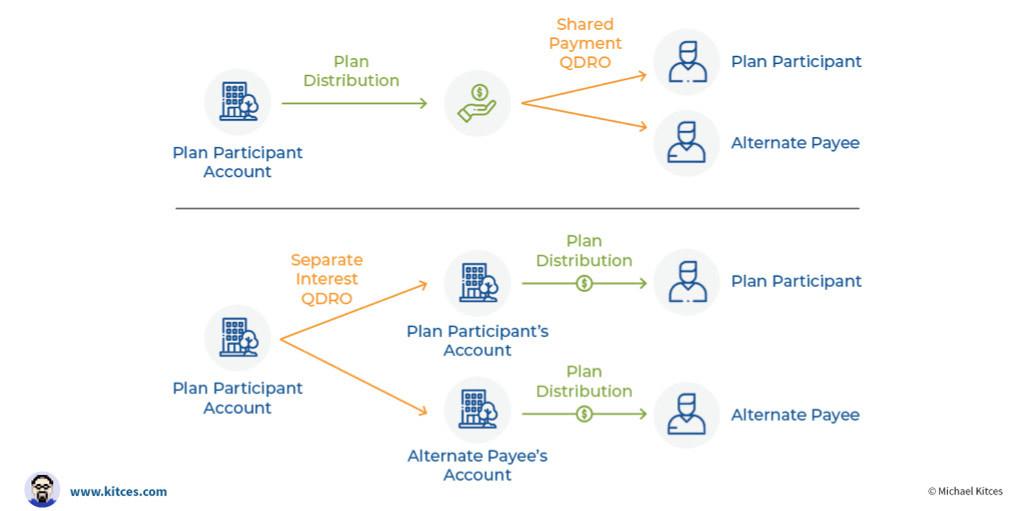
What is a QDRO?

Physician Divorce Situation

Hello,

I am an internist who is in the midst of a divorce situation. My attorney is talking about something called a QDRO with respect to my retirement plan.

Question: What is a QDRO?

Thanks

Dr. Joseph Burton Rellim

Springfield, Ohio

***

Reverse Mortgages

Join Our Mailing List

How They Work – When Best Used

[By Staff Writers]

A reverse mortgage is a loan that pays the mortgagor (doctor-client) cash and at the same time does not require a payment. Instead, the loan accrues interest until the loan term is complete. The only security the mortgagee (lender) has is the home itself. It has no legal right to any asset or income. To visualize a reverse mortgage, think of it as having rising debt and falling equity. When you take out a reverse mortgage, you still own your home and are responsible for the upkeep, taxes, and insurance.

Several Options

There are many different payment options available. A doctor-client can get a lump sum at closing, periodic payments, a line of credit, or a combination of these three.

Costs

The costs of a reverse mortgage are very similar to a regular mortgage. The physician-client will have to pay many of the following: origination fees, closing costs, servicing fees, interest, and risk pooling fees.

Risk-pooling fees are a new type of fee unique to the reverse mortgage. It allows the mortgagee to self-insure loan losses due to varying circumstances.

TLAC

According to expert Larry Fowler, CPA, CFP™, a great way to analyze the cost of reverse mortgages is to use the “Total Annual Loan Cost” (TALC) rate. The TALC rate is a rate equivalent to the amount of interest that must be charged on the cash received by the physician-client to grow the cash to the level of the final amount due at the end of the loan term. A physician needs to know three items to be able to calculate the TALC rate: the amount owed; the cash advances made to the borrower, and the term of the loan. The federal Truth-in-Lending laws now require lenders to give TALC rate projections for every reverse mortgage.

Left-Over Provisions

Most reverse mortgages have provisions that explain how the leftover cash is distributed in the event that the home owner moves, sells the home, or dies. These provisions can become very important if any of the previous three situations occur. For this reason, it is very important that these provisions be clearly understood.

winter-house2

Assessment

Reverse mortgages should be used when a physician needs extra money, plans to stay in his/her home for a long period of time, does not want to make payments, and does not want to sell his/her home and move to a different one. The reason a doctor should stay a long period of time is that the TALC rate is usually highest in the beginning of the loan and drops off in the latter part of the loan.

Conclusion

Your thoughts and comments on this ME-P are appreciated. Feel free to review our top-left column, and top-right sidebar materials, links, URLs and related websites, too. Then, subscribe to the ME-P. It is fast, free and secure.

Link: http://feeds.feedburner.com/HealthcareFinancialsthePostForcxos

Speaker: If you need a moderator or speaker for an upcoming event, Dr. David E. Marcinko; MBA – Publisher-in-Chief of the Medical Executive-Post – is available for seminar or speaking engagements. Contact: MarcinkoAdvisors@msn.com

OUR OTHER PRINT BOOKS AND RELATED INFORMATION SOURCES:

Product Details  Product Details

The Secular Trust

An Irrevocable Vehicle

By LaVerne L. Dotson; JD, CPA

A secular trust is typically an irrevocable trust designed so that creditors of a hospital employer, including bankruptcy creditors, cannot attach its funds.

Taxes

Consequently, the employer’s contributions to an irrevocable trust, often means the trust’s earnings are taxable income to the employee.

Benefits

Benefits are normally payable to the employee upon the occurrence of specific events, such as the passage of a certain number of years, retirement, disability, or death.

Assessment

Because they protect against a loss of benefits if the employer becomes insolvent, secular trusts may be preferred to a Rabbi trust by healthcare executives.

Conclusion

Your thoughts and opinions on the above are appreciated?

Related Information Sources:

Practice Management: http://www.springerpub.com/prod.aspx?prod_id=23759

Financial Planning: http://www.jbpub.com/catalog/0763745790

Risk Management: http://www.jbpub.com/catalog/9780763733421

Healthcare Organizations: www.HealthcareFinancials.com

Administrative Terms: www.HealthDictionarySeries.com

Subscribe Now: Did you like this Executive-Post, or find it helpful, interesting and informative? Want to get the latest E-Ps delivered to your email box each morning? Just subscribe using the link below. You can unsubscribe at any time. Security is assured.

Link: http://feeds.feedburner.com/HealthcareFinancialsthePostForcxos

Hospital Stock-Purchase Plans

What They Are – How They Work

By LaVerne L. Dotson; JD, CPA

A hospital employee stock-purchase plan qualified under Code § 423 allows eligible employees to purchase stock of an employer under special tax rules and favorable prices.

Intent and Purpose

An employee stock-purchase plan is intended to benefit virtually all employees, not just exceptional ones or limited groups.

Because the granting of options to purchase employer stock under an employee stock-purchase plan cannot discriminate in favor of key employees, usually the plan will appeal only to an employer who simply wants to provide, as a general benefit of employment, the right to buy employer stock, or believes that owning employer stock will act as an incentive to employees to perform well.

Requirements

A hospital employee stock-purchase plan must meet the following requirements:

  • Options may be granted only to employees of the employer corporation, or its parent or subsidiary corporations, to purchase stock in the employer, parent, or subsidiary.
  • The stockholders must approve the plan within 12 months before or after the date the plan is adopted.
  • The plan must provide that an employee cannot be granted an option if the employee, immediately after the option is granted, owns 5% or more of the total voting power or value of all classes of stock of the employer corporation, or its parent or subsidiary, computed using special attribution rules.
  • The plan must require that the options be granted to all employees on a nondiscriminatory basis. However, the options granted to different employees may bear a uniform relationship to the total compensation or the basic or regular rate of compensation of employees. The plan may also provide for a ceiling on the amount of stock to be purchased by any employee.
  • The exercise price must be at least 85% of the fair market value of the stock on the date the option is granted.

Wide Ownership

The broad participation requirements of employee stock-purchase plans mean that the stock is likely to be widely owned. Problems of marketing the employer stock and the securities problems inherent in issuing shares of stock to a number of employees will probably discourage employers who do not have an established market for their stock, and who do not want to face the securities problems related to public trading in their stock.

NQSOs and DSTs

Nonqualified stock options [NQSOs] and the direct stock transfers [DSTs] are both available to the employer as potentially less cumbersome means of obtaining the results of an employee stock-purchase plan.

Since a nonqualified plan is not subject to the restrictions of the qualified plan, normally the main reason for the employer choosing to implement an employee stock-purchase plan is to gain for the employees the favorable tax consequences of such a plan and thereby create a widespread base of company stock ownership among employees.

Taxation

On receipt of an option to purchase stock under an employee stock-purchase plan, the employee does not report any income, even though the exercise price of the stock may be less than the fair market value at the time; nor will the employee recognize income on the exercise of the option and acquisition of the stock at a subsequent date. Only on disposition of the stock will the employee recognize taxable income. As long as the disposition occurs two years or more after the date the option is granted to the employee, and the employee has held the stock at least 12 months after exercising the option, any profit will be treated as capital gains.

Assessment

There is a minor exception to this favorable tax treatment. Upon disposition of stock purchased under the plan, a portion of the gain will be treated as ordinary income equal to the discount of 0% to 15%.

Conclusion

Your comments and experiences with hospital stock purchase plans are appreciated?

Related Information Sources:

Practice Management: http://www.springerpub.com/prod.aspx?prod_id=23759

Financial Planning: http://www.jbpub.com/catalog/0763745790

Risk Management: http://www.jbpub.com/catalog/9780763733421

Healthcare Organizations: www.HealthcareFinancials.com

Administrative Terms: www.HealthDictionarySeries.com

Subscribe Now: Did you like this Executive-Post, or find it helpful, interesting and informative? Want to get the latest E-Ps delivered to your email box each morning? Just subscribe using the link below. You can unsubscribe at any time. Security is assured.

Link: http://feeds.feedburner.com/HealthcareFinancialsthePostForcxos


The Rabbi Trust

Hospital Employee Perks

LaVerne L. Dotson; JD, CPA

To help provide security for an important or especially valued employee, and at the same time defer taxation, a hospital employer may establish a so-called Rabbi trust to hold certain assets set aside to meet its obligations under a deferred compensation arrangement.

Restrictions

Such a trust simply restricts the use of the funds solely to meeting its obligations to the healthcare employee, and rights to benefits under the trust cannot be sold, transferred, assigned, or otherwise alienated.

Assessment

However, if the hospital employer should become bankrupt or insolvent, the trust assets will be subject to the claims of the employer’s creditor; not the employee. To provide additional security for an employee will result in the arrangement being considered “funded” for tax purposes and therefore taxable to the employee when set aside; thus nullifying the trust.

Conclusion

As a hospitalist or healthcare employee, have you ever been offered the deferred compensation arrangement, known as a “Rabbi trust”; please comment?

Related Information Sources:

Practice Management: http://www.springerpub.com/prod.aspx?prod_id=23759

Financial Planning: http://www.jbpub.com/catalog/0763745790

Risk Management: http://www.jbpub.com/catalog/9780763733421

Healthcare Organizations: www.HealthcareFinancials.com

Administrative Terms: www.HealthDictionarySeries.com

Subscribe Now: Did you like this Executive-Post, or find it helpful, interesting and informative? Want to get the latest E-Ps delivered to your email box each morning? Just subscribe using the link below. You can unsubscribe at any time. Security is assured.

Link: http://feeds.feedburner.com/HealthcareFinancialsthePostForcxos


Hospital Phantom Stock Plans


A Securities Granting Alternative

LaVerne L. Dotson; JD, CPA

As an alternative to granting an interest in stock or awarding stock options, a hospital or healthcare employer may establish a so-called phantom stock or shadow stock plan to its employees.

“Unit” Accounts

Under these arrangements the employee is treated as if he or she had received a certain number of shares of the company stock, but instead of actually issuing shares, the employer establishes an account for the employee.

The employer then issues “units” to the employee’s account. The number of units that the employee receives under such a contractual arrangement is pegged to the price or value of the company’s stock.

Once the units have been credited to the employee, the equivalent of dividends on these units are generally paid to the employee and are reinvested to purchase additional units or deferred with interest.

The plan normally provides for appropriate adjustment in the value of units if changes are made in the capitalization of the stock with respect to which the units are priced. Benefits under such a plan are usually deferred for a specific period of time or an event such as death or retirement. When benefits are payable, they may be paid in cash, either in a lump sum or installments, or in the form of stock.

Tax Considerations

The phantom stock is taxed like any other nonqualified deferred compensation plan. The granting of the phantom stock units is not taxable to the employee. When the cash or stock is distributed to the employee, it is taxed as ordinary income, equal to the amount of cash received or the value of the stock. If the stock distributed is subject to a substantial risk of forfeiture, it will be subject to taxation when such risk lapses in accordance with Code § 83(b).

Assessment

Because a phantom stock plan does not require the actual issuance of shares of the employer’s stock, it may enable the employer to offer much of the practical benefit of stock ownership without causing dilution of equity, securities law problems as to stock that would otherwise have been issued, or other problems such as risking the loss of S corporation status.

Conclusion

And so, what has been your experience with these so-called phantom-stock plans?

Related Information Sources:

Practice Management: http://www.springerpub.com/prod.aspx?prod_id=23759

Financial Planning: http://www.jbpub.com/catalog/0763745790

Risk Management: http://www.jbpub.com/catalog/9780763733421

Healthcare Organizations: www.HealthcareFinancials.com

Administrative Terms: www.HealthDictionarySeries.com

Subscribe Now: Did you like this Executive-Post, or find it helpful, interesting and informative? Want to get the latest E-Ps delivered to your email box each morning? Just subscribe using the link below. You can unsubscribe at any time. Security is assured.

Link: http://feeds.feedburner.com/HealthcareFinancialsthePostForcxos

Genworth Financial Reports on LTC

LTC Survey Results

[By Staff Reporters]

A new study by Genworth Financial Inc., suggests that costs for nursing homes, assisted living facilities and some in-home care services have increased for a fifth consecutive year, and could rise further if a shortage of long-term care workers isn’t resolved.

Results

The survey found that the average annual cost for a private room in a nursing home rose to $76,460, or $209 per day, this year. This was a 17 percent increase over the $65,185 cost in 2004. Meanwhile, nursing home costs this year ranged from $515 per day in Alaska to $125 per day in Louisiana.

###

Mature Woman

Assessment

The cost for assisted living facilities averaged $36,090 nationally, up 25 percent from $28,763 in 2004, while costs ranged from $4,921 per month in New Jersey to $1,981 per month in Arkansas. Obviously, this far exceeds the inflation rate.

Conclusion

And so, does LTC insurance still make sense; or is it better to save and invest privately for eldercare? Please opine, for-or-against this risk transfer insurance vehicle.

Related Information Sources:

Practice Management: http://www.springerpub.com/prod.aspx?prod_id=23759

Financial Planning: http://www.jbpub.com/catalog/0763745790

Risk Management: http://www.jbpub.com/catalog/9780763733421

Subscribe Now: Did you like this Medical Executive-Post, or find it helpful, interesting and informative? Want to get the latest ME-Ps delivered to your email box each morning? Just subscribe using the link below. You can unsubscribe at any time. Security is assured.

Product Details  Product Details

Healthcare Workplace Advice Survey

Employees Want Financial Planners and Benefit Advisors at the Workplace 

Staff Writers

Survey Results: [Table] 


2004

2005

2006

2007

Financial Planners (401K) at Work

43%

43%

38%

49%

Benefits Advisors at Work

N/A

36%

33%

47%

Financial Planners (All Needs) at Work

38%

37%

30%

44%

Source: The 6th Annual MetLife Study of Employee Benefit Trends:

Findings from the National Survey of Employers and Employees: Metlife, April 2008

http://www.whymetlife.com/trends/

Assessment: Is this contemporary trend also true for hospitals, medical clinics and the modern healthcare workplace?

Conclusion: Please comment and opine.

Related Information Sources:

Practice Management: http://www.springerpub.com/prod.aspx?prod_id=23759

Financial Planning: http://www.jbpub.com/catalog/0763745790

Risk Management: http://www.jbpub.com/catalog/9780763733421

Healthcare Organizations: www.HealthcareFinancials.com

Administrative Terms: www.HealthDictionarySeries.com

Speaker: If you need a moderator or speaker for an upcoming event, Dr. David E. Marcinko; MBA – Publisher-in-Chief of the Executive-Post – is available for seminar or speaking engagements. Contact him at: MarcinkoAdvisors@msn.com  or Bio: http://www.stpub.com/pubs/authors/MARCINKO.htm

Subscribe Now: Did you like this Executive-Post, or find it helpful, interesting and informative? Want to get the latest E-Ps delivered to your email box each morning? Just subscribe using the link below. You can unsubscribe at any time. Security is assured.

Link: http://feeds.feedburner.com/HealthcareFinancialsthePostForcxos


Securities and Hospital Employees

Join Our Mailing List

Receiving Employer Securities

[By LaVerne L. Dotson; JD, CPA]

There are a number of different methods, other than qualified retirement plans [403(b) and 401(k)], by which hospital stock may be transferred to hospitalists, or other medical employees.

Stock Bonus Plans

The first and simplest method is a stock bonus, whereby the employer makes an outright grant of shares to the employee. In this case, the employee immediately owns his or her shares and has full voting and dividend rights. The employee is taxed at ordinary income rates on the full value of the stock when it is received. This sort of arrangement is very beneficial to the employee, since he or she is able to acquire stock for a cost of the income tax payable on receipt of the stock.

Of course, cash flow may not always be sufficient to support increased income taxes due for non-cash compensation.

Thus, if the employee receives $10,000 worth of stock, he or she has essentially acquired the stock for $2,500, if he or she is in the 25% marginal tax bracket.

Further Restrictions May Apply

However, the hospital employer may insist that when the shares are granted the employee satisfy certain conditions either relating to continued employment for a period of time or attainment of certain performance goals. Until the restrictions are met, the shares cannot be sold and remain subject to forfeiture.

Using restriction periods ensures that employees will hold their shares and helps support employee retention.

Moreover, because grants can be made contingent on meeting specific goals, employers may create a stronger performance linkage than stock price alone.

Assessment

Of course, as soon as the rights to the stock are not subject to a substantial risk of forfeiture, the employee is subject to ordinary income taxation. The amount to be included in income is the excess of the fair market value of the stock at the time it is no longer subject to the risk of forfeiture.

Channel Surfing the ME-P

Have you visited our other topic channels? Established to facilitate idea exchange and link our community together, the value of these topics is dependent upon your input. Please take a minute to visit. And, to prevent that annoying spam, we ask that you register. It is fast, free and secure.

Conclusion

Your thoughts and comments on this ME-P are appreciated. Feel free to review our top-left column, and top-right sidebar materials, links, URLs and related websites, too. Then, subscribe to the ME-P. It is fast, free and secure.

Speaker: If you need a moderator or speaker for an upcoming event, Dr. David E. Marcinko; MBA – Publisher-in-Chief of the Medical Executive-Post – is available for seminar or speaking engagements. Contact: MarcinkoAdvisors@msn.com

OUR OTHER PRINT BOOKS AND RELATED INFORMATION SOURCES:

Product DetailsProduct Details

Hospital Employee Benefits

Join Our Mailing List

Tax-Deferred Benefits

[By LaVerne L. Dotson; JD, CPA]

As all readers of the Medical Executive-Post know, there are three categories of benefits that hospitals, healthcare systems, clinics and related medical employers typically provide to their employees, nurses, hospitalists, etc:

  1. Those that are totally income tax-free; some are still taxable for FICA (Social Security and Medicare).
  2. Those that are not taxed at their full economic value; or are taxed at a special preferential rate.
  3. Those in which a tax liability is not incurred until after benefits received.

Tax Deferred Benefits

There are several types of arrangements that allow employees to receive economic benefits currently without having to pay taxes until a later taxable year. Furthermore, some of these arrangements may even provide for a lower taxation rate at that time. These types of benefits are not totally excludable from income forever, however. Rather, they primarily provide deferral of taxable income.

Retirement Plans

The classic example is a retirement plan.  Employers may establish pension, profit sharing, stock-bonus, or annuity plans, as well as 401(k) and 403(b) plans. The tax consequences and most of the formal requirements of these plans are similar. These plans are often referred to as “qualified retirement plans.”

The hospital employer makes contributions on behalf of participating employees. The contributions are placed in a trust fund, custodial account, or annuity contract. The funds are held and accumulated for the benefit of plan participants.

The distribution of the funds to a participant normally occurs no sooner than the participant’s termination of service with the employer, and, no later than attainment of normal retirement age, as defined in the plan. The method of distribution may be a lump-sum payment of all of the employee’s benefits, an installment payment over a number of years (usually 10 to 15), or as an annuity that provides payments over the employee’s and/or spouse’s lifetime.  

The extremely favorable tax consequences of qualified retirement plans are the reason for their popularity. When the hospital makes a contribution on the employee’s behalf to the qualified plan, the employer receives a deduction for the amount contributed; however, the employee will not have to report the contribution as income until the funds are finally distributed.

Contributions to the trust or other qualified fund are accumulated tax-free. Distributions are taxable, but the recipient is generally in a lower marginal tax bracket during retirement than when contributions to the retirement plan were made. This treatment is a truly startling departure from the normal practice under the Code.

Employee FSAs

Assessment

The tax-free accumulation of income (contributions and interest) offers the hospital, clinic or other medical employee great advantage, even if his or her tax rates are the same at the time of deferral as at the time of distribution.

Conclusion

Your thoughts and comments on this ME-P are appreciated. Feel free to review our top-left column, and top-right sidebar materials, links, URLs and related websites, too. Then, subscribe to the ME-P. It is fast, free and secure.

Link: http://feeds.feedburner.com/HealthcareFinancialsthePostForcxos

Speaker: If you need a moderator or speaker for an upcoming event, Dr. David E. Marcinko; MBA – Publisher-in-Chief of the Medical Executive-Post – is available for seminar or speaking engagements. Contact: MarcinkoAdvisors@msn.com

OUR OTHER PRINT BOOKS AND RELATED INFORMATION SOURCES:

DICTIONARIES: http://www.springerpub.com/Search/marcinko
PHYSICIANS: www.MedicalBusinessAdvisors.com
PRACTICES: www.BusinessofMedicalPractice.com
HOSPITALS: http://www.crcpress.com/product/isbn/9781466558731
CLINICS: http://www.crcpress.com/product/isbn/9781439879900
BLOG: www.MedicalExecutivePost.com
FINANCE: Financial Planning for Physicians and Advisors
INSURANCE: Risk Management and Insurance Strategies for Physicians and Advisors

Product DetailsProduct DetailsProduct Details

Product Details  Product Details

Product DetailsProduct Details

Product Details


Hospital Employee Auto Benefits

Autos not Taxed at Full Economic Value

By Dr. David Edward Marcinko; MBA, CMP™

[Publisher-in-Chief]

Dr. DEM

As readers of the Medical Executive-Post are aware, there are three categories of benefits that clinics and hospital employers typically provide to their employees, nurses, hospitalists, etc:

  1. Those that are totally income tax-free; some are still taxable for FICA (Social Security and Medicare).
  2. Those that are not taxed at their full economic value; or are taxed at a special preferential rate.
  3. Those in which a tax liability is not incurred until after benefits received.

Taxable Benefits

When a benefit does not qualify for exclusion under a specific statute or regulation, the benefit is considered taxable to the recipient.  It is included in wages for withholding and employment-tax purposes, at the excess of its fair market value over any amount paid by the employee for the benefit.

For example, hospitals often provide automobiles for use by hospitalists, and employees, etc. Treasury regulations exclude from income the value of the following types of vehicles’ use by an employee:

  • Vehicles not available for the personal use of an employee by reason of a written policy statement of the employer
  • Vehicles not available to an employee for personal use other than commuting (although in this case commuting is includable)
  • Vehicles used in connection with the business of farming [in which case the exclusion is equal to the value of an arbitrary 75% of the total availability for use, and the value of the balance may be includable or excludable, depending upon the facts (Treas. Regs. § 1.132-5(g)) involved)]
  • Certain vehicles identified in the regulations as “qualified non-personal-use vehicles,” which by reason of their design do not lend themselves to more than a de minimus amount of personal use by an employee [examples are ambulances and hearses]
  • Vehicles provided for qualified automobile demonstration use
  • Vehicles provided for product testing and evaluation by an employee outside the employer’s work place.

Assessment

If the hospital employer-provided vehicle does not fall into one of the excluded categories, then the employee is required to report his personal use as a taxable benefit. The value of the availability for personal use may be determined under one of several approaches. Under any of the approaches, the after-tax cost to the employee is substantially less than if the hospital employee used his or her own dollars deducted a portion of the cost as a business expense.

Conclusion

Your thoughts and comments on this ME-P are appreciated. Feel free to review our top-left column, and top-right sidebar materials, links, URLs and related websites, too. Then, subscribe to the ME-P. It is fast, free and secure.

Speaker: If you need a moderator or speaker for an upcoming event, Dr. David E. Marcinko; MBA – Publisher-in-Chief of the Medical Executive-Post – is available for seminar or speaking engagements. Contact: MarcinkoAdvisors@msn.com

OUR OTHER PRINT BOOKS AND RELATED INFORMATION SOURCES:

Product DetailsProduct Details

Physicians-as-Employees [The Benefits]

 Join Our Mailing List 

On Tax Free Benefits

By Dr. David Edward Marcinko; MBA, CMP™

[Publisher-in-Chief]

There are three categories of benefits that hospitals typically provide to their physician [hospitalists], medical, nursing or technical employees; or clinics, office and medical practices provide to their employed staff:

Those that are totally income tax-free; some are still taxable for FICA (Social Security and Medicare).

Those that are not taxed at their full economic value, or are taxed at a special preferential rate.

Those where a tax liability is not incurred until sometime after the employee receives the benefit.

1. Tax-free Benefits

The following are benefits typically provided that are tax-free to physicians and hospital employees:

  • Group term life insurance
  • Accident and health benefits
  • Moving expense reimbursement
  • Dependent care expenses
  • Meals and lodging
  • Adoption expense assistance
  • Use of athletic facilities
  • Employee awards
  • Educational assistance
  • Qualified employee discounts
  • No additional cost services
  • Retirement planning service
  • De minimus benefits
  • Qualified transportation benefits
  • Working condition benefits
  • General fringe benefits
  • Miscellaneous specialized provisions

All tax-free benefits have varying conditions, which can include:

  • What constitutes a benefit to qualify (as defined by the IRS)
  • What constitutes an employee to qualify; the most commonly restricted employee types are S corporation employees who owned greater than 2% of the corporation’s stock in the taxable year, highly compensated employees and key employees.
  • Which employees are excluded
  • Monetary caps
  • IRS reporting requirements
  • Exclusion from what type of taxes (income, FICA and FUTA)

Assessment

And so, what has been your experience with the above; is the tax-free benefits package increasing or shrinking, please comment and opine?

Channel Surfing the ME-P

Have you visited our other topic channels? Established to facilitate idea exchange and link our community together, the value of these topics is dependent upon your input. Please take a minute to visit. And, to prevent that annoying spam, we ask that you register. It is fast, free and secure.

Conclusion

Your thoughts and comments on this ME-P are appreciated. Feel free to review our top-left column, and top-right sidebar materials, links, URLs and related websites, too. Then, subscribe to the ME-P. It is fast, free and secure.

Speaker: If you need a moderator or speaker for an upcoming event, Dr. David E. Marcinko; MBA – Publisher-in-Chief of the Medical Executive-Post – is available for seminar or speaking engagements. Contact: MarcinkoAdvisors@msn.com

OUR OTHER PRINT BOOKS AND RELATED INFORMATION SOURCES:

 Product Details

Section 83(B) Elections

Considerations for Hospital Employees

Staff Writers 

Internal Revenue Code § 83(b) allows a hospital or other employee who receives employer stock on a tax-deferred basis to be taxed immediately in the year the stock is transferred, regardless of the presence of a substantial risk of forfeiture.

If the employee makes such an election, any subsequent appreciation is not taxable as compensation. Once made, the IRS must approve any change you may want to make.

Indications

There are several reasons why a taxpayer might want to make such an election.

  • First, absent a Section 83(b) election, any appreciation in the value of the stock that occurs after transfer will then be subject to ordinary income taxation at the time of vesting for the full amount by which the then-appreciated fair market value exceeds the amount paid, if any.
  • If a Section 83(b) election is made, any post-transfer appreciation will not be taxed until the stock is sold and will only be subject to capital gain taxation on its ultimate sale.
  • If one expects the restricted property to appreciate substantially before vesting and one plans to hold the property for a long time after it vests, such delay in taxation of the appreciated amount may be a significant benefit.
  • If the taxpayer holds the property until death, any post-transfer appreciation will escape income taxation entirely.

Contra-Indications

  • The main disadvantage of the Section 83(b) election is the triggering of current taxation for the excess of fair market value (without regard to any restrictions or risk of forfeiture) over the amount paid.
  • In addition, the Code provides that, if a Section 83(b) election is made before the lapse of the restrictions and such property is subsequently forfeited due to the failure to meet the conditions, no deduction can be made.
  • Furthermore, if a Section 83(b) election is made and the property later declines in value; only a capital loss is allowed.
  • Finally, the employer receives no deduction for any later appreciation before vesting, nor will the hospital or company be able to take a deduction in the case of transferred stock on any dividends after the transfer that are paid to the employee.

Assessment

The election consists of a written statement, mailed to IRS center where you file your return, within 30 days of the triggering transaction.  It must include everything about the transaction.

Conclusion

Your comments, experiences and opinions on this election are appreciated.

Institutional: www.HealthcareFinancials.com

Terms: www.HealthDictionarySeries.com


Social HMOs for the Elderly

Join Our Mailing List

Extended Health Coverage for Unconventional Expenses

By Dr. David Edward Marcinko; MBA, CMP™ 

[Publisher-in-Chief]dem23

A social HMO offers extended coverage for some of the unconventional expenses associated with senior healthcare, such as transportation and in-home day care not covered by traditional MCOs.  

AAHP Definition 

According to the American Association of Health Plans (AAHP), social HMOs provide coordinated services by uniting federal and state funds and services, to benefit the elderly.

Real Life Example: 

One such social HMO is the 21 year-old Elderplan, based in Brooklyn, New York.*  It is a Medicare Advantage Plan (MA-PD) with the following characteristics:

Elderplan Classic:

  • $0 monthly premium
  • $0 to see a doctor
  • Unlimited brand name drugs
  • Unlimited generic drugs
  • $0 for approved generic drugs

 Elderplan Extra:

  • $0 plan premium
  • Low prescription co-payments
  • $40 reduction in Part B premium every month
  • Coverage for dental, hearing and vision services

 Elderplan Access:

  • $0 regular doctor visits
  • $0 monthly premium for you
  • Unlimited brand name drugs
  • Unlimited generic drugs

 Elderplan Advantage:

  • Coverage designed for individuals living in a skilled nursing facility
  • A personal registered nurse care practitioner
  • Complete coordinated care
  • Treatment for some medical issues at residence
  • $0 co-payment for skilled nursing facility stays

Assessment

Are you familiar with the social HMO concept and what has been your experience with it? Please comment and opine. 

*illustrative purposes only. Not an endorsement of http://www.Elderplan.org.

Conclusion

Your thoughts and comments on this ME-P are appreciated. Feel free to review our top-left column, and top-right sidebar materials, links, URLs and related websites, too. Then, subscribe to the ME-P. It is fast, free and secure.

Speaker: If you need a moderator or speaker for an upcoming event, Dr. David E. Marcinko; MBA – Publisher-in-Chief of the Medical Executive-Post – is available for seminar or speaking engagements. Contact: MarcinkoAdvisors@msn.com

OUR OTHER PRINT BOOKS AND RELATED INFORMATION SOURCES:

Product DetailsProduct DetailsProduct Details

Hospital Employee Stock Ownership Plans

Join Our Mailing List

A Qualified Retirement Plan

dem

By Dr. David Edward Marcinko; MBBS MBA CMP™

The growth over the past few decades of plans that give hospital and other corporate employees a stake in the ownership of their company has been a significant development in the area of employee compensation and corporate finance.  

Though there are many forms of hospital employee ownership, the employee stock ownership plan (ESOP) has achieved widespread application.

The rapid growth in the number of ESOPs being created has important ramifications for employees, corporations, healthcare industrial complex and economy at large. 

ESOP Definition 

An ESOP is a special kind of qualified retirement plan in which the sponsoring employer establishes a trust to receive the contributions by the employer on behalf of participating employees.  The trust then invests primarily in the stock of the sponsoring employer.

The plan’s fiduciaries are responsible for setting up individual accounts within the trust for each employee who participates, and the company’s contributions to the plan are allocated according to an established formula among the individual participants’ accounts, thus making the employees beneficial owners of the company where they work.  

ESOPs Must be in Writing 

Like all qualified retirement plans, ESOPs must be defined in writing.  

Further, in addition to the usual rules for qualified deferred compensation plans, ESOPs must meet certain requirements of the Internal Revenue Code [IRC] with respect to voting rights on employer securities. 

In general, employers that have “registration class securities” (publicly traded companies) must allow plan participants to direct the manner in which employer securities allocated to their respective accounts are to be voted on all matters.

Companies that do not have registration class securities are required to pass through voting rights to participants only on “major corporate issues.” These issues are defined as merger or consolidation, re-capitalization, reclassification, liquidation, dissolution, sale of substantially all of the assets of a trade or business of the corporation, and, under Treasury regulations, similar issues.  

On other matters, such as the election of the Board of Directors, the shares may be voted by the designated fiduciary unless the plan otherwise provides.

In regard to unallocated shares held in the trust, the designated fiduciary may exercise its own discretion in voting such shares. 

Motivating Factors 

As owners, physicians, nurses, and hospital employees may be more motivated to improve corporate performance because they can benefit directly from company profitability. A growing company showing significant increases in the value of its stock can mean significant financial benefits for participating employees.  

Employee Risk 

However, because the assets of the ESOP trust are invested primarily in the stock of one company, there is a higher degree of risk for the employee. 

IRC Code § 401(a) 

Until January 1, 2003 the employee did not incur FICA tax on exercised stock options. ESOPs, like all qualified deferred compensation plans, must meet certain minimum requirements spelled out in Code § 401(a) in order for the contributions to be tax deductible to the sponsoring employer.  

Many employers who set up ESOPs do so not to take advantage of the very substantial tax incentives they can receive, but rather to provide their employees with a special kind of employee benefit—one with many implications for the way a company does business.

Assessment 

An ESOP is the only employee-benefit plan that may also be used as a technique of corporate finance.  

Thus, in addition to the usual tax benefits of qualified retirement plans, studies have shown that ESOPs provide employers with significant amounts of capital, which often result in financial benefits far superior to other employee-benefit plans, while employees can share in the benefits realized through corporate financial transactions.  And so, are you familiar with ESOPs and do you participate in them, when available? Why or why-not? Please comment on your experiences. 

Conclusion

Your thoughts and comments on this ME-P are appreciated. Feel free to review our top-left column, and top-right sidebar materials, links, URLs and related websites, too. Then, subscribe to the ME-P. It is fast, free and secure.

Speaker: If you need a moderator or speaker for an upcoming event, Dr. David E. Marcinko; MBA – Publisher-in-Chief of the Medical Executive-Post – is available for seminar or speaking engagements. Contact: MarcinkoAdvisors@msn.com

OUR OTHER PRINT BOOKS AND RELATED INFORMATION SOURCES:

Risk Management, Liability Insurance, and Asset Protection Strategies for Doctors and Advisors: Best Practices from Leading Consultants and Certified Medical Planners™  Risk Management, Liability Insurance, and Asset Protection Strategies for Doctors and Advisors: Best Practices from Leading Consultants and Certified Medical Planners™

***


Hospital Cafeteria Plans

Join Our Mailing List

“Use it -or- Lose it” … Features

By Dr. David Edward Marcinko; MBA, CMP™

[Publisher-in-Chief]dr-david-marcinko 

Under a hospital employee cafeteria plan, each eligible physician, nurse, technologist or employee may choose to receive cash or taxable benefits -or- an equivalent of qualified, non-taxable fringe benefits.

Not Taxable to Employees 

The amounts contributed by the employer are not taxable to the employee. In effect, the employee pays for the benefits with before-tax dollars.  They remain non-taxable even though the employee could have elected to receive those amounts in cash.  

An additional benefit for both employee and employer is that nontaxable cafeteria plan benefits are not subject to FICA taxes, thus saving 7.65% on amounts that would otherwise be under the Social Security wage base.  

However, if the healthcare worker or employee does not use all of the monies that are diverted into the cafeteria plan, the unused amounts are forfeited [“use it -or- loose it” provision]. 

C-Plan Essence 

The essence of a hospital cafeteria plan is that it permits each participating employee to choose among two; or more benefits.

In particular, the employee may “purchase” non-taxable benefits by forgoing taxable cash compensation.  This ability of participating employees, on an individual basis, to select benefits fitting their own needs, and to convert taxable compensation to non-taxable benefits, makes the cafeteria plan an attractive way of offering benefits to employees. 

Many Non-Taxable Benefits 

Cafeteria plans may include the following non-taxable benefits: 

  • 401 (k) or 403 (b) retirement plans
  • health and accident insurance
  • adoption assistance
  • dependent care assistance
  • group term life insurance including premiums for coverage over $50,000,
  • and more! 

Cafeteria Plans and Healthcare 

It is always to the tax advantage of a healthcare employee to receive employer-provided health and accident benefits in a tax-free form, rather than paying them with after tax money.

Note there is the potential draw back of employees thinking of health care benefits as an implicit condition of employment instead of true non-cash compensation. 

Because of increases in healthcare costs, employers are not always willing or able to provide coverage for all of an employee’s medical expenses. This means many employees must often pay for a portion of their medical costs under a co-pay provision.  

If an employee is fortunate, the employer may establish a cafeteria plan to allow the employee to fund the co-pay healthcare costs with before-tax dollars. 

Example: 

If an employee must spend $3,000 annually to provide healthcare coverage for his or her dependents, then the income-tax savings to the employee could be as much as $1129.50 annually, if the employee is in the 30% tax bracket ($900 in income taxes and $229.50 of FICA taxes).

The employer saves $229.50, the 7.65% of gross pay “matching” FICA taxes.   

Other Benefits 

A cafeteria plan may also be expanded to cover more than just medical benefits. It may offer participants a choice between one or more nontaxable benefits, and cash resulting from the employer’s contributions to the plan or the employee’s voluntary salary reduction. 

Participants in cafeteria plans are sometimes given a choice of using vacation days, selling them to the employer and then getting cash for them, or, buying additional vacation days.

Some cafeteria plans also include one or more reimbursement accounts, often referred to as “flexible spending accounts” or “benefit banks.”  Under these plans, cash that is forgone by an employee, by means of a salary reduction agreement or other agreement, is credited to an account and drawn upon to reimburse the employee for uninsured medical or dental expenses, or for dependent-care expenses.

Many cafeteria plans include both insurance coverage options and reimbursement accounts. 

Conclusion

Your thoughts and comments on this ME-P are appreciated. Feel free to review our top-left column, and top-right sidebar materials, links, URLs and related websites, too. Then, subscribe to the ME-P. It is fast, free and secure.

Speaker: If you need a moderator or speaker for an upcoming event, Dr. David E. Marcinko; MBA – Publisher-in-Chief of the Medical Executive-Post – is available for seminar or speaking engagements. Contact: MarcinkoAdvisors@msn.com

OUR OTHER PRINT BOOKS AND RELATED INFORMATION SOURCES:

 Product DetailsProduct Details

Hospital Cafeteria Plan Elections

Join Our Mailing List

Benefit Considerations for Healthcare Workers

By Dr. David Edward Marcinko; MBA, CMP™

[Publisher-in-Chief]

DEM blue tieUnder a hospital employee cafeteria plan, each eligible physician, nurse, technologist or employee may choose to receive cash or taxable benefits -or- an equivalent of qualified, non-taxable and fringe benefits.  

And, any hospital employee given the opportunity to participate in a cafeteria plan should consider the following issues. 

Health Insurance Coverage 

If the employee is married and has a spouse who also works, and, the employer-provided health benefits are better under the spouse’s plan, then the employee should elect to be covered by the spouse’s plan and choose another nontaxable benefit or a cash benefit that would be taxable under his or her own cafeteria plan, such as dependent-care coverage or group term insurance coverage.  

Switching health insurance requires carefully strategic planning to eliminate potential gaps in coverage created by insurance enrollment criteria.

If the employee does not need the salary or cafeteria-plan benefits to meet current expenses, he or she should consider contributing the cash to a 401(k) or 403(b) plan and defer the tax liability.  

If the employee has no working spouse and the employee’s plan is the only source for certain health benefits, the employee should consider what type of benefits he or she really needs for his or her family.  

In other words, can the employee get the necessary benefits under the company plan cheaper than he or she could individually, after taking into account that individual coverage will be paid with after-tax dollars, where-as under a cafeteria plan such benefits can be paid with before-tax dollars? 

Example: 

If an employee who is in the 30% tax bracket is provided a $6,000 plan by her employer. He or she would have to be able to get a comparable plan independently for only $3,741 to be in the same position on an after-tax basis. ($6,000 minus income taxes of $1,800 = $4,200 [$4,200 minus $459 of avoided FICA]. 

Dependent-care costs 

An employee who has a choice of including dependent-care costs may be entitled to an income-tax credit for such expenses if, the employer does not reimburse them.  

Thus, if a credit is worth the same or more than the payment under the cafeteria plan, the employee may choose to contribute those dollars toward additional health or life insurance.

Conclusion

Your thoughts and comments on this ME-P are appreciated. Feel free to review our top-left column, and top-right sidebar materials, links, URLs and related websites, too. Then, subscribe to the ME-P. It is fast, free and secure.

Speaker: If you need a moderator or speaker for an upcoming event, Dr. David E. Marcinko; MBA – Publisher-in-Chief of the Medical Executive-Post – is available for seminar or speaking engagements. Contact: MarcinkoAdvisors@msn.com

OUR OTHER PRINT BOOKS AND RELATED INFORMATION SOURCES:

Product Details  Product Details

Product Details


Questions Doctors Must Answer Before Retiring

Getting off the “Must-Work” Treadmill

By Dr. David Edward Marcinko; MBA, Certified Medical Planner™

Publisher-in-Chief 

“Other than facing up to the thought of never writing another prescription or studying another X-ray, perhaps the greatest challenge for a physician approaching retirement is making reliable assumptions about the future. Since the quality of life in retirement will be determined by the quality of a long-term financial plan, it is imperative to make prudent and conservative investment choices. Just like preparing for a complex medical procedure, even a slight miscalculation in planning could cause a wide margin miss to your desired result.”

-Robert B. Wolf; CFP® 

Many physicians feel that practicing medicine today just isn’t as much fun (or rewarding) as it used to be.  I am [was] one of them.

With healthcare reform, your income may be lower while your efforts have increased substantially. Perhaps even worse to the ego, your social standing has plummeted faster than your income.  

And so, have you ever wondered how you can get off the “must-work” employment treadmill?

I have – and so did my buddy, Dr. Bill Zientak.  

The Most Important Questions 

Just imagine being able to work because you want to practice medicine – not because you “must”; or be able to retire completely!  

So, like Dr. Bill, ask yourself these questions designed to provide some answers to making practice optional and joyous [again]; rather than the mandatory economic drudgery it has become for many medical colleagues:

· How do I maximize qualified retirement plans [401(k)-403-(b]) during my working years?

· Do I have enough money for retirement; forever; for a legacy?

· What lifestyle do I envision during retirement?

· How do I maximize these qualified plan benefits when fully retired?

· How should I invest money that’s not in a qualified retirement plan?

· Why retirement planning determines my investment approach – not my “risk-tolerance?”

· What role should Social Security play in my retirement planning; if any?

· Why and how do I integrate estate and retirement planning? 

Conclusion

Please comment if you believe an important interrogative has been omitted. 

More information: http://www.jbpub.com/catalog/0763745790

Speaker: If you need a moderator or a speaker for an upcoming event, Dr. David Edward Marcinko; MBA is available for speaking engagements. Contact him at: MarcinkoAdvisors@msn.com


Retirement Planning Terms and Definitions for Physicians

A “Need-to-Know” Glossary for all Medical Professionals

HDS


 http://www.springerpub.com/Search/marcinko

  • 5- and 10- year averaging: A special tax treatment for qualified plan lump sums. 
  • Annuity: A distribution of a retirement plan in equal amounts over a physician’s lifetime.
  • Deferred compensation plan: A nonqualified compensation plan, often tied to a physician-executive bonus plan, allowing for payments in the future, such as retirement.
  • Defined benefit plan: The traditional [older] legacy pension plan. The benefit is defined in a formula that is often based on the final years of physician employment. The benefit is paid as a single life annuity for single doctors without dependents. Married physicians must take a 50% or greater survivor annuity unless waived in writing by the spouse.
  • Defined contribution plan: A popular [newer] retirement benefit in recent times. The most popular version of this type of plan is the 401(k) or 403 (b), plan. The amount of contribution is defined, not the final benefit. The final benefit depends on how well a doctor employee’s investments perform. Another important feature is that the physician employee must choose the investments to which to allocate his or her contributions (and often the employer’s contributions). Plans typically offer three or more selections, and the doctor-employee decides on the percentage of money to be invested in each.
  • Employee stock ownership plan (ESOP): A benefit plan that offers company stock to the doctor as the investment. Available plans are leveraged ESOPs, which are highly complex financial arrangements, usually in the form of profit-sharing.
  • Hybrid pension plan: A plan that has features of both a defined contribution plan and a defined benefit plan:

1. Money purchase plan: A plan in which an employer agrees to contribute a specified amount to the plan on behalf of each physician employee. The amount available at any time is determined by the contributions and how well the investments perform.

2. Target benefit plan: A plan in which an employer agrees to contribute a specified amount to the plan. This plan features a formula that sets up a target benefit for each physician employee. The target benefit plan is meant to be similar to a defined benefit plan, but without the actual guarantee of the final benefit. The final benefit ultimately is determined by how well the investments perform.

  • Individual retirement account (IRA): A personal retirement savings plan for individual physicians. Several types are listed below:

1. Regular deductible/nondeductible IRA: Amounts of IRA contributions that is either deductible or non-deductible for individual income tax purposes. Earnings on these IRAs are tax deferred, meaning that taxes on earnings are paid at the time of withdrawal.

2. Roth IRA: Amounts of contributions to Roth IRAs are nondeductible. Earnings on Roth IRAs are never taxable.

3. Educational IRA: Amounts contributed to Educational IRAs are nondeductible; however, earnings are not taxable if withdrawn to pay qualified educational expenses. Anyone can contribute an indexed amount per year to an Educational IRA for a child under age 18, provided the total contributions for a child do not exceed per year limits. The account must be designated as an Educational IRA from its inception.

4. Conduit IRA: A rollover IRA consisting only of a single qualified plan that may be rolled into another qualified pension plan.

5. Inherited IRA: An IRA of a deceased physician.

6. Rollover IRA: An IRA consisting of a qualified plan(s) that has been “rolled over” into it.

  • Keogh plan: A plan for self-employed physicians and partnerships. A Keogh plan can be a defined benefit, a defined contribution, or a hybrid plan. 
  • Lump sum distribution: A distribution of all of the money in a doctor participant’s qualified benefit plan account. This generally occurs at one time or at least in one calendar year. 
  • Pension: An employer retirement plan providing payments at retirement. It is usually based on an employee’s compensation and doctor length of service. 
  • Qualified benefit plan: A specific plan that is qualified by the IRS to receive special tax advantages. Typical plans are defined benefit, defined contribution, ESOP, profit-sharing, and thrift plans.
  • Recalculation / Non-recalculation: Methods of determining the use of life expectancy tables for mandatory withdrawals at age 70½. 
  • Simplified employee plan (SEP): An IRA plan that is simplified and easy to administer for self-employed physicians. These plans are sometimes referred to as SEP-IRAs.
  • Supplemental executive retirement plan (SERP): A nonqualified plan, primarily but not exclusively for executives, that provides for lost qualified pensions due to IRS restrictions.
  • Tax-deferred annuity (TDA) or 403(b) plan: This typically is a defined contribution plan available to teachers, hospitals, nurses, doctors and not-for-profit organizations. An organization must sponsor the plan. Once sponsored, insurance companies offer annuities through the company. Employees then select which insurance company will receive their contributions. The contributions are almost always on a pre-tax basis.

 More related info: http://www.springerpub.com/Search/marcinko

Offshore Employee Medical Benefits

A Global Healthcare Model

Staff Writers


American businesses are now extending their cost-cutting initiatives to include offshore employee medical benefits and facilities like the Bumrungrad Hospital in Bangkok, Thailand (cosmetic surgery), the Apollo Hospital in New Delhi, India (cardiac and orthopedic surgery) are premier examples for surgical care. 

Both are internationally recognized institutions that resemble five-star hotels equipped with the latest medical technology. Countries such as Finland, England and Canada are also catering to the English-speaking crowd, while dentistry is especially popular in Mexico and Costa Rica.  

Although still considered “medical tourism,” Mercer Health and Benefits was recently retained by three Fortune 500 companies interested in contracting with offshore hospitals and JCAHO has accredited 88 foreign hospitals through a joint international commission.  

To be sure, when India can discount costs up to 80%, the effects on domestic hospital reimbursement and physician compensation may be assumed to induce downward pricing pressure spirals. 

So, what do you think of this idea and how does it relate to the currently weak US greenback?

401-k and 403-b Retirement Plans

The Time to Change Allocations

Join Our Mailing List

By Clifton McIntire; CIMA, CFP®

By Lisa McIntire; CIMA, CFP®fp-book1 

401k and 403b plans offer great opportunity to change asset allocations.   

For example, Karen Markland, a Certified Registered Nurse Anesthetist at Carolina’s Medical Center, found it was relatively easy to shift from bonds to stocks some years ago. No taxes or commissions were involved. A simple phone call moved her allocation from 40 percent bonds, 50 percent stocks and 10 percent international to 20 percent bonds, 70 percent stocks and 10 percent international after a recent stock market decline. 

One point of caution when using 401k or 403-b plans for asset allocation is required. Quite often the trustees of 401k plans will decide on a single group of mutual funds for the participants. Not all funds in the group are worthy of your money.

Jean Surber, a Certified Registered Nurse Anesthetist at Presbyterian Hospital, did not have a good international option and so had to limit her allocation in that 401k plan to stocks, bonds and cash. She used her Individual Retirement Account (IRA) at a brokerage firm for international investing.

Employed healthcare professionals should “max out” on their 401k/403b plans. You should put all that you are allowed into your 401k/403b plan, unless the selection of managers is so bad that even with the tremendous tax break and “dollar cost averaging” of monthly contributions, the envisioned end results would be small.  

For example, the simple compounding of $10,000 at age 30 investing $416 per month and experiencing a 10 percent annual rate of return would provide $1,905,788 at age 65. 

Wake-Up Call 

The Federal Government annually mails a detailed explanation of social security benefits to its workers.  This is an attempt to remind people that social security fulfills only part of their retirement income needs. To many, this will be a wake up call. The status of 401k or 403b plans is normally sent to participants’ quarterly. This is an excellent time to do some asset allocation and review manager performance.  Since most 401ks and 403bs use mutual funds and/or ETFs, and offer daily valuations by telephone, you don’t have to wait for the quarterly report, which is often received 60 days after the end of the quarter. When changes are made in the allocation of existing positions, the percentage allocation of future contributions should be made as well. 

For example, when Karen Markland repositioned her 401k portfolio, she also changed her future contribution percentages. 

Information Sources 

Morningstar, a Chicago based company that analyzes and computes statistics on most of the mutual funds produces a monthly report that you can review at the library, or online at home.Most banks and brokerage firms subscribe to this service. They can send you an up to date single page analysis of each of your funds; or an internet syndication feed. This is good material, well researched, but it is historical data.“Past performance is no assurance of future results.” 

The Morningstar system rates funds from 1 star (worst) to 5 stars (best).  This is sometimes referred to as the Sesame Street method of selecting mutual funds.  If you can count to 5, you can pick the best fund. Using this report alone is like driving on an Interstate highway at 80 miles per hour using only the rear view mirror (that can be fatal). 

Why; it’s because fund portfolio managers’ change. Good managers are hired away by their competitors; bad managers are fired. Managers themselves are not always consistent in maintaining their style or in their performance. Morningstar and the Internet is a good place to start because you can review a lot of information at a single setting. You can see historical returns, sector weightings, manager tenure, investment style, costs (except trading commission expense) and statistics concerning risk. However, Morningstar’s independence has been questioned of late. Nevertheless, it is from these and many similar sources that you may learn of the performance you can reasonably expect. 

Few physician managers, but many financial advisors are well versed in a variety of mutual funds. Representatives of the funds call on them frequently.  Many brokerage firms perform independent due diligence research. Mutual funds are a large part of the Financial Services Industry and you can expect the availability of extensive information. 

Stay the Course 

Most 401k and 403b plans should be invested for growth of capital. You are generally talking about long-term investment objectives.You should be very reluctant to withdraw funds from this tax-sheltered environment.  Unfortunately far too often, the participant becomes discouraged, (usually in a down market cycle) and moves the money out of stocks and into a money market fund at the wrong time. 

It is not unusual to see doctor participants assume a very defensive posture a year or so before retirement. This is shortsighted. The investments are meant to provide income and growth of capital for many years, not just until retirement. Upon retirement the funds will be rolled out directly into an IRA and invested with almost the same asset allocation. 

Conclusion

Your thoughts and comments on this ME-P are appreciated. Feel free to review our top-left column, and top-right sidebar materials, links, URLs and related websites, too. Then, subscribe to the ME-P. It is fast, free and secure.

Link: http://feeds.feedburner.com/HealthcareFinancialsthePostForcxos

Speaker: If you need a moderator or speaker for an upcoming event, Dr. David E. Marcinko; MBA – Publisher-in-Chief of the Medical Executive-Post – is available for seminar or speaking engagements. Contact: MarcinkoAdvisors@msn.com

OUR OTHER PRINT BOOKS AND RELATED INFORMATION SOURCES:

DICTIONARIES: http://www.springerpub.com/Search/marcinko
PHYSICIANS: www.MedicalBusinessAdvisors.com
PRACTICES: www.BusinessofMedicalPractice.com
HOSPITALS: http://www.crcpress.com/product/isbn/9781466558731
CLINICS: http://www.crcpress.com/product/isbn/9781439879900
ADVISORS: www.CertifiedMedicalPlanner.org
PODIATRISTS: www.PodiatryPrep.com
BLOG: www.MedicalExecutivePost.com
FINANCE: Financial Planning for Physicians and Advisors
INSURANCE: Risk Management and Insurance Strategies for Physicians and Advisors


Product Details  Product Details

Annuity Insurance Products

Join Our Mailing List

A Brief Overview of Annuities for Physicians

[By Gary A. Cook, MSFS, CFP®, CLU, ChFC, RHU, LUTCF, CMP™ (Hon)]

[By Kathy D. Belteau, CFP®, CLU, ChFC, FLMI]

[By Philip E. Taylor, CLU, ChFC, FLMI]fp-book1

 Introduction

Annuities were reportedly first used by Babylonian landowners to set aside income from a specific piece of farmland to reward soldiers or loyal assistants for the rest of their lives.

Today’s annuities substitute cash for farmland; however the concept is the same. In 1770, the first annuities were sold in the United States and were issued by church corporations for the benefit of ministers and their families. Annuities have grown on a tax-deferred basis since enactment of the Federal Income Tax Code in 1913.  They began to gain widespread acceptance in the early 1980s when interest rates credited exceeded 10%.  During the last two decades, annuities have been the fastest growing sector of premiums for life insurance companies.

Nevertheless, are they actually “needed” by contemporary physicians – – or merely “sold” to them? 

An annuity is a legal contract between an insurance company and the owner of the contract. The insurance company makes specific guarantees in consideration of money being deposited with the company.

Annuities are generally classified as fixed or variable – deferred or immediate.  As their names indicate, deferred annuities are designed as saving funds to accumulate for future use.They are growth-oriented products where the tax on the interest earned is deferred until the money is withdrawn.  An immediate annuity is used for systematically withdrawing money without concern for the money lasting until the end.  The insurance company assumes this risk.

Deferred Annuities

The deferred annuity contract, like a permanent life insurance policy, has been found by some to be a convenient method of accumulating wealth.  Funds can be placed in deferred annuities in a lump sum, called Single Premium Deferred Annuities, or periodically over time, called Flexible Premium Deferred Annuities.  Either way, the funds placed in a deferred annuity grow without current taxation (tax-deferred).  .

Fixed Deferred Annuity

Fixed deferred annuities provide a guaranteed minimum return of return (usually around 3 percent per year) and typically credit a higher, competitive rate based on the current economic conditions.

Fixed annuities are usually considered conservative investments as the principal (premium) is guaranteed not to vary in value. Insurance companies are required by state insurance laws to maintain a reserve fund equal to the total value of fixed annuities.  Fixed annuities are also protected by State Guaranty Fund Laws. 

Example: 

Dr. Park, a retired physician, desires a safe financial vehicle for $100,000 of her excess savings.  She doesn’t need the earnings of this investment for current income and also wants to reduce her income tax liability.  She decides to purchase a fixed deferred annuity with her $100,000.  The annuity guarantees a 3 percent annual return and the current rate is 6 percent. 

After the first year, $6,000 of interest is credited to the annuity and Dr. Park has no current income taxes as a result.  If the 6 percent interest rate does not change, after 3 years, the annuity will have $119,102 of value.

Variable Deferred Annuity

Recently, variable deferred annuities have become very popular.  Like fixed annuities, variable deferred annuities offer tax-deferred growth, but this is where the similarities end.  Variable annuities are not guaranteed.  The appreciation or depreciation in value is totally dependent on market conditions.

Variable deferred annuities assets are maintained in separate accounts (similar to mutual funds) that provide different investment opportunities.  Most of the separate accounts have stock market exposure, and therefore, variable annuities do not offer a guaranteed rate of return.

But, the upside potential is typically much greater than that of a fixed annuity. The value of a variable deferred annuity will fluctuate with the values of the investments within the chosen separate accounts.  Although similar to mutual funds, there are some key differences.  These include:

·  A variable annuity provides tax deferral whereas a regular mutual fund does not

·  If a variable annuity loses money because of poor separate account performance, and the owner dies, most annuities guarantee at least a return of principal to the heirs.  This guarantee of principal only applies if the annuity owner dies.  If the annuity value decreases below the amount paid in, and the annuity is surrendered while the owner is alive, the actual cash value is all that is available.

·  When money is eventually withdrawn from a deferred annuity, it is taxable at ordinary income tax rates.  With taxable mutual funds, they can be liquidated and taxed at lower, capital gains rates.

·  There is also a 10 percent penalty if the annuity owner is under 59½ when money is withdrawn.  There is no such charge for withdrawals from a mutual fund.

· The fees charged inside of a variable annuity (called mortality and expense charges) are typically more than the fees charged by a regular mutual fund. 

Assessment

Variable deferred annuities are sensible for physicians who want stock market exposure while minimizing taxes.  Most financial advisors and Certified Medical Planners™ [CMP™] recommend regular mutual funds when the investment time horizon is under 10 years.  But if the time horizon is more than 10 years, variable annuities may occasionally become more attractive because of the additional earnings from tax-deferral. 

Both types of deferred annuities are subject to surrender charges.  Surrender charges are applied if the annuity owner surrenders the policy during the surrender period, which typically run for 5 to 10 years from the purchase date.  The charge usually decreases each year until it reaches zero.  The purpose of the charge is to discourage early surrender of the annuity. 

Equity Index Annuity 

The equity index annuity combines the basic elements of both the variable and the fixed annuity. The credited interest earnings are generally linked to a percent of increase in an index, such as the Standard & Poor’s 500 Composite Stock Price Index (S&P 500). This percentage is called the Participation Rate and may be guaranteed for a specified period of up to 10 years or adjusted annually. Thus, the physician annuity owner is able to participate in a portion of market gains while limiting the risk of loss. 

Typically, the indexed annuity has a fixed principal, with the insurance company and contract owner sharing the investment risk.  If the S&P 500 Index goes up, so do interest earnings.  If it declines, the insurance company guarantees the principal.   

So, the physician contract owner accepts the risk of an unknown interest yield based on the growth or decline of the S&P 500.  Medical professionals and healthcare practitioners should pay particular attention to surrender penalties, asset management fees and any monthly caps on appreciation. 

Immediate Annuities

Immediate annuities provide a guaranteed income stream.  An immediate annuity can be purchased with a single deposit of funds, possibly from savings or a pension distribution, or it can be the end result of the deferred annuity, commonly referred to as annuitization.  Just like deferred annuities, immediate annuities can also be fixed or variable.  

Immediate annuities can be set up to provide periodic payments to the policy owner annually, semiannually, quarterly or monthly.  The annuity payments can be paid over life or for a finite number of years.  They can also be paid over the life of a single individual or over two lives. 

Insurance Agent Commissions

Immediate Fixed Annuity

Immediate fixed annuities typically pay a specified amount of money for as long as the annuitant lives.They may also be arranged to only pay for a specified period of time, i.e., 20 years.  They often contain a guaranteed payout period, such that, if the annuitant lives less than the guaranteed number of years, the heirs will receive the remainder of the guaranteed payments. 

A note of caution here, as the selection of an immediate annuity is an irrevocable decision! 

Example: 

Dr. Jones is 70 years old and retired.  He is only of average wealth, but is concerned that if he lives too long, he could deplete his savings.  He decides to use $100,000 and purchase a lifetime immediate annuity with 20 years certain.  The insurance company promises to pay him $7,000 per year as long as he lives. If Dr. Jones dies four years after purchase, he would only have received $28,000 out of a $100,000 investment.  However, his heirs will receive $7,000 for the next 16 years.  If Dr. Jones survives to the age of 98, he would have received $196,000 (or 28 years of $7,000).

Immediate Variable Annuity

Immediate variable annuities provide income payments to the annuitant that fluctuates with the returns of the separate accounts chosen.  The theory is that since the stock market has historically risen over time, the annuity payments will rise over time and keep pace with inflation.   If this is indeed what happens, it is a good purchase, but it cannot be guaranteed. 

Some companies will, at a minimum, provide a guarantee of a low minimum monthly payment no matter how poorly the separate accounts perform.

Split annuities

A popular method of adding income and yet still accumulating savings is through the use of two separate annuity policies.  Part of the funds is placed in an immediate annuity to provide monthly income.  The balance is placed in a deferred annuity grows to the total value of the premium paid for both annuities.  

The income that is received from the Immediate Annuity includes a portion of the initial premium, as well as the taxable interest earned.   Only the portion of income that is interest is taxable. The ratio between the annuity principal and interest being paid out is called an Exclusion Ratio. 

Example:

Dr. Jeanne Jones has put $100,000 into a 5-year non-tax deferred vehicle at 5%. The earnings to supplement Jeanne’s retirement is $25,000.  With a combined federal and state tax of 33%, the net after tax income would be $16,750. Jeanne takes the same $100,000 using the split annuity concept she would receive $24,444 over the 5 years.  Based on an exclusion ration of 89%, her total taxable amount is $2,797.  This would yield $923 in taxes at the same 33% tax rate.  Jeanne would have $23,521 of spendable income with the split annuity compared to the $16,750.

Qualified Annuities

The term qualified refers to those annuities which permit tax-deductible contributions under one of the Internal Revenue Code (IRC) sections, i.e., § 408 Individual Retirement Accounts (IRA), § 403(b) Tax Sheltered Annuities, § 401(k) Voluntary Profit Savings Plans.  Qualified annuities can also result from a rollover from such a plan.  

Assessment

Currently, there is much lively debate in the industry as to whether an annuity, which is tax-deferred by nature, should be used as a funding vehicle within a tax-qualified plan, i.e., a tax-shelter within a tax-shelter.  Since the investment options within the annuity are also generally available to the plan participant without the additional management expenses of the annuity policy, it is felt this could be a breach of fiduciary responsibility. And, most insurance agents are not fiduciaries. 

Both the National Association of Securities Dealers (NASD) and the Securities and Exchange Commission (SEC) have gone on record as criticizing these sales.  

However, there are numerous examples of deferred annuities that have outperformed similar investment-category mutual funds, even after taking the annuity expenses into account. 

Conclusion

Your thoughts and comments on this ME-P are appreciated. Feel free to review our top-left column, and top-right sidebar materials, links, URLs and related websites, too. Then, subscribe to the ME-P. It is fast, free and secure.

Speaker: If you need a moderator or speaker for an upcoming event, Dr. David E. Marcinko; MBA – Publisher-in-Chief of the Medical Executive-Post – is available for seminar or speaking engagements. Contact: MarcinkoAdvisors@msn.com

OUR OTHER PRINT BOOKS AND RELATED INFORMATION SOURCES:


SNFs

Skilled Nursing Facilities in the News

Staff Writers

The Carlyle Group is taking steps to head off critics of its $6.3 billion acquisition of long-term care player Manor Care.

Responding to pressure from unions representing Manor Care’s workers, Carlyle sent letters to state regulators pledging that it would hire enough staff, train them well and make proper infrastructure investments in its homes. This gesture, however, apparently wasn’t enough to impress some Congressmen, who have begun an inquiry into not only Carlyle, but business practices at investor-owned nursing homes generally. They’re investigating widespread allegations that private equity firms cut staff to the bone while remaking corporate structures to avoid getting sued when patients are harmed.

Reps. John Dingell (D-MI) and Barney Frank (D-MA) are planning hearings on the topic, and most likely legislation as well. This follows action by Sens. Max Baucus (D-MT) and Charles Grassley (R-IA), who have sent letters to five private investment firms asking for information on their ownership structure and management practices. Baucus and Grassley also asked CMS for information on its oversight of nursing homes.

The concern on the The Hill isn’t unique. Earlier this month, officials in Florida, Illinois, Pennsylvania, Michigan and Washington asked regulators to investigate the Carlyle acquisition–and to withhold approval of the deal until they did so.

New York Times – October 24, 2007

NOTE: Any insider thoughts on this breaking development?

It seems to co-incide nicely with release of our November print edition which features financial benchmarks for this industry. 

-The Moderators