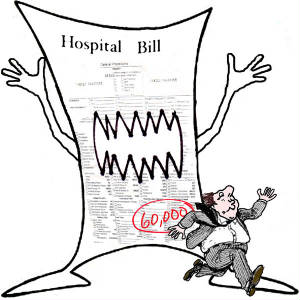
Charity Care Law Violations

Join Our Mailing List

Collections Agency Sued for Alleged Violations

[By Dr. David Edward Marcinko; MBA, CMP™]

dr-david-marcinko3

According to Ann Zieger of Fierce HealthFinance on January 7, 2009, a Washington state healthcare collection agency is being sued by a law firm for allegedly violating state charity care laws. This is a case that could become a class action if the firm gets its way.

The Case Argument

The case hinges on a Washington measure that, among other things, defines individuals and families with annual incomes below 100 percent of the federal poverty level as officially eligible for hospital charity care with no charges.

The Law Firm

Seattle-based Phillips Law Group has filed a lawsuit claiming that healthcare collection firm Audit & Adjustment Company has been misleading patients by telling them they owe the full charges on hospital billing statements.

The Argument

The suit argues that the collections firm is required to tell patients that they might potentially be entitled to charity care that would cut or eliminate their hospital debts. It also alleges that this behavior violates not only Washington’s charity care law, but also the Consumer Protection Act [CPA] and the Fair Debt Collection Practices Act [FDCPA].

The Remedy

The attorneys seeks to stop the agency from attempting to collect from charity care-eligible patients, as well as to establish procedures to allow patients to qualify for charity care, and let patients from which it has collected in the past four years become eligible for reductions in their debt.

Related Cases

In an unrelated matter, a Missouri hospital based in St. Joseph, owned by Heartland Health, Inc has been sued over allegations that it too allowed its captive collections agency to collect without letting patient-debtors know the agency was owned by the same company as the hospital. Kansas City Attorney Derek Potts filed suit against the hospital, Heartland Regional Medical Center, on behalf of three clients, and is asking the court for class action status. The collection agency, Northwest Financial Services, is owned by Midwestern Health Management, which is also owned by Heartland. 

And, here in Atlanta, charitable entity Grady Memorial Hospital, the region’s only a Level I trauma center, just received a $200 million grant from a private foundation with ties to Coca-Cola. It was the largest gift on record to a single public hospital, according to the Center on Philanthropy at Indiana University. Grady has been struggling financially for some time, now.

Assessment

Considering the financial mismanagement and extreme revenue seeking tactics of some not-for-profit hospitals today – much like Mrs. Jellyby the misguided do-gooder in Charles Dickens’s “Bleak House” – some hospitals practice a form of “telescopic philanthropy” [first termed by Richard Oastler; in 1727]. As you may recall, Jellby neglected her chaotic family to devote time to improving conditions in distant Borrioboola-Gha, Africa. Conclusion

Your thoughts and comments on this ME-P are appreciated. Feel free to review our top-left column, and top-right sidebar materials, links, URLs and related websites, too. Then, subscribe to the ME-P. It is fast, free and secure.

Speaker: If you need a moderator or speaker for an upcoming event, Dr. David E. Marcinko; MBA – Publisher-in-Chief of the Medical Executive-Post – is available for seminar or speaking engagements. Contact: MarcinkoAdvisors@msn.com

OUR OTHER PRINT BOOKS AND RELATED INFORMATION SOURCES:

Product DetailsProduct Details

Doctors Seek Pay-Hike from Obama

ACP Wants Steep Primary-Care Bonus from Medicare 

Staff Reporters

rbhf_93

American College of Physicians [ACP] President Jeffrey Harris recently sent a letter to HHS nominee Tom Daschle asking that the Obama administration’s economic stimulus package include a 10 percent pay bonus for all services provided by primary care docs under Medicare for a period of 18 months.

Targeting Primary Care

According to the Wall Street Journal, December 18, 2008, the letter requests that primary care medical practices, especially small ones, get a piece of the funding pie for health information technology; Obama has pledged to spend billions of dollars on that endeavor.

Bonus for Grass-Roots Doctors

The 18 months when the bonus would be in effect would stabilize funding for primary care practices, especially smaller ones, which are an essential part of the safety net that people rely on for their care, especially in tough economic times. Primary care physicians who own small practices are struggling to survive because of inadequate access to credit, losses in their own investments, slower collections and more “bad-debt” and uncompensated care as their patients are unable to pay their bills and the numbers of uninsured increase.

Assessment

Without funding to stabilize primary care practices, the letter said, many will go under and have to close.

Conclusion

And so, your thoughts and comments on this Medical Executive-Post are appreciated.

Speaker: If you need a moderator or speaker for an upcoming event, Dr. David E. Marcinko; MBA – Publisher-in-Chief of the Executive-Post – is available for seminar or speaking engagements. Contact: MarcinkoAdvisors@msn.com  or Bio: www.stpub.com/pubs/authors/MARCINKO.htm

Our Other Print Books and Related Information Sources:

Practice Management: http://www.springerpub.com/prod.aspx?prod_id=23759

Physician Financial Planning: http://www.jbpub.com/catalog/0763745790

Medical Risk Management: http://www.jbpub.com/catalog/9780763733421

Healthcare Organizations: www.HealthcareFinancials.com

Health Administration Terms: www.HealthDictionarySeries.com

Physician Advisors: www.CertifiedMedicalPlanner.com

Subscribe Now: Did you like this Medical Executive-Post, or find it helpful, interesting and informative? Want to get the latest E-Ps delivered to your email box each morning? Just subscribe using the link below. It’s free. You can unsubscribe at any time. Security is assured.

Link: http://feeds.feedburner.com/HealthcareFinancialsthePostForcxos

Superannuation Demographics and LTCI

Join Our Mailing List

“PAYING TO AGE”

  • By Dr. David Edward Marcinko; MBA, MEd CMP™
  • By Thomas A. Muldowney; MSFS, CLU, ChFC, CFP®, AIF®, CMP™
  • By Hope Rachel Hetico; RN, MHA, CPHQ™, CMP™ 

According to the US Bureau of the Census, there were almost 49 million people in the United States who were over age 60 in 2001. There are approximately 4,000,000 people over the age of 85 living in the US and there are over 60,000 people older than age 100 estimated as of July 1st 2004. For every 100 middle aged people in the US there at present about 114 persons over the age of 65. This statistic will change as we move forward through time. In the year 2025, there will be about 253 people over age 65 for every 100 middle aged people. Today, there are more than 55 million over age 60.

The Ticking Clock

Beginning on January 1st, 2006 at midnight and every 12 seconds thereafter for fifteen years, a baby boomer will have a birthday and cross over the age threshold of age 60. In the next 30 years, the 60+ age group will more than double, becoming 25 percent of the total population, and will have to be supported by a proportionately smaller workforce.  Research published in June 2005 by AARP (based on data from 2002) estimates that: “In 2002, roughly $140 Billion was spent on nursing home and home health care, with 24% of these costs being paid out of pocket (O’Brien and Elias, 2004)

Baby Boomers

As the baby boom generation ages, their care needs will expand precipitously. Add to this, scientific and technological improvements in healthcare. These very same people will need more expensive healthcare, more expensive custodial care and they will need it for an even longer period of time. Who will pay for this expanded need is not so clear. What is clear is that it will take money and lots of it to make these payments.

Financial Variables

There are only three variables associated with the accumulation or preservation of money:  “Time, Money and Rate of Return.”  Time is reduced to the following two questions “How long until I will need my money?” and “How long will I live?” an uncertainty to be sure.  Rate of return is either a function of the financial markets or the successful maintenance of an LTC plan. Because of the volatility in the financial markets, the “money” question is equally as uncertain.  In order to accumulate sufficient assets a client must ‘tradeoff’ many other alternatives such as ‘lifestyle.”

Assessment

What is certain is this…financial planning is important.  More important is the implementation or funding of an accumulation strategy or a Long-Term-Care [LTC] investment strategy to overcome these hurdles.

Conclusion

Your thoughts and comments on this ME-P are appreciated. Feel free to review our top-left column, and top-right sidebar materials, links, URLs and related websites, too. Then, subscribe to the ME-P. It is fast, free and secure.

Link: http://feeds.feedburner.com/HealthcareFinancialsthePostForcxos

Speaker: If you need a moderator or speaker for an upcoming event, Dr. David E. Marcinko; MBA – Publisher-in-Chief of the Medical Executive-Post – is available for seminar or speaking engagements. Contact: MarcinkoAdvisors@msn.com

OUR OTHER PRINT BOOKS AND RELATED INFORMATION SOURCES:

Product Details  Product Details


MedPAC Seeks Rate Increase

Update for 2010

Staff Reporters

According to Modern Healthcare, December 5, 2008, the Medicare Payment Advisory Commission [MedPAC] just drafted recommendations to increase payment rates for inpatient and outpatient services at the full rate of inflation in 2010, concurrent with the implementation of a quality incentives program.

A Non-Specific Market Basket

Although the draft didn’t provide a specific increase for hospitals, the projected market-basket update in 2010 for hospitals is 2.7 percent. MedPAC revisited a proposal it has been trying to get Congress to approve for the past several years: to reduce the indirect medical education (IME) adjustment by 1 percentage point to help finance the quality incentives program for hospitals.

Related Payment Issues

On other payment issues, the commission mulled over a draft recommendation to increase Medicare physician payments by 1.1 percent in 2010, the same increase doctors will receive in 2009, while commissioners also discussed options to make positive payment updates for ambulatory surgery centers contingent upon the submission of cost data to HHS.

Assessment

The draft recommendations will be voted on in January, 2009.

Conclusion

Your thoughts and comments on this ME-P are appreciated. Feel free to review our top-left column, and top-right sidebar materials, links, URLs and related websites, too. Then, subscribe to the ME-P. It is fast, free and secure.

Speaker: If you need a moderator or speaker for an upcoming event, Dr. David E. Marcinko; MBA – Publisher-in-Chief of the Medical Executive-Post – is available for seminar or speaking engagements. Contact: MarcinkoAdvisors@msn.com

OUR OTHER PRINT BOOKS AND RELATED INFORMATION SOURCES:

Product DetailsProduct DetailsProduct Details

***

Long-Term Versus Custodial Healthcare

Understanding the Domestic Model of Medical Care

By Dr. David Edward Marcinko; MBA, CMP™

By Thomas A. Muldowney; MSFS, CLU, ChFC, CFP®, AIF®, CMP™

By Hope Rachel Hetico; RN, MHA, CPHQ™, CMP™

cloudy-mtn-auto-bahn

Doctors, nurses, economists, insurance consultants and financial advisors [FAs] increasingly make a distinction between “healthcare” and “custodial care.” Too often for patients however, health and custodial services are combined and confusingly referred to as health services. The problem with this is that people often focus only on health problems and not on the serious long-term physical and financial consequences associated with these different conditions.

US Model of Care

The US medical model tries to have patients “get well” soon. Typical medical services are often “medically necessary”; short term; acute; and may include hospital stays, major operations, some skilled care to recuperate and other ongoing skilled treatment, and medications.

Dementia and Impaired Cognition

In contrast, many elder health problems are incurable and chronic. These conditions require custodial care. Seniors who have chronic or disabling conditions need full-time live-in assistance, instead of the standard short visits by care providers.

For example, today in the United States, there are about 4 million people with Alzheimer’s or other dementia who are suffering from what is referred to as cognitive impairment. Cognitive impairment is one of the major risks of aging and a source of concern for many seniors. Other conditions that limit a senior’s ability to perform activities of daily living (ADLs) include accidents, blindness, cancer, diabetes, dialysis, emphysema, heart disease, osteoporosis, Parkinson’s disease, rheumatism, strokes, or a combination of these conditions.

Assessment

The gerontologists and hospitalists were perhaps the first medical professionals to appreciate this distinction; years ago.  Nevertheless,people with these conditions may need many years of LTC services.

Conclusion

Your thoughts and comments on this ME-P are appreciated. Feel free to review our top-left column, and top-right sidebar materials, links, URLs and related websites, too. Then, subscribe to the ME-P. It is fast, free and secure.

Link: http://feeds.feedburner.com/HealthcareFinancialsthePostForcxos

Speaker: If you need a moderator or speaker for an upcoming event, Dr. David E. Marcinko; MBA – Publisher-in-Chief of the Medical Executive-Post – is available for seminar or speaking engagements. Contact: MarcinkoAdvisors@msn.com

OUR OTHER PRINT BOOKS AND RELATED INFORMATION SOURCES:

DICTIONARIES: http://www.springerpub.com/Search/marcinko
PHYSICIANS: www.MedicalBusinessAdvisors.com
PRACTICES: www.BusinessofMedicalPractice.com
HOSPITALS: http://www.crcpress.com/product/isbn/9781466558731
CLINICS: http://www.crcpress.com/product/isbn/9781439879900
ADVISORS: www.CertifiedMedicalPlanner.org
PODIATRISTS: www.PodiatryPrep.com
BLOG: www.MedicalExecutivePost.com
FINANCE: Financial Planning for Physicians and Advisors
INSURANCE: Risk Management and Insurance Strategies for Physicians and Advisors

Product DetailsProduct DetailsProduct Details

Product Details  Product Details


Domestic Economy Sickens Hospitals

AHA Reports Negative Financial-Operating News

Staff Reporters

Many hospitals are seeing the effects of the economic downturn. More than 30% of respondents to a recent American Hospital Association [AHA] survey reported a significant decline in patients seeking elective care and 40% reporting a drop in admissions overall. The majority of hospitals also noted an increase in patients unable to pay for care.

DATABANK Results

The report is based on survey results from 736 hospitals and information from DATABANK, a Web-based reporting system used in 30 states to track key hospital trends:  

  • Falling profit margins to [-] 1.6% – from [+] 6.1% year-over-year
  • Medicare and Medicaid patient care is growing
  • Reducing administrative costs (60%), staff (53%) and services (27%)
  • Borrowing for facility and technology improvements has decreased

Capital investments are also being postponed or delayed:

  • 56% delayed plans to increase capacity;
  • 45% delayed purchase of clinical technology or equipment; and
  • 39% delayed investments in new information technology.

Assessment

The report was based on data from two major sources. A survey, “The Economic Crisis: Impact on Hospitals,” provides data from 736 hospitals from late October 2008 through Nov. 10, 2008.  DATABANK figures represent early results from 557 hospitals reporting data for July through September 2007 and 2008 as of Nov. 11, 2008.

Conclusion

And so, your thoughts and comments on this Executive-Post are appreciated. How [much] has the economy affected your healthcare organization?

Speaker: If you need a moderator or speaker for an upcoming event, Dr. David E. Marcinko; MBA – Publisher-in-Chief of the Executive-Post – is available for seminar or speaking engagements. Contact: MarcinkoAdvisors@msn.com  or Bio: www.stpub.com/pubs/authors/MARCINKO.htm

Subscribe Now: Did you like this Executive-Post, or find it helpful, interesting and informative? Want to get the latest E-Ps delivered to your email box each morning? Just subscribe using the link below. You can unsubscribe at any time. Security is assured.

Link: http://feeds.feedburner.com/HealthcareFinancialsthePostForcxos


2009 Physician Fee Schedule

CMS Issues Final Rule

Staff Reporters

coinsAccording to the American Medical News on November 24, legislation enacted in July reversed a 10.6 percent cut that took effect at the beginning of that month, while starting in January 2009, a 1.1 percent across-the-board increase will replace an additional roughly 5 percent cut that would have gone into effect if lawmakers had not acted.

Bonus Opportunities

Because the rule applies payment changes related to the most recent five-year adjustment in Medicare relative values for certain services, some physician specialties might see updates slightly larger than or smaller than 1.1 percent. But, CMS stressed that two bonus opportunities exist to more than quadruple the raise that doctors will get for the year.

Example:

For example, physicians who successfully participate in the Physician Quality Reporting Initiative [PQRI] will receive a 2 percent bonus on all of their Medicare payments for the year, while the program for the first time will award a separate 2 percent bonus to physicians who successfully prescribe medications electronically for their Medicare patients.

Assessment

Although the sums will not be paid out until sometime in 2010, after Medicare has processed all of next year’s claims, this means the maximum effective raise for 2009 will be 5.1 percent.

Conclusion

What do you think about this fee increase? Your thoughts and comments on this Executive-Post are appreciated.

Speaker: If you need a moderator or speaker for an upcoming event, Dr. David E. Marcinko; MBA – Publisher-in-Chief of the Executive-Post – is available for seminar or speaking engagements. Contact: MarcinkoAdvisors@msn.com  or Bio: www.stpub.com/pubs/authors/MARCINKO.htm

Subscribe Now: Did you like this Executive-Post, or find it helpful, interesting and informative? Want to get the latest E-Ps delivered to your email box each morning? Just subscribe using the link below. You can unsubscribe at any time. Security is assured.

Link: http://feeds.feedburner.com/HealthcareFinancialsthePostForcxos

SearchAmerica Medical Debt Collectors

Join Our Mailing List

A Financial Clearing-House for the Health Industry

[By Staff Reporters]

SearchAmerica is a provider of healthcare solutions and personalized services to optimize the medical care revenue cycle. First incorporated in 1994, and privately held in Maple Grove MN, it has maintained an exclusive healthcare focus since 2001

A Payment Financial Clearinghouse

According to its website, www.SearchAmerica.com is a leading pioneer in financially clearing patients through address verification, prediction of payment and automated screening for charity, Medicaid and other government programs with Software-as-a-Service (SaaS) solutions and personalized services.

Trusted by 1,000 Hospitals?

Furthermore, the company says that it provides a complete range of real-time, integrated solutions and services that have helped more than 1,000 hospitals improve their revenue cycles. SearchAmerica‘s quality and accuracy is described as best-in-class and healthcare providers benefit from smarter data which produces a healthier bottom line.

Services Provided:

SearchAmerica accesses all three credit bureaus and other leading data sources, to help it improve financial clearing through:

  • Bad debt reclassification
  • Prediction of payment
  • Customized reporting – forecasting (including IRS Form 990 Schedule H)
  • Automated charity and Medicaid screening/enrollment
  • Accurate, complete patient demographics, and
  • Workflow application.

Assessment

To ensure that every SearchAmerica industry customer achieves its short and long term goals of improved financial clearing, the company employs experienced revenue cycle strategists, technologists, and other support professionals. These individuals work alongside every customer from implementation to rollout to continued long-term success.

я74

More:  And now, for a less flattering look from the patient perspective; please see BusinessWeek, December 1, 2008, page 081.

More:

Conclusion

Your thoughts and comments on this ME-P are appreciated. Feel free to review our top-left column, and top-right sidebar materials, links, URLs and related websites, too. Then, subscribe to the ME-P. It is fast, free and secure.

Speaker: If you need a moderator or speaker for an upcoming event, Dr. David E. Marcinko; MBA – Publisher-in-Chief of the Medical Executive-Post – is available for seminar or speaking engagements. Contact: MarcinkoAdvisors@msn.com

OUR OTHER PRINT BOOKS AND RELATED INFORMATION SOURCES:

Product Details  Product Details

Medicare Payment Reform for 2009-2017

AMA House of Delegates Push for SGR Changes

Join Our Mailing List

[Staff Reporters]

According to the American Medical News, November 24, 2008, the AMA House of Delegates is setting the groundwork for a major push to reform Medicare physician payment next year.

AMA Lobby

The AMA will continue to lobby Congress for changes in the sustainable growth rate [SGR] formula to better reflect practice costs, to improve the accuracy of the index that gauges increases in those costs and to investigate geographic pay disparities; among other issues.

AMA Council on Medical Service

The AMA Council on Medical Service also requested physician input on payment systems that could replace or improve the current one. These newer compensation models might include:

  • bundled payments, under which physicians are paid flat rates per episode of care, rather than per service;
  • gainsharing, under which hospitals and doctors agree to share incentive pay and savings from quality improvement;
  • medical homes, under which doctors are paid for coordinating care; and,
  • pay-for-performance, under which doctors are paid based on quality measures.

Assessment

To date, it is unclear which new compensation model[s] will prevail; if any?

Conclusion

Your thoughts and comments on this ME-P are appreciated. Feel free to review our top-left column, and top-right sidebar materials, links, URLs and related websites, too. Then, subscribe to the ME-P. It is fast, free and secure.

Link: http://feeds.feedburner.com/HealthcareFinancialsthePostForcxos

Speaker: If you need a moderator or speaker for an upcoming event, Dr. David E. Marcinko; MBA – Publisher-in-Chief of the Medical Executive-Post – is available for seminar or speaking engagements. Contact: MarcinkoAdvisors@msn.com

OUR OTHER PRINT BOOKS AND RELATED INFORMATION SOURCES:

Product Details

Hospitalist Model Outcomes Study

The Human Resource Management Report

Staff Reporters

people_top


According to a study published in Human Resource Management, hospitals that employ the hospitalist model-of-care delivered better patient outcomes.

The Study

The study explored the differences between hospitalists and traditional models of care, measuring performance outcomes in more than 6,000 cases at Newton-Wellesley Hospital in Massachusetts between July 2001 and July 2003. At the time of the study, hospitalists treated approximately one-third of the hospital’s patients, and private practice physicians treated the remaining two-thirds.

The Results

Compared to the traditional approach, researchers found that the hospitalist model:

  • Decreased the length of patient stay by about half a day and reduced costs to the hospital by $655 per patient;
  • Reduced the risk of re-admission by 41.8 percent, a key measure of quality performance in hospitals;
  • Improved coordination of care 13.2% by increasing the strength of relationships between physicians and other members of the care provider team.

Assessment

The study was reported in the Society of Hospital Medicine, on November 17, 2008

Conclusion

What do you think? As always, your thoughts and comments on this Executive-Post are appreciated.

Related Information Sources:

Practice Management: http://www.springerpub.com/prod.aspx?prod_id=23759

Physician Financial Planning: http://www.jbpub.com/catalog/0763745790

Medical Risk Management: http://www.jbpub.com/catalog/9780763733421

Healthcare Organizations: www.HealthcareFinancials.com

Health Administration Terms: www.HealthDictionarySeries.com

Physician Advisors: www.CertifiedMedicalPlanner.com

Speaker: If you need a moderator or speaker for an upcoming event, Dr. David E. Marcinko; MBA – Publisher-in-Chief of the Executive-Post – is available for seminar or speaking engagements. Contact: MarcinkoAdvisors@msn.com  or Bio: www.stpub.com/pubs/authors/MARCINKO.htm

Subscribe Now: Did you like this Executive-Post, or find it helpful, interesting and informative? Want to get the latest E-Ps delivered to your email box each morning? Just subscribe using the link below. You can unsubscribe at any time. Security is assured.

Link: http://feeds.feedburner.com/HealthcareFinancialsthePostForcxos

Hospitals Financially Ailing

Economic Slowdown Cited as Causative

Staff Reporters

According to the Associated Press, November 20, 2008, the current dismal economy has American hospitals ailing. New data shows declines in overall admissions and elective procedures, plus a significant jump in patients who can’t pay for care.

AHA Study

According to a survey by the American Hospital Association [AHA], hospitals also have been hurt by losses on their investments due to the turmoil on Wall Street. Many are finding it more expensive to borrow money, while some of the hardest-hit hospitals began reducing staffing and services as early as last spring and more will follow.

Assessment

The AHA survey also found that 67 percent of hospitals saw some drop in elective procedures, with 6 percent seeing a significant drop; 63 percent saw some decline in overall admissions, with 9 percent seeing a bigger drop; while inpatient and outpatient surgeries and emergency department visits were all down roughly 1 percent in the third quarter.

More info: www.HealthcareFinancials.com

Conclusion

As always, your thoughts and comments on this Executive-Post are appreciated.

Related Information Sources:

Practice Management: http://www.springerpub.com/prod.aspx?prod_id=23759

Physician Financial Planning: http://www.jbpub.com/catalog/0763745790

Medical Risk Management: http://www.jbpub.com/catalog/9780763733421

Healthcare Organizations: www.HealthcareFinancials.com

Health Administration Terms: www.HealthDictionarySeries.com

Physician Advisors: www.CertifiedMedicalPlanner.com

Speaker: If you need a moderator or speaker for an upcoming event, Dr. David E. Marcinko; MBA – Publisher-in-Chief of the Executive-Post – is available for seminar or speaking engagements. Contact: MarcinkoAdvisors@msn.com  or Bio: www.stpub.com/pubs/authors/MARCINKO.htm

Subscribe Now: Did you like this Executive-Post, or find it helpful, interesting and informative? Want to get the latest E-Ps delivered to your email box each morning? Just subscribe using the link below. You can unsubscribe at any time. Security is assured.

Link: http://feeds.feedburner.com/HealthcareFinancialsthePostForcxos


The Healthcare Capital Budgeting Crisis

Your Vote Counts 

Staff Reporters

Did you know that South Carolina’s Department of Health and Environmental Control [SCDHEC] will likely close some of its rural health clinics due to the state’s budget woes? It’s true; according to reports from The State of Columbia, SC. Moreover, the SCDHEC would also offer early retirement to its employees.

Hospital Bankruptcies

On another front, hospitals filing bankruptcy last quarter included: a two-hospital system in Honolulu; one in Pontiac, MI; Trinity Hospital in Erin, Tennessee; Century City Doctors Hospital in Beverly Hills, Lincoln Park Hospital in Chicago, and four hospital system Hospital Partners of America, in Charlotte. 

Private Medical Practice Impact

And, according to consultants from the Institute of Medical Business Advisors, in Atlanta [www.MedicalBusinessAdvisors.com], similar negative impacts have occurred in private medical practices, and clinics, as well.

Assessment

Will the current economic crisis have a chilling effect on your healthcare organization’s capital spending?

Conclusion

Please vote.

Speaker: If you need a moderator or speaker for an upcoming event, Dr. David E. Marcinko; MBA – Publisher-in-Chief of the Executive-Post – is available for seminar or speaking engagements. Contact: MarcinkoAdvisors@msn.com or Bio: http://www.medicalbusinessadvisors.com/marcinkobio.asp and www.stpub.com/pubs/authors/MARCINKO.htm

Subscribe Now: Did you like this Executive-Post, or find it helpful, interesting and informative? Want to get the latest E-Ps delivered to your email box each morning? Just subscribe using the link below. You can unsubscribe at any time. Security is assured.

Link: http://feeds.feedburner.com/HealthcareFinancialsthePostForcxos


Consumer-Driven Healthcare

Join Our Mailing List

An Emerging Trend Vital to Hospitals

[By Staff Reporters]

 According to Associate Professor Gregory O. Ginn; PhD, MBA, CPA, MEd., of the University of Las Vegas, an important emerging trend today is consumer-driven healthcare [CDHC] as patients become more knowledgeable and demanding about the quality of care they receive.

Definition

According to the Dictionary of Health Insurance and Managed Care, CDHC refers to health insurance plans that allow members to use personal Health Savings Accounts (HSAs), or similar medical payment products to pay routine health care expenses directly, while a high-deductible health insurance policy protects them from catastrophic medical expenses. High-deductible policies cost less, but the user pays routine medical claims using a pre-funded spending account, often with a special debit card provided by a bank or insurance plan. If the balance on this account runs out, the user then pays claims just like under a regular deductible. Users keep any unused balance or “rollover” at the end of the year to increase future balances, or to invest for future expenses.

Benefits Managers and Corporate America

Benefits managers in particular are proponents of consumer-driven healthcare. They argue that employers should focus on which plans create the most value, go with quality, get employees to pay more, and move to a defined contribution approach. The concept of consumer-driven healthcare is being implemented in employer strategies to change participant and provider strategies. This trend stimulates competition among providers based on both price and quality and forces providers to offer more information about cost and quality. Providers who successfully differentiate their strategies to respond to this trend may benefit financially.

Hospital Operations

Consumer-driven healthcare will have major ramifications for the operations management function in hospitals. In order for hospitals to compete on both price and quality, they will need to develop greater flexibility in order to differentiate their service offerings. Such flexibility is not likely to occur without sophisticated information systems that allow for data integration.

Assessment

Of course, considerable staffing and training changes may be in order to provide this type of service. 

***

hospital bills

***

Channel Surfing the ME-P

Have you visited our other topic channels? Established to facilitate idea exchange and link our community together, the value of these topics is dependent upon your input. Please take a minute to visit. And, to prevent that annoying spam, we ask that you register. It is fast, free and secure.

Conclusion

Your thoughts and comments on this ME-P are appreciated. Feel free to review our top-left column, and top-right sidebar materials, links, URLs and related websites, too. Then, subscribe to the ME-P. It is fast, free and secure.

Speaker: If you need a moderator or speaker for an upcoming event, Dr. David E. Marcinko; MBA – Publisher-in-Chief of the Medical Executive-Post – is available for seminar or speaking engagements. Contact: MarcinkoAdvisors@msn.com

OUR OTHER PRINT BOOKS AND RELATED INFORMATION SOURCES:

  Product DetailsProduct Details

Product DetailsProduct DetailsProduct Details

Healthcare Financials [Cash-Flow] Alert

The Cash-Crunch is On

By Dr. David Edward Marcinko; MBA, CMP™dem21

Healthcare organizations have significant short-term financing needs and are constantly rolling over large sums of commercial paper to finance accounts receivable [ARs] to pay their bills, vendors, debts, payroll and investors in the form of dividend payouts or retained earnings and disbursements, etc. 


But, because of the dismal economy and current credit-crunch, physician executives, healthcare administrators, hospital CEOs and all CXOs seem to be asking the same questions these days:  

·  If short-term financing suddenly becomes difficult to obtain, how will hospitals cope? 

·  What precautions can healthcare organizations take to prevent trouble down the road? 

·  Can the health industry turn to the Federal Reserve or US government for assistance? 

·  What else can we do as medical practitioners and/or as business owners/managers?  

Cause and Effect

To first understand root cause-and-effect of the credit squeeze, consider that at the beginning of 2008 there were five major investment banks in the US. By October only two remained in hybrid form, and credit was stifled.  What caused this major change was the so-called sub-prime mortgage security debt problem? Its’ prime catalysts was a financial derivative called a credit default swap (CDS) – which caused both the remaining investment and most commercial banks – to virtually stop their lending practices.

Credit Default Swaps [What they are – How they work]

According to the Dictionary of Health Economics and Finance, a derivative is a financial instrument that derives its value from another instrument www.HealthDictionarySeries.com

Derivatives can range from financial securities as simple as a stripped bond, or pooled mortgage, to extremely complex securities customized for a particular risk management need. And, some physician-executives know that perhaps the simplest form of derivative is a short-sale, where a bet is placed that some owned asset will go down, so that you are covered whichever way the asset moves. 

Example:

In an institutional example, a party would enter into a credit default swap contract with an insurance company, investment or retail bank; largely mortgage backed-securities.  Payment of premiums insured the default. In the event of obligation default, the bank would satisfy the contract. But, it is significant that in these transactions there was no federal or state regulatory body supervising them.

Why?  Because these contracts were not securities per-se and no oversight was necessary. The instrument does not even need to be associated with the buyer or the seller of the contract.

The Wall Street Gurus

And so, it seems that the smart financial folks on Wall Street that designed derivatives and credit default swaps, forgot to ask one thing; what if the parties on the other side of the bet didn’t have the [mortgage] money to pay up? As a result of this “amorphous toxicity default”, the short term commercial paper markets reached a three-year low of $1.6 trillion, in September 2008, as money-market fund managers – typically huge buyers of commercial paper – became extremely risk averse.

Some Possible Cash Crunch Solutions for Hospitals

Possible solutions to the cash-crunch involve passive external, and more active internal, strategies:

1. The EESA

Externally, for example, President Bush signed into law the Emergency Economic Stabilization Act (EESA) [Pub. L. 110-343, Div. A] On October 3, 2008. Commonly referred to as a bailout of the US financial system, it authorized the US Treasury to spend up to $700 billion to purchase distressed assets like CDSs and mortgage backed securities from the nation’s banks to free up the commercial paper market. Nine of the nation’s biggest banks have already received $125 billion of the Treasury’s $250 billion banking earmark, with $35 billion more going to various regional banks to increase liquidity.  

Traditionally, hospitals find commercial paper a less expensive liquid alternative to traditional asset-based borrowing. Commercial paper is a short-term promissory note issued by a hospital or other entity to raise short-term cash; either asset-backed or unsecured. The issuer of the note agrees to repay borrowed money within a range of one to 270 days, with 30 to 180 days being the most popular maturities.

2. The Fed’s Next Financing Gambit

Another program offered by the US Federal Reserve was to buy commercial paper as a means to increase access to funding and free up frozen credit markets. Clients, like hospitals and healthcare systems, with huge short-term funding needs are eager to take up the offer amid the difficulty in accessing credit. The new Commercial Paper Funding Facility (CPFF) provides a backstop to the commercial paper market that has been brought to a standstill, even for those industries – like healthcare – that are seemingly far removed from the financial sector. The CPFF will remain in place until Apr. 30, 2009, at which point the Fed Board of Governors would need to vote to extend it if necessary.

3. Interest Rates and the FOMC

Finally, the Federal Reserve cut interest rates at the Federal Open Market Committee [FOMC] meeting of October 29th; the second time this month. Overnight lending rates were lowered from 1.5% to 1.0%.

Other Intrinsic Financing Strategies

Other, more organizationally intrinsic, sort-term financial strategies that may be used by some hospitals to accelerate their own cash conversions cycles [CCCs] include: [1] shortening the average inventory holding period (ending inventory divided by revenues per day), and shortening the collection period (ending ARs divided by revenue per day). This is not an easy task however, but may be accomplished by streamlining and efficiently accelerating three key areas:  

1. Patient access made up of all the pre-registration, registration, scheduling, pre-admitting, and admitting functions.

2. Health information technology management consisting of chart processing, coding, transcription, correspondence, and chart completion.

3. Patient financial services which includes all business office functions of billing, collecting, and follow-up post-patient care. These functions are optimized with automated biller queues to improve and track the productivity of each biller; claims scrubbing software to ensure that necessary data is included on the claim prior to submission; and electronic claims and reimbursement processing to expedite the payment cycle.

Moving to Cash

Under current pressure from the troubled economy, hospitals can also turn to their investment cash flow as a source of short term capital financing by focusing attention on managing and rebalancing investment portfolios. Although investment income typically is viewed in a hospital’s capital budget, it may be used as supplemental cash generated from operating activities in an emergency. This is accomplished by:  

·    allocating a greater proportion of invested assets to cash and short-term investments,

·    seeking marginally higher returns from other investment classes like mutual funds and real estate investments. 

Non-Profit Fund Raising

Of course, not-for-profit hospitals can accelerate fundraising to generate cash donations. Donations are a good source of quick capital in certain markets. However, one must be aware of expended fundraising costs and it is important to ensure that all the costs incurred in fundraising activities are properly attributed.

Assessment

For more info: www.HealthcareFinancials.com

Conclusion

Please subscribe and contribute your own thoughts, experiences, questions, knowledge and comments on this topic for the benefit of all our Executive-Post readers.

Related Information Sources:

Practice Management: http://www.springerpub.com/prod.aspx?prod_id=23759

Physician Financial Planning: http://www.jbpub.com/catalog/0763745790

Medical Risk Management: http://www.jbpub.com/catalog/9780763733421

Healthcare Organizations: www.HealthcareFinancials.com

Health Administration Terms: www.HealthDictionarySeries.com

Physician Advisors: www.CertifiedMedicalPlanner.com

Speaker: If you need a moderator or speaker for an upcoming event, Dr. David E. Marcinko; MBA – Publisher-in-Chief of the Executive-Post – is available for seminar or speaking engagements. Contact: MarcinkoAdvisors@msn.com  or Bio: www.stpub.com/pubs/authors/MARCINKO.htm

Subscribe Now: Did you like this Executive-Post, or find it helpful, interesting and informative? Want to get the latest E-Ps delivered to your email box each morning? Just subscribe using the link below. You can unsubscribe at any time. Security is assured.

Link: http://feeds.feedburner.com/HealthcareFinancialsthePostForcxos

Non-Profit Hospitals Seeking Financing

Join Our Mailing List

Association of Debt Financing with Not-For-Profit Hospitals

[By Dr. David Edward Marcinko; MBA, CMP™]

US not-for-profit hospitals undertook unprecedented amounts of debt in the mid-to-late 1990s. This happened because sparse corporate finance theory – and the modicum of economic literature on hospital financing at the time – suggested that debt constrained hospitals’ capacity to deliver uncompensated care.

Little Research

Yet, few health economists empirically evaluated the potential association of debt financing with uncompensated medical care. Of the first perhaps – in our space – was Stephen A. Magnus; PhD, MS Assistant Professor, Department of Health Policy and Management, University of Kansas School of Medicine; Dean G. Smith, PhD, Professor and Chair, Department of Health Management and Policy, University of Michigan School of Public Health; and John R.C. Wheeler, PhD, Professor, Department of Health Management and Policy, University of Michigan School of Public Health [personal communication].

Multi-State Statistical Analysis

In one of the first statistical analyses of a multi-state sample of audited hospital financial statements in 1997 – and ultimately published in the Journal of Health Care Finance in 2004 – the researchers found that hospital debt levels predict higher levels of uncompensated care.

More Tax-Exempt Debt Issued

As further studies yielded similar results over time; hospital boards, policy makers and regulators concerned with the provision of uncompensated care encouraged hospitals to issue more debt. This encouragement was provided through explicit flexibility, such as removing requirements for hospitals to issue tax-exempt bonds through state finance authorities and/or removing the project financing constraint. Likewise, hospital CFOs and physician-executives who managed their organizations’ financial risk, benefited from a realization that optimizing the sources of financing did not impede mission-related objectives.

Assessment of Temporal Trade-Offs

Relationships between hospital operations, including uncompensated care, and capital structure represent a fruitful area for future investigations. A key issue to explore is the possibility of inter-temporal trade-offs. Higher levels of debt may initially help to fund public services like uncompensated medical care, but debt repayment eventually could limit a hospital’s ability to provide core community benefits.

Bankruptcies

Up until the recent financial meltdown and credit market freeze, even current studies still seemed to offer no evidence to support concerns that debt had a negative impact on uncompensated care. However, hospitals filing bankruptcy in the fourth quarter, of 2008 included: a two-hospital system in Honolulu; one in Pontiac, MI; Trinity Hospital in Erin, Tennessee; Century City Doctors Hospital in Beverly Hills, Lincoln Park Hospital in Chicago, and four hospital system Hospital Partners of America, in Charlotte. 

Assessment

On the other hand, research results simply may have reflected the unusual economic and stock-market conditions prevailing in the mid 1990s; that are certainly not present today.

Channel Surfing the ME-P

Have you visited our other topic channels? Established to facilitate idea exchange and link our community together, the value of these topics is dependent upon your input. Please take a minute to visit. And, to prevent that annoying spam, we ask that you register. It is fast, free and secure.

Conclusion

Your thoughts and comments on this ME-P are appreciated. Feel free to review our top-left column, and top-right sidebar materials, links, URLs and related websites, too. Then, subscribe to the ME-P. It is fast, free and secure.

Speaker: If you need a moderator or speaker for an upcoming event, Dr. David E. Marcinko; MBA – Publisher-in-Chief of the Medical Executive-Post – is available for seminar or speaking engagements. Contact: MarcinkoAdvisors@msn.com

OUR OTHER PRINT BOOKS AND RELATED INFORMATION SOURCES:

Product DetailsProduct Details

Health Economists and the Economy

“The Not-So-Dismal Science”

By Dr. David Edward Marcinko; MBA, CMP™

[Publisher-in-Chief]

Fenway Park Dr. Marcinko

Economics was labeled the “dismal-science” by Thomas Carlyle a century ago. Since then, its tradition of negativity carries into the present recessionary environment. As the corporate credit and home mortgage crisis escalates, the financial and pharmaceutical industries implode and the population ages, hospitals are shuttered, re-sized or merely struggle onward with trepidation. And, daily, the media focuses on the increasing number of our citizens without health insurance.

To “Afflict the Comfortable and Comfort the Afflicted”

Such media coverage is expected entering into a general economic contraction, recession and/or depression for the healthcare sector, and economy as a whole.

But, in their zeal to “afflict the comfortable and comfort the afflicted”, the media victimizes the for-profit class, while it champions public hospitals, not-for-profit clinics and nanny-state medical care. The news is pre-occupied with calamity even when the health sector is fundamentally strong.

A Print Guide for us All

OK, premium print guides like Healthcare Organizations [Financial Management Strategies] know that bad news draws more subscribers than good news.

When all is well, physicians, executives and administrators are not keen on constructive change. There are also fewer reasons to log-on to this Medical Executive-Post blog. It’s all a matter of perspective!

Q: But, why is the media’s take on economic issues so important?

A: Because it has significant impact on how patients view the entire healthcare industrial complex! It influences how doctors, insurers and politicians adjust their own lobbying and legislative initiatives. And, it governs how CFOs invest in capital expenditures, as well.

Historical Review

Yet, media glare on our industry is not new. It began in 1963 with the article “Uncertainty and the Welfare of Medical Care,” and again in 1972 when Nobel Laureate Kenneth J. Arrow PhD shocked academe’ by identifying health-economics as a separate and distinct field. He codified seemingly disparate insurance, econometric, statistical, business and financial management principles for us all. And, he argued that the marketplace was incapable of insuring against the uncertainties we face in the healthcare arena.

Another View

Of course, the opposing viewpoint argues that, without the existence of a competitive market, individuals lose their freedom to choose, or are allowed to consume medical care for “free.” Therefore, the marketplace cannot learn what an individual values most.  Nevertheless, to informed executives and our readers and subscribers, Arrow served as progenitor to the modern strategic health advisory era. In 2004, he was awarded the National Medal of Science for his innovative views.

Economy as Excuse for Self-Pity

Unfortunately for some hospitals, disinformation and exaggeration about health economics is just the excuse needed for self-pity, or to reduce or cease operations. “It’s not our fault, we can’t compete in a free-market economy and our patient satisfaction rates are falling. The malaise is sapping our morale”; etc, and ad nausea 

A More Positive Approach

For others, there is the more positive proactive track of your editors, contributing authors and enlightened consultants.

Example:

In a recent budget meeting, one young hospital CFO cautioned physician-executives and healthcare administrators to watch every dollar in anticipation of a softening economy. Yet, his more seasoned CEO responded:

Fiscal prudence is important, but if you are asking me to take my foot off the gas pedal, my position is that we should choose not to participate in this recession.”

He further opined that we all must anticipate changing cycles, recessions and adverse demographics. But, let’s not make it a self-fulfilling prophecy. It is the astute CEO who realizes that strong financial statements lie in effective negotiation skills and the management of revenue cycles.

Subscribe

And conversely, that strong entity management and informed decision-making is the basis of an enhanced revenue cycle. In practical terms, this means understanding the process and targeting core aspects revenue growth to fine-tune and support the entire healthcare enterprise.

And so, if you are not a subscriber to this blog, or to our print journal, we trust you will review, communicate, use and profit from both. Let Healthcare Organizations [Financial Management Strategies] enhance your knowledge of modern [new-wave] health-economics, finance and collaborative medical management and avoid its confusion with the traditional [non-Healthcare 2.0] dismal-science.

PS: Don’t forget to review-read-rave and rant online at this communications forum.

Conclusion:

Your thoughts and comments are appreciated; especially from our print journal guide subscribers and all readers of this professional network.

Related Information Sources:

Practice Management: http://www.springerpub.com/prod.aspx?prod_id=23759

Physician Financial Planning: http://www.jbpub.com/catalog/0763745790

Medical Risk Management: http://www.jbpub.com/catalog/9780763733421

Speaker:If you need a moderator or speaker for an upcoming event, Dr. David E. Marcinko; MBA – Publisher-in-Chief of the Medical Executive-Post – is available for seminar or speaking engagements. Contact: MarcinkoAdvisors@msn.com 

Subscribe Now:Did you like this Medical Executive-Post, or find it helpful, interesting and informative? Want to get the latest E-Ps delivered to your email box each morning? Just subscribe using the link below. You can unsubscribe at any time. Security is assured.

Link: http://feeds.feedburner.com/HealthcareFinancialsthePostForcxos

Product DetailsProduct DetailsProduct Details

Product Details  Product Details

Product DetailsProduct Details

Medical Billing Normalization Comparisons

Understanding Medical Billing Invoice Variations

Staff Reporters

Deviations in medical billing may often be detected through utilization data that the government or private insurance companies produce on all providers that submit a claim for payment of services. Uncle Sam and insurance companies track utilization through a variety of parameters, including CPT codes, ICD-9-CM, or number of referrals; etc.

Benchmark Differences

However, different programs utilize varying benchmarks to trigger a review. For example, a physician who sees patients in the office from 8:00 a.m. until 8:00 p.m., seven days a week and has the highest billing amounts in the region can be subjected to a review. This doctor’s activities would be scrutinized. The utilization review department would probably flag this doctor’s provider number and request more information on a sampling of his or her claims, based almost solely on the volume.

Doctors

Example:

Some other utilization review activities may occur due to the type of services that a doctor may offer. For example, if a cardiologist should suddenly start billing for a large number of incisions and drainage of foot abscesses, this might trigger a review, since that might not be a typical scope of service for this doctor in this locality. The same could be said for a pathologist, triggering a review due to the high volume of wound care or ulcer debridement.

Geographic Variations

Thresholds also vary from locale to locale regarding what triggers an audit. There are consultants who have suggested querying local carriers for medical provider specific information regarding utilization activity to compare against community performance. On the other hand, some Carrier Advisory Committee [CAC] representatives have indicated that this may bring undesirable attention from the Medicare program and trigger an audit.

Assessment

Now that the concept of medical billing normalization has been proposed, and we have some definitional clarity regarding potential variations, consulting professionals suggest obtaining current information with caution.

Conclusion

Please subscribe and contribute your own comments on this billing normalization topic for the benefit of all our Executive-Post readers.

Related Information Sources:

Practice Management: http://www.springerpub.com/prod.aspx?prod_id=23759

Physician Financial Planning: http://www.jbpub.com/catalog/0763745790

Medical Risk Management: http://www.jbpub.com/catalog/9780763733421

Speaker:If you need a moderator or speaker for an upcoming event, Dr. David E. Marcinko; MBA – Publisher-in-Chief of the Medical Executive-Post – is available for seminar or speaking engagements. Contact: MarcinkoAdvisors@msn.com 

Subscribe Now:Did you like this Medical Executive-Post, or find it helpful, interesting and informative? Want to get the latest E-Ps delivered to your email box each morning? Just subscribe using the link below. You can unsubscribe at any time. Security is assured.

Link: http://feeds.feedburner.com/HealthcareFinancialsthePostForcxos

Product DetailsProduct Details

Healthcare Credit Squeeze

Seeking Commercial Paper

By Dr. David E. Marcinko; MBA, CMP™

Hospitals and healthcare organizations have significant short-term financing needs and are constantly rolling over large sums of commercial paper to finance accounts receivable [ARs] to pay their bills, vendors, debts, payroll and investors in the form of dividend payouts or retained earnings and disbursements, etc. But, because of the dismal economy and current credit-crunch, physician executives, healthcare administrators, hospital CEOs and all CXOs seem to be asking the same questions these days:

  • If short-term financing suddenly becomes difficult to obtain, how will hospitals cope? 
  • What precautions can healthcare organizations take to prevent trouble down the road? 
  • Can the health industry turn to the Federal Reserve or US government for assistance? 
  • What else can we do as medical practitioners, CFOs and/or physician executives?

Cause and Effect

To first understand root cause-and-effect of the credit squeeze, consider that at the beginning of 2008 there were five major investment banks in the US. By October only two remained in hybrid form, and credit was stifled.  What caused this major change was the so-called sub-prime mortgage security debt problem? Its’ prime catalysts was a financial derivative called a credit default swap (CDS) – which caused both the remaining investment and most commercial banks – to virtually stop their lending practices.

Credit Default Swaps [What they are – How they work]

According to the Dictionary of Health Economics and Finance www.HealthDictionarySeries.com, a derivative is a financial instrument that derives its value from another instrument. Derivatives can range from financial securities as simple as a stripped bond, or pooled mortgage, to extremely complex securities customized for a particular risk management need. And, some doctors know that perhaps the simplest form of derivative is a short-sale, where a bet is placed that some owned asset will go down, so that you are covered whichever way the asset moves.  

Example:

In an institutional example, a party would enter into a credit default swap contract with an insurance company, investment or retail bank; largely mortgage backed-securities.  Payment of premiums insured the default. In the event of obligation default, the bank would satisfy the contract. But, it is significant that in these transactions there was no federal or state regulatory body supervising them. Why?  Because these contracts were not securities per-se and no oversight was necessary. The instrument does not even need to be associated with the buyer or the seller of the contract.

Wall Street Gurus [nyuck! nyuck! nyuck!]

And so, it seems that the smart financial folks on Wall Street that designed derivatives and credit default swaps, forgot to ask one thing; what if the parties on the other side of the bet didn’t have the [mortgage] money to pay up? As a result of this “amorphous toxicity default”, the short term commercial paper markets reached a three-year low of $1.6 trillion, in September 2008, as money-market fund managers – typically huge buyers of commercial paper – became extremely risk averse.

Some Possible Cash Crunch Solutions for Hospitals

Possible solutions to the cash-crunch involve passive external, and more active internal, strategies.

The EESA

Externally, for example, President Bush signed into law the Emergency Economic Stabilization Act (EESA) [Pub. L. 110-343, Div. A] On October 3, 2008. Commonly referred to as a bailout of the US financial system, it authorized the US Treasury to spend up to $700 billion to purchase distressed assets like CDSs and mortgage backed securities from the nation’s banks to free up the commercial paper market. Nine of the nation’s biggest banks have already received $125 billion of the Treasury’s $250 billion banking earmark, with $35 billion more going to various regional banks to increase liquidity. Traditionally, hospitals find commercial paper a less expensive liquid alternative to traditional asset-based borrowing. Commercial paper is a short-term promissory note issued by a hospital or other entity to raise short-term cash; either asset-backed or unsecured. The issuer of the note agrees to repay borrowed money within a range of one to 270 days, with 30 to 180 days being the most popular maturities.

The Fed’s Next Financing Gambit

Another program offered by the US Federal Reserve was to buy commercial paper as a means to increase access to funding and free up frozen credit markets. Clients, like hospitals and healthcare systems, with huge short-term funding needs are eager to take up the offer amid the difficulty in accessing credit. The new Commercial Paper Funding Facility (CPFF) provides a backstop to the commercial paper market that has been brought to a standstill, even for those industries – like healthcare – that are seemingly far removed from the financial sector. The CPFF will remain in place until Apr. 30, 2009, at which point the Fed Board of Governors would need to vote to extend it if necessary.

Interest Rates and the FOMC

Finally, the Federal Reserve cut interest rates at the Federal Open Market Committee [FOMC] meeting of October 29th; the second time that month. Overnight lending rates were lowered from 1.5% to 1.0%.

Other Intrinsic Financing Strategies

Other, more organizationally intrinsic, sort-term financial strategies may be used by some hospitals, and medical clinics, to accelerate their own cash conversions cycles [CCCs]. This is not an easy task however, but may be accomplished by streamlining and efficiently accelerating three key areas:

  1. Patient access made up of all the pre-registration, registration, scheduling, pre-admitting, and admitting functions.
  2. Health information technology management consisting of chart processing, coding, transcription, correspondence, and chart completion.
  3. Patient financial services which includes all business office functions of billing, collecting, and follow-up post-patient care. These functions are optimized with automated biller queues to improve and track the productivity of each biller; claims scrubbing software to ensure that necessary data is included on the claim prior to submission; and electronic claims and reimbursement processing to expedite the payment cycle.

Moving to Cash

Under current pressure from the troubled economy, hospitals and clinics can also turn to their investment cash flow as a source of short term capital financing by focusing attention on managing and rebalancing investment portfolios. Although investment income typically is viewed in a capital budget, it may be used as supplemental cash generated from operating activities in an emergency. This is accomplished by:

  • allocating a greater proportion of invested assets to cash and short-term investments,
  • seeking marginally higher returns from other investment classes like mutual funds and real estate investments.

Non-Profit Fund Raising

Of course, not-for-profit hospitals and clinics can accelerate fundraising to generate cash donations. Donations are a good source of quick capital in certain markets. However, one must be aware of expended fundraising costs and it is important to ensure that all the costs incurred in fundraising activities are properly attributed.

Assessment

Related info: www.HealthcareFinancials.com

Conclusion

Your comments on this topic are appreciated. Is this one reason why the financial markets dropped more than 900 points in the last two days; or since election day?

Speaker: If you need a moderator or speaker for an upcoming event, Dr. David E. Marcinko; MBA – Publisher-in-Chief of the Executive-Post – is available for seminar or speaking engagements. Contact: MarcinkoAdvisors@msn.com  or Bio: www.stpub.com/pubs/authors/MARCINKO.htm

Subscribe Now: Did you like this Executive-Post, or find it helpful, interesting and informative? Want to get the latest E-Ps delivered to your email box each morning? Just subscribe using the link below. You can unsubscribe at any time. Security is assured.

Link: http://feeds.feedburner.com/HealthcareFinancialsthePostForcxos


Barack Obama and Health Policy

What Do -U- Think?

Dr. David Edward Marcinko; MBA, CMP™

[Publisher-in-Chief]

Dr David E Marcinko MBAFirst it was Nixon’s supply-side national healthcare proposal; then it was managed care and HMO’s; next came HillaryCare, and finally the Republican’s “Contract with America”. So, will the next domestic healthcare policy initiative be; “Obama Care?”

Number 44 is Official

Now, that the United States has officially elected Barack H. Obama – the 44th president with 62 million popular votes – what does it mean to you as a doctor, financial advisor, politician, healthcare administrator, CEO, physician or nurse executive? And, what will this mean for – healthcare policy and administration  – patients and virtually all of us going forward?

Election

After nearly two years of campaigning – countless debates about McCain versus Obama’s health plan – and the possibility of reform; the US has a president-elect and put Democratic majorities in both the House of Congress and the US Senate.

Opinions Vary

And so, what do you predict the next four years will bring? This is your chance to reflect, comment, opine and debate. Please share your thoughts, and let’s get a vigorous discussion going. Medical practitioner input is especially appreciated.

Assessment

Don’t forget to integrate your opinions with the current dismal economic scene; include challenges like the aging population, personal biomedical and genetic engineering initiatives, and related competitive healthcare 2.0 concepts. As an inside – or outsider – what is the future? 

Conclusion

Your thoughts and comments on this Medical Executive-Post are appreciated.

Conclusion

Your thoughts and comments on this ME-P are appreciated. Feel free to review our top-left column, and top-right sidebar materials, links, URLs and related websites, too. Then, subscribe to the ME-P. It is fast, free and secure.

Link: http://feeds.feedburner.com/HealthcareFinancialsthePostForcxos

Speaker: If you need a moderator or speaker for an upcoming event, Dr. David E. Marcinko; MBA – Publisher-in-Chief of the Medical Executive-Post – is available for seminar or speaking engagements. Contact: MarcinkoAdvisors@msn.com

Our Other Print Books and Related Information Sources:

Health Dictionary Series: http://www.springerpub.com/Search/marcinko

Practice Management: http://www.springerpub.com/product/9780826105752

Physician Financial Planning: http://www.jbpub.com/catalog/0763745790

Medical Risk Management: http://www.jbpub.com/catalog/9780763733421

Hospitals: http://www.crcpress.com/product/isbn/9781439879900

Physician Advisors: www.CertifiedMedicalPlanner.org

Product Details

Healthcare Business Information Review

Breaking News – “U Can Use”

Staff Reporters

Mental Health Policy: The Senate adopted HR.-6049 with mental-health parity. Bipartisan lawmakers are working to make the bill law before 2009.

Regulations: Under new Medicare regulations, doctors, with a financial stake in hospitals, must tell referred patients about ownership links.

Compliance: CMS proposed October 1, 2011, for full implementation of the International Classification of Diseases, Tenth Revision (ICD-10), code sets.   

Policy:  Congress [S. 2041 and HR 4854] is considering changes to the False Claims Act that could lead to more vigorous qui tam litigation.

Accreditation: CMS approved Norwegian company Det Norske Veritas [DNV] to accredit hospitals for Conditions of Participation [COP] standards. Authority to also certify ISO 9001 compliance runs, through 2012.

Bankruptcy: Hospitals filing bankruptcy this quarter include: a two-hospital system in Honolulu; one in Pontiac, MI; Trinity Hospital in Erin, Tennessee; Century City Doctors Hospital in Beverly Hills, Lincoln Park Hospital in Chicago, and the four-hospital-system Hospital Partners of America, in Charlotte. 

Insurance: First Professionals Insurance Company told the SEC that it held securities with an amortized cost of $4.1 million in Lehman Brothers, $2.1M in American International Group, $2.5M in Morgan Stanley, $2.1M in Washington Mutual and $300,000 in Fannie Mae.

Business: Emdeon, a developer of revenue and payment cycle health management products, acquired the patient statement business of GE HIT.

Finance: Minnesota’s HealthPartners new Web tool provides prices for 83 procedures in its primary care and radiology network.

More info: www.HealthcareFinancials.com print-journal and November 2008 – February 2009 issue: http://healthcarefinancials.com/Nov08Jan2009.aspx

Disclosure: Dr. David Edward Marcinko is the editor of Healthcare Organizations: [Financial Management Strategies].

Speaker: If you need a moderator or speaker for an upcoming event, Dr. David E. Marcinko; MBA – Publisher-in-Chief of the Executive-Post – is available for seminar or speaking engagements. Contact: MarcinkoAdvisors@msn.com  or Bio: www.stpub.com/pubs/authors/MARCINKO.htm

Subscribe Now: Did you like this Executive-Post, or find it helpful, interesting and informative? Want to get the latest E-Ps delivered to your email box each morning? Just subscribe using the link below. You can unsubscribe at any time. Security is assured.

Link: http://feeds.feedburner.com/HealthcareFinancialsthePostForcxos


The Healthcare Financial Crisis

Will the Economy Affect the Healthcare Industry?

By Dr. David Edward Marcinko; MBA CMP™

Publisher-in-Chiefdr-david-marcinko

The past decade has seen the healthcare industry move toward, away, and then back to capitation which is a system that provides a: “1) Method of payment for health services in which a physician or hospital is paid a fixed amount for each person served regardless of the actual number or nature of services provided, (2) A method of paying health care providers or insurers in which a fixed amount is paid per enrollee to cover a defined set of services over a specified period, regardless of actual services provided, and (3) A health insurance payment mechanism that pays a fixed amount per person to cover medical services,” according to the Dictionary of Health Insurance and Managed Care www.HealthDictionarySeries.com

Others simply called it “wholesale medicine.”

The Last Decade

Only a decade ago, astute physician executives and healthcare administrators found it hard to believe that they would ever accept pre-payment for unknown commitments to provide an unknown amount of medical care. They argued that it would mean fewer patients seen and less care rendered. More than a few medical providers and healthcare facilities had a natural aversion to capitated, fixed payment or contractual medicine. It had always been associated with the worst components of managed care — hurried office visits and soul-less physicians.

Today’s Marketing Force

Today, a modified form of capitation reimbursement is re-emerging as a market force, and not merely a temporary healthcare business trend. More than 40% of all physicians in the country are now employees of a managed care organization that uses, or is re-considering, actuarially equivalent medical capitation in a reincarnated form.

Legislative Example:

For example, in February 2008, the California legislature passed Welfare and Institutions Code section 14105.19. It required a 10% fee-for-service payment reduction to Medi-Cal physicians and mental healthcare providers. The new payment reform law took effect on July 1, 2008. The Centers for Medicare and Medicaid Services plan to launch similar demonstration projects in Colorado, New Mexico, Oklahoma and Texas in January 1, 2009. The rush to find capitated contracts may be on once again.

Is Capitation the Answer?

Has capitation finally fulfilled its promise as a quality-improving and revenue-enhancing model? Or is it just another cost reduction strategy that squeezes doctors and hospitals, and limits patient care and choice during this financial crisis? To answer this query, one needs to review the Stark Laws.

Stark Laws I, II and III

Curiously, Stark Laws I, II and III were created to eliminate concerns that self-referral could lead to excessive medical care and fee-for-service payments. Ironically, this system, with its potential for self-enrichment, had long been perfectly acceptable. Many also never understood how a commitment to treat an entire patient population could be made with little or no actuarial information. Hence, frustration was the initial reaction of many medical providers to capitated reimbursement.

Capitation Advantages

Contemporary medical cost accounting has demonstrated that capitation has some advantages over traditional fee-for-service care. For example, it can create and align incentives that help patients, providers, and payers by limiting their contingent fiscal liabilities. In the current credit-deprived economy, capitation is increasingly being viewed in a more positive way.

Where Are We Heading?

How should physician and nurse-executives, hospital administrators, CXOs, managers and financial advisors navigate these treacherous fixed-payment waters? What’s the trend?

Micro-capitation … Is the Word … Is the Word!

What is it — and how does it work? Most importantly, how can a healthcare organization profit by it?

For the financial cognoscenti, micro-capitation [termed by Scott Shreve; MD – personal communication] focuses on medical conditions, or subsets of clinical conditions rather than traditional CPT® codes or MS-DRG patient activities. Care is delivered in discrete “self-organized medical care packages,” not patient care packages, as before. This creates a true healthcare marketplace where price, quality, and medical outcomes can be compared side-by-side, or provider-by-provider, or facility-by-facility.

New Level of Expertise

For instance, services provided by vertically or virtually integrated medical teams would enable a new level of expertise. High-volume providers would develop additional experience, which would enable them to introduce innovations and efficiencies in a classic economies-of-scale cycle. With additional delivery and outcomes experience, providers would be much more willing to put out a set-fee for a standard grouping of clinical services, because they would have confidence in their ability to deliver care for that price.

Still Capitation, but Better

Philosophically, this is still capitation, but it is distinguished by a finer “micro-capitation” at the medical condition level (lowest common unit of care delivery that can be measured), not the patient level. So, the healthcare delivery marketplace is again attempting to control economic risk — not with toxic credit default swaps [CDSs] or other financial derivatives, but by moving to micro-capitated “units” that can be understood, measured, and marketed.

Assessment

As the domestic corporate credit crisis escalates, the pharmaceutical industry implodes, the population ages, and the media focuses on the increasing number of uninsured citizens, a growing number of hospitals are shuttered, re-sized, or struggling onward with trepidation. Nevertheless, by considering alternate reimbursement models, like microcapitation and others, healthcare organizations might again thrive going forward.

More info: www.HealthcareFinancials.com print-journal and November 2008 – February 2009 issue: http://healthcarefinancials.com/Nov08Jan2009.aspx

Conclusion

Your comments are appreciated.

Disclosure: Dr. David Edward Marcinko is the editor of Healthcare Organizations: [Financial Management Strategies].

Speaker: If you need a moderator or speaker for an upcoming event, Dr. David E. Marcinko; MBA – Publisher-in-Chief of the Executive-Post – is available for seminar or speaking engagements. Contact: MarcinkoAdvisors@msn.com  or Bio: www.stpub.com/pubs/authors/MARCINKO.htm

Subscribe Now: Did you like this Executive-Post, or find it helpful, interesting and informative? Want to get the latest E-Ps delivered to your email box each morning? Just subscribe using the link below. You can unsubscribe at any time. Security is assured.

Link: http://feeds.feedburner.com/HealthcareFinancialsthePostForcxos

For-Profit versus Not-For-Profit Healthcare

Join Our Mailing List

An Often Contentious Problem

[By Staff Writers]

Hospital             

In general industry, as well as in healthcare, there has been a longstanding discussion on the relative efficiencies of for-profit businesses versus not-for-profits, which concerns the very merits of competition itself.

The Studies

According to Robert James Cimasi MHA, ASA, AVA, CMP™ of Health Capital Consultants in St Louis, a number of recent studies, some more controversial than others, have investigated the effect of tax status on the relative costs and quality of services at these different types of hospitals.

For example, Bob Cimasi of www.HealthCapital.com reported that one study, published in the New England Journal of Medicine (NEJM), compared Medicare spending (adjusted for local costs, patient demographics, and the types and numbers of local healthcare providers and facilities) in markets with only non-profit hospitals, only for-profit hospitals, and those with both types.

The results for the years studied, 1989, 1992, and 1995, showed that the government spends more for every type of service studied (hospital, physician, home health, and other facility services) in those areas with only for-profit hospitals. Costs for areas with only not-for-profit hospitals were the lowest, with spending in markets with both for-profit and not-for-profit hospitals falling in the middle of the range.

This study also tracked adjusted mean per capita spending for hospitals that had a change in their tax status.

For the period of the study, 1989-1995, they found that areas where all hospitals were non-profit, and remained so, had cost increases of $866, compared with $1,295 for areas where non-profits converted to for-profit status. Areas with only for-profit hospitals had cost increases of $1,166 from 1989-1995, whereas those which changed to non-profit hospital areas had the smallest cost increases of $837.

These results may indicate that the tax status of hospitals affects the costs of health services provided by physician providers and other healthcare facilities. Further, this reported effect, if real, may be considered by many to be detrimental to the public good. In the six years examined by this study, the difference in costs between these market types was indicated to have grown from 12.7% to 16.5%. In 1995, annual Medicare spending was $732 higher per enrollee in markets with only for-profit hospitals than in non-profit markets. This difference may be extrapolated to $5.2 billion dollars in total extra annual costs to Medicare.

Even More Studies

Other studies, according to Cimasi, have examined these cost differences and have found them to result from increased administrative and ancillary services costs. For-profits appear to spend less on personnel, charity care, hired help, and length of stay than not-for-profits. Moreover, spending differences are reflected in measurements of outcomes and quality. A study of death rates has presented them to be 6-7% lower in not-for-profit hospitals as compared to for-profits and 25% lower for teaching hospitals.[1]

The fact that costs in those markets with both for-profit and not-for-profit hospitals were in the middle of the range may be interpreted as resulting from the averaging of costs from these different classifications of organizations. However, the behavior of the not-for-profit class was apparently also affected by this “competition” with for-profits in mixed markets. For example, studies have shown that charitable care by non-profits in these markets is reduced to levels similar to those provided by for-profits. 

dhimc-book

The NEHJM Editorial

A NEJM editorial, several years ago, discussing several hospital costs studies attributes these higher costs to a lack of competition (or other motivation such as charity) that might act to prevent for-profit companies from seeking to maximize their profits at the cost of the public good.

“Market medicine’s dogma, that the profit motive optimizes care and minimizes costs, seem impervious to evidence that contradicts it.” Then further, “The competitive market described in textbooks does not and cannot exist in health care for several reasons.”[2]

Thus, even if competition could improve care and lower costs, this isn’t happening because expected results from competition are missing in the healthcare markets.

Competition

An examination of hospital competition is also of interest, as many hospital markets are too small to support more than one hospital (a monopoly) or more than a very few competing organizations. The authors of the NEJM editorial went on to cite hospital monopolies and “virtual monopolies” as one of the barriers to competition, stating that roughly half of Americans live in markets too small to support medical competition and that for-profit chains have focused acquisitions on these markets.

More Barriers

The next barrier discussed is constraints on consumer demand imposed by illness. The authors point to the difficulties consumers have in comparing costs, outcomes, and quality in order to choose among competing services.

Lastly, the fact that the government makes the purchasing decisions and pays the majority of healthcare costs, rather than the consumers or employers who are using the services, is presented as a significant barrier to competition.

Assessment

Many healthcare planners find these studies to be a stark illustration of the argument that the benefits of competition for profits are lost whenever competitive market controls are absent to prevent the abuses of profiteering. As one might expect, for-profit hospital companies might point out that this is the case for both not-for-profit and for-profit dominated markets.

References:

1. Wolfe, S. M., M.D., Editor, “Hidden Rip-off in U.S. Health Care Is Unmasked In New England Journal of Medicine Articles.” Health Letter 15: 9, Public Citizen Health Research Group, (Sept. 1999):

2. Woolhandler, S. and Himmelstein, D. U. “When Money Is the Mission — The High Costs of Investor-Owned Care.” NEJM 341: 6 (Aug. 5, 1999): 444

Conclusion

Your thoughts and comments on this ME-P are appreciated. Feel free to review our top-left column, and top-right sidebar materials, links, URLs and related websites, too. Then, subscribe to the ME-P. It is fast, free and secure.

Speaker: If you need a moderator or speaker for an upcoming event, Dr. David E. Marcinko; MBA – Publisher-in-Chief of the Medical Executive-Post – is available for seminar or speaking engagements. Contact: MarcinkoAdvisors@msn.com

OUR OTHER PRINT BOOKS AND RELATED INFORMATION SOURCES:

Product DetailsProduct DetailsProduct Details     

HHS, OIG and DOJ Fight Health Fraud

New Five Point Strategy Revealed

Join Our Mailing List 

[By Staff Reporters]

According to the Report on Medicare Compliance, October 20, 2008, the Health and Human Services [HHS] Office of Inspector General [OIG] recently unveiled a five-point strategy for fighting fraud and abuse in anticipation of a new presidential administration.

Five Pillars

The five “pillars” are:

  1. scrutinize who is allowed to bill before enrollment.
  2. establish reasonable and responsive payment methodologies.
  3. help industry adopt practices that promote compliance.
  4. vigilantly monitor claims for payment, and;
  5. respond quickly to detected fraud.

OIG and DOJ

Among other activities, the OIG and Department of Justice [DOJ is using data mining to identify claims problems before they get out of hand.

Assessment

For example, the Office of Evaluation and Inspections [OEIs] issued a 2006 report on aberrant physical therapy billing – physicians were billing for services performed by unlicensed people in the patients’ homes – while an OIG attorney deputized by the Department of Justice [DOJ] is now prosecuting cases based on this violation in the Southern District of Mississippi.

Channel Surfing the ME-P

Have you visited our other topic channels? Established to facilitate idea exchange and link our community together, the value of these topics is dependent upon your input. Please take a minute to visit. And, to prevent that annoying spam, we ask that you register. It is fast, free and secure.

Conclusion

Your thoughts and comments on this ME-P are appreciated. Feel free to review our top-left column, and top-right sidebar materials, links, URLs and related websites, too. Then, subscribe to the ME-P. It is fast, free and secure.

Speaker: If you need a moderator or speaker for an upcoming event, Dr. David E. Marcinko; MBA – Publisher-in-Chief of the Medical Executive-Post – is available for seminar or speaking engagements. Contact: MarcinkoAdvisors@msn.com

OUR OTHER PRINT BOOKS AND RELATED INFORMATION SOURCES:

Product DetailsProduct DetailsProduct Details

Medicare and/or Medigap Acceptance by Doctors

 Join Our Mailing List 

More on the Balance-Billing Conundrum

By Dr. David Edward Marcinko; MBA, CMP™

[Publisher-in-Chief]

dem23

In light of the large number of elderly people, hospitals and doctors often accept Medicare and Medigap coverage without charging above the fees specified by these health insurance programs [ie., do not “balance-bill”].

Other doctors however, do not accept the specified Medicare fees and charge above those fees on a “balance billing” basis (i.e., charging more for their services than the Medicare or Medigap reimbursement schedules provided).

Balance Billing Limitations

Providers are not permitted to “balance bill” more than 15 percent above the schedule amounts. In many circumstances, “balance billing” is limited even further or forbidden outright on a contractual basis with private plans, insurance companies, HMOs, MCOs, etc.

Physician Refusal

Originally, it was projected that “balance billing,” or the refusal of leading medical specialist physicians to accept Medicare for payment, would increase as Medicare fees were further reduced. This apparently did not happen during the last several years.

However, as many managed care plans and HMOs are now reimbursing physicians and other providers at fee schedules considerably below Medicare rates in 2008, this refusal may finally be emerging in some cases. But, we trust it will not be dishonestly sought through inappropriate balance billing.

Assessment

A number of organizations, including the American Association of Retired Persons (AARP), assist seniors with submitting medical bills. After a major health setback, however, seniors may want to rely on health insurance claim specialists to have all their medical expenses properly and speedily processed for reimbursement.

Conclusion

In many cases, traditional Medicare (but not Medicare+ programs) is now the payer of choice for many physicians. And so dear colleagues; either sign-on or refuse, but play by the rules. User opinions and comments, sent to the Medical Executive-Post, are appreciated.

Subscribe Now: Did you like this Medical Executive-Post, or find it helpful, interesting and informative? Want to get the latest ME-Ps delivered to your email box each morning? Just subscribe using the link below. You can unsubscribe at any time. Security is assured.

Link: http://feeds.feedburner.com/HealthcareFinancialsthePostForcxos

Related Information Sources:

Practice Management: http://www.springerpub.com/prod.aspx?prod_id=23759

Physician Financial Planning: http://www.jbpub.com/catalog/0763745790

Medical Risk Management: http://www.jbpub.com/catalog/9780763733421

Healthcare Organizations: www.HealthcareFinancials.com

Health Administration Terms: www.HealthDictionarySeries.com

Physician Advisors: www.CertifiedMedicalPlanner.com

Speaker: If you need a moderator or speaker for an upcoming event, Dr. David E. Marcinko; MBA – Publisher-in-Chief of the Executive-Post – is available for seminar or speaking engagements. Contact: MarcinkoAdvisors@msn.com  or Bio: www.stpub.com/pubs/authors/MARCINKO.htm

Hospital Revenue Cycle Management

Join Our Mailing List

Augmentation thru Technology Adoption

[By Karen White PhD, and Staff ]

Several major hospitals, or healthcare systems, have filed bankruptcy this fiscal quarter. These include a two-hospital system in Honolulu; one in Pontiac, MI; Trinity Hospital in Erin, Tennessee; Century City Doctors Hospital in Beverly Hills, and four hospital system Hospital Partners of America, in Charlotte. 

And so, since cash flow is the life blood of any healthcare revenue cycle management initiative, it is important for physician executives and healthcare administrators to appreciate the impact of modern health information technology systems on this vital function.

Functional Area Targets

Technology plays a key role across all health entity revenue cycle operations. By functional area, the following are key targets:

Patient Access

This is the front-end of a hospital’s revenue cycle. It is made up of all the pre-registration, registration, scheduling, pre-admitting, and admitting functions. Enhancing revenue cycles in this area requires the following:

  • a call center environment with auto dialing, faxing, and Internet connectivity to quickly ensure and verify all pertinent information that is key to correct and timely payment for services rendered;
  • Master Person Index software to eliminate duplicate medical record numbers and assist with achieving of a unique identifier for all patients;
  • registration and admission software that scripts the admission process to assist employees in obtaining required elements and check that insurer-required referrals are documented;
  • denial management definition, including focus on how to obtain all the correct patient information up front while the patient is in-house; and
  • imaging of data up front.

Health Information Management

This is the middle process of a hospital revenue cycle and is often still referred to as “Medical Records.” This area is made up of chart processing, coding, transcription, correspondence, and chart completion. Better control of revenue cycles requires the following recommended technology:

  • chart-tracking software to eliminate manual outguides and decrease the number of lost charts;
  • encoding and grouping software to improve coding accuracy and speed and improve reimbursement;
  • auto printing and faxing capabilities;
  • Internet connectivity for release of information and related document management tasks; and,
  • electronic management of documents.

Patient Financial Services

This is the back-end process of a hospital revenue cycle. The operations include all business office functions of billing, collecting, and follow-up post-patient care. Recommended technology to optimize these functions includes the following:

  • automated biller queues to improve and track the productivity of each biller;
  • claims scrubbing software to ensure that necessary data is included on the claim prior to submission; and
  • electronic claims and reimbursement processing to expedite the payment cycle.

Automation

Automation can lead to decreased paperwork, process standardization, increased productivity, and cleaner claims. In 2004, Hospital & Health Network’s “Most Wired Survey” found that the 100 most wired hospitals — including three out of the four AA+ hospitals in the country — had better control of expenses, higher productivity, and efficient utilization management. Today, these top hospitals tend to be larger and have better access to capital in these times of credit tightening.

Product DetailsProduct Details

Assessment

The positive return on investment in technology increases allocation of funding to technology. This correlation is important because it begins to link the investment in information technology with positive financial returns in all areas of a hospital’s business, including the revenue cycle.

MORE: Rev Cycle Mgmnt

Channel Surfing the ME-P

Have you visited our other topic channels? Established to facilitate idea exchange and link our community together, the value of these topics is dependent upon your input. Please take a minute to visit. And, to prevent that annoying spam, we ask that you register. It is fast, free and secure.

Conclusion

Your thoughts and comments on this ME-P are appreciated. Feel free to review our top-left column, and top-right sidebar materials, links, URLs and related websites, too. Then, subscribe to the ME-P. It is fast, free and secure.

Speaker: If you need a moderator or speaker for an upcoming event, Dr. David E. Marcinko; MBA – Publisher-in-Chief of the Medical Executive-Post – is available for seminar or speaking engagements. Contact: MarcinkoAdvisors@msn.com

OUR OTHER PRINT BOOKS AND RELATED INFORMATION SOURCES:


Product DetailsProduct DetailsProduct Details

“Reasonably-Preventable” Conditions

More Payment Reductions from Medicare

[Staff Reporters]

Medicare has implemented its new policy of halting payment to hospitals for the added cost of treating patients who are injured in their care.

Reasonably Preventable

According to the New York Times on October 1, Medicare has put 10 “reasonably preventable” conditions on its initial list, including:

  • patients receiving incompatible blood transfusions.
  • developing infections after certain surgeries.
  • undergoing a second operation to retrieve a sponge left behind from the first.
  • developing serious bed sores.
  • developing urinary tract infections caused by catheters, and;
  • suffering injuries from falls.

Congressional Mandates

The Congressionally mandated Medicare measure is not projected to yield large savings – $21 million a year, compared with $110 billion spent on inpatient care in 2007. But, officials believe that the regulations could apply to several hundred thousand hospital stays of the 12.5 million covered annually by Medicare, while the policy will also prevent hospitals from billing patients directly for costs generated by medical errors.

Assessment

Over the last year, four states Medicaid programs have announced that they will not pay for as many as 28 “never events,” joining some of the country’s largest commercial insurers, including WellPoint, Aetna, Cigna and Blue Cross Blue Shield plans in seven states.

Channel Surfing the ME-P

Have you visited our other topic channels? Established to facilitate idea exchange and link our community together, the value of these topics is dependent upon your input. Please take a minute to visit. And, to prevent that annoying spam, we ask that you register. It is fast, free and secure.

Conclusion

Your thoughts and comments on this ME-P are appreciated. Feel free to review our top-left column, and top-right sidebar materials, links, URLs and related websites, too. Then, subscribe to the ME-P. It is fast, free and secure.

Speaker: If you need a moderator or speaker for an upcoming event, Dr. David E. Marcinko; MBA – Publisher-in-Chief of the Medical Executive-Post – is available for seminar or speaking engagements. Contact: MarcinkoAdvisors@msn.com

OUR OTHER PRINT BOOKS AND RELATED INFORMATION SOURCES:

 Product Details 

Hospital Charge Reports

Charging the Poor – More?

Staff Reporters

According to a new report from the Agency for Healthcare Research and Quality [AHRQ], on September 18, 2008, hospital charges increased in 2005 – the latest reporting period.

Charges; Not Actual Costs

Hospital charges – what patients are billed for their rooms, nursing care, diagnostic tests and other services; and not actual costs – jumped from $873 billion in 2005 to $943 billion in 2006.

www.HealthDictionarySeries.com

Data Summary and Survey Results

Between 2005 and 2006, hospital charges increased by:

  • $38 billion to $44 billion – 15 percent for people with no insurance.
  • $124 billion to $135 billion – 9 percent for Medicaid patients.
  • $411 billion to $444 billion – 8 percent for Medicare patients.
  • $272 billion to $287 billion – 6 percent for patients with private insurance.

Assessment

The steep increase occurred even though hospitals admissions increased only slightly, from 39.2 million to 39.5 million. And, it is interesting to note that charges for uninsured and Medicaid patients, those presumably least able to pay and/or protest, rose more than charges for those with private insurance or Medicare?

Conclusion

Your thoughts and comments are appreciated. Is this fair, not fair, an example of “reverse-charge” shifting, or something else?

Related Information Sources:

Practice Management: http://www.springerpub.com/prod.aspx?prod_id=23759

Physician Financial Planning: http://www.jbpub.com/catalog/0763745790

Medical Risk Management: http://www.jbpub.com/catalog/9780763733421

Healthcare Organizations: www.HealthcareFinancials.com

Health Administration Terms: www.HealthDictionarySeries.com

Physician Advisors: www.CertifiedMedicalPlanner.com

Speaker: If you need a moderator or speaker for an upcoming event, Dr. David E. Marcinko; MBA – Publisher-in-Chief of the Executive-Post – is available for seminar or speaking engagements. Contact: MarcinkoAdvisors@msn.com  or Bio: www.stpub.com/pubs/authors/MARCINKO.htm

Subscribe Now: Did you like this Executive-Post, or find it helpful, interesting and informative? Want to get the latest E-Ps delivered to your email box each morning? Just subscribe using the link below. You can unsubscribe at any time. Security is assured.

Link: http://feeds.feedburner.com/HealthcareFinancialsthePostForcxos


How Doctors Get Paid

It’s all about Flow [Part 1]

By Dr. David Edward Marcinko; MBA, CMP™dr-david-marcinko

[Publisher-in-Chief]

Most patients don’t have a clue about how doctors get paid; it’s not by magic.

Yet, a number of different steps occur during the processing of a medical claim as can be seen in the flow chart below. Each step within the process can be mapped out and each is subject to claim payment-or-claim abortion or rejection.

The steps can also be subjected to a number of variables, depending on a number of different factors including staff competency, time, outside vendors, information management, management decisions in general, or regulatory requirements.

Flow Chart

Of course, any one of these points could lapse, causing the entire process to break down. Like treating patients, when the process has no variables, the end result is very predictable, such as in the flow chart below. When there are variations the end results can be very different.

Treatment is Only the Beginning

Doctor gets the chart

Doctor evaluates patient

Doctor documents visit

Doctor marks billing slip

Doctor gives slip to patient

Patient gives slip to billing clerk

Billing clerk enters information into computer

Office staff submits claim to insurer

Third party payor/Insurance company receives claim

Insurer adjudicates claim

Reimbursement transmitted (electronic or mail) to practice

Reimbursement entered (posted) into practice management system by office staff. 

There are two things that you need understand in order to implement an efficient compliance program.

1] The first is the processes needed to run the organization and the desired outcome of those processes.

2] And second, if the process needs improvement, what can be done to make the process function better?

Office Efficiency Checks

Most small medical and dental practices or clinics have a number of checks and balances in place to control variation.

In an example of an inefficient operation, one practice had the physician-executive open every envelope that came into the office. This was done because of a concern that if someone else did it, then something could go missing.

However, the doctor would then turn the mail over to the payment posting person, who would enter claims into the system. Sometimes the person who entered the claims would become busy with other duties and would not be able to enter claims for a couple of days. This proved to be an inefficient method of managing the billing process for the organization.

Assessment

A possible solution is to have one person in the front office to open the mail, organize the contents based on who needs to deal with the information (such as claims, refusals, or requests), and then distribute them accordingly.

More on how physcians get paid.

Part 2: https://medicalexecutivepost.com/wp-content/uploads/2010/02/how-doctors-get-paid-in-2010.pdf

Conclusion

Your thoughts and comments on this ME-P are appreciated. Feel free to review our top-left column, and top-right sidebar materials, links, URLs and related websites, too. Then, subscribe to the ME-P. It is fast, free and secure.

Link: http://feeds.feedburner.com/HealthcareFinancialsthePostForcxos

Speaker: If you need a moderator or speaker for an upcoming event, Dr. David E. Marcinko; MBA – Publisher-in-Chief of the Medical Executive-Post – is available for seminar or speaking engagements. Contact: MarcinkoAdvisors@msn.com

***

Product DetailsProduct Details

Invite Dr. Marcinko

Determining Medical Fees

Reflecting Worth and Reality

By Dr. David Edward Marcinko; MBA, CMP™dem2

Despite changes in insurance models, a healthcare provider’s fees should reflect what the doctor feels his or her services or procedures are worth. The type of insurance that the patient has should not play an influencing factor in either the fee determination or services rendered. 

Additionally, fees should not vary based on the patient’s insurance type, or what the patient’s managed care contract determines is the maximum payable allowance.

Deterring Factors

Determining a professional fee for a given service takes into account many factors including the professional work performed, non-clinical work performed, unusual skills required, time for service, practice expenses (e.g., staff salaries and benefits, disposable items, rent, utilities, etc.), risk, as well as direct (surgical global care) and indirect (communicating with other health professionals, laboratory finding evaluation, review of x-rays, etc.) follow-up care.     

Provider Determined

In establishing professional fees, the operative phrase is “provider determined.” While the input from knowledgeable experienced staff is certainly desirous, the ultimate responsibility for determining fees rests on the shoulders of the healthcare professional providing the service.  Of course, the medical treatment administered, and for which reimbursement is sought, is assumed to be performed on the basis of medical necessity and effectiveness.

The Import

So why are reasonable fees and reimbursement for services important?

Well, medicine is a business whether physicians like to admit it or not.  Businesses that are not profitable do not remain businesses for long. Today, most healthcare professionals will admit they are working harder, more hours, seeing more patients to maintain practice revenues.  Even so, in many cases, expense increases are outpacing revenue increases.  In an age of managed care, even Marcus Welby, MD would have to work harder. 

Getting Started

Actually reviewing the annual Medicare rules and regulations found in the year ending Federal Register is a good place to start.  That issue printed between November 1 and December 15 of each year lists all the CPT® codes and their Centers for Medicare and Medicaid Services (CMS) (formally Health Care Financing Administration-HCFA) determined relative value units (RVUs).  The RVUs are procedure comparable. 

Case Example:

You can assume if, for example, a free muscle flap procedure using microvascular techniques is valued at 68.65 total RVUs, it would be relatively more complicated procedure than a simple repair of a small laceration at a total 4.34 RVUs.  You would price your procedure fees accordingly. 

Generally, if a managed care allowance exceeds what you have billed; your fee is unreasonably low.  The true test of reasonableness is your comfort (emotional as well as economic) level in charging the cash patient the same fee.  If you feel it is in the “reasonable” range, and you are not consistently writing off 98% of your charges, it probably is reasonable.  Under a managed care fee schedule, the service billed amount generally only has significance when the fee charged is less than the contract allowance. 

Assessment

In that case, the MCO allowance is reduced to the lesser amount billed.  The physician’s fees should not be lower than the highest contractual reimbursement rate.

Conclusion

Your informed opinions and comments are appreciated. How do you determine professional medical provider fees?

Practice Management: http://www.springerpub.com/prod.aspx?prod_id=23759

Physician Financial Planning: http://www.jbpub.com/catalog/0763745790

Medical Risk Management: http://www.jbpub.com/catalog/9780763733421

Healthcare Organizations: www.HealthcareFinancials.com

Health Administration Terms: www.HealthDictionarySeries.com

Physician Advisors: www.CertifiedMedicalPlanner.com

Speaker: If you need a moderator or speaker for an upcoming event, Dr. David E. Marcinko; MBA – Publisher-in-Chief of the Executive-Post – is available for seminar or speaking engagements. Contact: MarcinkoAdvisors@msn.com  or Bio: www.stpub.com/pubs/authors/MARCINKO.htm

Subscribe Now: Did you like this Executive-Post, or find it helpful, interesting and informative? Want to get the latest E-Ps delivered to your email box each morning? Just subscribe using the link below. You can unsubscribe at any time. Security is assured.

Link: http://feeds.feedburner.com/HealthcareFinancialsthePostForcxos

Copyright 2008 iMBA Inc: All rights reserved, USA, unless otherwise noted. Use is restricted to Executive-Post subscribers only. No redistribution is allowed. To avoid violation of iMBA Inc copyright restrictions and redistribution policy, please register for your own free Executive-Post membership. Detailed information and registration links are available at:

Link: http://feeds.feedburner.com/HealthcareFinancialsthePostForcxos

Referrals: Thank you in advance for your electronic referrals to the Executive-Post

Medicare Benefits Report

2007 Payment Services Review

Staff Reporters

In 2007, benefit payments for the four parts of Medicare totaled $426 billion and allocated as follows:

Part A: Hospital Insurance = 41% (includes home health which is partially funded under Part B)

  • Hospital Inpatient = 30%
  • Skilled Nursing Facilities = 5%
  • Home Health = 4%
  • Hospice = 2%

Part B: Supplemental Medicare Insurance = 28%

  • Physicians and other suppliers = 20%
  • Hospital Outpatient = 4%
  • Other Part B benefits = 4%

Part C: Medicare Advantage (private health plans) = 18%

Part D: Prescription Drug Benefit = 12%

  • Payments to Drug Plans = 7%
  • Low-Income Subsidy Payments = 4%
  • Payments to Union/Employer-Sponsored Plans = 1%

Note: Does not include administrative expenses such as spending for implementation of the Medicare drug benefit and the Medicare Advantage program. Total is net of $8.1 billion in recoveries for 2007.

Data Source: Congressional Budget Office, Medicare Baseline, March 2008.

Publication: Medicare Spending and Financing Fact Sheet; September 2008. The Kaiser Family Foundation.

Practice Management: http://www.springerpub.com/prod.aspx?prod_id=23759

Physician Financial Planning: http://www.jbpub.com/catalog/0763745790

Medical Risk Management: http://www.jbpub.com/catalog/9780763733421

Healthcare Organizations: www.HealthcareFinancials.com

Health Administration Terms: www.HealthDictionarySeries.com

Physician Advisors: www.CertifiedMedicalPlanner.com

Speaker: If you need a moderator or speaker for an upcoming event, Dr. David E. Marcinko; MBA – Publisher-in-Chief of the Executive-Post – is available for seminar or speaking engagements. Contact: MarcinkoAdvisors@msn.com  or Bio: www.stpub.com/pubs/authors/MARCINKO.htm

Subscribe Now: Did you like this Executive-Post, or find it helpful, interesting and informative? Want to get the latest E-Ps delivered to your email box each morning? Just subscribe using the link below. You can unsubscribe at any time. Security is assured.

Link: http://feeds.feedburner.com/HealthcareFinancialsthePostForcxos

Copyright 2008 iMBA Inc: All rights reserved, USA, unless otherwise noted. Use is restricted to Executive-Post subscribers only. No redistribution is allowed. To avoid violation of iMBA Inc copyright restrictions and redistribution policy, please register for your own free Executive-Post membership. Detailed information and registration links are available at:

Link: http://feeds.feedburner.com/HealthcareFinancialsthePostForcxos

Referrals: Thank you in advance for your electronic referrals to the Executive-Post

The Healthcare Whistleblowers

Join Our Mailing List

A New DOJ Report

[By Staff Reporters]

According to the Deportment of Justice [DOJ], $9.3 billion was recovered from health care providers accused of defrauding the states and federal government the past decade.

The Study

The department ramped up efforts in the 1990s to combat healthcare fraud by using private citizens with insider knowledge of wrongdoing. They now initiate more than 90 percent of the department’s lawsuits focusing on fraud in health care, and receive between15 percent and 25 percent of the amounts recovered.

The Results

According to an Associated Press report on September 2, of the $9.3 billion recovered between 1996 and 2005, whistle blowers got more than $1 billion. And, while the number of claims dropped in recent years, recovery amounts have soared – jumping from about $10 million a case in 2002 to $50 million by 2005.

Assessment

The reason for this up-tick was the late addition of pharmaceutical manufacturers to the list of defendants.

Conclusion

Your thoughts and comments on this ME-P are appreciated. Feel free to review our top-left column, and top-right sidebar materials, links, URLs and related websites, too. Then, subscribe to the ME-P. It is fast, free and secure.

Link: http://feeds.feedburner.com/HealthcareFinancialsthePostForcxos

Speaker: If you need a moderator or speaker for an upcoming event, Dr. David E. Marcinko; MBA – Publisher-in-Chief of the Medical Executive-Post – is available for seminar or speaking engagements. Contact: MarcinkoAdvisors@msn.com

OUR OTHER PRINT BOOKS AND RELATED INFORMATION SOURCES:

Product DetailsProduct DetailsProduct Details

Of Hospital CXOs

Benchmarks versus Hunches

By Dr. David Edward Marcinko; MBA, CMP™

Publisher-in-Chief

By Hope Rachel Hetico; RN, MHA, CMP™

Managing Editor

As administrators and physician-executives, we have often wondered about the managerial thought processes of some former hospital CXOs.

Our History in Georgia

For example, since arriving in Atlanta in the early 1980s, we have seen more than a dozen hospitals and five free-standing outpatient treatment centers shuttered due to fiscal insolvency.  Included among the closures were urban and suburban entities, as well as private and public organizations following both profit and not-for-profit business models. 

The recent public plight of Grady Memorial Hospital, our only Level III trauma center, is another good illustration. And, there seems to be no commonality among the casualties. 

CXO Hunches

We can only surmise that these healthcare organizations were run according to CXO “hunches” regarding cash flow analysis, revenue augmentation and cash conversion cycles, etc.

If true, this reinforces our belief that, although providing high-quality medical care remains the primary concern of all healthcare organizations, profitability does matter … and the maxim “no margin, no mission” still applies. 

CXO Benchmarks

Fortunately, we are better informed today as real [entity specific] business benchmarks – not best guesses – can be used to help us make wiser strategic and more profitable financial decisions for almost any healthcare organization.  

Assessment

Therefore, we are grateful for the opportunity to edit this blog’s companion print journal guide, Healthcare Organizations [Financial Management Strategies] www.HealthcareFinancials.com

It’s a behemoth at 1,200 pages – in 2 volumes – and produced in arm’s length fashion by iMBA, Inc www.MedicalBusinessAdvisors.com

We trust you, and your healthcare organization, will review, use and profit by it.

Print TOC: http://www.stpub.com/pdfs/toc_ho.pdf

PS: Don’t forget to review-read-rave and rant online at this communications forum:

www.HealthcareFinancials.wordpress.com

Conclusion

Let benchmarks, this blog, and Healthcare Organizations: [Financial Management Strategies] take precedence over your gut in guiding your decisions.

orders@STPub.com

Speaker: If you need a moderator or speaker for an upcoming event, Dr. David E. Marcinko; MBA – Publisher-in-Chief of the Executive-Post – is available for seminar or speaking engagements. Contact: MarcinkoAdvisors@msn.com  or Bio: www.stpub.com/pubs/authors/MARCINKO.htm

Subscribe Now: Did you like this Executive-Post, or find it helpful, interesting and informative? Want to get the latest E-Ps delivered to your email box each morning? Just subscribe using the link below. You can unsubscribe at any time. Security is assured.

Link: http://feeds.feedburner.com/HealthcareFinancialsthePostForcxos

Copyright 2008 iMBA Inc: All rights reserved, USA, unless otherwise noted. Use is restricted to Executive-Post subscribers only. No redistribution is allowed. To avoid violation of iMBA Inc copyright restrictions and redistribution policy, please register for your own free Executive-Post membership. Detailed information and registration links are available at:

Link: http://feeds.feedburner.com/HealthcareFinancialsthePostForcxos

Referrals: Thank you in advance for your electronic referrals to the Executive-Post

Physician Owned Hospitals

New Patient Disclosure Rules

Staff Reporters

According to Bloomberg News, August 19, 2008, doctors with financial stakes in hospitals where they work must tell patients being referred to those facilities about the ownership link, under new rules from Medicare.

Patient Queries

Patients who ask about investors in a physician-owned hospital must be furnished with a list of all doctors, and their immediate family members, who own or have an investment interest and make referrals.

Assessment

Medicare is seeking to make it harder for doctors to boost their payments by referring patients to their own facilities; and it already bars self-referrals for 11 services. The agency said it would end reimbursement agreements with physician-owned hospitals that don’t follow the new disclosure requirements.

Conclusion

What do you think about this, “if they don’t ask – don’t tell” policy; your informed opinions and comments are appreciated. Is it too much disclosure, or not enough?


Practice Management:
http://www.springerpub.com/prod.aspx?prod_id=23759

Physician Financial Planning: http://www.jbpub.com/catalog/0763745790

Medical Risk Management: http://www.jbpub.com/catalog/9780763733421

Healthcare Organizations: www.HealthcareFinancials.com

Health Administration Terms: www.HealthDictionarySeries.com

Physician Advisors: www.CertifiedMedicalPlanner.com

Speaker: If you need a moderator or speaker for an upcoming event, Dr. David E. Marcinko; MBA – Publisher-in-Chief of the Executive-Post – is available for seminar or speaking engagements. Contact: MarcinkoAdvisors@msn.com  or Bio: www.stpub.com/pubs/authors/MARCINKO.htm

Subscribe Now: Did you like this Executive-Post, or find it helpful, interesting and informative? Want to get the latest E-Ps delivered to your email box each morning? Just subscribe using the link below. You can unsubscribe at any time. Security is assured.

Link: http://feeds.feedburner.com/HealthcareFinancialsthePostForcxos

Copyright 2008 iMBA Inc: All rights reserved, USA, unless otherwise noted. Use is restricted to Executive-Post subscribers only. No redistribution is allowed. To avoid violation of iMBA Inc copyright restrictions and redistribution policy, please register for your own free Executive-Post membership. Detailed information and registration links are available at:

Link: http://feeds.feedburner.com/HealthcareFinancialsthePostForcxos

Referrals: Thank you in advance for your electronic referrals to the Executive-Post

Medicare GAO Report on Radiology

Prior Imaging-Authorization Suggested

Staff Reporters

As reported in the Wall Street Journal, on July 14, 2008, Medicare may be soon requiring prior authorization to curtail unnecessary utilization of CT scans, MRIs and other forms of medical imaging, a new Government Accounting Office [GAO] report suggests.

The Medicare Report

To cut imaging costs, Medicare has been reducing certain physician payments, sifting through its data to spot improper claims, and educating medical practitioners about the issue. But, the GAO reported that post-payment claims review alone is inadequate to manage medical imaging – one of the fastest growing parts of Medicare – and suggests that Medicare include prior authorization as a possible front-end tactic.

The Findings

The GAO pointed to new evidence of imaging overuse in physician practices, including:

  • The proportion of Medicare spending on in-office imaging rose from 58 percent to 64 percent from 2000 to 2006.
  • Imaging became an increasingly large slice of doctors’ revenue pie. For example, cardiologists got 36 percent of their total Medicare revenue from in-office imaging in 2006, compared with 23 percent in 2000.
  • In-office imaging spending per Medicare patient varied widely nationwide in 2006, from $62 in Vermont to $472 in Florida.

Assessment

What might proponents of the classic Dartmouth Study on healthcare quality say about these findings?

Conclusion

Please comment on the above; opinions from health economists, actuaries and our radiology colleagues are especially welcomed.

Speaker:If you need a moderator or speaker for an upcoming event, Dr. David E. Marcinko; MBA – Publisher-in-Chief of the Medical Executive-Post – is available for seminar or speaking engagements. Contact: MarcinkoAdvisors@msn.com 

Subscribe Now:Did you like this Medical Executive-Post, or find it helpful, interesting and informative? Want to get the latest ME-Ps delivered to your email box each morning? Just subscribe using the link below. You can unsubscribe at any time. Security is assured.

Link: http://feeds.feedburner.com/HealthcareFinancialsthePostForcxos

Copyright 2008 iMBA Inc: All rights reserved, USA, unless otherwise noted. Use is restricted to Medical Executive-Post subscribers only. No redistribution is allowed. To avoid violation of iMBA Inc copyright restrictions and redistribution policy, please register for your own free Medical Executive-Post membership. Detailed information and registration links are available at:

Link: http://feeds.feedburner.com/HealthcareFinancialsthePostForcxos

Referrals: Thank you in advance for your electronic referrals to the Medical Executive-Post.

Product DetailsProduct DetailsProduct Details

Patients Challenging Medical Invoices and Bills

Root Cause is Money, Failure-to-Disclose and Frustration

[By Staff Reporters]

Join Our Mailing List

Patients are challenging their medical bills with lawyers and lawsuits, out of frustration about the lack of up-front disclosure over costs by doctors and hospitals.

Involve More than a Few Cases

For example, after being charged $82,282 for a 23-hour stay in doctor-owned Westfield Hospital for two operations on her abdomen, a 56-year-old West Penn Township woman called the hospital and her insurer for an explanation.

Not satisfied with the response, she hired a lawyer and notified a reporter, after which Westfield officials said she was overcharged due to human error.

In another 2006 class-action Seattle lawsuit that was expected to have a ripple effect on consumers and hospitals, two patients of the Virginia Mason Medical Center filed suit against the center and won, after which Virginia Mason agreed to pay back an estimated $60 million to more than 3,200 patients who over six years had been charged ”overhead” for procedures performed in hospital-owned clinics – in some cases adding 60 percent to the price patients would have been charged for the same procedure performed by the same doctors in their offices.

Assessment

Although private legal action over medical bills is hard to track, the number of billing and coverage complaints filed with the Pennsylvania Attorney General’s health care unit has risen steadily, with the 2,000 or more complaints so far this year representing a five or six percent increase over last year; according to Morning Call, July 13, 2008.

Conclusion

Your thoughts and comments on this ME-P are appreciated. Feel free to review our top-left column, and top-right sidebar materials, links, URLs and related websites, too. Then, subscribe to the ME-P. It is fast, free and secure.

Speaker: If you need a moderator or speaker for an upcoming event, Dr. David E. Marcinko; MBA – Publisher-in-Chief of the Medical Executive-Post – is available for seminar or speaking engagements. Contact: MarcinkoAdvisors@msn.com

OUR OTHER PRINT BOOKS AND RELATED INFORMATION SOURCES:

Product DetailsProduct DetailsProduct Details

***

Blue Cross – Blue Shield Administrative Survey

Cost Trends Demonstrate a Decline in 2007

By Douglas B. Sherlock; CFA

PRESS RELEASE REPORT

Gwynedd, Pennsylvania

The per-member [pm] administrative cost growth for BC/BS declined from 6.1% in 2006, to 4.3% in 2007. Adjusted to eliminate the effect of a shift in product mix, administrative expense growth declined from 6.5% in 2006 to 2.5% in 2007. Administrative expenses were 10.4% of premium equivalents in 2007. And, plans reported total administrative expenses of $25.36 PMPM. 

All cited values exclude investment and non-operating income and expense, income taxes and miscellaneous business taxes.

Sherlock Expense Evaluation Report

These results are excerpted from the Sherlock Expense Evaluation Report, a benchmarking study comprising the results of 23 Blue Cross Blue Shield Plans surveyed by the Sherlock Company. More than 90% of participants also participated in the prior year’s survey and nearly 80% have five or more years of experience participating in our benchmarks.

Benchmarks and Metrics

The Sherlock Company benchmarks include thousands of operational and financial performance metrics. Besides Blue Plans, other universes include Independent / Provider-Sponsored plans, Medicare Advantage plans, Medicaid plans and larger plans. Collectively, the 46 plans serve approximately 36 million insured Americans.

Administrative Growth

The growth in administrative expenses ranged from a high of 10.0% for Medical and Provider Services to a low of 0.2% for Corporate Services.

In fact, the Sherlock Company said that, “The increasing emphasis of these Plans on Medicare Advantage had a profound effect on their expense trends. After holding constant the product mix, corporate service costs per member declined by 6.2% and provider and medical management costs increased by 2.2%.”

Assessment

Additional information is available in the Sherlock Expense Evaluation Report. We have also published a summary in July 2008 edition of the Plan Management Navigator accessible at www.sherlockco.com/docs/navigator/navigator-08-07.pdf

Conclusion

Your thoughts and comments on the above findings are appreciated? Do they agree, or disagree, with your factual or heuristic cost impressions of this institutional space?

###

The Sherlock Company www.sherlockco.com based in Gwynedd, Pennsylvania, provides informed solutions for health plan financial management. Since its founding in 1987, Sherlock Company has been known for its impartiality and technical competence in service to its clients.

Contact: Douglas B. Sherlock; CFA for more information.

215-628-2289, sherlock@sherlockco.com or visit www.Sherlockco.com 

Subscribe Now: Did you like this Executive-Post, or find it helpful, interesting and informative? Want to get the latest E-Ps delivered to your email box each morning? Just subscribe using the link below. You can unsubscribe at any time. Security is assured.

Link: http://feeds.feedburner.com/HealthcareFinancialsthePostForcxos

Referrals: Thank you in advance for your electronic referrals to the Executive-Post.

CMS to Bonus Doctors for PQRI

Join Our Mailing List

July – December 2007 Reporting Period

[By Staff Reporters]ME-P Logo.2

According to Anne Zieger, of Fierce Health Finance, the Centers for Medicare and Medicaid Services [CMS] will pay out more than $36 million in monetary incentives to medical providers who reported data on quality of care delivered between July 2007 and December 2007; as part of its Physician Quality Reporting Initiative [PQRI]. 

Physician Quality Reporting Initiative [PQRI]

Under the PQRI, healthcare providers who choose to participate get bonuses of 1.5 percent of their total CMS payments during the reporting period in which they reported quality data.

Assessment

Average payments for the most recent period range from $600 for individual physicians to $4,700 for groups. The largest payment CMS plans to make to a practice is more than $205,700. Solo physicians, physician group practices, and other PQRI-eligible professionals should receive their payments by August, according to the agency.

Source: CMS press release

Conclusion

Your thoughts and comments on this ME-P are appreciated. Feel free to review our top-left column, and top-right sidebar materials, links, URLs and related websites, too. Then, subscribe to the ME-P. It is fast, free and secure.

Speaker: If you need a moderator or speaker for an upcoming event, Dr. David E. Marcinko; MBA – Publisher-in-Chief of the Medical Executive-Post – is available for seminar or speaking engagements. Contact: MarcinkoAdvisors@msn.com

OUR OTHER PRINT BOOKS AND RELATED INFORMATION SOURCES:

Product DetailsProduct DetailsProduct Details

RAC Contractors to be Identified

Join Our Mailing List

CMS Aims to Reduce Fraud

[By Staff Writers]

This month, the Centers for Medicare and Medicaid Services [CMS] will name the auditing firms that will review hospitals’ books for payment mistakes, while hospital officials say results in other states suggest the auditors will give priority to recovering overpayments.

The RAC Program

Under the so-called Recovery Asset Contractor [RAC] program, CMS pays auditors a fee based on the amount of improper payments discovered.

Hospital officials worry this “bounty hunter” approach – the second for CMS after medical practice audits – will create a bias in auditors to focus only on collecting government overpayments, reported the Pittsburgh Business Times on June 16, 2008.

Pilot Program Results

Some hospitals point to a pilot audit program in New York, Florida and California, which found $357.2 million in overpayments and just $14.3 million in underpayments. Medicare estimates its error rate at 3.9 percent in 2007, down from 9.8 percent in 2003, but still totaling $10.8 billion in improper payments

Assessment

Is this another instance of brute intimidation or just honest review?

Conclusion

Your thoughts and comments on this ME-P are appreciated. Feel free to review our top-left column, and top-right sidebar materials, links, URLs and related websites, too. Then, subscribe to the ME-P. It is fast, free and secure.

Speaker: If you need a moderator or speaker for an upcoming event, Dr. David E. Marcinko; MBA – Publisher-in-Chief of the Medical Executive-Post – is available for seminar or speaking engagements. Contact: MarcinkoAdvisors@msn.com

OUR OTHER PRINT BOOKS AND RELATED INFORMATION SOURCES:

Product DetailsProduct DetailsProduct Details

Product Details  Product Details

   Product Details 

Doctors Unite!

On the “Open Letter from America’s Physicians”

By Dr. David Edward Marcinko; MBA, CMP™

Publisher-in-Chief

As we have seen in this healthcare-charged election season, almost every form of political activism or debate has moved online. So, it is no surprise that a coalition of disgruntled physicians would electronically socialize and network together, as seen with www.sermo.com

About Sermo – Peer 2 Peer Doctor Network

First billed as a physician’s only online community, where 65,000 doctors around the nation exchanged the latest medical insights with each other to improve patient clinical outcomes, some portions of the Sermo community have morphed into a kind of political action committee [PAC] representing a particular flavor of zealot doctor activist.

Political Activism

And, not to miss out on a marketing opportunity, Sermo has allowed itself to be used as a vehicle for an open letter signed by physicians, decrying the state of domestic healthcare, that’s only going to get more public.

According to Mr. Matthew Arnold of Medical Marketing & Media, the letter is a physicians’ manifesto of sorts, composed by selected Sermo doctors demanding an end to intrusive insurers and overzealous regulators. To date it has garnered 5,200 signatures in the several weeks since it was posted on www.mmm-online.com

So, You Want a Revolution?

According to Arnold, “There’s a sense of revolution in this,” said Dr. Daniel Palestrant, founder and CEO of the physician social networking site, which boasts around 70,000 members. “It’s doctors coming together for the first time, voicing discontent with the representation they’ve had to date, and making it clear to the public that the quality of care is going to be suffering based on some of these outside forces.” http://www.mmm-online.com/Fed-up-Sermo-docs-draft-manifesto/article/112006

Doctors Unite

The “Open Letter from America’s Physicians,” hosted at www.doctorsunite.org blames “The insurance industry’s undue authority and oppressive control over healthcare processes,” “Excessive and misguided government regulation” and “The practice of defensive medicine in response to a harmful and costly legal environment” for America’s healthcare crisis, and vows: “We, the physicians of the United States, will no longer remain silent. We will not tolerate a healthcare system where those without medical expertise or genuine interest in our patients’ health have absolute control.”

Assessment

As almost every other form of political activism has moved online, don’t be surprised to see more websites, blogs, wikis or social e-communities like this. Of course, if the details get specific, it’s tricky to know whether the coalition of disgruntled doctors will stay together, and/or whether Sermo will emerge as representing a new breed of doctor “turned-political-pundit.”

Conclusion

And so, is political activism an appropriate initiative for the medical community; why or why not?

Might it be considered more self-serving; or more patient centric? Your thoughts and comments are appreciated.

Related Information Sources:

Practice Management: http://www.springerpub.com/prod.aspx?prod_id=23759

Physician Financial Planning: http://www.jbpub.com/catalog/0763745790

Medical Risk Management: http://www.jbpub.com/catalog/9780763733421

Healthcare Organizations: www.HealthcareFinancials.com

Health Administration Terms: www.HealthDictionarySeries.com

Physician Advisors: www.CertifiedMedicalPlanner.com

Speaker: If you need a moderator or speaker for an upcoming event, Dr. David E. Marcinko; MBA – Publisher-in-Chief of the Medical Executive-Post – is available for seminar or speaking engagements. Contact: MarcinkoAdvisors@msn.com  or Bio: www.stpub.com/pubs/authors/MARCINKO.htm

Subscribe Now: Did you like this Medical Executive-Post, or find it helpful, interesting and informative? Want to get the latest ME-Ps delivered to your email box each morning? Just subscribe using the link below. You can unsubscribe at any time. Security is assured.

Link: http://feeds.feedburner.com/HealthcareFinancialsthePostForcxos

Referrals: Thank you in advance for your electronic referrals to the Executive-Post.

Product DetailsProduct DetailsProduct Details       

Product Details  Product Details

The Cure for Claims Campaign [CCC]

Reducing Healthcare Administrative Burdens and Costs

Staff Writers

To help reduce the administrative burden of ensuring accurate insurance payments for physician services, the American Medical Association [AMA] recently launched the “Cure for Claims” Campaign [CCC] and unveiled the first AMA National Health Insurer Report Card on claims processing.

Goals

The goal of the AMA campaign is to hold health insurance companies accountable for making claims processing more cost-effective and transparent, as physicians divert substantial resources – as much as 14 percent of their total revenue – to ensure accurate insurance payments for their services.

The National Health Insurer Report Card [NHIRC]

The AMA’s new National Health Insurer Report Card provides physicians and the public with information on the timeliness, transparency and accuracy of claims processing by health insurance companies. Based on a random sample pulled from more than 5 million electronically billed services, the NHIRC examines the claims processing performance of Medicare and seven national commercial health insurers: Aetna, Anthem Blue Cross Blue Shield, CIGNA, Coventry Health Care, Health Net, Humana and United Healthcare.

Study Results

According to the June 16, 2008 AMA study: 

  • There is wide variation in how often health insurers pay nothing in response to a physician claim (from less than 3 percent to nearly 7 percent), and in how they explain the reason for the denial. There was no consistency in the application of codes used to explain the denials, making it expensive for physician practices to determine how to respond.
  • Health insurers reported to physicians the correct contracted payment rate only 62 to 87 percent of the time. When health insurers report an amount that does not adhere to the contracted rate, it adds additional, unnecessary costs to the physician practice to evaluate the inconsistency.
  • More than half of health insurers do not provide physicians with the transparency necessary for an efficient claims processing system.
  • There is wide variation among payers as to how often they apply computer generated edits to reduce payments (from a low of less than .5 percent to a high of over 9 percent). Payers also varied on how often they use proprietary rather than public edits to reduce payments (ranging from zero to as high as nearly 72 percent).

Assessment

The use of undisclosed proprietary insurance claims edits, only serve to inhibit the flow of transparent information to physicians, adding additional administrative costs to reconcile their health insurance claim issues.

Conclusion

Your thoughts and comments are appreciated. Will likely outcomes of the CCC and NHIRC be real, or illusionary?

Related Information Sources:

Practice Management: http://www.springerpub.com/prod.aspx?prod_id=23759

Physician Financial Planning: http://www.jbpub.com/catalog/0763745790

Medical Risk Management: http://www.jbpub.com/catalog/9780763733421

Healthcare Organizations: www.HealthcareFinancials.com

Health Administration Terms: www.HealthDictionarySeries.com

Physician Advisors: www.CertifiedMedicalPlanner.com

Speaker: If you need a moderator or speaker for an upcoming event, Dr. David E. Marcinko; MBA – Publisher-in-Chief of the Executive-Post – is available for seminar or speaking engagements. Contact: MarcinkoAdvisors@msn.com  or Bio: www.stpub.com/pubs/authors/MARCINKO.htm

Subscribe Now: Did you like this Executive-Post, or find it helpful, interesting and informative? Want to get the latest E-Ps delivered to your email box each morning? Just subscribe using the link below. You can unsubscribe at any time. Security is assured.

Link: http://feeds.feedburner.com/HealthcareFinancialsthePostForcxos

Referrals: Thank you in advance for your electronic referrals to the Executive-Post.


Hospitals Auctioning Patient Debt

Online Sale of Patient ARs

Staff Reporters

In another sign of the contracting economic times, FierceHealthFinance is reporting that some struggling hospitals are using the internet as a new channel to cut their write-offs, and bad debt ratios which lower stock prices, if publicly-held.

Exit the Debt Collectors – Enter the Auctioneers

Rather than simply hiring agencies to collect patient bills, some hospitals have begun to put ARs up for auction online. Bidders on the debt include the same agencies that serve the hospitals, some of which provide guaranteed payments to hospitals in exchange for access to the debt. The auctions are also attracting other companies that buy the debt outright.  

Intermediary Channels

Many of these auctions are run through intermediary channels like www.ARxChange.com, a TriCap Technology Group site; while others use www.medipent.com Medipent LLC. The companies vet collectors to see that they will use the right tactics before participating in auctions, and also, try to make sure they comply with the hospital standards for collections. Also, hospitals have the final say over who bids on their accounts.

Critics

Despite safeguards, some critics argue that auctions change the dynamics of hospital collections, unfavorably. Usually, collectors are paid a percentage of what they collect, sometimes more when they collect more. But, in many of these cases, winning bidders get to keep all of the money they collect. This gives them a greater incentive to be aggressive in their tactics, according to the Wall Street Journal.

Assessment

When will debt-auctioning filter down to the individual clinic and medical practice level? “It is only a matter of time”, according to industry expert Hope Rachel Hetico; RN, MHA, CMP™ of Atlanta, Georgia

Conclusion

Your thoughts, opinions and comments are appreciated?

Related Information Sources:

Practice Management: http://www.springerpub.com/prod.aspx?prod_id=23759

Physician Financial Planning: http://www.jbpub.com/catalog/0763745790

Medical Risk Management: http://www.jbpub.com/catalog/9780763733421

Healthcare Organizations: www.HealthcareFinancials.com

Health Administration Terms: www.HealthDictionarySeries.com

Physician Advisors: www.CertifiedMedicalPlanner.com

Subscribe Now: Did you like this Executive-Post, or find it helpful, interesting and informative? Want to get the latest E-Ps delivered to your email box each morning? Just subscribe using the link below. You can unsubscribe at any time. Security is assured.

Link: http://feeds.feedburner.com/HealthcareFinancialsthePostForcxos

Referrals: Thank you in advance for your electronic referrals to the Executive-Post.

Paying for Health Care and Insurance

New Survey Reveals 28% Report Financial Problems

Staff Reporters

A new survey by the Kaiser Family Foundation recently asked this question.

Q: As a result of recent changes in the economy, have you and your family experienced any of the following problems, or not? Was this a serious problem, or not?

A: Results are included in the summarized chart below.


Percent saying each was a “serious problem”

Problems paying for gas

44%

Problems getting a good-paying job or a raise in pay

29%

Problems paying for health care and health insurance

28%

Problems paying your rent or mortgage

19%

Problems paying for food

18%

Problems with credit card debt or other personal debt

18%

Losing money in the stock market

16%

Source: Kaiser Family Foundation Health Tracking Poll: Election 2008 (conducted April 3-13, 2008). www.kff.org.

Conclusion

Your thoughts, opinions and comments are appreciated?

Related Information Sources:

Practice Management: http://www.springerpub.com/prod.aspx?prod_id=23759

Physician Financial Planning: http://www.jbpub.com/catalog/0763745790

Medical Risk Management: http://www.jbpub.com/catalog/9780763733421

Healthcare Organizations: www.HealthcareFinancials.com

Health Administration Terms: www.HealthDictionarySeries.com

Physician Advisors: www.CertifiedMedicalPlanner.com

Speaker: If you need a moderator or speaker for an upcoming event, Dr. David E. Marcinko; MBA – Publisher-in-Chief of the Executive-Post – is available for seminar or speaking engagements. Contact: MarcinkoAdvisors@msn.com  or Bio: www.stpub.com/pubs/authors/MARCINKO.htm

Subscribe Now: Did you like this Executive-Post, or find it helpful, interesting and informative? Want to get the latest E-Ps delivered to your email box each morning? Just subscribe using the link below. You can unsubscribe at any time. Security is assured.

Link: http://feeds.feedburner.com/HealthcareFinancialsthePostForcxos

Referrals: Thank you in advance for your electronic referrals to the Executive-Post.

Patients Desperately Seeking EMRs

A New P4P Twist?

Staff Reporters

The Department of Health and Human Services [DHHS] recently received more than 30 applications from communities seeking to participate in a Medicare pilot program that uses electronic health records [EHRs]; according to CQ HealthBeat reports.

Pilot Program

Under the new experimental pilot program, DHHS and the Centers for Medicare and Medicaid Services [CMS] will recruit 100 physician practices in 12 communities to participate, with an additional 100 practices in the communities selected to serve as a randomized control study group.

Assessment

Physician practices that participate in the pilot program will receive bonuses of as much as $58,000 per physician – or as much as $290,000 per practice – after they implement EHRs and meet certain quality standards over a period of five years. This equates to about one thousand dollars, per month, per doctor.

Conclusion

DHHS will announce the 12 selected communities in June, 2008. But, for now, what is your current opinion of this controversial program? Or, is it just another twist on the P4P concept?

Please comment.

Related Information Sources:

Practice Management: http://www.springerpub.com/prod.aspx?prod_id=23759

Physician Financial Planning: http://www.jbpub.com/catalog/0763745790

Medical Risk Management: http://www.jbpub.com/catalog/9780763733421

Healthcare Organizations: www.HealthcareFinancials.com

Health Administration Terms: www.HealthDictionarySeries.com

Physician Advisors: www.CertifiedMedicalPlanner.com

Speaker: If you need a moderator or speaker for an upcoming event, Dr. David E. Marcinko; MBA – Publisher-in-Chief of the Executive-Post – is available for seminar or speaking engagements. Contact him at: MarcinkoAdvisors@msn.com  or Bio: http://www.stpub.com/pubs/authors/MARCINKO.htm

Subscribe Now: Did you like this Executive-Post, or find it helpful, interesting and informative? Want to get the latest E-Ps delivered to your email box each morning? Just subscribe using the link below. You can unsubscribe at any time. Security is assured.

Link: http://feeds.feedburner.com/HealthcareFinancialsthePostForcxos


Reimbursing Acute Care Episodes

A Proposed New ACE Payment Scheme

Staff Writers

Did you know that the Centers for Medicare & Medicaid Services [CMS] announced a planned demonstration project last week that would combine payments for both hospital and physician services for a select number of episodes of care? Its intent is to determine if such an approach will be more efficient and improve the quality of care.

The ACE Project

The project, called the Acute Care Episode demonstration, will test whether a global payment will better align the incentives for both types of providers leading to better quality and greater efficiency; beginning in January 2009.

Assessment

Currently, CMS pays the hospital a single prospectively determined amount under the inpatient prospective payment system [IPPS] for all care given to an inpatient. Physicians who provide other care to patients are paid separately – accordingly to the Medicare physician fee schedule – for each service they perform.

Conclusion
Loading story…

And so, CMS wants to test whether an approach of bundling payment for both hospital and physician services will work! What do you think; please opine?

Related Information Sources:

Practice Management: http://www.springerpub.com/prod.aspx?prod_id=23759

Physician Financial Planning: http://www.jbpub.com/catalog/0763745790

Medical Risk Management: http://www.jbpub.com/catalog/9780763733421

Healthcare Organizations: www.HealthcareFinancials.com

Health Administration Terms: www.HealthDictionarySeries.com

Physician Advisors: www.CertifiedMedicalPlanner.com

Speaker: If you need a moderator or speaker for an upcoming event, Dr. David E. Marcinko; MBA – Publisher-in-Chief of the Executive-Post – is available for seminar or speaking engagements. Contact him at: MarcinkoAdvisors@msn.com  or Bio: http://www.stpub.com/pubs/authors/MARCINKO.htm

Subscribe Now: Did you like this Executive-Post, or find it helpful, interesting and informative? Want to get the latest E-Ps delivered to your email box each morning? Just subscribe using the link below. You can unsubscribe at any time. Security is assured.

Link: http://feeds.feedburner.com/HealthcareFinancialsthePostForcxos


Health Plans Financially Squeeze Providers

Patients Squeezed, Too!

Staff Reporters

As regular readers of the “Executive-Post” know, several leading health plans have taken a profitability beating over the last several months. The reasons for the economic decline include operational issues, rising medical costs and financial market losses. For example, WellPoint, missed Wall Street’s estimates by a wide margin making financial analysts more than a bit nervous.

Raising Premiums

Now, hoping to calm watchers on the Street, industry leaders like UnitedHealthGroup and WellPoint are assuring investors that they plan to raise premiums enough to stabilize income–even if it means losing some members. As reported in the AMNews, “We will not sacrifice profitability for membership,” WellPoint President and CEO Angela Braly recently told analysts during a conference call.

Diminishing Reimbursements

At the same time, the plans are promising to use their muscle to get better deals from provider networks. This vow isn’t surprising, given that both the plans and analysts see medical costs as a critical factor in sapping industry profits this year.

Assessment

However, it’s not clear that plans like UnitedHealth-already known for extremely aggressive negotiations-can cut physician reimbursements any further.

Conclusion

Your comments are appreciated. Is anyone surprised over the above posture?

Related Information Sources:

Practice Management: http://www.springerpub.com/prod.aspx?prod_id=23759

Financial Planning: http://www.jbpub.com/catalog/0763745790

Risk Management: http://www.jbpub.com/catalog/9780763733421

Healthcare Organizations: www.HealthcareFinancials.com

Health Administration Terms: www.HealthDictionarySeries.com

Speaker: If you need a moderator or speaker for an upcoming event, Dr. David E. Marcinko; MBA – Publisher-in-Chief of the Executive-Post – is available for seminar or speaking engagements. Contact him at: MarcinkoAdvisors@msn.com  or Bio: http://www.stpub.com/pubs/authors/MARCINKO.htm

Subscribe Now: Did you like this Executive-Post, or find it helpful, interesting and informative? Want to get the latest E-Ps delivered to your email box each morning? Just subscribe using the link below. You can unsubscribe at any time. Security is assured.

Link: http://feeds.feedburner.com/HealthcareFinancialsthePostForcxos

AIM Report on LOS

Briefer Hospital Stays not Always Better

Staff Writers

Briefer hospitalizations are not always best, according to a recent new study published in the Archives of Internal Medicine [AIM].

The PHCCC Study

A study of 15,531 patient medical charts, using hospital billing data from the Pennsylvania Health Care Cost Containment Council [PHCCCC], found that patients diagnosed with a pulmonary embolism [PE] who were discharged after four or fewer days in the hospital, were significantly more likely to die than those who remained in the hospital for five, six or more days. The study was also reported in the Philadelphia Inquirer newspaper.

Assessment

The study sought to determine whether new guidelines that recommend patients identified as being at low-risk for complications be discharged more quickly, were working as intended?

Conclusion

Unfortunately, they apparently weren’t as more than half of those discharged after four days or less had more severe cases.

Now, can this be described as the “ultimate policy in medical cost-containment?” Please comment.

Risk Management: http://www.jbpub.com/catalog/9780763733421

Institutional: www.HealthcareFinancials.com

Terms: www.HealthDictionarySeries.com

MS-DRG Classification System

Join Our Mailing List

Upgrading the DRG Scheme of the Mid-Nineties

By Dr. David Edward Marcinko; MBA, CMP™

[Publisher-in-Chief]

Dr. DEMThe Centers for Medicare and Medicaid Services [CMS] just adopted as final its proposal to restructure the older 538 Diagnosis-Related Groups (DRGs) to 745 new MS-DRGs (Medicare Severity-adjusted Diagnosis Related Groups) to better recognize severity of patient illness. 

According to the CMS and the consulting RAND corporation, the newer MS-DRGs more accurately capture resource utilization by splitting the large number of former DRGs into three different categories based on the presence or absence of diagnoses classified as “major complication or co-morbidities” (MCC), “complications or co-morbidities” (CC), or “without MCC/CC” (Non-CC). 

Phase-In Period 

The MS-DRGs will be phased in over a two-year period, rather than at one time, as originally proposed.  

  • For the first year of the transition (FY 2008) half of the relative weight for each MS-DRG will be based on the current DRG relative weight and half will be based on the new MS-DRG relative weight.
  • For the second year (FY 2009), the relative weights will be based entirely on the MS-DRG relative weight.  

IPPS and Budget Neutrality

CMS adopted its proposal to reduce the In-Patient Prospective Payment System [IPPS] standardized amounts by 4.8% to maintain budget neutrality and account for expected changes in coding and documentation.  

Instead of applying a 2.4% adjustment over a two year period as proposed, CMS will apply an adjustment of -1.2% for FY 2008 and based on current projections will apply adjustments of -1.8% each year to the IPPS standardized amounts for FYs 2009 and 2010. 

Assessment 

The final rule will implement Section 5001(c) of the Deficit Reduction Act of 2005 (DRA), which requires the secretary to select at least two conditions that are (a) high cost or high volume or both, (b) result in the assignment of a case to a DRG that has a higher payment when present as a secondary diagnosis, and (c) could reasonably have been prevented through the application of evidence-based guidelines by October 1, 2007.

Conclusion

Your thoughts and comments on this ME-P are appreciated. Feel free to review our top-left column, and top-right sidebar materials, links, URLs and related websites, too. Then, subscribe to the ME-P. It is fast, free and secure.

Link: http://feeds.feedburner.com/HealthcareFinancialsthePostForcxos

Speaker: If you need a moderator or speaker for an upcoming event, Dr. David E. Marcinko; MBA – Publisher-in-Chief of the Medical Executive-Post – is available for seminar or speaking engagements. Contact: MarcinkoAdvisors@msn.com

OUR OTHER PRINT BOOKS AND RELATED INFORMATION SOURCES:


Product DetailsProduct DetailsProduct Details   

Medicare Costs to Double by 2017

Join Our Mailing List

New CMS Report for 2008

[By Staff Writers]

According to a new CMS report, national health spending grew 6.7% last year, reaching $2.2 trillion overall. But, it is expected to hold steady over the next 10 years. 

Nevertheless, healthcare spending will account for 20% of GDP by 2017; if left unchecked.

Of course, more than a few health economists note that eliminating some Medicaid payment restrictions spiked hospital spending, but the sector is expected to see more growth in later years. 

Fueling Medicare growth dramatically will be baby boomers as they become eligible. Medicare spending is expected to reach $427.3 billion in 2007, ballooning to more than twice that amount, or $884 billion, in 2017, according to some CMS estimates [about 7.2% annually]. 

***

stack_of_file_12

***

Assessment

And so, what are your thoughts on this new report? Is this increase in GDP such a bad thing?

Conclusion

Your thoughts and comments on this ME-P are appreciated. Feel free to review our top-left column, and top-right sidebar materials, links, URLs and related websites, too. Then, subscribe to the ME-P. It is fast, free and secure.

Speaker: If you need a moderator or speaker for an upcoming event, Dr. David E. Marcinko; MBA – Publisher-in-Chief of the Medical Executive-Post – is available for seminar or speaking engagements. Contact: MarcinkoAdvisors@msn.com

OUR OTHER PRINT BOOKS AND RELATED INFORMATION SOURCES:

Product DetailsProduct DetailsProduct Details

Explaining MS-DRGs

New CMS Healthcare Finance Rules for Fiscal 2008

By Dr. David Edward Marcinko; MBA, CMP™

Publisher-in-Chiefdr-david-marcinko

The Centers for Medicare & Medicaid Services (CMS) just released the final Inpatient Prospective Payment System [IPPS] rules for fiscal year 2008. The lengthy official version was published in the Federal Register on August 22, 2007.

The good news is that overall Medicare payments to hospitals should increase by an average of 3.5%. The bad news is a plethora of additional compliance regulations. 

A Brief Review 

And so, since it has been said that brevity is the surest route to perusal, the most important of these new payment and policy provisions include: 

  • A 3.3% market basket increase
  • Additional hospital quality measure reporting requirements in 2008 in order to qualify for the full market basket update in FY 2009
  • Final implementation of phase-in changes begun in FY 2007 to base DRG relative weights on estimated hospital costs rather than hospital charges
  • A high cost outlier threshold of $22,650, down from $24,485 in FY 2007
  • The launch of 745 new Medicare-Severity DRGs (MS-DRGs) which replace the current 538 DRGs over a two-year period; and “behavioral-offsets” reduce payments by 1.2% to account for expected coding change practices
  • Require hospitals to report on eight preventable admission conditions that would not be paid at a higher rate unless present on admission in 2009
  • New ownership disclosure requirements for physician-owned specialty hospitals (Stark III)
  • New hospital disclosures requirements on how to handle emergency medical situations when no physician is present. 

Enter the MS-DRGs 

Perhaps the biggest changes relate to the revisions of certain long-term care hospital policies, including the transition to the MS-DRG system over two years, refinements to the relative weights for the DRGs, and application of a budget neutrality factor to the annual rate update (but not the “behavioral- offset” that will apply to acute hospital payments). 

Assessment 

Therefore, let all related information in our two-volume print subscription publication Healthcare Organizations: [Financial Management Strategies] guide your leadership decisions with alacrity. 

Conclusion 

How will the above new rules and regulations affect you and/or your healthcare institution? Your cogent thoughts, and informed opinions, are always appreciated.

Speaker: If you need a moderator or a speaker for an upcoming event, Dr. David Edward Marcinko; MBA – Editor and Publisher-in-Chief – is available for speaking engagements.

Contact him at: MarcinkoAdvisors@msn.com

Bio: http://www.stpub.com/pubs/authors/MARCINKO.htm

Order the Premium Print Guide: http://www.stpub.com/pubs/ho.htmThe subscription print guide includes up to four annual quarterly updates. Now, enjoy a 30-day risk-free trial as a two-volume guide in a unique loose-leaf binder format. Special introductory price: $525/yr. Call 1-800-251-0381. More information:  www.stpub.com/pubs/ho.htmTo email purchase: email: orders@stpub.com 

Traditional Methods of Healthcare Finance

A Brief Historical Review of Delivery

Dr. David Edward Marcinko; MBA CMP™

[Publisher-in-Chief]

Dr. Marcinko

Prior to 1970s, the healthcare reimbursement system was not a monolithic complex and most Americans received their healthcare through one of five third-party organizations:  (1) Blue Cross/Blue Shield (pre-paids), (2) Commercial insurance (private) companies, (3) Medicare (federal-elderly), (4) Medicaid (state-poor) and (5) CHAMPUS (military).  

Four Fragmented Participants 

The four participants in this fragmented system were; the patient (consumer), the physician (provider), the employer (buyer or payer) and one of these third-party intermediaries (TPIs).  

Moreover, the doctor-patient relationship was often muddled by the third parties who became brokers between MD and patient; both who merely sought to understand: (a) who was responsible for payment; (b) how the MD would assist the patient obtain reimbursement, and, (c) how to establish the ultimately responsible party? 

Commercial Insurance and the CPI 

In the meantime, commercial insurance medical costs were accelerating at a rate greater than three times the Consumer Price Index [CPI], a measure of goods and services in a market basket intended to be representative of a typical patient’s purchases.  

There was no single reason for medical cost escalation, but many economists believed the following circumstances conjoined at one point in time to increase health care costs dramatically. Important factors include the following: 

1. Law of Supply and Demand (increasingly too many doctors chasing too few patients). 

For example, Milliman & Robertson, the actuarial firm, estimated that only about 70% of physicians actively practicing medicine in the United States are necessary; a decade ago. The same situation is true for other healthcare employees. Mergers, acquisitions, outsourcing, closings and consolidations have only exacerbated the situation. 

2. The US Federal Budget Deficit is about 3.5 trillion dollars, since income is 1.5 Trillion Dollars and outflow is 5 Trillion Dollars.

On the other hand, the budget surplus that existed several years ago was dissipated by 2005, thanks to the flagging economy and War with Iraq.  

Additionally, the federal budget further demonstrates the severity of the healthcare cost problem as a percentage of the national budget:  

  • Social Security = 21%
  • National Debt Interest = 20%
  • Medicare and /Medicaid = 16%
  • Defense Spending = 15%
  • Domestic Spending = 15%
  • Miscellaneous Spending = 11%
  • International Spending = 2% 3. 

Increased administrative costs and advancements in health information technology. The primary use of new technology has been in the areas of diagnosis and treatment.  

However, HMOs also use technology to increase operational efficiency and reduce costs. The price paid is in the loss of jobs or reduction in the skill level needed to perform certain tasks, formerly done by trained technicians, nurses or physicians. 

4. Malpractice phobia, misinformed patients, hungry trial lawyers and class action lawsuits. 

The median malpractice award for all medical negligence claims increased by 14% since 2000, and in childbirth cases was $1.3 million, more than double the median for any other type of medical malpractice verdict.

Assessment  

According to some industry pundits, even seemingly small healthcare premium amounts matter.  

For example, the difference between a high and lost cost health care plan is about $20-25 per member/per month. Nevertheless, low cost provider groups gained enrollment, as high cost providers lost enrollment at this level; in one study.

Conclusion

Your thoughts and comments on this ME-P are appreciated. Feel free to review our top-left column, and top-right sidebar materials, links, URLs and related websites, too. Then, subscribe to the ME-P. It is fast, free and secure.

Link: http://feeds.feedburner.com/HealthcareFinancialsthePostForcxos

Speaker: If you need a moderator or speaker for an upcoming event, Dr. David E. Marcinko; MBA – Publisher-in-Chief of the Medical Executive-Post – is available for seminar or speaking engagements. Contact:

MarcinkoAdvisors@msn.com

OUR OTHER PRINT BOOKS AND RELATED INFORMATION SOURCES:

DICTIONARIES: http://www.springerpub.com/Search/marcinko
PHYSICIANS: www.MedicalBusinessAdvisors.com
PRACTICES: www.BusinessofMedicalPractice.com
HOSPITALS: http://www.crcpress.com/product/isbn/9781466558731
CLINICS: http://www.crcpress.com/product/isbn/9781439879900
BLOG: www.MedicalExecutivePost.com
FINANCE: Financial Planning for Physicians and Advisors
INSURANCE: Risk Management and Insurance Strategies for Physicians and Advisors

Product DetailsProduct Details

Product Details