Got a Beef With Your EHR?

Join Our Mailing List

So – Go Tell the Feds; Already!

[Staff reporters]

Are you a doctor or medical provider unhappy with your electronic health records system, or unable to share health data because of the actions of other organizations?

Or, are you a healthcare consumer who can’t access your EHRs? The feds want to hear from you.

The Office of the National Coordinator for Health Information Technology has a new online complaint website, healthit.gov/healthitcomplaints. It is the first formal complaint process that ONC has had throughout the journey to EHR meaningful use.

***

Source: Joseph Goedert, Health Data Management [9/18/15]

Conclusion

Your thoughts and comments on this ME-P are appreciated. Feel free to review our top-left column, and top-right sidebar materials, links, URLs and related websites, too. Then, subscribe to the ME-P. It is fast, free and secure.

Speaker: If you need a moderator or speaker for an upcoming event, Dr. David E. Marcinko; MBA – Publisher-in-Chief of the Medical Executive-Post – is available for seminar or speaking engagements. Contact: MarcinkoAdvisors@msn.com

OUR OTHER PRINT BOOKS AND RELATED INFORMATION SOURCES:

[PRIVATE MEDICAL PRACTICE BUSINESS MANAGEMENT TEXTBOOK – 3rd.  Edition]

Product Details

  [Foreword Dr. Hashem MD PhD] *** [Foreword Dr. Silva MD MBA]

***

On Socially Responsible Investing

Join Our Mailing List

Balancing profits, people and the planet

Rick Kahler MS CFP

By Rick Kahler MS CFP®  http://www.KahlerFinancial.com

Balancing profits, people, and the planet can be tricky. Many physicians and other investors prefer to put their funds into companies that not only make money, but that also reflect the investors’ values. Some take this concept, often described as “socially conscious” or “socially responsible” investing, very seriously. There are also financial advisors who specialize in this niche.

Yet investing in companies whose values align with your own is not as simple as it may seem.

Business owners and corporate executives

In my experience with business owners and corporate executives, most of them take an interest in bettering the people who work with them, the planet, and their own lives. They run their companies with integrity. They don’t break the law. They respect their customers and don’t take advantage of them, but give them fair value in exchange for their money. They offer compensation and working conditions that will attract and retain good employees. Ultimately, they understand that ethical business practices are not only the right thing to do, but the best way to run profitable businesses.

But, how do you as an investor know whether a company is bettering  people and the planet while it is making a profit? One method is to choose companies in which to invest by using some type of socially responsible screening. Such screening looks to exclude companies producing products that harm people or the earth, or companies judged to have poor corporate cultures.

The challenges

One challenge with using such screens is that we don’t all have the same definitions of what may be socially or morally offensive. Investor A may not want to own stock in oil or mining companies. Investor B may be concerned about goods produced in unsafe working conditions. Investor C may not want to support companies that sell tobacco or alcohol.

A second challenge is that companies change. They may expand, diversify, or merge with other companies until it’s difficult to pinpoint their values, products, and company culture. A company may sell a lot of great products that do a lot of good for people, but have one division that produces a product some investors may find offensive. And it’s even harder to screen for companies that have good cultures—especially since there’s no clear definition of a “good” culture.

Choices

Investors can choose mutual funds that include only socially responsible companies, but any such fund is almost guaranteed to include companies that you would otherwise exclude.

If you are serious about investing only in companies that support your values, it’s essential to research them before you invest and monitor them regularly to ensure their practices or products don’t change. You also may find it necessary to give companies or SRI funds a little leeway—settling for perhaps 95% compliance with your values rather than insisting on 100%.

But sadly, even if you could invest your money in the shares of companies that totally support your values, doing so may not have much impact on that company, its people, or the planet. One reason for this is that your investment is likely to be a miniscule fraction of the company’s stock.

In addition, most often when we invest in stocks, we do not buy shares directly from the company. We buy shares, through a stock exchange, that are being sold by other investors. The profits or losses involved in trading those stocks accrue to the third-party buyers and sellers. They don’t directly affect the company’s bottom line.

***

gv

***

Assessment

For most small investors, making a difference through socially responsible investing may be an illusory goal. Its only real impact may be to help us feel better about ourselves.

Conclusion

Your thoughts and comments on this ME-P are appreciated. Feel free to review our top-left column, and top-right sidebar materials, links, URLs and related websites, too. Then, subscribe to the ME-P. It is fast, free and secure.

Speaker: If you need a moderator or speaker for an upcoming event, Dr. David E. Marcinko; MBA – Publisher-in-Chief of the Medical Executive-Post – is available for seminar or speaking engagements. Contact: MarcinkoAdvisors@msn.com

OUR OTHER PRINT BOOKS AND RELATED INFORMATION SOURCES:

***

[WHERE LEARNING IS A plus+]

Career Development, Products and Services

“The informed voice of a new generation of fiduciary advisors for healthcare”

CMP logo

http://www.CertifiedMedicalPlanner.org 

 Our New Text – “Take a Peek Inside – Now Available

Comprehensive Financial Planning Strategies for Doctors and Advisors: Best Practices from Leading Consultants and Certified Medical Planners(TM)

Front Matter with Foreword by Jason Dyken MD MBA

logos

“BY DOCTORS – FOR DOCTORS – PEER REVIEWED – FIDUCIARY FOCUSED”

***

APHA – National Preparedness Month

Join Our Mailing List

AMERICAN PUBLIC HEALTH ASSOCIATION [APHA]

Prepare for Disasters with Get Ready’s 2016 Calendar

***

Ready, Pet, Go! Prepare for disasters with Get Ready’s 2016 calendar
Emergency preparedness tips brought to you by cute animals? The wild winners of Ready, Pet, Go!, APHA’s Get Ready Photo Contest, have got you covered.
 ***
To celebrate National Preparedness Month, APHA’s Get Ready campaign has released its 2016APHA's Ready, Pet, Go! Get Ready Calendar calendar featuring adorable animals and tips to keep you and your loved ones safe during disasters. Each month features a different animal sharing helpful safety advice, including protecting yourself from disease, where to take shelter during a storm and what to include in your emergency stockpile.
***
***
Check out the winning photos in our animal photo gallery and share them with your friends and family on Facebook and Twitter. And while you’re there, browse some of our favorite runners-up photos and vote for your favorite!
***
For more emergency preparedness resources you can use in your community or organization, visit the Get Ready website.
***

Get Ready logo   APHA logo

APHA’s Get Ready campaign helps Americans prepare themselves, their families and their communities for all disasters and hazards, including pandemic flu, infectious disease, natural disasters and other emergencies.

***

Product DetailsProduct Details

[Foreword Dr. Phillips MD JD MBA LLM] *** [Foreword Dr. Nash MD MBA FACP]

***

The Future of Doctors

Join Our Mailing List

The Future of Doctors

By Robert E.H. Khoo, M.D., F.R.C.S.(C), F.A.C.S.

http://www.colondoc.com

More:

Conclusion

Your thoughts and comments on this ME-P are appreciated. Feel free to review our top-left column, and top-right sidebar materials, links, URLs and related websites, too. Then, subscribe to the ME-P. It is fast, free and secure.

Speaker: If you need a moderator or speaker for an upcoming event, Dr. David E. Marcinko; MBA – Publisher-in-Chief of the Medical Executive-Post – is available for seminar or speaking engagements. Contact: MarcinkoAdvisors@msn.com

OUR OTHER PRINT BOOKS AND RELATED INFORMATION SOURCES:

***

[PRIVATE MEDICAL PRACTICE BUSINESS MANAGEMENT TEXTBOOK – 3rd.  Edition]

Product Details

  [Foreword Dr. Hashem MD PhD] *** [Foreword Dr. Silva MD MBA]

***

[HOSPITAL OPERATIONS, ORGANIZATIONAL BEHAVIOR AND FINANCIAL MANAGEMENT COMPANION TEXTBOOK SET]

Product DetailsProduct Details

[Foreword Dr. Phillips MD JD MBA LLM] *** [Foreword Dr. Nash MD MBA FACP]

***

About “Comments” on the Medical Executive-Post

Join Our Mailing List

One of Just Many Ways to Interact with Us

By Ann Miller RN MHA

[Executive-Director]

If you are not reading our subscriber “comments”, you are not getting all you can from each Medical Executive-Post. And, if you are not reading the links in each post, you are not getting all you can from the ME-P.

Industry Specificity

Then, purchase our textbooks, white-papers, handbooks, dictionaries and CDs for deeper integrated and peer-reviewed industry specificity.

Consulting Too!

And, we are now scheduling private consultations, events and corporate engagements, too. Online and on-ground seminars and private appointments are also available! But for now, read and learn from the comments  tab. It’s fast, free and secure!

Conclusion

So, there are several ways to interact with the ME-P, and more are scheduled in the future.

Speaker: If you need a moderator or speaker for an upcoming event, Dr. David E. Marcinko; MBA – Publisher-in-Chief of the Medical Executive-Post – is available for seminar or speaking engagements. Contact: MarcinkoAdvisors@msn.com

OUR OTHER PRINT BOOKS AND RELATED INFORMATION SOURCES:

***

Product DetailsProduct DetailsProduct Details

Product Details

Product DetailsProduct Details

Risk Management, Liability Insurance, and Asset Protection Strategies for Doctors and Advisors: Best Practices from Leading Consultants and Certified Medical Planners™8Comprehensive Financial Planning Strategies for Doctors and Advisors: Best Practices from Leading Consultants and Certified Medical Planners™

***


Revelations on Consumer Driven Healthcare Plans

Join Our Mailing List

A 2015 Snapshot for HSAs

By http://www.MCOL.com

***

ImageProxy

***

Conclusion

Your thoughts and comments on this ME-P are appreciated. Feel free to review our top-left column, and top-right sidebar materials, links, URLs and related websites, too. Then, subscribe to the ME-P. It is fast, free and secure.

Speaker: If you need a moderator or speaker for an upcoming event, Dr. David E. Marcinko; MBA – Publisher-in-Chief of the Medical Executive-Post – is available for seminar or speaking engagements. Contact: MarcinkoAdvisors@msn.com

OUR OTHER PRINT BOOKS AND RELATED INFORMATION SOURCES:

***

Career Development, Products and Services

“The informed voice of a new generation of fiduciary advisors for healthcare”

CMP logo

http://www.CertifiedMedicalPlanner.org 

 Our New Text – “Take a Peek Inside – Now Available

Comprehensive Financial Planning Strategies for Doctors and Advisors: Best Practices from Leading Consultants and Certified Medical Planners(TM)

logos

“BY DOCTORS – FOR DOCTORS – PEER REVIEWED – FIDUCIARY FOCUSED”

***

The IGs [Ig® Nobel Prize Ceremony] are In!

Join Our Mailing List

IT’S OFFICIAL …. THE IGs ARE IN … Really!

ImageProxy

By Arthur Chalekian GEPC  www.elitefinancialpartners.com

Ignoble is a word rarely heard in everyday conversation. Merriam-Webster defines it as meaning, “of low birth or common origin, or characterized by baseness, lowness, or meanness.” 

***

The 25th First Annual Ig® Nobel Prize Ceremony was held last week at Harvard University. Improbable.com reported, “Winners traveled to the ceremony, at their own expense, from around the world to receive their prizes from a group of genuine, genuinely bemused Nobel Laureates…”  Winners completed research that made people laugh and then caused them to think.
  • The Management Prize went to Gennaro Bernile, Vineet Bhagwat, and P. Raghavendra Rau, authors of ‘What Doesn’t Kill You Will Only Make You More Risk-Loving: Early-Life Disasters and CEO Behavior.’ They examined the link between CEOs’ early-life exposure to major fatal disasters and the financial and investment policies adopted by their companies. They found, “CEOs who experience fatal disasters without extremely negative consequences lead firms that behave more aggressively, whereas CEOs who witness the extreme downside of disasters behave more conservatively.”
  • The Economics Prize was awarded to the Bangkok Metropolitan Police, which implemented a new policy in an effort to reduce bribery. They pay a bonus to police officers who refuse to accept bribes, even though the officers are required by law not to accept bribes. (It’s a concept that may resonate with parents.)
  • The Literature Prize went to Mark Dingemanse, Francisco Torreira, and Nick J. Enfield, who presented evidence and arguments supporting the idea that ‘huh?’ is a word, and that it “is found in roughly the same form and function in spoken languages across the globe.”
Assessment
If you’re interested in learning about the ignoble undertakings of other winners (who documented chicken walking like dinosaurs, created bee sting pain indices, and completed other thought-provoking experiments), visit www.Improbable.com

Conclusion

Your thoughts and comments on this ME-P are appreciated. Feel free to review our top-left column, and top-right sidebar materials, links, URLs and related websites, too. Then, subscribe to the ME-P. It is fast, free and secure.

Speaker: If you need a moderator or speaker for an upcoming event, Dr. David E. Marcinko; MBA – Publisher-in-Chief of the Medical Executive-Post – is available for seminar or speaking engagements. Contact: MarcinkoAdvisors@msn.com

OUR OTHER PRINT BOOKS AND RELATED INFORMATION SOURCES:

***

[HEALTH INSURANCE, MANAGED CARE, ECONOMICS, FINANCE AND HEALTH INFORMATION TECHNOLOGY COMPANION DICTIONARY SET]

      Product DetailsProduct DetailsProduct Details

[Mike Stahl PhD MBA] *** [Foreword Dr.Mata MD CIS] *** [Dr. Getzen PhD]

***

The Changing State of Patient Collections

Join Our Mailing List

Getting a Handle on this Vital Task

[By staff reporters and KAREO]

***

Screen Shot 2015-09-03 at 2.20.16 PM

http://bit.ly/1Qb8XiN

[Click Link to Open]

***

More:

Conclusion

Your thoughts and comments on this ME-P are appreciated. Feel free to review our top-left column, and top-right sidebar materials, links, URLs and related websites, too. Then, subscribe to the ME-P. It is fast, free and secure.

Speaker: If you need a moderator or speaker for an upcoming event, Dr. David E. Marcinko; MBA – Publisher-in-Chief of the Medical Executive-Post – is available for seminar or speaking engagements. Contact: MarcinkoAdvisors@msn.com

OUR OTHER PRINT BOOKS AND RELATED INFORMATION SOURCES:

***

[PRIVATE MEDICAL PRACTICE BUSINESS MANAGEMENT TEXTBOOK – 3rd.  Edition]

Product Details

  [Foreword Dr. Hashem MD PhD] *** [Foreword Dr. Silva MD MBA]

***

[HOSPITAL OPERATIONS, ORGANIZATIONAL BEHAVIOR AND FINANCIAL MANAGEMENT COMPANION TEXTBOOK SET]

Product DetailsProduct Details

[Foreword Dr. Phillips MD JD MBA LLM] *** [Foreword Dr. Nash MD MBA FACP]

 ***

Eye on the Economy

Join Our Mailing List
The Federal Reserve Resists Change

[By staff reporters]

DJIA: 16,330.47  -179.72  -1.09%

What to watch

The Federal Reserve [FOMC] announced last week that it will leave the federal funds rate unchanged. Unease concerning the domestic implications of international weakness, particularly with regard to inflation, contributed to the Fed’s decision to delay changing its policy right now.

Why it’s important

The Fed’s decision to stay put indicates that policymakers are not as “reasonably confident” that inflation is heading towards their target of 2% as they’d like to be.

For example, Core Inflation [CI], one key economic measure the Fed is watching, is heading into a third year of running below the Fed’s long-run 2% target rate. While the labor market portion of the Fed’s dual mandate appears in good shape, in part indicated by an unemployment rate within their estimate of full employment, policymakers decided to postpone a decision to raise their policy rate for the first time in nearly a decade, citing concerns around the impact that global economic and financial developments could have on domestic conditions.

****

euro

****

Assessment

According to the Vanguard Group, despite the attention given to the timing of when the Fed starts raising rate, some believe the more important questions are how quickly rates will go up and where they stop. Whether liftoff happens in the coming months or even next year, we expect the Fed to make more measured, staggered rate increases than in previous tightening cycles, especially given the fragility in global economic growth.

This “dovish tightening” will gradually normalize policy in a global environment not yet ready for a positive real fed funds rate.

Conclusion

Your thoughts and comments on this ME-P are appreciated. Feel free to review our top-left column, and top-right sidebar materials, links, URLs and related websites, too. Then, subscribe to the ME-P. It is fast, free and secure.

Speaker: If you need a moderator or speaker for an upcoming event, Dr. David E. Marcinko; MBA – Publisher-in-Chief of the Medical Executive-Post – is available for seminar or speaking engagements. Contact: MarcinkoAdvisors@msn.com

OUR OTHER PRINT BOOKS AND RELATED INFORMATION SOURCES:

***

Comprehensive Financial Planning Strategies for Doctors and Advisors: Best Practices from Leading Consultants and Certified Medical Planners(TM)

Front Matter with Foreword by Jason Dyken MD MBA

logos

“BY DOCTORS – FOR DOCTORS – PEER REVIEWED – FIDUCIARY FOCUSED”

***

ARE WE SEEING THE BIG PICTURE ON ECONOMIC GROWTH?

Join Our Mailing List 

On changing monetary policy   

Art

By Arthur Chalekian, GEPC

[Financial Consultant – Elite Financial Partners]

Economic Growth

It’s safe to say many people – like doctors ad medical professionals – are worried about whether economic growth – in the United States and abroad – will be stifled by changing monetary policy in the United States. As a result, all eyes have been on the Federal Reserve, which is expected to begin raising the Fed funds rates sometime soon. But, it didn’t happen on 9/17/15.

However, the Federal Reserve’s monetary policy isn’t the only game in town. Fiscal policy – the actions taken by our government – can also have a profound effect on economic growth. A July Brookings’ blog post ‘Fiscal Headwinds are Abating,’ reported:

“Tight fiscal policy by local, state, and federal governments held down economic growth for more than four years, but that restraint finally appears to be over….Fiscal policy is no longer a source of contraction for the economy, but neither is it a source of strength.”

The blog post discusses the reasons that government spending has held back economic growth. At the federal level, contraction was attributed to “… tight caps on annually appropriated spending and the automatic spending cuts known as sequestration.” The organization’s Federal Impact Measure (FIM), which estimates the effect of federal, state, and local spending (and taxes) on gross domestic product growth, suggests federal spending caused economic growth to be 0.35 percentage points lower per year, on average, between 2011 and 2013.

There is talk of a government shutdown at the end of September. If it happens, it could have an effect on economic growth. The last time the government shut down was in 2013. Experts cited by the BBC reported the 2013 shutdown cost the U.S. economy about $24 billion and reduced quarterly economic growth by 0.6 percent. That shutdown lasted 16 days.

***

stock-exchange-

***

Assessment

It is possible economic growth may slow for some period of time. It’s also possible monetary policy, fiscal policy, and other factors may be responsible.

Conclusion

Your thoughts and comments on this ME-P are appreciated. Feel free to review our top-left column, and top-right sidebar materials, links, URLs and related websites, too. Then, subscribe to the ME-P. It is fast, free and secure.

Speaker: If you need a moderator or speaker for an upcoming event, Dr. David E. Marcinko; MBA – Publisher-in-Chief of the Medical Executive-Post – is available for seminar or speaking engagements. Contact: MarcinkoAdvisors@msn.com

OUR OTHER PRINT BOOKS AND RELATED INFORMATION SOURCES:

 Our New Text – “Take a Peek Inside – Now Available

Comprehensive Financial Planning Strategies for Doctors and Advisors: Best Practices from Leading Consultants and Certified Medical Planners(TM)

Front Matter with Foreword by Jason Dyken MD MBA

logos

“BY DOCTORS – FOR DOCTORS – PEER REVIEWED – FIDUCIARY FOCUSED”

***

Practitioners, Prognosticators and Portfolio Pain

Join Our Mailing List

Are recent U.S. equity market highs creating “altitude sickness?

vitaly

By Vitaliy N. Katsenelson CFA

 “Asphyxiation is a condition in which the body doesn’t receive enough oxygen.”

That’s how I started a column a while back, in which I explained how the recent U.S. equity market highs have been creating “altitude sickness,” or value asphyxiation, for investors. If you look down from 30,000 feet, the market is trading at a significant premium to its average long-term valuation, especially if you normalize earnings for sky-high profit margins.

The view from the trenches is not much different. I spend a lot of time looking for new stocks, either by screen or by reading or talking to other value investors. We are all having a hard time finding many stocks of interest. In fact, we’ve been doing a lot more selling than buying.

A Bubble?

I often get asked a question: Are we in a bubble? Bubble is a word that has been thrown around a lot lately. There may be an academic definition of what a bubble is — probably something to do with valuations at least a few standard deviations from the mean — but I don’t really care what it is. (Only academics believe in normal distributions.)

From the practitioner’s perspective, a bubbly valuation occurs when the price-earnings ratio of a company is so high that its earnings will have a hard time growing into investors’ expectations. In other words, the stock is so expensive that investors holding it will find it difficult to realize a positive return for a long time (think of Cisco Systems, Microsoft and Sun Microsystems in 2000). There are some bubbly stocks in the market today. Most years you see some, but today there are probably a few more than usual.

A murky line

We see a lot of overvalued or fully valued stocks. Expectations (valuations) of those stocks have already more than priced in rosy earnings growth scenarios. If these scenarios play out, investors will likely make very little money, as earnings growth will merely offset P/E compression. But, here is where it gets interesting: The line between overvalued and bubbly stocks is often very murky. If the economy’s growth is lower than expected or corporate profit margins revert toward the mean (or, in the situation we have today, decline), the return profiles of these stocks will not be substantially different from those of the bubbly ones. Unfortunately for the value-asphyxiated investor, there are a lot of stocks that fall into this overvalued bucket.

It is very hard for investors to remain disciplined and stick to an investment process. Selling overvalued stocks is hard, because every sell decision brings consequent pain as overvalued stocks that are not aware you’ve sold them keep on marching higher. Just as Pavlov’s dog responded to a bell, the pain of selling teaches us not to sell.

***

free

 ***

More pain

If that pain were not enough, cash keeps burning a hole in our portfolios. Cash doesn’t rise in value when everything else is rising; thus investors feel forced to buy. When you are forced into a buy or sell decision, the outcome will usually not be good. Forced buy decisions are usually bad buy decisions. Just because a stock looks less bad than the rest of the market doesn’t make it a good stock. Maybe its peer is trading at 23 times earnings and your pick is trading at “only” 19. Such relative logic is dangerous today, because it anchors you to a transitory environment that may or may not be there for you in the future (most likely not).

An annoying phase

We are in the most annoying phase of the investing calendar: the month when every market strategist and his dog have to make a prediction as to what the market will do next year. To be right in forecasting, you have to predict often. And market strategists do. In fact, they predict so often that no one remembers how often their predictions worked out. I am not knocking the prognosticators: That is their job. They predict and sound smart doing it — just like it’s the barber’s job to cut your hair and pretend he is concentrating on not cutting off your ear.

It is your job, however, not to pay attention to the predictors. They simply don’t know. They may have a gut feeling, but that feeling is worth as much as you pay for it — very little. To time the market, you have to forecast what the economy will do, which is also very difficult. The Fed has 450 economists working full time on that (half of them are Ph.D.s, but I am not going to hold it against them), and they have an amazingly poor track record. Then you have to figure out how other market participants will respond to the economics news — and that is incredibly difficult. Let’s say you nailed both of these tasks. You still need to predict the multitude of random events — a few of which may be very large black swans — that will show up in the next 12 months. There is a reason why they are called “random.”

Assessment

Though it is dangerous to drink the market’s Kool-Aid and celebrate, it is not time to be gloomy either. There is good news for all of us: Cyclical bull markets are here to absolve us from our “buy” sins. Not every stock in your portfolio is marching in rhythm to its fundamentals. Indeed, this market has lifted many stocks while divorcing them from their weak fundamentals. This absolution is temporary: Take advantage of it. 

ABOUT

Vitaliy N. Katsenelson CFA is Chief Investment Officer at Investment Management Associates in Denver, Colo. He is the author of Active Value Investing (Wiley 2007) and The Little Book of Sideways Markets (Wiley, 2010).  His books were translated into eight languages.  Forbes Magazine called him “The new Benjamin Graham”.  

Conclusion

Your thoughts and comments on this ME-P are appreciated. Feel free to review our top-left column, and top-right sidebar materials, links, URLs and related websites, too. Then, subscribe to the ME-P. It is fast, free and secure.

Speaker: If you need a moderator or speaker for an upcoming event, Dr. David E. Marcinko; MBA – Publisher-in-Chief of the Medical Executive-Post – is available for seminar or speaking engagements. Contact: MarcinkoAdvisors@msn.com

OUR OTHER PRINT BOOKS AND RELATED INFORMATION SOURCES:

***

Comprehensive Financial Planning Strategies for Doctors and Advisors: Best Practices from Leading Consultants and Certified Medical Planners(TM)

Front Matter with Foreword by Jason Dyken MD MBA

logos

“BY DOCTORS – FOR DOCTORS – PEER REVIEWED – FIDUCIARY FOCUSED”

***

Average Advance Payment of HIE Tax Credit Amounts

Join Our Mailing List

By Individual State [June 30, 2015]

http://www.MCOL.com

***

ImageProxy

***

Conclusion

Your thoughts and comments on this ME-P are appreciated. Feel free to review our top-left column, and top-right sidebar materials, links, URLs and related websites, too. Then, subscribe to the ME-P. It is fast, free and secure.

Speaker: If you need a moderator or speaker for an upcoming event, Dr. David E. Marcinko; MBA – Publisher-in-Chief of the Medical Executive-Post – is available for seminar or speaking engagements. Contact: MarcinkoAdvisors@msn.com

OUR OTHER PRINT BOOKS AND RELATED INFORMATION SOURCES:

***

[HOSPITAL OPERATIONS, ORGANIZATIONAL BEHAVIOR AND FINANCIAL MANAGEMENT COMPANION TEXTBOOK SET]

Product DetailsProduct Details

[Foreword Dr. Phillips MD JD MBA LLM]     [Foreword Dr. Nash MD MBA FACP]

***

New AIDS Data in America

Join Our Mailing List

What the Atlanta HIV Data Tells Us About Public Health in America

BY MAITHRI VANGALA

Maithri Vangala is a former editor with The Health Care Blog.

This article was initially published in Georgia Health News.

***

ImageProxy2

National HIV Testing Day

ImageProxy3

By muttermuseum on Instagram

***

More:

Conclusion

Your thoughts and comments on this ME-P are appreciated. Feel free to review our top-left column, and top-right sidebar materials, links, URLs and related websites, too. Then, subscribe to the ME-P. It is fast, free and secure.

Speaker: If you need a moderator or speaker for an upcoming event, Dr. David E. Marcinko; MBA – Publisher-in-Chief of the Medical Executive-Post – is available for seminar or speaking engagements. Contact: MarcinkoAdvisors@msn.com

OUR OTHER PRINT BOOKS AND RELATED INFORMATION SOURCES:

Product DetailsProduct DetailsProduct Details

[Mike Stahl PhD MBA] *** [Foreword Dr.Mata MD CIS] *** [Dr. Getzen PhD]

Do You Have a “Stomach of Steel” in this Stock Market Environment?

Join Our Mailing List 

The Wall Street Journal Called

Rick Kahler MS CFP

By Rick Kahler CFP® CLU MS http://www.KahlerFinancial.com

[FOMC Holds Steady Today]

A few weeks ago, when the US markets started dropping dramatically, a reporter for The Wall Street Journal called. He asked me if I had received any calls from worried clients. I told him I had heard from 5% of my clients. “What changes in their portfolios are you making?” he asked.

“I’m not making any changes to my investment strategy.”

He expressed amazement that I was not “doing something.” Most investors and their advisors he was speaking with were making “adjustments” to their portfolios. He told me I must have a “stomach of steel.”

Hardly. My gut is certainly not immune to those fearful sinking feelings that go along with market plunges. What I do have is enough experience to trust my long-term investment strategy.

The time most investors and advisors decide an investment strategy doesn’t work is when their portfolios lose value, usually due to a decline in US stocks. This confuses me.

Here’s why:

First, I’m confused that so many investors believe it’s possible to move in and out of markets in such a way that their portfolios will rarely, if ever, suffer a negative return.

This is magical or delusional thinking. The only investor I’m aware of who consistently produced positive returns, year after year, was a fellow by the name of Bernie Madoff. If you have never heard of this investment wizard, he’s the one who is now serving a life sentence in a federal prison for propagating a Ponzi scheme that robbed billions of dollars from investors.

Short-term or moderate-term losses are inevitable in any portfolio that seeks to earn returns above those offered by a bank Certificate of Deposit. Usually, in the long run, markets recover and so does your portfolio.

Sadly, too many investors turn short-term losses into long-term losses by abandoning their investment strategy when the US markets turn down. This locks in their losses, never to be recovered.

If your portfolio is widely diversified among many markets—like bonds, emerging markets, commodities, real estate, TIPs, and various investment strategies—you will almost always have an asset class losing money. You will also almost always have an asset class making money. If not, you probably don’t have a diversified portfolio.

Here’s the second reason I’m confused.

Most investment strategies assume that the US market will decline, and they have a strategy in place for dealing with those declines. For a buy-and-hold investor, the strategy is to do absolutely nothing. For a strategic asset allocator like myself, it’s to rebalance frequently by selling appreciating asset classes and buying into those in decline. By not making changes to clients’ portfolios during a market decline, I am not “doing nothing;” I am simply continuing to follow an investment strategy.

Because most of my clients have learned over time to trust this strategy, relatively few of them make panicky calls to my office during downturns. Yet I have noticed a direct correlation between US stock market declines and my daily phone call volume. Many of the calls are from reporters wanting to know what I am doing and am telling clients. My response—that I’m not doing anything different—is the same thing I told them when the markets last declined in 2011 and before that in 2009, 2008, 2002, 2001, 2000, 1997, etc.

***

untitled

***

Assessment

This isn’t the response an anxious client or a concerned reporter wants to hear. When the emotional center of the brain is overcome with panic and fear, taking action helps relieve anxiety. If that short-term action is selling into volatile stock markets, however, it often turns out to be a long-term mistake.

Conclusion

Your thoughts and comments on this ME-P are appreciated. Feel free to review our top-left column, and top-right sidebar materials, links, URLs and related websites, too. Then, subscribe to the ME-P. It is fast, free and secure.

Speaker: If you need a moderator or speaker for an upcoming event, Dr. David E. Marcinko; MBA – Publisher-in-Chief of the Medical Executive-Post – is available for seminar or speaking engagements. Contact: MarcinkoAdvisors@msn.com

OUR OTHER PRINT BOOKS AND RELATED INFORMATION SOURCES:

Comprehensive Financial Planning Strategies for Doctors and Advisors: Best Practices from Leading Consultants and Certified Medical Planners(TM)

Front Matter with Foreword by Jason Dyken MD MBA

logos

“BY DOCTORS – FOR DOCTORS – PEER REVIEWED – FIDUCIARY FOCUSED”

***

APPRECIATING PHYSICIAN EMPLOYEE BUSINESS CREDENTIALING RISKS

Join Our Mailing List 

LIABILITY FOR PHYSICIAN-EXECUTIVES AND MEDICAL EMPLOYERS

IKE[By Ike Devji  JD]

Many medical practice employees, including doctors, nurses, and various clinical assistants must be very specifically credentialed based on both the specifics of your practice and third-party payer contracts.

This additional condition of employment requires a variety of credentialing compliance best practices.

Why is This Such a Big Deal, What’s the Worst that Could Happen?

  • Once an error is identified in any one area of your billing practices, you should expect other areas, even non-related ones with lower compliance burdens, to be examined;
  • You face potential civil and criminal liability for billing third-party payers that contractually require specific credentialed care providers;
  • Your practice may face a loss of revenue due to failure to comply and substantial disruption of practice cash flow if an audit or questions arise;
  • You are subject to reputational damage, stress, and substantial legal fees easily in the six-figure or seven figure range;
  • Increased medical malpractice risk for potentially not providing the required reasonable standard of care if a non-credentialed employee is in the chain of treatment for an affected patient;
  • It may also potentially induce your liability insurance carriers to either completely exclude an event or reduce applicable coverage.

Although this process can be managed internally with the right training and by a variety of existing administrative staff, there is professional help available at nearly every scale, from small practices to hospitals. Many practices, especially smaller ones that don’t have full time HR managers, find that outsourcing this issue is a time and cost efficient form of risk management of this important issue. Outside professional resources are generally known as credentialing organizations (COs), which operate under the wider banner of HR and employee background-check services. Many of these services have accredited certified provider credentialing specialists that can work with your office and staff as outsourced compliance experts.

The biggest benefit a CO can offer is that the best of them go beyond providing just a snapshot of your current credentialing; they also offer a long-range plan to help you implement and maintain it.

***

Niche

***

Some Advantages of Outsourcing this Issue to a Credentialing Organization

  1. They manage credentialing proactively instead of reactively and can help avoid loss of time, efficiency and revenue when, for instance, doctors or staff are taken out of the office to complete massive amounts of CME all at once on a short deadline;
  2. COs are typically better equipped to respond quickly to staff changes including the on-boarding of new staff or doctors, and can help identify and verify what is required to bring any new staff into compliance;
  3. They typically have software systems that are more consistent and reliable than the self-created systems implemented by most practices internally, typically Excel spreadsheets that need to be manually updated and checked;
  4. Using CO software systems is often time and cost efficient in related areas, like insurance credentialing and can help manage a variety of functions including background check compliance, immunizations and hospital privilege policy compliance, as just a few examples.

Risk management in this area again requires that your practice is proactive and discovers and corrects any credentialing gaps in your office before they are an unwelcome surprise discovered by a third party. The liability and financial jeopardy is ultimately that of the practice owners and managers regardless of whether you outsource to a CO or not.

Proactively addressing this serious issue starts with a few simple steps:

  • Have a specific written plan to determine and verify all the required credentialing compliance of each employee and to maintain their compliance status. This applies to both statutory compliance required by law and any other credentialing required as a provider that bills third parties under specific and enforceable contractual requirements;
  • Make a specific person accountable for managing this process and check on that management at least quarterly;
  • Implement appropriate specialty insurance coverage where possible to help protect against any gaps or errors including RAC audit insurance.

  ***industry

***

Conclusion

Your thoughts and comments on this ME-P are appreciated. Feel free to review our top-left column, and top-right sidebar materials, links, URLs and related websites, too. Then, subscribe to the ME-P. It is fast, free and secure.

ABOUT

Mr. Ike Devji is Of-Counsel with Lodmell & Lodmell PC and is the firm’s former managing attorney. He is the Executive Vice-President of the Wealthy 100 ™, a Phoenix Arizona based wealth management and wealth strategy firm with a network of advisors across the United States.  Mr. Devji selectively consults and provides asset protection services to high-net worth, high liability clients nationwide. Ike has spoken to literally thousands of physicians, allied medical professionals and other high-net worth clients across the country. He provides continuing legal education on this subject to other attorneys and regularly lectures at the request of leading medical practice management and investment management groups, including most recently; MultiFinancial Securities, Greenbook Financial, ING, ING TRUST, Comprehensive Wealth Management, CFO Advisors, numerous banks, and both Lorman and the National Business Institute, among others.

Speaker: If you need a moderator or speaker for an upcoming event, Dr. David E. Marcinko; MBA – Publisher-in-Chief of the Medical Executive-Post – is available for seminar or speaking engagements. Contact: MarcinkoAdvisors@msn.com

OUR OTHER PRINT BOOKS AND RELATED INFORMATION SOURCES:

***

[PHYSICIAN FOCUSED FINANCIAL PLANNING AND RISK MANAGEMENT COMPANION TEXTBOOK SET]

  Risk Management, Liability Insurance, and Asset Protection Strategies for Doctors and Advisors: Best Practices from Leading Consultants and Certified Medical Planners™ Comprehensive Financial Planning Strategies for Doctors and Advisors: Best Practices from Leading Consultants and Certified Medical Planners™

***

“The Wisdom of the Blogs”

Join Our Mailing List

Have a Health Care Prediction for 2016?

rote

Send them in. There’s still time.

Want to know what the crystal ball holds in store?

Register for athenahealth’s “The Future of Healthcare: Predictions for 2016.

***

[PRIVATE MEDICAL PRACTICE BUSINESS MANAGEMENT TEXTBOOK – 3rd.  Edition]

Product Details

  [Foreword Dr. Hashem MD PhD] *** [Foreword Dr. Silva MD MBA]

***

EMERGING THOUGHTS ON “AGE-BANDING”

Join Our Mailing List

A Retirement Planning Model for Doctors

[By Staff Reporters]

What it is?

Age Banding is a model for retirement planning developed by Somnath Basu PhD MBA CFP™ that may provide a new approach to retirement needs.

How it works!

The model reduces errors in estimating expenses, provides an algorithm to calculate replacement ratio, allows easier incorporation of long term care insurance benefits and significantly reduces funding needs.

Example:

For example, rather than doing a simple ratio of expected future expenses as compared to current living expenses and lumping 30 to 40 years of retirement into one big event, Dr. Basu breaks down retirement age into various groups or “bands”. It is intuitive that the more active retirement years will be early on, and that more funds allocated to spending and enjoyment should be made for the beginning retirement years.

***

Three Reasons Doctors Are Ditching Insurance And Offering Care For Cash

***

Assessment

The current investment environment of low interest rates does not favor traditional retirement advice of moving more funds into bonds because they are “safe” money.

So, coupled with Dr. Basu’s age banding approach, physicians might consider more dividend paying equities, in their portfolio, as an alternative [personal communication].

ABOUT

Dr. Basu

Somnath Basu PhD is Professor of Finance at California Lutheran University and Director of its California Institute of Finance.

Basu is involved in the National Endowment for Financial Education (NEFE), the CFP™ Board of Standards, International CFP™ Board of Standards, and the FPA.

More:

Conclusion

Your thoughts and comments on this ME-P are appreciated. Feel free to review our top-left column, and top-right sidebar materials, links, URLs and related websites, too. Then, subscribe to the ME-P. It is fast, free and secure.

Speaker: If you need a moderator or speaker for an upcoming event, Dr. David E. Marcinko; MBA – Publisher-in-Chief of the Medical Executive-Post – is available for seminar or speaking engagements. Contact: MarcinkoAdvisors@msn.com

OUR OTHER PRINT BOOKS AND RELATED INFORMATION SOURCES:

 Our New Text – “Take a Peek Inside – Now Available

Comprehensive Financial Planning Strategies for Doctors and Advisors: Best Practices from Leading Consultants and Certified Medical Planners(TM)

Front Matter with Foreword by Jason Dyken MD MBA

logos

“BY DOCTORS – FOR DOCTORS – PEER REVIEWED – FIDUCIARY FOCUSED”

***

The Hearst Health Prize for Excellence in Population Health

Join Our Mailing List

Call for Applications

David NashBy David B. Nash, MD, MBA

[Dean, Jefferson College of Population Health]

Dear Colleagues:

We are excited to announce that we are now accepting applications for the Hearst Health Prize for Excellence in Population Health. The winner will receive a $100,000 cash prize in recognition of outstanding achievement in managing or improving population health.

Hearst Health Prize

The Hearst Health Prize, in partnership with the Jefferson College of Population Health (JCPH), was created to help identify and promote promising new ideas in the field that will help to improve health outcomes. Our goal is to discover, support and showcase the work of an individual, group, or institution that has successfully implemented a population health program or intervention that has made a measurable difference. image The competition is open to individuals, groups, organizations or institutions, except those employed JCPH, Hearst Corporation, or their respective affiliates.

For more details, click here. Finalists will be invited to present their project at a special poster session at the Population Health Colloquium in Philadelphia on March 7, 2016. The winner of the prize will be announced during the opening session of the Population Health Colloquium on March 8, 2016.

***

Jefferson

***

Assessment

Click here to apply or learn more about the Hearst Health Prize. The deadline to apply is October 23, 2015. If you have questions, please email HearstHealthPrize@jefferson.edu. We hope that you share this amazing opportunity with your colleagues!

More:

We are pleased that Dr. Nash wrote the Foreword to our newest book. Read it here: [Foreword Dr. Nash MD MBA FACP

Conclusion

Your thoughts and comments on this ME-P are appreciated. Feel free to review our top-left column, and top-right sidebar materials, links, URLs and related websites, too. Then, subscribe to the ME-P. It is fast, free and secure.

Speaker: If you need a moderator or speaker for an upcoming event, Dr. David E. Marcinko; MBA – Publisher-in-Chief of the Medical Executive-Post – is available for seminar or speaking engagements. Contact: MarcinkoAdvisors@msn.com

OUR OTHER PRINT BOOKS AND RELATED INFORMATION SOURCES:

[HOSPITAL OPERATIONS, ORGANIZATIONAL BEHAVIOR AND FINANCIAL MANAGEMENT COMPANION TEXTBOOK SET]

Product Details

[Foreword Dr. Phillips MD JD MBA LLM]

Product Details

[Foreword Dr. Nash MD MBA FACP]

 ***

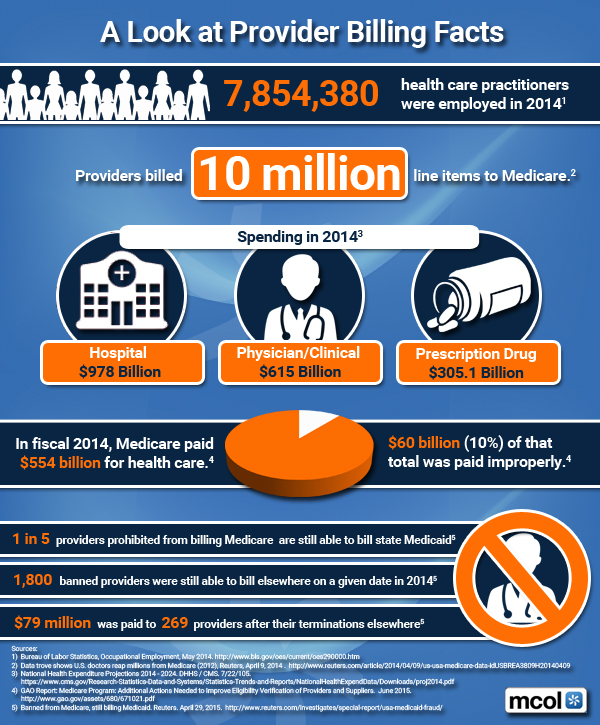
Medical Provider Billing Facts for 2014

Join Our Mailing List 

A Look at Medicare Spending

By http://www.MCOL.com

***

billing

***

Conclusion

Your thoughts and comments on this ME-P are appreciated. Feel free to review our top-left column, and top-right sidebar materials, links, URLs and related websites, too. Then, subscribe to the ME-P. It is fast, free and secure.

Speaker: If you need a moderator or speaker for an upcoming event, Dr. David E. Marcinko; MBA – Publisher-in-Chief of the Medical Executive-Post – is available for seminar or speaking engagements. Contact: MarcinkoAdvisors@msn.com

OUR OTHER PRINT BOOKS AND RELATED INFORMATION SOURCES:

[HOSPITAL OPERATIONS, ORGANIZATIONAL BEHAVIOR AND FINANCIAL MANAGEMENT COMPANION TEXTBOOK SET]

Product DetailsProduct Details

[Foreword Dr. Phillips MD JD MBA LLM] *** [Foreword Dr. Nash MD MBA FACP]

***

The Need for Anti-Trust and OIG Investigation of Physician Health Programs

Join Our Mailing List

Sunshine is the Best Disinfectant!

Langan MD

By Michael Lawrence Langan, M.D.

***

The Need for Anti-Trust and OIG Investigation of Physician Health Programs—Sunshine is the Best Disinfectant!

***

Mutter

***

Conclusion

Your thoughts and comments on this ME-P are appreciated. Feel free to review our top-left column, and top-right sidebar materials, links, URLs and related websites, too. Then, subscribe to the ME-P. It is fast, free and secure.

Speaker: If you need a moderator or speaker for an upcoming event, Dr. David E. Marcinko; MBA – Publisher-in-Chief of the Medical Executive-Post – is available for seminar or speaking engagements. Contact: MarcinkoAdvisors@msn.com

OUR OTHER PRINT BOOKS AND RELATED INFORMATION SOURCES:

[HOSPITAL OPERATIONS, ORGANIZATIONAL BEHAVIOR AND FINANCIAL MANAGEMENT COMPANION TEXTBOOK SET]

Product DetailsProduct Details

[Foreword Dr. Phillips MD JD MBA LLM] *** [Foreword Dr. Nash MD MBA FACP]

***

“Welcome to Health: Population 1” the PHA Forum

Join Our Mailing List

[By staff reporters]

This years PHA Forum has The Great Debate during the Executive Institute between Al Lewis and Ron Goetzel on Wellness Programs and ROI, but the PHA Forum also has incredible keynotes, programming and networking.

***

men

***

Read More: “Welcome to Health: Population 1” the PHA Forum

Conclusion

Your thoughts and comments on this ME-P are appreciated. Feel free to review our top-left column, and top-right sidebar materials, links, URLs and related websites, too. Then, subscribe to the ME-P. It is fast, free and secure.

Speaker: If you need a moderator or speaker for an upcoming event, Dr. David E. Marcinko; MBA – Publisher-in-Chief of the Medical Executive-Post – is available for seminar or speaking engagements. Contact: MarcinkoAdvisors@msn.com

OUR OTHER PRINT BOOKS AND RELATED INFORMATION SOURCES:

[HOSPITAL OPERATIONS, ORGANIZATIONAL BEHAVIOR AND FINANCIAL MANAGEMENT COMPANION TEXTBOOK SET]

Product DetailsProduct Details

[Foreword Dr. Phillips MD JD MBA LLM] *** [Foreword Dr. Nash MD MBA FACP]

***

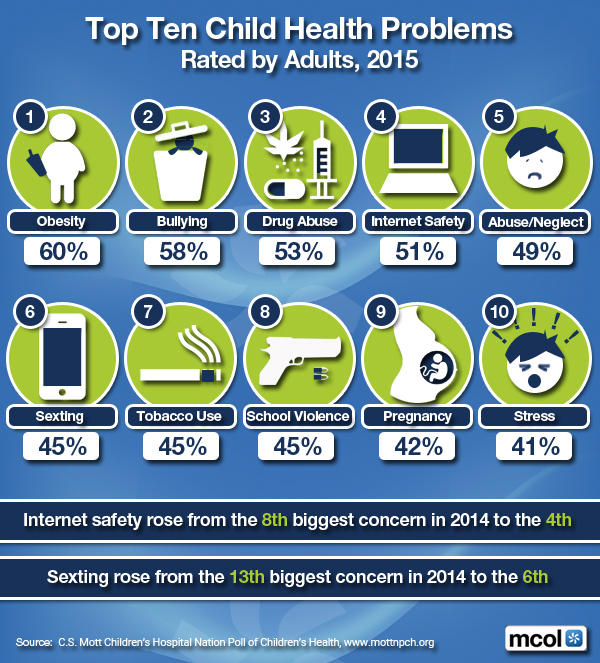
Top Ten Child Health Problems for 2015

Join Our Mailing List

Rated by Adults

By http://www.MCOL.com

****

ImageProxy

****

Conclusion

Your thoughts and comments on this ME-P are appreciated. Feel free to review our top-left column, and top-right sidebar materials, links, URLs and related websites, too. Then, subscribe to the ME-P. It is fast, free and secure.

Speaker: If you need a moderator or speaker for an upcoming event, Dr. David E. Marcinko; MBA – Publisher-in-Chief of the Medical Executive-Post – is available for seminar or speaking engagements. Contact: MarcinkoAdvisors@msn.com

OUR OTHER PRINT BOOKS AND RELATED INFORMATION SOURCES:

 Sponsors Welcomed: Credible sponsors and like-minded advertisers are always welcomed.

[HOSPITAL OPERATIONS, ORGANIZATIONAL BEHAVIOR AND FINANCIAL MANAGEMENT COMPANION TEXTBOOK SET]

Product DetailsProduct Details

[Foreword Dr. Phillips MD JD MBA LLM] *** [Foreword Dr. Nash MD MBA FACP]

***

Family Budget Factsheets

Join Our Mailing List

By the Economic Policy Institute

EPI’s Family Budget Calculator measures the income a family needs in order to attain a secure yet modest standard of living in 618 areas across the country.

Compared with the federal poverty line, EPI’s family budgets provide a more accurate and complete measure of economic security in America.

These factsheets offer a full picture of what it costs to live in a given area and how family size affects these costs.

budget

http://www.epi.org/resources/budget/budget-factsheets/

Assessment

So doctor – how does your budget rate relative to the above for this Labor Day Weekend?

Conclusion

Your thoughts and comments on this ME-P are appreciated. Feel free to review our top-left column, and top-right sidebar materials, links, URLs and related websites, too. Then, subscribe to the ME-P. It is fast, free and secure.

Speaker: If you need a moderator or speaker for an upcoming event, Dr. David E. Marcinko; MBA – Publisher-in-Chief of the Medical Executive-Post – is available for seminar or speaking engagements. Contact: MarcinkoAdvisors@msn.com

OUR OTHER PRINT BOOKS AND RELATED INFORMATION SOURCES:

Sponsors Welcomed: Credible sponsors and like-minded advertisers are always welcomed.

Comprehensive Financial Planning Strategies for Doctors and Advisors: Best Practices from Leading Consultants and Certified Medical Planners(TM)

Front Matter with Foreword by Jason Dyken MD MBA

logos

“BY DOCTORS – FOR DOCTORS – PEER REVIEWED – FIDUCIARY FOCUSED”

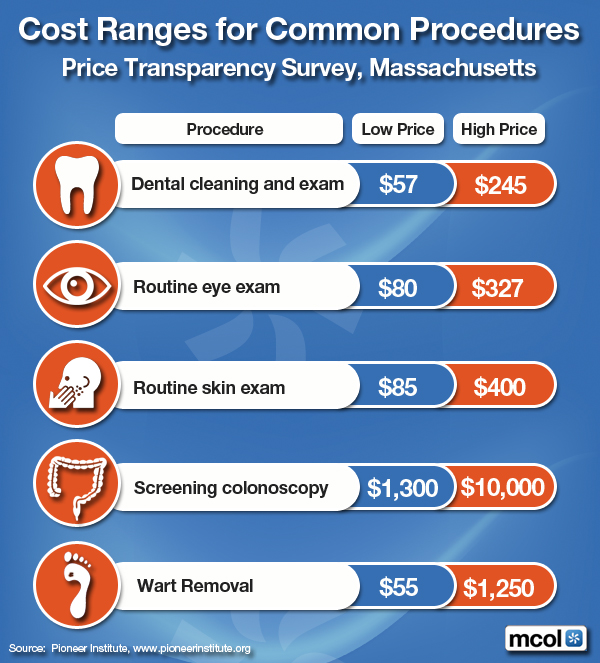
Some Cost Ranges for Common Medical Procedures

Join Our Mailing List 

A Price Transparency Survey in MASSACHUSETTS

By http://www.MCOL.com

***

ImageProxy

***

More: FAIR Health Dental Cost Look Up

Conclusion

Your thoughts and comments on this ME-P are appreciated. Feel free to review our top-left column, and top-right sidebar materials, links, URLs and related websites, too. Then, subscribe to the ME-P. It is fast, free and secure.

Speaker: If you need a moderator or speaker for an upcoming event, Dr. David E. Marcinko; MBA – Publisher-in-Chief of the Medical Executive-Post – is available for seminar or speaking engagements. Contact: MarcinkoAdvisors@msn.com

OUR OTHER PRINT BOOKS AND RELATED INFORMATION SOURCES:

Sponsors Welcomed: Credible sponsors and like-minded advertisers are always welcomed.

Product Details

[HEALTH INSURANCE, MANAGED CARE, ECONOMICS, FINANCE AND HEALTH INFORMATION TECHNOLOGY COMPANION DICTIONARY SET]

      Product DetailsProduct DetailsProduct Details

[Mike Stahl PhD MBA] *** [Foreword Dr.Mata MD CIS] *** [Dr. Getzen PhD]

***

Why There Has To Be Occasional Market Corrections

Join Our Mailing List 

Why Invest … At all!

DJIA plummets 470 today!

By Lon Jefferies CFP MBA lon@networthadvice.com | http://www.networthadvice.com 

Lon JefferiesWhy do we invest in the stock market? To make money so we can improve our standard of living, right?

Notice that we aren’t investing just to get our money back. If we simply wanted our money back, we would place the money in a savings account at a bank where we would likely be able to access it any time and know that we could redeem it at full value.

However, making money is better than simply getting our invested dollars back, so there has to be a trade off for receiving that additional benefit.

Market Corrections

Of course, the trade off is that investing in the market involves more risk than simply depositing money in a bank account. The additional return that is required by investors for investing in an asset that could potentially lose money is called the equity risk premium. There must be a potential downside in exchange for the larger reward that can be obtained by investing in the stock market. Otherwise, no one would ever deposit money into the more secure bank accounts and people would always invest in the stock market generating superior returns. Unfortunately, this would make things too easy, and as we have learned our whole lives, the easier a goal is the less reward we get for achieving that goal. That is why positions that can only be filled by a select few individuals with rare talents (CEOs, doctors, Lebron James) are handsomely compensated.

By now, most people know that over a sufficiently lengthy period of time, the stock market has historically produced returns of approximately 10% per year. This seems like a simple and easy way to make money, so why don’t all investors buy stocks and hold them for extended periods of time? The fact that we aren’t all rich suggests that buying stocks and allowing the market time to do its thing isn’t easy. This is because enduring risk and suffering losses creates negative emotions that get the best of many investors, causing them to sell at the wrong time and stop investing new dollars.

Yet, when we refer back to the concept that the tougher the task the greater the reward, we should be happy that buying and holding stocks isn’t easy because it makes the strategy more profitable.

For this reason, the next time the market goes through a correction or even a crash, wise investors should be grateful. Market volatility causes unsuccessful investors to sell when prices are down and increases the rewards for those who can stick with their investment strategy by holding their assets or even buying new positions.

***

coffee

[Publisher Dr. DE Marcinko’s Grateful Bear Market ReSet and ReLaxation Time]

***

Supply and Demand

Supply and demand suggests that when the markets are decreasing in value, more people are selling assets than buying. The people who are selling their investments at a loss create an equity risk premium for those who can endure market volatility. This increases the reward for successful investors by both providing an opportunity to buy assets when they are inexpensive, and reminding the marketplace that investing in volatile positions is unpleasant. Of course, things that are unpleasant aren’t easy to accomplish, which means there is a large benefit for achieving those things.

Thus, market corrections are great for successful investors because it is volatility and easily-rattled buy-and-sell investors that enable buy-and-hold investors to make significant profits over the long term. In fact, it wouldn’t be possible for stock market investors to make money without periodic intervals of unpleasantness as it is this discomfort which causes some investors to sell and creates an equity risk premium for the rest of us.

***

Japan and world markets tumbling - dollar stronger

[Japanese Markets]

***

Great Fall of China

Until the Great Fall of China recently, it has been easy for investors to buy and hold for the last six years as the market has been nothing but accommodating since early 2009.

However, when things get too easy, it reduces our reward for being a long-term investor because everyone can do it. For this reason, we need the market to experience a correction at some point to shake out the unsuccessful investors, causing them to sell assets and create an equity risk premium once more.

Assessment

When the next correction occurs, you can either sell assets and create a risk premium for others, or you can stay invested and take advantage of the money unsuccessful investors leave on the table. Successful investors with a sufficiently lengthy investment time horizon remind themselves of this concept frequently so that when the market experiences a decline they aren’t overcome by fear but grateful for the opportunity provided by the short-sighted. 
Conclusion

Your thoughts and comments on this ME-P are appreciated. Feel free to review our top-left column, and top-right sidebar materials, links, URLs and related websites, too. Then, subscribe to the ME-P. It is fast, free and secure.

Speaker: If you need a moderator or speaker for an upcoming event, Dr. David E. Marcinko; MBA – Publisher-in-Chief of the Medical Executive-Post – is available for seminar or speaking engagements. Contact: MarcinkoAdvisors@msn.com

OUR OTHER PRINT BOOKS AND RELATED INFORMATION SOURCES:

Sponsors Welcomed: Credible sponsors and like-minded advertisers are always welcomed.

Comprehensive Financial Planning Strategies for Doctors and Advisors: Best Practices from Leading Consultants and Certified Medical Planners(TM)

Front Matter with Foreword by Jason Dyken MD MBA

logos

“BY DOCTORS – FOR DOCTORS – PEER REVIEWED – FIDUCIARY FOCUSED”

Warren Buffet: Fighting Income Inequality with the EITC

Join Our Mailing List

By Prof. Chris House PhD
Ann Arbor Michigan

[Associate Professor of Economics at the University of Michigan]

***

Comprehensive Financial Planning Strategies for Doctors and Advisors: Best Practices from Leading Consultants and Certified Medical Planners(TM)

***

Orderstatistic

Warren Buffet’s article in the Wall Street Journal reminds me of some postsI wrotea while backon fighting income inequality. His article contains a lot of wisdom. Some excerpts:

The poor are most definitely not poor because the rich are rich. Nor are the rich undeserving. Most of them have contributed brilliant innovations or managerial expertise to America’s well-being. We all live far better because of Henry Ford, Steve Jobs, Sam Walton and the like.

He writes that an expansion of the minimum wage to 15 dollars per hour

would almost certainly reduce employment in a major way, crushing many workers possessing only basic skills. Smaller increases, though obviously welcome, will still leave many hardworking Americans mired in poverty. […]  The better answer is a major and carefully crafted expansion of the Earned Income Tax Credit (EITC).

I agree entirely and so would Milton Friedman.

Unlike the…

View original post 212 more words

ME-P News Stories Wrap-Up for August 2015

Join Our Mailing List

[By ME-P Staff Reporters]

Latest News

Editor’s Pick: 

Daily Round-Up of Headlines for August 2015

BREAKING-EVENTS AND AGGREGATED STORIES 

[Editor’s Pick: A Daily Round-Up of Headlines for August 2015]

Risk Management, Liability Insurance, and Asset Protection Strategies for Doctors and Advisors: Best Practices from Leading Consultants and Certified Medical Planners™8Comprehensive Financial Planning Strategies for Doctors and Advisors: Best Practices from Leading Consultants and Certified Medical Planners™

Editor’s Pick: 

Daily Round-Up of Headlines for July 2015

BREAKING-EVENTS AND AGGREGATED STORIES 

Product DetailsProduct Details

Editor’s Pick: 

Daily Round-Up of Headlines for May 2015

BREAKING-EVENTS AND AGGREGATED STORIES 

Comprehensive Financial Planning Strategies for Doctors and Advisors: Best Practices from Leading Consultants and Certified Medical Planners(TM)  

Editor’s Pick: 

Daily Round-Up of Headlines for April 2015

Comprehensive Financial Planning Strategies for Doctors and Advisors: Best Practices from Leading Consultants and Certified Medical Planners(TM)  

***

Editor’s Pick: 

Daily Round-Up of Headlines for March 2015

Comprehensive Financial Planning Strategies for Doctors and Advisors: Best Practices from Leading Consultants and Certified Medical Planners(TM)

***

Editor’s Pick: 

Daily Round-Up of Headlines for February 2015

Comprehensive Financial Planning Strategies for Doctors and Advisors: Best Practices from Leading Consultants and Certified Medical Planners(TM)* 8

***

Editor’s Pick: 

Daily Round-Up of Headlines for January 2015

Comprehensive Financial Planning Strategies for Doctors and Advisors: Best Practices from Leading Consultants and Certified Medical Planners(TM)* 8

Editor’s Pick: 

Daily Round-Up of Headlines for December 2014

 ***

Comprehensive Financial Planning Strategies for Doctors and Advisors: Best Practices from Leading Consultants and Certified Medical Planners(TM)

***

Editor’s Pick: 

Daily Round-Up of Headlines for November 2014

Channel Surfing the ME-P

Have you visited our other topic channels? Established to facilitate idea exchange and link our community together, the value of these topics is dependent upon your input. Please take a minute to visit. And, to prevent that annoying spam, we ask that you register. It is fast, free and secure.

Conclusion

Your thoughts and comments on this ME-P are appreciated. Feel free to review our top-left column, and top-right sidebar materials, links, URLs and related websites, too. Then, subscribe to the ME-P. It is fast, free and secure.

Speaker: If you need a moderator or speaker for an upcoming event, Dr. David E. Marcinko; MBA – Publisher-in-Chief of the Medical Executive-Post – is available for seminar or speaking engagements. Contact: MarcinkoAdvisors@msn.com

OUR OTHER PRINT BOOKS AND RELATED INFORMATION SOURCES:

Product DetailsProduct DetailsProduct Details

Product Details  Product Details

Product DetailsProduct Details

Comprehensive Financial Planning Strategies for Doctors and Advisors: Best Practices from Leading Consultants and Certified Medical Planners(TM)  

Product Details