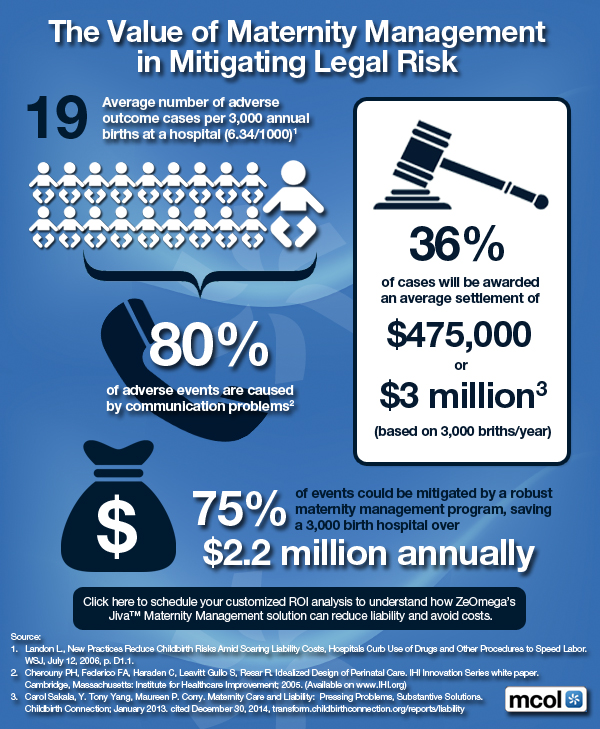
The Financial Value of Maternity Management

Join Our Mailing List

In Medico-Legal Risk Mitigation

By http://www.MCOL.com

maternity

More:

Channel Surfing the ME-P

Have you visited our other topic channels? Established to facilitate idea exchange and link our community together, the value of these topics is dependent upon your input. Please take a minute to visit. And, to prevent that annoying spam, we ask that you register. It is fast, free and secure.

Conclusion

Your thoughts and comments on this ME-P are appreciated. Feel free to review our top-left column, and top-right sidebar materials, links, URLs and related websites, too. Then, subscribe to the ME-P. It is fast, free and secure.

Speaker: If you need a moderator or speaker for an upcoming event, Dr. David E. Marcinko; MBA – Publisher-in-Chief of the Medical Executive-Post – is available for seminar or speaking engagements. Contact: MarcinkoAdvisors@msn.com

OUR OTHER PRINT BOOKS AND RELATED INFORMATION SOURCES:

Comprehensive Financial Planning Strategies for Doctors and Advisors: Best Practices from Leading Consultants and Certified Medical Planners(TM)* 8

Doctor Suicide and Physician Health Programs

Join Our Mailing List

The Elephant in the Room

[By Michael Lawrence Langan MD]

***

A SPECIAL ME-P REPORT

The Elephant in the Room: Physician Suicide and Physician Health Programs

 ***

Physician

[Courtesy SplitShire]

***

More:

Channel Surfing the ME-P

Have you visited our other topic channels? Established to facilitate idea exchange and link our community together, the value of these topics is dependent upon your input. Please take a minute to visit. And, to prevent that annoying spam, we ask that you register. It is fast, free and secure.

Conclusion

Your thoughts and comments on this ME-P are appreciated. Feel free to review our top-left column, and top-right sidebar materials, links, URLs and related websites, too. Then, subscribe to the ME-P. It is fast, free and secure.

Speaker: If you need a moderator or speaker for an upcoming event, Dr. David E. Marcinko; MBA – Publisher-in-Chief of the Medical Executive-Post – is available for seminar or speaking engagements. Contact: MarcinkoAdvisors@msn.com

OUR OTHER PRINT BOOKS AND RELATED INFORMATION SOURCES:

Comprehensive Financial Planning Strategies for Doctors and Advisors: Best Practices from Leading Consultants and Certified Medical Planners(TM)* 8

Top Ten Most Innovative Healthcare Companies of 2015

Join Our Mailing List 

World Class Innovation

[By Staff Reporters]

 ***Start-Ups***

THE LIST

  1. APRICOT FOREST: For seeking a cure to what ails Chinese health care
  2. PERFINT HEALTHCARE: For attacking cancer with robotics
  3. OMADA HEALTH: For improving health through coaching
  4. ELMINDA: For changing the way we see our brains
  5. CARDIOMEMS: For reducing heart failure hospitalizations
  6. ORGANOVO: For getting one step closer to human drug trials—without harming actual humans
  7. THERANOS: For introducing a better blood test
  8. GOOGLE: For developing the next generation of health monitors
  9. ZENEFITS: For helping small businesses provide health insurance
  10. COHEALO: For bringing the sharing economy to the surgery room

Source: Fast Company, February 9, 2015 

Channel Surfing the ME-P

Have you visited our other topic channels? Established to facilitate idea exchange and link our community together, the value of these topics is dependent upon your input. Please take a minute to visit. And, to prevent that annoying spam, we ask that you register. It is fast, free and secure.

More:

Conclusion

Your thoughts and comments on this ME-P are appreciated. Feel free to review our top-left column, and top-right sidebar materials, links, URLs and related websites, too. Then, subscribe to the ME-P. It is fast, free and secure.

Speaker: If you need a moderator or speaker for an upcoming event, Dr. David E. Marcinko; MBA – Publisher-in-Chief of the Medical Executive-Post – is available for seminar or speaking engagements. Contact: MarcinkoAdvisors@msn.com

OUR OTHER PRINT BOOKS AND RELATED INFORMATION SOURCES:

Comprehensive Financial Planning Strategies for Doctors and Advisors: Best Practices from Leading Consultants and Certified Medical Planners(TM)

Why Healthcare is F@#Ked !

Join Our Mailing List

And … What I Learned at The Wharton School of Business

Edward Bukstel

By Edward Bukstel

ME-P SPECIAL REPORT

***

What I Learned at The Wharton School of Business and Why Healthcare is F@#Ked !

***

Business%20Optimization

***

Channel Surfing the ME-P

Have you visited our other topic channels? Established to facilitate idea exchange and link our community together, the value of these topics is dependent upon your input. Please take a minute to visit. And, to prevent that annoying spam, we ask that you register. It is fast, free and secure.

More:

Conclusion

Your thoughts and comments on this ME-P are appreciated. Feel free to review our top-left column, and top-right sidebar materials, links, URLs and related websites, too. Then, subscribe to the ME-P. It is fast, free and secure.

Speaker: If you need a moderator or speaker for an upcoming event, Dr. David E. Marcinko; MBA – Publisher-in-Chief of the Medical Executive-Post – is available for seminar or speaking engagements. Contact: MarcinkoAdvisors@msn.com

OUR OTHER PRINT BOOKS AND RELATED INFORMATION SOURCES:

Product DetailsProduct Details

Google Wants to Replace your Brain

Join Our Mailing List

Enter the Robo-Advisors, Robo-Doctors and the Singularity?

Edward Bukstel

[By Edward Bukstel]

ME-P SPECIAL REPORT

***

Have you visited our other topic channels? Established to facilitate idea exchange and link our community together, the value of these topics is dependent upon your input. Please take a minute to visit. And, to prevent that annoying spam, we ask that you register. It is fast, free and secure.

More:

***

google3

***

Conclusion

Your thoughts and comments on this ME-P are appreciated. Feel free to review our top-left column, and top-right sidebar materials, links, URLs and related websites, too. Then, subscribe to the ME-P. It is fast, free and secure.

Speaker: If you need a moderator or speaker for an upcoming event, Dr. David E. Marcinko; MBA – Publisher-in-Chief of the Medical Executive-Post – is available for seminar or speaking engagements. Contact: MarcinkoAdvisors@msn.com

OUR OTHER PRINT BOOKS AND RELATED INFORMATION SOURCES:

Comprehensive Financial Planning Strategies for Doctors and Advisors: Best Practices from Leading Consultants and Certified Medical Planners(TM)* 8

Seeking Peer Reviewers for New Medical Risk Management Text Book

Join Our Mailing List 

Our Newest Text Book-in-Production

http://www.CertifiedMedicalPlanner.org

[By Ann Miller RN MHA]

CMP logo

***

RISK MANAGEMENT, LIABILITY INSURANCE, AND ASSET PROTECTION STRATEGIES FOR DOCTOR AND ADVISORS

[Best Practices from Leading Consultants and Certified Medical Planners™]

***

***

Skills Needed

If you are a physician, nurse, accountant, attorney, medical risk manager or healthcare executive, we need you.

Form below or contact us for details to peer-review, etc. MarcinkoAdvisors@msn.com

Assessment

Channel Surfing the ME-P

Have you visited our other topic channels? Established to facilitate idea exchange and link our community together, the value of these topics is dependent upon your input. Please take a minute to visit. And, to prevent that annoying spam, we ask that you register. It is fast, free and secure.

Conclusion

Your thoughts and comments on this ME-P are appreciated. Feel free to review our top-left column, and top-right sidebar materials, links, URLs and related websites, too. Then, subscribe to the ME-P. It is fast, free and secure.

Speaker: If you need a moderator or speaker for an upcoming event, Dr. David E. Marcinko; MBA – Publisher-in-Chief of the Medical Executive-Post – is available for seminar or speaking engagements. Contact: MarcinkoAdvisors@msn.com

OUR OTHER PRINT BOOKS AND RELATED INFORMATION SOURCES:

Comprehensive Financial Planning Strategies for Doctors and Advisors: Best Practices from Leading Consultants and Certified Medical Planners(TM)

[Companion Text Book]


Go back

Your message has been sent

Warning
Warning
Warning
Warning

Warning.

The Economic “American Dream”

On Income Earners

Join Our Mailing List

Understanding the Top 50 Percent

[By Anonymous Reader]

QUESTION: How much do you need to make to be in the top 50 percent of earners?

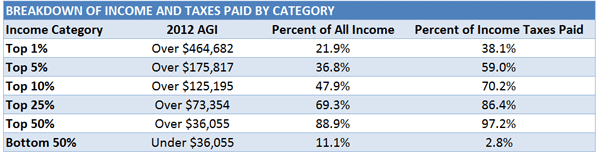
ANSWER: Just $36,055. Fall below that level and you are in the bottom half, along with about 68 million of your fellow taxpayers. All told, that group earned just 11.1 percent of the AGI reported on 2012 Federal returns.

Half of all taxpayers earn less than $35,055

If the top one percent where the decision makers live were to quit squeezing so hard, the rest of the population might be subject to paying more taxes.

The problem with the American Dream sold to the masses is that it is not achievable for them. Yet, they keep on voting for it. The biggest problem with voters is they do not have a solid grounding in economics.

Thus, they cannot judge economic policy in any rational way. If the voting public voted for what was truly in their interest, the top one percent would see their influence wane rapidly. It is the height of insanity that the public keeps on voting for politicians who espouse policies that are designed to benefit the economic elite.

***

Tax

***

Note: A recent finding by Oxfam that the top one percent will control fifty percent of the worlds’ wealth by 2016.

Channel Surfing the ME-P

Have you visited our other topic channels? Established to facilitate idea exchange and link our community together, the value of these topics is dependent upon your input. Please take a minute to visit. And, to prevent that annoying spam, we ask that you register. It is fast, free and secure.

More:

Conclusion

Your thoughts and comments on this ME-P are appreciated. Feel free to review our top-left column, and top-right sidebar materials, links, URLs and related websites, too. Then, subscribe to the ME-P. It is fast, free and secure.

Speaker: If you need a moderator or speaker for an upcoming event, Dr. David E. Marcinko; MBA – Publisher-in-Chief of the Medical Executive-Post – is available for seminar or speaking engagements. Contact: MarcinkoAdvisors@msn.com

OUR OTHER PRINT BOOKS AND RELATED INFORMATION SOURCES:

Product DetailsProduct DetailsProduct Details

Hospital Data Does NOT Equal Community Health

Join Our Mailing List

More on Big Healthcare Data

Edward Bukstel[By Edward Bukstel]

 ME-P SPECIAL REPORT

***

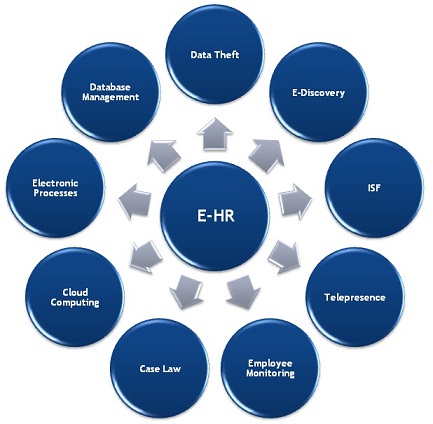
Hospital Data does not Equal Community Health.

***

eHR diagram

***

Channel Surfing the ME-P

Have you visited our other topic channels? Established to facilitate idea exchange and link our community together, the value of these topics is dependent upon your input. Please take a minute to visit. And, to prevent that annoying spam, we ask that you register. It is fast, free and secure.

More:

Conclusion

Your thoughts and comments on this ME-P are appreciated. Feel free to review our top-left column, and top-right sidebar materials, links, URLs and related websites, too. Then, subscribe to the ME-P. It is fast, free and secure.

Speaker: If you need a moderator or speaker for an upcoming event, Dr. David E. Marcinko; MBA – Publisher-in-Chief of the Medical Executive-Post – is available for seminar or speaking engagements. Contact: MarcinkoAdvisors@msn.com

OUR OTHER PRINT BOOKS AND RELATED INFORMATION SOURCES:

Product Details


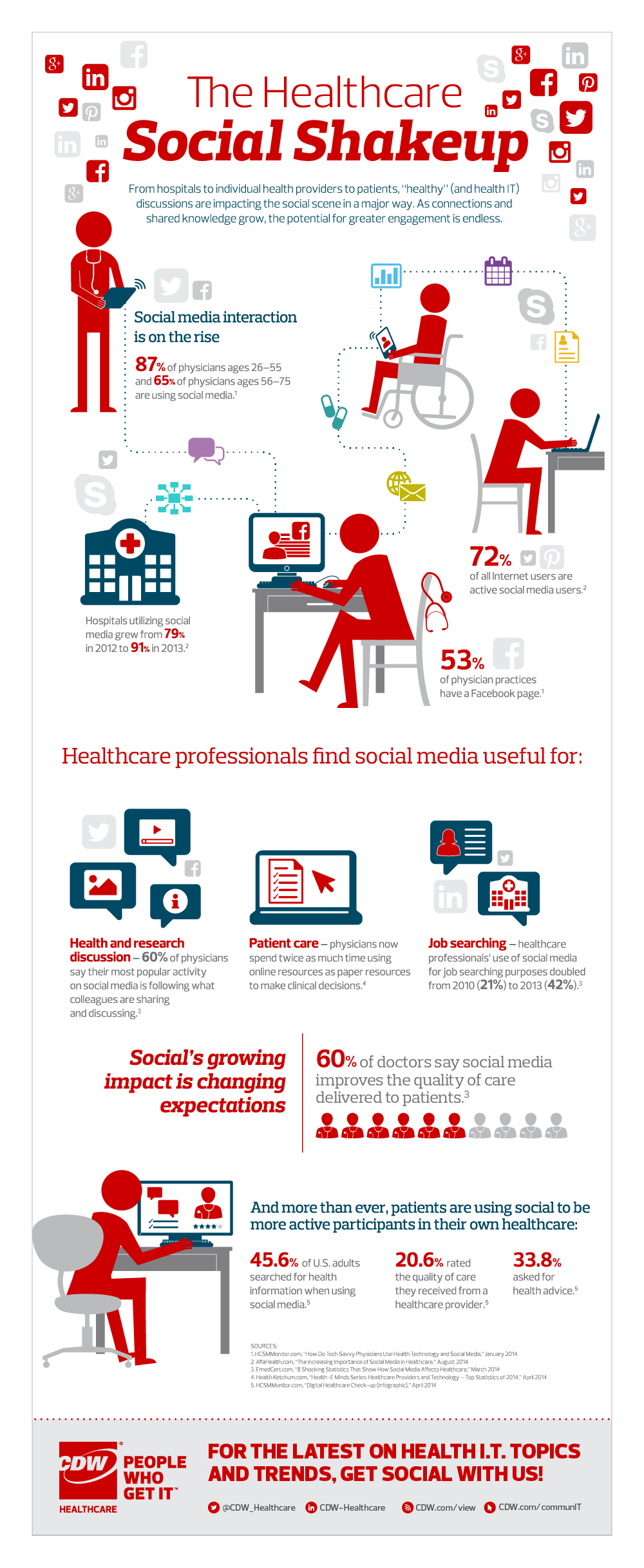
The Social Media Shakeup in Healthcare

Join Our Mailing List

An Info-Graphic

By Matthew Smith [CDW]

Patients are increasingly turning to social media channels to seek health information and become more informed about their care, rate the quality of care they receive from providers, and communicate with their peers regarding health advice.

For their part, physicians are seeing increased value in social media for their own research discussions with colleagues — utilizing it to become more informed on patient care resources and for career development and networking.

Social media is slowly starting to foster meaningful results in the healthcare industry. This infographic from CDW Community IT claims social media enables:

  • Better knowledge of health conditions
  • Increased dialogue
  • Connected support
  • Improved patient engagement

Doctors and hospitals alike are tapping into social media. Consider these stats:

  • 87 percent of physicians ages 26 to 55 use social media.
  • 65 percent of physicians ages 56 to 75 are interacting online.
  • In 2012, four in five (79 percent) of hospitals were using social media. That number increased to 91 percent in 2013.

***SocialShakeUp_Infographic_0115_1000-resized-600

[To view a full-size version of the infographic, please click here and then click the image when it opens]

***

More:

Channel Surfing the ME-P

Have you visited our other topic channels? Established to facilitate idea exchange and link our community together, the value of these topics is dependent upon your input. Please take a minute to visit. And, to prevent that annoying spam, we ask that you register. It is fast, free and secure.

Conclusion

Your thoughts and comments on this ME-P are appreciated. Feel free to review our top-left column, and top-right sidebar materials, links, URLs and related websites, too. Then, subscribe to the ME-P. It is fast, free and secure.

Speaker: If you need a moderator or speaker for an upcoming event, Dr. David E. Marcinko; MBA – Publisher-in-Chief of the Medical Executive-Post – is available for seminar or speaking engagements. Contact: MarcinkoAdvisors@msn.com

OUR OTHER PRINT BOOKS AND RELATED INFORMATION SOURCES:

Comprehensive Financial Planning Strategies for Doctors and Advisors: Best Practices from Leading Consultants and Certified Medical Planners(TM)* 8

Understanding MD Employee Accident and Health Benefits

Join Our Mailing List 

Tax-free benefits provided to employees

[By Perry D’alessio CPA]

perry-dalessio-cpaMore and more physicians are employees; not employers.

So, here are the most common types of tax-free benefits provided to employees.

They include payments for health care insurance, payment to a fund that provides accident and health benefit directly to the employee, company direct reimbursements for employee medical expenses and contributions to an Archer MSA (medical savings account).

The IRS definition of employee, for health care benefit purposes, is very broad

Health benefits are exempt from income, FICA and FUTA (Federal Unemployment Tax).    This saves the employer 7.65% that would otherwise be the “matching” 6.2% Social Security tax and the 1.45% Medicare Tax components due if these were true wages.  The employer also saves the 0.8% FUTA tax, but since FUTA taxes only the first $7,000 of calendar year wages, per employee, this usually doesn’t factor in.

Calculation:

If you pay the full state unemployment tax, then your FUTA tax = Gross Salary * .08% – The maximum amount is $56 per employee:

  • $50,000 Salary = ($7,000)*(.8%) = $56.00
  • $5,000 Salary = ($5,000)*(.8%) = $40.00

The hospital employee saves federal income taxes on health benefits received, at their marginal tax rate, and, their components of FICA taxes. Depending on the coverage provided, these plans, when fully funded by the employer, can save the employee thousands of dollars in taxes each year.

IRS restrictions include:

  • Certain payments to S Corporation employees who are 2% shareholders are subject to FICA taxes.
  • Certain long term care benefits.
  • Certain payments for highly compensated employees.

Example 1: Let’s say the annual cost of providing medical coverage for an employee, age 50, with a spouse and two minor children is $7,500. An employee in the 30% tax bracket who received this amount in cash each year and then paid for his or her own medical coverage would be liable for as much as $2,250 in income taxes. In addition, FICA taxes save another 7.65% or $574, for a total savings to the employee of $2,824. The employer saves $574 in FICA taxes.

Benefits

Channel Surfing the ME-P

Have you visited our other topic channels? Established to facilitate idea exchange and link our community together, the value of these topics is dependent upon your input. Please take a minute to visit. And, to prevent that annoying spam, we ask that you register. It is fast, free and secure.

Conclusion

Your thoughts and comments on this ME-P are appreciated. Feel free to review our top-left column, and top-right sidebar materials, links, URLs and related websites, too. Then, subscribe to the ME-P. It is fast, free and secure.

Speaker: If you need a moderator or speaker for an upcoming event, Dr. David E. Marcinko; MBA – Publisher-in-Chief of the Medical Executive-Post – is available for seminar or speaking engagements. Contact: MarcinkoAdvisors@msn.com

OUR OTHER PRINT BOOKS AND RELATED INFORMATION SOURCES:

Comprehensive Financial Planning Strategies for Doctors and Advisors: Best Practices from Leading Consultants and Certified Medical Planners(TM)

On “Best-in-Class” Independent / Provider Sponsored Health Plans

Join Our Mailing List 

February 2015 Edition of Plan Management

DS

[By Douglas B. Sherlock CFA] Sherlock@sherlockco.com

Please find attached, the February 2015 Edition of Plan Management Navigator.

In this issue, we highlight characteristics among Independent/Provider-Sponsored plans in the lowest 25th percentile in costs, which we consider Best-in-Class health plans. We found that Best-in-Class plans operated with administrative costs that were lower by $10.99 PMPM, excluding Sales and Marketing and Medical Management.

A lower Staffing Ratio was mainly responsible for low costs, while low Staffing Costs also contributed. Non-Labor Costs, however, were actually higher in the Best-in-Class plans. Almost every functional area was lower for the Best-in-Class plans with IS, Claims, and Corporate Services most responsible for overall low costs.  Finance and Accounting was the exception in that its costs were higher.

The Analysis

To perform this analysis, we endeavor to quantify and eliminate the effect of factors largely beyond management control. We then isolate and measure the specific contributing factors that are more susceptible to management.

In addition, we are building the universes for the Sherlock Benchmarks. For the Independent/Provider-Sponsored universe we have 23 plans committed to participate in this year’s study. This is up by 44% from last year and collectively, the committed plans serve 10.5 million people with comprehensive products.

***

conference

***

Participation Solicitation

We are meeting to finalize the survey form in about one month, will distribute the survey forms in late March, collect the completed surveys in May and publish results beginning in July. Participation entails notable efforts on your part since useful outputs require relatively granular inputs. However, the cost is relatively modest.

Link: Navigator – February 2015

Assessment

Please contact me if you are interested in participating. You will be among good company.

Channel Surfing the ME-P

Have you visited our other topic channels? Established to facilitate idea exchange and link our community together, the value of these topics is dependent upon your input. Please take a minute to visit. And, to prevent that annoying spam, we ask that you register. It is fast, free and secure.

Conclusion

Your thoughts and comments on this ME-P are appreciated. Feel free to review our top-left column, and top-right sidebar materials, links, URLs and related websites, too. Then, subscribe to the ME-P. It is fast, free and secure.

Speaker: If you need a moderator or speaker for an upcoming event, Dr. David E. Marcinko; MBA – Publisher-in-Chief of the Medical Executive-Post – is available for seminar or speaking engagements. Contact: MarcinkoAdvisors@msn.com

OUR OTHER PRINT BOOKS AND RELATED INFORMATION SOURCES:

Product DetailsProduct Details

Go back

Your message has been sent

Warning
Warning
Warning
Warning

Warning.

No More 10 and 90 Day Global Periods

Join Our Mailing List

New Changes on the [CMS Payment Reform] Horizon
[By Dreama Sloan-Kelly MD CCS]

thDid you hear about the changes that are coming down the pike in regards to global services when billing for surgical procedures — be they in the office, in an ambulatory surgical center, or in the hospital?

CMS released their final 2015 Medicare Physician Fee Schedule (MPFS) ruling late last year. Embedded in this document was a proposal by CMS to get rid of both the 10 day and 90 day global periods! In fact, they want to do away with global period billing all together and have all procedures paid based on the work required to do the procedure itself — thereby billing for all post-surgical visits separately using E/M codes.

According to the final ruling, CMS proposes to transform all 10 day global services to ZERO global days starting in 2017. They will do the same in regards to 90 day global services starting in 2018. And, according to the U.S. Department of Health and Human Services (HHS) and the Office of Inspector General (OIG) they have “identified a number of surgical procedures that include more visits in the global period than are being furnished”. They go on to say that they are “also concerned that post-surgical visits are valued higher than visits that were furnished and billed separately by other physicians such as general internists or family physicians”. Based on the final ruling, they plan to begin the transition as previously stated in 2017 after they have considered all comments.

The ruling goes on to state, “as the agency begins revaluation of services as 0-day global periods, we will actively assess whether there is a better construction of a bundled payment for surgical services that incentivizes care coordination and care redesign across an episode of care”. So let’s talk reality and my take on this change.

Over the past few weeks I have read a lot of articles on this subject from various pundits in the industry — they are actually arguing that this change will mean increased reimbursement when you combine the separate payment for the procedure itself along with the visit by visit billing for the post-surgical follow up care when compared to the current reimbursement rate.

***

glasses

***

Personally, I think they are all wrong for the following reasons:

Procedure Reimbursement Amount: This is the wild card. They are going to use the same RVU system that has always been used to calculate payment — but I guarantee you the payment for the procedure will not be anywhere near the reimbursement for the global package. I think the closest we could get to estimating the reimbursement rate of the procedure is to figure out what the current surgical care only rate would be (ie. as if you appended Modifier 54 to the procedure code). Beware that this rate would still encompass the pre-surgical evaluation — which I am assuming would be carved out since that is a part of the current global package they are trying to phase out.

Post Op Visits: Getting a patient to comply with medical visits is hard enough — now adding in the fact they would have to pay a copay each time — most often a specialty co-pay is going to make it even harder. Patient’s understand their follow up visits are currently covered in the cost for the surgery, and hence they tend to show up to these visits knowing they do not have any out of pocket expenses. If the proposed change comes to fruition many of the post-surgical visits may become cost prohibitive for a lot of patients and actually lead to a decrease in the number of follow up visits the patient actually schedules. Once the patient starts to feel better their motivation to return dwindles.

Lower Reimbursement Rate for Post-Surgical Visits: It is clearly stated in the CMS ruling that it is felt the post-surgical follow up care visits are paid at a higher rate than what a regular E/M visit would be paid for had the patient been seen by a primary care provider or an internist. That simple statement confirms to me that when the new procedure rate is combined with the individual visit payment rate, the overall reimbursement rate will be less than what is currently being paid.

So, how do you prepare?

First, stay on top of all bulletins coming from CMS in regards to this issue. Most of your medical societies and/or specialty societies have taken clear positions in regards to this matter — so be sure to stay in the loop and become a part of the process.

Run a report that allows you to pinpoint the average number of post-surgical follow up visits for your most billed procedures. This will give you an idea of the average number of follow up visits for particular procedures you know you will bill for if this transition does occur. Does this mean this number will be exact — NO — I would factor in a decrease of 15-20% for visits across the board based on the dynamics I previously described.

Lastly, begin creating a policy in regards to post-surgical follow up care that can act as an education tool for the patient, teaching them the important benefits of being compliant with their post-surgical care schedule and also warning them about the possible increase in out of pocket cost. Being transparent can go a long way into easing patient’s fear and encouraging their follow through.

As always I have included documentation for your library of information — you can find the CMS 2015 MPFS final ruling fact sheet HERE! I also created a brief video presentation on this hot topic HERE

 ***laptop

***

Channel Surfing the ME-P

Have you visited our other topic channels? Established to facilitate idea exchange and link our community together, the value of these topics is dependent upon your input. Please take a minute to visit. And, to prevent that annoying spam, we ask that you register. It is fast, free and secure.

Conclusion

Your thoughts and comments on this ME-P are appreciated. Feel free to review our top-left column, and top-right sidebar materials, links, URLs and related websites, too. Then, subscribe to the ME-P. It is fast, free and secure.

Speaker: If you need a moderator or speaker for an upcoming event, Dr. David E. Marcinko; MBA – Publisher-in-Chief of the Medical Executive-Post – is available for seminar or speaking engagements. Contact: MarcinkoAdvisors@msn.com

OUR OTHER PRINT BOOKS AND RELATED INFORMATION SOURCES:

Product Details

2015 Medicare Part D [What it is = How it works]?

Join Our Mailing List

Update on the Medicare prescription drug benefit program

[By Staff Reporters]

Part D

Medicare Part D, also called the Medicare prescription drug benefit, is a United States federal-government program to subsidize the costs of prescription drugs and prescription drug insurance premiums for Medicare beneficiaries. It was enacted as part of the Medicare Modernization Act of 2003 (which also made changes to the public Part C Medicare health plan program) and went into effect on January 1, 2006.

Medicare Part D Premiums

The monthly Medicare Part D base premium is set to pay 25.5 percent of the cost of standard coverage, established by bids submitted annually by Part D plans. CMS releases the Medicare Part D base premium in early August each year. Actual premiums are based on this set premium, but can vary greatly. The premium for 2014 was $32.42.

As of 2011, beneficiaries with higher incomes must pay a premium adjustment based on their income. This premium adjustment is called the Income-Related Monthly Adjustment Amount (IRMAA), and is paid directly to the Federal government (deducted from Social Security, Railroad Retirement Board, or Office of Personnel Management benefits).

Medicare Part D Deductible

The annual deductible for the standard Medicare Part D benefit was $310 in 2014, which is a decrease of $10 from the 2013 deductible. No Medicare drug plan may have a deductible more than $310 in 2014, although some plans may have a lower deductible or no deductible at all.

***

matrix pills

***

CMS Part D 2015 Standard Benefit Model Plan Details

Here are the highlights for the CMS defined Standard Benefit Plan changes from 2014 to 2015. The chart below shows the Standard Benefit design changes for plan years 2011, 2012, 2013, 2014 and 2015. This “Standard Benefit Plan” is the minimum allowable plan to be offered.

  • Initial Deductible: will be increased by $10 to $320 in 2015
  • Initial Coverage Limit: will increase from $2,850 in 2014 to $2,960 in 2015
  • Out-of-Pocket Threshold: will increase from $4,550 in 2014 to $4,700 in 2015
  • Coverage Gap (donut hole): begins once you reach your Medicare Part D plan’s initial coverage limit ($2,960 in 2015) and ends when you spend a total of $4,700 in 2015. In 2015, Part D enrollees will receive a 55% discount on the total cost of their brand-name drugs purchased while in the donut hole. The 50% discount paid by the brand-name drug manufacturer will still apply to getting out of the donut hole, however the additional 5% paid by your Medicare Part D plan will not count toward your TrOOP. Enrollees will pay a maximum of 65% co-pay on generic drugs purchased while in the coverage gap.
  • Minimum Cost-sharing in the Catastrophic Coverage Portion of the Benefit**: will increase to greater of 5% or $2.65 for generic or preferred drug that is a multi-source drug and the greater of 5% or $6.60 for all other drugs in 2015
  • Maximum Co-payments below the Out-of-Pocket Threshold for certain Low Income Full Subsidy Eligible Enrollees: will increase to $2.65 for generic or preferred drug that is a multi-source drug and $6.60 for all other drugs in 2015.

******

Medicare Part D Benefit Parameters for Defined Standard Benefit 2011 through 2015 Comparison
Part D Standard Benefit Design Parameters: 2015 2014 2013 2012 2011
Deductible – (after the Deductible is met, Beneficiary pays 25% of covered costs up to total prescription costs meeting the Initial Coverage Limit. $320 $310 $325 $320 $310
Initial Coverage Limit – Coverage Gap (Donut Hole) begins at this point. (The Beneficiary pays 100% of their prescription costs up to the Out-of-Pocket Threshold) $2,960 $2,850 $2,970 $2,930 $2,840
Total Covered Part D Drug Out-of-Pocket Spending including the Coverage Gap – Catastrophic Coverage starts after this point. See note (1) below. $6,680.00 (1) $6,455.00 (1) $6,733.75 (1) $6,657.50 (1) $6,447.50 (1)
Out-of-Pocket Threshold – This is the Total Out-of-Pocket Costs including the Donut Hole. 2015 Example:    $320 (Deductible) +(($2960-$320)*25%) (Initial Coverage) +(($6680.00-$2960)*100%) (Cov. Gap) = $4,700 (Maximum Out-Of-Pocket Cost prior to Catastrophic Coverage – excluding plan premium) $4,700 $320.00 $660.00 $3,720.00 $4,700.00 $4,550 $310.00 $635.00 $3,605.00 $4,550.00 $4,750 $325.00 $661.25 $3,763.75 $4,750.00 $4,700 $320.00 $652.50 $3,727.50 $4,700.00 $4,550 $310.00 $632.50 $3,607.50 $4,550.00
Total Estimated Covered Part D Drug Out-of-Pocket Spending including the Coverage Gap Discount (NON-LIS) See note (2). $7,061.76 plus a 55% brand discount $6,690.77 plus a 52.50% brand discount $6,954.52 plus a 52.50% brand discount $6,730.39 plus a 50% brand discount $6,483.72 plus a 50% brand discount
Catastrophic Coverage Benefit:
   Generic/Preferred    Multi-Source Drug (3) $2.65 (3) $2.55 (3) $2.65 (3) $2.60 (3) $2.50 (3)
    Other Drugs (3) $6.60 (3) $6.35 (3) $6.60 (3) $6.50 (3) $6.30 (3)
Part D Full Benefit Dual Eligible (FBDE) Parameters: 2015 2014 2013 2012 2011
   Deductible $0.00 $0.00 $0.00 $0.00 $0.00
   Copayments for    Institutionalized    Beneficiaries $0.00 $0.00 $0.00 $0.00 $0.00
Maximum Copayments for Non-Institutionalized Beneficiaries
    Up to or at 100% FPL:
        Up to Out-of-Pocket Threshold
      Generic/Preferred       Multi-Source Drug $1.20 $1.20 $1.15 $1.10 $1.10
      Other $3.60 $3.60 $3.50 $3.30 $3.30
     Above Out-of-Pocket      Threshold $0.00 $0.00 $0.00 $0.00 $0.00
    Over 100% FPL:
        Up to Out-of-Pocket Threshold
      Generic/Preferred       Multi-Source Drug $2.65 $2.55 $2.65 $2.60 $2.50
      Other $6.60 $6.35 $6.60 $6.50 $6.30
     Above Out-of-Pocket      Threshold $0.00 $0.00 $0.00 $0.00 $0.00
Part D Full Subsidy – Non Full Benefit Dual Eligible Full Subsidy Parameters: 2015 2014 2013 2012 2011
Eligible for QMB/SLMB/QI, SSI or applied and income at or below 135% FPL and resources < $8,580 (individuals) or < $13,620 (couples) (4)
   Deductible $0.00 $0.00 $0.00 $0.00 $0.00
    Maximum Copayments up to Out-of-Pocket Threshold
      Generic/Preferred       Multi-Source Drug $2.65 $2.55 $2.65 $2.60 $2.50
      Other $6.60 $6.35 $6.60 $6.50 $6.30
   Maximum Copay above    Out-of-Pocket    Threshold $0.00 $0.00 $0.00 $0.00 $0.00
Partial Subsidy Parameters: 2015 2014 2013 2012 2011
Applied and income below 150% FPL and resources between $8,581-$13,300 (individuals) or $13,621-$26,580 (couples) (category code 4) (4)
   Deductible $66.00 $63.00 $66.00 $65.00 $63.00
   Coinsurance up to    Out-of-Pocket    Threshold 15% 15% 15% 15% 15%
    Maximum Copayments above Out-of-Pocket Threshold
      Generic/Preferred       Multi-Source Drug $2.65 $2.55 $2.65 $2.60 $2.50
      Other $6.60 $6.35 $6.60 $6.50 $6.30

******

(1) Total Covered Part D Spending at Out-of-Pocket Threshold for Non-Applicable Beneficiaries – Beneficiaries who ARE entitled to an income-related subsidy under section 1860D-14(a) (LIS)

(2) Total Covered Part D Spending at Out-of-Pocket Threshold for Applicable Beneficiaries – Beneficiaries who are NOT entitled to an income-related subsidy under section 1860D-14(a) (NON-LIS) and do receive the coverage gap discount. For 2015, the weighted gap coinsurance factor is 90.693%. This is based on the 2013 PDEs (85.9% Brands & 14.1% Generics)
(3) The Catastrophic Coverage is the greater of 5% or the values shown in the chart above. In 2015, beneficiaries would be charged $2.60 for those generic or preferred multisource drugs with a retail price under $52 and 5% for those with a retail price greater than $52. As to Brand drugs, beneficiaries would pay $6.60 for those drugs with a retail price under $132 and 5% for those with a retail price over $132.
(4) The actual amount of resources allowable may be updated for contract year 2015.

Product DetailsProduct Details

 Medicare and Medicaid drug capsules

Channel Surfing the ME-P

Have you visited our other topic channels? Established to facilitate idea exchange and link our community together, the value of these topics is dependent upon your input. Please take a minute to visit. And, to prevent that annoying spam, we ask that you register. It is fast, free and secure.

Conclusion

Your thoughts and comments on this ME-P are appreciated. Feel free to review our top-left column, and top-right sidebar materials, links, URLs and related websites, too. Then, subscribe to the ME-P. It is fast, free and secure.

Speaker: If you need a moderator or speaker for an upcoming event, Dr. David E. Marcinko; MBA – Publisher-in-Chief of the Medical Executive-Post – is available for seminar or speaking engagements. Contact: MarcinkoAdvisors@msn.com

OUR OTHER PRINT BOOKS AND RELATED INFORMATION SOURCES:

Comprehensive Financial Planning Strategies for Doctors and Advisors: Best Practices from Leading Consultants and Certified Medical Planners(TM)* 8

“Vesalius on the Verge”

Join Our Mailing List

The Book and the Body

[By Dr. David Edward Marcinko MBA]

DEM blue

“Vesalius on the Verge: The Book and the Body” explores the groundbreaking work of 16th century professor and physician Andreas Vesalius, who changed the way that human anatomy was taught forever with “De humani corporis fabrica (On the fabric of the human body)”.

The book did two things not seen before: it corrected errors in the conception of the human body that existed for over a millennia, and it combined text with artistic illustration, which enabled interactive learning.

Where else can you see a first edition of the 1543 published text, a desiccated body juxtaposed with a full skeleton, and a contemporary recreation of Vesalius’ dissection table?

Plan your visit today! #muttermuseum #vesalius #anatomy #medicine #rarebooks” By muttermuseum on Instagram

***

ImageProxy

***

anatomy

Source: tumblr_inline_nhs0feL7wW1qzgziy

***

Assessment:

I went to medical school in Philadelphia PA, and visited the Mutter Museum many times. If you’ve never been there – I urge you to check it out!

Channel Surfing the ME-P

Have you visited our other topic channels? Established to facilitate idea exchange and link our community together, the value of these topics is dependent upon your input. Please take a minute to visit. And, to prevent that annoying spam, we ask that you register. It is fast, free and secure.

Conclusion

Your thoughts and comments on this ME-P are appreciated. Feel free to review our top-left column, and top-right sidebar materials, links, URLs and related websites, too. Then, subscribe to the ME-P. It is fast, free and secure.

Speaker: If you need a moderator or speaker for an upcoming event, Dr. David E. Marcinko; MBA – Publisher-in-Chief of the Medical Executive-Post – is available for seminar or speaking engagements. Contact: MarcinkoAdvisors@msn.com

OUR OTHER PRINT BOOKS AND RELATED INFORMATION SOURCES:

Comprehensive Financial Planning Strategies for Doctors and Advisors: Best Practices from Leading Consultants and Certified Medical Planners(TM)


Dentists for De-Identification

Join Our Mailing List 

A Start-Up Idea

[By Darrell K. Pruitt DDS]

1-darrellpruittAn early, shoestring proposal for a non-profit dedicated to common sense security solutions.

Why? if patients’ identities are unavailable, they cannot be hacked.

Recently, I’ve considered starting a non-profit dedicated to keeping patients’ identities off of dentists’ computers where they are far too easily fumbled thousands at a time. I think I might call it “Dentists for De-identification.” What do you think?

My son Ryan and I have discussed putting together an educational YouTube cartoon – comparing the cost, convenience and security of encrypted Protected Health Information (PHI), to storing PHI, including medical information, only on paper in bulky metal filing cabinets – leaving only nameless, unencrypted dental records on the computer. De-identification is the “other” HIPAA Safe Harbor, meaning if patients’ de-identified dental information is stolen or hacked, nobody has to be notified. And, since the patients’ nameless dental records remain unencrypted, de-ID should not slow down work flow like encryption does.

***

eHRs

***

One could call employing in-house reference numbers to re-connect patients’ digital dental information to paper-based PHI a hybrid solution to an otherwise intractable security problem. The solution is nothing new, and has a long history of success. For decades, police departments have been substituting in-house reference numbers for citizens’ names to protect the owners. I see no reason it cannot work for dental radiographs as well.

Depending on staff’s familiarity with the alphabet, pulling a patient’s thin paper record from a loud filing cabinet might even take less time than correctly typing in an encryption key (on the first try). What’s more, since there is a limit to the number of patients even the fastest dentists can treat in one day, 4000 or so active patients per dentist is a reasonable estimate of the number of records in a  busy dental practice – which is probably one third of the records in the average physician’s practice. Since the dental information remains digital and only a couple of sheets of paper are needed to reveal the patients’ reference number along with a brief medical history, very little filing space should be needed.

The problems with encryption don’t end with correctly entering the key. Once permitted access to encrypted ePHI, it will take much more time to de-crypt one radiograph than it takes to open a manila folder. Depending on the number of radiographs and other digital images – including complex cone-beam radiographs – a patients’ encrypted diagnostic history could require several minutes to view.

I would want to witness the De-ID non-profit professionally investigate whether de-identification indeed offers a cheaper and more secure solution to data breaches from dental offices. I think we all know by now that full disk encryption will never be the answer.

***

Medical Charts

***

Assessment 

Still too soon? Give it time. The FBI assures us that more massive data breaches are just around the corner.

Channel Surfing the ME-P

Have you visited our other topic channels? Established to facilitate idea exchange and link our community together, the value of these topics is dependent upon your input. Please take a minute to visit. And, to prevent that annoying spam, we ask that you register. It is fast, free and secure.

More:

Conclusion

Your thoughts and comments on this ME-P are appreciated. Feel free to review our top-left column, and top-right sidebar materials, links, URLs and related websites, too. Then, subscribe to the ME-P. It is fast, free and secure.

Speaker: If you need a moderator or speaker for an upcoming event, Dr. David E. Marcinko; MBA – Publisher-in-Chief of the Medical Executive-Post – is available for seminar or speaking engagements. Contact: MarcinkoAdvisors@msn.com

OUR OTHER PRINT BOOKS AND RELATED INFORMATION SOURCES:

Product Details


Publishing Impact of the ME-P Website

Join Our Mailing List

Who needs it … What for?

[By Ann Miller RN MHA]

microBlog

What’s the point of publishing your essays, thoughts, comments and articles on this ME-P?

Today, many physicians, FAs and health economic experts still don’t have the potential to express themselves to a large audience. By adding articles to their own blogs, with poor attendance, they deprive a wide audience of the opportunity to familiarize themselves with their works.

That’s why material from our ME-P website is available to all English-speaking inhabitants of the world. Some website owners even visit our web portal to pick up or re-post the best articles to place on their own websites.

Why publish with the ME-P?

All this is interesting, but what is the use of the website to an author? So, here is what you get by publishing with us:

• A unique method of promoting your website, self, financial advisory or medical practice; or ideas. If your essay is really interesting – many others will want to read our related books, white-papers and texts; so you will become well-known among our readers.

• The content of our website is automatically placed on other main web sources via RSS feeds. By this you can attract a wide range of readers – and with little effort. The readers will get acquainted with your thoughts, articles and the personal data you share in your included profile.

• Our website is a great launching pad for new doctors, starting academics, medical practitioners, FAs, CPAs, health economists and fledgling writers. By publishing your articles here, you will be able to raise your prestige among colleagues and ME-P readers.

• You may use any free articles from our website to fulfill your own web project (you must add a link to our original material) via RSS feeds. The probability that someone will be interested in you is increased many times.

• Everyday our website is visited by many people, and their numbers are growing constantly. By adding articles the number of your readers will grow in geometric sequence.

• Once placed on the ME-P, your essay will stay on our website [almost] forever. All published materials [probably] will not be deleted with the lapse of time. This means that many years later – your articles will be still available to everyone.

Assessment

The number of ME-P subscribers and regular visitors is growing rapidly. And, the traffic to our authors’ web sources are growing too. Join us – we welcome all authors who are willing to cooperate with our vision and mission!

Channel Surfing the ME-P

Have you visited our other topic channels? Established to facilitate idea exchange and link our community together, the value of these topics is dependent upon your input. Please take a minute to visit. And, to prevent that annoying spam, we ask that you register. It is fast, free and secure.

Conclusion

Your thoughts and comments on this ME-P are appreciated. Feel free to review our top-left column, and top-right sidebar materials, links, URLs and related websites, too. Then, subscribe to the ME-P. It is fast, free and secure.

Speaker: If you need a moderator or speaker for an upcoming event, Dr. David E. Marcinko; MBA – Publisher-in-Chief of the Medical Executive-Post – is available for seminar or speaking engagements. Contact: MarcinkoAdvisors@msn.com

OUR OTHER PRINT BOOKS AND RELATED INFORMATION SOURCES:

Product DetailsProduct Details

Product DetailsProduct DetailsProduct Details

Comprehensive Financial Planning Strategies for Doctors and Advisors: Best Practices from Leading Consultants and Certified Medical Planners(TM)* 8

Product Details

Understanding Stock Market Performance Benchmarks

Join Our Mailing List

An important role in monitoring investment portfolio progress

By TIMOTHY J. McINTOSH; MBA, MPH, CFP®, CMP™ [Hon] 

tim

Performance measurement has an important role in monitoring progress toward any portfolio’s goals.  The portfolio’s objective may be to preserve the purchasing power of the assets by achieving returns above inflation or to have total returns adequate to satisfy an annual spending need without eroding original capital, etc.

Whatever the absolute goal, performance numbers need to be evaluated based on an understanding of the market environment over the period being measured.

So, here is a brief review for our ME-P readers, doctors and subscribers; after a good market day today.

17,666.40 +305.36 +1.76%

Time-weighted Returns

One way to put a portfolio’s a time-weighted return in the context of the overall market environment is to compare the performance to relevant alternative investment vehicles. This can be done through comparisons to either market indices, which are board baskets of investable securities, or peer groups, which are collections of returns from managers or funds investing in a similar universe of securities with similar objectives as the portfolio.  By evaluating the performance of alternatives that were available over the period, the investor and his/her advisor are able to gain insight to the general investment environment over the time period.

The Indices

Market indices are frequently used to gain perspective on the market environment and to evaluate how well the portfolio performed relative to that environment.  Market indices are typically segmented into different asset classes.

Common stock market indices include the following:

  • Dow Jones Industrial Average- a price-weighted index of 30 large U.S. corporations.
  • Standard & Poor’s (S&P) 500 Index – a capitalization-weighted index of 500 large U.S. corporations.
  • Value Line Index – an equally-weighted index of 1700 large U.S. corporations.
  • Russell 2000 – a capitalization-weighted index of smaller capitalization U.S. companies.
  • Wilshire 5000 – a cap weighted index of the 5000 largest US corporations.
  • Morgan Stanley Europe Australia, Far East (EAFE) Index – a capitalization-weighted index of the stocks traded in developed economies.

Common bond market indices include the following:

  • Barclays Aggregate Bond Index – a broad index of bonds.
  • Merrill Lynch High Yield Index – an index of below investment grade bonds.
  • JP Morgan Global Government Bond – an index of domestic and foreign government-issued fixed income securities.

The selection of an appropriate market index depends on the goals of the portfolio and the universe of securities from which the portfolio was selected. Just as a portfolio with a short-time horizon and a primary goal of capital preservation should not be expected to perform in line with the S&P 500, a portfolio with a long-term horizon and a primary goal of capital growth should not be evaluated versus Treasury Bills.

***

Healthcare job expense deductions

***

While the Dow Jones Industrial Average and S&P 500 are often quoted in the newspapers, there are clearly broader market indices available to describe the overall performance of the U.S. stock market. Likewise, indices like the S&P 500 and Wilshire 5000 are capitalization-weighted, so their returns are generally dominated by the largest 50 of their 500 – 5000 stocks. Although this capitalization-bias does not typically affect long-term performance comparisons, there may be periods of time in which large cap stocks out- or under-perform mid-to-small cap stocks, thus creating a bias when cap-weighted indices are used versus what is usually non-cap weighted strategies of managers or mutual funds. Finally, the fixed income indices tend to have a bias towards intermediate-term securities versus longer-term bonds.

Peer Groups

Thus, an investor with a long-term time horizon, and therefore potentially a higher allocation to long bonds, should keep this bias in mind when evaluating performance.Peer group comparisons tend to avoid the capitalization-bias of many market indices, although identifying an appropriate peer group is as difficult as identifying an appropriate market index.

Furthermore, peer group universes will tend to have an additional problem of survivorship bias, which is the loss of (generally weaker) performance track records from the database. This is the greatest concern with databases used for marketing purposes by managers, since investment products in these generally self-disclosure databases will be added when a track record looks good and dropped when the product’s returns falter. Whether mutual funds or managers, the potential for survivorship bias and inappropriate manager universes make it important to evaluate the details of how a database is constructed before using it for relative performance comparisons.

***

investing

***

Channel Surfing the ME-P

Have you visited our other topic channels? Established to facilitate idea exchange and link our community together, the value of these topics is dependent upon your input. Please take a minute to visit. And, to prevent that annoying spam, we ask that you register. It is fast, free and secure.

The Author

Timothy J. McIntosh is Chief Investment Officer and founder of SIPCO.  As chairman of the firm’s investment committee, he oversees all aspects of major client accounts and serves as lead portfolio manager for the firm’s equity and bond portfolios. Mr. McIntosh was a Professor of Finance at Eckerd College from 1998 to 2008. He is the author of The Bear Market Survival Guide and the The Sector Strategist.  He is featured in publications like the Wall Street Journal, New York Times, USA Today, Investment Advisor, Fortune, MD News, Tampa Doctor’s Life, and The St. Petersburg Times.  He has been recognized as a Five Star Wealth Manager in Texas Monthly magazine; and continuously named as Medical Economics’ “Best Financial Advisors for Physicians since 2004.  And, he is a contributor to SeekingAlpha.com., a premier website of investment opinion. Mr. McIntosh earned a Bachelor of Science Degree in Economics from Florida State University; Master of Business Administration (M.B.A) degree from the University of Sarasota; Master of Public Health Degree (M.P.H) from the University of South Florida and is a CERTIFIED FINANCIAL PLANNER® practitioner. His previous experience includes employment with Blue Cross/Blue Shield of Florida, Enterprise Leasing Company, and the United States Army Military Intelligence.

Conclusion

Your thoughts and comments on this ME-P are appreciated. Feel free to review our top-left column, and top-right sidebar materials, links, URLs and related websites, too. Then, subscribe to the ME-P. It is fast, free and secure.

Speaker: If you need a moderator or speaker for an upcoming event, Dr. David E. Marcinko; MBA – Publisher-in-Chief of the Medical Executive-Post – is available for seminar or speaking engagements. Contact: MarcinkoAdvisors@msn.com

OUR OTHER PRINT BOOKS AND RELATED INFORMATION SOURCES:

Comprehensive Financial Planning Strategies for Doctors and Advisors: Best Practices from Leading Consultants and Certified Medical Planners(TM)

Questioning the Wisdom Behind Removing Third Molars

Join Our Mailing List

On Dental Economics?

By Mary Otto

Link: http://healthjournalism.org/blog/2015/01/questioning-the-wisdom-behind-removing-third-molars/

About Mary Otto

Mary Otto, a Washington, D.C.-based freelancer, is AHCJ’s topic leader on oral health, curating related material at healthjournalism.org. She welcomes questions and suggestions on oral health resources at mary@healthjournalism.org.

dental

Americans spend about $3 billion annually getting wisdom teeth removed. But some experts are now questioning whether the procedure is always necessary, Elise Oberliesen recently reported in a story for the Los Angeles Times.

Channel Surfing the ME-P

Have you visited our other topic channels? Established to facilitate idea exchange and link our community together, the value of these topics is dependent upon your input. Please take a minute to visit. And, to prevent that annoying spam, we ask that you register. It is fast, free and secure.

Conclusion

Your thoughts and comments on this ME-P are appreciated. Feel free to review our top-left column, and top-right sidebar materials, links, URLs and related websites, too. Then, subscribe to the ME-P. It is fast, free and secure.

Speaker: If you need a moderator or speaker for an upcoming event, Dr. David E. Marcinko; MBA – Publisher-in-Chief of the Medical Executive-Post – is available for seminar or speaking engagements. Contact: MarcinkoAdvisors@msn.com

OUR OTHER PRINT BOOKS AND RELATED INFORMATION SOURCES:

Product DetailsProduct DetailsProduct Details