PPMC: Physician Practice Management Corporation

By Dr. David Edward Marcinko MBA MEd

DEFINED

***

***

A physician practice management corporation (PPMC) is a business entity that provides non-clinical administrative and operational support to medical practices, allowing physicians to focus on patient care while the corporation handles the business side of healthcare.

Physician practice management corporations emerged in response to the increasing complexity of running a medical practice. As healthcare regulations, insurance requirements, and operational costs grew, many physicians found it challenging to manage both clinical responsibilities and business operations. PPMCs offer a solution by taking over the administrative burdens, enabling physicians to concentrate on delivering quality care.

At their core, PPMCs are responsible for a wide range of non-medical services. These include billing and coding, human resources, payroll, marketing, compliance, information technology, and financial management. By centralizing these functions, PPMCs can achieve economies of scale, reduce overhead costs, and improve operational efficiency for the practices they manage. This model is particularly attractive to small and mid-sized practices that may lack the resources to manage these functions independently.

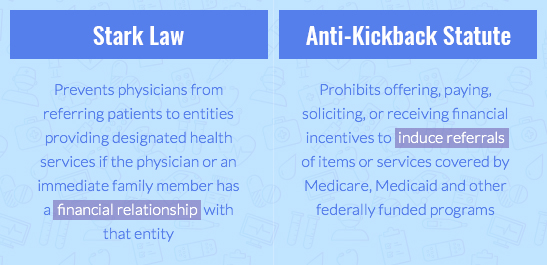
PPMCs typically enter into long-term management agreements with physician groups. In some cases, they may purchase the non-clinical assets of a practice—such as equipment, office space, and administrative staff—while the physicians retain control over clinical decisions and patient care. This arrangement allows for a clear division between medical and business responsibilities, which is essential for maintaining compliance with healthcare regulations like the Stark Law and the Anti-Kickback Statute.

A physician practice management corporation (PPMC) is a business entity that provides non-clinical administrative and operational support to medical practices, allowing physicians to focus on patient care while the corporation handles the business side of healthcare.

Physician practice management corporations emerged in response to the increasing complexity of running a medical practice. As healthcare regulations, insurance requirements, and operational costs grew, many physicians found it challenging to manage both clinical responsibilities and business operations. PPMCs offer a solution by taking over the administrative burdens, enabling physicians to concentrate on delivering quality care.

PPMCs: https://medicalexecutivepost.com/2019/11/18/on-the-ppmcs-of-yester-year-and-today/

At their core, PPMCs are responsible for a wide range of non-medical services. These include billing and coding, human resources, payroll, marketing, compliance, information technology, and financial management. By centralizing these functions, PPMCs can achieve economies of scale, reduce overhead costs, and improve operational efficiency for the practices they manage. This model is particularly attractive to small and mid-sized practices that may lack the resources to manage these functions independently.

PPMCs typically enter into long-term management agreements with physician groups. In some cases, they may purchase the non-clinical assets of a practice—such as equipment, office space, and administrative staff—while the physicians retain control over clinical decisions and patient care. This arrangement allows for a clear division between medical and business responsibilities, which is essential for maintaining compliance with healthcare regulations like the Stark Law and the Anti-Kickback Statute.

***

***

One of the key advantages of working with a PPMC is access to capital and advanced infrastructure. PPMCs often invest in state-of-the-art electronic health record (EHR) systems, data analytics tools, and revenue cycle management platforms. These technologies can enhance patient care, streamline operations, and improve financial performance. Additionally, PPMCs may offer strategic guidance on practice expansion, mergers and acquisitions, and payer contract negotiations.

However, the relationship between physicians and PPMCs must be carefully managed. While PPMCs bring valuable expertise and resources, there is a risk that business priorities could overshadow clinical autonomy. To mitigate this, successful PPMCs prioritize physician engagement, transparent governance, and aligned incentives. They work collaboratively with physicians to ensure that business strategies support, rather than hinder, the delivery of high-quality care.

The physician practice management industry has evolved significantly over the past few decades. After a wave of failures in the 1990s due to overexpansion and misaligned incentives, modern PPMCs have adopted more sustainable and physician-centric models. Today, they play a crucial role in helping practices adapt to value-based care, population health management, and other emerging trends in healthcare delivery.

In conclusion, a physician practice management corporation serves as a strategic partner to medical practices, offering the business acumen and operational support needed to thrive in a complex healthcare environment. By offloading administrative tasks and providing access to advanced resources, PPMCs empower physicians to focus on what they do best—caring for patients—while ensuring the long-term success and sustainability of their practices.

COMMENTS APPRECIATED

EDUCATION: Books

SPEAKING: Dr. Marcinko will be speaking and lecturing, signing and opining, teaching and preaching, storming and performing at many locations throughout the USA this year! His tour of witty and serious pontifications may be scheduled on a planned or ad-hoc basis; for public or private meetings and gatherings; formally, informally, or over lunch or dinner. All medical societies, financial advisory firms or Broker-Dealers are encouraged to submit an RFP for speaking engagements: CONTACT: Ann Miller RN MHA at MarcinkoAdvisors@outlook.com 

Like, Refer and Subscribe

***

***

Recent Court Actions Provide Insight into Future of Fraud & Abuse Laws

By Health Capital Consultants, LLC

Two recent court actions may serve as harbingers for the future of healthcare fraud and abuse laws. In September 2024, a federal judge in the Southern District of West Virginia ordered parties in a qui tam False Claims Act and Stark Law case to brief the court on the implications of Loper Bright Enterprises v. Raimondo on the interpretation of the Stark Law to the case at hand.

That same month, a federal judge in the Middle District of Florida dismissed a qui tam lawsuit on a novel theory that the False Claims Act’s whistleblower provisions are unconstitutional.

This Health Capital Topics article discusses these cases and the potential impact on federal fraud and abuse laws. (Read more…)

COMMENTS APPRECIATED

Thank You

***

***

UPMC: Settles Stark Law Case

By Health Capital Consultants, LLC

***

***

On May 9th, 2024, the University of Pittsburgh Medical Center (UPMC), a large nonprofit healthcare system that owns a number of hospitals, medical practices, and other subsidiaries, announced that they would pay $38 million to settle a longstanding Stark Law case which had triggered a violation of the False Claims Act (FCA). The lawsuit claimed that several of UPMC’s surgeons ordered complex and unnecessary procedures to increase their earnings. 

CITE: https://www.r2library.com/Resource

This Health Capital Topics article will discuss the UPMC settlement and the allegations underlying the case. (Read more…) 

COMMENTS APPRECIATED

Thank You

***

***

DAILY UPDATE: Stark Laws & 23andMe as Wall Street Pulls Back

MEDICAL EXECUTIVE-POST TODAY’S NEWSLETTER BRIEFING

***

Essays, Opinions and Curated News in Health Economics, Investing, Business, Management and Financial Planning for Physician Entrepreneurs and their Savvy Advisors and Consultants

Serving Almost One Million Doctors, Financial Advisors and Medical Management Consultants Daily

A Partner of the Institute of Medical Business Advisors , Inc.

http://www.MedicalBusinessAdvisors.com

SPONSORED BY: Marcinko & Associates, Inc.

***

http://www.MarcinkoAssociates.com

Daily Update Provided By Staff Reporters Since 2007.
How May We Serve You?
© Copyright Institute of Medical Business Advisors, Inc. All rights reserved. 20224

REFER A COLLEAGUE: MarcinkoAdvisors@msn.com

SPONSORSHIPS AVAILABLE: https://medicalexecutivepost.com/sponsors/

ADVERTISE ON THE ME-P: https://tinyurl.com/ytb5955z

***

If the practice makes a reasonable effort to collect from a patient who is experiencing financial hardship (e.g., job loss due to COVID-19), providers may be able to offer a discount (e.g., settle for 70% of the amount owed) without violating Stark Law, says Reed Tinsley, CPA, healthcare consultant in Houston, Texas. “But remember that just because even if someone doesn’t have a job, they could still have money,” he adds. “There are a lot of people out there with big savings accounts.”

CITE: https://tinyurl.com/tj8smmes

Source: Lisa A. Eramo, MA, Keith A. Reynolds, Physicians Practice [4/3/24]

  • 23andMe cofounder and CEO Anne Wojcicki wants to take the once-hot DNA company private. 23andMe said a Special Committee would evaluate the proposal in light of other options. The company’s valuation has tumbled since its stock market debut in 2021. The struggling DNA company once valued in the billions — was essentially worthless as of Wednesday.
  • But,shares soared Thursday less than three years after it began selling shares. Wojcicki told board members she is proposing to acquire the company in a potential go-private transaction, according to a filing with the Securities and Exchange Commission.

CITE: https://www.r2library.com/Resource

Here’s where the major benchmarks ended:

  • The S&P 500 index fell 11.09 points (0.2%) to 5,011.12; the Dow Jones Industrial Average® ($DJI) rose 22.07 points (0.1%) to 37,775.38; the NASDAQ Composite lost 81.88 points (0.5%) to 15,601.50.
  • The 10-year Treasury note yield (TNX) gained almost 5 basis points to 4.633%.
  • The CBOE Volatility Index® (VIX) dropped 0.22 to 17.99.

Weakness in chip maker shares pushed the Philadelphia Semiconductor Index (SOX) down 1.7% to a two-month low. Biotechnology and consumer discretionary shares were also among the weakest sectors. Energy companies eroded as WTI Crude Oil (/CL) futures dropped for a third straight trading day and closed at a three-week low. 

The S&P 500 is on track for its third consecutive weekly decline, its weakest stretch since September, while the NASDAQ Composite appears headed for a fourth straight weekly slide.

CITE: https://tinyurl.com/2h47urt5

COMMENTS APPRECIATED

PLEASE SUBSCRIBE: MarcinkoAdvisors@msns.com

Thank You

***

***

***

***

EDUCATIONAL TEXTBOOKS: https://tinyurl.com/4zdxuuwf

***

Gifts that Violate the FCA Anti-kickback Statute

THE EIGHT [8] GIFTS

By Staff Reporters

***

***

Much like the False Claims Act, the Anti-Kickback Statute (AKS) remains a frequent tool used by the Department of Justice to investigate the healthcare industry. Unlike the False Claims Act, the AKS imposes criminal penalties on violators.

FCA: https://medicalexecutivepost.com/2022/03/28/doj-recoveries-for-false-claims-act-cases-doubled-in-2021/

CITE: https://www.r2library.com/Resource

The leaders of a physicians’ practice may be held liable for what others in the practice do, even if the leader did not know precisely what was going on. It has been called the “crime of doing nothing.”

1. Providing free dinners or lunches to physicians

2. Travel expenses paid to physicians

3. Entering into consulting or research agreements with physicians under which payments are made but minimal (or zero) work is done in return

4. Other gifts, such as electronics or tickets to sporting events 

5. Laboratory pays a specimen processing fee to physicians above the fair value for those fees

6. Physician retention or recruitment agreements, when those agreements provide for payments above fair market value or are made with the intent to induce Medicare referrals

7. Agreements for speaking or teaching where the payments are above fair market value or made with the intent to induce referrals

8. Discount schemes that do not meet the safe harbor requirements

Source: Sara Kropf and Logan Lutton, Physicans Practice

STARK LAWS: https://medicalexecutivepost.com/2023/04/18/podcast-the-anti-kickback-and-stark-laws-for-doctors-and-hospitals-explained/

***

ORDER: https://www.routledge.com/Risk-Management-Liability-Insurance-and-Asset-Protection-Strategies-for/Marcinko-Hetico/p/book/9781498725989

***

COMMENTS APPRECIATED

Thank You

***

PODCAST: The Anti-Kickback and Stark Laws for Doctors and Hospitals Explained

By Eric BrickerMD

***

***

ORDER: https://www.amazon.com/Financial-Management-Strategies-Healthcare-Organizations/dp/1466558733/ref=sr_1_3?ie=UTF8&qid=1380743521&sr=8-3&keywords=david+marcinko

***

***

COMMENTS APPRECIATED

Thank You

***

PODCAST: Stark and AKS Final Rules

ANTI-KICKBACK STATUTE Overview and Impact

Do you want to learn more about the Stark Law and Anti-Kickback Statute Final Rules and how they impact your practice? Join us for a one-hour webinar, presented with Hancock Daniel.

Health Capital Topics Newsletter

By Health Capital Consultants, LLC

PODCAST: https://www.healthcapital.com/resources/stark-and-aks-final-rules-overview-and-impact

YOUR COMMENTS ARE APPRECIATED.

Thank You

***

MEDICARE: Safe Harbor Regulations

Medicare “Safe Harbor” Regulations

Invite Dr. Marcinko | The Leading Business Education ...

The Medicare Safe Harbor rules were passed in an effort to identify areas of practice that would not lead to a conviction under the anti-fraud statute.  The Safe Harbor regulations provide for eleven areas where providers may practice without violating the anti-fraud statute. 

CITE: https://www.amazon.com/Dictionary-Health-Insurance-Managed-Care/dp/0826149944/ref=sr_1_4?ie=UTF8&s=books&qid=1275315485&sr=1-4

Areas of safe practice under these regulations are briefly highlighted below:

  • Large Entity Investments – Investment in entities with assets over $50 million. The entity must be registered and traded on national exchanges.
  • Small Entity Investments – Small entity investment entities must abide by the 40-40 rule.  No more than 40% of the investment interests may be held by investors in a position to make referrals. Additionally, no more than 40% of revenues can come through referrals by these investors.
  • Space and Equipment Rentals – Such lease agreements must be in writing and must be for at least a one year term. Furthermore, the terms must be at fair market value.
  • Personal Services and Management Contracts – These contracts are allowable as long as certain rules are followed. Like lease agreements, these personal service and management contracts must be in writing for at least a one-year term, and the services must be valued at fair market value.
  • Sale of a medical practice – There are restrictions if the selling practitioner is in a position to refer patients to the purchasing practitioner.
  • Referral services– Referral services (such as hospital referral services) are allowed. However, such referral services may not discriminate between practitioners who do or do not refer patients.
  • Warranties – There is certain requirements if any item of value is received under a warranty.
  • Discounts – Certain requirements must be met if a buyer receives a discount on the purchase of goods or services that are to be paid for by Medicare or Medicaid.
  • Payments to Bona Fide Employees – Payments made to bona fide employees do not constitute fraud under the Safe Harbor Regulations.
  • Group Purchasing Organizations – Organizations that purchase goods and services for a group of entities or individuals are allowed; provided certain requirements are met.
  • Waiver of Beneficiary Co-Insurance and Deductible – Routine waiver would not come under the safe harbor.

A physician’s actions that come under the Safe Harbor Regulations will not violate the Medicare Fraud and Abuse Statutes.  However, the provider must still abide by the Stark amendments and must also abide by applicable state law.

STARK UPDATE: https://medicalexecutivepost.com/2018/08/03/cms-to-review-stark-law-relevance-once-again/

Your thoughts are appreciated.

THANK YOU

***

ORDER TEXTBOOK [3rd]: https://www.amazon.com/Business-Medical-Practice-Transformational-Doctors/dp/0826105750/ref=sr_1_9?ie=UTF8&qid=1448163039&sr=8-9&keywords=david+marcinko

***

Physician Self-Referral “under arrangement” Scrutiny

And IDTF Prohibitions

[By Staff Reporters]

According to Robert James Cimasi MHA, ASA, AVA, CBA, CMP™ certain physician/hospital relationships referred to as “under arrangements” and “per click” leasing ventures have come under increasing regulatory scrutiny.

Definition

An under arrangement transaction occurs when the hospital contracts with a third party (typically a joint venture owned, at least in part, by physicians who may refer) to provide a hospital service, and the hospital then bills and is reimbursed by Medicare for those services and pays the supplier, or joint venture.  As the “entity” to which the physicians refer patients is the hospital, not the joint venture (i.e., the “entity” is deemed to be the entity that submits the reimbursement claim to Medicare) this type of “arrangement” is permitted under Stark.

Stark Revisions

However, buried in the July 2, 2007, 2008 Medicare Physician Fee Schedule proposed rule, CMS has proposed revisions to the Stark regulations that broaden the definition of “entity” to include the person or entity that performs the designated health services and would prohibit space and equipment lease arrangements where per-click payments are made to a physician lessor who refers patients to the lessee.  Although the proposed self-referral prohibitions (as well as arrangements where the physician is the lessee and rents space from a hospital) did not appear in the Final Rule, similar provisions are expected in 2008.

CMS has also passed restrictions related to independent diagnostic testing facility [IDTF] arrangements.

gag

Assessment

For example, since January 1, 2008, IDTFs are no longer allowed to share practice locations, operations, and diagnostic testing equipment with other Medicare-enrolled providers, including leasing and subleasing agreements.

Conclusion

Your thoughts and comments on this ME-P are appreciated. Feel free to review our top-left column, and top-right sidebar materials, links, URLs and related websites, too. Then, subscribe to the ME-P. It is fast, free and secure.

Speaker: If you need a moderator or speaker for an upcoming event, Dr. David E. Marcinko; MBA – Publisher-in-Chief of the Medical Executive-Post – is available for seminar or speaking engagements. Contact: MarcinkoAdvisors@msn.com

OUR OTHER PRINT BOOKS AND RELATED INFORMATION SOURCES:

Product DetailsProduct DetailsProduct Details      

Product DetailsProduct Details

Stark Amendments [I-II-III]

A Review for Physicians, Consultants and Advisors

By Dr. David Edward Marcinko; MBA, CMP™

By Dr. Charles F. Fenton, III; FACFAS, Esq.biz-book2

The Stark Amendment to the Omnibus Budget Reconciliation Act of 1989 was a step by the federal government to prohibit physicians from referring patients to entities in which they have a financial interest.  Originally, the Stark amendment applied only to referral of Medicare patients to clinical laboratories in which the physician had a financial interest.


Stark I Provisions

The Stark Amendment provides that if a physician (including a family member) has a financial interest in a clinical laboratory, then he may not make a referral for clinical laboratory services if payment may be made under Medicare. A financial interest is an ownership interest, an investment interest, or a compensation arrangement.

Exceptions

There are certain exceptions to the Stark Amendment. For example; if a physician personally provides the service or if a physician or employee of a medical group, provides the services.

Safe Harbor Regulations

Like the Safe Harbor Regulations [SHRs], the Stark Amendment permits physician investment in large entities and provides an exception for rural providers. Under the Stark Amendment, large entities are defined as publicly traded entities with assets greater than $100 million.

But, there are certain other exceptions that are similar to the safe-harbor regulations. They include items such as provision for rental of office space, employment and service arrangements with hospitals, and certain service arrangements. These arrangements must be at arms-length and at fair market value.

Stark II

Stark II was passed in 1993 to modify and expand the Stark amendment.  In particular, it acts to bring numerous other entities, besides clinical laboratories, within the prohibitions of the Stark amendment. 

Stark III

The Federal Register notes that “Stark III” regulations went into effect on March 26, 2008.

Link: http://mamedicallaw.com/blog/2008/06/15/what-do-i-need-to-know-about-the-stark-iii-rules/

Assessment

Self-referral and over utilization may become less of a problem as managed care makes further in roads in medical practice control and quasi-subrogation. Future legislation is likely to address the concerns of the financial incentives towards under utilization of ancillary medical services.

Update

Quote: Self-referrals

Docs and dollars: This one’s a twofer. The first is a hotly-discussed NEJM paper showing that urologists (not radiation oncologists, as we’ve covered earlier) owning a stake in radiation therapy equipment tend to recommend that equipment more often than docs without an ownership stake. The second is a less-publicized government report showing that surgeons with a stake in device distributors also recommend those devices more than other surgeons. This shouldn’t surprise anyone — doctors are human, after all. The Stark laws designed to prevent physician self-referral, for some reason, make an exception for the IMRT conflict-of-interest in the first paper. And I don’t think any legislation foresaw the physician-owned-distributorships in the second article.

-Austin Frakt PhD

Conclusion

Your thoughts and comments on this ME-P are appreciated. Feel free to review our top-left column, and top-right sidebar materials, links, URLs and related websites, too. Then, subscribe to the ME-P. It is fast, free and secure.

Link: http://feeds.feedburner.com/HealthcareFinancialsthePostForcxos

Speaker: If you need a moderator or speaker for an upcoming event, Dr. David E. Marcinko; MBA – Publisher-in-Chief of the Medical Executive-Post – is available for seminar or speaking engagements. Contact: MarcinkoAdvisors@msn.com

OUR OTHER PRINT BOOKS AND RELATED INFORMATION SOURCES:

LEXICONS: http://www.springerpub.com/Search/marcinko
PHYSICIANS: www.MedicalBusinessAdvisors.com
PRACTICES: www.BusinessofMedicalPractice.com
HOSPITALS: http://www.crcpress.com/product/isbn/9781466558731
CLINICS: http://www.crcpress.com/product/isbn/9781439879900
ADVISORS: www.CertifiedMedicalPlanner.org
BLOG: www.MedicalExecutivePost.com

Product DetailsProduct DetailsProduct Details

Stark III Legislation

Join Our Mailing List

Self-Referral Rules Unveiled

[Staff Reporters]

cms

The Centers for Medicare and Medicaid Services [CMS] recently reported changes to the Stark self-referral ban that could have a significant effect on physician-hospital relationships and Physician-Hospital-Organizations [PHOs]. 

Final IPPS Regulations

The new changes appeared in the final Inpatient Prospective Payment System [IPPS] regulation unveiled on July 31, and due for publication in the August 19th 2008 Federal Register [FR].

“Standing-in-the-Shoes” and other Issues

The healthcare industry will soon have to navigate new Stark rules on issues like percentage-based compensation, per-click arrangements and other “stand-in-the-shoes” legal analysis. And, it’s time to sunset “under-arrangements” with physicians because CMS finalized its revised definition of entities that provide Designated Health Services (DHS) under Stark.

But, CMS also cleared a path for returning to Stark compliance over unsigned physician contracts, and clarified how providers can end the “period of disallowance,” when a Stark violation renders Medicare claims un-payable.

Assessment

According to the Report on Medicare Compliance [8/11/08], the Stark self-referral law bans Medicare payments to entities providing DHS if patients were referred by physicians with an ownership, investment or compensation relationship with the DHS entity.

Conclusion

Your thoughts and comments on this ME-P are appreciated. Feel free to review our top-left column, and top-right sidebar materials, links, URLs and related websites, too. Then, subscribe to the ME-P. It is fast, free and secure.

Link: http://feeds.feedburner.com/HealthcareFinancialsthePostForcxos

Speaker: If you need a moderator or speaker for an upcoming event, Dr. David E. Marcinko; MBA – Publisher-in-Chief of the Medical Executive-Post – is available for seminar or speaking engagements. Contact: MarcinkoAdvisors@msn.com

OUR OTHER PRINT BOOKS AND RELATED INFORMATION SOURCES:

DICTIONARIES: http://www.springerpub.com/Search/marcinko
PHYSICIANS: www.MedicalBusinessAdvisors.com
PRACTICES: www.BusinessofMedicalPractice.com
HOSPITALS: http://www.crcpress.com/product/isbn/9781466558731
CLINICS: http://www.crcpress.com/product/isbn/9781439879900
BLOG: www.MedicalExecutivePost.com
FINANCE: Financial Planning for Physicians and Advisors
INSURANCE: Risk Management and Insurance Strategies for Physicians and Advisors

Product DetailsProduct DetailsProduct Details