BOARD CERTIFICATION EXAM STUDY GUIDES Lower Extremity Trauma
[Click on Image to Enlarge]
ME-P Free Advertising Consultation
The “Medical Executive-Post” is about connecting doctors, health care executives and modern consulting advisors. It’s about free-enterprise, business, practice, policy, personal financial planning and wealth building capitalism. We have an attitude that’s independent, outspoken, intelligent and so Next-Gen; often edgy, usually controversial. And, our consultants “got fly”, just like U. Read it! Write it! Post it! “Medical Executive-Post”. Call or email us for your FREE advertising and sales consultation TODAY [678.779.8597] Email: MarcinkoAdvisors@outlook.com
Medical & Surgical e-Consent Forms
ePodiatryConsentForms.com
iMBA Inc., OFFICES
Suite #5901 Wilbanks Drive, Norcross, Georgia, 30092 USA [1.678.779.8597]. Our location is real and we are now virtually enabled to assist new long distance clients and out-of-town colleagues.
ME-P Publishing
SEEKING INDUSTRY INFO PARTNERS?
If you want the opportunity to work with leading health care industry insiders, innovators and watchers, the “ME-P” may be right for you? We are unbiased and operate at the nexus of theoretical and applied R&D. Collaborate with us and you’ll put your brand in front of a smart & tightly focused demographic; one at the forefront of our emerging healthcare free marketplace of informed and professional “movers and shakers.” Our Ad Rate Card is available upon request [678-779-8597].
Bettors are currently able to deduct 100% of their gambling losses, so they only pay taxes on their winnings. But starting next year, only 90% of gambling losses will be deductible.
So, if a professional gambler wins $100,000, then loses $100,000 that same year, according to the New York Times:
In 2025, that gambler would owe taxes on $0.
In 2026, that gambler would owe taxes on $10,000.
Bettors could even end up paying taxes if they finished the year with a net loss.
Posted on February 5, 2025 by Dr. David Edward Marcinko MBA MEd CMP™
MEDICAL EXECUTIVE-POST–TODAY’SNEWSLETTERBRIEFING
***
Essays, Opinions and Curated News in Health Economics, Investing, Business, Management and Financial Planning for Physician Entrepreneurs and their Savvy Advisors and Consultants
“Serving Almost One Million Doctors, Financial Advisors and Medical Management Consultants Daily“
A Partner of the Institute of Medical Business Advisors , Inc.
‘There are people with high I.Q.s who have fooled themselves on that one,’ Bill Gates the billionaire Microsoft co-founder told The New York Times. Gates’ comments come as Bitcoin has hit record highs in recent weeks, and the cryptocurrency industry as a whole has hailed the arrival of Donald Trump in the White House as a positive moment.
The President has said he will introduce policies supportive of digital currencies, and both him and his wife Melania launched their own meme coins last month. Cryptocurrency prices took a hit on Monday from the prospect of a trade war between the US and its trading partners, with some well-known digital assets seeing values fall more than 10 percent, AP News reported. However the notoriously volatile investment recovered later on Monday, with Bitcoin rebounding back above $100,000. Gates, who has a net worth of around $165 billion, has previously shared his skepticism around Bitcoin, and its volatility in particular.
US stocks closed higher on Tuesday, led by Big Tech, as investors assessed China’s instant retaliation to US President Donald Trump’s additional tariffs and the potential risks of a trade war.
Traders also took in fresh jobs data, with job openings declining more than expected in December. Investors are continuing to watch any signs of cooling in the labor market as the Federal Reserve debates future interest rate cuts in the face of sticky inflation.
The Dow Jones Industrial Average (^DJI) gained around 0.3%, while the benchmark S&P 500 (^GSPC) rose roughly 0.7%. The tech-heavy NASDAQ Composite (^IXIC) jumped nearly 1.4% to recoup some of Monday’s losses.
Beijing reacted swiftly on Tuesday to Trump’s additional 10% levies on Chinese imports going into effect at midnight. China slapped tariffs of 15% on US coal and liquified natural gas, starting Feb. 10, alongside 10% duties on imports of crude oil, farm equipment, and some autos.
Posted on April 7, 2024 by Dr. David Edward Marcinko MBA MEd CMP™
By Staff Reporters
***
***
It’s not often a guy on a computer is the hero of the story. Andres Freund, a Microsoft developer, found a malicious backdoor in popular open-source software last week. Programmers scrambled to fix the problem but warned that if they hadn’t, it could have led to hundreds of millions of compromised devices and a catastrophic cybersecurity breach.
Freund told the New York Times that he first noticed an unusual error message while doing routine maintenance on the Linux operating system—a vital software used by banks, governments, and corporations around the globe. At first, he wrote it off, but a few weeks later, he noticed an application used to log into computers remotely was using a lot more power in the system than it was supposed to.
DEFINITION: Venture capital (VC) is a form of private equity and a type of financing that investors provide to start-up companies and small businesses that are believed to have long term growth potential. Venture capital generally comes from well-off investors, investment banks, and any other financial institutions. Venture capital doesn’t always have to be money. In fact, it often comes as technical or managerial expertise. VC is typically allocated to small companies with exceptional growth potential or to those that grow quickly and appear poised to continue to expand.
DEFINITION:Disruptive innovation is a business that creates a new market or value network, or enters at the bottom of an existing market and eventually displaces established market-leading firms, products, and alliances. The term, “disruptive innovation” was popularized by the American academic Clayton Christensen and his collaborators beginning in 1995, but the concept had been previously described in Richard N. Foster‘s book “Innovation: The Attacker’s Advantage” and in the paper Strategic Responses to Technological Threats.
Start-Ups and industry disruptors: Here are just a few of the recent collapses, as per the New York Times:
WeWork, which raised over $11 billion as a private startup, went bankrupt earlier this fall.
Hopin, the virtual events startup that rode a Covid Virus wave to a $7.6 billion valuation, sold its primary business units for $15 million.
The e-scooter company Bird, which became the fastest startup ever to land a $1 billion valuation, was de-listed from the NYSE and is now worth $7 million.
Overall, more than 3,200 private venture-capital backed US startups that have collectively raised $27.2 billion have gone out of business this year, according to the New York Times and PitchBook. So, why are the disruptors doing down?
Well, the Federal Reserve raised interest rates to a 22-year high. The cost of capital has become far more expensive, and investments that are less risky have gotten more attractive. This year has been particularly bad.
It’s a sad and instantaneous end to the golden Venture Capital years fueled by low interest rates and the growth of the mobile interne. Investment in US startups jumped by 8x between 2012 and 2022 to $344 billion dollars.
Posted on August 18, 2023 by Dr. David Edward Marcinko MBA MEd CMP™
By Staff Reporters
***
***
Stat: 0.7%. That’s how much retail sales grew last month, a sign that inflation isn’t dampening consumer spending or demand. (CNBC)
Quote:“This is pure market economics. We do not magically have thousands of additional AI developers, product managers, and everything else.”—Paul J. Groce, partner and head of the Americas at recruitment firm Leathwaite, on how a talent shortage is driving up wages for AI positions. (the Wall Street Journal)
Read: The teetering company threatening China’s economy. (the New York Times)
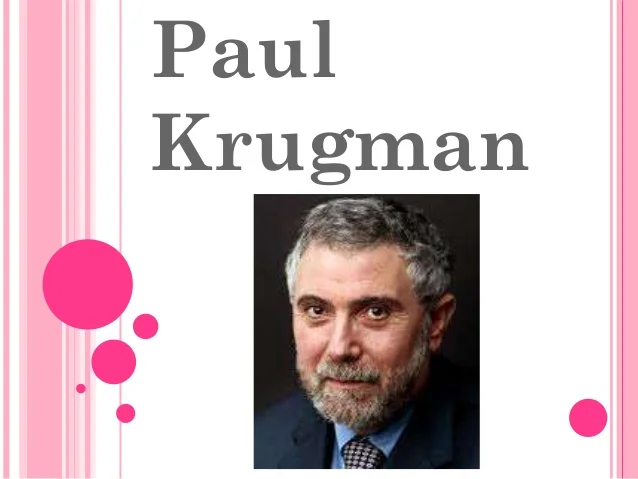
Though individual borrowers are expected to pay off debts, the same isn’t true for governments, Paul Krugman argued in a column for the New York Times last week. That’s because unlike people, governments don’t die, and they gain more revenue with each passing generation. “Governments, then, must service their debts – pay interest and repay principal when bonds come due – but they don’t necessarily have to pay them off; they can issue new bonds to pay principal on old bonds and even borrow to pay interest as long as overall debt doesn’t rise too much faster than revenue,” he added.
Posted on May 8, 2019 by Dr. David Edward Marcinko MBA MEd CMP™
How can this possibly be fair?
By Rick Kahler MS CFP®
An April 29th headline in The New York Times got my attention: “Profitable Giants Like Amazon pay $0 in Corporate Taxes. Some Voters Are Sick of It.” My immediate reaction was outrage. Amazon had a 0% tax rate. My company’s overall tax rate was 24%, and its net profit was less than 0.000025% of Amazon’s. How can this possibly be fair?
The Times article, by Stephanie Saul and Patricia Cohen, gave few specifics but left the impression that Amazon simply gets out of paying taxes on its profits because of a legal, but unfair, manipulation of the tax code afforded only to wealthy corporations, leaving the heavy lifting to the rest of us poor saps.
I wanted to know how Amazon did it, so I did some research
First, let’s put the $11.1 billion profit into perspective. The past 18 months are the first time Amazon has shown any meaningful profit since 2011. Many of those years saw them losing billions of dollars.
The total value (market capitalization) that shareholders have invested in Amazon is $954 billion as of April 29, 2019. That means the 2018 profit of $11.1 billion represents an earnings yield of 1.16% return on investors’ money. The average earnings yield on a large US company is 4.5%, significantly higher than Amazon’s. While $11.1 billion sounds like a lot of money in dollar terms, when viewed in the amount of money it takes to generate those profits, Amazon’s financials are significantly subpar.
Amazon reduced their taxes to zero by primarily doing four things:
They reinvested their profits in equipment and buildings, and were able to deduct a portion of these expenses. They will have to repay the taxes they deferred on these purchases when they sell the equipment or property. And the money spent was not available for distribution to their shareholders.
They received a tax credit for spending on research and development. This credit is an incentive for any company to help offset the high risk of the up-front costs of developing new ideas, not all of which pay off.
They paid some employees in the form of stock, rather than cash. While still a real cost to the company, this is used to minimize cash outflows, while giving employees an opportunity to reap the rewards of their hard work in future profits.
In their start-up years, Amazon lost billions of dollars. Out of fairness, the tax code allows any business to carry losses over into future years to offset profits, when and if they ever materialize. This type of “write off” is real money that was lost.
The article cited a carpet layer who had a profit of $18,000 and paid more in taxes than Amazon. He was so upset at this injustice that he joined the Socialist Party.
The article failed to mention that many of the same write-offs used by Amazon were available to him, too. If his business was incorporated, the tax bill on his profits was probably 21%, or $3,780. If he had reinvested his profit in a new carpet cleaning machine, had losses from previous years to carry forward, spent money on developing a new type of carpet cleaner, or paid his employees in stock, he would have paid nothing in taxes.
***
***
Assessment
Critics of big corporations might say such strategies would not be realistic for a one-person company. Yet I have seen many small business owners use them, particularly carrying forward losses that result from the essential start-up costs. The corporate tax code generally applies equally to all businesses and is meant to encourage small companies as well as large ones to take the risks necessary to create new jobs.
Posted on June 12, 2016 by Dr. David Edward Marcinko MBA MEd CMP™
NO, IT’S UP – YOU BETTER JUDGE FOR YOURSELF
By Arthur Chalekian GEPC
[Financial Consultant]
The New York Times reported the 200 most-highly-paid CEOs in the United States collectively experienced a pay cut last year!
CEOs’ average compensation – all CEOs compensation added together and then divided by 200 – fell by 15 percent from 2014 to 2015.
Of course, you know what they say about lies and statistics
Equilar, the company responsible for the study, reported CEO pay grew modestly in 2015. They looked at median CEO pay – the number in the middle. It was $16.6 million for fiscal 2015. That’s up 5 percent from the previous year.
No matter how you interpret the results, not one CEO earned more than $100 million. CEOs in the technology industry had the highest median pay while those in basic materials (which includes oil and gas companies) had the lowest, according to Equilar.
Many people have argued company performance should inform CEO pay, but there wasn’t much evidence this was the case. Although there may have been a basis for CEO pay changes, there was no clear correlation to shareholder returns or company revenues.
For instance:
A 702 percent increase in pay was awarded when total shareholder return was down 5 percent, and company revenues were down 1 percent.
A 286 percent increase in pay was awarded when total shareholder return was up 16 percent, and company revenues were up 9 percent.
A 48 percent reduction in pay occurred when total shareholder return was up 25 percent, and company revenues were up 4 percent.
Assessment
The portion of 2015 corporate budgets allotted to pay hikes for employees increased by 2.8 percent, on average, according to Mercer. The report said, “… the highest-performing employees received average base pay increases of 4.8 percent in 2015 compared to 2.7 percent for average performers and 0.2 percent for the lowest performers …”
Conclusion
Your thoughts and comments on this ME-P are appreciated. Feel free to review our top-left column, and top-right sidebar materials, links, URLs and related websites, too. Then, subscribe to the ME-P. It is fast, free and secure.
Speaker: If you need a moderator or speaker for an upcoming event, Dr. David E. Marcinko; MBA – Publisher-in-Chief of the Medical Executive-Post – is available for seminar or speaking engagements. Contact: MarcinkoAdvisors@msn.com
OUR OTHER PRINT BOOKS AND RELATED INFORMATION SOURCES:







 Support our online development, and advance our onground research initiatives in free market economics, as we seek to showcase the brightest Next-Gen minds.
THE ME-P DISCLAIMER: Posts, comments and opinions do not necessarily represent iMBA, Inc., but become our property after submission. Copyright © 2006 to-date. iMBA, Inc allows colleges, universities, medical and financial professionals and related clinics, hospitals and non-profit healthcare organizations to distribute our proprietary essays, photos, videos, audios and other documents; etc. However, please review copyright and usage information for each individual asset before submission to us, and/or placement on your publication or web site. Attestation references, citations and/or back-links are required. All other assets are property of the individual copyright holder.
Support our online development, and advance our onground research initiatives in free market economics, as we seek to showcase the brightest Next-Gen minds.
THE ME-P DISCLAIMER: Posts, comments and opinions do not necessarily represent iMBA, Inc., but become our property after submission. Copyright © 2006 to-date. iMBA, Inc allows colleges, universities, medical and financial professionals and related clinics, hospitals and non-profit healthcare organizations to distribute our proprietary essays, photos, videos, audios and other documents; etc. However, please review copyright and usage information for each individual asset before submission to us, and/or placement on your publication or web site. Attestation references, citations and/or back-links are required. All other assets are property of the individual copyright holder.














 The Leading Business Education Network for Doctors, Financial Advisors and Health Industry Consultants