INVESTMENTS: Four Firm Updates

By A.I.

SPONSOR: http://www.MarcinkoAssociates.com

***

***

UnitedHealth Group soared almost 12%, its biggest one-day gain in nearly five years, after getting the “Buffett Bounce.” Buffett’s Berkshire Hathaway revealed it bought ~5 million shares worth nearly $1.6 billion, giving a much-needed vote of confidence to the struggling health giant.

The White House is considering buying part of Intel, Bloomberg reported this week, which would be the latest big business deal the president pursues on behalf of the government. The Trump administration might acquire a stake in the struggling computer chip-maker using CHIPS Act funding—nearly $11 billion of which was already earmarked for Intel.

Saudi Arabia’s Public Investment Fund took an $8 billion write-down on five mega-projects it’s building, due to lower oil prices and higher costs.

Pimco, the asset management giant, warned that President Trump’s plan to IPO Fannie Mae and Freddie Mac could push mortgage rates higher.

COMMENTS APPRECIATED

EDUCATION: Books

Like and Subscribe

***

***

FREDDIE MAC: (FHLMC-Federal Home Loan Mortgage Corporation)

By Staff Reporters

***

***

Freddie Mac (FHLMC-Federal Home Loan Mortgage Corporation)

Freddie Mac is a GSE [government-sponsored enterprise] established by Congress. It’s similar to Fannie Mae with a publicly owned corporate structure. (Freddie Mac’s stock (FRE) trades on the New York Stock Exchange.) These two giant GSEs increase liquidity in the U.S. mortgage market by purchasing mortgages from lenders, then typically repackaging (securitizing) the debt and reselling it to investors, helping to create a “secondary” market for mortgages.

The GSEs’ main purpose is to assure that mortgage money is available for borrowers. But they don’t lend money directly. Instead, they purchase mortgages from “primary” lenders like mortgage companies, banks, and credit unions. That allows the primary lenders to replenish their funds and lend more money to home buyers. The GSEs finance their mortgage purchases by issuing mortgage-backed securities (MBS) and other debt instruments (often referred to as agency debt, even though, technically, the GSEs aren’t government agencies). GSE debt is considered to have relatively high credit quality based on its implicit government backing, reinforced by what happened during the Financial Crisis in 2008.

Since Fannie Mae and Freddie Mac were placed into government conservatorship in September 2008, the government has pledged to support any shortfall in the balance sheets of the two GSEs. The U.S. Treasury has said it will ensure that both GSEs can maintain a positive net worth and fulfill all of their financial obligations. This statement of support lends credence to the very high credit ratings of MBS and other debt issued by Fannie and Freddie.

COMMENTS APPRECIATED

Like and Subscribe

***

***

HOUSING: Affordability Down

By Staff Reporters

***

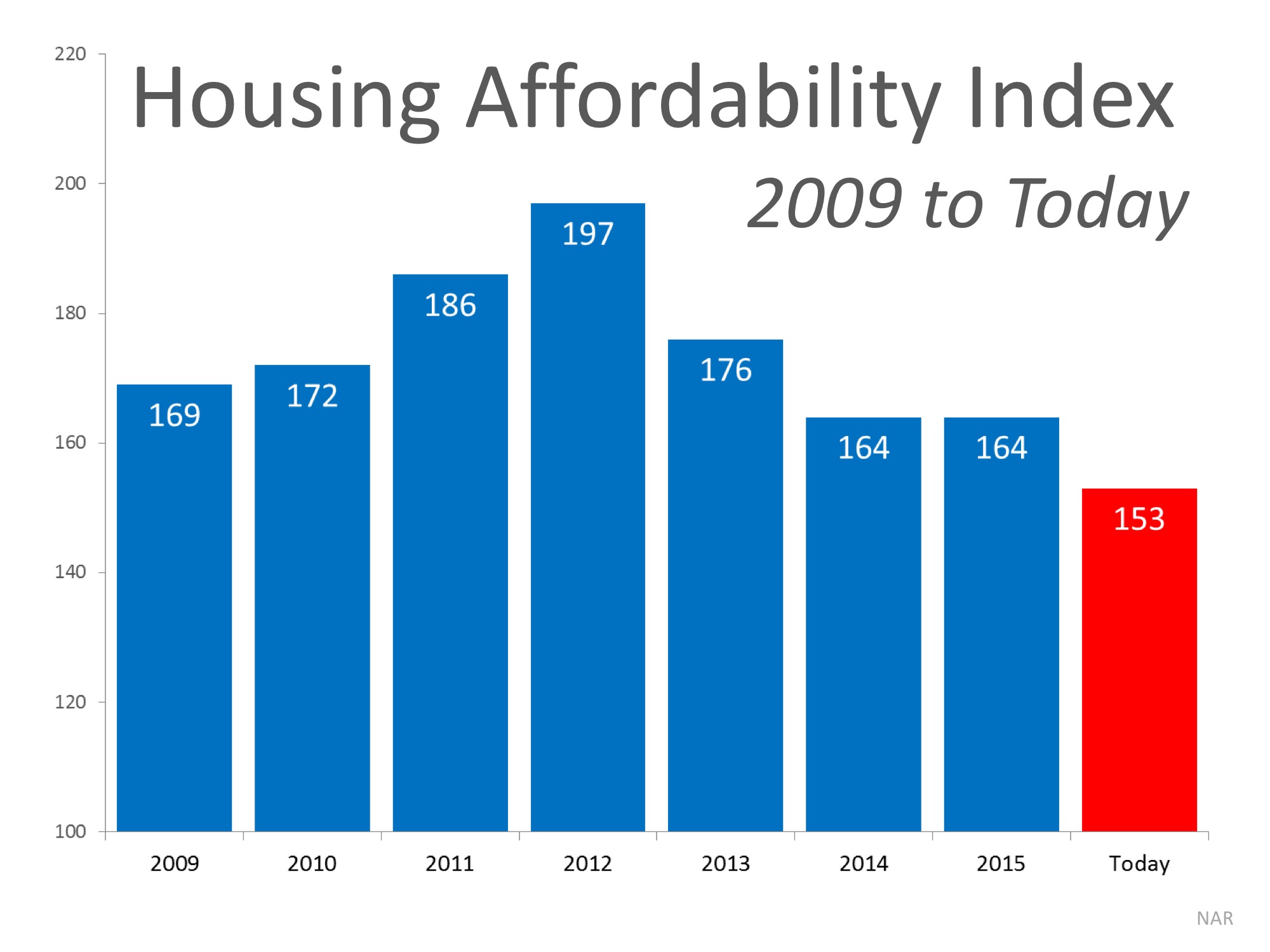
Housing affordability Getting Worse

Surging bond yields are playing out in a bad way in the housing market, where the average mortgage rate in the US jumped to 7.09%, its highest level since 2002, per Freddie Mac. Combine those eye-watering borrowing costs with an inventory crunch that’s driven up prices, and you get the worst housing affordability conditions in four decades, Bloomberg reports.

Roughly 75% of US homeowners have mortgage rates of less than 4%, according to JPMorgan, so you can imagine why no one is eager to move and pay upward of 7% on a new place.

***

COMMENTS APPRECIATED

Thank You

***

***

DAILY UPDATE: Home Sales Slow Down

By Staff Reporters

***

***

Want to know why there are seemingly no houses for sale in the US these days? These numbers should help explain:

The average rate on a 30-year mortgage climbed to 6.81% last week, its highest level of 2023, according to Freddie Mac. At the same time, almost 92% of US homeowners with mortgages have an interest rate of less than 6%, Redfin reported.

So, not many current homeowners are willing to ditch their lower mortgage rates for the higher one that would come with a new house.

***

  • Markets: As Wall Street heads into another earnings season this week, no one has much of a clue where stocks will go from here. Bloomberg notes there’s a whopping 50% difference between the most bullish analyst forecast for the S&P 500 for the rest of 2023 and the most bearish.

CITE: https://www.r2library.com/Resource

COMMENTS APPRECIATED

Thank You

***

***

The Physician’s Home Mortgage Tax Benefit

Join Our Mailing List

What is the Real Benefit?

Your home is likely your biggest investment. So, knowing exactly what, and how much, you’re paying is just common sense.

Total Costs

But, when medical professionals map out the life of their home mortgage and the total cost — even factoring the best mortgage rate – they often fail to consider the copious tax benefits they will receive.

Going Granular

We take a look at three home-buyer scenarios to determine just how much they will receive in tax benefits over the life of their loan, and the total amount they will have paid when their loan is finally over.

Assessment

Also included is the cutoff point for each filing status for when the standard tax deduction becomes more than the itemized deduction.

Conclusion

Your thoughts and comments on this ME-P are appreciated. Feel free to review our top-left column, and top-right sidebar materials, links, URLs and related websites, too. Then, subscribe to the ME-P. It is fast, free and secure.

Link: http://feeds.feedburner.com/HealthcareFinancialsthePostForcxos

Speaker: If you need a moderator or speaker for an upcoming event, Dr. David E. Marcinko; MBA – Publisher-in-Chief of the Medical Executive-Post – is available for seminar or speaking engagements. Contact: MarcinkoAdvisors@msn.com

Our Other Print Books and Related Information Sources:

Health Dictionary Series: http://www.springerpub.com/Search/marcinko

Practice Management: http://www.springerpub.com/product/9780826105752

Physician Financial Planning: http://www.jbpub.com/catalog/0763745790

Medical Risk Management: http://www.jbpub.com/catalog/9780763733421

Hospitals: http://www.crcpress.com/product/isbn/9781439879900

Physician Advisors: www.CertifiedMedicalPlanner.org

Product Details  Product Details

Video on Why The Federal Government Is Suing The Banks

Join Our Mailing List 

The Case against Banks – Trying to Understand the Financial Crisis?

Did you know that Federal regulators recently filed a lawsuit against banks for their role in the financial crisis. This motion graphic done, with What’s Trending, breaks down the story so you can understand the facts behind the case.

Video Link: http://columnfivemedia.com/work-items/whats-trending-motion-graphic-why-the-federal-government-is-suing-the-banks/

Source: www.ColumnFiveMedia.com

Conclusion

Your thoughts and comments on this ME-P are appreciated. Feel free to review our top-left column, and top-right sidebar materials, links, URLs and related websites, too. Then, subscribe to the ME-P. It is fast, free and secure.

Link: http://feeds.feedburner.com/HealthcareFinancialsthePostForcxos

Speaker: If you need a moderator or speaker for an upcoming event, Dr. David E. Marcinko; MBA – Publisher-in-Chief of the Medical Executive-Post – is available for seminar or speaking engagements. Contact: MarcinkoAdvisors@msn.com

OUR OTHER PRINT BOOKS AND RELATED INFORMATION SOURCES:

Product Details  Product Details

On the US Budget Deficit in 2010

Now North of $1.3 Trillion Dollars

By Children’s Home Society of Florida Foundation

Join Our Mailing List 

The federal fiscal year for 2010 concluded on September 30th. The Office of Management and Budget and Department of Treasury have released the official figures for fiscal year 2010. The deficit was $1.294 trillion.

Geithner Speaks

Treasury Secretary Tim Geithner noted that the cost of the financial rescue of banks and automotive companies was lower than expected. He stated, “By carefully managing the emergency initiatives to stop the financial panic and by accelerating our exit from those investments, we have significantly lowered the cost to taxpayers, bringing the costs of the financial rescue down by more than $240 billion this year.”

TARP

The Troubled Asset Recovery Program (TARP) cost to Treasury was $9 billion in 2010. During this year, the Federal Government also spent $52.6 billion to support the housing industry through troubled lenders Freddie Mac and Fannie Mae.

Deficit Concerns

The deficit declined slightly from 10% in 2009 to 8.9% of the 2010 gross domestic product (GDP). Tax receipts for 2010 were $2.16 trillion or 14.9% of the economy. Government expenditures were $3.45 trillion or 23.8% of the economy. Senate Budget Committee Ranking Minority Member Judd Gregg (R-NH) expressed concern about this deficit and noted, “These abrupt and shocking changes in our fiscal situation cannot be dismissed as “inherited” problems when the tally of the majority’s spending spree has climbed into the trillions.”

Assessment

The Fiscal Commission appointed by President Barack Obama is developing a plan to reduce the deficit. The target for the Fiscal Commission is to reduce the current 8.9% GDP deficit down to 3% of GDP within five years.

Editor’s Note: Your editor and this organization take no position with respect to the many financial and tax options that are available to Congress. This information is offered as a public service to our readers.
Conclusion

And so, your thoughts and comments on this ME-P are appreciated. How does this state of affairs affect the healthcare industrial complex? Feel free to review our top-left column, and top-right sidebar materials, links, URLs and related websites, too. Then, subscribe to the ME-P. It is fast, free and secure.

Get our Widget: Get this widget!

Our Other Print Books and Related Information Sources:

Health Dictionary Series: http://www.springerpub.com/Search/marcinko 

Practice Management: http://www.springerpub.com/product/9780826105752

Physician Financial Planning: http://www.jbpub.com/catalog/0763745790

Medical Risk Management: http://www.jbpub.com/catalog/9780763733421

Healthcare Organizations: www.HealthcareFinancials.com

Physician Advisors: www.CertifiedMedicalPlanner.com

Subscribe Now: Did you like this Medical Executive-Post, or find it helpful, interesting and informative? Want to get the latest ME-Ps delivered to your email box each morning? Just subscribe using the link below. You can unsubscribe at any time. Security is assured.

Link: http://feeds.feedburner.com/HealthcareFinancialsthePostForcxos

Sponsors Welcomed: And, credible sponsors and like-minded advertisers are always welcomed: https://healthcarefinancials.wordpress.com/2007/11/11/advertise

Product Details  Product Details

Understanding Collateralized Mortgage Obligations

Defining Terms and Concepts for Medical Professionals

By Staff Reporters

www.HealthcareFinancials.comho-journal9

A CMO is a debt security backed by mortgages. These mortgage pools are usually separated into different maturity classes called tranches (from the French word for “slice”). The securities were issued by private issuers, as well as the Federal Home Loan Mortgage Corporation (Freddie Mac). As the mortgages were usually government-guaranteed, CMOs usually carried AAA ratings until their current financial meltdown. The early versions of CMOs were known as “plain vanilla,” but recent developments gave us PACs (planned amortization certificates) and TACs (targeted amortization certificates); among too many others. They were all variations on how principal repayments in advance of maturity date were treated.

Assessmentdhimc-book19

Link: www.HealthDictionarySeries.com

Conclusion

And so, your thoughts and comments on this Medical Executive-Post are appreciated?

Link: http://feeds.feedburner.com/HealthcareFinancialsthePostForcxos

Speaker: If you need a moderator or speaker for an upcoming event, Dr. David E. Marcinko; MBA – Publisher-in-Chief of the Executive-Post – is available for seminar or speaking engagements. Contact: MarcinkoAdvisors@msn.com  or Bio: www.stpub.com/pubs/authors/MARCINKO.htm

Our Other Print Books and Related Information Sources:

Practice Management: http://www.springerpub.com/prod.aspx?prod_id=23759

Physician Financial Planning: http://www.jbpub.com/catalog/0763745790

Medical Risk Management: http://www.jbpub.com/catalog/9780763733421

Healthcare Organizations: www.HealthcareFinancials.com

Health Administration Terms: www.HealthDictionarySeries.com

Physician Advisors: www.CertifiedMedicalPlanner.com

Subscribe Now:Did you like this Medical Executive-Post, or find it helpful, interesting and informative? Want to get the latest ME-Ps delivered to your email box each morning? Just subscribe using the link below. You can unsubscribe at any time. Security is assured.

Link: http://feeds.feedburner.com/HealthcareFinancialsthePostForcxos

Product DetailsProduct DetailsProduct Details