Understanding Paradoxes in Modern Medicine

By Dr. David Edward Marcinko MBA MEd CMP

SPONSOR: http://www.CertifiedMedicalPlanner.org

***

***

What is a Paradox? 

A paradox is a figure of speech that can seem silly or contradictory in form, yet it can still be true, or at least make sense in the context given. This is sometimes used to illustrate thoughts or statements that differ from traditional ideas. So, instead of taking a given statement literally, an individual must comprehend it from a different perspective. Using paradoxes in speeches and writings can also add wit and humor to one’s work, which serves as the perfect device to grab a reader or a listener’s attention.

But paradoxes can be quite difficult to explain by definition alone, which is why it is best to refer to a few examples to further your understanding.

A good paradox example is in the famous television show House. Here, Dr. House is a rude, selfish, and narcissistic character who alienates everyone around him, even his own colleagues. However, he is also a brilliant doctor who is committed to saving lives. Regardless of his mean exterior, Dr. House is a moral and compassionate man who cares about his patients. The paradox here is how the character strives to save people’s lives despite his ruthless personality and behavior.

Modern health care appears to be rich in contradictions, and it is claimed to be paradoxical in a number of ways. In particular health care is held to be a paradox itself: it is supposed to do good; but is also accused of doing harm.

  • The expression “first do no harm,” which is a Latin phrase, is not part of the original or modern versions of the Hippocratic Oath, which was originally written in Greek (“primum non nocere,” the Latin translation from the original Greek.)
  • The Hippocratic Oath, written in the 5th century BCE, does contain language suggesting that the physician and his assistants should not cause physical or moral harm to a patient. 
  • The first known published version of “do no harm” dates to medical texts from the mid-19th century, and is attributed to the 17th century English physician Thomas Sydenham.  

Difference between Paradox and Oxymoron

Most people tend to confuse a paradox with an oxymoron, and it’s not hard to see why. Most oxymoron examples appear to be compressed version of a paradox, in which it is used to add a dramatic effect and to emphasize contrasting thoughts. Although they may seem greatly similar in form, there are slight differences that set them apart.

A paradox consists of a statement with opposing definitions, while an oxymoron combines two contradictory terms to form a new meaning. But because an oxymoron can play out with just two words, it is often used to describe a given object or idea imaginatively. As for a paradox, the statement itself makes you question whether something is true or false. It appears to contradict the truth, but if given a closer look, the truth is there but is merely implied.

The Paradox in Medicine and Health Care

Dr. Bernard Brom [Editor: SA Journal of Natural Medicine] suggests modem medicine is riddled with paradoxes. Most doctors live with these paradoxes without being aware of the conflict of interest that these paradoxes represent. Intrinsic to a general understanding of science is the idea that science frees us from misunderstanding and guides us towards clear decision making.

Most veteran doctors with experience know that medical science still does not give definitive answers, that each individual is unique, that one can never be sure how a patient will respond to a particular drug, or what the outcome of a particular operation will be. Human beings are not machines and therefore do not respond according to Newtonian logic, and therefore a paradox in medicine is not surprising. Medicine is an art which uses scientific techniques and approaches. It is, however, important to face these paradoxes. It is both humbling and enlightening, enriching those who consider the implications deeply enough.

The Compensation versus Value Paradox

Regardless of specialty, degree designation or delivery model, private practice physician salary is traditionally inversely related to independent medical practice business value.

SALARY: https://medicalexecutivepost.com/2024/07/21/medicare-doctor-salary-rates-would-cut-pay-3/

In other words, the more a doctor takes home in compensation from his practice, the less ownership in a private practice is worth, and vice versa.

VALUE: https://medicalexecutivepost.com/2008/01/11/how-to-maximize-medical-practice-value/

Higher doctor salary equals lower practice appraisal value.

BROKE DOCTORS: https://medicalexecutivepost.com/2025/08/02/doctors-going-broke-and-living-paycheck-to-paycheck/

This is the difference between a short-term and long-term compensation strategy.

COMMENTS APPRECIATED

EDUCATION: Books

SPEAKING: Dr. Marcinko will be speaking and lecturing, signing and opining, teaching and preaching, storming and performing at many locations throughout the USA this year! His tour of witty and serious pontifications may be scheduled on a planned or ad-hoc basis; for public or private meetings and gatherings; formally, informally, or over lunch or dinner. All medical societies, financial advisory firms or Broker-Dealers are encouraged to submit an RFP for speaking engagements: CONTACT: Ann Miller RN MHA at MarcinkoAdvisors@outlook.com -OR- http://www.MarcinkoAssociates.com

Like and Subscribe

***

***

CAPITATION REIMBURSEMENT: A Historical Economic Review

***

By Dr. David Edward Marcinko MBA MEd CMP

SPONSOR: http://www.CertifiedMedicalPlanner.org

***

***

DEFINITION

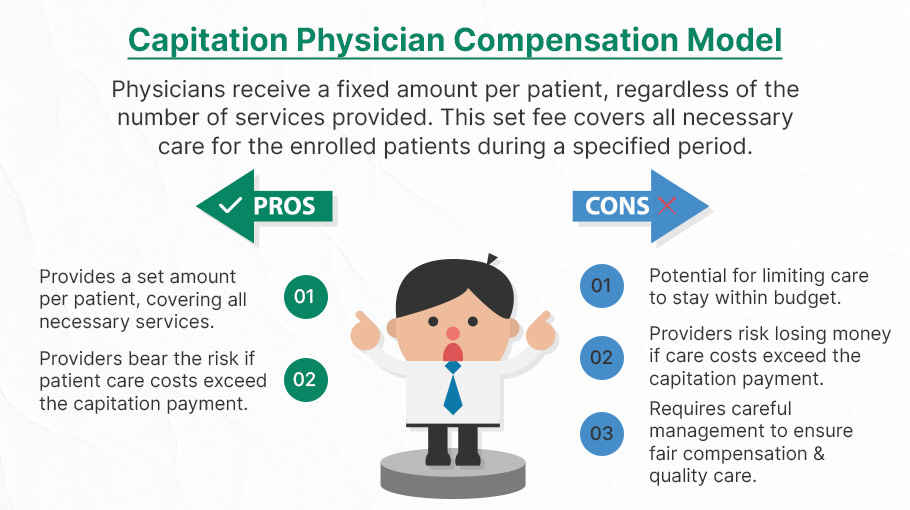
Capitation is a type of healthcare payment system in which a physician or hospital is paid a fixed amount of money per patient for a prescribed period by an insurer or physician association. The cost is based on the expected healthcare utilization costs for a group of patients for that year.

With capitation, the physician—otherwise known as the primary care physician— is paid a set amount for each enrolled patient whether a patient seeks care or not. The PCP is usually contracted with an HMO whose role it is to recruit patients.

ACOs: https://medicalexecutivepost.com/2024/12/01/record-breaking-savings-for-acos-in-2023/

***

***

CAPITATION REIMBURSEMENT HISTORY

According to Richard Eskow, CEO of Health Knowledge Systems of Los Angeles, capitated medical reimbursement has been used in one form or another, in every attempt at healthcare reform since the Norman Conquest. Some even say an earlier variant existed in ancient China [personal communication]. 

Initially, when Henry I assumed the throne of the newly combined kingdoms of England and Normandy, he initiated a sweeping set of healthcare reforms. Historical documents, though muddled, indicate that soon thereafter at least one “physician,” John of Essex, received a flat payment honorarium of one penny per day for his efforts. Historian Edward J. Kealey opined that sum was roughly equal to that paid to a foot-soldier or a blind person. Clearer historical evidence suggests that American doctors in the mid-19th century were receiving capitation-like payments. No less an authoritative figure than Mark Twain, in fact, is on record as saying that during his boyhood in Hannibal, MO his parents paid the local doctor $25/year for taking care of the entire family regardless of their state of health.

Later, Sidney Garfield MD [1905-1984] is noted as one of the great under-appreciated geniuses of 20th century American medicine stood in the shadow cast by his more celebrated partner, Henry J. Kaiser. Garfield was not the first physician to embrace the notion of prepayment capitation, nor was he the first to understand that physicians working together in multi-specialty groups could, through collaboration and continuity of care, outperform their solo practice colleagues in almost every measure of quality and efficiency. The Mayo brothers, of course, had prior claim to that distinction. What Garfield did, was marry prepayment to group practice, providing aligned financial incentives across every physician and specialty in his medical group, as well as a culture of group accountability for the care of every member of the affiliated health plan. He called it “the new economics of medicine,” and at its heart was a fundamentally new paradigm of care that emphasized – prevention before treatment – and health before sickness.  Under his model: the fewer the sick – the greater the remuneration. And: the less serious the illness, the better off the patient and the doctors.

VBC: https://medicalexecutivepost.com/2018/12/07/the-state-of-value-based-care-vbc/

***

***

Such ideas were heresy to the reigning fee-for-service, solo practice, ideologues of the mainstream medical establishment of the 1940s and ‘50s, of course. Throughout the period, Garfield and his group physicians were routinely castigated by leaders of the AMA and county medical associations as socialistic and unethical. The local medical associations in Garfield’s expanding service areas – the San Francisco Bay Area, Los Angeles, and Portland, Oregon – blocked group practice physicians from association membership, effectively shutting them out of local hospitals, denying them patient referrals or specialty society accreditation. Twice in the 1940s, formal medical association charges were brought against Garfield personally, at one time temporarily succeeding in suspending his license to practice medicine.

Of course, capitation payments made a comeback in the first cost-cutting managed care era of the 1980-90s because fee-for-service medicine created perverse incentives for physicians by paying more for treating illnesses and injuries than it does for preventing them — or even for diagnosing them early and reducing the need for intensive treatment later. Nevertheless, the modern managed care industry’s experience with capitation wasn’t initially a good one. The 1980-90s saw a number of HMOs attempt to put independent physicians, especially primary care doctors, into a capitation reimbursement model. The result was often negative for patients, who found that their doctors were far less willing to see them — and saw them for briefer visits — when they were receiving no additional income for their effort. Attempts were also made to aggregate various types of health providers — including hospitals and physicians in multiple specialties — into “capitation groups” that were collectively responsible for delivering care to a defined patient group. These included healthcare facilities and medical providers of all types: physicians, osteopaths, podiatrists, dentists, optometrists, pharmacies, physical therapists, hospitals and skilled nursing homes, etc.

However, the healthcare industry isn’t collective by nature, and these efforts tended to be too complicated to succeed. One lesson that these experiments taught is that provider behavior is difficult to change unless the relationship between that behavior and its consequences is fairly direct and easy to understand.

MORE: https://medicalexecutivepost.com/wp-content/uploads/2008/11/capitation-actuarial-medical-econometrics.pdf

Today, the concept of prepayment and medical capitation is to uncouple compensation from the actual number of patients seen, or treatments and interventions performed. This is akin to a fixed price restaurant menu, as opposed to an àla carte eatery.

COMMENTS APPRECIATED

EDUCATION: Books

SPEAKING: Dr. Marcinko will be speaking and lecturing, signing and opining, teaching and preaching, storming and performing at many locations throughout the USA this year! His tour of witty and serious pontifications may be scheduled on a planned or ad-hoc basis; for public or private meetings and gatherings; formally, informally, or over lunch or dinner. All medical societies, financial advisory firms or Broker-Dealers are encouraged to submit an RFP for speaking engagements: CONTACT: Ann Miller RN MHA at MarcinkoAdvisors@outlook.com -OR- http://www.MarcinkoAssociates.com

Like, Refer and Subscribe

***

***

PHYSICIAN COMPENSATION: Rising but NOT with Inflation!

By Staff Reporters and MGMA Survey

Physician Compensation is Rising but Not Keeping Pace with Inflation

Despite physician and advanced practice provider productivity continuing its post-pandemic recovery, compensation gains are being outstripped by the most severe inflationary growth in decades, according to a new report. Provider compensation increased across the board, with primary care physicians (PCPs) receiving the biggest increase last year. Growth in median total compensation for primary care doctors doubled from 2021 to 2022—from pay growth of 2.13% to 4.41%. But these gains were eclipsed by the rate of inflation at 7% and 6.5%, respectively.

CITE: https://www.r2library.com/Resource

Surgical and non-surgical specialists saw their change in median total compensation cool slightly in 2022, dropping from 3.89% for surgical specialists in 2021 to 2.54% in 2022, and from 3.12% for non-surgical physicians in 2021 to 2.36% in 2022, according to the Medical Group Management Association’s 2023 provider compensation and production report.

Source: Heather Landi, Fierce Healthcare [6/6/23]

***

COMMENTS APPRECIATED

Thank You

***

***

MEDICARE / MEDICAID: Physician Acceptance Down

By Staff Reporters

***

***

Physicians Who Accept Medicare, Medicaid at All-time Low of 65%

Reduced Medicare and Medicaid payments are having more physicians considering reducing those patient bases, according to Medscape’s “Physician Compensation Report” for 2023. Sixty-five percent of physicians surveyed said they would continue treating current Medicare or Medicaid patients and take on new ones, according to the report. Medscape said it is the lowest percentage it has seen in its annual compensation reports. Five years ago, 71 percent of physicians said they would continue treating current Medicare or Medicaid patients and take on new ones. 

CITE: https://www.r2library.com/Resource

For the report, Medscape collected responses from 10,011 physicians across more than 29 specialties. The data was collected between Oct. 7, 2022, and Jan. 17, 2023. Eight percent of physicians surveyed said they would not take on new Medicare patients, and 5 percent said they would not take new Medicaid patients. Four percent said they will stop treating some or all of their current Medicare patients and will not take on new ones, and 3 percent said the same about Medicaid patients. Twenty-two percent said they have not yet decided how they will move forward regarding Medicare and Medicaid patients, according to the report. 

Source: Andrew Cass, Becker’s Payer Issues [4/18/23]

***

COMMENTS APPRECIATED

Thank You

***

PODCAST: How Doctors are Really Paid?

Learn the Incentives in Physician Compensation

BY ERIC BRICKER MD

RAND and Harvard University Researchers Recently Published a Study in the Journal of the American Medical Association Examining How Doctors are Paid by Hospital System-Owned Practices. The Study Found that only 9% of Primary Care Physician Compensation was Based on Value (Quality and Cost-Effectiveness) and only 5.3% of Specialist Compensation was Based on Value.

The Study Concluded: “The results of this cross-sectional study suggest that PCPs and specialists despite receiving value-based reimbursement incentives from payers, the compensation of health system PCPs and specialists was dominated by volume-based incentives designed to maximize health systems revenue.”

***

***

MORE: https://medicalexecutivepost.com/2020/09/19/what-doctors-must-do-to-file-an-aetna-claim-to-get-paid/?preview_id=237387&preview_nonce=44f9028974&preview=true

RELATED: https://medicalexecutivepost.com/2008/09/12/how-doctors-get-paid/

***

BUSINESS MEDICINE: https://www.amazon.com/Business-Medical-Practice-Transformational-Doctors/dp/0826105750/ref=sr_1_9?ie=UTF8&qid=1448163039&sr=8-9&keywords=david+marcinko

***

HOSPITALS: https://www.amazon.com/Financial-Management-Strategies-Healthcare-Organizations/dp/1466558733/ref=sr_1_3?ie=UTF8&qid=1380743521&sr=8-3&keywords=david+marcinko

****

COMMENTS APPRECIATED

Subscribe to the Medical Executive-Post

Thank You

***

A Mid-Year Update on Physician Compensation

Join Our Mailing List

Medscape Compensation Report

vicki

By Vicki Rackner MD

A 2015  Medscape Compensation Report sheds light on physicians’ earning potential.

Here are some key findings from a survey of 20,000 physicians in 26 specialties:

  • Orthopedists ($421,000) and cardiologists ($376,000) are still the top earners among physicians.
  • Physicians in private practice earn significantly more ($329,000 for specialists) than do employed physicians ($258,000 for specialists), despite the trend toward employment.
  • Male physicians earn more ($284,000) than their female counterparts ($215,000).
  • North Dakota and Alaska ($330,000) are the top-paying states for physicians, while Rhode Island ($217,000) and Maryland ($237,000) are the lowest-paying.
  • 9% of physicians have concierge or cash-only practices, the same percentage as last year, while ACO participation continues to grow.
Assessment

However, it’s not what you make that’s important; it’s what you keep. Click here to read a blog post about the Myth of the Rich Doctor that addresses the disconnect between income and wealth.

***

fashion-

***

More:

So, what are your thoughts about physicians’ potential to enjoy financial independence?

ABOUT

Vicki Rackner MD is an author, speaker and consultant who offers a bridge between the world of medicine and the world of business. She helps businesses acquire physician clients, and she helps physicians run more successful practices. Contact her at (425) 451-3777

pnhp-long-setweisbartversion-52-638

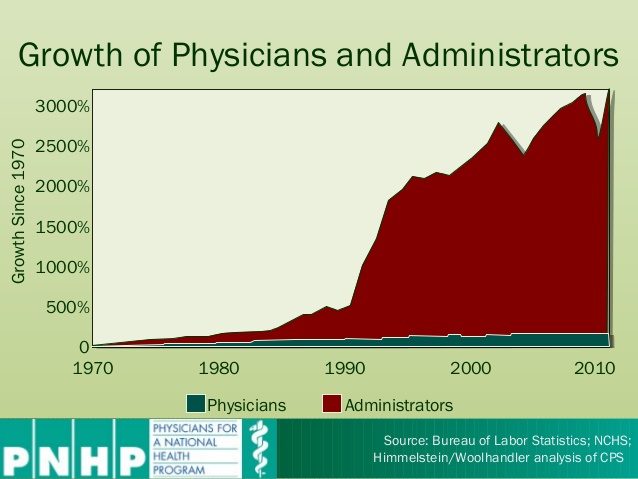
Will single-payer really reduce administrative waste?

Conclusion

Your thoughts and comments on this ME-P are appreciated. Feel free to review our top-left column, and top-right sidebar materials, links, URLs and related websites, too. Then, subscribe to the ME-P. It is fast, free and secure.

Speaker: If you need a moderator or speaker for an upcoming event, Dr. David E. Marcinko; MBA – Publisher-in-Chief of the Medical Executive-Post – is available for seminar or speaking engagements. Contact: MarcinkoAdvisors@msn.com

OUR OTHER PRINT BOOKS AND RELATED INFORMATION SOURCES:

Risk Management, Liability Insurance, and Asset Protection Strategies for Doctors and Advisors: Best Practices from Leading Consultants and Certified Medical Planners™8Comprehensive Financial Planning Strategies for Doctors and Advisors: Best Practices from Leading Consultants and Certified Medical Planners™

There is no other comprehensive book like it to help doctors, nurses, and other medical providers accumulate and preserve the wealth that their years of education and hard work have earned them.
—Dr. Jason Dyken MD MBA

[Dyken Wealth Strategies, Gulf Shores, Alabama]

The 2015 – 18 Physician Pay Check-Up

Join Our Mailing List

Annual Medscape Findings

[By Staff Reporters]

***

Medscape2015Report

***

iMBA Inc., Historical Review

[By Hope R. Hetico RN MHA CMP™]

[By Dr. David Edward Marcinko MBA CMP™]

dave-and-hope9

http://www.CertifiedMedicalPlanner.org

SOAR

***

Other MEDICAL Professional SALARIES 

Dentists are Different

A 2003 Survey of Dental Practices reported net income from dentistry-related sources. Dentists differ from physicians in that 90% are in private practice.

In 2002, the average practitioner’s net income was $174,350. The average dental specialist’s net was $291,250. These figures represent a 0.7% and a 5.8% increase over 2001, respectively. Net income rose steadily since 1986, when general dentists made an average of $69,920 and specialists an average of $97,920.

But, by 2010, according to PayScale.com, the average general dentist earned $98,276 – $157,437; a decreasing trend allocated as follows.

Salary $92,689 – $147,682
Bonus $1,996 – $19,727
Profit Sharing $1,038 – $27,514
Commissions $480.74 – $32,500

Source: http://www.ada.org/prof/resources/pubs/dbguide/newdent/income.asp#private

Source: http://www.payscale.com/research/US/Job=Dentist/Salary

dental

So Are Chiropractors

According to Salary.com, the median salary for strictly office-based chiropractors was $78,994 in 2005; while Collegegrad.com reported the median annual earnings of a salaried chiropractor as $65,330 in 2002; with the middle 50% earning between $44,140 and $102,400.

The U.S. Bureau of Labor Statistics estimated chiropractors earned an average salary of $84,020 in 2004. A Chiropractic Economics survey in 2005 suggested mean salary at $104,363.

Another survey, for 2007, in Chiropractic Economics is available here: http://www.chiroeco.com/article/2007/Issue8/images/CES&ESurvey2007.pdf

And, a range of $44,511 – $82,826 was reported in 2010 by PayScale.com, allocated as follows:

Salary $42,106 – $78,129
Bonus $1,008 – $10,205
Profit Sharing $973 – $8,139
Commission $750 – $10,113
Total PayXTotal Pay combines base annual salary or hourly wage, bonuses, profit sharing, tips, commissions, overtime pay and other forms of cash earnings, as applicable for this job. It does not include equity (stock) compensation, cash value of retirement benefits, or the value of other non-cash benefits (e.g. healthcare). $44,511 – $82,826

Source: http://www.payscale.com/research/US/Job=Chiropractor/Salary

Future Doc!

Podiatrist’s Potential Rising

The salary range for a podiatrist, or Doctor of Podiatric Medicine, in 2006 was reported as $128,000 to $292,000 according to http://www.allied-physicians.com/salary_surveys/physician-salaries.htm.

This robust growth was likely due to expanded education, training, and general allopathic and osteopathic acceptance by the medical community, as well as by insurance companies, employers, patients and various governmental agencies and third party payers.

Increased surgical sub-specialization, in-patient hospital and ambulatory out-patient surgical center activity were also positive compensation factors.

***

Ankle-Leg Trauma

***

Conclusion

Your thoughts and comments on this ME-P are appreciated. Feel free to review our top-left column, and top-right sidebar materials, links, URLs and related websites, too. Then, subscribe to the ME-P. It is fast, free and secure.

Speaker: If you need a moderator or speaker for an upcoming event, Dr. David E. Marcinko; MBA – Publisher-in-Chief of the Medical Executive-Post – is available for seminar or speaking engagements. Contact: MarcinkoAdvisors@msn.com

OUR OTHER PRINT BOOKS AND RELATED INFORMATION SOURCES:

Comprehensive Financial Planning Strategies for Doctors and Advisors: Best Practices from Leading Consultants and Certified Medical Planners(TM)

Product DetailsProduct Details

Product Details