The Emerging Role of CHIEF MARKETING STRATEGY IMPACT OFFICER

Common in Industry – Still Not so Much in Academe’

By Dr. David Edward Marcinko MBA

Invite Dr. Marcinko

http://www.CertifiedMedicalPlanner.org

A Chief Strategy Officer [CSO], or chief strategist, is the senior  executive responsible for assisting the Chief Executive Officer [CEO] with developing, communicating, executing, and sustaining corporate strategic initiatives. Some companies give the title Chief Business Officer [CBO] to its’ senior executives who are holding the top strategy role.

My opinion in academia

A few decades ago, the role of university Chief Strategy Officer [CSO] did not exist or marginally existed as a mid-level project manager in the communications department. It may have consisted of a formal background in teaching and education exhibited by the BA and/or B.Ed degrees or HR certification.

A first generation didactic CSO 1.0; if you will.

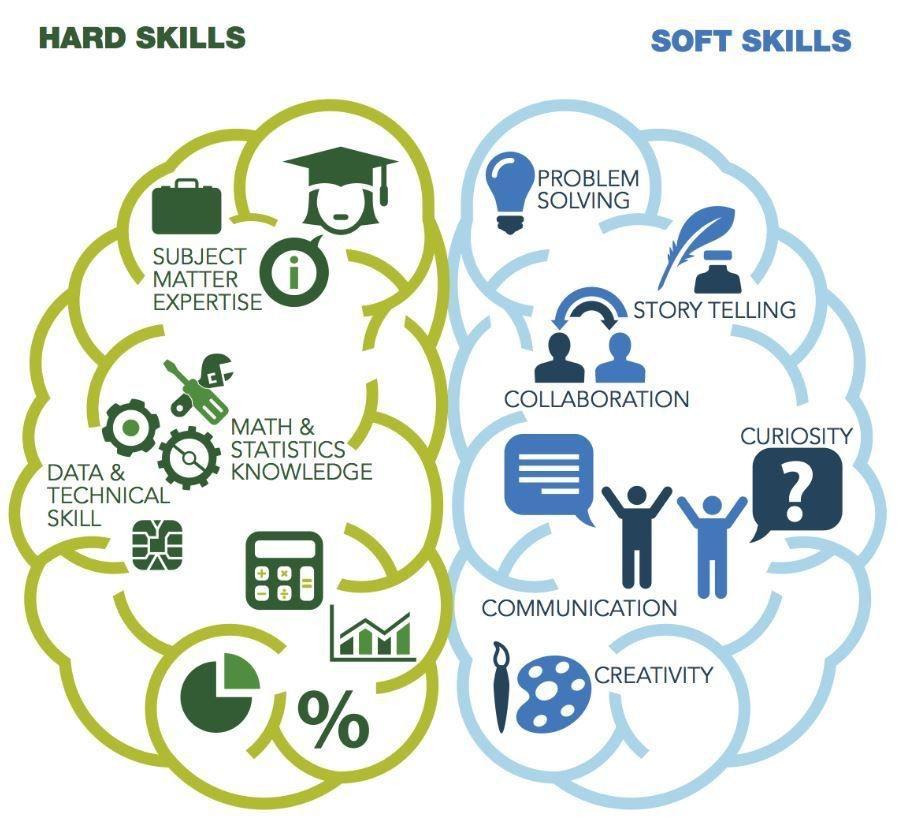
Then, as academic competition and granularity increased along with new technology information exchange, the need for deeper subject matter expertise arose. Next – generation business, under/graduate LAs, HUMANITIES, modern culture, psychology / sociology and STEM expertise arose to create and explore new – real or perceived – strategic advantages for university public relations in the form of the M.Ed, MA or MBA degrees in marketing, advertising, sales or competitive analysis.

THINK: Michal Porter PhD, known for his theories on economics, business strategy, and social causes. He is the Bishop William Lawrence University Professor at Harvard Business School, and a social impact consultant. He is credited for creating Porter’s five forces analysis, which is instrumental in business strategy development today.

Also, consider traditional S.W.O.T analysis, as well. SWOT analysis (alternatively SWOT matrix) is an initialism for strengths, weaknesses, opportunities, and threats—and is a structured planning method that evaluates those four elements of a project or business venture. A SWOT analysis can be carried out for a product, place, industry, university or person.

So, let’s call this a second generation expert CSO 2.0

However, as the complex business of running any college or university is ever changing, the ideal profile of CSO is still morphing to face modern business and management challenges like: physical and cyber security; culture and organizational behavior; gender differences, racial disparities and workplace violence issues; enrollment and international expansion; corporatization and competition; online and e-learning initiatives; with accounting, financial and economic pressures, etc.

Consequently, BODs are now seeking and embracing a new kind of CSO with advanced PhD or DBA degrees; and college and university experience. In fact, the role of contemporary CSO is emerging and becoming closer to that of an experienced corporate Chief Executive Officer, than the mere educator, academician or manager of the past.

Definitions: https://www.amazon.com/Dictionary-Health-Economics-Finance-Marcinko/dp/0826102549/ref=sr_1_6?ie=UTF8&s=books&qid=1254413315&sr=1-6

Universities and colleges  today

Insightful academic search committees are now seeking a new type of modern CSO who can build university and college rankings, maintain relationships with stakeholders, and project a positive image as a “celebrity university”.

This means shepherding students and attracting qualified youth, and faculty, for matriculation as areas of particular importance. This new entrepreneurial CSO must focus on business management, economics and finance – operational, marketing, advertising and consultative sales strategies to attract a qualified, protean and diverse student / professional staff that sets it apart from the competition; as well as more meaningfully interacting within [research and development], and without the university [outreach].

Accordingly, this  modern CSO must be a combination and protean surrogate for the university  CEO / CFO / CMO / COO / CAO and leader – NOT just a teacher or manager – who will help run it like a matrix business unit that makes a profit to generate needed capital and ROI.

Multiple lines of business – tuition; certifications; worker-placement; grants and endowments; CEUs and non-degree program fees; as well as for-profit R&D, publications, patents, copyrights and trade-marks; and applied business incubators – must ALL be created and managed as a diversified portfolio. S/he must lead in the implementation, planning and operations of systemic community responsive programs, as well as policy interventions requiring advocacy, political action and public analysis.

I prefer the moniker – CSO 3.0

Assessment

This academic CSO 3.0 must be a change-agent, crisis manager, corporate strategist, Machiavellian devotee and/or seasoned C-suite executive with the required inter – disciplinary skills outlined for this important position.

Above all – the modern CSO 3.0 must be pro-active, flexible and market responsive. This is not the place for tenure tracking.

 ***

MEDICAL PRACTICE AND HOSPITAL OPERATIONS, STRATEGIC DEVELOPMENT, ORGANIZATIONAL BEHAVIOR AND FINANCIAL MANAGEMENT COMPANION TEXTBOOK SET

Product DetailsProduct DetailsProduct Details

[Foreword Dr. Phillips MD JD MBA LLM] *** [Foreword Dr. Nash MD MBA FACP]  [Foreword Dr. Hashem MD PhD] *** [Foreword Dr. Silva MD MBA]

Conclusion

Your thoughts and comments on this ME-P are appreciated. Feel free to review our top-left column, and top-right sidebar materials, links, URLs and related websites, too. Then, subscribe to the ME-P. It is fast, free and secure.

Speaker: If you need a moderator or speaker for an upcoming event, Dr. David E. Marcinko; MBA – Publisher-in-Chief of the Medical Executive-Post – is available for seminar or speaking engagements.

imageproxy5

***

TECH STOCKS UP: Bank Earnings Reports are Next?

By Staff Reporters

***

***

COMMENTS APPRECIATED

Thank You

***

ORDER: https://www.routledge.com/Comprehensive-Financial-Planning-Strategies-for-Doctors-and-Advisors-Best/Marcinko-Hetico/p/book/9781482240283

***

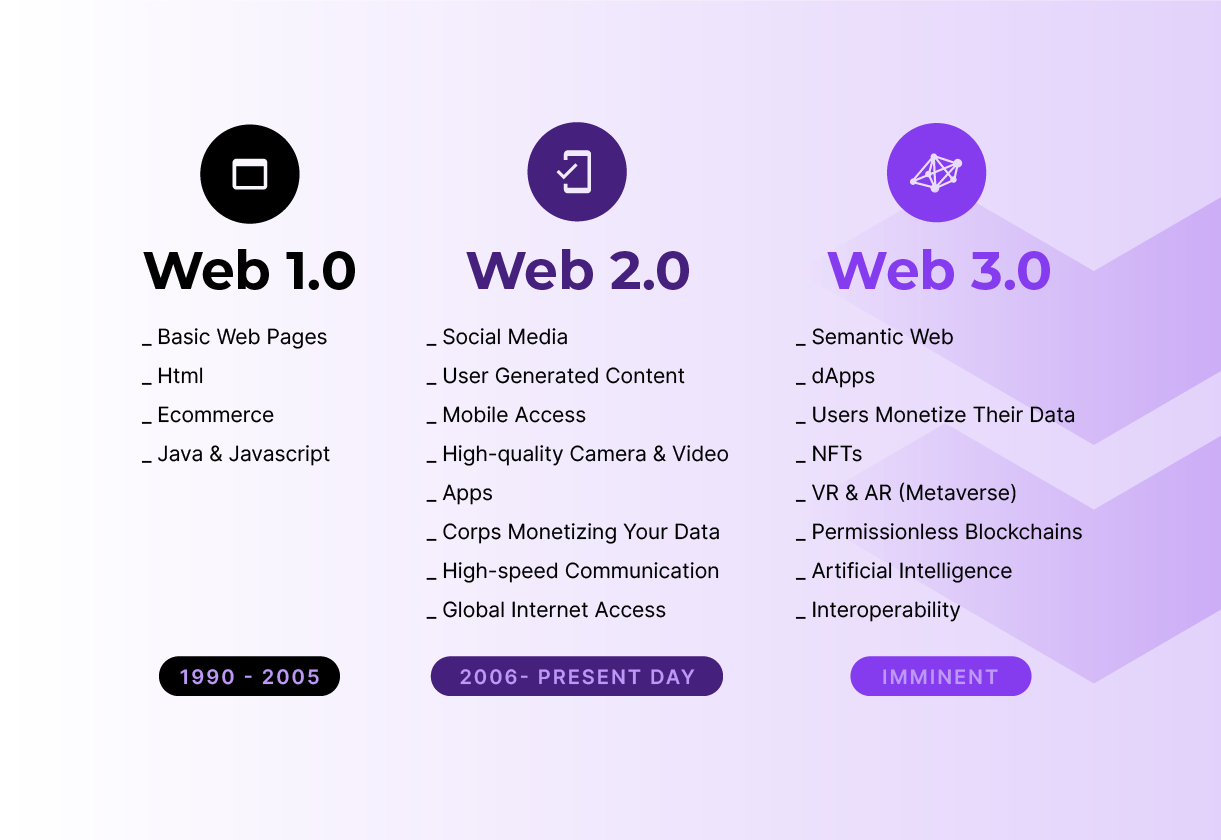
PODCAST: What is the Web 3.0?

By Staff Reporters

***

According to Wikipedia, the Web3 (also known as Web 3.0 and sometimes stylized as web3) is an idea for a new iteration of the World Wide Web based on blockchain technology, which incorporates concepts such as decentralization and token-based economics. Some technologists and journalists have contrasted it with Web 2.0, wherein they say data and content are centralized in a small group of companies sometimes referred to as “Big Tech“. The term “Web3” was coined in 2014 by Ethereum co-founder Gavin Wood, and the idea gained interest in 2021 from cryptocurrency enthusiasts, large technology companies, and venture capital firms.

***

***

Now, some experts argue that web3 will provide increased data security, scalability, and privacy for users and combat the influence of large technology companies.

Others have raised concerns about a decentralized web, citing the potential for low moderation and the proliferation of harmful content, the centralization of wealth to a small group of investors and individuals, or a loss of privacy due to more expansive data collection. Others, such as Elon Musk and Jack Dorsey, have argued that web3 only currently serves as a buzzword.

***

PODCAST: https://www.youtube.com/watch?v=nHhAEkG1y2U

***

COMMENTS APPRECIATED

Thank You

Subscribe to the Medical Executive-Post

***

HIT: https://www.amazon.com/Dictionary-Health-Information-Technology-Security/dp/0826149952/ref=sr_1_5?ie=UTF8&s=books&qid=1254413315&sr=1-5

***

BUSINESS MEDICINE: https://www.amazon.com/Business-Medical-Practice-Transformational-Doctors/dp/0826105750/ref=sr_1_9?ie=UTF8&qid=1448163039&sr=8-9&keywords=david+marcinko

***

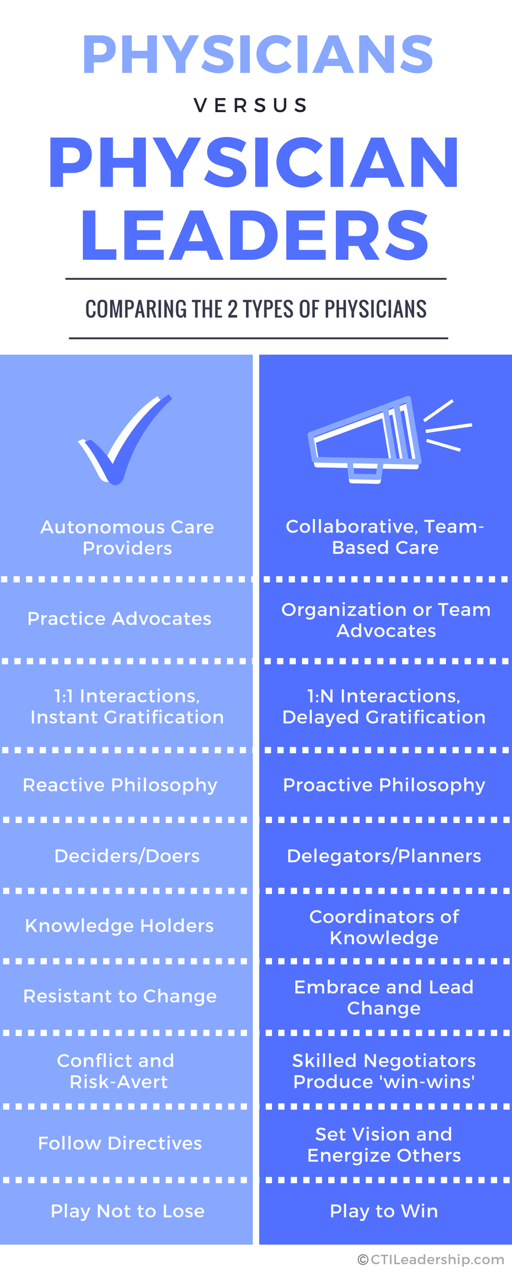
Healthcare Leadership V.S. Management

Understanding the Difference

[By Dr. David Edward Marcinko MBA]

DEM blueMany times, individuals will use the terms management and leadership synonymously. In actuality the terms have significantly different meanings.

For example, Warren Bennis describes the difference between managers and leaders as “Managers do things right, Leaders the right thing.”

Managers are those individuals who have as their primary function managing a team of people and their activities. In effect, managers are those who have been given their authority by the nature of their role and ensure that the work gets done by focusing on day to day tasks and their activities.

On other hand, a leader’s approach is generally innate in its approach. Good leadership skills are difficult to learn because they are far more behavioral in nature than those skills needed for management. Leaders are also very focused on change recognizing that continual improvement can be achieved in their people and their activities can be a great step towards continued success.

Training Camps

Perhaps some of the best training grounds for the development of leaders are the military. The Marine Corps slogan is “A Few Good Men” and the military academies at Annapolis (Navy), New London, Connecticut (Coast Guard), Colorado Springs (Air Force), and West Point (Army) all have as their main mission, the development of leaders.

This is done by a number of different techniques. At graduation, the new officers, regardless of the branch of service, have been taught, and more importantly, have internalized the following: communicate the missions, sensitivity matters, real respect is earned, trust and challenge your soldiers. It is due to these lessons that many graduates of the military academies go on to positions of leadership in the private sector as well as in government.  Communicating the mission refers to conveying to those who work with us what are practice is hoping to accomplish and the role of each employee in achieving that goal. Given an understanding and awareness of the mission, when confronted with a barrier, employees are able to face hard problems when there is no well-defined approach by which to deal with them.

***

IRA advice and leadership

***

Sensitivity Does Matter

This is my area to improve; as I can be glib on occasion.

A leader treats each employee with respect and dignity, regardless of race, gender, cultural background or particular role they actually perform in the practice. Consider how many legal suits are filed against any type of organization, whether it is a medical practice or a large manufacturing facility due to perceived disparate treatment towards the employee based on race, religion, gender sexual preference or other non-work related issues.

Real respect is earned – Having initials after one’s name and the wearing of a lab coat does not automatically entitle an individual to respect. Formal authority has been found to be one of the least effective forms of influence. Only by earning the respect of your staff as well as your patients can you be sure that your intent will be carried out when you are not present. Setting the example in performance and conduct, rather than ‘do as I say, not as I do,” level of activity enables one to exert influence far greater than titles.

Trust and challenge your employees – How many times have practices sought to hire the best and brightest only to second guess the employee. Eric Schmidt, the CEO of Google, describes his management philosophy as having “… an employee base in which everybody is doing exactly what they want every day.” Obviously there are certain policies and procedures, but at the same time, the leader enables decision making to the lowest possible level. This also enables employees to question why certain policies and procedures are still being followed when more effective and efficient methods are available.  (How the Army Prepared Me to Work at Google, Doug Raymond, Harvard Business)

The phrase “Physician, heal thyself” (Luke 4:23, King James Version) means that we have to attend to our own faults, in preference to pointing out the faults of others. The phrase alludes to the readiness of physicians to heal sickness in others while sometimes not being able or will to heal themselves.

By the same token, it now is necessary for us to learn how to manage ourselves. It suggests that physicians, while often being able to help the sick, cannot always do so, and when sick themselves are no better placed than anyone else (Gary Martin, phrases.org.uk/meanings/281850.html, 2010).

***

Feet

***

Self-Development

“We will have to learn how to develop ourselves. We will have to place ourselves outside the boundaries where we can make the greatest contribution. And we will have to stay mentally alert and engaged during a 50-year working life, which means knowing how and when to change the work we do” (Managing Oneself, Harvard Business Review – Jan. 2005 – pp 100-109, by Peter Drucker).

Although one’s IQ and certain personality characteristics are more or less innate and appear to remain stable over time there are individual capabilities that enable leadership and can be developed. Enhancement of these capabilities can lead to the individual being able to carry out the leadership tasks of setting direction, gaining commitment, and creating alignment. These capabilities include self-management capabilities, social capabilities and work facilitation capabilities.

***

***

Assessment

Without question, while it is possible to cram for at test and graduate at the top of one’s class, that does not assure   leadership ability. We all know at least one person who scores at the highest levels on cognitive measures but would be incapable of pouring liquid out of a boot if the instructions were written on the heel.

So, here is my philosophy:

  • Leadership: By example and thru transparency with collaboration [Do the right thing]
  • Management: By walking-around thru tangible / intangible metrics [Doing things right].

Channel Surfing the ME-P

Have you visited our other topic channels? Established to facilitate idea exchange and link our community together, the value of these topics is dependent upon your input. Please take a minute to visit. And, to prevent that annoying spam, we ask that you register. It is fast, free and secure.

 ***

Conclusion

Your thoughts and comments on this ME-P are appreciated. Feel free to review our top-left column, and top-right sidebar materials, links, URLs and related websites, too. Then, subscribe to the ME-P. It is fast, free and secure.

Speaker: If you need a moderator or speaker for an upcoming event, Dr. David E. Marcinko; MBA – Publisher-in-Chief of the Medical Executive-Post – is available for seminar or speaking engagements. Contact: MarcinkoAdvisors@msn.com

OUR OTHER PRINT BOOKS AND RELATED INFORMATION SOURCES:

Product DetailsProduct Details

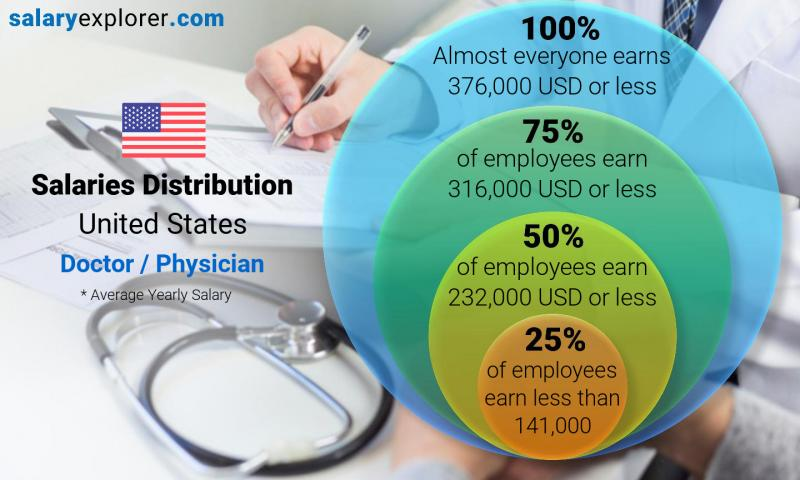
PHYSICIAN SALARY: Pay Gap

By Staff Reporters

***

***

A 2020 analysis of Doximity’s physician compensation data found that men physicians make an estimated $2 million more than women over the course of their careers.

LINK: https://www.statnews.com/2021/12/06/male-female-physician-salaries-gap-2-million-lifetime-earnings/#:~:text=A%20persistent%2025%25%20pay%20gap%20between%20female%20and,for%20specialty%2C%20hours%2C%20location%2C%20and%20years%20of%20experience.

Other findings:

  • Men physicians outearned women physicians by at least 10% across all specialties, except pediatric cardiology (9.2%) and nuclear medicine (3%).
  • Specialties with the largest gender pay gaps were: oral and maxillofacial surgery ($568,789 vs. $395,687), pediatric pulmonology ($282,272 vs. $227,958), allergy and immunology ($329,634 vs. $268,938), urology ($515,850 vs. $424,733), and ophthalmology ($468,515 vs. $387,295).
  • Specialities with the smallest gender pay gaps were: nuclear medicine ($394,231 vs. $382,431), pediatric cardiology ($334,384 vs. $303,622), pediatric gastroenterology ($293,771 vs. $264,135) hematology ($358,736 vs. $320,938), and medicine/pediatrics ($283,034 vs. $253,019).
  • CITE: https://www.r2library.com/Resource/Title/0826102549

***

RELATED: https://medicalexecutivepost.com/2022/01/21/personal-budgeting-for-physician-executives/

CAREERS: https://medicalexecutivepost.com/2022/10/01/careers-and-net-worth/

***
COMMENTS APPRECIATED

Thank You

***

***

What is Leadership and Can it Be Defined?

Of Characteristics and Commonalities

[By Dr. David Edward Marcinko MBA CMP™]

[By Eugene Schmuckler PhD MBA EMd CTS]

manageIt does not matter if you are in the healthcare or financial services sector; or both.

Many psychologists and behavioral experts believe there are commonalities and characteristics applicable to all industries and sectors; including education which is a big part of what we do here at the Medical Executive Post.

Key Leadership Competencies – Definitions

And so, here is a list of key leadership competencies and definitions for your review.

  • Living by personal conviction – Means you know and are in touch with your values and beliefs, are not afraid to take a lonely or unpopular stance if necessary, are comfortable in tough situations, can be relied on in intense circumstances, are clear about where you stand, and will face difficult challenges with poise and self-assurance.
  • Possessing emotional intelligence – Means you recognize personal strengths and weaknesses; see the linkages between feelings and behaviors; manage impulsive feelings and distressing emotions; are attentive to emotional cues; show sensitivity and respect for others; challenge bias and intolerance; collaborate and share; are an open communicator; and can handle conflict, difficult people, and tense situations effectively.  Emotional intelligence may often be labeled EQ, or emotional intelligence quotient.
  • Being visionary – Means that you see the future clearly, anticipate large-scale and local changes that will affect the organization and its environment, are able to project the organization into the future and envision multiple potential scenarios/outcomes, have a broad way of looking at trends, and are able to design competitive strategies and plans based on future possibilities.
  • Communicating vision – Means that you distill complex strategies into a compelling call to march, inspire and help others see a core reason for the organization to make change, talk beyond the day-to-day tactical matters that face the organization, show confidence and optimism about the future state of the organization, and engage others to join in.
  • Earning loyalty and trust – Means you are a direct and truthful person; are willing to admit mistakes; are sincerely interested in the concerns and dreams of others; show empathy and a generally helpful orientation toward others; follow promises with actions; maintain confidences and disclose information ethically and appropriately; and conduct work in open, transparent ways.

Product Details

  • Listening like you mean it – Means you maintain a calm, easy-to-approach demeanor, are patient, open minded, and willing to hear people out; understand others and pick up the meaning of their messages; are warm, gracious and inviting; build strong rapport; see through the words that others express to the real meaning (i.e., cut to the heart of the issue); and maintain formal and informal channels of communication.
  • Giving feedback – Means you set clear expectations, bring important issues to the table in a way that helps others “hear” them, show an openness to facing difficult topics and sources of conflict, deal with problems and difficult people directly and frankly, provide timely criticism when needed, and provide feedback messages that are clear and unambiguous.
  • Mentoring others – Means you invest the time to understand the career aspirations of your direct reports, work with direct reports to create engaging mentoring plans, support staff in developing their skills, support career development in a non-possessive way (will support staff moving up and out as necessary for their advancement), find stretch assignments and other delegation opportunities that support skill development, and role model professional development by advancing your own skills.
  • Developing teams – Means you select executives who will be strong team players, actively support the concept of teaming, develop open discourse and encourage healthy debate on important issues, create compelling reasons and incentives for team members to work together, effectively set limits on the political activity that takes place outside the team framework, celebrate successes together as a unit, and commiserate as a group over disappointments.

Product Details

  • Energizing staff – Means you set a personal example of good work ethic and motivation; talk and act enthusiastically and optimistically about the future; enjoy rising to new challenges; take on your work with energy, passion and drive to finish successfully; help others recognize the importance of their work; are enjoyable to work for; and have a goal oriented, ambitious and determined working style.
  • Generating informal power – Means you understand the roles of power and influence in organizations; develop compelling arguments or points of view based on knowledge of others’ priorities; develop and sustain useful networks up, down and sideways in the organization; develop a reputation as a go-to person; and effectively affect the thoughts and opinions of others, both directly and indirectly, through others.
  • Building consensus – Means you frame issues in ways that facilitate clarity from multiple perspectives, keep issues separated from personalities, skillfully use group decision techniques (e.g., Nominal Group Technique), ensure that quieter group members are drawn into discussions, find shared values and common adversaries, and facilitate discussions rather than guide them.

Product Details

  • Making decisions effectively – Means you make decisions based on an optimal mix of ethics, values, goals, facts, alternatives and judgments; use decision tools (such as force-field analysis, cost-benefit analysis, decision trees, paired comparisons analysis) effectively and at appropriate times; and show a good sense of timing related to decision making.
  • Driving results – Means you mobilize people toward greater commitment to a vision, challenge people to set higher standards and goals, keep people focused on achieving goals, give direct and complete feedback that keeps teams and individuals on track, quickly take corrective action as necessary to keep everyone moving forward, show a bias toward action, and proactively work through performance barriers.
  • Stimulating creativity – Means you see broadly outside of the typical, are constantly open to new ideas, are effective with creative group processes (e.g., brainstorming, Nominal Group Technique, scenario building), see future trends and craft responses to them, are knowledgeable in business and societal trends, are aware of how strategies play out in the field, are well read, and make connections between industries and unrelated trends.
  • Cultivating adaptability – Means you quickly see the essence of issues and problems, effectively bring clarity to situations of ambiguity, approach work using a variety of leadership styles and techniques, track changing priorities and readily interpret their implications, balance consistency of focus against the ability to adjust course as needed, balance multiple tasks and priorities such that each gets appropriate attention, and work effectively with a broad range of people.

kkkkk

More:

Assessment

Is if often said that leaders rise to the occasion. What do you think?

Conclusion

Your thoughts and comments on this ME-P are appreciated. Feel free to review our top-left column, and top-right sidebar materials, links, URLs and related websites, too. Then, subscribe to the ME-P. It is fast, free and secure.

Link: http://feeds.feedburner.com/HealthcareFinancialsthePostForcxos

Speaker: If you need a moderator or speaker for an upcoming event, Dr. David E. Marcinko; MBA – Publisher-in-Chief of the Medical Executive-Post – is available for seminar or speaking engagements. Contact: MarcinkoAdvisors@msn.com

OUR OTHER PRINT BOOKS AND RELATED INFORMATION SOURCES:

Product DetailsProduct Details

Product Details