STOCK SPLITS: A Vital Equity Investing Concept for Physicians and all Investors

By Dr. David Edward Marcinko MBA MEd CMP™

SPONSOR: http://www.CertifiedMedicalPlanner.org

***

***
One important equity concept that medical professionals should be aware of is the idea of stock splits.

In a stock split, a corporation issues a set number of shares in exchange for each share held by share holders. Typically, a stock split increases the number of shares owned by a shareholder.

CITE: https://www.r2library.com/Resource

For example, XYZ Corp. may declare a 2-for-1 split, which means that share holders will receive two shares for each share that they own. However, corporations can also declare a reverse stock split, such as a 1-for-2 split where shareholders would receive 1 share for every two shares that they own.


While stock splits can either increase or decrease the number of shares that a share holder owns, the most important thing to understand about stock splits is that they have no impact on the aggregate value of the shareholder’s position in the company.

Using the XYZ Corp. example above, if the stock is trading at $10 per share, an investor owning 100 shares has a 24 total position of $1,000. After the 2-for-1 split occurs the investor will now own 200 shares, but the value of the stock will adjust downward from $10 per share to $5 per share.

Thus, the investor still owns $1,000 of XYZ stock. While stock splits are often interpreted as signals from management that conditions in the company are strong, there is no intrinsic reason that a stock split will result in subsequent stock appreciation.

NVIDIA Splits: https://tinyurl.com/238yze4k

***

COMMENTS APPRECIATED

Thank You

***

***

Why 75+ Years of American Finance Should Matter to Physician Investors

A Graphic Presentation [1861-1935] with Commentary from the Publisher

By Dr. David Edward Marcinko FACFAS MBA CPHQ CMP™

http://www.CertifiedMedicalPlanner.org

As our private iMBA Inc clients, ME-P subscribers, textbook and dictionary purchasers, seminar attendees and most ME-P readers know, Ken Arrow is my favorite economist. Why?

About Kenneth J. Arrow, PhD

Well, in 1972, Nobel Laureate Kenneth J. Arrow, PhD shocked Academe’ by identifying health economics as a separate and distinct field. Yet, the seemingly disparate insurance, asset allocation, econometric, statistical and portfolio management principles that he studied have been transparent to most financial professionals and wealth management advisors for years; at least until now.

Nevertheless, to informed cognoscenti, they served as predecessors to the modern healthcare advisory era. In 2004, Arrow was selected as one of eight recipients of the National Medal of Science for his innovative views. And, we envisioned the ME-P at that time to present these increasingly integrated topics to our audience.

Healthcare Economics Today

Today – as 2022 passes – savvy medical professionals, management consultants and financial advisors are realizing that the healthcare industrial complex is in flux; along with the Russian war, domestic inflation and this dynamic may be reflected in the overall flagging economy.

Like many laymen seeking employment, for example, physicians are frantically searching for new ways to improve office revenues and grow personal assets, because of the economic dislocation that is Managed Care, Medi Care and Obama Care [ACA], the depressed business cycle, etc.

Moreover, the largest transfer of wealth in US history is – or was – taking place as our lay elders and mature doctors sell their practices or inherit parents’ estates. Increasingly, the artificial academic boundary between the traditional domestic economy, financial planning and contemporaneous medical practice management is blurring.

I’m Not a Cassandra

Yet, I am no gloom and doom Cassandra like I have been accused, of late. I am not cut from the same cloth as a Jason Zweig, Jeremy Grantham or Nouriel Roubini PhD, for example.

However, I do subscribe to the philosophy of Hope for the Best – Plan for the Worst.

And so dear colleagues, I ask you, “Are the latest swings in the economic, healthcare and financial headlines making you wonder when it will ever stop?”

The short answer is: “It will never stop” because what’s been happening isn’t any “new normal”; it’s just the old normal playing out before a new audience; sans the war.

What audience?

The next-generation of investors, FAs, management consultants and the medical professionals of Health 2.0.

How do I know all this?

History tells me so! Just read this work, and opine otherwise, or reach a different conclusion.

Evidence from the American Financial Scene, circa 1861-1935

The work was created by L. Merle Hostetler in 1936, while he was at Cleveland College of Western Reserve University (now known as Case Western Reserve University). I learned of him while in B-School, back in the day.

At some point after it was printed, he added the years 1936-1938. Mr. Hostetler became a Financial Economist at the Federal Reserve Bank of Cleveland in 1943. In 1953 he was made Director of Research. He resigned from the Bank in 1962 to work for Union Commerce Bank in Cleveland. He died in 1990.

The volume appears to be self published and consists of a chart, approximately 85′ long, fan-folded into 40 pages with additional years attached to the last page. It also includes a “topical index” to the chart and some questions of technical interest which can be answered by the chart.

Link: http://fraser.stlouisfed.org/75years

Assessment

And so, as with Sir John Templeton’s [whose son is an MD] four most dangerous words in investing (It’s different this time), Hostetler effectively illustrates that it wasn’t so different in his era, and maybe—just maybe—it isn’t so different today for all these conjoined fields.

Conclusion      

Your thoughts and comments on this ME-P are appreciated. While not exactly a “sacred cow,” there is a current theory that investors will experience higher volatility and lower global returns for the foreseeable future.

In fact, it has gained widespread acceptance, from the above noted Cassandra’s and others, as problems in Europe persist and threats of a double-dip recession loom. But, how true is this notion; really?

Is Hostetler correct, or not; and why?

Feel free to review our top-left column, and top-right sidebar materials, links, URLs and related websites, too. Then, subscribe to the ME-P. It is fast, free and secure.

Speaker: If you need a moderator or speaker for an upcoming event, Dr. David E. Marcinko; MBA – Publisher-in-Chief of the Medical Executive-Post – is available for seminar or speaking engagements. Contact: MarcinkoAdvisors@msn.com

Our Other Print Books and Related Information Sources:

DOCTORS:

“Insurance & Risk Management Strategies for Doctors” https://tinyurl.com/ydx9kd93

“Fiduciary Financial Planning for Physicians” https://tinyurl.com/y7f5pnox

“Business of Medical Practice 2.0” https://tinyurl.com/yb3x6wr8

HOSPITALS:

“Financial Management Strategies for Hospitals” https://tinyurl.com/yagu567d

“Operational Strategies for Clinics and Hospitals” https://tinyurl.com/y9avbrq5

Subscribe Now: Did you like this Medical Executive-Post, or find it helpful, interesting and informative? Want to get the latest ME-Ps delivered to your email box each morning? Just subscribe using the link below. You can unsubscribe at any time. Security is assured.

Link: http://feeds.feedburner.com/HealthcareFinancialsthePostForcxos

Sponsors Welcomed: And, credible sponsors and like-minded advertisers are always welcomed. Link: https://healthcarefinancials.wordpress.com/2007/11/11/advertise

Product DetailsProduct DetailsProduct Details

  Risk Management, Liability Insurance, and Asset Protection Strategies for Doctors and Advisors: Best Practices from Leading Consultants and Certified Medical Planners™8Comprehensive Financial Planning Strategies for Doctors and Advisors: Best Practices from Leading Consultants and Certified Medical Planners™

   Product Details

Seeking Comments on MARCINKO’S New Financial Planning Textbook for Doctors and their Advisors

Join Our Mailing List

[WHERE LEARNING IS A plus+]

Career Development, Products and Services

“The informed voice of a new generation of fiduciary advisors for healthcare”

CMP logo

http://www.CertifiedMedicalPlanner.org 

 Our New Text – “Take a Peek Inside – Now Available

Comprehensive Financial Planning Strategies for Doctors and Advisors: Best Practices from Leading Consultants and Certified Medical Planners(TM)

Front Matter with Foreword by Jason Dyken MD MBA

http://www.BusinessofMedicalPractice.com

***

Doctors Going Granular on Investment Risk

Join Our Mailing List 

It is Not What You Think!

[By Lon Jefferies MBA CMP® CFP®]

Lon JefferiesA new logic has been surfacing amongst the top minds in the financial planning industry.

Many of my favorite financial authors – Warren Buffett, Josh Brown, Nick Murray, Howard Marks, and others – have proposed the need to redefine the word “risk.”

Risk” vs “Volatility”

Most investors and financial advisors tend to utilize the words “risk” and “volatility” interchangeably. We measure how risky a portfolio is by examining its potential downside performance.

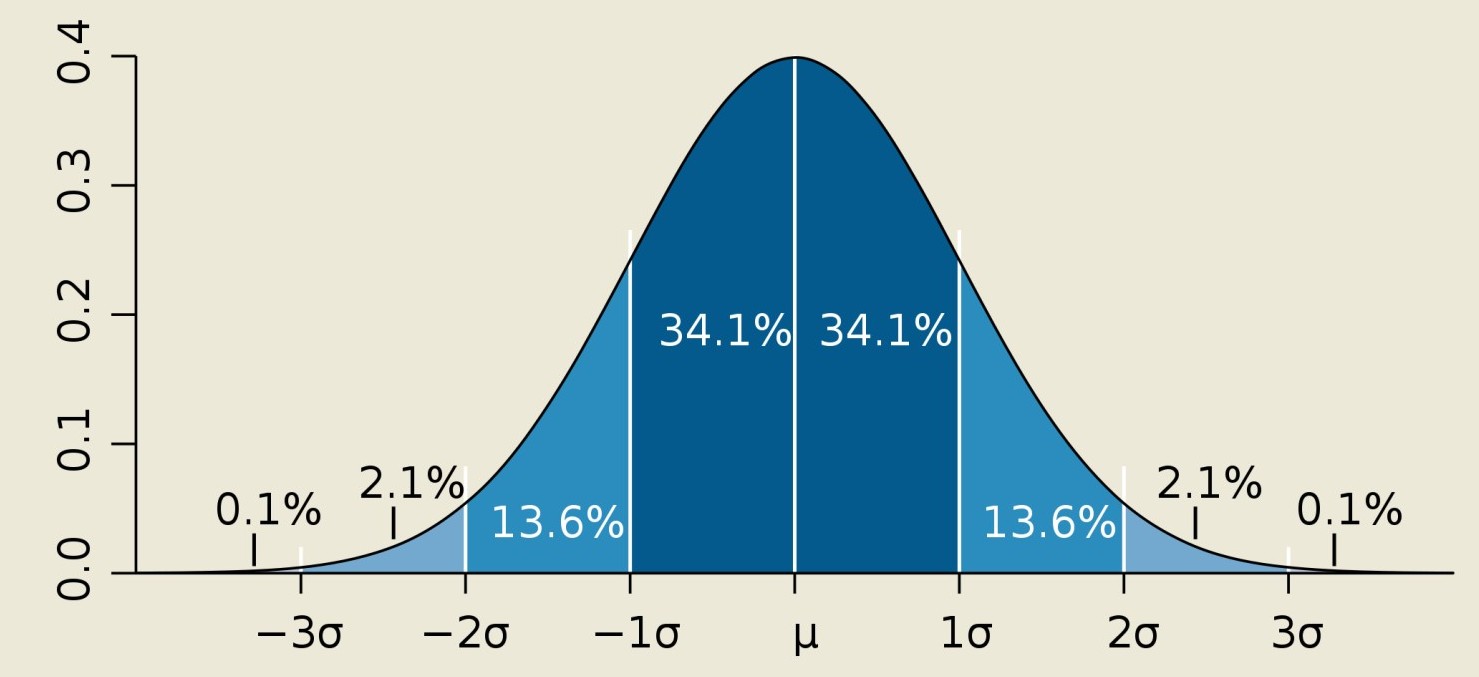
For example, we review how much a similar portfolio lost during 2008 or when the tech bubble popped in 2000-2002. When doing this, we are really talking about volatility rather than risk. Volatility – usually measured by standard deviation – reflects how much a portfolio is likely to increase or decrease in value when the market as a whole fluctuates. Risk, however, is quite different.

Two Threats

Josh Brown characterizes risk as the possibility of two threats:

  1. The possibility of not having enough money to fund a specific goal, which includes the possibility of outliving your money
  2. The possibility of a permanent loss of capital.

Example:

In a dramatic example of how volatility is different from risk, consider a retiree with a $10 million portfolio who only spends $50,000 a year. Next, assume the investor experiences a two-year period in which during the first year his portfolio loses 50% of its value and in year two the portfolio earns a 100% return. Thus, after year one the portfolio would only be worth $5 million and after year two it would again be worth $10 million.

Clearly, this is a very volatile portfolio that is subject to a wide range of potential performance outcomes. However, is this portfolio truly risky to the investor? According to Mr. Brown’s first factor, the portfolio is not risky because the investor will have enough money to fund his $50k per year retirement regardless of whether his portfolio is valued at $10 million or $5 million. Additionally, the portfolio is also not risky according to the second factor in that the investor didn’t experience a permanent loss.

Investors tend to view stocks as risky assets because their returns have a large standard deviation (variation from a mean). Similarly, we tend to view money market equivalents such as CDs and savings accounts as very safe investments because their returns have less dispersion, and consequently, are more predictable.

However, rather than considering stocks to be risky and cash equivalents to be safe, it would be more accurate to consider stocks an investment with high volatility and cash to be a holding with low volatility.

***

hacker

***

What is the difference?

Suppose it is determined that you need an average rate of return of 6% over time to achieve your retirement goals. Historically, over a sufficiently significant period of time, stocks have returned an average of about 10% per year while cash equivalents have returned about 3% per year. Consequently, if these averages continue in the future, you actually have a very low chance of reaching your retirement goal of not outliving your money if you place money in the “safe” investment of a cash equivalent, while you would actually have a high probability of reaching your retirement goal if you place money in a more volatile basket of stocks.

By this metric, cash is actually the more risky investment because investing in it would increase the probability of outliving your funds. Meanwhile a basket of stocks, if given enough time to achieve its historically average rate of return, is actually the safer investment as it gives you a higher probability of not outliving your nest egg.  Thus, while a portfolio of stocks will almost certainly experience more short-term volatility, over an extended period of time it very well may be a safer investment for ensuring your retirement goals are met.

Further, Mr. Brown proposes that the muddying of definition between risk and volatility is something a portion of the financial service industry has done on purpose. Brown suggests that the easiest way to sell someone a product is to first convince them they have a need. If hedge fund managers, insurance agents, and annuity salesmen can make consumers believe that volatility is equal to risk, and that since their products minimize volatility they must also minimize risk, they can achieve more sales.

However, even if an annuity can eliminate downside volatility, if it limits potential return to an amount that is insufficient to achieve the investor’s long-term goals, the investment is still more risky than an investment with more short-term volatility but a higher probability of long-term success.

***

Bell Curve

***

Assessment

Next time the market goes through a correction, remember that the drop in your portfolio’s value is a reflection of the potential volatility your portfolio is capable of experiencing. Yet, recall that as long as you don’t sell your assets and suffer a permanent loss of your investment capital, you can allow the market time to recover and achieve its historical rate of return.

Doing so will ultimately make your investment strategy less risky than utilizing investment options that experience less volatility because it maximizes the probability you will eventually achieve your long-term financial goals.

More:

Conclusion

Your thoughts and comments on this ME-P are appreciated. Feel free to review our top-left column, and top-right sidebar materials, links, URLs and related websites, too. Then, subscribe to the ME-P. It is fast, free and secure.

Speaker: If you need a moderator or speaker for an upcoming event, Dr. David E. Marcinko; MBA – Publisher-in-Chief of the Medical Executive-Post – is available for seminar or speaking engagements. Contact: MarcinkoAdvisors@msn.com

OUR OTHER PRINT BOOKS AND RELATED INFORMATION SOURCES:

Risk Management, Liability Insurance, and Asset Protection Strategies for Doctors and Advisors: Best Practices from Leading Consultants and Certified Medical Planners™8Comprehensive Financial Planning Strategies for Doctors and Advisors: Best Practices from Leading Consultants and Certified Medical Planners™

This book was crafted in response to the frustration felt by doctors who dealt with top financial, brokerage, and accounting firms. These non-fiduciary behemoths often prescribed costly wholesale solutions that were applicable to all, but customized for few, despite ever-changing needs. It is a must-read to learn why brokerage sales pitches or Internet resources will never replace the knowledge and deep advice of a physician-focused financial advisor, medical consultant, or collegial Certified Medical Planner™ financial professional.

Parin Khotari MBA [Whitman School of Management, Syracuse University, New York]

http://www.CertifiedMedicalPlanner.org

Enter the CMPs

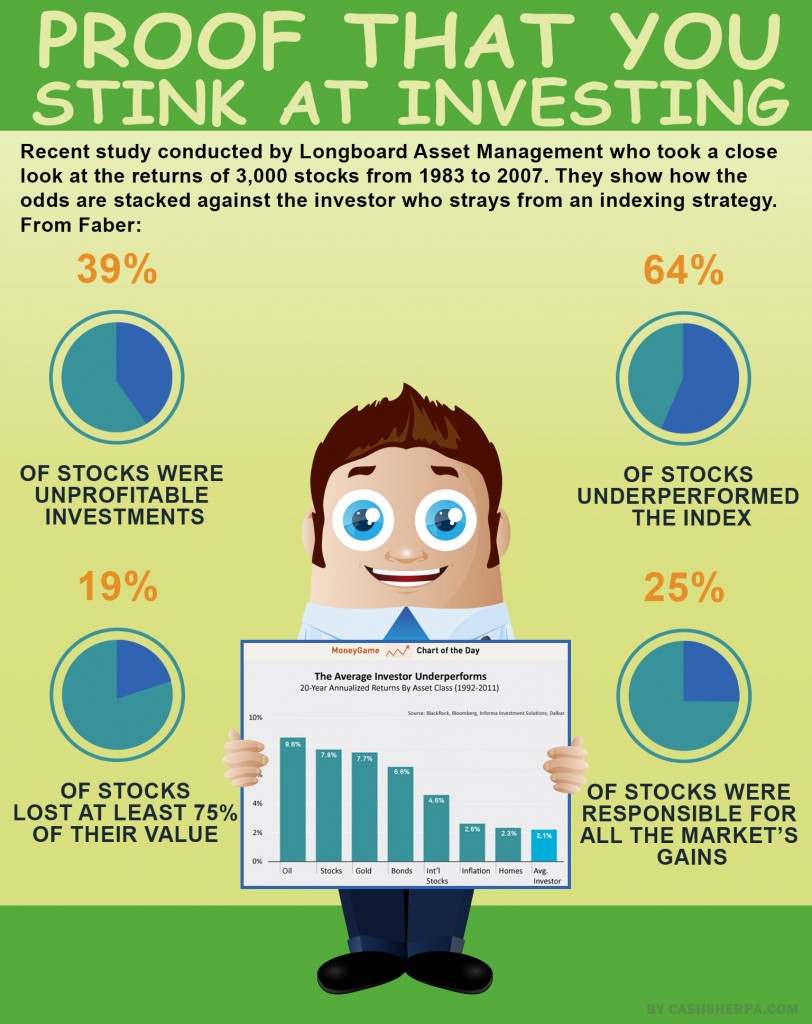
Are Doctors Bad Investors?

Join Our Mailing List

A Longboard Assessment Management Study for Lay Investors

###

stock_investing_cashsherpa-812x1024

Assessment

And so, are doctors and other medical professionals really bad investors?

More:

Conclusion

Your thoughts and comments on this ME-P are appreciated. Feel free to review our top-left column, and top-right sidebar materials, links, URLs and related websites, too. Then, subscribe to the ME-P. It is fast, free and secure.

Link: http://feeds.feedburner.com/HealthcareFinancialsthePostForcxos

Speaker: If you need a moderator or speaker for an upcoming event, Dr. David E. Marcinko; MBA – Publisher-in-Chief of the Medical Executive-Post – is available for seminar or speaking engagements. Contact: MarcinkoAdvisors@msn.com

OUR OTHER PRINT BOOKS AND RELATED INFORMATION SOURCES:

Health Dictionary Series: http://www.springerpub.com/Search/marcinko

Practice Management: http://www.springerpub.com/product/9780826105752

Physician Financial Planning: http://www.jbpub.com/catalog/0763745790

Medical Risk Management: http://www.jbpub.com/catalog/9780763733421

Hospitals: http://www.crcpress.com/product/isbn/9781439879900

Physician Advisors: www.CertifiedMedicalPlanner.org

Product Details  Product Details

Impact of Size on Mutual Fund Performance

Vital Information for Doctors to Consider

[By Dr. David Edward Marcinko; FACFAS, MBA, CMP™]

[By Professor Hope Rachel Hetico; RN, MHA, CMP™]dave-and-hope3

The actual size of a mutual or index fund, in terms of amount of assets, and the growth rate of a fund are the two aspects of size to consider. The impact of size on mutual fund performance varies—it can be negative, neutral, or positive. Size affects different types of funds differently; it also affects the manager’s ability to achieve objectives. Monitor size changes and make investment decisions accordingly.

Economies of Scale

A relatively large amount of assets available to a portfolio manager presents various economies. The costs at most funds (e.g., expense ratios) are reduced as a percentage of net asset value as the fund grows. Expense ratios can have a major impact on performance. In addition to being an effect of size, low fees can cause size changes. Funds do at times waive some fees to attract assets.

Asset Base

A larger asset base provides more liquidity to a fund. With more assets, the manager can buy more shares and more stocks. Transaction costs are reduced if higher trading volumes are achieved. A larger asset base also can reduce relative tax costs. Realized but undistributed capital gain can be spread over more shares at the time of year-end distribution. A larger asset base and manager success attracts higher-caliber managers to the management team.

fp-book20

Fund Growth

Growth of fund assets impairs certain funds more than others. Generally, bond funds are less affected by asset growth and size than equity funds. Growth may have a positive impact on bond funds because buying bonds of similar characteristics further diversifies credit, event, and other risks. Equity funds that invest in larger capitalization stocks can be less affected than funds buying less liquid small-cap stocks. (This is so because funds usually limit their investments in a single company, i.e., many funds will not buy more than 5% of a specific company. Five percent of a small company uses up less cash than 5% of a large company. Therefore, a small-cap fund is more likely to exhaust its choice of available companies sooner than a large-cap fund. A large-cap fund could increase its investment to a 5% level, whereas a small-cap fund may already be fully invested in the companies the manager likes to own.)

Growth Rate

The rate of growth can affect performance. Rapid growth may mean that a large portion of the portfolio remains un-invested. A rapidly growing growth-type equity fund with a high percentage of cash earns lower returns in a rising market than a fully invested fund. With rapid growth, the fund may not provide pure exposure to the desired asset class. At a certain point, however, fund asset growth impairs the manager’s ability to achieve objectives. For this reason, funds often close to new investors or to new investment once they have reached a certain size. Growth affects managers in many ways. Many fund managers or teams of managers direct a number of funds and possibly even private accounts. As the fund grows, managers are spread thin and may have difficulty in reacting quickly or efficiently to changing market conditions. Managers may need to hire assistant portfolio managers or delegate work to analysts or other employees. As a result, the manager manages people, administration, or internal quality control systems rather than studying companies or investment strategies. Also, a manager may become complacent in periods of rapid asset growth. Such growth can mean their own compensation is substantially greater, which may in turn change the manager’s motivation. Rapid growth often changes a fund because there are not enough opportunities to invest in the targeted securities. For example, a fund can change from aggressive to conservative, small cap to large cap. Managers may have to slow trading or increase liquidity in the portfolio to prevent this occurrence.

Meaningful Positions Difficult

Rapid growth or a large asset base can prevent managers from taking meaningful positions in market sectors they believe will outperform others. Smaller funds are more flexible and may take advantage of opportunities or liquidate unwanted positions faster than larger funds. A large fund that owns a significant position will negatively affect a security’s market price if it unloads shares all at one time. Rapid growth also impairs research of funds, affecting an investor’s choice of funds. A fund with outstanding performance over the past 5 years and a $150 million asset base may be much different when its base grows to $1 billion; at that point, it may no longer be the “right choice” for an investor.

insurance-book9Asset Declinations

Just as rapid asset growth affects performance, a rapid decline of fund assets also may impact performance. Significant quantities of redemptions over short periods force managers to liquidate security positions, often at the wrong time (i.e., they would rather be buying in a declining market than selling to accommodate redemptions). To prevent this scenario, some funds have redemption charges to discourage investors from such short-term decisions. Such environments can negatively impact bond funds as easily as equity funds. Large redemptions compound the effect of declining fund net asset values.

What a Doctor-Investor Can Do?

What can physician-investors do to avoid negative effects on investment? Avoid overloading a portfolio with hot, rapidly growing funds, if possible. Generally, size should be a neutral factor for most bond funds. Small and/or aggressive equity funds can be affected by growth, however. Emphasize funds that promise to close to new investors after assets reach a certain size. Once a fund becomes large, monitor it closely for problems caused by the growth. If there is a better, smaller fund, it may be wise to change. Also, closed-end funds are always a possibility. These funds have a major advantage in that their asset base is a factor of growth in security values, not new investment (unless the fund makes a secondary stock offering). Closed-end managers work with a finite portfolio, which reduces the problem of sudden asset growth.

Assessment

To the extent that a lack of SEC and FINRA over-sight, and the recent financial, insurance and banking meltdown has affected the above; such investing is left up to the doctor’s discretion and personal situation.  When it comes to the financial services product sales industry; always remember “caveat emptor” or “buyer-beware.”

Disclaimer: Both contributors are former licensed insurance agents and financial advisors.

Conclusion

Your thoughts and comments on this ME-P are appreciated. Feel free to review our top-left column, and top-right sidebar materials, links, URLs and related websites, too. Then, subscribe to the ME-P. It is fast, free and secure.

Link: http://feeds.feedburner.com/HealthcareFinancialsthePostForcxos

Speaker: If you need a moderator or speaker for an upcoming event, Dr. David E. Marcinko; MBA – Publisher-in-Chief of the Medical Executive-Post – is available for seminar or speaking engagements. Contact: MarcinkoAdvisors@msn.com

OUR OTHER PRINT BOOKS AND RELATED INFORMATION SOURCES:

DICTIONARIES: http://www.springerpub.com/Search/marcinko
PHYSICIANS: www.MedicalBusinessAdvisors.com
PRACTICES: www.BusinessofMedicalPractice.com
HOSPITALS: http://www.crcpress.com/product/isbn/9781466558731
CLINICS: http://www.crcpress.com/product/isbn/9781439879900
BLOG: www.MedicalExecutivePost.com
FINANCE: Financial Planning for Physicians and Advisors
INSURANCE: Risk Management and Insurance Strategies for Physicians and Advisors

Product Details  Product Details

Debt Consolidation for Physicians

Advantages and Disadvantages

By Staff Reportersfp-book5

The main advantage of debt consolidation is that it allows a doctor to make one payment instead of many, and this helps avoid late fees for missed payments. The doctor may save time by having to make only one payment per month instead of many.

Other Advantages

Another advantage is that debt consolidation promotes self-discipline by transferring credit card debt (and other lines of credit) that does not require mandatory principal payments into a fixed-term loan – with mandatory payments that include both principal and interest. This is a useful tool for doctors who may find it difficult to make more than the minimum payments on their loans because they spend too much. It should be obvious that budgeting should go hand-in-hand with this process, because if the doctor continues to spend at the former level, yet now has a mandatory payment, the result can be financially devastating.

A final advantage to debt consolidation is it may result in a lower overall interest rate. This is, of course, conditional on the lender providing the consolidation.

Disadvantages

One disadvantage of debt consolidation is that it can lock a doctor into mandatory payments. Depending on the situation, this can be either a blessing or a curse. It becomes a curse when the fixed payments are so high that he/she can no longer make the full debt payments each month. Depending on the lender, and the terms of the consolidation loan, this could result in the loan being called. The effects of this are obviously detrimental to the doctor.

Other Disadvantages

A second disadvantage is that the doctor loses flexibility when he or she takes on a fixed payment that is larger than the combination of all smaller minimum payments. The fixed-payment schedule becomes detrimental when h/she has an unexpected reduction in income. The doctor without a fixed-payment schedule can increase payments to many small individual loans, and if income reduction occurs, drop the payments back down to the lower level. Then; when normal levels of income return, the higher payments can be resumed.insurance-book2

Assessment

Making larger payments requires discipline; because a lack of same was likely causative of the debt in the first place.

Conclusion

Your thoughts and comments on this Medical Executive-Post are appreciated. Have you ever been in this situation? Feel free to opine anonymously.

Speaker: If you need a moderator or speaker for an upcoming event, Dr. David E. Marcinko; MBA – Publisher-in-Chief of the Executive-Post – is available for seminar or speaking engagements. Contact: MarcinkoAdvisors@msn.com  or Bio: www.stpub.com/pubs/authors/MARCINKO.htm

Get our Widget: Get this widget!

Our Other Print Books and Related Information Sources:

Practice Management: http://www.springerpub.com/prod.aspx?prod_id=23759

Physician Financial Planning: http://www.jbpub.com/catalog/0763745790

Medical Risk Management: http://www.jbpub.com/catalog/9780763733421

Healthcare Organizations: www.HealthcareFinancials.com

Health Administration Terms: www.HealthDictionarySeries.com

Physician Advisors: www.CertifiedMedicalPlanner.com

Get our Widget: Get this widget!

Subscribe Now: Did you like this Medical Executive-Post, or find it helpful, interesting and informative? Want to get the latest E-Ps delivered to your email box each morning? Just subscribe using the link below. You can unsubscribe at any time. Security is assured.

Link: http://feeds.feedburner.com/HealthcareFinancialsthePostForcxos

Physician Cash Maximization Rules

One Doctor- Advisor’s [How-To] Diatribe

[By Dr. David Edward Marcinko; MBA]

[Publisher-in-Chief] www.CertifiedMedicalPlanner.orgdr-david-marcinko4

For some doctors – even more than laymen – cash management is the pivotal issue in the financial planning process. Accumulation of investment assets cannot occur if cash inflows do not exceed cash outflows. On the other hand, accumulated assets are eventually spent to fund expenses during planned time periods when cash outflow exceeds inflow.

Inflation

Traditionally, financial advisors have opined that inflation has a dramatic impact on both ends of the cash management spectrum because inflation has a compounding effect. That compounding effect means that a mere ¼% change in planning assumptions about anticipated inflation can have more significant influence over long-term projected outcomes than a 5% change in the amount of a particular item of budgeted income or expense. Well, true enough if projected linearly using some Monte-Carlo type software simulation. But, in the real word, economists appreciate cost and efficiency improvements [email over snail mail] and the potential for substitution of goods [diesel fuel for gasoline – chicken for steak, etc].

fp-book2

Be More Like … my Dad

On the other hand, far too few of my fellow medical colleagues – and financial advisors – are like my dad. Not well educated by academic standards, but with common sense that seems a precious commodity, today.

Dave, he used to tell me – and still does at age 84:

“Invest your money for growth carefully – and take some risks – but don’t be too afraid of inflation.”

 Why not, dad?

“Because; if you’re not a conspicuous consumer, you’ll have less to worry about.”

Cash Management

Well, most of us are not like my dad; me included. But, his depression-mentality has never completely worn off. A doctor’s household can maximize the cash available for investing by setting up the account in this manner.

1. The first step is to open a checking account, money market account, and a brokerage account. The money market account is often included in a brokerage account.

2. The second step is to initiate electronic direct deposit of the paycheck into the money market account.

3. The third step is to determine the amount of cash reserve needed. As mentioned elsewhere on this ME-P, we are suggesting 3-5 years of cash-reserves on-hand, as an emergency fund for most medical professionals.

Once, when, and if, the amount of the reserve is determined and achieved, any extra money should be transferred to the brokerage account and invested according to personal goals, objectives and risk-tolerance. A small balance of a few thousand dollars can be kept in the checking account to prevent overdrafts. Beyond the few thousand dollars, the checking account should serve as a pass-through account where money is transferred from the money market account to cover checks written for the budgeted expenses.

Example of Managing Cash Reserve Amountsbiz-book1

A physician client recently asked me to help him increase his savings. He explained that he had a very detailed realistic budget, but had a hard time staying within the budget when cash was available; as he lectured occasionally and was fortunate to have a few extra dollars every now and then.

Recommendations

As a financial planner, and the founder of an online educational-certification program for physician focused advisors, I recommend that he set up his checking, money market and investment accounts and have his medical practice directly deposit his paycheck in the money market account. He then was to transfer only enough money to his checking account each month, to cover his very carefully budgeted and spread-sheet driven expenses. Furthermore, his money market account was to be equal to our predetermined cash reserve needs, with any excess cash transferred to his investment account and according to his financial and investing plan.

Assessment

Of course, his carefully constructed budget included no cash reserves or emergency fund!  He forgot to budget cash! And so; the usual conundrum ensued.

Conclusion

Your thoughts and comments on this ME-P are appreciated. Feel free to review our top-left column, and top-right sidebar materials, links, URLs and related websites, too. Then, subscribe to the ME-P. It is fast, free and secure.

Link: http://feeds.feedburner.com/HealthcareFinancialsthePostForcxos

Speaker: If you need a moderator or speaker for an upcoming event, Dr. David E. Marcinko; MBA – Publisher-in-Chief of the Medical Executive-Post – is available for seminar or speaking engagements. Contact: MarcinkoAdvisors@msn.com

OUR OTHER PRINT BOOKS AND RELATED INFORMATION SOURCES:

LEXICONS: http://www.springerpub.com/Search/marcinko
PHYSICIANS: www.MedicalBusinessAdvisors.com
PRACTICES: www.BusinessofMedicalPractice.com
HOSPITALS: http://www.crcpress.com/product/isbn/9781466558731
CLINICS: http://www.crcpress.com/product/isbn/9781439879900
ADVISORS: www.CertifiedMedicalPlanner.org
BLOG: www.MedicalExecutivePost.com

Product Details  Product Details

Comprehensive Financial Planning Strategies for Doctors and Advisors: Best Practices from Leading Consultants and Certified Medical Planners™

On Emergency Funds for Physicians

dr-david-marcinko3Cash Reserves Now More Important Than Ever!

By Dr. David Edward Marcinko; MBA, CMP™

[Publisher-in-Chief]

CEO: www.MedicalBusinessAdvisors.com

This is a basic question in financial planning circles that has generated much activity in the medical community, of late. Previously considered so mundane – as to be dismissed by some haughty physicians – it has acquired increased urgency with the current financial meltdown.

What Security Level Desired?

Yet, the answer to this question is dependent upon the security level desired by the medical provider and his/her family. Traditionally, financial planners suggested most people with solid employment, and transferrable skills, have at least three months of living expenses (not including taxes) in a reserve fund that is easily accessible (i.e., liquid). The amount needed for a one-month reserve is equal to the amount of expenses for the month, rather than the amount of monthly income. This is because during no-income months – there is no income tax.

The Usual Checklist

We suggest the following questions as helpful in determining the amount of reserve needed by medical professionals:

1. How many incomes do you have in your household?

2. How secure is your current practice, or medical job?

3. Do you have other unrelated sources of income; medically or non-medically related?

4. How long would it take you to find another position in your specialty, if suddenly unemployed? [Hint: Assume one month per ten grand of income; at $150-k annually, this means searching for 15 months].

5. How much money do you spend, and save, each month?

6. Would you be willing [able] to lower your monthly [fixed or variable] expenses, if you were unemployed?

Many Factors to Considerinsurance-book1

But, many other factors come into play when determining how much money a particular physician and his/her family should have on hand. Does the family have one income or two? How stable is this income source? Does the doctor work for himself [managing partner], or is she employed [minority partner, associate, etc]? What kind of firm, company or hospital employs him; private, HMO, MCO, Federal or State entity? Does the family use all of the income each month? What about, life, health, disability or LTC insurance as fringe benefits? Does the family anticipate the possibility of large liability exposures and expenses occurring in the future (i.e., medical school or practice start-up debt, private tuition for the kids, medical expenses, liability suits etc.)? Are you willing to relocate for a new job?

Family Situation Appraisal

If the doctor is in a dual-income family – with stable incomes – and/or lives on a single income – the need for a liquid reserve is minimal; but still much more than for the average layman. On the other hand, if the doctor is a single individual, with an unstable income and she spends everything each month, the need for a liquid cash reserve is higher.

In the previous example, and in the stable past, the doctor may have opted for a six-to-nine month reserve if the need for security was high; and a three-to-six month reserve if the need for security was low. For the last five to seven years however, we have suggested to our medical clients that they expand this reserve cash corpus to 12-24 months; and as a blanket rule of thumb for all medical professionals. Of course, I was roundly criticized for it; until now.

Today, we are suggesting 3-5 years; with considerably less criticism. Cash is power, choice, swagger, potency, freedom and represents options. Acquire it!

Stashing the Cash

Once the amount of reserve is determined, the doctor should consider the appropriate investment vehicles for the reserve fund. At minimum, the reserve should be invested in a money market mutual fund with NAV @ 1.00 USD. Larger income earners may opt for tax-exempt money market mutual funds, as needed.  For larger reserves, an ultra-short term, no-low bond fund, might be appropriate for amounts over three months – in periods of deflation; not so during inflationary periods.

Assessment

Today, we recommend doctors keep 3-5 years of cash-on-hand. Yes, I am aware of the “paradox-of-thrift” conundrum. But, do you want to help the domestic GDP, or your family; you decide? Personally, my own concern is not the macro-economic milieu.

Full disclosure: I am a former insurance agent, registered investment advisor; board certified surgeon and Certified Financial Planner™

Conclusion

And so, your thoughts and comments on this Medical Executive-Post are appreciated. How stressed out are you, right now? You are sleepless if previously considered cash, as trash.

But, if sitting on a little pile; you should be sleeping like a baby.    

Link: http://feeds.feedburner.com/HealthcareFinancialsthePostForcxos

Speaker: If you need a moderator or speaker for an upcoming event, Dr. David E. Marcinko; MBA – Publisher-in-Chief of the Medical Executive-Post – is available for seminar or speaking engagements. Contact: MarcinkoAdvisors@msn.com

OUR OTHER PRINT BOOKS AND RELATED INFORMATION SOURCES:

LEXICONS: http://www.springerpub.com/Search/marcinko
PHYSICIANS: www.MedicalBusinessAdvisors.com
PRACTICES: www.BusinessofMedicalPractice.com
HOSPITALS: http://www.crcpress.com/product/isbn/9781466558731
CLINICS: http://www.crcpress.com/product/isbn/9781439879900
ADVISORS: www.CertifiedMedicalPlanner.org
BLOG: www.MedicalExecutivePost.com

***

Comprehensive Financial Planning Strategies for Doctors and Advisors: Best Practices from Leading Consultants and Certified Medical Planners(TM) 

Front Matter with Foreword by Jason Dyken MD MBA

logos

“BY DOCTORS – FOR DOCTORS – PEER REVIEWED – FIDUCIARY FOCUSED”

***