BOARD CERTIFICATION EXAM STUDY GUIDES Lower Extremity Trauma
[Click on Image to Enlarge]
ME-P Free Advertising Consultation
The “Medical Executive-Post” is about connecting doctors, health care executives and modern consulting advisors. It’s about free-enterprise, business, practice, policy, personal financial planning and wealth building capitalism. We have an attitude that’s independent, outspoken, intelligent and so Next-Gen; often edgy, usually controversial. And, our consultants “got fly”, just like U. Read it! Write it! Post it! “Medical Executive-Post”. Call or email us for your FREE advertising and sales consultation TODAY [678.779.8597] Email: MarcinkoAdvisors@outlook.com
Medical & Surgical e-Consent Forms
ePodiatryConsentForms.com
iMBA Inc., OFFICES
Suite #5901 Wilbanks Drive, Norcross, Georgia, 30092 USA [1.678.779.8597]. Our location is real and we are now virtually enabled to assist new long distance clients and out-of-town colleagues.
ME-P Publishing
SEEKING INDUSTRY INFO PARTNERS?
If you want the opportunity to work with leading health care industry insiders, innovators and watchers, the “ME-P” may be right for you? We are unbiased and operate at the nexus of theoretical and applied R&D. Collaborate with us and you’ll put your brand in front of a smart & tightly focused demographic; one at the forefront of our emerging healthcare free marketplace of informed and professional “movers and shakers.” Our Ad Rate Card is available upon request [678-779-8597].
Posted on November 3, 2023 by Dr. David Edward Marcinko MBA MEd CMP™
By Staff Reporters
***
***
Even though the Federal Reserve announced its interest rate decision yesterday, Jerome Powell wasn’t the government official investors were most anxious to hear from.
Instead, he was upstaged by Treasury Secretary Janet Yellen, who gave an update on the size of upcoming bond auctions. Although many were concerned about the US selling new debt into a market where interest rates are high and demand for bonds has flagged (pushing yields way up), the market liked what she had to say.
Yellenexplained that the government would focus on shorter-term notes rather than longer-term ones, which prompted a rally for 10 and 30 year bonds.
Posted on October 17, 2023 by Dr. David Edward Marcinko MBA MEd CMP™
By Staff Reporters
***
***
Neuberger Berman is submitting a shareholder proposal to Lions Gate Entertainment Corp., advocating for an end to the dual-class voting structure at the company ahead of a spinoff of its studio business.
The investment manager owns 0.02% of the company’s class A shares and 4.4% of the non-voting class B shares, according to a statement and Bloomberg calculations. Neuberger Berman, which has been a shareholder since 2016, submitted a proposal after having sent a letter to Lions Gate’s board last month.
Neuberger Berman said “one share, one vote” is a foundational principle of corporate governance and that dual-class structures are inconsistent with market practice with a 7% adoption among S&P 500 companies. It also said the structure may impair value and increase risk as it complicates capital structure and gives certain shareholder outsized influence.
***
Treasury Secretary Janet Yellen said higher interest rates may persist, while insisting the US economy is “in a good place.” The interest on US debt, which stands at 98% of economic output, “remains manageable,” Yellen said on Monday in an interview with Sky News. “Higher interest rates may persist although that’s not clear,” she said. “Our fiscal situation is by no means unsolvable. We have to be attentive to it.”
LinkedIn said Monday it is laying off hundreds of employees amounting to about 3% of the social media company’s workforce. The Microsoft-owned career network is cutting about 668 roles across its engineering, product, talent and finance teams. “Talent changes are a difficult, but necessary and regular part of managing our business,” the company said in a statement.
***
Here is where the major benchmarks ended:
The S&P 500 Index was up 45.85 points (1.1%) at 4,373.63; the Dow Jones Industrial Average was up 314.25 points (0.9%) at 33,984.54; the NASDAQ Composite (COMP) was up 160.75 points (1.2%) at 13,567.98.
The 10-year Treasury note yield (TNX) was up about 8 basis points at 4.71%.
CBOE’s Volatility Index (VIX) was down 2.06 at 17.26.
All 11 S&P 500 sectors posted gains in Monday’s broad-based upswing, led by the S&P Retail Select Industry Index (SPSIRE), which surged 2.7%.
Regional banks and transportation shares were also among the strongest performers. Energy stocks held firm even as WTI crude oil futures slipped over 1%.
MCLEAN, Virginia (Reuters) – U.S. Treasury Secretary Janet Yellen on Wednesday voiced more objections to Fitch Ratings’ downgrade of the main U.S. credit rating, calling it “entirely unwarranted” because it ignored improvements in governance metrics during the Biden administration and the country’s economic strength.
The S&P 500 Index was down 63.34 points (1.4%) at 4,513.39; the Dow Jones Industrial Average (DJIA) fell 348.16 points (1.0%) to 35,282.52; the NASDAQ Composite dropped 310.47 points (2.2%) at 13,973.45.
The 10-year Treasury note yield (TNX) rose about 3 basis points to 4.073%.
CBOE’ss Volatility Index (VIX) was up 2.2 at 16.13.
Consumer discretionary and energy shares were also weaker, with the latter pressured by a more-than 2% drop in crude oil futures.
The U.S. dollar index (DXY) strengthened for a fifth straight day and touched a four-week high, as investors shed riskier assets in favor of what are considered safe havens. Volatility based on the VIX hit its highest level since late May.
Posted on June 8, 2023 by Dr. David Edward Marcinko MBA MEd CMP™
By Staff Reporters
***
***
Turkey’s lira plunged 7% to a record low yesterday in its biggest selloff since a historic 2021 crash, a move traders said is a “strong signal” that Ankara is moving away from state controls toward a freely traded currency. The currency has come under increasing pressure since President Tayyip Erdogan was re-elected on May 28. It was trading at 23.18 against the dollar at 1500 GMT, after touching a record low of 23.19, bringing its losses this year to around 20%.
***
Treasury Secretary Janet Yellen, in her first interview since the U.S. debt-ceiling was lifted last week by Congress, warned on Wednesday about the potential for banks to feel strain from their exposure to weakening commercial real estate valuations. Yellen was asked by CNBC “Squawk Box” host Andrew Ross Sorkin about if she’s worried about the state of estimated $20.7 trillion commercial real-estate market, particularly the office, and if weakness in the sector could potentially spark more bank failures.
“Well, I do think that there will be issues with respect to commercial real estate,” Yellen said. “Certainly, the demand for office space since we’ve seen such a big change in attitudes and behavior toward remote work has changed and especially in an environment of higher interest rates.”
***
The equities market diverged today between a small handful of strong-performing mega-cap companies, which delivered most of the gains recently in the big benchmark indexes, and the lagging majority. Such concentration suggests a weakness below the headline numbers that could become a problem down the line.
Here is where the major benchmarks ended today:
The S&P 500® Index (SPX) was down 16.33 points (0.4%) at 4267.52; the Dow Jones Industrial Average (DJIA) was up 91.74 (0.3%) at 33,665.02; the NASDAQ Composite (COMPX) was down 171.52 (1.3%) at 13,104.90.
The 10-year Treasury note yield (TNX) was up about 9 basis points at 3.791%.
CBOEs Volatility Index (VIX) was down 0.04 at 13.92.
Smaller financial companies were also in the spotlight again, with the KBW Regional Banking Index (KRX) continuing its rebound with a nearly 4% jump. Energy stocks were also strong as crude oil futures climbed more than 1%, and transportation companies also gained. Communication Services led decliners among S&P 500 sectors.
Posted on May 20, 2023 by Dr. David Edward Marcinko MBA MEd CMP™
By Staff Reporters
***
***
Regional bank stocks slid again on Friday on fears that more banks might fail or need intervention from the government. The KBW Regional Bank index fell by nearly 3% from rumors that Treasury Secretary Janet Yellen said additional bank consolidations might need to occur, according to a CNN report.
***
Yesterday, stocks turn south after Republicans walked out on debt ceiling talks, but the S&P 500 and NASDAQ are still higher for the week. In summary:
The Dow Jones Industrial Average fell 109.28 points, or 0.3%, to close at 33,426.63.
The S&P 500 fell 6.1 points, or 0.1%, to finish at 4,191.98.
The NASDAQ Composite dropped 30.94 points, or 0.2%, to end at 12,657.90.
All three major indexes booked weekly gains, with the Dow rising 0.4% to snap two straight weeks of losses. The S&P 500 saw a 1.6% gain for the week, also snapping back-to-back weekly losses; the NASDAQ rose 3% in a fourth straight week of gains for its longest winning streak since the week ending Feb. 3rd, according to Dow Jones Market Data.
Posted on May 7, 2023 by Dr. David Edward Marcinko MBA MEd CMP™
By Staff Reporters
***
***
Treasury Secretary Janet Yellen warned this week that the government could run out of cash to cover its expenses as early as June 1st. Congress can avert the looming economic catastrophe by authorizing more government borrowing so the US can keep paying its bills and avoid an unprecedented default on its financial obligations.
But with the deadline just weeks away, lawmakers are locked in a game of chicken.
Republicans in Congress say they won’t increase the debt limit without budget cuts. Last month, the GOP-controlled House passed a bill that would lift the borrowing cap and slash government spending by around $3.2 trillion over 10 years.
But that bill is DOA in the Democrat-led Senate. Democrats insist the debt limit should be raised with no strings attached.
If the US does run out of money…look out. The Treasury would have a range of extremely bad to absolutely terrible belt-tightening options, including delaying payments to federal contractors and Social Security recipients, all to avoid falling behind on interest payments for Treasury bonds.
Posted on May 2, 2023 by Dr. David Edward Marcinko MBA MEd CMP™
By Staff Reporters
***
***
Treasury Secretary Janet Yellen warned yesterday that the US could run out of money to pay all its bills as early as June 1st if Congress does not raise or suspend the debt limit before then. The US’ first-ever default would be disastrous for financial markets, economists say.
***
Meanwhile, Europe’s painful inflation has inched higher, extending the squeeze on households and keeping pressure on the European Central Bank to unleash what could be another large interest rate increase. Consumer prices in the 20 countries using the euro currency jumped 7% in April from a year earlier, just up from the annual rate of 6.9% in March, the European Union statistics agency Eurostat said today. Food price inflation eased a little, falling to an annual rate of 13.6% from March’s 15.5%, while energy prices rose a more modest 2.5%. Core inflation, which excludes volatile food and fuel, slowed slightly but was still high at 5.6%, underlining the expectation that the ECB will press ahead with its campaign to beat inflation into submission with rate hikes.
Posted on January 21, 2023 by Dr. David Edward Marcinko MBA MEd CMP™
By Staff Reporters
***
***
As the US just crashed into the $31.4 trillion debt ceiling as the Treasury Department began taking what it called “extraordinary measures” to prevent the government from defaulting on its debts and sparking an economic crisis.
These measures are a series of deep-cut accounting moves that allow the Treasury to continue making its payments. They include:
Suspending reinvestments into government funds for retired federal employees, such as the Civil Service Retirement and Disability Fund.
Selling existing investments in those funds to free up more outstanding debt.
And while these measures definitely aren’t ordinary…they probably aren’t so “extra,” either. The Treasury has resorted to them more than 12 times since 1985, including during the last debt-ceiling standoff in 2021.
Still, these steps amount to chugging water after eating a ghost pepper—the pain will return. Treasury Secretary Janet Yellen said her extraordinary measures will last through early June, giving lawmakers about five months to work out a deal to raise the debt ceiling.
NOTE: The US has never defaulted on its debt, but even the threat of it could be disastrous. The country’s first credit downgrade in history came during a debt-ceiling showdown in 2011.
Posted on October 23, 2022 by Dr. David Edward Marcinko MBA MEd CMP™
By Staff Reporters
***
***
For months, traders, academics, and other analysts have fretted that the $23.7 trillion Treasury market might be the source of the next financial crisis. Then last week, U.S. Treasury Secretary Janet Yellen acknowledged concerns about a potential breakdown in the trading of government debt and expressed worry about “a loss of adequate liquidity in the market.” Now, strategists at BofA Securities have identified a list of reasons why U.S. government bonds are exposed to the risk of “large scale forced selling or an external surprise” at a time when the bond market is in need of a reliable group of big buyers.
“We believe the UST market is fragile and potentially one shock away from functioning challenges” arising from either “large scale forced selling or an external surprise,” said BofA strategists Mark Cabana, Ralph Axel and Adarsh Sinha. “A UST breakdown is not our base case, but it is a building tail risk.”
Posted on July 29, 2022 by Dr. David Edward Marcinko MBA MEd CMP™
By Staff Reporters
***
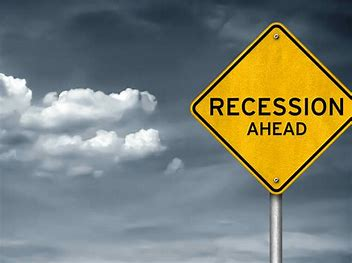
DEFINITION: For its official definition, the NBER considers a recession a “significant decline” in economic activity. Not only that—the decline must be deep, broad, and last for more than a few months. When deciding whether the economy is in a recession, the NBER looks to a variety of indicators (not just GDP) to understand the health of the economy, such as job growth, consumer spending, and industrial production. It’s not a simple or transparent formula.
Top economists don’t believe a downturn has begun but some predict a mild recession is likely by early next year. For example, residential investment plunged last quarter as the housing market slumped amid sharply rising mortgage rates while business stockpiling and investment also declined, more than offsetting a modest advance in consumer spending. Furthermore, the nation’s gross domestic product, the value of all goods and services produced in the U.S., shrank at a seasonally adjusted annual rate of 0.9% in the April-June period, according to the Commerce Department. That followed a 1.6% drop early this year. Economists surveyed by Bloomberg had forecast a 0.5% rise in GDP.
In fact, Treasury Secretary Janet Yellen also said the US economy is seeing an economic slowdown — something vital to bringing down inflation — but isn’t currently in a recession. “We do see a significant slowdown in growth,” Yellen said at a press conference. But a true recession is a “broad-based weakening of the economy,” she said. “That is not what we’re seeing right now.” The country currently is seeing job creation, strong household finances, gains in consumer spending and growth in business, Yellen said. Employment climbed by 1.1 million jobs in the second quarter, a sharp contrast with the average loss of 240,000 in the first three months of past recessions. The Treasury chief was speaking hours after data showed the US economy shrank for a second straight quarter, as higher interest rates slowed business investment and housing demand.
ON THE OTHER HAND: Yesterday was an amazing day for the stock market — especially for growth stocks. The Fed sparked a massive rally across all asset classes. It strongly implied it’ll slow the pace of rate hikes in the coming months. And it may even turn to rate cuts by the end of the year.
Posted on January 2, 2016 by Dr. David Edward Marcinko MBA MEd CMP™
A HISTORICAL CHAIR REVIEW
ByArthur Chalekian GEPC
[Elite Financial Partners]
***
AN AGE OLD AMERICAN PASTIME
Americans have been speculating about the Federal Reserve’s monetary policy choices – rate hikes, rate declines, quantitative easing, etc. – for a long time. It’s clear when you take a look at a few modern Fed Chairs and the Fed’s activities under their leadership.
Paul Volcker (1979-1987) took over an economic quagmire known as The Great Inflation. In the early 1980s, U.S. inflation was 14 percent and unemployment reached 9.7 percent. Volcker unexpectedly raised the Fed funds rate by 4 percent in a single month, following a secret and unscheduled Federal Open Market Committee meeting. His policies initially sent the country into recession. The St. Louis Fed reported “Wanted” posters targeted Volcker for “killing” so many small businesses. By the mid-1980s, employment and inflation reached targeted levels.
Alan Greenspan (1987-2006) was in charge through two U.S. recessions, the Asian financial crisis, and the September 11 terrorist attacks. Regardless, he oversaw the country’s longest peacetime expansion. In the late 1990s, when financial markets were bubbly, critics suggested, “…Mr. Greenspan’s monetary policies spawned an era of booms and busts, culminating in the 2008 financial crisis.”
Ben Bernanke (2006-2014) took the helm of the Fed just before the financial crisis and Great Recession. When economic growth collapsed in 2007, the Fed lowered rates and adopted unconventional monetary policy (quantitative easing) in an effort to stimulate economic growth. In 2012, economist Paul Krugman called Bernanke out in The New York Times, “…the fact is that the Fed isn’t doing the job many economists expected it to do, and a result is mass suffering for American workers.”
Janet Yellen (2014-present) is the current Chairwoman of the Fed. Under Yellen’s leadership, after providing abundant guidance, the Fed raised rates for the first time in seven years. The International Business Times reported several prominent economists think the increase was premature, in part, because there are few signs of inflation in the U.S. economy.
Assessment
In many cases, it’s difficult to gauge the achievements and/or failures of a leader – Fed Chairperson, President, Congressman, or Congresswoman – until the economic or political dust settles. Sometimes, that’s long after they’ve left office.
Conclusion
Your thoughts and comments on this ME-P are appreciated. Feel free to review our top-left column, and top-right sidebar materials, links, URLs and related websites, too. Then, subscribe to the ME-P. It is fast, free and secure.
Speaker: If you need a moderator or speaker for an upcoming event, Dr. David E. Marcinko; MBA – Publisher-in-Chief of the Medical Executive-Post – is available for seminar or speaking engagements. Contact: MarcinkoAdvisors@msn.com
OUR OTHER PRINT BOOKS AND RELATED INFORMATION SOURCES:







 Support our online development, and advance our onground research initiatives in free market economics, as we seek to showcase the brightest Next-Gen minds.
THE ME-P DISCLAIMER: Posts, comments and opinions do not necessarily represent iMBA, Inc., but become our property after submission. Copyright © 2006 to-date. iMBA, Inc allows colleges, universities, medical and financial professionals and related clinics, hospitals and non-profit healthcare organizations to distribute our proprietary essays, photos, videos, audios and other documents; etc. However, please review copyright and usage information for each individual asset before submission to us, and/or placement on your publication or web site. Attestation references, citations and/or back-links are required. All other assets are property of the individual copyright holder.
Support our online development, and advance our onground research initiatives in free market economics, as we seek to showcase the brightest Next-Gen minds.
THE ME-P DISCLAIMER: Posts, comments and opinions do not necessarily represent iMBA, Inc., but become our property after submission. Copyright © 2006 to-date. iMBA, Inc allows colleges, universities, medical and financial professionals and related clinics, hospitals and non-profit healthcare organizations to distribute our proprietary essays, photos, videos, audios and other documents; etc. However, please review copyright and usage information for each individual asset before submission to us, and/or placement on your publication or web site. Attestation references, citations and/or back-links are required. All other assets are property of the individual copyright holder.













 The Leading Business Education Network for Doctors, Financial Advisors and Health Industry Consultants