DAILY UPDATE: Medicare A.I. as Markets Go Down

MEDICAL EXECUTIVE-POST TODAY’S NEWSLETTER BRIEFING

***

Essays, Opinions and Curated News in Health Economics, Investing, Business, Management and Financial Planning for Physician Entrepreneurs and their Savvy Advisors and Consultants

Serving Almost One Million Doctors, Financial Advisors and Medical Management Consultants Daily

A Partner of the Institute of Medical Business Advisors , Inc.

http://www.MedicalBusinessAdvisors.com

SPONSORED BY: Marcinko & Associates, Inc.

***

http://www.MarcinkoAssociates.com

Daily Update Provided By Staff Reporters Since 2007.
How May We Serve You?
© Copyright Institute of Medical Business Advisors, Inc. All rights reserved. 2025

REFER A COLLEAGUE: MarcinkoAdvisors@outlook.com

SPONSORSHIPS AVAILABLE: https://medicalexecutivepost.com/sponsors/

ADVERTISE ON THE ME-P: https://tinyurl.com/ytb5955z

Your Referral Count -0-

CITE: https://www.r2library.com/Resource

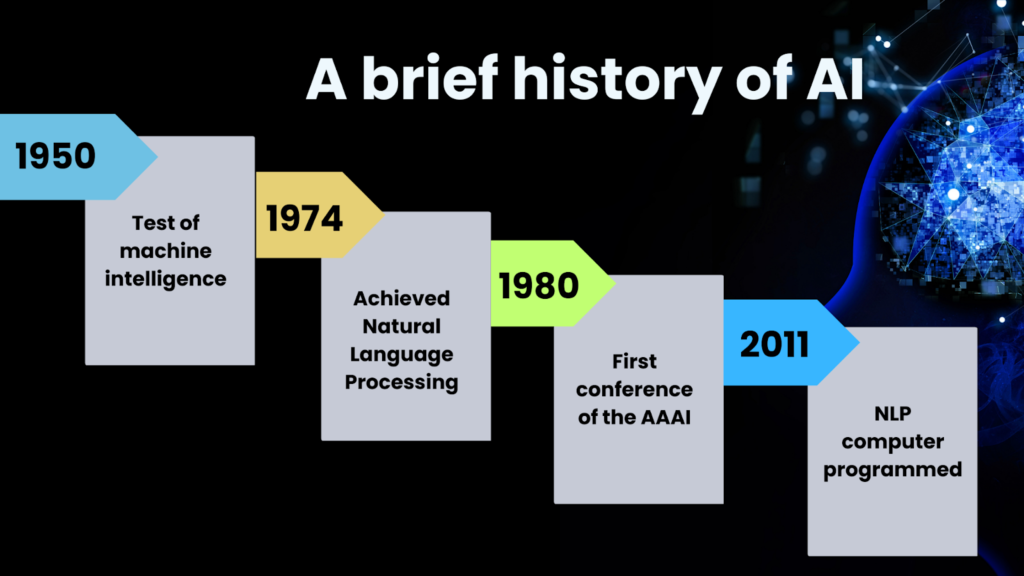
Medicare may soon be able to reimburse physicians for using artificial intelligence-based medical devices, thanks to a bipartisan bill recently introduced to Congress. The bill, called the Health Tech Investment Act, would set up a payment system for devices that use AI or machine learning, which the bill’s cosponsors say would encourage providers to use the technology in clinical settings and help improve diagnoses.

CITE: https://tinyurl.com/2h47urt5

Stock markets were down in trading on Friday after President Donald Trump said he wanted to impose a 50-percent tariff on the European Union and a new 25-percent tariff on iPhone maker Apple.

The S&P 500 was down around 0.8 percent, the NASDAQ Composite down 1.0 percent, and the Dow Jones Industrial Average of 0.6 percent.

Apple stock fell 2.3 percent.

CITE: https://tinyurl.com/tj8smmes

Visualize: How private equity tangled banks in a web of debt, from the Financial Times.

COMMENTS APPRECIATED

PLEASE SUBSCRIBE: MarcinkoAdvisors@outlook.com

Thank You

***

***

***

***

EDUCATIONAL TEXTBOOKS: https://tinyurl.com/4zdxuuwf

***

STOCK MARKET: Panic Buying Apple A18 Processor iPhones

By Staff Reporters

***

***

Just after midnight, President Trump’s “reciprocal” tariffs went into effect against 86 countries. Analysts have estimated that the new US average effective tariff rate is north of 20%, the highest in more than 100 years. Ahead of the tariff deadline, markets swung violently, mostly way down: According to Bloomberg’s Cameron Crise, yesterday was the fourth straight trading day when the S&P 500’s trading range was 5% or more. That’s only happened in 1987, 2008, and 2020.

***

***

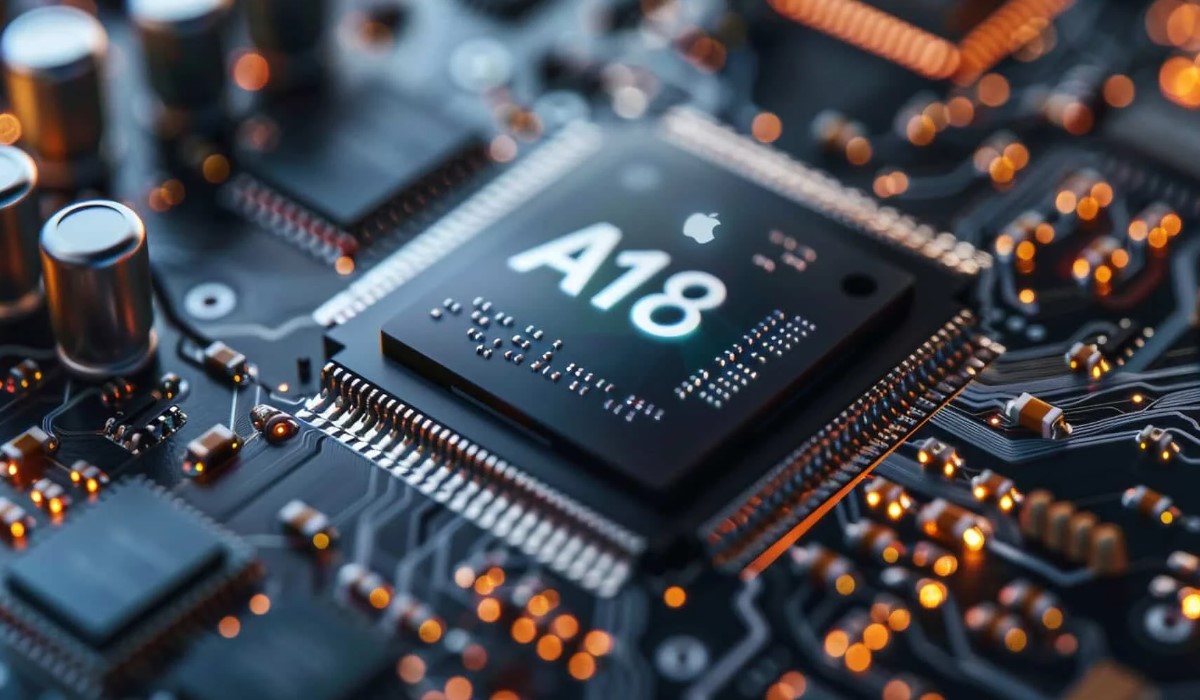
The Apple A18 and Apple A18 Pro are a pair of 64-bit ARM-based system on a chip (SoC) designed by Apple Inc., part of the Apple silicon series. They are used in the iPhone 16 and iPhone 16 Pro lineups and the iPhone 16e, and built on a second generation 3 nm process by TSMC.

***

Yesterday, for several hours on Tuesday, it looked like stocks were going to regain some of the ground lost during the market’s very bad week. But after the Trump administration made it clear that its increased tariffs on China would go into effect, all three indexes plunged. Apple, which makes most of its iPhones in China, was hit harder than many of its Big Tech peers.

So shoppers are thinking it’s better to have an Apple A18 processor and not need it, than to need it and not have it. Apple customers are scrambling to buy new iPhones out of fear that the company could raise prices to offset President Trump’s tariffs.

Employees at locations throughout the US said they’re being bombarded with questions about potential price hikes and have witnessed customers panic-buying phones. Though Apple declined to comment to Bloomberg, its retail stores reportedly saw higher sales over the last weekend than in previous years.

COMMENTS APPRECIATED

Like and Subscribe

***

***

ARTIFICIAL INTELLIGENCE: Big Technology Stocks

By Staff Reporters

***

***

After its AI-related earnings disappointed Wall Street last quarter, Big Tech doubled down in the latest period:

  • Amazon spent $22.6 billion on property and equipment like data centers and chips. That’s an 81% spike from the same time last year.
  • Meta raised its low-end guidance for capex (capital expenditures), which could reach $40 billion by the end of the year. It beat earnings estimates, even with AR glasses subsidiary Reality Labs costing $4.4 billion in operating losses.
  • Apple is still betting on Apple Intelligence to boost sales. Most revenue came from the new iPhone 16, Apple Watch, and AirPods, but Apple services like TV+ and iCloud also grew massively to account for a quarter of the business.
  • Google crushed earnings estimates and revealed that more than 25% of all new code it writes is generated by AI (and reviewed by engineers).

CITE: https://www.r2library.com/Resource/Title/0826102549

COMMENTS APPRECIATED

Subscribe Today!

***

***

DAILY UPDATE: Stocks Rise Amid Apple Hype

By Staff Reporters

***

***

  • Markets: Investors are still in the Upside Down, where bad economic news is good news (and vice versa) thanks to the Fed, so stocks rose yesterday as the market digested data showing the labor market is cooling and there are fewer open jobs. Apple’s hype machine sent its stock climbing as excitement builds for its upcoming iPhone event.

***

Here is where the major benchmarks ended:

  • The S&P 500 Index was up 17.24 points (0.4%) at 4,514.87; the Dow Jones Industrial Average (DJIA) was up 37.57 points (0.1%) at 34,890.24; the NASDAQ Composite was up 75.55 points (0.5%) at 14, 019.31.
  • The 10-year Treasury note yield (TNX) was little changed at 4.118% after dropping below 4.09% earlier.
  • CBOE’s Volatility Index (VIX) was down 0.57 at 13.88.

Energy companies were among the strongest performers Wednesday as crude oil futures extended a rally, rising to their highest level in more than two weeks. Retail and transportation shares were also higher.  Treasury yields, which have bedeviled the stock market after surging at the start of this month, fell to near three-week lows.

The U.S. Dollar Index (DXY) weakened to a two-week low, thanks to hopes that interest rates may not need to stay so high for so long.

***

ORDER: https://www.routledge.com/Comprehensive-Financial-Planning-Strategies-for-Doctors-and-Advisors-Best/Marcinko-Hetico/p/book/9781482240283

***

COMMENTS APPRECIATED

Thank You

***

Is there an IRS Smart Phone App for Taxes?

Yep –  Now Doctors Can Get IRS2GO

Join Our Mailing List 

By Children’s Home Society of Florida Foundation

IRS Commissioner Doug Shulman was pleased to just announce a substantially enhanced application for iPhone and Android phones.  The IRS2GO application was first announced in 2011 and had 350,000 downloads.  Commissioner Shulman expects the new application to be widely used.

He stated, “The new smartphone app provides an easy way for people to get helpful information about their taxes.  IRS2GO reflects a wider commitment at the IRS to find innovative ways to serve taxpayers in a rapidly changing world.”

The Top Five [5]

The new version has five major sections:

1. YouTube – The smartphone app includes links to many short YouTube videos.  The videos have titles such as “Tax Tips: Taxable and Non-Taxable Income,” “Tax Tips: When Will I Get My Refund,” “Healthcare: Small Business Healthcare Tax Credit,” and “Free Help Preparing Your Tax Return.”

2. News – The IRS periodically produces news releases.  These news items may be viewed on your iPhone or Android phone.

3. Get My Tax Record – By entering your Social Security Number and other identifying information, you may have access to your personal tax records.

4. Get My Refund Status – By entering your Social Security Number and other information, it is possible to obtain your refund status.

5. Follow Us – If you so desire, you may follow the IRS on Twitter.

Editor’s Note:  The IRS has developed a good smartphone application.  It is easy to use and includes very helpful content.  This updated IRS application will be very popular with taxpayers.  Finally, it is not very often that your editor uses the words “IRS” and “popular” in the same sentence.

Conclusion

And so, your thoughts and comments on this ME-P are appreciated. Please review our top-left column, and top-right sidebar materials, links, URLs and related websites, too. Then, subscribe to the ME-P. It is fast, free and secure.

Link: http://feeds.feedburner.com/HealthcareFinancialsthePostForcxos

Speaker: If you need a moderator or speaker for an upcoming event, Dr. David E. Marcinko; MBA – Publisher-in-Chief of the Medical Executive-Post – is available for seminar or speaking engagements. Contact: MarcinkoAdvisors@msn.com

Our Other Print Books and Related Information Sources:

Health Dictionary Series: http://www.springerpub.com/Search/marcinko

Practice Management: http://www.springerpub.com/product/9780826105752

Physician Financial Planning: http://www.jbpub.com/catalog/0763745790

Medical Risk Management: http://www.jbpub.com/catalog/9780763733421

Healthcare Organizations: www.HealthcareFinancials.com

Physician Advisors: www.CertifiedMedicalPlanner.com

Subscribe Now: Did you like this Medical Executive-Post, or find it helpful, interesting and informative? Want to get the latest ME-Ps delivered to your email box each morning? Just subscribe using the link below. You can unsubscribe at any time. Security is assured.

Link: http://feeds.feedburner.com/HealthcareFinancialsthePostForcxos

Sponsors Welcomed: And, credible sponsors and like-minded advertisers are always welcomed.

Link: https://healthcarefinancials.wordpress.com/2007/11/11/advertise

Product Details

How Technology Changed Medicine

A Historic Timeline Review of Advances

Join Our Mailing List

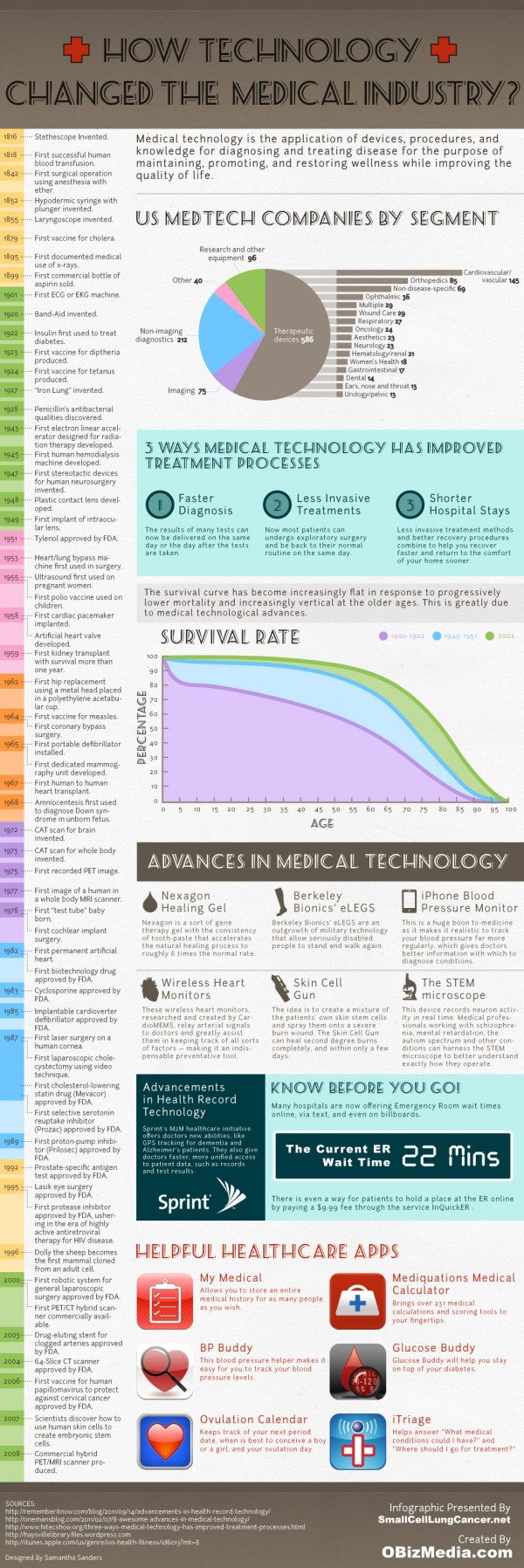
Today we address how technology has changed the medical industry.

Definition

This infographic starts off by stating “medical technology is the application of devices, procedures, and knowledge for diagnosing and treating disease for the purpose of maintaining, promoting, and restoring wellness while improving the quality of life.” On the left of the infographic is a timeline of technological advances in the medical industry, starting with the invention of the stethoscope in 1816 and ending with the production of the first commercial hybrid PET/MRI scanner in 2008.

US Medical Technology Companies by Segment

A pie chart shows us that a great many medical technology companies are focused on therapeutic devices, while the next biggest segment belongs to non-imaging diagnostics. The next largest segment is dedicated to research and other equipment, and the next segment (second to the smallest) is dedicated to imaging. The smallest segment is designated as “other.”

In the therapeutic devices category, the largest piece of that piece of the pie goes to cardiovascular and vascular developments, and the smallest to urology/pelvic with many other therapeutic devices in between.

Three Ways Medical Technology Has Improved Treatment Processes

1. Faster Diagnosis

2. Less Invasive Treatments

3. Shorter Hospital Stays

Survival Rate

It is noted that the survival curve has flattened because of lower mortality and has become increasingly vertical with older people because of the technological advances. A graph shows the percentage of people who lived until a certain age between 1900 and 1902, when only about 10% of people lived past the age of 85, and 2002, when almost 30% of people lived past the age of 85. Based on this graph, most people live to age 55 or older; and around 50% of people live to at least age 80.

Advances in Medical Technology

Some of the advances mentioned are wireless heart monitors, skin cell guns, the STEM microscope, Nexagon healing gel, Berkeley Bionics’ eLEGS, and the iPhone Blood Pressure Monitor. A description of each of these advances is included on the infographic.

Advancements in Health Record Technology and More

Sprint has something called M2M healthcare initiative that provides GPS tracking for patients with Alzheimer’s and dementia, and offers faster access to more unified personal data like heath records and test results.

Now, there is also a “know before you go” option for hospital emergency rooms. Some hospitals place their wait times on billboards, make them available on their website, and even offer the wait time via text. Other hospitals participate in a service called InQuick ER where a patient can pay a $9.99 fee and hold a place in the ER online [noted elsewhere on this ME-P].

Helpful Healthcare Apps

Some of the apps listed are My Medical, which allows one to store medical histories, BP Buddy that helps track blood pressure levels, Glucose Buddy, which helps manage diabetes, and iTriage, that is a diagnostic tool.

Also listed is the Ovulation Calendar – guess what that does? While – the Mediquations Medical Calculator brings 231 medical calculations and scoring tools right to your mobile device.

Source: SmallCellLungCancer.net

Conclusion

Your thoughts and comments on this ME-P are appreciated. Feel free to review our top-left column, and top-right sidebar materials, links, URLs and related websites, too. Then, subscribe to the ME-P. It is fast, free and secure.

Speaker: If you need a moderator or speaker for an upcoming event, Dr. David E. Marcinko; MBA – Publisher-in-Chief of the Medical Executive-Post – is available for seminar or speaking engagements. Contact: MarcinkoAdvisors@msn.com

OUR OTHER PRINT BOOKS AND RELATED INFORMATION SOURCES:

Product DetailsProduct DetailsProduct Details

Product Details  Product Details

Product Details

What is M-Health for Physicians?

On “Smart Phones” and Mobiles Devices

By Shahid N. Shah MS

M-Health or “mobile health” is an industry term for collectively defining those tools and technologies that can be used on “smart phones” like iPhone, Blackberry, Android, or on traditional mobile phones from various vendors.

Unlike traditional computers, almost every patient that walks into your medical office, as well as all your own staff, have mobile devices already. If you can find mobile applications that can help your practice you can immediately put to use without large capital expenses, network configuration, and other technical tasks.

www.MedicalBusinessAdvisors.com

The M-Health Initiative

According to the mHealth Initiative, there are 12 major “application clusters” in mobile health: patient communication, access to web-based resources, point of care documentation, disease management, education programs, professional communication, administrative applications, financial applications, emergency care, public health, clinical trials, and body area networks.

www.CertifiedMedicalPlanner.com

The Applications

Almost all of these applications are focused around the patient but most of them will be directly useful to you and your staff as well. Here’s how:

  • Improving physician-patient communications. You can get your staff to send out text messages, e-mails, photos, and other information about your practice to the patient before their visit. You can remind them about appointments, tell them what to expect, ask them for their insurance and check-in information, or let them send you their personal health record link. During the visit you can send them patient education information directly to their phones instead of handing out paper. After the visit you can send medication reminders, additional educational resources, and update to their personal health record, or ask them to join a Health 2.0 social network. PumpOne, GenerationOne, Intouch Clinical, Life:Wire, and Jitterbug phones all have great patient user experiences and you should tell your patients about them.
  • Faster access to information for you and your patients. There are countless web-based resources that are now at your fingertips on a phone. Patients can lookup providers, labs, testing services, etc. that you can refer them to; you can help them join clinical trials, and manage their health records online. None of these require a computer either in your office or in their home, it can all be done on the phone. Check out companies like Healthagen and iSeek.
  • Real-time documentation of office or hospital visits. Most of the things you want to do in your EMR are possible on a smart phone today. You can get your patient profiles, document an encounter with basic order management and lab results review capabilities, and immediate storage into either your own EMR or your hospital’s information system.
  • Help those patients with the most time-consuming treatments. You already know that disease management is an important part of managing the health of chronic patients; diabetes and hypertension are two perfect examples. Help enroll your patients into Diabetes Connect, MediNet, HealthCentral, and similar applications that can help track compliance with your medical treatment guidance. If they use these applications they can simply give you printouts or login credentials so that you can track their progress without doing any data entry yourself. There are patient tools for most common diseases.

Join Our Mailing List

Editor’s Note

Shahid N. Shah is an ME-P thought leader who is writing Chapter 13: “Interoperable e-MRs for the Small-Medium Sized Medical Practice” [On Being the CIO of your Own Office] for the third edition of the best selling book: Business of Medical Practice [Transformational Health 2.0 Skills for Doctors] to be released this fall by Springer Publishing, NY. He is also the CEO of Netspective Communications, LLC.

www.BusinessofMedicalPractice.com

Conclusion

And so, your thoughts and comments on this ME-P are appreciated. Feel free to review our top-left column, and top-right sidebar materials, links, URLs and related websites, too. Then, be sure to subscribe. It is fast, free and secure.

Speaker: If you need a moderator or speaker for an upcoming event, Mr. Shah and Dr. David E. Marcinko; MBA – Publisher-in-Chief of the Medical Executive-Post – are available for seminar or speaking engagements. Contact: MarcinkoAdvisors@msn.com

Get our Widget: Get this widget!

Our Other Print Books and Related Information Sources:

Practice Management: http://www.springerpub.com/prod.aspx?prod_id=23759

Physician Financial Planning: http://www.jbpub.com/catalog/0763745790

Medical Risk Management: http://www.jbpub.com/catalog/9780763733421

Healthcare Organizations: www.HealthcareFinancials.com

Health Administration Terms: www.HealthDictionarySeries.com

Physician Advisors: www.CertifiedMedicalPlanner.com

Subscribe Now: Did you like this Medical Executive-Post, or find it helpful, interesting and informative? Want to get the latest ME-Ps delivered to your email box each morning? Just subscribe using the link below. You can unsubscribe at any time. Security is assured.

Link: http://feeds.feedburner.com/HealthcareFinancialsthePostForcxos

Sponsors Welcomed: And, credible sponsors and like-minded advertisers are always welcomed.

Link: https://healthcarefinancials.wordpress.com/2007/11/11/advertise

Reviewing Medical PDAs

Physician Use Growing Slowly

By Carol S. Miller; RN, MBAbiz-book10

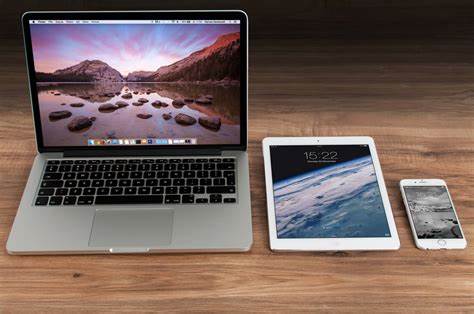
Handheld personal digital assistants (PDAs), such as Palm Pilot M130, 500 or 515, Sony Clie, Visor Prism or Pro, Psion, RIM Blackberry, Zaurus, iPhone, Zune and other comparable PDA OS platforms, have revolutionized the communication world this past decade. PDAs and their future counterparts are becoming the catalyst for physicians to use information technology, are becoming the intro for physicians into the world of the electronic medical record software, and becoming the virtual office tool, enabling providers to communicate away from the desktop as well as away from his office practice. The reasons for increased utilization with physicians are portability, pocket-size, provides easy access to information at point of care and regardless of location, improves practice efficiency and workflow, improves drug related decisions and decreases adverse drug events.  

PDA Components

The common uses of PDAs by physician practices are:


  • Personal applications such as scheduling, telephone directories, dictionary, “to-do lists” and others
  • Drug databases
  • Clinic suite that ties into the hospital information system
  • Charge and procedure capture
  • Communications, from provider to provider, provider to hospital, provider to office, and vice versa

Palm Operating System

Palm OS still represents the standard in handheld computing, assisting individuals to manage and access information at any time, at any location.  Handhelds are easy to use.  Physicians are using the Palm OS and/or compatible PDAs to access their office schedules, receive downloads of clinical information on their patients, and enter clinical services and charges when performing services at remote locations.

PDA Selection

In selecting not only the PDA but also the software, the physician needs to answer the following questions:


  • What would you like to use the PDA for – clinical reference data, patient information, non-clinical applications, personal data, etc.?
  • What information do you need to know about the patient that the PDA can simplify?
  • What is the connection route between the hospital, managed care, or lab and your practice? In other words, how do you get access to the data?
  • What are your price considerations?
  • Do you need a color or black and white screen?
  • What is the system support and warranty?
  • How do you plan to connect to the office or hospital? 
  • Do you want to go wireless or obtain information via a telephone connection?
  • Do you plan to render care outside of your office practice, such as in the home, a clinic, hospital setting, etc?  If so, what would you like included on the PDA that would improve communication with the office and save time at point-of-service in documentation?

HIPAA

HIPAA regulations do not specifically address the specific term PDA, but the regulations do include guidelines for protecting patient information and transmission of this data that can impact the use of PDAs.  Physicians are utilizing handheld digital assistants whether they contain clinical information; or just resource data, may be or not are password protected, and may or may not be officially supported by hospitals or clinics.  Providers as they prepare for future applications and usage of PDAs involving patient information must understand the scope of the new HIPAA regulations as it impacts on patient data collected, stored or transmitted.  Any application involving patient identifiable data must be HIPAA compliant.  The key issues are how to protect the patient information stored on the device, i.e., if lost or stolen, and second how to protect patient information transmitted during a synchronization or wireless transaction.  Probably the most vulnerable aspect is the loss rate with recent studies indicating at least 30%.

Security

Most providers using PDAs for patient data utilize a user ID or password level of security. To maintain security, the provider should be required to re-enter their user ID or password every time they enter the application. Likewise, each PDA should have a “time out” feature, requiring a provider to re-enter his ID or password again. This feature will not prevent individuals with technical skills from accessing this information – the only mechanism is encryption.

Synchronization versus Wireless Applications

1. Synchronization transfers information from the enterprise database to the PDA, i.e., hospital lab or x-ray results, patient demographics, consultative notes, and others.  It is important that the hospital or hospital system authorize and approve the physician for using and transmitting this information and in turn, the provider authenticates and validates his agreement with the hospital before data is transmitted.  In addition for protection, an audit trail of who synchronized and what data was transmitted should be maintained by the hospital system.

2. Wireless providers have immediate real time access to patient data; however this process of transmission is more vulnerable than synchronization.  Wireless solutions can utilize a public or private network. HIPAA require encryption for the transmission of data over the public networks – Encryption is optional for others. Sharing data from a wireless over the Internet represents potential security issues; however, more and more technical firms and providers are using a wireless VPN that allows PDA users to connect securely from remote locations just as laptop users do today.

Other Issues

The other issues are who owns the PDA. If the provider does, he or she should be responsible for the security; however if the hospital does, the hospital should be responsible.  More current applications of Palm OS will include built-in modems for easier wireless communication, improved secure transactions, and ability of greater resolution for graphics, and other Web-based services. In addition, current and future applications will include refined voice dictation.  As an example, MDEverywhere’s package called Everynote allows the provider to digitally record notes and in turn links with MDEverywhere’s coded patient encounter.

The Blackberry

A very versatile product is the Blackberry.  It has web browsing capabilities, embedded wireless modem and can (1) write, send receive and respond to messages right from the unit, (2) access web information, (3) has nationwide coverage with no roaming fees, (4) has voice mail message capabilities, and (5) can be the size of a pager or PDA. The next feature with Blackberry will be its text messages to cell telephones.  New units start around $150-$300 with monthly service charges of $20-$50 depending on the plan.  The wireless Internet connection can be accomplished through Go.Web. 

Assessment

The typical cost for a PDA averages between $300 and $600 – depending on color or black and white – plus the cost of additional software and accessories.  For wireless connectivity, the physician will need to connect with a communication partner. Reference sites for PDAs are: www.handheldmed.com (for clinical, reviews, and news), www.pdamd.com (PDA resources), www.freewarepalm.com (free software programs), www.palmpilot.com, www.handspring.com.  The active shopper can refer to www.zdnet.com or www.palmblvd.com

Conclusion

And so, your thoughts and comments on this Medical Executive-Post are appreciated? Who can update the above for modernity?

Subscribe: Link: http://feeds.feedburner.com/HealthcareFinancialsthePostForcxos

Speaker: If you need a moderator or speaker for an upcoming event, Dr. David E. Marcinko; MBA – Publisher-in-Chief of the Executive-Post – is available for seminar or speaking engagements. Contact: MarcinkoAdvisors@msn.com  or Bio: www.stpub.com/pubs/authors/MARCINKO.htm

Get our Widget: Get this widget!

Our Other Print Books and Related Information Sources:

Practice Management: http://www.springerpub.com/prod.aspx?prod_id=23759

Physician Financial Planning: http://www.jbpub.com/catalog/0763745790

Medical Risk Management: http://www.jbpub.com/catalog/9780763733421

Healthcare Organizations: www.HealthcareFinancials.com

Health Administration Terms: www.HealthDictionarySeries.com

Physician Advisors: www.CertifiedMedicalPlanner.com

Subscribe Now: Did you like this Medical Executive-Post, or find it helpful, interesting and informative? Want to get the latest ME-Ps delivered to your email box each morning? Just subscribe using the link below. You can unsubscribe at any time. Security is assured.

Link: http://feeds.feedburner.com/HealthcareFinancialsthePostForcxos