OCTOBER: The 2025 Stock Market Crash

By A.I. and Staff Reporters

SPONSOR: http://www.MarcinkoAssociates.com

***

***

The October 2025 Stock Market Crash: A Perfect Storm of Geopolitics and Investor Panic

The weekend of October 10–12, 2025, marked one of the most dramatic downturns in global financial markets in recent memory. What began as a series of unsettling headlines quickly snowballed into a full-blown market crash, sending shockwaves through economies and portfolios worldwide. This event was not the result of a single catalyst but rather a convergence of geopolitical tensions, speculative excess, and investor psychology.

At the heart of the crisis was a sudden escalation in U.S.–China trade relations. President Donald Trump abruptly canceled a scheduled diplomatic meeting with Chinese President Xi Jinping and announced a sweeping 100% tariff on all Chinese imports. This move reignited fears of a prolonged trade war, reminiscent of the economic standoff that rattled markets in the late 2010s. Investors, already jittery from months of uncertainty, interpreted the announcement as a signal of deteriorating global cooperation and retaliatory economic measures to come.

VIX: https://medicalexecutivepost.com/2025/10/12/vix-the-stock-market-fear-gauge/

The impact was immediate and severe. Major U.S. indices plummeted: the S&P 500 dropped 2.7%, the Nasdaq fell 3.6%, and the Dow Jones Industrial Average lost 1.9%. These declines marked the worst single-day performance since April and triggered automatic trading halts in several sectors. The selloff was not confined to the United States; European and Asian markets mirrored the panic, with steep losses across the board.

Compounding the crisis was a massive liquidation in the cryptocurrency market. As traditional assets tumbled, investors rushed to offload digital holdings, leading to the largest crypto wipeout in history. Trillions of dollars in value evaporated within hours, further destabilizing investor confidence and draining liquidity from the broader financial system.

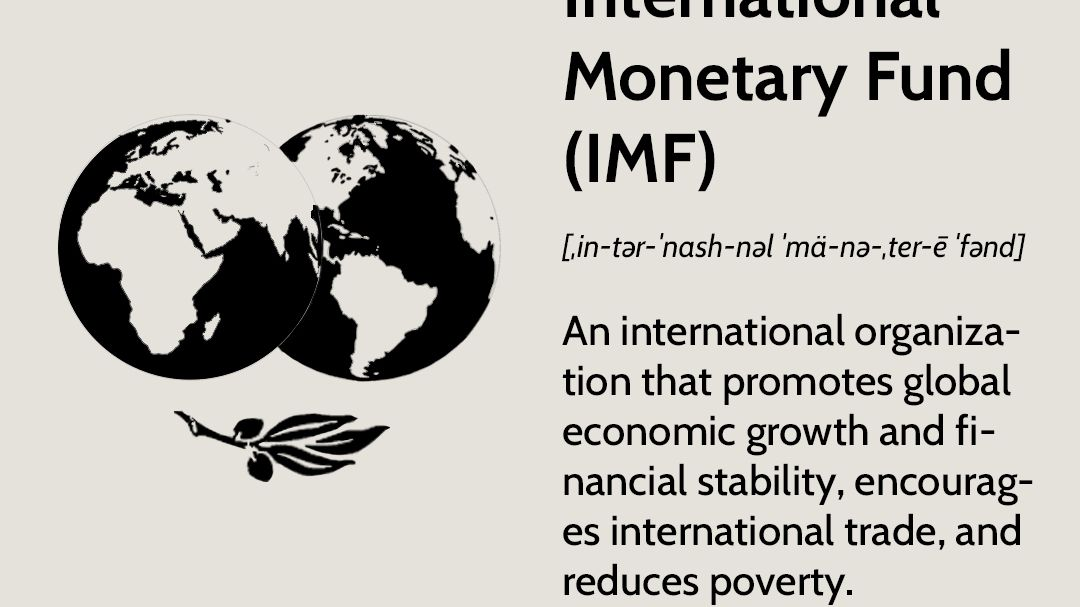
Another underlying factor was growing concern over the valuation of artificial intelligence (AI) stocks. The International Monetary Fund (IMF) had recently issued a warning that the AI sector was exhibiting signs of a speculative bubble, drawing parallels to the dot-com era. With many AI companies trading at astronomical price-to-earnings ratios, the crash exposed the fragility of investor sentiment and the dangers of overexuberance in emerging technologies.

Perhaps most telling was the psychological shift among investors. The weekend saw widespread capitulation, with many choosing to exit the market entirely rather than weather further volatility. This behavior—marked by fear-driven decision-making and herd mentality—is often a hallmark of deeper financial crises. It underscores the importance of trust and stability in maintaining market equilibrium.

Abbvie: https://medicalexecutivepost.com/2024/09/04/abbvie-the-economic-recession/

In conclusion, the October 2025 stock market crash was a multifaceted event driven by geopolitical shocks, speculative risk, and emotional contagion. It serves as a stark reminder of how interconnected and fragile global markets have become. As policymakers and investors assess the damage, the focus must shift toward restoring confidence, recalibrating risk, and ensuring that future growth is built on sustainable foundations rather than speculative fervor.

COMMENTS APPRECIATED

SPEAKING: ME-P Editor Dr. David Edward Marcinko MBA MEd will be speaking and lecturing, signing and opining, teaching and preaching, storming and performing at many locations throughout the USA this year! His tour of witty and serious pontifications may be scheduled on a planned or ad-hoc basis; for public or private meetings and gatherings; formally, informally, or over lunch or dinner. All medical societies, financial advisory firms or Broker-Dealers are encouraged to submit an RFP for speaking engagements: CONTACT: Ann Miller RN MHA at MarcinkoAdvisors@outlook.com -OR- http://www.MarcinkoAssociates.com

EDUCATION: Books

Like, Refer and Subscribe

***

***

RIP: Stanley Fisher PhD; 81

BREAKING NEWS

By Staff Reporters

***

***

Stanley Fischer, one of the most influential economists of recent decades, has died. He was 81. His death was confirmed by the WSJ and Bank of Israel, where he served as governor from 2005 to 2013.

Fischer served as vice chairman of the Federal Reserve from 2014 to 2017. He left his biggest mark in prior decades, as professor of economics at the Massachusetts Institute of Technology, second in command at the International Monetary Fund, and at the Bank of Israel. In those roles, Fischer helped shape how an entire generation of central bankers and economic policymakers do their jobs.

Fischer was born in 1943 in Northern Rhodesia (now the independent country of Zambia) and first came to the U.S. in 1966 to get a Ph.D. at MIT.

After several years at the University of Chicago, he joined the faculty of MIT.

COMMENTS APPRECIATED

Like and Subscribe

***

DAILY UPDATE: Inflation Calm but Stock Markets Down

MEDICAL EXECUTIVE-POST TODAY’S NEWSLETTER BRIEFING

***

Essays, Opinions and Curated News in Health Economics, Investing, Business, Management and Financial Planning for Physician Entrepreneurs and their Savvy Advisors and Consultants

Serving Almost One Million Doctors, Financial Advisors and Medical Management Consultants Daily

A Partner of the Institute of Medical Business Advisors , Inc.

http://www.MedicalBusinessAdvisors.com

SPONSORED BY: Marcinko & Associates, Inc.

***

http://www.MarcinkoAssociates.com

Daily Update Provided By Staff Reporters Since 2007.
How May We Serve You?
© Copyright Institute of Medical Business Advisors, Inc. All rights reserved. 2024

REFER A COLLEAGUE: MarcinkoAdvisors@msn.com

SPONSORSHIPS AVAILABLE: https://medicalexecutivepost.com/sponsors/

ADVERTISE ON THE ME-P: https://tinyurl.com/ytb5955z

Your Referral Count -0-

Quote: “It looks like the global battle against inflation has largely been won, even if price pressures persist in some countries. In most countries, inflation is now hovering close to central bank targets…The decline in inflation without a global recession is a major achievement.”—IMF (CNN Business)

CITE: https://www.r2library.com/Resource

STOCKS UP

  • Spirit Airlines is back from the dead, soaring 46.67% on a Wall Street Journal report that it may end up merging with Frontier Airlines after all. Frontier Airlines rose 0.76% on the news.
  • AT&T climbed 4.65% after it beat earnings expectations in the third quarter, though it missed on revenue.
  • Starbucks fell hard late yesterday but recovered a bit this afternoon after new CEO Brian Niccol said the coffee chain is suspending its 2025 fiscal outlook. Shares rose 0.86% today.
  • Stride Technology sprinted 39.11% higher after the education technology company absolutely crushed earnings expectations.

STOCKS DOWN

  • Coca-Cola fizzled 2.07% after beating both top and bottom line expectations. The problem is that the only reason the soda giant performed well was because it raised prices, while demand for soft drinks slowed.
  • Enphase Energy plummeted 14.92% after the solar stock missed on both earnings and revenue expectations last quarter.
  • Boeing is a very familiar name in the “What’s down” section, and its latest earnings report did nothing to help. The manufacturing giant notched a $6 billion loss last quarter, and shares fell 1.76%.

CITE: https://tinyurl.com/2h47urt5

Here’s where the major benchmarks ended:

  • The SPX fell 53.78 points (–0.92%) to 5,797.42; the Dow Jones Industrial Average® ($DJI) lost 409.94 points (–0.96%) to 42,514.95; and the NASDAQ Composite ($COMP) dropped 296.47 points (–1.60%) to 18,276.65.
  • The 10-year Treasury note yield gained four basis points to 4.24%. 
  • The CBOE Volatility Index® (VIX) jumped to 19.37.

CITE: https://tinyurl.com/tj8smmes

Visualize: How private equity tangled banks in a web of debt, from the Financial Times.

COMMENTS APPRECIATED

PLEASE SUBSCRIBE: MarcinkoAdvisors@msn.com

Thank You

***

***

***

***

EDUCATIONAL TEXTBOOKS: https://tinyurl.com/4zdxuuwf

***

DAILY UPDATE: Microsoft, Google and IMF Up Yesterday, as UPS and the Stock Markets Collapse Today

By Staff Reporters

***

***

Microsoft and Google rode the AI wave to huge quarters. Microsoft posted revenues of ~$62 billion in its fiscal Q2 ending Dec. 31, a year over year increase of 17.6% and ahead of analyst’s expectations. That was its best revenue growth in seven quarters, thanks to the release of new AI-enabled Office products. Meanwhile, Google reported strong results, too: Ad revenue at YouTube skyrocketed to $9.2 billion in Q4 of last year, up from below $8 billion the year before. Alphabet CEO Sundar Pichai said YouTube is “already benefiting from our AI investments and innovation.” Alphabet’s total revenue was up 13% year over year to ~$86 billion.

UPS slashed 12k jobs. The shipping giant said it will require employees to return to the office five days a week this year as it changes how it operates amid a slowdown in demand. Revenue declined in Q4, while annual sales fell 9.3% in 2023. Amazon, its biggest customer, accounted for 11.8% of revenue last year, up from the year before, as revenue from other customers declined due to lower demand and more in-store pickups, executives said. UPS is also dealing with higher labor costs due to the deal it made with the Teamsters union to avoid a strike last summer.

The IMF has the US to thank for raising its global forecast. The International Monetary Fund—the UN’s flagship financial agency—said the global economy will grow 3.1% this year, a slight increase from its projection in October. That’s largely due to the strength of the US economy, which has defied economists’ expectations, growing 3.3% in the fourth quarter of 2023. But the improved outlook was also boosted by economic stimulus in China, which has faced deflation and a real estate crisis, among other issues. Other economies, including India, Brazil, and Russia, also performed better than expected, helping to juice the IMF’s forecast.

CITE: https://www.r2library.com/Resource

Here’s where the major benchmarks ended:

  • The S&P 500® index (SPX) fell 79.32 points (1.6%) to 4,845.65; the Dow Jones Industrial Average® (DJI) lost 317.01 points (0.8%) to 38,150.30; the NASDAQ Composite® (COMP) dropped 345.89 points (2.2%) to 15,164.01, a two-week low.
  • The 10-year Treasury note yield (TNX) decreased nearly 9 basis points to 3.969%.
  • The CBOE Volatility Index® (VIX) jumped 1.03 to 14.34.

Regional banks led Wednesday’s declines after New York Community Bancorp (NYCB), which took over the failed Signature Bank last year, reported a fourth-quarter loss of $193 million, sending its shares down nearly 38%. The KBW Regional Banking Index (KRX) sank 6%. Communications services shares were also among the weakest performers. Energy companies were also under pressure as WTI Crude Oil futures (/CL) shed nearly 3%.

COMMENTS APPRECIATED

Thank You

***

***

OPINIONS: Stock Markets VERSUS Economic Vision?

What is Your Opinion?

By Staff Reporters

***

***

  • Markets: Stocks ran on a treadmill yesterday as investors waited for the high-stakes inflation report to drop this morning. Major cryptocurrencies have emerged as the biggest winners of 2023 so far, and Bitcoin topped $30,000 for the first time in 10 months.
  • Dueling economic visions: Depending on who you ask, the economy is doing just fine…or it’s about to slow down dramatically. Treasury Secretary Janet Yellen said yesterday that “the US economy is obviously performing exceptionally well.” But that’s not obvious at all to the IMF, which predicted weak global growth this year and gave its gloomiest five-year economic forecast since 1990.
  • CITE: https://www.r2library.com/Resource/Title/0826102549

***

COMMENTS APPRECIATED

Thank You

***

ORDER: https://www.routledge.com/Comprehensive-Financial-Planning-Strategies-for-Doctors-and-Advisors-Best/Marcinko-Hetico/p/book/9781482240283

***

Inflation, Earnings Season the WB & IMF

By Staff Reporters

***

***

Inflation data incoming. Thursday’s consumer price index release will show how much we got clobbered by inflation in September. Last month, inflation came in hotter than expected, leading to a market rout. Economists hope to see some cooling in “core CPI,” which strips out food and gas prices, this time around.

CITE: https://medicalexecutivepost.com/2022/09/14/inflation-cpi-and-the-ppi/

Earnings season is back. A stock market that’s already on edge could get another jolt of volatility this week as corporations begin to report their Q3 earnings, starting with PepsiCo on Wednesday. These reports will reveal how companies are coping with the Fed’s interest rate hikes.

The World Bank and the International Monetary Fund will hold their annual meetings in Washington, DC, this week amid great macroeconomic uncertainty.

***

COMMENTS APPRECIATED

Thank You

***

FINANCE: https://www.routledge.com/Comprehensive-Financial-Planning-Strategies-for-Doctors-and-Advisors-Best/Marcinko-Hetico/p/book/9781482240283

***

UPDATE: e-Commerce & Defining the “Wealthy”

By Staff Reporters

***

***

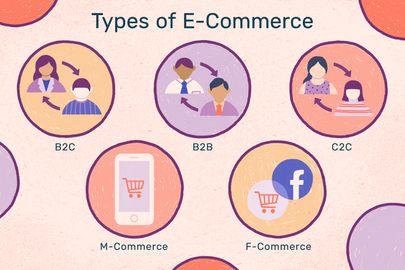
According to research from the International Monetary Fund, e-commerce went from taking up 10.3% of total global spending in 2019 to 14.9% at the height of the pandemic in 2020 before falling again to 12.2% in 2021.

***

Respondents to Schwab’s 2021 Modern Wealth Survey said a net worth of $1.9 million qualifies a person as wealthy. Indeed, the annual Schwab survey found that respondents are lowering the bar for what they consider wealthy. Compared to 2021 standards, respondents to the 2020 survey described the threshold for wealth as being a net worth of $2.6 million.

COMMENTS APPRECIATED

Thank You

***

***

The “Big Mac Index” in Russia

Join Our Mailing List

IF YOU LIKE FAST FOOD AND A GOOD DEAL, YOU CAN FIND A REALLY CHEAP BIG MAC IN RUSSIA        

ArtBy Arthur Chalekian GEPC

[Financial Consultant]

The Economist created The Big Mac Index 30 years ago as a rough-and-ready gauge of world currencies. The index is based on the idea when currencies are aligned correctly, the same product (in this case, a Big Mac®) should have the same price in different countries when that price is denominated in a single currency. This is called purchasing power parity (PPP).

For the purposes of this commentary, we looked at the price of a Big Mac in U.S. dollars. Early in 2016, a Big Mac cost a hungry American about $4.93. In Russia, it cost about a $1.53, in the Euro area $4.00, and in Switzerland, about $6.44. These prices indicate the Russian ruble is undervalued by about 69 percent, the Euro is undervalued by about 19 percent, and the Swiss franc is overvalued by almost 31 percent. Switzerland is an outlier, according to The Economist:

“Americans hunting for cut-price burgers abroad are spoilt for choice: the index shows most currencies to be cheap relative to the greenback. This is partly owing to the Federal Reserve’s decision to raise interest rates when the central banks of the euro zone and Japan are loosening monetary policy… Another force weakening many currencies, including the ruble, has been the ongoing slump in commodity prices since mid-2014. Shrinking demand from China and a glut of supply have sapped the value of exports from Australia, Brazil, and Canada, among other places, causing their currencies to wilt, too.”

In theory, when a country’s currency depreciates relative to that of its trading partners, the country’s exports should become more attractive because they are less expensive and should boost economic growth. However, depreciation hasn’t produced the results many expected.

One explanation, offered by both the World Bank and the IMF, is globalization. If a country’s exports are part of a global supply chain, then the cost of materials imported to create the exports may offset gains from currency depreciation. According to The Economist,

“The IMF thinks this accounts for much of the sluggishness of Japan’s exports; the World Bank argues that it explains about 40 percent of the diminished impact of devaluations globally.”

***

IMG_0701

[An ME-P Correspondent in Moscow]

***

Conclusion

Your thoughts and comments on this ME-P are appreciated. Feel free to review our top-left column, and top-right sidebar materials, links, URLs and related websites, too. Then, subscribe to the ME-P. It is fast, free and secure.

Speaker: If you need a moderator or speaker for an upcoming event, Dr. David E. Marcinko; MBA – Publisher-in-Chief of the Medical Executive-Post – is available for seminar or speaking engagements. Contact: MarcinkoAdvisors@msn.com

OUR OTHER PRINT BOOKS AND RELATED INFORMATION SOURCES:

[PHYSICIAN FOCUSED FINANCIAL PLANNING AND RISK MANAGEMENT COMPANION TEXTBOOK SET]

  Risk Management, Liability Insurance, and Asset Protection Strategies for Doctors and Advisors: Best Practices from Leading Consultants and Certified Medical Planners™ Comprehensive Financial Planning Strategies for Doctors and Advisors: Best Practices from Leading Consultants and Certified Medical Planners™

[Dr. Cappiello PhD MBA] *** [Foreword Dr. Krieger MD MBA]

Front Matter with Foreword by Jason Dyken MD MBA

***