MedPAC Examines Private Equity in Medicare

MedPAC Examines Private Equity Involvement in Medicare

By Health Capital Consultants, LLC


In 2020, at the request of the U.S. House Committee on Ways and Means (the Committee), the Medicare Payment Advisory Commission (MedPAC) began investigating the role that private equity (PE) plays in healthcare provided to Medicare beneficiaries.

CITE: https://www.r2library.com/Resource/Title/0826102549

In its June 2021 “Report to the Congress on Medicare and the Health Care Delivery System,” MedPAC included for the first time a chapter on PE’s effect on Medicare, wherein it discussed the findings and observations from its investigation and answered a number of questions posed by the Committee. This Health Capital Topics article will analyze MedPAC’s answers to those questions, review its investigation of PE’s role in healthcare, and summarize reactions from stakeholders. (Read more…)

Photo by RODNAE Productions on Pexels.com

YOUR THOUGHTS AND COMMENTS ARE APPRECIATED.

Thank You

***

CMS Includes Changes in CY 2022 OPPS Proposed Rule

BY HEALTH CAPITAL CONSULTANTS, LLC

CMS Includes Several Changes in CY 2022 OPPS Proposed Rule


On July 19, 2021, CMS released the proposed rule for the Outpatient Prospective Payment System (OPPS) and Ambulatory Surgery Centers (ASCs) for calendar year (CY) 2022. The proposed rule builds on President Joe Biden’s July 9, 2021 executive order on “Promoting Competition in the American Economy,” as it relates to increasing access and price transparency in the healthcare industry.

Outpatient Prospective Payment System (OPPS) Project. Understanding  Ambulatory Payment Classification (APC) - PDF Free Download

CITE: https://www.r2library.com/Resource/Title/0826102549

In a press release regarding the proposed rule, CMS stated their commitment to addressing the persistent health inequities in the U.S. and finding opportunities to improve data collection that will lead to policy changes to help meet the health needs of patients. (Read more…)

YOUR THOUGHTS AND COMMENTS ARE APPRECIATED.

Thank You

***

Next-Generation ACO Model to End in 2021

Next Generation ACO Model to End in 2021

Health Capital Consultants - Healthcare Valuation

Many accountable care organizations (ACOs) received disappointing news on May 21, 2021, when the Centers for Medicare & Medicare Services (CMS) announced that it would not be extending the Next Generation ACO (NGACO) model for 2022.

After five years and a dwindling number of participating ACOs, experts were split on whether or not CMS should keep the model in place for another year. On one hand, stakeholders have argued for the NGACO model’s extension until it can be replaced with or integrated into another program; howowever, others asserted that resources could not be properly invested with only one more year left in the program. (Read more…)

Citation: https://www.r2library.com/Resource/Title/0826102549

ASSESSMENT: Your thoughts are appreciated.

THANK YOU

***

Walmart’s Push to Create Healthcare ”SUPER CENTERS”

Walmart’s Push to Create Healthcare ”Super Centers”

Health Capital Consultants - Healthcare Valuation


Walmart, the world’s largest retailer, opened the first Walmart Health in 2019 with the main goal of helping to meet the healthcare needs of the communities they serve. After opening six locations in almost two years, Walmart is looking to operate a total of 22 standalone clinics by the end of 2021. 

This Health Capital Topics article will review Walmart Health’s approach to delivering primary care, the communities into which it is expanding, its partnerships it is developing in the healthcare sector, and the competitive landscape in which it operates. (Read more…) 

Citation: https://www.r2library.com/Resource/Title/0826102549

ASSESSMENT: Your thoughts are appreciated.

THANK YOU

***

MEDICAL ERRORS: Incidence and Prevelance

Robert James Cimasi

Todd A. Zigrang

Health Capital Consultants - Healthcare Valuation

“Knowing is not enough; we must apply. Willing is not enough; we must do. Goethe [1]

As developments in research and technology have advanced medical practice, the improved ability to diagnose and treat patients has led to an increased volume of medical assessments and procedures performed. However, these increases in the volume of procedures performed by physicians have led to an increase in both the risk of harm to patients and the exposure to liability for physicians.[2] Today, most healthcare services are delivered not by individual Marcus Welby type of physicians,[3] but through a group practice, healthcare organization, or hospital system. While there are numerous advantages to physicians providing care as employees of a healthcare enterprise, some of the unintended consequences exhibited under physician employment arrangements (e.g., diminishing physician autonomy, patient quotas, and limited time to spend with patients) have led to an increase in the potential for patient harm and subsequent physician liability.[4]  Additionally, as the overlap between the scope of practice for physicians and non-physicians continues to increase, the complexities of malpractice liability, which may jeopardize the licenses of both the supervising physician and the non-physician professional, may similarly increase.[5] The result of these increased risks, medical errors, disgruntled patients, and changing scopes of practice has produced an environment that is ripe for malpractice litigation.[6] 

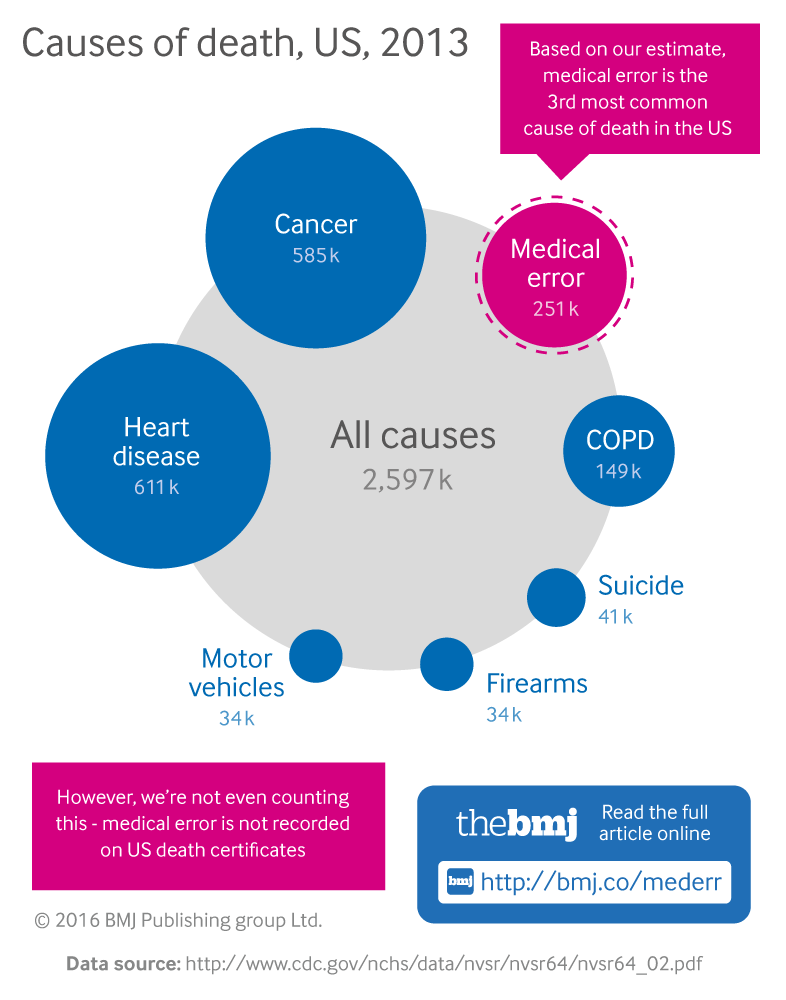
Numerous studies and examinations of the reality of medical errors demonstrate the varied nature and causes contributing to these errors, and the need for the medical malpractice system.  The 2000 Institute of Medicine’s (IOM) landmark report, entitled, “To Err is Human: Building a Safer Health System,” conservatively estimated that in 1997, “at least 44,000 and perhaps as many as 98,000 Americans die in hospitals each year as a result of medical errors.”[7] Moreover, the IOM report noted that out of 30,000 discharges at 51 randomly selected New York hospitals in 1984, adverse events occurred in 3.7% of all hospitalizations or (1,110 hospitalizations), with 58% of adverse events (approximately 644 hospitalizations) caused by preventable medical errors, and 27.6% of adverse events (approximately 306 hospitalizations) caused by negligence.[8]  In addition to medical errors, more than one million serious medication errors occur every year in U.S.[9] As observed in The Leapfrog Group’s study, one adverse drug effect (ADE) adds, on average, $2,000 to the cost of a hospitalization, which totals over $7.5 billion per year nationwide.[10]

Other studies have updated the figures relied upon in the IOM report. In 2010, the Office of Inspector General (OIG) estimated that approximately 13.5% of hospitalized Medicare beneficiaries experienced adverse events during their hospitalizations, 44% of which were deemed preventable by independent physician reviewers.[11] Within this estimate, the OIG subdivided the adverse events into four clinical categories:

  • Events related to medication – 31%;
  • Events related to ongoing patient care – 28%;
  • Events related to surgery or other procedures – 26%; and,
  • Events related to infection – 15%.[12]

A 2013 study published in Journal of Patient Safety combined the OIG’s estimate with the estimates of three other studies[13] relating to the prevalence of medical errors to conclude that over “210,000 preventable adverse events per year…contribute to the death of hospitalized patients,” with numerous additional errors shortening patients’ lifespans and causing other harms.[14]

The debate surrounding medical errors focuses not only on the number of adverse events in hospitals and deaths due to these adverse events, but also the causes of these adverse events.  Although the 2000 IOM report is widely cited for its estimate of deaths due to medical errors,[15] the report also provided one of the first arguments that many medical errors “could likely have been avoided had better systems of care been in place,” framing the medical error debate not solely on “incompetent or impaired providers” but also on the process of care delivery.[16] These process improvements can center on infrastructure as well as policies and procedures regarding the provision of medical care. The same IOM committee that published the 2000 report released a second report in 2001 entitled, “Crossing the Quality Chasm: A New Health System for the 21st Century,” which advocated for widespread change in overall structures and processes in the healthcare environment as a means to preventing medical errors and improving quality, and listed six “aims” for high quality care: safety; effectiveness; efficiency; equity; timeliness; and, patient-centeredness.[17]  However, a 2013 IOM report entitled, “Best Care at Lower Cost: The Path to Continuously Learning Health Care in America,” noted that, 12 years later, these six aims still had not been achieved, and attributed the “fragmented, uncoordinated, and diffusely organized” infrastructure of the U.S. healthcare delivery system to the lack of systemic processes in place.[18] Specifically addressing outpatient enterprise structures, a 2011 study on adverse drug events (ADEs) in ambulatory care settings noted the potential for infrastructure improvements to support the reduction of medical errors, stating that “as health information technology becomes more widespread in ambulatory health care delivery… automated surveillance for (adverse drug events) will become more feasible.”[19]

The OIG has provided similar guidance to healthcare providers regarding the relationship between structure and quality. In its revised guidance to nursing homes, the OIG recommended that nursing facilities can “promote compliance by having in place proper medication management processes,” such as utilizing a consultant pharmacist and continually training staff in proper medication management.[20]  Nevertheless, criticism still exists regarding the processes utilized by healthcare providers to reduce medical errors. In its 2010 report on adverse events suffered by Medicare beneficiaries, the OIG recommended that the Centers for Medicare & Medicaid Services (CMS) “influence hospitals to reduce adverse events through enforcement of the conditions of participation” in Medicare, which includes sanctioning physicians through the peer review process.[21] Other studies have advanced the OIG’s claim a step further, arguing that “the hospital peer-review system has widespread failures that permit negligent care by physicians.”[22]

In an attempt “to improve patient safety by encouraging voluntary and confidential reporting of events that adversely affect patients,”[23] The Patient Safety and Quality Improvement Act (PSQIA) of 2005, effective January 19, 2009, established a voluntary reporting system for medical errors.[24] Under PSQIA, to address provider fear that “patient safety event reports could be used against them in medical malpractice cases or in disciplinary proceedings,”[25] confidentiality provisions regarding the protection of “patient safety work product” were established.[26]Patient safety work product” includes any information that is collected while reporting and analyzing a patient safety event,[27] i.e., “a process or act of omission or commissions that resulted in hazardous health care conditions and/or unintended harm to the patient.[28] Under PSQIA, Patient Safety Organizations (PSOs) are charged with collecting and analyzing data under the supervision of the Agency for Healthcare Research and Quality (AHRQ).[29]

Despite the numerous attempts and strategies to curtail the prevalence of medical errors, no definitive answer exists as to whether medical errors are properly attributable to process or physician errors on a large scale. If it were determined that most medical errors are mistakes from breakdowns in processes of care rather than the negligence of physicians, improving and implementing new and effective process controls may best reduce medical errors – and the resulting incidence of medical malpractice cases.[30] However, to date, the healthcare industry and the U.S. tort system are far from reaching this conclusion, leaving the tort system – as well as malpractice insurers and their physician insureds – to continue to grapple with this uncertainty.

https://media3.s-nbcnews.com/j/newscms/2016_18/1524261/errors_fd53fca207ac4622017a0b55e1dcb951.nbcnews-ux-2880-1000.png

[1]       “Crossing the Quality Chasm: A New Health System for the 21st Century,” Institute of Medicine, National Academy of Sciences, 2001, front matter.

[2]       “Overview of Medical Errors and Adverse Events,” By Maité Garrouste-Orgeas, et al., Annals of Intensive Care, Vol. 2, No. 2 (2012), p. 6.

[3]       “Healthcare Valuation: The Financial Appraisal of Enterprises, Assets, and Services,” Vol. 1, By Robert James Cimasi, MHA, ASA, FRICS, CVA, CM&AA, Hoboken, NJ: John Wiley & Sons, 2014, p. xiii.

[4]       “Health Law: Cases, Materials, and Problems, 7th Edition,” By Barry R. Furrow, Thomas L. Greaney, Sandra H. Johnson, Timothy Stoltzfus Jost, and Robert L. Schwartz, St. Paul, MN: West Publishing Company, 2013, p. 507.

[5]       “Licensure of Health Care Professionals,” In “Health Care Law: A Practical Guide, Second Edition” By Scott Becker, Matthew Bender Co., 1998, § 16.02[4], p. 16-23.

[6]       “Health Law: Cases, Materials, and Problems, 7th Edition,” By Barry R. Furrow, Thomas L. Greaney, Sandra H. Johnson, Timothy Stoltzfus Jost, and Robert L. Schwartz, St. Paul, MN: West Publishing Company, 2013, p. 506-507.

[7]       “To Err is Human: Building a Safer Health System,” Institute of Medicine, National Academy of Sciences, 2000, p. 26. The IOM study extrapolated data from the 1984 New York study, as well as a 1992 study from Colorado and Utah to the number of hospitalizations in 1997 to estimate the number of deaths due to medical errors in 1997. The report authors note that these extrapolations may be low because the studies:

  1. Considered only those patients whose injuries resulted in a specified level of harm;”
  2. Imposed a high threshold to determine whether an adverse event was preventable or negligent;” and,
  3. Included only errors that are documented in patient records.”

“To Err is Human: Building a Safer Health System,” Institute of Medicine, National Academy of Sciences, 2000, p. 31.

[8]       “To Err is Human: Building a Safer Health System,” Institute of Medicine, National Academy of Sciences, 2000, p. 30.

[9]     “Fact Sheet: Computerized Physician Order Entry,” The Leapfrog Group, March 3, 2009; “To Err is Human: Building a Safer Health System,” By Institute of Medicine, 2000, p.1.

[10]     “Leapfrog Hospital Survey Results,” The Leapfrog Group, 2008, p. 3.

[11]     “Adverse Events in Hospitals: National Incidence among Medicare Beneficiaries,” Office of Inspector General, November 2010, p. 15, 22.

[12]     “Adverse Events in Hospitals: National Incidence among Medicare Beneficiaries,” Office of Inspector General, November 2010, p. 15.

[13]     “‘Global Trigger Tool’ Shows That Adverse Events in Hospitals May be Ten Times Greater Than Previously Measured,” By David C. Classen et al., Health Affairs, Vol. 30, No. 4 (2011); “Adverse Events in Hospitals: Case Study of Incidence Among Medicare Beneficiaries in Two Selected Counties,” Office of Inspector General, December 2008, http://oig.hhs.gov/oei/reports/OEI-06-08-00220.pdf (Accessed 2/17/15); “Temporal Trends in Rates of Patient Harm Resulting from Medical Care” By Christopher P. Landrigan, MD, MPH, et al., New England Journal of Medicine, Vol. 363, No. 22 (November 24, 2010).

[14]     “A New, Evidence-Based Estimate of Patient Harms Associated with Hospital Care” By John T. James, PhD, Journal of Patient Safety, Vol. 9. No. 3 (September 2013), p. 125.

[15]     “How Many Die From Medical Mistakes in U.S. Hospitals?” By Marshall Allen, National Public Radio, September 20, 2013, http://www.npr.org/blogs/health/2013/09/20/224507654/howmanydiefrommedicalmistakesinushospitals (Accessed 12/3/14).

[16]     “To Err is Human: Building a Safer Health System,” Institute of Medicine, National Academy of Sciences, 2000, p. 30.

[17]     “Crossing the Quality Chasm: A New Health System for the 21st Century,” Institute of Medicine, National Academy of Sciences, 2001, p. ix, 25.

[18]     “Best Care at Lower Cost: The Path to Continuously Learning Health Care in America,” Institute of Medicine, National Academy of Sciences, 2009, p. 134.

[19]     “Adverse Drug Events in U.S. Adult Ambulatory Medical Care,” By Urmimala Sarkar et al., Health Services Research, Vol. 46, No. 5 (October 2011), p. 1527.

[20]     “OIG Supplemental Compliance Program Guidance for Nursing Facilities,” Federal Register Vol. 73, No. 190 (September 30, 2008), p. 56837.

[21]     “Adverse Events in Hospitals: National Incidence among Medicare Beneficiaries,” Office of Inspector General, November 2010, p. 32.

[22]     “A New, Evidence-Based Estimate of Patient Harms Associated with Hospital Care”, By John T. James, PhD, Journal of Patient Safety, Vol. 9. No. 3 (September 2013), p. 127.

[23]     “Patient Safety and Quality Improvement Act of 2005,” Agency for Healthcare Research and Quality, http://archive.ahrq.gov/news/newsroom/press-releases/2008/psoact.html (Accessed 3/5/15).

[24]     “Health Information Privacy: Understanding Patient Safety Confidentiality,” U.S. Department of Health and Human Services, http://www.hhs.gov/ocr/privacy/psa/understanding/index.html (Accessed 3/5/15); “Patient Safety and Quality Improvement; Final Rule,” Federal Register, Vol. 73, No. 226 (November 21, 2008), p. 70732.

[25]     “Patient Safety and Quality Improvement Act of 2005,” Agency for Healthcare Research and Quality, http://archive.ahrq.gov/news/newsroom/press-releases/2008/psoact.html (Accessed 3/5/15).

[26]     “Patient Safety and Quality Improvement: Final Rule” Federal Register, Vol. 73, No. 226 (November 21, 2008), p. 70734.

[27]     “Patient Safety and Quality Improvement: Final Rule” Federal Register, Vol. 73, No. 226 (November 21, 2008), p. 70739.

[28]     “Patient Safety and Quality Improvement: Final Rule” Federal Register, Vol. 73, No. 226 (November 21, 2008), referring to footnote 7 in “Patient Safety and Quality Improvement: Proposed Rule” Federal Register, Vol. 73, No. 29 (February 12, 2008), p. 8113.

[29]     “Understanding Patient Safety Confidentiality” U.S. Department of Health and Human Services, http://www.hhs.gov/ocr/privacy/psa/understanding/index.html (Accessed 3/5/15).

[30]     “To Err is Human: Building a Safer Health System,” Institute of Medicine, National Academy of Sciences, 2000, p. 30.

Your thoughts are appreciated.

Risk Management, Liability Insurance, and Asset Protection Strategies for Doctors and Advisors: Best Practices from Leading Consultants and Certified Medical Planners™

ORDER TEXTBOOK: https://www.routledge.com/Risk-Management-Liability-Insurance-and-Asset-Protection-Strategies-for/Marcinko-Hetico/p/book/9781498725989

THANK YOU

***

MEDICARE: Safe Harbor Regulations

Medicare “Safe Harbor” Regulations

Invite Dr. Marcinko | The Leading Business Education ...

The Medicare Safe Harbor rules were passed in an effort to identify areas of practice that would not lead to a conviction under the anti-fraud statute.  The Safe Harbor regulations provide for eleven areas where providers may practice without violating the anti-fraud statute. 

CITE: https://www.amazon.com/Dictionary-Health-Insurance-Managed-Care/dp/0826149944/ref=sr_1_4?ie=UTF8&s=books&qid=1275315485&sr=1-4

Areas of safe practice under these regulations are briefly highlighted below:

  • Large Entity Investments – Investment in entities with assets over $50 million. The entity must be registered and traded on national exchanges.
  • Small Entity Investments – Small entity investment entities must abide by the 40-40 rule.  No more than 40% of the investment interests may be held by investors in a position to make referrals. Additionally, no more than 40% of revenues can come through referrals by these investors.
  • Space and Equipment Rentals – Such lease agreements must be in writing and must be for at least a one year term. Furthermore, the terms must be at fair market value.
  • Personal Services and Management Contracts – These contracts are allowable as long as certain rules are followed. Like lease agreements, these personal service and management contracts must be in writing for at least a one-year term, and the services must be valued at fair market value.
  • Sale of a medical practice – There are restrictions if the selling practitioner is in a position to refer patients to the purchasing practitioner.
  • Referral services– Referral services (such as hospital referral services) are allowed. However, such referral services may not discriminate between practitioners who do or do not refer patients.
  • Warranties – There is certain requirements if any item of value is received under a warranty.
  • Discounts – Certain requirements must be met if a buyer receives a discount on the purchase of goods or services that are to be paid for by Medicare or Medicaid.
  • Payments to Bona Fide Employees – Payments made to bona fide employees do not constitute fraud under the Safe Harbor Regulations.
  • Group Purchasing Organizations – Organizations that purchase goods and services for a group of entities or individuals are allowed; provided certain requirements are met.
  • Waiver of Beneficiary Co-Insurance and Deductible – Routine waiver would not come under the safe harbor.

A physician’s actions that come under the Safe Harbor Regulations will not violate the Medicare Fraud and Abuse Statutes.  However, the provider must still abide by the Stark amendments and must also abide by applicable state law.

STARK UPDATE: https://medicalexecutivepost.com/2018/08/03/cms-to-review-stark-law-relevance-once-again/

Your thoughts are appreciated.

THANK YOU

***

ORDER TEXTBOOK [3rd]: https://www.amazon.com/Business-Medical-Practice-Transformational-Doctors/dp/0826105750/ref=sr_1_9?ie=UTF8&qid=1448163039&sr=8-9&keywords=david+marcinko

***

NEWS ALERT: SCOTUS Rules to Leave ACA in Place

BREAKING NEWS!

On June 17, 2021, the Supreme Court of the United States (SCOTUS) released its long-awaited ruling on the fate of the Patient Protection and Affordable Care Act (ACA). In a 7-2 ruling, the majority (written by Justice Stephen Breyer) found that the two individual and 18 state plaintiffs did not have standing, stating

the plaintiffs…failed to show a concrete, particularized injury fairly traceable to the defendants’ conduct in enforcing the specific statutory provision they attack as unconstitutional. They have failed to show that they have standing to attack as unconstitutional the Act’s minimum essential coverage provision.” 

By ruling on the question of standing, the Court did not have to proceed to, and rule on, the issue of the constitutionality of the Individual Mandate.

The Court reversed the Fifth Circuit’s ruling with respect the standing issue, vacated the ruling, and remanded the case with instructions to dismiss.

***

***
A more robust discussion of the majority’s opinion and the procedural history of this case will be included in the June 2021 issue of Health Capital Topics.
(Read the ruling here)

ASSESSMENT: Your comments are appreciated.

THANK YOU

***

COVID-19 Financial Resources for Physicians

Bhagwan Satiani, MD, MBA, DFSVS, FACHE, FACS

Todd A. Zigrang, MBA, MHA, FACHE, CVA, ASA

Jessica L. Bailey-Wheaton, JD

ABSTRACT

The appropriate focus in managing the COVID-19 pandemic in the United States has been addressing access and delivery of care to the population affected by the outbreak. All sectors of the U.S. economy have been significantly affected,including physicians. Physician groups of all specialties and sizes have experienced the financial effects of the pandemic.Hospitals have received billions of dollars to support and enable them to manage emergencies and cover the costs of the disruption.

However, many vascular surgeons are under great financial pressure because of the postponement of all non-emergency procedures. The federal government has announced a myriad of programs in the form of grants and loans to reimburse physicians for some of their expenses and loss of revenue. It is more than likely that unless the public health emergency subsides significantly, many practices will experience dire consequences without additional financial assistance.

The authors have attempted to provide a concise listing of such programs and resources available to assist vascular surgeons who are small businesses in accessing these opportunities.

Health Capital Consultants - Healthcare Valuation

WHITE PAPER: https://www.healthcapital.com/researchmaterialdocuments/publishedarticles/Journal%20of%20Vascular%20Surgery%205.8.20.pdf

Your comments are appreciated.

THANK YOU

***

ORDER BOOK: https://www.amazon.com/Business-Medical-Practice-Transformational-Doctors/dp/0826105750/ref=sr_1_9?ie=UTF8&qid=1448163039&sr=8-9&keywords=david+marcinko

****

ON RURAL HEALTHCARE PROVIDERS

Executive Order Expands Tele-Medicine to Ease Burden

By Health Capital Consultants, LLC

On August 3, 2020, President Donald Trump signed an executive order aimed at expanding access to care through two avenues: telemedicine and eased financial burdens on rural providers.

Health Disparities Continue to Plague Rural Areas

And so, our colleagues for this Health Capital Topics article will discuss the executive rule and the subsequent agency actions on these fronts.

READ: https://www.healthcapital.com/hcc/newsletter/08_20/HTML/EXEC/convert_executive_telemedicine_access_expansion_8.20.20.php

ASSESSMENT: Your thoughts are appreciated.

THANK YOU

***

ORDER [3rd. edition] TEXTBOOK: https://www.amazon.com/Business-Medical-Practice-Transformational-Doctors/dp/0826105750/ref=sr_1_9?ie=UTF8&qid=1448163039&sr=8-9&keywords=david+marcinko

INVITE DR. MARCINKO: https://medicalexecutivepost.com/dr-david-marcinkos-bookings/

****

Effect of Negative Credit Shocks on Hospital Quality

A STUDY OF the National Bureau of Economic Research

BY HEALTH CAPITAL CONSULTANTS, LLC


A recent study from the National Bureau of Economic Research (NBER) indicates that quality and patient outcomes suffer in hospitals that cannot maintain their relationships with banks and their lines of credit.

The NBER study measured quality and cost data in Medicare-certified hospitals from 2010 to 2016, during which banks were undergoing annual stress tests. Regulatory “stress tests” are annual assessments from the Federal Reserve, put in place after the Great Recession in 2008, to examine a bank’s ability to survive an impending economic crisis. (Read more…) 

ASSESSMENT: Your thoughts are appreciated.

ORDER TEXTBOOK: https://www.amazon.com/Business-Medical-Practice-Transformational-Doctors/dp/0826105750/ref=sr_1_9?s=books&ie=UTF8&qid=1287563112&sr=1-9

Product Details
Product Details

ORDER TEXTBOOK: https://www.amazon.com/Financial-Management-Strategies-Healthcare-Organizations/dp/1466558733/ref=sr_1_3?ie=UTF8&qid=1380743521&sr=8-3&keywords=david+marcinko

THANK YOU

****

NASEM Recommends a Primary Care Physician to Every American

By HEALTH CAPITAL CONSULTANTS, LLC


On May 4, 2021, the National Academies for Sciences, Engineering and Medicine (NASEM) released a major report expressing a dire need to improve primary care in the U.S. 

Since January 2020, an extensive committee within NASEM has worked to develop an implementation plan that will reopen the discussion of improving primary care as a means to improving overall health and achieving health equity.

(Read more…)

Primary Care|Global Events|U.S.A|Europe|Middle East|Asia ...

ASSESSMENT: Your thoughts are appreciated.

ORDER TEXTBOOK: https://www.amazon.com/Business-Medical-Practice-Transformational-Doctors/dp/0826105750/ref=sr_1_9?s=books&ie=UTF8&qid=1287563112&sr=1-9

Product Details
Product Details

ORDER TEXTBOOK: https://www.amazon.com/Financial-Management-Strategies-Healthcare-Organizations/dp/1466558733/ref=sr_1_3?ie=UTF8&qid=1380743521&sr=8-3&keywords=david+marcinko

THANK YOU

***

The Rise of Unregulated Convenience Care Clinics

CCCs AND UCCs Popularity on the Rise!

EDITOR’S NOTE: Convenience Care Clinics [CCCs], including Urgent Care Centers (UCCs) and retail health clinics, have seen increasing popularity and attention in recent years. Colleague Todd Zigrang of HCC, LLC opines.

Dr. David E. Marcinko MBA CMP®

***

President Health Capital Consultants, LLC

"Todd

By Todd A. Zigrang, MBA, MHA, FACHE, CVA, ASA

As the number of UCCs and retail health clinics in the U.S., as well as the number of patients they serve, grow, some experts have called for stronger state regulation and oversight in order to ensure that these convenience care centers are providing access to all, including vulnerable communities, without discrimination. (Read more…) 

ASSESSMENT: Your thoughts are appreciated.

0 Ebook Website Banner 1600 375

THANK YOU

***

The Future of Health Care Under President Joe Biden?

A look at the President’s expressed priorities and actions to date

Todd Zigrang

By Todd Zigrang, MBA, MHA, FACHE, CVA, ASA

Jessica L. Bailey-Wheaton

By Jessica Bailey-Wheaton, Esq.

Health Capital Consultants, LLC

On January 20, 2021, Joseph R. Biden, Jr. was inaugurated as the 46th president of the United States. Due to the COVID-19 pandemic, among other concerns and long-standing issues, health care has become a central political issue and was hotly contested during the 2020 presidential debates.

A look at President Biden’s expressed priorities, signed executive orders, cabinet nominations and agency appointments during his first months in office provides indications as to the future—at least the short-term future—of U.S. health care.

Health Capital Consultants | LinkedIn

LINK: https://www.healthcapital.com/researchmaterialdocuments/publishedarticles/SLMM_April_2021-Biden.pdf

Your thoughts are appreciated.

THANK YOU

***

Private Equity Investment in the Healthcare Industry

NATIONAL ASSOCIATION OF CERTIFIED VALUATORS AND ANALYSTS


"Todd

By Todd A. Zigrang, MBA, MHA, FACHE, CVA, ASA

[President Health Capital Consultants, LLC]

THE VALUE EXAMINER:

Read Part One

Read Part Two

Read Part Three

NOTE: Colleagues at Health Capital Consultants (HCC) represent a team of qualified, experienced and certified healthcare valuation professionals with specific healthcare industry focus; along with in-depth understanding and extensive experience of the healthcare market on a local, regional and national basis; and strong dedication to in-depth research and analysis.

Dr. David E. Marcinko MBA

[Editor-in-Chief]

Your thoughts are appreciated

THANK YOU

***

What is BIDEN CARE?

Bidencare: The President-Elect’s Healthcare Plan

***
By Health Capital Consultants, LLC
***
The Biden Administration has put forth their healthcare plan, which seeks to expand access to affordable healthcare with the following:
***
***
(1) upholding and expanding the Patient Protection and Affordable Care Act (ACA), to reduce the amount that consumers pay for health insurance on the individual marketplace; (2) offering a new, public insurance option similar to Medicare; (3) prohibiting the practice of “surprise billing”; (4) leveraging the Department of Justice’s (DOJ’s) and Federal Trade Commission’s (FTC’s) antitrust authority to target market concentration within the healthcare system; and, (5) driving down prescription drug prices by increasing competition for, and regulation, of pharmaceutical companies.
***

CMS Final Rule Brings Transparency to Healthcare Industry

Healthcare Transparency

By Health Capital Consultants, LLC

On October 29, 2020, the Centers for Medicare & Medicaid Services (CMS) released the Transparency in Coverage final rule. This long-anticipated final rule stems from President Donald Trump’s June 2019 executive order on “Improving Price and Quality Transparency” and builds upon the hospital Outpatient Prospective Payment System (OPPS) price transparency requirements released in November 2019.


These requirements came under fire in a lawsuit filed by the American Hospital Association (AHA), Association of American Medical Colleges (AAMC), Children’s Hospital Association (CHA), and Federation of American Hospitals (FAH), against the Department of Health and Human Services (HHS); the requirements were upheld by the courts in June 2020 and the lawsuit is being appealed by the plaintiffs. (Read more…) 

***

2019 MSSP Performance Results

***
By Health Capital Consultants, LLC
***
On September 14, 2020 the Centers for Medicare & Medicaid Services (CMS) released the financial and quality performance results for the Medicare Shared Savings Program (MSSP) Performance Year (PY) 2019. The results revealed record net savings of $1.19 billion for Medicare, marking the third consecutive year of net savings.
***
Most significantly, included in these results are the first six months of performance for accountable care organizations (ACOs) that enrolled in the MSSP under one of the Pathways to Success models that commenced in July 2019. These results provided the first look at ACO performance under the new, controversial model. (Read more…)
***

Gap Between Private Insurance and Medicare Hospital Payments Increased in 2018

Click to access PAYMENT.pdf


Healthcare Fraud and Abuse Costs and Cases Rose in 2019

Click to access FRAUD.pdf


Executive Order Expands Tele-Medicine

Eases Burden on Rural Medical Providers

By Health Capital Consultants, LLC

***

Executive Order Expands Telemedicine and Eases Burden on Rural Providers

On August 3, 2020, President Donald Trump signed an executive order aimed at expanding access to care through two avenues: telemedicine and eased financial burdens on rural providers. The executive order builds on President Trump’s original expansion of coverage for telemedicine services in early March 2020, an order which was praised by the American Telehealth Association (ATA) and American Medical Association (AMA) for swiftly responding to the growing healthcare crisis. This Health Capital Topics article will discuss the executive rule and the subsequent agency actions on these fronts. (Read more…)

***

TH

2021 Physician Fee Schedule

2021 Physician Fee Schedule & Quality Payment Program Proposed Rules Released

[By Health Capital Consultants]

***

On August 3, 2020, the Centers for Medicare & Medicaid Services (CMS) released two proposed payment rules for calendar year (CY) 2021: the Medicare Physician Fee Schedule (MPFS) and the Quality Payment Program (QPP). CMS included in the MPFS proposed rule adjustments to physician payment rates and an expansion of telemedicine services.

The proposed QPP rule, meanwhile, takes into account adjustments made for the COVID-19 public health emergency (PHE) and seeks to reduce unnecessary regulatory burden on providers by eliminating some requirements. These rules, which have garnered mixed reactions from stakeholders, are both open for comment until October 5, 2020. (Read more…)

***

***

New Index Ranks Hospitals’ Community Benefit


N
ew Index Ranks Hospitals’ Community Benefit

By Health Capital Consultants, LLC

On July 7, 2020, the Lown Institute, a nonpartisan think tank, announced the initial release of its new ranking system for hospitals. Called the “Hospitals Index,” this ranking analyzes not just the quality of care and patient outcomes but also the hospital’s civic leadership and avoidance of overuse, ideas that harken back to the core mission and vision of the Lown Institute itself.

Founded in 1973, the Institute advocates for a healthcare system that “rejects low-value care, incentivizes healing over profits, promotes health equity, and honors the value of the clinician-patient relationship.” (Read more…)

***

***

“Medical Management and Health Economics Education for Financial Advisors”

CMP® CURRICULUM: https://lnkd.in/eDTRHex
CMP® WEB SITE: https://lnkd.in/guWSApq

Your thoughts and comments are appreciated.

BUSINESS, FINANCE, INVESTING AND INSURANCE TEXTS FOR DOCTORS:

1 – https://lnkd.in/ebWtzGg

2 – https://lnkd.in/ezkQMfR

3 – https://lnkd.in/ewJPTJs

THANK YOU

***

Atlanta’s Piedmont Hospital Pays $16 Million to Settle Kickback Allegations

Piedmont Pays $16 Million to Settle Kickback and Overbilling Allegations

By Health Capital Consultants, LLC

On June 25, 2020 Atlanta’s Piedmont Healthcare, Inc. agreed to pay $16 million to the federal government to resolve two False Claims Act (FCA) allegations of kickbacks and overbilling. The relator, a former Piedmont physician, alleged Stark Law and Anti-Kickback Statute (and subsequent FCA) violations of paying an amount that was above fair market value (FMV) and commercially unreasonable in Piedmont’s 2007 acquisition of Atlanta Cardiology Group (ACG).

Additionally, Piedmont’s payments settle allegations that the hospital admitted patients without medical necessity in order to bill Medicare and Medicaid for inpatient procedures that were recommended to be performed at the less expensive outpatient or observation settings.  (Read more…)

Assessment: Your thoughts are appreciated.

NOTE: I was on the courtesy medical staff of Piedmont Hospital in Atlanta for more than a decade = DEM.

“Medical Management and Health Economics Education for Financial Advisors”

CMP® CURRICULUM: https://lnkd.in/eDTRHex
CMP® WEB SITE: https://lnkd.in/guWSApq

BUSINESS, FINANCE, INVESTING AND INSURANCE TEXTS FOR DOCTORS:

1 – https://lnkd.in/ebWtzGg

2 – https://lnkd.in/ezkQMfR

3 – https://lnkd.in/ewJPTJs

THANK YOU

***

Alternative Medical Payment Models

“The Path to Successful Utilization of Alternative Payment Models”

By Health Capital Consultants, LLC

An article authored by Todd ZigrangJessica Bailey-Wheaton, and Khaled Klele was featured in the most recent issue of The Health Lawyer published by the American Bar Association. Read the article entitled, “The Path to Successful Utilization of Alternative Payment Models,” here: https://lnkd.in/e78kXmE

***

***

ESSAY: The Path to Successful Utilization of Alternative Payment Models

ASSESSMENT: Your thoughts and comments are appreciated.

BUSINESS, FINANCE, INVESTING AND INSURANCE TEXTS FOR DOCTORS:

1 – https://lnkd.in/ebWtzGg

2 – https://lnkd.in/ezkQMfR

3 – https://lnkd.in/ewJPTJs

THANK YOU

***

CMS Value Based Purchasing for Drugs

CMS Proposed Rule Supports Value-Based Purchasing for Drugs

Courtesy: www.CertifiedMedicalPlanner.org

On June 19, 2020 the Centers for Medicare & Medicaid Services (CMS) issued a proposed rule regarding Medicaid Drug Rebate Program (MDRP) regulations, with the aim of lowering drug prices, increasing patient access, and encouraging innovation in the insurance and pharmaceutical industries.

This proposal is consistent with the Trump Administration’s Blueprint to Lower Drug Prices (Blueprint) released in May 2018, in which the administration highlighted its goal to “avoid excessive pricing by relying more on value-based pricing by expanding outcome-based payments in Medicare and Medicaid” and to “speed access to and lower the cost of new drugs by clarifying policies for sharing information between insurers and drug makers.”

***

***

The proposed rule seeks to accomplish the Blueprint’s goals by reducing regulatory barriers that have previously prevented commercial plans and states from entering into value-based purchasing (VBP) arrangements with drug manufacturers.

Colleagues from Health Capital Consultants, LLC; explain.

ESSAY: DRUGS

Assessment: Your thoughts and comments are appreciated.

BUSINESS, FINANCE, INVESTING AND INSURANCE TEXTS FOR DOCTORS:

1 – https://lnkd.in/ebWtzGg

2 – https://lnkd.in/ezkQMfR

3 – https://lnkd.in/ewJPTJs

THANK YOU

***

Post-Coronavirus Physician Practice Acquisitions

Proceed with Caution

By Health Capital Consultants, LLC

As the coronavirus (COVID-19) global pandemic has wreaked havoc on the U.S. economy generally, and the healthcare industry specifically, the previously-active healthcare transactional environment has been largely stunted.

Despite (or perhaps because of) this economic turbulence, stakeholders expect that merger and acquisition (M&A) activity will soon resume with a vengeance. This potential opportunity, however, is not without pitfalls, due in part to the concern from stakeholders and regulators that well-capitalized entities may use this economic and public health crisis to prey on debilitated physician practices. (Read more…)


ASSESSMENT: Your thoughts and comments are appreciated.

BUSINESS, FINANCE, INVESTING AND INSURANCE TEXTS FOR DOCTORS:

1 – https://lnkd.in/ebWtzGg

2 – https://lnkd.in/ezkQMfR

3 – https://lnkd.in/ewJPTJs

THANK YOU

***

COVID-19 Forces Value-Based Reimbursement Model Revision

COVID-19 Forces Value-Based Reimbursement Model Revision

By Health Capital Consultants, LLC

***

On June 3, 2020, Seema Verma, the Administrator of the Centers for Medicare & Medicaid Services (CMS), announced in a Health Affairs article that CMS is providing significantly more flexibility for healthcare entities participating in CMS-sponsored value-based reimbursement (VBR) models for the duration of the COVID-19 pandemic.
***
CMS has made a number of changes related to these models to provide added flexibilities to participating entities and to respond to participant concerns that VBR models will incur losses this year due to both the general disruption in operations and the greater expense associated with treating COVID-19 patients. (Read more…) 
***
***

ASSESSMENT: Your thoughts and comments are appreciated.

BUSINESS, FINANCE, INVESTING AND INSURANCE TEXTS FOR DOCTORS:

1 – https://lnkd.in/ebWtzGg

2 – https://lnkd.in/ezkQMfR

3 – https://lnkd.in/ewJPTJs

THANK YOU

***

The Health Care “DISRUPTORS”

A NEW I.P.O

BY HEALTH CAPITAL CONSULTANTS, LLC

***

On January 30, 2020, 1Life Healthcare, Inc. (One Medical) went public, opening at $14 per share, and closing at $22.07 per share. The innovative San Francisco-based direct primary care organization more closely resembles a technology start-up than a traditional healthcare organization.

The membership model service provides “seamless access” to primary care services at “calming offices,” 24/7 virtual care, and 21st century technology (e.g., a mobile application that allows patients to schedule appointments and message their provider).

**

HEALTH CARE DISRUPTIVE INNOVATORS

***

A new report from our colleagues over at Health Capital Consultants, LLC:

LINK: https://www.healthcapital.com/hcc/newsletter/02_20/HTML/IPO/convert_ipo_hc_topics.php#_edn4

ASSESSMENT: Your thoughts are appreciated.

***

Product DetailsProduct Details

***

Centers for Medicare & Medicaid Services (CMS) finalized the calendar year (CY) 2019 Medicare Physician Fee Schedule (MPFS), the Hospital Outpatient Prospective Payment System (OPPS), and the Ambulatory Surgical Center (ASC) Payment System

CMS Finalizes 2019 Physician & Outpatient Fee Schedules

By TODD A. ZIGRANG

***
In the course of twenty-four hours, the Centers for Medicare & Medicaid Services (CMS) finalized the calendar year (CY) 2019 Medicare Physician Fee Schedule (MPFS), the Hospital Outpatient Prospective Payment System (OPPS), and the Ambulatory Surgical Center (ASC) Payment System. The finalized rules generally remained unchanged from their proposed versions, with a couple of exceptions. Each finalized rule is reviewed briefly in this special edition of the Health Capital Topics e-journal. (Read more…) 

https://www.healthcapital.com/hcc/newsletter/11.2.18_Alert/HTML/CMS/convert_hc_topics_alert_mpfs_opps_11.2.18.php

***

Conclusion

Your thoughts and comments on this ME-P are appreciated. Feel free to review our top-left column, and top-right sidebar materials, links, URLs and related websites, too. Then, subscribe to the ME-P. It is fast, free and secure.

Speaker: If you need a moderator or speaker for an upcoming event, Dr. David E. Marcinko; MBA – Publisher-in-Chief of the Medical Executive-Post – is available for seminar or speaking engagements.

Book Marcinko: https://medicalexecutivepost.com/dr-david-marcinkos-bookings/

Subscribe: MEDICAL EXECUTIVE POST for curated news, essays, opinions and analysis from the public health, economics, finance, marketing, IT, business and policy management ecosystem.

DOCTORS:

“Insurance & Risk Management Strategies for Doctors” https://tinyurl.com/ydx9kd93

“Fiduciary Financial Planning for Physicians” https://tinyurl.com/y7f5pnox

“Business of Medical Practice 2.0” https://tinyurl.com/yb3x6wr8

HOSPITALS:

“Financial Management Strategies for Hospitals” https://tinyurl.com/yagu567d

“Operational Strategies for Clinics and Hospitals” https://tinyurl.com/y9avbrq5

***

Product DetailsProduct Details

Micro-Hospitals [The Technological Environment]

Micro-Hospitals: The Technological Environment

[By Health Capital Consultants, LLC]

Technology has a broad meaning when applied to healthcare. It can range from the tangible tools and software that providers use during the provision of clinical services and the management of patient records to the procedures that constitute the standardized course of care.

The fifth and final installment of this series will explore how various healthcare technologies have supported the expansion of micro-hospitals, and how it may contribute to the sustained success of this novel provider.

***

***

https://www.healthcapital.com/hcc/newsletter/09_18/HTML/MICRO/convert_microhospitals_tech_hc_topics_cataloged_9.13.18_hba.php

Conclusion

Your thoughts and comments on this ME-P are appreciated. Feel free to review our top-left column, and top-right sidebar materials, links, URLs and related websites, too. Then, subscribe to the ME-P. It is fast, free and secure.

Speaker: If you need a moderator or speaker for an upcoming event, Dr. David E. Marcinko; MBA – Publisher-in-Chief of the Medical Executive-Post – is available for seminar or speaking engagements.

Book Marcinko: https://medicalexecutivepost.com/dr-david-marcinkos-bookings/

Subscribe: MEDICAL EXECUTIVE POST for curated news, essays, opinions and analysis from the public health, economics, finance, marketing, IT, business and policy management ecosystem.

DOCTORS:

“Insurance & Risk Management Strategies for Doctors” https://tinyurl.com/ydx9kd93

“Fiduciary Financial Planning for Physicians” https://tinyurl.com/y7f5pnox

“Business of Medical Practice 2.0” https://tinyurl.com/yb3x6wr8

HOSPITALS:

“Financial Management Strategies for Hospitals” https://tinyurl.com/yagu567d

“Operational Strategies for Clinics and Hospitals” https://tinyurl.com/y9avbrq5

Product DetailsProduct Details

***

CMS to Review Stark Law Relevance Once Again

CMS to Review Stark Law Relevance Once Again

***

By Health Capital Consultants LLC

***

On June 25, 2018, the Centers for Medicare & Medicaid Services (CMS) issued a Request for Information (RFI) related to the regulatory burden of the physician self-referral law (known as the Stark Law), on both providers and the overall healthcare industry.
***
***
The aim of this request is to determine whether revision(s) of healthcare fraud and abuse laws is needed in order to remove any regulatory impediments to the accelerating shift toward value-based reimbursement (VBR) and coordinated care, and further innovation in the U.S. healthcare delivery system. (Read more…) 
***

Conclusion

Your thoughts and comments on this ME-P are appreciated. Feel free to review our top-left column, and top-right sidebar materials, links, URLs and related websites, too. Then, subscribe to the ME-P. It is fast, free and secure.

Speaker: If you need a moderator or speaker for an upcoming event, Dr. David E. Marcinko; MBA – Publisher-in-Chief of the Medical Executive-Post – is available for seminar or speaking engagements.

Book Marcinko: https://medicalexecutivepost.com/dr-david-marcinkos-bookings/

Subscribe: MEDICAL EXECUTIVE POST for curated news, essays, opinions and analysis from the public health, economics, finance, marketing, IT, business and policy management ecosystem.

DOCTORS:

“Insurance & Risk Management Strategies for Doctors” https://tinyurl.com/ydx9kd93

“Fiduciary Financial Planning for Physicians” https://tinyurl.com/y7f5pnox

“Business of Medical Practice 2.0” https://tinyurl.com/yb3x6wr8

HOSPITALS:

“Financial Management Strategies for Hospitals” https://tinyurl.com/yagu567d

“Operational Strategies for Clinics and Hospitals” https://tinyurl.com/y9avbrq5

 ***

Product DetailsProduct Details

The Micro-Hospital Reimbursement Environment

The New Kid on the Block:

***
By Health Capital Consultants LLC
***
Micro-hospitals are licensed as general acute care hospitals, and they are reimbursed as such by public and private payors (e.g., under the inpatient prospective payment system [IPPS]).
***
***
However, given their small size and volume of services compared to traditional hospitals, micro-hospitals may have the advantage of remaining exempt from certain reimbursement regulations, e.g., mandatory quality reporting under VBR programs such as the Merit-based Incentive Program (MIPS). (Read more…) 
***

Conclusion

Your thoughts and comments on this ME-P are appreciated. Feel free to review our top-left column, and top-right sidebar materials, links, URLs and related websites, too. Then, subscribe to the ME-P. It is fast, free and secure.

Speaker: If you need a moderator or speaker for an upcoming event, Dr. David E. Marcinko; MBA – Publisher-in-Chief of the Medical Executive-Post – is available for seminar or speaking engagements.

Book Marcinko: https://medicalexecutivepost.com/dr-david-marcinkos-bookings/

Subscribe: MEDICAL EXECUTIVE POST for curated news, essays, opinions and analysis from the public health, economics, finance, marketing, IT, business and policy management ecosystem.

DOCTORS:

“Insurance & Risk Management Strategies for Doctors” https://tinyurl.com/ydx9kd93

“Fiduciary Financial Planning for Physicians” https://tinyurl.com/y7f5pnox

“Business of Medical Practice 2.0” https://tinyurl.com/yb3x6wr8

HOSPITALS:

“Financial Management Strategies for Hospitals” https://tinyurl.com/yagu567d

“Operational Strategies for Clinics and Hospitals” https://tinyurl.com/y9avbrq5

 ***

Product DetailsProduct Details

SCOTUS Nominee Brett Kavanaugh’s Paper Trail & Influence on U.S. Healthcare Laws

SCOTUS Nominee Brett Kavanaugh’s Paper Trail & Influence on U.S. Healthcare Laws

***
Health Capital Consultants LLC
***
The future of healthcare policy could be significantly affected by the appointment of President Donald Trump’s nominee, Judge Brett M. Kavanaugh, to the Supreme Court of the United States (SCOTUS).
***
***
SCOTUS has been highly influential in U.S. healthcare policy in the past, and going forward, it has the power to drastically change the healthcare system, perhaps most severely by declaring laws or past executive action to be unlawful or unconstitutional. (Read more…) 
***

Conclusion

Your thoughts and comments on this ME-P are appreciated. Feel free to review our top-left column, and top-right sidebar materials, links, URLs and related websites, too. Then, subscribe to the ME-P. It is fast, free and secure.

Speaker: If you need a moderator or speaker for an upcoming event, Dr. David E. Marcinko; MBA – Publisher-in-Chief of the Medical Executive-Post – is available for seminar or speaking engagements.

Book Marcinko: https://medicalexecutivepost.com/dr-david-marcinkos-bookings/

Subscribe: MEDICAL EXECUTIVE POST for curated news, essays, opinions and analysis from the public health, economics, finance, marketing, IT, business and policy management ecosystem.

DOCTORS:

“Insurance & Risk Management Strategies for Doctors” https://tinyurl.com/ydx9kd93

“Fiduciary Financial Planning for Physicians” https://tinyurl.com/y7f5pnox

“Business of Medical Practice 2.0” https://tinyurl.com/yb3x6wr8

HOSPITALS:

“Financial Management Strategies for Hospitals” https://tinyurl.com/yagu567d

“Operational Strategies for Clinics and Hospitals” https://tinyurl.com/y9avbrq5

 ***

Product DetailsProduct Details

An Introduction to “Micro-Hospitals”

The New Kid on the Block: An Introduction to Micro-Hospitals

By Health Capital Consultants [HCC]; LLC

This Health Capital Topics article, the first installment of a five-part series, will introduce the concept of micro-hospitals and briefly discuss how they have evolved within the current healthcare delivery environment.

The following articles in this series will further examine micro-hospitals in relation to the Four Pillars that influence the value of entities within the healthcare industry, i.e., regulatory; reimbursement; competition; and, technology. (Read more…) 

***

Conclusion

Your thoughts and comments on this ME-P are appreciated. Feel free to review our top-left column, and top-right sidebar materials, links, URLs and related websites, too. Then, subscribe to the ME-P. It is fast, free and secure.

Speaker: If you need a moderator or speaker for an upcoming event, Dr. David E. Marcinko; MBA – Publisher-in-Chief of the Medical Executive-Post – is available for seminar or speaking engagements.

Book Marcinko: https://medicalexecutivepost.com/dr-david-marcinkos-bookings/

Subscribe: MEDICAL EXECUTIVE POST for curated news, essays, opinions and analysis from the public health, economics, finance, marketing, IT, business and policy management ecosystem.

DOCTORS:

“Insurance & Risk Management Strategies for Doctors” https://tinyurl.com/ydx9kd93

“Fiduciary Financial Planning for Physicians” https://tinyurl.com/y7f5pnox

“Business of Medical Practice 2.0” https://tinyurl.com/yb3x6wr8

HOSPITALS:

“Financial Management Strategies for Hospitals” https://tinyurl.com/yagu567d

“Operational Strategies for Clinics and Hospitals” https://tinyurl.com/y9avbrq5

Product DetailsProduct Details

Ground Breaking Book Explains Why Accountable Care Organizations May Be the Answer the Health Care Industry Has Been Seeking!

Join Our Mailing List

Book Reviews, with Testimonial, by ME-P Founding Publisher Dr. David Edward Marcinko MBA CMP®

PRESS RELEASE!

August 23, 2013CRC Press / Productivity Press is pleased to announce the publication of  Accountable Care Organizations: Value Metrics and Capital Formation authored by nationally recognized healthcare expert, Robert James Cimasi. This dynamic book explores the historical background and evolution of the highly anticipated ACO model which is rapidly expanding since its adoption as part of the Affordable Care Act, commonly referred to as Obama Care. The book describes the basis for the development of value metrics and capital formation analyses that are foundational to assessing capacity for change in healthcare organizations considering the development of an ACO, as well as, the current efficacy of the model.

Book Reviews

“Bob Cimasi has done it again. As a thought leader in contemporary healthcare matters, his new book, Accountable Care Organizations: Value Metrics and Capital Formation, establishes and explains, in plain terms, the operational and financial DNA and genomic construct and understanding for any organization considering the development and operations of an ACO…a must read and resource for any healthcare industry executive.”

-Roger W. Logan, MS, CPA/ABV, ASA, Senior Vice President of Phoenix Children’s Hospital

“Accountable Care Organizations is the first comprehensive text on capital formation and value metrics for this new healthcare business model… I can think of no one more qualified to write it than Bob Cimasi at Health Capital Consultants … it is destined to become a classic work … read, review, refer, and profit by this valuable resource.”

-Dr. David Edward Marcinko MBA CMP® of the Institute of Medical Business Advisors, Inc Atlanta, GA

“As both a healthcare management educator and as a consultant who has worked on health and professional services transactional advisory work for many years, I applaud the ambitious undertaking of Bob Cimasi’s latest book, Accountable Care Organizations: Value Metrics and Capital Formation. Cimasi’s description of the complex history and evolution of the US health system provides a useful framework for students and professionals who may lack a detailed background in the field. This should help them better understand both how we have arrived at the ACO approach, and how it might work. This addressing capital and valuation information is also uncommon in the literature on ACOs. It should provide a valuable contribution to the field, especially given that a some surveys of healthcare leaders have pointed to access to capital and to a lesser but still important degree, agreement on valuation, as concerns as they consider acquisitions, mergers, and other affiliations towards forming/joining ACOs or similar organizations to help deal with the changing reimbursement and competitive environment.”

-R. Brooke Hollis, MBA/HHSA, Executive Director, Sloan Program in Health Administration, Cornell University and Managing Member, Hollis Associates Acquisition Advisors, LLC

The book examines the Four Pillars of Value in the Healthcare Industry: regulatory, reimbursement, competition and technology in addressing the value metrics of ACOs, including requirements for capital formation, financial feasibility, and economic returns. It focuses the discussion of non-monetary value on a review of aspects of population health within the context of such objectives as improved quality outcomes and access to care. It also examines the positive externalities of the ACO model, including results for third parties outside the basic construct of the ACO contracts shared savings payments. The potential role and opportunities for consultants in assisting their provider clients in the consideration, development, implementation, and operation of an ACO are also discussed.

###

Accountable Care Organizations

###

About the Author:

Robert James Cimasi, MHA, ASA, FRICS, MCBA, AVA, CM&AA, CMP® is CEO of Health Capital Consultants (HCC), a nationally recognized healthcare financial and economic consulting firm headquartered in St. Louis, Missouri, since 1993. Cimasi has more than 30 years of experience in serving clients in over 45 states, with a professional focus on the financial and economic aspects of healthcare service sector entities including feasibility analysis and forecasting; valuation consulting and capital formation services; healthcare industry transactions including joint ventures, mergers, acquisitions, and divestitures; certificate-of-need and other regulatory and policy planning consulting; and, litigation support and expert testimony.

Mr. Cimasi has served for many years as faculty in both an academic and professional basis for continuing education courses, and he has provided testimony before federal and state legislative committees and has served as an expert witness in numerous court cases. He is a nationally known speaker on healthcare industry topics, the author of several books, including A Guide to Consulting Services for Emerging Healthcare Organizations (John Wiley & Sons, 1999), The U.S. Healthcare Certificate of Need Sourcebook (Beard Books, 2005), The Adviser’s Guide to Healthcare (AICPA, 2010), and Healthcare Valuation: The Financial Appraisal of Enterprises, Assets, and Services (John Wiley & Sons, 2013), as well as numerous chapters, published articles, research papers and case studies, and is often quoted by healthcare industry press.


UPDATE:
Top Five Videos Trending in The Last Month On HealthShareTV
  1. Accountable Care Directory 2014
  2. Achieving Quality in Accountable Care Organizations
  3. High-Performing Care Coordination in a Patient/Family-Centered Medical Home
  4. ‘Aetna’s Medicare Advantage Collaborative Initiatives’
  5. Aligning High Performance in Medication Safety to Improve Patient Outcomes and Reduce Readmissions

Source: HealthShareTV

###

Product DetailsProduct Details
 

Barriers to Free Market Competition in Healthcare Delivery

Why Supply and Demand Doesn’t Work in Medicine

By Dr. David Edward Marcinko; MBA

[Publisher-in-Chief]

Much has been written here, and elsewhere, about free market competition in healthcare; especially in light of the current national political debates. Yet, these markets are not free.

Like Evolution – Healthcare Competition is Only a Theory

Perfectly competitive healthcare markets are not free; they exist only in economic theory as a useful comparative artifice. In reality, industries and markets have varying constraints on competition. The healthcare industry has often been characterized as unique with its many significant barriers to free market competition, such as market controls on price and quality.

According to colleague Robert James Cimasi, of Health Capital Consultants LLC, in St. Louis MO; there are three main reasons for these barriers in healthcare:

Competitive Healthcare Barriers 

  1. The nature of healthcare creates an unpredictable, urgent, and “infinite” level of demand.
  2. The ubiquitous involvement of insurance companies, private and governmental, as intermediary organizations in the purchase of healthcare interferes with consumer motivations and consequently their choice of providers and services.
  3. The difficulties in measuring healthcare quality and beneficial outcomes (both of quantifying and qualifying them) and the lack of information on the relative costs of healthcare providers and services also inhibit consumer selection, further removing incentives to providers to increase quality and lower costs. 


Barriers to Healthcare Competition               

Included among the many other barriers to competition in healthcare delivery are the following:

  • Patients don’t purchase services directly from providers;
  • Patients don’t compare prices between providers;
  • The government is the largest purchaser of healthcare;
  • Private purchasers often lack market power;
  • Patients, purchasers and providers lack information;
  • Occupational licensing;
  • Many providers have monopoly or near-monopoly power (yet antitrust laws prevent some potentially beneficial integration);
  • Providers are rewarded for increasing costs;
  • Capital investments are overly subsidized (It should be noted that Stigler argues that an industry will not use its power to collect money from the government unless the list of beneficiaries can be limited, due to the fact the amount of subsidies will be divided among a growing number of rivals.*
  • Certificate of Need (CON), regulation, and licensing laws are an entry barrier to competing and substitute providers and services; and
  • Exit barriers protect low-quality providers.

Assessment

Of course, the supply side is also flagrantly encouraged by excessive medical testing, procedural interventions and surgery; mostly excused by malpractice phobia as a well as the personal financial interests of involved stakeholders.

References

Stigler, George J. “The Theory of Economic Regulation.” The Bell Journal of Economics and Management Science. Vol. 2, No. 1 (Spring 1971): 5.

Conclusion

Your thoughts and comments on this ME-P are appreciated. Feel free to review our top-left column, and top-right sidebar materials, links, URLs and related websites, too. Then, subscribe to the ME-P. It is fast, free and secure.

Speaker: If you need a moderator or speaker for an upcoming event, Dr. David E. Marcinko; MBA – Publisher-in-Chief of the Medical Executive-Post – is available for seminar or speaking engagements. Contact: MarcinkoAdvisors@msn.com

OUR OTHER PRINT BOOKS AND RELATED INFORMATION SOURCES:

Product DetailsProduct DetailsProduct Details

Product Details  Product Details

   Product Details