RELIGION STOCKS: Hidden Risks

By Vitaliy Katsenelson; CFA

***

***

The Hidden Risk in “Religion” Stocks
You can also listen to a professional narration of this article on iTunes & online.
ENCORE: March 22, 2004

A basic property of religion is that the believer takes a leap of faith: to believe without expecting proof. Often you find this property of religion in other, unexpected places – for example, in the stock market. It takes a while for a company to develop a “religious” following: only a few high-quality, well-respected companies with long track records ever become worshipped by millions of investors. My partner, Michael Conn, calls these “religion stocks.” The stock has to make a lot of shareholders happy for a long period of time to form this psychological link.

The stories (which are often true) of relatives or friends buying few hundred shares of the company and becoming millionaires have to fester a while for a stock to become a religion. Little by little, the past success of the company turns into an absolute – and eternal – truth. Investors’ belief becomes set: the past success paints a clear picture of the future.

Gradually, investors turn from cautious shareholders into loud cheerleaders. Management is praised as visionary. The stock becomes a one-decision stock: buy. This euphoria is not created overnight. It takes a long time to build it, and a lot of healthy pessimists have to become converted into believers before a stock becomes a “religion.” 

Once a stock is lifted up to “religion” status, beware: Logic is out the window. Analysts start using T-bills to discount the company’s cash flows in order to justify extraordinary valuations. Why, they ask, would you use any other discount rate if there is no risk? When a T-bill doesn’t do the trick, suddenly new and “more appropriate” valuation metrics are discovered.

Other investors don’t even try to justify the valuation – the stock did well for me in the past, why would it stop working in the future? Faith has taken over the stock. Fundamentals became a casualty of “stock religion.” These stocks are widely held. The common perception is that they are not risky. 

The general public loves these companies because they can relate to the companies’ brands. A dying husband would tell his wife, “Never sell _______ (fill in the blank with the company name).” Whenever a problem surfaces at a “religion stock,” it is brushed away with the comment that “it’s not like the company is going to go out of business.” True, a “religion stock” company is a solid leader in almost every market segment where it competes and the company’s products carry a strong brand name. However, one should always remember to distinguish between good companies and good stocks.

Coca-Cola is a classic example of a “religion stock.” There are very few companies that have delivered such consistent performance for so long and have such a strong international brand name as Coca-Cola. It is hard not to admire the company.

But admiration of Coca-Cola achieved an unbelievable level in the late nineties. In the ten years leading up to 1999, Coca-Cola grew earnings at 14.5% a year, very impressive for a 103-year-old company. It had very little debt, great cash flow and a top-tier management. This admiration came at a steep price: Coca-Cola commanded a P/E of 47.5. That P/E was 2.7 times the market P/E. Even after T-bills could no longer justify Coke’s valuation, analysts started to price “hidden” assets – Coke’s worldwide brand. No money manager ever got fired for owning Coca-Cola.

The company may not have had a lot of business risk. But in 1999, the high valuation was pricing in expectations that were impossible for any mature company to meet. “The future ain’t what it used to be” – Yogi Berra never lets us down. Success over a prolonged period of time brings a problem to any company – the law of large numbers. 

Enormous domestic and international market share, combined with maturity of the soft drink market, has made it very difficult for Coca-Cola to grow earnings and sales at rates comparable to the pre-1999 years. In the past five years, earnings and sales have grown 2.5% and 1.5% respectively. After Roberto C. Goizueta’s death, Coke struggled to find a good replacement – which it acutely needed.

Old age and arthritis eventually catch up with “religion stocks.” No company can grow at a fast pace forever. Growth in earnings and sales eventually decelerates. That leads to a gradual deflation of the “religion” premium. For Coke, the descent from its “religious” status resulted in a drop of nearly 20% in the share price – versus an increase of 65% in the broad market over the same time. And at current prices, the stock still is not cheap by any means. It trades at 25 times December 2004 earnings, despite expectations for sales growth in the mid single digits and EPS growth in the low double digits. 

It takes a while for the religion premium to be totally deflated because faith is a very strong emotion. A lot of frustration with sub-par performance has to come to the surface.

Disappointment chips away at faith one day at a time. “Religion” stocks are not safe stocks. The leap of faith and perception of safety come at a large cost: the hidden risk of reduction in the “religion premium.” The risk is hidden because it never showed itself in the past. “Religion” stocks by definition have had an incredibly consistent track record. Risk was rarely observed. 

However, this hidden risk is unique because it is not a question of if it will show up but a question of when. It is very hard to predict how far the premium will inflate before it deflates – but it will deflate eventually. When it does, the damage to the portfolio can be huge.

Religion stocks generally have a disproportionate weight in portfolios because they are never sold – exposing the trying-to-be-cautious investor to even greater risks. Coca-Cola is not alone in this exclusive club. General Electric, Gillette, Berkshire Hathaway are all proud members of the “religion stock” club as well. Past members would include: Polaroid – bankrupt; Eastman Kodak – in a major restructuring; AT&T – struggling to keep its head above water. That stock is down from over $80 in 1999 to $18 today.

Emotions have no place in investing. Faith, love, hate, and disgust should be left for other aspects of our life. More often than not, emotions guide us to do the opposite of what we need to do to be successful. Investors need to be agnostic towards “religion stocks.” The comfort and false sense of certainty that those stocks bring to the portfolio come at a huge cost: prolonged under performance.

My thoughts today (20+ years later)


This is one of the first investment articles I ever wrote. I had just started writing for TheStreet.com. It’s interesting to read this article more than 20 years later. I am surprised my writing was not as bad as I had feared (though in many cases it was worse than I feared when I read my other early articles).

So much has happened since then – I am a different person today than I was back then. I have two more kids; I have written three more books and a thousand articles. The last two decades were my formative years as an investor and adult.

The goal of the article was not to make predictions but to warn readers that the long-term success of certain companies creates a cult-like following and deforms thinking. In fact, my original article – the one I submitted to TheStreet.com – did not mention any companies other than Coke. The editors wanted me to include more names so that the article would show up on more pages of Yahoo! Finance.

With the exception of Berkshire Hathaway, all of these companies have produced mediocre or horrible returns. In the best case, their fundamental returns in their old age were only a fraction of what they were when these companies were younger and the world was their oyster.

To my surprise, Coke’s stock is still trading at a high valuation. Its business has performed like the old-timer it is, with revenue and earnings growing by only 3–4% a year. The days of double-digit revenue and earnings growth were left in the 80s and 90s, though the high valuation remained. 

COMMENTS APPRECIATED

Refer, Like and Subscribe

***

***

Walking Doctors Through a Stock Exchange Trade

Understanding the Traditional Process

By Dr. David Edward Marcinko MBA MEd CMP

SPONSOR: http://www.CertifiedMedicalPlanner.org

To see how the transactions are actually handled on the floor of an exchange, let us assume that an order to buy 100 shares of General Electric has been given by a doctor customer to the registered representative (stock broker), of a member firm in Atlanta. The order is a market order (an order to buy at the lowest possible price at the time the order reaches the floor of the exchange). This order is telephoned by direct wire, or computer, to the New York office of the member firm, which in turn telephones its order to its clerk on the floor of the exchange.

Each member firm has at least one member of the exchange representing them making trades on the floor. Each one of these members is assigned a number for identification. When the floor clerk receives the order to purchase the General Electric, he causes his member’s call number to appear on 3 large boards situated so that one is always in view. These boards are constantly watched brokers so that they will know when wanted at the phone, since there’s too much noise on the floor to use a paging system. Seeing his number on the board, the broker hurries to his telephone station or cell phone and receives the order to buy 100 shares of G.E. “at the market”. Acting as a commission broker, he immediately goes to the post where G.E. is traded and asks “how’s G.E”, of the specialist?

Order and Position Types

At this point, it is important to understand the different types of orders and positions that can be used to buy and sell securities from the specialist.

Market Order:

A market order is an order to be executed at the best possible price at the time the order reaches the floor. Market orders are the most common of all orders. The greatest advantage of the market order is speed. The doctor specifies no price in this type of order, he merely orders his broker to sell or buy at the best possible price, regardless of what it may be. The best possible price on a buy is the lowest possible price. The best possible price on a sell is the highest possible price. In other words, if a medical professional customer is buying, he logically wants to pay as little as possible, but he is not going to quibble over price. He wants the stock now, whatever it takes to get it. If he’s a seller, the doctor client wants to receive as much as possible, but will not quibble, he wants out, and will take what he can get, right now. No other type of order can be executed so rapidly. Some market orders are executed in less than one minute from the time the broker phones in the order. Because the investor has specified no price, a market order will always be executed. The doctor is literally saying, “I will pay whatever it takes, or accept whatever is offered”.

Limit Order:

The chief characteristic of a limit order is that the doctor decides in advance on a price at which he decides to trade. He believes that his price is one that will be reached in the market in reasonable time. He is willing to wait to do business until he has obtained his price even at the risk his order may not be executed either in the near future or at all. In the execution of a limit order, the broker is to execute it at the limit price or better. Better, means that a limit order to buy is executed at the customer’s price limit or lower, in a limit order to sell, at price limit or higher. If the broker can obtain a more favorable price for his doctor customer than the one specified, he is required to do so.

Order Length:

Now, even though the doctor has given his price limit, we need to know the length of effectiveness of the order. Is the order good for today only? If so, it is a day order, it automatically expires at the end of the day.  Alternatively, the doctor may enter an open or, “good until canceled” order. This type of order is used when the doctor believes that the fluctuations in the market price of the stock in which he’s interested will be large enough in the future that they will cause the market price to either fall to, or rise to, his desired price, i.e. his limit price. He is reasonably sure of his judgment and is in no hurry to have/his order executed. He knows what he wants to pay or receive and is willing to wait for an indefinite period.

Years ago, such orders were carried for long periods of time without being reconfirmed. This was very unsatisfactory for all parties concerned.  A doctor would frequently forget his order existed and, if the price ever reached his limit and the order was executed, the resulting trade might not be one he wished to make. To avoid the problem, open (GTC) orders must be reconfirmed by the doctor customer each six months. Does that mean six months after the order is entered? … No! The exchange has appointed the last business day of April and the last business day of October as the two dates per year when all open orders must be reconfirmed.

Example: Dr. Smith wants to buy 100 shares of XYZ. The price has been fluctuating between 50 and 55. He places a limit order to buy at 51, although the current market price is 54. Limit orders to buy (buy limit orders) are always placed below the current market. To do otherwise makes no sense. It is possible that, within a reasonable time, the price will drop to 51 and his broker can purchase the stock for him at that price. If the broker can purchase the stock at less that 51, that would certainly be fine with the doctor customer since he wants to pay no more than 51. A sell limit order works in reverse and is always placed above the current market price.

Example: Dr. Smith wants to sell 100 shares of XYZ stock. The order is 54. A sell limit order is place at 56. Sell limit orders are always placed above the market price. As soon as the pride rises to 56, if it ever does, the broker will execute it at 56 or higher. In no case will it be executed at less than 56.

The advantage of the limit order is that the doctor has a chance to buy at less or to sell at more than the current market price prevailing when he placed the order. He assumes that the market price will become more favorable in the future than it is at the time the order is placed. The word” chance ” is important. There is also the “chance” that the order will not be executed at all. The doctor just mentioned, who wanted to buy at 51, may never get his order filled since the price may not fall that low.  If he wanted to sell at 56, the order may also not ever be executed since it might not rise that high during the time period the order is in effect.

Stop Orders:

A very important type of order is the stop order, frequently called a stop-loss order. There are two distinct types of stop orders. One is the stop order to sell, called a sell stop, and the other is a stop order to buy, called a buy stop. Either type might be thought of as a suspended market order; it goes into effect only if the stock reaches or passes through a certain price.

The fact that the market price reaches or goes through the specified stop price does not mean the broker will obtain execution at the exact stop price. It merely means that the order becomes a market order and will be executed at the best possible price thereafter. The price specified on a stop order bears a relationship to the current market price exactly opposite to that on a limit order. Whereas a sell limit is placed at a price above the current market, a sell stop is placed at a price below the current market. Similarly, while a buy limit is placed at a price below the current market, a buy stop is placed at a price above the current market. Why would a doctor investor use a stop order?

There are two established uses for stop orders. One of them might be called protective; the other might be called preventive.

Protective: This order protects a doctors’ existing profit on a stock currently owned.

For example, a doctor purchases a stock at 60. It rises to 70. He has made a paper profit of $10 per share. He realizes that the market may reverse itself. He therefore gives his broker a stop order to sell at 67. If the reversal does occur and the price drops to 67 or less, the order immediately becomes a market order. The stock is disposed of at the best possible price. This may be exactly 67, or it may be slightly above or below that figure. Why? …Because what happened at 67 was that his order became a market order; the price he actually received was dependent upon the next activity in the market. Let us suppose that the sale was made at 66 1/2. The doctor customer made a gross profit of 6 1/2 points per share on his original purchase. Without the stop order, the stock may have dropped considerably below that before the customer could have placed a market order and his profit might have been less or, in fact, he might have even sold at a loss.

Preventive:

A doctor purchases 100 shares of a stock at 30. He obviously anticipates that the price of the stock will rise in the near future (why else would he buy?). However, he realizes that his judgment may be faulty. He therefore, at the time of purchase, places a sell stop order at a price somewhat below his purchase price, for example, at 28. As yet, he has made neither profit nor loss; he’s merely acting to prevent a loss that might follow if he made the wrong bet and the stock does fall in price. If the stock does drop, the doctor knows that once it gets as low as 28, a market order will be turned in for him and, therefore, he will lose only 2 points or thereabout. It might have been much more had he not used the sell stop.

Miscellaneous Orders and Positions

Beside market, limit and stop orders, there are some other miscellaneous orders to know.

A stop limit order is a stop order that, once triggered or activated, becomes a limit order. Realize that it is possible for a stop limit to be triggered and not executed, as the limit price specified by the doctor may not be available.

In addition, there are all or none and fill or kill orders, and even though both require the entire order to be filled, there are distinct differences. An all or none (AON) is an order in which the broker is directed to fill the entire order or none of it. A fill or kill (FOK) is an order either to buy or to sell a security in which the broker is directed to attempt to fill the entire”‘ amount of the order immediately and in full, or that it be canceled.

The difference between an all or none and a fill or kill order is that with an all or none order, immediate execution is not required, while immediate execution is a critical component of the fill or kill. Be cause of the immediacy requirement, FOK orders are never found on the specialist’s book. Another difference is that AON orders are only permitted for bonds, not stocks, while FOK orders may be used for either.

Also, there exists an immediate or cancel order (IOC), which is an order to buy or sell a security in which the broker is directed to attempt to fill immediately as much of the order as possible and cancel any part remaining. This type of order differs from a fill or kill order which requires the entire order to be filled. An IOC order will permit a partial fill. Because of the immediacy requirement, IOC and FOK orders are never found on the specialist’s book.

Long and Short Positions

A long buy position means that shares are for sale from a market makers inventory, or owned by the medical investor, outright. Market makers take long positions when customers and other firms wish to sell, and they take short positions when customers and other firms want to buy in quantities larger than the market maker’s inventory. By always being ready, willing, and able to handle orders in this way, market makers assure the investing public of a ready market in the securities in which they are interested. When a security can be bought and sold at firm prices very quickly and easily, the security is said to have a high degree of liquidity, also known as marketability.

A short position investor seeks to make a profit by participating in the decline in the market price of a security.

Now, let’s see how these terms, long and short, apply to transactions by medical investors, rather than market makers, in the securities markets.

When a doctor buys any security, he is said to be taking a long position in that security. This means the investor is an owner of the security. Why does a doctor take a long position in a security? Besides – receiving dividend income, to make a profit from an increase in the market price. Once the security has risen sufficiently in price to satisfy the investor’s profit needs, the investor will liquidate his long position, or sell his stock. This would officially be known as a long sale of stock, though few people in the securities business use the label “long sale”. This is the manner in which the above investor had made a profit is the traditional method used; buy low, sell high.

Let’s look at an actual investment in General Motors to investigate this principle further. A medical investor has taken a long position in 100 shares of General Motors stock at a price of $70 per share. This means that the manner in which he can do that is by placing a market order which will be executed at the best “available market price at the time, or by the / placing of a buy limit order with a limit price of $70 per share. The investor firmly believes, on the basis of reports that he has read about the automobile industry and General Motors specifically, that at $70 a share, General Motors is a real bargain. He believes that based on its current level of performance, it should be selling for a price of between $80 and $85 per share. But, the doctor investor has a dilemma. He feels certain that the price is going to rise but he cannot watch his computer, or call his broker, every hour of every day. The reason he can’t watch is because patients have to be seen in the office. The only people who watch a computer screen all day are those in the offices of brokerage firms (stock broker registered representatives), and doctor day traders, among others.

In the above example, with a sell limit order, if the doctor investor was willing to settle for a profit of $12 per share, what order would he place at this time? If you said, “sell at $82 good ’til canceled”, you are correct. Why GTC rather than a day order? Because our doctor investor knows that General Motors is probably not going to rise from $70 to $82 in one day. If he had placed an order to sell at $82 without the GTC qualification, his order would have been canceled at the end of this trading day. He would have had to re-enter the order each morning until he got an execution at 82. Marking the order GTC (or open) relieves him of any need to replace the order every morning. Several weeks later, when General Motors has reached $82 per share in the market, his order to sell at 82 is executed. The medical investor has bought at 70 and sold at 82 and realized a $12 per share profit for his efforts.

Let’s suppose that the medical investor, who has just established a $12 per share profit, has evaluated the performance of General Motors common stock by looking at the market performance over a period of many years. Let’s further assume that the investor has found by evaluating the market price statistics of General Motors is that the pattern of movement of General Motors is cyclical. By cyclical, we mean that it moves up and down according to a regular pattern of behavior. Let’s say the investor has observed that in the past, General Motors had repeated a pattern of moving from prices in the $60 per share range as a low, to a high of approximately $90 per share. Further, our investor has observed that this pattern of performance takes approximately 10 to l2 months to do a full cycle; that is, it moves from about 60 to about 90 and back to about 60 within a period of roughly l2 months. If this pattern repeats itself continually, the investor would be well advised to buy the stock at prices in the low to mid 60’s hold onto it until it moves well into the 80’s, and then sell his long position at a profit. However, what this means is that our investor is going to be invested in General Motors only 6 months of each year. That is, he will invest when the price is low and, usually within half a year, it will reach its high before turning around and going back to its low again. How can the doctor investor make a profit not only on the rise in price of General Motors in the first 6 months of the cycle, but on the fall in price of General Motors in the second half of the cycle? One technique that is available is the use of the short sale.

The Short Sale

If a doctor investor feels that GM is at its peak of $ 90 per share, he may borrow 100 shares from his brokerage firm and sell the 100 shares of borrowed GM at $ 90. This is selling stock that is not owned and is known as a short sale. The transaction ends when the doctor returns the borrowed securities at a lower price and pockets the difference as a profit. In this case, the doctor investor has sold high, and bought low.

Odd Lots

Most of the thousands of buy and sell orders executed on a typical day on the NYSE are in 100 share or multi-100 share lots. These are called round lots. Some of the inactive stocks traded at post 30, the non-horseshoe shaped post in the northwest corner of the exchange, are traded in 70 share round lots due to their inactivity. So, while a round lot is normally 700 shares, there are cases where it could be 10 shares. Any trade for less than a round lot is known as an odd lot. The execution of odd lot orders is somewhat different than round lots and needs explanation.

When a stock broker receives an odd lot order from one of his doctor customers, the order is processed in the same manner as any other order. However, when it gets to the floor, the commission broker knows that this is an order that will not be part of the regular auction market. He takes the order to the specialist in that stock and leaves the order with the specialist. One of the clerks assisting the specialist records the order and waits for the next auction to occur in that particular stock. As soon as a round lot trade occurs in that particular stock as a result of an auction at the post, which may occur seconds later, minutes later, or maybe not until the next day, the clerk makes a record of the trade price.

Every odd lot order that has been received since the last round lot trade, whether an order to buy or sell, is then executed at the just noted round lot price, the price at which the next round lot traded after receipt of the customer’s odd lot order, plus or minus the specialist’s “cut “.  Just like everything else he does, the specialist doesn’t work for nothing. Generally, he will add 1/8 of a point to the price per share of every odd lot buy order and reduce the proceeds of each odd lot sale order by 1/8 per share. This is the compensation he earns for the effort of breaking round lots into odd lots. Remember, odd lots are never auctioned but, there can be no odd lot trade unless a round lot trades after receipt of the odd lot order.

Conclusion

And so, your thoughts and comments on this ME-P are appreciated. Feel free to review our top-left column, and top-right sidebar materials, links, URLs and related websites, too. Then, subscribe to the ME-P. It is fast, free and secure.

Speaker: If you need a moderator or speaker for an upcoming event, Dr. David E. Marcinko; MBA – Publisher-in-Chief of the Medical Executive-Post – is available for seminar or speaking engagements. Contact: MarcinkoAdvisors@msn.com

Our Other Print Books and Related Information Sources

Subscribe Now: Did you like this Medical Executive-Post, or find it helpful, interesting and informative? Want to get the latest ME-Ps delivered to your email box each day? Just subscribe and you can unsubscribe at any time. Security is assured.

Sponsors WelcomedAnd, credible sponsors and like-minded advertisers are always welcomed.

Link: https://healthcarefinancials.wordpress.com/2007/11/11/advertise

***

GENERAL ELECTRIC: Intelligent Healthcare Technologies

Limitless possibilities – Compassionate care

By Staff Reporters

***

***

DEFINITION: GE HealthCare is a subsidiary of American multinational conglomerate General Electric incorporated in New York and headquartered in Chicago, Illinois. As of 2017, it is a manufacturer and distributor of diagnostic imaging agents and radio-pharmaceuticals for imaging modalities used in medical imaging procedures

CITE: https://www.r2library.com/Resource/Title/082610254

***

The GE HealthCare team is committed to helping clinicians provide patients with the best possible care.

GEHC’s intelligent technologies are helping clinicians around the world deliver on the promise of patient-focused precision care. Learn how GE HealthCare is working to solve healthcare’s greatest challenges.

***

ORDER: https://www.amazon.com/Dictionary-Health-Information-Technology-Security/dp/0826149952/ref=sr_1_5?ie=UTF8&s=books&qid=1254413315&sr=1-5

***

COMMENTS APPRECIATED

Thank You

***

GENERAL ELECTRIC: Tri-Partite Company Spin-Offs

By Staff Reporters

***

***

ICYMI: After a celebrated 130-year brand history, last fall GE announced plans to create three new, publicly traded companies, building on its heritage of innovation while marking a new beginning.

CITE: https://www.r2library.com/Resource/Title/082610254

And now, these planned companies have names. So meet the three ways GE plans to evolve from building a world that works to creating a future that does, too:

  • GE HealthCare signals continued confidence and trust from clinicians and will bring better outcomes for patients and health systems.
  • GE Vernova represents GE’s portfolio of energy businesses and commitment to leading the global energy transition.
  • GE Aerospace points to a new era of possibility in aerospace and defense for the company’s aviation business.

Visit GE.com to learn more

INVESTING: https://www.amazon.com/Comprehensive-Financial-Planning-Strategies-Advisors/dp/1482240289/ref=sr_1_1?ie=UTF8&qid=1418580820&sr=8-1&keywords=david+marcinko

***

COMMENTS APPRECIATED

Thank You

***

GE Update for Physicians and Investors

BY STEVE WINOKER

Hi David,

I hope this note finds you well. Here at GE, September was an important month for us. We concluded our annual strategy reviews with each business, complementing the quarterly operating reviews with a longer-term focus. I had the opportunity to participate in many of the review processes and came away impressed with our progress, leadership team, and the growth opportunities that lie ahead as we innovate for the future of flight, precision health, and energy transition.

In my last investor update, I shared the exciting news that GE announced an agreement to acquire BK Medical, and in the spirit of growth and innovation, I’d like to share a few more recent business highlights that illustrate how our teams are delivering for our customers:

  • At Aviation, Bamboo Airways signed a Memorandum of Understanding agreement to purchase GEnx engines for its Boeing 787-9 aircraft. This order of 10 firm and 20 options, valued at a list price of approximately $2 billion, will help the airline expand its transcontinental flight network. Dang Tat Thang, CEO of Bamboo Airways, said, “The selection of the GEnx engines for our Boeing 787-9 aircraft will help increase the operational efficiency and service quality of Bamboo Airways on Vietnam-U.S. nonstop flights as well as many potential international routes.”
  • Renewable Energy announced today that it received an order to supply Haliade-X turbines for Massachusetts’s Vineyard Wind 1, the first utility-scale offshore wind installation in the U.S. Additionally, our Haliade-X offshore wind prototype turbine recently became the first in the industry to operate at 14 MW, increasing our customers’ ability to produce more power from a single turbine.
  • Gas Power announced the delivery, installation, and commissioning of four TM2500 aeroderivative gas turbines in only 42 days to supplement renewable power generation for the State of California’s Department of Water Resources during peak demand season. GE’s TM2500s start and ramp up quickly in just minutes and will help enhance the reliability and sustainability of California’s grid.

See the source image

We’re excited about what the future holds, as our teams are highly focused on executing for our customers, leveraging lean to drive meaningful progress and innovating for a more sustainable world.

We look forward to sharing more on our 3Q’21 earnings call on Tuesday, October 26. As always, I welcome your feedback.

Best,
Steve

***

Comprehensive Financial Planning Strategies for Doctors and Advisors: Best Practices from Leading Consultants and Certified Medical Planners™

MORE: https://www.routledge.com/Comprehensive-Financial-Planning-Strategies-for-Doctors-and-Advisors-Best/Marcinko-Hetico/p/book/9781482240283

***

PODCAST: General Electric Healthcare!

WHY NO GROWTH?

BY ERIC BRICKER MD

YOUR COMMENTS ARE APPRECIATED

MORE: https://medicalexecutivepost.com/2021/05/11/a-general-electric-physician-investor-update/

Thank You https://www.amazon.com/Hospitals-Healthcare-Organizations-Management-Operational/dp/1439879907/ref=sr_1_4?s=books&ie=UTF8&qid=1334193619&sr=1-4

***

A General Electric Healthcare [Physician] Investor Update

Enabling precision health PODCAST

Hi David, and all ME-P Readers and Subscribers

We’re proud to be a part of improving patient lives globally with precision health – personalizing diagnoses and treatments in a smarter and more efficient way.

In case you missed it, last week GE Healthcare’s Pharmaceutical Diagnostics business (PDx) announced the acquisition of Zionexa, a leading innovator of in-vivo oncology and neurology biomarkers that help enable more personalized healthcare.

Healthcare will scale Zionexa’s FDA-approved PET imaging agent Cerianna, which is used as an adjunct to biopsy for the detection of estrogen receptor (ER) positive lesions to help inform treatment selection for patients with recurrent or metastatic breast cancer.

This is the essence of precision health, and our continued commitment to innovation. Read more about Zionexa here.

And, as a reminder, Carolina will be participating in a fireside chat on May 12 at 12:10pm EDT during the Goldman Sachs Industrials & Materials Conference. We hope you and all interested ME-P readers and subscribers will tune in.

GE Healthcare logo

Best,
Steve Winoker

[GE Corporate]

Boston, MA

On the Wisdom of the Crowd

Join Our Mailing List 

A Belated Edison’s Birthday Marks National Inventors’ Day

[By Staff Reporters]

Steve Wozniak, who built the first Apple computer, has this advice for inventors: “You are going to be best able to design revolutionary products if you are working on your own,” he writes in his memoir iWoz. “Not on a committee. Not on a team.”

GE engineer Peter de Bock begs to differ. “Innovation is about talking to people, connecting with people,” de Bock says. “It’s about knowing what’s out there, what’s needed.”

Recently, De Bock applied his method to build an ingenious cooling device that could launch a new generation of thinner, quieter, and more powerful laptops and tablets like Apple’s iPad.

***

crowds

LINK

http://www.gereports.com/post/74545117561/the-wisdom-of-the-crowd-edisons-birthday-marks

***

More:

Channel Surfing

Have you visited our other topic channels? Established to facilitate idea exchange and link our community together, the value of these topics is dependent upon your input. Please take a minute to visit. And, to prevent that annoying spam, we ask that you register.

Link: http://feeds.feedburner.com/HealthcareFinancialsthePostForcxos

Conclusion

Your thoughts and comments on this ME-P are appreciated. Feel free to review our top-left column, and top-right sidebar materials, links, URLs and related websites, too. Then, subscribe to the ME-P. It is fast, free and secure.

Speaker: If you need a moderator or speaker for an upcoming event, Dr. David E. Marcinko; MBA – Publisher-in-Chief of the Medical Executive-Post – is available for seminar or speaking engagements. Contact: MarcinkoAdvisors@msn.com

OUR OTHER PRINT BOOKS AND RELATED INFORMATION SOURCES:

Product Details

Forget FITBIT – Meet FEARBIT

Join Our Mailing List

New Sweat Sensors Will Sniff Out Fatigue, Stress and Even Fear

[By staff reporters]

Wearables TNTC ?

Bits

***

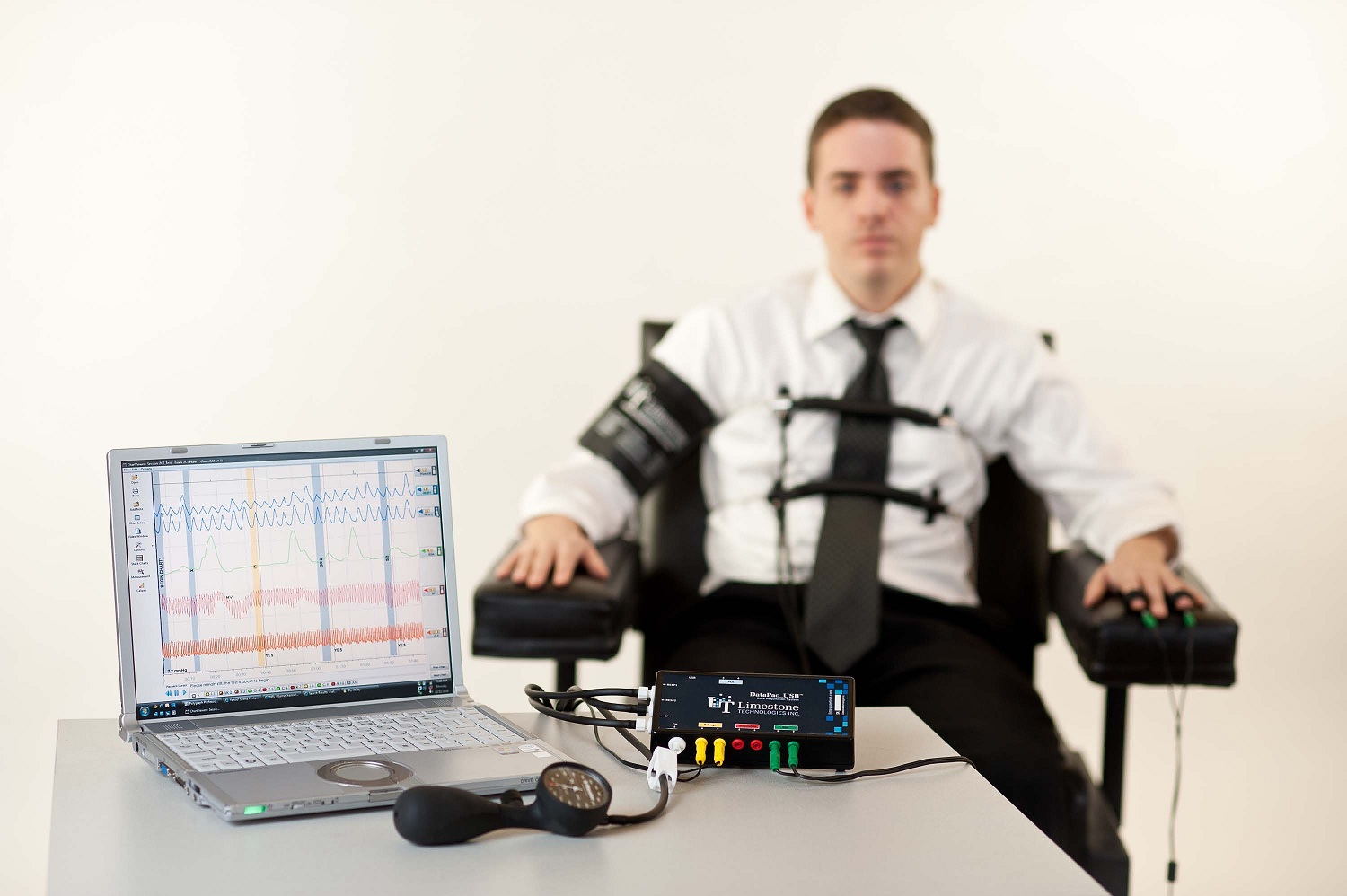
Sweat can be a smelly messenger, but one that also carries a trove of valuable information about how our bodies are feeling.

Scientists at several labs are now trying to pick its lock with nano-technology, including know-how transferred from GE’s jet engine research, to develop flexible, Band-Aid-like wireless sensors sensitive enough to detect a drop of biomolecules found in sweat in 2.5 million gallons of water.

***

Polygraph_Test_-_Limestone_Technologies_Inc

Meet the Fearbit: New Sweat Sensors Will Sniff Out Fatigue, Stress and Even Fear

***

Channel Surfing

Have you visited our other topic channels? Established to facilitate idea exchange and link our community together, the value of these topics is dependent upon your input. Please take a minute to visit. And, to prevent that annoying spam, we ask that you register.

Link: http://feeds.feedburner.com/HealthcareFinancialsthePostForcxos

Conclusion

Your thoughts and comments on this ME-P are appreciated. Feel free to review our top-left column, and top-right sidebar materials, links, URLs and related websites, too. Then, subscribe to the ME-P. It is fast, free and secure.

Speaker: If you need a moderator or speaker for an upcoming event, Dr. David E. Marcinko; MBA – Publisher-in-Chief of the Medical Executive-Post – is available for seminar or speaking engagements. Contact: MarcinkoAdvisors@msn.com

OUR OTHER PRINT BOOKS AND RELATED INFORMATION SOURCES:

Product DetailsProduct Details

Arnold Spielberg and the Birth of Personal Computing

Join Our Mailing List

It’s BASIC*

[By staff reporters]

From Thomas Edison to former President Ronald Reagan and novelist Kurt Vonnegut, GE has employed a number of luminaries over the course of its 123-year history.

But, one famous last name that’s been missing from this list is Spielberg.

***

Insurance Company Tower

***

Enter Arnold Spielberg

In the late 1950s, Arnold Spielberg, the father of Hollywood director Steven Spielberg, helped revolutionize computing when he designed the GE-225 mainframe computer. The machine allowed a team of Dartmouth University students and researchers to develop the BASIC programing language, an easy-to-use coding tool that quickly spread and ushered in the era of personal computers.

(Young Bill Gates, Paul Allen, Steve Wozniak and Steve Jobs all used the language when they started building their digital empires.)

LINK: http://www.gereports.com/post/117791167040/its-basic-arnold-spielberg-and-the-birth-of

More:

More on BASIC*

BASIC (an acronym for Beginner’s All-purpose Symbolic Instruction Code) is a family of general-purpose, high-level programming languages whose design philosophy emphasizes ease of use.

In 1964, John G. Kemeny and Thomas E. Kurtz designed the original BASIC language at Dartmouth College in New Hampshire. They wanted to enable students in fields other than science and mathematics to use computers. At the time, nearly all use of computers required writing custom software, which was something only scientists and mathematicians tended to learn.

Versions of BASIC became widespread on microcomputers in the mid-1970s and 1980s. Microcomputers usually shipped with BASIC, often in the machine’s firmware. Having an easy-to-learn language on these early personal computers allowed small business owners, professionals, hobbyists, and consultants to develop custom software on computers they could afford.

BASIC remains popular in many dialects and in new languages influenced by BASIC, such as Microsoft’s Visual Basic. In 2006, 59% of developers for the .NET Framework used Visual Basic .NET as their only programming language.

Conclusion

Your thoughts and comments on this ME-P are appreciated. Feel free to review our top-left column, and top-right sidebar materials, links, URLs and related websites, too. Then, subscribe to the ME-P. It is fast, free and secure.

Speaker: If you need a moderator or speaker for an upcoming event, Dr. David E. Marcinko; MBA – Publisher-in-Chief of the Medical Executive-Post – is available for seminar or speaking engagements. Contact: MarcinkoAdvisors@msn.com

OUR OTHER PRINT BOOKS AND RELATED INFORMATION SOURCES:

Product DetailsProduct Details

Product Details

The RAND Corporation’s Health IT Legacy‏

Join Our Mailing List 

Understanding ObamaCare and HIT Data Breaches

[By Darrell K. Pruitt DDS]

1-darrellpruittTwo current topics in the HIT industry: (1) A dishonest 2005 RAND study set up lawmakers for disappointment in electronic health records, which are essential to Obamacare, and (2) I told you so.

The Reports

Just the other day, there were reports of two data breaches of EHRs involving over 734,000 patients in Texas and California.

http://www.ihealthbeat.org/articles/2013/10/23/health-facilities-in-california-texas-report-health-data-breaches

For reasons like this, the wisdom of an ambitious mandate for paperless healthcare by 2014 is beginning to be questioned by the same lawmakers who were sucked in years ago by RAND’s tainted 2005 study.

According to the vendor-friendly results gleaned from vendor-friendly data supplied by vendors, EHRs should have started saving 100,000 lives and $77 billion a year, years ago. Predictably, that has not happened. Far from it!

The Findings 

The happy findings – discredited even by RAND in January of this year – were paid for by Cerner and GE, who profited immensely from their RAND investment. Since nationwide adoption of EHRs became a bi-partisan goal with bubbly beginnings and millions of campaign dollars, the costs and danger of healthcare IT didn’t appear to bother conservatives until three months after RAND admitted the study was garbage.

In April, six GOP senators, led by Sen. John Thune (R-S.D.), released a detailed report criticizing HHS Secretary Kathleen Sebelius’ execution of a $35 billion initiative to promote EHRs as part of the ARRA stimulus package. (See: “GOP senators raise concerns with push for electronic medical records,” by Sam Baker, April 16, 2013, The Hill).

http://thehill.com/blogs/healthwatch/medicare/294273-gop-senators-raise-concerns-with-push-for-electronic-medical-records

Wither ARRA?

Have you ever wondered why ARRA was passed as a jobs bill rather than as part of healthcare reform? Any ideas?

More recently, with the conservatives’ failure to stop Obamacare even by shutting down government, EHRs have become recognized as the ACA’s next best weakness. Yesterday, Greg Scandlen, writing for RightSideNews.com, posted “The Tyranny of Electronic Systems.” It goes downhill from there.

http://www.rightsidenews.com/2013102333379/life-and-science/health-and-education/the-tyranny-of-electronic-systems.html

Even More

Also yesterday, Michelle Mailkin writing for Townhall.com, an ultra-conservative website similar to RightSideNews, posted, “Don’t Forget Obamacare’s Electronic Medical Records Wreck.

http://townhall.com/columnists/michellemalkin/2013/10/23/dont-forget-obamacares-electronic-medical-records-wreck-n1730172?utm_source=TopBreakingNewsCarousel&utm_medium=story&utm_campaign=BreakingNewsCarousel

Assessment 

Conservatives found traction: Without the anticipated healthcare savings from EHRs, Obamacare will not survive. These times are not as happy for EHR stake-holders as RAND led them to expect.

Conclusion

Your thoughts and comments on this ME-P are appreciated. Feel free to review our top-left column, and top-right sidebar materials, links, URLs and related websites, too. Then, subscribe to the ME-P. It is fast, free and secure.

Link: http://feeds.feedburner.com/HealthcareFinancialsthePostForcxos

Speaker: If you need a moderator or speaker for an upcoming event, Dr. David E. Marcinko; MBA – Publisher-in-Chief of the Medical Executive-Post – is available for seminar or speaking engagements. Contact: MarcinkoAdvisors@msn.com

OUR OTHER PRINT BOOKS AND RELATED INFORMATION SOURCES:

LEXICONS: http://www.springerpub.com/Search/marcinko
PHYSICIANS: www.MedicalBusinessAdvisors.com
PRACTICES: www.BusinessofMedicalPractice.com
HOSPITALS: http://www.crcpress.com/product/isbn/9781466558731
CLINICS: http://www.crcpress.com/product/isbn/9781439879900
ADVISORS: www.CertifiedMedicalPlanner.org
BLOG: www.MedicalExecutivePost.com

Product DetailsProduct DetailsProduct Details

Product Details  Product Details

Product DetailsProduct Details

Product Details

HealthyMagination and Direct to Consumer [D2C] eMRs?

About HealthyMagination.com from GE

By Staff Reporters

Just imagine … the broadcast TV or radio commercial fades in, as the announcer says:

“Almost everyone wants to make healthier choices, but they don’t always know how. The amount of information available on wellness, nutrition and exercise is overwhelming, to say the least. Even when we do know how to improve our health, we often try to make sweeping changes or set goals that seem too daunting to reach.”

What it is

Healthymagination, from General Electric, is a consumer directed internet site, with new D2C TV commercial about becoming healthier, through the sharing of imaginative ideas and proven solutions. It goes beyond innovations in the fields of technology and medicine, celebrating the people behind these advancements.

Seeking to build stronger relationships between patients and doctors, GE created healthymagination to gather, share and discuss healthy ideas and illustrative stories.

Story link: http://www.healthymagination.com/stories/

Participatory Projects for Patients

Because healthymagination is about becoming healthier together, it takes the form of multiple projects that patients can participate in, whether they are looking to change a lifestyle or fine-tune an approach to health.

According to GE, making healthy decisions should be easy … and fun.

Link: http://www.healthymagination.com/projects/

Info and Video for Doctors

There is also a portal for medical professionals, promoting GE eMRs, of course.

Link: http://www.ge.com/innovation/emr/index.html

Due Diligence RFP

And, good preliminary questions for all physicians to ask any eMR vendor are:

  • What is the cost per physician license?
  • Do you have any existing clients in our specialty?
  • Does your system come pre-loaded with templates for my specialty?
  • Is your company the developers of the software or is it re-branded from another vendor?
  • Is your system client/server based or ASP based?
  • Does your system include practice management software?
  • How many clients does your company have?
  • Is your system HL7 compliant?
  • How long has your company been in business?
  • Is your development done overseas?
  • Is support done overseas?
  • Is your software CCHIT certified? If not, why?
  • How often is the software updated?

Assessment

Let us hope that the health 2.0 participatory patient of the future doesn’t select a physician based on the proprietary eMRs s/he uses, as seen on a television commercial, much like the D2C [direct-to-consumer] pharmaceutical industry of today.

IOW: Will that be Allscripts, Cerner or GE, etc? Or, listen to narrator and actor Morgan Freeman intone on a TV spot: “Ask your doctor if XYZ electronic medical records are right for you.” 

Conclusion

And so, your thoughts and comments on this ME-P are appreciated. Give em’ a click, and tell us what you think about: www.HealthyMagination.com Then – please be sure to subscribe to the ME-P. It is fast, free and secure.

Link: http://feeds.feedburner.com/HealthcareFinancialsthePostForcxos

Get our Widget: Get this widget!

Our Other Print Books and Related Information Sources:

Practice Management: http://www.springerpub.com/prod.aspx?prod_id=23759

Physician Financial Planning: http://www.jbpub.com/catalog/0763745790

Medical Risk Management: http://www.jbpub.com/catalog/9780763733421

Healthcare Organizations: www.HealthcareFinancials.com

Health Administration Terms: www.HealthDictionarySeries.com

Physician Advisors: www.CertifiedMedicalPlanner.com

Subscribe Now: Did you like this Medical Executive-Post, or find it helpful, interesting and informative? Want to get the latest ME-Ps delivered to your email box each morning? Just subscribe using the link below. You can unsubscribe at any time. Security is assured.

Link: http://feeds.feedburner.com/HealthcareFinancialsthePostForcxos

ADA Opens a Facebook

Join Our Mailing List

Perhaps too Early?

[By Darrell K. Pruitt; DDS]pruitt

Something strange has happened to www.DentalBlogs.com I think they have partially shut down their Facebook account. They no longer feature original articles such as those by Dr. Rhonda Savage and Ms. Linda Miles, and in the last couple of weeks, they eliminated their collection of photos. Now the site only features ads and press releases. Does anyone else wonder what happened? Sure you do! This is exciting.

Perhaps Re-Tooling 

Unless they are just re-tooling this weekend, I suspect that since their previous format was biased heavily in favor of advertising dollars in a tough economy, their funding simply dried up. Like so many other advertising-related careers, the dinosaur found it couldn’t compete in a 2.0 market.  Nevertheless, today I did learn something important from the DentalBlogs Wall: The ADA has opened a Facebook account.

http://www.facebook.com/home.php#/pages/American-Dental-Association/32252997166?ref=mf

Such transparency is inspirational

When I announced this news on Twitter a few hours ago (“Proots”), neither the ADA nor the TDA had yet told membership. Yea, I scooped them on their in-house news. It happens all the time.  Naturally, I became a fan of the ADA Facebook. When I joined, there were already 1205 fans, even though the site is yet operational. I found that intriguing because it usually takes a long time for most FBs to attain 1200 fans – especially when all one can gather is the mission statement of the ADA’s newest Internet site.

My View 

Here’s what I see: About the time DentalBlogs laid off employees from their fully active Facebook, the ADA opened theirs (Gasp)! The ADA was well known to DentalBlogs because the ADA once advertised with them regularly. That is where I found an article about the ADA-approved CareCredit/GE that ended up causing problems for some people and entertainment for others. Let’s face it, friends. I just know that I’m not the only dentist in the nation with at least two burning questions. I bet at least 4 others are wondering who were the first seven fans to sign up for the ADA Facebook and Has Kim Volk, CEO of DDPA signed up yet?

Because the number of fans is rapidly piling up, such information from a few weeks (?) ago could soon be just too difficult to uncover from the fans list on the ADA site. It took a long time for me to scroll down through 1200 names – looking for those I recognize (Gasp)!

Scrolling Quickly, but Carelessly

I could have easily missed several easily recognizable names in contemporary dentistry, but as far as I can tell, not only was Delta Dental Plans Association CEO Kim E. Volk’s name not present in the list of 1200 fans, but there were very few names I recognized … and I’m sorry if I insulted anyone. I also did not see “Ron Tankersley” and other ADA officials’ names on the fans list. Didn’t the ADA try partial transparency like this once before? I may be wrong, but I think I played a role in shutting it down a few years ago with my persistent and still unanswered questions about the NPI number.

More Semi-Reliable Information

Here’s another bolus of semi-reliable information: I also quickly scrolled through DentalBlog’s list of 400 fans and did not notice an unusual amount of matches with the ADA Facebook fans list.

Those who dare to do so, might just ask, “So if the ADA fans didn’t come from dentalblogs, where did they come from?” I think one possibility is that the ADA effort has been in Beta and limited to a select group of people up until now. Doesn’t it seem strange that nobody is able to post anything? Did someone open the doors a few hours early? So who were the first 7 fans? No, you don’t have to scroll down to find out for yourself. I’ll tell you.

Who is John Hergert?

The first person to become a fan of the ADA Facebook account is named John Hergert from Chicago, Illinois.

2nd – Laurie Rich

3rd – Amy Lund

4th – Kelsey Majors

5th – Jessica Stevens

6th – Samantha Campbell

7th – Lina Kulkormi

I don’t recognize any of the seven, and I have not searched anyone’s name other than John Hergert’s – the first person to become a fan of the ADA Facebook. I found someone named John Hergert in Chicago, Illinois who is Associate Vice President at Lipman Hearne Inc. – an advertising agency.

http://www.spoke.com/info/p6JVgPy/JohnHERGERT.

Here is the bio of the person I only suspect is the first to become a fan of the ADA Facebook.

John Hergert’s Biography

John Hergert Associate Vice President John Hergert has a keen understanding of what it takes to capture and hold the attention of marketing audiences via innovative marketing techniques. Formerly Associate Director of Marketing Communications at DePaul University in Chicago, John works with both traditional and interactive media to design and implement marketing strategies that build a client’s image, increase support, and grow enrollment or attendance. John’s experience includes developing ROI-based marketing strategies for a variety of nonprofit and for-profit clients. Prior to DePaul, John was an account executive overseeing marketing and advertising strategy, web development, direct mail, print production, and promotional development for clients including Disney, Marconi, Owens Corning, and Reynolds. John began his marketing career while at the University of Wisconsin, where he was hired by a Los Angeles firm to implement cutting-edge marketing programs for Saturn and Trek Bicycle Corporation. John received his B.A. in Journalism from the University of Wisconsin and his Master of Science in Information Systems from DePaul University.”

Assessment 

What do you want to bet that the ADA Facebook is Mr. Hergert’s baby?

Channel Surfing the ME-P

Have you visited our other topic channels? Established to facilitate idea exchange and link our community together, the value of these topics is dependent upon your input. Please take a minute to visit. And, to prevent that annoying spam, we ask that you register. It is fast, free and secure.

Conclusion

Your thoughts and comments on this ME-P are appreciated. Feel free to review our top-left column, and top-right sidebar materials, links, URLs and related websites, too. Then, subscribe to the ME-P. It is fast, free and secure.

Speaker: If you need a moderator or speaker for an upcoming event, Dr. David E. Marcinko; MBA – Publisher-in-Chief of the Medical Executive-Post – is available for seminar or speaking engagements. Contact: MarcinkoAdvisors@msn.com

OUR OTHER PRINT BOOKS AND RELATED INFORMATION SOURCES:

Dictionary of Health Insurance and Managed Care


Product DetailsProduct DetailsProduct Details

Product Details  Product Details

   Product Details 

On Financial Sector Failings

Understanding the Debacle

[By Staff Reporters]56371606

Did you know that Michael Lewis and David Einhorn recently gave a nice review of the financial system catastrophe, and its devastating flaws, causes and effects, in the January 3rd 2009 New York Times?

Exposing the Flaws

In review of How to Repair a Broken Financial World, they said:

1. Wall Street CEOs won’t self-incriminate or blow the whistle on their own companies [Think: thin-blue line]. And, they receive bonuses and are on peer-compensation committees. Perhaps they might even be fired if they self-accuse of irresponsibility.

2. The credit-rating agencies, which are supposed to carefully measure the amount of risk that companies take, dropped the ball.

For example Fannie, Freddie, GE and AIG all had triple-A ratings; remember Enron? But, they disguised the risk, rather than expose it. Why? Because they would have to re-rate tens of thousands of credits tied to them, as well as increase their own cost-of-capital; integrity and reputations be damned! And, did the big financial firms contribute to those very same credit-rating agencies [pay-2-play]?

3. Was Chris Cox and the Securities and Exchange Commission [SEC] competent enough, or motivated enough, to do its job and investigate the Madoff scheme even after being warned about it?

Assessment

Can you cite some other, even more pernicious, flaws? For example; how did the mortgage industry’s engorgement of commission-driven sales, and the consumer sentiment to “own a home – at all costs” factor into the fault-line?   

Link: http://www.nytimes.com/2009/01/04/opinion/04lewiseinhornb.html?_r=1

Conclusion

Your thoughts and comments on this ME-P are appreciated. Feel free to review our top-left column, and top-right sidebar materials, links, URLs and related websites, too. Then, subscribe to the ME-P. It is fast, free and secure.

Link: http://feeds.feedburner.com/HealthcareFinancialsthePostForcxos

Speaker: If you need a moderator or speaker for an upcoming event, Dr. David E. Marcinko; MBA – Publisher-in-Chief of the Medical Executive-Post – is available for seminar or speaking engagements. Contact: MarcinkoAdvisors@msn.com

OUR OTHER PRINT BOOKS AND RELATED INFORMATION SOURCES:

Product Details  Product Details