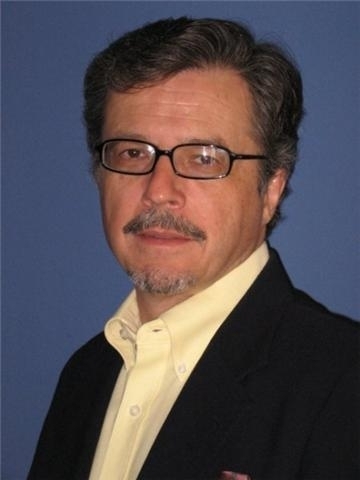
R.I.P. Richard Wagner JD CFP®

On the Life of “Dick” Wagner


By Rick Kahler CFP®

The financial planning profession lost one of its most significant figures this past week. Richard Wagner, my friend and mentor, died suddenly.

Dick, a longtime financial planner in Colorado, was one of the pioneers and thought leaders of personal financial planning. His visionary leadership and commentary were closely followed and highly respected by financial planners worldwide.

Dick’s influence on financial planning was profound. He was one of the early leaders to understand the emotional impact that money has on our lives and to believe that financial planning must include that emotional component in order to fully serve clients’ needs. We each have an individual relationship with money, which affects everyone in all facets of our lives. For this reason, Dick called money “the most powerful and pervasive secular force on the planet.”

He served as the President of the Institute of Certified Financial Planners and received the Financial Planning Association’s (FPA) highest honor, the P. Kemp Fain, Jr. He was a co-founder of the Nazrudin Project, a leaderless brain trust of 100 of the more forward-thinking planners, therapists, and coaches in financial planning. From this group emerged many FPA presidents, as well as scores of influential books and white papers. For its size, Nazrudin has had a disproportionate and continuing impact on the financial planning profession.

Dick also served on the founding board of the Financial Therapy Association. His keynote address at the group’s first conference eloquently laid the foundation for this embryonic movement of blending psychology and financial planning.

Dick’s life work, the beloved passion he carried for decades, was to see financial planning become a profession. In fact, he envisioned financial planning as the most important 21st century profession because of its focus on money. He challenged financial planners to give their best to their clients and their profession. Even further, he urged us to build an authentic profession—one he saw as dedicated to helping people manage intangible but essential functions, maintaining a responsibility to put clients’ interest first, and serving not only individuals but humanity and the greater good. One of Dick’s last contributions to the profession was the publication of the book he labored for 20 years to write, Financial Planning 3.0.

Anyone who knew Dick for more than a minute knew that he told it like it was—with gusto, clarity, and passion. He characteristically would sum up the essence of financial planning as:

“Save more, spend less, and don’t do anything stupid.”

Most importantly, I knew him as an immensely caring, passionate, wise, and conscientious soul. He was one of my valued mentors. The scope of his ideas and the depth of his creative vision challenged me to question my assumptions and expand my own views of what my chosen profession could become.

I had the privilege of spending many weekends with Dick as a member of a small group of financial planning pioneers who were trying to make sense of this union of emotions and money. I often equated listening to Dick’s visions of “what could be” to flying a commercial airliner at 45,000 feet. While he was soaring, I would spend most of my time trying to figure out if and where we could land the plane.

Wherever he may be now, I believe Dick is still soaring—once again, far higher and farther than those of us left behind. His passing leaves me shocked and saddened, with a sense of grief not yet eased by the gratitude I feel for having known him. The financial planning profession to which he devoted so much of his life was vastly enriched by his ideas and his work. 

Publisher’s Note:

Although I never personally met Dick, I do consider him a friend and colleague. We emailed and spoke on the phone, often. In fact, he contributed to the first edition of our book: Financial Planning Handbook For Physicians And Advisors; now in it’s fourth iteration: Comprehensive Financial Planning Strategies for Doctors

Rest in peace my friend. Robert Pine said it well when he noted,

“What we have done for ourselves is soon forgotten but what we have done for others remains and is immortal.”

-Dr. David Marcinko MBA

Conclusion

Your thoughts and comments on this ME-P are appreciated. Feel free to review our top-left column, and top-right sidebar materials, links, URLs and related websites, too. Then, subscribe to the ME-P. It is fast, free and secure.

Speaker: If you need a moderator or speaker for an upcoming event, Dr. David E. Marcinko; MBA – Publisher-in-Chief of the Medical Executive-Post – is available for seminar or speaking engagements. Contact: MarcinkoAdvisors@msn.com

OUR OTHER PRINT BOOKS AND RELATED INFORMATION SOURCES:

Risk Management, Liability Insurance, and Asset Protection Strategies for Doctors and Advisors: Best Practices from Leading Consultants and Certified Medical Planners™8Comprehensive Financial Planning Strategies for Doctors and Advisors: Best Practices from Leading Consultants and Certified Medical Planners™

***

On American Health Care and Financial Services Competitiveness

A MEMORIAL DAY OPINION – EDITORIAL

[Innovation – Not Nationalization – Can Again Lead]

By Dr. David Edward Marcinko; FACFAS, MBA, CPHQ, CMP™

[Publisher-in-Chief]

By Hope Rachel Hetico; RN, MHA, CPHQ, CMP™

[Managing Editor]

Ann Miller; RN, MHA

[Executive-Director]

American Flag

On this 2010 Memorial Day weekend, please allow us to directly reflect for a moment on the decline of the healthcare, banking and financial services industry in America. And; then somewhat indirectly comment on the hopeful emergence of the web 2.0 phenomena of which we all are a part. The competitive applicability to these sectors should be appreciated by the insightful ME-P reader.

Collapse of Command and Control Monopolies and Oligarchies   

Old monopolies everywhere are crumbling because of tougher new competitors and the transparency wrought by electronic connectedness. For example, our old newspaper has to compete with the internet, your electric utility company battles low-cost local start-ups, telephone companies must begin installing fiber optic lines to fend off cable companies; and RIAs and fiduciary focused financial advisors [FAs] will supplant BDs and stock brokers in the financial services sector.

www.CertifiedMedicalPlanner.com

cmp-logo

The airline industry collapsed a few years ago, the banking industry has just collapsed, and the auto industry is recovering as we pen this post. [We have a particular affinity for the auto sector however, as the son of a UAW member and step-daughter of Michiganders]. Regardless, the rush to more intense competition cannot be stopped. As a doctor, FA or other business competitor; you either keep pace or get crushed by quasi-oligarchic organizations like the American Medical Association [AMA], American Podiatric Medical Association [FPMA], American Dental Association [ADA], American Osteopathic Medical Association AOMA], Financial Planning Association [FPA], Certified Financial Planner Board of Standards [CFP BoS], College for Financial Planning [CFP] or the National Association of Personal Financial Advisors [NAPFA], etc. What have they, and Wall Street, done for you … lately? Scandal, taint, doubt, lost-credibility, a business-as-usual ennui, lethargy and ruin! Enter www.Sermo.com

Link: https://healthcarefinancials.wordpress.com/2009/04/19/calling-for-cfp%c2%ae-fiduciary-status-real-education-and-higher-duty/#comment-4136

Health Insurance Companies

In the last-generation of health insurance companies and related fraternal medical organizations, patients exercised great control over physician selection, had quicker access to specialists and encountered fewer restrictions on care. The reverse was true with financial services. But, because of advancing technology, aging demographics, intense R&D, global manufacturing, and escalating domestic HR costs – competitive market forces against traditional and structured staff model managed care companies – many industry analysts [like us] predicted growth would decline [Yes, greed was also involved as healthcare was presumed a recession-proof sector; and didn’t we all own behemoth big-pharma and HMO stocks in our 401-K, and 403-B plans]? But now, many former stock-brokers and FAs are going rogue; er – independent!

“Although inefficiencies in any business often open up in the short term, and can be greatly exploited by creative and visionary entrepreneurs – as in most business structures – market forces will prevail in the long run”.

Leo F. Mullin, MBA

[Former CEO – Delta Airlines]Shadows

Next-Gen with “Fly”

Fortunately, a new generation of enlightened physician and FA entrepreneurs is coming “out-of-the-shadows” as new-wave web 2.0 corporations and RIAs are becoming more flexible, competitive and market responsive. Simultaneously, monolithic and collectivist political ideas keep trying to regulate the medical and financial services workplace with rules, regulations and contracts to control entire populations. Yet, in the new healthcare economy, this new generation of doctors and FAs with “fly,” is headed toward more competition; not less – with more collaboration with patients and clients – regaining self autonomy.

Physician and FA Advocates

Meanwhile, as medical professionals, FAs and patient advocates, we must all choose between staying flexible to ride out tough times – or – adopting a hard, brittle line that will crack under the pressure of competition. We know where we stand at the ME-P, do you?

Flexibility and Virtual Reality

In recent years, many large corporations and top-down business models were not market responsive and change was not inherent in their DNA. These traditional organizations represented a rigid or “used-to-be” mentality, not a flexible or “wanna-be” mindset; according to business columnist Alan Webber. Some financial advisory corporations, and today’s emerging health 2.0 initiatives, may possess the market nimbleness that cannot be recreated in a controlled or collectivist [nationalistic] environment. And so, going forward, it is not difficult to imagine the following new rules for the new financial and virtual medical ecosystem.

[A] Rule No. 1

Forget about “SEC suitability and FINRA rules”, large office suites, surgery centers, fancy equipment, larger hospitals and the bricks and mortar that comprised traditional medical practices or financial product delivery systems. One doctor or niche focused FA with a great idea, good bedside manners or competitive advantage, can outfox a slew of public servants, the AMA, SEC, ADA or FINRA “faux copy-cat examiners”, while still serving the public – and patients – and making money. It’s now a unit-of-one economy where “Me Inc.”, is the standard. Physicians and FAs must maneuver for advantages that boost their standing and credibility among patients, peers, payers, customers and clients. Examples include patient satisfaction surveys; outcomes research analysis, evidence-based-medicine, physician economics credentialing and true integrated fiduciary-focused financial planning.

However, we should also realize the power of networking, vertical integration and the establishment of virtual RIAs or medical practices, which come together to treat a patient, or help a client, and then disband when a successful outcome is achieved. Job security is earned with more successful outcomes; not necessarily a degree, automatic AUMs, certifications or onsite presence. In fact, some competition experts, like Shirley Svorny PhD, a professor of economics and chair of the Department of Economics at California State University, wonder if a medical degree is a barrier – rather than enabler – of affordable healthcare.

Link: https://healthcarefinancials.wordpress.com/2009/01/08/medical-licensing-obstacle-to-affordable-quality-care

Others even presume the establishment of virtual medical schools and hospitals, where students and doctors learn and practice their art on cyber-entities that look and feel like real patients, but are generated electronically through the wonders of virtual reality units. The same can be said for the financial services industry, although much farther down-line given its current slow rate of real education and quasi-professional acceptance.

[B] Rule No. 2

Challenge conventional wisdom, think outside the traditional box, recapture your dreams and ambitions, disregard conventional gurus and work harder than you have ever worked before. Remember the old saying, “if everyone is thinking alike, then nobody is thinking”. Do collective-nistas and nationalized healthcare advocates react rationally; or irrationally? [THINK: Wall Street, medical unions]

[C] Rule No 3

Differentiate yourself among your healthcare and financial advisory peers. Do or learn something new and unknown by your competitors. Market your accomplishments and let the world know. Be a non-conformist. Conformity is an operational standard and a straitjacket on creativity. Doctors and FAs should create and innovate, not blindly follow organization or political “union” leaders [shop stewards, BDs, etc] into oblivion.

[D] Rule No 4

Realize that the present situation is not necessarily the future. Attempt to see the future and discern your place in it. Master the art of the quick change with fast but informed decision making. Do what you love, disregard what you don’t, and let the fates have their way with you. Then, decide for yourself if you are of this ilk – and adhere to any of the above rules? Or, just become an employed [government, BD] doctor or FA shill. Just remember that the political party, or monopoly that can give you a job, can also take it away [THINK: LB, ML, Wachovia, national healthcare, etc].

CP 1

Memorial Day Considerations

Finally, on this Memorial Day weekend, consider that life and career is a journey, and that in this country we have the choice to ponder or pursue any, and all of the above options, and more. We have the ability to think, cogitate and ruminate, as we have done here today. So – please – thank those who have helped turn this idealistic philosophy, into pragmatic daily reality.

For us personally, we thank Bonze Star Medal Winner Captain Cecelia T. Perez, RN. Now – ponder and consider – who do you thank? If no one has impacted you up-close on this Memorial Day weekend and national holiday, please visit our military channel to reflect, comment and opine.

Link: https://healthcarefinancials.wordpress.com/category/military-medicine

Conclusion

And so, your thoughts and comments on this Medical Executive-Post are appreciated. Feel free to review our top-left column, and top-right sidebar materials, links, URLs and related websites, too. Then, be sure to subscribe to the ME-P. It is fast, free and secure.

Link: http://feeds.feedburner.com/HealthcareFinancialsthePostForcxos

Speaker: If you need a moderator or speaker for an upcoming event, Dr. David E. Marcinko; MBA – Publisher-in-Chief of the Executive-Post – is available for seminar or speaking engagements. Contact: MarcinkoAdvisors@msn.com  or Bio: www.stpub.com/pubs/authors/MARCINKO.htm

Get our Widget: Get this widget!

Our Other Print Books and Related Information Sources:

Practice Management: http://www.springerpub.com/prod.aspx?prod_id=23759

Physician Financial Planning: http://www.jbpub.com/catalog/0763745790

Medical Risk Management: http://www.jbpub.com/catalog/9780763733421

Healthcare Organizations: www.HealthcareFinancials.com

Health Administration Terms: www.HealthDictionarySeries.com

Physician Advisors: www.CertifiedMedicalPlanner.com

Subscribe Now: Did you like this Medical Executive-Post, or find it helpful, interesting and informative? Want to get the latest ME-Ps delivered to your email box each morning? Just subscribe using the link below. You can unsubscribe at any time. Security is assured.

Link: http://feeds.feedburner.com/HealthcareFinancialsthePostForcxos

New Regulations Needed For Financial Planners?

So Says New Coalition

By Dr. David Edward Marcinko; MBA, CMP™

[Publisher-in-Chief]

The Financial Planning Coalition [FPC] is pushing for a law that would require anyone calling themselves a financial planner to meet certain ethical and educational standards and to register with the Securities and Exchange Commission [SEC].

About the FPC

According to its’ website, the Financial Planning Coalition is a collaboration of Certified Financial Planner Board of Standards (CFP Board), the Financial Planning Association® (FPA), and the National Association of Personal Financial Advisors (NAPFA) to advise legislators and regulators on how to best protect consumers by ensuring financial planning services are delivered with fiduciary accountability and transparency. Americans have grown leery of those who work in financial services.

Currently, financial planning (the process of advising individuals and families across a range of personal finance topics in addition to investment advice) is unregulated as a profession, resulting in major gaps in current laws. So, is it really a “profession” many ask – void of any significant barrier to entry?

The Financial Planning Coalition intends to work with Congress to produce legislation that puts the interests of clients first and enables consumers to identify a trusted financial adviser.

To learn more about the Financial Planning Coalition’s purpose and mission, click here to read, or download the Statement of Understanding [PDF].

SEC Wrong Oversight Agency?

According to this report in Financial Advisor magazine, an advertiser-driven trade journal:

the standards would be set by a public oversight board that would be funded by small registration fees paid by the financial planners, said Robert Glovsky, chair of the Certified Financial Planner Board of Standards during a conference call today. The CFP Board, as well as the Financial Planning Association and the National Association of Personal Financial Advisors makes up the coalition.

Exemptions

However, brokers and insurance agents would not be forced to register as financial planners, but those who held themselves out as financial planners would have to meet the required minimum competency and ethics standards or stop using the financial planner title.

Assessment

And so, as we have noted, written, preached and warned for more than a decade – anyone can call themselves a financial planner, or financial advisor; so beware medical colleagues.

More: http://www.fa-mag.com/fa-news/5314-new-regs-needed-for-financial-planners-coalition-says.html

NOTE: The fiduciary definitional standard conundrum was not even addressed in the article or by the committee, as far as I know. Moreover, note that SEC oversight was in place before, during and now after the Bernie Madoff scandal – so enough said about competency! www.HealthDictionarySeries.com

Conclusion

Your thoughts and comments on this ME-P are appreciated. What do you think FAs, and CFPs®? Should all become an RIA or ERISA styled fiduciary? Or, will this be another CFP® lite fiasco?

Feel free to review our top-left column, and top-right sidebar materials, links, URLs and related websites, too. Then, be sure to subscribe to the ME-P. It is fast, free and secure.

Disclaimer: I am a former certified financial planner and CEO of the online www.CertifiedMedicalPlanner.com program for fiduciary advisors working in the healthcare space.

Link: http://feeds.feedburner.com/HealthcareFinancialsthePostForcxos

Speaker: If you need a moderator or speaker for an upcoming event, Dr. David E. Marcinko; MBA – Publisher-in-Chief of the Medical Executive-Post – is available for seminar or speaking engagements. Contact: MarcinkoAdvisors@msn.com

Get our Widget: Get this widget!

Our Other Print Books and Related Information Sources:

Practice Management: http://www.springerpub.com/prod.aspx?prod_id=23759

Physician Financial Planning: http://www.jbpub.com/catalog/0763745790

Medical Risk Management: http://www.jbpub.com/catalog/9780763733421

Healthcare Organizations: www.HealthcareFinancials.com

Health Administration Terms: www.HealthDictionarySeries.com

Physician Advisors: www.CertifiedMedicalPlanner.com

Subscribe Now: Did you like this Medical Executive-Post, or find it helpful, interesting and informative? Want to get the latest ME-Ps delivered to your email box each morning? Just subscribe using the link below. You can unsubscribe at any time. Security is assured.

Link: http://feeds.feedburner.com/HealthcareFinancialsthePostForcxos

Sponsors Welcomed

And, credible sponsors and like-minded advertisers are always welcomed.

Link: https://healthcarefinancials.wordpress.com/2007/11/11/advertise


Product DetailsProduct DetailsProduct Details

Product Details  Product Details

Product Details

Dr. Somnath Basu on Investing

Join Our Mailing List

He Writes for the Medical Executive-Post

By Ann Miller; RN, MHA

[Executive-Director]

Dr. Somnath Basu is no stranger to the ME-P, or the financial planning community. He is a Professor of Finance at California Lutheran University and the Director of its California Institute of Finance.

Academic Background

Dr Basu earned his BA in Economics, University of Delhi, MBA (Finance), Marquette University and a PhD (Finance), University of Arizona. He is well published and is an award winning teacher. He has significant consulting experience with US Fortune 100 companies, advising institutional money managers and in developing proprietary finance and planning software. He serves on various Boards and committees including the CFP (chaired the Model Curriculum Revision Committee) Board of Standards and the Financial Planning Association.

Basu’s New Book

His new book, co-authored with Professors’ Block and Hirt, Investment Planning for Financial Professionals is available now, published by McGraw Hill, in May 2006.

Link: http://www.amazon.com/Investment-Planning-Geoffrey-Hirt/dp/0071437215/ref=sr_1_1?ie=UTF8&s=books&qid=1265918999&sr=1-1

Additional essays by Dr. Basu can be viewed at: http://blog.fpaforfinancialplanning.org/author/somnathbasufpa/

He also writers a column for the Journal of Financial Services Professionals. He can be reached at:

Contact Dr. Somnath Basu
Director – California Institute of Finance
Cell: 805 405 4448
Work: 805 493 3980
http://www.clunet.edu/cif

Conclusion

Your thoughts and comments on this ME-P are appreciated. Feel free to review our top-left column, and top-right sidebar materials, links, URLs and related websites, too. Then, subscribe to the ME-P. It is fast, free and secure.

Speaker: If you need a moderator or speaker for an upcoming event, Dr. David E. Marcinko; MBA – Publisher-in-Chief of the Medical Executive-Post – is available for seminar or speaking engagements. Contact: MarcinkoAdvisors@msn.com

OUR OTHER PRINT BOOKS AND RELATED INFORMATION SOURCES:

Comprehensive Financial Planning Strategies for Doctors and Advisors: Best Practices from Leading Consultants and Certified Medical Planners(TM)

Our Recent Experience with CFP® Mark Utility

Join Our Mailing List

Certification Falling from Grace – Deserved or Not?

By Dr. David Edward Marcinko; MBA, CMP™

[Publisher-in-Chief] dem21 

The Premise

In the summer [2008], we sent a random email blast to the first 200 Certified Financial Planners® on our list-serve. These were folks who had previously contacted us, and/or purchased our textbooks, handbooks, tools and/or dictionaries that assist accountants, financial advisors, attorneys, medical management consultants and all those working to assist physicians and medical professionals on business and economics matters.

The “Straw-Poll” Query

Our email blast asked the simple question:

“Did you ever voluntarily resign your license to use the CFP® mark?”

First Round Results

We received four positive responses [2%]. We then followed up to learn that 2 of the 4 were CPAs, one was a CFA and another was an MBA. Now, what do these results signify – probably nothing – or maybe an emerging trend?

Repeat

So, last summer [2009], after the continuing Wall Street collapse, and the Somnath Basu PhD article on “CFP Trust” in Financial Advisor magazine and this blog, we sent out a follow-up email to the exact same 200 Certified Financial Planners® as before; but carved-out and replaced the 4 CFPs who had resigned the mark, with 4 others.

Link: I Jealously “Shake my Fist” at Somnath Basu PhD

This time we asked the question:

“Have you recently considered allowing your CFP mark to lapse; or resigning it?”

Second Round Results

This time we received exactly eight positive replies [4%] or double the number from the first round. One CFP® said:

“I am rethinking my entire business and marketing philosophy. This includes separation from any taint left over from recent industry scandals – and yes – even including my CFP® mark”

 CMP logo

http://www.CertifiedMedicalPlanner.org

Assessment

This little experiment was not statistically significant by any means. And, again it probably is indicative of nothing. Yet, these types of questions must be boldly asked today; even if they were not even timidly asked yesterday.

Nevertheless, cited plausible reasons for the increased negative CFP® mark response may be:


  • CFP BoS lacks modernity and membership alliance. 
  • SEC mismanagement.
  • NASD/FINRA impotence.
  • Wall Street greed.
  • Lack of true fiduciary accountability.
  • Client anger and public distrust.
  • Advisor frustration at lost income.
  • College for Financial Planning and American College credibility.  
  • ME-P operations in the medical niche advisory space.
  • CFP® mark and related industry certification taint.
  • Alternative degrees and available designations.
  • Rise of RIAs and the fiduciary CMPmark for healthcare specificity.
  • Resigning [doing] and considering [thinking] are not equivalent;
  • etc, etc. 

It is interesting to note that no CFP® resigned their mark who did not hold either another graduate degree [MBA, MSFS, MA, MS, PhD], or more rigorous industry [CFA and CPA] certification.

Assessment 

So, is CFP mark allegiance just a union-like mentality of “united we stand – divided we fall”, by those with little to no gravitation pull of their own – or something else; ie., industry group think? You decide; and do tell us what you think.

Note: I am the founder of the CMP online education and certification program for financial advisors and consultants interested in the health economics, finance and medical practice management space, and a former [resigned] certified financial planner www.CertifiedMedicalPlanner.org 

Update 2013:

Conclusion

Your thoughts and comments on this ME-P are appreciated. Feel free to review our top-left column, and top-right sidebar materials, links, URLs and related websites, too. Then, subscribe to the ME-P. It is fast, free and secure.

Link: http://feeds.feedburner.com/HealthcareFinancialsthePostForcxos

Speaker: If you need a moderator or speaker for an upcoming event, Dr. David E. Marcinko; MBA – Publisher-in-Chief of the Medical Executive-Post – is available for seminar or speaking engagements. Contact: MarcinkoAdvisors@msn.com

OUR OTHER PRINT BOOKS AND RELATED INFORMATION SOURCES:

Product Details  Product Details

Product DetailsProduct Details

Introducing Somnath Basu; PhD MBA

Our Newest ME-P Thought-Leader in Finance and Economics

By Ann Miller; RN, MHA

[Executive Director]Dr. Basu

Dr. Somnath Basu is a Professor of Finance at California Lutheran University and the Director of its California Institute of Finance. Dr. Basu is also a Professor of the Helsinki School of Economics Executive MBA Program. He earned his BA in Economics, University of Delhi, MBA (Finance), Marquette University and a PhD (Finance), University of Arizona.

Publications and Experience

Dr. Basu is extensively published in the field of investments and financial planning and is an award winning teacher. He has significant consulting experience with US Fortune 100 companies, advising institutional money managers and in developing proprietary personal investment software. Dr. Basu is actively involved with financial planning organizations including the National Endowment for Financial Education (NEFE), the CFP Board of Standards, International CFP Board and the Financial Planning Association. He coauthored the book (with Block and Hirt), “Investment Planning for Financial Professionals” McGraw Hill, May 2006 which is widely used by financial planning programs nationwide. 

AssessmentCLU

To regular our ME-P readers, Dr. Basu’s opinions are well known and not without controversy. But, whether you agree with him or not, his commitment to the industry and his economics and financial planning students is solid. And, always adhering to the Socratic dialog tradition of candor intelligence and goodwill.

Link: https://healthcarefinancials.wordpress.com/2009/04/09/i-jealously-shake-my-fist-at-somnath-basu/

Link: https://healthcarefinancials.wordpress.com/2009/04/16/dr-somnath-basu-replies-to-the-cfp%c2%ae-mis-trust-controversy/ 

Conclusion

And so, your thoughts and comments on this Medical Executive-Post are appreciated. Pleas give Somnath a warm ME-P welcome and electronic “shout-out”. Then, be sure to subscribe to the ME-P. It is fast, free and secure.

Link: http://feeds.feedburner.com/HealthcareFinancialsthePostForcxos

Get our Widget: Get this widget!

Our Other Print Books and Related Information Sources:

Practice Management: http://www.springerpub.com/prod.aspx?prod_id=23759

Physician Financial Planning: http://www.jbpub.com/catalog/0763745790

Medical Risk Management: http://www.jbpub.com/catalog/9780763733421

Healthcare Organizations: www.HealthcareFinancials.com

Health Administration Terms: www.HealthDictionarySeries.com

Physician Advisors: www.CertifiedMedicalPlanner.com

College for Financial Planning Credibility

Join Our Mailing List

Confusing Nomenclature? 

By Dr. David Edward Marcinko; MBA, CMP™

[Publisher-in-Chief]

dem2Recently, John H. Robinson – a Honolulu based independent and dual-registered financial advisor who holds a degree in economics from Williams College and who has written and published numerous professional papers – essentially challenged the credibility of the College for Financial Planning.

“Dr. [Somnath] Basu [PhD] is quite correct in pointing out that the College for Financial Planning is not academically accredited and there are no admissions standards other than a nominal three year industry experience standard (three years as a clerk in a brokerage firm will qualify). Mr. [Kevin] Keller [CEO-CFP BoS] defends the curriculum by stating that, “Topics include economic concepts such as supply and demand, fiscal and monetary policy, time-value of money concepts…” The mere fact that that no prior college level academic experience in finance is required is testament to the fact that the coursework is largely 101 level materials.

To illustrate this point by example, economics represents one small chapter of the Investments section of the CFP curriculum. In contrast, econometrics and statistics alone was a semester long 300 level course in my undergraduate economics studies. This is not to suggest that the CFP program does not provide adequate training and preparation for a career in financial planning, but to assert that the CFP designation trumps a graduate or even undergraduate degree in finance or economics is difficult to defend. This was my counterpoint to Mr. [Dan] Moisand’s bellicose labeling of non-CFP certificants as “faux planners”.

Source: http://www.fa-mag.com/online-extras/4037-revisiting-cfp-credentialing.html

Moreover, he stated that:

In fairness, some of Dr. Basu’s ideals on the educational standards for financial planning certification seem a bit extreme as well. For instance, I can’t imagine subjecting doctors, attorneys, or even business school professors to periodic recertification exams.”

Source: http://www.fa-mag.com/online-extras/4037-revisiting-cfp-credentialing.html

The Big Question

And so, the big question for financial advisors and Certified Financial Planners®: Is the College for Financial Planning, a college at all? Is it accredited and more importantly, who accredits it? If not; why not? And, was the name “college” purposely selected to obfuscate?

Moreover, and of more importance to our physician readers, FAs and ME-P subscribers: Do doctors, attorneys or business school professors need to periodically recertify themselves by examinations?

IOW: Is Mr. Robinson correct or not – in fact or meaning – on one or both accounts? How about Dan Moisand? Am I, or Mr. Robinson, a “faux” planner?

Assessment

A paper co-authored by Mr. Robinson, entitled, “Reality Check: The implications of sustainable withdrawal analysis on real world portfolios” was awarded the CFP Board of Standards’ 2008 Outstanding Paper Award. He does not hold the CFP® designation.

Disclosure

Among many other “hats”, I am a former licensed insurance agent, certified financial planner, board certified surgeon, visiting B-school professor, and current academic provost for the CMP™ online program in health economics and medical practice management for fiduciary consultants. Our goal is to “raise the bar” for all colleagues in this space.

Update 2013:

Recent:

Conclusion

Your thoughts and comments on this ME-P are appreciated. Feel free to review our top-left column, and top-right sidebar materials, links, URLs and related websites, too. Then, subscribe to the ME-P. It is fast, free and secure.

Link: http://feeds.feedburner.com/HealthcareFinancialsthePostForcxos

Speaker: If you need a moderator or speaker for an upcoming event, Dr. David E. Marcinko; MBA – Publisher-in-Chief of the Medical Executive-Post – is available for seminar or speaking engagements. Contact: MarcinkoAdvisors@msn.com

OUR OTHER PRINT BOOKS AND RELATED INFORMATION SOURCES:

Health Dictionary Series: http://www.springerpub.com/Search/marcinko

Practice Management: http://www.springerpub.com/product/9780826105752

Physician Financial Planning: http://www.jbpub.com/catalog/0763745790

Medical Risk Management: http://www.jbpub.com/catalog/9780763733421

Hospitals: http://www.crcpress.com/product/isbn/9781439879900

Physician Advisors: www.CertifiedMedicalPlanner.org

Product DetailsProduct DetailsProduct Details

Product Details  Product Details

Product DetailsProduct Details