How EMR Vendors Mis-Lead Doctors [Part 2 of 2]

Join Our Mailing List

A SPECIAL ME-P REPORT

Practical “Tips and Pearls” from the Trenches

[Part Two]

By Shahid Shah MS http://www.healthcareguy.com

Shahid N. ShahAs your practice’s CIO it’s your job to challenge the vendors’ assertions about why you need an EMR, especially during the selection and production demonstration phase.

The most important reason for the digitization of medical records is to make patient information available when the physician needs that information to either care for the patient or supply information to another caregiver.

Electronic medical records are not about the technology but about whether or not information is more readily available at the point of need. In no particular order, the major reasons given for the business case of EMRs by vendors include:

  • Increase in staff productivity
  • Increase of practice revenue and profit
  • Reduce costs outright or control cost increases
  • Improve clinical decision making
  • Enhance documentation
  • Improve patient care
  • Reduce medical errors

Let’s tackle each potential benefit and see how they can be realized or left unfulfilled based on how a practice uses the technology solutions available to it. While thinking of the benefits, keep in mind that all automation solutions have voracious appetites for data entry and information. If you do not enter the data (either manually, through scanners, or integration with external systems) the value of the solutions cannot be realized. That’s why it’s crucial to consider how much time and effort you’d like to invest in data entry and if you’re not willing or able to take the time to enter the data into the system then the system is not going to work for you.

Increase in staff productivity

The first benefit often cited by vendors is improvement of your staff’s productivity. In a well-designed and properly implemented solution, an EMR can reduce the amount of time it takes for staff to locate records and find particular information about patients as well as generally conduct their tasks in a more efficient manner. However, actually achieving productivity improvement is much more difficult than vendors often make it sound. This is because the actual improvement in productivity is directly related to the amount of detailed data that is collected for patients across the entire practice workflow. Unless your practice has identified all or at least most major workflow steps and has created appropriate automation steps is unlikely that your productivity improvement will match what the vendor promises.

Ask your vendors specifically where the staff productivity improvements come from; in a demonstration have the sales person show you how specific functions of their software can improve staff effectiveness at particular tasks. Instead of citing just studies performed in large institutions, have the vendor show you how their benefits apply to your smaller setting. Ask specifically what happens if certain data is not entered in the way the vendor requires it; does it break the software, reduce the staff productivity benefits, or something else?

Product Details

Increase of practice revenue and profit

Most physician practices make money by seeing patients and charging fees for services; but when a vendor promises an improvement in revenue or an increase in profit, you must be very reluctant to believe the claims without specific evidence. An increase in revenue can only come when the number of patients seen per day per physician can be increased. An increase in profit can only be achieved if the costs associated with seeing patients can be reduced. Unless an EMR actually reduces the number of steps involved in seeing a patient and reducing the time associated with the non-clinical aspects of patient care there is no way that the introduction of the technology itself will increase revenue. Likewise, unless an EMR is designed to significantly remove staff burden and reduce the number of people in your office that you need to perform tasks associated with patient care, realizing an increase in profits will be tough.

During the software demonstration, ask the vendor about how the revenues increases come because of specific features. Dubious responses like studies performed in academic medical institutions or a reference to another client shouldn’t be enough – they should be able to demonstrate methodically how revenues will go up in your practice.

Reduce costs outright or control cost increases

In some fairly sophisticated implementations the reduction of costs has been proven to be possible; however outright cost reduction is still tough to gain. Controlling cost increases, however, is quite possible and is usually easier to attain because as your staff becomes familiar with their technology solutions they become more efficient over time and they are able to do more work with the same resources and staff therefore you may be able to increase the number of patients that you can see over time without increasing costs. Again, while immediate cost reductions are tough in a medical practice given that a large portion of your costs are associated with personnel, long-term cost reduction through either attrition or not having to hire new staff while still being able to increase their workload allows you to control costs better.

During the software demonstration, make sure you see how specific software features will reduce costs. You will get plenty of softballs being thrown your way about how other customers saw their costs go down or studies showing that large companies have seen the benefits. Your job as the CIO will be to force the vendor to tie cost savings specifically to use of their software, not computers in general.

Improve clinical decision making

Improving clinical decision-making is often a dubious endeavor and should not typically be the first reason you choose to implement an EMR; this is because clinical decision-making is and will remain a knowledge –based activity requiring significant training and teaching of computers before they can actually begin to improve clinical decisions. Physicians are some of the worlds’ best trained knowledge workers and they honed their clinical decision-making skills over a long period of time in very specialized training regimens that cannot easily at this time be duplicated by computers. When a vendor promises that an implementation of any EMR will improve decision-making from a clinical standpoint remain very skeptical.

Enhance documentation

Many vendors claim that their EMR’s will help improve and enhance clinical documentation. While this is very true for lead-based EMR is they are often creating much more documentation as far as quantity is concerned while likely reducing the actual quality of the information contained in the documentation. When implementing a template-based solution keep in mind that what a physician could normally easily write down in a couple of sentences will turn into many paragraphs in many pages of boilerplate text and boilerplate documentation that must then be stored red and understood by colleagues. So the promise of enhanced documentation is actually usually easy to achieve because you will get more pages of documents that are automatically generated but those pages that are generated may not necessarily be the most favorable from a clinical usefulness perspective.

Product DetailsProduct Details

Improve patient care

Many vendors proclaim that the installation of an EMR sometimes by itself will improve patient care; if by improvement of patient care they mean actually moving patients through the different steps associated with patient care in your office in a faster and more customer friendly manner then there is some truth to that. However if by improvement of patient care the promise is to actually make people’s healthcare better or truly improve a patient’s health itself then those claims must also be seen with a skeptical eye. This is similar to the clinical decision making enhancement promises that are often made; just like clinical decisions, patient care is a very human activity and simply introducing a better record keeping system will not improve people’s health. We are an improvement in health can occur however is in the tracking of clinical goals and helping patients meet those goals by reminding patients for regular tasks.

Reduce medical errors

Reduction of medical errors is a laudable goal; and in fact many EMR’s and the use of computerized physician order entry systems can help reduce medical errors by ensuring that common clerical types of errors do not occur. When looking at medical and clinical errors those errors that can easily fit well established and known rules can be automated in a somewhat friendly and easy manner and by using such automated tools error reduction is possible.

Assessment

However, when rules become difficult to define or are not widely agreed-upon then errors associated with such rules would not be caught.

PART ONE: How to Demo and Buy an EMR Office System [Part 1 of 2]

Conclusion

Your thoughts and comments on this ME-P are appreciated. Feel free to review our top-left column, and top-right sidebar materials, links, URLs and related websites, too. Then, subscribe to the ME-P. It is fast, free and secure.

Speaker: If you need a moderator or speaker for an upcoming event, Dr. David E. Marcinko; MBA – Publisher-in-Chief of the Medical Executive-Post – is available for seminar or speaking engagements. Contact: MarcinkoAdvisors@msn.com

OUR OTHER PRINT BOOKS AND RELATED INFORMATION SOURCES:

Product DetailsProduct DetailsProduct Details

How to Demo and Buy an EMR Office System [Part 1 of 2]

Join Our Mailing List 

A SPECIAL ME-P REPORT

Practical “Tips and Pearls” from the Trenches

[Part One]

By Shahid Shah MS http://www.healthcareguy.com

Shahid N. Shah MSWhen getting demonstrations from vendors, the only way to understand the value for the money being spent or invested is to measure and communicate the productivity improvements that IT is supposed to deliver.

If you cannot measure how much time something takes before technology is implemented you will never know whether or not the purchase of any technology was a wise investment.

Some of the measurements you should consider are:

  • how long it takes to pull up a patient chart
  • how long it takes to update common data elements within a chart (meds, problems, etc.)
  • how long an appointment takes to schedule
  • how many patients are seen on a daily basis
  • how much data is being captured per patient visit
  • how long the check in and check out processes take
  • how much time spent on non-essential phone calls (better handled by automated email?)
  • how much time a physician spends on non-clinical activities

The actual items that you measure will depend on the tasks that you would like to automate; the simple listing of the tasks that you would like to automate often provides enough basic measurement metrics that you can perform a before and after comparison.

Vendor Demonstrations

When bringing vendors and for demonstrations or discussions you should lay out your workflow and your processes and share with them the kinds of tasks you would like to automate and the kind of staff productivity you are looking to improve and make your vendors focus on what’s important to you and not what features and functions they have in their solutions. Just remember the rule if you don’t measure you will never know whether you made an investment or simply spent money on something you didn’t need. If you don’t know how well you’re doing and where you want to improve vendors can give you any numbers and they will sound good to you.

Product Details

Here are some general tips for making sure you get good demo’s:

  • Demonstrations from vendors should not be about their software, but about how their solution benefits you. Make sure they spend most of their time talking about you, your practice, how their solution matches your practice, why each feature they are showing is important to your specialty and staff, and why they won’t fail in your office. Each time they talk about a general feature or function, bring them back to your practice.
  • When vendors talk about saving money and increasing productivity keep in mind that some money comes in the form of hard cash for the purchase of equipment and software but even more money will be spent in terms of early loss of productivity as new solutions are installed and staff becomes acclimated to it and potential loss in productivity forever if the wrong processes and steps are automated.
  • Force vendors in their demonstrations to talk about their failures in past installations – how many times were they removed/deinstalled, why did failures occur in the past, how did they recover from inevitable problems? The more a vendor can talk about why things go wrong and how they can help right the ship, the more likely they can help you out the jams you will get into.

To save you time, take 30 minutes and create a document that will tell vendors what you want them to show you in a demo and make the follow your script, not theirs.

Here are some tips for helping vendors demo to you:

  • See if you can do the first demo over the phone and web meeting software like WebEx or GotoMeeting. Remote demonstrations make more efficient use of time – the second or third demonstrations when you’re narrowing down selections are better in person.
  • Tell them there is no need for detailed company introductions and that you have no desire to hear that the vendor’s founders have found the secret sauce to healthcare technology that will save the healthcare industry. Vendors think you care about that stuff and will waste much of your time unless you make sure your wishes to not hear that are known in advance. They will not think you’re rude, they will thank you.
  • All medical records software do generally the same thing, they just do them in sometimes different ways and that’s what you care about – how they’re different. You’ll want to tell them to focus on how they different from other EMRs but not let them focus on competitors early on. Do this towards the end when you better understand their product and can ask more specific questions.
  • If the sales person wants to talk about the company, ask him to focus on the size of their service staff relative to their R&D staff, whether they provide in person phone support, do they have web-based support with screen sharing, and how much it will cost you to get support when you need it. While you’ll never talk to the CEO or founders of a vendor, you’ll definitely talk to their service staff so do ask about it.
  • Take the keyboard from the sales person. Never let a sales person drive the keyboard in a demo, you should do it yourself or have a computer-proficient staff member drive it.
  • Within the first 30 seconds of the demo, make sure you are shown how to lookup a patient by name and date of birth. If it takes more than 30 seconds to launch the app, log in, and type in a patient name or date of birth, and get to a chart then you should be disappointed.
  • Once you’re at the demo patient screen, try to make sense of it without letting the sales person talk and show you around. If there are too many fields and you’re getting confused, it’s probably not intuitive and you should be cautious. Again, don’t let the sales person show you what you don’t understand – try to figure it out yourself.
  • In the demo patient screen, can you find the face sheet, meds, problem lists, procedures, past documents, faxes, lab results, and other documents without help from the vendor?
  • Within the first three minutes of the demo, make sure you see how to add meds, problems, and procedures to an existing patient. These are common tasks and shouldn’t take long.
  • Within the first seven minutes of the demo, make sure you see how to add a note to the chart. This is how you’ll start to interact and input data into the system.
  • Within the first fifteen minutes of the demo, create a new patient record and try to reproduce a sample patient chart in the system. Use an anonymized patient chart and try to recreate it during the vendor’s demo.
  • Now is the time to ask about all the other features that you care about and want to see demonstrated. Try not to ask about features just to see if they have it; tie it to one of your metrics and tell them why you need it.
  • If you liked what you saw, now is the time to ask them what other customers they have and their recent customer wins, how they compare with competitors, how much they cost, and related questions. You’ll understand the vendor better once you’ve tried the software.

Key focus areas for your demonstrations

Sales people for vendors give demo’s hundreds of times and each demo is the same for almost everyone and it focuses on their product. Your job is to focus them into the following key areas that are of concern to you:

  • Chart access. You will want to know how patient charts indexed, searched, and stored. Ask how they handle lost charts and multi-user access to the same chart (meaning can multiple people simultaneously view and update a chart). Inquire about how charts can be accessed on a mobile phone, on a web browser at your house, on a workstation at a hospital you have privileges at, or on your laptop while you’re in CME training. An EMR that doesn’t give you fast access to your charts from everywhere on any kind of device is going to limit you. Ask them to allow you to point your iPhone to a sample chart and see how it will look.
  • Data entry and document creation. Ask over and over again how data gets into the system; will it be a model that allows you to dictate into a phone and have the results show up in the EMR or will it be through voice recognition where the computer is trained and tries to understand what you say and automatically and immediately converts your speech into text for the EMR? Be sure to ask to what extent your voice can create notes in their system. The most common input mechanism outside of voice dictation is “point and click” templating where you choose between many options by pointing and choosing patient symptoms, observations, and other details and the computer creates the notes for you. For all normal findings the software can create the standard notes but for all abnormal findings you either enter free text or dictate. The point and click model is very popular but is a time-consuming activity. Another technique is handwriting recognition on a tablet – if you can write fast enough on touch screen device or can point and click fast it can be something that you can use. All these techniques are important to cover in a demo so you can decide what’s best for you.
  • Data backups. If they are a cloud provider, ask them during the demo to show you how you can easily get access to the database behind the user interface to get your data out anytime you want to. Ask the cloud vendor their disaster recovery strategy – what happens if their primary site is inaccessible, how do you access the data? If your EMR is on-premises on a server, ask them about how they help you perform backups of the server either locally or over the Internet. If the EMR vendor says backups are your problem and doesn’t give you a strategy or guidance you’ll have more to worry about.
  • Patient portals and personal health records (PHRs). Patient engagement and ability for patients to directly connect with you and view their records through your EMR is an important capability. During the decision-making process be sure that for no extra cost patients should be able to see their personal health record (PHR) as another view of your EMR.

Product DetailsProduct Details

Other considerations for your demonstrations

When you are looking to capture metrics and figure out which areas of your practice needs to be automated, take a look at the following general areas and make sure that when you are getting a demonstration you do so in a manner that fits the actual needs of your practice rather than what the software developers and consultants might think you need. If you don’t focus on your business problems than the vendors and consultants will focus you on what they think is important rather than what actually might be important to you. You’re better off reducing the number of areas you get demonstrated versus expanding.

PART TWO: How EMR Vendors Mis-Lead Doctors [Part 2 of 2]

RELATED:

Conclusion

Your thoughts and comments on this ME-P are appreciated. Feel free to review our top-left column, and top-right sidebar materials, links, URLs and related websites, too. Then, subscribe to the ME-P. It is fast, free and secure.

Speaker: If you need a moderator or speaker for an upcoming event, Dr. David E. Marcinko; MBA – Publisher-in-Chief of the Medical Executive-Post – is available for seminar or speaking engagements. Contact: MarcinkoAdvisors@msn.com

OUR OTHER PRINT BOOKS AND RELATED INFORMATION SOURCES:

Product DetailsProduct DetailsProduct Details

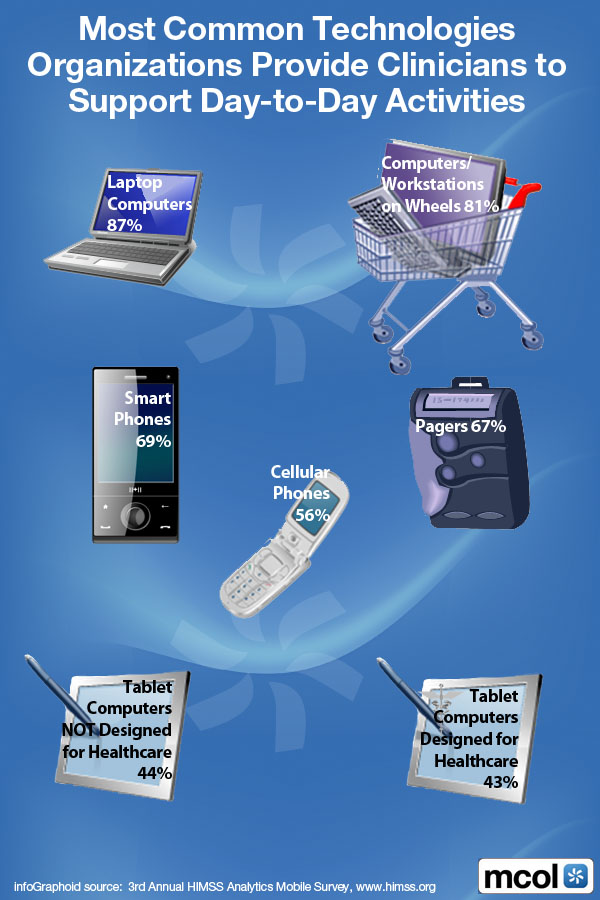
Common Daily Clinician Health Technologies

Join Our Mailing List

Most Commonly Provided to Support Daily Activities

www.MCOL.com

Health Technology

More:

Conclusion

Your thoughts and comments on this ME-P are appreciated. Feel free to review our top-left column, and top-right sidebar materials, links, URLs and related websites, too. Then, subscribe to the ME-P. It is fast, free and secure.

Link: http://feeds.feedburner.com/HealthcareFinancialsthePostForcxos

Speaker: If you need a moderator or speaker for an upcoming event, Dr. David E. Marcinko; MBA – Publisher-in-Chief of the Medical Executive-Post – is available for seminar or speaking engagements. Contact: MarcinkoAdvisors@msn.com

OUR OTHER PRINT BOOKS AND RELATED INFORMATION SOURCES:

DICTIONARIES: http://www.springerpub.com/Search/marcinko
PHYSICIANS: www.MedicalBusinessAdvisors.com
PRACTICES: www.BusinessofMedicalPractice.com
HOSPITALS: http://www.crcpress.com/product/isbn/9781466558731
CLINICS: http://www.crcpress.com/product/isbn/9781439879900
BLOG: www.MedicalExecutivePost.com
FINANCE: Financial Planning for Physicians and Advisors
INSURANCE: Risk Management and Insurance Strategies for Physicians and Advisors

Product DetailsProduct Details

Product Details

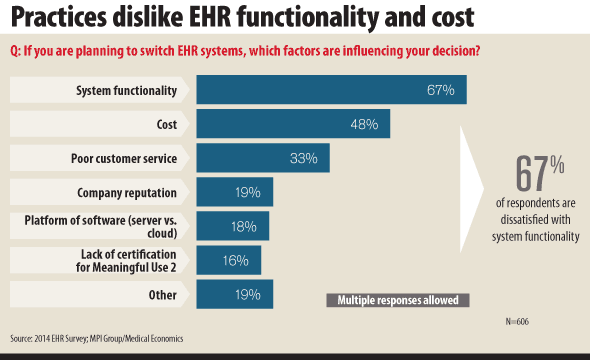
Do Medical Practices Really Like EHRs?

Join Our Mailing List

Do practices like functionality and cost?

By www.MCOL.com

EHR

More:

  1. The Percentage of Office-Based Doctors with EHRs
  2. Do Nurses like EHRs?
  3. EHRs – Still Not Ready For Prime Time
  4. The “Price” of eHRs

Conclusion

Your thoughts and comments on this ME-P are appreciated. Feel free to review our top-left column, and top-right sidebar materials, links, URLs and related websites, too. Then, subscribe to the ME-P. It is fast, free and secure.

Link: http://feeds.feedburner.com/HealthcareFinancialsthePostForcxos

Speaker: If you need a moderator or speaker for an upcoming event, Dr. David E. Marcinko; MBA – Publisher-in-Chief of the Medical Executive-Post – is available for seminar or speaking engagements. Contact: MarcinkoAdvisors@msn.com

OUR OTHER PRINT BOOKS AND RELATED INFORMATION SOURCES:

DICTIONARIES: http://www.springerpub.com/Search/marcinko
PHYSICIANS: www.MedicalBusinessAdvisors.com
PRACTICES: www.BusinessofMedicalPractice.com
HOSPITALS: http://www.crcpress.com/product/isbn/9781466558731
CLINICS: http://www.crcpress.com/product/isbn/9781439879900
BLOG: www.MedicalExecutivePost.com
FINANCE: Financial Planning for Physicians and Advisors
INSURANCE: Risk Management and Insurance Strategies for Physicians and Advisors

Product DetailsProduct Details

Product Details

Before You Jump to a Full-Fledged EMR Check Out Other Options [Part 2]

Join Our Mailing List

HIT: PART TWO

By Shahid Shah MS

Shahid N. ShahWowsa!

What a year [2013] in the HIT business?

Because of all the talk about EMRs and medical records software you’ll have many reasons to start immediately looking for an EMR vendor.

Try to resist that urge and look at broader non-EMR solutions that can help remove some of the non-clinical burdens from your staff in 2014:

  • Fax Server – a fax server allows you to centrally manage all incoming and outgoing faxes. Since most medical practices live on fax, this is one of the fastest investments you can recoup.
  • Shared drives – start using shared drives either using your existing software or you can purchase inexpensive “network disks” for a few hundred dollars to share business forms, online directories, reports, scanned charts, and many other files.
  • Online backups and Internet PACS storage – there are online tools like JungleDisk.com that allow you to store gigabytes of encrypted data into the Internet “cloud” for just a few dollars a month.
  • E-mail (beware of HIPAA, though) – internal office messaging and email is a great place to start. If you haven’t started your office automation journey here you should. If you’re going to use it for patient communications you’ll need to make sure you have patient approvals and appropriate encryption. If you’re on Gmail today and you want to have customers immediately be able to communicate with you on Gmail, that’s generally HIPAA compliant because communications between two Gmail accounts stays within the Google data center and is not sent unencrypted over the Internet.
  • E-Prescribing – e-prescribing is a great place to start your automation journey because it’s a fast way to realize how much slower the digital process is in capturing clinical data. If e-prescribing alone makes you slower in your job, EMRs will likely affect you even more. If you’re productive with e-prescribing then EMRs in general will make you more productive too.
  • Office Online and Google Apps (scheduling, document sharing) – Google and Microsoft® have some very nice online tools for managing contacts (your patients are contacts), scheduling (appointments), dirt simple document management, and getting everyone in the office “on the same page”. Before you jump into full-fledged EMRs see if these basic free tools can do the job for you.
  • Modular clinical groupware – this is a new category of software that allows you to collaborate with colleagues on your most time-consuming or most-needy patients and leave the remainder of them as-is. By automating what’s taking the most of your time you don’t worry about the majority of patients who aren’t.
  • Patient registry and CCR bulletin boards – if you’re just looking for basic patient population management and not detailed office automation then patient registries and CCR databases are a great start. These don’t help with workflow but they do manage patient summaries.
  • Document imaging – scanning and storing your paper documents is something that affects everyone; all scanners come with some basic imaging software that you can use for free. Once you’re good at scanning and paper digitization you can move to “medical grade” document managements that can improve productivity even more.
  • Clinical content repository (CMS) – open source systems like DrupalModules.com and Joomla.org do a great job of content management and they can be adapted to do clinical content management.
  • Electronic lab reporting – if labs are taking up most of your time, you can automate that pretty easily with web-based lab reporting systems.
  • Electronic transcription – if clinical note taking is taking most of your time, you can automate that by using electronic transcribing.
  • Speech recognition – another “point solution” to helping with capturing clinical notes; you can get a system up and running for under $250.
  • Instant Messaging (IM) – IM gives you the ability to connect directly with multiple rooms within your office using free software; if you want, you can also connect with patients and other physicians during work hours.

working with computer

Assessment

Can you think of any others?

Part One: Before you Jump to a Full-Fledged EMR Check out Other Options [Part 1]

Conclusion

Your thoughts and comments on this ME-P are appreciated. Feel free to review our top-left column, and top-right sidebar materials, links, URLs and related websites, too. Then, subscribe to the ME-P. It is fast, free and secure.

Link: http://feeds.feedburner.com/HealthcareFinancialsthePostForcxos

Speaker: If you need a moderator or speaker for an upcoming event, Dr. David E. Marcinko; MBA – Publisher-in-Chief of the Medical Executive-Post – is available for seminar or speaking engagements. Contact: MarcinkoAdvisors@msn.com

OUR OTHER PRINT BOOKS AND RELATED INFORMATION SOURCES:

DICTIONARIES: http://www.springerpub.com/Search/marcinko
PHYSICIANS: www.MedicalBusinessAdvisors.com
PRACTICES: www.BusinessofMedicalPractice.com
HOSPITALS: http://www.crcpress.com/product/isbn/9781466558731
CLINICS: http://www.crcpress.com/product/isbn/9781439879900
BLOG: www.MedicalExecutivePost.com
FINANCE: Financial Planning for Physicians and Advisors
INSURANCE: Risk Management and Insurance Strategies for Physicians and Advisors

Product DetailsProduct Details

Before you Jump to a Full-Fledged EMR Check out Other Options [Part 1]

Join Our Mailing List

HIT: PART ONE … OF TWO PARTS

By Shahid Shah MS

Shahid N. Shah MSWowsa!

What a year [2013] in the HIT business?

Because of all the talk about EMRs and medical records software you’ll have many reasons to start immediately looking for an EMR vendor.

Try to resist that urge and look at broader non-EMR solutions that can help remove some of the non-clinical burdens from your staff in 2014:

  • Using Microsoft Office Outlook® or an online calendaring system like Google to maintain patient schedules. While most vendors of clinical scheduling will tell you that medical scheduling is too complex to be handled by non-medical scheduling systems, most small and medium sized physician practices can easily get by with free or very inexpensive and non-specialized scheduling tools. By using general-purpose scheduling tools you will find that you can use less expensive consultants or IT help to manage your patient scheduling technology needs.
  • Using off-the-shelf address book software such as those built into Microsoft Office®, the Windows® and Macintosh® operating systems, or online tools such as Google apps you can maintain complete patient and contact registries for managing your patient lists. While a patient registry may not give you all of the features and functions you need immediately they can grow to a system that will meet your needs over time.
  • Using physician practice management systems you can remove much of the financial bookkeeping and insurance record-keeping burdens from your staff. Unlike calendaring or address book functionality which can be adapted from non-medical systems, insurance claims and related bookkeeping is an area where you should choose specific software based on how your practice earns its revenue. For example if a majority of your claims are Medicare related, then you should choose software that is specifically geared towards government claims management. If however your revenue comes less from insurance and more from traditional cash or related means you can easily use small business accounting software like Quicken® or Microsoft accounting.
  • Using computer telephony technology you can integrate automatic call in and call out the services that can be tied to your phone system so that you can track phone calls or send out call reminders.
  • Using integrated medical devices that can capture, collect, and transmit physiological patient data you can reduce paper capture of vital signs and other clinical data so that your staff are freed to do other work.
  • Using e-mail, instant messaging, social networking, and other online advanced tools you can reduce the number of phone calls that your practice receives and needs to return and yet continue to improve the patient physician communication process. One of the most time-consuming parts of any office is the back-and-forth phone calls so any reduction in phone calls will yield significant productivity increases.

eHRs

Assessment

Can you think of any other work-arounds?

Conclusion

Your thoughts and comments on this ME-P are appreciated. Feel free to review our top-left column, and top-right sidebar materials, links, URLs and related websites, too. Then, subscribe to the ME-P. It is fast, free and secure.

Link: http://feeds.feedburner.com/HealthcareFinancialsthePostForcxos

Speaker: If you need a moderator or speaker for an upcoming event, Dr. David E. Marcinko; MBA – Publisher-in-Chief of the Medical Executive-Post – is available for seminar or speaking engagements. Contact: MarcinkoAdvisors@msn.com

OUR OTHER PRINT BOOKS AND RELATED INFORMATION SOURCES:

DICTIONARIES: http://www.springerpub.com/Search/marcinko
PHYSICIANS: www.MedicalBusinessAdvisors.com
PRACTICES: www.BusinessofMedicalPractice.com
HOSPITALS: http://www.crcpress.com/product/isbn/9781466558731
CLINICS: http://www.crcpress.com/product/isbn/9781439879900
BLOG: www.MedicalExecutivePost.com
FINANCE: Financial Planning for Physicians and Advisors
INSURANCE: Risk Management and Insurance Strategies for Physicians and Advisors

Product DetailsProduct Details

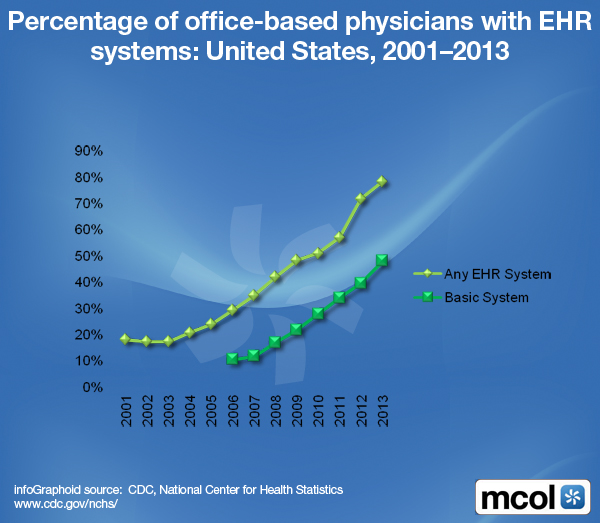
The Percentage of Office-Based Doctors with EHRs

Join Our Mailing List

US 2001-2013

By www.MCOL.com

EHR

Conclusion

Your thoughts and comments on this ME-P are appreciated. Feel free to review our top-left column, and top-right sidebar materials, links, URLs and related websites, too. Then, subscribe to the ME-P. It is fast, free and secure.

Link: http://feeds.feedburner.com/HealthcareFinancialsthePostForcxos

Speaker: If you need a moderator or speaker for an upcoming event, Dr. David E. Marcinko; MBA – Publisher-in-Chief of the Medical Executive-Post – is available for seminar or speaking engagements. Contact: MarcinkoAdvisors@msn.com

OUR OTHER PRINT BOOKS AND RELATED INFORMATION SOURCES:

DICTIONARIES: http://www.springerpub.com/Search/marcinko
PHYSICIANS: www.MedicalBusinessAdvisors.com
PRACTICES: www.BusinessofMedicalPractice.com
HOSPITALS: http://www.crcpress.com/product/isbn/9781466558731
CLINICS: http://www.crcpress.com/product/isbn/9781439879900
BLOG: www.MedicalExecutivePost.com
FINANCE: Financial Planning for Physicians and Advisors
INSURANCE: Risk Management and Insurance Strategies for Physicians and Advisors

Product DetailsProduct Details

Product Details

The RAND Corporation’s Health IT Legacy‏

Join Our Mailing List 

Understanding ObamaCare and HIT Data Breaches

[By Darrell K. Pruitt DDS]

1-darrellpruittTwo current topics in the HIT industry: (1) A dishonest 2005 RAND study set up lawmakers for disappointment in electronic health records, which are essential to Obamacare, and (2) I told you so.

The Reports

Just the other day, there were reports of two data breaches of EHRs involving over 734,000 patients in Texas and California.

http://www.ihealthbeat.org/articles/2013/10/23/health-facilities-in-california-texas-report-health-data-breaches

For reasons like this, the wisdom of an ambitious mandate for paperless healthcare by 2014 is beginning to be questioned by the same lawmakers who were sucked in years ago by RAND’s tainted 2005 study.

According to the vendor-friendly results gleaned from vendor-friendly data supplied by vendors, EHRs should have started saving 100,000 lives and $77 billion a year, years ago. Predictably, that has not happened. Far from it!

The Findings 

The happy findings – discredited even by RAND in January of this year – were paid for by Cerner and GE, who profited immensely from their RAND investment. Since nationwide adoption of EHRs became a bi-partisan goal with bubbly beginnings and millions of campaign dollars, the costs and danger of healthcare IT didn’t appear to bother conservatives until three months after RAND admitted the study was garbage.

In April, six GOP senators, led by Sen. John Thune (R-S.D.), released a detailed report criticizing HHS Secretary Kathleen Sebelius’ execution of a $35 billion initiative to promote EHRs as part of the ARRA stimulus package. (See: “GOP senators raise concerns with push for electronic medical records,” by Sam Baker, April 16, 2013, The Hill).

http://thehill.com/blogs/healthwatch/medicare/294273-gop-senators-raise-concerns-with-push-for-electronic-medical-records

Wither ARRA?

Have you ever wondered why ARRA was passed as a jobs bill rather than as part of healthcare reform? Any ideas?

More recently, with the conservatives’ failure to stop Obamacare even by shutting down government, EHRs have become recognized as the ACA’s next best weakness. Yesterday, Greg Scandlen, writing for RightSideNews.com, posted “The Tyranny of Electronic Systems.” It goes downhill from there.

http://www.rightsidenews.com/2013102333379/life-and-science/health-and-education/the-tyranny-of-electronic-systems.html

Even More

Also yesterday, Michelle Mailkin writing for Townhall.com, an ultra-conservative website similar to RightSideNews, posted, “Don’t Forget Obamacare’s Electronic Medical Records Wreck.

http://townhall.com/columnists/michellemalkin/2013/10/23/dont-forget-obamacares-electronic-medical-records-wreck-n1730172?utm_source=TopBreakingNewsCarousel&utm_medium=story&utm_campaign=BreakingNewsCarousel

Assessment 

Conservatives found traction: Without the anticipated healthcare savings from EHRs, Obamacare will not survive. These times are not as happy for EHR stake-holders as RAND led them to expect.

Conclusion

Your thoughts and comments on this ME-P are appreciated. Feel free to review our top-left column, and top-right sidebar materials, links, URLs and related websites, too. Then, subscribe to the ME-P. It is fast, free and secure.

Link: http://feeds.feedburner.com/HealthcareFinancialsthePostForcxos

Speaker: If you need a moderator or speaker for an upcoming event, Dr. David E. Marcinko; MBA – Publisher-in-Chief of the Medical Executive-Post – is available for seminar or speaking engagements. Contact: MarcinkoAdvisors@msn.com

OUR OTHER PRINT BOOKS AND RELATED INFORMATION SOURCES:

LEXICONS: http://www.springerpub.com/Search/marcinko
PHYSICIANS: www.MedicalBusinessAdvisors.com
PRACTICES: www.BusinessofMedicalPractice.com
HOSPITALS: http://www.crcpress.com/product/isbn/9781466558731
CLINICS: http://www.crcpress.com/product/isbn/9781439879900
ADVISORS: www.CertifiedMedicalPlanner.org
BLOG: www.MedicalExecutivePost.com

Product DetailsProduct DetailsProduct Details

Product Details  Product Details

Product DetailsProduct Details

Product Details

Did the NSA End Obamacare?

Join Our Mailing List

Did ambitious NSA officials unintentionally end Obamacare years ago?

[By D. Kellus Pruitt DDS]

1-darrellpruittIf loss of trust in encryption ends Obamacare, can whistleblower Edward Snowden be blamed for that as well? Yep.

What’s even more ominous, the former National Security Agency contractor’s news that encrypted medical records are no longer secure reached Alaska on a weekend.

“Risky electronic health records: Alaska should make information exchange system safer – Imagine: The National Security Agency slips into your doctor’s office and peeks at your medical records,”

by Alaska ACLU executive director Joshua Decker was posted hours ago on Newsminer.com, out of Fairbanks.

http://www.newsminer.com/opinion/community_perspectives/risky-electronic-health-records-alaska-should-make-information-exchange-system/article_a9947eb0-1863-11e3-8153-001a4bcf6878.html

Decker questions the security of the state’s Health Information Exchange (HIE), and offers common sense but costly steps which arguably lessen the danger of privacy breaches – including giving patients the choice of “opting-in” to permit their encrypted, but increasingly vulnerable identities to be shared online via Obamacare’s exchanges.

My POV 

In my opinion, if informed Americans are given the choice of volunteering to risk identity theft, HIEs won’t be around a year from now, and neither will Obamacare. If informed Americans are not given a choice, the costs are even greater. Americans deserve honesty.

National Obamacare Hangs in the Balance

In a related, slow-burning game-changer, Obamacare hangs in the balance, not just for Alaska, but for the nation.

It was September 5th when the Guardian Weekly posted: “Revealed: how US and UK spy agencies defeat internet privacy and security,” written by James Ball, Julian Borger and Glenn Greenwald, and based on top secret NSA information Snowden stole.

http://www.theguardian.com/world/2013/sep/05/nsa-gchq-encryption-codes-security

Snowden told the Guardian that years ago, the NSA joined with the UK’s spy agency GCHQ (Government Communications Headquarters) to successfully make encryption obsolete – including for medical records.

Naturally, if properly informed Americans fear that secrets they tell their doctors might be breached, incorrect EHRs become less than worthless. They become dangerous.

More on Health Information Exchanges

What’s more, even before the added expense of waiting for Americans to opt-in to the exchanges – instead of discouraging them from opting-out – the very funding for the increasingly-battered Obamacare is based on a rumor of savings.

Starting years ago, health IT lobbyists, including former Speaker of the House Newt Gingrich, told lawmakers to expect annual savings of $77 billion and 100,000 lives – quoting the results of a once popular, EHR-friendly 2005 RAND study which was funded by General Electric and Cerner Corporation.

Obamacare

As you can see, while we were not paying attention, we were had!

The RAND Study

Predictably, both GE and Cerner profited immensely from the development and sales of EHR systems before the RAND study was widely discredited months ago – even by RAND.

According to a NY Times article from January, “Cerner’s revenue has nearly tripled since the report was released, to a projected $3 billion in 2013, from $1 billion in 2005.”

(See: “In Second Look, Few Savings From Digital Health Records by Reed Abelson and Julie Creswell, January 10, 2013).

http://www.nytimes.com/2013/01/11/business/electronic-records-systems-have-not-reduced-health-costs-report-says.html?_r=0

Assessment

Last weekend’s bad news for Obamacare is still under the radar, but I predict within days it will become apparent that the mounting obstacle between President Obama and healthcare reform will be in regaining trust his administration squandered while helping GE and Cerner profits at the expense of soon-to-be pissed off American patients.

Conclusion

Your thoughts and comments on this ME-P are appreciated. Feel free to review our top-left column, and top-right sidebar materials, links, URLs and related websites, too. Then, subscribe to the ME-P. It is fast, free and secure.

Link: http://feeds.feedburner.com/HealthcareFinancialsthePostForcxos

Speaker: If you need a moderator or speaker for an upcoming event, Dr. David E. Marcinko; MBA – Publisher-in-Chief of the Medical Executive-Post – is available for seminar or speaking engagements. Contact: MarcinkoAdvisors@msn.com

OUR OTHER PRINT BOOKS AND RELATED INFORMATION SOURCES:

DICTIONARIES: http://www.springerpub.com/Search/marcinko
PHYSICIANS: www.MedicalBusinessAdvisors.com
PRACTICES: www.BusinessofMedicalPractice.com
HOSPITALS: http://www.crcpress.com/product/isbn/9781466558731
CLINICS: http://www.crcpress.com/product/isbn/9781439879900
BLOG: www.MedicalExecutivePost.com
FINANCE: Financial Planning for Physicians and Advisors
INSURANCE: Risk Management and Insurance Strategies for Physicians and Advisors

Product DetailsProduct Details

Informatics at the Intersection of Healthcare IT

An Informative Inforgraphic

Join Our Mailing List
Did you know that 50,000 HIT professionals will be needed in the next 7 years?
###
Well, that’s according to the University of Illinois at Chicago’s Online Health Informatics Program, which published an infographic asserting that the industry needs new ways to provide improved care, sans errors. And, healthcare informatics is where that potential resides.
###
But, what do healthcare informaticists actually do? What are the sub-disciplines of the practice? And, how do they enhance medical care delivery? … Scroll down to find out.

###

it

###

Related Resources

Conclusion

Your thoughts and comments on this ME-P are appreciated. Feel free to review our top-left column, and top-right sidebar materials, links, URLs and related websites, too. Then, subscribe to the ME-P. It is fast, free and secure.

Link: http://feeds.feedburner.com/HealthcareFinancialsthePostForcxos

Speaker: If you need a moderator or speaker for an upcoming event, Dr. David E. Marcinko; MBA – Publisher-in-Chief of the Medical Executive-Post – is available for seminar or speaking engagements. Contact: MarcinkoAdvisors@msn.com

OUR OTHER PRINT BOOKS AND RELATED INFORMATION SOURCES:

Health Dictionary Series: http://www.springerpub.com/Search/marcinko

Practice Management: http://www.springerpub.com/product/9780826105752

Physician Financial Planning: http://www.jbpub.com/catalog/0763745790

Medical Risk Management: http://www.jbpub.com/catalog/9780763733421

Hospitals: http://www.crcpress.com/product/isbn/9781439879900

Physician Advisors: www.CertifiedMedicalPlanner.org

Product DetailsProduct DetailsProduct Details

Product DetailsProduct Details

Do Nurses like EHRs?

Join Our Mailing List

Do RNs like using electronic health records?

[A seldom considered POV]

1-darrellpruitt

BY Darrell K. Pruitt DDS

Some Facebook comments:

Big problems when you have unexpected “downtimes”.

July 15 at 3:10pm · Like · 4

It is an absolute train wreck. I haven’t seen one record of mine that is not riddled with mistakes. Especially the allergies, they show me taking meds I’m allergic to and not taking meds I’m actually on. A true mess!! And now the records are all intertwined. I don’t like it at all!!

July 15 at 3:10pm · Like · 2

It is a nightmare!

July 15 at 3:18pm · Like

I retired just in time so I don’t have to deal with this fiasco.

July 15 at 3:19pm via mobile · Like · 2

IT SUCKS

July 15 at 3:19pm · Like

I don’t like them; my doctors don’t like them; how it will affect patient care is still a ‘jury out’ matter, but we can guess it will NOT help.

July 15 at 3:30pm · Like

Our Rural Community Healthcare system is just now switching over to this .. along with our hospital switching over to a totally new computer system .. the 2 systems do not talk to each other..In my personal experience I find that the “computer” world takes us away from Direct Patient Care (to busy playing “ring around the Rosie” on the computer).

July 15 at 3:40pm · Like · 4

I like them, but it is frustrating having “downtime.”

July 15 at 3:41pm · Like

I hear patients stating things like “my doctors don’t know who I am because they don’t look at me they are glued to the computer”. It saddens me patients feel less valued. I’ve worked in places where they’ve had paper charts and places computerized. Seems the computers are redundant and I personally prefer paper charts. Chart one assessment not one assessment 4 different places.

July 15 at 3:44pm via mobile · Like · 3

It looks to me like physicians are cutting and pasting old histories and physicals, complete with the errors. Doctors in a local ER charted complete physicals on me when they did not get closer than 5 feet away. The records are difficult to read, difficult to find information; and it is not number in chronological order.

July 15 at 3:47pm · Like

I dislike it. Besides the down time, I find it very impersonal. I don’t feel as if I am giving my full attention to my pt, nor do I feel my PCP is hearing what I’m saying . They are too busy putting in info on the computer. As for the down time you then have to work late to put in the info gathered while the system is down.

July 15 at 3:47pm via mobile · Like · 2

eHRs

Assessment

https://www.facebook.com/friendanurse/posts/654085127954821

More: On DIgital Deaths

http://www.bloomberg.com/news/2013-06-25/digital-health-records-risks-emerge-as-deaths-blamed-on-systems.html

(50+ other comments)

Conclusion

Your thoughts and comments on this ME-P are appreciated. Feel free to review our top-left column, and top-right sidebar materials, links, URLs and related websites, too. Then, subscribe to the ME-P. It is fast, free and secure.

Speaker: If you need a moderator or speaker for an upcoming event, Dr. David E. Marcinko; MBA – Publisher-in-Chief of the Medical Executive-Post – is available for seminar or speaking engagements. Contact: MarcinkoAdvisors@msn.com

OUR OTHER PRINT BOOKS AND RELATED INFORMATION SOURCES:

Product DetailsProduct DetailsProduct Details

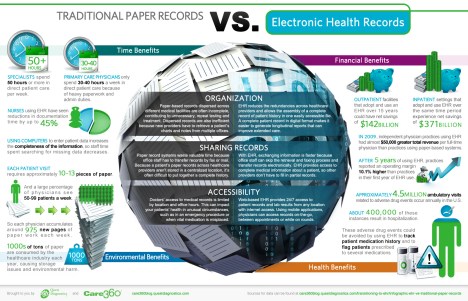
Medical Records [Time Benefits versus Financial Benefits]

Join Our Mailing List

Paper versus eMRs [Organization – InterOperability – Accessibility]

www.BusinessofMedicalPractice.com

MRs

Assessment

Chapter 13: IT, eMRs & GroupWare

Conclusion

Your thoughts and comments on this ME-P are appreciated. Feel free to review our top-left column, and top-right sidebar materials, links, URLs and related websites, too. Then, subscribe to the ME-P. It is fast, free and secure.

Link: http://feeds.feedburner.com/HealthcareFinancialsthePostForcxos

Speaker: If you need a moderator or speaker for an upcoming event, Dr. David E. Marcinko; MBA – Publisher-in-Chief of the Medical Executive-Post – is available for seminar or speaking engagements. Contact: MarcinkoAdvisors@msn.com

OUR OTHER PRINT BOOKS AND RELATED INFORMATION SOURCES:

DICTIONARIES: http://www.springerpub.com/Search/marcinko
PHYSICIANS: www.MedicalBusinessAdvisors.com
PRACTICES: www.BusinessofMedicalPractice.com
HOSPITALS: http://www.crcpress.com/product/isbn/9781466558731
CLINICS: http://www.crcpress.com/product/isbn/9781439879900
BLOG: www.MedicalExecutivePost.com
FINANCE: Financial Planning for Physicians and Advisors
INSURANCE: Risk Management and Insurance Strategies for Physicians and Advisors

Product Details

How Physicians Use Digital Media for Interaction

Join Our Mailing List

A Break-Down by Medical Specialty

www.BusinessofMedicalPractice.com

Taking-the-Pulse-US-2012

Assessment

Chapter 13: IT, eMRs & GroupWare

Conclusion

Your thoughts and comments on this ME-P are appreciated. Feel free to review our top-left column, and top-right sidebar materials, links, URLs and related websites, too. Then, subscribe to the ME-P. It is fast, free and secure.

Link: http://feeds.feedburner.com/HealthcareFinancialsthePostForcxos

Speaker: If you need a moderator or speaker for an upcoming event, Dr. David E. Marcinko; MBA – Publisher-in-Chief of the Medical Executive-Post – is available for seminar or speaking engagements. Contact: MarcinkoAdvisors@msn.com

Our Other Print Books and Related Information Sources:

Health Dictionary Series: http://www.springerpub.com/Search/marcinko

Practice Management: http://www.springerpub.com/product/9780826105752

Physician Financial Planning: http://www.jbpub.com/catalog/0763745790

Medical Risk Management: http://www.jbpub.com/catalog/9780763733421

Hospitals: http://www.crcpress.com/product/isbn/9781439879900

Physician Advisors: www.CertifiedMedicalPlanner.org

Product Details

What’s Next for Healthcare Information Technology Innovation?

Join Our Mailing List

A Video Panel Discussion

By Shahid N. Shah MS

Dr. David Edward Marcinko MBA

http://www.healthcareguy.com/

Shahid N. Shah MSIn Nashville a few weeks ago, at the Vanderbilt Healthcare Conference, I gave a short talk on a panel focused on the question “What’s next for healthcare information technology innovation?”

The Key Questions

The talk focused on answering a couple of key questions:

  • What does innovation in healthcare mean?
  • Where are the major areas in healthcare where innovation is required?

The Take-Aways

And it had a few key takeaways:

  • Understand health tech buyer fallacies
  • Understand PBU: Payer vs. Benefiter vs. User
  • Understand why healthcare businesses buy stuff so you can build the right thing

Assessment

My speaker deck is found below (if you’re reading this through a feed reader you should click into the blog so that it is visible). You can download the PDF here. After you’ve flipped through it, let me know what you think by dropping some comments below.

Editor’s Note: Mr. Shah is a ME-P thought-leader and an internationally recognized enterprise software analyst that specializes in healthcare IT with an emphasis on e-health, EHR/EMR, Meaningful Use, data integration, medical device connectivity, health informatics, and legacy modernization. He contributed CH 13 to: www.BusinessofMedicalPractice.com and Chapter 13: IT, eMRs & GroupWare

Conclusion

Your thoughts and comments on this ME-P are appreciated. Feel free to review our top-left column, and top-right sidebar materials, links, URLs and related websites, too. Then, subscribe to the ME-P. It is fast, free and secure.

Link: http://feeds.feedburner.com/HealthcareFinancialsthePostForcxos

Speaker: If you need a moderator or speaker for an upcoming event, Dr. David E. Marcinko; MBA – Publisher-in-Chief of the Medical Executive-Post – is available for seminar or speaking engagements. Contact: MarcinkoAdvisors@msn.com

OUR OTHER PRINT BOOKS AND RELATED INFORMATION SOURCES:

DICTIONARIES: http://www.springerpub.com/Search/marcinko
PHYSICIANS: www.MedicalBusinessAdvisors.com
PRACTICES: www.BusinessofMedicalPractice.com
HOSPITALS: http://www.crcpress.com/product/isbn/9781466558731
CLINICS: http://www.crcpress.com/product/isbn/9781439879900
BLOG: www.MedicalExecutivePost.com
FINANCE: Financial Planning for Physicians and Advisors
INSURANCE: Risk Management and Insurance Strategies for Physicians and Advisors

Product Details

Confusion About “Meaningful Use” Reigns

Join Our Mailing List

Are Doctors Embracing or Ignoring ARRA?

By D. Kellus Pruitt DDS

pruittAre physicians embracing ARRA Meaningful Use cash incentives or ignoring them? That depends on whom one asks.

Doctors versus the Feds

National progress towards Meaningful Use of expensive EHRs depends on whether one talks to federal employees whose jobs depend on the stimulus mandate, or doctors who purchase EHRs to improve care rather than to use them … Meaningfully.

The Feds

Today, Joseph Conn, writing for ModernHealthcare, posted a rosy outlook for MU adoption according to researchers working for HHS’ Office of the National Coordinator (ONC). They base their optimism for job security on a recent National Center for Health Statistics (NCHS) survey:

“A growing number of office-based physicians are using more-robust EHRs that have higher-level functions needed to help the doctors qualify for federal EHR incentive payments [for Meaningful Use] and assist them in providing better, safer care for patients, the researchers reported.” (See “Researchers: More doctors using more-sophisticated EHRs”).

http://www.modernhealthcare.com/article/20121212/NEWS/312129956/researchers-more-doctors-using-more-sophisticated-ehrsJust

eMR and HIT Security

The Doctors

However, yesterday, in an InformationWeek article by Ken Terry titled, “Meaningful Use Doesn’t Drive Doctors’ EHR Selection,” doctors suggested a more depressing future for MU sophistication based on the same NCHS survey:

“Jason Mitchell, MD, assistant director of the Center for Health IT at the American Academy of Family Physicians (AAFP), told InformationWeek Healthcare that he found [the lagging adoption of MU-capable EHRs] puzzling. While there’s no doubt that Meaningful Use has driven much of the increase in EHR use, he said, it seems strange that so many physicians would buy and implement EHRs that could not be used to show Meaningful Use.”

http://www.informationweek.com/healthcare/electronic-medical-records/meaningful-use-doesnt-drive-doctors-ehr/240144093

Assessment

Whom should doctors believe – HHS employees who give away billions of stimulus dollars for Meaningful Use, or family physicians who have determined that the subsidy isn’t worth the cost and effort?

Conclusion

Your thoughts and comments on this ME-P are appreciated. Feel free to review our top-left column, and top-right sidebar materials, links, URLs and related websites, too. Then, subscribe to the ME-P. It is fast, free and secure.

Link: http://feeds.feedburner.com/HealthcareFinancialsthePostForcxos

Speaker: If you need a moderator or speaker for an upcoming event, Dr. David E. Marcinko; MBA – Publisher-in-Chief of the Medical Executive-Post – is available for seminar or speaking engagements. Contact: MarcinkoAdvisors@msn.com

OUR OTHER PRINT BOOKS AND RELATED INFORMATION SOURCES:

DICTIONARIES: http://www.springerpub.com/Search/marcinko
PHYSICIANS: www.MedicalBusinessAdvisors.com
PRACTICES: www.BusinessofMedicalPractice.com
HOSPITALS: http://www.crcpress.com/product/isbn/9781466558731
CLINICS: http://www.crcpress.com/product/isbn/9781439879900
BLOG: www.MedicalExecutivePost.com
FINANCE: Financial Planning for Physicians and Advisors
INSURANCE: Risk Management and Insurance Strategies for Physicians and Advisors


Product Details

The “Price” of eHRs

Join Our Mailing List

Race to electronic health records may come with a price

By Fred Schulte

Amid all the enthusiasm over increasing the use of information technology in health, politicians and policy makers paid little attention to the implications of a gold rush sparked when billions of taxpayers’ dollars suddenly came up for grabs. Hundreds of medical technology companies scrambled to sell digital systems — often by promising doctors and hospitals they could boost revenues by billing higher rates to Medicare and other health insurers.

The fallout from those early decisions could be coming back to haunt taxpayers, according to a three-part investigative series from the Center for Public Integrity. The series documented that thousands of medical professionals steadily billed Medicare for more complex and costly health care over the past decade — adding $11 billion or more to their fees — despite little evidence elderly patients required more treatment.

In this essay, reporter Fred Schulte explains how the project came about, how the Center did its reporting and provides plenty of background on medical coding, Medicare billing and the potential fallout as health care providers install and use electronic systems.

Assessment

Full link: Race to electronic health records may come with a price

Publisher’s Note: Fred Schulte is a four-time Pulitzer Prize finalist, most recently in 2007 for a series on Baltimore’s arcane ground rent system. Schulte’s other projects exposed excessive heart surgery death rates in veterans’ hospitals, substandard care by health insurance plans treating low-income people and the hidden dangers of cosmetic surgery in medical offices. He spent much of his career at The Baltimore Sun in Maryland, where I first noted his work, and then the South Florida Sun-Sentinel. Schulte has received the George Polk Award, two Investigative Reporters and Editors awards, three Gerald Loeb Awards for business writing and two Worth Bingham Prizes for investigative reporting. The University of Virginia graduate is the author of Fleeced!, an exposé of telemarketing scams. Schulte can be reached at fschulte@publicintegrity.org or 202-481-1210.

eHRs

Conclusion

Your thoughts and comments on this ME-P are appreciated. Feel free to review our top-left column, and top-right sidebar materials, links, URLs and related websites, too. Then, subscribe to the ME-P. It is fast, free and secure.

Link: http://feeds.feedburner.com/HealthcareFinancialsthePostForcxos

Speaker: If you need a moderator or speaker for an upcoming event, Dr. David E. Marcinko; MBA – Publisher-in-Chief of the Medical Executive-Post – is available for seminar or speaking engagements. Contact: MarcinkoAdvisors@msn.com

OUR OTHER PRINT BOOKS AND RELATED INFORMATION SOURCES:

DICTIONARIES: http://www.springerpub.com/Search/marcinko
PHYSICIANS: www.MedicalBusinessAdvisors.com
PRACTICES: www.BusinessofMedicalPractice.com
HOSPITALS: http://www.crcpress.com/product/isbn/9781466558731
CLINICS: http://www.crcpress.com/product/isbn/9781439879900
BLOG: www.MedicalExecutivePost.com
FINANCE: Financial Planning for Physicians and Advisors
INSURANCE: Risk Management and Insurance Strategies for Physicians and Advisors

Product Details

A Financial eMR “Got-Ya” from Uncle Sam?

Join Our Mailing List

CMS and the Feds Want to Verify Docs eMR Info Before Meaningful Use Payment

By ME-P Staff Reporters

The conversion to electronic medical records [eMRs] is “vulnerable” to fraud and abuse because of the failure of Medicare and CMS officials to develop appropriate safeguards, according to a sharply critical report just issued by federal investigators.

###

[mobile eMR in clincal use]

###

Full Report: https://oig.hhs.gov/oei/reports/oei-05-11-00250.pdf

Assessment

Requiring an audit before paying hospitals and doctors could  significantly delay payments to providers.

Ya think!

Conclusion

Your thoughts and comments on this ME-P are appreciated. Feel free to review our top-left column, and top-right sidebar materials, links, URLs and related websites, too. Then, subscribe to the ME-P. It is fast, free and secure.

Link: http://feeds.feedburner.com/HealthcareFinancialsthePostForcxos

Speaker: If you need a moderator or speaker for an upcoming event, Dr. David E. Marcinko; MBA – Publisher-in-Chief of the Medical Executive-Post – is available for seminar or speaking engagements. Contact: MarcinkoAdvisors@msn.com

Our Other Print Books and Related Information Sources:

Health Dictionary Series: http://www.springerpub.com/Search/marcinko

Practice Management: http://www.springerpub.com/product/9780826105752

Physician Financial Planning: http://www.jbpub.com/catalog/0763745790

Medical Risk Management: http://www.jbpub.com/catalog/9780763733421

Hospitals: http://www.crcpress.com/product/isbn/9781439879900

Physician Advisors: www.CertifiedMedicalPlanner.org

Product Details

Health IT Vendors Ponied-Up Political Cash to Both Parties

Join Our Mailing List

The Presidential Election 2012

This November saw healthcare executives pay big campaign money to both political parties.

Health IT vendors, however, upped the ante this election year, paying out some hefty donations of their own. Judith Faulkner, CEO of Epic, and Allscripts CEO Glen Tullman are among this year’s top spenders.

Source: http://www.govhealthit.com/news/infographic-health-it-vendors-pony-political-cash-both-parties?topic=75

Conclusion

Your thoughts and comments on this ME-P are appreciated. Feel free to review our top-left column, and top-right sidebar materials, links, URLs and related websites, too. Then, subscribe to the ME-P. It is fast, free and secure.

Link: http://feeds.feedburner.com/HealthcareFinancialsthePostForcxos

Speaker: If you need a moderator or speaker for an upcoming event, Dr. David E. Marcinko; MBA – Publisher-in-Chief of the Medical Executive-Post – is available for seminar or speaking engagements. Contact: MarcinkoAdvisors@msn.com

Our Other Print Books and Related Information Sources:

Health Dictionary Series: http://www.springerpub.com/Search/marcinko

Practice Management: http://www.springerpub.com/product/9780826105752

Physician Financial Planning: http://www.jbpub.com/catalog/0763745790

Medical Risk Management: http://www.jbpub.com/catalog/9780763733421

Hospitals: http://www.crcpress.com/product/isbn/9781439879900

Physician Advisors: www.CertifiedMedicalPlanner.org

Product DetailsProduct DetailsProduct Details

Product Details  Product Details

Product Details

The Build or Buy HIT Decision

Join Our Mailing List

Best of Both Worlds for Healthcare IT Systems?

By Brent Metfessel MD

An important consideration when looking at the development of new technological functionality is whether to obtain an HIT system from an outside vendor or build the system using primarily internal staff.

Three Parameters

Basically, such a build or buy decision depends on the following aspects:

  • availability of internal resources to hire the highly skilled staff needed to create a new system;
  • availability of vendors with proven expertise in the area of technology relevant to the new project; and
  • flexibility of the vendors to customize their products for hospitals with unique needs.

The temptation to use consultants rather than FTEs to develop and implement the new system needs exploring.

Both Sides and the Consultants

On the positive side, finding consultants that have highly specialized expertise relevant to the project is often less difficult than finding such expertise in people willing to come on board as FTEs.  Such expertise in clinical informatics may be critical to the success of the project.

On the negative side, the cash outlay for multiple consultants can be staggering, especially if multiple consultants come on board with long-term contracts and retainers. Specialized consultants may charge up to $150 to $200 dollars per hour, quickly draining the most robust of IT budgets. Consultants should be used for just that — consulting. They exist on the project for their expertise and transfer of knowledge to the rest of the staff. To use consultants to do the hands-on tasks of actually building the system is generally not an optimal use of the consultant’s time.

Consultants, if used at all, should typically be used on a temporary basis to share their expertise and advice during critical parts of the project.

Buy Off the Shelf

Overall, buying an application off the shelf may be favored for more sophisticated applications. For example, computerized order entry [CPOE] and EMR systems have a number of dedicated vendors that are vying to achieve market share.

For major projects, distributing request for information (RFI) packages to selected vendors enables senior management to critically evaluate the different vendors in parallel, in the end selecting finalists and ultimately the vendor of choice. A critical requirement when evaluating vendors is a strong client reference base. The best predictor of future success is past success, and thus multiple existing satisfied clients are essential for the chosen vendor. Larger academic or tertiary care systems, however, tend to have more access to expertise and more significant customization requirements. Consequently, building a home-grown system rather than outsourcing the work to a vendor may be the best strategy for such institutions.

Vendors

When working with vendors, one should be strategic in price negotiations. One suggestion is to link part of the vendor compensation to the success of the implementation. This puts the vendor partially “at risk” for project success and thus provides additional incentive for vendor cooperation. Additionally, one should not purchase a system or services from the initial bid. It is critical that more than one vendor bids for the project to provide a pricing and negotiation advantage.

There is nothing that states only one vendor can be chosen for a project. Although obtaining everything from one vendor can lead to a more seamless integration and prevent the juggling of multiple vendor relationships, using more than one vendor may in some cases lead to a higher quality end product. This is known as the “best of breed” approach and is a viable option, in particular for complex projects where a single vendor does not adequately meet user needs.

Assessment

For more basic administrative systems, there are also off-the-shelf products from vendors that may be applicable. Where there is less need for customization, a single vendor may work out very well. Where there are significant unique needs that require customization, once again it may be best to develop the system internally or outsource the work to multiple vendors.

There is also the issue of small or rural hospitals that have limited resources. For such institutions, investments in more complex information systems may be difficult. Consequently, many vendors offer “stripped down” versions of their systems at a more affordable price, specifically tailored to the small hospital. The ability to customize the system for unique needs, however, is significantly more limited.

More info: http://www.hitconsultant.net/2012/10/01/healthcare-it-systems-buy-vs-build-or-best-of-both

Conclusion

Your thoughts and comments on this ME-P are appreciated. Feel free to review our top-left column, and top-right sidebar materials, links, URLs and related websites, too. Then, subscribe to the ME-P. It is fast, free and secure.

Speaker: If you need a moderator or speaker for an upcoming event, Dr. David E. Marcinko; MBA – Publisher-in-Chief of the Medical Executive-Post – is available for seminar or speaking engagements. Contact: MarcinkoAdvisors@msn.com

OUR OTHER PRINT BOOKS AND RELATED INFORMATION SOURCES:

Our Newest Textbook Release

Buy from Amazon

Learn How to Profit and Thrive in the PP-ACA Era

BOOK FOREWORD / TESTIMONIAL


Doctors’ Use of For-Profit Algorithms Considered UnSportsManLike Conduct

Join Our Mailing List

On Protecting Medical Coding Jobs

By Darrell K. Pruitt DDS

The US government moves quickly to protect tedious upcoding jobs from being taken over by upcoding software.

Medical Billing and Coding for Dummies

In coding expert Karen Smiley’s July 2012 book, “Medical Billing and Coding for Dummies,” she writes: “It really does pay to be a certified medical biller/coder, no matter what designation you choose to pursue. Surveys conducted by the AAPC [American Academy of Professional Coders] indicate that coder salaries have continued to increase despite economic downturns. One possible reason for this is that getting payers to pay claims is becoming increasingly difficult.”

Call me cynical, but to me, her defense of the coding profession confirms that healthcare’s increasing demand for highly-paid coders (who have nothing to do with directly providing care to patients) is artificial, and originates with an administration which complicates providers’ payments in order to create new, high-paying jobs in the HIT industry – quietly adding to the cost of healthcare to cosmetically boost employment figures before an election. Who ultimately pays the bill for all non-productive healthcare costs?

Amazon Morphs

Less than 3 months following the appearance of “Medical Billing and Coding for Dummies” on Amazon for under $25 (paperback), EMR software suddenly changed or morphed the entire game, and the administration reacts by changing the rules to protect political investments.

Similar to algorithmic trading’s proven advantage over low-tech investors on Wall Street, the computation capabilities of modern EMRs allegedly provide an unfair advantage to doctors and hospitals, and at taxpayers’ expense – according to HHS and Justice Department officials.

Enter Eric Holder and Kathleen Sebelius

“On Monday [September 24], Attorney General Eric Holder and HHS Secretary Kathleen Sebelius sent a strongly worded letter warning that the Obama administration will not tolerate hospitals’ attempts to ‘game the system’ by using EHR systems to boost Medicare and Medicaid payments.” – iHealthBeat, September 26, 2012.

http://www.ihealthbeat.org/articles/2012/9/26/stakeholders-react-to-warning-on-use-of-ehrs-for-upcoding.aspx#ixzz29fYzjPUH

This was followed by an article posted yesterday, also on iHealthBeat titled, “Mostashari To Launch Review of Using EHRs for ‘Upcoding,’”

http://www.ihealthbeat.org/articles/2012/10/17/mostashari-to-launch-review-of-using-ehrs-for-upcoding.aspx#ixzz29fDElIKL

Enter the NCHIT

“National Coordinator for Health IT Farzad Mostashari MD plans to launch an internal review to determine whether electronic health record systems are prompting some health care providers to overbill Medicare by selecting higher-paying treatment codes, a process known as ‘upcoding,’ the Center for Public Integrity reports.”

Apparently, it only recently occurred to lawmakers that the EMRs they promote greatly simplify Medicare’s intentionally tedious and time-consuming reimbursement requirements mentioned by Karen Smiley – making profits much easier for providers without having to hire even more staff just to get paid for work done long ago. In addition, the alleged upcoding software threatens to eliminate the need for recently-graduated coding professionals – whose education was backed by ARRA stimulus (taxpayer) money. While our nation’s leaders might wink at institutional investors’ highly-profitable algorithmic trading on the stock market, unemployed coding specialists with outstanding college loans would only increase the potential embarrassment for the administration should doctors and hospitals be permitted to computerize billing decisions – leading to payment for services previously given away because they weren’t worth the hassle and expense of documentation!

Assessment

Unlike investors playing the stock market, according to Medicare’s emerging rules, doctors’ use of algorithms to increase profits is considered unsportsmanlike conduct. With the election only days away, can you blame them?

Conclusion

Your thoughts and comments on this ME-P are appreciated. Feel free to review our top-left column, and top-right sidebar materials, links, URLs and related websites, too. Then, subscribe to the ME-P. It is fast, free and secure.

Link: http://feeds.feedburner.com/HealthcareFinancialsthePostForcxos

Speaker: If you need a moderator or speaker for an upcoming event, Dr. David E. Marcinko; MBA – Publisher-in-Chief of the Medical Executive-Post – is available for seminar or speaking engagements. Contact: MarcinkoAdvisors@msn.com

Our Other Print Books and Related Information Sources:

Health Dictionary Series: http://www.springerpub.com/Search/marcinko

Practice Management: http://www.springerpub.com/product/9780826105752

Physician Financial Planning: http://www.jbpub.com/catalog/0763745790

Medical Risk Management: http://www.jbpub.com/catalog/9780763733421

Hospitals: http://www.crcpress.com/product/isbn/9781439879900

Physician Advisors: www.CertifiedMedicalPlanner.org

Product Details

Top 20 Most Popular eMRs

A Review of Some Software Solutions

Join Our Mailing List

As the deadline for implementation in the US draws near, talk of electronic medical records (EMR) and electronic health records (EHR) software is a hot topic at the doctor’s office lately.

These systems assist medical practitioners in the creation, storage, and organization of electronic medical records, including patient charts, electronic prescriptions, lab orders, and evaluations (just to name a few common features).

While the terms “EMR” and “EHR” are often used interchangeably, EMR solutions allow for patient information to be shared within one health care organization, whereas EHR solutions allow for health-related records to be shared across multiple organizations.

Assessment

Above is a look at some of the most popular options in both categories, but to see a comprehensive list, visit the EMR Software Directory.

Conclusion

Your thoughts and comments on this ME-P are appreciated. Feel free to review our top-left column, and top-right sidebar materials, links, URLs and related websites, too. Then, subscribe to the ME-P. It is fast, free and secure.

Speaker: If you need a moderator or speaker for an upcoming event, Dr. David E. Marcinko; MBA – Publisher-in-Chief of the Medical Executive-Post – is available for seminar or speaking engagements. Contact: MarcinkoAdvisors@msn.com

OUR OTHER PRINT BOOKS AND RELATED INFORMATION SOURCES:


Product DetailsProduct DetailsProduct Details

Product Details  Product Details

Product Details

How to Get Started in Healthcare IT [Video Presentation]

Join Our Mailing List

An Encore Presentation from a ME-P Thought-Leader

By Ann Miller RN MHA [Executive-Director]

In this ME-P, Shahid N. Shah MS shares his best advice for information technology workers looking to get started in the healthcare industry.

Mr. Shah is also known as the Healthcare IT Guy [http://www.healthcareguy.com] informing us about technology issues in the healthcare field.

Link: http://www.physbiztech.com/video/shahid-shah-how-get-started-healthcare-it

###

More Expert Advice from Leaders in Healthcare Management

And, sourced below are related interviews with these experts:

  • Todd Linden, President and CEO of Grinnell Regional Medical Center (about rural healthcare management);
  • Paul Levy, former CEO of Beth Israel Deaconess Medical Center; and
  • Dr. Robert Wachter, Professor of Medicine, University of California, San Francisco (author of “Understanding Patient Safety” and the blog “Wachter’s World”).

Link: Health Administration Degrees http://www.healthadministrationdegrees.com

Assessment

Shahid also authored Chapter 13 on eMRs, HIT and Clinical GroupWare [INTEROPERABLE e-MRs FOR THE SMALL-MEDIUM SIZED MEDICAL PRACTICE] in our best-selling book, the “Business of Medical Practice” http://businessofmedicalpractice.com/chapter-13-2/

So, the text and videos are worth a look www.BusinessofMedicalPractice.com Our colleague, and uber hospitalist Robert Wachter MD, is also mentioned in the book.

Conclusion

Your thoughts and comments on this ME-P are appreciated. Feel free to review our top-left column, and top-right sidebar materials, links, URLs and related websites, too. Then, subscribe to the ME-P. It is fast, free and secure.

Link: http://feeds.feedburner.com/HealthcareFinancialsthePostForcxos

Speaker: If you need a moderator or speaker for an upcoming event, Dr. David E. Marcinko; MBA – Publisher-in-Chief of the Medical Executive-Post – is available for seminar or speaking engagements. Contact: MarcinkoAdvisors@msn.com

Our Other Print Books and Related Information Sources:

Health Dictionary Series: http://www.springerpub.com/Search/marcinko

Practice Management: http://www.springerpub.com/product/9780826105752

Physician Financial Planning: http://www.jbpub.com/catalog/0763745790

Medical Risk Management: http://www.jbpub.com/catalog/9780763733421

Hospitals: http://www.crcpress.com/product/isbn/9781439879900

Physician Advisors: www.CertifiedMedicalPlanner.org

Product Details

The Future of eMRs

Join Our Mailing List

Truth or Consequences?

Assessment

Truth or consequences; let ME-P readers and subscribers decide.

Conclusion

Your thoughts and comments on this ME-P are appreciated. Feel free to review our top-left column, and top-right sidebar materials, links, URLs and related websites, too. Then, subscribe to the ME-P. It is fast, free and secure.

Link: http://feeds.feedburner.com/HealthcareFinancialsthePostForcxos

Speaker: If you need a moderator or speaker for an upcoming event, Dr. David E. Marcinko; MBA – Publisher-in-Chief of the Medical Executive-Post – is available for seminar or speaking engagements. Contact: MarcinkoAdvisors@msn.com

OUR OTHER PRINT BOOKS AND RELATED INFORMATION SOURCES:

Product Details


About PAPERbecause.com

Join Our Mailing List

Paper is Good … Pass it On

Domtar is committed to the responsible use of paper.

They are also committed to communicating paper’s place and value to the businesses and people that use their products every day. Paper is a sustainable, renewable, recyclable, plant-based product that connects us in so many ways to the important things in life.

  • Great ideas are started on paper.
  • The world is educated on paper.
  • Businesses are founded on paper.
  • Love is professed on paper.
  • Important news is spread on paper.

That’s why they love paper.

Assessment

But, does this include paper medical records?

Visit: http://www.paperbecause.com/

Conclusion

Your thoughts and comments on this ME-P are appreciated. Feel free to review our top-left column, and top-right sidebar materials, links, URLs and related websites, too. Then, subscribe to the ME-P. It is fast, free and secure.

Link: http://feeds.feedburner.com/HealthcareFinancialsthePostForcxos

Speaker: If you need a moderator or speaker for an upcoming event, Dr. David E. Marcinko; MBA – Publisher-in-Chief of the Medical Executive-Post – is available for seminar or speaking engagements. Contact: MarcinkoAdvisors@msn.com

Our Other Print Books and Related Information Sources:

Health Dictionary Series: http://www.springerpub.com/Search/marcinko

Practice Management: http://www.springerpub.com/product/9780826105752

Physician Financial Planning: http://www.jbpub.com/catalog/0763745790

Medical Risk Management: http://www.jbpub.com/catalog/9780763733421

Hospitals: http://www.crcpress.com/product/isbn/9781439879900

Physician Advisors: www.CertifiedMedicalPlanner.org

Product Details

EHRs – Still Not Ready For Prime Time

Join Our Mailing List 

At Least … Not Yet!

By David K. Luke MIM, Certified Medical Planner™ candidate

www.CertifiedMedicalPlanner.org

Since Feb 17, 2009 when President Obama signed into legislation the Health Information Technology for Economic and Clinical Health Act (HITECH) as a part of the 2009 stimulus package, the incentives were promised for the adoption in health care practices of Electronic Health Records (EHRs).

The Carrot and the Stick

The incentives payments for “meaningful use” range from $63,750 over 6 years by Medicaid to maximum payments of $44,000 over 5 years for Medicare. The penalty for not adopting by Medicare will be 1% of Medicare payments in 2015, increasing to 3% over 3 years. Stimulus money is granted based on meaningful use of an EHR system.

The Reality

Stories are rolling in by early adopters now that give cause for a prudent physician to rethink implementation anytime soon of an EHR for his/her practice. Here is a sampling:

  • EHRs can be hacked and doctors will be held accountable. A total of 385 breaches of protected health information affecting over 19 million records have been reported since August 2009 (Redspin Breach Report 2011). Redspin also reports that industry estimates have put the value of a stolen health record on the black market at about $50 per record. For me, this is the biggest red flag for implementing an EHR now. Vendors are offering solutions in the form of data “masking”, but this could increase the cost of the systems.
  • EHRs have stringent audit requirements under the HITECH Act. Health care organizations are expected to monitor for breaches of PHI. Audit logs must be kept. Audit strategy, process, and implementation tools must be used to meet stage 1 meaningful use criteria. Sanctions to employees for not following protocol. Healthcare facilities leave themselves vulnerable to individual and class action lawsuits when they do not have a strong enforcement and audit program in place for their EHR.
  • EHRs are expensive to implement, both in terms of money and in terms of time. Dollar costs range from free (Practicefusion) to $50,000+ for such EHR vendors as Allscripts or eClinicalWorks + ongoing maintenance costs. But don’t’ forget the time investment. Even small EHR systems can take 2 years to implement. I have just witnessed a client’s large pediatric practice literally crippled with the initial time investment required for staff and physicians to learn the system. Half staffing the front desk and other areas so employees can go to training has caused a drain on both patient and employee morale.
  • Legal concerns are still unanswered regarding EHRs. Currently the debate is still on about who owns the electronic data. The EHR vendor will tell you that you do. HIPPA gives the patient the right to see their record or chart, and the right to have a physical copy of their record based on a reasonably cost for copying and postage. Typically doctors share medical records with other health care providers as a professional courtesy. Empowered patients think they own their records. According to a reference regarding an HIMSS white paper, a patient owns the data in a Continuity of Care Document and has the ability to input and access that information.
  • Obtaining meaningful use stimulus payments is not a given. I met with a physician owner client a few months ago in Arizona that has implemented an EHR for their pediatric practice and was hoping to receive the stimulus payment for stage one by completing the 20 criteria needed. After plowing through the 31-page “Arizona Medicaid EHR Incentive Program” guide provided by The Arizona Health Care Cost Containment System Administration or AHCCCS, which is the Arizona arm of Medicaid he turned in his application, which was denied. His initial reaction was that the program did not have the funding in Arizona, but that seems not to be the case as a number of large payments have been made now in the state. Banner Healthcare, which operates the largest hospital system in the state with thirteen inpatient facilities, reported a total of $12.4 million in Medicaid booty for implementation of its NextGen Healthcare EMR systems in 2011. It appears that there is a learning curve involved here and the smaller practices will catch up while the hospitals currently seem to have better systems in place to capture the stimulus money. An entire MU industry has emerged to help physicians such as my client perfect their stimulus applications.

Risk vs. Reward

In the investment world I am always comparing risk vs. return when managing my client’s portfolios. At times in the marketplace, for various reasons, it just does not make economic sense to make certain investments as the possible risks far outweigh the potential return. An easy example now is the investment in “safe” longer-term treasury bonds. With a near 40-year low in interest rates, the 30-year treasury today yields 3.18 %. Yet if interest rates rise 1% in the marketplace, that 30-year treasury can drop 12%. A 2% rise can result in a fall of 22% in value. It would take 7 years accumulating 3.18% to offset the loss in value caused by a 2% rise in rates. I do not think rates are going up 2% tomorrow, but I just do not like the risk/reward spectrum here. Likewise, the biggest concern currently I have with EHRs is data breeches, as mentioned above, and the stiff penalties involved currently. Paper systems look a whole lot cheaper and safer when considering the ease at which a data breech can occur with electronic data. Fines, criminal sentencing, and disciplinary action by licensing boards are risks not worth taking considering current history on data breeches. Losing your license or your business or personal freedom because of an employee’s careless actions is not worth it. Lest you think I exaggerate, consider the following examples from the past few years enforced by the Office for Civil Rights (OCR), the enforcement side of the US Department of Health and Human Services that enforces HIPAA, and by employers and licensing boards:

Incident: A terminated researcher at UCLA School of Medicine retaliated by accessing UCLA patient records (many celebrities) 323 total times over the next four weeks.

Penalty: 4 years in prison for the terminated researcher for violating HIPAA Privacy Rules

Incident: Thirteen staff members at UCLA hospital accessed Britney Spears’ medical records without authorization.

Penalty: UCLA fired the 13 individuals, suspended another six.

Incident: A doctor and two hospital employees accessed the medical records of a slain Arkansas TV reporter. Details were leaked to the press of her attack.

Penalty: All pled guilty to misdemeanors for violating HIPAA privacy rules and were sentenced to one-year probation. The three all were curious about the case and “peeked” at the patient’s record as employees of the hospital, even though she was not their patient. The doctor’s privileges were suspended by the hospital for two weeks; he was fined $5,000 and ordered to perform 50 hours of community service by speaking to medical workers about the importance of patient privacy. The two other employees were terminated.

Incident: Cignet denied 41 patients, on separate occasions, access to their medical records when requested.

Penalty: Initial violation was $1.3 million. OCR concluded that Cignet committed willful neglect to comply with the Privacy Rule and fined an additional $3 million.

Incident: 57 unencrypted computer hard discs containing PHI of more than one million people was stolen from a storage locker leased by Blue Cross Blue Shield of Tennessee (BCBST).

Penalty: OCR fined BCBST $1.5 million in settlement. The fact that BCBST secured the information in a leased data closet that was secured by biometric and keycard scan in a building with additional security was not enough. BCBST also spent $17 million in investigation, notification and protection efforts and had increased future compliance costs.

Incident: Health Net discovered that nine portable hard drives that contained PHI and personal financial information of approximately 1.5 million people were missing. The hard drives in question went missing from an IBM-operated datacenter in Rancho Cordova, California.

Penalty: The complaint alleged violations of HIPAA. Connecticut Insurance Commissioner wins a $375,000 fine for failing to protect member information and not reporting in a timely manner just months after the Connecticut AG won a $250,000 settlement for the breach. Vermont’s AG jumps in and gets a settlement of $55,000 to the State because 525 Vermonters were on the lost drive.

Incident: WellPoint / Anthem Blue Cross became aware that its customers’ health applications and information website, which contained up to 470,000 applicant’s information, was potentially publicly accessible when an applicant alerted the company that altered URLS after an upgraded authentication code could allow access to other people’s information.

Penalty: WellPoint / Anthem agreed to the terms of a class action lawsuit filed in California that will provide $1.5 million in general settlement, with an additional donation of $250,000 to two non-profit organizations aimed at protecting consumer’s rights, $150,000 donated to Consumer Action and $100,000 donated to the Public Law Center in Orange County. WellPoint / Anthem also agree to pay $100,000 to the state of Indiana for the data breach that exposed 32,000 state residents. A 2009 Indiana law requires companies to notify the state of certain data breaches within a certain period that was not met.

An Investment?

I bring up these examples to make a point. The EHR vendor will talk about your EHR being an “investment”. You cannot have an ROI if you lose money. Notice that most cases were due to careless, innocent lapses of judgment. Also in many cases actual damages either did not occur or were hard to prove. The new HITECH act extends HIPAA to allow the states’ attorney general to also bring actions, which adds more salt to the wound. Some of these cases do not appear to be done yet either as far as the lawyers are concerned. Also, notice that even when the health care provider regarding storing the data exercised extreme care (BCBST with biometric, keyscan leased lockers and Health Net employing IBM’s “secure” datacenter), the health provider was sued and fined. Smaller medical practices I believe are even more susceptible to EHR data breaches, where bad password management practices and website maintenance problems are more common and often protocols and training are not firmly in place.

Assessment

The widespread use and integrated implementation of EHRs are going to happen, no doubt. Your practice will eventually have one. 2015 is still a few years off before the first 1% Medicare penalties hit. Tell the EHR vendor to call back in 2014 once the kinks are worked out. Waiting two more years may not prevent a costly incident due to the vengeful fired employee or due to a careless slip in protocol. Those landmines will always be there.

But, two more years will allow the EHR stakeholders more time to improve their product, namely the security and encryption of the data in case of a breach, and two more years will allow the OCR and the state AG’s to fill up on the low hanging fruit and make their point.

Conclusion

Your thoughts and comments on this ME-P are appreciated. Feel free to review our top-left column, and top-right sidebar materials, links, URLs and related websites, too. Then, subscribe to the ME-P. It is fast, free and secure.

Speaker: If you need a moderator or speaker for an upcoming event, Dr. David E. Marcinko; MBA – Publisher-in-Chief of the Medical Executive-Post – is available for seminar or speaking engagements. Contact: MarcinkoAdvisors@msn.com

OUR OTHER PRINT BOOKS AND RELATED INFORMATION SOURCES:

Product DetailsProduct DetailsProduct Details

Product Details Product Details

Product Details

Implementing “Meaningful Use” [A True Tale from the eHR Field]

Join Our Mailing List 

Maintaining Criteria for CMS Incentives

Anonymous Doctor

[By Anonymous Doctor]

If you qualified for year one … you qualified for year one. Deposit the check and pat yourself on the back. I too worked myself ragged, added a couple of hours to my charting each day … and collected $18,000 for 90 days (actually 6 months) of added stress.

But, I have opted NOT TO continue into year 2 … as $1,000 per month for 365 straight days of compliance is too much to bear. There is no mandatory need to comply until 2015.

I plan to use my software, comply as much as possible, not pull my hair out until 2015 when we have to be 100% compliant, 100% of the time. I know there are those with big staffs, and big overhead who will disagree, and have their assistants do all the charting.

For those of us in solo practice struggling to make ends meet, this burden is NOT WORTH carrying into year #2.

Source: Ann Miller RN MHA

via Name Withheld (FL)

PM Mews #4,382

Assessment

This story was originally a “comment”, but it has been re-published as a “post”, to illustrate the dichotomy between medical practitioners using eHRs and salesfolks recommending and selling them based on the government rebate feature rather than true market competition, efficiency and innovation.

MORE: MU GE Healthcare

Conclusion

Your thoughts and comments on this ME-P are appreciated. Feel free to review our top-left column, and top-right sidebar materials, links, URLs and related websites, too. Then, subscribe to the ME-P. It is fast, free and secure.

Speaker: If you need a moderator or speaker for an upcoming event, Dr. David E. Marcinko; MBA – Publisher-in-Chief of the Medical Executive-Post – is available for seminar or speaking engagements. Contact: MarcinkoAdvisors@msn.com

OUR OTHER PRINT BOOKS AND RELATED INFORMATION SOURCES:

Product Details

On Open Letter to Dental Economics

Join Our Mailing List

Fun on a Slow Day [will that be paper or electrons?]

[By Darrell K. Pruitt DDS]

As anyone following the ME-P knows by now, Dental Economics’ officials have been suspiciously unhelpful in locating experts capable of responding to concerns about the cost and safety of EHRs in dentistry – quite the opposite.

The CR Foundation

In addition, Dr. Gordon Christensen’s CR Foundation has also suspiciously avoided discussion of EDRs with this dentist. Nevertheless, I’m certain that like most other EDR stakeholders, employees of DE and CRF at least secretly agree that this consumer has tolerated good ol’ boy behavior in the marketplace far longer than any vendor anywhere else in the free world could ever expect – no matter how important.

Dentrix, too!

At some point, Dental Economics, CR Foundation and Dentrix will either have to answer at least one dentist’s sincere questions about EDRs or censor me from their Facebooks. Over time, not-anonymous censorship would be second only to anonymous censorship as the worst possible choice. If I’m given the opportunity, I’ll prove it.

As readers can tell, sometimes on slow days, even silence from rude people who profit off of my profession irritates me – causing me to want to grab them by the attentions. I’m feeling especially itchy today, so I also posted the following on Dental Economics Facebook:

Dear Dental Economics:

If the AMA finally admits that EHRs are a poor substitute for thinking, don’t you agree it’s time for shy stakeholders in dentistry to accept ownership of their products’ weaknesses? And for other stakeholders to either help me or get out of the damn way?

“EHRs Linked to Errors, Harm, AMA Says — Clinicians can introduce errors when they copy and paste sensitive patient data into electronic health records, according to AMA research.”

http://www.informationweek.com/news/healthcare/EMR/232400325

Or, do you think if dentists remain silent like good little professionals, those who profit from EDRs and related advertisements will suddenly become honest with our patients? I’m not that optimistic. I think if interoperable EDRs are ever to succeed, dentists must pester the unresponsive leaders even while hangers-on would shield them for their own selfish reasons. For example, dentists are unlikely to ever read in Dental Economics the following hints of the imminent failure of EHRs in dentistry: 96% of EHR systems have been breached in the last 2 years and the frequency of breaches rose 32% in the last year – costing over $6.5 billion. The fantasy is over, DE. It’s becoming increasingly difficult for even stakeholders to get giddy about EDRs.

Once the high risks of identity theft from dental offices can no longer be suppressed by stakeholders, our patients’ trust will be forever lost – just to protect the most selfish of people in the healthcare industry from accountability.

Where are you Dentrix?

And what’s the opinion of your CRF investigators, Dr. Gordon Christensen? Are EDRs cheaper than paper dental records or not? As you know, a few months ago your former CEO stated in an article on Dentistry iQ that EDRs offer dentists a “high return on investment,” yet failed to produce evidence supporting his incredible claim.

http://www.dentaleconomics.com/index/display/article-display/2974000845/articles/dental-economics/volume-101/issue-10/features/digital-dentistry-is-this-the-future-of-dentistry.html

Regardless of an institution’s reputation and market share, deceiving doctors and patients for personal gain is just wrong.

Since the misleading statement from the influential CEO has never been corrected, his lie which is still featured on Dentistry iQ continues to harm naïve dentists and clueless patients – but not without the help of 8 Dental Economics editors who voted the CEO’s article as a tie for the “Most important story for the dental profession in 2011.”

http://www.dentistryiq.com/index/display/article-display/9721317527/articles/dentisryiq/hygiene-department/2011/12/best-of_2011_articles.html

Assessment

Way to go, Dental Economics editors! Any of you have enough confidence to discuss why you chose the former CEO’s article? I think your readers would like to hear your reasons. I certainly would. What could it hurt?

Conclusion

Your thoughts and comments on this ME-P are appreciated. Feel free to review our top-left column, and top-right sidebar materials, links, URLs and related websites, too. Then, subscribe to the ME-P. It is fast, free and secure.

Speaker: If you need a moderator or speaker for an upcoming event, Dr. David E. Marcinko; MBA – Publisher-in-Chief of the Medical Executive-Post – is available for seminar or speaking engagements. Contact: MarcinkoAdvisors@msn.com

OUR OTHER PRINT BOOKS AND RELATED INFORMATION SOURCES:


 Product Details

On e-Claim Only Dental Plans

About their Hidden Costs – I’m Talking PHI Breaches

By D. Kellus Pruitt DDS

If the rumor is true about Bluebell Ice Cream’s “e-claim-only” dental benefit plan that is to go into effect in March, how many in the east-central Texas town of Brenham (pop. 16,000) will be properly warned about the danger to themselves, their families and Bluebell officials’ reputations because of reckless policy?

Transmissions Risks

Each time their dentists send an electronic dental claim (e-claim) over the internet to insurance employees in Chicago as a favor to a patient – and especially the insurer – the Bluebell employee’s digital medical identity which is worth fifty bucks on the black market, rides along to destinations unknown. It’s my guess that very few Bluebell employees are yet aware of the increasing risk of medical identity theft from dentists’ e-claims – much less given the opportunity to opt out of the risk by simply visiting a dentist who still uses the telephone, fax and US Mail.

Security Risks Growing

It certainly won’t improve my popularity with 9 out of 10 dentists for saying this, but risks of identity theft from HIPAA-covered dental offices are climbing daily. In the introduction to a recent interview with Larry Ponemon, chairman and founder of the Ponemon Institute, GovernmentIT.com editor Tom Sullivan ominously described the ever-increasing risk of a massive “data spill” of perhaps millions of patients’ protected health information (PHI):

 “The street value of health information is 50 times greater than that of other data types. Even worse, the healthcare industry is among the weakest at protecting such information. With organized criminals trying to steal medical IDs, sloppy mistakes becoming more commonplace, mobile devices serving as single sign-on gateways to records and even bioterrorism now a factor, healthcare is ripe for some a wake-up call – one that just might come in the form a damaging ‘data spill.’” (See: “Q&A: How a health ‘data spill’ could be more damaging than what BP did to the Gulf.”

Tom Sullivan – Editor [December 05, 2011]

http://govhealthit.com/news/qa-how-health-data-spill-could-be-worse-what-bp-did-gulf?page=0,0

According to Dr. Ponemon:

“The basic issue, when you think about data theft not data loss – because it’s hard to know whether that lost data ultimately ends up in the hands of the cybercriminal and all of these bad things occur – but in the case of identity theft, the end goal has been historically to steal a person’s identity, and just like getting a financial record, getting a health record probably has your credit card, debit card, and payment information contained in that record.”

Of Credit Cards … and More!

But that’s not all. Credit cards are just chump change. He continues:

“The financial records are actually lucrative for the bad guy, but the health record is actually much, much more valuable item because it not only gives you the financial information but it also contains the health credential, and it’s very hard to detect a medical identity theft. What we’ve found in our studies is that medical identity theft is likely to be on the rise and, of course, there’s an awareness within the healthcare organizations that participate in our study that they’re starting to see this as more of a medical identity theft crime. It’s not just about stealing credit cards and buying goodies, it’s about stealing who you are, possibly getting medical treatment and, therefore, messing up your medical record.”

Dr. Ponemon suggests that the victim may not know about the theft until he or she “stumbles on something that alerts them their medical identity was stolen.” Perhaps something like death following anaphylactic shock from a medication that was once digitally highlighted as “Allergic to.” Understandably, Ponemon adds that respondents recognized altered medical histories as an emerging threat they believed was affecting the patients in their organizations. Such danger for dental patients is almost non-existent if their dentists simply don’t put PHI on office computers.

Should a data breach of Bluebell Ice Cream employees’ identities occur in Brenham or Chicago, which is more likely than not, the fact that electronic dental records do nothing to improve the quality of dental care won’t make Brenham citizens any happier with local Bluebell officials. 

Conclusion       

And so, your thoughts and comments on this ME-P are appreciated. Please review our top-left column, and top-right sidebar materials, links, URLs and related websites, too. Then, subscribe to the ME-P. It is fast, free and secure.

Link: http://feeds.feedburner.com/HealthcareFinancialsthePostForcxos

Speaker: If you need a moderator or speaker for an upcoming event, Dr. David E. Marcinko; MBA – Publisher-in-Chief of the Medical Executive-Post – is available for seminar or speaking engagements. Contact: MarcinkoAdvisors@msn.com

Our Other Print Books and Related Information Sources:

Health Dictionary Series: http://www.springerpub.com/Search/marcinko

Practice Management: http://www.springerpub.com/product/9780826105752

Physician Financial Planning: http://www.jbpub.com/catalog/0763745790

Medical Risk Management: http://www.jbpub.com/catalog/9780763733421

Healthcare Organizations: www.HealthcareFinancials.com

Physician Advisors: www.CertifiedMedicalPlanner.com

Subscribe Now: Did you like this Medical Executive-Post, or find it helpful, interesting and informative? Want to get the latest ME-Ps delivered to your email box each morning? Just subscribe using the link below. You can unsubscribe at any time. Security is assured.

Link: http://feeds.feedburner.com/HealthcareFinancialsthePostForcxos

Sponsors Welcomed: And, credible sponsors and like-minded advertisers are always welcomed.

Link: https://healthcarefinancials.wordpress.com/2007/11/11/advertise


Product Details

Medical Identity Theft on the Rise

Join Our Mailing List

Open Up Dentists – and Physicians, Too!

[By D. Kellus Pruitt DDS]

If I tell you that your patients’ insurance identities can be sold for $50 each, how much will you trust your employees on Monday, Doc?

The Experts Speak

According to a panel of cyber-security experts at a recent Digital Health Conference, medical identity theft has become one of the most lucrative forms of identity theft. “DHC: EHR Data Target for Identity Thieves” by MedPage Today Associate Staff Writer Cole Petrochko, was posted last week

http://www.medpagetoday.com/PracticeManagement/InformationTechnology/30074

“Presentations at the Digital Health Conference here indicated that a single patient’s electronic health records can fetch $50 on the black market — a much fatter target than more familiar forms of identity theft, such as Social Security numbers ($3), credit card information ($1.50), date of birth ($3), or mother’s maiden name ($6).”

eMRs Not Like Credit-Cards

“And, unlike a credit card number, patients’ healthcare records cannot be cancelled or changed to prevent stolen data from being used by criminals”, said John DeLuca, of EMC Corp., an information technology company.

The Street Value of eDRs 

What do you want to bet that medical identities downloaded from dentists’ computers bring $50; as well. I’d like to share a special, visceral sentiment with my shy, HIPAA covered colleagues:

I warned you, damn it! And, I assume, just like virtually all other silent dentists in the nation, you’ve done NOTHING to safeguard your patients’ identities. Even if you don’t like truth served bluntly, this dentist has your reputation in mind when I warn that if your practice experiences a reportable data breach of over 500 records, and your patients’ identities aren’t encrypted, those who choose to remain with your practice will never trust you as much as they do today – even if you properly report the breach. Of the estimated 20% who will never return, many will probably look for a gentle dentist who doesn’t store patients’ Protected Health Information (PHI) on computers …. Like me. (Yea, that was a sales pitch. As one might expect, I certainly welcome discussion of it with anyone).

ADA Laggards 

After 5 years of awaiting responses from unaccountable leaders inside and outside the American Dental Association concerning HIPAA and EDRs, It feels really good to aggravate 9 out of 10 dentists still reading this – challenging those who normally take offense with professional stoicism to loosen up and share their feelings with everyone for once … God help me, I do love this so.

More About the Black Market 

The black market price for EHRs has increased ten-fold in the last 5 years. In 2006, I warned in a guest column on WTN that it only takes one dishonest employee needing a couple of thousand quick dollars to potentially bankrupt a practice almost without risk of being caught. Back then, the black market price for a stolen medical identity was estimated at only $5 (See: “Careful with that electronic health record, Mr. Leavitt,” WTN News, October 18, 2006).

http://wtnnews.com/articles/3407/

It’s no secret that reticent ADA officials like President-elect Dr. Robert Faiella have suspiciously failed in their duty to be transparent with dues-paying members about the liabilities of the EHRs – even as they continue to recklessly promote paperless practices. The result: Almost all dentists in theUSstill maintain patients’ unencrypted medical identities on their office computers – often guarded by a flimsy password that is still cute a decade later. (Did I hear a gasp?).

Consider This!

Consider this, Doc! If a practice has 3000 active patients with identities worth $150,000, all one dishonest employee needs for dreams to come true is a flash drive and private time with your computer.

Assessment

Show me a dentist who thinks the benefits of EHRs to dental patients still outweigh the liabilities and I’ll show you a dangerously naive healthcare provider who probably doesn’t know about KPMG Auditors. Let’s face the facts bravely, Doc. Now would be a terrible time to invest in an EDR system – even cloud based. The proven, avoidable danger EDRs bring to American dental patients is unacceptable and only getting worse. Give it a year or so.

Channel Surfing the ME-P

Have you visited our other topic channels? Established to facilitate idea exchange and link our community together, the value of these topics is dependent upon your input. Please take a minute to visit. And, to prevent that annoying spam, we ask that you register. It is fast, free and secure.

Conclusion

Your thoughts and comments on this ME-P are appreciated. Feel free to review our top-left column, and top-right sidebar materials, links, URLs and related websites, too. Then, subscribe to the ME-P. It is fast, free and secure.

Speaker: If you need a moderator or speaker for an upcoming event, Dr. David E. Marcinko; MBA – Publisher-in-Chief of the Medical Executive-Post – is available for seminar or speaking engagements. Contact: MarcinkoAdvisors@msn.com

OUR OTHER PRINT BOOKS AND RELATED INFORMATION SOURCES:

Product DetailsProduct Details

Product Details

Is an EMR Incentive Check Taxable?

Ask an Advisor

By Staff Reporters

Join Our Mailing List

According to PM News #4325, a podiatrist in San Luis Obispo, CA, recently received his first EMR incentive check. 

Congratulations and kudos were had by all in the practice. Then, reality set in as the doctor wondered out loud!

Q: Is the incentive check taxable?

Assessment

We now seek input and advice from medical management consultants, financial advisors and accountants.

Conclusion     

And so, your thoughts and comments on this ME-P are appreciated.

Feel free to review our top-left column, and top-right sidebar materials, links, URLs and related websites, too.

Then, subscribe to the Medical Executive-Post. It is fast, free and secure.

Link: http://feeds.feedburner.com/HealthcareFinancialsthePostForcxos

Speaker: If you need a moderator or speaker for an upcoming event, Dr. David E. Marcinko; MBA – Publisher-in-Chief of the Medical Executive-Post – is available for seminar or speaking engagements. Contact: MarcinkoAdvisors@msn.com

Our Other Print Books and Related Information Sources:

Health Dictionary Series: http://www.springerpub.com/Search/marcinko

Practice Management: http://www.springerpub.com/product/9780826105752

Physician Financial Planning: http://www.jbpub.com/catalog/0763745790

Medical Risk Management: http://www.jbpub.com/catalog/9780763733421

Healthcare Organizations: www.HealthcareFinancials.com

Physician Advisors: www.CertifiedMedicalPlanner.com

Subscribe Now: Did you like this Medical Executive-Post, or find it helpful, interesting and informative? Want to get the latest ME-Ps delivered to your email box each morning? Just subscribe using the link below. You can unsubscribe at any time. Security is assured.

Link: http://feeds.feedburner.com/HealthcareFinancialsthePostForcxos

Sponsors Welcomed: And, credible sponsors and like-minded advertisers are always welcomed. Link: https://healthcarefinancials.wordpress.com/2007/11/11/advertise

Product Details

About NoMoreClipboard.com

Another New PHR Company

By Staff Reporters

Even though Google Inc. has given up on the business of electronic personal health records [PHRs], Fort Wayne-based NoMoreClipboard.com is launching a new service it thinks will crack open the market.

cc:ME

The company’s latest service, called cc:Me, gives patients a free and secure web-based account that can receive their electronic medical records from any other system and also can receive new records from any electronic medical record system their doctor or hospital happens to use.

Assessment

So, take a look and tell us what you think:

www.NoMoreClipboard.com

Conclusion

And so, your thoughts and comments on this ME-P are appreciated. Feel free to review our top-left column, and top-right sidebar materials, links, URLs and related websites, too. Then, subscribe to the ME-P. It is fast, free and secure.

Speaker: If you need a moderator or speaker for an upcoming event, Dr. David E. Marcinko; MBA – Publisher-in-Chief of the Medical Executive-Post – is available for seminar or speaking engagements. Contact: MarcinkoAdvisors@msn.com

Our Other Print Books and Related Information Sources:

Health Dictionary Series: http://www.springerpub.com/Search/marcinko

Practice Management: http://www.springerpub.com/product/9780826105752

Physician Financial Planning: http://www.jbpub.com/catalog/0763745790

Medical Risk Management: http://www.jbpub.com/catalog/9780763733421

Healthcare Organizations: www.HealthcareFinancials.com

Physician Advisors: www.CertifiedMedicalPlanner.com

Product Details


The Legal eHR [Extreme Caution Ahead]

Is there such a thing?

By Dr. David Edward Marcinko MBA CMP

[Editor-in-Chief]

Electronic medical and healthcare records [eMRs and eHRs] are a hot topic and the subject of many positive and negative posts and comments on this ME-P; and around the healthcare space. Personally, I am agnostic on the subject – trending against – for most physicians at this point in time.

In other words, the technology is just not there yet regarding “ease of use”, inter-operability, common transmission and security standards, and common platform, etc. This is reminiscent of the early days of the word processing industry, when I first used Edix-Wordex, Leading Edge, Word Perfect, Word Star, ASCII, PFR-Write, PC-Write, etc.  It was both exciting and confusing, being a writer and editor, at that time. Sorta like working in an electronic Tower of Babel; or using the many disparate eHR systems existing today?

I am not a Luditte, however. I’m a former American Health Information Management Association (AHIMA), and Healthcare Information and Management Systems Society (HIMSS), member. And, I’m certain that eHRs will be pervasive one day, but I’ll reserve my opinions, my money and information security, and my patient’s data until then. After all, I am a MSFT-Word® guy today as I thank Bill Gates for consolidating the formerly competitive, and chaotic, word processing software space. Yes, sometimes monopolies are a good thing! 

Malpractice Issues

Moreover, it seems I have been a Cassandra [the daughter of King Priam and Queen Hecuba of Troy] of sorts, crying aloud about the professional liability and medical malpractice issues of eMRS; here on this ME-P, during my speeches and lectures, as wells as in our books and CDs. All to no avail; until now!

Links: https://medicalexecutivepost.com/2009/12/23/will-electronic-records-raise-the-legal-standard-of-care-and-increase-malpractice-risk/

I suppose this is a product of my prior work as a licensed insurance agent for the State of Georgia, a malpractice reviewer, a court approved medical-legal expert witness, and author of the book: “Risk Management and Insurance Planning for Physicians and their Advisors”.

Link: http://www.jbpub.com/catalog/9780763733421

Assessment

Q: And so, is there a legal eHR and is it different from traditional eHRs?

A: You bet there is!

Read Link: http://www.himss.org/content/files/LegalEMR_Flyer3.pdf

Conclusion

And so, your thoughts and comments on this ME-P are appreciated. Think I am still mis-guided, or worse, paranoid? Feel free to review our top-left column, and top-right sidebar materials, links, URLs and related websites, too. Then, subscribe to the ME-P. It is fast, free and secure.

Link: http://feeds.feedburner.com/HealthcareFinancialsthePostForcxos

Speaker: If you need a moderator or speaker for an upcoming event, Dr. David E. Marcinko; MBA – Publisher-in-Chief of the Medical Executive-Post – is available for seminar or speaking engagements. Contact: MarcinkoAdvisors@msn.com

Our Other Print Books and Related Information Sources:

Health Dictionary Series: http://www.springerpub.com/Search/marcinko

Practice Management: http://www.springerpub.com/product/9780826105752

Physician Financial Planning: http://www.jbpub.com/catalog/0763745790

Medical Risk Management: http://www.jbpub.com/catalog/9780763733421

Physician Advisors: www.CertifiedMedicalPlanner.org

   Product Details

A Video to Discuss the Advantages of eHRs

From the Office of the National Coordinator for Health Information Technology (ONC)

By Parmeeth Atwal / ONC Office of Communications

Join Our Mailing List

“If I could snap my finger and have one thing transform the quality of care in the country, it would be that everyone would have an electronic health record that would be universally accessible”

-Joseph McCannon [Senior Advisor to the Administrator-CMS]

ONC recently released the video, “The Future of Health Care: Electronic Health Records,” which highlights the benefits of electronic health records (EHRs) through commentary from health information technology leaders.

Featured Experts

The video features remarks from:

  • Dr. Farzad Mostashari, National Coordinator for Health IT;
  • Todd Park, Chief Technology Officer of HHS;
  • Dr. Donald Berwick, Administrator for CMS;
  • Dr. Sachin Jain, Former Senior Advisor to the Administrator of CMS;
  • Christine Bechtel, Vice President, National Partnership for Women & Families;
  • Representatives from Regional Extension Centers (RECs); and
  • Ginger Vieira, a patient advocate

Conclusion

Your thoughts and comments on this ME-P are appreciated. Feel free to review our top-left column, and top-right sidebar materials, links, URLs and related websites, too. Then, subscribe to the ME-P. It is fast, free and secure.

Link: http://feeds.feedburner.com/HealthcareFinancialsthePostForcxos

Speaker: If you need a moderator or speaker for an upcoming event, Dr. David E. Marcinko; MBA – Publisher-in-Chief of the Medical Executive-Post – is available for seminar or speaking engagements. Contact: MarcinkoAdvisors@msn.com

OUR OTHER PRINT BOOKS AND RELATED INFORMATION SOURCES:

LEXICONS: http://www.springerpub.com/Search/marcinko
PHYSICIANS: www.MedicalBusinessAdvisors.com
PRACTICES: www.BusinessofMedicalPractice.com
HOSPITALS: http://www.crcpress.com/product/isbn/9781466558731
CLINICS: http://www.crcpress.com/product/isbn/9781439879900
ADVISORS: www.CertifiedMedicalPlanner.org
BLOG: www.MedicalExecutivePost.com


   Product Details

Introducing Technologist John Deutsch

Our Newest ME-P “Thought-Leader

By Ann Miller RN MHA

[Executive-Director]

Mr. John Deutsch has been a vital component in the exponential growth of numerous healthcare IT and internet companies over the last ten years. He has benefited immensely from a unique mix of professional experiences, boasting a strong background in both marketing and technology.

HIT and EMRs

John deems the emerging field of healthcare technology a significant opportunity to advance today’s healthcare. He is dedicated to delivering solutions to physicians that translate into a greater overall efficiency and a higher level of care. John has worked in the development of four Electronic Medical Record / Patient Portal software solutions and is the founder of Medical Web Experts – a web consulting firm which has helped hundreds of healthcare practices convert to an EMR solution.

CEO of Medical Web Experts (New Wave Enterprises LLC)

John is also the founder and CEO of Medical Web Experts, a web development agency specializing in patient portal technology, EMR, practice marketing and web design.  He oversees the development of their flagship patient portal solution (The Medical Web Experts Enterprise Patient Portal) and directs their internet marketing channel. John founded New Wave in 2003, and he oversees the rapid growth of the company by directing upper management and by developing strategic partnerships with other vendors. He was the co-founder of EMR Experts LLC – a EMR consulting firm.  His extensive experience in helping physicians to grow and streamline their businesses has resulted in hundreds of physicians utilizing his solutions.

Link: http://www.medicalwebexperts.com

John Deutsch
President/CEO
Medical Web Experts
Tel: 619-819-8610
Fax: 619-923-2155
www.medicalwebexperts.com

Assessment

Please give Mr. John Deutsch a warm ME-P welcome. Be sure to visits his websites, read his upcoming posts and comments, and tell us what you think?  

Conclusion

And so, your thoughts and comments on this ME-P are appreciated. Feel free to review our top-left column, and top-right sidebar materials, links, URLs and related websites, too. Then, subscribe to the ME-P. It is fast, free and secure.

Link: http://feeds.feedburner.com/HealthcareFinancialsthePostForcxos

Speaker: If you need a moderator or speaker for an upcoming event, Dr. David E. Marcinko; MBA – Publisher-in-Chief of the Medical Executive-Post – is available for seminar or speaking engagements. Contact: MarcinkoAdvisors@msn.com

Our Other Print Books and Related Information Sources:

Health Dictionary Series: http://www.springerpub.com/Search/marcinko

Practice Management: http://www.springerpub.com/product/9780826105752

Physician Financial Planning: http://www.jbpub.com/catalog/0763745790

Medical Risk Management: http://www.jbpub.com/catalog/9780763733421

Healthcare Organizations: www.HealthcareFinancials.com

Physician Advisors: www.CertifiedMedicalPlanner.com

Subscribe Now: Did you like this Medical Executive-Post, or find it helpful, interesting and informative? Want to get the latest ME-Ps delivered to your email box each morning? Just subscribe using the link below. You can unsubscribe at any time. Security is assured.

Link: http://feeds.feedburner.com/HealthcareFinancialsthePostForcxos

Sponsors Welcomed: And, credible sponsors and like-minded advertisers are always welcomed.

Link: https://healthcarefinancials.wordpress.com/2007/11/11/advertise

Product Details


White House Proclaims National Health Information Technology Week

Join Our Mailing List

Sixth Annual Event

President Barack Obama has declared the week of Sept. 11-16th, 2011, to be National Health Information Technology Week.

NHIT

National Health Information Technology Week is a time to highlight the importance of efficient information systems that protect the privacy and security of personal health information while improving the delivery of health care in the United States.

Assessment

This White House proclamation underscores the importance of using technology to transform the nation’s health care system and improve the privacy and security of personal health information.

Link: http://www.healthcare-informatics.com/ME2/dirmod.asp?type=news&mod=News&mid=9A02E3B96F2A415ABC72CB5F516B4C10&tier=3&nid=290E96EE4239456DA265E59A1ABAF939

Link: http://www.healthitweek.org/activities.asp

Conclusion

Your thoughts and comments on this ME-P are appreciated. Feel free to review our top-left column, and top-right sidebar materials, links, URLs and related websites, too. Then, subscribe to the ME-P. It is fast, free and secure.

Link: http://feeds.feedburner.com/HealthcareFinancialsthePostForcxos

Speaker: If you need a moderator or speaker for an upcoming event, Dr. David E. Marcinko; MBA – Publisher-in-Chief of the Medical Executive-Post – is available for seminar or speaking engagements. Contact: MarcinkoAdvisors@msn.com

Our Other Print Books and Related Information Sources:

Health Dictionary Series: http://www.springerpub.com/Search/marcinko

Practice Management: http://www.springerpub.com/product/9780826105752

Physician Financial Planning: http://www.jbpub.com/catalog/0763745790

Medical Risk Management: http://www.jbpub.com/catalog/9780763733421

Healthcare Organizations: www.HealthcareFinancials.com

Physician Advisors: www.CertifiedMedicalPlanner.com

Subscribe Now: Did you like this Medical Executive-Post, or find it helpful, interesting and informative? Want to get the latest ME-Ps delivered to your email box each morning? Just subscribe using the link below. You can unsubscribe at any time. Security is assured.

Link: http://feeds.feedburner.com/HealthcareFinancialsthePostForcxos

Sponsors Welcomed: And, credible sponsors and like-minded advertisers are always welcomed.

Link: https://healthcarefinancials.wordpress.com/2007/11/11/advertise

Product Details

The Federal Strategic Plan to Reduce Health IT Disparities

Request for Comments

Join Our Mailing List

[By Staff Reporters]

Working to ensure all Americans benefit from health IT is one of the principles guiding the development and execution of the federal health IT strategy. The Federal Health IT Strategic Plan that was released for public comment on March 25, 2011, states that we will strive to: Support health information technology (heath IT) benefits for all.

All Americans should have equal access to quality health care. This includes the benefits conferred by health IT.: The government will endeavor to assure that underserved and at-risk individuals enjoy these benefits to the same extent as all other citizens.

Health IT Disparities Workgroup

For the past few months, the Health IT Disparities Workgroup — comprised of staff from agencies of the U.S. Department of Health and Human Services (HHS): with strategic and operational programs in health IT and co-chaired by the Office of the National Coordinator for Health Information Technology (ONC) and the Office of Minority Health (OMH) — has led a focused effort to further define the federal government’s strategies and tactics to reduce health IT disparities within underserved communities. The result of this process will reflect our commitment to do more to reduce health IT disparities.

The Health IT Disparities Workgroup is developing a federal plan to reduce health IT disparities.: A draft set of strategies/tactics — aligned with the five goals of the Federal Health IT Strategic Plan — is included below: We hope you will assist us by providing comments on the following questions:

  • What do you think of the draft strategies / tactics listed below?
  • What specific activities would you like to see the federal government take on to reduce health IT disparities?

HIT

Health information technologies — such as electronic health records (EHRs), telemedicine, mobile health, and electronic disease registries — have been identified as effective means of helping to deliver safe, effective, affordable health care services; coordinate care across providers and clinical settings; and provide critical population data that may catalyze further policy and delivery system innovations.

Meaningful Use

The growing adoption and meaningful use of health IT is even more critical within the context of underserved communities. Within both rural and urban underserved communities, access to primary and specialty health care resources can be limited. This scarcity in many instances contributes to reduced quality of health care and of health outcomes for people residing in these communities. Within underserved communities, the use of health IT has demonstrated it can improve health outcomes, both from an individual and community-/system-wide perspective.

Federal Planning

Federal planning efforts focused at reducing health disparities, including The National Stakeholder’s Strategy and the HHS Action Plan to Reduce Racial and Ethnic Health Disparities, highlight the proliferation of meaningful use of health IT within underserved communities as a critical objective. This draft set of strategies/tactics (see below) for the federal plan to reduce health IT disparities aims to ensure that underserved communities realize the full benefits of health IT.

Assessment

Read more: http://www.healthit.gov/buzz-blog/from-the-onc-desk/federal-strategic-plan-disparities/#ixzz1X7U1WnCQ

Conclusion

Your thoughts and comments on this ME-P are appreciated. Feel free to review our top-left column, and top-right sidebar materials, links, URLs and related websites, too. Then, subscribe to the ME-P. It is fast, free and secure.

Speaker: If you need a moderator or speaker for an upcoming event, Dr. David E. Marcinko; MBA – Publisher-in-Chief of the Medical Executive-Post – is available for seminar or speaking engagements. Contact: MarcinkoAdvisors@msn.com

OUR OTHER PRINT BOOKS AND RELATED INFORMATION SOURCES:

Product DetailsProduct DetailsProduct Details

The Cost of Early [HIT] Adopters

An eHR Lesson for Physicians?

Join Our Mailing List

With the rapid change in technology, such as eHRs, knowing when to purchase a truly innovative product is becoming increasingly more difficult. With promises of changing our lives or saving time and money, more often than not, the initial release doesn’t live up to these expectations – at least not right away.

Brought to you by www.socialcast.com

Assessment

However, many of us – doctors included – wait in long lines to be the first adopters, understanding that we most likely will pay more and have to deal with problems. Even with these known hurdles, being an early adopter does have its benefits.

Conclusion

And so, your thoughts and comments on this ME-P are appreciated. Feel free to review our top-left column, and top-right sidebar materials, links, URLs and related websites, too. Then, subscribe to the ME-P. It is fast, free and secure.

Link: http://feeds.feedburner.com/HealthcareFinancialsthePostForcxos

Speaker: If you need a moderator or speaker for an upcoming event, Dr. David E. Marcinko; MBA – Publisher-in-Chief of the Medical Executive-Post – is available for seminar or speaking engagements. Contact: MarcinkoAdvisors@msn.com

Our Other Print Books and Related Information Sources:

Health Dictionary Series: http://www.springerpub.com/Search/marcinko

Practice Management: http://www.springerpub.com/product/9780826105752

Physician Financial Planning: http://www.jbpub.com/catalog/0763745790

Medical Risk Management: http://www.jbpub.com/catalog/9780763733421

Healthcare Organizations: www.HealthcareFinancials.com

Physician Advisors: www.CertifiedMedicalPlanner.com

Subscribe Now: Did you like this Medical Executive-Post, or find it helpful, interesting and informative? Want to get the latest ME-Ps delivered to your email box each morning? Just subscribe using the link below. You can unsubscribe at any time. Security is assured.

Link: http://feeds.feedburner.com/HealthcareFinancialsthePostForcxos

Sponsors Welcomed: And, credible sponsors and like-minded advertisers are always welcomed.

Link: https://healthcarefinancials.wordpress.com/2007/11/11/advertise

Product Details 

Hospitals Slowly Affiliating with RBACs

The Rise of Role-Based Access Controls

By Dr. David Edward Marcinko MBA CMP

Last month I visited the University of Pennsylvania in Philadelphia. Of course, I graduated from Temple University myself and worked as an admissions clerk in the ER, back in the day.

There I learned that some local hospitals are affiliating in role-based access control (RBAC) electronic networks by controlling which patients, medical providers or health plans have access based on the needs of patients, payors, physicians, or insurers. User, doctor, and patient rights and services are then grouped by name, and access to medical resources is restricted to only those authorized.

The technology was first pioneered and used in London hospitals several years ago.

Example:

For example, when an RBAC network system is used by a hospital, each individual that is allowed access to the hospital’s network would have a pre-defined role (doctor, nurse, lab technician, administrator, patient, etc.).

If someone is defined as having the role of doctor, for example, then that user can access only resources of the healthcare network that the role of doctor has been allowed access to (electronic medical records, for example).

If another user has access as a diabetic patient, then that user cannot access unapproved health services, like OB-GYN. Each user is assigned one or more roles, and each role is assigned one or more privileges for users in that role.

Assessment

Link: http://www.computerweekly.com/Articles/2007/10/19/227566/How-to-implement-role-based-access-control.htm

Conclusion

And so, your thoughts and comments on this ME-P are appreciated. Feel free to review our top-left column, and top-right sidebar materials, links, URLs and related websites, too. Then, subscribe to the ME-P. It is fast, free and secure.

Link: http://feeds.feedburner.com/HealthcareFinancialsthePostForcxos

Speaker: If you need a moderator or speaker for an upcoming event, Dr. David E. Marcinko; MBA – Publisher-in-Chief of the Medical Executive-Post – is available for seminar or speaking engagements. Contact: MarcinkoAdvisors@msn.com

Our Other Print Books and Related Information Sources:

Health Dictionary Series: http://www.springerpub.com/Search/marcinko

Practice Management: http://www.springerpub.com/product/9780826105752

Physician Financial Planning: http://www.jbpub.com/catalog/0763745790

Medical Risk Management: http://www.jbpub.com/catalog/9780763733421

Healthcare Organizations: www.HealthcareFinancials.com

Physician Advisors: www.CertifiedMedicalPlanner.com

Subscribe Now: Did you like this Medical Executive-Post, or find it helpful, interesting and informative? Want to get the latest ME-Ps delivered to your email box each morning? Just subscribe using the link below. You can unsubscribe at any time. Security is assured.

Link: http://feeds.feedburner.com/HealthcareFinancialsthePostForcxos

Sponsors Welcomed: And, credible sponsors and like-minded advertisers are always welcomed.

Link: https://healthcarefinancials.wordpress.com/2007/11/11/advertise

Product DetailsProduct DetailsProduct Details       

Product Details  Product Details

   Product Details 

USN&WR – Meet the ADA President

Dr. Raymond Gist

By Kellus Pruitt DDS

I just found a US News Health article by Angela Haupt titled, “The Era of Electronic Medical Records.”

http://health.usnews.com/health-news/most-connected-hospitals/articles/2011/07/18/most-connected-hospitals?PageNr=1 

Even though dentistry wasn’t mentioned even once, I took liberties with the comment I posted. Besides, dentistry is never mentioned anywhere in the healthcare press, and that’s just not healthy. That is the point I hope I got across to Angela Haupt when I suggested she become Dr. Gist’s 7th Facebook friend.


Dear US News and World Report:

Last year, President Barack Obama promised that digitizing America’s health records will go beyond just improving care. He said transforming from paper to digital is a “panacea for the economy.” Somehow, illness became a renewable national resource.

I’m pretty sure neither the President nor US News have a clue about the business of dentistry.

Defying your common, misinformed bias for EHRs over paper records, here is a bite of reality from a dentist who actually treats patients: Other than me, the nation’s other 170,000 dentists are stone-silent about adoption of electronic dental records. Don’t you find that odd? What’s more, stakeholders inside and outside the American Dental Association, including even software vendors, avoid public discussions of EDRs. Dr. Oz’s Sharecare.com won’t even touch the topic. Why?…  a reporter might ask.

Do you trust that the widely-respected ADA always represents first and foremost the safety of dental care for both dentists and their patients? Let me fix that for you: ADA President Dr. Raymond Gist recently opened a Facebook, and two days ago, I was fortunate enough to be his second fan and the first to post a comment.

https://www.facebook.com/pages/Raymond-F-Gist/165275266868843

I took advantage of an unprecedented opportunity to speak directly to a vetted ADA official and asked the President, “Are electronic dental records more or less dangerous for dentists and patients than paper records?” I’m disappointed that Dr. Gist still has not responded. Why did he even bother opening a Facebook, one might ask.

Here’s what I think:

Because of the cost and safety issues with digital records that I warned each ADA President about since 2006, EDRs, and especially HIPAA, have become so difficult to defend in a free-market that nobody even tries any more. I think a handful of ADA leaders expected pigs to fly much sooner than this.

Assessment 

Want to do some real reporting, US News? Become Dr. Raymond F. Gist’s 7th Facebook fan and ask him on behalf of your publisher if EDRs are safer than paper dental records. Sure. It’s unconventional, and as far as journalism goes, it’s kind of kinky to post a question on someone’s Facebook. Nevertheless, it could be fun to watch a USN&WR reporter be treated with the same level of respect ADA officials offer dues-paying members.

Conclusion

And so, your thoughts and comments on this ME-P are appreciated. Feel free to review our top-left column, and top-right sidebar materials, links, URLs and related websites, too. Then, subscribe to the ME-P. It is fast, free and secure.

Link: http://feeds.feedburner.com/HealthcareFinancialsthePostForcxos

Our Other Print Books and Related Information Sources:

Health Dictionary Series: http://www.springerpub.com/Search/marcinko

Practice Management: http://www.springerpub.com/product/9780826105752

Physician Financial Planning: http://www.jbpub.com/catalog/0763745790

Medical Risk Management: http://www.jbpub.com/catalog/9780763733421

Healthcare Organizations: www.HealthcareFinancials.com

Physician Advisors: www.CertifiedMedicalPlanner.com

Subscribe Now: Did you like this Medical Executive-Post, or find it helpful, interesting and informative? Want to get the latest ME-Ps delivered to your email box each morning? Just subscribe using the link below. You can unsubscribe at any time. Security is assured.

Link: http://feeds.feedburner.com/HealthcareFinancialsthePostForcxos

Sponsors Welcomed: And, credible sponsors and like-minded advertisers are always welcomed.

Link: https://healthcarefinancials.wordpress.com/2007/11/11/advertise

Product DetailsProduct DetailsProduct Details       

Product Details  Product Details

   Product Details 

Continued Barriers and Issues with eHRs

More on the electronic documentation of medical information

By Carol S. Miller BSN, MBA, PMP

Many providers of health care are moving forward with electronic medical records [eMRs] and documentation of related information.

However,  there are still significant perceived and real barriers impacting some doctors and practitioners of care in moving forward with this process.

Here’s why in four brief points:

  • High Start-up Cost is probably the foremost barrier or concern of providers.  The EHR product, hardware, initial and annual software license, training both initially during implementation and ongoing, and other peripherals,  and the follow on module updates, maintenance, and/or replacements are all associated with a cost that can be quite an expensive proposition especially to a small provider practice.
  • Loss of productivity does occur as the staff and providers learn the new system and associated process changes in day-to-day operation.
  • There are many EHR products in the marketplace.  Providers are faced with decision points on which vendor system to purchase and the degree of modules needed to successfully support the clinical work within that practice.  In general, technical integration such as uncertain quality of system purchased, functionality issues, lack of integration with other applications and other like issues can impact a smooth transition to EHRs and actually create more problems and cost than the existing process in place.  In addition, incompatibility between systems (user interface, system architecture and functionality) can vary between suppliers’ products.
  • Certification, security, ethical matters, privacy and confidentiality issues are still a high concern.  The increased portability and accessibility of electronic medical records may increase the ease with which they can be accessed and stolen by unauthorized persons or unscrupulous users.  Even today large-scale breaches in confidential records occur and others can easily happen whena more integrated connectivity exists between systems, providers, hospitals, and wireless devices.  Continued concerns about security contribute to the widespread adoption of EHRs still are pervasive in the provider community.  Still lingering is the privacy concern and the adequate protection of individual records being managed electronically.  As an example, with an electronic record in a hospital setting, there can easily be over 100 individuals from doctors, nurses, technicians, admissions, quality control, billing staffing and many more who have access to at least part of a patient’s record during an average hospital stay.  In addition, there are multiple individuals at payers, clearinghouses, research firms, and others that have access to patient information at any given time.

Order Book Now [more from this author]

Healthcare Organizations” [Management Strategies, Tools, Techniques and Case Studies].

In-Process from: (c) Productivity Press 2012

http://www.crcpress.com/product/isbn/9781439879900

About the Author

Carol S. Miller has an extensive healthcare background in operations, business development and capture in both the public and private sector. Over the last 10 years she has provided management support to projects in the Department of Health and Human Services, Veterans Affairs, and Department of Defense medical programs. In most recent years, Carol has served as Vice President and Senior Account Executive for NCI Information Systems, Inc., Assistant Vice President at SAIC, and Program Manager at MITRE. She has led the successful capture of large IDIQ/GWAC programs, managed the operations of multiple government contracts, interacted with many government key executives, and increased the new account portfolios for each firm she supported.

She earned her MBA from Marymount University; BS in Business from Saint Joseph’s College, and BS in Nursing from the University of Pittsburgh. She is a Certified PMI Project Management Professional (PMP) (PMI PMP) and a Certified HIPAA Professional (CHP), with Top Secret Security clearance issued by the DoD in 2006. Ms. Miller is also a HIMSS Fellow, Past President and current Board member and an ACT/IAC Fellow.

Conclusion

Your thoughts and comments on this ME-P are appreciated. Feel free to review our top-left column, and top-right sidebar materials, links, URLs and related websites, too. Then, subscribe to the ME-P. It is fast, free and secure.

Link: http://feeds.feedburner.com/HealthcareFinancialsthePostForcxos

Speaker: If you need a moderator or speaker for an upcoming event, Dr. David E. Marcinko; MBA – Publisher-in-Chief of the Medical Executive-Post – is available for seminar or speaking engagements. Contact: MarcinkoAdvisors@msn.com

OUR OTHER PRINT BOOKS AND RELATED INFORMATION SOURCES:

DICTIONARIES: http://www.springerpub.com/Search/marcinko
PHYSICIANS: www.MedicalBusinessAdvisors.com
PRACTICES: www.BusinessofMedicalPractice.com
HOSPITALS: http://www.crcpress.com/product/isbn/9781466558731
CLINICS: http://www.crcpress.com/product/isbn/9781439879900
BLOG: www.MedicalExecutivePost.com
FINANCE: Financial Planning for Physicians and Advisors
INSURANCE: Risk Management and Insurance Strategies for Physicians and Advisors

Product DetailsProduct DetailsProduct Details

Product Details  Product Details

   Product Details

Can Americans Trust the ADA?

Join Our Mailing List

Trusting the American Dental Association?

[By D. Kellus Pruitt DDS]

In January 2011 – the same month a new Minnesota law demanded dentists purchase e-prescription software whether they want it or not – the ADA Standards Committee on Dental Informatics published White Paper No. 1070: “Implementation of the Electronic Prescription Standard for Dentistry.”

Minnesota lawmakers who logically turned to the respected ADA for what they expected to be reliable and unbiased professional advice, were assured by the Committee that e-prescribing  will not only “insure the elimination of illegible prescriptions” but it will also “reduce preventable errors such as drug to drug interactions, drug-allergy reactions, dosing errors, therapeutic duplication, and other error types.”

http://www.ada.org/sections/scienceAndResearch/pdfs/ADA_White_Paper_No._1070.pdf

Really, ADA? On what evidence did the ADA Department of Dental Informatics base their self-serving claims?

This week, MedicalNewsToday.com reporter Christian Nordqvist posted “11.7% Medication Error Rate In E-Prescribing,” which directly contradicts the ADA’s advice to trusting Minnesota lawmakers and ADA members. Nordqvist writes: “The chances of mistakes occurring in prescriptions sent electronically are no lower than in those written out by hand, a researcher from Massachusetts General Hospital in Boston wrote in the Journal of American Medical Information Association. This will be a disappointment for health reform experts and policymakers [and ADA officials] who assured that E-prescribing would have fewer medication errors, as well as saving the government billions of dollars.”

http://www.medicalnewstoday.com/articles/230296.php

If one considers the JAMIA a credible Journal, research clearly suggests that e-prescribing is a bust for physicians who write many more prescriptions than dentists. Yet ADA officials continue to encourage dentists to adopt paperless practices without mentioning that e-prescriptions not only produce just as many errors as paper, but that they are hundreds of times more expensive because of the cost of computers, software and HIPAA requirements.

In addition, if a dentist’s computer is stolen or hacked – even if he or she properly reports a breach of e-prescription records – the tragedy can easily bankrupt a practice between the HIPAA fines, state attorneys general lawsuits, patient notifications and local media coverage of the breach (as required by HIPAA/HITECH). The Ponemon Institute estimates the cost to be over $200 per dental patient. And the price is only increasing. I just read that HHS is to conduct 150 HIPAA audits in 2012. Ka-ching!!!

https://www.fbo.gov/index?s=opportunity&mode=form&id=9e045aa4f7e6f8499c5b6f74d5b211e9&tab=core&_cview=0

That announcement from HHS should also conveniently boost sales of “The ADA Practical Guide to HIPAA Compliance” (on sale now at ADA.org for $220 while supplies last).

Sounding the Alarm

I personally started warning ADA leaders about this over 5 years ago. Yet as far as I can tell, they continue to blissfully ignore the IT disaster in dentistry. They don’t have to listen to nobody. And it shows.

As illogical as it sounds for an organization whose only purpose is to serve the interests of dues-paying members, the ADA hasn’t a single “vetted” EDR expert who will allow him or herself to be accessed on the internet. One such rumored expert is long-time ADA Trustee Dr. Robert Faiella. Since the Osterville, Massachusetts periodontist is so secretive with the ADA members he serves, like Soviet leaders of the 1970s, it’s hard to tell for sure if he is still in power or even alive.

Suspiciously, in these days of rapidly-expanding openness through social networks, the ADA cannot even contribute experts’ answers to Sharecare.com as promised – much less open a Facebook with over 12,000 waiting fans. So instead of ADA members’ questions about e-prescribing being answered by ADA experts on a convenient venue like a Facebook, ADA members must turn to irrelevant, Committee-approved publications… just like the Soviet Union of the 1970s.

I have personally found it is easier to obtain responses from my US Senator John Cornyn than from shy ADA officials. But then, I’ve discovered that Senator Cornyn is a remarkably caring individual. Not an evasive not-for-profit apparatchik with nice teeth.

Assessment

How long before dentistry’s handful of entrenched ADA leaders apologize for the harm they’ve caused and stop deceiving Americans about electronic dental records? It’s the least Dr. Robert Faiella could do before resigning his ADA position.

As long as obsolete ADA officials wink at a bankrupt policy of deception, can the reclusive not-for-profit organization ever regain America’s trust?

Conclusion

Your thoughts and comments on this ME-P are appreciated. Feel free to review our top-left column, and top-right sidebar materials, links, URLs and related websites, too. Then, subscribe to the ME-P. It is fast, free and secure.

Speaker: If you need a moderator or speaker for an upcoming event, Dr. David E. Marcinko; MBA – Publisher-in-Chief of the Medical Executive-Post – is available for seminar or speaking engagements. Contact: MarcinkoAdvisors@msn.com

OUR OTHER PRINT BOOKS AND RELATED INFORMATION SOURCES:

   Product Details 

A Review of HIPAA EHR Security Regulations

Join Our Mailing List

Focus on the Hospital Industry

Carol S. MillerBy Carol S. Miller BSN MBA

With the implementation of EMRs, Internet access, intranet availability throughout the hospital and physician complexes, as well as from home or any virtual site, the potential for security violations and associated vulnerabilities may have already caused serious harm to many hospitals and to the IT community in general.  Implementation of HIPAA security standards across the United States at hospitals, clinics, medical complexes, universities, federal facilities such as the VA, DoD or IHS and others have been inconsistent.  In addition, the HIPAA privacy regulations have given the responsibility for the patient health record to the patient — the impact of which has not been fully addressed nor is it supported by healthcare IT rules and regulations.

In Control?

Throughout the entire healthcare industry, there are concerns over who has access, who is in control, and whether the release of information impacts the privacy and security of the patient medical information or presents a risk to patient well-being, the quality of patient care, compliance issues, and potential fines to the hospital community.

The simple fact is that security is a problem that could have a catastrophic effect on any hospital.  Most Chief Information Officers have increased their “security-related” and “computer specialist” staff to address security issues, but most believe that their security is still vulnerable and needs to be improved.  Understanding a complex group of technologies and processes that have been built and modified many times over the years, especially at a large university or medical center complex, will be not only time-consuming, but also costly.  Security, like complex IT systems, was never designed in any organized manner.  It simply expanded as more and more access was made available, patient rights were defined, technology capabilities expanded, and more Internet-related communications and document-sharing occurred.

Hospital Security Concerns

Further, HIPAA security requirements were thrown into the mix in an era when hospital budgets were shrinking, and hospitals were trying to meet their costs through consolidation or reduction of programs and staff.

The prime concerns for information security are:

  • confidentiality – information is accessible only by authorized people and processes;
  • integrity – information is not altered or destroyed; and
  • availability – information is there when you need it.

Hospitals will continue to review, update and further document their security issues, monitor changes, and develop processes to mitigate the problems.  Gap analyses will continue to determine where vulnerabilities are or potentially could occur.  This process will be time consuming, but will enable the hospitals to determine how each system is integrated into their portfolio of systems and applications, and how it will be integrated with new technology.  Most importantly, it will facilitate identification of the detailed process of requesting, securing, and approving access to confidential patient records, systems, or applications.  It will enable hospitals to move forward with other technology enhancements in a secure manner.

Patchwork Security Quill

As stated previously, security has grown piecemeal as needs have been integrated with system, application, and software program growth.  It is literally a patchwork of various security functions and restrictions that may just be applicable to a certain application or software product or may be applicable to several applications but not all.  Various security software or SaaS packages have been deployed at different facilities across the United States that provide firewalls, access controls, tracking systems, and various other HIPAA security compliant capabilities; however, even with all these controls no one person within a hospital environment is fully aware of all the security requirements, security structures, the integration of the security network or whether any of the security network works efficiently and effectively.  Building a basic understanding of the entire network is the basis for developing and improving the entire HIPAA-related security process.  Besides the security involved within the hospital systems and through the Internet, there is still the issue of physical security, security theft or inappropriate access to patient information.

Typical Security Queries

The following list provides examples of typical questions related to security of information stored either on the laptop or on an accessible Intranet site from the laptop that should be addressed. All of these questions relate to additional time and expense in having an assigned individual monitor all aspects of this tracking process:

  • Is there an accurate record or log of each piece of equipment referenced at the hospital?
  • Do I know how many of the laptops are portable and used at home?
  • Are personal digital assistants (PDAs) and laptops encrypted and is the employee required to change passwords frequently?
  • Do I know how many of these portable systems are used for personal services?
  • Do I know how many of these laptops are used by family members?
  • Do I know how secure the portable systems are?
  • Do I know if they are just password protected or whether other security measures are in place?
  • Is every piece of equipment accounted for when employees leave, including PDA, laptop, CD, DVD, or other storage devices?
  • Do I know who can access confidential patient information from a remote office or home?
  • Is there a defined process for discarding old computers and old media?
  • Do employees know the hospital’s reporting process if their laptop is stolen or hacked?
  • Is virus and spyware software continually updated?
  • Are employees provided with information on how to secure their laptops or blackberries?
  • Do employees know what to do when attachments from unknown sources are sent and/or downloaded?
  • Does the employee use home-burned CDs/DVDs on their laptop?
  • Is system backup maintained by every employee?
  • Do employees know to “log off” when leaving their desktop or is there an automatic “log off” capability built within the system?

Security Administrators and Managers

Hospitals are employing security administrators and security staff to identify potential risks, vulnerabilities, risk scenarios, and develop policy and procedures to address all of these issues.  HIPAA compliance reviews and approval processes from HIPAA officers or legal counsel will be an added process for the hospital as part of any security consideration.  All of these security review processes, requirements, and staffing represent new and most likely unbudgeted costs with higher-than-anticipated associated costs to the hospital.  Costs need to be based on the affiliated risk, and the associated manpower or technical systems/software required to fix the risk; these indirect costs (i.e., not direct labor costs related to patient care) are being met from the hospital profits.

Risk Assessment Queries

Every covered entity should complete a risk assessment and review it periodically.  Focus areas that need to be addressed in the risk plan include the following:

  • workforce clearance (does the job require access to patient information and is it documented in the job description);
  • training (ongoing awareness and reminders); and
  • termination (what are the processes and procedures for assuring that a terminated employee does not have future access to any confidential patient information).

Today it is important for all hospitals to focus on contingency plans and disaster recovery to prevent any arbitrary loss of patient information.  Hospitals need to plan for and demonstrate that disasters such as Katrina or 9/11 or Japan or Alabama will not affect the security of the systems or access to patient information.

Many hospitals provide routine reviews, and system maintenance and updates to combat potential security problems or concerns with regard to confidential patient information.  However, inadvertent or even intentional changes to systems can cause serious data problems as the data integrates throughout the hospital IT environment.  Security breaches at this level can come from inside or outside the hospital.  They can be malicious or accidental and they can be related to system function disruption or data degradation.  They can relate to potential failures to properly share data and coordinate information.  They can also be the cause of major patient clinical errors, physician dissatisfaction, inaccurate record information, duplication of records, and as always, additional cost to the hospital that must identify the potential breach, develop a solution, and correct the issue at hand.

Main Concern

Direct access to information is probably the biggest security issue.  It affects personnel access to the systems they need in their daily jobs and tends to be poorly controlled.  Because hospitals need to provide access to information, they are sometimes lax about who has that access.  As an example, ask any hospital to not only identify each access user on the system, but also identify who uses each specific application.  Few hospitals have that capability. They would require additional resources to develop not only a major computerized index, but also the time and attention to monitor and to change users’ rights to access.  Many hospitals routinely request that the business or IT manager provide access for new employees that is similar to what another comparable staff person has — not really addressing the particular “right to know” or determining whether the new employee really needs a particular level of access.  Experience within the hospital environment also shows that many of the staff still have the same access to systems that they have had for years, even though they may have changed positions several times.

Finally, many staff have access to confidential patient information, yet few of the hospitals have ever linked this “right of access” to a background check.  Access to the hospital system is given to employees to perform a job.  In turn, the hospital is widely opening its doors to access a wide range of financial or confidential information, or even competitive information.  Many of these hospitals have employed designated staff to change and delete access rights, or allow read-only access, or read/write access; however, vulnerability still can exist.  Security is a trade-off between control and flexibility and there will always be weak points.  For those hospitals that have in place a comprehensive security review process, policy and procedures, and a contingency plan, the risks and liability can be limited.

Assessment
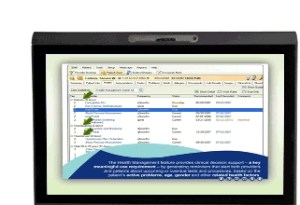
Regardless of the cost, HIPAA security and privacy regulations have changed the hospital environment.  The hospital and its IT and security staff need to be proactive.  There is simply too much at stake and potentially too many issues where mistakes could cause the hospital a serious system problem or result in a large fine.  HIPAA and the responsibility to provide reasonable patient care risk reduction mandate secure healthcare IT operations.  To do less simply allows patient care and healthcare delivery outcomes to be exposed to unacceptable levels of unnecessary risk.

About the Author

Carol S. Miller has an extensive healthcare background in operations, business development and capture in both the public and private sector. Over the last 10 years she has provided management support to projects in the Department of Health and Human Services, Veterans Affairs, and Department of Defense medical programs. In most recent years, Carol has served as Vice President and Senior Account Executive for NCI Information Systems, Inc., Assistant Vice President at SAIC, and Program Manager at MITRE. She has led the successful capture of large IDIQ/GWAC programs, managed the operations of multiple government contracts, interacted with many government key executives, and increased the new account portfolios for each firm she supported.

She earned her MBA from Marymount University; BS in Business from Saint Joseph’s College, and BS in Nursing from the University of Pittsburgh. She is a Certified PMI Project Management Professional (PMP) (PMI PMP) and a Certified HIPAA Professional (CHP), with Top Secret Security clearance issued by the DoD in 2006. Ms. Miller is also a HIMSS Fellow, Past President and current Board member and an ACT/IAC Fellow.

Conclusion

Your thoughts and comments on this ME-P are appreciated. Feel free to review our top-left column, and top-right sidebar materials, links, URLs and related websites, too. Then, subscribe to the ME-P. It is fast, free and secure.

Speaker: If you need a moderator or speaker for an upcoming event, Dr. David E. Marcinko; MBA – Publisher-in-Chief of the Medical Executive-Post – is available for seminar or speaking engagements. Contact: MarcinkoAdvisors@msn.com

OUR OTHER PRINT BOOKS AND RELATED INFORMATION SOURCES:

Product DetailsProduct Details

Paper Medical Records Keep Good Dentists [and Physicians] Honest

Join Our Mailing List

Good Fences Keep Good Neighbors

[By D Kellus Pruitt DDS]

“Changes to an EHR (electronic health record) can go unnoticed and can be harder to trace than changes made to paper records”

Sen. Mark Leno [D-San Francisco, the author of SB 850]

Yesterday, Kendall Taggart posted “Bill would require ‘track changes’ on electronic medical records” on California Watch.com.

http://www.chron.com/disp/story.mpl/deadbymistake/ca/6555170.html

It seems there is a growing problem with providers in California who cannot be held accountable for altering patients’ digital health records to protect themselves rather than their patients. With paper records on the other hand, erasures, ink and even handwriting can be scrutinized should a court of law need reliable evidence. What’s more, Sen. Leno’s feel-good law will not make EDRs any cheaper. Meanwhile, the multifaceted safety of paper dental records is not only proven by a very long track record, but it is irrefutable and free. Hard evidence is the innocent dentist’s friend. Otherwise it’s “he said, she said” and an unpredictable jury that might not like dentists anyway.

Tagggart writes: “A bill working its way through the state Legislature would make it more difficult for health care providers [including dentists] to modify or delete electronic medical records and leave no record of the change … The bill would require providers to automatically record any change or deletion of electronically stored medical information and identify who made the change. Furthermore, the bill would make it possible for patients to see the changes if they requested their medical records.” Do Democrats from California ever consider the price tag of their ideas? Is there any wonder why healthcare costs continue to rise?

Kaiser Responds 

Teresa Stark of Kaiser Permanente responds: “Our system can’t do that, and we’re not aware of any system that can. Given the level of investment required to bring our EHR up to that level, is this really what we want to be spending our money on?”

Regulatory expenses in healthcare are like tsunamis to dentists. Big boats like Kaiser in deep water might hardly notice the swell that will overwhelm our inflatable water wings in the shallows.

And, if it is too expensive for Kaiser – one of the largest healthcare systems in the nation with thousands of staff – imagine how expensive and time-consuming the new law will make electronic dental records? Since California often leads the nation in swell regulatory ideas, will California dentists be the first to flee to paper records should the costs of digital keep rising?

Even before California’s latest regulatory patch is slapped on EDRs, they offer no return on investment. That means paperless practices are more expensive to maintain than paper practices, and ultimately, patients will pay an increased price for paperless dentistry.

Assessment 

Micromanagement of small practices is expensive even if performed using the EDRs dentists themselves purchase. Swell ideas from well-meaning lawmakers are pricing miracle discoveries from safely interconnected EDRs out of reach. Why is HIT incompatible with common sense?

Conclusion

Your thoughts and comments on this ME-P are appreciated. Feel free to review our top-left column, and top-right sidebar materials, links, URLs and related websites, too. Then, subscribe to the ME-P. It is fast, free and secure.

Speaker: If you need a moderator or speaker for an upcoming event, Dr. David E. Marcinko; MBA – Publisher-in-Chief of the Medical Executive-Post – is available for seminar or speaking engagements. Contact: MarcinkoAdvisors@msn.com

OUR OTHER PRINT BOOKS AND RELATED INFORMATION SOURCES:

 Join Our Mailing List

Product Details 


“Meaningful Use” for Ambulatory Care Medical Practices

Join Our Mailing List

EHR Objectives and Measures

By Shahid N. Shah MS  

For ambulatory care practices and physicians there are about 25 objectives and measures that must be met to become a “meaningful user”. Keep in mind that meaningful use is not tied to a certified EHR alone; in fact, unless you use the EHR properly and in all the ways the government wants you to, you will not be a “meaningful user”.

Don’t be fooled by EHR vendors guaranteeing that they will make you a “meaningful user” – no vendor’s software, no matter how nice, can get your staff to use the software in the way the government wants. You, as the CIO of your practice, are the only one that can guarantee that. In fact, you don’t even need an EHR from a vendor to meet the requirements – you can even roll your own, use open source, or find any other means.

Fear and Promises

In general, as long as you can attest and send data to the government that they require you can do it in any way that you want. Be aware that some unscrupulous vendors are scaring practices and making promises that they cannot keep.

Final MU Rules

The final Meaningful Use (MU) Rule was published by HHS on July 13, 2010. It defines 24 objectives for and measures eligible hospitals that could be met to become a meaningful user and qualify for incentive funding. There is a “core set” that must be met by all institutions and a “menu set” of from which organizations must implement at least 5 objectives.

Core Set Objectives

These are the “core set” of 14 objectives that must be met by all institutions and a “menu set” of 10 from which organizations must implement at least 5 objectives (at least 1 public health objective must be chosen from that set).

  1. Use Computer Provider Order Entry (CPOE).
  2. Implement drug-drug, drug-allergy, and drug-formulary checks.
  3. Record demographics.
  4. Implement one clinical decision support rule.
  5. Maintain an up-to-date problem list of current and active diagnoses based on ICD-9-CM or SNOMED CT.
  6. Maintain active medication list.
  7. Maintain active medication allergy list.
  8. Record and chart changes in vital signs.
  9. Record smoking status for patients 13 years or older.
  10. Report hospital clinical quality measures to CMS or States.
  11. Provide patients with an electronic copy of their health information, upon request.
  12. Provide patients with an electronic copy of their discharge instructions at time of discharge, upon request.
  13. Capability to exchange key clinical information among providers of care and patient-authorized entities electronically.
  14. Protect electronic health information.

Menu Set Objectives

These are the “menu set” of 10 objectives from which organizations must implement at least 5. At least one public health objective must be chosen from this set as well (numbers 8 or 9). Drug-formulary checks.

  1. Record advanced directives for patients 65 years or older.
  2. Incorporate clinical lab test results as structured data.
  3. Generate lists of patients by specific conditions.
  4. Use certified EHR technology to identify patient-specific education resources and provide to patient, if appropriate.
  5. Medication reconciliation.
  6. Summary of care record for each transition of care/referrals.
  7. Capability to submit electronic data to immunization registries/systems.
  8. Capability to provide electronic submission of reportable lab results to public health agencies.
  9. Capability to provide electronic syndromic surveillance data to public health agencies.

Government Agencies and Participants Involved in MU

As you can see in the Figure, the Office of the National Coordinator for Healthcare IT (ONCHIT) is a component of the Department of Health and Human Services (HHS). ONCHIT, usually abbreviated just ONC, is the principal policy group of the Federal Government that defines and manages NHIN.

Figure Link: Figure 

* ONC is responsible for coordinating with the Department of Commerce’s National Institute of Standards and Technology (NIST) on the specifications for the NHIN standards.

* The HIT Policy and HIT Standards Committees are the working groups that advise ONC on what to put in the standards.

* NIST is responsible for coming up with the test materials (assertions, procedures, methods, tools, data, and so on) that will be used to certify working systems 

Conclusion

Your thoughts and comments on this ME-P are appreciated. Feel free to review our top-left column, and top-right sidebar materials, links, URLs and related websites, too. Then, subscribe to the ME-P. It is fast, free and secure.

Link: http://feeds.feedburner.com/HealthcareFinancialsthePostForcxos

Speaker: If you need a moderator or speaker for an upcoming event, Dr. David E. Marcinko; MBA – Publisher-in-Chief of the Medical Executive-Post – is available for seminar or speaking engagements. Contact: MarcinkoAdvisors@msn.com

OUR OTHER PRINT BOOKS AND RELATED INFORMATION SOURCES:

Product Details 

Is HI-TECH Dead?

Join Our Mailing List

You Decide!

[By D. Kellus Pruitt DDS]

Yesterday, Don Fluckinger, Features Writer for SearchhealthIT, posted “Blumenthal: Building national health network could take decades”

“When Dr. David Blumenthal was national health IT coordinator, he focused on 2015, the HITECH Act’s original target date for meeting meaningful use criteria. Now that he’s back in civilian life, he’s taking a longer view of the initiative to create a national health network triggered by the HITECH Act’s cash incentives to physicians and hospitals using electronic health record (EHR) systems.”

http://searchhealthit.techtarget.com/news/2240035845/Blumenthal-Building-national-health-network-could-take-decades

Even though Fluckinger assures us that post-ONC, Blumenthal is still a “HITECH Act champion,” I’m not so sure. Perhaps in spirit only!

A Multi-Decade Project?

Last week, Dr. Blumenthal was the keynote speaker at the Massachusetts annual health IT conference. According to Fluckinger, he told the audience that building a secure, national, interoperable health information system “was always going to be a multi-year, maybe even multi-decade project.” That’s not what I remember. I remember being told that if I didn’t purchase a network-ready EHR for my dental practice by 2014, I wouldn’t be paid by insurance companies.

What Happened?

So, what happened to President Bush’s 2004 Executive Order of “interoperability (even with dentists) by 2014”? Is it too soon to say that he failed? So who is going to tell the thousands of HIT stakeholders who have been attracted by the smell of stimulus billions? Blumenthal?

Assessment 

I can only imagine that now that Dr. Blumenthal left his job as head of the ONC for a new job as a health policy professor at Harvard School of Public Health, the openness of life outside government makes him uncomfortable with the lame talking points he once pushed as part of his job, without cracking a smile.

Conclusion

Your thoughts and comments on this ME-P are appreciated. Feel free to review our top-left column, and top-right sidebar materials, links, URLs and related websites, too. Then, subscribe to the ME-P. It is fast, free and secure.

Speaker: If you need a moderator or speaker for an upcoming event, Dr. David E. Marcinko; MBA – Publisher-in-Chief of the Medical Executive-Post – is available for seminar or speaking engagements. Contact: MarcinkoAdvisors@msn.com

OUR OTHER PRINT BOOKS AND RELATED INFORMATION SOURCES:

Product DetailsProduct DetailsProduct Details

Product Details  Product Details

   Product Details 

On Physician Relations Management [PRM] Technology

Join Our Mailing List

Criteria for Selection

By Dr. Gary L. Bode MSA, CPA, LLC

Both research and experience reveals an often confusing, complicated world of claims, features, and upgrades, a wide array of technical architectures, and an even wider array of pricing structures when it comes to choosing Physician [Customer] Relations Management [PRM] software.

For me – as a medical practice management consultant – critical criteria for selection includes the following features.

Scalability:

In a young medical practice, a scalable marketing program and PRM infrastructure should be flexible enough to accommodate specialty trends effortlessly and seamlessly without crushing your marketing infrastructure or its’ people, patients or processes. A scalable PRM infrastructure should allow a new channel, a new patient segment, a medical product or service-line seamlessly and with minimum incremental effort or cost.

Interoperability:

You may need an authoring tool today to develop your collateral data, and so select a simple MSFT Word® program. Later, you may want to conduct campaigns to re-introduce your practice or gauge satisfaction among current patients through an online survey. The software you build or purchase for individual activities should be able to co-exist and talk to each other. The software you purchase does not have to be monolithic, but it needs to be modular and work together incrementally.

For example, your e-mail campaign software, CPOESs [computerized physician order entry systems] and e-prescribing functions should work with your authoring tools and eMR.

In today’s complex and fast paced evolution of PRM products, newer technologies need to co-exist with older legacy technologies, and futuristic eMR systems; so interoperability is one of the critical criteria for PRM technology selection.

Ease of Use:

As a young medical practice, pulled in different directions, it is important to have a PRM solution that is easy to use and does not necessitate extensive user training.

Cost structure:

Remember, all PRM software comes with obvious costs as well as hidden costs. Ask the right questions and find out the hidden costs for systems implementation, integration and user training.

Assessment

Channel Surfing the ME-P

Have you visited our other topic channels? Established to facilitate idea exchange and link our community together, the value of these topics is dependent upon your input. Please take a minute to visit. And, to prevent that annoying spam, we ask that you register. It is fast, free and secure.

Conclusion

Your thoughts and comments on this ME-P are appreciated. Feel free to review our top-left column, and top-right sidebar materials, links, URLs and related websites, too. Then, subscribe to the ME-P. It is fast, free and secure.

Speaker: If you need a moderator or speaker for an upcoming event, Dr. David E. Marcinko; MBA – Publisher-in-Chief of the Medical Executive-Post – is available for seminar or speaking engagements. Contact: MarcinkoAdvisors@msn.com

OUR OTHER PRINT BOOKS AND RELATED INFORMATION SOURCES:


Product Details 

The Absurdity of “Meaningful Use” Requirements in Dentistry

Let’s End the Silence

By D. Kellus Pruitt DDS

Hey, Doc. How can your silence possibly serve your patients’ best interests?

For my colleagues in the audience who have quietly examined the critical and timely issues I’ve repeatedly offered for discussion – adults with post-graduate degrees who might have briefly considered publicly responding  to what I write, but who still cannot take ownership of an opinion – what on Earth is holding you back? Whatever it is, I say there are only lame, self-serving excuses for dentists to continue to betray patients’ trust. So how does that make you feel, Doc? A little angry maybe? Indignant? Let’s work on that professional nerve a little more. Maybe I’ll get a rise out of you yet.

Where Have You Been? 

As a healthcare provider whose trusting patients depend on you to protect their interests from stakeholders who cannot be held accountable – where have you been? Do you really believe dentists’ stoicism upholds and promotes the ideals of the healing profession? What about the Hippocratic Oath? How?

Or, is your shyness perhaps the manifestation of a character weakness revealing little confidence in your own personal ethics? You can’t blame me if that pisses you off. As long as you are silent, it’s impossible for me to tell a thing about you. So please, feel free to describe how my observations make you feel. You could easily change my opinion by merely speaking up to defend your silence … which promises to be an interesting argument.

ADA Members 

Or, maybe, as an ADA member, or more so a vetted official, professional silliness isn’t your choice at all. Perhaps you are torn between supporting common sense and honesty in your community and a professional dedication to the ADA’s committee-approved slogan “Speaking with one voice.” What looks to me like a cheap PR hack’s piece of art – purchased by either a clueless or nasty-cynical ADA official – is intended to not only keep members in their place as policy, but to also give state and national politicians the impression that all dentists unquestioningly unite behind any and all ADA ideas – sight unseen. (Public discussion of policy with membership is never permitted, even though it’s just dentistry). Elsewhere in the world, that would be called tyranny. It’s also easy to see that “one voice” is a generous exaggeration of our current dental leaders’ influence in Washington.

Stage 2 Meaningful Use

If anonymous leaders who secretly manage a silent profession insulated from the community were the least bit effective at protecting dental patients’ welfare, dentists who actually provide dentistry for the poor wouldn’t be faced with absurd and overwhelming Stage 2 Meaningful Use documentation requirements that will be enforced by CMS in 2012:

  • Record Smoking Status for Patients 13 Years Old or Older
  • Generate Lists of Patients by Specific Condition
  • Check Insurance Eligibility Electronically from Public and Private Payers
  • Submit Claims Electronically to Public and Private Payers
  • Provide Patients with Timely Electronic Access to their Patient Information
  • Computerized provider order entry (CPOE)
  • eRX
  • Record Demographics
  • Record and Chart Vital Sign
  • Patient Reminder
  • Electronic Copies
  • Clinical Summaries
  • Advising Smokers to Quit

Rising Above Politics

As healthcare professionals, our patients depend on us to rise above political correctness and petty, cheap slogans. Indeed, how good is it for healthcare when doctors evade unpopular issues? Can anyone in the audience explain how our patients are better served by PR hacks than dialogue? Anyone?

Assessment

Face it. The absurdity of Meaningful Use [MU] requirements in dentistry proves that our non-responsive leadership is incapable of protecting our dental patients. From now on, only you and I can do that on our own as individuals. But to make a difference, you must be heard.

Conclusion

Your thoughts and comments on this ME-P are appreciated. Feel free to review our top-left column, and top-right sidebar materials, links, URLs and related websites, too. Then, subscribe to the ME-P. It is fast, free and secure.

Link: http://feeds.feedburner.com/HealthcareFinancialsthePostForcxos

Speaker: If you need a moderator or speaker for an upcoming event, Dr. David E. Marcinko; MBA – Publisher-in-Chief of the Medical Executive-Post – is available for seminar or speaking engagements. Contact: MarcinkoAdvisors@msn.com

OUR OTHER PRINT BOOKS AND RELATED INFORMATION SOURCES:

Product DetailsProduct DetailsProduct Details

Product Details  Product Details

   Product Details 

Challenging a Naive eDR Advocate

An Open Letter to Dr. Margaret Scarlett

By D. Kellus Pruitt; DDS

For the last few weeks, I’ve been challenging a naive EDR advocate. They are becoming increasingly hard to find. Here is what I posted today on her blog.

Dear Dr. Margaret Scarlett

This open conversation on your Medscape Connect blog not only alerts the nation to the possibility of imminent failure of interoperability in post-computerized dentistry, but it also features dialogue introducing potential solutions around otherwise insurmountable problems the industry is encountering.

http://boards.medscape.com/forums?128@884.9VVBadZEUsj@.2a077212!comment=1

Courageous 

A forum such as yours that invites frank discussion about the faults of EDRs is almost unprecedented and entirely politically-incorrect. But then, that is why it is incredibly meaningful. Thank you for your courage, Dr. Scarlett.

Collegial

Let’s keep it collegial but challenging.

First of all, in your April 21st response, you justifiably expressed concern that EHR/fax hybrids might increase danger of data breaches over the incredible risk that already exists in digitalized healthcare. I assume that now that you know more about cloud-based companies such as Sfax, you agree that your security concern is unfounded. Fax, telephone and the US Mail will always be more secure than the internet – an often-forgotten fact. Any arguments?

A large part of your response concerned interoperability and aggregation problems that will be easily solved by the Health Information Exchanges (HIE) and EHR/fax companies. Why would their product not be seamless like any other digital transmission? From our perspective as dentists, your concern is a non-issue. Anything that can be printed on paper can come up on a computer screen and vice versa. Fortunately for our patients, you and I don’t have to worry ourselves about the technological magic of common office equipment.

I just have to say that when I read about your concern for “dependence on ink supplies, phone connections, or the availability of personnel to handle pieces of papers without any mistakes,” I noticed you didn’t say anything about saving the forests and paper cuts. Quite frankly, I think even you recognize that these lame arguments against a new idea are disingenuous stretches. Who’s to say there will be fewer keystroke errors on digital records than paper? See what I mean?

Lastly, in your April 21st response, you seem to suggest that unless the vast majority of dentists spend tens of thousands of dollars to purchase EDRs which will raise the cost of the care they provide, huge pools of data stored in HIEs that you claim somehow “assure patient-centered care,” will not be available to dentistry. You’ve got to be kidding. How many years away is that science? Let me repeat: Dental patients are fortunate that EDRs are going nowhere because of dentists’ solid business reasons in the land of the free. Until EDR advocates base sales claims on evidence rather than hearsay, they are only entertaining themselves with the fantasy.

Assessment 

I only wish the anonymous EHR experts in the ADA who are quietly influencing lawmakers would step out and introduce themselves to the community they serve. Can you think of any possible reason that the ADA can’t answer a few questions about what they have been doing on our behalf. Or should that not concern dentists?

Conclusion

And so, your thoughts and comments on this ME-P are appreciated. Feel free to review our top-left column, and top-right sidebar materials, links, URLs and related websites, too. Then, subscribe to the ME-P. It is fast, free and secure.

Link: http://feeds.feedburner.com/HealthcareFinancialsthePostForcxos

Speaker: If you need a moderator or speaker for an upcoming event, Dr. David E. Marcinko; MBA – Publisher-in-Chief of the Medical Executive-Post – is available for seminar or speaking engagements. Contact: MarcinkoAdvisors@msn.com

Our Print Books and Related Information Sources:

Health Dictionary Series: http://www.springerpub.com/Search/marcinko 

Practice Management: http://www.springerpub.com/product/9780826105752

Physician Financial Planning: http://www.jbpub.com/catalog/0763745790

Medical Risk Management: http://www.jbpub.com/catalog/9780763733421

Healthcare Organizations: www.HealthcareFinancials.com

Physician Advisors: www.CertifiedMedicalPlanner.com

Subscribe Now: Did you like this Medical Executive-Post, or find it helpful, interesting and informative? Want to get the latest ME-Ps delivered to your email box each morning? Just subscribe using the link below. You can unsubscribe at any time. Security is assured.

Link: http://feeds.feedburner.com/HealthcareFinancialsthePostForcxos

Sponsors Welcomed: And, credible sponsors and like-minded advertisers are always welcomed.

Link: https://healthcarefinancials.wordpress.com/2007/11/11/advertise

Product DetailsProduct DetailsProduct Details       

Product Details  Product Details

   Product Details 

Planning your eMR Escape from IT Hell

Lessons I Learned in B-School

Dr. David Edward Marcinko MBA

[Publisher-in-Chief]

www.BusinessofMedicalPractice.com

Of course, as a doctor, you will spend weeks or months in the “sales and demo cycle” for selecting an EMR. If you’re lucky you will have time to consider all workflows; if you’re even luckier you will test drive the system and make sure training goes smoothly. You will also try to ensure that deployment will be easy. However, another thing not to forget is to plan how to get out of an HIT application or her system after it’s been installed for a while.

Why Get Out?

Why is getting out important? Every application looks better in a demo than in a working environment and every solution becomes “legacy” sooner or later. Every system will be replaced or augmented at some point in time. The cost of acquisition (“barrier to entry”) is well understood now as something we need to calculate. But the “barrier to exit” or switching cost is something you must calculate at the time you decide what systems to purchase.

If you can’t answer the “how, in 6, 18, or 24 months, will I be able to move on to the next-better technology or system?” Question if you’ve not completed your due diligence in the sales cycle. Vendor sales staff are quite reticent to answer the “how do I leave your system” question; you will need to press hard and ask for a plan before signing any contracts.

The Hard Questions

When preparing an RFI or RFP, ask eMR vendors specific questions about how easy it is to get out of their technology (rather than just how easy to it is to deploy and interoperate). Put in specific test cases and have your folks consider this fact when they are looking at all new purchases.

The Expert Speaks

And, according to HIT expert Shahid N. Shah MS, writing for Chapter 13 in the third edition of our book, the “Business of Medical Practice”, here are some specific factors to consider:

Front Matter Link: Front Matter BoMP – 3

  • Do you own your data or does the vendor? If you don’t have crystal clear statements in writing that the data is yours and that you can do whatever you want with it, don’t sign the contract. Look for a new vendor.
  • Is the database structure and all data easily accessible to you without involving the vendor? If only your vendor can see the data, you’re locked in so be very wary. Find out what database the vendor is using and make sure you can get to the database directly without needing their permission.
  • Are the data formats that the system uses to communicate with other vendors open? If not, you don’t own your data. Be sure that at least CCR and CCD formats are available and that all document data is accessible in standard PDF or MS Office friendly formats. Discrete data should be extractable in XML or HL7.
  • How much of the technology stack is based on industry standards? The more proprietary the tech, the more you’re locked in.
  • Are all the programming APIs open, documented, and available without paying royalties or license costs? If not, when you try to get out you’ll pay dearly.

Assessment

In B-school, back in the day, the first thing we learned when writing a business plan and/or seeking banking, angel or VC money was formulating an exit strategy. Or, how do I get my [own] investors money back? A lesson I still remember today and can apply to eMRs. How about you?

Conclusion

And so, your thoughts and comments on this ME-P are appreciated. Feel free to review our top-left column, and top-right sidebar materials, links, URLs and related websites, too. Then, subscribe to the ME-P. It is fast, free and secure.

Speaker: If you need a moderator or speaker for an upcoming event, Dr. David E. Marcinko; MBA – Publisher-in-Chief of the Medical Executive-Post – is available for seminar or speaking engagements. Contact: MarcinkoAdvisors@msn.com and http://www.springerpub.com/Search/marcinko

Our Other Print Books and Related Information Sources:

Health Dictionary Series: http://www.springerpub.com/Search/marcinko

Practice Management: http://www.springerpub.com/product/9780826105752

Physician Financial Planning: http://www.jbpub.com/catalog/0763745790

Medical Risk Management: http://www.jbpub.com/catalog/9780763733421

Healthcare Organizations: www.HealthcareFinancials.com

Physician Advisors: www.CertifiedMedicalPlanner.com

Subscribe Now: Did you like this Medical Executive-Post, or find it helpful, interesting and informative? Want to get the latest ME-Ps delivered to your email box each morning? Just subscribe using the link below. You can unsubscribe at any time. Security is assured.

Link: http://feeds.feedburner.com/HealthcareFinancialsthePostForcxos

Sponsors Welcomed: And, credible sponsors and like-minded advertisers are always welcomed.

Link: https://healthcarefinancials.wordpress.com/2007/11/11/advertise

Product DetailsProduct DetailsProduct Details       

Product Details  Product Details

   Product Details 

Not so Fast – Examining eMR Options and Alternatives

Look Before you Leap

By Shahid N. Shah MS

Because of all the talk about electronic medical records [EMRs] and medical records software, doctors have many reasons to start immediately looking for an EMR vendor.

But, try to resist that urge and look at broader non-EMR solutions that can help remove some of the non-clinical burdens from your staff.

Here are some examples from Chapter 13, in our new book: www.BusinessofMedicalPractice.com

  • Using Microsoft Office Outlook® or an online calendaring system like Google to maintain patient schedules. While most vendors of clinical scheduling will tell you that medical scheduling is too complex to be handled by non-medical scheduling systems, most small and medium sized physician practices can easily get by with free or very inexpensive and non-specialized scheduling tools. By using general-purpose scheduling tools you will find that you can use less expensive consultants or IT help to manage your patient scheduling technology needs.
  • Using off-the-shelf address book software such as those built into Microsoft Office®, the Windows® and Macintosh® operating systems, or online tools such as Google apps you can maintain complete patient and contact registries for managing your patient lists. While a patient registry may not give you all of the features and functions you need immediately they can grow to a system that will meet your needs over time.
  • Using physician practice management systems you can remove much of the financial bookkeeping and insurance record-keeping burdens from your staff. Unlike calendaring or address book functionality which can be adapted from non-medical systems, insurance claims and related bookkeeping is an area where you should choose specific software based on how your practice earns its revenue. For example if a majority of your claims are Medicare related, then you should choose software that is specifically geared towards government claims management. If however your revenue comes less from insurance and more from traditional cash or related means you can easily use small business accounting software like Quicken® or Microsoft accounting.
  • Using computer telephony technology you can integrate automatic call in and call out the services that can be tied to your phone system so that you can track phone calls or send out call reminders.
  • Using integrated medical devices that can capture, collect, and transmit physiological patient data you can reduce paper capture of vital signs and other clinical data so that your staff are freed to do other work.
  • Using e-mail, instant messaging, social networking, and other online advanced tools you can reduce the number of phone calls that your practice receives and needs to return and yet continue to improve the patient physician communication process. One of the most time-consuming parts of any office is the back-and-forth phone calls so any reduction in phone calls will yield significant productivity increases.

Assessment

Any other ideas?

Link: Front Matter BoMP – 3

Conclusion

And so, your thoughts and comments on this ME-P are appreciated. Feel free to review our top-left column, and top-right sidebar materials, links, URLs and related websites, too. Then, subscribe to the ME-P. It is fast, free and secure.

Speaker: If you need a moderator or speaker for an upcoming event, Dr. David E. Marcinko; MBA – Publisher-in-Chief of the Medical Executive-Post – is available for seminar or speaking engagements. Contact: MarcinkoAdvisors@msn.com and http://www.springerpub.com/Search/marcinko

Our Other Print Books and Related Information Sources:

Health Dictionary Series: http://www.springerpub.com/Search/marcinko

Practice Management: http://www.springerpub.com/product/9780826105752

Physician Financial Planning: http://www.jbpub.com/catalog/0763745790

Medical Risk Management: http://www.jbpub.com/catalog/9780763733421

Healthcare Organizations: www.HealthcareFinancials.com

Physician Advisors: www.CertifiedMedicalPlanner.com

Subscribe Now: Did you like this Medical Executive-Post, or find it helpful, interesting and informative? Want to get the latest ME-Ps delivered to your email box each morning? Just subscribe using the link below. You can unsubscribe at any time. Security is assured.

Link: http://feeds.feedburner.com/HealthcareFinancialsthePostForcxos

Sponsors Welcomed: And, credible sponsors and like-minded advertisers are always welcomed.

Link: https://healthcarefinancials.wordpress.com/2007/11/11/advertise

Product Details