HEALTH INFORMATION TECHNOLOGY: Ransomware and Bankruptcy!

Bad things can happen in paperless practices, Doc

By Darrell Pruitt DDS

***

***

“Illinois Hospital First To Shut Down Completely After Ransomware Attack”

-By Karl Bode for Techdirt, Jun 16th 2023.

“Such attacks can have a chain reaction on already broken hospitals and health care systems. Health care workers are sometimes forced to resort to pen and paper for patient charts and prescriptions, increasing the risk of potentially fatal error. Delays in care can also prove fatal. And ransomware is only one of the problems that plague dated medical IT systems whose repair is being made increasingly costly and difficult by medical health care system manufacturers keen on monopolizing repair.”

Remember the MCNA (Managed Care of North America) data breach that was reported by Bill Toulas in Bleeping Computer on May 29th? There have been new developments.

LINK: https://www.bleepingcomputer.com/news/security/mcna-dental-data-breach-impacts-89-million-people-after-ransomware-attack/?fbclid=IwAR29pojexxoxDrrjIbcQqAAgnw17L5xqMXGxCnnDk_ZL0-kIv2PCniVaG0Y

“Patients of a Florida-based dental insurance provider brought a proposed class action lawsuit alleging negligence over a ransomware data breach that leaked the private information of more than 8.9 million people on the dark web, saying they face a lifetime risk of having their identities stolen.”

David Minsky for Law 360

[June 16th, 2023]

If you are still using paper records, don’t change now.

***

***

COMMENTS APPRECIATED

Thank You

***

Welcome ARPA-H [health]

By Dr. David Edward Marcinko MBA CMP

SPONSOR: http://www.CertifiedMedicalPlanner.org

***

Recent advances in biomedical and health sciences—from immunotherapy to treat cancer, to the highly effective COVID-19 vaccines—demonstrate the strengths and successes of the U.S. biomedical enterprise. Such advances present an opportunity to revolutionize how to prevent, treat, and even cure a range of diseases including cancer, infectious diseases, Alzheimer’s disease, and many others that together affect a significant number of Americans.

NIH: https://www.nih.gov/arpa-h

***

***

To improve the U.S. government’s capabilities to speed research that can improve the health of all Americans, President Biden is proposing the establishment of the Advanced Research Projects Agency for Health (ARPA-H). Included in the President’s FY2022 budget as a component of the National Institutes of Health (NIH) with a requested funding level of $6.5B available for three years, ARPA-H will be tasked with building high-risk, high-reward capabilities (or platforms) to drive biomedical breakthroughs—ranging from molecular to societal—that would provide transformative solutions for all patients.

MORE: https://thehealthcareblog.com/blog/2022/03/22/arpha-h-needs-to-think-bigger/

***

COMMENTS APPRECIATED

Thank You

Subscribe to the Medical Executive-Post

***

***

***

PODCAST: On Electronic Medical Records

EMR OVERVIEW

BY ERIC BRICKER MD

Electronic Medical Records (EMRs) are Used by 80-90% of Hospitals and Physician Practices. One Study Found that EMRs Have Lowered Patient Mortality by 0.09%.

YOUR COMMENTS ARE APPRECIATED

Thank You

****

A Clever Rap Anthem About Electronic Health Records

Join Our Mailing List

On EHRs

A Re-Post Report by Jaan Sidorov

***

broken PC

Clever Rap Anthem About Electronic Health Records

Assessment

ZDoggMD makes some good points, slips in a sly reference about one EHR provider and salutes another.

Ten years that have passed since he wrote this article, and we still have a way to go.

Conclusion

Your thoughts and comments on this ME-P are appreciated. Feel free to review our top-left column, and top-right sidebar materials, links, URLs and related websites, too. Then, subscribe to the ME-P. It is fast, free and secure.

Speaker: If you need a moderator or speaker for an upcoming event, Dr. David E. Marcinko; MBA – Publisher-in-Chief of the Medical Executive-Post – is available for seminar or speaking engagements. Contact: MarcinkoAdvisors@msn.com

OUR OTHER PRINT BOOKS AND RELATED INFORMATION SOURCES:

Product DetailsProduct Details

***

Got a Beef With Your EHR?

Join Our Mailing List

So – Go Tell the Feds; Already!

[Staff reporters]

Are you a doctor or medical provider unhappy with your electronic health records system, or unable to share health data because of the actions of other organizations?

Or, are you a healthcare consumer who can’t access your EHRs? The feds want to hear from you.

The Office of the National Coordinator for Health Information Technology has a new online complaint website, healthit.gov/healthitcomplaints. It is the first formal complaint process that ONC has had throughout the journey to EHR meaningful use.

***

Source: Joseph Goedert, Health Data Management [9/18/15]

Conclusion

Your thoughts and comments on this ME-P are appreciated. Feel free to review our top-left column, and top-right sidebar materials, links, URLs and related websites, too. Then, subscribe to the ME-P. It is fast, free and secure.

Speaker: If you need a moderator or speaker for an upcoming event, Dr. David E. Marcinko; MBA – Publisher-in-Chief of the Medical Executive-Post – is available for seminar or speaking engagements. Contact: MarcinkoAdvisors@msn.com

OUR OTHER PRINT BOOKS AND RELATED INFORMATION SOURCES:

[PRIVATE MEDICAL PRACTICE BUSINESS MANAGEMENT TEXTBOOK – 3rd.  Edition]

Product Details

  [Foreword Dr. Hashem MD PhD] *** [Foreword Dr. Silva MD MBA]

***

How to Demo and Buy an EMR Office System [Part 1 of 2]

Join Our Mailing List 

A SPECIAL ME-P REPORT

Practical “Tips and Pearls” from the Trenches

[Part One]

By Shahid Shah MS http://www.healthcareguy.com

Shahid N. Shah MSWhen getting demonstrations from vendors, the only way to understand the value for the money being spent or invested is to measure and communicate the productivity improvements that IT is supposed to deliver.

If you cannot measure how much time something takes before technology is implemented you will never know whether or not the purchase of any technology was a wise investment.

Some of the measurements you should consider are:

  • how long it takes to pull up a patient chart
  • how long it takes to update common data elements within a chart (meds, problems, etc.)
  • how long an appointment takes to schedule
  • how many patients are seen on a daily basis
  • how much data is being captured per patient visit
  • how long the check in and check out processes take
  • how much time spent on non-essential phone calls (better handled by automated email?)
  • how much time a physician spends on non-clinical activities

The actual items that you measure will depend on the tasks that you would like to automate; the simple listing of the tasks that you would like to automate often provides enough basic measurement metrics that you can perform a before and after comparison.

Vendor Demonstrations

When bringing vendors and for demonstrations or discussions you should lay out your workflow and your processes and share with them the kinds of tasks you would like to automate and the kind of staff productivity you are looking to improve and make your vendors focus on what’s important to you and not what features and functions they have in their solutions. Just remember the rule if you don’t measure you will never know whether you made an investment or simply spent money on something you didn’t need. If you don’t know how well you’re doing and where you want to improve vendors can give you any numbers and they will sound good to you.

Product Details

Here are some general tips for making sure you get good demo’s:

  • Demonstrations from vendors should not be about their software, but about how their solution benefits you. Make sure they spend most of their time talking about you, your practice, how their solution matches your practice, why each feature they are showing is important to your specialty and staff, and why they won’t fail in your office. Each time they talk about a general feature or function, bring them back to your practice.
  • When vendors talk about saving money and increasing productivity keep in mind that some money comes in the form of hard cash for the purchase of equipment and software but even more money will be spent in terms of early loss of productivity as new solutions are installed and staff becomes acclimated to it and potential loss in productivity forever if the wrong processes and steps are automated.
  • Force vendors in their demonstrations to talk about their failures in past installations – how many times were they removed/deinstalled, why did failures occur in the past, how did they recover from inevitable problems? The more a vendor can talk about why things go wrong and how they can help right the ship, the more likely they can help you out the jams you will get into.

To save you time, take 30 minutes and create a document that will tell vendors what you want them to show you in a demo and make the follow your script, not theirs.

Here are some tips for helping vendors demo to you:

  • See if you can do the first demo over the phone and web meeting software like WebEx or GotoMeeting. Remote demonstrations make more efficient use of time – the second or third demonstrations when you’re narrowing down selections are better in person.
  • Tell them there is no need for detailed company introductions and that you have no desire to hear that the vendor’s founders have found the secret sauce to healthcare technology that will save the healthcare industry. Vendors think you care about that stuff and will waste much of your time unless you make sure your wishes to not hear that are known in advance. They will not think you’re rude, they will thank you.
  • All medical records software do generally the same thing, they just do them in sometimes different ways and that’s what you care about – how they’re different. You’ll want to tell them to focus on how they different from other EMRs but not let them focus on competitors early on. Do this towards the end when you better understand their product and can ask more specific questions.
  • If the sales person wants to talk about the company, ask him to focus on the size of their service staff relative to their R&D staff, whether they provide in person phone support, do they have web-based support with screen sharing, and how much it will cost you to get support when you need it. While you’ll never talk to the CEO or founders of a vendor, you’ll definitely talk to their service staff so do ask about it.
  • Take the keyboard from the sales person. Never let a sales person drive the keyboard in a demo, you should do it yourself or have a computer-proficient staff member drive it.
  • Within the first 30 seconds of the demo, make sure you are shown how to lookup a patient by name and date of birth. If it takes more than 30 seconds to launch the app, log in, and type in a patient name or date of birth, and get to a chart then you should be disappointed.
  • Once you’re at the demo patient screen, try to make sense of it without letting the sales person talk and show you around. If there are too many fields and you’re getting confused, it’s probably not intuitive and you should be cautious. Again, don’t let the sales person show you what you don’t understand – try to figure it out yourself.
  • In the demo patient screen, can you find the face sheet, meds, problem lists, procedures, past documents, faxes, lab results, and other documents without help from the vendor?
  • Within the first three minutes of the demo, make sure you see how to add meds, problems, and procedures to an existing patient. These are common tasks and shouldn’t take long.
  • Within the first seven minutes of the demo, make sure you see how to add a note to the chart. This is how you’ll start to interact and input data into the system.
  • Within the first fifteen minutes of the demo, create a new patient record and try to reproduce a sample patient chart in the system. Use an anonymized patient chart and try to recreate it during the vendor’s demo.
  • Now is the time to ask about all the other features that you care about and want to see demonstrated. Try not to ask about features just to see if they have it; tie it to one of your metrics and tell them why you need it.
  • If you liked what you saw, now is the time to ask them what other customers they have and their recent customer wins, how they compare with competitors, how much they cost, and related questions. You’ll understand the vendor better once you’ve tried the software.

Key focus areas for your demonstrations

Sales people for vendors give demo’s hundreds of times and each demo is the same for almost everyone and it focuses on their product. Your job is to focus them into the following key areas that are of concern to you:

  • Chart access. You will want to know how patient charts indexed, searched, and stored. Ask how they handle lost charts and multi-user access to the same chart (meaning can multiple people simultaneously view and update a chart). Inquire about how charts can be accessed on a mobile phone, on a web browser at your house, on a workstation at a hospital you have privileges at, or on your laptop while you’re in CME training. An EMR that doesn’t give you fast access to your charts from everywhere on any kind of device is going to limit you. Ask them to allow you to point your iPhone to a sample chart and see how it will look.
  • Data entry and document creation. Ask over and over again how data gets into the system; will it be a model that allows you to dictate into a phone and have the results show up in the EMR or will it be through voice recognition where the computer is trained and tries to understand what you say and automatically and immediately converts your speech into text for the EMR? Be sure to ask to what extent your voice can create notes in their system. The most common input mechanism outside of voice dictation is “point and click” templating where you choose between many options by pointing and choosing patient symptoms, observations, and other details and the computer creates the notes for you. For all normal findings the software can create the standard notes but for all abnormal findings you either enter free text or dictate. The point and click model is very popular but is a time-consuming activity. Another technique is handwriting recognition on a tablet – if you can write fast enough on touch screen device or can point and click fast it can be something that you can use. All these techniques are important to cover in a demo so you can decide what’s best for you.
  • Data backups. If they are a cloud provider, ask them during the demo to show you how you can easily get access to the database behind the user interface to get your data out anytime you want to. Ask the cloud vendor their disaster recovery strategy – what happens if their primary site is inaccessible, how do you access the data? If your EMR is on-premises on a server, ask them about how they help you perform backups of the server either locally or over the Internet. If the EMR vendor says backups are your problem and doesn’t give you a strategy or guidance you’ll have more to worry about.
  • Patient portals and personal health records (PHRs). Patient engagement and ability for patients to directly connect with you and view their records through your EMR is an important capability. During the decision-making process be sure that for no extra cost patients should be able to see their personal health record (PHR) as another view of your EMR.

Product DetailsProduct Details

Other considerations for your demonstrations

When you are looking to capture metrics and figure out which areas of your practice needs to be automated, take a look at the following general areas and make sure that when you are getting a demonstration you do so in a manner that fits the actual needs of your practice rather than what the software developers and consultants might think you need. If you don’t focus on your business problems than the vendors and consultants will focus you on what they think is important rather than what actually might be important to you. You’re better off reducing the number of areas you get demonstrated versus expanding.

PART TWO: How EMR Vendors Mis-Lead Doctors [Part 2 of 2]

RELATED:

Conclusion

Your thoughts and comments on this ME-P are appreciated. Feel free to review our top-left column, and top-right sidebar materials, links, URLs and related websites, too. Then, subscribe to the ME-P. It is fast, free and secure.

Speaker: If you need a moderator or speaker for an upcoming event, Dr. David E. Marcinko; MBA – Publisher-in-Chief of the Medical Executive-Post – is available for seminar or speaking engagements. Contact: MarcinkoAdvisors@msn.com

OUR OTHER PRINT BOOKS AND RELATED INFORMATION SOURCES:

Product DetailsProduct DetailsProduct Details

Do Nurses like EHRs?

Join Our Mailing List

Do RNs like using electronic health records?

[A seldom considered POV]

1-darrellpruitt

BY Darrell K. Pruitt DDS

Some Facebook comments:

Big problems when you have unexpected “downtimes”.

July 15 at 3:10pm · Like · 4

It is an absolute train wreck. I haven’t seen one record of mine that is not riddled with mistakes. Especially the allergies, they show me taking meds I’m allergic to and not taking meds I’m actually on. A true mess!! And now the records are all intertwined. I don’t like it at all!!

July 15 at 3:10pm · Like · 2

It is a nightmare!

July 15 at 3:18pm · Like

I retired just in time so I don’t have to deal with this fiasco.

July 15 at 3:19pm via mobile · Like · 2

IT SUCKS

July 15 at 3:19pm · Like

I don’t like them; my doctors don’t like them; how it will affect patient care is still a ‘jury out’ matter, but we can guess it will NOT help.

July 15 at 3:30pm · Like

Our Rural Community Healthcare system is just now switching over to this .. along with our hospital switching over to a totally new computer system .. the 2 systems do not talk to each other..In my personal experience I find that the “computer” world takes us away from Direct Patient Care (to busy playing “ring around the Rosie” on the computer).

July 15 at 3:40pm · Like · 4

I like them, but it is frustrating having “downtime.”

July 15 at 3:41pm · Like

I hear patients stating things like “my doctors don’t know who I am because they don’t look at me they are glued to the computer”. It saddens me patients feel less valued. I’ve worked in places where they’ve had paper charts and places computerized. Seems the computers are redundant and I personally prefer paper charts. Chart one assessment not one assessment 4 different places.

July 15 at 3:44pm via mobile · Like · 3

It looks to me like physicians are cutting and pasting old histories and physicals, complete with the errors. Doctors in a local ER charted complete physicals on me when they did not get closer than 5 feet away. The records are difficult to read, difficult to find information; and it is not number in chronological order.

July 15 at 3:47pm · Like

I dislike it. Besides the down time, I find it very impersonal. I don’t feel as if I am giving my full attention to my pt, nor do I feel my PCP is hearing what I’m saying . They are too busy putting in info on the computer. As for the down time you then have to work late to put in the info gathered while the system is down.

July 15 at 3:47pm via mobile · Like · 2

eHRs

Assessment

https://www.facebook.com/friendanurse/posts/654085127954821

More: On DIgital Deaths

http://www.bloomberg.com/news/2013-06-25/digital-health-records-risks-emerge-as-deaths-blamed-on-systems.html

(50+ other comments)

Conclusion

Your thoughts and comments on this ME-P are appreciated. Feel free to review our top-left column, and top-right sidebar materials, links, URLs and related websites, too. Then, subscribe to the ME-P. It is fast, free and secure.

Speaker: If you need a moderator or speaker for an upcoming event, Dr. David E. Marcinko; MBA – Publisher-in-Chief of the Medical Executive-Post – is available for seminar or speaking engagements. Contact: MarcinkoAdvisors@msn.com

OUR OTHER PRINT BOOKS AND RELATED INFORMATION SOURCES:

Product DetailsProduct DetailsProduct Details

How I Lost my Battle Against the NPI

Join Our Mailing List

Refusing a National Provider Identifier Number

By Darrell K. Pruitt DDS

pruittI can no longer refuse to apply for a National Provider Identifier (NPI). I lost that long battle. Anyone rejoicing?

I’m spent. My leverage has vanished. Telling insurers “I have no NPI” held much more inherent power than “I have an NPI but I won’t share it with you on principle.” Far too many words. My profession has become dominated by unresponsive, unaccountable 3rd parties that dental leaders in the ADA welcome as policy. Working together, they promote and commandeer the technology dentists purchase and clueless patients pay for in increased fees. I have painfully learned that principles are only for dentists who can still afford them, and it’s a bad economy for luxuries.

Non-HIPAA Entity

Since I am not a HIPAA-covered entity and therefore not required by law to adopt an NPI, my capitulation to extortion disappoints me as an American citizen. I still find it hard to believe that an anti-consumer HIPAA rule enthusiastically enforced by the dental benefits industry could force me to “volunteer” for a PERMANENT identifier. As I and 96% of dentists become jerked around by our NPIs, I hope dental historians note that I am the ONLY dentist who publicly asked “Why?” instead of “Why not?” After 6 years, I’m still awaiting an answer to that question from leaders who continue to promote the NPI to dentists while ignoring their questions.

Dental Benefits Providers

I was able to hold out up until Aetna, Delta Dental and other dental benefits providers deprived my office of access to details of patients’ dental benefits unless I have an NPI. I’m waiting for someone – anyone – to tell me how the identifier can possibly improve the dental care of those who pay Aetna and Delta Dental premiums, especially if their benefits are intentionally kept secret from their dentists. I am certain that if the nation’s employers who purchase dental benefits were aware of the transparent nonsense, they would never purchase such products. Where’s the US Chamber of Commerce? Where’s the FTC? How about the US Constitution?

This is exactly why there needs to be more openness in our profession, Doc. The cockroaches who were invited to quietly overrun dentistry cannot withstand transparency, yet I don’t know how much longer I can fight for it without further risking the health of my practice.

As anyone can understand – and as anticipated by corporate executives in the insurance industry as well as by those with vested interests in the ADA Department of Dental Informatics – to have to explain to new patients why I cannot estimate how much they will owe for treatment would destroy my practice. Outside the US, other societies deem it unethical to deny patients informed consent to treatment for any reason. The NPI is such an egregious blunder that I never expect those who promoted to accept ownership.

###

NPI

Assessment

If I lost the battle, who won? Do EDR enthusiasts in the ADA call this a glorious victory and a likely source of ADA pride for decades to come? Or is it much more shameful? Since I lost freedom, I want to know who won?

Conclusion

Your thoughts and comments on this ME-P are appreciated. Feel free to review our top-left column, and top-right sidebar materials, links, URLs and related websites, too. Then, subscribe to the ME-P. It is fast, free and secure.

Link: http://feeds.feedburner.com/HealthcareFinancialsthePostForcxos

Speaker: If you need a moderator or speaker for an upcoming event, Dr. David E. Marcinko; MBA – Publisher-in-Chief of the Medical Executive-Post – is available for seminar or speaking engagements. Contact: MarcinkoAdvisors@msn.com

Our Other Print Books and Related Information Sources:

Health Dictionary Series: http://www.springerpub.com/Search/marcinko

Practice Management: http://www.springerpub.com/product/9780826105752

Physician Financial Planning: http://www.jbpub.com/catalog/0763745790

Medical Risk Management: http://www.jbpub.com/catalog/9780763733421

Hospitals: http://www.crcpress.com/product/isbn/9781439879900

Physician Advisors: www.CertifiedMedicalPlanner.org

Product DetailsProduct Details

The Future of eMRs

Join Our Mailing List

Truth or Consequences?

Assessment

Truth or consequences; let ME-P readers and subscribers decide.

Conclusion

Your thoughts and comments on this ME-P are appreciated. Feel free to review our top-left column, and top-right sidebar materials, links, URLs and related websites, too. Then, subscribe to the ME-P. It is fast, free and secure.

Link: http://feeds.feedburner.com/HealthcareFinancialsthePostForcxos

Speaker: If you need a moderator or speaker for an upcoming event, Dr. David E. Marcinko; MBA – Publisher-in-Chief of the Medical Executive-Post – is available for seminar or speaking engagements. Contact: MarcinkoAdvisors@msn.com

OUR OTHER PRINT BOOKS AND RELATED INFORMATION SOURCES:

Product Details


The Federal Strategic Plan to Reduce Health IT Disparities

Request for Comments

Join Our Mailing List

[By Staff Reporters]

Working to ensure all Americans benefit from health IT is one of the principles guiding the development and execution of the federal health IT strategy. The Federal Health IT Strategic Plan that was released for public comment on March 25, 2011, states that we will strive to: Support health information technology (heath IT) benefits for all.

All Americans should have equal access to quality health care. This includes the benefits conferred by health IT.: The government will endeavor to assure that underserved and at-risk individuals enjoy these benefits to the same extent as all other citizens.

Health IT Disparities Workgroup

For the past few months, the Health IT Disparities Workgroup — comprised of staff from agencies of the U.S. Department of Health and Human Services (HHS): with strategic and operational programs in health IT and co-chaired by the Office of the National Coordinator for Health Information Technology (ONC) and the Office of Minority Health (OMH) — has led a focused effort to further define the federal government’s strategies and tactics to reduce health IT disparities within underserved communities. The result of this process will reflect our commitment to do more to reduce health IT disparities.

The Health IT Disparities Workgroup is developing a federal plan to reduce health IT disparities.: A draft set of strategies/tactics — aligned with the five goals of the Federal Health IT Strategic Plan — is included below: We hope you will assist us by providing comments on the following questions:

  • What do you think of the draft strategies / tactics listed below?
  • What specific activities would you like to see the federal government take on to reduce health IT disparities?

HIT

Health information technologies — such as electronic health records (EHRs), telemedicine, mobile health, and electronic disease registries — have been identified as effective means of helping to deliver safe, effective, affordable health care services; coordinate care across providers and clinical settings; and provide critical population data that may catalyze further policy and delivery system innovations.

Meaningful Use

The growing adoption and meaningful use of health IT is even more critical within the context of underserved communities. Within both rural and urban underserved communities, access to primary and specialty health care resources can be limited. This scarcity in many instances contributes to reduced quality of health care and of health outcomes for people residing in these communities. Within underserved communities, the use of health IT has demonstrated it can improve health outcomes, both from an individual and community-/system-wide perspective.

Federal Planning

Federal planning efforts focused at reducing health disparities, including The National Stakeholder’s Strategy and the HHS Action Plan to Reduce Racial and Ethnic Health Disparities, highlight the proliferation of meaningful use of health IT within underserved communities as a critical objective. This draft set of strategies/tactics (see below) for the federal plan to reduce health IT disparities aims to ensure that underserved communities realize the full benefits of health IT.

Assessment

Read more: http://www.healthit.gov/buzz-blog/from-the-onc-desk/federal-strategic-plan-disparities/#ixzz1X7U1WnCQ

Conclusion

Your thoughts and comments on this ME-P are appreciated. Feel free to review our top-left column, and top-right sidebar materials, links, URLs and related websites, too. Then, subscribe to the ME-P. It is fast, free and secure.

Speaker: If you need a moderator or speaker for an upcoming event, Dr. David E. Marcinko; MBA – Publisher-in-Chief of the Medical Executive-Post – is available for seminar or speaking engagements. Contact: MarcinkoAdvisors@msn.com

OUR OTHER PRINT BOOKS AND RELATED INFORMATION SOURCES:

Product DetailsProduct DetailsProduct Details

Xerox Survey Shows Impact of Electronic Health Records

Join Our Mailing List

[By Staff Reporters]

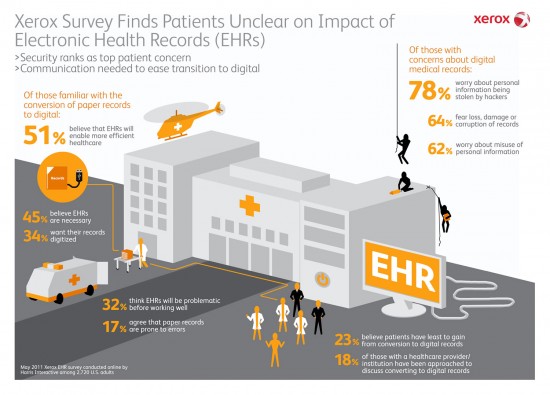
Patients are unclear on the impact of Electronic Health Records (EHRs) and cite security as a top concern, according to a recent survey conducted for Xerox.

Providers must focus on patient communication to explain benefits of EHRs as the country transitions from a paper-based system to digital as part of national healthcare reform.

Brought to you by Xerox

Conclusion

Your thoughts and comments on this ME-P are appreciated. Feel free to review our top-left column, and top-right sidebar materials, links, URLs and related websites, too. Then, subscribe to the ME-P. It is fast, free and secure.

Link: http://feeds.feedburner.com/HealthcareFinancialsthePostForcxos

Speaker: If you need a moderator or speaker for an upcoming event, Dr. David E. Marcinko; MBA – Publisher-in-Chief of the Medical Executive-Post – is available for seminar or speaking engagements. Contact: MarcinkoAdvisors@msn.com

OUR OTHER PRINT BOOKS AND RELATED INFORMATION SOURCES:

DICTIONARIES: http://www.springerpub.com/Search/marcinko
PHYSICIANS: www.MedicalBusinessAdvisors.com
PRACTICES: www.BusinessofMedicalPractice.com
HOSPITALS: http://www.crcpress.com/product/isbn/9781466558731
CLINICS: http://www.crcpress.com/product/isbn/9781439879900
BLOG: www.MedicalExecutivePost.com
FINANCE: Financial Planning for Physicians and Advisors
INSURANCE: Risk Management and Insurance Strategies for Physicians and Advisors

Product DetailsProduct DetailsProduct Details

Product Details  Product Details

   Product Details 

The Rising Tide of EHR Vendors

Electronic Health Records (EHRs)

By Don Fornes

[Founder & CEO, Software Advice]

EHR software vendors aren’t churning out profits like you might expect. You’d think that the Federal subsidies for EHR implementation would create a rising tide that lifted all boats in the EHR software industry. In reality, some vendors are about to capsize.

Based on data points I’ve observed in the market over the past few months, I think some vendors are facing a cash flow crunch. They’re thrilled to have the wind at their backs for once, but the pace is proving hard to maintain as market evolution has accelerated under the unnatural effect of government subsidies.

Here’s the problem.

EHR Vendors Are Spending Money Like Crazy

Most software markets evolve over a twenty or thirty-year period. Consider the enterprise resource planning (ERP) market: the first ERP vendors were founded in the early 1970s, but rapid growth and innovation continued until about the year 2000. The EHR market, however, will mature in the next five years. This is because healthcare providers are buying EHR systems sooner than they otherwise would, to make the most of massive federal subsidies and avoid penalties. Consequently, EHR vendors are in a mad rush to gain market share.

Those that win will own a massive customer base paying recurring support fees. Those that lose will become irrelevant from a market share standpoint and will be ingested into a larger vendor (if they’re lucky; some will just go broke). As a result, EHR vendors are increasing their R&D budgets to develop new features and meet meaningful use criteria. Their marketing colleagues are spending heavily on demand generation and brand building. These vendors have no choice but to win today’s market share battle.

But Medical Providers Are Gun Shy

Almost a year and a half passed between when the American Recovery & Reinvestment Act (ARRA) was signed in 2009, and the final definitions of “Meaningful Use” and “Certified EHR” were issued in July 2010. Certainly that process was no small task, but during that time, most providers took a wait-and-see approach to EHR adoption. There have been tens, maybe hundreds, of thousands of practices out kicking tires, but fewer than expected are writing checks to buy an EHR system. Furthermore, a disproportionate share of these deals – I’m estimating >60% – are going to the top ten market leaders, which is typical of enterprise software markets.

With meaningful use criteria now defined, I believe demand trends have improved. Providers now have the clarity necessary to make purchase decisions with confidence. That can’t happen soon enough, however. EHR spending has to catch up with the investments these vendors have been making over the past two years.

And Subscription Pricing Constrains Cash Flow

To complicate matters further, the software industry as a whole is shifting to cloud computing. Providers have not yet embraced the Cloud en masse, but they have embraced the subscription pricing model popularized by Cloud vendors. Why make a large, up-front investment in a perpetual license when you can just pay monthly for what you consume? Subscriptions are even more logical in light of a five-year subsidy payout.

To meet physician demands, the major EHR players are now offering low monthly pricing and publishing it right on their home pages. EHR vendors love this recurring subscription revenue, but their cash flow is spread out into the future as a result. It takes a healthy balance sheet to withstand this transition.

So what do we have so far?

  • EHR vendors are investing lots of money;
  • providers are writing fewer checks than expected; and,
  • checks that are written are smaller and spread out.

The result is a very difficult cash flow scenario for many, but not all, EHR vendors. Lately, I’ve seen some EHR vendors stretching their payables out 90 or even 120 days. Meanwhile, I’ve been surprised to hear that some leading vendors are operating between breakeven and just a few points of profit margin. Both practices represent good financial discipline considering the pace of market evolution. In reality, however, some vendors are struggling – “taking on water,” to stick with our nautical imagery.

Buyers Beware

The EHR and practice management markets have always been highly fragmented into hundreds of software vendors, largely as a result of the need to service small and demanding local practices. As a result, providers have seen plenty of vendors fail to reach critical mass, then close up shop or sell out. Anecdotally, I also know that some of the leading EHR vendors grew their top line 30% to 60% last year, while laggards foundered. Gaps between winners and losers are expanding quickly, so expect to see more consolidation.

Vendor size is important, but isn’t the deciding factor for success and viability. In this intense market, success will result from execution. The winners and losers will be determined by the competency and discipline of their management. EHR vendors must spend with discipline and generate a strong return on their investments. It wouldn’t hurt to raise capital, either, but not all vendors will need to take this step.

It’s tough for providers to assess the financial viability of private EHR vendors. Software Advice offers our Guide to Assessing Medical Software Vendor Viability, but the industry really needs a trusted third-party to evaluate the 400 plus vendors. Organizations like CCHITInfoGard and ICSA Labs are all certifying EHRs against functional criteria. However, buyers also need the equivalent of an A.M. Best orMoody’s to rate the financial health of EHR vendors. Okay, maybe without the negligence and bias the later demonstrated during the mortgage bubble.

Assessment

Link:  http://www.softwareadvice.com/medical/electronic-medical-record-software-comparison/

There will be some big EHR winners within the next five years and consolidation will be a net positive for the industry. However, buyers must be careful not to become collateral damage as the fierce battle for market share plays out. It’s important to determine which vendors are closing businesses, growing their revenue and building a sustainable, profitable business. Providers should keep in mind that their success is tied to the success of the software vendor that will enhance and support their EHR system in years to come.

Conclusion

Your thoughts and comments on this ME-P are appreciated. Feel free to review our top-left column, and top-right sidebar materials, links, URLs and related websites, too. Then, subscribe to the ME-P. It is fast, free and secure.

Speaker: If you need a moderator or speaker for an upcoming event, Dr. David E. Marcinko; MBA – Publisher-in-Chief of the Medical Executive-Post – is available for seminar or speaking engagements. Contact: MarcinkoAdvisors@msn.com

OUR OTHER PRINT BOOKS AND RELATED INFORMATION SOURCES:

Product Details

Product DetailsProduct DetailsProduct Details

Defining Electronic Medical Record Systems

Join Our Mailing List

Does Linguistic Obfuscation Exacerbate our Use Ambivalence?

[By Dr. Richard J. Mata; CIS, CMP™]

[By Dr. David E. Marcinko; MBA, CMP™]

The 2003 Institute of Medicine (IOM) Patient Safety Report [1] described an EHR [2] as encompassing:

  • a longitudinal collection of electronic health information for and about persons;
  • [immediate] electronic access to person- and population-level information by authorized users;
  • provision of knowledge and decision-support systems [that enhance the quality, safety, and;
  • efficiency of patient care] with support for efficient processes for health care delivery.

The IOM Report

A 1997 IOM report, The Computer-Based Patient Record: An Essential Technology for Health Care, provides a more extensive definition:

A patient record system is a type of clinical information system, which is dedicated to collecting, storing, manipulating, and making available clinical information important to the delivery of patient care. The central focus of such systems is clinical data and not financial or billing information. Such systems may be limited in their scope to a single area of clinical information (e.g., dedicated to laboratory data), or they may be comprehensive and cover virtually every facet of clinical information pertinent to patient care (e.g., computer-based patient record systems).

The HIMSS Model

The EHR definitional model document developed by the Health Information and Management Systems Society (HIMSS, 2003) includes:

“a working definition of an EHR, attributes, key requirements to meet attributes, and measures or ‘evidence’ to assess the degree to which essential requirements have been met once EHR is implemented.”


The IOM Model

Another IOM report, Key Capabilities of an Electronic Health Record System [Tang, 2003], identifies a set of eight core care delivery functions that EHR systems should be capable of performing in order to promote greater safety, quality and efficiency in health care delivery:

8 Core Principles

Today, we realize that the eight core capabilities that Electronic Health [Medical] Records should possess are:

  1. — Health information and data. Having immediate access to key information – such as patients’ diagnoses, allergies, lab test results, and medications – would improve caregivers’ ability to make sound clinical decisions in a timely manner.
  2. — Result management. The ability for all providers participating in the care of a patient in multiple settings to quickly access new and past test results would increase patient safety and the effectiveness of care.
  3. — Order management. The ability to enter and store orders for prescriptions, tests, and other services in a computer-based system should enhance legibility, reduce duplication, and improve the speed with which orders are executed.
  4. — Decision support. Using reminders, prompts, and alerts, computerized decision-support systems would help improve compliance with best clinical practices, ensure regular screenings and other preventive practices, identify possible drug interactions, and facilitate diagnoses and treatments.
  5. — Electronic communication and connectivity. Efficient, secure, and readily accessible communication among providers and patients would improve the continuity of care, increase the timeliness of diagnoses and treatments, and reduce the frequency of adverse events.
  6. — Patient support. Tools that give patients access to their health records, provide interactive patient education, and help them carry out home monitoring and self-testing can improve control of chronic conditions, such as diabetes.
  7. — Administrative processes. Computerized administrative tools, such as scheduling systems, would greatly improve hospitals’ and clinics’ efficiency and provide more timely service to patients.
  8. — Reporting. Electronic data storage that employs uniform data standards will enable health care organizations to respond more quickly to federal, state, and private reporting requirements, including those that support patient safety and disease surveillance.” [3]

Assessment

With all the confusion surrounding terms like quality improvement and “meaningful use” which can mean major Federal dollars to the coffers of a medical practice, clinic or hospital; are we still confused about basic definitional terms?

And, does eMR linguistic obfuscation exacerbate our use ambivalence and encourage physician/dentist eMR avoidance?

Conclusion

Feel free to review our top-left column, and top-right sidebar materials, links, URLs and related websites, too. Then, be sure to subscribe. It is fast, free and secure.

References:

[1]   See http://www.himss.org/content/files/PatientSafetyFinalReport8252003.pdf.

[2]   EHR (electronic health record) is often used interchangeably with EMR (electronic medical record).  In this discussion, EHR will be used consistently.

[3]   See http://www.iom.edu/.

Product DetailsProduct DetailsProduct Details

Why eMRs Won’t Improve Patient Care or Reduce Costs

Deus Ex Machina – NOT

By Staff Reporters

Question

Have electronic medical records made a difference in patient care?

Answer

According to a new study looking at the digital medical record adoption of 3,000 hospitals, electronic records have made little difference in healthcare costs or the quality of medical care.

Assessment

That’s discouraging, considering that the government is investing billions of dollars into the technology.  

Related posts from Kevin Pho MD:

Conclusion

Join Our Mailing List

And so, your thoughts and comments on this ME-P are appreciated. Feel free to review our top-left column, and top-right sidebar materials, links, URLs and related websites, too. Then, be sure to subscribe to the ME-P. It is fast, free and secure.

Get our Widget: Get this widget!

Our Other Print Books and Related Information Sources:

Practice Management: http://www.springerpub.com/prod.aspx?prod_id=23759

Physician Financial Planning: http://www.jbpub.com/catalog/0763745790

Medical Risk Management: http://www.jbpub.com/catalog/9780763733421

Healthcare Organizations: www.HealthcareFinancials.com

Health Administration Terms: www.HealthDictionarySeries.com

Physician Advisors: www.CertifiedMedicalPlanner.com

Subscribe Now: Did you like this Medical Executive-Post, or find it helpful, interesting and informative? Want to get the latest ME-Ps delivered to your email box each morning? Just subscribe using the link below. You can unsubscribe at any time. Security is assured.

Link: http://feeds.feedburner.com/HealthcareFinancialsthePostForcxos

Sponsors Welcomed

And, credible sponsors and like-minded advertisers are always welcomed.

Link: https://healthcarefinancials.wordpress.com/2007/11/11/advertise

About Practice Fusion and Free eHRs

A Web Based Concept in the Clouds

By Staff ReportersOpen

Practice Fusion is a firm that reports to address the complexities and critical needs of today’s healthcare environment by providing a free, web-based electronic Health Record (eHR) application to physicians.

America’s Fastest Growing EHR community

Practice Fusion is also a fast growing electronic Health Record community. Founded in 2005, they are rapidly expanding and adding new users regularly. Over 18,000 physicians and practice managers in 50 states currently use Practice Fusion’s electronic Health Record.

Online and Free

Practice Fusion stands out in a marketplace dominated by complicated, expensive and often inefficient eHR services. Their user-friendly eHR is reported to be activated in less than five minutes, with no downtime or extensive training; eliminating the difficult conversion process that has become an industry-standard.

Secure and Reliable

The firm understands the mission-critical nature of their application. Practice Fusion’s electronic Health Record is developed for the highest levels of security and performance with world-class data centers equipped with best-in-class technology to securely house sensitive data.

Assessment

Although Practice Fusion is a young company, they are led by a well-established team of healthcare and technology veterans. Practice Fusion is directed by a group of investors and medical practitioners who believe in the power of electronic Health Records. Investors include Band of Angels, Salesforce.com and Felicis Ventures. So, give the site a click, and tell us what you think! www.PracticeFusion.com

Conclusion

And so, your thoughts and comments on this Medical Executive-Post are appreciated. Comments from users and early adopters are especially appreciated. Feel free to review our top-left column, and top-right sidebar materials, links, URLs and related websites, too. Then, be sure to subscribe to the ME-P. It is fast, free and secure.

Link: http://feeds.feedburner.com/HealthcareFinancialsthePostForcxos

Speaker: If you need a moderator or speaker for an upcoming event, Dr. David E. Marcinko; MBA – Publisher-in-Chief of the Executive-Post – is available for seminar or speaking engagements. Contact: MarcinkoAdvisors@msn.com

Get our Widget: Get this widget!

Our Other Print Books and Related Information Sources:

Practice Management: http://www.springerpub.com/prod.aspx?prod_id=23759

Physician Financial Planning: http://www.jbpub.com/catalog/0763745790

Medical Risk Management: http://www.jbpub.com/catalog/9780763733421

Healthcare Organizations: www.HealthcareFinancials.com

Health Administration Terms: www.HealthDictionarySeries.com

Physician Advisors: www.CertifiedMedicalPlanner.com

Subscribe Now: Did you like this Medical Executive-Post, or find it helpful, interesting and informative? Want to get the latest ME-Ps delivered to your email box each morning? Just subscribe using the link below. You can unsubscribe at any time. Security is assured.

Link: http://feeds.feedburner.com/HealthcareFinancialsthePostForcxos

Sponsors Welcomed

And, credible sponsors and like-minded advertisers are always welcomed.

Link: https://healthcarefinancials.wordpress.com/2007/11/11/advertise

Product DetailsProduct DetailsProduct Details

About EHRWatch.com

A New Online Virtual Collaborative 

By Staff ReportersNurse Paper MRs

www.EHRWatch.com is a new online community dedicated to developments in electronic health records [eHRs], including practice, funding, product integration, standards developments and trends in implementation. The new site features blog posts, polling, commenting and a weekly e-newsletter.

A Collaborative

www.EHRWatch.com is designed to encourage community participation, interaction, collaboration and reaction. Whether you need to select and implement an EHR solution or make sure your current system meets the requirements and timeline necessary to receive the Obama Administration’s ARRA, and HITECCH,  stimulus incentives, the site may offer the products, information, services and expertise to help.

Assessment

Visit www.EHRWatch.com to read the latest posts and join the virtual community. Just give em’ a click, today!

Conclusion

And so, your thoughts and comments on this Medical Executive-Post are appreciated. Tell us what you think of this new site? Feel free to review our top-left column, and top-right sidebar materials, links, URLs and related websites, too. Then, be sure to subscribe to the ME-P. It is fast, free and secure.

Link: http://feeds.feedburner.com/HealthcareFinancialsthePostForcxos

Speaker: If you need a moderator or speaker for an upcoming event, Dr. David E. Marcinko; MBA – Publisher-in-Chief of the Executive-Post – is available for seminar or speaking engagements. Contact: MarcinkoAdvisors@msn.com 

Get our Widget: Get this widget!

Our Other Print Books and Related Information Sources:

Practice Management: http://www.springerpub.com/prod.aspx?prod_id=23759

Physician Financial Planning: http://www.jbpub.com/catalog/0763745790

Medical Risk Management: http://www.jbpub.com/catalog/9780763733421

Healthcare Organizations: www.HealthcareFinancials.com

Health Administration Terms: www.HealthDictionarySeries.com

Physician Advisors: www.CertifiedMedicalPlanner.com

Subscribe Now: Did you like this Medical Executive-Post, or find it helpful, interesting and informative? Want to get the latest ME-Ps delivered to your email box each morning? Just subscribe using the link below. You can unsubscribe at any time. Security is assured.

Link: http://feeds.feedburner.com/HealthcareFinancialsthePostForcxos

Sponsors Welcomed

And, credible sponsors and like-minded advertisers are always welcomed.

Link: https://healthcarefinancials.wordpress.com/2007/11/11/advertise

Feds Propose Educational Website on ePHRs

Site Aimed at Consumers

[By Staff Reporters]

Conference RoomAs reported by Mary Mosquera on May 22 2009, the Office of the National Coordinator for Health Information Technology (ONCHIT) just proposed developing a Web site for consumers. The site is to contain facts about electronic-personal health record systems and their privacy policies. It aims to help consumers and patients make informed decisions.

http://govhealthit.com/articles/2009/05/22/feds-propose-phr-website.aspx?s=GHIT_260509

Assessment

The Department of Health and Human Services [DHHS] Agency information collection request, for a 30-days public comment period, is also located here.

http://edocket.access.gpo.gov/2009/E9-12023.htm

Conclusion

Your thoughts and comments on this ME-P are appreciated. Feel free to review our top-left column, and top-right sidebar materials, links, URLs and related websites, too. Then, subscribe to the ME-P. It is fast, free and secure.

Link: http://feeds.feedburner.com/HealthcareFinancialsthePostForcxos

Speaker: If you need a moderator or speaker for an upcoming event, Dr. David E. Marcinko; MBA – Publisher-in-Chief of the Medical Executive-Post – is available for seminar or speaking engagements. Contact: MarcinkoAdvisors@msn.com

OUR OTHER PRINT BOOKS AND RELATED INFORMATION SOURCES:

Product Details 

Opinion Poll on eMRs

SPONSORED ADVERTISEMENT

www.MedicalBusinessAdvisors.com

Please Vote

Wal-Mart’s Health Information Technolgy Game Plan

CCHIT Meet Sam Walton

By Darrell K. Pruitt; DDSpruitt3

Dana Blankenhorn posted an article recently on zdnet titled “Wal-Mart Selling Windows Health Records.”

Link: http://healthcare.zdnet.com/?p=1966

After reading it, I opened a good, cost-effective fortified breakfast wine and began hammering out my comment that I copied below, long before the sun came up.  Hope you enjoy it.  I’m going to get some sleep. 

Looks Like Rein

Coach Glen Tullman’s traditionally favored and tough Allscripts-Misys team originating in CCHIT meets Walton’s consumer-supported, nimble team from Arkansas in front of Sam’s home town crowd. As a sports fan and occasional off-color commentator standing on the sidelines, Dana, I think this ball game could get exciting. The weather is perfect for sloppy, poor conditions and heaven knows that these two ideologies share history.

Wal-Mart HIT 

Some odds-makers say Wal-mart’s success in selling healthcare IT at Sam’s Club prices and quality is likely to take off in their patented free-market style in the next few months. 

The big question is; could this threaten federally-favored Allscripts’ early advantage? 

For example; if things get competitive, and the value of MDRX starts to falter under natural pressure, will Trustee Tullman call on the reserve strength of his exclusive Club CCHIT to out-flank the quick and slippery Sam’s Club wide-ended attorneys?  Some say that if CCHIT suddenly selects surprising, deceptive and occasionally lame applications for certification requirements – that happen to already reflect Allscripts pre-determined game plan – it is a cinch to give Tullman’s team a head start around their strong side with a pulling guard or three from the right (weak side) to lead interference.

Assessment 

Will Sam protest such a rule? You bet. It could get messy. Snot could fly. 

Here is the question on this reporter’s mind. If close calls are occasionally ruled in the home team’s favor, will Tullman move on down the road? I like to watch the cheerleaders.

Conclusion

And so, your thoughts and comments on this Medical Executive-Post are appreciated.

Speaker: If you need a moderator or speaker for an upcoming event, Dr. David E. Marcinko; MBA – Publisher-in-Chief of the Medical Executive-Post – is available for seminar or speaking engagements. Contact: MarcinkoAdvisors@msn.com  or Bio: www.stpub.com/pubs/authors/MARCINKO.htm

Get our Widget: Get this widget!

Our Other Print Books and Related Information Sources:

Practice Management: http://www.springerpub.com/prod.aspx?prod_id=23759

Physician Financial Planning: http://www.jbpub.com/catalog/0763745790

Medical Risk Management: http://www.jbpub.com/catalog/9780763733421

Healthcare Organizations: www.HealthcareFinancials.com

Health Administration Terms: www.HealthDictionarySeries.com

Physician Advisors: www.CertifiedMedicalPlanner.com

Subscribe Now:Did you like this Medical Executive-Post, or find it helpful, interesting and informative? Want to get the latest ME-Ps delivered to your email box each morning? Just subscribe using the link below. You can unsubscribe at any time. Security is assured.

Link: http://feeds.feedburner.com/HealthcareFinancialsthePostForcxos


Product DetailsProduct DetailsProduct Details