ADA Opens a Facebook

Join Our Mailing List

Perhaps too Early?

[By Darrell K. Pruitt; DDS]pruitt

Something strange has happened to www.DentalBlogs.com I think they have partially shut down their Facebook account. They no longer feature original articles such as those by Dr. Rhonda Savage and Ms. Linda Miles, and in the last couple of weeks, they eliminated their collection of photos. Now the site only features ads and press releases. Does anyone else wonder what happened? Sure you do! This is exciting.

Perhaps Re-Tooling 

Unless they are just re-tooling this weekend, I suspect that since their previous format was biased heavily in favor of advertising dollars in a tough economy, their funding simply dried up. Like so many other advertising-related careers, the dinosaur found it couldn’t compete in a 2.0 market.  Nevertheless, today I did learn something important from the DentalBlogs Wall: The ADA has opened a Facebook account.

http://www.facebook.com/home.php#/pages/American-Dental-Association/32252997166?ref=mf

Such transparency is inspirational

When I announced this news on Twitter a few hours ago (“Proots”), neither the ADA nor the TDA had yet told membership. Yea, I scooped them on their in-house news. It happens all the time.  Naturally, I became a fan of the ADA Facebook. When I joined, there were already 1205 fans, even though the site is yet operational. I found that intriguing because it usually takes a long time for most FBs to attain 1200 fans – especially when all one can gather is the mission statement of the ADA’s newest Internet site.

My View 

Here’s what I see: About the time DentalBlogs laid off employees from their fully active Facebook, the ADA opened theirs (Gasp)! The ADA was well known to DentalBlogs because the ADA once advertised with them regularly. That is where I found an article about the ADA-approved CareCredit/GE that ended up causing problems for some people and entertainment for others. Let’s face it, friends. I just know that I’m not the only dentist in the nation with at least two burning questions. I bet at least 4 others are wondering who were the first seven fans to sign up for the ADA Facebook and Has Kim Volk, CEO of DDPA signed up yet?

Because the number of fans is rapidly piling up, such information from a few weeks (?) ago could soon be just too difficult to uncover from the fans list on the ADA site. It took a long time for me to scroll down through 1200 names – looking for those I recognize (Gasp)!

Scrolling Quickly, but Carelessly

I could have easily missed several easily recognizable names in contemporary dentistry, but as far as I can tell, not only was Delta Dental Plans Association CEO Kim E. Volk’s name not present in the list of 1200 fans, but there were very few names I recognized … and I’m sorry if I insulted anyone. I also did not see “Ron Tankersley” and other ADA officials’ names on the fans list. Didn’t the ADA try partial transparency like this once before? I may be wrong, but I think I played a role in shutting it down a few years ago with my persistent and still unanswered questions about the NPI number.

More Semi-Reliable Information

Here’s another bolus of semi-reliable information: I also quickly scrolled through DentalBlog’s list of 400 fans and did not notice an unusual amount of matches with the ADA Facebook fans list.

Those who dare to do so, might just ask, “So if the ADA fans didn’t come from dentalblogs, where did they come from?” I think one possibility is that the ADA effort has been in Beta and limited to a select group of people up until now. Doesn’t it seem strange that nobody is able to post anything? Did someone open the doors a few hours early? So who were the first 7 fans? No, you don’t have to scroll down to find out for yourself. I’ll tell you.

Who is John Hergert?

The first person to become a fan of the ADA Facebook account is named John Hergert from Chicago, Illinois.

2nd – Laurie Rich

3rd – Amy Lund

4th – Kelsey Majors

5th – Jessica Stevens

6th – Samantha Campbell

7th – Lina Kulkormi

I don’t recognize any of the seven, and I have not searched anyone’s name other than John Hergert’s – the first person to become a fan of the ADA Facebook. I found someone named John Hergert in Chicago, Illinois who is Associate Vice President at Lipman Hearne Inc. – an advertising agency.

http://www.spoke.com/info/p6JVgPy/JohnHERGERT.

Here is the bio of the person I only suspect is the first to become a fan of the ADA Facebook.

John Hergert’s Biography

John Hergert Associate Vice President John Hergert has a keen understanding of what it takes to capture and hold the attention of marketing audiences via innovative marketing techniques. Formerly Associate Director of Marketing Communications at DePaul University in Chicago, John works with both traditional and interactive media to design and implement marketing strategies that build a client’s image, increase support, and grow enrollment or attendance. John’s experience includes developing ROI-based marketing strategies for a variety of nonprofit and for-profit clients. Prior to DePaul, John was an account executive overseeing marketing and advertising strategy, web development, direct mail, print production, and promotional development for clients including Disney, Marconi, Owens Corning, and Reynolds. John began his marketing career while at the University of Wisconsin, where he was hired by a Los Angeles firm to implement cutting-edge marketing programs for Saturn and Trek Bicycle Corporation. John received his B.A. in Journalism from the University of Wisconsin and his Master of Science in Information Systems from DePaul University.”

Assessment 

What do you want to bet that the ADA Facebook is Mr. Hergert’s baby?

Channel Surfing the ME-P

Have you visited our other topic channels? Established to facilitate idea exchange and link our community together, the value of these topics is dependent upon your input. Please take a minute to visit. And, to prevent that annoying spam, we ask that you register. It is fast, free and secure.

Conclusion

Your thoughts and comments on this ME-P are appreciated. Feel free to review our top-left column, and top-right sidebar materials, links, URLs and related websites, too. Then, subscribe to the ME-P. It is fast, free and secure.

Speaker: If you need a moderator or speaker for an upcoming event, Dr. David E. Marcinko; MBA – Publisher-in-Chief of the Medical Executive-Post – is available for seminar or speaking engagements. Contact: MarcinkoAdvisors@msn.com

OUR OTHER PRINT BOOKS AND RELATED INFORMATION SOURCES:

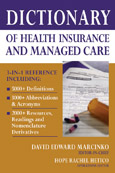
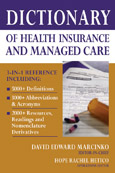
Dictionary of Health Insurance and Managed Care


Product DetailsProduct DetailsProduct Details

Product Details  Product Details

   Product Details 

Why ADA / Intelligent Dental Marketing Failed?

Join Our Mailing List

The ADA is an Incredible Dinosaur

By Darrell K. Pruitt; DDSpruitt

As a member of the ADA, I am also a part owner in any business venture the leaders of the organization enter into. I’ve observed the loss of my investment in a business deal because my employees made mistakes. As a business owner, it would be simply irresponsible for me to ignore something like this.

The Embarrassing Story  

Do you know what part is missing from this embarrassing story? The ADA has not uttered a word about the ADA/IDM failure… Or, as the ADA Business Enterprise Inc. leaders call it – the ”ADA/idm” failure.

The fact that the two business entities never came to an agreement on what to even call their doomed joint venture reveals a lot about the egos that gummed up the machinery. It’s possible that pride undermined our non-profit/for-profit partnership from the very start. We just don’t know what happened because there are so many possible reasons for this business model to fail. Will loss of ADA members’ investment happen again if the cause is not recognized and eliminated? I think the chances are pretty good that even more embarrassment is on the way. Given the soft environment, it’s only natural.

Over my 27 year career as a dentist, I have met many ADA officials, both employed and elected, on all three levels of the tripartite system of governance – local, state and national. From the topmost quality of character I have witnessed in all but a few politically-empowered and proudly insensitive exceptions, I can assure you that like all major projects of the ADA, the failed ADA/IDM adventure into dental marketing was assembled with nothing but noble intentions and benevolent wishes for ADA members and dental patients – at least from the ADA side. Whether the leaders of the ADA’s new business partner, Intelligent Dental Marketing out of Utah, were dedicated to serving ADA members in a captive market is unlikely. The ADA/IDM business model is sort of like managed care dentistry. When dentists sign contracts that provide them with clients regardless of how they are treated, there is a natural tendency for dentists to become unappreciative of those who pay their bills.

Little Consumer Competition  

The ADA allows Americans to experience what socialism is like in markets where there is no competition for consumers: Professionals such as dentists stop trying to please their patients, and IDM stops trying to please dentists. If IDM was a decent company before the business venture with ADA membership, the ADA ruined them with a sweetheart deal that included protecting them from competition, as well as shielding them from complaints by angry ADA members. And like dental patients with preferred provider lists, ADA members noticed the bad treatment. However, complaints were never made transparent even as more ADA members where signing contracts with ADA/IDM. That is unfair and unethical.

Just Google for Complaints  

Want to see what an embarrassment in situ looks like? Just Google “CareCredit complaints.” ADA-approved CareCredit/GE has a long history of sweetheart deals like the one they made with ADA leaders. Their trail is always marked by complaints. The ADABEI is selling ADA members’ reputations. I just read ADA reporter James Berry’s article highlighting outgoing ADA President Dr. John S. Findley’s address to the House of Delegates that he gave on Friday. The article is titled, “We built our home on a foundation of science and values: Dr. Findley”

http://www.ada.org/prof/resources/pubs/adanews/adanewsarticle.asp?articleid=3771

One free-standing paragraph in the article caught my attention that perhaps exposes a symptom of the pride and secrecy that surrounds the ADA/IDM disaster. In the middle of the article, James Berry offers this cryptic message that was obviously not meant for all members to understand:

“On the Association itself, the president noted that the ADA has undergone significant change in the past year and a half. As problems were discovered and defined, he said, the leadership acted to resolve them.” 

Was the ADA/IDM fiasco one of the problems that was resolved? Did they resolve the problem with CareCredit/GE causing ADA members to be covered by the Red Flags Rule – and not letting members know about it? Did they resolve the problem of data breaches and how they can mean certain bankruptcy for ADA members, even if the members do the right thing?

Possibly  

We just don’t know which problems were resolved, but somehow we should feel much better, now that President Findley got the message out to mid-level ADA leaders who probably know exactly what he is referring to. And, by protecting lower caste members from knowing things they don’t need to know, problems are quietly resolved and the profession’s image is preserved. “Image is everything” – ADA/IDM business slogan.

“Findley for the future”- Dr. John S. Findley’s campaign slogan.

Bingo! We have a match.

We should not forget that before IDM leaders got in way over their heads and started doing foolish things like marketing Search Engine Optimization (SEO) talents they lacked, there has not been a dues increase for a couple of years – in part because of the profits that were churned from ADA/IDM purchases ADA members made. I am certain that the ADA Business Enterprise Inc’s failure breaks the hearts of sincere and devoted leaders in the ADA who would have never recommended going outside the ADA’s Mission Statement had ADA employees been transparent with them. The officials of IDM couldn’t care less. Their part of the venture is much easier to dissolve for the Utah businessmen. They just picked up and walked away. However, the ADA officials have a fiduciary responsibility to members who trusted them. Once again, virtually all of the ADA leaders are just like you and me. Some just got in too deep on our behalf and couldn’t shut the mistake down before members got needlessly hurt.

Officials in other businesses the size of the ADA are held accountable for their mistakes and are not afforded the opportunity to filter communications with the owners because of image concerns. This kind of sweetheart deal for business executives, most of who come from Delta Dental, UnitedHealthcare or both, as in the case of the new executive director, Dr. Kathleen T. O’Loughlan, occurs only in the ADA and to a lesser extent in the US government and dental insurance industry.

Assessment

The state of the ADA is not nearly as rosy as Dr. Findley would have us believe. I think we have all seen authoritarian leaders re-write history. The ADA is an incredible dinosaur.Business can be ugly in the highly competitive land of the free. If businesses don’t take risks, we cannot move forward. For that reason, mistakes are expected. But never forget. Owners expect to be told about them.

Channel Surfing the ME-P

Have you visited our other topic channels? Established to facilitate idea exchange and link our community together, the value of these topics is dependent upon your input. Please take a minute to visit. And, to prevent that annoying spam, we ask that you register. It is fast, free and secure.

Conclusion

Your thoughts and comments on this ME-P are appreciated. Feel free to review our top-left column, and top-right sidebar materials, links, URLs and related websites, too. Then, subscribe to the ME-P. It is fast, free and secure.

Speaker: If you need a moderator or speaker for an upcoming event, Dr. David E. Marcinko; MBA – Publisher-in-Chief of the Medical Executive-Post – is available for seminar or speaking engagements. Contact: MarcinkoAdvisors@msn.com

OUR OTHER PRINT BOOKS AND RELATED INFORMATION SOURCES:

Product DetailsProduct DetailsProduct Details

Encrypt or De-identify PHI

Join Our Mailing List

Which One Just Might Work?

[By Darrell K. Pruitt; DDS]pruitt

The United States’ advancement in Healthcare Information Technology, which has the potential to lead to wonderful money-saving cures through research using trustworthy interoperable health records, is currently stopped cold by patient security problems that are only getting worse. Our lawmakers cannot get around the security obstacle without resorting to authoritarian means using CMS’s power to withhold providers’ discounted payments and threats of obscene fines from the HHS and the FTC. History shows that tyranny is not tolerated well in this part of the world. Lawmakers can get their butts voted smooth out of office in my neighborhood.

HITECH  

Here is something nobody mentions: Despite the current hope in a thick, political fantasy called HITECH, encryption of patients’ Protected Health Information [PHI] is a non-starter in the land of the free. Everyone knows that resourceful, cynical Americans will simply never trust encryption to protect their secrets, and will reliably withhold important information from their eMRs – one way or another. Doctors as well as patients can be expected to go out of their way to sabotage technology they fear. We all intuitively know this is true, don’t we? We aren’t so naïve to think all the players will happily play by the rules, are we? And I think we can all agree that an untrustworthy digital health record in an emergency room is worse than no patient information at all. Security is a grand problem with eMRs that started with HIPAA changes in 2003 that made eHRs so slippery. And the problem is clearly not being resolved. Not yet.

Public Lacks Trust 

Regardless of the campaign donations which follow him, there is nothing Newt Gingrich and his entrepreneurial friends in high places can do about the public’s lack of trust in encryption. It gets worse: Encryption hasn’t a chance of isolating PHI from dishonest employees in doctors’ offices, and slippery digital patient data can be moved soo easily. Everyone knows that as well, don’t they? It is estimated that two-thirds of the identities stolen in the nation are lifted from doctors’ offices. That’s us, Doc. HIPAA is not only irrelevant, it is an expensive distraction – it gives future ID theft victims a false sense of security.

HIPAA Approved 

De-identifying digital records is not mentioned in HITECH as a HIPAA-approved method of security. Yet it is the ONLY solution that promises to be even more secure than paper records. Because of heavy stakeholder stakes in hospital care, it will take longer for CEO-types to embrace patient-friendly de-identification. Other than identifiers such as names, social security numbers, birthdates, addresses and other items that have street value, NOBODY cares what is in a dental record. I actually think this opens a tremendous opportunity for someone courageous in the Texas Dental Association to discuss the feasibility of de-identification of dental records. Otherwise, instead of leading the nation in solving security problems, the TDA will look just as stupid as the ADA.

Encryption would also provide a dangerous false sense of security in eMRs – that is if it had a chance in the marketplace. But encryption will never go far because consumers simply won’t buy it. That is a marketplace fact that stoically optimistic HIT stakeholders are trying hard to avoid. They also know they are running out of time. Deadlines are quickly approaching for both HIPAA and the Red Flags Rule that providers are far from prepared for.

Former Attorney Speaks 

Bill Lappen, a former attorney and author of the ad I copied below, as well as a partner with his brother David in the de-identified health record venture says: “Since no identifying information is ever entered, a hacker can’t determine whose information is shown.”

So in addition to protecting one’s practice against dishonest or vindictive employees, de-identification of dental records would make hacking a dentist’s computer a complete waste of time, and hackers wouldn’t endanger dental patients and bankrupt dentists.

My Confidence 

I confidently tell you that soon, someone smart will come upon the unprecedented idea that the ultimate answer to our security problem in healthcare will be de-identification of medical records, not encryption. De-identification allows a compromise of privacy for only a miniscule percentage of physicians’ patients. We cannot allow that to stand in the way of better health for everyone else. Those special cases are so few that I am confident that they can be dealt with individually. We simply must move forward. I’ll have to retire some day. I may need help from Medicare.

Encryption gives us only danger and protects nobody but a thief with a key.

Assessment 

We’ve wasted enough time on HITECH and HIPAA, as well as CCHIT. It’s time to say no to stakeholders and pay attention to patients’ needs instead of those who would needlessly increase the cost of their care. Stimulus money attracts cockroaches.

In the name of Hippocrates, disregard the tainted HIPAA mandate. It is dangerous, and especially absurd in dentistry.

Link: http://www.theopenpress.com/index.php?a=press&id=58568

Life-Saving Patient Information can be Online, Anonymous and Usable

Published on: September 26th, 2009 12:19am

By: blappen

Los Angeles, CA (OPENPRESS) September 26, 2009 — Hospital Emergency Rooms need instant access to patient medical information. Allergic reactions and dangerous drug interactions can be deadly. Time is critical. Until now, privacy was a large concern. Two brothers, who have developed medical software over the past 15 years, think they have a simple first step towards moving patient information on to the internet.

“The ER doesn’t need to look up the information by patient name” said Bill Lappen, a former attorney. “We have implemented secure systems in the past, but no matter how secure we make the site, we have to assume that it will be hacked” added David Lappen, a computer design engineer from Stanford. “But providing instant access to life-saving information is too important to ignore”, he added. To protect patient privacy, their system does not know to whom the medical information belongs. Since the person’s identifying information is never on the system, it can’t be stolen. “By enabling anonymous entry, we have protected people’s privacy while allowing them to put their life-saving information in a place where it can be instantly accessed when needed”, added Bill Lappen.

www.AMCC.me is the public service website they created. It allows anyone to enter medical information anonymously. The site provides a random ID which the user carries in his/her wallet. For someone to see that user’s medical information, they merely enter the ID into the site. Unless the user has given them their ID, the information shown is meaningless. That same information, when associated with a patient, can save their life.

Since no identifying information is ever entered, a hacker can’t determine whose information is shown. “Secure patient-controlled Electronic Medical Records are now available on the internet” said David Lappen. A sample ID has been set up on the site to allow users to evaluate the concept before setting up their own free ID.

Contact:

Bill Lappen

Bill@AMCC.me

Join Our Mailing List

(818) 789-6531

Channel Surfing
Have you visited our other topic channels? Established to facilitate idea exchange and link our community together, the value of these topics is dependent upon your input. Please take a minute to visit. And, to prevent that annoying spam, we ask that you register.

Conclusion

Your thoughts and comments on this ME-P are appreciated. Feel free to review our top-left column, and top-right sidebar materials, links, URLs and related websites, too. Then, subscribe to the ME-P. It is fast, free and secure.

Speaker: If you need a moderator or speaker for an upcoming event, Dr. David E. Marcinko; MBA – Publisher-in-Chief of the Medical Executive-Post – is available for seminar or speaking engagements. Contact: MarcinkoAdvisors@msn.com

OUR OTHER PRINT BOOKS AND RELATED INFORMATION SOURCES:

Product DetailsProduct Details

Dr. Pruitt Invites Dr. Cohen to Discuss eDRs

Where is the ADA’s Representative?

By Darrell K. Pruittpruitt; DDS

He or she should have been talking with me long ago. I have the audience and I’m giving you that opportunity I promised you, Dr. Donald Cohen.

Rest Easy

I’m aware that I possibly make you uncomfortable, considering how “unprofessionally” I’ve publicly treated lesser devoted HIPAA consultants. Rest easy! As soon as I read your article, I could tell that you’re different from your colleagues I’ve met. First of all, like me, you’re a dentist. That’s very important. Secondly, your credentials are impressive and reveal that compliancy is not a hobby for you like it is for others. Nobody can accumulate a history as impressive as yours without professional dedication. The last point, and the most important of the three, you seem honest about HIPAA compliance.

A Professional

It wasn’t lost on me that in your article you were professionally non-judgmental of the Rule. Instead of trying to justify a defenseless law, your job is to help dentists comply with the mandate as it is written or risk significant fines. Like tax-collecting, someone’s got to do the job of delivering bad news. You have a legitimate purpose to be involved in the dental industry, even if what you teach makes little difference at all if a dentist’s records are breached. I argue that following the inevitable bankruptcy from a breach, HHS fines are hardly a deterrent. And that is the issue: eDRs containing patient identifiers are too risky for the marketplace.

Electronic Dental Records

I think you would have to agree that eDRs are going nowhere until records are safe, and encryption is not going to be sufficient to protect dentists against dishonest employees. Ambitious bureaucrats in waiting, such as HIPAA consultants Travis Criswell, Sharalyn Fichtl, Kelly Mclendon and Olivia Wann – not a dentist among them – hooked their careers to the HIPAA mandate to avoid the tough sales jobs competition otherwise demands in the free market. All four share an authoritarian misconception that since it is the law, dentists will be forced to purchase their products – even if they are utterly senseless. I think we both know that they are oh so wrong. I promised earlier to give you an opportunity to publicly support truth in eDRs if you so choose. Perhaps we could rationally discuss in front of everyone how dentists can wriggle free of the approaching mess. There is no pressure here, other than this is public invitation. Since you haven’t made unrealistic claims about eDRs like others have, I am not interested in hounding you further. I simply ask you to consider responding to the article I posted in your name on PennWell titled “Dr. Donald Cohen’s opportunity.”

http://community.pennwelldentalgroup.com/forum/topics/dr-donald-cohens-opportunity

Assessment

I sincerely appreciate the respect you have shown me, and I pledge to afford you the same. Of all the consultants I have approached with my concerns about HIPAA and eDRs, you are the first to even acknowledge a problem simply by posting my concerns. I think you have the courage to face the realities of the marketplace, while others foolishly think dentists are a captive market.

Note: I submitted this to be posted following an August 28th press release posted by HIPAA consultant Dr. Donald Cohen titled, “Dentists Should Know about New HIPAA Rules.”

http://www.dentalblogs.com/archives/administrator/dentists-should-know-about-new-hipaa-rules/comment-page-1/#comment-35672

If you are interested in discussing the topics of interoperability with fax machines, de-identified eDRs and security that surpasses paper records, in front of you is the opportunity to address your largest audience yet, Dr. Cohen. I’m self-syndicated.

Note: Do you realize that if Dr. Cohen takes me up on the offer, this will be the first time two dentists have openly discussed eDRs on the Internet? Do you think it’s about time?

Conclusion

Your thoughts and comments on this ME-P are appreciated. Feel free to review our top-left column, and top-right sidebar materials, links, URLs and related websites, too. Then, subscribe to the ME-P. It is fast, free and secure.

Link: http://feeds.feedburner.com/HealthcareFinancialsthePostForcxos

Speaker: If you need a moderator or speaker for an upcoming event, Dr. David E. Marcinko; MBA – Publisher-in-Chief of the Medical Executive-Post – is available for seminar or speaking engagements. Contact: MarcinkoAdvisors@msn.com

OUR OTHER PRINT BOOKS AND RELATED INFORMATION SOURCES:

DICTIONARIES: http://www.springerpub.com/Search/marcinko
PHYSICIANS: www.MedicalBusinessAdvisors.com
PRACTICES: www.BusinessofMedicalPractice.com
HOSPITALS: http://www.crcpress.com/product/isbn/9781466558731
CLINICS: http://www.crcpress.com/product/isbn/9781439879900
BLOG: www.MedicalExecutivePost.com
FINANCE: Financial Planning for Physicians and Advisors
INSURANCE: Risk Management and Insurance Strategies for Physicians and Advisors

Product DetailsProduct DetailsProduct Details

BCBS-TX Reverses NPI Policy

Victory at Last

[By Darrell K. Pruitt; DDS]pruitt

Every now and then, I enjoy little victories. My war with BCBS-TX started when they began declining to pay their clients’ claims if they originated in my office. Since I’m not a HIPAA-covered entity, I didn’t volunteer for an arbitrary National Provider Identification number.

The behemoth insurance company not only successfully drove away some of my long term patients, but their clever policy blocked my access to their pool of clients who were led to believe their dental insurance was good everywhere – until my office manager had to tell them otherwise. BCBSTX is a sleazy company simply because it lies to its clients as policy. 

Successful Claims

In the last two weeks, my office manager has successfully filed a couple of claims and it appears that unless payment is blocked in the next day or so, BCBSTX no longer requires Texas dentists to have NPI numbers.

Asessment

That’s nice, but I want more. I want the state CHIP program to drop its NPI requirement as well. Why limit access to dental care to the poor because of a number that only helps insurers. I’m just getting started, Texas.

Conclusion

Your thoughts and comments on this ME-P are appreciated. Feel free to review our top-left column, and top-right sidebar materials, links, URLs and related websites, too. Then, subscribe to the ME-P. It is fast, free and secure.

Speaker: If you need a moderator or speaker for an upcoming event, Dr. David E. Marcinko; MBA – Publisher-in-Chief of the Medical Executive-Post – is available for seminar or speaking engagements. Contact: MarcinkoAdvisors@msn.com

OUR OTHER PRINT BOOKS AND RELATED INFORMATION SOURCES:

Product DetailsProduct Details


Kelly Mclendon RHIA censors D. Kellus Pruitt DDS

By Darrell K. Pruitt; DDS

Dateline: 8.15.09

pruitt

Dear Kelly Mclendon, Registered Health Information Administrator

You are beginning to make me feel insulted, and I will not have that. I just noticed that the last two comments I submitted to your Website, www.spacecoastmedicine.com, on August 9 and 10, are still “awaiting moderation.”

http://www.spacecoastmedicine.com/2009/08/electronic-records-for-all-patients-mandated-by-2014.html#comment-89 

(For clarity, the comments which scared Mr. Mclendon are copied below) 

Over five days have passed, and I want you, your readers and my readers to know that I spent a lot of time preparing those two pieces exclusively for you at your invitation for comments. You are as sincere as I am, aren’t you? 

When I’ve caught others in the squeeze you might be experiencing, several have pleaded that the censorship was an innocent oversight, and did the right thing immediately by posting everything I send them (include this comment, please). And then again, there are a few slow-learning, command-and-control types who think they cam still somehow control the content of their Websites. Like you, Kelly, an anonymous dentalblogs.com editor whom I call “Nancy” by default, also informed me that my comments were awaiting indefinite moderation. What a foolish, rookie mistake that proved to be. For example, if you google “dentalblogs.com,” my article “Dentalblogs.com hates D. Kellus Pruitt DDS” is their 4th hit. It seems to be very popular. 

How’s this for the title of a comment that should make it to your first page by Monday: “Kelly Mclendon RHIA censors D. Kellus Pruitt DDS”? Please, no phone calls. 

D. Kellus Pruitt; DDS 

Dateline 8.9.09 

I’m sure physicians’ businesses are no different than dentists’ when it comes to the liability of data breaches – especially considering the giddy, mindless momentum of HITECH-empowered HIPAA. If a computer is stolen in a burglary, compromised by a dishonest employee who sells IDs on the side, or otherwise hacked, and the dentist reports the tragedy according to the letter of the law, it inevitably means bankruptcy even before the feel-good fines are levied by HHS (HIPAA) and the FTC (Red Flags Rule) for not having required irrelevant documentation of administrative trivia in order. What were our lawmakers thinking? 

I guess the HIPAA blunder proves that when politicians, insurers and healthcare IT entrepreneurs get together in vendor clubs like CCHIT, the only government-approved eHR certification authority, they can mandate damn well any law that suits their needs. 

Allscripts CEO Glen Tullman, who is an influential friend of Barack Obama as well as a Trustee of CCHIT told Bloomberg.com reporter Alex Nussbaum in an interview almost a year ago that providers should make the financial commitment “to ensure that doctors have some skin in the game.” 

Glen Tullman is only one reason our nation’s healthcare IT industry stinks from the top down. 

D. Kellus Pruitt; DDS

Dateline: 8.10.09 

Thank you, Kelly Mclendon, for providing a rare venue to possibly clear up a few items of uncertainty about eHRs in dentistry. First of all, if a technological advancement such as eDRs does not pay for itself, even with government subsidies, who pays for it? That seems like a quick way to increase the costs of dental care – and for what? How do dental patients benefit from expensive HIT solutions when the telephone, fax machine and US Mail serve us fine? 

Digitalization of records offers no benefits to dental patients. Only stakeholders who would grab our patients’ money benefit from HIT. Everyone else loses. Trusting, naive dental patients lose the most. 

Electronic dental records are expensive hazards. If you can think of a lame reason for them, please let me hear it. You can bet I’ve crushed it before. I’ve been down this road with others many, many times. 

Within a week, the government will price computerization smooth out of dentistry. Over 90% of dentists have patient identities on their computers today. If HIPAA is enforced, with or without the Red Flags Rule, I predict that less than half of the nation’s dentists will be computerized a year from now. 

As for your argument that eHRs somehow provide up-to-date and otherwise superior medical histories for dental patients, think about this: If someone changes a paper medical history, it leaves a paper trail. If an insurance thief alters allergies on a digital record to suit his or her own needs, nobody in the emergency room can tell. Whoever said “Paper kills,” lied. It is a catchy PR pitch, though.

Conclusion

Your thoughts and comments on this ME-P are appreciated. Feel free to review our top-left column, and top-right sidebar materials, links, URLs and related websites, too. Then, subscribe to the ME-P. It is fast, free and secure.

Speaker: If you need a moderator or speaker for an upcoming event, Dr. David E. Marcinko; MBA – Publisher-in-Chief of the Medical Executive-Post – is available for seminar or speaking engagements. Contact: MarcinkoAdvisors@msn.com

OUR OTHER PRINT BOOKS AND RELATED INFORMATION SOURCES:

Product DetailsProduct DetailsProduct Details

BCBS-TX Must Talk to D. Kellus Pruitt DDS

Join Our Mailing List

Do My Manners Bother Anyone?

[By Darrell K. Pruitt; DDS ]

I posted this on the Dallas Morning News Website in response to an article about BCBSTX downsizing due to the economy.

http://economywatchblog.dallasnews.com/archives/2009/08/health-care-losing-jobs.html

1-darrellpruittDear Jason Roberson – Reporter – The Dallas Morning News 

As a dentist on the east side of Fort Worth whose patients have been harmed by BCBSTX, I say the fewer clients BCBSTX has, the safer Texans are. Changing dentists causes fillings.

Of HIPAA and the NPI Number

It wouldn’t surprise me that until about now, you and most of your readers have never heard of the HIPAA-mandated National Provider Identifier (NPI) number. And it probably doesn’t make much sense to you when I say that it is BCBSTX policy not to process their clients’ dental claims if they come from a dentist who doesn’t have an NPI number, like me. BCBSTX’s horrible policy has not only decreased my number of new patients, but the arbitrary rule also caused a couple of dozen of my long-term patients – who were perfectly satisfied in the comfortable dental home I provided them – to leave me for dentists with NPI numbers. Please note that the 10 digit identification number does nothing improve the quality of care. It only benefits BCBSTX. And did I mention that changing dentists causes fillings?

Not Accepting Assignment 

Even in these tough economic times, I choose to no longer accept BCBSTX. My ethics-based decision hurts me financially, but that is how much I sincerely despise BCBSTX for its NPI policy. Unless Texas Health CEO Doug Hawthorne or a spokeswoman for BCBSTX like Margaret Jarvis or Ross Blackstone mans up to their deception really soon, I hope to help the wheels fall off of BCBSTX as an example to other insensitive CEOs who harm my patients by selling their clueless bosses discount dental plans with no quality control. Special bastards like me proudly volunteer to clean up the neighborhood, just for grins. As a matter of fact, a few sports fans and I are hoping one of the recently laid off BCBSTX employees is named Wilma, who on May 1, 2008 was known as an “overall supervisor” for BCBSTX in the dental claims department. I’m certain that CEO Hawthorne knows her. Then again, it wouldn’t surprise me to learn that he is unconcerned about dentistry.

A Pubic Invitation 

I am publicly inviting Wilma to come forward – even as whistleblower if she still has her job – and share with us the motivation behind the alleged lies she told me during our conversation. Even now, as I listen to our recording, I consider it an entertaining and educational conversation between two people who both know a BCBSTX overall supervisor who brought talking points to an argument. Nevertheless, even while trapped between honesty and her job, Wilma proved to be a devoted employee – willing to risk her own reputation for her boss. The way she sticks with defending a defenseless policy, at times it sounds like the NPI number actually makes sense to her. Then you think, “Surely she is smarter than that.”

Assessment 

I know that coming at the end of one of the strangest comments you have ever attracted, it is appropriately ballsy that I say that there’s a new sheriff in town, Jason. And disrespect around my niche is no longer tolerated if I have anything to do with it. I’ll shoot holes in BCBSTX to help it crash sooner if it will cause fewer Texans experience unnecessary dentistry. How important to one’s oral and systemic health is continuity of care when virtually all oral problems are caused by neglect? Is BCBSTX dental insurance worth the hidden price? Thank you for the opportunity to air out my opinion.

Conclusion

Your thoughts and comments on this ME-P are appreciated. Feel free to review our top-left column, and top-right sidebar materials, links, URLs and related websites, too. Then, subscribe to the ME-P. It is fast, free and secure.

Speaker: If you need a moderator or speaker for an upcoming event, Dr. David E. Marcinko; MBA – Publisher-in-Chief of the Medical Executive-Post – is available for seminar or speaking engagements. Contact: MarcinkoAdvisors@msn.com

OUR OTHER PRINT BOOKS AND RELATED INFORMATION SOURCES:

Product DetailsProduct Details

ADA President and Broken Promises

The Future President

By Darrell K. Puritt; DDS

pruitt8

The election for a future ADA president occurs the first week in October in Hawaii at the 2009 annual meeting. A couple of days ago, the ADA News Online posted the ADA President-elect candidates’ statements.

http://www.ada.org/prof/resources/pubs/adanews/adanewsarticle.asp?articleid=3133

All three sound like they support meaningful dialogue with membership: Candidate Dr. Raymond Gist says one of his goals is: “To protect and preserve ownership of the intellectual property of the ADA while demonstrating transparency and fostering an understanding of how our system works.” Candidate Dr. William Glecos says “My first goal will be to coordinate and improve our communication efforts within the ADA. To make sure we are engaging all our members and imparting a sense of connection and transparency.” Candidate Dr. Marie Schweinebraten says “… communication, internal and external, must be improved to respond in today’s world … barriers must be eliminated to allow member input and volunteer involvement when solving specific issues.” I’ve seen candidates use these same buzzwords before, but not mean them. Dentistry is being severely threatened right now, and I’m too young to retire. So I want to see a future leader confident enough to walk through fire with me on behalf of my patients.

Promises from ADA President-elect candidates have been very disappointing so far. Past President Dr. Mark Feldman, President Dr. John Findley and President-elect Dr. Ron Tankersley each promised “transparency.” Feldman and Findley broke their promises very early, and so far, Tankersley has done no better. Nine months ago I invited Dr. Tankersley to a conversation about the future of electronic dental records and he chose to insult me with silence rather than respond. I took it personally, Ron, and I’ll never forget it. Because all three of these presidents are simply rude people, it wouldn’t bother me to never ask any of them for friendship. 

So do you think our fresh leaders are any more sincere about transparency with membership? Or are they also hoping to be safely elected. This could be an opportunity for one or more of the three to break loose and be counted as a brave leader… or not. Let me show you what Feldman, Findley and Tankersley have gotten us into. Below is a list of duties expected of dentists with NPI numbers that came out today on ANCO Online. If any of you three candidates have the courage to respond to my challenging comments about what I consider to be a perfect example of a renegade department, jump right in. Concerned members need to be warned about the courage we can count on. If you cannot defend the Department of Dental Informatics, just say so. We’ll all be better off. And on truth, we can build. What an opportunity for you! I bet one could easily gain the delegates’ attention by doing the right thing, even if it is unpopular at first to those who may have helped you to power.

Responding to this article in a respectful, professional way could be just what it takes to get a person elected to the highest position in the American Dental Association. That’s what you intensely want, isn’t it? You just have to recognize what I am spelling out for you, Raymond, William and Marie. Just look at the growing discontent with the ADA on the Internet. Whoever is the first to show sincerity and courage, will become a hero to those of us who feel betrayed by those we once trusted. Victory will never be easier. I’ve had a look around. Believe me when I tell you that things are soo bad that even I could be a contender. Don’t make me run for the job.

Here is the first issue for discussion if you are interested: For dentists who were persuaded by the ADA Department of Dental Informatics to quickly volunteer for the 10 digit identifying number, let me ask you this: If you had been told what ADA employees are paid to tell you, which you can read below, would you have applied for an NPI number? And if you were forced to apply for a number by a managed care contract with BCBSTX, Delta Dental or other discount dentistry broker, would that be considered an unfair business practice?

Let’s look at fairness: Who does the NPI number help? Dental patients or BCBSTX? Or perhaps the ADA? We were told again and again in ADA News Online articles written by Arlene Furlong that the best reason for the NPI number was convenience. She said office managers would love it because it would replace numerous identification numbers. When one reads the list of NPI obligations a dentist volunteers their office manager for, all those other numbers don’t seem so bad after all. Why was HIPAA so important that the ADA Department of Dental Informatics forced employees under its supervision to intentionally mislead membership? Does the ADA work for dentists and their patients or for CMS? There you go, Dr. Raymond Gist, Dr. William Glecos and Dr. Marie Schweinebraten. It’s your turn now. If you have the guts to step up to a challenge, it could pay off big. Besides, even if you get elected without first responding to my concerns doesn’t mean you’ll get rid of me. Oh heaven’s no.

D. Kellus Pruitt; DDS

http://anco- .blogspot.com/2009/08/asco-coa-cms-palmettoj1mac-news.html

**** CMS NEWS ****

This message is for health care providers, particularly physicians and other practitioners, who have obtained National Provider Identifiers (NPIs) and have records in the National Plan and Provider Enumeration System (NPPES). The Centers for Medicare & Medicaid Services (CMS) recommends that each health care provider, including individual physicians and non-physician practitioners: · Secure and maintain their own NPPES account information (i.e., User ID, Password, and Secret Question/Answer) for safety and accessibility purposes. Health care providers should maintain the confidentiality of their User ID, password, and Secret Question/Answer in order to protect their NPPES information from unauthorized access. Reset their NPPES passwords at least once a year.

See the NPPES Application Help page at https://nppes.cms.hhs.gov/NPPES/Help.do and select the ‘Reset Password Page’ for applicable rules. Those rules indicate the length, format, content and requirements of NPPES passwords. Review their NPPES records in order to ensure that the information reflects current and correct information. Covered health care providers are required to update their NPPES information within 30 days of the effective date of the change.

Viewing NPPES Information Health care providers, including physicians and non-physician practitioners, can view their NPPES information in one of two ways: (1) By accessing the NPPES record at https://nppes.cms.hhs.gov/NPPES/Welcome.do and following the NPI hyperlink and selecting Login. The user will be prompted to enter the User ID and password that he/she previously created. If the health care provider has forgotten the password, enter the User ID and click the “Reset Forgotten Password” button to navigate to the Reset Password Page. If the health care provider enters an incorrect User ID and Password combination three times, the User ID will be disabled. Please contact the NPI Enumerator at 1-800-465-3203 if the account is disabled or if the health care provider has forgotten the User ID. OR (2) By accessing the NPI Registry at https://nppes.cms.hhs.gov/NPPES/NPIRegistryHome.do.

The NPI Registry gives the health care provider an online view of Freedom of Information Act (FOIA)-disclosable NPPES data. The health care provider can search for its information using the name or NPI as the criterion. Information regarding NPPES data that are FOIA-disclosable can be found at http://www.cms.hhs.gov/NationalProvIdentStand/ by selecting ‘Data Dissemination’. Please note: Business Mailing Address and Business Practice location information (full address and corresponding telephone numbers) are key data elements that are FOIA-disclosable.

Health care providers should not report their residential address unless it is their Business Mailing Address or Business Practice location. The NPPES data appearing on the NPI Registry cannot be deleted; however, it can be updated or changed. Updating NPPES Information Health care providers, including physicians and non-physician practitioners, can correct, add, or delete information in their NPPES records by accessing their NPPES records at https://nppes.cms.hhs.gov/NPPES/Welcome.do and following the NPI hyperlink and selecting Login. The user will be prompted to enter the User ID and password that he/she previously created.

Please note: Required information cannot be deleted from an NPPES record; however, required information can be changed/updated to ensure that NPPES captures the correct information. Certain information is inaccessible via the web, thus requiring the change/update to be made via paper application. The paper NPI Application/Update Form (CMS-10114) can be downloaded and printed at http://www.cms.hhs.gov/cmsforms/downloads/CMS10114.pdf.

Deactivating the NPI Health care providers, including physicians and non-physician practitioners, can deactivate their NPIs if the NPIs are no longer required or needed. Reasons for deactivation include retirement, business dissolved, or death of the health care provider. A request for deactivation must be submitted via paper application. The paper NPI Application/Update Form (CMS-10114) can be downloaded and printed at http://www.cms.hhs.gov/cmsforms/downloads/CMS10114.pdf.

Health care providers should review the instructions located on the application regarding deactivations in order to properly complete the deactivation request. The Power of Attorney or Executor of the Will may complete the application for deactivation due to death of the health care provider.

Need More Information?

Providers can apply for an NPI online at https://nppes.cms.hhs.gov or can call the NPI enumerator to request a paper application at 1-800-465-3203. Visit CMS’ dedicated NPI web page at www.cms.hhs.gov/NationalProvIdentStand for additional NPI information.

Channel Surfing

Have you visited our other topic channels? Established to facilitate idea exchange and link our community together, the value of these topics is dependent upon your input. Please take a minute to visit. And, to prevent that annoying spam, we ask that you register.  

Link: http://feeds.feedburner.com/HealthcareFinancialsthePostForcxos

Speaker: If you need a moderator or speaker for an upcoming event, Dr. David E. Marcinko; MBA – Publisher-in-Chief of the Executive-Post – is available for seminar or speaking engagements. Contact: MarcinkoAdvisors@msn.com 

Get our Widget: Get this widget!

Janis Oshensky Lobbies Congress – Not Dentists

Show Me the Math

By Darrell K. Pruitt; DDSpruitt 

I have noted here far too many times how it disappoints me that Delta Dental Plans Association vice president Janis Oshensky repeatedly chooses to turn to politicians rather than discuss Delta Dental’s arguably egregious and harmful policies with me, a dentist. I intend to put a stop to such disrespect one PR expert at a time if necessary.

Long ago I warned Oshensky that if she didn’t talk to me, she should probably just shut up in order to preserve what’s left of her Internet reputation. Since by posting her Letter to the Editor on POLITICO.com today, she obviously ignored my advice, this highly critical comment will reliably join three others of mine on her first page soon enough. Her employer is sacrificing her like a pawn.

The following comment is the one I posted on POLITICO.com in response to Oshensky’s letter. It might just help the vice president to finally come to a decision on this issue one way or the other. Either way, marketplace conversation like this cannot help but lead to safer air for the community … My pleasure.

http://www.politico.com/news/stories/0709/24873.html

Dear POLITICO.com Editor:

This comment and subsequent invitation to Janis Oshensky is in response to the Delta Dental Plans Association vice president’s July 14, 2009 letter to you. Her letter is the most recent message she successfully sent Congress using a political news Website. Even though Ms. Oshensky holds the position of VP of dental relations as well as public policy, she has avoided answering this dentist’s questions about Delta Dental’s policies for months. If Ms. Oshensky is willing to do so, I would love for her to join me in discussion of Delta Dental’s taxation subsidy right here on POLITICO.com so that our lawmakers can witness a more balanced view of the issues.

Hello – It’s Me

Hello. My name is D. Kellus; Pruitt DDS, and I’m a practicing dentist in Fort Worth, Texas. It is my professional opinion that my patients are harmed by the policies of managed care dental plans like that sold by DDPA because there is no accountability to their clients or dentists. There is barely any accountability to those who select and pay for Delta’s products – dental patients’ naive bosses.

Like virtually every US citizen, your readers probably couldn’t care less about the dental industry. It is precisely because dentistry has been uninteresting for decades that make the microcosm of health care incredibly interesting to me. Let me uncover for your appreciation the event horizon in dental history. You could learn about more than just dentistry.

If left to natural forces of human nature, what happens to value when there is no accountability? For example, what do the 1975 East German Trabant and the 1979 Ford Pinto have in common? By popular vote, those products not only represent the two worst automobiles ever made, but the state shielded both manufacturers from accountability to consumers. Poor quality happens.

Oshensky argues against the taxation of managed care dental benefits like those sold to employers by Delta Dental. Let me offer that if Delta’s product were taxed like income, its value would quickly dive below the market threshold that attracts purchasers’ consideration.

Allow Me to Show-You the Math

Recently, Delta Dental of Michigan lost the accounts of thousands of GM retirees when their group dental benefits were cut in bankruptcy negotiations with UAW. Suddenly, Delta found itself forced to market their product to individuals who for once have the choice to keep their money. Faced with true competition for healthcare dollars, Delta leaders desperately cobbled together individual policies for the retirees who want to continue with their coverage. Even though Delta did everything possible to lower the cost of their coverage, the cheapest of the plans they offered still runs about $30 per person per month, and covers only 50% of everything, including preventive. So for premiums of $360 per year plus half the preferred providers’ 20% to 30% discounted fees, is this a bargain for Michigan retirees?

Free Markets 

In my free-market, fee-for-service practice, if a patient comes in for two cleanings and routine x-rays during a year, 100% of my bill is $208. This is the market price in my neighborhood that is continually challenged by lively competition with other dentists for new patients who may not even have dental benefits. Those customers pay in full at the time of visit, just like most people whose bosses purchased Delta Dental Plans.

Value Comparisons

So let’s compare value of Delta Dental’s product with cash. If I were a Delta Dental preferred provider, my fee of $208, less Delta’s 25% discount would be $156. Never mind that my wife has problems with my 70% cut in pay, let’s move on. 

The patient’s half of the $156 I earned is $78. $360 + $78 = $438. So for one uneventful year of discounted dental services with a dentist chosen from a list of names, a patient can expect to spend more than twice as much than if they paid the free-market price at the point of service.

Assessment

Not only is that hardly a bargain, but it is my opinion that managed care dentistry is dentistry by the lowest bidder with no quality control. That should be enough meat to get this conversation rolling. Now it’s your turn Ms. Oshensky. I think you have to admit that you’ve got holes to mend in the dental relations part of your job.

Conclusion

And so, your thoughts and comments on this Medical Executive-Post are appreciated. Tell us what you think. Feel free to review our top-left column, and top-right sidebar materials, links, URLs and related websites, too. Then, be sure to subscribe to the ME-P. It is fast, free and secure.

Link: http://feeds.feedburner.com/HealthcareFinancialsthePostForcxos

Speaker: If you need a moderator or speaker for an upcoming event, Dr. David E. Marcinko; MBA – Publisher-in-Chief of the Executive-Post – is available for seminar or speaking engagements. Contact: MarcinkoAdvisors@msn.com 

Get our Widget: Get this widget!

Our Other Print Books and Related Information Sources:

Practice Management: http://www.springerpub.com/prod.aspx?prod_id=23759

Physician Financial Planning: http://www.jbpub.com/catalog/0763745790

Medical Risk Management: http://www.jbpub.com/catalog/9780763733421

Healthcare Organizations: www.HealthcareFinancials.com

Health Administration Terms: www.HealthDictionarySeries.com

Physician Advisors: www.CertifiedMedicalPlanner.com

Subscribe Now: Did you like this Medical Executive-Post, or find it helpful, interesting and informative? Want to get the latest ME-Ps delivered to your email box each morning? Just subscribe using the link below. You can unsubscribe at any time. Security is assured.

Link: http://feeds.feedburner.com/HealthcareFinancialsthePostForcxos

Sponsors Welcomed

And, credible sponsors and like-minded advertisers are always welcomed.

Link: https://healthcarefinancials.wordpress.com/2007/11/11/advertise

ADA / IDM Breakup – You Heard it Here First

Will CareCredit be the Next ADA Subsidiary to Fail?

I saw a warning sign last week.

By Darrell K. Pruitt; DDS pruitt

My aggressive writing hobby has understandably brought me in hard contact with public relations people whose job is to insulate good ol’ boys from accountability – even if it means taking hits for the team and staining their reputations. Let’s face the fact we all of us involved in public relations know but don’t dare discuss: Depending on the ethics of one’s employer, PR professionals are sometimes used up like expendable pawns. And avoiding bylines for press releases no longer shields anyone from accountability.

I often silently stalk PR employees (Gasp!) on the Internet who work for sleazy companies just to better understand them. I’ve discovered that it is not hard to find and exploit the weaknesses of those whose heart isn’t behind selling their employer’s product. Sometimes all it takes is a fistful of transparency to cause defenseless representatives to completely shut up, and that alone makes our neighborhood safer. Committee-approved methods of evasion are as simple-minded as committees, so it doesn’t take long to figure them out – exposing the shameful ethics of those who sign off on the use of lame, institutional trickery.

For example, here’s a very popular, traditional PR trick: If a huge business entity such as the ADA has bad news they can no longer keep secret from customers, professional PR-types will advise their bosses to post bad news on a Friday to soften the blow. When traditional leaders find that they can no longer sidestep accountability, delaying accountability until a busy news day is the next best thing one can purchase. Even though the tricks seem simple, there are people who study evasion science as part of obtaining a degree in marketing.

So how good is the ADA’s PR team? How much time did ADA members’ employees buy for leaders before they had to quietly acknowledge an expensive failure?

On July 10, a Friday, “ADA/idm to phase out service” was posted on ADA News Online without a byline. (Another PR trick: When the ADA posts an orphan without a name, it means someone is ashamed of the bastard.)

http://www.ada.org/prof/resources/pubs/adanews/adanewsarticle.asp?articleid=3655

ADA Business Enterprises, Inc. (ADABEI), a wholly owned ADA subsidiary, announced today that ADA Intelligent Dental Marketing (ADAidm) of Salt Lake City, one of its joint venture companies, is no longer able to provide marketing services to its customers due to significant production and operational difficulties.”

Now the ADA must refund money to members in a depressed market. Could this embarrassment for our professional organization have been quietly avoided instead of delayed and magnified? I personally started seeing clues of CEO Trajan King’s reticence long ago, and warned ADA leaders in Chicago about my concerns. Nobody ever responded to my numerous, sincere warnings.

These are highly critical times on Capitol Hill and our patients trust us to represent their welfare. Dentists are their last hope, because there is nobody else who cares. Practicing dentists are solely responsible for assuring the benevolence of our niche market, and we are losing control publicly. Disasters like the ADA/IDM make the ADA look foolish to Congress, and word gets around fast on the Internet.

This morning, I read an article posted on The NY Times titled “Study Measures the Chatter of the News Cycle, “ written by Steve Lohr.

http://www.nytimes.com/2009/07/13/technology/internet/13influence.html?_r=1

Researchers at Cornell used powerful computers and sophisticated algorithms to accomplish an unprecedented analysis of news articles and comments on the Web during the 2008 presidential campaign. They studied the characteristics of the news cycle by scanning 1.6 million mainstream media sites and blogs for repeated phrases and tracking the history of their appearances.

Lohr writes: “The researchers’ data points to an evolving model of news media. While most news flowed from the traditional media to the blogs, the study found that 3.5 percent of story lines originated in the blogs and later made their way to traditional media.”

The study also shows that traditional news outlets are still quicker than blogs by 2.5 hours. I should now point out that the Cornell study was performed using data from very popular, huge news items collected during a presidential election – not hidden, niche news like dentistry’s.

If you are involved in the dental industry, where are you more likely to read time-sensitive news about our profession first? In an ADA publication, or from D. Kellus Pruitt; DDS?

Whereas traditional media is 2.5 hours quicker with popular topics, I scooped traditional ADA News Online by three weeks when I posted “ADA/idm – A bad union after all?” on the PennWell forum.

http://community.pennwelldentalgroup.com/forum/topics/adaidm-a-bad-union-after-all

So what about the warning sign I saw concerning CareCredit – a wholly-owned subsidiary of the ADA?

When Trajan King, former CEO of the defunct ADA/IDM partnership refused to acknowledge my questions, I immediately suspected something was terribly wrong with the union of my non-profit professional organization and his for-profit Utah advertisement company. Six months later, my fears were confirmed. Now then, I hope it grabs someone’s attention that I see the same warning signs coming from the ADA’s CareCredit business. Note this date: July 13, 2009.

On Thursday, July 9, CareCredit purchased a press release on dentalblogs.com: “CareCredit Adds 24-Month, No-Interst [sic] Payment Plan” (no byline).

http://www.dentalblogs.com

Since dental problems only get worse, I consider the idea of extending credit to dental patients is a benevolent thought during these hard financial times. I also say that the offer appears to have been put together out of generosity and not greed like the ADA/IDM disaster. However, at 4:54 pm on the same day that CareCredit’s press release was posted, I submitted a difficult question for the anonymous author of the piece who works PR for CareCredit – and is an ADA employee.

“If the Red Flags Rule is not delayed for the third time in three weeks, how will it affect those who offer Care Credit?”

I was given the hopeful response “Your comment is awaiting moderation,” but days later there is no sign that my question is being considered at all. Please, oh please ask yourself: What could CareCredit leaders be hiding and how much will it end up costing ADA membership?

I will not be ignored by anyone. Today, I submitted two follow-up questions on dentalblogs.com. I considered warning the anonymous moderator that this is being simulposted on other blogs, as well as described on Twitter, but then I thought, why spoil the fun? Let the leaders of the ADA Business Enterprises, Inc. (ADABEI) get word of my e-Attack from their colleagues. Won’t they be surprised!

Oh, and for those who are wondering what happened to ADA/IDM CEO Trajan King – he quit.

Dear Dentalblogs.com moderator:

On July 9 at 4:54 pm, I submitted a sincere question concerning how the Red Flags Rule will affect ADA members who sign up for CareCredit. Instead of posting it with the promise of an answer, you regretfully chose to censor an ADA member. Today, July 13, I have a second and third question: Why did you ignore my first one and who is your boss?

Subscribe Now: Did you like this Medical Executive-Post, or find it helpful, interesting and informative? Want to get the latest ME-Ps delivered to your email box each morning? Just subscribe using the link below. You can unsubscribe at any time. Security is assured.

Link: http://feeds.feedburner.com/HealthcareFinancialsthePostForcxos

Sponsors Welcomed

And, credible sponsors and like-minded advertisers are always welcomed.

Link: https://healthcarefinancials.wordpress.com/2007/11/11/advertise

Product DetailsProduct DetailsProduct Details       

Blue Cross/Blue Shield of Texas on Facebook

Let’s Have Some Fun!

[By Darrell K. Pruitt; DDS]pruitt

Hello, sports fans. Have you missed me? It’s been about five days since I posted a comment that didn’t follow an article authored by someone else.

My last one was “Pruitt’s Platform – Introduction to an Adventure.” It’s unusual for me to go so long between posting stand-alone pieces, but after putting that title to my introduction, and compounding the challenge by promising to never push out bland stuff, I set my standard high. It took me a few days, but I finally found a deserving old target on a brand new venue that I think will hold your interest. BCBSTX and I have an intense history, so I assume they charged someone anonymous and shy to follow everything I write. I welcome you, whoever you are. Yea, you. The one hiding in the dark corner, justifiably afraid to utter a peep. Keep your pointed head down, friend, and try not to wet your nice pants.

BCBSTX, you should be disappointed to learn that I found your Facebook account. Even for a fat dinosaur, you are an especially thick and slow-moving easy target. I recommend you just surrender now to transparency and start the confessions and reparations before the lawsuits become huge and the lawyers profit more from your collapse than the Texan dental patients you’ve harmed. Let me remind you that the repeal of the McCarran-Ferguson Act is just around the corner, and we all know about the rumor (started by me) that there are attorneys across the nation just waiting to file class-action lawsuits against BCBS for unfair business practices, including restraint of trade for using the NPI number to drive satisfied patients from dental homes they preferred. Finally, BCBSTX will be subject to the same anti-trust laws as the doctors they fear, and I am here to make sure BCBSTX feels the pain. Look what happened to Dell Computer when that huge dinosaur was surrounded by Jeff Jarvis and Dell Hell. The game I’m playing with you is a more nimble, improved variation of Dell Hell, using fewer vulgar words.

You should know by now you are too fat and too slow to hide from me and the sports fans I bring. Nevertheless, I am always fair in telling my targets my goals before I go on to accomplish them. Here is what I am going to do to you, BCBSTX: I intend to pull your anonymous, unaccountable butt out into the wide open for everyone to see – especially the lawmakers you lobby and support with generous donations. Did you know that there is a rumor (also started by me) that some of those same lawmakers you consider friends are aware of most of what I write on the same day I post it? The transparency I bring will eventually trap and crush you, BCBSTX. Or, you can immediately come out and meet me for an open discussion about the inevitable reformation of dental insurance in Texas – putting humble, obedient bureaucrats with names under the direct control of dentists and patients. And of course, it is understood that in order to save Texas citizens millions of dollars in healthcare expense, there will be drastic downsizing of BCBSTX Dental, just like Delta Dental and ADA/IDM are experiencing right now. That means no more bonuses and no more frivolous pursuits like publishing, printing and mailing to Texas dentists those expensive self-serving brochures joyfully titled “NPI Times.” I suggest you get your resumes in order, BCBSTX employees. I’m very good at having my way with archaic business models. Others I have attacked, such as ADA/IDM and Delta Dental, are clearly failing. Coincidence? Perhaps you’d like to tell yourself that when I undermine your support every time you come up for air. Why not send out your sharpest PR specialists? Oh please, would you? Also, equip them with committee-approved talking points that I’ll hang around their necks for a long time.

When I discovered that BCBSTX had a Twitter account, I started asking anonymous employees of BCBSTX about their new NPI number requirement for processing dental claims – even for dentists who have no contractual relationship with the company. But rather than answer a dentist’s questions about their dental policy (incredibly stupid, BCBSTX), the leaders of the command and control company who can no longer command or control their own socks, responded by blocking me from following them. That was irresponsible, childish behavior from one of the largest and most powerful dental insurance companies in the state. Shouldn’t it be important for BCBSTX to respect dentists who must deal with their cumbersome rules?

At a time when managed care dental companies like BCBSTX are lobbying Congress hard to preserve their taxation subsidy, I think it is important for lawmakers to recognize that these huge stakeholders neglect the welfare of those they serve: the principles – dentists and their patients. We are your constituents who count, Congress. Not discount dentistry brokers whose products will not sell in the free market without mandates and taxpayer assistance – simply because they are lousy products.

If BCBSTX had not opened a Facebook account, I would not have opened one myself. I discovered my fat, defenseless opponent when I googlesearched “BCBSTX” the other day. On their first page was the link “What is the NPI number of BCBSTX? – Facebook.” It features a client’s naïve, insignificant question about the NPI number, and it opened the door for my informed, significant one which I copied below, as well as posted on Twitter.

http://www.facebook.com/topic.php?uid=93487018652&topic=8926

By the way, I was disappointed to see that my comment “BCBS-TX Dental Insurance is Rude to everyone,” which I posted on the Medical Executive-Post over three months ago, was no longer on BCBSTX’s first page. It was their third hit for weeks. But since I hadn’t given the comment a bump lately, it has dropped down to the bottom of their second page. Can’t have that! If you don’t mind, please click once or more on the following link and stay there a few minutes. That way, it will push the blunt criticism back up onto BCBSTX’s first page and will once again warn potential clients of BCBSTX’s poor business ethics. If you’re going to be there anyway, why not go ahead and read the sucker? You could find it interesting. Lots of people do.

https://healthcarefinancials.wordpress.com/2009/03/27/bcbs-tx-dental-insurance-is-rude-to-everyone/

As I wrap up this comment, I’ll share with you with the question I left BCBSTX on Facebook almost 6 hours ago concerning their NPI policy. I don’t think Facebook was a good idea for BCBSTX leaders. Sit back and watch me get someone fired today.

Dear BCBSTX:

I would like to point out to readers more information about the NPI number which you are not likely to share. If you have BCBSTX dental insurance, and your dentist does not have an NPI number, BCBSTX will not process your dental claim and the premiums you will have paid to BCBSTX will become unearned profit for BCBSTX.

Is that true, BCBS-TX? Yes or no?

Conclusion

Your thoughts and comments on this ME-P are appreciated. Feel free to review our top-left column, and top-right sidebar materials, links, URLs and related websites, too. Then, subscribe to the ME-P. It is fast, free and secure.

Link: http://feeds.feedburner.com/HealthcareFinancialsthePostForcxos

Speaker: If you need a moderator or speaker for an upcoming event, Dr. David E. Marcinko; MBA – Publisher-in-Chief of the Medical Executive-Post – is available for seminar or speaking engagements. Contact: MarcinkoAdvisors@msn.com

OUR OTHER PRINT BOOKS AND RELATED INFORMATION SOURCES:

DICTIONARIES: http://www.springerpub.com/Search/marcinko
PHYSICIANS: www.MedicalBusinessAdvisors.com
PRACTICES: www.BusinessofMedicalPractice.com
HOSPITALS: http://www.crcpress.com/product/isbn/9781466558731
CLINICS: http://www.crcpress.com/product/isbn/9781439879900
BLOG: www.MedicalExecutivePost.com
FINANCE: Financial Planning for Physicians and Advisors
INSURANCE: Risk Management and Insurance Strategies for Physicians and Advisors

Product Details 

Why Coding Professionals?

More on the NPI, the AAPC, Censorship and Quality Health Care

By Darrell K. Pruitt; DDS

pruittFor those who have been following me recently on Twitter (Proots), you know that unlike me, John Hamm has not yet been kicked off of DrBicuspid, and is awaiting a response from Dr. David J. Pettigrew – a dental coding expert with 14 years of experience as Chief Dental Officer for BCBS of New Jersey. I can only shadow the conversation because, as I said, I was kicked off.

Through John Hamm, I sent word to Dr. Pettigrew that he should just shut up and not enter into a discussion about the NPI number. Pettigrew told Johnhamm that I should come onto the DrBicuspid forum and say that in front of everyone. Of course, I am unable to do that because as shameful as it is to my family, I am still banned from posting anything on DrBicuspid.

For real-time developments concerning Dr. Pettigrew’s public defense of the NPI number, it would be better to follow that chunk of drama on Twitter or DrBicuspid. I’ve got other things cooking here. Can you smell it yet?

As you can see, sports fans, I have had Internet contact with a new class of fat, slow-moving healthcare IT stakeholders, and I haven’t been building long-term relationships fortified by good will – if you know what I mean. 14 years of employment at BCBS of New Jersey fails to impress me much.

American Academy of Professional Coders

Those who have studied alphanumeric science have a national organization called the American Academy of Professional Coders [AAPC] which represents business consultants in a growing healthcare niche. Most are employed by providers who are too busy actually performing healthcare to play games with insurance companies for the money owed them. Like SEO professionals who know gimmicks to increase a client’s page rank in relation to competitors, or perhaps a bolus of bad news from a special bastard, professional coders maximize providers’ profits by keeping on top of the ever-changing hoops involved in paying doctors almost all that is owed them following a shorter than average delay.

ICD-10 is Coming 

Learning coding is job security these days because in a few years the mandated ICD-10 codes will force even dental offices to hire IT staff, which also cuts down on the nation’s unemployment. I’ve taken a peek at the ICD-10, and it makes the ICD-9 look like simple algebra. I’d stick with well-trained coding professionals. They’ll cost more but you do want to approach making a profit, don’t you?

Of Censorship

I submitted the following stinker to be posted on the AAPC Website. To their credit, it was posted almost immediately. That could be a good sign … OOPS! Several minutes later it went back under moderation. I think someone is having problems with it. You’ll have to read it to understand why. It’s tricky to let go of, yet if it remains posted, it looks like a concession. Some poor slob in the AAPC is in a bad position. I hope you are enjoying this as much as I am.

-Darrell

“A recent change to Medicare policy made by the Centers for Medicare & Medicaid Services (CMS) helps ensure claims processing isn’t delayed when the only missing information on the CMS-1490S form is the provider or supplier’s National Provider Identifier (NPI).

CMS Transmittal 1747, Change Request 6434, issued May 22, notifies A/B Medicare Administrative Contractors (MAC) and carriers of editorial changes to Medicare policy in Pub. 100-04, Medicare Claims Processing Manual, chapter 1 regarding the monitoring of claims submission violations and the handling of incomplete or invalid claims.

In either case, as stated in the transmittal, “If the beneficiary furnishes all other information but fails to supply the provider or supplier’s NPI, the contractor shall not return the claim but rather look up the provider or supplier’s NPI using the NPI registry.”

http://www.aapc.com/news/index.php/2009/06/missing-npi-no-reason-to-deny-says-cms/

“How does an NPI number improve patient care?”

By D. Kellus Pruitt DDS – posted on AAPC Website, 6.4.09

Boxing Gloves I see that nobody from the American Academy of Professional Coders has yet attempted to answer my question. Some visitors to the AAPC Website who have followed the comments to the article “Missing NPI Won’t Delay Processing – CMS” (no byline) may think the lack of an answer is odd – that is if they happen to notice. The novice professional coder who still does not know much about HIPAA could easily assume that since the article itself is almost a week old, the lack of a response to my question is nothing more than the natural fading of interest. At some point, people logically move on to newer posts and other parts of their lives.

But I know a secret.

Based on nothing more than glaring silence from anonymous officials of AAPC, I know that my question of whether the NPI number improves care did not go unnoticed by a few knowledgeable and sharp individuals. They know enough not to touch a transparently trick question. The answer of course is:

The NPI number does nothing to improve patient care (Gasp!)

There’s more. Five years ago informatics experts (coders), promised that the ten digit identification number for providers will speed payments lightning fast. When is the last time you heard that fib? I cannot fault abundant optimism, AAPC, but by now you are surely aware that physicians have had to wait for a year or more for payment because of foul-ups at NPPES. Some have had to take out loans to pay the salaries of coding professionals and other new IT members of their staffs.

Improving Healthcare?

And as far as “improving” patient care? That would be worse than a fib. That would be called a harmful lie that upsets me in a very personal way. I know where it is documented that dental patients have been forced to leave dentists they preferred simply because one-third of the dentists in Texas do not have NPI numbers. BCBSTX requires that their clients only see dentists who have the numbers. Otherwise, the client has to pay their dental bill in full and BCBSTX isn’t even obligated to refund the employer the insurance premium. Yet BCBSTX sales reps tell these employers that their employees can see any Texas dentist they choose.

I’m sorry. Sometimes I ramble.

To keep it fair, I will ask if there is anyone who would like to point out the benefits of the NPI number. Your AAPC members and many others, including enthusiastic newbie coders, are interested in hearing from leaders of the organization. Many careers are built upon the complexities caused by digitalization and informatics. I don’t blame you for the complications. After all, you don’t make the rules – you just get along with them really well. It’s like our unavoidably complicated tax code and accountants. Accountants call themselves professionals. So why the hell shouldn’t you?

The Medical Executive-Post

Let me say that I am grateful that you believe enough in transparency that this comment remains posted. It wouldn’t surprise me if someone briefly considered deleting it until they discovered that it will be on the PennWell forum and probably on the Medical Executive-Post anyway. And of course, we can all see that you chose the honorable thing to do.

NPI Fallacy

The NPI fallacy reminds me of a scene in the Mike Judge movie “Idiocracy,” when a character 500 years in the future named Frito is asked why fields are fruitlessly irrigated with a politically-correct brand of green colored sports drink instead of water. Frito, who got his law degree from Costco, doesn’t even have to suffer minimal thought before he quickly repeats what he’s heard so many times, “’Cause it’s got ‘lectrolytes.”

Grnerod finds it incredible that I don’t have an NPI number. “How on earth are you billing and getting paid without an NPI?”

I told him (?) that I don’t work if I don’t get paid. Call me an old school radical.

Conclusion

And so, your thoughts and comments on this Medical Executive-Post are appreciated. What are your feelings on the NPI situation? Does it really improve health care, or not? Feel free to review our top-left column, and top-right sidebar materials, links, URLs and related websites, too. Then, be sure to subscribe to the ME-P. It is fast, free and secure.

Link: http://feeds.feedburner.com/HealthcareFinancialsthePostForcxos

Speaker: If you need a moderator or speaker for an upcoming event, Dr. David E. Marcinko; MBA – Publisher-in-Chief of the Executive-Post – is available for seminar or speaking engagements. Contact: MarcinkoAdvisors@msn.com  or Bio: www.stpub.com/pubs/authors/MARCINKO.htm

Get our Widget: Get this widget!

Our Other Print Books and Related Information Sources:

Practice Management: http://www.springerpub.com/prod.aspx?prod_id=23759

Physician Financial Planning: http://www.jbpub.com/catalog/0763745790

Medical Risk Management: http://www.jbpub.com/catalog/9780763733421

Healthcare Organizations: www.HealthcareFinancials.com

Health Administration Terms: www.HealthDictionarySeries.com

Physician Advisors: www.CertifiedMedicalPlanner.com

Subscribe Now: Did you like this Medical Executive-Post, or find it helpful, interesting and informative? Want to get the latest ME-Ps delivered to your email box each morning? Just subscribe using the link below. You can unsubscribe at any time. Security is assured.

Link: http://feeds.feedburner.com/HealthcareFinancialsthePostForcxos

Sponsors Welcomed

And, credible sponsors and like-minded advertisers are always welcomed.

Link: https://healthcarefinancials.wordpress.com/2007/11/11/advertise

Economic Facts your Dentist Doesn’t Want You to Know

Some Office Visit Schedules Linked to Insurance Payment

By D. Kellus Pruitt; DDS

 http://thebulletin.us/articles/2009/05/21/herb_denenberg/doc4a15404e56e5f308210565.txt

pruitt

Here is the link to an article written by Herb Denenberg titled: “Some Facts Your Dentist Doesn’t Want You to Know”.  In it, he shared with his readers some information about dentistry that is hard to find. I submitted the following comment.

Dear Herb Denenberg,

Yours was a great article, and as a dentist with 27 years in a comfortable practice and 32 years in an expensive marriage, I find your cost-saving points oh so painfully accurate. Nevertheless, I must honestly agree that not only can some patients safely go a year or more between check-ups (ouch!), but many don’t need bitewing x-rays every year either (Good thing neither my patients nor my wife read the stuff I write).

Of BiteWing X-Rays

Readers who are hopefully from places other than the east side of Fort Worth can easily understand that the more treatment and x-rays I recommend, the more money I make. I must honestly add that my devoted and trusting dental patients, like most Fort Worth dentists’ patients, are reliably willing to accept my recommendations for these kinds of procedures without questioning the need. Let me put it this way: Annual bitewings are an easy $56 sale, mostly because fee-for-service insurance pays for them at 100% anyway. (If an angry dentist should ask who told you that, it wasn’t me). That is why it should not be taken lightly my approval of the advice about dentistry published in the book “1,001 Things They Won’t Tell You.” And; they won’t, sometimes.

Ethics and EBD

True to ethics I learned at the University of Texas dental school, in San Antonio (UTHSC), in the last six months, my hygienists and I have been determining which patients are safe to go a year and a half without routine bitewing x-rays. They are commonly taken every year simply because it has always been that way, and that interval was adopted as the minimum time most insurers allow. As readers can see, not a hint of Evidence-Based Dentistry [EBD] was involved in that determination. It was just a 1950’s guess.

Extended Prophylactic Schedules 

This week we found four candidates in our practice for extended schedules. Our honesty will save these patients (their insurance companies) money by eliminating unnecessary care. And I really, really hate saving insurance companies money, on principle alone.

In My DefenseGnome

In my defense of continuing to maintain a large number of my patients on 6 month prophys and 12 month x-rays – and with the hope of restraining local dentists from throwing rocks through my windows – let me say up front that most people still need the old-school schedule in order to prevent disease. And, a few of the more fragile cases need x-rays and cleanings even more often than insurance allows.

Assessment 

My patients and I are fortunate that I can freely charge the prices I deem necessary in order to put my patients’ interests above my wife’s. Let’s face it. Ethics are invisible to dental patients and they are not free. Ethics are a precious courtesy that dentists who accept managed care insurance find themselves forced to eliminate because contracts prevent them from raising fees as the market demands. Managed care dentistry is dentistry by the lowest bidder with no quality control. I only wish that someone would have pointed out that chunk of information in the book. Now, I’d better have my wife go ahead and start my car in the morning when she grabs the paper.

Conclusion

And so, your thoughts and comments on this Medical Executive-Post are appreciated. Feel free to review our top-left column, and top-right sidebar materials, links, URLs and related websites, too. Then, be sure to subscribe to the ME-P. It is fast, free and secure.

Link: http://feeds.feedburner.com/HealthcareFinancialsthePostForcxos

Speaker: If you need a moderator or speaker for an upcoming event, Dr. David E. Marcinko; MBA – Publisher-in-Chief of the Executive-Post – is available for seminar or speaking engagements. Contact: MarcinkoAdvisors@msn.com  or Bio: www.stpub.com/pubs/authors/MARCINKO.htm

Get our Widget: Get this widget!

Our Other Print Books and Related Information Sources:

Practice Management: http://www.springerpub.com/prod.aspx?prod_id=23759

Physician Financial Planning: http://www.jbpub.com/catalog/0763745790

Medical Risk Management: http://www.jbpub.com/catalog/9780763733421

Healthcare Organizations: www.HealthcareFinancials.com

Health Administration Terms: www.HealthDictionarySeries.com

Physician Advisors: www.CertifiedMedicalPlanner.com

Subscribe Now: Did you like this Medical Executive-Post, or find it helpful, interesting and informative? Want to get the latest ME-Ps delivered to your email box each morning? Just subscribe using the link below. You can unsubscribe at any time. Security is assured.

Link: http://feeds.feedburner.com/HealthcareFinancialsthePostForcxos

More On Attempted ME-Post Censorship

Return to Ethridge’s Hill

By Darrell K. Pruitt; DDSpruitt

For those who have stayed up late, here is a sneak preview of some upcoming action – hopefully attracting the best PR people BCBS of New Mexico can field – Becky Kenny and Ross Blackstone. 

ModernHealthcare.com – The Strong Arm? – NOT

You may or may not recall that about two months ago, Martin Ethridgehill, who once worked for BCBSNM, posted a comment on ModernHealthcare.com that was later removed as ordered by Becky Kenny – a PR specialist who represents the interests of BCBSNM. So what did Becky’s recently laid-off colleague say that justified field censorship? The title says it all:  “Don’t Rush eHRs Without Addressing Medical ID Theft.”  It attracted my attention before it attracted BCBSNM’s. They move slower than I do.

Blue Cross – Blue Shield 

Apparently, even though leaders of BCBS think caution might be prudent in paying Texas physicians for health care, the organization is not necessarily in favor of delaying the adoption of eHRs … or something like that. Maybe Jon Stewart will explain it some day for us on Comedy Central.

ME-P … Marcinko Does Not Fold 

And who is this Ross Blackstone? He’s a manly piece of PR. He tried to persuade Dr. David E. Marcinko, publisher of the ME-P, to remove my comment which is not a copy of Ethridgehill’s statement, but is a report on his statement. Blackstone learned that Marcinko doesn’t fold as easily as the publisher of ModernHealthcare.com folded to Becky Kenny’s demand. I bet she got nasty with them.

The Blackstone Video 

So who is Ross Blackstone? I’m trying to get away from posting links because they are so tedious. But you just have to watch “Ross Blackstone Reporter Resume” video on YouTube. 

http://www.youtube.com/watch?v=IuHBnNiYvcU

Assessment

“First they ignore you, then they attack you, and then you win”

-Mohandas Karamchand Gandhi

Conclusion

And so, your thoughts and comments on this Medical Executive-Post are appreciated.

Speaker: If you need a moderator or speaker for an upcoming event, Dr. David E. Marcinko; MBA – Publisher-in-Chief of the Executive-Post – is available for seminar or speaking engagements. Contact: MarcinkoAdvisors@msn.com  or Bio: www.stpub.com/pubs/authors/MARCINKO.htm

Get our Widget: Get this widget!

Our Other Print Books and Related Information Sources:

Practice Management: http://www.springerpub.com/prod.aspx?prod_id=23759

Physician Financial Planning: http://www.jbpub.com/catalog/0763745790

Medical Risk Management: http://www.jbpub.com/catalog/9780763733421

Healthcare Organizations: www.HealthcareFinancials.com

Health Administration Terms: www.HealthDictionarySeries.com

Physician Advisors: www.CertifiedMedicalPlanner.com

Subscribe Now: Did you like this Medical Executive-Post, or find it helpful, interesting and informative? Want to get the latest E-Ps delivered to your email box each morning? Just subscribe using the link below. You can unsubscribe at any time. Security is assured.

Link: http://feeds.feedburner.com/HealthcareFinancialsthePostForcxos

About MyFax.com

Join Our Mailing List

A New Internet Enabled SaaS Business Communication Tool

[By Staff Reporters]

stk321042rknMyFax is the fastest-growing Internet fax service used by individuals, small, medium and large businesses to send and receive faxes using existing email accounts or the web. MyFax offers services in North America and Europe, including the United Kingdom, to industries recognized among the fastest-growing adopters of Internet fax including finance, insurance, real estate, healthcare, transportation and government.

Customer Base

More than 15,000 new customers subscribe to MyFax each month. MyFax is part of a total Software-as-a-Service (SaaS) business communications offered by Protus that also includes my1voice feature-rich virtual PBX service and Campaigner, an email marketing service enabling organizations to have highly personalized one-to-one email dialogues with their customers.

Assessment

Additional information is available at www.campaigner.com , www.my1voice.com  or www.myfax.com .

Contacts:

Sue Rutherford, Protus

(613) 733-0000 x 519 or srutherford@protus.com

Tracy Shryer, Tech Image

847-279-0022 x230 or tracy.shryer@techimage.com

Conclusion

Your thoughts and comments on this ME-P are appreciated. Feel free to review our top-left column, and top-right sidebar materials, links, URLs and related websites, too. Then, subscribe to the ME-P. It is fast, free and secure.

Link: http://feeds.feedburner.com/HealthcareFinancialsthePostForcxos

Speaker: If you need a moderator or speaker for an upcoming event, Dr. David E. Marcinko; MBA – Publisher-in-Chief of the Medical Executive-Post – is available for seminar or speaking engagements. Contact: MarcinkoAdvisors@msn.com

OUR OTHER PRINT BOOKS AND RELATED INFORMATION SOURCES:

DICTIONARIES: http://www.springerpub.com/Search/marcinko
PHYSICIANS: www.MedicalBusinessAdvisors.com
PRACTICES: www.BusinessofMedicalPractice.com
HOSPITALS: http://www.crcpress.com/product/isbn/9781466558731
CLINICS: http://www.crcpress.com/product/isbn/9781439879900
BLOG: www.MedicalExecutivePost.com
FINANCE: Financial Planning for Physicians and Advisors
INSURANCE: Risk Management and Insurance Strategies for Physicians and Advisors

Product DetailsProduct DetailsProduct Details

Product Details  Product Details

   Product Details 

Allscript’s Glenn Tullman is Video Interviewed

Join Our Mailing List

Video Clip from the HIMSS Meeting

By Ann Miller; RN, MHA

[Executive-Director]

stk323168rknThere is a major controversy in the modern healthcare community over eMRs and how to pay for them; or even if they are effective in improving medical outcomes. Of course, by eMRs we mean interoperable medical records that span the pan-healthcare ecosystem; and not just the stand-alone digital records that many, if not most, physicians use in their daily practices to some degree or another.

Link: https://healthcarefinancials.wordpress.com/2009/03/10/on-the-hitech-act-of-2009/

Proponents

As readers of the ME-P are aware, one vocal camp supports certification and eMR industry mandates, standards, and governmental initiatives, etc. The recent $20 billion taxpayer input from the Obama Administration, courtesy of HITECH, further emboldens CCHIT and related wonks.

Opponents

One the other hand, one vocal ME-P opponent is dentist Darrell Pruitt. He and many others believe that current eMRs may be too expensive, unwieldy, and counter-productive. This camp advocates a mix of other data sources, technology processes and doctor/patient education to get us where we need to be in terms of improving medial outcomes; quicker and less expensively.

Assessment

Rather than read, research and write more on this controversy, which was apparently a red-hot topic at the recent HIMSS meeting, we have embedded a video link of Glen Tullman [CEO of Allscripts] and Mark Leavitt, [Chair of CCHIT], below.

Link: https://healthcarefinancials.wordpress.com/2009/03/02/cchit-is-prejudiced-and-lacks-diversity-%e2%80%93-an-indictment/

It even includes a clip of Jonathan Bush, CEO of AthenaHealth. And, although they don’t all agree; some common ground may be developing in this controversial issue.

Source: This link originally appeared on The Health Care Blog [THCB], by Matthew Holt.

Link: http://www.thehealthcareblog.com/the_health_care_blog/2009/04/cats-and-dogs-on-film–tullman-leavitt-bush.html#comments

Disclaimer:We are members of AHIMA, HIMSS, MS-HUG and SUNSHINE. We just released the Dictionary of Health Information Technology and Security, with Foreword by Chief Medical Information Officer Richard J. Mata; MD MS MS-CIS, of Johns Hopkins University; and the second edition of the Business of Medical Practice with Foreword by Ahmad Hashem; MD PhD, who was the Global Productivity Manager for the Microsoft Healthcare Solutions Group at the time.

Conclusion

Your thoughts and comments on this ME-P are appreciated. Feel free to review our top-left column, and top-right sidebar materials, links, URLs and related websites, too. Then, subscribe to the ME-P. It is fast, free and secure.

Speaker: If you need a moderator or speaker for an upcoming event, Dr. David E. Marcinko; MBA – Publisher-in-Chief of the Medical Executive-Post – is available for seminar or speaking engagements. Contact: MarcinkoAdvisors@msn.com

OUR OTHER PRINT BOOKS AND RELATED INFORMATION SOURCES:


Product Details 

On Continuity of Medical Care and HIMSS

Join Our Mailing List

Considering Pay-for-Retention [P-4-R]

By Darrell K Pruitt; DDSpruitt5

Here is the question on lots of minds these days; how can we change the way medical providers are paid so they are both incentivized and adequately compensated to provide consistent, high-quality, patient-centered medical homes?

My Novel Idea

Here is a solid, common sense idea; increase providers’ pay gradually according to how long the doctors retain patients – who are free to choose any doctor they wish.  Consistency is the mortar of a medical home [i.e., pay-4-retention]. 

An Ounce of Prevention 

If prevention, which predates eHRs by thousands of years, is more than just a modern buzzword, the nation can still shave much more expense from health care by promoting continual, personalized care for consumers than from digital health records alone – void of prevention incentives. Who in the audience still cannot understand that concept? Think of it this way. How do business leaders in the land of the free retain the best employees? They pay bonuses. Even waiters get tips to encourage interest in providing service consumers will return for. What do US physicians get?  Guaranteed cuts in their Medicaid payments over the next decade. Physicians no longer encourage their children to become doctors. Surprised? Scared? 

Consumers Should Rule 

In place of consumers ruling their healthcare in the US, well-positioned, giant stakeholders have persuaded lawmakers to offer physicians bonus money (that will later be taken away), not for curing patients, but for using digital records “in a meaningful manner.” It’s called “Mark and Michael Leavitts’ Clicking for Cash.”  Since the rules are made up along the way, they change like the weather. That is why the larger and more progressive medical facilities pay bonuses to retain their best “Coders” and other informatics specialists who keep up with the current Ingenix-styled games in order to maximize profits. It is my opinion that health care IT’s complexity works well with the economic stimulus plan to improve employment in the nation. Entrepreneurial stakeholders will continue to be movie-star popular right up until the complete collapse of Medicare.  Then they’ll be impossible to find www.HealthDictionarySeries.com

HIMSS 

Have you ever heard of HIMSS?

“The Healthcare Information and Management Systems Society (HIMSS) is the healthcare industry’s membership organization exclusively focused on providing leadership for the optimal use of healthcare information technology (IT) and management systems for the betterment of healthcare.”

– From the HIMSS Web site.

HIMSS Annual Meeting 

A week ago, HIMSS convened its annual convention in Chicago. The keynote speakers for the four day event were actor Dennis Quaid; followed by the Chairman and CEO of Kaiser Foundation Health Plan, George C. Halvorson; then the economist and former Chairman, Board of Governors of the Federal Reserve, Alan Greenspan, and finally; Jerry M. Linenger, MD, MSSM, MPH, PhD, Captain, Medical Corps, USN (Ret.), NASA Astronaut, and Space Analyst, NBC News. As one can tell, healthcare IT has lots of momentum. In fact, Dave Roberts, the HIMSS vice president for government relations confidently told Bob Brewin on NextGov.com

“The e-records initiative is an entitlement program like Social Security.” 

http://www.nextgov.com/nextgov/ng_20090406_1509.phpdhimc-book9

Another Entitlement Program – Entitlement for Whom

In Regina Herzlinger’s 2007 book “Who Killed Health Care?” the Harvard School of Business professor argues that entitled stakeholders, including a few ambitious members of HIMSS, are destroying health care in the name of reform. In the first half of her 260 page book, she spells out entrepreneurial malfeasance in simple well-annotated terms. In the last half, she describes why Consumer-Driven Health Care [CDHC] makes sense to her. Professor Herzlinger does not specifically mention the words “medical home” in her book, yet she emphasizes the importance of continuity of care. To promote continuity, she suggests that managed care insurance policies be extended to three years duration and longer.  Although she also does not mention dentistry, it is obvious to me that since chronic illnesses like diabetes are exacerbated by poor oral health, continuity of care in dentistry is of special importance.  It occasionally takes years to improve some patients’ oral health care. And sometimes we fail.

Assessment 

If these assumptions about continuity of care are accurate, it follows that the physical and economic health of the nation depends on long-term medical insurance contracts with employers and freedom-of-choice in providers. So is prevention worth holding ourselves accountable to consumers for once? Maybe it is just me, but I think unprecedented truth in healthcare will soon emerge regardless of stakeholders’ needs for confusion and obscurity.  It is called consumerism.  And it goes hand-in-hand with the Hippocratic Oath, the free-market and common sense.

Conclusion

Your thoughts and comments on this ME-P are appreciated. Feel free to review our top-left column, and top-right sidebar materials, links, URLs and related websites, too. Then, subscribe to the ME-P. It is fast, free and secure.

Link: http://feeds.feedburner.com/HealthcareFinancialsthePostForcxos

Speaker: If you need a moderator or speaker for an upcoming event, Dr. David E. Marcinko; MBA – Publisher-in-Chief of the Medical Executive-Post – is available for seminar or speaking engagements. Contact: MarcinkoAdvisors@msn.com

OUR OTHER PRINT BOOKS AND RELATED INFORMATION SOURCES:

Health Dictionary Series: http://www.springerpub.com/Search/marcinko

Practice Management: http://www.springerpub.com/product/9780826105752

Physician Financial Planning: http://www.jbpub.com/catalog/0763745790

Medical Risk Management: http://www.jbpub.com/catalog/9780763733421

Hospitals: http://www.crcpress.com/product/isbn/9781439879900

Physician Advisors: www.CertifiedMedicalPlanner.org

Product DetailsProduct DetailsProduct Details

Product Details  Product Details

Product DetailsProduct Details

Direct Reimbursement [DR] and RiskManagers.Us

Join Our Mailing List

Transparent Dental Benefits versus Confusion

[By Darrell K. Pruitt; DDS]

pruitt

“If you are not a part of the solution, there is good money to be made prolonging the problem.” 

Company slogan- www.riskmanagers.us

Meet Mr. William Rusteberg

Today, I met William Rusteberg on the PennWell forum when he replied to the thread, “Why the long NPI, BCBS-TX?” which I copied below, along with my response which includes a plug for Direct Reimbursement [DR].

http://community.pennwelldentalgroup.com/forum/topics/why-the-long-npi-bcbstx?page=1&commentId=2013420%3AComment%3A26976&x=1#2013420Comment26976

Mr. Rusteberg represents a company called RiskManagers.Us, whose specialty involves the benefits market, yet it is not exactly an insurance company – just like there is no such thing as true dental insurance.  RiskManagers.us is a firm that works directly with businesses to identify and develop cost-effective benefits packages – emphasizing transparency and fairness.  Now that is refreshing, friends! 

Defining RiskManagers.Us 

Here is how RiskManagers.us describes itself: 

“We do not work for an insurance company, we work for you. As an independent brokerage, and consulting firm we can represent any licensed insurance company in Texas, Colorado, Mississippi, Louisiana, Alabama, Illinois & Florida.”

If one visits the Web site’s “Reference Library,” here are some of the topics offered:

·         Self Funding – Need a second opinion?

·         Texas leads in transparency issues

·         Can’t get claim information? HB 2015 May Solve Your Problem

·         Medical Stop Loss Through a Captive

·         PPO Discounts – Games People Play

·         PPO Networks – Shell Game

·         Can Hospitals waive Deductibles in Texas?

“What is a NPI number?” 

Mr. Rusteberg’s initial question on the PennWell forum simply asked, “What is a NPI number?”  Following my explanation, he wrote: 

 “It seems that many of those in your profession would do well in accepting cash only, or directly working with employer groups who sponsor dental/medical plans on a direct pay basis. We have had good success in doing this for our clients – we have one employer in San Antonio who pays medical care providers directly and quickly – providers like it and the plan pays a fair and reasonable rate, not relying on a PPO network to “re-price” claims. We have done the same on dental plans, eliminating the insurance company, PPO network and paying dental care providers submitted charges directly and quickly. We see little or no trend increases on dental charges using this method. In my view, insurance companies interfere in patient – provider relationships in a financially detrimental way.”

Thanks for your reply.

My Response:

I like you, William; 

What you describe sounds like my all-time, personal favorite dental benefits plan. It is called Direct Reimbursement {DR}, and it not only gives the employer the unlimited capability to design a plan which reflects the level of commitment desired by the company, but most importantly, it naturally preserves quality of care by allowing employees unlimited freedom of choice in dentists.  And that’s as good as the market gets. 

http://www.directreimbursement.com/

In addition, since there are no NPI requirements for DR, employees are also permitted see dentists who decline NPI numbers for ethical reasons. That increases employees’ choice by 50% over BCBS-TX clients, according to recent information provided by the Healthcare IT Transition Group.

http://www.npidentify.com/stats.htm#states

Little Management Needed

Just like the benefits plans you mention, with DR, very little money is spent on management because such policies are so simple and transparent that there is no room for profit-enhancing (wasteful) confusion used by unethical companies like BCBSTX, Aetna, Cigna, UnitedHealth, Delta Dental, United Concordia, and so many other members of the National Association of Dental Plans (NADP).

Assessment

Without transparency and the invisible hand of freedom-of-choice, free-market competition for healthcare dollars disappears as fast as executive bonuses rise. We’ll see where it goes from here. It would sure be swell if a Direct Reimbursement representative takes interest in the conversation; anyone home? 

Conclusion

Your thoughts and comments on this ME-P are appreciated. Feel free to review our top-left column, and top-right sidebar materials, links, URLs and related websites, too. Then, subscribe to the ME-P. It is fast, free and secure.

Speaker: If you need a moderator or speaker for an upcoming event, Dr. David E. Marcinko; MBA – Publisher-in-Chief of the Medical Executive-Post – is available for seminar or speaking engagements. Contact: MarcinkoAdvisors@msn.com

OUR OTHER PRINT BOOKS AND RELATED INFORMATION SOURCES:

Product DetailsProduct Details

Future of Health Publishing and Business Journalism

Good Content and “Fly” Beats the Competition

By Dr. David Edward Marcinko; MBA, CMP™

[Publisher-in-Chief]dr-david-marcinko7

Last month, Steve Brawner [Steve Brawner Communications, a free-lance journalist for the Medical Business News, Inc., and the publisher of Medical News of Arkansas] contacted me to talk about hospitals, healthcare economics and the current financial dilemma in medical care. The interview will appear, as a special report, in April

But, after discussing answers to his top ten questions, we at the Institute of Medical Business Advisors, Inc www.MedicalBusinessAdvisors.com posited another interesting query. It was not on any particular subject area of our expertise, but aimed at us as electronic-publishers, reporters and health journalists.biz-book3 

The Future of Journalism

In other words, the question was:

“What do we think is the future business model for health journalism?”

Now, we’ve been mulling this thought over some time now, and our opinion goes something like this:

“We don’t – the old media is collapsing.”

And, while I don’t pity the likes of Chicago billionaire Sam Zell [the so-called “grave-dancer” for his penchant to buy distressed companies on the cheap and revitalize them for profit] – poor Sam – he was a very successful real-estate entrepreneur and the Chairman of Equity Group Investments. He thought this knowledge or luck was transferrable to the publishing industry, it wasn’t.

But, I do feel for distressed print newspapers like the Seattle Post Intelligencer, Chicago Tribune and especially the Baltimore Sun; as a native Balti-moron. I have both a favorite uncle, and older cousin, whose entire careers were spent in the print and ink business, there.

Link: https://healthcarefinancials.wordpress.com/2009/03/09/healthcare-experts-versus-health-journalists/

New Media “Fly”

How has this happened? Well, Google destroyed the advertising model for most media, and blogs and social networks have democratized the commentary / opinion playing field to some greater / lesser extent. Think: Mark Zuckerberg [Facebook] of Harvard, whose parents are both physicians – incidentally Mark’s got “fly” – Zell does not. We got the electrons at the ME-P, but little cash.

The Problem

The problem is that not many “new” media outlets, like the Medical Executive-Post, can afford to take on the interesting part of publishing; which is paying real investigative journalists. Think: The Huffington Post. Something I would love to be able to do; as there’s lots of muck to be raked in health economics, finance, administration, health IT; as well as medically focused financial planning, Wall Street and related personal investing activities for doctors – an integrated oeuvre of topics to say the least.

www.HealthDictionarySeries.comdhimc-book1

Our Own Investigative Reporter

About the closest we have to a true investigative reporter is Darrel K. Pruitt; DDS. And, although he is no Bob Woodward or Carl Bernstein; he does occasionally do a good job. Think: William Mark Felt as FBI agent “deep-throat”.

Of course, as regular readers of the ME-P are aware, Darrell broke the dental profession’s [allegedly dufus] conspiracy with CCHIT [allegedly faux], and regularly reports on the folly of eHRs, eDRs, NPIs and eMRs. Think: citizen doctor journalist.  

Link: https://healthcarefinancials.wordpress.com/2009/03/02/cchit-is-prejudiced-and-lacks-diversity-%e2%80%93-an-indictment/

Link: https://healthcarefinancials.wordpress.com/2009/03/02/avi-baumstein-and-hipaa-compliancy/

Link: https://healthcarefinancials.wordpress.com/2009/03/04/don%e2%80%99t-rush-ehrs/

Assessment

But, when the ME-P gets financially solid enough to hire others, and put them into the mix of expertise, commentary and free-labor entrepreneur punditry we now have on the site; then there’ll be no need for the current newspapers [at least insofar as our covered topic channels are concerned]. Until then; we don’t know what the answer is, but it, like the economy, doesn’t look good for the print media space.

Link: http://www.shirky.com/weblog/2009/03/newspapers-and-thinking-the-unthinkable

Disclaimer about HealthcareFinancials.com ho-journal1

As Editor-in-Chief of the premium subscription, two volume, 1,200 pages, institutional print-guide Healthcare Organizations [Financial Management Strategies], we prefer engaged readers who demand compelling content; old or new media.

www.HealthcareFinancials.com

According to the conventional wisdom expressed above, this printed guide should be a relic of the past, from an era before instant messaging and high-speed connectivity. But, our experience shows just the opposite. Applied healthcare economics and financial management literature has grown exponentially in the past decade and the plethora of internet information makes updates that sort through the clutter and provide strategic analysis all the more valuable.

Info: http://www.stpub.com/pubs/ho.htm

TOC: http://www.stpub.com/pdfs/toc_ho.pdf

Purchase: Call 1-800-251-0381 or email orders@stpub.com

Conclusion

And so, your thoughts and comments on this Medical Executive-Post are appreciated. What is our best-of-breed business model for print and the internet? Should we charge for our electronic content – and if so – how much? OR, shall it remain an informal and complimentary companion to the $535 annual print guide? Please opine. 

And, please subscribe to the ME-P here; it’s fast, free and secure:

Link: http://feeds.feedburner.com/HealthcareFinancialsthePostForcxos

Speaker: If you need a moderator or speaker for an upcoming event, Dr. David E. Marcinko; MBA – Publisher-in-Chief of the Executive-Post – is available for seminar or speaking engagements. Contact: MarcinkoAdvisors@msn.com  or Bio: www.stpub.com/pubs/authors/MARCINKO.htm

Get our Widget: Get this widget!

Our Other Print Books and Related Information Sources:

Practice Management: http://www.springerpub.com/prod.aspx?prod_id=23759

Physician Financial Planning: http://www.jbpub.com/catalog/0763745790

Medical Risk Management: http://www.jbpub.com/catalog/9780763733421

Healthcare Organizations: www.HealthcareFinancials.com

Health Administration Terms: www.HealthDictionarySeries.com

Physician Advisors: www.CertifiedMedicalPlanner.com

Subscribe Now: Did you like this Medical Executive-Post, or find it helpful, interesting and informative? Want to get the latest E-Ps delivered to your email box each morning? Just subscribe using the link below. You can unsubscribe at any time. Security is assured.

Link: http://feeds.feedburner.com/HealthcareFinancialsthePostForcxos

On the HITECH Act of 2009

The American Recovery and Reinvestment Act

By Staff Reportersdigital-signature2

On February 17, 2009, President Obama signed into law the American Recovery and Reinvestment Act [ARRA]. According to some, the law provides an opportunity to transform healthcare in the United States.

HIT

The law also provides $19 billion in health information technology [HIT] funding to ensure widespread adoption and use of interoperable HIT systems like the electronic health records funding provision. But, as ME-P readers are aware; this is not apparently for electronic Dental Records [eDRs]; and CCHIT is no advocate of professional diversity.

Link: https://healthcarefinancials.wordpress.com/2009/03/02/cchit-is-prejudiced-and-lacks-diversity-%e2%80%93-an-indictment

HITECH

Obama’s signing of the Health Information Technology for Economic and Clinical Health (HITECH) Act [a portion of the stimulus package] recognized the importance of HIT as the foundation for health care reform and cost savings.

Assessment

Is this report correct? Read all 187 pages and decide.

Link: HITECH http://democrats.science.house.gov/Media/File/Commdocs/HealthIT%20Bill.pdf

Conclusion

And so, your thoughts and comments on this Medical Executive-Post are appreciated.

Speaker: If you need a moderator or speaker for an upcoming event, Dr. David E. Marcinko; MBA – Publisher-in-Chief of the Executive-Post – is available for seminar or speaking engagements. Contact: MarcinkoAdvisors@msn.com  or Bio: www.stpub.com/pubs/authors/MARCINKO.htm

Get our Widget: Get this widget!

Our Other Print Books and Related Information Sources:

Practice Management: http://www.springerpub.com/prod.aspx?prod_id=23759

Physician Financial Planning: http://www.jbpub.com/catalog/0763745790

Medical Risk Management: http://www.jbpub.com/catalog/9780763733421

Healthcare Organizations: www.HealthcareFinancials.com

Health Administration Terms: www.HealthDictionarySeries.com

Physician Advisors: www.CertifiedMedicalPlanner.com

Subscribe Now: Did you like this Medical Executive-Post, or find it helpful, interesting and informative? Want to get the latest Medical E-Ps delivered to your email box each morning? Just subscribe using the link below. You can unsubscribe at any time. Security is assured.

Link: http://feeds.feedburner.com/HealthcareFinancialsthePostForcxos

Product Details 

Problems with HIT in Minnesota

The Continuing eHR Saga

By Darrell K. Pruitt; DDSpruitt2

If you were one of fifty governors who decide to jump off a cliff because flying looks so cool, would you proudly race to be the first to grab the air? Blissfully, Minnesota Governor Tim Pawlenty is way ahead of the pack. He’s so confident in healthcare information technology [IT]  that he doesn’t even have to watch where he’s going – leaving him free to smile for the cameras. Now that’s cool.

Initial Ambitious Plans

Attention ME-P readers! Please gather around to watch a world-class belly-flop of a gutsy statewide eHR mandate. A few years ago, Governor Pawlenty had ambitious plans to lead the nation with an interoperable eHR system that was touted to include all providers – that means Minnesota dentists as well. Your landing could be vertical and abrupt, Pawlenty.

CCHIT Approved? 

In fairness to a brick, back in 2005 Pawlenty could not have predicted the economic collapse that began three years later, nor could he have known about the subsequent $19 billion eHR money that would be made available to providers – but only if they purchase healthcare IT software that is approved by the Certification Commission for Healthcare Information Technology (CCHIT).

CCHIT Laggards 

Even if the descending Pawlenty could have predicted the recent changes in the terrain, including the CCHIT qualification, he would have never guessed that to this day in March of 2009, the certifying commission would still be yet to certify even one single electronic dental record – thereby blocking Minnesota dentists from copious federal help in their efforts to become compliant in Pawlenty’s brave new state.

“The government is actually looking for places to spend the money where there is a strong likelihood of success stories”.

Mike Ubl

Executive Director Minnesota Health Information Exchange

[Owned by Blue Cross Blue Shield of Minnesota, HealthPartners, Medica, Fairview Health Services, UCare and the Minnesota Department of Health].

Link: http://www.twincities.com/ci_11830085

And that after this is accomplished, and the brave new world begins – When all men are paid for existing and no man must pay for his sins”.

-Rudyard Kipling

The CCHIT qualification was incredibly bad luck for Pawlenty’s nifty ideas of interoperability with all providers. When Minnesota dentists discover that they must pay $30 thousand for software they don’t want in order to practice in paradise, some may just swallow their pride, sell the portable ice-fishing house, and move to slow-moving Iowa.

Dentists, MDA and the ADA News

Why the surprisingly quick landing? If Pawlenty actually gave any consideration for dentistry at all, just like everyone else, he must have assumed that dentists’ concerns about digital records would be adequately attended to by the Minnesota Dental Association [MDA] and the American Dental Association. It was easy to make that mistake because of the enthusiasm for eDRs radiating from ADA Headquarters and expressed in confident terms in ADA News Online articles that have since stopped appearing.  Most eDR enthusiasts naturally assumed that by now the majority of dentists in the nation would be saving money, lives and trees with paperless practices. However, the ADA has been nowhere to be found for a long time. As it turns out, the professional organization has still not yet even contacted the certifying commission. We know this, because when I personally contacted CCHIT a few weeks ago, it caught them off guard. I was told that I was one of the first to ever mention dentistry.

Link: https://healthcarefinancials.wordpress.com/2009/03/02/cchit-is-prejudiced-and-lacks-diversity-%e2%80%93-an-indictmen

No Endorsements

To show how far the ADA has slipped, and as an example of its flagging influence on membership, I doubt that more than 5% of American dentists have made the ADA-endorsed leap from paper to digital. Why should they? It makes good business sense to wait, and most dentists are not techno-silly. Consider this; Even if a dentist is happy with a costly eDR system that demanded unanticipated time and effort to learn, in less than a year, CCHIT could determine that his or her favorite system is not worthy of certification because it does not integrate with physicians’ one-size-fits-all, CCHIT-certified eMRs. Tough luck, Minnesota dentists! Uncertified eDRs will be outlawed, while favored, large healthcare IT companies in Madison and Chicago will profit and pay more state taxes with Twin-Cities’ dollars. By then, all the stimulus money will be gone and lawmakers will no longer be giddy about eHRs due to the imminent explosion of data breaches everywhere caused by moving too fast. No return on investment [ROI] there. 

Assessment 

Still, Tim Pawlenty could have never known, yet away he sails with a stupid grin on his face.

Conclusion

And so, your thoughts and comments on this Medical Executive-Post are appreciated.

Speaker: If you need a moderator or speaker for an upcoming event, Dr. David E. Marcinko; MBA – Publisher-in-Chief of the Executive-Post – is available for seminar or speaking engagements. Contact: MarcinkoAdvisors@msn.com  or Bio: www.stpub.com/pubs/authors/MARCINKO.htm

Get our Widget: Get this widget!

Our Other Print Books and Related Information Sources:

Practice Management: http://www.springerpub.com/prod.aspx?prod_id=23759

Physician Financial Planning: http://www.jbpub.com/catalog/0763745790

Medical Risk Management: http://www.jbpub.com/catalog/9780763733421

Healthcare Organizations: www.HealthcareFinancials.com

Health Administration Terms: www.HealthDictionarySeries.com

Physician Advisors: www.CertifiedMedicalPlanner.com

Subscribe Now: Did you like this Medical Executive-Post, or find it helpful, interesting and informative? Want to get the latest E-Ps delivered to your email box each morning? Just subscribe using the link below. You can unsubscribe at any time. Security is assured.

Link: http://feeds.feedburner.com/HealthcareFinancialsthePostForcxos

Don’t Rush Into eHRs

Join Our Mailing List

Address Medical ID Theft

1-darrellpruitt

[By Darrell Pruitt; DDS]

Yesterday, an important message titled “Don’t Rush eHRs Without Addressing Medical ID Theft” was posted on ModernHealthcare.com by Martin Ethridgehill, a provider training specialist with Blue Cross and Blue Shield of New Mexico.

Link: http://www.modernhealthcare.com/apps/pbcs.dll/article?AID=/20090302/REG/303029965

Mr. Ethridgehill points out that if a patient’s electronic medical identity is stolen by someone for health insurance benefits, critical information about the patient can be imperceptibly altered, leading to accidental death in an emergency room for any number of reasons.  Furthermore, he points out that even if the real patient is aware that his or her record is tainted by a false patient’s data, it is very difficult to get the comingled record cleared up.

I have also read elsewhere that HIPAA actually impedes resolution of the nightmare because the Rule also protects the privacy of the false patient – prohibiting the real patient from examining his or her own health record.

Reasons to Go Slow 

Ethridgehill is particularly critical of the EHR industry which lately has downplayed the importance of patient privacy in order to sell dangerous products.  He gives these reasons for the need to slow down in the rush for interoperability:

  • “Adding safety and records mitigation protocols ensures patient safety as an ongoing concept and practice.”
  • “No industry would be allowed to operate, where the officials in charge of it stated that the market or other bodies would be responsible for creating safety procedures. Can you imagine if the auto industry stated, “We make cars, let the market figure out how to regulate safety”? I doubt that Congress or any other body would consider these people as remotely credible, yet I hear time and time again these statements being made in public and private forums by executives, lobbyists, and even so-called healthcare leaders.”
  • “For the public and providers to embrace a product that has no regulation, no built-in safeguards and obviously no importance to safety from the makers of these products, why would Congress expect the American public or healthcare providers to embrace a product or concept that involves the unregulated risk of injury, death, or staggering liability opportunities, let alone without any hope of remedy or proper relief?”

Conclusion

Your thoughts and comments on this ME-P are appreciated. Feel free to review our top-left column, and top-right sidebar materials, links, URLs and related websites, too. Then, subscribe to the ME-P. It is fast, free and secure.

Speaker: If you need a moderator or speaker for an upcoming event, Dr. David E. Marcinko; MBA – Publisher-in-Chief of the Medical Executive-Post – is available for seminar or speaking engagements. Contact: MarcinkoAdvisors@msn.com

OUR OTHER PRINT BOOKS AND RELATED INFORMATION SOURCES:

Avi Baumstein and HIPAA Compliancy

A Ten-Step Process

By Darrell K. Pruitt; DDSpruitt

HIPAA inspections are coming. Are you still computerized? If so, are you prepared? The fines are steep if a dentist’s [optometrist, podiatrist, allopath or osteopath’s] computer is hacked and he or she is found to be not in compliance.

About Avi Baumstein

Avi Baumstein is an information security analyst at the University of Florida’s Health Science Center in Gainesville. He posted an article recently; on InformationWeek titled “Time to Get Serious about HIPAA.” Baumstein is one expert who should know.

Link: Ten Step Process

http://www.informationweek.com/news/industry/health-care/showArticle.jhtml?articleID=214600332&pgno=1&queryText=&isPrev=

Mr. Baumstein notes that in October, the HHS inspector general issued a report that was sharply critical of CMS (Medicare and Medicaid) for not enforcing HIPAA security. The embarrassing dope-slap of CMS leadership causes Baumstein and other experts in the security industry to anticipate more “proactive enforcement” (unannounced inspections) in the next year. 

From his article, I am led to believe that the last prerequisite for meaningful action to enforce security is a tax-paying and otherwise acceptable nominee for Secretary of Health and Human Services. Whoever Obama finally digs up [Kathy Sibelius] I think providers are in for significant changes. 

For example, it will be the Secretary who will ultimately decide if HIPAA inspections will be performed by new federal employees or PriceWaterhouseCoopers personnel – which was the former President’s administration’s “market approach” to helping the GDP by outsourcing policing duties, as well as accountability, to favored big businesses. (For those who are sensitive about political affiliations and become upset with me for saying unflattering things about your heroes, please don’t feel too hurt.  I’m a bi-partisan critic for natural reasons).

The ADA’s imaginary playing field and toy soldiers

“The electronic health record may not be the result of changes of our choice. They are going to be mandated. No one is going to ask, ‘Do you want to do this?’ No, it’s going to be, ‘You have to do this.’ That’s why we absolutely need the profession to be represented in the discussions about EHR to make sure our ideas are enacted to the greatest extent possible.”

ADA President-Elect Dr. John S. Findley,

In-house interview ADA News

October 7, 2008

In spite of President Findley’s manicured and traditional cause-I-say-so sound bite, the actual invisibility of ADA leadership in healthcare IT matters clearly hints that whatever happens in Obama’s healthcare reform, dentists’ and patients’ concerns stand little hope of being adequately represented by ADA representatives. 

For example, when I recently contacted CCHIT to ask about EHRs in dentistry, I was told that I was one of the first to even mention dentistry to the private and reclusive non-profit EHR certification club. I think that chunk of unexpected news blows a huge hole in President Findley’s boat. Want to see something hilariously scary in a darkly humorous way? The President’s campaign motto this time last year was “Findley for the future.” Get it?

In spite of the silent neglect of dentists’ interests by dental leaders from the top down, I would like to proclaim that there is accidental hope that future HIPAA inspectors will know more about dentistry than the jobless OSHA hired in the late 1980s during the HIV panic. I heard a rumor back then that OSHA sent an inspector to a dental office who didn’t know the difference between a microwave and an autoclave.

Panic and Urgency

Panic, a favored US government bureaucratic response, occurred when OSHA leaders found themselves suddenly under pressure from Congress over a mysterious disease that was raging out of control. Since immediate action was demanded, even if it was irrelevant and wasteful, OSHA leadership was so busy chasing shadows that it was hiring almost anyone just to cover their lower backs. Eventually, the panic subsided and yielded to a low level of common sense, thanks in large part to the intervention of the late Rep. Dr. Charlie Norwood of Georgia – a dentist and a courageous statesman. Nevertheless, because of the momentum of institutional panic, millions of healthcare dollars have been wasted on 99% superstition; incredible? Consider this.

In the last two decades, how many lives have been saved by covering dental chairs with plastic between patients? Now, how much does the effort raise dentists’ fees – thereby lowering accessibility and increasing disease and suffering among Americans? Furthermore, after each dental patient is released, the “contaminated” sheet of petroleum-based polyethylene is thrown away. I ask this: Are the reasons for inevitable environmental problems caused by regularly adding non-biodegradable plastic to the city dump based on evidence-based science? 

Of course not! This and other related acts of foolishness are nothing but lingering, costly superstition – now accepted as standard of care without proof of effectiveness. Here is how such absurdity happens: Some of those weekend miracles quickly hired by OSHA in the ‘80s went on to become prosperous and influential consultants with lots of ideas.

Since the US government is prone to panic followed much too quickly by careless and expensive overkill, national responses to adversity often stimulate lots of employment – evidence of need be damned. The OSHA surge of the 80s followed the AIDS scare. More recently, coming on the heels of the banking collapse, auditing has become one of the fastest growing fields in the industry. The feds cannot hire people with accounting skills fast enough. I contend that one should expect that for reasons and attitudes similar to those surrounding the increased funding for OSHA, it follows that news of frightening breaches of EHRs by the hundreds of thousands at a time has created a new nidus of power in a fresh, enthusiastic administration, as well as an enormous employment opportunity for anyone with knowledge of dentistry – like super-hygienists.

A hazy glimpse of the future and a promise to tie all this together soon

This brings us to a fanciful peek over the edge of the event horizon in dentistry. At the same time that HIPAA inspections of dental offices appear unavoidable, there is currently a turf war between fully licensed dentists and expanded duty “super-hygienists” who wish to be able to practice independently – limiting their invasive work to only easy fillings and simple extractions that in their assessment will not turn complicated.

Link: www.HealthcareFinancials.com

Turf Wars

This kind of war has been fought before, and physicians lost. Nurse-practitioners annexed physician turf like Sudetenland, and they are still grabbing lebensraum. CMS loves it. 

However, dentistry is different. It is my opinion that because of dental patients’ very personal reasons that include under-rated motivation from primal fear and terror, they will shun almost-dentists almost immediately – leaving graduates with huge student loan payments and lots of unused knowledge about dentistry.

Furthermore, I predict that when super-hygienists consider the expense of finishing out and leasing space at a shopping mall or department store, in addition to monthly loan payments to cover the price of dental equipment, or perhaps even the buy-in price to an insurance-sponsored dental franchise, a few will be discouraged from their initial intention to increase accessibility to dental care by lowering cost and quality.  

I think reality will cause a few super-hygienists to be readily lured from their initial goals upon entering two-year junior college programs that taught them nomenclature and the easy parts of doing dentistry. Unless they agreed to work in underserved areas in exchange for paid tuition, some will consider the benefits of working for commission for the US government as HIPAA inspectors. And later, the most successful of these will have the opportunity to continue their careers as HIPAA consultants with lots of ideas.

Are you following me so far? In conclusion, within two years, instead of real-dentists and almost-dentists being faced with uninformed HIPAA inspectors like OSHA’s shock-and-awe weekend miracle crews of the ‘80s, there will accidentally be thousands of nomenclature-savvy super-hygienists graduating across the nation looking for work about the time an acceptable HHS nominee finds his or her stride. What a story! 

Did I ever tell you that I once did a short stint as a screenplay writer? 

I guess I am being a little bit silly concerning super-hygienists, but do you see how all these pieces of history can conceivably come together at a time when the nation couldn’t be more vulnerable to wasting money on foolishness? Common sense about patients’ security is just not that common in Washington DC, and the absurdity of HIPAA is so great that the stunned silence it evokes actually causes the enforcement of folly to fit in well with the traditional Democratic tendencies of using big government to handle all possible contingencies caused by human frailties – even if that means micromanaging everyone. Who needs that? 

Every day, I am increasingly thankful that my office is not computerized. The sheet-metal box that contains my patients’ ledger cards does not have a USB port. Preparation for inspection is tricky by design.

Link: www.MedicalBusinessAdvisors.com

Assessment

Baumstein concedes that preparing for a HIPAA inspection is difficult because the law is intentionally vague:

“One goal of HIPAA was to be a one-size-fits-all, technology-neutral regulation.” 

Incredible; when you read the ten obligations Baumstein says a dentist must complete to be compliant with a vague mandate, you too may want to go back to a pegboard system – carbon paper and all.  

It seems to me that in 2003 or so, someone in the ADA Department of Dental Informatics should have warned ADA leadership about the obvious fact that as long as there is a dependable supply of cheap carbon paper in the nation, HIPAA enforcement has the potential to drive computers smoothly out of dentistry. Instead, there was silence followed by increased funding for the department’s budget, and the game was on. By 2005, at the urging of the former administration and healthcare IT stakeholder Newt Gingrich, the ADA News was posting articles pushing ADA members to quickly volunteer for irreversible NPI numbers for no good reason.  A trusting majority of members dutifully followed the tainted command. I am saddened by the loss few yet comprehend.

Link: www.HealthDictionarySeries.com

Conclusion

And so, your thoughts and comments on this Medical Executive-Post are appreciated. In bringing a close to this contiguous, here is something some may find interesting about the University of Florida, where Avi Baumstein works. Do you remember the 330,000 dental patient records that were hacked this fall from the Dental School located in Gainesville, Florida?  You guessed it; same college town – same health science center

And, as of last week that the dental school was still hemorrhaging patient data to who knows where. I bet by now, Baumstein knows more about HIPAA and dentistry than anyone in the nation How about you? 

Speaker: If you need a moderator or speaker for an upcoming event, Dr. David E. Marcinko; MBA – Publisher-in-Chief of the Executive-Post – is available for seminar or speaking engagements. Contact: MarcinkoAdvisors@msn.com  or Bio: www.stpub.com/pubs/authors/MARCINKO.htm

Get our Widget: Get this widget!

Our Other Print Books and Related Information Sources:

Practice Management: http://www.springerpub.com/prod.aspx?prod_id=23759

Physician Financial Planning: http://www.jbpub.com/catalog/0763745790

Medical Risk Management: http://www.jbpub.com/catalog/9780763733421

Healthcare Organizations: www.HealthcareFinancials.com

Health Administration Terms: www.HealthDictionarySeries.com

Physician Advisors: www.CertifiedMedicalPlanner.com

Get our Widget: Get this widget!

Subscribe Now: Did you like this Medical Executive-Post, or find it helpful, interesting and informative? Want to get the latest E-Ps delivered to your email box each morning? Just subscribe using the link below. You can unsubscribe at any time. Security is assured.

Link: http://feeds.feedburner.com/HealthcareFinancialsthePostForcxos

Collaborative Dental Health 2.0 [Part One of a Three Part Series]

Consumerism is the Hippocratic Way

By Darrell K. Pruitt; DDSpruitt1

The Appearance of DR. Oogle

By September of 2005, when I finally worked up enough courage to ask a patient to post a review for me on DR. Oogle (doctoroogle.com) – a web-based patient referral site – my dental practice had been invisible and struggling for a few years and was still disappearing.  It was the most discouraging period in my career. 

Following the Golden Rule 

In spite of my efforts to always treat my patients like I would want to be treated myself, I was headed for either managed care, which I consider to be an unethical model for dentistry, or bankruptcy. The progressive betrayal of my profession and my patients by leaders in dentistry spawned bitterness and high blood pressure that I still suffer today – even though my practice has fully recovered. My hygienist and I are currently booked almost solid for the next two weeks. I know also that in the next three, misfortune could arise. I have no idea what is in store for dentistry in tomorrow’s economy. If I was in the business of selling advice, or DR. Oogle, I would probably be tempted to radiate much more confidence than I truly feel.

Back in the Day 

When I graduated from dental school in 1982, I was reassured by dentists I respected that one’s practice location is not important if one works hard to consistently provide patients with one’s best efforts.  Dr. Earl Estep, a practice development guru from Athens, Texas, taught me decades ago that word-of-mouth is much more effective for attracting patients who are ready to spend money than advertisements provide, and that one should never forget to ask for referrals, even if it feels “unprofessional.”  This is still solid advice.  For example, two days ago, in a special marketing feature on Jim Du Molin’s The Wealthy Dentist Blog, Chris Barnard suggested,

“Enlist your existing patients in your practice success. Actively seek those all-important word of mouth referrals from your patients.”

Link: http://www.thewealthydentist.com/blog/727/practice-marketing-in-down-times

Even though Barnard doesn’t mention patient referral sites such as DR. Oogle, his other ideas which may or may not fit one’s practice image include quarterly letters, $10 gas cards and iPod raffles in order to

“… Let them know who you are beyond that white lab coat …!”

Just Do it … and Ask

I personally think it is much less complicated, as well as much cheaper, to simply select a recently satisfied patient, look the person in the eye and ask,

“Would you mind putting in a good word for me on this website?” 

Handing a patient a business card with the website handwritten on it becomes easier to do after the first dozen or so, but don’t expect immediate results. My success rate was around 45% when I was actively pursuing favors. When I reached 90 reviews after around nine months, I quit pestering my patients with requests for reviews. Active participation in a patient referral site also provides the incentive to improve one’s practice by motivating both dentists and staff to become wrapped up in treating each patient with extra-special care in the hopes of a nice review. Before anyone knows it, personalized, attentive care becomes a habit, I have found. Other than those who sell ads and party favors, everyone wins.

Enter Dr. Oogle 

I came across DR. Oogle in March 2005. The open-source patient satisfaction measurement application was born in San Francisco at the very end of the .com bust, and had been actively gathering word-of-mouth data about dentists for over two years when I began observing its progress.  By then, DR. Oogle had already accumulated an impressive amount of information concerning patient satisfaction with many of nation’s dentists. I suspect that today, Dr. Oogle’s volume of data is insurmountable by potential competitors. 

Akin to Wikipedia 

I found DR Oogle’s revolutionary marketing concept fascinating simply because like Wikipedia, it is not supported by advertising – thus avoiding a tremendous built-in and transparent bias. The company’s profits are derived solely from dentists like me who agree to pay reasonable monthly fees for the opportunity to participate in the application by displaying their customers’ opinions for public scrutiny. It is what I call playing to win rather than playing not to lose. Five months before I purchased the service, I published an article about DR. Oogle in The Twelfth Night, the monthly newsletter of my local dental society. I believe mine was the first mention of such web-based patient referral sites in any dental publication. Here is the article:

Patient Driven Referral Services

[From: “The Twelfth Night” April, 2005]

In a small community people as a general rule know a lot more about their neighbors than do people in a city.  They also know a lot more about the doctors and dentists in town since there are only a few.  It is fairly common to talk to neighbors and friends to get opinions on who is the best dentist, who to avoid, who is the cheapest, who has the most up to date equipment. 

In a small community, as well as in a city, even a neighbor’s recommendation carries more weight than a dentist’s paid advertisement.  I would imagine that sales of 1 800 Dentist subscriptions are significantly lower in rural Texas than in the metropolitan areas on a per capita basis.  The dentists in small communities know that they are far too easy to find to need to spend money for a referral service or for much advertisement at all. 

Well, Fort Worth and cities across the nation are becoming smaller dental communities because of the internet.  If any of you have googled your name, you may have picked up a hit by one or more patient driven referral services (PDRS). And, if you have not done this lately, you should.  There is a good possibility that the information about your practice location may contain errors.  But more importantly, you may read something pleasingly flattering or terribly humbling about your practice written by a patient you saw last week.

Dr. Oogle is presently the most popular PDRS. A patient’s comments about his or her dentist is posted only after the patient accepts the terms of the agreement; which are that the patient is neither a relative nor an employee of the dentist and that the patient is not otherwise being compensated for the review. The website also requires an authentic e-mail address and other personal information for verification purposes.

There is a filtering system in place in which employees of Dr. Oogle reject (at their discretion) comments which are too good or too bad to be credible.  And there are other ways in which dentists can handle bad reviews and are described on their website. There is, I suppose, always room for an attorney or two if the other attempts at removing a bad review fail.

But, if the PDRS’s survive the lawsuits, and if the first review which comes up under your name happens to be a real stinker written by an easily disgruntled and fervently vindictive patient (I think his name is Fred. You probably know him as he changes dentists often), and if you cannot get it otherwise removed, perhaps you should bury it under as many good reviews as you can encourage your patients to submit. This reaction, not surprisingly, is the reaction recommended by Dr. Oogle.  In fact, they also recommend that we routinely ask our patients to submit reviews to them.  I imagine that there are already dentists who have had cards printed for this purpose. 

Like it or not, our patients are being given more power in the marketing of our practices and their influence is growing. Dr. Oogle’s first reviews of dentists in the greater Ft. Worth area occurred in September of ’04. By the first of February, 5½ months later, there were only 18 dentists who had been reviewed by at least one patient.  As of today, one month later (March 7), there are 16 more. By the time this is published the number could be close to 50. Who knows how many reviews will be posted a year from now if the public perceives value in this kind of information. Many more of us will be listed as either good or bad dentists; legitimately or not. 

Regardless of the outcome of Dr. Oogle’s venture into dentistry, the fact that the public has a thirst for “unbiased” sources of information concerning our practices tells us that more than ever before we have to treat each patient as our most important source of new business or a disappointed patient could soon become a significant obstacle for growth.

Another good thing is that a patient who has to choose a dentist from a list at least soon may have some guidance; other than the fact that his insurance company thinks they are all equally swell.

Darrell K. Pruitt; DDS

[April 2005]

Investigative Reporting 

Since writing the unprecedented article, I have performed numerous simple investigations comparing DR. Oogle’s ratings to dentists’ names on preferred provider lists for various cities.  Invariably, the vast majority of the dentists who sign managed care contracts are found in the bottom 50% of the ratings. Sorry if I hurt some colleagues’ feelings, but that is cold fact. Anyone with a preferred provider list can confirm it. I suspect it has been done thousands of times by many anxious people holding new annual lists of strangers’ names in just the last year. Alert dentists should note that humans are choosy when it comes to trusting someone to use sharp, rotating instruments in their mouths. Dentistry is not like buying a can of beans as discount brokers would have their naïve and trusting clients believe, and most importantly, ethics are not for free.

Apart from the common sense rule that a purchaser of intricate handwork to exacting tolerances generally gets what the dental patient pays for, what else causes fee-for-service dentists to be generally favored over preferred providers?  I think it has to do with hunger.  If one’s meals arrive daily without effort, one forgets how to fish.

Managed care and preferred provider lists protect contract dentists from the naturally cleansing free-market principles taught by economist Adam Smith centuries ago. The beauty of competition in the marketplace occurs every time a dis-satisfied patient shops for a new dentist. When reliable information about patient satisfaction is available, quality is rewarded and encouraged in the neighborhood. Free-market capitalism works as reliably as classical operant conditioning in the best of possible worlds.

Assessment 

It is my opinion that there has always been something dishonest and un-American about discount dentistry with no quality control. I think we need to expose the unfair and unethical managed care business model to free-market forces even if it involves the calculated promotion of a simple, foolproof scheme for dentists interested in graduating from preferred provider lists. Those who feel trapped can begin their escape immediately by preparing some business cards for their managed care dental patients who by now are easily impressed by compassion. I’ll share more in Part 2.

Conclusion

And so, your thoughts and comments on this Medical Executive-Post are appreciated. If US dental patients are lucky, Web 2.0 transparency arrived just in time. Consumerism rules naturally.

Speaker: If you need a moderator or speaker for an upcoming event, Dr. David E. Marcinko; MBA – Publisher-in-Chief of the Executive-Post – is available for seminar or speaking engagements. Contact: MarcinkoAdvisors@msn.com  or Bio: www.stpub.com/pubs/authors/MARCINKO.htm

Our Other Print Books and Related Information Sources:

Practice Management: http://www.springerpub.com/prod.aspx?prod_id=23759

Physician Financial Planning: http://www.jbpub.com/catalog/0763745790

Medical Risk Management: http://www.jbpub.com/catalog/9780763733421

Healthcare Organizations: www.HealthcareFinancials.com

Health Administration Terms: www.HealthDictionarySeries.com

Physician Advisors: www.CertifiedMedicalPlanner.com

Subscribe Now: Did you like this Medical Executive-Post, or find it helpful, interesting and informative? Want to get the latest E-Ps delivered to your email box each morning? Just subscribe using the link below. You can unsubscribe at any time. Security is assured.

Link: http://feeds.feedburner.com/HealthcareFinancialsthePostForcxos

Collaborative Dental Health 2.0 [Upcoming Three Part Series]

Hippocratic Dental Consumerism

By Darrell K. Pruitt; DDSpruitt

Even before the downturn in the economy sent dentists scrambling for new sources of patients, these were already times of revolutionary changes in the marketing of dental care. To those who are alert, the Internet-enabled chaos signals a rare opportunity if one sides with consumers rather than tradition. It takes confidence to welcome transparency, and it looks increasingly bad when dentists resist accountability in traditional ways – like suing. Yelp; because of a bad review that was posted on the patient referral site. That is the second stupidest thing one can do. Being perhaps a geeky student of the Internet, and sort of nosey, I have been tracking the popularity of dentists’ comments on a few Internet venues for quite a while, because of my own curiosity.  I also get ornery enjoyment from reporting to my friends my opinion of what is really happening in my profession that nobody else talks about. My hobby could be called fuzzy data mining based on a platform of precise subjectivity. 

For more intricate and dependable real-time information, I choose the surveys reported on The Wealthy Dentist Blog, hosted by Jim Du Molin. They are the best around.

Link: http://www.thewealthydentist.com/blog/

American Dental Association

The ADA also provides nice, formal presentations of even more accurate information, but it is often dated and not ground-level relevant like Du Molin’s studies. Until the Internet came along, gathering useful information about dentists’ prevailing attitudes outside one’s professional circle was virtually impossible, and dentists are well aware that even within these circles, colleagues’ opinions at dental meetings are sometimes intentionally misleading – perhaps mine are less reliable as well at social gatherings. I never talk this frankly in real life. 

Dental Information Silos 

Talk about information silos!  No less that 85% of dentists in the nation are owners of solo private practices (ADA News), and only 2% have bubbly personalities (my guess). Dentists’ quiet isolation, which is arguably favored by what I would guess would be around 85% of dentists in the nation, is a unique characteristic in modern healthcare that is part of a unique labor-intensive art – performed to exacting tolerances in an unpredictable environment – intricate work that most consumers know little about. Yet the ultra-personal accountability welcomed by almost all solo dentists is the way even neighborhood physicians once practiced their trade for thousands of years before modern stakeholders became involved. 

Hippocratic Oath

Is working alone with one’s chosen staff the most efficient way to provide dental care?  No way.  But for me personally, maintaining complete control of the care I provide from start-to-finish for those who depend on me is safer for them and a better business model for me than any alternative I have seen yet.  In my opinion, there is no room in the Hippocratic Oath for less than 100% devotion to the patients’ interests. More than two thousand years later, it is called consumerism, and it is 180 degrees counter to stakeholders’ interests, preferred provider lists and universal healthcare. And, it probably comes as no surprise that last October I observed that the most popular comments that were posted shifted from news about the benefits of high-tech inventions in dentistry to advice for how to survive in a tough economy. The whole nation is concerned about finances, and getting one’s teeth cleaned is commonly sacrificed when things get tough. Don’t even mention implants and crowns.

2009 Recession 

At the risk of sounding ostentatious as well as pedantic, I will offer that (for the time being) my practice is not suffering from a downturn that many of my local colleagues are enduring. In fact, I am actually busier than I was this time last year – and I made more profit in 2008 than ever before in 26 years of practice. I am also discovering that patients I lost long ago are returning now that they no longer have provider lists. They are also finding that my prices are not so high after all (in fairness, I should add that it has been longer than usual since I have raised fees – except for full gold restorations, of course). Since I am not in the business of selling advice, I am not afraid to also admit that my practice still experienced a couple of slow periods in the late fall – directly attributable to the initial shock of the downturn.  But I cannot say that the slowdown was any worse than other times in the last few years, and it certainly hasn’t been as bad as what dentists in Michigan must endure. My sympathy and best wishes go out to my colleagues up north. Things could all turn for the worse for me tomorrow, but for right now, I’m somewhere between surviving and thriving, for what that is worth; nothing spectacular, but solid.

Three Part Series 

This posting, which I hope some readers find useful, will be a multi-part series. I haven’t worked everything out yet, and my outline is subject to change, but here is what I have in mind.

In Part One, I’ll describe how my active participation in DR. Oogle (doctoroogle.com) has not only kept my name off of preferred provider lists, but it has also improved the quality of care my staff and I provide, as well as improved the working atmosphere in the office. Transparency will do that.

Then, in Part Two, I will offer my suggestion how one can use DR. Oogle or similar patient referral site to “graduate” from managed care into fee-for-service dentistry without losing patients or profit. As a naughty teaser, let me hint that over three years ago, I offered the idea as an article for the monthly newsletter of my local dental society, only to be refused publication for the first time in over two decades of submissions. I was told that an official nixed it as a transparent “scheme” to harm managed care dental companies, and was therefore below the standards of ADA publications.

“Image is everything”

-ADA/Intelligent Dental Marketing

Finally, in Part Three, I’ll describe how a good offense is also a handy defense – perhaps even in defense against malpractice litigation. Hopefully, a few sincere readers will consider playing to win rather than playing not to lose. And, for those who still don’t see my point, I will reveal how to play not to lose. Fair is fair.  It costs from $625 to $1995 per year, and in my opinion, is the stupidest thing one can do. Hope you enjoy this three part series. 

Assessment

Editor’s Note: This post was first published on PennWell. Dr. Pruitt blogs here and at others sites. His insights are applicable to most all medical specialties.

Conclusion

And so, your thoughts and comments on this Medical Executive-Post are appreciated.

Speaker: If you need a moderator or speaker for an upcoming event, Dr. David E. Marcinko; MBA – Publisher-in-Chief of the Executive-Post – is available for seminar or speaking engagements. Contact: MarcinkoAdvisors@msn.com  or Bio: www.stpub.com/pubs/authors/MARCINKO.htm

Our Other Print Books and Related Information Sources:

Practice Management: http://www.springerpub.com/prod.aspx?prod_id=23759

Physician Financial Planning: http://www.jbpub.com/catalog/0763745790

Medical Risk Management: http://www.jbpub.com/catalog/9780763733421

Healthcare Organizations: www.HealthcareFinancials.com

Health Administration Terms: www.HealthDictionarySeries.com

Physician Advisors: www.CertifiedMedicalPlanner.com

Subscribe Now: Did you like this Medical Executive-Post, or find it helpful, interesting and informative? Want to get the latest E-Ps delivered to your email box each morning? Just subscribe using the link below. You can unsubscribe at any time. Security is assured.

Link: http://feeds.feedburner.com/HealthcareFinancialsthePostForcxos

The NPI Debate Heats Up

Join Our Mailing List

Questionable Benefits for Providers

[By Darrell Pruitt; DDS]pruitt

I really hate lies!

Even though I have been a member of the American Dental Association [ADA] for 26 years, and intend to remain a member for the rest of my life, I cannot stand by silently any longer while my professional organization uses lies and/or deception to trick trusting members into volunteering for NPI numbers. 

Now, to see what I mean, please read what the ADA tells dentists about the benefits of the NPI number http://www.ada.org/prof/resources/topics/npi.asp

  • 1. Once implemented across the entire health care industry, the NPI will be accepted by all dental plans as a valid provider identifier on electronic dental claims and other standard electronic transactions.
  • 2. Dentists will not have to maintain multiple, arbitrary identifiers required by dental plans, nor will they have to remember which number to use with which dental plan.
  • 3. NPIs introduce an important element of standardization to electronic transactions that should improve transaction acceptance rates.   

Questionable Benefits Review

See what I mean? Now let’s review:  

  • 1. Number one clearly benefits only insurers and number three is unwashed tyranny.  The smell of sweet buzzwords counter-balancing the odor of the verb “should” immediately revealed to me traditional PR hucksterism … and I’ve seen better. The NPI number, which is conveniently necessary for electronic transactions, will only make it cheaper for insurers to deny claims.  I think anyone can see that denials will increase for natural, bottom line reasons.
  • 2. That leaves benefit number two – reduction of ID numbers – as dentists’ last hope of a return on investment in the voluntary NPI.  And, ROI could take a while.  In the first place, how much do multiple identification numbers actually slow dentistry production in a computerized dental office?  Why don’t we get silly?
  • 3. Of all things, for the ADA to list simplification as a benefit of the NPI is embarrassing, but here is what will make a few ADA leaders avoid each other in the halls of Headquarters next week. Even though the promise of simplification is lame, it is technically the only benefit the NPI number lends dentists and their patients.

Enter the AAFP

Here now, is some fresh bad-news for certain ADA leaders and members who trusted their advice. 

In an article that was posted yesterday on the American Academy of Family Physicians (AAFP) website, it looks like CMS reneged on simplification.

http://www.aafp.org/online/en/home/publications/news/news-now/practice-management/20080829keep-ptans.html

PTANS 

“Notice to physicians: Hold on to your Medicare Provider Transaction Access Numbers [PTANs], also known as legacy numbers which were to have been retired after the mandatory use of National Provider Identifier [NPI] numbers on May 23.” CMS has found another use for those old PTANs.”

Imagine that.  Instead of eliminating all of those identifiers as promised, the NPI is just one more number to add to the hard drive.

Assessment

Regardless, patients don’t suffer harm from all this, right?  Wrong. 

I’ll describe harm from HIPAA, the biggest blunder in the history of dentistry, and medicine, next time. 

Conclusion

Your thoughts and comments on this ME-P are appreciated. Feel free to review our top-left column, and top-right sidebar materials, links, URLs and related websites, too. Then, subscribe to the ME-P. It is fast, free and secure.

Speaker: If you need a moderator or speaker for an upcoming event, Dr. David E. Marcinko; MBA – Publisher-in-Chief of the Medical Executive-Post – is available for seminar or speaking engagements. Contact: MarcinkoAdvisors@msn.com

OUR OTHER PRINT BOOKS AND RELATED INFORMATION SOURCES:

Product DetailsProduct Details