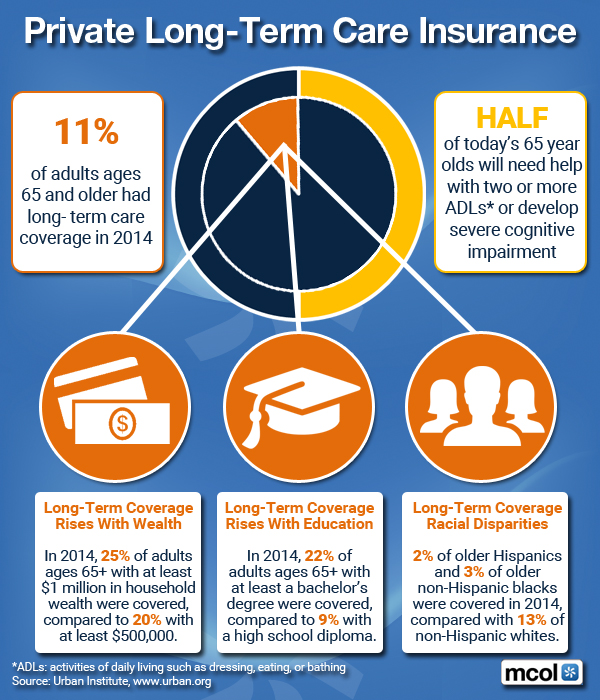
More on Private LTCI

Join Our Mailing List

By http://www.MCOL.com

***

graphoid082416

***

Conclusion

Your thoughts and comments on this ME-P are appreciated. Feel free to review our top-left column, and top-right sidebar materials, links, URLs and related websites, too. Then, subscribe to the ME-P. It is fast, free and secure.

Speaker: If you need a moderator or speaker for an upcoming event, Dr. David E. Marcinko; MBA – Publisher-in-Chief of the Medical Executive-Post – is available for seminar or speaking engagements. Contact: MarcinkoAdvisors@msn.com

OUR OTHER PRINT BOOKS AND RELATED INFORMATION SOURCES:

Comprehensive Financial Planning Strategies for Doctors and Advisors: Best Practices from Leading Consultants and Certified Medical Planners™

***

Request Medical School Administrators Question PHP Authority to Prevent Future Medical Profession Brain Drain

Join Our Mailing List

[Pediatric] Physician Health Programs

Langan MD[By Michael Lawrence Langan MD]

Physician Health Programs (PHPs) are now targeting medical students and the stories I am hearing are heartbreaking.   Medical students who do not fit the diagnostic criteria for psychological probl…

 Request Medical School Administrators Question PHP Authority to Prevent Future Medical Profession Brain Drain

Conclusion

Your thoughts and comments on this ME-P are appreciated. Feel free to review our top-left column, and top-right sidebar materials, links, URLs and related websites, too. Then, subscribe to the ME-P. It is fast, free and secure.

Speaker: If you need a moderator or speaker for an upcoming event, Dr. David E. Marcinko; MBA – Publisher-in-Chief of the Medical Executive-Post – is available for seminar or speaking engagements. Contact: MarcinkoAdvisors@msn.com

OUR OTHER PRINT BOOKS AND RELATED INFORMATION SOURCES:

Risk Management, Liability Insurance, and Asset Protection Strategies for Doctors and Advisors: Best Practices from Leading Consultants and Certified Medical Planners™

***

Gay Doctor Coerced by Physician Health Program (PHP) into mandated 12-step treatment and monitoring for sex addiction: The slippery slope begins

Join Our Mailing List

Langan MD[By Michael Lawrence Langan MD]

State Physician Health Programs – coercion, control and abuse. This anecdote concerning  a gay doctor’s revelation he liked his non monogamous lifestyle leading  to a forced acceptance of a &#… …

 Gay Doctor coerced by Physician Health Program (PHP) into mandated 12-step treatment and monitoring for sex addiction: The slippery slope begins

Conclusion

Your thoughts and comments on this ME-P are appreciated. Feel free to review our top-left column, and top-right sidebar materials, links, URLs and related websites, too. Then, subscribe to the ME-P. It is fast, free and secure.

Speaker: If you need a moderator or speaker for an upcoming event, Dr. David E. Marcinko; MBA – Publisher-in-Chief of the Medical Executive-Post – is available for seminar or speaking engagements. Contact: MarcinkoAdvisors@msn.com

OUR OTHER PRINT BOOKS AND RELATED INFORMATION SOURCES:

Risk Management, Liability Insurance, and Asset Protection Strategies for Doctors and Advisors: Best Practices from Leading Consultants and Certified Medical Planners™

***

Massachusetts Governor Charlie Baker Moves to Control Professional Boards

Join Our Mailing List

But has the Medical Board made a Counter Move?

Langan MD[By Michael Lawrence Langan MD]

Governor Baker’s recent move to control professional boards seemed a promising step and I provided detailed documentation to the Director of Constituent Services at the Office of the C…

Massachusetts Governor Charlie Baker Moves to Control Professional Boards (But has the Medical Board made a Countermove?) 

Conclusion

Your thoughts and comments on this ME-P are appreciated. Feel free to review our top-left column, and top-right sidebar materials, links, URLs and related websites, too. Then, subscribe to the ME-P. It is fast, free and secure.

Speaker: If you need a moderator or speaker for an upcoming event, Dr. David E. Marcinko; MBA – Publisher-in-Chief of the Medical Executive-Post – is available for seminar or speaking engagements. Contact: MarcinkoAdvisors@msn.com

OUR OTHER PRINT BOOKS AND RELATED INFORMATION SOURCES:

 Risk Management, Liability Insurance, and Asset Protection Strategies for Doctors and Advisors: Best Practices from Leading Consultants and Certified Medical Planners™

***

An Open Letter to Senator Elizabeth Warren Regarding Laboratory Developed Tests, Physician Health Programs and Institutional Injustice

Join Our Mailing List

Langan MD[By Michael Lawrence Langan MD]

I can think of nothing more institutionally unjust than an unregulated zero-tolerance monitoring program with no oversight using unregulated drug and alcohol testing of unknown validity.   But that…

An Open Letter to Senator Elizabeth Warren Regarding Laboratory Developed Tests, Physician Health Programs and Institutional Injustice

Conclusion

Your thoughts and comments on this ME-P are appreciated. Feel free to review our top-left column, and top-right sidebar materials, links, URLs and related websites, too. Then, subscribe to the ME-P. It is fast, free and secure.

Speaker: If you need a moderator or speaker for an upcoming event, Dr. David E. Marcinko; MBA – Publisher-in-Chief of the Medical Executive-Post – is available for seminar or speaking engagements. Contact: MarcinkoAdvisors@msn.com

OUR OTHER PRINT BOOKS AND RELATED INFORMATION SOURCES:

Risk Management, Liability Insurance, and Asset Protection Strategies for Doctors and Advisors: Best Practices from Leading Consultants and Certified Medical Planners™

***

R.I.P. Donald Henderson MD

Join Our Mailing List

By David E. Marcinko MBBS DPM MBA

Donald Henderson, an American doctor and public health official who led the successful global drive to wipe out smallpox in the 1960s and ’70s, credited with saving tens of millions of lives, has died. He was 87.

306

[Donald Henderson MD]

http://www.msn.com/en-us/health/medical/da-henderson-doctor-who-eradicated-smallpox-dies/ar-BBvSTZe?ocid=U348DHP

smallpox-vaccination-scar

[Vaccination Scar]

Johns Hopkins Vaccine Initiative

Dr. Henderson was founder of The Johns Hopkins Vaccine Initiative [JHVI] which promotes collaborative and interdisciplinary  vaccine research,  education, and implementation efforts to improve health worldwide.

Assessment

The JHVI is a Johns Hopkins Bloomberg School of Public Health affiliate in my home town of Baltimore, MD. 

Conclusion

Your thoughts and comments on this ME-P are appreciated. Feel free to review our top-left column, and top-right sidebar materials, links, URLs and related websites, too. Then, subscribe to the ME-P. It is fast, free and secure.

Speaker: If you need a moderator or speaker for an upcoming event, Dr. David E. Marcinko; MBA – Publisher-in-Chief of the Medical Executive-Post – is available for seminar or speaking engagements. Contact: MarcinkoAdvisors@msn.com

OUR OTHER PRINT BOOKS AND RELATED INFORMATION SOURCES:

Product DetailsProduct DetailsProduct Details

***

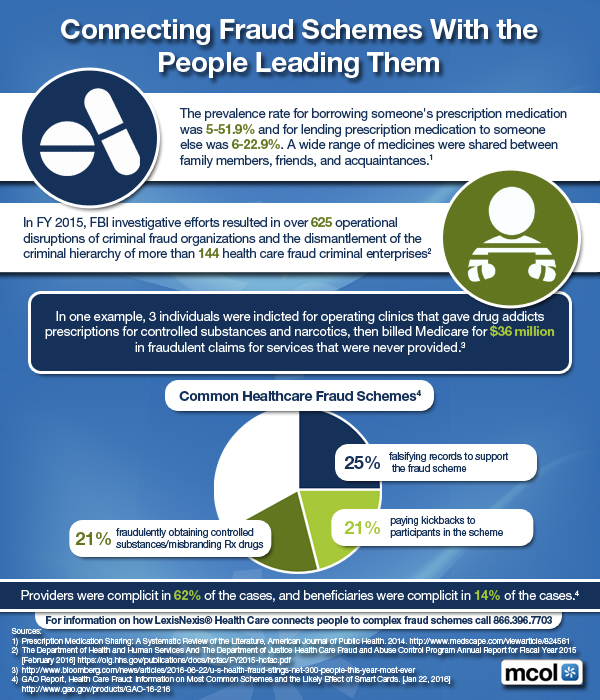
Connecting Healthcare Fraud Schemes with Fraudsters

Join Our Mailing List

And  … their Leaders

By http://www.MCOL.com

***

ImageProxy

***

Conclusion

Your thoughts and comments on this ME-P are appreciated. Feel free to review our top-left column, and top-right sidebar materials, links, URLs and related websites, too. Then, subscribe to the ME-P. It is fast, free and secure.

Speaker: If you need a moderator or speaker for an upcoming event, Dr. David E. Marcinko; MBA – Publisher-in-Chief of the Medical Executive-Post – is available for seminar or speaking engagements. Contact: MarcinkoAdvisors@msn.com

OUR OTHER PRINT BOOKS AND RELATED INFORMATION SOURCES:

 Risk Management, Liability Insurance, and Asset Protection Strategies for Doctors and Advisors: Best Practices from Leading Consultants and Certified Medical Planners™

***

The Regulatory Capture of American Medicine by the Drug and Alcohol Testing, Assessment and Treatment Industry

Join Our Mailing List

Regulatory Capture?

Langan MD

[By Michael Lawrence Langan MD]

Regulatory capture is a form of government failure that occurs when a regulatory agency created to act in the public interest, instead advances the commercial or political concerns of special interest groups that dominate the industry or sector it is charged with regulating and introduced in an article by George J. Stigler in 1971 entitled The Theory of Economic Regulation. The main idea of the article can be summarized in Stigler’s (1971: 3) affirmation that:

“…as a rule, regulation is acquired by the industry and is designed and operated primarily for its benefits.”

The Regulatory Capture of American Medicine by the Drug and Alcohol Testing, Assessment and Treatment Industry

Conclusion

Your thoughts and comments on this ME-P are appreciated. Feel free to review our top-left column, and top-right sidebar materials, links, URLs and related websites, too. Then, subscribe to the ME-P. It is fast, free and secure.

Speaker: If you need a moderator or speaker for an upcoming event, Dr. David E. Marcinko; MBA – Publisher-in-Chief of the Medical Executive-Post – is available for seminar or speaking engagements. Contact: MarcinkoAdvisors@msn.com

OUR OTHER PRINT BOOKS AND RELATED INFORMATION SOURCES:

Risk Management, Liability Insurance, and Asset Protection Strategies for Doctors and Advisors: Best Practices from Leading Consultants and Certified Medical Planners™

***

A Distracted Driving Video

Join Our Mailing List

By Amanda Scherer

#PutDownthePhone 

***

00E0E_98z7qbolIeM_600x450

***

#PutDownthePhone – Canada Distracted Driving Video

Conclusion

Your thoughts and comments on this ME-P are appreciated. Feel free to review our top-left column, and top-right sidebar materials, links, URLs and related websites, too. Then, subscribe to the ME-P. It is fast, free and secure.

Speaker: If you need a moderator or speaker for an upcoming event, Dr. David E. Marcinko; MBA – Publisher-in-Chief of the Medical Executive-Post – is available for seminar or speaking engagements. Contact: MarcinkoAdvisors@msn.com

OUR OTHER PRINT BOOKS AND RELATED INFORMATION SOURCES:

***

Comprehensive Financial Planning Strategies for Doctors and Advisors: Best Practices from Leading Consultants and Certified Medical Planners™

More on Risk Aversion

Join Our Mailing List

Erik Hare

[By Erik Hare]

The Global Economic Slowdown

The economic news out of most of the world points to a continued, if not new, slowdown. Japan is going nowhere, Europe may be shrinking, China is bleeding capital, and the rest of the world is hang…

***

coffee

***

Risk Aversion

Conclusion

Your thoughts and comments on this ME-P are appreciated. Feel free to review our top-left column, and top-right sidebar materials, links, URLs and related websites, too. Then, subscribe to the ME-P. It is fast, free and secure.

Speaker: If you need a moderator or speaker for an upcoming event, Dr. David E. Marcinko; MBA – Publisher-in-Chief of the Medical Executive-Post – is available for seminar or speaking engagements. Contact: MarcinkoAdvisors@msn.com

OUR OTHER PRINT BOOKS AND RELATED INFORMATION SOURCES:

 Risk Management, Liability Insurance, and Asset Protection Strategies for Doctors and Advisors: Best Practices from Leading Consultants and Certified Medical Planners™

***

Marriage – The Second Time Around

Join Our Mailing List

Or … Third Time Around!

th

By Dan Timotic CFA
[Managing Principal]

Roughly four in 10 new marriages in 2013 included at least one partner who had been married before, and altogether about 42 million Americans have been married more than once [1].

A second marriage can create numerous estate planning challenges, especially when you wish to provide for both your current spouse and your children from a previous marriage. If you remarry later in life, your spouse and your adult children may not develop a close relationship, which could complicate matters when you die.

With a traditional family, estate assets are often inherited by the surviving spouse and eventually passed down to the couple’s children. Blended families, however, may require a more detailed strategy.

Start by having an honest conversation with your spouse (or fiancée) about your separate and shared finances and goals for the future.

Think Ahead

A prenuptial agreement is a written contract between prospective spouses that states how assets will be owned and distributed during the marriage, in the event of divorce, and at death. Each spouse’s financial rights and responsibilities are predetermined and clearly spelled out, and the contract can be altered or broken only with the consent of both parties.

Prenuptial agreements are not for everyone, but they could help reduce conflict between a surviving spouse, your adult children, and other family members.

***

heart

[Broken Heart]

***

Useful Trusts

Placing assets in a properly structured living trust makes it more difficult for someone to contest your will and also avoids probate. The assets would be available to your heirs more quickly, and your private information would be kept out of the public domain.

A qualified terminable interest property (QTIP) trust is a marital trust typically used in conjunction with a bypass trust. When you die, your spouse receives a lifelong income from the assets in the trust. After your surviving spouse dies, the remaining trust assets are distributed to your children, or other designated heirs, according to your specific instructions.

A QTIP trust might be a viable option if you’re certain that a permanent financial relationship between your spouse and adult children will not be a constant source of tension and frustration. If you are uncomfortable making your children wait until your spouse’s death to receive an inheritance, it might make more sense to eliminate the financial connection between your surviving spouse and your children.

***

[Divorce Decree]

***

Pick Your Approach

One common arrangement is simply to designate a specific percentage of estate assets to be distributed outright for the spouse, each child, and any other heirs. This way, everyone shares in the appreciation or depreciation of the assets.

Another method involves allocating assets to various heirs based on specific financial needs or benefits. For example, a surviving spouse might inherit the home and retirement accounts, while the children might receive other financial assets such as shares of a business, family heirlooms, or the proceeds of a life insurance policy.

The beneficiary designations on all your retirement accounts, brokerage accounts, and insurance policies should also be updated and consistent with your overall estate plan. If your children are adults, you may want to keep them informed about your decisions so that everyone knows what to expect.

Assessment

Remember – Trusts incur up-front costs, often have ongoing administrative fees, and involve complex tax rules and regulations. You should consider the counsel of an experienced estate planning professional and your legal and tax advisors before implementing a trust strategy.

Citation: Pew Research Center, 2014

Conclusion

Your thoughts and comments on this ME-P are appreciated. Feel free to review our top-left column, and top-right sidebar materials, links, URLs and related websites, too. Then, subscribe to the ME-P. It is fast, free and secure.

Speaker: If you need a moderator or speaker for an upcoming event, Dr. David E. Marcinko; MBA – Publisher-in-Chief of the Medical Executive-Post – is available for seminar or speaking engagements. Contact: MarcinkoAdvisors@msn.com

OUR OTHER PRINT BOOKS AND RELATED INFORMATION SOURCES:

 Risk Management, Liability Insurance, and Asset Protection Strategies for Doctors and Advisors: Best Practices from Leading Consultants and Certified Medical Planners™8Comprehensive Financial Planning Strategies for Doctors and Advisors: Best Practices from Leading Consultants and Certified Medical Planners™

 ***

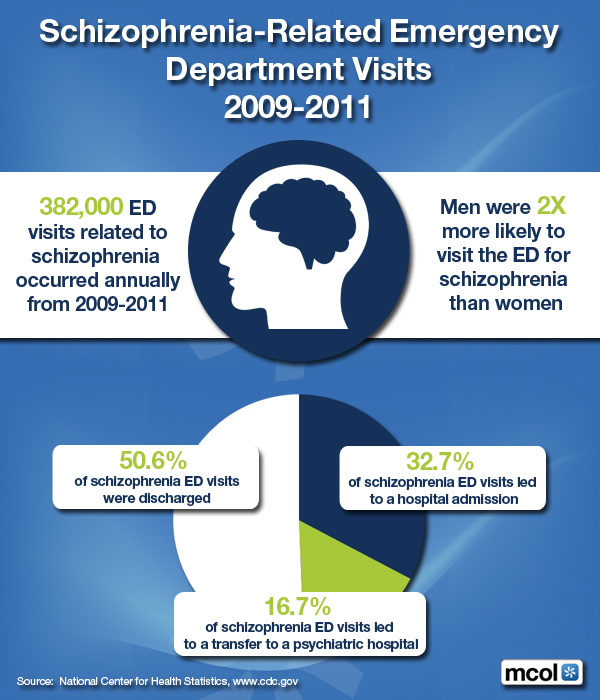
On Schizophrenia Related ER Visits

Join Our Mailing List

By http://www.MCOL.com

For 2009-2011

***

ImageProxy

***

Conclusion

Your thoughts and comments on this ME-P are appreciated. Feel free to review our top-left column, and top-right sidebar materials, links, URLs and related websites, too. Then, subscribe to the ME-P. It is fast, free and secure.

Speaker: If you need a moderator or speaker for an upcoming event, Dr. David E. Marcinko; MBA – Publisher-in-Chief of the Medical Executive-Post – is available for seminar or speaking engagements. Contact: MarcinkoAdvisors@msn.com

OUR OTHER PRINT BOOKS AND RELATED INFORMATION SOURCES:

Risk Management, Liability Insurance, and Asset Protection Strategies for Doctors and Advisors: Best Practices from Leading Consultants and Certified Medical Planners™              Risk Management, Liability Insurance, and Asset Protection Strategies for Doctors and Advisors: Best Practices from Leading Consultants and Certified Medical Planners™

 Harvard Medical School

Boston Children’s Hospital – Psychiatrist

Yale University

***

A Brief History of Medical Boards

Join Our Mailing List 

From 1792

Dover

[By Eric A Dover MD] 

The first medical board was established in Connecticut in 1792 by the state legislature. It consisted of a group of physicians who evaluated the competency of physicians wishing to practice in the State. Medical Boards eventually evolved and became very powerful with the addition of Medical Practice Acts containing a plethora of administrative rules. The Medical Boards stated mission was, and still is, the protection, health and safety of the public. State Boards formed a national group, the Federation of State Medical Boards (FSMB), in 1912. The FSMB was the first institution to publically list names of disciplined physicians in a monthly bulletin.

In the 1980’s and 1990’s there were a number of high profile cases involving physicians and public safety. One such case, international in scope, concerned surgeon Dr. Jayant Patel. Significant news coverage regarding his surgical outcomes and knowledge resulted in the heightened questioning of Medical Boards and whether they were actually fulfilling their mission of protecting public health and safety. The Oregon Medical Board (OMB) was scrutinized for allegedly “ignoring” 79 complaints, and at least three deaths, attributed to Dr. Patel’s surgical care from 1989 to 1998.  The OMB abdicated all responsibility for the situation with a myriad of excuses for why they had no control over this physician or the HMO he worked for.

The OMB then came to the state legislature with a “fix” to supposedly prevent any further such incidents. The OMB advocated for greater authority over physicians and greater independence from government oversight. With the din of the press and public, the Oregon Legislature gladly granted the OMB their wish. Other states followed Oregon’s example [4-6]. Not a single individual associated with the OMB, whether administrative or board member was investigated in any meaningful way for their horrendous dereliction of duty. Not one of them had their license restricted, suspended or revoked for such serious offenses.  None of them were ordered to pay out of pocket to go to “programs” for competency evaluations, psychological examinations or “courses” to help them become better board members. No one resigned, nor was anyone dismissed, from their position of power. The OMB’s inaction led to a number of deaths and numerous patients with chronic post-surgical medical disorders, yet all individuals involved with the OMB were protected from malpractice lawsuits.

***

md-defeated-

***

With cases such as Dr. Patel’s featured prominently in the mainstream media, Medical Boards nationwide came under intense public pressure and scrutiny as it became clear they were not fulfilling their mission of protecting the public’s health and safety. The public saw physicians as a privileged class, protected by their colleagues and Medical Boards. They were correct to a degree.  Public safety groups like Public Citizen, who had been taking Medical Boards, hospitals and large clinics to task for years regarding what they felt was a lack of physician oversight and discipline, began ranking state medical boards based on how many disciplinary actions they handed out each year.

***

vicious-dogs-module-5ee95aa0e5064756

***

In their 2011 report, Public Citizen’s Health Research Group Ranking of the Rate of State Medical Boards’ Serious Disciplinary Actions, 2009-2011, the authors made the erroneous assumption that the greater the number of physician “disciplines” (actions) per 1000 physicians, the better job that State’s Medical Board was doing.   Therefore, at 6.79 actions per 1000 physicians, Wyoming was doing the “best” job and at 1.33 actions per 1000 physicians, South Carolina was doing the “worst” job.

Medical Boards vary remarkably from state to state. There are only two constants among them. First, each state has a Medical Board. Second, the Board makes all final decisions concerning licensees. Otherwise, there’s no consistency when it comes to what’s sandwiched in between.

Assessment

The Medical Board’s authority is grounded in the States Medical Practice Act, which gives them the authority to enforce laws for licensing, monitoring and disciplining physicians in the state. Every state has its own unique laws and processes, but every medical practice act covers the basics regarding oversight of physicians practicing medicine in the State.  The U.S. Federation of State Medical Boards (FSMB) periodically issues guidelines on the essential elements of a medical practice act.  

ABOUT

Dr. Eric Dover is a board certified family practice and primary care physician in Portland, Oregon. He is a graduate of the University of California at Los Angeles [UCLA] School of Medicine.

Conclusion

Your thoughts and comments on this ME-P are appreciated. Feel free to review our top-left column, and top-right sidebar materials, links, URLs and related websites, too. Then, subscribe to the ME-P. It is fast, free and secure.

Speaker: If you need a moderator or speaker for an upcoming event, Dr. David E. Marcinko; MBA – Publisher-in-Chief of the Medical Executive-Post – is available for seminar or speaking engagements. Contact: MarcinkoAdvisors@msn.com

OUR OTHER PRINT BOOKS AND RELATED INFORMATION SOURCES:

               Risk Management, Liability Insurance, and Asset Protection Strategies for Doctors and Advisors: Best Practices from Leading Consultants and Certified Medical Planners™

 Harvard Medical School

Boston Children’s Hospital – Psychiatrist

Yale University

***

Risk Management for Doctors and their Advisors

Join Our Mailing List

By Staff reporters

Our New Book Release

http://www.CertifiedMedicalPlanner.org

***

92f91681-0f52-4bec-86db-3f9ab724560a

***

Risk Management, Liability Insurance, and Asset Protection Strategies for Doctors and Advisors: Best Practices from Leading Consultants and Certified Medical Planners™

 Harvard Medical School

Boston Children’s Hospital – Psychiatrist

Yale University

***

Conclusion

Your thoughts and comments on this ME-P are appreciated. Feel free to review our top-left column, and top-right sidebar materials, links, URLs and related websites, too. Then, subscribe to the ME-P. It is fast, free and secure.

Speaker: If you need a moderator or speaker for an upcoming event, Dr. David E. Marcinko; MBA – Publisher-in-Chief of the Medical Executive-Post – is available for seminar or speaking engagements. Contact: MarcinkoAdvisors@msn.com

OUR OTHER PRINT BOOKS AND RELATED INFORMATION SOURCES:

***

On Childhood Obesity Trends

By http://www.MCOL.com

The Trend is NOT Your Friend

Obesity, according to Wikipedia, is a medical condition in which excess body fat has accumulated to the extent that it may have a negative effect on health.[1] People are generally considered obese when their body mass index (BMI), a measurement obtained by dividing a person’s weight by the square of the person’s height, is over 30 kg/m2, with the range 25–30 kg/m2 defined as overweight.[1] Some East Asian countries use lower values.[2] Obesity increases the likelihood of various diseases, particularly heart disease, type 2 diabetes, obstructive sleep apnea, certain types of cancer, and osteoarthritis.[3]

Obesity is most commonly caused by a combination of excessive food intake, lack of physical activity, and genetic susceptibility.[1][4] A few cases are caused primarily by genes, endocrine disorders, medications, or mental illness.[5] Evidence to support the view that obese people eat little yet gain weight due to a slow metabolism is not generally supported.[6] On average, obese people have a greater energy expenditure than their thin counterparts due to the energy required to maintain an increased body mass.[6][7]

 ***

**

Obesity is mostly preventable through a combination of social changes and personal choices.[1] Changes to diet and exercising are the main treatments.[3] Diet quality can be improved by reducing the consumption of energy-dense foods, such as those high in fat and sugars, and by increasing the intake of dietary fiber.[1] Medications may be taken, along with a suitable diet, to reduce appetite or decrease fat absorption.[8] If diet, exercise, and medication are not effective, a gastric balloon or surgery may be performed to reduce stomach volume or bowel length, leading to feeling full earlier or a reduced ability to absorb nutrients from food.[9][10]

Obesity is a leading preventable cause of death worldwide, with increasing rates in adults and children.[1][11] In 2014, 600 million adults (13%) and 42 million children under the age of five were obese.[1] Obesity is more common in women than men.[1] Authorities view it as one of the most serious public health problems of the 21st century.[12] Obesity is stigmatized in much of the modern world (particularly in the Western world), though it was seen as a symbol of wealth and fertility at other times in history and still is in some parts of the world.[3][13]

***

ImageProxy

***

Assessment

In 2013, the American Medical Association classified obesity as a disease.[14][15]

Conclusion

Your thoughts and comments on this ME-P are appreciated. Feel free to review our top-left column, and top-right sidebar materials, links, URLs and related websites, too. Then, subscribe to the ME-P. It is fast, free and secure.

Speaker: If you need a moderator or speaker for an upcoming event, Dr. David E. Marcinko; MBA – Publisher-in-Chief of the Medical Executive-Post – is available for seminar or speaking engagements. Contact: MarcinkoAdvisors@msn.com

OUR OTHER PRINT BOOKS AND RELATED INFORMATION SOURCES:

Product DetailsProduct DetailsProduct Details

***

Top Ten States for Hospital Safety

Join Our Mailing List

Hospital Safety

By http://www.MCOL.com

***

safety

***

Conclusion

Your thoughts and comments on this ME-P are appreciated. Feel free to review our top-left column, and top-right sidebar materials, links, URLs and related websites, too. Then, subscribe to the ME-P. It is fast, free and secure.

Speaker: If you need a moderator or speaker for an upcoming event, Dr. David E. Marcinko; MBA – Publisher-in-Chief of the Medical Executive-Post – is available for seminar or speaking engagements. Contact: MarcinkoAdvisors@msn.com

OUR OTHER PRINT BOOKS AND RELATED INFORMATION SOURCES:

Risk Management, Liability Insurance, and Asset Protection Strategies for Doctors and Advisors: Best Practices from Leading Consultants and Certified Medical Planners™

***

On the DOL’s New Fiduciary Rule

Join Our Mailing List

By Rick Kahler MSFS CFP®

Rick Kahler MS CFPThe Department of Labor’s groundbreaking new Fiduciary Rule may change the legal responsibilities of advisors who sell financial products for consumers’ retirement accounts.

Financial services industry pundits aren’t sure whether the new rule is a giant step in the right direction or a successful dodging of a bullet by Wall Street.

Original Intent

The original intent was to require those selling financial products for retirement plans to act as fiduciaries—advisors required to put clients’ interests ahead of their own.

One proposed provision was a “restricted asset list” which would have banned the sale of high-commission products like private REITs and annuities to IRAs and other retirement plans. Wall Street brokers were “expecting a punch in the face that would force a dramatic overhaul of how they dealt with their customers,” notes Joshua Brown, CEO of Ritholtz Wealth Management, in an April 6 article at Fortune.com.

As adopted, the final rule allows financial salespeople to still sell all the controversial illiquid high-commissioned products they currently sell, as long as the brokerage firm can document the product is in the client’s best interest. Brown says this amounts to a “love tap.”

The Pundits

Bob Veres, editor of Inside Information, sees the new Fiduciary Rule as still a big win for consumers and fiduciary advisors. In an April 8 column, he writes, “professional financial planners and advisors have achieved a victory, and the Wall Street and independent broker-dealer service models have been dealt a blow.”

Veres argues that the new fiduciary duty to act in the client’s best interest will by itself preclude financial salespeople from justifying the sale of high-commissioned products in IRAs. He also points out that salespeople will no longer be allowed to receive “fat commissions” for recommending annuities and non-traded REITS, and therefore are unlikely to recommend these products.

Financial planner and writer Michael Kitces [a friend of this ME-P and advocate of iMBA’s online Certified Medical Planner® fiduciary focused professional charter education certification program] suggests the DOL’s concession allowing the current questionable financial products to still be purchased by IRAs may be “a brilliantly executed strategy of conceding to the financial services industry the exact parts that didn’t actually matter in the long run . . . yet keeping the key components that mattered the most,” the fiduciary duty to the client.

MORE: http://www.CertifiedMedicalPlanner.org

Brown believes salespeople will continue recommending higher-cost products “so long as a justification can be made for their being recommended (quality, performance, etc.).”

He adds, “Advisors will still be able to sell the proprietary products of their own firm so long as they can enunciate the reason why these products are in their customers’ “best interests” – a hurdle whose height will probably be adjusted on a case-by-case basis as no one really knows what it means yet.”

Kitces contends the new law will ultimately give the consumer the power through the courts to define what is and isn’t in their best interests. He points out:

***

PetreGloveimage-300x200

***

“In other words, while the DOL fiduciary rule didn’t outright regulate what Wall Street can and cannot do, it did change the legal standard by which those actions will be judged and ensure that eventually the courts will have the opportunity to rule on these fiduciary conflicts.”

While the new rule only applies to retirement assets, Veres and Brown see it as a step toward requiring a fiduciary standard for all investment advice. I tend to agree.

Assessment

Since so many small investors hold retirement accounts, applying a fiduciary standard to those investments may help more consumers understand the difference between fiduciary advisors and product salespeople. As the industry moves toward full compliance with the rule by the April 2017 deadline, we may see an increase in consumer demand for financial advisors who put clients’ interests first.

Conclusion

Your thoughts and comments on this ME-P are appreciated. Feel free to review our top-left column, and top-right sidebar materials, links, URLs and related websites, too. Then, subscribe to the ME-P. It is fast, free and secure.

Speaker: If you need a moderator or speaker for an upcoming event, Dr. David E. Marcinko; MBA – Publisher-in-Chief of the Medical Executive-Post – is available for seminar or speaking engagements. Contact: MarcinkoAdvisors@msn.com

OUR OTHER PRINT BOOKS AND RELATED INFORMATION SOURCES:

Risk Management, Liability Insurance, and Asset Protection Strategies for Doctors and Advisors: Best Practices from Leading Consultants and Certified Medical Planners™  Risk Management, Liability Insurance, and Asset Protection Strategies for Doctors and Advisors: Best Practices from Leading Consultants and Certified Medical Planners™

***

DOL’s Fiduciary Rule Brings Good News

The DOL and Your Retirement Account

 
Join Our Mailing List 

By Michael Zhuang,

[Principal of MZ Capital Management]
Contributor to Morningstar and Physicians Practice
Michael Zhuang
 
Recently the Department of Labor issued a fiduciary rule that requires financial advisors who manage retirement accounts to act in clients’ best interests.
***
Here is the quote from a Wall Street Journal report … 

About $14 trillion in retirement savings could be affected by the rule, which requires stockbrokers providing retirement advice to act as “fiduciaries” who will serve their clients’ “best interest.” That is stricter than the current standard, which only says they need to offer “suitable” recommendations, a standard that critics say has encouraged some advisers to charge excessive fees or favor investments that offer hidden commissions.

Still, reflecting intense lobbying from the financial industry, which has fought the regulation since it was first proposed six years ago, the final version includes a number of modifications. 

This might come as a surprise to many physician-executives and people that financial advisors do not need to act in clients’ best interests up until this day.  

Alas, as I explained in this article, there are really two types of financial advisors: those who have a broker license (series 7) and those who have a registered investment advisor license (series 65).

Here is the kicker:

93% of all financial advisors are licensed brokers. These are advisors from major Wall Street brokerages like Merrill Lynch, Morgan Stanley and etc., as well as many independent broker-dealers. By law, they do NOT need to act in clients’ best interests. 

Those who have a registered investment advisor license have always been required by law to act in clients’ best interests, but they account for only 7% of all financial advisors. 

The financial industry benefits tremendously from not needing to act in clients’ best interests, for instance, by selling clients high hidden cost financial products. That’s why they fight the fiduciary rule tooth and nail, and with the help of many Senators and Congressmen.

It’s better late than never. I am glad that seven years after the financial crisis that nearly brought the country to its knees, something is finally done to address the rampant conflict of interests in the financial industry. 

There is a caveat though. The fiduciary rule only applies to retirement accounts. So if you have a brokerage account and an IRA account with Merrill Lynch. Your Merrill Lynch broker needs to act in your best interests with your IRA account, but needs NOT with your brokerage account! 

Assessment 

The best way to check whether your financial advisor is a broker is to ask “Do you have a series 7 license?” If the answer is “Yes.” You need a second opinion review. Chances are good that it will find many hidden costs and bad investments.

More: The DOL’s Final Fiduciary Rule: What’s in it and what does it mean for advisors?

Conclusion

Your thoughts and comments on this ME-P are appreciated. Feel free to review our top-left column, and top-right sidebar materials, links, URLs and related websites, too. Then, subscribe to the ME-P. It is fast, free and secure.

Speaker: If you need a moderator or speaker for an upcoming event, Dr. David E. Marcinko; MBA – Publisher-in-Chief of the Medical Executive-Post – is available for seminar or speaking engagements. Contact: MarcinkoAdvisors@msn.com

OUR OTHER PRINT BOOKS AND RELATED INFORMATION SOURCES:

Risk Management, Liability Insurance, and Asset Protection Strategies for Doctors and Advisors: Best Practices from Leading Consultants and Certified Medical Planners™8Comprehensive Financial Planning Strategies for Doctors and Advisors: Best Practices from Leading Consultants and Certified Medical Planners™

****

The Need for Anti-Authoritarians in the Medical Profession

Join Our Mailing List

327518caf4de6ca81321ea8b469a3d42

Question Authority

By Michael Lawrence Langan MD

Anti-authoritarians question whether an authority is a legitimate one before taking that authority seriously.

To evaluate the legitimacy of  an authority it is necessary to do the following:

***

Question Authority: The Need for Anti-Authoritarians in the Medical Profession

***

Conclusion

Your thoughts and comments on this ME-P are appreciated. Feel free to review our top-left column, and top-right sidebar materials, links, URLs and related websites, too. Then, subscribe to the ME-P. It is fast, free and secure.

Speaker: If you need a moderator or speaker for an upcoming event, Dr. David E. Marcinko; MBA – Publisher-in-Chief of the Medical Executive-Post – is available for seminar or speaking engagements. Contact: MarcinkoAdvisors@msn.com

OUR OTHER PRINT BOOKS AND RELATED INFORMATION SOURCES:

Risk Management, Liability Insurance, and Asset Protection Strategies for Doctors and Advisors: Best Practices from Leading Consultants and Certified Medical Planners™ Risk Management, Liability Insurance, and Asset Protection Strategies for Doctors and Advisors: Best Practices from Leading Consultants and Certified Medical Planners™

***

Advisor V. Adviser [The Ultimate “Terminology” Fraudster?]

Join Our Mailing List

Anonymous Doctor

[By Anonymous]

Are the US Securities Acts the Ultimate “Terminology” Fraudster?

As a doctor and investor, I have learned thru the internet that Larry Elford, an Investment Misconduct and Malpractice Consultant – and many others – believe that the ultimate terminology fraudster is the US Securities Acts (1935 & 1940) and the Investment Adviser Act. Why?

They have no such category as “advisor” in the Acts.

Industry lawyers know this well, as does FINRA, and may be using this “spelling ruse” to dupe and deceive millions of Americans into believing that their commission sales “broker” is some kind of fiduciary “adviser” professional.

Some even believe it to be an industry pandemic of “bait and switch” to deceive and then shortchange investors.

Source: http://www.investoradvocates.ca/viewtopic.php?f=1&t=193&sid=1cc2690bde2ebdfaa749be1d35395083#p3867

***

th

***

VIDEO: Here is an under 2 minute glimpse into the Three Card Monte game being played, upon investors, when your Securities Commission proudly tells you to “check your “adviser’s” registration”.

Link: https://youtu.be/zIjt0qRsJKg

Assessment

Is this a mere lexicon conundrum; or truer pathology?

And, did you know that a Certified Medical Planner® is a client fiduciary at all times? Visit: http://www.CertifiedMedicalPlanner.org

cmp-logo16

Enter the CMPs

Conclusion

Your thoughts and comments on this ME-P are appreciated. Feel free to review our top-left column, and top-right sidebar materials, links, URLs and related websites, too. Then, subscribe to the ME-P. It is fast, free and secure.

Speaker: If you need a moderator or speaker for an upcoming event, Dr. David E. Marcinko; MBA – Publisher-in-Chief of the Medical Executive-Post – is available for seminar or speaking engagements. Contact: MarcinkoAdvisors@msn.com

OUR OTHER PRINT BOOKS AND RELATED INFORMATION SOURCES:

***

[PHYSICIAN FOCUSED FINANCIAL PLANNING AND RISK MANAGEMENT COMPANION TEXTBOOK SET]

  Risk Management, Liability Insurance, and Asset Protection Strategies for Doctors and Advisors: Best Practices from Leading Consultants and Certified Medical Planners™       Comprehensive Financial Planning Strategies for Doctors and Advisors: Best Practices from Leading Consultants and Certified Medical Planners™

[Dr. Cappiello PhD MBA] *** [Foreword Dr. Krieger MD MBA]

Front Matter with Foreword by Jason Dyken MD MBA

***

Not Today; DEATH!

Join Our Mailing List

Beware the Ides of March – Public Health

DEMM high-def WhiteBy Dr. David Edward Marcinko MBA CMP®

Welcome, all ME-P readers and subscribers, to the Fulton County Department of Health & Wellness Website, and department, in Atlanta, Georgia.

The interim Director of Health Services is David A. Sarnow, M.D, MPH.

On the site, and in the department itself, you will find information on health topics to keep the community safe from health threats, promoting better health and helping Fulton County, Georgia residents find the health care information they need.

Of course, the others states have similar public health programs. And so, you are welcomed to enjoy the virtual website and explore the physical department – which I bypass almost daily.

***

death

Not Today; DEATH!

***

Margaret Farenger says this is on the side of Fulton County Health Services, Atlanta GA and the artist is Julian Hoke Harris.

Assessment

More information about the Fulton County Georgia Department of Health and Wellness.

Conclusion

Your thoughts and comments on this ME-P are appreciated. Feel free to review our top-left column, and top-right sidebar materials, links, URLs and related websites, too. Then, subscribe to the ME-P. It is fast, free and secure.

Speaker: If you need a moderator or speaker for an upcoming event, Dr. David E. Marcinko; MBA – Publisher-in-Chief of the Medical Executive-Post – is available for seminar or speaking engagements. Contact: MarcinkoAdvisors@msn.com

OUR OTHER PRINT BOOKS AND RELATED INFORMATION SOURCES:

Risk Management, Liability Insurance, and Asset Protection Strategies for Doctors and Advisors: Best Practices from Leading Consultants and Certified Medical Planners™

8Comprehensive Financial Planning Strategies for Doctors and Advisors: Best Practices from Leading Consultants and Certified Medical Planners™

 Harvard Medical School

Boston Children’s Hospital – Psychiatrist

Yale University

***

Invite Dr. Marcinko

***

Altered Medical Records – OLD SCHOOL!

Join Our Mailing List

ON ALTERED RECORDS

By Dr. David Edward Marcinko MBA CMP®

http://www.CertifiedMedicalPlanner.org

DEM white shirtThe health care provider should not alter the medical record under any circumstances.

The office, clinic or hospital must zealously guard its medical records from alterations by physicians or members of the nursing staff.

Even an inconsequential alteration will throw the validity of the entire record into question. If an entry must be changed, a single line should be drawn through the entry, taking particular care to make sure that the original entry is clearly legible. The new entry should be written above or next to the old entry, and the date of the new entry, as well as the name of the person making the entry, should be recorded. The entry must also be signed by that person.

Juries are very intolerant of altered medical records; and even innocent mistakes, such as the loss of a few pages of a record, will be construed as an intentional cover-up. Under no circumstances should materials such as liquid paper or other opaque liquids be applied to the record in order to correct any entry.

Assessment

The health care provider should not alter the medical record under any circumstances.

Conclusion

Is there an emerging migration back to paper medical records?

Your thoughts and comments on this ME-P are appreciated. Feel free to review our top-left column, and top-right sidebar materials, links, URLs and related websites, too. Then, subscribe to the ME-P. It is fast, free and secure.

Speaker: If you need a moderator or speaker for an upcoming event, Dr. David E. Marcinko; MBA – Publisher-in-Chief of the Medical Executive-Post – is available for seminar or speaking engagements. Contact: MarcinkoAdvisors@msn.com

OUR OTHER PRINT BOOKS AND RELATED INFORMATION SOURCES:

Risk Management, Liability Insurance, and Asset Protection Strategies for Doctors and Advisors: Best Practices from Leading Consultants and Certified Medical Planners™

 Harvard Medical School

Boston Children’s Hospital – Psychiatrist

Yale University

Medical Records as Malpractice Defense

Join Our Mailing List 

The BEST Defense

J. Christopher Miller, EsqBy Christopher Miller JD

[Alpharetta, Georgia]

www.NorthFultonWills.com

The best defense against any medical malpractice liability claim is a complete and accurate written or electronic record of the facts. In particular, medical malpractice claims will frequently be stalled or thwarted by a consistent written description of the symptoms you observe and the treatments you prescribe.

Extensive record keeping will not only help formulate a defense against a claim, but it will also (and perhaps more importantly) create the appearance that you are careful and highly competent in all of your affairs. Members of a jury may not be able to discern whether the medical judgments you made in a particular case were good or bad, as they do not have the years of education and training that you do.

***

56400743

***

Jurors can, however, sense whether your practice is organized and professional. If your records are thorough and consistent, jurors will assume that you dedicate as much attention to the substantive aspects of your work as you do to the tedium of recordkeeping. If you are active in the management of your office, you should keep track of its operations and establish logs for your employees to complete as they perform their daily tasks.

Assessment

Not all information, however, ought to be written down. Keep your written records to the facts you have observed and leave your speculations for department meetings. 

And, is there an emerging movement back to paper medical records?

Conclusion

Your thoughts and comments on this ME-P are appreciated. Feel free to review our top-left column, and top-right sidebar materials, links, URLs and related websites, too. Then, subscribe to the ME-P. It is fast, free and secure.

Speaker: If you need a moderator or speaker for an upcoming event, Dr. David E. Marcinko; MBA – Publisher-in-Chief of the Medical Executive-Post – is available for seminar or speaking engagements. Contact: MarcinkoAdvisors@msn.com

OUR OTHER PRINT BOOKS AND RELATED INFORMATION SOURCES:

 Risk Management, Liability Insurance, and Asset Protection Strategies for Doctors and Advisors: Best Practices from Leading Consultants and Certified Medical Planners™

 Harvard Medical School

Boston Children’s Hospital – Psychiatrist

Yale University

***

The Types of Healthcare Compliance Audits

Join Our Mailing List

TYPES OF MEDICAL COMPLIANCE AUDITS

By Carol Miller RN MBACarol S. Miller

There are several types of audits that a healthcare organization might need to perform.

The starting point is to obtain a baseline audit.  Next steps include periodic audits or reviews that are performed after all the information is obtained from the baseline audit; periodically. Finally, there are new employee audits.

Additional audits can be performed whenever new employees are added or if there are complaints or issues that arise in the course of business.

The Types:

  • Self Audit. Routine self-assessments demonstrate proactive measures established to ensure compliance and thus reduce the likelihood of a failed audit
  • Baseline Audit. Baseline audits are preliminary assessments to develop a reference point. This preliminary audit can help an organization understand where the program is and establish a base to gauge or compare future activities. Without this initial assessment, it is difficult for anyone within the practice or even an external consultant to determine if there are any performance issues.
  • Periodic Audits. Periodic audits are performed on an on-going basis, based on the decision of the practice. They may occur at random or at a scheduled time, monthly or quarterly.
  • New Employee Audits. New employees require regular training and reviews until there is confidence in their capabilities. Background checks are helpful to find out whether there are any potential conflicts; however, many independent medical practices do not have access to this type of information and may have to rely on other organizations to obtain the information. The OIG and General Services Administration maintain a database of excluded persons and entities that can be accessed through the internet. As part of the organization’s initial and periodic audits, queries of these two databases should be performed for all employees and any independent contractors.

HIV

Conclusion

Your thoughts and comments on this ME-P are appreciated. Feel free to review our top-left column, and top-right sidebar materials, links, URLs and related websites, too. Then, subscribe to the ME-P. It is fast, free and secure.

Speaker: If you need a moderator or speaker for an upcoming event, Dr. David E. Marcinko; MBA – Publisher-in-Chief of the Medical Executive-Post – is available for seminar or speaking engagements. Contact: MarcinkoAdvisors@msn.com

OUR OTHER PRINT BOOKS AND RELATED INFORMATION SOURCES:


Risk Management, Liability Insurance, and Asset Protection Strategies for Doctors and Advisors: Best Practices from Leading Consultants and Certified Medical Planners™

 Harvard Medical School

Boston Children’s Hospital – Psychiatrist

Yale University

***

Announcing the Philosophic Medical Records Revolution

Join Our Mailing List 

Enter the Revolution

DEM blue

By David Edward Marcinko MBBS MBA CMP®

http://www.CertifiedMedicalPlanner.org

Enter the CMPs

To understand the MR revolution that has occurred the past decade , place yourself for a moment in the position of third-party payer.

You want to know if Dr. Brown actually gave the care for which he is submitting a bill.  You want to know if that care was needed.  You want to know that the care was given to benefit the patient, rather than to provide financial benefit to the provider beyond the value of the services rendered.

Can you send one of your employees to follow Dr. Brown around on his or her office hours and hospital visits?

Of course not!  You cannot see what actually happened in Dr. Brown’s office that day or why Dr. Black ordered a CAT scan on the patient at the imaging center.  What you can do is review the medical record that underlies the bill for services rendered from Dr. Blue.

Most of all, you can require the doctor to certify that the care was actually rendered and was indicated.  You can punish Dr. White severely if an element of a referral of a patient to another health care provider was to obtain a benefit in cash or in kind from the health care provider to whom the referral had been made [Stark Laws].  You can destroy Dr. Rose financially and put him in jail if his medical records do not document the bases for the bills he submitted for payment.

This nearly complete change in function of the medical record has precious little to do with the quality of patient care. To illustrate that point, consider only an office visit in which the care was exactly correct, properly indicated and flawlessly delivered, but not recorded in the office chart.  As far as the patient was concerned, everything was correct and beneficial to the patient.  As far as the third-party payer is concerned, the bill for those services is completely unsupported by required documentation and could be the basis for a False Claims Act [FCA] charge, a Medicare audit, or a criminal indictment.  We have left the realm of quality of patient care far behind.  Shall we change it back to the way it was?  That is not going to happen.

***

273_1

***

Instead, practitioners must adjust their attitudes to the present function of patient records. They must document as required under pain of punishment for failure to do so.  That reality is infuriating to many since they still cling to the ideal of providing good quality care to their patients and disdain such requirements as hindrances to reaching that goal.  They are also aware of the fact that full documentation can be provided without a reality underlying it.

“Fine, you want documentation?  I’ll give you documentation!”

Some have given in to the temptation of “cookbook” entries in their charts, or canned computer software programs, EHR [electronic medical record] templates, listing all the examinations they should have done, all the findings which should be there to justify further treatment; embedded “billing engines” not with-standing. We have personally seen records of physical examinations which record a patient’s ankle pulses as “equal and bounding bilaterally” when the patient had only one leg; hospital chart notes which describe extensive discussion with the patient of risks, alternatives and benefits in obtaining informed consent when the remainder of the record demonstrates the patient’s complaint that the surgeon has never told her what he planned to do; operative reports of procedures done and findings made in detail which, unfortunately, bear no correlation with the surgery which was actually performed.

***

EMRs

***

Whether electronic medical records (EMR) will really be helpful, in the future, is still not known.

In fact, according to Ed Pullen MD, a board certified family physician practicing in Puyallup WA, electronic health records are defined primarily as repositories of patient data [much like paper records].

But, in the era of meaningful use [MU], patient-centered medical homes, and Accountable Care Organizations [ACOs], mere patient data repositories are not sufficient to meet the complex care support needs of clinical professionals. These complaints arise because EHR systems are being used as clinical care support systems, which means they should enhance the productivity of clinical professionals and support their information needs, not hinder them [personal communication, and DrPullen.com]. 

Conclusion

Your thoughts and comments on this ME-P are appreciated. Feel free to review our top-left column, and top-right sidebar materials, links, URLs and related websites, too. Then, subscribe to the ME-P. It is fast, free and secure.

Speaker: If you need a moderator or speaker for an upcoming event, Dr. David E. Marcinko; MBA – Publisher-in-Chief of the Medical Executive-Post – is available for seminar or speaking engagements. Contact: MarcinkoAdvisors@msn.com

OUR OTHER PRINT BOOKS AND RELATED INFORMATION SOURCES:

Risk Management, Liability Insurance, and Asset Protection Strategies for Doctors and Advisors: Best Practices from Leading Consultants and Certified Medical Planners™

 Harvard Medical School

Boston Children’s Hospital – Psychiatrist

Yale University

The REAL Costs of Health Fraud

Join Our Mailing List

Carol S. Miller

By Carol Miller RN MBA

The Cost of Health Fraud

There is no question that real fraud, waste and abuse exists in healthcare today. The Office of Inspector General of the Department of Health and Human Services (HHS) saved American taxpayers a record $21 billion a dozen years ago, according to Inspector General Janet Rehnquist. Savings were achieved through an intensive and continuing crackdown on waste, fraud and abuse in Medicare and over 300 other HHS programs for which the Office of Inspector General (OIG) has oversight responsibility.

More recently, according to the Centers for Medicare and Medicaid Services [CMS] and under the tenure of Eric Himpton Holder, Jr., 82nd Attorney General of the United States and more recently Loretta Lynch, Recovery Asset Contractors [RACs] collected almost $1-B in improper payments during their beta testing period in 2009-10.

Of these payments; 96% were over-payments, 4% were under-payments; and 77% of providers failed to appeal, 7% appealed successfully and 15% appealed unsuccessfully.

And, by Fiscal Year 2016, recovery auditors collectively identified and corrected more than 1,532,249 claims for improper payments, which resulted in more than $3.75 billion dollars in improper payments being corrected. The total corrections identified include more than $3.65 billion in overpayments collected and $102.4 million in underpayments repaid to providers and suppliers.

***

Money

***

After taking into consideration all fees, costs, and first level appeals, the Medicare FFS Recovery Audit Program returned over $3.0 billion to the Medicare Trust Funds.

More Costs

These savings did not take into account program costs and administrative expenses incurred at the third and fourth levels of appeal (Office of Medicare Hearings and Appeals (OMHA) and Medicare Appeals Council within the Departmental Appeals Board (DAB), respectively), as these components do not receive Recovery Audit Program funding for those appeals.

Conclusion

Your thoughts and comments on this ME-P are appreciated. Feel free to review our top-left column, and top-right sidebar materials, links, URLs and related websites, too. Then, subscribe to the ME-P. It is fast, free and secure.

Speaker: If you need a moderator or speaker for an upcoming event, Dr. David E. Marcinko; MBA – Publisher-in-Chief of the Medical Executive-Post – is available for seminar or speaking engagements. Contact: MarcinkoAdvisors@msn.com

OUR OTHER PRINT BOOKS AND RELATED INFORMATION SOURCES:

Risk Management, Liability Insurance, and Asset Protection Strategies for Doctors and Advisors: Best Practices from Leading Consultants and Certified Medical Planners™

 Harvard Medical School

Boston Children’s Hospital – Psychiatrist

Yale University

Apology Programs in Medicine

Join Our Mailing List

By staff reporters http://www.CertifiedMedicalPlanner.org

APOLOGY PROGRAMS?

[What they are – How they work]

To deal with the aftermath of medical errors, an increasing number of providers are encouraging injured patients to participate in “medical apology programs.”

The idea, proponents say, is for patients to meet with facility representatives to learn what happened and why.  It gives the patient a chance to ask questions and it gives providers a chance to apologize, and as appropriate, offer compensation.  These programs are promoted as humanitarian, and, at least in terms of providing an emotional outlet for patients, they are.

The evidence also suggests that they are about something else: money.  Every aspect of how they operate – from who risk managers involve, to what those involved are told to say – suggests a key goal is to dissuade patients from seeking compensation by creating an emotional connection with them.

A Study

The data establishes that it works, too.

A 2010 study found that at one major facility, apology programs resulted in fewer injured patients making claims and, among those that did, they accepted a fraction of the amount in settlement compared to patients who made claims before the program was instituted.

For minor injuries, no real harm is done by this; but the outcome can be cataclysmic for seriously injured patients who accept an apology in lieu of compensation.

Doug Wojcieszak, owner of the advocacy group Sorry Works, [http://sorryworkssite.bondwaresite.com] often receives requests to teach doctors how to communicate after a problem. He became interested in the topic when his older brother died at age 39 from a medical error. While losing his brother was awful, the experience was compounded by a total lack of communication and accountability afterward.

***

229_1

***

Curiously, when an attorney suspects that he has committed legal malpractice, he must disclose it to the client and recommend that the client seek outside counsel to get objective legal advice on how to proceed. By contrast, when a doctor suspects that he has committed medical malpractice, at many facilities he is expected to employ a set of protocols that discourage the injured patient from considering the need for compensation. Yet, while an attorney could be disbarred for this sort of behavior, medical apology programs widely receive praise.

Source: Gabriel H. Teninbaum JD: Suffolk University Law School-Chapman Law Review Research Paper 11-30.

Conclusion

Your thoughts and comments on this ME-P are appreciated. Feel free to review our top-left column, and top-right sidebar materials, links, URLs and related websites, too. Then, subscribe to the ME-P. It is fast, free and secure.

Speaker: If you need a moderator or speaker for an upcoming event, Dr. David E. Marcinko; MBA – Publisher-in-Chief of the Medical Executive-Post – is available for seminar or speaking engagements. Contact: MarcinkoAdvisors@msn.com

OUR OTHER PRINT BOOKS AND RELATED INFORMATION SOURCES:

Risk Management, Liability Insurance, and Asset Protection Strategies for Doctors and Advisors: Best Practices from Leading Consultants and Certified Medical Planners™

 Harvard Medical School

Boston Children’s Hospital – Psychiatrist

Yale University

DIRECT PAY MEDICAL PROVIDER RISKS

Join Our Mailing List 

[By staff reporters] http://www.CertifiedMedicalPlanner.org

The Three Basic Duties

A cash-based medical practice or direct care provider has these basic duties:

  1. * to comply with statutory duties such as the drug laws
  2. * to obtain proper consent for medical care
  3. * to render care that is not substantially inferior to that offered by like providers

A breach of any of these duties that causes harm to a patient can result in a malpractice suit. While the first two duties are important, it is the duty to render good quality medical care that is the basis for most malpractice lawsuits. The breach of this duty is most likely to result in a serious patient injury. The prevention of such negligent injuries is the responsibility of the individual provider, but it also basic to the institution’s quality control program.

From the individual provider’s point of view, quality control involves continuing education, attention to detail, and retrospective review of the course of the provider’s patients. The process is only loosely structured and is usually poorly documented. This lack of formal structure is less important for the individual provider because the provider’s actions are judged only within the context of the injured patient in question (although previous actions may be used to negate claims of accidental injury).

Assessment

And so, the legal questions is whether the care rendered the injured patient was negligent. It is not relevant to the case if the provider carried out an effective personal quality control program.

Conclusion

Your thoughts and comments on this ME-P are appreciated. Feel free to review our top-left column, and top-right sidebar materials, links, URLs and related websites, too. Then, subscribe to the ME-P. It is fast, free and secure.

Speaker: If you need a moderator or speaker for an upcoming event, Dr. David E. Marcinko; MBA – Publisher-in-Chief of the Medical Executive-Post – is available for seminar or speaking engagements. Contact: MarcinkoAdvisors@msn.com

OUR OTHER PRINT BOOKS AND RELATED INFORMATION SOURCES:

   Risk Management, Liability Insurance, and Asset Protection Strategies for Doctors and Advisors: Best Practices from Leading Consultants and Certified Medical Planners™

 Harvard Medical School

Boston Children’s Hospital – Psychiatrist

Yale University

***

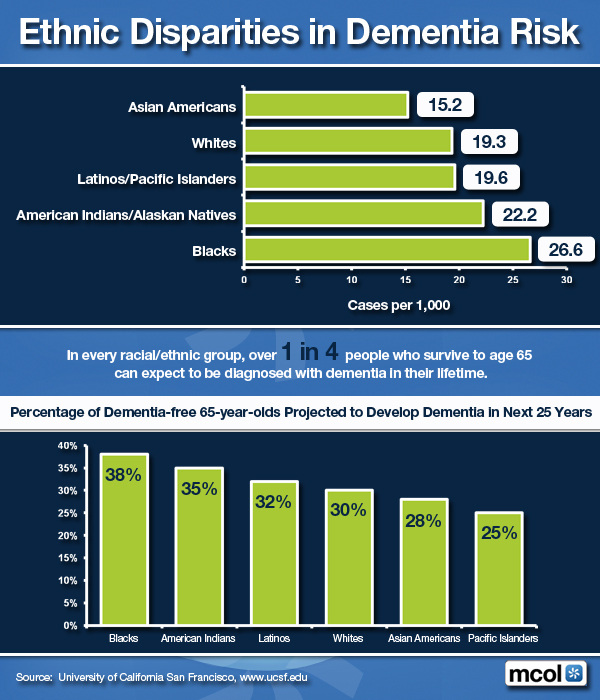
Ethnic Disparities in Dementia Risk

Join Our Mailing List

By http://www.MCOL.com

One-in-Four Expected to be Diagnosed

***

ImageProxy

***

Conclusion

Your thoughts and comments on this ME-P are appreciated. Feel free to review our top-left column, and top-right sidebar materials, links, URLs and related websites, too. Then, subscribe to the ME-P. It is fast, free and secure.

Speaker: If you need a moderator or speaker for an upcoming event, Dr. David E. Marcinko; MBA – Publisher-in-Chief of the Medical Executive-Post – is available for seminar or speaking engagements. Contact: MarcinkoAdvisors@msn.com

OUR OTHER PRINT BOOKS AND RELATED INFORMATION SOURCES:

Product DetailsProduct Details

***

Physician Characteristics Prone to Malpractice Claims

Join Our Mailing List

By http://www.MCOL.com

***

ImageProxy

***

Conclusion

Your thoughts and comments on this ME-P are appreciated. Feel free to review our top-left column, and top-right sidebar materials, links, URLs and related websites, too. Then, subscribe to the ME-P. It is fast, free and secure.

Speaker: If you need a moderator or speaker for an upcoming event, Dr. David E. Marcinko; MBA – Publisher-in-Chief of the Medical Executive-Post – is available for seminar or speaking engagements. Contact: MarcinkoAdvisors@msn.com

OUR OTHER PRINT BOOKS AND RELATED INFORMATION SOURCES:

  Risk Management, Liability Insurance, and Asset Protection Strategies for Doctors and Advisors: Best Practices from Leading Consultants and Certified Medical Planners™

***

A STEP-WISE APPROACH TO THE DIVORCE MEDIATION PROCESS FOR DOCTORs

And … their Financial Advisors

[An Appendix Styled Special ME-P Report]

Anju D. Jessani, MBA, APM

Accredited Professional Mediator & Arbitrator

Divorce with Dignity

223 Bloomfield Street, Suite #104

Hoboken, New Jersey 07030

201-217-1090 (voice)

201-217-1220 (fax)

www.MedicalBusinessAdvisors.com

As opposed to therapy with is often open-ended, mediation should be approached in a structured manner so as to minimize mediation fees, maximize the productivity of sessions by keeping clients focused, and expedite a fair resolution before the conflict is allowed to escalate. The reality of divorce is that most clients have similar issues they need to address such as the house, the pension, and college education for the children.  Nevertheless, the process should also be flexible to properly address the uniqueness of each clients’ situation such as different religious requirements, or the needs of a gifted child.

In this ME-P, I describe an approach to the divorce mediation process with the caveat that each mediator has their own style, hat there are many right approaches to this process, and the process can take more or less sessions and time than described below depending on the complexity of the issues, the availability of documentation and third-party appraisals, and preparedness of the parties, and the parties readiness to proceed. I have found that on average, I meet with client from three to eight 90 minute sessions over a two-three month time frame.  However, I have had clients who literally take years to work through the issues, and also clients who have completed the mediation process over two weekends.

My objective is to provide information that demystifies what happens behind closed doors during the divorce mediation process. Although I have outlined an approach that assumes the couple has children, I use the same approach in a more contracted fashion, for couples without children.

The mediator helps the separating couple address the custody and parenting time issues, distribution of assets and liabilities, child and spousal support amounts, insurance, income tax and other decisions needed to restructure their family into two units.

The mediator’s role is to help the couple explore options and their consequences, and bring knowledge and experience that provides a context for decision-making.   Mediation is guided by the concept of self-determination – decision-making authority in the mediation process rests with the parties. When necessary, the mediator will refer the couple to experts for services such as appraisals.

At the end of the mediation process, the mediator prepares a Memorandum of Understanding that summarizes the agreements reached. Although attorneys generally do not participate in the mediation sessions, the two spouses are advised to have their attorneys review the memorandum.  They may also use the services of an attorney or attorneys to prepare their separation or divorce agreement, based on the decisions in the memorandum.

The success rate for divorce mediation, which I define as the parties coming to agreement, is higher than in other civil mediation cases. Additionally, the success rate for couples voluntarily seeking divorce mediation is significantly higher than for court-mandated mediation.  From my experience, 90% of separating clients who voluntarily come to mediation, complete the process.

AAbzrcw

Product Details

Scheduling The First Mediation Session

A client may phone or e-mail to either learn more about mediation or to make an appointment. In his book The Fundamentals of Family Mediation, John Haynes, the Founding President of the Academy of Family Mediators, states that “the mediator is presented with a classic dilemma: how to provide sufficient information so she can make can intelligent decision about the suitability of mediation while at the same time not developing a relationship with the client.”1

During this initial inquiry, the mediator will try and ascertain the following:

  1. How the prospect received their name.
  2. The names of the parties and their attorneys.
  3. Where the parties are in the divorce process with their attorneys.
  4. Whether there are any domestic violence issues that would preclude the couple form mediating.
  5. The length of the marriage and the ages of the children, if any.

The mediator will provide the following information during the conversation:

  1. Description of the mediation process and the role of the mediator.
  2. The role of mediator versus role of the attorney in the divorce process.
  3. Typical number of sessions, fee structure, and available times for the first session.
  4. Information on my background, training and experience.

Mediation Session #1

The first session serves as an introduction and overview of the mediation process. The agenda for the first session will usually encompass the following:

  1. Description of mediation, the mediator’s role, number of sessions and fees.
  2. Parties’ objectives for today and for the mediation process.
  3. Review the mediation agreement (not to be signed that day).
  4. Grounds for filing for divorce/separation, and a summary of the legal process of divorce.
  5. Issues that must be addressed today.
  6. Description of issues to be addressed in the mediation process.
  7. Develop list of documents for clients to bring in for the next session.

This session is usually highly emotionally charged. There may be great anxiety about the session, anger between the parties, and apprehension about the mediator and the mediation process.  A number of things help to put the clients at ease during this session.  Mediators may remind clients that the purpose of the first session is to provide them with information, and that they are under no pressure to make any decision until they are comfortable.

The most helpful information obtained during this session is each of the party’s objectives for the mediation. What mediators hear most frequently is that the parties don’t want to spend unnecessary money, don’t have the intestinal fortitude for a court battle, want to keep their conflict private, and want to remain friendly with each other for the sake of the children.

The mediation agreement includes the following:

  1. The parties have entered mediation voluntarily, and it is understood that they may discontinue the mediation process at any time.
  2. They have not waived the right to consult with and/or retain their own attorney.
  3. The mediation process is confidential with the exception of information regarding abuse, neglect, abandonment, or exploitation of a child.
  4. Neither the mediator nor his/her records shall be subject to subpoena.
  5. Good faith disclosure requires full disclosure of information and production of documents; if documents requested are not provided, the mediator reserves the right to terminate the mediation.
  6. If the services of other experts are required such as appraisers, the parties will retain neutral experts and will pay their fees directly to them.
  7. The hourly fee for the mediation and the payment schedule (usually pay-as-you go).
  8. That the Memorandum of Understanding (MOU) is not a legal document; their attorney(s) will include information from the MOU in the Property Settlement Agreement/Divorce Agreement.
  9. That the parties are urged to consult with attorneys prior to signing the Property Settlement Agreement/ Divorce Agreement.

The mediator may provide legal information, but should not provide legal advice. They may cover the grounds for filing for divorce for their state, who may file for divorce, any residence requirements, as well as a time-line of the legal process.

Towards the end of the first session, the mediator will provide a list of documents needed for the next session. If either party has a defined benefit pension plan, the mediator will provide forms so that they can request a valuation of the pensions. If there is a business or professional practice, the mediator will suggest that the parties need a business valuation by a neutral business appraiser, and may provide a list of professionals they recommend.  Other documents that are usually requested include:

  1. The children’s school schedules with holidays.
  2. Pay stubs.
  3. Last year’s W-2 Forms for each party (summarizing annual earnings).
  4. Most recent federal tax return.
  5. Copies of all bank, brokerage, and 401(k)/403(b) statements.
  6. Most recent mortgage statement showing outstanding loan balances
  7. A summary of all insurance policies and coverage.
  8. A market assessment of real estate if property values are in dispute.
  9. A list of household items to be divided, if the parties cannot agree among themselves how to divide these items.
  10. A credit report for each party.

With the exception of business appraisals which can be very time consuming, it usually takes two or three weeks for clients to collect the other requested documentation and deal with getting a market assessment on the house. Therefore, scheduling the second session for three weeks later makes sense.  The time lapse is also helpful in allowing client to process what happened in mediation and their emotional issues regarding their impending separation and divorce.

Picture by Ryan McGuire

Mediation Session #2

The focus of this session is on developing the parenting plan and on data collection. The agenda for the second session will usually encompass the following:

  1. Sign the mediation agreement.
  2. Develop the parenting plan and address related issues.
  3. Meet with each party alone (caucus).
  4. Collect requested documentation.
  5. Provide budget worksheets for completion by the next session.

Many states require parents in divorce proceeding to file parenting plans, with the hope that the parties will be encouraged to fulfill their parenting responsibilities through their agreements rather than rely on judiciary intervention. The parenting plan typically encompasses non-financial parenting issues, including:

  1. The type of custody chosen and reasons for selecting it (usually either sole custody to one parent with parenting time to the other, joint legal custody with one parent having primary residential care, or joint physical custody).
  2. A specific schedule for parenting time for each party including weeknights, weekends, vacations, religious holidays, school vacations, birthdays, and special occasions, and including procedures for transferring the child.
  3. Access to various records including educational and medical records.
  4. Provisions or restrictions on domestic or international travel.
  5. The impact if there is a contemplated change of residence by a parent; and
  6. Participation in making decisions regarding the child included decisions about religious upbringing, health care and education.During this session, the mediator may meet with each party alone (caucus) for approximately ten minutes with the idea of providing equal time to each participant. Different mediators have different views on whether the caucus is confidential; they should share this information, so you can proceed accordingly. Most clients appreciate the time in caucus, as it allows them to share the emotional details of their personal situation without worrying about their spouse’s reactions.
  7. If the case appears appropriate for spousal support because of a large difference in the parties incomes, or if one party is a supported spouse, budgeting is a necessity. However, even for clients who have similar incomes, preparing a budget can help reduce the level of anxiety about separating.   The mediator may provide budget work sheets for clients to complete outlining current and projected expenses. As time is needed to go through the documents provided by clients, for them to collect budget information, and for the return of the business appraisal, it is good to schedule the next session at least two weeks out.
  8. In some other states, child support is based on a number of factors including the number of overnights each parent has with the child/children. By first developing the parenting plan, the mediator has an essential building block to assist the clients in structuring their financial settlement.

Product DetailsProduct Details

Mediation Session #3

The focus of this session is on data analysis for child support and distribution of assets and liabilities. The agenda for the third session will usually encompass the following:

  1. Review child support based on child support guidelines.
  2. Discuss other financial issues related to the children.
  3. Review inventory of assets and liabilities.
  4. Decide how to divide assets and liabilities.
  5. Collect budgeting information.

By the third session, most clients feel comfortable with mediation process and the routine of going through the agenda. This session will be pivotal, and requires that clients be ready to make key financial decisions.  However, because the clients have provided the necessary documentation that has allowed the mediator to conduct data analysis, they will now be in a position to make decisions based on information.

Each state has its own child support guidelines and formulas, and many of the courts will require proof that parties have been provided with information regarding what child support would be by the state’s child support guidelines. Therefore the mediator should be able to perform these calculations.  Clients may choose to adjust the child support — that is also something the mediator should work through with clients.  Additionally, if spousal support is also warranted, child support may be revised upward or downward depending on the amount of spousal support agreed to in Session Four.

There are frequent and recurring child expenses that must also addressed during this session including:

  1. Work-related childcare.

·         Child’s share of health insurance premiums.

  1. Out-of-pocket health care expenses of the child such as for orthodontia.

·         Other extraordinary, but forcasted expenses such at SAT preparation classes.

Some child-related costs cannot be anticipated at the time of the divorce such as fees for summer camps or karate lessons.   Parents often choose to share these costs, or pay them in percentage to their incomes.  The mediator may also bring up the following issues:

  1. Frequency and/or events that should trigger a child support modification.
  2. Age of emancipation for the children as related to the child support obligation.
  3. Any religious rights of passage and how they will be funded such as Bar Mitzvahs.
  4. The parties’ desires regarding the child’s college education and costs.

The first area discussed with respect to assets and liabilities is personal property. If the parties can decide how to divide their personal property on their own such as furniture, stereo equipment, television, computer equipment, antiques, photographs, the mediator will usually stay out of that process.  If they cannot, the mediator may suggest they make an inventory of household items, place a fire sale price next to each item, and then take turns picking which items they desire.  If one person ends up with significantly less, they can ask for reimbursement from the other party.

The parties have provided documentation including copies of bank statements, business valuations, brokerage statements, and pensions statements. Once all the information has been collected, one methodology for dividing assets and liabilities it to prepare a three column spreadsheet program such as Excel.  The total estate would be in Column One.  Columns Two would be reserved for assets and liabilities the wife is receiving, and Column Three would be reserved for assets and liabilities for husband is receiving.  As an example, if the parties have a car worth $10,000 with a $5,000 loan, a house worth $250,000 with a $125,000 mortgage, and a bank account with $130,000, the total value of their entire estate as indicated in Column One would be $260,000.  If the parties decide the wife is keeping the car, the car loan, the house and the mortgage, those values go in Column One, it is clear that she is getting 50% of the total assets.  Please note that this is a simple illustration and does not adjust for potential taxes, sales commissions and closing costs that may or not be considered in the mediation process.

During the mediation session, the mediator may go through numerous alternatives on how they could divide up the marital assets and liabilities, and may look for ways to balance the division through vehicles such as Qualified Domestic Relations Orders that allow the transfer of part of a pension of deferred savings plan to the other party.

As time is needed to analyze budget information provided by the clients, it is wise to schedule the next session for two weeks later.

Comprehensive Financial Planning Strategies for Doctors and Advisors: Best Practices from Leading Consultants and Certified Medical Planners(TM) 

Mediation Session #4

The focus of this session is on budgets, spousal support and other outstanding. The agenda for the fourth session will usually encompass the following:

  1. Review parties current and forecasted budgets.
  2. Discuss what is needed if there are shortfalls including spousal support.
  3. Review other outstanding issues including incomes taxes, religious issues, cost of the divorce, etc.
  4. Provide agenda for next session.

As with the balance sheet, the mediator will take data provided by the clients and create a spreadsheet with the parties’ marital budget, and the projected budgets for each of the parties after the separation and divorce. There are many issues that influence the ease or difficulty of this task.  It is usually easier if the parties are already living in separate residences, and if both parties are employed and working at their full earning capacity.  It is harder if the parties are self-employed, and also if they have a lot of cash expenditures that are hard to track.  The parties’ capacity for record keeping will influence the accuracy of the budget.  For most clients the goal is to capture the 20% of expenses that account for 80% of their budget.

During the session, the mediator will review the current and forecasted budgets with the clients, and try and help them jog their memories for expenditures and well as income sources we may have missed. The budgets either provide reassurance that both parties will be self-sustaining and relatively comfortable, or help identify shortfalls.  The budgeting exercise provides for a more rational discussion regarding spousal support be it some type of interim support, support for a number of years, or in longer-term marriages, permanent alimony.  Because establishing both the amount and the term of spousal support is highly subjective, it is advisable that that clients see advise from counsel, and even get a second opinion, if they are not comfortable

Outstanding issues usually addressed in this session include:

  1. Income taxes including exemptions for the children, and filing status during the separation.
  2. Religious issues such as possibly religious annulments for Catholic clients, and Gets for Jewish clients.
  3. Whether the wife plans to change her name following the divorce.
  4. Social Security issues, including a process for equalizing social security benefits for long-term marriages.
  5. How the parties plan to pay the legal costs and fees for the divorce.

Once the mediator has gathered the remaining information so that he/she will be in a position to write a draft version of the Memorandum of Understanding. As I now need time to draft this document, the next session will be scheduled for at least for two weeks later.

couple

Mediation Session #5

The focus of the fifth, and usually the last session is on reviewing the Draft Memorandum of Understanding and amending/correcting it.

The Draft MOU summarizes everything the parties have agreed to in the mediation process. The MOU   is not intended as a legal document and will remain unsigned by the parties.  It serves the purpose of putting in writing the goals, intentions and attitudes of the couple.  The mediator will each client with a drafts copy of the MOU, and then should go through it in as great detail as is needed, to ensure that the document reflects the intentions of the clients.   The Final MOU will be mailed to clients shortly after the session.

Generally, the text of the MOU does not come as a surprise to client. However, seeing the document itself can be upsetting to some clients, as it reminds them that they are moving along in the process.  If any of the issues appear to be creating conflict, the mediator may caucus with the parties to try and bring it to closure.  If it appears that the clients could benefit from another mediation session, the mediator will suggest it.  However, this is the exception rather than the rule.

If clients have not secured legal counsel, most mediators will supply a list of mediation friendly attorneys, and will encourage their clients to make contact with a few attorneys so that they can inquire about fees, availability and approach.

Frequently, mediators will suggest that clients also review the MOU with their accountant, tax accountant, and financial planner. This review often helps identify or confirm strategies that may be mutually advantageous.  As an example, there may be a tax benefit to waiting until the next-year for the divorce to be finalized.  In that situation, the parties can instruct their attorneys accordingly.

The last part of this session will be spent answering questions and addressing concerns. Most clients are comfortable with the MOU, but apprehensive about moving forward.  They should be assured that the hardest part of the process is done – the decision making. Their attorneys will review the MOU and help them implement the agreement.  For some clients, there is a sadness in moving on.  The mediator will assure them that if any conflicts arise during the filing process, during the divorce, or after the divorce, they are free to come back to mediation to address those issues.

[THE END]

Note 1 John M. Haynes, The Fundamental of Mediation, 31 (State University of New York Press, 1994).

Conclusion

Your thoughts and comments on this ME-P are appreciated. Feel free to review our top-left column, and top-right sidebar materials, links, URLs and related websites, too. Then, subscribe to the ME-P. It is fast, free and secure.

***

divorce

***

Speaker: If you need a moderator or speaker for an upcoming event, Dr. David E. Marcinko; MBA – Publisher-in-Chief of the Medical Executive-Post – is available for seminar or speaking engagements. Contact: MarcinkoAdvisors@msn.com

OUR OTHER PRINT BOOKS AND RELATED INFORMATION SOURCES:

Financial Planning MDs 2015

Comprehensive Financial Planning Strategies for Doctors and Advisors: Best Practices from Leading Consultants

ON-CALL AND EMERGENCY DEPARTMENT RISKS

Join Our Mailing List 

The  growing revolt

[By staff reporters]

There is a growing revolt of specialists against hospital on-call duties that threatens to violate Federal law and lose status as trauma centers. Specialties most likely to refuse include plastic surgery, ENT, psychiatry, neuro-surgery, ophthalmology and orthopedics.

And, refusing to respond to assigned call is a violation of Federal law and carries fines as much as $50,000 per case.

In contrast, refusing to sign up for call does not violate the law, and more physicians are taking this option. The problem opting-out problem is especially acute in California where hospitals are combating the issues with compensation, reporting the miscreant docs to the authorities, or threatening to remove them from staff completely. In turn, doctors are fighting back with lawsuits.

As an example, essayist Jeff Goldsmith, President of Health Futures Inc, and Associate Professor of Public Health Sciences at the University of Virginia opined back in 1980, that:

*** tracheobronchial+foreign+body+aspiration

[Foreign Body Aspiration]

“We can expect intensified conflict with private physicians over the hospital’s 24-hour mission and service obligation, specifically providing physician coverage after hours and on weekends. Younger physicians have shown decreased willingness to trade their personal time to cover hospital call in exchange for hospital admitting privileges as their elders did. Those admitting privileges are either less essential or completely unnecessary in an increasingly ambulatory practice environment. The present solution is for hospitals to pay stipends to independent practitioners for call coverage or to contract with single specialty groups large enough to rotate call internally.”

Source: Goldsmith, Jeff: The Long Baby Boom, by Johns Hopkins University Press, May 2008.

Conclusion

Your thoughts and comments on this ME-P are appreciated. Feel free to review our top-left column, and top-right sidebar materials, links, URLs and related websites, too. Then, subscribe to the ME-P. It is fast, free and secure.

Speaker: If you need a moderator or speaker for an upcoming event, Dr. David E. Marcinko; MBA – Publisher-in-Chief of the Medical Executive-Post – is available for seminar or speaking engagements. Contact: MarcinkoAdvisors@msn.com

OUR OTHER PRINT BOOKS AND RELATED INFORMATION SOURCES:

Risk Management, Liability Insurance and Asset Protection Strategies for Doctors and Advisors

[Best Practices from Leading Consultants and Certified Medical Planners™] Risk Management, Liability Insurance, and Asset Protection Strategies for Doctors and Advisors: Best Practices from Leading Consultants and Certified Medical Planners™

 Harvard Medical School

Boston Children’s Hospital – Psychiatrist

Yale University

***

The PP-ACA’s Impact on Medical Liability Insurance?

Join Our Mailing List 

A SPECIAL ME-P REPORT

robert-cimasi

BY ROBERT JAMES CIMASI; MHA, ASA, FRICS, MCBA, AVA, CM&AA, CMP

HEALTH CAPITAL CONSULTANTS, LLC

www.HealthCapital.com

Aside from differences in insurer behavior, malpractice lawsuit rates, and political responses at the state level, the ACA may also have an impact on the medical liability insurance market. Following several months of partisan controversy and political debate during President Obama’s first term, Congress passed the ACA in March 2010.[1] While not achieving a universal coverage insurance program or a single payor system, the 2010 healthcare reform legislation marked the beginning of a new era in healthcare reform, resulting in a paradigm change in the way healthcare services are delivered and paid for in the U.S.

Some of the ACA’s initiatives have already had significant impact upon many aspects of the healthcare delivery system, including: (1) increased regulatory scrutiny aimed at combating fraud and abuse and antitrust violations; (2) health plan regulation; (3) addressing physician shortages; (4) access to and quality of care initiatives; and, (5) increased attention to public health and wellness activities, among others.[2]

In contrast, the ACA’s impact on the medical liability insurance market, and the medical malpractice system, is relatively unknown. The Medical Liability Monitor’s 2010 annual rate survey noted that 41% of medical liability insurers did not believe that the ACA would impact medical liability insurance markets;[3] however, by 2011, as stated above, this attitude had changed to reflect increasing concerns about provider consolidation and self-insurance for professional liability by providers.[4] These concerns continue to reflect the thinking of medical liability insurers, in part, because there have been few, if any, answers to alleviate their concerns and measure the ACA’s impact on the incidence and cost of medical malpractice.

Some of the medical liability insurer concerns regarding the ACA’s impact stems from the reality that the only one of two sections of the ACA directly relating to medical liability insurance and the current medical malpractice system have been implemented. Section 6801 of the ACA simply provides a policy statement regarding medical malpractice, stating that the U.S. Senate believes that “health care reform presents an opportunity to address issues related to medical malpractice and medical liability insurance,” and encourages Congress, as a whole, to develop demonstration programs with the goal of discovering alternatives to the current civil litigation system for medical malpractice.[5] Additionally, Section 10607 of the ACA authorizes HHS to award grants to states “for the development, implementation, and evaluation of alternatives to current tort litigation” for medical malpractice claims.[6] This section allows HHS to make $50 million available for these demonstration projects subject to Congressional approval.[7] To date, neither Congress nor the President has requested funding for these projects.[8]

Even without these direct impacts, the medical malpractice system may still face changes as a result of the ACA. First, as providers consolidate with larger health systems, medical liability insurers fear the medical liability insurance market “will shrink as their former customers become their competitors.”[9] From 2011 to 2014, medical liability insurers consistently noted to the Medical Liability Monitor that hospital or ACO acquisitions of physician practices act as “the biggest threat to their market share” because of the entity’s ability to better absorb the risk related to malpractice liability.[10] In theory, this ability to absorb medical professional liability risk will allow higher rates of self-insurance, which can affect the rates of straight indemnity insurers.  Second, the number of malpractice claims is expected to increase as more individuals gain health insurance coverage as a result of ACA enactments.

Obama Care

A 2007 Journal of the American Medical Association study concluded that insured persons who suffer a chronic condition receive higher quality and increased care compared to non-insured persons; reinforcing earlier studies suggesting insured persons receive more care than uninsured persons.[11] Building on this premise, a RAND report on the ACA and liability insurance relationships estimated that with the expected influx of newly-insured individuals, particularly in states expanding Medicaid, more physician-patient encounters will increase the volume of overall medical errors, leading to an increase in medical malpractice lawsuits.[12] Consequently, the RAND report estimates that the number of liability payments in medical malpractice actions will increase by 3.4% between pre-ACA insurance plan enrollment and enrollment post-ACA implementation.[13]

Additionally, the RAND report argues that, due to an increase in insurance plan enrollment, medical malpractice payments per claim will actually decrease in states adopting limitations to the collateral source rule. Under the collateral source rule, the damage awards for injured parties do not take into account payments previously received from other sources; consequently, the damage award includes the value of funds collected by another source (e.g., insurance) while allowing the injured party to keep the benefits of that previous value received.[14] In the medical malpractice context, plaintiffs in states adopting the collateral source rule can collect from the physician (or his medical liability insurer) as well as keep the benefits of healthcare reimbursed by their own health insurer. However, some states limit the application of the collateral source rule in medical malpractice cases where the plaintiff’s health insurance already paid for care resulting from the negligent actions of the physician, thereby preventing the plaintiff from receiving this double windfall. As insurance rates rise, RAND estimates that payouts per claim will decrease by 0.6% nationally.[15] Considering the three effects together, RAND projects that total liability claim costs will increase by 2.8% nationally by 2016 as a result of the ACA.[16]

Conversely, other healthcare industry commentators argue that the ACA’s expansion of coverage to previously uninsured individuals, as well as quality of care initiatives, will actually decrease malpractice costs by reducing the number of adverse events suffered by patients.[17] In a 2010 editorial in the Journal of Law, Medicine, and Ethics, Mark A. Rothstein, the Director of Institute for Bioethics, Health Policy, & Law at the University of Louisville – Louis D. Brandeis School of Law, argued that quality and infrastructure initiatives such as increased EHR usage, expansion of outcomes research and use of evidence-based medical standards, and better care coordination, will limit the number of adverse events that provide the basis for a medical malpractice claim.[18] Further, Rothstein posited that, by simply being insured, “significant numbers of injured patients are likely to forego medical malpractice claims.”[19]

Although President Obama signed the ACA in 2010, the effects of this landmark law on the medical malpractice market remain hazy. The current trend toward healthcare consolidation, accountable care, and self-insurance mirrors similar consolidation practices in the mid-1990s, which increased competition in the medical liability insurance market and eroded proper underwriting practices. Nevertheless, other critical ACA effects remain unknown. The impact of the expansion of health insurance coverage will likely remain unclear for the near future because new enrollees began receiving coverage through health insurance exchanges in 2014, limiting the amount of exposure to healthcare interactions that could give rise to an adverse event and result in a medical malpractice suit. Additionally, the average length of litigation surrounding preventable adverse events lasts 43.1 months from the date of the incident to the date of resolution,[20] which limits medical liability insurers from realizing the full costs of a claim and the aggregate of claims in its risk pool.

RISK

Assessment

Now, assuming that increased enrollment does not affect the average length of medical malpractice litigation,[21] the average newly insured person who suffered a preventable adverse event in July 2014 will not resolve his or her claim until March 2018. With this lag time of almost four years between adverse events and claims, it is likely that the full impact of the ACA on the medical malpractice market and medical liability insurance premiums will not be fully known until the next decade.

Conclusion

Your thoughts and comments on this ME-P are appreciated. Feel free to review our top-left column, and top-right sidebar materials, links, URLs and related websites, too. Then, subscribe to the ME-P. It is fast, free and secure.

Speaker: If you need a moderator or speaker for an upcoming event, Dr. David E. Marcinko; MBA – Publisher-in-Chief of the Medical Executive-Post – is available for seminar or speaking engagements. Contact: MarcinkoAdvisors@msn.com

OUR OTHER PRINT BOOKS AND RELATED INFORMATION SOURCES:

References 

[1]      “Patient Protection and Affordable Care Act,” Public Law 111-148, 124 Stat. 119 (March 23, 2010); “Health Care and Education Reconciliation Act” Public Law 111-152, 124 Stat. 1029 (March 25, 2010).

[2]       “Restructuring, Consolidation in Health Care Make Reform Top Health Law Issue for 2010,” By Susan Carhart et al., BNA Health Law Reporter, Vol. 19, No. 5 (January 8, 2010).

[3]       “Now Hard & Crunchy on the Outside: Could Strong Financials be Hiding a Market That’s Growing Soft Within?” By Chad C. Karls, FCAS, MAAA, Medical Liability Monitor, Vol. 35, No. 10, October 2010, p. 4.

[4]       “From Crunchy Candy to Simmering Frogs: Waiting and Hoping for a Hardening Market as the Market Trends Slowly, Steadily Softer,” By Chad C. Karls, FCAS, MAAA, Medical Liability Monitor, Vol. 36, No. 10 (October 2011), p. 5.

[5]       “Patient Protection and Affordable Care Act,” Public Law 111-148, 124 Stat. 804 (March 23, 2010).

[6]       “Patient Protection and Affordable Care Act,” Public Law 111-148, 124 Stat. 1009 (March 23, 2010).

[7]       “Patient Protection and Affordable Care Act,” Public Law 111-148, 124 Stat. 1014 (March 23, 2010).

[8]       “Medical Liability Reform – Demonstration Grants,” American College of Physicians, 2013, http://www.acponline.org/advocacy/where_we_stand/assets/iii12-medical-liability-reform-demo.pdf (Accessed 12/23/14).

[9]       “From Crunchy Candy to Simmering Frogs: Waiting and Hoping for a Hardening Market as the Market Trends Slowly, Steadily Softer,” By Chad C. Karls, FCAS, MAAA, Medical Liability Monitor, Vol. 36, No. 10 (October 2011), p. 5.

[10]     “The Slinky Effect: With Medical Professional Liability Insurance Rates Continuing to – Slowly and Steadily – Decline During the Most Recent Soft Market, It Appears It will Take Several More Years Before the Market Hardens and Rates Accelerate Upward,” By Chad C. Karls, FCAS, MAAA, Medical Liability Monitor, Vol. 39, No. 10 (October 2014), p. 6; “Casualty Actuarial Society Session Debates Potential Medical Professional Liability Implications of PPACA,” Medical Liability Monitor, Vol. 39, No. 7 (July 2014), p. 4.

[11]     “Insurance Coverage, Medical Care Use, and Short-Term Health Changes Following an Unintentional Injury or the Onset of a Chronic Condition,” By Jack Hadley, Ph.D., Journal of the American Medical Association, Vol. 297, No. 10 (March 14, 2007), p. 1080.

[12]     “How Will the Patient Protection and Affordable Care Act Affect Liability Insurance Costs?” By David I. Auerbach et al., RAND Corporation, 2014, p. 30.

[13]     “How Will the Patient Protection and Affordable Care Act Affect Liability Insurance Costs?” By David I. Auerbach et al., RAND Corporation, 2014, p. 30.

[14]     “How Will the Patient Protection and Affordable Care Act Affect Liability Insurance Costs?” By David I. Auerbach et al., RAND Corporation, 2014, p. 18.

[15]     “How Will the Patient Protection and Affordable Care Act Affect Liability Insurance Costs?” By David I. Auerbach et al., RAND Corporation, 2014, p. 18.

[16]     “How Will the Patient Protection and Affordable Care Act Affect Liability Insurance Costs?” By David I. Auerbach et al., RAND Corporation, 2014, p. 37.

[17]  “How Will the Patient Protection and Affordable Care Act Affect Liability Insurance Costs?” By David I. Auerbach et al., RAND Corporation, 2014, p. 40-41

[18]     “Currents in Contemporary Bioethics: Health Care Reform and Medical Malpractice Claims,” By Mark A. Rothstein, Journal of Law, Medicine, and Ethics, Winter 2010, p. 871.

[19]     “Currents in Contemporary Bioethics: Health Care Reform and Medical Malpractice Claims,” By Mark A. Rothstein, Journal of Law, Medicine, and Ethics, Winter 2010, p. 872.

[20]     “On Average, Physicians Spend Nearly 11 Percent of their 40-Year Careers with an Open, Unresolved Malpractice Claim,” By Seth A. Seabury et al., Health Affairs, Vol. 32, No. 1 (January 2013), p. 114.

[21]     This assumption is faulty, as it is unknown at this point whether or not claims will increase, whether insurers will or will not enter the market, and whether malpractice caseloads will increase due to the ACA.

Risk Management, Liability Insurance and Asset Protection Strategies for Doctors and Advisors

[Best Practices from Leading Consultants and Certified Medical Planners™]

   Risk Management, Liability Insurance, and Asset Protection Strategies for Doctors and Advisors: Best Practices from Leading Consultants and Certified Medical Planners™

 Harvard Medical School

Boston Children’s Hospital – Psychiatrist

Yale University

***

On Criminal Penalties for Acts Involving Federal Healthcare Programs

Join Our Mailing List

AN UPDATE

Carol S. MillerBy Carol Miller RN MBA

Individuals and entities are prohibited from “knowingly and willfully” making false statements or presentations in applying for benefits or payments under all federal and state healthcare programs. Individuals also are prohibited from fraudulently concealing or failing to disclose knowledge of an event relating to an initial or continued right to payments. There is also prohibition against knowingly and willingly soliciting or receiving any remuneration (including any kickbacks, bribes, or rebates) directly or indirectly, in cash or in kind, in exchange for referrals. Violations may result in felony convictions with penalties including imprisonment and fines.

Individuals or entities can be excluded from Medicare and Medicaid and more than 200 other federal healthcare programs for a minimum of five years if there is one prior fraud or abuse conviction. Thee exclusions last for ten years and if there are two prior convictions, the exclusion can become permanent. The minimum period of discretionary exclusion is three years, unless DHHS determines that a different period is appropriate.

It is just as important to communicate to the employees when laws or regulations do not impact your organization, such as the Family Medical Leave Act (FMLA), the employment provisions of the Americans with Disabilities Act (ADA) or continuation of health benefits under the Consolidated Omnibus Budget Reconciliation Act (COBRA). These benefits apply only to organization with a specific number of employees, so smaller organizations are not necessarily required to offer these benefits.

***

Obamacare

***

However, the Patient Protection and Affordable Care Act (PPACA) provides a slightly different situation for the provider’s practice. PPACA mandated coverage, penalizing employers who failed to provide it, and creating mechanisms for people to pool risk and buy insurance collectively.

Further the Act stated: 1) all individuals not covered by an employer sponsored health plan, Medicare or Medicaid or other public insurance programs such as Tricare to secure an approved private-insurance policy or pay a penalty, unless the individual has a financial hardship or is a member of a recognized religious sect exempted by the Internal Revenue Service and 2) businesses, including larger medical practices which employ 50 or more people but do not offer health insurance to their full-time employees will pay a tax penalty if the government has subsidized a full-time employee’s healthcare through tax deductions or other means.

Assessment

This is known as the employer mandate. What this means for the provider’s practice is that if the provider is offering healthcare benefits to their staff, the coverage needs to be comparable with the requirements stated in the PPACA and if the practice is not offering healthcare benefits, then the practice must direct the individual to one of the Health Insurance Exchanges that are offering individual coverage plans.

Conclusion

Your thoughts and comments on this ME-P are appreciated. Feel free to review our top-left column, and top-right sidebar materials, links, URLs and related websites, too. Then, subscribe to the ME-P. It is fast, free and secure.

Speaker: If you need a moderator or speaker for an upcoming event, Dr. David E. Marcinko; MBA – Publisher-in-Chief of the Medical Executive-Post – is available for seminar or speaking engagements. Contact: MarcinkoAdvisors@msn.com

OUR OTHER PRINT BOOKS AND RELATED INFORMATION SOURCES:

Risk Management, Liability Insurance and Asset Protection Strategies for Doctors and Advisors

[Best Practices from Leading Consultants and Certified Medical Planners™]

Risk Management, Liability Insurance, and Asset Protection Strategies for Doctors and Advisors: Best Practices from Leading Consultants and Certified Medical Planners™

The Role of MD/DOs in BIOLOGICAL and CHEMICAL Attacks

Join Our Mailing List 

Is there REALLY a Role … at all?

DEM white shirt

By Dr. David Edward Marcinko MBA 

Title X of the USA PATRIOT Act contains several calls for strengthening the public health system. Section 1013(a)(4) calls for “enhanced resources for public health officials to respond to potential bioterrorism attacks.” Section 1013(a)(6) calls for “greater resources to increase the capacity of hospitals and local healthcare workers to respond to public health threats.”

PRE 9/11

Prior to September 11, 2001, the capacity of healthcare entities to respond to biological and chemical attacks by terrorists was quite limited. Strictly speaking, however, healthcare organizational preparedness plans are not as directly encumbered by the USA PATRIOT ACT, or by the Department of Homeland Security’s (DHS’s) Chemicals of Concern [COC] List, or the various steps of its Section 550 Program as some other industries. Nevertheless, healthcare organizations may have their sources of contaminants, such as: Mercury, Dioxin: DEHP (2-ethylhexyl), Volatile Organic Compounds and Glutaraldehyde, etc.

For some time now, the Joint Commission (formerly the Joint Commission on Accreditation of Healthcare Organizations) has also required hospitals to have a disaster preparedness plan mimicking the USA PATRIOT Act [personal communication, Kenneth A. Powers, Media Relations Manager, TJC].

Post 9/11

After September 11, 2001, “disaster preparedness” evolved into something that could more accurately be described as “emergency preparedness.” Experience in New York and Virginia has shown that there will be spillover outside the immediate geographic areas affected by a terrorist attack, which will affect suburban and rural hospitals.

Thus, the emphasis in emergency preparedness is on the coordination and integration of organizations throughout the local system. Hospitals and healthcare entities therefore need to revise existing plans for disaster preparedness to reflect the realities of potential terrorist threats. Mitigation against risk is essential to safeguard the financial position of an entity. Medical practices and healthcare entities can mitigate risks by developing an emergency preparedness plan.

The entity should start by identifying possible disaster situations, such as earthquakes and biological or chemical attacks that could affect the facility. Next, the entity should identify the potential damages that could occur to structures, utilities, computer technology, and supplies. After that, the entity should use resources currently available to safeguard assets, and then budget to acquire any additional materials or alterations required to secure the facility.

travel+airplane

Practices can take several steps to mitigate even in the absence of significant funding:

  • First, establish links with ‘first responders’ such as local law enforcement, fire departments, state and local government, other healthcare organizations, emergency medical services, and local public health departments.
  • Second, establish training programs to educate staff on how to deal with chemical and biological threats.
  • Third, make changes in their information technology to facilitate disease surveillance that might give warning that an attack has occurred. Information technology may be useful in identifying the occurrence syndromes such as headache or fevers that might not be noticed individually but in the aggregate would signal that a biological or chemical agent had been released.
  • Fourth, acquire access to staff and equipment to respond to biological and chemical attack through resource sharing arrangements in lieu of outright purchases.”

In addition to preparedness for an attack within its catchment area, a healthcare organization must be prepared for an attack on its own facility or office. They should assess the vulnerability of the heating, ventilation, and air conditioning (HVAC) systems to biological or chemical attack. The positioning of the air intake vents is especially important because intakes on roofs are fairly secure as compared to intakes on ground level.

One way to increase security is to restrict access to the facility. Some facilities are using biometric screening to restrict access to their facilities. Biometric screening identifies people based on measurements of some body part such as a fingerprint, handprint, or retina. The advantage of this approach is that there are no problems with forgotten badges, and biometric features cannot be shared or lost like cards with personal identification numbers (PINs).

flu+virus+2

Assessment

In preparing for a possible attack, healthcare entities should also examine the federal, state, and local laws that might affect their response to a biological or chemical attack.

And so, is there really a roll; at all?

Unfortunately, there is no central source of legislation, and an extensive search of many sources might be required to determine the legal constraints.

Conclusion

Your thoughts and comments on this ME-P are appreciated. Feel free to review our top-left column, and top-right sidebar materials, links, URLs and related websites, too. Then, subscribe to the ME-P. It is fast, free and secure.

Speaker: If you need a moderator or speaker for an upcoming event, Dr. David E. Marcinko; MBA – Publisher-in-Chief of the Medical Executive-Post – is available for seminar or speaking engagements. Contact: MarcinkoAdvisors@msn.com

OUR OTHER PRINT BOOKS AND RELATED INFORMATION SOURCES:

Risk Management, Liability Insurance and Asset Protection Strategies for Doctors and Advisors

[Best Practices from Leading Consultants and Certified Medical Planners™]

   Risk Management, Liability Insurance, and Asset Protection Strategies for Doctors and Advisors: Best Practices from Leading Consultants and Certified Medical Planners™

***

TEAM BASED MEDICAL CARE RISKS

Join Our Mailing List 

More on Why I Still Don’t Like It

DEM white shirt

[By David Edward Marcinko MBBS MBA CMP™]

Redundancy occurs when more than one person (or committee) has the responsibility to make a decision or assume a task. Redundancy in a team based care model becomes a problem when it allows tasks to be overlooked or decisions to be avoided. This happens when a person or committee assumes that someone else with responsibility for the same task will make the necessary decisions. This can be due to a misunderstanding, or it can be due to an intentional dodging of the task or decision.

***

cropped-header

***

Redundancy is best avoided by having only one person, lead physician or committee responsible for each task or decision. Since this is almost impossible in a hospital or large organization, there must be an unambiguous protocol for allocating tasks and decisions among the responsible personnel. The protocol must also establish a system for handling problems that the assigned personnel cannot solve.

Assessment

It is important that such problems be brought to the attention of a supervisor for reassignment to new personnel. Reassignment should not be done by first level personnel; reassignment at that level will make it impossible to prevent the dodging of unpleasant tasks.

More: Why I Rue the Hospital “Team-Based Medicine” Approach to In-Patient Care

Conclusion

Your thoughts and comments on this ME-P are appreciated. Feel free to review our top-left column, and top-right sidebar materials, links, URLs and related websites, too. Then, subscribe to the ME-P. It is fast, free and secure.

Speaker: If you need a moderator or speaker for an upcoming event, Dr. David E. Marcinko; MBA – Publisher-in-Chief of the Medical Executive-Post – is available for seminar or speaking engagements. Contact: MarcinkoAdvisors@msn.com

OUR OTHER PRINT BOOKS AND RELATED INFORMATION SOURCES:

 Our New Textbook – “Take a Sneek Peek InsideNow Available!

Risk Management, Liability Insurance and Asset Protection Strategies for Doctors and Advisors

[Best Practices from Leading Consultants and Certified Medical Planners™]

Risk Management, Liability Insurance, and Asset Protection Strategies for Doctors and Advisors: Best Practices from Leading Consultants and Certified Medical Planners™
Foreword by: J. WESLEY BOYD MD PhD MA

 Harvard Medical School

Boston Children’s Hospital – Psychiatrist

Yale University

***

The Importance of Talking about End-of-Life Care

Join Our Mailing List

By Samantha Wanner  [VITAS Healthcare]

Watch this short animation to learn why advance directives are so important.

***

What Do You Want?

It’s not easy, but the medical treatments you would want near the end of life need to be discussed with others. If you never bring up the topic and you were unexpectedly incapacitated and unable to speak for yourself, your medical wishes would never be known.

Despite the topic’s importance, only 27% of Americans report having talked with their families about end-of-life care. The best way to make your medical wishes known is to create an advance directive and share it with your family and your doctor.

Advance Directives

An advance directive is actually two legal documents that enable you to plan and communicate your end-of-life wishes.  When you create your advance directive, you are being proactive about your medical care and sparing your loved ones from having to make difficult medical decisions in a time of crisis.

***

end_of_life_infographic

***

Assessment

Don’t wait for a crisis. Create your advance directive, share copies with your loved ones and doctor and keep your copy in an accessible location others can find.

Conclusion

Your thoughts and comments on this ME-P are appreciated. Feel free to review our top-left column, and top-right sidebar materials, links, URLs and related websites, too. Then, subscribe to the ME-P. It is fast, free and secure.

Speaker: If you need a moderator or speaker for an upcoming event, Dr. David E. Marcinko; MBA – Publisher-in-Chief of the Medical Executive-Post – is available for seminar or speaking engagements. Contact: MarcinkoAdvisors@msn.com

OUR OTHER PRINT BOOKS AND RELATED INFORMATION SOURCES:

            Risk Management, Liability Insurance, and Asset Protection Strategies for Doctors and Advisors: Best Practices from Leading Consultants and Certified Medical Planners™    Risk Management, Liability Insurance, and Asset Protection Strategies for Doctors and Advisors: Best Practices from Leading Consultants and Certified Medical Planners™

 Harvard Medical School

Yale University

***

LinkedIn Ads Will Now Follow You Around The Web

View Ann Miller RN MHA CMP™'s profile on LinkedIn

Join Our Mailing List

OVER HEARD IN THE DOCTOR’S LOUNGE

[LinkedIn Ads Will Now Follow You Around The Web – Here’s How to Opt-Out]

1-darrellpruitt

 [By D. K. Pruitt DDS]

Because we can’t go anywhere online without some social network tracking our data and using it to cash in on targeted advertising, LinkedIn has created its own online ad network that will allow advertisers to follow you around the web based on the information that LinkedIn knows about you.

BusinessInsider reports that the new LinkedIn Network Display service is selling ads not just on the career-oriented networking site but on 2,500 other sites, using data on LinkedIn’s 347 million registered users to carve out niches of as few as 1,000 users for advertisers to target, according to AdAge.

[Source: Chris Morran-Consumerist, February 19, 2015]

***

Risk Management Protection Strategies for Doctors and their Advisors

[Best Practices from Leading Consultants and Certified Medical Planners™]

   Risk Management, Liability Insurance, and Asset Protection Strategies for Doctors and Advisors: Best Practices from Leading Consultants and Certified Medical Planners™
                                ***

PHYSICIAN-EXECUTIVE LEADERSHIP AND RISK MANAGEMENT

Join Our Mailing List 

Human Nature, Medical Ethics and Modern Principles

  • By David Edward Marcinko FACFAS CMP® MBA MBBS
  • By Render S. Davis MHA CAE
  • By Hope Rachel Hetico RN MHA CPHQ CMP®
  • By Gary A. Cook EJD CFP® CLU RHU MSFS CMP®

In any textbook of gravitas on medical risk management, asset protection and insurance planning, a chapter on human nature is usually placed at the end of the book, or as an appendix, or an afterthought if included at all.

However, we elected to prominently place this material as the premier chapter of our textbook.

***

 Risk Management, Liability Insurance, and Asset Protection Strategies for Doctors and Advisors: Best Practices from Leading Consultants and Certified Medical Planners™

***

Why?

In the end, the success of any risk management endeavor ultimately comes down to changing human behavior – helping a doctor/nurse/technician alter whatever s/he was doing toward something that will better allow them to avoid errors and pursue quality care and practice management goals.

Yet, there is still remarkably little education or training for medical professionals focused directly on motivation or change theory, in any related area except psychiatry/psychology or perhaps professional liability.

Instead, doctors are increasingly turning to professional consultants to learn best practices on how to help them actually make the behavioral changes necessary to achieve their quality improvement and risk reduction goals; as we attempt to answer these questions.

The Queries:

  • Are you and your medical practice, or clinical, ready for change?
  • How to transition from [traditional] solo practitioner B-models to modern forms?
  • What are leadership, management and governance?
  • In group practices, how is leadership shared?
  • What issues need be considered when hiring a practice administrator or clinic CEO?
  • What is medical ethics and munificence? Why is it needed? How does it work?
  • What are the types of risk?
  • How are risks managed in the medical practice space?

***

confirmation-bias

***

Leadership Shortcomings

In addition, medical practitioners need to strive to avoid what Zenger and Folkman describe as the 10 most common leadership shortcomings based on a survey of 11,000 leaders. They include:

  • Lacks energy and enthusiasm
  • Accepts mediocre self performance
  • Lacks clear vision and direction
  • Poor judgment
  • Not collaboration
  • Not following standards
  • Resistant to new ideas
  • Doesn’t learn from mistakes
  • Lacks interpersonal skills
  • Fails to develop others.

Source: Zenger and Folkman: The Daily Stat: The 10 Most Common Failures of Business Leaders, Harvard Business Publishing, June 4, 2009. 

More:

Assessment

Want to lean even more about hundreds of medical risk management topics? Order our newest text book, today!

Conclusion

Your thoughts and comments on this ME-P are appreciated. Feel free to review our top-left column, and top-right sidebar materials, links, URLs and related websites, too. Then, subscribe to the ME-P. It is fast, free and secure.

Speaker: If you need a moderator or speaker for an upcoming event, Dr. David E. Marcinko; MBA – Publisher-in-Chief of the Medical Executive-Post – is available for seminar or speaking engagements. Contact: MarcinkoAdvisors@msn.com

OUR OTHER PRINT BOOKS AND RELATED INFORMATION SOURCES:

Risk Management, Liability Insurance, and Asset Protection Strategies for Doctors and Advisors: Best Practices from Leading Consultants and Certified Medical Planners™

***

Managing Risks as [Doctor] Parent

Join Our Mailing List

Kids Create Substantial Risks for 

[Physician] Parents!

IKE

A Special ME-P Report

[By Ike Devji JD]

The number of ways that children are creating substantial risks for their [physician] parents is at an all-time high as many parents are unfortunately aware; as we begin 2016. Increased defensive planning or education by most parents despite increasingly common litigation for this vicarious liability has not increased commensurately with this risk.

Some of you believe that your kids are better behaved, smarter, and more sensible than those we hear about in the news. Such exposures are unpredictable and often arise from mundane activities you never imagined could be so serious.

Part of the discussion we encourage [physician] parents to have with their children includes a detailed explanation of the fact that you as a parents are personally financially and legally responsible (up to the level of criminal liability) for any harm, damage, or loss cause by their minor children.

Example:

In one example; a successful physician left town for the weekend with his wife, and his 17-year-old daughter threw a party at their home in a pattern repeated in nearly city in the country every weekend. Tragically, a teenager whom she had never met before crashed the party and died after he overdosed on drugs he brought with him resulting is a lawsuit against the young lady’s parents that sought damages in excess of three million dollars. Neither the young lady, nor her parents, nor anyone else in the tony private-school community of gated homes imagined that something like could happen in their nice neighborhood and the resulting claim was in excess of the limits of the homeowner’s liability policy the family had in place. Dozens of other parentally liability exposures seen over the years have come from much more mundane issues.

Negligent Supervision and Negligent Entrustment

Two ways liability is linked back to parents include negligent entrustment (providing the means or access to things or situations where some reasonably anticipatable harm occurs) and negligent supervision (basically infers that the harm would not have occurred if the minor had been properly supervised). This liability extends to others that have custody or are entrusted with supervision, so any guardian is at risk if the harm would have been prevented absent the access to the thing that created the harm and/or inadequate supervision. It also creates potential liability for you for the children of others you have custody of, even overnight for a slumber party.

Some Specific Recurring High Risk Issues:

  1. Automobiles: Minor children must be specifically named and insured on any vehicle they drive. Parents are generally liable for what minors do behind the wheel, permitted or not. If they are irresponsible drivers or if they take the car without permission you must take control of the car and treat it like a loaded weapon that’s pointed at everything you own and possibly their very own survival. Your high school senior cutting class with her friends and piling them into your car to go to Starbucks for “ditch day” is remarkably less charming when, for instance, she loses control of the vehicle on the way back to school and two of her passengers are critically injured as happened in one recent case. Thanks to commonly available and inexpensive software and tracking devices, not to mention the tracking software on your kid’s iPhones you can know where they and your vehicle are at all times.

***

Waxed Jaguar

***

  1. Access to Firearms and Other Dangerous Items: If you have guns in your home (or bows and arrows, ATVs, jet skis, a swimming pool, prescription drugs, or anything else that can be misused) you are legally and financially responsible for not only personal injury and property damage but in some states and fact patterns even criminal liability for the actions of your child and his friends. The cost of defense counsel alone could be financially fatal considering the possibility of someone getting injured or killed and the resulting liability and consequences.

***

glock-23-3rd-gen-guns-14515485-2175-1425

***

Conclusion

Your thoughts and comments on this ME-P are appreciated. Feel free to review our top-left column, and top-right sidebar materials, links, URLs and related websites, too. Then, subscribe to the ME-P. It is fast, free and secure.

Speaker: If you need a moderator or speaker for an upcoming event, Dr. David E. Marcinko; MBA – Publisher-in-Chief of the Medical Executive-Post – is available for seminar or speaking engagements. Contact: MarcinkoAdvisors@msn.com

OUR OTHER PRINT BOOKS AND RELATED INFORMATION SOURCES:

***

Risk Management, Liability Insurance, and Asset Protection Strategies for Doctors and Advisors: Best Practices from Leading Consultants and Certified Medical Planners™8Risk Management, Liability Insurance, and Asset Protection Strategies for Doctors and Advisors: Best Practices from Leading Consultants and Certified Medical Planners™

***

HISTORIC PURPOSE OF MEDICAL RECORDS and S.E.S.

 Join Our Mailing List

An iMBA Inc., Review

***

DEM white shirt

[By Dr. David Edward Marcinko CMP® MBA]

***

As little as a hundred years ago, detailed medical records were likely to have been compiled by medical researchers such as Charcot and Hughlings-Jackson. The medical record was an aide memoire for detecting changes in patients’ conditions over time, solely for the benefit of the physician in treating the patient.

As health care became more institutionalized, medical records became a communications device among health care providers.  Doctors made progress notes and gave orders.  Nurses carried them out and kept a record of patient responses.  A centralized record, theoretically, allowed all to know what each was doing.  The ideal was that if the doctor were unable to care for the patient, another physician could stand in his or her shoes and assume the patient’s care.

***

stack_of_file_12

***

Enter Third Parties 

Then pressures from third party payers occurred. As insurance and then government programs became larger players in the compensation game, they wanted to know if the care they were paying for was being delivered efficiently.

  • Why were these tests ordered?
  • Why weren’t these studies done?
  • Why had the patient remained hospitalized after his temperature had returned to normal for so many hours and no pain medications had been required?
  • Why couldn’t this pre-operative work be done on an outpatient basis?

Though the real push behind these questions was the desire to save money, utilization review also directly contributed to better patient care. A patient who was being given inefficient care was getting substandard care as well. Utilization review was mainly retrospective; denial of compensation was rarely imposed, and suasion by peers was the main effector of change.  Though “economic credentialing” was shouted about, it rarely showed itself in public.

PP-ACA

Even health reform which openly admitted economic incentives as one of its motivators preferred to find some other reason for deciding not to reimburse, or admit Dr. Jones to its narrow panel of ACA, or other “skinny” network providers, or not renewing Dr. Smith’s contract an HMO. The medical record remained essentially a record of patient care which was good or not, efficient or not.  If the record wasn’t complete, the doctor could always supplement it with an affidavit, use information from somewhere else, or provide explanations.

***

 train station

***

Socio Economic Status

Today, the concept known as Socio Economic Status [S.E.S.] is conceptualized as the social standing, or class of an individual or group. It is often measured as a combination of education, income and occupation. Examinations of socioeconomic status often reveal inequities in access to medical resources, plus issues related to privilege, power and control. SES is increasingly being considered as another payment component [CPT® codes] to medical providers, as reflected in the paper medical record, EMR and elsewhere. 

Assessment

Have you encountered any Socio Economic Status initiative in your clinic, hospital or other medical institution?

Conclusion

Your thoughts and comments on this ME-P are appreciated. Feel free to review our top-left column, and top-right sidebar materials, links, URLs and related websites, too. Then, subscribe to the ME-P. It is fast, free and secure.

Speaker: If you need a moderator or speaker for an upcoming event, Dr. David E. Marcinko; MBA – Publisher-in-Chief of the Medical Executive-Post – is available for seminar or speaking engagements. Contact: MarcinkoAdvisors@msn.com

OUR OTHER PRINT BOOKS AND RELATED INFORMATION SOURCES:

***

[PHYSICIAN FOCUSED FINANCIAL PLANNING AND RISK MANAGEMENT COMPANION TEXTBOOK SET]

  Risk Management, Liability Insurance, and Asset Protection Strategies for Doctors and Advisors: Best Practices from Leading Consultants and Certified Medical Planners™  Comprehensive Financial Planning Strategies for Doctors and Advisors: Best Practices from Leading Consultants and Certified Medical Planners™

[Dr. Cappiello PhD MBA] *** [Foreword Dr. Krieger MD MBA]

***

HUMANITARIAN WISDOM IN PATIENT CARE AS A MORAL IMPERATIVE AND …

Join Our Mailing List

…. A MEDICAL RISK MANAGEMENT TOOL in 2018!

***

DEM white shirt

[Dr. David Edward Marcinko CMP™ MBA MBBS]

http://www.CertifiedMedicalPlanner.org

EDITOR-IN-CHIEF

***

In SECTION ONE, of our newest textbook, on medical practitioner personal risk management issues, let us all recall the Canadian physician Sir William Osler MD, one of the founders of Johns Hopkins Hospital in my hometown of Baltimore Maryland, and where I played stickball in the parking lot as a kid. He left a sizeable body of wisdom that has guided many physicians in the practice of medicine. So, allow me to share with you some of that accumulated wisdom and the quotes that have served me well over the years.

From Dr. Osler, I learned the art of putting myself in the patient’s shoes. “The motto of each of you as you undertake the examination and treatment of a case should be ‘put yourself in his place.’ Realize, so far as you can, the mental state of the patient, enter into his feelings.” Osler further stresses that we should “scan gently (the patient’s) faults” and offer the “kindly word, the cheerful greeting, the sympathetic look.”1

“In some of us, the ceaseless panorama of suffering tends to dull that fine edge of sympathy with which we started,” writes Osler in his famous essay “Aequanimitas.”2 “Against this benumbing influence, we physicians and nurses, the immediate agents of the Trust, have but one enduring corrective — the practice towards patients of the Golden Rule of Humanity as announced by Confucius: ‘What you do not like when done to yourself, do not do to others.’”

Medicine can be both art and science as many physicians have discovered. As Osler tells us, “Errors in judgment must occur in the practice of an art which consists largely of balancing probabilities.”2 Osler notes that “Medicine is a science of uncertainty and an art of probability” and also weighs in with the idea that “The practice of medicine is an art, based on science.”3,4

Osler emphasized that excellence in medicine is not an inheritance and is more fully realized with the seasoning of experience. “The art of the practice of medicine is to be learned only by experience,” says Osler. “Learn to see, learn to hear, learn to feel, learn to smell, and know that by practice alone can you become expert.”5

Finally, some timeless wisdom on patient care came from Osler in an address to St. Mary’s Hospital Medical School in London in 1907: “Gain the confidence of a patient and inspire him with hope, and the battle is half won.”6

Osler has also imparted plenty of advice on the business of medicine. In “Aequanimitas,” Osler says there are only two types of doctors: “those who practice with their brains, and those who practice with their tongues.”7

***

Risk Management, Liability Insurance, and Asset Protection Strategies for Doctors and Advisors: Best Practices from Leading Consultants and Certified Medical Planners™

***

In a valedictory address to medical school graduates at McGill University, Osler suggested treating money as a side consideration in a medical career.8 “You have of course entered the profession of medicine with a view of obtaining a livelihood; but in dealing with your patients let this always be a secondary consideration.”

“You are in this profession as a calling, not as a business: as a calling which exacts from you at every turn self-sacrifice, devotion, love and tenderness to your fellow man,” explains Osler in the address to St. Mary’s Hospital Medical School.6 “Once you get down to a purely business level, your influence is gone and the true light of your life is dimmed. You must work in the missionary spirit, with a breadth of charity that raises you far above the petty jealousies of life.”

It is not easy for doctors to combine a passion for patient care, a knowledge of science and the maintenance of business, according to Osler in the British Medical Journal.9 “In the three great professions, the lawyer has to consider only his head and pocket, the parson the head and heart, while with us the head, heart, and pocket are all engaged.”

While some aspects of practice may fall short or be devoid of appropriate financial remuneration, the giving of one’s time, expertise and experience in improving patient outcomes and the quality of their lives may be the greatest gift. “The ‘good debts’ of practice, as I prefer to call them … amount to a generous sum by the end of each year,” says Osler.9

***

http://www.BusinessofMedicalPractice.com

***

MEDICAL Ethics for Challenging Times

[Finding Your Moorings in an Era of Dramatic Change]

Marcinko Ethics

By Render S. Davis MHA

By David Edward Marcinko

***

And so, as you read and reflect on the chapter of SECTION ONE, always remember the words and wisdom of Dr. William Osler, and keep patient welfare as your first priority.

Dr. David Edward Marcinko; CMP™ MBA MBBS [Hon]

[Chief Executive Officer]

iMBA Inc., Norcross, GA

References

  1. Penfield W. Neurology in Canada and the Osler centennial. Can Med Assoc J. 1949; 61(1): 69-73
  2. Osler W. Aequanimitas. Chapter 9, P. Blakiston’s Son and Co., Philadelphia, 1925, p. 159
  3. Bean WB. William Osler: Aphorisms, CC Thomas, Springfield, IL, p. 129.
  4. Osler W. Aequanimitas. Chapter 3, P. Blakiston’s Son and Co., Philadelphia, 1925, p. 34
  5. Thayer WS. Osler the teacher. In: Osler and Other Papers. Johns Hopkins Press, Baltimore, 1931, p. 1.
  6. Osler W. The reserves of life. St. Mary’s Hosp Gaz. 1907;13 (1):95-8.
  7. Osler W. Aequanimitas. Chapter 7, P. Blakiston’s Son and Co., Philadelphia, 1925, p. 124
  8. Osler W. Valedictory address to the graduates in medicine and surgery, McGill University. Can Med Surg J. 1874; 3:433-42.
  9. Osler W. Remarks on organization in the profession. Brit Med J. 1911; 1(2614):237-9.
  10. Jacobs. AM: PMNews, April, 2015.

***

[PHYSICIAN FOCUSED FINANCIAL PLANNING AND RISK MANAGEMENT COMPANION TEXTBOOK SET]

  Risk Management, Liability Insurance, and Asset Protection Strategies for Doctors and Advisors: Best Practices from Leading Consultants and Certified Medical Planners™ Comprehensive Financial Planning Strategies for Doctors and Advisors: Best Practices from Leading Consultants and Certified Medical Planners™

[Dr. Cappiello PhD MBA] *** [Foreword Dr. Krieger MD MBA]

***

On Criminal Penalties for Acts Involving Federal Healthcare Programs

Join Our Mailing List

“Knowingly and Willfully”

Carol S. Miller

[By Carol S. Miller RN MBA]

Individuals and entities are prohibited from “knowingly and willfully” making false statements or presentations in applying for benefits or payments under all federal and state healthcare programs. Individuals also are prohibited from fraudulently concealing or failing to disclose knowledge of an event relating to an initial or continued right to payments.

There is also prohibition against knowingly and willingly soliciting or receiving any remuneration (including any kickbacks, bribes, or rebates) directly or indirectly, in cash or in kind, in exchange for referrals. Violations may result in felony convictions with penalties including imprisonment and fines.

Individuals or entities can be excluded from Medicare and Medicaid and more than 200 other federal healthcare programs for a minimum of five years if there is one prior fraud or abuse conviction. Thee exclusions last for ten years and if there are two prior convictions, the exclusion can become permanent. The minimum period of discretionary exclusion is three years, unless DHHS determines that a different period is appropriate.

It is just as important to communicate to the employees when laws or regulations do not impact your organization, such as the Family Medical Leave Act (FMLA), the employment provisions of the Americans with Disabilities Act (ADA) or continuation of health benefits under the Consolidated Omnibus Budget Reconciliation Act (COBRA). These benefits apply only to organization with a specific number of employees, so smaller organizations are not necessarily required to offer these benefits.

***

business-valuation

***

However, the Patient Protection and Affordable Care Act (PPACA) provides a slightly different situation for the provider’s practice. PP-ACA mandated coverage, penalizing employers who failed to provide it, and creating mechanisms for people to pool risk and buy insurance collectively.

Further the Act stated: 1) all individuals not covered by an employer sponsored health plan, Medicare or Medicaid or other public insurance programs such as Tricare to secure an approved private-insurance policy or pay a penalty, unless the individual has a financial hardship or is a member of a recognized religious sect exempted by the Internal Revenue Service and 2) businesses, including larger medical practices which employ 50 or more people but do not offer health insurance to their full-time employees will pay a tax penalty if the government has subsidized a full-time employee’s healthcare through tax deductions or other means.

This is known as the employer mandate. What this means for the provider’s practice is that if the provider is offering healthcare benefits to their staff, the coverage needs to be comparable with the requirements stated in the PP-ACA and if the practice is not offering healthcare benefits, then the practice must direct the individual to one of the Health Insurance Exchanges that are offering individual coverage plans.

More:

Conclusion

Your thoughts and comments on this ME-P are appreciated. Feel free to review our top-left column, and top-right sidebar materials, links, URLs and related websites, too. Then, subscribe to the ME-P. It is fast, free and secure.

Speaker: If you need a moderator or speaker for an upcoming event, Dr. David E. Marcinko; MBA – Publisher-in-Chief of the Medical Executive-Post – is available for seminar or speaking engagements. Contact: MarcinkoAdvisors@msn.com

OUR OTHER PRINT BOOKS AND RELATED INFORMATION SOURCES:

***

[PHYSICIAN FOCUSED FINANCIAL PLANNING AND RISK MANAGEMENT COMPANION TEXTBOOK SET]

 Risk Management, Liability Insurance, and Asset Protection Strategies for Doctors and Advisors: Best Practices from Leading Consultants and Certified Medical Planners™  Comprehensive Financial Planning Strategies for Doctors and Advisors: Best Practices from Leading Consultants and Certified Medical Planners™

***

Core Universal Concepts about Wealth Preservation and Asset Protection for Doctors

Join Our Mailing List 

IKE

 By Ike Devji JD PC

Understanding these Four Core Concepts 

Think of asset protection they way you teach patients about wellness.

It’s a system and lifestyle that requires some discipline and good habits in four core areas:

  1. A culture of good habits, procedures, accountability and compliance

Avoiding or eliminating higher risk behavior often starts with having good, professionally drafted, legally compliant policies and procedures on a variety of risk management issues and consistently implementing and enforcing them uniformly. There is no more dangerous and ineffective manager than one who is conflict averse or who wants to be everyone’s friend. Leadership requires that you help everyone be and do their best by managing them actively and creating expectations and boundaries.

  1. Proactively managing all your predictable risks, not just those related to medical malpractice

We won’t dwell on this issue beyond noting that medical malpractice lawsuits are still a real threat and no matter what various experts tell you about statistics, how many actually go trial, or future reductions due to the PP-ACA, etc.; we all have seen the devastating first hand effects of these claims. And, no matter how remote a risk may be;: what if it is you? Are you emotionally, legally and financially prepared[i] for a adverse claim or judgment that could potentially stop your income, cost you your hospital privileges or practice, trigger a payer audit and/or take seven figures off your life’s work and net worth? Most physicians are not.

That said, malpractice liability is not the only, or even the most predictable and recurring exposure you face. You are a physician, but you are also potentially an executive, a parent, a business owner, a compliance officer, a breadwinner, the driver of vehicle, the owner of a home; and wear a variety of other hats you may not even think about. Having experienced help in properly identifying as many of these other, non profession liability risks as possible, and addressing them proactively both personally and professionally is a key part of any defensive strategy.

  1. Insurance, all the right kinds and in the right amounts

Insurance needs to be thought of as an “insurance program”, not a line item, and works as a system of overlapping coverage. Most physicians have an overly simplified vision of what they should have in place, mainly some form of professional liability insurance typically a “1-3” policy meaning $1-MM per occurrence policy with a $3-MM aggregate. Many attorneys advise physicians to buy, “Every dollar you can afford, then have a back-up plan.” This goes far beyond your professional liability or malpractice insurance and includes half a dozen or more varieties of specialty insurance that can be well covered with the help of a top-notch property and casualty (P&C) insurance agent. A word of caution, having an asset protection plan consisting of putting defensive legal tools in place without the complimentary insurance, commonly known as “going bare”, is never the best idea and if nothing else, subjects you to the exposure of massive legal fees for defense costs which are easily six figures.

  1. Defensive legal structures

There will inevitably be gaps in the number of things that can be covered or the dollar limit to which you can insure yourself. Do not ever rely on your “umbrella” policy alone as effective universal coverage. This is where all the trusts, LLCs, partnerships, corporate structures and estate-planning techniques attorneys are fond of and come into play. You must have good policies and procedures with insurance against instances in case those fail, and have a backup plan if the first two layers fail.

Remember that asset protection is fact specific and use your facts. Every doctor seeking asset protection must have a thorough review of his/her own assets, have his/her personal and professional risks identified and have tools and solutions implemented by a qualified and experienced professional.

In other words, the familiar pattern of examination, diagnosis and then personalized treatment. There may be a reasonable and proven course of treatment for any particular problem, but your advisors should always know what the problems are before they start proposing specific solutions.

[i]  The Physician’s (and Business Owner’s) Asset Protection Self Exam: http://www.proassetprotection.com/2012/05/the-physicians-simple-asset-protection-self-exam/

***

207_1

***

Conclusion

Your thoughts and comments on this ME-P are appreciated. Feel free to review our top-left column, and top-right sidebar materials, links, URLs and related websites, too. Then, subscribe to the ME-P. It is fast, free and secure.

Speaker: If you need a moderator or speaker for an upcoming event, Dr. David E. Marcinko; MBA – Publisher-in-Chief of the Medical Executive-Post – is available for seminar or speaking engagements. Contact: MarcinkoAdvisors@msn.com

OUR OTHER PRINT BOOKS AND RELATED INFORMATION SOURCES:

[PHYSICIAN FOCUSED FINANCIAL PLANNING AND RISK MANAGEMENT COMPANION TEXTBOOK SET]

  Risk Management, Liability Insurance, and Asset Protection Strategies for Doctors and Advisors: Best Practices from Leading Consultants and Certified Medical Planners™ Comprehensive Financial Planning Strategies for Doctors and Advisors: Best Practices from Leading Consultants and Certified Medical Planners™

[Dr. Cappiello PhD MBA] *** [Foreword Dr. Krieger MD MBA]

***

More on Texting in Medicine and HIPAA

Join Our Mailing List

Clarifying the Confusion about HIPAA

Carol S. Miller

A Special ME-P Report

[By Carol S. Miller RN MBA PMP]

millerconsultgroup@gmail.com

© iMBA Inc. All rights reserved. USA.

Texting is Ubiquitous

Text Messing (or SMS) Messaging has become nearly ubiquitous on mobile devices. According to one survey, approximately 72 percent of mobile phone users send text messages. Clinical care is not immune from the trend, and in fact physicians appear to be embracing texting on par with the general population. Another survey found that 73 percent of physicians text other physicians about work.

(Source:  Journal of AHIMA, “HIPAA Compliance for Clinician Texting”, by Adam Green, April 2012)

Texting can offer providers numerous advantages for clinical care. It may be the fastest and most efficient means of sending information in a given situation, especially with factors such as background noise, spotty wireless network coverage, lack of access to a desktop or laptop, and a flood of e-mails clogging inboxes. Further, texting is device neutral—it will work on personal or provider-supplied devices of all shapes and sizes. Because of these advantages, physicians may utilize texting to communicate clinical information, whether authorized to do so or not.

Risk Levels

All forms of communication involve some level of risk. Text messaging merely represents a different set of risks that, like other communication technologies, needs to be managed appropriately to ensure both privacy and security of the information exchanged.

Text messages may reside on a mobile device indefinitely, where the information can be exposed to unauthorized third parties due to theft, loss, or recycling of the device. Text messages often can be accessed without any level of authentication, meaning that anyone who has access to the mobile phone may have access to all text messages on the device without the need to enter a password.

Texts also are generally not subject to central monitoring by the IT department. Although text messages communicated wirelessly are usually encrypted by the carrier, interception and decryption of such messages can be done with inexpensive equipment and freely available software (although a substantial level of sophistication is needed.  If text messages are used to make decisions about patient care, then they may be subject to the rights of access and amendment. There is a risk of noncompliance with the privacy rule if the covered entity cannot provide patients with access to or amend such text messages.

According to 2012 data from CTIA–The Wireless Association, U.S. citizens alone exchange nearly 200 billion text messages every month. So it’s not surprising that an increasing number of clinicians are using text messaging to exchange clinical information, along with a wide range of other modes — smartphones, pagers, computerized physician order entry, emails, etc. Electronic communication is certainly faster, can be more efficient, enhances clinical collaboration and enables clinicians to focus on patient care. But with these benefits comes an increased risk of security breaches.

(Source:  Clarifying the Confusion about HIPAA – Compliant Texting, by Megan Hardiman and Terry Edwards, May 2013)

***

cell

***

Hype over the Health Insurance Portability and Accountability Act

Unfortunately, vendor hype about the Health Insurance Portability and Accountability Act is causing many hospitals and health systems to implement stop-gap measures that address part — but not all — of a problem. To identify all vulnerabilities, health care leaders need to consider not only text messaging, but all mechanisms by which protected health information in electronic form is transmitted — as well as the security of those mechanisms.

Mobile device-to-mobile device SMS text messages are generally not secure because they lack encryption.  The sender does not know with certainty that his or her message is indeed received by the intended recipient.  In addition, telecommunications vendor/wireless carrier may store the text messages.  Recent HHS guidance indicates text messaging, as a means of communicating PHI, can be permissible under HIPAA depending in large part on the adequacy of the controls used.  A hospital or provider may be approved for texting after performing a risk analysis or implementing a third-party messaging solution that incorporates measures to establish a secure communication platform that will allow texting on approved mobile devices.

A study reported in Computer World in May 2013 by the Ponemon Institute with 577 healthcare and It professional in facilities that ranged from fewer than 100 beds to over 500 beds stated that fifty-one percent of the respondents felt HIPAA compliance requirements can be a barrier to providing effective patient care.  Specifically HIPAA reduces time available for patient care (85% of the respondents), makes access to electronic patient information difficult (79% of the respondents) and restricts the use of electronic mobile communications (56% of the respondents).

The study stated “respondents agreed that the deficient communications tools currently in use decrease productivity and limit the time doctors have to spend with patients. “ They also stated “they recognized the value of implementing smartphones, text messaging and other modern forms of communications, but cited overly restrictive security policies as a primary reason why these technologies were not used.”  Clinicians in the survey stated that only 45% of each workday is spent with patients; the remaining 55% is spent communicating and collaborating with other clinicians and using the electronic medical record and other clinical IT systems.

Several other statements:

  • Because of the need for security, hospitals and other healthcare organizations continue to use older, outdate technology such as pagers, email and facsimile machines. The use of older technology can also delay patient discharges – now taking an average of 102 minutes.
  • The Ponemon Institute estimated that the lengthy discharge process costs the U.S. hospital industry more than $3.189 billion a year in lost revenue, with another $5 billion lost through decrease doctor productivity and use of outdated technology. Secure text messaging could cut discharge time by 50 minutes.

(Source:  Computer World, “HIPAA rules, outdate tech cost U.S. hospitals $3.38 B a year”, by Lucas Mearian, May, 2013)

***

Mobile-Security

***

Suggestions

Several suggestions offered for these preferred mobile devises are:  1) ensure encryption and access to individuals who need to have access; 2) use secure texting applications; and 3) even consider alerting employees with warnings before they send an email or share files that lets them know they are liable for the information sent. 

More:

About 

Ms. Carol S. Miller has an extensive healthcare background in operations, business development and capture in both the public and private sector. Over the last 10 years she has provided management support to projects in the Department of Health and Human Services, Veterans Affairs, and Department of Defense medical programs. In most recent years, Carol has served as Vice President and Senior Account Executive for NCI Information Systems, Inc., Assistant Vice President at SAIC, and Program Manager at MITRE. She has led the successful capture of large IDIQ/GWAC programs, managed the operations of multiple government contracts, interacted with many government key executives, and increased the new account portfolios for each firm she supported. She earned her MBA from Marymount University; BS in Business from Saint Joseph’s College, and BS in Nursing from the University of Pittsburgh. She is a Certified PMI Project Management Professional (PMP) (PMI PMP) and a Certified HIPAA Professional (CHP), with Top Secret Security clearance issued by the DoD in 2006. Ms. Miller is also a HIMSS Fellow.

Conclusion

Your thoughts and comments on this ME-P are appreciated. Feel free to review our top-left column, and top-right sidebar materials, links, URLs and related websites, too. Then, subscribe to the ME-P. It is fast, free and secure.

Speaker: If you need a moderator or speaker for an upcoming event, Dr. David E. Marcinko; MBA – Publisher-in-Chief of the Medical Executive-Post – is available for seminar or speaking engagements. Contact: MarcinkoAdvisors@msn.com

OUR OTHER PRINT BOOKS AND RELATED INFORMATION SOURCES:

[PHYSICIAN FOCUSED FINANCIAL PLANNING AND RISK MANAGEMENT COMPANION TEXTBOOK SET]

  Risk Management, Liability Insurance, and Asset Protection Strategies for Doctors and Advisors: Best Practices from Leading Consultants and Certified Medical Planners™  Comprehensive Financial Planning Strategies for Doctors and Advisors: Best Practices from Leading Consultants and Certified Medical Planners™

***

Proposing a Possible [San Bernardino CA] Medical Work Place Violence Prevention Initiative?

Join Our Mailing List

The Haddon Matrix for Health Place Injury Prevention and Workplace Violence

By

[Eugene Schmukler; PhD MBA MEd – Certified Trauma Specialist]

***

An invaluable tool for healthcare violence prevention program establishment is the Haddon Matrix. In 1968, William Haddon, Jr., a public health physician with the New York State Health Department, developed a matrix of categories to assist researchers trying to address injury prevention systematically. The idea was to look at injuries in terms of causal factors and contributing factors, rather than just using a descriptive approach. It is only recently that this model has been put to use in the area of workplace violence.

The Matrix Framework

The matrix is a framework designed to apply the traditional public health domains of host, agent, and disease to primary, secondary, and tertiary injury factors. When applied to workplace violence, the “host” is the victim of workplace violence, such as a nurse. The “agent” is a combination of the perpetrator and his or her weapon(s) and the force with which an assault occurs. The “environment” is divided into two sub domains: the physical and the social environments. The location of an assault such as the ER, the street, an examining room, or hospital ward is as important as the social setting in patient interaction, presence of co-workers, and supervisor support.

Modifications

Subsequent versions of the matrix divide the environment into Physical environment and Social, Socio-economic, or Sociocultural environment. Each factor is then considered a pre-event phase, an event phase, and a post-event phase.

***

sad

***

Medical / Healthcare Setting

The Haddon Matrix lends itself to a medical setting in that it uses a classical epidemiological framework to categorize “pre-event,” “event,” and “post-event” activities according to the infectious disease vernacular, host (victim), vector (assailant or weapon), and environment. The strength of the Haddon Matrix is that it includes the ability to assess “pre-events” or precursors in order to develop primary preventive measures.


Phases

Host

Agent

Physical Environment

Social Environment

Pre-event (prior to assault)

Knowledge

Self-efficacy

Training

History of prior violence communicated

Assess objects that could become weapons, actual weapons, egress (means of escape)

Visit in pairs or with escort

Event (assault)

De-escalation

Escape techniques

Alarms/2-way phones

Reduce lethality of patient via increasing your distance

Egress, alarm, cell phone

Code and security procedures

Post-event (post-assault)

Medical care/counseling

Post-event debriefing

Referral

Law enforcement

Evaluate role of physical environment

All staff debrief and learn

Modify plan if appropriate


Policy?

From the perspective of administration, the Haddon Matrix does not implicate policy. This means that the matrix does not necessarily guide policy. When implemented, the Haddon Matrix can be a “politically” neutral, trans-or multi-disciplinary, objective tool that identifies opportunities for intervention. Furthermore, it outlines sensible “targets of change” for the physical and social environment.


Phase

Affected individual and population

Agent used

Environment

Pre-event

Psychological first aid

Communicate efforts to limit action

Have plans in place detailing agency roles in prevention and detection

Event

Population uses skills

Mobilize trauma workers

Communicate that response systems are in place

Post-event

Assessment, triage, and psychological treatment

Communicate, establish outreach centers

Adjust risk communication

End results

Limit distress responses, negative behavior changes and psychological illness

Minimize loss of life and impact of attack

Minimize disruption in daily routines


More: Was the San Bernardino CA Massacre Work Place Violence?

***

Risk Management, Liability Insurance, and Asset Protection Strategies for Doctors and Advisors: Best Practices from Leading Consultants and Certified Medical Planners™    8Risk Management, Liability Insurance, and Asset Protection Strategies for Doctors and Advisors: Best Practices from Leading Consultants and Certified Medical Planners™

***

Assessment

And so, was San Bernardino workplace violence – or not; please opine?

Conclusion

Your thoughts and comments on this ME-P are appreciated. Feel free to review our top-left column, and top-right sidebar materials, links, URLs and related websites, too. Then, subscribe to the ME-P. It is fast, free and secure.

Link: http://feeds.feedburner.com/HealthcareFinancialsthePostForcxos

Speaker: If you need a moderator or speaker for an upcoming event, Dr. David E. Marcinko; MBA – Publisher-in-Chief of the Medical Executive-Post – is available for seminar or speaking engagements. Contact: MarcinkoAdvisors@msn.com

OUR OTHER PRINT BOOKS AND RELATED INFORMATION SOURCES:

***

Product DetailsProduct Details

   8

***

Was the San Bernardino CA Massacre Work Place Violence?

Join Our Mailing List 

ASSESSMENT OF WORKPLACE VIOLENCE … A HEALTHCARE P.O.V.

  • By Eugene Schmuckler PhD MBA MEd CTS
  • By Dr. David Edward Marcinko MBA MBBS

What Really Is Workplace Violence?

Workplace violence is more than physical assault — it is any act in which a person is abused, threatened, intimidated, harassed, or assaulted in his or her employment. Swearing, verbal abuse, playing “pranks,” spreading rumors, arguments, property damage, vandalism, sabotage, pushing, theft, physical assaults, psychological trauma, anger-related incidents, rape, arson, and murder are all examples of workplace violence.

Registered Nurses Association of Nova Scotia

The Registered Nurses Association of Nova Scotia defines violence as “any behavior that results in injury whether real or perceived by an individual, including, but not limited to, verbal abuse, threats of physical harm, and sexual harassment.” As such, workplace violence includes:

  • threatening behavior — such as shaking fists, destroying property, or throwing objects;
  • verbal or written threats — any expression of intent to inflict harm;
  • harassment — any behavior that demeans, embarrasses, humiliates, annoys, alarms, or verbally abuses a person and that is known or would be expected to be unwelcome. This includes words, gestures, intimidation, bullying, or other inappropriate activities;
  • verbal abuse — swearing, insults, or condescending language;
  • muggings — aggravated assaults, usually conducted by surprise and with intent to rob; or
  • physical attacks — hitting, shoving, pushing, or kicking.

 Non-work Related Situations

Workplace violence can be brought about by a number of different actions in the workplace. It may also be the result of non-work related situations such as domestic violence or “road rage.” Workplace violence can be inflicted by an abusive employee, a manager, supervisor, co-worker, customer, family member, or even a stranger.

University of Iowa Injury Prevention Research Center

The University of Iowa Injury Prevention Research Center classifies most workplace violence into one of four categories.[1]

  • Type I Criminal Intent — Results while a criminal activity (e.g., robbery) is being committed and the perpetrator had no legitimate relationship to the workplace.
  • Type II Customer/Client — The perpetrator is a customer or client at the workplace (e.g., healthcare patient) and becomes violent while being assisted by the worker.
  • Type III Worker on Worker — Employees or past employees of the workplace are the perpetrators.
  • Type IV Personal Relationship — The perpetrator usually has a personal relationship with an employee (e.g., domestic violence in the workplace).

***

workplace-violence

***

Assessment

And so, was San Bernardino workplace violence – or not; please opine?

More:

ABOUT

Dr. Eugene Schmuckler was Coordinator of Behavioral Sciences at a Public Training Center before accepting his current position as Academic Dean for iMBA, Inc. He is an international expert on personal re-engineering and coaching whose publications have been translated into Dutch and Russian. He now focuses on career development, change management, coaching and stress reduction for physicians and financial professionals. Behavioral finance, life planning and economic risk tolerance assessments are additional areas of focus. Formerly, Dr. Schmuckler was a senior adjunct faculty member at the Keller Graduate School of Management, Atlanta. He taught courses in Organizational Behavior and Leadership, Strategic Staffing, Training and Development, and the capstone course in human resources management. He is a member of a number of professional organizations including the American Psychological Association, the Academy of Management, and the Society for Human Resource Management. A native of Brooklyn New York, he received his BS degree in Psychology from Brooklyn College. He earned his MBA and PhD degrees in Industrial and Organizational Psychology from Louisiana State University. Currently, he serves on the executive BOD for:  www.MedicalBusinessAdvisors.com  and is the Dean of Admissions for www.CertifiedMedicalPlanner.org

Conclusion

Your thoughts and comments on this ME-P are appreciated. Feel free to review our top-left column, and top-right sidebar materials, links, URLs and related websites, too. Then, subscribe to the ME-P. It is fast, free and secure.

Speaker: If you need a moderator or speaker for an upcoming event, Dr. David E. Marcinko; MBA – Publisher-in-Chief of the Medical Executive-Post – is available for seminar or speaking engagements. Contact: MarcinkoAdvisors@msn.com

OUR OTHER PRINT BOOKS AND RELATED INFORMATION SOURCES:

[1]   Cal/OSHA, 1995; UIIPRC, 2001. For an upcoming event, Dr. David E. Marcinko; MBA – Publisher-in-Chief of the Medical Executive-Post – is available for seminar or speaking engagements. Contact: MarcinkoAdvisors@msn.com

***

  Risk Management, Liability Insurance, and Asset Protection Strategies for Doctors and Advisors: Best Practices from Leading Consultants and Certified Medical Planners™  Risk Management, Liability Insurance, and Asset Protection Strategies for Doctors and Advisors: Best Practices from Leading Consultants and Certified Medical Planners™

***

Common Asset Protection Risk Factors for Physicians

Join Our Mailing List

The “Issues” LIST

IKE

By Ike Devji JD

CHECKLIST

This check list is simple and by no means complete, but it helps explain the detail and variety of issues and exposures involved in preserving the assets you have at risk.

List of Exposures

• Do you and or any family members drive a vehicle?
Do you have employees?
• Do you have a professional malpractice exposure?
• Do you have a legal responsibility to protect medical and financial data?
• Are you married and do you have assets not protected by a pre-nuptial agreement?
• Do you have a current tax obligation?
Do you have children?
• Do you own a business?
• Are you a board member, officer, or director of a corporation?
• Do you have hobbies or engage in activities like hunting, flying, boating, etc?
• Do you have partners whose actions create joint and several liabilities for you?
• Do you have personal guarantees on real estate or for business loans?
• Do you have tail liability for professional services performed in the past?
• Have you made specific legal or financial representations that others have relied upon in a business context?
What kind and what dollar amount of insurance and legal planning have you implemented against these exposures?

Assessment

Knowledge is power, so use the links above to continue your exploration and act on these issues before an exposure threatens, while the widest and most effective array of options can be implemented to protect your success.

***

IRA Cecklists

***

Conclusion

Your thoughts and comments on this ME-P are appreciated. Feel free to review our top-left column, and top-right sidebar materials, links, URLs and related websites, too. Then, subscribe to the ME-P. It is fast, free and secure.

Speaker: If you need a moderator or speaker for an upcoming event, Dr. David E. Marcinko; MBA – Publisher-in-Chief of the Medical Executive-Post – is available for seminar or speaking engagements. Contact: MarcinkoAdvisors@msn.com

OUR OTHER PRINT BOOKS AND RELATED INFORMATION SOURCES:

[PHYSICIAN FOCUSED RISK MANAGEMENT TEXTBOOK]

Risk Management, Liability Insurance, and Asset Protection Strategies for Doctors and Advisors: Best Practices from Leading Consultants and Certified Medical Planners™

***

Seeking Comments on iMBA Inc’s New Financial Planning and Medical Risk Management Textbooks for Doctors

For DOCTORS Only!

Tell us What You Think?

***

http://www.BusinessofMedicalPractice.com

Join Our Mailing List

***

[PHYSICIAN FOCUSED FINANCIAL PLANNING AND RISK MANAGEMENT COMPANION TEXTBOOK SET]

 Risk Management, Liability Insurance, and Asset Protection Strategies for Doctors and Advisors: Best Practices from Leading Consultants and Certified Medical Planners™Comprehensive Financial Planning Strategies for Doctors and Advisors: Best Practices from Leading Consultants and Certified Medical Planners™

http://www.CertifiedMedicalPlanner.org

[Education and Certification Program for Financial Advisors]

***

Are the ME-P and Ashley Madison Related?

Join Our Mailing List

On Ransom-Ware, Black-Hat Hackers, the Gullible, Guilty … and Personal Cyber Security

A-Special ME-P Report

*** 

DEM white shirt

By Dr. David E. Marcinko MBA MBBS [Hon]

[Publisher-in-Chief]

Your Ashley Madison Account
[Paul recommends to read this email]‏
But … don’t fall for it!

I just received this email message from sharingservices@aol.com: In this time of medical information and financial advisory data cyber security breaches, here is a warning about personal security, too!

If it can happen to me, it can happen to anyone!

*********************************************************************************************************

Unfortunately your data was leaked in the recent hacking of Ashley Madison and I know have your information. I have also used your user profile to find your Facebook page, using this I can now message all of your friends and family members.

If you would like to prevent me from sharing this dirt info with all of your friends and family members (and perhaps even your employers too?) then you need to send 1 bitcoin to the following BTC address.

Bitcoin Address:
1AEJiZFnELwRZVjmVSvDSwUaXNZy4X9bQN

You may be wondering why should you and what will prevent other people from doing the same, in short you now know to change your privacy settings in Facebook so no one can view your friends/family list. So go ahead and update that now (I have a copy if you don’t pay) to stop any future emails like this.

You can buy bitcoin using online exchanges easily. If the bitcoin is not paid within 3 days of 23 Sep 2015 then my system will automatically message all of your friends and family members. The bitcoin address is unique to you.

Consider how expensive a divorce lawyer is. If you are no longer in a committed relationship then think about how this will affect your social standing amongst family and friends. What will your friends and family think about you?

Sincerely,
Paul

***

hackers

*******************************************************************************************************************

An Object lesson to all ME-P readers and subscribers

After review, I noted the following faults with this blast message:

* No sender last name.
* Sender blast email service
* Multiple email addresses
* Poor grammar
* I do not have – or ever had – a Facebook account
* I do not have – or ever had – an AM account

Assessment

Note any other “give-aways“? Don’t fall for this ploy. And, don’t be Gullible or GuiltyForewarned is forearmed.

More:

Conclusion

Your thoughts and comments on this ME-P are appreciated. Feel free to review our top-left column, and top-right sidebar materials, links, URLs and related websites, too. Then, subscribe to the ME-P. It is fast, free and secure.

Speaker: If you need a moderator or speaker for an upcoming event, Dr. David E. Marcinko; MBA – Publisher-in-Chief of the Medical Executive-Post – is available for seminar or speaking engagements. Contact: MarcinkoAdvisors@msn.com

OUR OTHER PRINT BOOKS AND RELATED INFORMATION SOURCES:

***

Product DetailsProduct DetailsProduct Details

Product Details

Product DetailsProduct Details

Risk Management, Liability Insurance, and Asset Protection Strategies for Doctors and Advisors: Best Practices from Leading Consultants and Certified Medical Planners™8Comprehensive Financial Planning Strategies for Doctors and Advisors: Best Practices from Leading Consultants and Certified Medical Planners™

***