The Absurdity of “Meaningful Use” Requirements in Dentistry

Let’s End the Silence

By D. Kellus Pruitt DDS

Hey, Doc. How can your silence possibly serve your patients’ best interests?

For my colleagues in the audience who have quietly examined the critical and timely issues I’ve repeatedly offered for discussion – adults with post-graduate degrees who might have briefly considered publicly responding  to what I write, but who still cannot take ownership of an opinion – what on Earth is holding you back? Whatever it is, I say there are only lame, self-serving excuses for dentists to continue to betray patients’ trust. So how does that make you feel, Doc? A little angry maybe? Indignant? Let’s work on that professional nerve a little more. Maybe I’ll get a rise out of you yet.

Where Have You Been? 

As a healthcare provider whose trusting patients depend on you to protect their interests from stakeholders who cannot be held accountable – where have you been? Do you really believe dentists’ stoicism upholds and promotes the ideals of the healing profession? What about the Hippocratic Oath? How?

Or, is your shyness perhaps the manifestation of a character weakness revealing little confidence in your own personal ethics? You can’t blame me if that pisses you off. As long as you are silent, it’s impossible for me to tell a thing about you. So please, feel free to describe how my observations make you feel. You could easily change my opinion by merely speaking up to defend your silence … which promises to be an interesting argument.

ADA Members 

Or, maybe, as an ADA member, or more so a vetted official, professional silliness isn’t your choice at all. Perhaps you are torn between supporting common sense and honesty in your community and a professional dedication to the ADA’s committee-approved slogan “Speaking with one voice.” What looks to me like a cheap PR hack’s piece of art – purchased by either a clueless or nasty-cynical ADA official – is intended to not only keep members in their place as policy, but to also give state and national politicians the impression that all dentists unquestioningly unite behind any and all ADA ideas – sight unseen. (Public discussion of policy with membership is never permitted, even though it’s just dentistry). Elsewhere in the world, that would be called tyranny. It’s also easy to see that “one voice” is a generous exaggeration of our current dental leaders’ influence in Washington.

Stage 2 Meaningful Use

If anonymous leaders who secretly manage a silent profession insulated from the community were the least bit effective at protecting dental patients’ welfare, dentists who actually provide dentistry for the poor wouldn’t be faced with absurd and overwhelming Stage 2 Meaningful Use documentation requirements that will be enforced by CMS in 2012:

  • Record Smoking Status for Patients 13 Years Old or Older
  • Generate Lists of Patients by Specific Condition
  • Check Insurance Eligibility Electronically from Public and Private Payers
  • Submit Claims Electronically to Public and Private Payers
  • Provide Patients with Timely Electronic Access to their Patient Information
  • Computerized provider order entry (CPOE)
  • eRX
  • Record Demographics
  • Record and Chart Vital Sign
  • Patient Reminder
  • Electronic Copies
  • Clinical Summaries
  • Advising Smokers to Quit

Rising Above Politics

As healthcare professionals, our patients depend on us to rise above political correctness and petty, cheap slogans. Indeed, how good is it for healthcare when doctors evade unpopular issues? Can anyone in the audience explain how our patients are better served by PR hacks than dialogue? Anyone?

Assessment

Face it. The absurdity of Meaningful Use [MU] requirements in dentistry proves that our non-responsive leadership is incapable of protecting our dental patients. From now on, only you and I can do that on our own as individuals. But to make a difference, you must be heard.

Conclusion

Your thoughts and comments on this ME-P are appreciated. Feel free to review our top-left column, and top-right sidebar materials, links, URLs and related websites, too. Then, subscribe to the ME-P. It is fast, free and secure.

Link: http://feeds.feedburner.com/HealthcareFinancialsthePostForcxos

Speaker: If you need a moderator or speaker for an upcoming event, Dr. David E. Marcinko; MBA – Publisher-in-Chief of the Medical Executive-Post – is available for seminar or speaking engagements. Contact: MarcinkoAdvisors@msn.com

OUR OTHER PRINT BOOKS AND RELATED INFORMATION SOURCES:

Product DetailsProduct DetailsProduct Details

Product Details  Product Details

   Product Details 

Challenging a Naive eDR Advocate

An Open Letter to Dr. Margaret Scarlett

By D. Kellus Pruitt; DDS

For the last few weeks, I’ve been challenging a naive EDR advocate. They are becoming increasingly hard to find. Here is what I posted today on her blog.

Dear Dr. Margaret Scarlett

This open conversation on your Medscape Connect blog not only alerts the nation to the possibility of imminent failure of interoperability in post-computerized dentistry, but it also features dialogue introducing potential solutions around otherwise insurmountable problems the industry is encountering.

http://boards.medscape.com/forums?128@884.9VVBadZEUsj@.2a077212!comment=1

Courageous 

A forum such as yours that invites frank discussion about the faults of EDRs is almost unprecedented and entirely politically-incorrect. But then, that is why it is incredibly meaningful. Thank you for your courage, Dr. Scarlett.

Collegial

Let’s keep it collegial but challenging.

First of all, in your April 21st response, you justifiably expressed concern that EHR/fax hybrids might increase danger of data breaches over the incredible risk that already exists in digitalized healthcare. I assume that now that you know more about cloud-based companies such as Sfax, you agree that your security concern is unfounded. Fax, telephone and the US Mail will always be more secure than the internet – an often-forgotten fact. Any arguments?

A large part of your response concerned interoperability and aggregation problems that will be easily solved by the Health Information Exchanges (HIE) and EHR/fax companies. Why would their product not be seamless like any other digital transmission? From our perspective as dentists, your concern is a non-issue. Anything that can be printed on paper can come up on a computer screen and vice versa. Fortunately for our patients, you and I don’t have to worry ourselves about the technological magic of common office equipment.

I just have to say that when I read about your concern for “dependence on ink supplies, phone connections, or the availability of personnel to handle pieces of papers without any mistakes,” I noticed you didn’t say anything about saving the forests and paper cuts. Quite frankly, I think even you recognize that these lame arguments against a new idea are disingenuous stretches. Who’s to say there will be fewer keystroke errors on digital records than paper? See what I mean?

Lastly, in your April 21st response, you seem to suggest that unless the vast majority of dentists spend tens of thousands of dollars to purchase EDRs which will raise the cost of the care they provide, huge pools of data stored in HIEs that you claim somehow “assure patient-centered care,” will not be available to dentistry. You’ve got to be kidding. How many years away is that science? Let me repeat: Dental patients are fortunate that EDRs are going nowhere because of dentists’ solid business reasons in the land of the free. Until EDR advocates base sales claims on evidence rather than hearsay, they are only entertaining themselves with the fantasy.

Assessment 

I only wish the anonymous EHR experts in the ADA who are quietly influencing lawmakers would step out and introduce themselves to the community they serve. Can you think of any possible reason that the ADA can’t answer a few questions about what they have been doing on our behalf. Or should that not concern dentists?

Conclusion

And so, your thoughts and comments on this ME-P are appreciated. Feel free to review our top-left column, and top-right sidebar materials, links, URLs and related websites, too. Then, subscribe to the ME-P. It is fast, free and secure.

Link: http://feeds.feedburner.com/HealthcareFinancialsthePostForcxos

Speaker: If you need a moderator or speaker for an upcoming event, Dr. David E. Marcinko; MBA – Publisher-in-Chief of the Medical Executive-Post – is available for seminar or speaking engagements. Contact: MarcinkoAdvisors@msn.com

Our Print Books and Related Information Sources:

Health Dictionary Series: http://www.springerpub.com/Search/marcinko 

Practice Management: http://www.springerpub.com/product/9780826105752

Physician Financial Planning: http://www.jbpub.com/catalog/0763745790

Medical Risk Management: http://www.jbpub.com/catalog/9780763733421

Healthcare Organizations: www.HealthcareFinancials.com

Physician Advisors: www.CertifiedMedicalPlanner.com

Subscribe Now: Did you like this Medical Executive-Post, or find it helpful, interesting and informative? Want to get the latest ME-Ps delivered to your email box each morning? Just subscribe using the link below. You can unsubscribe at any time. Security is assured.

Link: http://feeds.feedburner.com/HealthcareFinancialsthePostForcxos

Sponsors Welcomed: And, credible sponsors and like-minded advertisers are always welcomed.

Link: https://healthcarefinancials.wordpress.com/2007/11/11/advertise

Product DetailsProduct DetailsProduct Details       

Product Details  Product Details

   Product Details 

On Track for Meaningful Use?

Are we on track to be a huge disappointment to our children’s children – or What?

[By Darrell K. Pruitt DDS]

When our grandchildren get the bill for the Obama administration’s subsidies benefitting primarily the health information technology industry, I bet they’re going to be really, really pissed at us for allowing today’s lawmakers to blow their 28 billion dollars to please HIT advocates who mislead consumers as well as lawmakers about the benefits of EHRs.

The Doctors Speak 

According to physicians who actually do the hard lifting in healthcare, the “meaningful use” requirements that they must prove in order to qualify for stimulus money will arguably increase both the cost and danger of healthcare – all for the benefit of stakeholders rather than principals. For one thing, “meaningful use” is meaningless if it fails to help physicians treat their patients. I think HIT stakeholders’ grandchildren should somehow be held accountable to my grandchildren.

Opposing Opinions  

Just days apart this week, two HIT reporters, Rich Daly from ModernHealthcare.com and Joseph Goedert from HealthDataManagment.com described two opposing letters the Office of the National Coordinator for Health Information Technology (ONC) recently received: One from doctors and one from patients (et al).

On Monday, here is how Daly’s article “AMA to ONC: EHR program doesn’t work for docs” began:

http://www.modernhealthcare.com/article/20110302/NEWS/303029950/1153

“Many physicians—specialists in particular—will not participate in the federal electronic health-record adoption incentive program because it requires them to include patient data that they do not otherwise collect, according to a Feb. 25 letter from 39 medical organizations letter to the Office of the National Coordinator for Health Information Technology”

On Wednesday, Joseph Goedert, writing for HealthDataManagment.com began “Consumer Groups: Hold Strong on MU” with this:

http://www.healthdatamanagement.com/news/meaningful-use-criteria-comments-consumers-42080-1.html

“A coalition of 25 consumer groups and unions is asking federal officials to hold firm on more stringent criteria for Stage 2 of electronic health records meaningful use, and expressing support for going further. For instance, because patients still trust their providers more than other information sources, holding providers accountable for actual usage of a patient Web portal ‘is entirely appropriate and we strongly urge ONC to resist pressure from the provider community to absolve them from responsibility for making these services available and useful to their patients,’ according to a comment letter to the Office of the National Coordinator”

  • AARP
  • Advocacy for Patients with Chronic Illness, Inc.
  • AFL-CIO
  • American Association on Health and Disability
  • American Hospice Foundation
  • Caring from a Distance
  • Center for Democracy & Technology
  • Childbirth Connection
  • Consumers for Affordable Health Care
  • Consumers Union
  • Families USA
  • Family Caregiver Alliance
  • Healthwise
  • Mothers Against Medical Error
  • National Alliance for Caregiving
  • National Coalition for Cancer Survivorship
  • National Consumers League
  • National Family Caregivers Association
  • National Health Law Program
  • National Partnership for Women & Families
  • National Women’s Health Network
  • OWL – The Voice of Midlife and Older Women
  • SEIU
  • The Children’s Partnership

Like the “Record Demographics” MU mandate, this is all for the “common good” I suppose. Consumer Advocasy groups wouldn’t mislead patients, would they?

I doubt many Americans represented by these 25 organizations ever imagined a new federal requirement that doctors record each patient’s demographics. (Notice of Proposed Rulemaking: Medicare and Medicaid Programs; Electronic Health Record Incentive Program; Federal Register / Vol. 75, No. 8 / Wednesday, January 13, 2010 / page 1861; RIN 0938-AP78).

This means that the 25 stakeholder groups are doing their best to help American taxpayers hold physicians accountable to record and share their patients’ demographic information with the US government – private information about me and my family members that I personally don’t trust the government to be given – even if I’m in vulnerable need of health care.

Daly’s Article 

According to Daly’s article, the demands of MU are distractions for increasingly busy doctors and staff whose focus, I believe, should include eye-contact with patients with specific health problems rather than irrelevant data needs of third parties, including consumer advocacy groups.

On the other hand, if consumer advocacy groups have successfully defined for the federal government what clueless patients allegedly need, who will the mandate really benefit? 25 consumer advocacy groups don’t equal one consumer, so their letter isn’t grass roots at all. It’s deception wearing lipstick. Gullible and vulnerable patients are again being misrepresented by HIT stakeholders for a cut of our grandchildren’s 28 billion.

Assessment

Finally, if MU requirements are an arguably expensive and dangerous distraction for physicians, how can the law possibly be any less absurd for dentists? I’ll look at meaningful use as well at the ADA’s apparently flagging commitment to EHRs next. The ADA is abandoning state informatics departments – leaving them exposed to ADA members’ questions they are unable to answer. It looks to me that intra-ADA relationships are deteriorating quickly, but nevertheless, traditional stoicism still hasn’t been broken. “Image is everything” – ADA/IDM slogan.

Dentists

Here’s a teaser, dentists: Chances are, your state ADA organization hasn’t yet shared with you how the MU requirement of CPOE (Computerized physician order entry – page 1858) will change your practice communications. If you are a HIPAA-covered entity with an NPI number and you don’t email instructions to your denture lab rather than include a hand-written note with the relevant patient’s plaster models, you won’t qualify for stimulus money. What can possibly go wrong with that meaningful idea?

Conclusion

Your thoughts and comments on this ME-P are appreciated. Feel free to review our top-left column, and top-right sidebar materials, links, URLs and related websites, too. Then, subscribe to the ME-P. It is fast, free and secure.

Speaker: If you need a moderator or speaker for an upcoming event, Dr. David E. Marcinko; MBA – Publisher-in-Chief of the Medical Executive-Post – is available for seminar or speaking engagements. Contact: MarcinkoAdvisors@msn.com

OUR OTHER PRINT BOOKS AND RELATED INFORMATION SOURCES:

Product DetailsProduct DetailsProduct Details

Product Details  Product Details

   Product Details 

ICD-10 is Not an Airplane

It’s Another Part of HIPAA the ADA Won’t Discuss

By D. Kellus Pruitt DDS

A couple of days following the heads up I posted concerning the imminent upgrade from the tedious ICD-9 coding system to the ICD-10 that is said to be exponentially more complicated, informatics specialist Tom Sullivan posted a signal to fellow coders nationwide: “7 tactics for making ICD-10 urgent.”

http://www.healthcareitnews.com/blog/7-tactics-making-icd-10-urgent 

If you are fed up with unfunded, non-productive and ineffective mandates like I am, I imagine an alert to coders to create urgency in your practice makes your ear lobes burn bright red as well.

Tedious Administrative Tasks 

According to Sullivan, the ICD-10 presents providers with new requirements for “care management protocols, clinical and financial databases and reports, reimbursement, registries, quality management and research.” These requirements do not promote patients’ best interests. These tedious administrative tasks only enable HIPAA-covered entities to get paid.

ADA

If you are a HIPAA-covered dentist with a voluntary but permanent 10-digit NPI number which is required for ICD-10 compliancy, are you aware if ADA leaders have yet described the ICD-10 coding system any better than they described the NPI number that Delta Dental, BCBSTX, as well as the ADA aggressively promoted years ago?

Who knows? The ICD-10 may not even apply to dentistry. Somewhere deep in the HIPAA Rule, there might be a footnote that says “except in dental practices.”

Department of Dental Informatics

This isn’t the first time I’ve heard rumors about HIPAA’s nasty surprises for dentists. Five years ago this month, “quality” control through dental informatics was enthusiastically but perhaps prematurely revealed to me by an excited spokesman for the ADA Department of Dental Informatics. It was his email that equipped me with everything I needed for this 5 year adventure.

Shortly afterwards, the topic of HIPAA became so poisonous for ADA officials to discuss that the misled leaders who unwittingly signed on to promote digital fantasies in dentistry only rarely appeared in print and never on the internet – leaving the responsibility of informing naïve and trusting ADA members about the downsides of EHRs to those who sell EHRs.

Nevertheless, following three years of official silence about HIPAA from the ADA, in the last 14 months there have been two commentaries published in the JADA which promote quality control in dentistry. The first was written by James Bader DDS and appeared in the December 2009 edition of the JADA titled “Challenges in quality assessment of dental care.”

http://jada.ada.org/cgi/content/full/140/12/1456  

Quality Control 

The second commentary concerning quality control was written by Editor Michael Glick DMD titled ““When good may not be good enough — The need for clinical performance measures in dentistry.” (I’m no longer able to access JADA online).

EBD 

HIT stakeholders Bader and Glick, who are both fervent supporters of Evidence Based Dentistry as well as paperless dental practices, carefully tiptoe around what looks to me like an oppressive, micromanaged future for dentists. They both argue what must be a desperate committee-approved talking point – that quality assessment is critically important for ADA members so that fully-licensed dentists will have digital, Evidence-Based proof that their care is better than dental therapists’ who work for much less money.

Are ADA leaders sitting around a big table in ADA Headquarters when they think up this crap?

In addition, the cloistered committee concludes that patients’ opinions of their dentists is too difficult to collect and less reliable than algorithms based on dental claims and other data provided by the ICD-10 (?).

In fact, Dr. Bader is so confident in Evidence-Based digital results, he dismisses the need for any patient involvement in quality assessment: “Patient satisfaction has been shown to be associated only weakly with other assessments of quality of care, which means that it cannot be used as a surrogate for measures of technical quality.” Try telling that to a formerly satisfied dental patient who suddenly must pick his or her next dentist from a “preferred” provider list of strangers.

Assessment 

You mean like Ingenix’s measures of technical quality, Dr. Bader? In 2008, NY Attorney General Andrew Cuomo spanked the UnitedHealth subsidiary for selling algorithmic excuses to insurers to be used to cheat out-of-network physicians.

Conclusion

If you are a small business owner who reasonably asks to be paid no more and no less than what one is owed as quickly as possible – if not immediately like all other businesses in the land of the free – I’m pretty sure Sullivan’s 7 pearls intended to make ICD-10 more urgent for doctors will light up the lobes again. And so, your thoughts and comments on this ME-P are appreciated. Feel free to review our top-left column, and top-right sidebar materials, links, URLs and related websites, too. Then, subscribe to the ME-P. It is fast, free and secure.

Speaker: If you need a moderator or speaker for an upcoming event, Dr. David E. Marcinko; MBA – Publisher-in-Chief of the Medical Executive-Post – is available for seminar or speaking engagements. Contact: MarcinkoAdvisors@msn.com and http://www.springerpub.com/Search/marcinko

Our Other Print Books and Related Information Sources:

Health Dictionary Series: http://www.springerpub.com/Search/marcinko

Practice Management: http://www.springerpub.com/product/9780826105752

Physician Financial Planning: http://www.jbpub.com/catalog/0763745790

Medical Risk Management: http://www.jbpub.com/catalog/9780763733421

Healthcare Organizations: www.HealthcareFinancials.com

Physician Advisors: www.CertifiedMedicalPlanner.com

Subscribe Now: Did you like this Medical Executive-Post, or find it helpful, interesting and informative? Want to get the latest ME-Ps delivered to your email box each morning? Just subscribe using the link below. You can unsubscribe at any time. Security is assured.

Link: http://feeds.feedburner.com/HealthcareFinancialsthePostForcxos

Sponsors Welcomed: And, credible sponsors and like-minded advertisers are always welcomed.

Link: https://healthcarefinancials.wordpress.com/2007/11/11/advertise

Product Details 


An Argument for Wikileaks in US Healthcare

On Allscripts CEO Glen Tullman

By Darrel K. Pruitt DDS

In 2008, Allscripts CEO Glen Tullman told Alex Nussbaurm of Bloomberg.com that physicians should take out loans to invest in his EHR product “to ensure that doctors have some skin in the game.” What did you expect? How much charm does it take to sell federally subsidized products when everyone knows that they’re mandated anyway?

Life Sans Blumenthal 

Yesterday, Nicole Lewis posted “Health IT’s Future without David Blumenthal” – a glowing and arguably deserved tribute to Dr. David Blumenthal who is leaving the ONC

http://www.informationweek.com/news/healthcare/leadership/showArticle.jhtml;jsessionid=0OLOEMENGCENJQE1GHRSKH4ATMY32JVN?articleID=229201216&pgno=1&queryText=&isPrev=

From where I’m sitting, it’s clear that Tullman used Lewis and InformationWeek to score more points with Washington and Wall Street, while continuing to marginalize the interests of those who actually take out loans to purchase his product: “David shepherded ONC through a very critical time . . . the creation, definition, and implementation of meaningful use, which really is a way to ensure that physicians actually use electronic records to improve care, but also that taxpayers get good value for their investment.” What about the doctor’s investment and more importantly, if a doctor is busy clicking on links to qualify for meaningful use dollars, who is accountable to the patients?

I don’t know about you, but it’s not difficult for me to recognize that like other HIT stakeholders whose careers are propped up by easy mandates rather than finicky satisfied customers, Tullman indeed has solid free-market reasons to play to investors and politicians while fearing his customers. They’re pissed at the man.

A Nationwide Survey           

HCPlexus recently partnered with Thompson Reuters to conduct a nationwide survey of almost 3,000 physicians concerning their opinions of the quality of health care in the near future considering the Patient Protection and Affordable Care Act (PPACA), Electronic Medical Records, and their effects on physicians and their patients. (See “5-page Executive Summary”)

http://www.hcplexus.com/PDFs/Summary—2011-Thomson-Reuters-HCPlexus-National-P

“Sixty-five percent of respondents believe that the quality of health care in the country will deteriorate in the near term. Many cited political reasons, anger directed at insurance companies, and critiques of the reform act – some articulating the strong feelings they have regarding the negative effects they expect from the PPACA.”

At this crucial time when Republicans are already threatening to cut off remaining HITECH funding, whose job will it be to break the news to HHS Secretary Kathleen Sebelius that the EHR savings she was counting on to fund a major portion of healthcare reform are only as valuable as CEO Tullman’s politically-correct fantasy? Pop! From what Nicole Lewis writes, my bet is that the Secretary won’t take the news well: “[Sebelius] reiterated that the successful adoption and use of HIT is fundamental to virtually every other important goal in the reform of the nation’s health care system.” Such pressure from the top down will make it even more difficult for HIT stakeholders, including insurers and politicians, to disown the most egregious. crowd-pleasin’, bi-partisan blunder in medical history since blood-letting was declared Best Practice by popular demand.

According to the HCPlexus-Reuters survey results, one in four physicians think EHRs will actually cause more harm than help in spite of Dr. Blumenthal’s best efforts. I wonder if the escalating bad press about EHRs helped Blumenthal decide to return to his academic position at Harvard. Of course, the controversy over HITECH is nothing new. There have been signs for years that EHRs, including Allscripts products, will neither improve care nor provide taxpayers (our grandchildren) a good value for their investment.

If Tullman was unaware of the highly critical HCPlexus-Reuters study when he assured InformationWeek that his subsidized product has value in the marketplace, he must have been aware of the disappointing news concerning two other recent studies performed by Public Library of Sciences (PLoS) and Stanford which also confirm that EHRs do not improve care. So imagine what it’s like to be one of Tullman’s new, naïve and trusting customers who are expected to use the product for something it’s not designed to do.

My Opinion 

It’s my opinion that Tullman’s apparently incorrigible business ethics have no place in the land of the free, and that more transparency in healthcare would help protect the nation from such politically-connected tyrants. Tullman, a long-time Chicago friend of Barack Obama and a Wall Street sweetheart, would still be just another domesticated CEO if it weren’t for the bi-partisan mandate for electronic health records that help Allscripts, Obama and Wall Street more than clueless patients.

Assessment 

If you want to seriously cut costs in US healthcare as well as cut our grandchildren’s taxes, demand transparency from not just the doctors and patients, but from stakeholders as well. Protected communications between good ol’ boys in healthcare are hardly diplomatic cables about military secrets and always increase the cost of healthcare.

Conclusion

And so, your thoughts and comments on this ME-P are appreciated. So when do you want to get the website started? I’m here to serve wherever you need me. Feel free to review our top-left column, and top-right sidebar materials, links, URLs and related websites, too. Then, subscribe to the ME-P. It is fast, free and secure.

Speaker: If you need a moderator or speaker for an upcoming event, Dr. David E. Marcinko; MBA – Publisher-in-Chief of the Medical Executive-Post – is available for seminar or speaking engagements. Contact: MarcinkoAdvisors@msn.com and http://www.springerpub.com/Search/marcinko

Our Other Print Books and Related Information Sources:

Health Dictionary Series: http://www.springerpub.com/Search/marcinko

Practice Management: http://www.springerpub.com/product/9780826105752

Physician Financial Planning: http://www.jbpub.com/catalog/0763745790

Medical Risk Management: http://www.jbpub.com/catalog/9780763733421

Healthcare Organizations: www.HealthcareFinancials.com

Physician Advisors: www.CertifiedMedicalPlanner.com

Subscribe Now: Did you like this Medical Executive-Post, or find it helpful, interesting and informative? Want to get the latest ME-Ps delivered to your email box each morning? Just subscribe using the link below. You can unsubscribe at any time. Security is assured.

Link: http://feeds.feedburner.com/HealthcareFinancialsthePostForcxos

Sponsors Welcomed: And, credible sponsors and like-minded advertisers are always welcomed.

Link: https://healthcarefinancials.wordpress.com/2007/11/11/advertise

Product DetailsProduct DetailsProduct Details       

Product Details  Product Details

   Product Details 

Has the HIT Bubble Already Popped?

Long Before Reaching … Dentistry

[By Darrell K. Pruitt DDS]

HCPlexus recently partnered with Thompson Reuters to conduct a nationwide survey of almost 3,000 physicians about their opinions of the quality of health care in the near future considering the Patient Protection and Affordable Care Act (PPACA), Electronic Medical Records, and their effects on physicians and their patients. (See “5-page Executive Summary”)

http://www.hcplexus.com/PDFs/Summary—2011-Thomson-Reuters-HCPlexus-National-P

Results:

“Sixty-five percent of respondents believe that the quality of health care in the country will deteriorate in the near term. Many cited political reasons, anger directed at insurance companies, and critiques of the reform act – some articulating the strong feelings they have regarding the negative effects they expect from the PPACA.”

What’s more, one in four physicians think eHRs will cause more harm than help. So what’s the accepted threshold for the Hippocratic Oath to come into play?

Do you also find excitement in healthcare reform’s surprises? Experiencing the sudden, last minute turns healthcare reform has taken lately is like riding shotgun with Mayhem behind the wheel, texting. Here’s other discouraging news from the same HCPlexus-Thompston Reuters survey: “A surprising 45% of all respondents indicated they did not know what an ACO is, exposing a much lower awareness of ACOs versus the broader implications of PPACA. It appears there has been a lack of physician education in this area.”

ACOs Defined 

Since I also had no idea what an ACO is, I searched the term and came across a timely article that was posted on NPR only days ago titled, “Accountable Care Organizations, Explained.”

http://www.npr.org/2011/01/18/132937232/accountable-care-organizations-explained

Author Jenny Gold writes: “ACOs are a new model for delivering health services that offers doctors and hospitals financial incentives to provide good quality care to Medicare beneficiaries while keeping down costs.” Does that remind anyone of insurance HMO promises just before the bad idea collided with surprisingly intelligent consumers in the early 1990s? Kelly Devers, a senior fellow at the nonprofit Urban Institute, is quoted: “Some people say ACOs are HMOs in drag,” There’s a sharp turn nobody warned us about.

HMO Differentiation 

Further blurring the difference between ACOs and HMOs, Gold adds “An ACO is a network of doctors and hospitals that shares responsibility for providing care to patients. Under the new law, ACOs would agree to manage all of the health care needs of a minimum of 5,000 Medicare beneficiaries for at least three years.” I wonder if we’ll see a resurrection of HMO gag orders preventing physicians from discussing effective but expensive treatment alternatives not offered by the ACO.

As expected, not only are hospitals and doctors competing for the opportunity to run ACOs, but so are former HMO insurance agents. Devers explains, “Insurers say they can play an important role in ACOs because they track and collect data on patients, which is critical for coordinating care and reporting on the results.” As a provider, do you trust UnitedHealth’s Ingenix data mining tendencies? A few years ago, NY State Attorney General Andrew Cuomo spanked the company for selling insurers pseudo-scientific excuses to cheat out-of-network physicians.

Just like Health Maintenance Organizations don’t maintain health, insurer-based Accountable Care Organizations will not bring accountability to care any more than the Patient Protection and Affordable Care Act provides patient protection and affordable care. And since I’m exposing blatant bi-partisan deceptions, there is no privacy or accountability in the Health Insurance Portability and Accountability Act, and the “HIPAA Administrative Simplification Statute and Rules Act” doesn’t.

HITECH Funding

Gold suggests that because HITECH rules were written intentionally vague in order to push the envelope of stakeholders’ imaginations, similar to HIPAA’s ineffective security rules I suppose, the doctors’ predictable ignorance of ACOs is understandable.

But then again, all this may not even matter in a few months. According to Howard Anderson, Executive Editor of HealthcareInfoSecurity.com, HITECH funding itself is threatened. He recently posted “GOP Bill Would Gut HITECH Funding – Unobligated HITECH Act Funds Would be Eliminated.”

http://www.govinfosecurity.com/articles.php?art_id=3306

Assessment

While Obama’s healthcare reform teeters between two houses, I encourage consumers to plead with their lawmakers to stop being suckered in by cheap, meaningless buzzwords sprinkled in the titles of bills. I’m hoping we can at least get them to read a little deeper. Be on your toes. Mayhem is “recalculating.”

Conclusion

Your thoughts and comments on this ME-P are appreciated. Feel free to review our top-left column, and top-right sidebar materials, links, URLs and related websites, too. Then, subscribe to the ME-P. It is fast, free and secure.

Speaker: If you need a moderator or speaker for an upcoming event, Dr. David E. Marcinko; MBA – Publisher-in-Chief of the Medical Executive-Post – is available for seminar or speaking engagements. Contact: MarcinkoAdvisors@msn.com

OUR OTHER PRINT BOOKS AND RELATED INFORMATION SOURCES:

Product DetailsProduct DetailsProduct Details

Product Details  Product Details

   Product Details 

[Do] eHRs Fail to Improve Healthcare Quality?

I told you so … wow! That felt really, really good!

By D. Kellus Pruitt DDS 

If you haven’t been following the bad news for electronic health records that has broken in the popular media in the last few days, you may be unaware of recent studies that are about as welcome in Washington DC as Wikileaks revelations of diplomatic farts – but much more serious. Healthcare reform itself is in the balance, and President Obama’s credibility with mandates is already shot.

Records will show that a few politically-incorrect troublemakers knew all along that EHRs will fail to save money or improve the quality of healthcare – ever – unless doctors and patients are involved in their development. This troublemaker warned dentists 5 years ago about how HIT stakeholder and former Speaker of the House Newt Gingrich deceived naïve ADA Delegates about benefits of eHRs to dental patients. In turn, 3 years later, the ADA’s HIT stakeholder, Dr. Robert Ahlstrom, deceived Bush’s HHS Secretary Michael Leavitt with biased, self-serving testimony he gave to the NCVHS. (See “Dr. Robert H. Ahlstrom’s controversial HIPAA testimony” that I posted in 2008.)

http://community.pennwelldentalgroup.com/forum/topics/dr-robert-h-ahlstroms

Do you still not agree that long ago, I told you so?

At a time when President Obama’s healthcare reform is teetering between the Houses, just wait until lawmakers catch the news I’m bringing to you hours, days or even weeks ahead of Fox News: Transparency just caused a huge chunk of anticipated funding for reform to evaporate like American’s property values. After billions of stimulus dollars have been gleefully spent benefiting influential healthcare stakeholders rather than principals, the bi-partisan feel-good digital fantasy is bankrupt. Pop goes the bubble.

Although there have been minor news reports of growing disappointment in eHRs for years, the results of two recent studies by Public Library of Sciences (PLoS) and Stanford clearly expose the lack of value of eHRs for Americans. We’ve been had.

The WSJ 

On January 21, the Wall Street Journal posted an article titled, “Study Looks For, Can’t Find Much Evidence of E-Health’s Benefits,” by Katherine Hobson.

http://blogs.wsj.com/health/2011/01/21/study-looks-for-cant-find-much-evidence-of-e-healths-benefits/

Hobson writes: “With the U.S. and the U.K. heading full steam towards electronic medical records and other health IT applications, how much evidence is there that they improve care?

Not a whole lot, according to a review of existing research on the topic published this week by PLoS Medicine. While governments and other proponents are claiming that digitizing health records can save lives and increase efficiency, the review’s ‘key conclusion is that these claims need to be scrutinized before people invest quite large sums of money in these technologies,’ Aziz Sheikh, lead author of the study and a professor of primary care research and development at the Center for Population Health Sciences at the University of Edinburgh, tells the Health Blog.’”

US News & World Report

And; only hours ago, US News & World Report posted a story titled “Electronic Record-Keeping Alone May Not Boost Health Care.” (no byline).

http://health.usnews.com/health-news/managing-your-healthcare/policy/articles/2011/01/25/electronic-record-keeping-alone-may-not-boost-health-care

“Electronic health records have so far done little to improve the quality of health care in the United States, a new study states.

Researchers from the Stanford University School of Medicine analyzed data on use of electronic records from 2005 through 2007. The data came from a nationwide physician survey that encompassed nearly 250,000 outpatient visits.”

The ADA 

So how does the truth about eHRs affect ADA leadership’s stubborn push for paperless practices in dentistry? Well, if as a trusting ADA member, you haven’t already swallowed the propaganda, now wouldn’t be a good time to convert to paperless.

eDRs

Though my unpopular but accurate statements about eDRs eventually got me in secret trouble with vetted, anonymous Texas Dental Association officials, I predicted this week’s bad news years ago on the TDA online forum. Unfortunately, my warnings to other TDA members about the ADA’s biggest blunder in history were censored by the TDA Executive Director without warning or explanation. Why? She isn’t accountable to anyone and “Image is everything.” (ADA/IDM slogan).

Just how difficult can it be to recognize that eHRs are inefficient in dental practices for simple, common sense reasons? First of all, dental records which involve prevention and treatment of disease in the lower third of the face rarely include laboratory test results like medical records which concern the whole body. In addition, dentists maintain tenfold fewer thin patient charts than physicians’ thick ones. So if the value of eHRs are questionable for hospital care involving millions of charts, I think dentists are safe to ignore Presidential eHR mandates. The bottleneck in dental offices isn’t the front desk, it’s the dentist … or at least it should be. As for thumbing your nose at a Presidential mandate, I wouldn’t get too concerned. Obama also mandated that the prison at Guantanamo Bay was to be closed over a year ago. It didn’t happen, and nobody went to jail.

Unfunded Mandates 

Unfunded mandates just don’t carry the respect they once did when they were less common and actually made sense. Considering the absurdity of eHRs in dentistry, worse things could happen for trusting, clueless Americans.

Those who represent our concerns in government probably don’t yet realize that in the last four days, the price of healthcare reform skyrocketed even further out of reach, and we simply cannot borrow any more money from our grandchildren just to throw it away on expensive hi-tech crap. As for myself, I’m sending this ME-P to my national and state representatives: Cornyn, Hutchison, Barton, Burgess, Harris, Davis, Patrick and Veasey, I hope you will contact your representatives as well. The Internet makes it so easy these days to educate those who would otherwise determine our future based on deception from healthcare stakeholders.

Assessment 

I publicly challenge Dr. Robert Ahlstrom, who is currently a member of the ADA Council on Dental Practice and chair of the Members Advisory Group to an Internet discussion concerning electronic health records in dentistry. It’s the same unanswered challenge I issued to the influential dentist over 3 years ago: I still say electronic dental records are an expensive hobby paid for by dental patients in higher fees, and they do nothing to improve patient care. What do you have to say about that, Dr. Robert Ahlstrom? You know you’re going to have to face me again and again, so please don’t disappoint ADA members by continuing to hide. It makes the whole ADA look cowardly.

Conclusion

Always remember: I told you so, Dr. Robert Ahlstrom. And so, your thoughts and comments on this ME-P are appreciated. How do you select an eMR consultant? Feel free to review our top-left column, and top-right sidebar materials, links, URLs and related websites, too. Then, subscribe to the ME-P. It is fast, free and secure.

Speaker: If you need a moderator or speaker for an upcoming event, Dr. David E. Marcinko; MBA – Publisher-in-Chief of the Medical Executive-Post – is available for seminar or speaking engagements. Contact: MarcinkoAdvisors@msn.com and http://www.springerpub.com/Search/marcinko

Our Other Print Books and Related Information Sources:

Health Dictionary Series: http://www.springerpub.com/Search/marcinko

Practice Management: http://www.springerpub.com/product/9780826105752

Physician Financial Planning: http://www.jbpub.com/catalog/0763745790

Medical Risk Management: http://www.jbpub.com/catalog/9780763733421

Healthcare Organizations: www.HealthcareFinancials.com

Physician Advisors: www.CertifiedMedicalPlanner.com

Subscribe Now: Did you like this Medical Executive-Post, or find it helpful, interesting and informative? Want to get the latest ME-Ps delivered to your email box each morning? Just subscribe using the link below. You can unsubscribe at any time. Security is assured.

Link: http://feeds.feedburner.com/HealthcareFinancialsthePostForcxos

Sponsors Welcomed: And, credible sponsors and like-minded advertisers are always welcomed.

Link: https://healthcarefinancials.wordpress.com/2007/11/11/advertise

Product Details 

Has the ADA Ever Mentioned Quality Control?

About My Tell-All Book?

By D. Kellus Pruitt DDS

One day, I’m going to write a tell-all book about quality control dentistry …  But, for all I’ve been told, it might be fiction.

The Quality Mandate 

Here’s something I find entertaining about the “quality” reporting mandate that was quietly written into HIPAA about the time President Clinton amended the 1966 Freedom of Information Act – making doctors’ records no longer proprietary business information. The 1996 HIPAA Rule is modular, and around every corner, we’ve learned there is an exploding surprise that was slipped into a thick bill long ago. The bolus technique of passing difficult legislation is not unlike the way the 2000 page healthcare reform bill was handled. It gets crap through the system too quick to be read, understood and debated by principals in healthcare who aren’t paying attention anyway. It’s a rule-making policy that simply favors stakeholders rather than doctors and patients. Depending on the campaign contributions, silliness can catch fire like a Madoff investment.

Dental Quality Compliance 

I don’t know about physicians, but dentists have never been warned about the quality control part of compliance. Now that it’s an integral part of healthcare reform’s imaginary funding, it’s a sure bet that no ADA official is willing to discuss the egregious blunder even anonymously.

ADA Department of Informatics

Soon enough, ADA members will learn about the clandestine quality control efforts of the ADA Department of Informatics – the brainchild of former ADA Sr. Vice President Dr. John Luther, who I hear is no longer part of the organization. Although I’m a persistent, nosey outsider peeking into a secretive not-for-profit organization (?), from what I can tell, the ADA’s interest in quality control began about 6 years ago following a visit to the ADA Headquarters by Newt Gingrich – which evidently favored the ADA Department of Dental Informatics with federal funding to replace dependence on finicky members’ dues. Had ADA members who were busy treating dental patients actually known the directions the ADA took the ADA’s mission statement for easy money, Dr. Luther’s career with the organization would have been even shorter.

Anonymous ADA Leaders 

Knowing that anonymous ADA leaders’ blunders no longer stay hidden forever, don’t you find the shyness of today’s dental leaders amusing? Don’t you just know the trusting early-adopters of interoperable eDRs will be pissed off when they discover that long ago, the ADA could have warned them about ambitious stakeholders’ plans for the profession?

Assessment

Who’s going to break the sweet news to dues-paying members before CMS, insurers, and quality control consultants (today’s dental insurance consultants), are granted a back door to HIPAA-compliant dentists’ interoperable computers allowing access for real-time quality control authorities, as well as fraud, HIPAA, FTC and other inspectors working on commission? It’s a dark tale.

Conclusion

And so, your thoughts and comments on this ME-P are appreciated. Feel free to review our top-left column, and top-right sidebar materials, links, URLs and related websites, too. Then, subscribe to the ME-P. It is fast, free and secure.

Our Other Print Books and Related Information Sources:

Health Dictionary Series: http://www.springerpub.com/Search/marcinko

Practice Management: http://www.springerpub.com/product/9780826105752

Physician Financial Planning: http://www.jbpub.com/catalog/0763745790

Medical Risk Management: http://www.jbpub.com/catalog/9780763733421

Healthcare Organizations: www.HealthcareFinancials.com

Physician Advisors: www.CertifiedMedicalPlanner.com

Subscribe Now: Did you like this Medical Executive-Post, or find it helpful, interesting and informative? Want to get the latest ME-Ps delivered to your email box each morning? Just subscribe using the link below. You can unsubscribe at any time. Security is assured.

Link: http://feeds.feedburner.com/HealthcareFinancialsthePostForcxos

Sponsors Welcomed: And, credible sponsors and like-minded advertisers are always welcomed.

Link: https://healthcarefinancials.wordpress.com/2007/11/11/advertise

Product DetailsProduct DetailsProduct Details       

Looking to Convert to a Paperless Dental [Medical] Practice?

Why Does the ADA Promote eDRs?

By Darrell K. Pruitt DDS

Not so Fast!

Before a dentist trustingly accepts the recommendation of the American Dental Association and unwittingly converts his or her practice to paperless, one should read the story I copied below which was posted on VillageSoup.com yesterday.

Unlucky dentist loses everything …

http://waldo.villagesoup.com/business/brief/business-services/unlucky-dentist-loses-everything/373672

Worst Way to Start Off the Year

I have been on my own for last 7 yrs. We have a small business server (windows 2003) 6 work stations, completely paperless using Dentrix 11 and Vixwin platinum. One morning, when we returned to work, we could not access the server. Went into panic mode! Not able to get anything! Not knowing the schedule. Who is coming what they are coming for, etc. It was decided that my server crashed. It was set up w/2 hard drives to mirror each other and also had an external drive back up (Seagate). We ended up rushing the drives to a data recovery company in (data doctors). They sounded very promising claim 90% success). I agreed to pay additional $4100 to rush case! We were led to believe all is well once they diagnosed case. A few hrs later every thing changed. We got the bad news that both drives are not recoverable since they found a minute scratch on one of the plates. Also we are not able to recover anything from the external drive.

At this point I have lost all patient records including x rays going back 7 yrs. I have no access to schedule, ledgers, notes, insurance, X-rays, anything. This is leading both me and my wife into depression. We are very stressed, at a loss. This is a catastrophic loss. Not sure how to move forward?

I am worried about the liability on top of everything else. How do I tell my patients? How do I know who paid for what balances on work that needs to be done, etc. I keep waking up at night thinking of all the possible problems.

This is the lowest point in my career. I don’t even want to go into the office from stress. If any one can offer any advice I would really appreciate it. I know in the past you guys lifted me up. I love forum name.

Thank you.

Assessment

On top of the anguish this person already suffers, the HIPAA violation must be reported to the Department of Health and Human Services. Thanks to HITECH, an expensive inspection is likely to follow. The dentist’s letter reminds me of a desperate private note from a dentist a few months ago describing his HIPAA violation. He lost a laptop computer he was using as a daily backup device. Since there were thousands of his patients’ unencrypted PHI on the computer, he was similarly paralyzed by the same cold and lonely panic a professional feels when optimistic career plans suddenly crumble into a dark void that includes abject business failure. People sometimes hurt themselves and others when even choosing to do the right thing leads to ruin. A person with any compassion can tell from reading the dentist’s plea for help that the newer harsher penalties from HHS and state Attorneys General for data breaches will only further destroy the lives of innocent dentists and their families. HITECH is cruel nonsense in dentistry and ADA leaders are stone-cold heartless.

Although encryption is strongly advised in the “ADA Practical Guide to HIPAA Compliance,” If ADA officials dared to keep track of their failure in promoting safe digital dental records, I bet their own data would show that less than 3% of US dental patients’ PHI is encrypted. Yet proud leaders in my profession remain stoically unresponsive to members’ and patients’ concerns about risks of data breaches. They call their aloofness “professionalism.” It infuriates me that shy ADA officials hide from personal accountability for the careless harm they cause dentists and dental patients.

“Image is everything” ADA/IDM slogan

The nation’s ambulatory healthcare providers – including dentists, podiatrists, chiropractic doctors and physicians – cannot continue to blindly trust our professional organizations to protect our practices from the dangers of the electronic health records they promote for their personal benefit. We’ve been sold out.

Assessment

As far as I can tell, selfish ADA leaders with careers invested in dental informatics just can’t tolerate truth. When I consider the pain they cause at no risk to themselves, I say the parasites should be encouraged to move on down the road and look for their power in a field where they won’t endanger others.

Conclusion

Your thoughts and comments on this ME-P are appreciated. Feel free to review our top-left column, and top-right sidebar materials, links, URLs and related websites, too. Then, subscribe to the ME-P. It is fast, free and secure.

Speaker: If you need a moderator or speaker for an upcoming event, Dr. David E. Marcinko; MBA – Publisher-in-Chief of the Medical Executive-Post – is available for seminar or speaking engagements. Contact: MarcinkoAdvisors@msn.com

OUR OTHER PRINT BOOKS AND RELATED INFORMATION SOURCES:


Product DetailsProduct DetailsProduct Details

***

Grading Texas Lawmakers on Patient Privacy

Join Our Mailing List

Grade Spread Runs Gamut from F to A+

[By D. Kellus Pruitt DDS]

Are the interests of my dental patients in Fort Worth, Texas being adequately represented by their elected officials in Austin and Washington DC? Starting a few months ago, I’ve sent multiple emails concerning patient privacy and identity theft to my elected government officials on state and national levels; as a test of responsiveness.

The Elected Officials

These include:

  • Texas US Senators John Cornyn and Kay Bailey Hutchison
  • US Representatives Joe Barton and Michael Burgess
  • Texas State Senators Wendy Davis and Chris Harris
  • Texas State Representatives Diane Patrick and Marc Veasey.

Of the 8 lawmakers I contacted through their Websites, I received no response from state officials Davis, Harris, Patrick and Veasey. However, from my national representation, only Joe Barton failed to reply. I simply have to give those 5 a grade of F. I assumed my state representatives would be more patient-friendly than members of the US Congress. But, I was wrong.

Texas US Senators 

US Senator Cornyn has responded twice: Once in September and again on December 6. In both emails he says,

“Dear Darrell Pruitt,

Thank you for contacting my offices. Your correspondence has been received, and we will respond to you as quickly as possible.”

I suppose there’s still hope for a response, but he also failed. Cornyn also earned an F.

On the other hand, I’m more disappointed with Kay Bailey Hutchison’s staff than John Cornyn’s. In all 3 of her identical responses to my emails, she addresses me as “Dear Friend,” before wasting my time with a vanilla lecture about the origin and intention of the HITECH Act that I can get from HHS:

“The HITECH Act includes privacy and security provisions to expand current requirements under the Health Insurance Portability and Accountability Act (HIPAA) and strengthens the HIPAA privacy rule, blah, blah, blah.”

If Hutchison’s staff member had read the first paragraph of any of the three emails I sent before he or she assigned me the same canned response all three times, the bonehead would have recognized that an explanation of HIPAA was not what I needed from his or her boss. I’m pretty sure I know more about HIPAA than the Senator, and that is the reason I wrote her in the first place.

Senator Hutchison closed all three emails with,

“I appreciate hearing from you, and I hope that you will not hesitate to contact me on any issue that is important to you. Sincerely, United States Senator Kay Bailey Hutchison”

Then she added,

“PLEASE DO NOT REPLY to this message as this mailbox is only for the delivery of outbound messages, and is not monitored for replies.”

Although I should have known better, following her dead-end reply, I returned to her Website and complimented the Senator for being my patients’ first elected official to respond to my emails. I told Kay Bailey how special her personal attention made me feel as an American… which attracted the same response, which quickly stopped that special feeling. Compared to Hutchison’s predictable responses, Senator Cornyn’s thin promises of a meaningful response some day don’t look so bad. Hutchison gets an F, but I’ll upgrade Cornyn to a D for incomplete.

Enter Dr. Michael Burgess 

And then there is Michael C. Burgess. Compared to this man, everyone else is just a failing politician, in my opinion. Dr. Burgess gets an A+.

In response to both emails I sent to US Representative Michael Burgess MD in the last few weeks, I received sincere, personalized responses. This week, I sent Dr. Burgess a copy of the timely comment I posted Tuesday on this Medical Executive-Post, “Is ‘encryption of PHI’ discussed in dentistry?”

https://medicalexecutivepost.com/2010/12/07/%e2%80%9cthe-ada-practical-guide-to-hipaa-compliance%e2%80%9d/#comment-9242

While Senator Hutchison is unaware that her staff is asleep, and while I’ve been waiting for John Cornyn to get back in touch with me for months, Congressman Burgess’ meaningful and personalized response arrived within 48 hours on Thursday:

Dear Dr. Pruitt:

Thank you for your continued correspondence regarding your concerns for privacy as it relates to health information technologies (HIT). I appreciate hearing from you on this matter.

I assure you that I understand the concerns you have that the implementation of HIT will have harmful effects on patients’ privacy, specifically as it relates to dentistry. As problems arise, I will work closely with the Department of Health and Human Service as well as organized dentistry to make sure that these problems are dealt with quickly and efficiently so that patients continue to receive the rights guaranteed to them in HIPAA.

As one of the few Members of Congress who have run a medical practice and been required to meet HIPAA, I take your concerns to heart and will be vigilant in my oversight.

Again, thank you for taking the time to contact me. I appreciate having the opportunity to represent you in the U.S. House of Representatives. Please feel free to visit my website (www.house.gov/burgess) or contact me with any future concerns.

Sincerely,

Michael C. Burgess, MD

[Member of Congress]

—————————–

So of those 8 elected officials from the Dallas /Ft. Worth area, who you think, I should trust with my patients’ interests next time I vote?  As for my state representatives whom I could run into almost anywhere in my community, they never bothered responding at all.

For months, I’ve emailed Diane Patrick more times than any other lawmaker. Long ago, I assumed that since she is married to a dentist, she might have natural interest in the welfare of dental patients. I was wrong. Even though the Fort Worth District Dental Society supports her campaigns, I have to wonder why?

Assessment 

And as for Marc Veasey, I met the man once, but I don’t think he remembers me. His campaign office is four doors down the hall from me as I type Tip O’Neal’s quote. “All politics is local.”

Conclusion

Your thoughts and comments on this ME-P are appreciated. Feel free to review our top-left column, and top-right sidebar materials, links, URLs and related websites, too. Then, subscribe to the ME-P. It is fast, free and secure.

Speaker: If you need a moderator or speaker for an upcoming event, Dr. David E. Marcinko; MBA – Publisher-in-Chief of the Medical Executive-Post – is available for seminar or speaking engagements. Contact: MarcinkoAdvisors@msn.com

OUR OTHER PRINT BOOKS AND RELATED INFORMATION SOURCES:

Product DetailsProduct DetailsProduct Details

Product Details  Product Details

   Product Details 

Dental Therapists [Emerging New Providers?]

Coming to a State Near You

By D. Kellus Pruitt DDS

The topic of the day in the dental industry concerns the recent WK Kellogg Foundation announcement of their $16 million initiative to help dentalcare stakeholders in five U.S. states, including Kansas and New Mexico, develop dental therapist programs similar to Alaska’s experiment in low cost – high risk dentalcare. The project is moving forward because of reportedly excellent results in a 2 year study following 5 therapists who are a couple of years out of high school with 400 hours of training and 300 Alaskan patients in hard to reach places. That’s risky even in the best of conditions in better climates. It doesn’t take many tragedies to eat up the savings from cheap.

A Balanced Article

DrBicuspid.com contributing writer Mary Otto posted a balanced article on the topic titled “More states moving forward with midlevel providers.”

http://www.drbicuspid.com/index.aspx?d=1&sec=sup&sub=pmt&pag=dis&ItemID=306190

In My Opinion

I am very pleased to see ADA President Dr. Raymond Gist making his presence known concerning the dental therapist controversy. At last count, his name has come out on the Internet four times since yesterday – even though the ADA had to pay a lot of money for the press releases. If dentists fail to represent the interests of dental patients, nobody else will.

Assessment

Paid advertisement is not as effective and not as cheap as an ADA Facebook would be, but press releases are certainly better than silence from ADA President Dr. Raymond Gist.

Conclusion

And so, your thoughts and comments on this ME-P are appreciated. Feel free to review our top-left column, and top-right sidebar materials, links, URLs and related websites, too! Then, subscribe to the ME-P. It is fast, free and secure.

Speaker: If you need a moderator or speaker for an upcoming event, Dr. David E. Marcinko; MBA – Publisher-in-Chief of the Medical Executive-Post – is available for seminar or speaking engagements. Contact: MarcinkoAdvisors@msn.com and http://www.springerpub.com/Search/marcinko

Get our Widget: Get this widget!

Our Other Print Books and Related Information Sources:

Health Dictionary Series: http://www.springerpub.com/Search/marcinko

Practice Management: http://www.springerpub.com/product/9780826105752

Physician Financial Planning: http://www.jbpub.com/catalog/0763745790

Medical Risk Management: http://www.jbpub.com/catalog/9780763733421

Healthcare Organizations: www.HealthcareFinancials.com

Physician Advisors: www.CertifiedMedicalPlanner.com

Subscribe Now: Did you like this Medical Executive-Post, or find it helpful, interesting and informative? Want to get the latest ME-Ps delivered to your email box each morning? Just subscribe using the link below. You can unsubscribe at any time. Security is assured.

Link: http://feeds.feedburner.com/HealthcareFinancialsthePostForcxos

Sponsors Welcomed: And, credible sponsors and like-minded advertisers are always welcomed.

Link: https://healthcarefinancials.wordpress.com/2007/11/11/advertise

Product DetailsProduct DetailsProduct Details       

     Product Details 

“The ADA Practical Guide to HIPAA Compliance”

Book Review – Dark, Dark Reading

By Darrell K. Pruitt DDS

Complying with HIPAA is an investment in the future of your dental practice. HIPAA Privacy sets forth requirements regarding the proper protection, use, and disclosure of patient information. HIPAA Security addresses using and protecting electronic patient information and the electronic technology that can save time, increase revenues, and improve workflow.” So are those evidence-based claims or an advertisement in the $250 ADA publication I purchased?

On Being Leary 

I’ve learned to be wary when dentalcare stakeholders like authors Ed Jones and Carolyn P. Hartley call HIPAA an “investment in the future of your practice” much like I would advise people to be wary of a dentist who sells cosmetic veneers by calling it an “investment in your smile!” All too often it turns out to be an investment in the dentist’s smile.

Unsupported Claims

Contrary to the authors’ unsupported claims in the Introduction of “The ADA Practical Guide to HIPAA Compliance,” there is no evidence that electronic technology saves time, increases revenues or improves workflow in dental offices. And even though Jones and Hartley mention “investment” numerous times in their HIPAA guide, how smart is it for a dentist to sink money into expensive electronic technology that demands mind-numbing documentation (even if it’s done on a computer); that exposes a practice to government inspections which carry liabilities up to $1.5 million even before state attorneys general get involved; that endangers the long-term welfare of both the dental practice as well as dental patients, and that promises no financial return? So just how smart is a HIPAA investment in the future of one’s practice?

Disaster Recovery 

I wasn’t far into Jones and Hartley’s imaginative guide to HIPAA compliance before reading other long-since rejected selling points that are so lame that even rookie eDR vendors know better than to attempt them. The authors’ naïve claim of the digital advantage of easier “disaster recovery” from a fire or hurricane is a good example of ADA-approved HIT fiction. Just ask yourself why disaster recovery was hardly a concern throughout the history of dentistry until the ADA leadership mindlessly bought in to promoting paperless practices and suddenly needed selling points in the worst way.

ADA Slogan

“Dentistry is healthcare that works”.

Beware

Any time dentalcare stakeholders trot out solutions, before asking the price, dentists should determine that there is indeed a corresponding problem that needs to be solved. Here is a simple marketplace test of Jones and Hartley’s disaster recovery claim: Which is cheaper: Disaster recovery insurance or data breach insurance? Common sense says that dentists’ offices are much more likely to be hit by burglars than fires and hurricanes. When burglars break into dentists’ offices, they don’t go for filing cabinets and ledger cards. They steal computers that can contain thousands of patients’ identities. As for the small percentage of US dentists whose offices are located in coastal cities and vulnerable to hurricanes, perhaps those dentists should maintain both digital and paper patient records. After all, which kind is easier to read during power failures that are common with hurricanes as well as ice storms – which occur much more frequently and throughout the nation?  What’s more, pegboards and ledger card boxes in a paper-based practice are not only hack-proof, but their use is unaffected when Internet servers go down, or are hacked. Confused yet? 

“You may decide to engage a technology consultant at some point, but after reading this book, you’ll have specific reasons for that engagement.”

Still Not a Fan

I’m not a fan of creative writers Ed Jones and Carolyn P. Hartley’s style of humor, but I needed a few continuing education credits and decided to pick up 8 easy hours through the ADA by purchasing their HIPAA guide and accompanying test. After finally conquering the first 2 bureaucratic-tedious chapters, it’s a pretty sure bet that I’ll try to wing it on the test long before getting through all 360 pages – many with footnotes even.

In the Minority 

I think studying for a CPA exam would be more riveting reading for me, as well as perhaps more meaningful for my dental patients – even if I were a HIPAA-covered entity. But since I’m one of the 4% of dentists in the nation who still doesn’t store or transmit patients’ protected health information (PHI) in slippery digital form, I never have to worry about attracting a subjective inspection because of my highly visible opinions about the absurdity of HIPAA in dentistry. Fines for being “willfully negligent” start at $50,000, and my transparent lack of respect for the Law would understandably trigger an inspection if I were a HIPAA-covered entity.

Join Our Mailing List 

HIPAA Flexibility 

On the other hand, since the HIPAA Rule is “flexible” by design, and HIPAA-covered dentists can be charged with huge fines – the other 96% of dentists in the nation who use computers in the business office have good reason to be careful about exercising their basic freedoms in the land of the free. It’s easy to see why covered entities aren’t complaining. Not to worry. As always, Proots has your six, good buddy. Are flexible laws really in American citizen’s best interest?

Although authors Jones and Hartley repeatedly point out that the HIPAA Rule’s flexibility is its beauty – even to the extent of allowing dentists to decide whether or not to notify their patients of a breach – dentists simply must be warned of the dangers that are inherent in vague laws: Flexibility for the dentist always means subjectivity for the inspector. History has shown us that subjectivity is dangerous in the hands of poorly-trained people with badges working on commission. The odds of fair treatment following even a self-reported data breach are not in a dentist’s favor. Even the simplest investigation by HHS representatives will cost a dentist at least $100 – even if the dentist is determined to be innocent of a baseless complaint – perhaps filed by a disappointed patient or employee.

Investigations and Violations 

“Violation Category (A) Did Not Know:  For a violation in which it is established that the Covered Entity did not know and, by exercising reasonable diligence, would not have known the Covered Entity violated such provision [$100-$50,000 per violation]. Chapter 2, page 20. HHS Secretary Kathleen Sebelius promised Congress that she intends to efficiently investigate every complaint against providers and vows to stop data breaches through stricter enforcement of the (hazy) HIPAA Rule – starting real soon. How is that not tyranny?

HITECH Subjectivity?

The ADA’s guide to HIPAA compliance has reaffirmed to me that HITECH HIPAA is a subjective law designed for abuse by those who created it. What’s more, eDRs provide NOTHING to dental care that has not been adequately and safely handled by conventional means of communication for decades at far lower costs. Sooner or later, the sudden news about HIPAA’s absurdity in dentistry is going to hit the HIT market like a brick. Following that flash of honesty, anyone who doesn’t agree that HIPAA is absurd in dentistry will do so at risk of snickers. So how complicated is compliance?

Chapter One: Dentist’s Obligations 

Chapter 1, page 1: “This book is concerned with only a portion of [Public Law 104-191]: Subtitle F — Administrative Simplification, hereinafter referred to as ‘HIPAA.’” Later in Chapter 1, Jones and Hartley use a paragraph to describe dentists’ obligations.

“Adopting Health IT presents challenges as well. For example, a dental practice must research and evaluate available systems, assess the current and foreseeable needs of the practice, negotiate the terms of the contract for the system and related services, including items such as the cost and availability of tech support, the number of licenses and authorized users that the contract will include, and the hardware and software features that enable HIPAA and HITECH compliance. Time and energy must be devoted to training staff to use the electronic health record system. A dental practice adopting an electronic health record should consult its attorney both with regard to the acquisition itself (including any contracts, licenses, and other legal documents) as well as with regard to the legal implications of using an electronic health record (for example, the dental practice should understand what will constitute the legal record and how the electronic health record would affect document retention requirements). A dental practice that intends to take advantage of the HITECH Act Medicare or Medicaid reimbursement incentives must understand and stay abreast of developments regarding the incentives, such as the qualifications of an “eligible provider,” how to demonstrate compliance with the “meaningful use” criteria,  how reimbursement incentives will be structured, and certification criteria of dental information systems.” 

Now do you see why the name “HIPAA” works better for stakeholders than “Administrative Simplification”?

HIT Rot 

As another illustration of how effectively stakeholders have hidden rot in HIT, the most common misspelling of HIPAA is “HIPPA,” and most consumers trustingly assume at least one of the Ps stands for “Privacy.” HIPAA hasn’t been about patient privacy since it was amended 8 years ago, and the P stands for “Portability.” And boy-howdy are digital records ever portable! HIPAA has ceased to be a benevolent law for Americans. It’s become instead a bi-partisan plan to take control of healthcare from healthcare principals and award it to healthcare stakeholders such as the HIT industry.

Assessment

You’ll spend a good amount of time implementing the Security Rule in your dental practice, but it’s the maintenance measures that will keep you in compliance.” This is a beautiful, meaningless point, Ed Jones and Carolyn P. Hartley.

Conclusion

Your thoughts and comments on this ME-P are appreciated. Feel free to review our top-left column, and top-right sidebar materials, links, URLs and related websites, too. Then, subscribe to the ME-P. It is fast, free and secure.

Link: http://feeds.feedburner.com/HealthcareFinancialsthePostForcxos

Speaker: If you need a moderator or speaker for an upcoming event, Dr. David E. Marcinko; MBA – Publisher-in-Chief of the Medical Executive-Post – is available for seminar or speaking engagements. Contact: MarcinkoAdvisors@msn.com

OUR OTHER PRINT BOOKS AND RELATED INFORMATION SOURCES:

DICTIONARIES: http://www.springerpub.com/Search/marcinko
PHYSICIANS: www.MedicalBusinessAdvisors.com
PRACTICES: www.BusinessofMedicalPractice.com
HOSPITALS: http://www.crcpress.com/product/isbn/9781466558731
CLINICS: http://www.crcpress.com/product/isbn/9781439879900
BLOG: www.MedicalExecutivePost.com
FINANCE: Financial Planning for Physicians and Advisors
INSURANCE: Risk Management and Insurance Strategies for Physicians and Advisors

Product DetailsProduct DetailsProduct Details

Product Details  Product Details

   Product Details 

Do Passwords Protect the Identity of Patients?

Essay on eDR and eHR Data Integrity

By D. Kellus Pruitt DDS

“ADA Tip: Password protection is the responsibility of each workforce member. Strong alphanumeric passwords provide a strong defense against unauthorized electronic system intrusion. Passwords that cannot be guessed, that are not publicly posted, and that are changed on a regular basis will help your practice avoid the occurrence of security incidents.”

– 2010 ADA Practical Guide to HIPAA Compliance, Chapter 4, page 26.

Not So Fast, ADA 

I read a recent article on lifehacker.com titled “How to Break into a Windows PC (And Prevent It from Happening to You).” The unnamed author tells a different story.

http://lifehacker.com/5674972/how-to-break-into-a-windows-pc-and-prevent-it-from-happening-to-you

Running on Windows®  

Apparently, if a healthcare provider’s office computer runs on Windows and it is not encrypted, password protection is worse than ineffective security. Passwords are false security. If lifehacker.com is correct, all a dishonest employee needs to download thousands of patient identities to sell for a few hundred bucks is a Linux CD and 10 minutes of snuggle-time with an office terminal.

What’s more, it is unlikely that if the thief will ever be caught if he or she sports common sense. Months or years following the silent heist, the doctor could learn of a rash of neighborhood identity thefts from a federal investigator with a badge – waiting in the reception room for the doc’s next break between patients. Please remember this gaping hole in security the next time a HIT stakeholder like the ADA assures Americans that HIPAA is swell protection from identity theft. HIPAA empowers identity theft. The amendments to the 1996 Rule in 2002 gave too much away to campaign contributors, in my opinion.

About De-identification 

Now then; since you’ve made it this far, is anyone ready to consider a different path to the benefits of electronic dental records? It’s called de-identification. My goal has always been to stimulate open discussion of de-identifying dental records because it is so common sense to remove fuses from bombs. In 5 years, I’ve had very little success attracting sincere discussion about de-identification other than privately. Nevertheless, over the years I entertained an adequate amount of ridicule that stopped a few months ago. Like Charlie Brown and his persevering faith in the Great Pumpkin, I’m resolute.

HIPPA Data-Breach Liability 

Physicians might not be able to get away with sidestepping HIPAA and data-breach liability using de-identification because it is so easy to re-identify owners of medical records. And insurance company CEOs who don’t know the difference between cost control and quality control will fight de-identification of dental records before giving up the exclusive right to bend proprietary algorithms toward bonuses.

Here Comes the Pitch!  

Is America interested in better dental care through a transparent 2.0 platform that incentivizes value-based competition for dental patients instead of paid ads? I have a better solution than HIPAA: Drop the PHI identifiers from dental records and store volatile health histories on one or two well-guarded flash drives. It’s that simple. Want to see miracle discoveries in dentistry? Offer the boring but safe raw, de-identified dental data to anyone who cares to perform Evidence-Based Dental research. Interoperability will still be incredibly tedious and expensive, but at least the effort won’t be doomed by dangerous and expensive HIPAA regulations.

Assessment

So how about it? Imagine the incentives for self-improvement if dentists could privately compare their treatment results with competitors’ – without risk of harming their patients or practices – on an “opt-in” basis rather than a mandated fantasy of a “pay-for-performance” [P4P] model run by stakeholders with investors to answer to. If our grandchildren are to benefit from unbiased Evidence-Based Dental research mined from facts rather than manicured dental claims, passwords won’t allow them a return on ARRA investment and encryption is just one more layer of expensive and futile complication.

Conclusion

Your thoughts and comments on this ME-P are appreciated. Feel free to review our top-left column, and top-right sidebar materials, links, URLs and related websites, too. Then, subscribe to the ME-P. It is fast, free and secure.

Speaker: If you need a moderator or speaker for an upcoming event, Dr. David E. Marcinko; MBA – Publisher-in-Chief of the Medical Executive-Post – is available for seminar or speaking engagements. Contact: MarcinkoAdvisors@msn.com

OUR OTHER PRINT BOOKS AND RELATED INFORMATION SOURCES:


Product DetailsProduct DetailsProduct Details

   Product Details 

On Dental Economics and Truth in Advertising

About Dentistry iQ

D. Kellus Pruitt DDS

I just read a misleading press release on Dental Economics subsidiary Dentistry iQ that is presented as a credible article titled “Guardian Recognized as One of the Nation’s Leading Dental Carriers by Benefits Selling Magazine Readers” (no byline).

http://www.dentistryiq.com/index/display/news-display/1307102704.html

“NEW YORK, Nov. 19, 2010 (GLOBE NEWSWIRE) — The Guardian Life Insurance Company of America (Guardian), one of the largest mutual life insurers and a leading provider of employee benefits, today announced that it has been recognized by the readers of Benefits Selling magazine as one of the nation’s leading dental insurance carriers for the second consecutive year…”

My Research 

I did some quick research on Guardian’s discount dentistry plans and I have some questions for Dental Economics Vice President Lyle Hoyt – the official who approved the advertisement deal (as far as anyone can tell). First of all, how come at least 19 out of the 25 Austin, Texas dentists listed in their DentalGuard Preferred Provider list work for “clinics”? 12 of them work for Castle Dental.

http://www.geoaccess.com/guardian/po56/DisplayResults.asp

It took me 3 minutes to come up with this information. I ask you, Lyle, did you do any fact checking before you took Guardian’s money? I also glanced at Guardian’s PPO lists from other cities with the same result – If one purchases DentalGuard, one should be prepared for McDentist.

My Bias 

But maybe I judge Castle Dental too harshly. After all, I am admittedly biased. To me, a name on the door of a business connotes accountability backed up by transparency and a suggestion of permanence. Guardian officials should know that their clients don’t like to change dentists, so why are so many of them sent to Castle – 12 months per contract period? And how good of a job is Castle doing? So, I checked the Austin Better Business Bureau to see if Castle Dental has a history with them. Indeed they do! Of the 5 encounters Castle Dental has had with the Austin BBB, they were awarded grades of 3 Bs and 2 Fs.

http://austin.bbb.org/Find-Business-Reviews/

If Castle Dental’s dentists had college grades like that, they would have never made it to dental school. Although, if they lived in New Mexico, I hear one can do discount dentistry as a dental therapists with little more than a high school education … sorry. I digress.

The Advertisement 

The ad for Guardian’s discount dentistry continues: “Benefit Selling’s readership of 55,000 benefits brokers voted Guardian as one of the top dental carriers in the 2010 Readers’ Choice Awards, which were announced in the magazine’s November issue. With more than 70,000 dentists, Guardian boasts one of the largest dental networks in the country and was cited by one participant as ‘the most innovative carrier for dental and a great partner for all ancillary products from life to DI and vision.’”

So Guardian is both “Innovative” and “a great partner” in dentistry? Really-Lyle? Those who stand to profit from dental therapists in New Mexico say the same things – based on an experiment in Alaska that involved 5 therapists and 300 patients … Sorry. There I go again.

My Business Policy Interpretation  

Please allow me to share my interpretation of Dental Economics business policy: If it’s a paid ad with no byline and no opportunity for troublemakers to comment – thus protecting Dental Economics VP Lyle Hoyt – nobody spends any effort checking for misleading and harmful information their bosses promote. After all, even if someone were to demand personal accountability from an online publisher like Dental Economics, what harm could they possibly do to such a well-established news outlet’s credibility? Let’s just see.

Assessment 

I know Dental Economics has to make money somehow, but you should show more respect to dentists and more compassion for dental patients, Lyle Hoyt.

Conclusion

Your thoughts and comments on this ME-P are appreciated. Feel free to review our top-left column, and top-right sidebar materials, links, URLs and related websites, too. Then, subscribe to the ME-P. It is fast, free and secure.

Link: http://feeds.feedburner.com/HealthcareFinancialsthePostForcxos

Speaker: If you need a moderator or speaker for an upcoming event, Dr. David E. Marcinko; MBA – Publisher-in-Chief of the Medical Executive-Post – is available for seminar or speaking engagements. Contact: MarcinkoAdvisors@msn.com

OUR OTHER PRINT BOOKS AND RELATED INFORMATION SOURCES:

Product DetailsProduct DetailsProduct Details

Product Details  Product Details

   Product Details 

Inviting Debate with eDR Stakeholders

An ME-P Exclusive – Almost

By D. Kellus Pruitt DDS

I really, really love being provocative in my neighborhood that I know so well. It just doesn’t seem fair. In fact, for five years, I’ve watched the electronic dental record [eDR] market very closely, and I tell you, something big is moving under the radar. If you recall, in the last couple of weeks I brought your attention to unexplained interest blips appearing on the Medical Executive-Post www.MedicalExecutivePost.com concerning eDRs. I suggested that Internet interest in the topic following years of silence from even the ADA, could be a sign that important news about electronic health records in dentistry may be breaking soon.

CCHIT Seeking Comments 

Just a couple of hours ago, Andis Robeznieks posted “CCHIT seeks comments on specialized EHRs” on ModernHealthcare.com.

http://www.modernhealthcare.com/article/20101119/NEWS/311199996/#

Robeznieks writes: “The Certification Commission for Health Information Technology has opened a public comment period for its proposed oncology and women’s-health electronic health-record certification criteria and test scripts. The comment period will end December 10th at 5 pm CT.”

Meaningful Dental Use 

Is it possible that following the establishment of “meaningful use” guidelines for these specialists, dentistry could be next in line? The nature of the approaching bolus of news concerning eDRs is pure speculation, but rest assured I’ll be right in the middle of it – which brings me to the next sign that eDR stakeholders are getting restless: An almost unheard of conversation about eDRs appeared today on the Internet. Since the only news about eDRs on the Internet are press releases from Dentrix – the largest vendor in the nation – conversations about value of electronic dental records only rarely break out. But, when they appear, I always try my best to be provocative – just to tease out new rationalizations I might have otherwise missed.

I think I found promising opportunity this morning following an article by “John” titled, “EMR Stimulus Q and A: EMR Stimulus Money and Dentists.” It was posted yesterday on the EMR and HIPAA blog.

http://www.emrandhipaa.com/emr-and-hipaa/2010/11/18/emr-stimulus-q-and-a-emr-stimulus-money-and-dentists/comment-page-1/#comment-126257

My Comments

I’ve looked into whether stimulus money will be available to dentists. Many in your audience won’t like it, but here’s your answer: 

Dentists will not receive any ARRA stimulus to help pay for electronic dental records – even if a practice is 30% Medicaid as required. For one thing, it’s already too late to collect on the biggest portion of our grandchildren’s money unless the practice can prove utilization of an ONC-certified eDR in a “meaningful” way by this time next year. And, that’s simply impossible because there are no ONC-certified eDRs, and meaningful use has still not been defined by HHS – with help from the ADA. Eventually, someone from the ADA will either have to promote computer busywork as meaningful use, or concede that meaningful use of eHRs in dentistry simply does not exist.

Example

For example, do you want to log on to a password-protected, HIPAA-compliant computer just to notify the lab that you have a pick-up? For dental practices, speed-dial on the telephone – or fax machine – is much more meaningful, and neither requires the dentist to be a HIPAA-covered entity. In addition, none of the conventional ways of communicating put patients’ identities at risk like digital records on a stolen or hacked computer. That’s Hippocratic meaningful.

Digital Drawbacks 

Here’s another drawback to digitalization: Even though electronic dental records are cutting-edge cool, they have yet to show a return on investment for dental practices, and data breaches will continue to make them more and more expensive. Without ROI, paperless is a hobby paid for by clueless patients in higher fees. Bet you haven’t heard that chunk of honesty very often. Honesty about hi-tech non-solutions is repressed even in the ADA because it is so politically incorrect to admit that our dental leaders who misled members were misled themselves by HIT stakeholders and Newt Gingrich. It’s really difficult for high officials inside and outside dentistry to stand up and say, “Oops! We were wrong.”

See: “Is ARRA Stimulus Money for Dentists?”

https://medicalexecutivepost.com/2010/11/16/is-arra-stimulus-money-for-dentists/

Assessment

I happened to post the article on the Medical Executive-Post two days before John’s article was posted here on the EMR and HIPAA forum. I invite you to read it, and tell me what you think. Other than here, nobody talks about these issues. That can’t be good for dental patients.

Conclusion

And so, your thoughts and comments on this ME-P are appreciated. Feel free to review our top-left column, and top-right sidebar materials, links, URLs and related websites, too. Then, subscribe to the ME-P. It is fast, free and secure.

Speaker: If you need a moderator or speaker for an upcoming event, Dr. David E. Marcinko; MBA – Publisher-in-Chief of the Medical Executive-Post – is available for seminar or speaking engagements. Contact: MarcinkoAdvisors@msn.com and http://www.springerpub.com/Search/marcinko

Get our Widget: Get this widget!

Our Other Print Books and Related Information Sources:

Health Dictionary Series: http://www.springerpub.com/Search/marcinko

Practice Management: http://www.springerpub.com/product/9780826105752

Physician Financial Planning: http://www.jbpub.com/catalog/0763745790

Medical Risk Management: http://www.jbpub.com/catalog/9780763733421

Healthcare Organizations: www.HealthcareFinancials.com

Physician Advisors: www.CertifiedMedicalPlanner.com

Subscribe Now: Did you like this Medical Executive-Post, or find it helpful, interesting and informative? Want to get the latest ME-Ps delivered to your email box each morning? Just subscribe using the link below. You can unsubscribe at any time. Security is assured.

Link: http://feeds.feedburner.com/HealthcareFinancialsthePostForcxos

Sponsors Welcomed: And, credible sponsors and like-minded advertisers are always welcomed.

Link: https://healthcarefinancials.wordpress.com/2007/11/11/advertise

Product DetailsProduct DetailsProduct Details       

Product Details  Product Details

   Product Details 

eHRs by 2014?

How’s the $19-B eHR Mandate Going?

By D. Kellus Pruitt DDS

In 2004, President Bush declared that all Americans’ health records will be digital by 2014. Upon taking the office 2 years ago, President Obama also adopted the popular, HIT industry-supported bi-partisan goal. Will the mandate make a difference – even if we kick in our grandchildren’s money?

Not without the cooperation of doctors and patients. What were you thinking, Mr. Presidents?

Looking Pretty Doubtful

Yesterday, even FierceHealthIT editor Neil Versel declared,

“It’s looking pretty doubtful that the Bush/Obama goal of 2014 will happen, whether you’re shooting for ‘most’ or ‘all’ Americans.”

http://www.fiercehealthit.com/story/amia-2010-five-10-years-away-always-seems-five-10-years-away/2010-11-15#ixzz15TianByl

My Two Cents

In my opinion, the eHR mandate was doomed on delivery when the consumer-friendly 1996 HIPAA Rule was amended in 2003 – taking control of healthcare from patients and doctors and granting it to reckless healthcare stakeholders who cannot be held accountable for harming Americans.

Assessment

In 2003, our privacy was sold for bi-partisan contributions. If Americans don’t trust digital health records, they’ll be worse than worthless. They’ll be dangerous.

Conclusion

Your thoughts and comments on this ME-P are appreciated. Feel free to review our top-left column, and top-right sidebar materials, links, URLs and related websites, too. Then, subscribe to the ME-P. It is fast, free and secure.

Speaker: If you need a moderator or speaker for an upcoming event, Dr. David E. Marcinko; MBA – Publisher-in-Chief of the Medical Executive-Post – is available for seminar or speaking engagements. Contact: MarcinkoAdvisors@msn.com

OUR OTHER PRINT BOOKS AND RELATED INFORMATION SOURCES:

Product DetailsProduct DetailsProduct Details

Product Details  Product Details

   Product Details 

Is ARRA Stimulus Money for Dentists?

Join Our Mailing List

Now is the Time to Say “No Thank You” to the ADA

[By D. Kellus Pruitt DDS]

A few days ago on Twitter, @techguy said: “@Dentrix, Are you guys helping dentists get access to the ARRA EHR Stimulus money?” This morning I “retweeted” his question to the electronic dental record giant: “That’s a great question, @Dentrix. What are you doing to help dentists receive stimulus money?

Of Faded Promises  

Dentrix officials no longer shop faded promises of free stimulus money to help dentists purchase their software. The truth is, without taxpayer help, Dentrix’s product offers dentists no return on investment, and it’s unlikely that the profession will ever see a cent of stimulus money. In fact, if American Dental Association President Raymond Gist wants to be a national hero, now would be the time to purchase a press release to tell the nation, “American dentists graciously decline your offer of stimulus money, taxpayers. We say, let our grandchildren keep it for themselves.” The deficit-weary public is very interested in that kind of good news these days. But, the ADA’s PR opportunity has a shelf life. The sooner they jump on this minor deception the more generous American dentists will appear. A year from now, the chunk of faux-generosity won’t work.

Too Late for Cash Give-Aways 

For one thing, it’s simply too late for dentists to take part in the cash giveaway. And even if there was time for a significant number of dentists to convert from paper to digital before September 2011, to receive promised stimulus money, a dentist’s practice has to be 30% Medicaid. That qualification rules out almost all dental practices right off, and here in Texas last week, Governor Perry threatened to opt my state out of Medicaid (and stimulus money) completely. A year ago, Perry threatened secession from the Union. It sounds to me like you are softening him up, Washington.

Meaningful Use Requirements 

That’s not all. Before a dentist can qualify to be reimbursed up to $44,000 dollars, the practice must show “meaningful use” of certified electronic dental records. However, meaningful use of digital records in dentistry has not yet been determined and perhaps does not actually exist. Nevertheless, the best minds in the ADA and HHS are searching for the next best thing – humorous rationalizations. For example, imagine the convenience of the speed-dial on the telephone compared to logging on to a highly secure, password-protected, HIPAA-compliant, encrypted computer just to tell the lab you have a pick up – just to show the Department of Health and Human Services that you are making “meaningful use” of your Dentrix product and spending taxpayer money wisely.

Assessment 

Do you know what is scary about the leadership in my profession? I’m apparently the only dentist in the nation who dares admit that as far as ARRA stimulus money goes, American dentists are out of luck and clueless. Even @techguy is in the dark for crying out loud!

Conclusion

Your thoughts and comments on this ME-P are appreciated. Feel free to review our top-left column, and top-right sidebar materials, links, URLs and related websites, too. Then, subscribe to the ME-P. It is fast, free and secure.

Speaker: If you need a moderator or speaker for an upcoming event, Dr. David E. Marcinko; MBA – Publisher-in-Chief of the Medical Executive-Post – is available for seminar or speaking engagements. Contact: MarcinkoAdvisors@msn.com

OUR OTHER PRINT BOOKS AND RELATED INFORMATION SOURCES:

Product Details 

Front Matter BoMP – 3

On the Texas Health and Human Services Commission’s Legislative Appropriation for Dental Plans

Fair Warning – Texans

By Darrell K. Pruitt DDS

Just like capitation dental plans, in the long run, poor, sick children in hospitals don’t save Texans money

THHS Commission’s Legislative Appropriation

As part of the Texas Health and Human Services Commission’s legislative appropriation request, the Agency is quietly pushing for approval of a short-sighted proposal to change the state’s current Medicaid/CHIP (discounted) fee-for-service delivery model to multiple corporate-run capitation plans – where executives who fund political campaigns get bonuses but cannot be held accountable for the slow lines or the fast dental work.

Expedient Deception?

If HHSC succeeds in their politically-expedient deception, not only will it be even more difficult for poor parents to find dentists who accept Medicaid or CHIP payment, but the communities’ charity dental clinics – the default hope of relief for far too many of the state’s poor already – will be unable to keep up with the surge of basic dental needs in the community. Many free dental clinics already need donations of dentists’ free time more than money.

Current Programs Marginally Acceptable 

Even though the state’s current Medicaid/CHIP program is only marginally acceptable to dentists because of next to charity fees plus aggravating and costly bureaucracy, nothing is more disgusting with dentists and patients than dental managed health organizations (DMHO). If naïve people in Austin have their way, the long waits for dentists’ time – state-paid or volunteer – will increasingly cause children to end up in hospital emergency rooms with painful, life-threatening oral infections that are expensive and preventable.

Assessment 

Your local dentist’s capacity to give back to your community by volunteering in neighborhood free clinics is not limitless. Let’s not make a bad situation worse with capitation. It’s a lie.

Conclusion

And so, your thoughts and comments on this ME-P are appreciated. The time is NOW to contact YOUR TEXAS LEGISLATOR http://www.fyi.legis.state.tx.us/ and tell them a capitated dental managed care delivery model is not in the best interest of Texas children or Texas dentists! Feel free to review our top-left column, and top-right sidebar materials, links, URLs and related websites, too. Then, subscribe to the ME-P. It is fast, free and secure.

Get our Widget: Get this widget!

Our Other Print Books and Related Information Sources:

Health Dictionary Series: http://www.springerpub.com/Search/marcinko

Practice Management: http://www.springerpub.com/product/9780826105752

Physician Financial Planning: http://www.jbpub.com/catalog/0763745790

Medical Risk Management: http://www.jbpub.com/catalog/9780763733421

Healthcare Organizations: www.HealthcareFinancials.com

Physician Advisors: www.CertifiedMedicalPlanner.com

Subscribe Now: Did you like this Medical Executive-Post, or find it helpful, interesting and informative? Want to get the latest ME-Ps delivered to your email box each morning? Just subscribe using the link below. You can unsubscribe at any time. Security is assured.

Link: http://feeds.feedburner.com/HealthcareFinancialsthePostForcxos

Sponsors WelcomedAnd, credible sponsors and like-minded advertisers are always welcomed.

Link: https://healthcarefinancials.wordpress.com/2007/11/11/advertise

Product DetailsProduct DetailsProduct Details       

Product Details  Product Details

   Product Details 

On Delta Dental and the National Association of Dental Plans

Join Our Mailing List

ADA News Tries Sarcasm

[By D. Kellus Pruitt DDS]

For fear of retaliation, ADA officials are reluctant to admit that Delta Dental and other members of the National Association of Dental Plans (NADP) have traditionally used the FTC as a tool to intimidate our professional organization. This means that for decades, the federal government has prevented the ADA from adequately representing the interests of dentist members. Something interesting happened in the ADA just days ago that is related to this tyranny. I assume frustration in the ADA’s unfair struggle against both Delta Dental and the FTC caused the editor of the ADA News to recently permit sarcasm for the first time in history – perhaps to attract attention to Delta’s policies?

A Humorous Article 

On August 9, ADA reporter Kelly Soderlund was given the green light to post an uncharacteristic, tongue-in-cheek introduction to her article, “Decision supports Massachusetts Dental Society insurance challenge.” http://www.ada.org/news/4558.aspx She sold it: “For nearly 40 years, Massachusetts dentists have had to abide by a regulatory order that allowed Delta Dental Plan of Massachusetts to receive an additional 5 percent discount off reimbursement fees in addition to other plan discounts.” Soderlund continues, “More than a decade ago, the Massachusetts Dental Society tried to get the order lifted but was unsuccessful. But now, after a reinstated five-year battle, the New England dentists can claim victory.”

OK. I lied.

In spite of her unintentionally humorous description of the Massachusetts Dental Society’s ineffectiveness, Soderlund was actually not sarcastic. That’s right. The ADA indeed hails this (very qualified) success as a long-fought glorious victory for dentists in Massachusetts where 95% of them are Delta preferred providers. That can’t be good for the health of Massachusetts dental patients. Managed care dentistry is dentistry by the lowest bidders with no quality control, and patients notice. Some stop going to the dentist, causing Delta Dental to reap even more profit. That is why it is not in Delta’s interest to satisfy their clients, and the employers who purchase Delta’s plans are clueless. This makes Delta Dental unaccountable to anyone.

The Delta Business Model 

Delta’s business model helps make the company one of the most unfair discount dentistry brokers in the nation, in my opinion. If you want proof, go to doctoroogle.com and visit any major city.

http://www.doctoroogle.com/dentist_ratings.cfm/pageID/2 Then compare dental patients’ ratings of Delta’s preferred providers to fee-for-service dentists’. In the numerous studies I’ve performed, Delta’s dentists’ average satisfaction level as determined by their patients is consistently inferior to fee-for-service dentists. (See Managed Care Report Card from November 10, 2008).

http://community.pennwelldentalgroup.com/forum/topics/transparency-and-managed-care?commentId=2013420%3AComment%3A19577

Delta Accountability? 

As you can see, since the FTC inhibits the ADA from honestly telling our story, dental care principals desperately need the ADA to open our Facebook so Delta can be held accountable to dentists and patients. Otherwise, Delta will never assume responsibility for the dental homes its preferred provider lists break apart – more often than not, sending their clients to less satisfying offices. What’s more, even Delta officials admit that “changing dentists causes fillings.” (See “Managed Care or Dental Homes – You can’t have both,” September 30, 2008)

http://community.pennwelldentalgroup.com/forum/topics/2013420:Topic:14014

FTC Fear 

If dentists and patients are not permitted to tell our story ourselves through the nationally recognized American Dental Association, we will always be 40 years behind Delta Dental and 5% short of what they owe us. Even though ADA leaders will forever be handicapped by fear of the FTC, individual Americans have nothing to fear. The failure of the Massachusetts Dental Association shows us that an ineffective ADA is worse than no ADA at all because a victory after 40 years is defeat.

MDA Victory 

One can read from Soderlund’s words that the Massachusetts Dental Association’s “victory” didn’t even slow Delta down. She writes “Delta Dental of Massachusetts has informed the ADA that the new reimbursement methodology will include the development of regional fee schedules. Information on exactly how those regional fee schedules will be developed and how that will affect dentists’ reimbursement has not yet been made available.” Whatever methodology Delta’s actuaries come up with, you can be sure it will be biased against their clients’ interests and will more than make up for the 5% of principals’ money that they conceded after 40 years. We simply must face the fact that the ADA isn’t helping. Soderlund continues: “The company also announced a new voluntary program to compensate dentists for successfully managing the care of higher risk patients. Delta Dental has not yet explained how that compensation would take effect.”

Assessment

Do you trust a Delta Dental consultant – who works on commission – to decide what is best for your patient? Or are you ready to demand that the ADA open our Facebook so we can all tell Delta Dental what we think of their unfair practices on an individual basis guaranteed by the First Amendment? Our patients depend on us to protect them from harm caused by greedy stakeholders. As Soderlund describes it, we’re losing, but not without humor.

Conclusion

Your thoughts and comments on this ME-P are appreciated. Feel free to review our top-left column, and top-right sidebar materials, links, URLs and related websites, too. Then, subscribe to the ME-P. It is fast, free and secure.

Speaker: If you need a moderator or speaker for an upcoming event, Dr. David E. Marcinko; MBA – Publisher-in-Chief of the Medical Executive-Post – is available for seminar or speaking engagements. Contact: MarcinkoAdvisors@msn.com

OUR OTHER PRINT BOOKS AND RELATED INFORMATION SOURCES:

Product DetailsProduct DetailsProduct Details

An Open Letter to the TDA Council on Ethics

And … Judicial Affairs

By Darrell K. Pruitt DDS

Dear Dr. Roy N. Burk – Chairman

In your email to me on Thursday, you informed me that you would call my office this week at your convenience to discuss the as yet to be defined complaints about my “unprofessional conduct” from unnamed origins – some of which are rumored to be as old as three years. Also in your reply that was days late, you confirmed my suspicion that you rarely check your email (even though you provided your address). That is why I asked the manager of the TDA Twitter account to send you the message not to call my office. I’ve given her another message today to tell you to check you email. You said you prefer to have a phone conversation with me. However, I naturally decline because of obvious reasons such as inconvenience, misinterpretations and limited exchange of information.

Foundation of our Nation

The foundation of our nation was defined in carefully chosen words written by Thomas Jefferson, Thomas Paine and others. You have to admit that writing is a much more meaningful and efficient way to resolve the TDA’s mistake than with a 5 minute phone conversation. In addition, by working out our misunderstanding in meaningful sentences that can be viewed by all, both of us are much less likely to say something we might regret if our conversation gets heated… which it will. After all, you threatened my reputation in my community, Dr. Roy Burk. And for that reason, I intend to hold you personally accountable in your community if Judicial Case No. 12-2010-3 is not dismissed. Fair is fair.

Let’s Talk 

Things said in anger help nobody, and can be completely avoided with the written word. In short, there is no reason for either our phone conversation or the meeting you have planned for me on September 18. We can all do something else on that Saturday rather than waste the morning in an Omni Fort Worth hotel room. That is, if you are more interested in resolution than punishment. So let’s negotiate this mistake quickly and quietly, but in a transparent manner, Dr. Burk. As Dr. David May said (but did not mean) when he took over as TDA President in 2007, “Let’s talk.”

TDA Censorship? 

The issue at hand is clearly TDA censorship for political reasons rather than “unprofessionalism.” Trust me when I tell you that nobody who is following us is fooled by the kangaroo court you propose. Considering the recent NLRB decision against the TDA for mistreating employees, the TDA is no longer considered an ethically run organization by many. That means your credibility is shot from the beginning. This week, Jan Jarvis, whom I’m sharing this email with, published “Fort Worth medical clinic spends $15,000 notifying patients of theft” in the Fort Worth Star-Telegram.”

http://www.star-telegram.com/2010/08/06/2389717/fort-worth-medical-clinic-spends.html#ixzz0wIaU5AQa

My Community 

This is my community. Some of my patients are (or rather were) also patients of the local allergy clinic where computers containing 25,000 patients’ PHI were stolen in a burglary. In the end, the data breach will cost the clinic hundreds of thousands of dollars in lost customers because of the bad publicity, in addition to possible HIPAA fines and perhaps a lawsuit from Texas Attorney General Gregg Abbott. Yet, the TDA has still failed to warn members of the liability of their computers. There is simply no excuse for the TDA’s neglect, and punishing me for revealing the truth will not help anyone, and it aggravates me. That said, please allow me to show you exactly how the TDA’s censorship is hurting dentists as well as endangering their patients in Texas – even as we speak: One year ago today, I posted the following article concerning the liabilities of data breaches on the TDA’s Facebook. It is one of many cautionary articles I contributed about data breaches, electronic dental records and HIPAA. However, the TDA as well as the ADA has ignored the exploding identity theft problem because of undisclosed allegiances to entities other than dentists and patients. The behavior of my professional organization is counter to the Hippocratic Oath and indefensible.

In October, an unnamed person in the TDA determined that TDA members should be prevented from reading the following information.

TDA Facebook, August 11, 2009

HITECH/HIPAA Breach notification

On August 18, American dentists will hear from HHS that HITECH-empowered HIPAA now requires that patients be notified if a breach includes their identifiers. Most will be surprised to learn that the notification requirement is nothing new. The law has been there for years. Besides the law, everyone has to admit that notifying those whose welfare is at risk is the only ethical thing to do, even if it bankrupts a practice. And that is the problem. Breach notification will bankrupt a dental practice. The law has been around for years. It simply never was enforced by either HHS or CMS because it would be so devastating to small medical and dental practices. I assume that the shoddy enforcement is why the ADA did not see a need to distribute discouraging information about the HIPAA requirement. For some reason, the ADA supported the adoption of HIPAA. Some day we’ll know why.  This is not the first time I’ve brought up the breach notification topic on a TDA publication. At the first of 2007, the TDA ventured into the blogosphere with “Ask a Colleague” Forum as part of the TDA’s Website. I began to take over the forum with a contribution posted on January 13, 2008 which I copied below. It is a snail-mail letter I received from President-elect Dr. John S. Findley, describing for the only time in ADA history, the ADA’s Data Breach protocol.

ADA Resources? 

As you can see from the hard work put into the letter, it took a considerable amount of ADA dues to produce this response for only one ADA member. Nevertheless, my question was not taken lightly because they probably assumed it would show up again. And, they were correct. Even though the leaders failed to share it with other ADA members, before it was forgotten, it was cc’d to

  • Dr. S. Jerry Long, trustee, Fifteenth District
  • Dr. James Bramson, executive director
  • Ms. Mary Logan, chief operative officer
  • Ms. Tamra Kempf, chief legal counsel
  • Ms. Mary Kay Linn, executive director, Texas Dental Association

Two and a half years later, Findley’s letter is current enough to be posted with only minor changes. For example, Dr. James Bramson and Ms. Mary Logan no longer work for the ADA.

One more note about Dr. Findley’s response to my question, I did not misrepresent myself in my email to him that I had a computer stolen. He knew from six months earlier when I first emailed him my question that it was a hypothetical question about an obscure topic that ADA leaders did not want to talk about.

Posted: 13 Jan 2008 10:05 AM on the TDA.org Forum

Data breach protocol announced

On January 8th, Dr. John S. Findley, President-elect of the American Dental Association, signed the letter below which defines a data breach, describes a dentist’s obligation under the law in Texas to notify patients involved and the penalty for failing to do so. This is the first time this information has been made available to dentists anywhere in the nation in the 12 years of the HIPAA rule. Dr. Findley and his team are to be congratulated for working through an arduous and unpopular task. It demanded courage.

Darrell

ADA

American Dental Association

http://www.ada.org

John S. Findley, D. D. S. President-Elect

January 8, 2008

Dr. Darrell Pruitt

6737 Brentwood Stair Rd., Ste. 220

Fort Worth, Texas 76112-3337

Dear Doctor Pruitt:

I received your email of December 26th and regret to learn of the loss of your computer. I did inquire as to appropriate procedures upon the occurrence of such an event and am copying below an excerpt from the response of out legal department. “It appears that under these circumstances the dentist may wish to notify affected patients that their information may have been compromised so that they can take necessary steps to protect themselves (i.e. cancel credit cards, notify social security about potentially stolen social security numbers…). (This communication is informational and personal consultation between the dentist and his or her attorney is recommended.) They should also check their state breach notification laws to determine if there is anything else that is required. In this case, the Texas Identity Theft Enforcement and Protection Act (Texas Code Sec. 48 et seq) (the “Act”) covers data breach notification. The Act protects both “Personal Identifying Information,” which is defined as any information that alone, or in conjunction with other information, can be used to identify an individual and an individual’s:

A) name, social security number, date of birth, or government-issued identification number;

B) mother’s maiden name;

C) unique biometric data, including the individual’s fingerprint, voice print, and retina or iris image;

D) unique electronic identification number, address, or routing code; and

E) telecommunication access device.

The Act also protects “Sensitive Personal Information,” which is defined as an individual’s first name or first initial and last name in combination with any one or more of the following items, if the name and the items are not encrypted:

i) social security number;

ii) driver’s license number or government-issued identification number; or

iii) account number or credit or debit card number in combination with any required security code, access code, or password that would permit access to an individual’s financial account.

Sec. 48.102 of the Act creates a duty for businesses to protect and safeguard information through creating and implementing procedures for such purpose. If there is a breach in the security of information, the Act requires a business that maintains ‘Sensitive Personal Information” to notify the owners of such information as soon as possible that a breach has occurred. The Act specifies one of the following modes of notice to be provided:

1) written notice;

2) electronic notice, if the notice is provided in accordance with 15 U.S.C. Section 7001 (which basically requires that a consumer must consent to receiving such notice in electronic form); or

3) notice as provided by Subsection (f) (see below).

(f) If the person or business demonstrates that the cost of providing notice would exceed $250,000, the number of affected persons exceeds 500,000, or the person does not have sufficient contact information, the notice may be given by:

1) electronic mail, if the person has an electronic mail address for the affected persons;

2) conspicuous posting of the notice on the person’s website; or

3) notice published in or broadcast on major statewide media.

Violations

“A person who violates the Act is liable to the state for a civil penalty of at least $2,000 but not more than $50,000 for each violation.” The information pertaining to your question was found in the Identity Theft Enforcement and Protection Act, Chapter 48 of the Business and Commerce Act of Texas.

We hope this information helps.

Sincerely,

John S. Findley, D.D.S.

President-elect

JSF:cac

cc: Dr. S. Jerry Long, trustee, Fifteenth District

  • Dr. James Bramson, executive director
  • Ms. Mary Logan, chief operative officer
  • Ms. Tamra Kempf, chief legal counsel
  • Ms. Mary Kay Linn, executive director, Texas Dental Association

Assessment

Dr. Findley’s letter to me was also deleted from the now closed TDA.org Forum.  The TDA’s actions are a lot like burning books, Dr. Roy Burk.

Conclusion

Your thoughts and comments on this ME-P are appreciated. Feel free to review our top-left column, and top-right sidebar materials, links, URLs and related websites, too. Then, subscribe to the ME-P. It is fast, free and secure.

Link: http://feeds.feedburner.com/HealthcareFinancialsthePostForcxos

Speaker: If you need a moderator or speaker for an upcoming event, Dr. David E. Marcinko; MBA – Publisher-in-Chief of the Medical Executive-Post – is available for seminar or speaking engagements. Contact: MarcinkoAdvisors@msn.com

OUR OTHER PRINT BOOKS AND RELATED INFORMATION SOURCES:

Product DetailsProduct DetailsProduct Details

How Expensive are Healthcare Data Breaches?

Join Our Mailing List

Estimating Financial Damage Often Difficult 

By D. Kellus Pruitt DDS

Dom Nicastro just posted an article on HealthLeaders Media titled “HITRUST: HIPAA Breaches Near $1 Billion.”

http://www.healthleadersmedia.com/content/TEC-255015/HITRUST-HIPAA-Breaches-Near-1-Billion##

“Covered entities and business associates reporting breaches of unsecured personal health information (PHI) affecting 500 or more individuals to the Office for Civil Rights (OCR) together could spend nearly $1 billion because of those breaches.”  Nicastro continues:

“HITRUST used the 2009 Ponemon Institute study that found the average cost for a compromised record to be approximately $144 in indirect costs and $60 of direct costs, for a total cost of $204.”

Fort Worth Star-Telegram

Just days ago, Jan Jarvis described a data breach in the Fort Worth Star-Telegram titled “Fort Worth medical clinic spends $15,000 notifying patients of theft.”

http://www.star-telegram.com/2010/08/06/2389717/fort-worth-medical-clinic-spends.html#ixzz0wIaU5AQa

Jarvis writes,

“In June, employees at a Fort Worth allergy clinic discovered that the office door had been kicked in and four computers containing patients’ personal information including Social Security numbers and birth dates had been stolen.”

Jarvis reports that 25,000 records were involved, and it only cost $15,000 to notify them. That’s only 60 cents per record instead of 60 dollars each as estimated by the Ponemon Institute. Instead of it costing the clinic $1.5 million for direct costs, it only cost them $15,000. That’s a savings of 99%.

Assessment

So what’s the deal? Is the Ponemon Institute that far off in their estimates?

Conclusion

Your thoughts and comments on this ME-P are appreciated. Feel free to review our top-left column, and top-right sidebar materials, links, URLs and related websites, too. Then, subscribe to the ME-P. It is fast, free and secure.

Link: http://feeds.feedburner.com/HealthcareFinancialsthePostForcxos

Speaker: If you need a moderator or speaker for an upcoming event, Dr. David E. Marcinko; MBA – Publisher-in-Chief of the Medical Executive-Post – is available for seminar or speaking engagements. Contact: MarcinkoAdvisors@msn.com

OUR OTHER PRINT BOOKS AND RELATED INFORMATION SOURCES:

DICTIONARIES: http://www.springerpub.com/Search/marcinko
PHYSICIANS: www.MedicalBusinessAdvisors.com
PRACTICES: www.BusinessofMedicalPractice.com
HOSPITALS: http://www.crcpress.com/product/isbn/9781466558731
CLINICS: http://www.crcpress.com/product/isbn/9781439879900
BLOG: www.MedicalExecutivePost.com
FINANCE: Financial Planning for Physicians and Advisors
INSURANCE: Risk Management and Insurance Strategies for Physicians and Advisors

Product Details

Dr. David Blumenthal Spins “Professionalism”

My Take on “Meaningful Use”

D. Kellus Pruitt DDS

Recently, lawmakers complained that the federal criteria for “meaningful use” of eHRs – usage required before providers who risk purchasing electronic health record systems can be reimbursed – aren’t strict enough to justify the billions of dollars in incentive payments that the government promised physicians and hospitals. Matthew DoBias, writing for ModernHealthcare, quoted Rep. Wally Herger (Calif.) – the senior Republican on the Ways and Means Committee’s health subcommittee – who said:

“The new HIT regulations are a step in the right direction and should put Medicare on a path to improved quality and efficiency. However; by watering down the final regulations, we have missed an opportunity to advance healthcare delivery and ensure wise use of taxpayer money.”

http://www.modernhealthcare.com/article/20100721/NEWS/100729995/1153

Rep. Wally Herger

“Improved quality” you say, Rep. Herger? That proves that politicians like Herger will say whatever it takes to get elected, even if it’s transparently misleading. Herger’s confident claim of improved quality of care from using eHRs is typical of Washington even though quality claims are widely disputed in most medical circles. And if eHRs were as efficient as Herger and his campaign donor’s claim, then the billions of dollars in incentive payments that have already been billed to our grandchildren wouldn’t be wasted to bribe physicians to purchase eHR systems that are too lousy to move off the shelves. If HIT stakeholders’ products offered value for Americans in the land of the free, they would sell for natural reasons of consumer demand and wouldn’t require a government mandate and Herger’s deception. Besides, what does any politician know about “wise use of taxpayer money” even outside of the medical field, Mr. Herger?

[picapp align=”none” wrap=”false” link=”term=doctor+computer&iid=107036″ src=”http://view3.picapp.com/pictures.photo/image/107036/medical-professional-using/medical-professional-using.jpg?size=500&imageId=107036″ width=”337″ height=”506″ /]

The Criteria

The criteria for meaningful use have been cut down to 15 issues allegedly because demanding all 25 risked improving care and saving money far too ambitiously. Tony Trenkle, director of the Office of E-Health Standards and Services at CMS, puts his special spin to the “watering down” of requirements. He is quoted in an article by Emily Long in NextGov:

“We set the bar where we felt it was appropriate and also signaled for future stages that we would be setting the bar much higher, We’re going along with ways we can modify to reflect real-life experiences we hit once the program begins.”

Why didn’t Trenkle just say, “We at CMS are making this sucker up as we go”?

http://www.nextgov.com/nextgov/ng_20100720_9874.php?oref=topnews

Dr. David Blumenthal

Dr. David Blumenthal, the national coordinator for health IT, has given up apologizing for bankrupt ideas like the CMS’s criteria for “meaningful use” of electronic health records – as if they made sense. They don’t, and Blumenthal must know that the clicking-for-cash busywork plan he inherited is a waste of time and money. Otherwise, the AMA wouldn’t be complaining.

(See “AMA Weighs in on ‘Meaningful Use’ Requirements For E-Records” – Wall Street Journal Blog)

http://blogs.wsj.com/health/2010/07/21/ama-weighs-in-on-meaningful-use-requirements-for-e-records/  

Surely Dr. Blumenthal recognizes that naive lawmakers like Rep. Wally Herger are foolishly demanding unwanted and dangerous micromanagement of healthcare, not in the interest of patients’ welfare, but for political power. (Do Americans really want Wally Herger from California regulating healthcare?) Rather than attempting to sell systems to doctors based on disingenuous claims of unproven value, Blumenthal chose to punt. All he could offer was a lame appeal to pride: “Much more important than incentives will be a professional sense of obligation,” (Emily Long, NextGov, ibid).

The Oath

Doesn’t the Hippocratic Oath, as well as business survival trump the dangerous nonsense Dr. Blumenthal calls “professional obligations”? As if to emphasize that point, just hours ago, some relevant news was posted concerning the danger of eHRs: “A Massachusetts hospital is under scrutiny after hundreds of thousands of patient and employee records went missing earlier this year. The missing files underscore the problems health care providers face when balancing patient privacy and the need to store massive amounts of data, especially as new federal rules for electronic health records come into play.” (See “Massachusetts Hospital Reports 800,000 Personal Records Missing” by Brian T. Horowitz for eWeek, 7/21/10).

http://www.eweek.com/c/a/Health-Care-IT/Massachusetts-Hospital-Reports-800000-Personal-Records-Missing-638660/ 

Assessment

How does risking such harm to patients rise to the level of a “professional obligation”? I think Dr. Blumenthal might be confusing professionalism with patriotism. They are both traditional, flexible buzzwords that start with the letter “P” and are often used for just about any bureaucratic chore – even so far as to prove diametrically opposing views.

Conclusion

Please comment on this post and feel free to review our top-left column, and top-right sidebar materials, links, URLs and related websites, too. Then, be sure to subscribe to the ME-P. It is fast, free and secure.

Speaker: Our publisher, Dr. David E. Marcinko, is a sought after speaker in the areas of health economics, financial planning, medical practice management and related entrepreneurial e-insights for many intersecting sectors in the healthcare industrial complex. Contact the ME-P for availability and scheduling. 

Get our Widget: Get this widget!

Our Other Print Books and Related Information Sources:

Practice Management: http://www.springerpub.com/prod.aspx?prod_id=23759

Physician Financial Planning: http://www.jbpub.com/catalog/0763745790

Medical Risk Management: http://www.jbpub.com/catalog/9780763733421

Healthcare Organizations: www.HealthcareFinancials.com

Physician Advisors: www.CertifiedMedicalPlanner.com

Subscribe Now: Did you like this Medical Executive-Post, or find it helpful, interesting and informative? Want to get the latest ME-Ps delivered to your email box each morning? Just subscribe using the link below. You can unsubscribe at any time. Security is assured.

Link: http://feeds.feedburner.com/HealthcareFinancialsthePostForcxos

Sponsors Welcomed: And, credible sponsors and like-minded advertisers are always welcomed.

Link: https://healthcarefinancials.wordpress.com/2007/11/11/advertise

Thomas Jefferson and ADA Sentiment

A Book Review …  and More!

By Darrell K. Pruitt; DDS

I’m currently reading “American Sphinx – The Character of Thomas Jefferson” by Joseph J. Ellis (1998). According to Ellis, Jefferson was often accused of plagiarism – sometimes even for lifting quotes from his own work. I think if the gifted writer were technically guilty of such a crime, he arguably had forgotten the origin of the “stolen” ideas – much like a composer who unwittingly copies a catchy riff from an obscure song that emerges years after being devoured.

Answering Critics 

Ellis offers this as Jefferson’s standard answer to his critics:

“’Neither aiming at originality of principle or sentiment, nor yet copied from any particular and previous writing,’ he explained, he drew his ideas from ‘the harmonizing sentiments of the day, whether expressed in letters, printed essays or in the elementary books of pubic right, as Aristotle, Cicero, Locke, Sidney, etc.’”

We are what we eat.

Not Anonymous

On my good days, I like to compare myself with great people who successfully represented others’ interests in the same spirit as Hippocrates. Like Jefferson, I concentrate sentiment, but in looser wrapped packages. Even though I also cannot always claim authorship of my ideas, like Jefferson, I’m not anonymous.

———————

Wake up, @ADANews. Did you think I was going to somehow disappear? It is probably discouraging to know that I can keep this up for years.

But I don’t think that is necessary. You will surrender soon, ADA, because you are defenseless. You’re policy of silence has you trapped.

Your bureaucracy is caving in on you. The only way out is to renew the ADA’s pledge to be transparent with members. This just has to be.

You can blame one unprofessional ADA member for your PR crisis, and I enthusiastically invite and cherish all blame as a badge of honor.

Yesterday I pointed out that my letter to the editor of the JADA that was never acknowledged suddenly became ME-P’s 8th most popular piece.

ME-P has 221,223 readers … and the JADA? My article had been dormant for months. Know what happened? I posted its link, like this:

Link: https://medicalexecutivepost.com/2009/07/28/journal-of-the-american-dental-association-letter-to-the-editor/ 

I just looked at the article’s rank it popularity. It has climbed to #3. It’s not just me. You are being voted out right now, ADA leaders.

Proots   

Join Our Mailing List

Did you know that Thomas Jefferson, the author of the Declaration of Independence, ostensibly risks being discounted in today’s history books because scientists discovered he marked out “subjects” and replaced it with “citizens” in the Declaration? That’s petty. You should see some of the nouns, adjectives and verbs I reject in early drafts – sometimes all three derivatives of the same word.

Assessment

It’s my opinion that it is Thomas Jefferson’s religious beliefs that’s keeping vocal conservative activists employed in a bad economy – not his alleged desire to be king. A few, loud, slow-thinkers also shop the lame argument that Obama isn’t a US citizen. Let’s move on, already. Regardless how one feels about the man, citizenship is simply a disingenuous dead-end argument. That’s what I think. But that’s an entirely different rant that will one day get a whole new class of disagreeable people pissed at me. Can’t wait.

Conclusion

Feel free to comment and review our top-left column, and top-right sidebar materials, links, URLs and related websites, too. Then, be sure to subscribe to the ME-P. It is fast, free and secure.

Get our Widget: Get this widget!

Our Other Print Books and Related Information Sources:

Practice Management: http://www.springerpub.com/prod.aspx?prod_id=23759

Physician Financial Planning: http://www.jbpub.com/catalog/0763745790

Medical Risk Management: http://www.jbpub.com/catalog/9780763733421

Healthcare Organizations: www.HealthcareFinancials.com

Physician Advisors: www.CertifiedMedicalPlanner.com

Subscribe Now: Did you like this Medical Executive-Post, or find it helpful, interesting and informative? Want to get the latest ME-Ps delivered to your email box each morning? Just subscribe using the link below. You can unsubscribe at any time. Security is assured.

Link: http://feeds.feedburner.com/HealthcareFinancialsthePostForcxos

Sponsors Welcomed: And, credible sponsors and like-minded advertisers are always welcomed.

Link: https://healthcarefinancials.wordpress.com/2007/11/11/advertise 

On this Blogging and Writing Lifestyle

About My Morning Routine

[By D. Kellus Pruitt; DDS]

For lack of anything else to write about at the moment, let me describe my morning routine on the weekends.

I like to get up early – 5:30 am yesterday morning. More often than not, Bo, our sheltie, is waiting to greet me because he knows we get to go after the newspaper. That’s exciting. Bo is a morning dog as well. I brew up some coffee, read the newspaper – headlines mostly – and then I sit down in an overstuffed chair with my laptop to check my Google alerts and email before I start writing on whatever strikes me as interesting.

Commencing this Lifestyle                                  

Many writers; like my friend Jill Kring Carter who writes professionally for DentalTown and other publications, do their best work late at night. My mom, who painted professionally, liked the hours between 10 pm and 2 or 3 am for her art when she didn’t have to teach school the next day.

My sons, Ryan and Kellus, like the late hours as well. Sometimes on the weekends, I’m getting up when they are going to bed after having played online video games with friends across the nation all night. That means that while they are sleeping, and before Marci gets up and turns on electrical appliances, I sit nice and cozy, hammering away – constructing sentences out of words and then rearranging it to say with surgical precision what I intend to say. I enjoy it.

Shutting off the Laptop 

About the time I run out of battery for my laptop is when dogs start whining and barking, the TV comes on and the day springs to life. After I turn off my computer, sometimes Ryan and I go out for breakfast and sometimes Marci fixes eggs and bacon, pancakes or French toast. Otherwise I heat up a bowl of oatmeal to eat, visit some, and then head to the office where it’s quiet all day long.

Assessment 

If you are a doctor, medical management consultant, or any sort of accountant, economist or financial advisor; please tell us how you spend your non-professional time /day. Is this post appropriate for a professional forum like the ME-P. Or, is it TMI and better suited for a social network site? Does anyone even care?

Conclusion

Feel free to review our top-left column, and top-right sidebar materials, links, URLs and related websites, too. Then, subscribe to the ME-P. It is fast, free and secure.

Speaker: If you need a moderator or speaker for an upcoming event, Dr. David E. Marcinko; MBA – Publisher-in-Chief of the Medical Executive-Post – is available for seminar or speaking engagements. Contact: MarcinkoAdvisors@msn.com

OUR OTHER PRINT BOOKS AND RELATED INFORMATION SOURCES:

Product Details

***

Is the Texas Dental Association too Authoritarian?

Join Our Mailing List

About Employee Mary Kay Linn

[By Darrell Kellus Pruitt; DDS]

Texas Dental Association Executive-Director Mary Kay Linn seems to think that TDA members owe her respect for some reason. I don’t see it. You get what you give TDA employee Mary Kay Linn.

Link: TDA response to Pruitt

I’ve attached the partially answered, authoritarian response from the TDA. I think it speaks for itself. And, I posted the following Twitterpoem today.

Mary Kay Linn, the executive director of the TDA just doesn’t get it.

@theTDA, I received the responses to some of the 30+ questions that were invited by the TDA. Linn’s evasion is transparent and regrettable.

@theTDA, when a Judicial Committee member delivered the PDF, he said Linn told him to tell me that “This is it. No more questions.”

Assessment

He added that: “There will be no follow up responses and that the very busy TDA staff spent far too much time on my questions already.” 

TDA Executive Director Mary Kay Linn, this will not end well for you.

Assessment

How responsive was the TDA; just right, under or overwhelming when pushed? Or, was Dr. Pruitt over-the-top? Does he expect too much from his professional association? Does almost every DDS except him know that the “emperor has no clothes?” Or, is he one member with critical thinking skills instead of blind [misplaced] faith?

Finally, is there an analogy here for the AMA, ADA, APMA, ANA, AOA, etc? Are the aging command-control medical association monopolies crashing down in the era of internet connectivity and professional networking? Do we need new norms and etiquette models of communication? Please opine.

Conclusion

Your thoughts and comments on this ME-P are appreciated. Feel free to review our top-left column, and top-right sidebar materials, links, URLs and related websites, too. Then, subscribe to the ME-P. It is fast, free and secure.

Link: http://feeds.feedburner.com/HealthcareFinancialsthePostForcxos

Speaker: If you need a moderator or speaker for an upcoming event, Dr. David E. Marcinko; MBA – Publisher-in-Chief of the Medical Executive-Post – is available for seminar or speaking engagements. Contact: MarcinkoAdvisors@msn.com

OUR OTHER PRINT BOOKS AND RELATED INFORMATION SOURCES:

DICTIONARIES: http://www.springerpub.com/Search/marcinko
PHYSICIANS: www.MedicalBusinessAdvisors.com
PRACTICES: www.BusinessofMedicalPractice.com
HOSPITALS: http://www.crcpress.com/product/isbn/9781466558731
CLINICS: http://www.crcpress.com/product/isbn/9781439879900
BLOG: www.MedicalExecutivePost.com
FINANCE: Financial Planning for Physicians and Advisors
INSURANCE: Risk Management and Insurance Strategies for Physicians and Advisors

Product Details

Some Dental Consultants Say the Most Incredible Things

Are Dentists like … Rodney Dangerfield? 

By Darrell Kellus Pruitt; DDS

“Let’s face it — in our world dentists do not get the respect they deserve. They are not perceived to be ‘real’ doctors … Perhaps the lack of sex appeal in dentistry is part of why dental coverage for everyone is an afterthought in the national health care conversation.”

Gary Kadi DDS, DentistryiQ

http://www.dentaleconomics.com/index/display/article-display/4196579430/articles/dental-economics/volume-100/issue-5/features/the-cavity_in_the.html

Even if Dr. Kadi is correct, and the barrier between a 12 year old and his toothbrush is a world-wide lack of respect of dentistry, that hardly means that electronic dental records (eDR) are going to make the kid brush any better. Experience tells me that if mom’s nagging won’t motivate the stinker, the computer won’t either.

eDR Rationalization?

For those who read the article, did you notice how Dr. Kadi, a dental practice consultant, attempts to subtly insert a fat rationalization for adopting eDRs into the middle of a comment lamenting dentistry’s lack of respect? Tricks like Kadi’s make stakeholders look silly at times, and it bothers me that hardly anyone notices and appreciates the humor that these pros bring to marketplace conversation. That’s why I like to point out mistakes like Kadi’s when I come across them. It’s getting harder to find these kinds of articles about eDRs. My pleasure!

Working Both Sides of the Consulting Fence
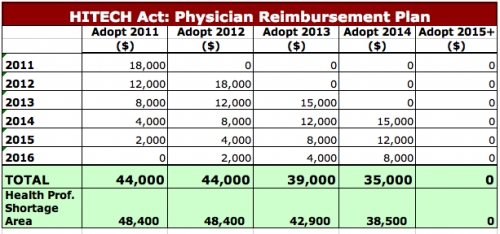
As far as I can tell, all but a few dental consultants work both sides of the fence in order to please vendors who give them good deals, as well as dentists who pay for unbiased help. Sponsorship by vendors is the bottom level of a consultant career if one chooses to make a living at selling advice. In this way, the dental consultant business is a lot like the financial advice business. Some advisors push their favorite investments that serve them well no matter what happens to their clients’ money. If a client wants advice, but prefers not to pay full price, interested vendors can be counted on to quietly chip in on an advisor’s bill. And that is why the customer must always be cynical. What’s more, it is arguably one’s community obligation to publicly challenge such artists by luring them out into the open to explain further what they meant to say to naïve people. Dr. Kadi begins:

“The national health-care debate cannot be complete unless we include dental care as part of the discourse.”

He then presents oft-repeated, convincing findings which support the widely held conclusion that one’s overall health is dependent on one’s oral health. Even though this chunk of common sense has recently been supported with well-respected research, the news isn’t a revelation. Other stakeholders have proclaimed the findings as an example of ultra-modern “Evidence-Based Dentistry,” and proof of the need for thousands of their dental products. However, let’s not kid ourselves. A healthy mouth has less to do with computerization than the proper application of a low-tech toothbrush. 10,000 years ago, even buzzards recognized that bad breath from advanced gum disease smells like imminent death from a long way off if the wind is right. The results Dr. Kadi leans his reasons against only confirm traditional Evidence-Based Superstition.

eDR Lobbying 

By half-way through the article Dr. Kadi turned “The cavity in the health-care debate” into a PR piece for eDRs. He’s in so deep that he cannot recognize that his misplaced concerns about image have nothing to do with dental patients’ oral health. Image is only cosmetic.

“A validation [of bringing “sex appeal” to the profession] is the inclusion of dentistry in the recently mandated National Healthcare Information Infrastructure (NHII). The purpose of the NHII is to create an information network to facilitate the creation of an electric health record [eHR] for all aspects of health care. The primary impetus is to achieve interoperability of health information technologies used in the mainstream delivery of health care.”

Note: Dr. Kadi admits that the goal is HIT, and sharing health information is the tool – not the other way around. As anyone can see, that kind of nonsense will never work out well in the US. Why that would be as foolish as stuffing a certifying commission for eHRs with industry, government and academic leaders rather than providers – and then tossing billions of dollars that could otherwise be used for treating disease out in the street for the biggest and fastest stakeholders who grab the most. That would be simply ridiculous.

Dr. Kadi bravely continues: “This will enable an individual’s health care information to be shared by all the necessary health care parties in a secure manner, including dentistry. It will improve patient care and reduce the number of patients, currently 100,000 plus, who die each year due to a lack of accurate, complete, or timely information. The federal government estimates a cost savings of $85 billion to $100 billion per year with electronic health records [eHR].”

Is HIT – Or any IT – Really Secure? 

In a secure manner – really? There are so many other misleading statements in this paragraph as well. First of all, how can an eDR improve a dentist’s chance of successfully extracting a molar in one piece? It can’t. Secondly, how many of the alleged 100,000 victims died because of lack of electronic DENTAL records? Third, how many patients will die because of faulty information in interoperable records that would not have occurred if the records were paper? Fourth, to insinuate that patient information can only be shared over the Internet is plain silly. Telephone, fax and the US mail have been sufficient for dentistry for decades, and none involve HIPAA. Finally, the $85 to $100 billion in savings Dr. Kadi casually throws out is based on a five year old Rand study that’s been widely trashed for being biased in favor of the stakeholders who funded the research. That happens. It just amazes me that anyone in the healthcare industry who knows anything about HIT is foolish enough to still shop discarded garbage. And once again, regardless of the success of electronic medical records, how will eDRs save even $10 in dentistry? It’s impossible without re-defining “savings.”

Cost Savings

“Dentists and hygienists will play a vital role in this cost savings because people who go for regular cleanings will have their medical history updated in the shared system during each visit. In some cases, dental cleanings may be the only medical attention a person receives yearly.”

“Cost savings”? Where have I heard that term? And why didn’t Dr. Kadi simply say “savings”?

Now I remember. It was Dr. Robert Ahlstrom, the ADA’s eDR expert, who coined the handy buzzword in his testimony describing the benefits of paperless dental practices for the US Department of Health and Human Services in July of 2007. “Cost savings to providers and plans will translate in less costly health care for consumers. Premiums and charges will be lowered.” That would be the seventh of his 11 reasons that are each one so lame that other than Dr. Kadi, stakeholders never borrow them. Although it is undeniable that electronic records benefit insurers and the government more than the patient, if Ahlstrom hadn’t been coy, and had clearly stated that eDRs will save money in dentistry, his testimony would have been false. By calling it a “cost savings,” Ahlstrom technically concedes that using eDRs will indeed require an increase in cost of overhead – which dental patients will ultimately have to pay to obtain dental care. The saving part comes from “what could have been.” Whatever that could possibly mean, HHS Secretary Michael Leavitt bought it.

The PennWell Article

Because of a situation beyond my control, I am unable to provide a link, but to find more of my opinion of Ahlstrom’s testimony that is still used by lawmakers to establish national policy, simply google “Dr. Robert Ahlstrom.” My PennWell article from a year ago or so, “Dr. Robert H. Ahlstrom’s controversial HIPAA testimony,” is probably still his first hit. It could be on his first page the rest of his life.

Join Our Mailing List

Assessment

If necessary, I’ll make a few more examples of insensitive HIT stakeholders who know better than to offer such crap to the nation’s lawmakers as well as providers who are too busy to pay attention to the welfare of their profession. The ADA should reassure the nation that there are cheap, effective low-tech ways dental patients can stay healthy that don’t risk their identities and won’t bankrupt a dental practice because of a stolen computer. But; they won’t do it.

Conclusion

Your thoughts and comments on this ME-P are appreciated. Feel free to review our top-left column, and top-right sidebar materials, links, URLs and related websites, too. Then, subscribe to the ME-P. It is fast, free and secure.

Link: http://feeds.feedburner.com/HealthcareFinancialsthePostForcxos

Speaker: If you need a moderator or speaker for an upcoming event, Dr. David E. Marcinko; MBA – Publisher-in-Chief of the Medical Executive-Post – is available for seminar or speaking engagements. Contact: MarcinkoAdvisors@msn.com

OUR OTHER PRINT BOOKS AND RELATED INFORMATION SOURCES:

DICTIONARIES: http://www.springerpub.com/Search/marcinko
PHYSICIANS: www.MedicalBusinessAdvisors.com
PRACTICES: www.BusinessofMedicalPractice.com
HOSPITALS: http://www.crcpress.com/product/isbn/9781466558731
CLINICS: http://www.crcpress.com/product/isbn/9781439879900
ADVISORS: www.CertifiedMedicalPlanner.org
PODIATRISTS: www.PodiatryPrep.com
BLOG: www.MedicalExecutivePost.com
FINANCE: Financial Planning for Physicians and Advisors
INSURANCE: Risk Management and Insurance Strategies for Physicians and Advisors

Product DetailsProduct DetailsProduct Details

Book Review of “Cyber War”

Join Our Mailing List

A Book Review 

[By Darrell K. Pruitt; DDS]

I’m reading “Cyber War” by Richard A. Clark. He served the Pentagon, the State Department, and the National Security Council under Presidents Reagan, Bush, Clinton and Bush. It’s sobering to learn that North Korea has already successfully pulled cyber-war tricks against a vulnerable US. But; to learn that North Korea doesn’t have any Internet vulnerabilities is frightening.

China

And what about China – want to see sophistication? Clark says that within the last year, Canadians discovered a highly sophisticated program they named “GhostNet.” It had infected over an estimated 1300 computers at several countries’ embassies around the world. Get this: The program had the capability to remotely turn on a computer’s camera and microphone without alerting the user and to send the information back to China. So how could such capabilities affect you and me?

GhostNet 

GhostNet had been working for almost 2 years before it was discovered. About the same time, US Intelligence leaked news that Chinese hackers had penetrated the US Power grid and left behind programs that can shut the grid down. Clark suggests that the Chinese intended us to find their program as a deterrent to our national will to intervene if China should find it necessary to annex Taiwan or even the Spratly Islands in the South China Sea – where the reefs shelter some of the largest remaining stocks of fish in the world, in addition to undeveloped oil and gas reserves that rival Kuwait’s.

Gates Speaks

Clark says that according to Defense Secretary Robert Gates, cyber attacks “could threaten the United States’ primary means to project its power and help its allies in the Pacific.”  Clark adds, “The problem is, however, that deterrence only works if the other side is listening. U.S. leaders may not have heard, or fully understood, what Beijing was trying to say. The U.S. has done little or nothing to fix the vulnerabilities in its power grid or in other civilian networks.”

Assessment

If they shut down our power grids, it will be chaos. Are we as a nation flying far too fast into the cloud?

What does this say about eMRs and eHRs, regional health information exchanges, cloud computing, and related health 2.0 initiatives and/or information technology? Sobering thoughts for the weekend.

Conclusion

Your thoughts and comments on this ME-P are appreciated. Feel free to review our top-left column, and top-right sidebar materials, links, URLs and related websites, too. Then, subscribe to the ME-P. It is fast, free and secure.

Speaker: If you need a moderator or speaker for an upcoming event, Dr. David E. Marcinko; MBA – Publisher-in-Chief of the Medical Executive-Post – is available for seminar or speaking engagements. Contact: MarcinkoAdvisors@msn.com

OUR OTHER PRINT BOOKS AND RELATED INFORMATION SOURCES:

 Product DetailsProduct Details


Do We Have A False Sense of HIT Security?

Data Breaches More Common than Realized

By Darrell K. Pruitt; DDS

Here is an article titled “Report: Healthcare Organizations may have a False Sense of Data Security,” written by Neil Versel for FierceHealthIT.

http://www.fiercehealthit.com/story/report-healthcare-organizations-may-have-false-sense-data-security/2010-04-12?sms_ss=twitter#ixzz0kzNS6lq

Versel describes the results of a study commissioned by Nashville, Tenn-based Kroll Fraud Solutions. Kroll estimates that 19% of healthcare organizations in the nation suffered a data breach in the last 12 months. That number is up from 13% a year ago. It is based on this information that I estimate that in the last year, at least 24 million dental patients in the nation have been unknowingly exposed to the danger of identity theft. Everyone agrees that the only ethical thing for a dentist to do if he or she knows that patients’ identities have been exposed is to notify the patients and HHS. The shameful fact is, data breaches in dentistry are not being reported.

Enter the Dentists  

But, who can blame American dentists for underreporting breaches without first blaming the heavy-handed, stakeholder-friendly system that forces honest professionals to be dishonest? If a dentist self-reports a breach of 500 or more patients’ Protected Health Information (PHI) it can easily bankrupt a practice. The harm to one’s reputation in the community is just too great a disincentive for even the best of us, even without the added expense of patient notification, subsequent fines and lawsuits. It’s ugly, but that’s the hard, hidden truth about HITECH-HIPAA in dentistry – a piece of lame, one-sided “feel good” legislation that rather than preventing data breaches in dentists’ offices, it drives them underground. As healthcare providers, we should have warned our patients about the growing danger from electronic dental records long ago. Besides me, there are no practicing dentists discussing the topic. Why?

Accepting Ownership of the Dilemma  

Would anyone like to argue that the bi-partisan federal mandate for an interoperable, national eHR system relieves dentists of their obligations to the Hippocratic Oath? Let’s face it: Dentists’ computers continue to threaten up to 20% of dental patients in the nation. We cannot ignore it any longer, doctors.  Once we finally accept ownership of our problem, what are we going to do about it? I’ve suggested that we use common sense and simply remove the dangerous information from dental patients’ files. Anyone see any problem with this idea? Anyone have a better solution?

Assessment 

So what do the leaders of the ADA think of de-identification?


Conclusion

And so, your thoughts and comments on this ME-P are appreciated. Feel free to review our top-left column, and top-right sidebar materials, links, URLs and related websites, too. Then, be sure to subscribe. It is fast, free and secure.

Get our Widget: Get this widget!

Our Other Print Books and Related Information Sources:

Practice Management: http://www.springerpub.com/prod.aspx?prod_id=23759

Physician Financial Planning: http://www.jbpub.com/catalog/0763745790

Medical Risk Management: http://www.jbpub.com/catalog/9780763733421

Healthcare Organizations: www.HealthcareFinancials.com

Health Administration Terms: www.HealthDictionarySeries.com

Physician Advisors: www.CertifiedMedicalPlanner.com

Subscribe Now: Did you like this Medical Executive-Post, or find it helpful, interesting and informative? Want to get the latest ME-Ps delivered to your email box each morning? Just subscribe using the link below. You can unsubscribe at any time. Security is assured.

Link: http://feeds.feedburner.com/HealthcareFinancialsthePostForcxos

Sponsors Welcomed

And, credible sponsors and like-minded advertisers are always welcomed.

Link: https://healthcarefinancials.wordpress.com/2007/11/11/advertise

Queries for the ADA Member Service Center

Four Questions for Consideration

[By Darrell K. Pruitt; DDS]

Dear ME-P Readers

I’m considering these four questions for the ADA Member Service Center to break the ice. What do you think?

Question 1 – The FTC’s Red Flags Rule is due to be enforced on June 10. If the Rule is not delayed for a fifth time and a dentist has a contractual relationship with CareCredit/GE or similar healthcare financing service, will that mean he or she will become a covered entity obligated to additional paperwork, liability and expense?

Question 2 – According to the “ADA National Oral Health Agenda” found on the Advocacy page, it states that one of the ways the ADA intends to reduce the cost of dental care is to promote health information technology. This goal was first posted several years ago. Considering the ever increasing liability of data breaches in healthcare, can consumers still expect to save money in dental care by visiting a paperless practice?

Question 3 – Am I correct to assume that soon the ADA.org Website will include the capability for direct discussions between members and leadership?

Question 4 – If interactive functions are indeed to be included in the new ADA Website, will there be any topics concerning ADA policy that will be closed to questions from membership?

Join Our Mailing List 

Editors Note: The incredible power of the internet is illustrated with this post relative to the phenomenon of “crowd-sourcing.” In this context, the term means to harvest the reach of social networking, like this ME-P, to solve a problem, or ask for input or opinions.

IOW: A knowledge seeker asks a question and participants respond.  PeerClip.com is an example of how “wisdom of the crowds” allows you to follow the latest opinions on interesting topics. In the medical practice management arena, you can also participate at the: www.BusinessofMedicalPractice.com, our newest 850 page book available this Fall.

Channel Surfing the ME-P Have you visited our other topic channels? Established to facilitate idea exchange and link our community together, the value of these topics is dependent upon your input. Please take a minute to visit. And, to prevent that annoying spam, we ask that you register. It is fast, free and secure.

Conclusion

Your thoughts and comments on this ME-P are appreciated. Feel free to review our top-left column, and top-right sidebar materials, links, URLs and related websites, too. Then, subscribe to the ME-P. It is fast, free and secure.

Speaker: If you need a moderator or speaker for an upcoming event, Dr. David E. Marcinko; MBA – Publisher-in-Chief of the Medical Executive-Post – is available for seminar or speaking engagements. Contact: MarcinkoAdvisors@msn.com

OUR OTHER PRINT BOOKS AND RELATED INFORMATION SOURCES:

 Product DetailsProduct Details

Dr. Deborah Peel vs. Ms. Mary Grealy on Patient Privacy

Physician versus Lobbyist

By Darrell K. Pruitt; DDS

On March 23, 2010 Dr. Deborah Peel, a psychiatrist in private practice and the founder of Patient Privacy Rights (www.patientprivacyrights.org) posted an opinion piece titled: “Your Medical Records Aren’t Secure” in the Wall Street Journal.

http://online.wsj.com/article/SB10001424052748703580904575132111888664060.html

Her still popular article soon picked up 217 comments – reflecting respectable interest in the conundrum. Since then, her message of caution has gained momentum on the Internet in the security industry, and has even spilled over into appearances on Fox News, MSNBC and PBS in the last week.

Dr. Peel’s Case

Dr. Peel argues that even though the President claims digital health records will reduce costs and improve quality, they could undermine safe and effective care if patients become afraid to confide in their doctors.

“The solution is to insist upon technologies that protect a patient’s right to consent to share any personal data. A step in this direction is to demand that no federal stimulus dollars be used to develop electronic systems that do not have these technologies.”

It is easy to understand why Dr. Peel’s opinions draw the ire of HIT stakeholders both inside and outside government.

Dr. Peel concludes:

“Privacy has been essential to the ethical practice of medicine since the time of Hippocrates in fifth century B.C. The success of health-care reform and electronic record systems requires the same foundation of informed consent patients have always had with paper records systems. But if we squander billions on a health-care system no one trusts, millions will seek treatment outside the system or not at all. The resulting data, filled with errors and omissions, will be worth less than the paper it isn’t written on.” 

Dr. Peel is currently on a campaign to encourage Americans to sign her “Do not disclose” petition.

http://patientprivacyrights.org/do-not-disclose/

HIT Stakeholders Speak Up

Recently, the Wall Street Journal featured an opposing opinion to Dr. Peel’s in an article titled “Industry Rep Calls Patient Privacy ‘Overblown’ Worry”

http://online.wsj.com/article/SB10001424052748704094104575144110418562490.html?mod=googlenews_wsj#articleTabs%3Darticle

Ms. Grealy’s Case

Mary R. Grealy, President of the Healthcare Leadership Council, a coalition of chief executives from the health-care industry, posted her objections to Dr. Peel’s warnings about the dangers of digital records versus paper:

“Dr. Peel seeks to frighten people into believing electronic health records are more vulnerable than paper ones, which is not the case. She fails to acknowledge the important role of the HIPAA in protecting health information, or the extraordinary steps hospitals, health plans and physicians have taken to assure confidentiality. Building upon HIPAA, federal laws adopted this year strongly encourage encryption of data included in electronic health records and have imposed new criminal and civil penalties for violating an individual’s privacy.” 

“More importantly, though, if Dr. Peel’s prescription for this hyperbolic problem were to be followed, it’s actually our health that will be less secure. Burdening patients with the responsibility of deciding what health information should be divulged and what should be shielded from medical professionals brings an infinite array of possible consequences. Would the average patient know what information a surgeon needs in order to perform a complex procedure? It’s highly doubtful”.

“In a broader sense, draconian restrictions on the essential flow of medical information would have society-wide repercussions. It would affect the ability of public health officials to report and track incidences of disease. It would undermine the Food and Drug Administration’s capability to monitor the quality and safety of medical products, and product recalls would be hampered”.

“Perhaps most importantly, medical research into lifesaving cures and treatments would be severely hindered by restricted access to health information. Stymieing the necessary transfer of data contained in one diagnosis, one prescription or one lab test could mean the difference between life and death. That is a very high price to pay in order to address overblown privacy concerns”.

Mary R. Grealy

[Washington]

_____________________________________

Assessment

Mary Grealy doesn’t have a petition to sign.

Whereas Dr. Peel turns to patients for support, Ms. Grealy, President of the Healthcare Leadership Council, a coalition of chief executives from the health-care industry, turns to Washington.

Conclusion

And so, your thoughts and comments on this ME-P are appreciated. Feel free to review our top-left column, and top-right sidebar materials, links, URLs and related websites, too. Then, be sure to subscribe to the ME-P. It is fast, free and secure.

Link: http://feeds.feedburner.com/HealthcareFinancialsthePostForcxos

Our Other Print Books and Related Information Sources:

Practice Management: http://www.springerpub.com/prod.aspx?prod_id=23759

Physician Financial Planning: http://www.jbpub.com/catalog/0763745790

Medical Risk Management: http://www.jbpub.com/catalog/9780763733421

Healthcare Organizations: www.HealthcareFinancials.com

Health Administration Terms: www.HealthDictionarySeries.com

Physician Advisors: www.CertifiedMedicalPlanner.com

Subscribe Now: Did you like this Medical Executive-Post, or find it helpful, interesting and informative? Want to get the latest ME-Ps delivered to your email box each morning? Just subscribe using the link below. You can unsubscribe at any time. Security is assured.

Link: http://feeds.feedburner.com/HealthcareFinancialsthePostForcxos

Sponsors Welcomed

And, credible sponsors and like-minded advertisers are always welcomed.

Link: https://healthcarefinancials.wordpress.com/2007/11/11/advertise

Product DetailsProduct DetailsProduct Details

Need a New Career in Dentistry – Become a Consultant

Or – Maybe Just a Hobby

By Darrell K. Pruitt; DDS

One might ask how much knowledge of dentistry is required before a person is qualified to call oneself a “dental practice management consultant” – beyond maybe being able to spell HIPAA with only one P, and Hippocrates with two.

Meet Jill Coon, Inc

An anonymous management consultant who works for Jill Coon, Inc of Florida posted this brave suggestion on the company Facebook today:

“Why not take 3 max anterior PA’s and 1 mandibular PA once a year with bitewings to check for caries in front teeth? We actually bill insurance for 3 PA’s not 4. Hygiene production just increased!”

My Translation 

Here is a translation of her question from dental-speak to English:

“Why don’t dentists take routine x-rays of front teeth like they do for back teeth, when doing so increases hygiene production and payments from the insurance companies?”

[Dental team members, please sit on your hands for this one].

Bonus Round 

Bonus question: Can anyone think of any reason why one might not want additional routine x-rays – even if insurance pays for it at 100% (of usual and customary fees)?

Hint: It can be trickier to avoid irradiating the thyroid when taking anterior x-rays than while taking routine bitewing x-rays.

Assessment 

I’ll be back soon with the tricky opinion I will have posted on Jill Coon, Inc Facebook. It will be her first if nobody beats me to it.

http://www.facebook.com/home.php#!/pages/West-Palm-Beach-FL/Jill-Coon-Inc/125510596754?v=wall&ref=mf

Conclusion

Is there anyone out there with almost no knowledge of dental care who wants to match wits with a sales rep for a consulting company that “specializes in dental insurance billing and treatment planning for dental practices”?

Industry Indignation Index: 47

How about it – HHS Secretary Kathleen Sebelius, JD?

And so, your thoughts and comments on this ME-P are appreciated. Feel free to review our top-left column, and top-right sidebar materials, links, URLs and related websites, too. Then, be sure to subscribe to the ME-P. It is fast, free and secure.

Link: http://feeds.feedburner.com/HealthcareFinancialsthePostForcxos

Get our Widget: Get this widget!

Our Other Print Books and Related Information Sources:

Practice Management: http://www.springerpub.com/prod.aspx?prod_id=23759

Physician Financial Planning: http://www.jbpub.com/catalog/0763745790

Medical Risk Management: http://www.jbpub.com/catalog/9780763733421

Healthcare Organizations: www.HealthcareFinancials.com

Health Administration Terms: www.HealthDictionarySeries.com

Physician Advisors: www.CertifiedMedicalPlanner.com

Subscribe Now: Did you like this Medical Executive-Post, or find it helpful, interesting and informative? Want to get the latest ME-Ps delivered to your email box each morning? Just subscribe using the link below. You can unsubscribe at any time. Security is assured.

Link: http://feeds.feedburner.com/HealthcareFinancialsthePostForcxos

Sponsors Welcomed

And, credible sponsors and like-minded advertisers are always welcomed.

Link: https://healthcarefinancials.wordpress.com/2007/11/11/advertise

Product DetailsProduct DetailsProduct Details       

A New Survey on Dental Insurance

Come on out Kim E. Volk – CEO of Delta Dental

By Darrell K. Pruitt; DDS

Today, Julie Frey posted “Dentist & Dental Insurance: No Love Lost” on Jim Du Molin’s Blog.

http://www.thewealthydentist.com/blog/1186/dentist-dental-insurance/

Frey hosts dentists’ frank criticism of dental insurance – their harsh sentiments backed up with fresh results from yet another of the blog’s timely studies that nobody else can compete with. Frey writes “Half of dentists have mostly or completely stopped accepting dental insurances, according to this survey.”  One dentist captured the mood of the dentists with the statement, “Do the math … somebody is making hell of a lot of money on these plans, and it is not the dentist!” I smelled blood and posted the following comment.

Bloody Sunday

Anonymous members of the obscure National Association of Dental Plans (NADP) are losing the fat, collective thumb they once oppressed us with – even using our own ADA News to present their non-negotiable terms. Apart from common sense appearing in the marketplace about the same time as transparency, multiple other interconnected factors are causing dental insurance companies to lose business. The bad economy, corporate greed and pride are a few of their more serious handicaps that come to mind. Wasteful, deceptive insurance practices have aggravated my patients and me for decades before modern networked recourse became available on the Internet through progressive Websites like Jim Du Molin’s Blog. I’ll go out on a limb and say it is not unprofessional for us to enjoy protecting those we serve by showing no mercy to unfair stakeholders like the NADP.

There. I said it. In fact, as US citizens and taxpayers I think blowing the whistle on unneeded expense and danger in the nation’s healthcare delivery is the least we can do for meaningful healthcare reform. I say do your part. Make an insurance CEO like Delta Dental Plans Association’s Kim E. Volk feel discomfort on the Internet. Do you know that Kim E. Volk is the only person who has ever refused to accept me as a friend on Facebook?

http://www.jbpub.com/catalog/9780763733421/

Assessment 

We really don’t want to allow Delta Dental, UnitedHealthcare, United Concordia and others to dictate fees for non-covered dental services, do we? I also don’t think they deserve continued protection from FTC anti-trust litigation. I say we punish the NADP hard every chance we get until the repeal of the McCarran-Ferguson Act and finally make such in-your-face collusion illegal for crying out loud.

Conclusion

Your thoughts and comments on this ME-P are appreciated. Feel free to review our top-left column, and top-right sidebar materials, links, URLs and related websites, too. Then, subscribe to the ME-P. It is fast, free and secure.

Link: http://feeds.feedburner.com/HealthcareFinancialsthePostForcxos

Speaker: If you need a moderator or speaker for an upcoming event, Dr. David E. Marcinko; MBA – Publisher-in-Chief of the Medical Executive-Post – is available for seminar or speaking engagements. Contact: MarcinkoAdvisors@msn.com

OUR OTHER PRINT BOOKS AND RELATED INFORMATION SOURCES:

Product DetailsProduct DetailsProduct Details

Ease Up – Managing Editor Bob Mitchell

By Darrell K. Pruitt; DDS

[picapp align=”none” wrap=”false” link=”term=doctors+computers&iid=131173″ src=”0127/4caf5e52-a89a-4ddb-a0b2-bf4b6789c92b.jpg?adImageId=11344576&imageId=131173″ width=”414″ height=”413″ /]

Two days ago, ADVANCE for Health Information Executives’ managing editor Bob Mitchell publicly criticized the author of last week’s Parade Magazine article, “Electronic Health Records Face Critics.” Personally, I thought it was cowardly for the editor to accuse Drew Jubera of journalistic recklessness without mentioning his name.

http://community.advanceweb.com/blogs/hx_1/archive/2010/03/16/critics-ehrs-don-t-save-money.aspx

According to Jubera

Jubera wrote:

“A new Harvard Medical School study suggests that electronic health records do not save hospitals money—and in fact often end up increasing costs. The Obama Administration has allocated $19 billion in federal stimulus funds to facilitate the shift from paper to electronic records – a move the Rand Corporation has projected could save up to $80 billion a year. Yet the Harvard study found no evidence of savings so far and little evidence that electronic records improve care.”

http://www.parade.com/news/intelligence-report/archive/100314-electronic-health-records-face-critics.html

Dis-Respects Harvard

Incredibly, Bob Mitchell discounts the Harvard Medical School study as being dated research – even though it is less than 5 months old. “I did some research and found that this study was released back in November 2009, even before meaningful use of an eHR had been defined by [ONCHIT] – or the Office of National Coordinator of Health IT.” As if defining meaningful use was meaningful! That’s humor.

Dis-Respects Parade

Furthermore, editor Mitchell has taken on the responsibility to shield his readers from harm caused by Parade Magazine authors whose ethics fall short of acceptable.

He writes:

“I’m concerned that the public is not being served and they will get the wrong impression of computers in health care, especially if it’s being reported by Parade, which reports celebrity, entertainment and health news.”

Of Healthcare Providers

Not so fast with those tricky pronoun phrases, Bob. Rather than being merely a healthcare stakeholder like you, I’m actually the healthcare provider whom you would have fund your enthusiasm. I think your broad statement that “all of us in healthcare know that digital is much better than paper” is journalistically foolish. In addition, your creativity threatens society much more than alleged exaggerations in Parade Magazine. You not only write about HIT as a career, but people generously call you a managing editor.

eMRs in Dentistry 

The next time you feel important enough to quietly insult writers on behalf of providers like me, remember that eMRs in dentistry will not save money over paper records and will unnecessarily increase the risk of identity theft for my patients … unless you disagree.

It would thrill me if you want to publicly debate the value of electronic dental records (How much do you know about dentistry?)

Assessment

For example, do you realize that if a computer containing thousands of patients’ identifying data is stolen in a burglary, and the dentist, or physician, does the right thing and reports the data breach, he or she will likely be bankrupt even before the HIPAA inspections and lawsuits?

The Ponemon Institute estimates that it will cost about $50 per record just to notify affected patients. A few weeks ago, the HHS was obligated to release information that a burglar stole a computer containing more than 9,000 records from a Missouri dental practice. Just to notify the affected patients will cost the practice almost half a million dollars. But wait. That’s not all. Since the loss involves over 500 individuals, news of the breach must be provided as a press release to the local media. As goes the dentist’s reputation, so goes the dentist’s career – all because of a simple burglary.

Conclusion

So what were you saying about dangerous, biased articles in Parade Magazine? The author whose ethics you criticize has a name. It is Drew Jubera. He’s an award-winning staff member of the Atlanta Journal-Constitution, in Atlanta GA – home of this ME-P.  I’ll make sure he also gets this message.

And so, your thoughts and comments on this ME-P are appreciated. Feel free to review our top-left column, and top-right sidebar materials, links, URLs and related websites, too. Then, be sure to subscribe to the ME-P. It is fast, free and secure.

Link: http://feeds.feedburner.com/HealthcareFinancialsthePostForcxos

Donate: www.e-junkie.com/ecom/gb.php?c=cart&i=641232&cl=109140&ejc=2

Get our Widget: Get this widget!

Our Other Print Books and Related Information Sources:

Practice Management: http://www.springerpub.com/prod.aspx?prod_id=23759

Physician Financial Planning: http://www.jbpub.com/catalog/0763745790

Medical Risk Management: http://www.jbpub.com/catalog/9780763733421

Healthcare Organizations: www.HealthcareFinancials.com

Health Administration Terms: www.HealthDictionarySeries.com

Physician Advisors: www.CertifiedMedicalPlanner.com

Subscribe Now: Did you like this Medical Executive-Post, or find it helpful, interesting and informative? Want to get the latest ME-Ps delivered to your email box each morning? Just subscribe using the link below. You can unsubscribe at any time. Security is assured.

Link: http://feeds.feedburner.com/HealthcareFinancialsthePostForcxos

Sponsors Welcomed

And, credible sponsors and like-minded advertisers are always welcomed.

Link: https://healthcarefinancials.wordpress.com/2007/11/11/advertise

Electronic Medical Records and Dentistry

A Note to Diane Rehm

[By Darrell K. Pruitt; DDS]

Dear Diane Rehm,

I always enjoy your show.

You add value to my drive to work.

As a dentist, I was especially interested in your March 10 show “Electronic Medical Records.”

http://wamu.org/programs/dr/10/03/10.php?utm_source=feedburner&utm_medium=feed&utm_campaign=Feed%3A+WAMU885DianeRehm+%28WAMU%3A+The+Diane+Rehm+Show%29&utm_content=FaceBook#30598

In all the excitement that surrounds the 19 billion dollars our grandchildren have unwittingly granted to physicians and hospitals for “meaningful” adoption of certified eMRs, you probably haven’t noticed that nobody is talking about including dentistry in the conversion from paper to digital. Do you find that odd?

Small and Mid Sized Practices

Like small and mid sized physicians’ practices, small dental practices are intended to be part of the federal mandate for interoperable eMR adoption – even without the help from stimulus money that physicians receive. You probably weren’t aware that the stimulus money will run out before HHS gets around to defining “meaningful use” of eMRs in dental office. That would be impossible, but nevertheless, I anticipate that the attempts will be entertaining. Physicians in small practices typically have tens of thousands of paper charts as thick as phone books. On the other hand, a busy solo dental practice, like the majority of practices in the US, might have 5,000 files that are very thin in comparison to files that involve the whole body instead of just the bottom third of the face. That makes sense, doesn’t it?

Marginal Benefits May Not Exceed Marginal Costs 

I listened to your guest Dr. Carol Horn, who practices internal medicine in private practice, as well as others involved in the actual delivery of healthcare. They list not only the benefits of eMR adoption, but in fairness, they also described the expense and liability of digital records that continue long after the tedious and dangerous conversion from paper to digital. In other words, it appears that the benefits for physicians barely make the effort worth the price, even with 19 billion dollars in help.

Editor’s Note: In economics, we say that the marginal benefits may not exceed the marginal costs; all things being equal.

Assessment 

And so, it occurs to me that if dentists are to be included in the plans for digital interoperability, we will be very, very slow adopters for natural reasons: like eMRs in physicians’ offices, eMRs in dentists’ offices are more expense and trouble than they are worth – even before considering the bankruptcy-level liability of a data breach.

Most of those who champion eMRs for the entire healthcare system in the nation don’t realize that the bottleneck in dental offices isn’t the front desk. It’s the dentist who is hopefully taking his or her time providing care with those hands instead of working a keyboard.

Conclusion

Your thoughts and comments on this ME-P are appreciated. Feel free to review our top-left column, and top-right sidebar materials, links, URLs and related websites, too. Then, subscribe to the ME-P. It is fast, free and secure.

Link: http://feeds.feedburner.com/HealthcareFinancialsthePostForcxos

Speaker: If you need a moderator or speaker for an upcoming event, Dr. David E. Marcinko; MBA – Publisher-in-Chief of the Medical Executive-Post – is available for seminar or speaking engagements. Contact: MarcinkoAdvisors@msn.com

OUR OTHER PRINT BOOKS AND RELATED INFORMATION SOURCES:

Product DetailsProduct DetailsProduct Details

Protected Health Information Data Breaches

Affecting 500 or More Individuals

[By Staff Reporters]

As required by section 13402(e)(4) of the HITECH Act, the Secretary must post a list of breaches of unsecured protected health information affecting 500 or more individuals.

The following breaches have been reported to the Secretary of the US Department of Health and Human Services [DHHS].

Full Report

This link was sent in by our own investigative reporter Darrell K. Pruitt, DDS.

Link: http://www.hhs.gov/ocr/privacy/hipaa/administrative/breachnotificationrule/postedbreaches.html

Assessment

Shall we await a response from Kathleen Sebelius, who was sworn in as the 21st Secretary of the Department of Health and Human Services (HHS) on April 28, 2009?

Currently, she leads the principal agency charged with keeping Americans healthy, ensuring they get the health care they need, and providing children, families, and seniors with the essential human services they depend on. She also oversees one of the largest civilian departments in the federal government, with nearly 80,000 employees.

Conclusion

Your thoughts and comments on this ME-P are appreciated. Feel free to review our top-left column, and top-right sidebar materials, links, URLs and related websites, too. Then, subscribe to the ME-P. It is fast, free and secure.

Link: http://feeds.feedburner.com/HealthcareFinancialsthePostForcxos

Speaker: If you need a moderator or speaker for an upcoming event, Dr. David E. Marcinko; MBA – Publisher-in-Chief of the Medical Executive-Post – is available for seminar or speaking engagements. Contact: MarcinkoAdvisors@msn.com

OUR OTHER PRINT BOOKS AND RELATED INFORMATION SOURCES:

DICTIONARIES: http://www.springerpub.com/Search/marcinko
PHYSICIANS: www.MedicalBusinessAdvisors.com
PRACTICES: www.BusinessofMedicalPractice.com
HOSPITALS: http://www.crcpress.com/product/isbn/9781466558731
CLINICS: http://www.crcpress.com/product/isbn/9781439879900
BLOG: www.MedicalExecutivePost.com
FINANCE: Financial Planning for Physicians and Advisors
INSURANCE: Risk Management and Insurance Strategies for Physicians and Advisors

Product DetailsProduct Details

Product Details

Sales of Dental Equipment and eDRs Down

Peterson Dental Supply Reveals a Decline

By Darrell K. Pruitt; DDS

Yesterday, Kevin Henry posted “Dental news of the day for Thursday, Feb. 18” on the DentistryiQ Blog.

The source for the day’s dental news was a sales report provided by Patterson Dental Supply.

http://community.pennwelldentalgroup.com/profiles/blogs/dental-news-of-the-day-for

Soft Sales

“Sales of dental equipment and software declined 10% from the year-earlier level, which was consistent with Patterson’s forecast for this period.”

If one remembers the economy at the last of 2008, it is not difficult to understand why Patterson’s analysts forecast that sales of dental equipment would drop. But, how did they know that sales of Patterson EagleSoft, their clinical and practice management software would also fall by 10%? I find it interesting that their accurate prediction was made shortly after Patterson announced the release of EagleSoft Version 15.00 on October 10, 2008. That must have been discouraging to EagleSoft employees.

When is the last time you’ve heard of a company roll-out of a new version of software – expecting it to be even less successful the previous version? That’s interesting.

Health Policy and Politics 

What makes Patterson’s valiant prediction of a decline in software sales even more remarkable is that a year ago, President-elect Barack Obama was giddy enthusiastic for digital health records, which includes Patterson’s EagleSoft. Not to say I told you so [maybe-a-little], but Patterson’s analysts obviously recognized what I did long before: Digital dental records are losing popularity among dentists. What’s more, none of my patients have ever said that they wish I had digital dental records. Dental patients simply do not desire them.

As a matter of fact, some have expressed relief that my paper records are more secure than anyone’s digital records. They also like not having to sign HIPAA forms – a meaningless waste of trees and appointment time.

Insightful or clueless dentist?

Assessment 

A year after Patterson privately admitted doubt about paperless dental practices, the slow-moving ADA House of Delegates met in Hawaii in October ‘09 and officially encouraged ADA members to adopt eDRs. Why doesn’t the American Dental Association know at least as much about dentistry as Patterson Dental?

This is an intriguing time in dental history. I can’t wait until the ADA opens up about their mistakes in dental informatics. One of these days we’ll all have a good laugh about their lame, expensive shenanigans.

Conclusion

Your thoughts and comments on this ME-P are appreciated. Feel free to review our top-left column, and top-right sidebar materials, links, URLs and related websites, too. Then, subscribe to the ME-P. It is fast, free and secure.

Link: http://feeds.feedburner.com/HealthcareFinancialsthePostForcxos

Speaker: If you need a moderator or speaker for an upcoming event, Dr. David E. Marcinko; MBA – Publisher-in-Chief of the Medical Executive-Post – is available for seminar or speaking engagements. Contact: MarcinkoAdvisors@msn.com

OUR OTHER PRINT BOOKS AND RELATED INFORMATION SOURCES:

DICTIONARIES: http://www.springerpub.com/Search/marcinko
PHYSICIANS: www.MedicalBusinessAdvisors.com
PRACTICES: www.BusinessofMedicalPractice.com
HOSPITALS: http://www.crcpress.com/product/isbn/9781466558731
CLINICS: http://www.crcpress.com/product/isbn/9781439879900
BLOG: www.MedicalExecutivePost.com
FINANCE: Financial Planning for Physicians and Advisors
INSURANCE: Risk Management and Insurance Strategies for Physicians and Advisors

Product DetailsProduct Details

DrBicuspid.com is Biased against Dentists

Join Our Mailing List

More on Delta Dental

By Darrell K. Pruitt; DDS

Kathy Kincade, Editor-in-Chief of DrBicuspid posted the article, “Studies urge adding adult dental benefits to Medicare” on January 29, 2010.

http://www.drbicuspid.com/index.aspx?sec=sup&sub=pmt&pag=dis&ItemID=303755

Ms. Kincade has always been generous to Delta Dental, making me suspect that she is less than unbiased.

Of Delta Dental

For example, at the end of the article, she devotes the last words about dental coverage for the elderly to an advertisement for Delta:

“Through a relationship with Delta Dental, the AARP offers the AARP Dental Insurance Plan, a dental PPO for AARP members that includes more than 100,000 dentist locations across the U.S. Delta also offers individual plans that are ‘particularly popular among retirees,’ according to Chris Pyle, director of public relations and community benefits at Delta Dental.”

Kincade closes her ad with a quote from Chris Pyle:

“Delta Dental has been a pioneer in developing affordable dental insurance options for those who do not have coverage through an employer. Retirees who take the time to do the math are finding individual and family dental insurance plans to be a wise option.”

How much does advertisement space on DrBicuspid go for these days?

Dr. Hamm                     

That is when Dr. Hamm got involved. He first requested that Chris Pyle document his claim:

”Prove it, Mr. Pyle. Let’s see your figures. Be sure to include comparison of the quality of care between PPO dentistry and fee-for-service dentistry. Do you think discounting fees – even for non-covered expenses – improves the quality of intricate care?”

When Dr. Hamm failed to get an immediate response, he went to the source. Here is what he had to say to the Editor in Chief of DrBicuspid:

——————————————————–

Kathy Kincade, pardon me for being straightforward, but at the risk of making it difficult for DrBicuspid reporters to obtain future interviews with Delta Dental PR professionals and ADA presidents, I proclaim that it is DrBicuspid readers’ rights – indeed Americans’ obligation – to challenge unsupported, self-serving statements that strategically discount facts in healthcare to protect stakeholders from principals (that would be dentists and patients).

DDPA Employee 

Chris Pyle, the on again – off again DDPA employee, isn’t the first Delta PR specialist who has told DrBicuspid outrageous statements before failing to answer the bell when challenged. A year ago, in an article by DrBicuspid Associate Editor Rabia Mughal, another shy and unaccountable Delta Dental PR professional poked his head up before diving for cover. Delta employee Ari Adler is reported to have said that “direct reimbursement to out-of-network dentists is a problem because it allows them to enjoy the benefits provided by the network without following cost guidelines and quality control measures of the network.”

http://www.drbicuspid.com/index.aspx?sec=sup&sub=pmt&pag=dis&ItemID=301436

“We put our dentists thorough a credentialing process and provide quality assurance. That means if a dentist does a filling that should last a certain amount of time and it doesn’t, they have to fix it without charging the network or the patients.” 

– Ari Adler, communications administrator at Delta Dental of Indiana

Even after repeated requests for an explanation of Delta’s unprecedented guarantee of dental work done by Delta’s preferred providers, Ari Adler, a very popular master of Twitter who also teaches PR as a part-time job, declined to answer (So much for popularity on Twitter). I assume the PR and social network expert thinks that since he’s the Communications Administrator for such a powerful company, he’s protected from accountability. Besides, American dentists love and respect Delta Dental, don’t they?

Dr. Ron Tankersley

And; what about Dr. Ron Tankersley who is President of the American Dental Association. Is he also simply too good to talk with us?

————————————————

I may or not know Dr. John Hamm. I know Editor in Chief Kathy Kincade, though. She kicked me off of DrBicuspid over a year ago – the day before DrBicuspid consummated a contractual relationship with the ADABEI to receive the ADA seal of approval.

An Invitation

I should warn readers that I could be wrong about what may have been just an odd coincidence, so I invite you, Kathy Kincade, to discuss journalism ethics with me on Pruitt’s Platform. I trust someone will warn you, Kathy, of this invitation before it comes up on your first page in a Google search. My article “DrBicuspid, the ADA and split allegiances” from 2/15/09 is the 8th hit already. Now do you remember me?

http://community.pennwelldentalgroup.com/forum/topics/drbicuspid-the-ada-and-split

Assessment 

Come on out, Kathy. I’ve been waiting for this a long time. Come on out where everyone can see you defend Delta Dental. Please invite Brian Casey as well. He was the Editorial Director of IMV Publishing a year ago. Is he still around – policing the Internet?

Conclusion

Your thoughts and comments on this ME-P are appreciated. Feel free to review our top-left column, and top-right sidebar materials, links, URLs and related websites, too. Then, subscribe to the ME-P. It is fast, free and secure.

Speaker: If you need a moderator or speaker for an upcoming event, Dr. David E. Marcinko; MBA – Publisher-in-Chief of the Medical Executive-Post – is available for seminar or speaking engagements. Contact: MarcinkoAdvisors@msn.com

OUR OTHER PRINT BOOKS AND RELATED INFORMATION SOURCES:


Product DetailsProduct Details

Shopping for Health Software

Some Doctors Get Buyer’s Remorse

By D. Kellus Pruitt; DDS

Dear Huffington Post Investigative Fund

As a dentist, I read Emma Schwartz’s “Shopping for Health Software, Some Doctors Get Buyer’s Remorse” with interest.

It was like watching a slow, grinding train wreck from a still safe, but shrinking distance.

http://www.huffingtonpost.com/2010/01/29/shopping-for-health-softw_n_442651.html

Duped Physicians 

The numerous stories about physicians who lost hundreds of thousands of dollars because of bad software purchases – including the case where some doctors alleged they were locked out of their patients’ medical records – is awe inspiring if one isn’t mandated to live the misery. I hope it’s a long, long time before paper dental practices are outlawed. If as Ms. Schwartz describes, broad-band interoperability fails to save money for physicians where it makes sense, I promise that dentists will never invest in interoperability beyond occasionally purchasing a new fax machine, telephone, or postage stamps. Dentistry simply isn’t emergency room medicine, and non-productive technology is especially costly if it fails to function properly.

A Volatile Industry 

Steven Lazarus, president of consulting company Boundary Information Group, was quoted:

 “This is a very volatile industry. Any product doctors buy could be bought or changed within two years.”

You want to see volatile? Try explaining that to thousands of disappointed dentists in solo practices – one disagreeable SOB at a time.

A Canadian Illustration 

Believe it or not, there’s still more kinetic energy behind the train wreck – even without mentioning data breach bankruptcies. As illustrated by Schwartz’s example of Canada-based MedcomSoft, even if a company’s EHR system is CCHIT-certified, bankruptcy can occur unexpectedly – again leaving doctors holding the bag. To stay in business, providers who lose money on EHRs either must cut corners or increase fees to cover the loss … volatile!

A Dentist’s Question 

Why, oh why, would a dentist want to spend $40,000 on software including thousands of man-hours in transition, just to risk pulling this tangled, expensive mess down on top of one’s practice? And – for what? There is no return on investment beyond the stakeholders in the EHR industry – which is ultimately paid by unrepresented patients through their healthcare in higher medical fees. As one can imagine, dentists are staying away from EHRs in droves.

For example, what does it mean that there are few if any advertisements for electronic dental records in industry journals, junk mail ads or Internet venues? I think it means that the Father of Economics Adam Smith is quietly warning ambitious, would-be dental software salespeople that their dangerous and expensive products will get them thrown out of dental offices.

The ADA 

But then again, I could be wrong. Here is what Dr. John Findley, the immediate past president of the American Dental Association, told ADA Reporter Judy Jakush in a September 2008 interview a month before taking office:

“The electronic health record may not be the result of changes of our choice. They are going to be mandated. No one is going to ask, ‘Do you want to do this?’ No, it’s going to be, ‘You have to do this.’ That’s why we absolutely need the profession to be represented in the discussions about EHR to make sure our ideas are enacted to the greatest extent possible.”

To me, that’s scary. It smells a lot like tyranny.

Join Our Mailing List

Conclusion

And so, your thoughts and comments on this ME-P are appreciated. Feel free to review our top-left column, and top-right sidebar materials, links, URLs and related websites, too. Then, be sure to subscribe to the ME-P. It is fast, free and secure.

Link: http://feeds.feedburner.com/HealthcareFinancialsthePostForcxos

Speaker: If you need a moderator or speaker for an upcoming event, Dr. David E. Marcinko; MBA – Publisher-in-Chief of the Executive-Post – is available for seminar or speaking engagements. Contact: MarcinkoAdvisors@msn.com 

Get our Widget: Get this widget!

Our Other Print Books and Related Information Sources:

Practice Management: http://www.springerpub.com/prod.aspx?prod_id=23759

Physician Financial Planning: http://www.jbpub.com/catalog/0763745790

Medical Risk Management: http://www.jbpub.com/catalog/9780763733421

Healthcare Organizations: www.HealthcareFinancials.com

Health Administration Terms: www.HealthDictionarySeries.com

Physician Advisors: www.CertifiedMedicalPlanner.com

Subscribe Now: Did you like this Medical Executive-Post, or find it helpful, interesting and informative? Want to get the latest ME-Ps delivered to your email box each morning? Just subscribe using the link below. You can unsubscribe at any time. Security is assured.

Link: http://feeds.feedburner.com/HealthcareFinancialsthePostForcxos

Sponsors Welcomed

And, credible sponsors and like-minded advertisers are always welcomed.

Link: https://healthcarefinancials.wordpress.com/2007/11/11/advertise

I Want Obama Transparency for the ADA

No More Hiding Places

By D. Kellus Pruitt; DDS

Today, Ed O’Keefe of the Washington Post posted “New Obama Orders on Transparency, FOIA Requests.”

http://voices.washingtonpost.com/federal-eye/2009/01/_in_a_move_that.html

O’Keefe writes:

“In a move that pleased good government groups and some journalists, President Obama issued new orders today designed to improve the federal government’s openness and transparency. The first memo instructs all agencies and departments to ‘adopt a presumption in favor’ of Freedom of Information Act requests, while the second memo orders the director of the Office of Management and Budget to issue recommendations on making the federal government more transparent.”

Soon, other ADA members are going to bluntly ask Pres Dr. Ron Tankersley:

“If the President of the United States has the courage to face those whom his actions affect, why oh why doesn’t the President of the American Dental Association support transparency in the non-profit organization that belongs to dues-paying members?” After all, ADA members pay more than $1000 per year for ADA services.”

“If you are an ADA leader, pay close attention. This is the future I warned you about that far too many of you avoided out of convenience. As you can read below in his memos, Obama promises, “The Government should not keep information confidential merely because public officials might be embarrassed by disclosure, because errors and failures might be revealed, or because of speculative or abstract fears.”

Who will be held accountable for the ADA/IDM blunder… among other bone-head ideas?

Obama promises that his administration:

“Will work together to ensure the public trust and establish a system of transparency, public participation, and collaboration. Openness will strengthen our democracy and promote efficiency and effectiveness in Government.”

I think openness will do the same in healthcare if we can move a handful of entrenched ADA leaders on down the road. They are weighing us down with their selfish special interests.

Assessment 

Did you hear that, Dr. Ron Tankersley, President of the American Dental Association? There are simply no more hiding places for the anonymous ADA hobbyists who elected you. I’m sure the long run of irrelevant ADA Presidents was fun before electricity and social networks, though.

Join Our Mailing List

Conclusion

And so, your thoughts and comments on this ME-P are appreciated. Feel free to review our top-left column, and top-right sidebar materials, links, URLs and related websites, too. Then, be sure to subscribe to the ME-P. It is fast, free and secure.

Link: http://feeds.feedburner.com/HealthcareFinancialsthePostForcxos

Speaker: If you need a moderator or speaker for an upcoming event, Dr. David E. Marcinko; MBA – Publisher-in-Chief of the Executive-Post – is available for seminar or speaking engagements. Contact: MarcinkoAdvisors@msn.com 

Get our Widget: Get this widget!

Our Other Print Books and Related Information Sources:

Practice Management: http://www.springerpub.com/prod.aspx?prod_id=23759

Physician Financial Planning: http://www.jbpub.com/catalog/0763745790

Medical Risk Management: http://www.jbpub.com/catalog/9780763733421

Healthcare Organizations: www.HealthcareFinancials.com

Health Administration Terms: www.HealthDictionarySeries.com

Physician Advisors: www.CertifiedMedicalPlanner.com

Subscribe Now: Did you like this Medical Executive-Post, or find it helpful, interesting and informative? Want to get the latest ME-Ps delivered to your email box each morning? Just subscribe using the link below. You can unsubscribe at any time. Security is assured.

Link: http://feeds.feedburner.com/HealthcareFinancialsthePostForcxos

Sponsors Welcomed

And, credible sponsors and like-minded advertisers are always welcomed.

Who Admires the EU Healthcare Model?

Not so Fast – Old Man 

By Darrell K. Pruitt; DDS – el Viejo

Here’s something interesting I found on Courthouse News.com about Germany’s mandatory retirement age for dentists.

“EU Court OK’s Age Limits for Firefighters, Dentists” (no byline).

http://www.courthousenews.com/2010/01/14/European_Courts.htm

European Court of Justice  

“The European Court of Justice released a ruling reconciling a ban on age discrimination with German age limits for firefighting and dentistry.”  

The article continues:

“For dentists, the high court agreed with the national court that an age limit is justified by the need to protect patients from declining performance.”

As we wait for octogenarian Gordon Christensen DDS to discover and describe the lame “declining performance” claim in that statement, let me focus on the rest of the paragraph:

“But it said that such a limit must apply across the board, not only for panel-certified dentists within the public sector, but also for private practitioners.”

Touting the Next Generation of Dentists  

It gets worse. The EU openly states that it intends to hand young dentists (and mid-level providers?) an immediate chance at making swell money with a huge demand for dental care that will arise when thousands of thriving dental practices across Europe close.

“The Court of Justice also agreed that such a limit is reasonable to provide work positions for young dentists, but only if it can be proven to fulfill this purpose.”

Assessment 

Hell, I’ll probably still have kids in college if US HIT stakeholders fall in love with this plan. Not only that, but since thousands of dental practices like mine will be up for sale at the same time, the business I’ve built over the last 27 years will be worthless on the open market. 

So what are my plans? I hope the ADA is adequately protecting Americans from such folly.

And – if not?

Porque hablo español, tengo la intención de mover el culo viejo a una ciudad en la costa en México y sacar dientes a los extranjeros ilegales a su regreso desde el norte. ¡Viva el NAFTA!

Join Our Mailing List

Conclusion

And so, your thoughts and comments on this ME-P are appreciated. Who agrees with the EU; why or why not? Feel free to review our top-left column, and top-right sidebar materials, links, URLs and related websites, too. Then, be sure to subscribe to the ME-P. It is fast, free and secure.

Get our Widget: Get this widget!

Our Other Print Books and Related Information Sources:

Practice Management: http://www.springerpub.com/prod.aspx?prod_id=23759

Physician Financial Planning: http://www.jbpub.com/catalog/0763745790

Medical Risk Management: http://www.jbpub.com/catalog/9780763733421

Healthcare Organizations: www.HealthcareFinancials.com

Health Administration Terms: www.HealthDictionarySeries.com

Physician Advisors: www.CertifiedMedicalPlanner.com

Subscribe Now: Did you like this Medical Executive-Post, or find it helpful, interesting and informative? Want to get the latest ME-Ps delivered to your email box each morning? Just subscribe using the link below. You can unsubscribe at any time. Security is assured.

Link: http://feeds.feedburner.com/HealthcareFinancialsthePostForcxos

Stuff that Still Floats to the Top on the ME-P

Interesting Articles of Yore

By Darrell K. Pruitt: DDS

I’ve posted hundreds of articles on the Medical Executive-Post over the last year, and it always surprises me when something I long ago forgot rises to the top of their popularity scale.

The Run-Down

Earlier today, a comment I posted on March 30 titled “Usual and Customary UnitedHealthcare” was the most popular article out of thousands (?).

https://healthcarefinancials.wordpress.com/2009/03/30/usual-and-customary-unitedhealthcare/

Why the sudden interest in UnitedHealth? Where is it coming from? 

At the same time, an article I posted on June 17 titled, “GM Bankruptcy Hits Delta Dental Hard,” had just showed up at 11th of the top dozen most popular articles. Why?  

https://healthcarefinancials.wordpress.com/2009/06/17/gm-bankruptcy-hits-delta-dental-hard/

Now, the UnitedHealthcare has dropped off the top dozen, and GM Bankruptcy has moved up to number 6.

Assessment 

Do you find that interesting? What do you think happened in the dental insurance market that has ME-P juggling my articles?

Join Our Mailing List

Conclusion

And so, your thoughts and comments on this ME-P are appreciated. Feel free to review our top-left column, and top-right sidebar materials, links, URLs and related websites, too. Then, be sure to subscribe to the ME-P. It is fast, free and secure.

Link: http://feeds.feedburner.com/HealthcareFinancialsthePostForcxos

Get our Widget: Get this widget!

Our Other Print Books and Related Information Sources:

Practice Management: http://www.springerpub.com/prod.aspx?prod_id=23759

Physician Financial Planning: http://www.jbpub.com/catalog/0763745790

Medical Risk Management: http://www.jbpub.com/catalog/9780763733421

Healthcare Organizations: www.HealthcareFinancials.com

Health Administration Terms: www.HealthDictionarySeries.com

Physician Advisors: www.CertifiedMedicalPlanner.com

Subscribe Now: Did you like this Medical Executive-Post, or find it helpful, interesting and informative? Want to get the latest ME-Ps delivered to your email box each morning? Just subscribe using the link below. You can unsubscribe at any time. Security is assured.

Link: http://feeds.feedburner.com/HealthcareFinancialsthePostForcxos

Sponsors Welcomed

And, credible sponsors and like-minded advertisers are always welcomed.

Link: https://healthcarefinancials.wordpress.com/2007/11/11/advertise

Kathleen Sebelius Please Pay Attention to Dr. Darrell Pruitt

Deferred Investment [An Incentive to Access]

By D. Kellus Pruitt; DDS

On Friday, the editor of the Chicago Dental Society’s [CDS] blog “Open Wide” posted a progressive, brief article titled, “State of Illinois offers incentive for dentists to treat Medicaid patients” (no byline).

http://chicagodentalsociety.blogspot.com/2009/12/state-of-illinois-offers-incentive-for.html

CDS says that last week, Governor Pat Quinn signed a law which allows Illinois dentists who treat Medicaid patients to accept payment deposited into a tax deferred investment portfolio instead of the traditional delayed, unpredictable payments that offer no tax advantages – only headaches.

Illinois Governor Quinn is a vast improvement over his predecessor. What was his name? He’s gone on to become a TV personality …. Oh yeah. Blagojevich!

I don’t know about you, but for me, Quinn’s incentive to access could offer not only more relief for those who cannot afford dental care in Texas, but it could also be a more or less painless way for dentists to fund IRAs – rather than having to do it at the last minute like I’ll do in a few months – just like every year. Instead of having an IRA hanging over my head, all I would have to do is donate my skills to help a few more people every now and then. That’s noble, charitable duty, friends – even with the Quinn incentive.

I especially respect current Medicaid dentists who work for nothing at all on the more profitable days.

To HHS Secretary Kathleen Sebelius

Pay attention. You only think you run the show.

The nations’ dentists you need aren’t being paid what they deserve, yet they put up with expensive and threatening CMS bureaucracy and struggle on – simply because they wish to ease suffering everyone else chooses to ignore.

Medicare dentists are American heroes to be sure. But let me warn you, Ms. Sebelius, they will turn on you hard and cold if you try to push them around. It’s time that you welcome real dentists to the bargaining table instead of ambitious ADA-approved stakeholders. You need us more than we need you, Ms. Sebelius. Forget the ADA. That is a foundation on which we can build … or not.

And this is for my stunned dentist colleagues in Texas who cross the street to ignore grandiose special bastards like me. Most of you detest the messy stuff I drag around, but nevertheless can’t stop watching from a safe distance. Rather than get your own hands messy, most of you simply pay the TDA to quietly and ineffectively hide or delay huge approaching problems. So what’s the trade-off? To remain “In the Loop,” you must obediently take up your differences with leadership in the approved, professional manner through designated ADA representatives. And. that’s so cute.

Now that you read about Quinn’s incentive, don’t you also hope that a TDA committee has already approved a draft of a deferred investment proposal to be offered to state lawmakers as soon as possible? After all, similar plans are already being tried in not only Illinois, but in four other states as well: Louisiana, Florida, Mississippi and Arkansas.

Hope as we may, nimrods, I fear those in Austin who should be paying attention to legislative opportunities such as this only heard about Quinn’s incentive to access law a minute or so ago at best.

Of Face Book Accounts

Both the TDA and the ADA desperately need functional Facebook accounts like Chicago Dental Society’s. By the way, it is the CDS which will be hosting their annual mid-winter dental conference in Chicago – reliably a tremendous meeting. This year it is Thursday-Saturday, Feb. 25-27, 2010 in the McCormick Place West Building.

http://www.cds.org/mwm_2010/

The TDA’s Facebook Wall is pristine white and graffiti-ready, and the spray paint is free to any artist who walks by. Not unexpectedly, it’s a mess. Nobody is joining, and whoever is in charge of managing the site is busy deleting unacceptable comments from a jerk who has no respect for anyone. (It’s not me). The TDA Facebook is in trouble, and it has been suggested that it should be shut down. It is indeed an embarrassment.

Assessment

Join Our Mailing List

Here’s something we’ll all laugh about later: The one dentist in Texas who could have sent the rogue artist on down the road (me), was kicked off for badmouthing BCBSTX and the NPI number as well as 13 other listed allegations, including posting pornography. I’ll let the TDA Director of Membership explain that and the other allegations if you are curious. I was not provided access to the evidence on which the sudden and uncontestable revocation of my TDA benefit was based. But there’s still hope because a friend of mine resented the way I was treated and complained to the TDA using the approved channels. That was 2 months ago. I wonder how well that one is progressing from the Austin City dump.

The ADA Facebook is no better. Over 1600 fans have piled up at the door waiting for the ADA’s grand opening, yet nothing is happening. What do you think is going on there?

If you’ve missed hearing from me for the last 2 weeks and have an inquisitive mind, I’ve been pursuing answers for such questions about ADA and TDA transparency on Twitter. They call me Proots.

Conclusion

Your thoughts and comments on this ME-P are appreciated. Feel free to review our top-left column, and top-right sidebar materials, links, URLs and related websites, too. Then, subscribe to the ME-P. It is fast, free and secure.

Link: http://feeds.feedburner.com/HealthcareFinancialsthePostForcxos

Speaker: If you need a moderator or speaker for an upcoming event, Dr. David E. Marcinko; MBA – Publisher-in-Chief of the Medical Executive-Post – is available for seminar or speaking engagements. Contact: MarcinkoAdvisors@msn.com

OUR OTHER PRINT BOOKS AND RELATED INFORMATION SOURCES:

DICTIONARIES: http://www.springerpub.com/Search/marcinko
PHYSICIANS: www.MedicalBusinessAdvisors.com
PRACTICES: www.BusinessofMedicalPractice.com
HOSPITALS: http://www.crcpress.com/product/isbn/9781466558731
CLINICS: http://www.crcpress.com/product/isbn/9781439879900
BLOG: www.MedicalExecutivePost.com
FINANCE: Financial Planning for Physicians and Advisors
INSURANCE: Risk Management and Insurance Strategies for Physicians and Advisors

Product Details

Top Ten Signs the ADA is Hunkering Down

About the American Dental Association

By Darrell K. Pruitt; DDS

Today, I especially cherish my right as a dues-paying member of the ADA – and as an American – to share my blunt, un-requested opinion as if you were a colleague, a patient or disinterested lawmaker.

For by early 2011, such liberty could warrant official sanction by the yet to be revealed national enforcer of the 2010 ADA Code of Conduct … if by then they find someone in the ADA capable of publicly announcing my crimes with a straight face, just before I receive a good talking-to about professionalism. If the future Ethics Enforcer would like me to help burnish his or her brand new gunslinger reputation quickly and deeply, I will gladly link any ADA official’s name to mine, and we’ll be companions for as long as I feel our union helps bring even more transparency to my profession. I’ve been an SEO assist for several ADA leaders for a couple of years already. Just ask ADA President Dr. Ron Tankersley – or – just Google his name.

Getting Spanked? 

I’m not too worried about getting spanked. What can the ADA possibly do to me? Besides, officially, nobody will utter as much as a peep because of the transparency thing. Unofficially, ADA officials will privately send more attaboys because they trust me. They know by now that I never betray friends. I’m selectively transparent – which is my right but not yours, non-profit ADA. I think we both know, Dr. Tankersley, that I’m not the only one who thinks a minority of ADA leaders are playing naïve, childish and costly games.

Then again, it could just be my persistent, egocentric stage of emotional development that causes me to imagine that Resolution 82 is pointed directly at the nose of D. Kellus Pruitt; DDS.

“Patient rights, ethics considered” was posted on Nov 16 on the ADA News Online, and was written by Jennifer Garvin 

http://www.ada.org/prof/resources/pubs/adanews/adanewsarticle.asp?articleid=3843

Garvin writes, “Res. 82 asks that the following principles be considered for an ADA member Code of Conduct:”

1. Members will maintain high standards of integrity and conduct their dealings as members of the Association in a professional manner.

2. Members will treat other members and Association officers, trustees and staff with courtesy and respect, and shall refrain from conduct that is unreasonably disruptive or is harassing.

3. Members will respect the decisions and polices of the Association and will not engage in conduct that is disruptive to Association staff or causes the Association to expend an unreasonable amount of time or effort to address.

4. Members are encouraged to use proper Association channels of communication to address differences.

5. Members will comply with all applicable laws and regulations, including but not limited to antitrust laws and regulations.

6. Members will respect and protect the intellectual property rights of the Association, including any trademarks, logos and copyrights.

7. Members will not use Association membership lists for personal solicitation purposes.

8. Members will not use all or part of Association lists, including membership directory, online member listings, conference attendees and education course participants for selling, prospecting or creating a directory or database.

9. Members will treat all information furnished by the Association as confidential and will not reproduce materials without the Association’s written approval.

10. Members will avoid conflicts of interest.

Assessment

Garvin concludes: “The resolution also states that a proposed member code of conduct, together with proposed sanction and enforcement procedures, be presented for consideration by the 2010 House of Delegates.”  It is probably earthly unprofessional to make light of authoritarian bluster, but this really reminds me of the John Landis film “Animal House” when Dean Wormer put John Belushi and other ΔΤΧ Fraternity misfits on double secret probation. ADA Trustees shouldn’t take themselves so seriously. It looks silly to those watching. Or then again, keep it up. After all, it looks silly to those watching.

Toga Party! Dentures 2 for 1! Just ask for Dr. Ron.

Join Our Mailing List

Conclusion

And so, your thoughts and comments on this Medical Executive-Post are appreciated. But, feel free to review our top-left column, and top-right sidebar materials, links, URLs and related websites, too. Then, be sure to subscribe to the ME-P. It is fast, free and secure.

Link: http://feeds.feedburner.com/HealthcareFinancialsthePostForcxos

Speaker: If you need a moderator or speaker for an upcoming event, Dr. David E. Marcinko; MBA – Publisher-in-Chief of the Executive-Post – is available for seminar or speaking engagements. Contact: MarcinkoAdvisors@msn.com 

Get our Widget: Get this widget!

Our Other Print Books and Related Information Sources:

Practice Management: http://www.springerpub.com/prod.aspx?prod_id=23759

Physician Financial Planning: http://www.jbpub.com/catalog/0763745790

Medical Risk Management: http://www.jbpub.com/catalog/9780763733421

Healthcare Organizations: www.HealthcareFinancials.com

Health Administration Terms: www.HealthDictionarySeries.com

Physician Advisors: www.CertifiedMedicalPlanner.com

Subscribe Now: Did you like this Medical Executive-Post, or find it helpful, interesting and informative? Want to get the latest ME-Ps delivered to your email box each morning? Just subscribe using the link below. You can unsubscribe at any time. Security is assured.

Link: http://feeds.feedburner.com/HealthcareFinancialsthePostForcxos

Sponsors Welcomed

And, credible sponsors and like-minded advertisers are always welcomed.

Link: https://healthcarefinancials.wordpress.com/2007/11/11/advertise

Don’t Hide a Security Breach if You Can’t Do the Time

Join Our Mailing List

When Will Costs Outweigh Health Information Technololgy?

[By Darrell K. Pruitt; DDS]pruitt

At what point will security data breaches become so costly that dentists will abandon computerization and return to pegboards and ledger cards?

Senate Judiciary Committee

A week ago, the Senate Judiciary Committee approved two separate bills which would mandate that dentists who store digital PHI notify patients if their data is breached. Of course, that would be the ethical thing to do anyway, wouldn’t it?

Senate Bill 139, also known as the Data Breach Notification Act, was introduced by Dianne Feinstein of California and is similar to existing state notification bills – including California’s own landmark Bill 1386 which set the standard 7 years ago.

Two Hundred Ten Dollars Cost – Per Record – for Notification

Considering that in October, the Ponemon Institute reported that it costs an estimated $210 per record to notify patients of a breach, there are a lot of angry lawmakers who are missing the point. Mandated fines for a breach are meaningless. Simply notifying thousands of patients of a breach will bankrupt any dental practice, even if it is an insurance company employee who loses a laptop computer containing a dentists’ patients’ personal data – like a BCBS employee did recently with over 800,000 physicians’ personal information.

Personal Data Privacy and Security Act 

Even now, a dentist whose practice is a victim of a breach, whether it is from stolen computer, hacker or dishonest employee, might take a quick look at the notification path to certain bankruptcy and gamble that patients’ data won’t be used before hiding the incident. That is why Senator Patrick Leahy of Vermont has sponsored the other breach bill which reflects the prevailing attitude of frustrated constituents throughout the nation. It is known as the Personal Data Privacy and Security Act.

Leahy is more concerned with punishment than with breaches themselves. In addition to a fine, he would establish a jail term of up to five years for failing to disclose a breach when required.

http://frwebgate.access.gpo.gov/cgi-bin/getdoc.cgi?dbname=111_cong_bills&docid=f:s1490is.txt.pdf

§ 1041. Concealment of security breaches involving sensitive personally identifiable information 

‘‘Whoever, having knowledge of a security breach and of the obligation to provide notice of such breach to individuals under title III of the Personal Data Privacy and Security Act of 2009, and having not otherwise qualified for an exemption from providing notice under section 312 of such Act, intentionally and willfully conceals the fact of such security breach and which breach causes economic damage to 1 or more persons, shall be fined under this title or imprisoned not more than 5 years, or both.” 

If dentists want to continue to use computers in their practices, Leahy would have them put serious skin into the game. The bill was read twice and referred to the Committee on the Judiciary.

On the ADA Advocacy page, dental leaders still maintain that electronic dental records will lower the cost of dentistry. And as recently as last month, the ADA House of Delegates again publicly endorsed the adoption of eDRs, yet still neglect to adequately warn ADA members of their dangers, now including possible imprisonment.

Assessment

ADA President Dr. Ron Tankersley is already irrelevant.

Conclusion

Your thoughts and comments on this ME-P are appreciated. Feel free to review our top-left column, and top-right sidebar materials, links, URLs and related websites, too. Then, subscribe to the ME-P. It is fast, free and secure.

Speaker: If you need a moderator or speaker for an upcoming event, Dr. David E. Marcinko; MBA – Publisher-in-Chief of the Medical Executive-Post – is available for seminar or speaking engagements. Contact: MarcinkoAdvisors@msn.com

OUR OTHER PRINT BOOKS AND RELATED INFORMATION SOURCES:


Product DetailsProduct Details

Don’t Tread on Me – Obama

Join Our Mailing List

Bite Me – CMS

[By D. Kellus Pruitt; DDS]pruitt

Shy but proud Texas Dental Association leaders still direct employees to encourage members to volunteer for permanent, mandated National Provider Identifier numbers. Why? “Just ‘cause.”

As part of an agreement the TDA made with the state to help politicians out of a lawsuit they brought upon themselves for not providing adequate dental care for the poor in the state, TDA leaders followed someone’s bad advice to encourage Texas dentists to accept CHIP (Medicaid) – which requires dentists to have arbitrary 10 digit NPI numbers to participate.

Don’t get me wrong. I have the highest respect for dentists who treat the poor for pay that doesn’t even cover overhead. That is compassion to a fault – even before CMS investigators arrive with subpoenas based on vague, nuisance complaints from disappointed patients, disgruntled employees and hungry competitors. Getting even with rich, greedy, or otherwise mouthy dentists has never been easier because I’ve heard that CMS intends to investigate all complaints.

Yes, low pay is only part of the nasty package that TDA officials are officially discouraged from discussing with membership – even as they beg for us to sign up for CHIP and “do our part to return our debt to society by helping those who cannot care for themselves.” So who would dare question the reason for the faux sentiment expressed by a long string of TDA Presidents? That would be me.

There are simply so many other charitable ways of publicly and privately returning help to the community that don’t add to the risk of donating one’s skill. Even if one does not help local free clinics, how hard can it be to quietly give away care, Doc, in these hard times? It’s just between you and God anyway, isn’t it? One simply enters N/C in the fee column. Confidentially I sometimes get hugs that so far can be neither controlled nor taxed.

It appears to me that CMS is arguably more influential with TDA leaders than common TDA members like me. If I am correct, this means that dentistry is at risk of being overrun by authoritarian bureaucrats hired by ambitious politicians who often promise more than they can deliver before ducking accountability for earthly bad decisions. The business model even reminds me of the TDA’s.

So now that the TDA played its hand with regard to its fondness for BCBSTX and the NPI number, what does it mean for Texas dentists if Obama’s imminent “Public Plan Option” turns into “Medicaid for All” – as some naively hope and others justifiably fear? This week, the AMA gave its support to the Public Option. Will the ADA be next? 

Dentistry unhurried is value-added service. One cannot get rich at it, but it’s an honorable living.

Regardless of whether you approve of my tactless vitriol or not, I have to say that when it comes down to feeding my family, even this special bastard could be silenced if there is no longer a market on the east side of Fort Worth for dentistry unhurried. Especially if it meant a monthly visit by CMS inspectors like Dr. Annie Bukacek is going through right now. Like me, she also gives her patients the time they deserve. But unlike me, she doesn’t have time to pick fights with shy bullies who hide behind employees.

I’ll get to the physician’s story in a moment. But first, just how important are secrets to the leaders of the nation’s preeminent non-profit dental organization? It’s important enough that many in the ADA House of Delegates want the power to mete out punishment to fellow officers who cannot keep their mouths shut. Some of those we elected even want to make the sanctions retroactive to deal with colleagues who have already broken the traditional unwritten good ol’ boy code of stoic conduct. At the same time, the TDA is begging dentists in the state to run for ADA office – starting on the local level. Why do you think dentists in Texas don’t want to get involved? Nobody accepts delivery from the cluetrain in Austin. It probably stops there at least a couple of times each week day.

I copied below three of the ADA Delegates’ referred resolutions from Judy Jakush’s November 2 ADANews article, “Delegates vote on Association business matters,”

http://www.ada.org/prof/resources/pubs/adanews/adanewsarticle.asp?articleid=3821

1] Res. 70 states that if any member of the ADA, including delegation member, council, committee or task force member, or Board of Trustees member has been acknowledged as breaking the attorney-client privilege or executive session, that member is, at a minimum, barred from ever again participating in an attorney-client or executive session within the ADA. This shall include such acts which have been acknowledged as occurring prior to the enactment of this resolution.

2] Res. 67 would specify that candidates for elective or appointive officers may not have had any sanctions bestowed upon them by the Association. Also referred was Res. 67RC, which would direct that anyone found by the Committee on Credentials, Rules and Order to have violated his or her duties to the Association would be disqualified from holding elective or appointive office.

3] Res. 68 was referred to the Council on Ethics, Bylaws and Judicial Affairs for report to the 2010 House with recommendations for Bylaws changes. The proposal calls for CEBJA to review the Bylaws and craft language that would define the mechanism for sanctions up to and including removal from office of a delegation member or Board of Trustee member if there is found to be cause for removal as shall be defined. That cause, at a minimum, should include those causes as delineated currently for council members. Res. 68 also calls for a method for fair and impartial hearings to be recommended and the establishment of an authorized House committee that can be held on an ad interim basis between annual sessions of the House of Delegates with authority to determine and impose any such sanctions deemed appropriate. 

Remember, the ADA is a non-profit, professional organization whose only purpose for existence is to serve dental patients through dentist members who support it with dues. When one reads these and other resolutions in Jakush’s article, it looks like ADA President Dr. Ron Tankersley is running the Pentagon. We’re only dentists for crying out loud!

Dr. Annie Bukacek’s 6-month battle with CMS

This morning I read what has turned out to be a popular article titled “Investigators descend on doctor,” written by Candace Chase, writing for the Daily Inter Lake which serves northwest Montana.

http://www.dailyinterlake.com/news/local_montana/article_d8cde54e-cc2d-11de-9ddd-001cc4c03286.html

“Dr. Annie Bukacek of Hosanna Health Care in Kalispell was surprised when a 30- to 40-foot-long command-post vehicle pulled up unannounced last week, along with a posse of state and federal health-care fraud investigators.”

“Bukacek points out that anyone – a disgruntled ex-employee or patient or someone who doesn’t like a physician’s looks or politics – could trigger an investigation and cost a physician as well as the government thousands of dollars.” 

I wonder what would happen if a dentist openly taunts CMS leaders? As I previously mentioned, it is Dr. Bukacek who claims, “They said they have to followup every allegation made.” 

When all American dentists are required to volunteer for NPI numbers and can no longer be legally paid in cash at the time of service, we’ll all be hung by an ADA-approved mistake of historic proportions. I suggest that ADA members take time right now to jot down names so that when judgment day inevitably arrives, one will be prepared to hold accountable the ADA employees who recommended the numbers. After reading how ADA leaders are hunkering down, it looks like going through employees will probably be the only way to touch the bosses they bravely try to shield.

Oh yeah. I posted the 5th of almost 30 comments that so far follow Candace Chase’s provocative article:

“Dr. Annie Bukacek’s experience is why as a US citizen in the land of the free, I simply refuse to do business with the US government. Bite me, CMS. Did you hear me? I said bite me!”

Assessment

It’s not likely that I’ll regret those words because I am powerless to stop myself from typing them anyway.

Conclusion

Your thoughts and comments on this ME-P are appreciated. Feel free to review our top-left column, and top-right sidebar materials, links, URLs and related websites, too. Then, subscribe to the ME-P. It is fast, free and secure.

Speaker: If you need a moderator or speaker for an upcoming event, Dr. David E. Marcinko; MBA – Publisher-in-Chief of the Medical Executive-Post – is available for seminar or speaking engagements. Contact: MarcinkoAdvisors@msn.com

OUR OTHER PRINT BOOKS AND RELATED INFORMATION SOURCES:

Product DetailsProduct Details

ADA Opens a Facebook

Join Our Mailing List

Perhaps too Early?

[By Darrell K. Pruitt; DDS]pruitt

Something strange has happened to www.DentalBlogs.com I think they have partially shut down their Facebook account. They no longer feature original articles such as those by Dr. Rhonda Savage and Ms. Linda Miles, and in the last couple of weeks, they eliminated their collection of photos. Now the site only features ads and press releases. Does anyone else wonder what happened? Sure you do! This is exciting.

Perhaps Re-Tooling 

Unless they are just re-tooling this weekend, I suspect that since their previous format was biased heavily in favor of advertising dollars in a tough economy, their funding simply dried up. Like so many other advertising-related careers, the dinosaur found it couldn’t compete in a 2.0 market.  Nevertheless, today I did learn something important from the DentalBlogs Wall: The ADA has opened a Facebook account.

http://www.facebook.com/home.php#/pages/American-Dental-Association/32252997166?ref=mf

Such transparency is inspirational

When I announced this news on Twitter a few hours ago (“Proots”), neither the ADA nor the TDA had yet told membership. Yea, I scooped them on their in-house news. It happens all the time.  Naturally, I became a fan of the ADA Facebook. When I joined, there were already 1205 fans, even though the site is yet operational. I found that intriguing because it usually takes a long time for most FBs to attain 1200 fans – especially when all one can gather is the mission statement of the ADA’s newest Internet site.

My View 

Here’s what I see: About the time DentalBlogs laid off employees from their fully active Facebook, the ADA opened theirs (Gasp)! The ADA was well known to DentalBlogs because the ADA once advertised with them regularly. That is where I found an article about the ADA-approved CareCredit/GE that ended up causing problems for some people and entertainment for others. Let’s face it, friends. I just know that I’m not the only dentist in the nation with at least two burning questions. I bet at least 4 others are wondering who were the first seven fans to sign up for the ADA Facebook and Has Kim Volk, CEO of DDPA signed up yet?

Because the number of fans is rapidly piling up, such information from a few weeks (?) ago could soon be just too difficult to uncover from the fans list on the ADA site. It took a long time for me to scroll down through 1200 names – looking for those I recognize (Gasp)!

Scrolling Quickly, but Carelessly

I could have easily missed several easily recognizable names in contemporary dentistry, but as far as I can tell, not only was Delta Dental Plans Association CEO Kim E. Volk’s name not present in the list of 1200 fans, but there were very few names I recognized … and I’m sorry if I insulted anyone. I also did not see “Ron Tankersley” and other ADA officials’ names on the fans list. Didn’t the ADA try partial transparency like this once before? I may be wrong, but I think I played a role in shutting it down a few years ago with my persistent and still unanswered questions about the NPI number.

More Semi-Reliable Information

Here’s another bolus of semi-reliable information: I also quickly scrolled through DentalBlog’s list of 400 fans and did not notice an unusual amount of matches with the ADA Facebook fans list.

Those who dare to do so, might just ask, “So if the ADA fans didn’t come from dentalblogs, where did they come from?” I think one possibility is that the ADA effort has been in Beta and limited to a select group of people up until now. Doesn’t it seem strange that nobody is able to post anything? Did someone open the doors a few hours early? So who were the first 7 fans? No, you don’t have to scroll down to find out for yourself. I’ll tell you.

Who is John Hergert?

The first person to become a fan of the ADA Facebook account is named John Hergert from Chicago, Illinois.

2nd – Laurie Rich

3rd – Amy Lund

4th – Kelsey Majors

5th – Jessica Stevens

6th – Samantha Campbell

7th – Lina Kulkormi

I don’t recognize any of the seven, and I have not searched anyone’s name other than John Hergert’s – the first person to become a fan of the ADA Facebook. I found someone named John Hergert in Chicago, Illinois who is Associate Vice President at Lipman Hearne Inc. – an advertising agency.

http://www.spoke.com/info/p6JVgPy/JohnHERGERT.

Here is the bio of the person I only suspect is the first to become a fan of the ADA Facebook.

John Hergert’s Biography

John Hergert Associate Vice President John Hergert has a keen understanding of what it takes to capture and hold the attention of marketing audiences via innovative marketing techniques. Formerly Associate Director of Marketing Communications at DePaul University in Chicago, John works with both traditional and interactive media to design and implement marketing strategies that build a client’s image, increase support, and grow enrollment or attendance. John’s experience includes developing ROI-based marketing strategies for a variety of nonprofit and for-profit clients. Prior to DePaul, John was an account executive overseeing marketing and advertising strategy, web development, direct mail, print production, and promotional development for clients including Disney, Marconi, Owens Corning, and Reynolds. John began his marketing career while at the University of Wisconsin, where he was hired by a Los Angeles firm to implement cutting-edge marketing programs for Saturn and Trek Bicycle Corporation. John received his B.A. in Journalism from the University of Wisconsin and his Master of Science in Information Systems from DePaul University.”

Assessment 

What do you want to bet that the ADA Facebook is Mr. Hergert’s baby?

Channel Surfing the ME-P

Have you visited our other topic channels? Established to facilitate idea exchange and link our community together, the value of these topics is dependent upon your input. Please take a minute to visit. And, to prevent that annoying spam, we ask that you register. It is fast, free and secure.

Conclusion

Your thoughts and comments on this ME-P are appreciated. Feel free to review our top-left column, and top-right sidebar materials, links, URLs and related websites, too. Then, subscribe to the ME-P. It is fast, free and secure.

Speaker: If you need a moderator or speaker for an upcoming event, Dr. David E. Marcinko; MBA – Publisher-in-Chief of the Medical Executive-Post – is available for seminar or speaking engagements. Contact: MarcinkoAdvisors@msn.com

OUR OTHER PRINT BOOKS AND RELATED INFORMATION SOURCES:

Dictionary of Health Insurance and Managed Care


Product DetailsProduct DetailsProduct Details

Product Details  Product Details

   Product Details 

Why ADA / Intelligent Dental Marketing Failed?

Join Our Mailing List

The ADA is an Incredible Dinosaur

By Darrell K. Pruitt; DDSpruitt

As a member of the ADA, I am also a part owner in any business venture the leaders of the organization enter into. I’ve observed the loss of my investment in a business deal because my employees made mistakes. As a business owner, it would be simply irresponsible for me to ignore something like this.

The Embarrassing Story  

Do you know what part is missing from this embarrassing story? The ADA has not uttered a word about the ADA/IDM failure… Or, as the ADA Business Enterprise Inc. leaders call it – the ”ADA/idm” failure.

The fact that the two business entities never came to an agreement on what to even call their doomed joint venture reveals a lot about the egos that gummed up the machinery. It’s possible that pride undermined our non-profit/for-profit partnership from the very start. We just don’t know what happened because there are so many possible reasons for this business model to fail. Will loss of ADA members’ investment happen again if the cause is not recognized and eliminated? I think the chances are pretty good that even more embarrassment is on the way. Given the soft environment, it’s only natural.

Over my 27 year career as a dentist, I have met many ADA officials, both employed and elected, on all three levels of the tripartite system of governance – local, state and national. From the topmost quality of character I have witnessed in all but a few politically-empowered and proudly insensitive exceptions, I can assure you that like all major projects of the ADA, the failed ADA/IDM adventure into dental marketing was assembled with nothing but noble intentions and benevolent wishes for ADA members and dental patients – at least from the ADA side. Whether the leaders of the ADA’s new business partner, Intelligent Dental Marketing out of Utah, were dedicated to serving ADA members in a captive market is unlikely. The ADA/IDM business model is sort of like managed care dentistry. When dentists sign contracts that provide them with clients regardless of how they are treated, there is a natural tendency for dentists to become unappreciative of those who pay their bills.

Little Consumer Competition  

The ADA allows Americans to experience what socialism is like in markets where there is no competition for consumers: Professionals such as dentists stop trying to please their patients, and IDM stops trying to please dentists. If IDM was a decent company before the business venture with ADA membership, the ADA ruined them with a sweetheart deal that included protecting them from competition, as well as shielding them from complaints by angry ADA members. And like dental patients with preferred provider lists, ADA members noticed the bad treatment. However, complaints were never made transparent even as more ADA members where signing contracts with ADA/IDM. That is unfair and unethical.

Just Google for Complaints  

Want to see what an embarrassment in situ looks like? Just Google “CareCredit complaints.” ADA-approved CareCredit/GE has a long history of sweetheart deals like the one they made with ADA leaders. Their trail is always marked by complaints. The ADABEI is selling ADA members’ reputations. I just read ADA reporter James Berry’s article highlighting outgoing ADA President Dr. John S. Findley’s address to the House of Delegates that he gave on Friday. The article is titled, “We built our home on a foundation of science and values: Dr. Findley”

http://www.ada.org/prof/resources/pubs/adanews/adanewsarticle.asp?articleid=3771

One free-standing paragraph in the article caught my attention that perhaps exposes a symptom of the pride and secrecy that surrounds the ADA/IDM disaster. In the middle of the article, James Berry offers this cryptic message that was obviously not meant for all members to understand:

“On the Association itself, the president noted that the ADA has undergone significant change in the past year and a half. As problems were discovered and defined, he said, the leadership acted to resolve them.” 

Was the ADA/IDM fiasco one of the problems that was resolved? Did they resolve the problem with CareCredit/GE causing ADA members to be covered by the Red Flags Rule – and not letting members know about it? Did they resolve the problem of data breaches and how they can mean certain bankruptcy for ADA members, even if the members do the right thing?

Possibly  

We just don’t know which problems were resolved, but somehow we should feel much better, now that President Findley got the message out to mid-level ADA leaders who probably know exactly what he is referring to. And, by protecting lower caste members from knowing things they don’t need to know, problems are quietly resolved and the profession’s image is preserved. “Image is everything” – ADA/IDM business slogan.

“Findley for the future”- Dr. John S. Findley’s campaign slogan.

Bingo! We have a match.

We should not forget that before IDM leaders got in way over their heads and started doing foolish things like marketing Search Engine Optimization (SEO) talents they lacked, there has not been a dues increase for a couple of years – in part because of the profits that were churned from ADA/IDM purchases ADA members made. I am certain that the ADA Business Enterprise Inc’s failure breaks the hearts of sincere and devoted leaders in the ADA who would have never recommended going outside the ADA’s Mission Statement had ADA employees been transparent with them. The officials of IDM couldn’t care less. Their part of the venture is much easier to dissolve for the Utah businessmen. They just picked up and walked away. However, the ADA officials have a fiduciary responsibility to members who trusted them. Once again, virtually all of the ADA leaders are just like you and me. Some just got in too deep on our behalf and couldn’t shut the mistake down before members got needlessly hurt.

Officials in other businesses the size of the ADA are held accountable for their mistakes and are not afforded the opportunity to filter communications with the owners because of image concerns. This kind of sweetheart deal for business executives, most of who come from Delta Dental, UnitedHealthcare or both, as in the case of the new executive director, Dr. Kathleen T. O’Loughlan, occurs only in the ADA and to a lesser extent in the US government and dental insurance industry.

Assessment

The state of the ADA is not nearly as rosy as Dr. Findley would have us believe. I think we have all seen authoritarian leaders re-write history. The ADA is an incredible dinosaur.Business can be ugly in the highly competitive land of the free. If businesses don’t take risks, we cannot move forward. For that reason, mistakes are expected. But never forget. Owners expect to be told about them.

Channel Surfing the ME-P

Have you visited our other topic channels? Established to facilitate idea exchange and link our community together, the value of these topics is dependent upon your input. Please take a minute to visit. And, to prevent that annoying spam, we ask that you register. It is fast, free and secure.

Conclusion

Your thoughts and comments on this ME-P are appreciated. Feel free to review our top-left column, and top-right sidebar materials, links, URLs and related websites, too. Then, subscribe to the ME-P. It is fast, free and secure.

Speaker: If you need a moderator or speaker for an upcoming event, Dr. David E. Marcinko; MBA – Publisher-in-Chief of the Medical Executive-Post – is available for seminar or speaking engagements. Contact: MarcinkoAdvisors@msn.com

OUR OTHER PRINT BOOKS AND RELATED INFORMATION SOURCES:

Product DetailsProduct DetailsProduct Details

Encrypt or De-identify PHI

Join Our Mailing List

Which One Just Might Work?

[By Darrell K. Pruitt; DDS]pruitt

The United States’ advancement in Healthcare Information Technology, which has the potential to lead to wonderful money-saving cures through research using trustworthy interoperable health records, is currently stopped cold by patient security problems that are only getting worse. Our lawmakers cannot get around the security obstacle without resorting to authoritarian means using CMS’s power to withhold providers’ discounted payments and threats of obscene fines from the HHS and the FTC. History shows that tyranny is not tolerated well in this part of the world. Lawmakers can get their butts voted smooth out of office in my neighborhood.

HITECH  

Here is something nobody mentions: Despite the current hope in a thick, political fantasy called HITECH, encryption of patients’ Protected Health Information [PHI] is a non-starter in the land of the free. Everyone knows that resourceful, cynical Americans will simply never trust encryption to protect their secrets, and will reliably withhold important information from their eMRs – one way or another. Doctors as well as patients can be expected to go out of their way to sabotage technology they fear. We all intuitively know this is true, don’t we? We aren’t so naïve to think all the players will happily play by the rules, are we? And I think we can all agree that an untrustworthy digital health record in an emergency room is worse than no patient information at all. Security is a grand problem with eMRs that started with HIPAA changes in 2003 that made eHRs so slippery. And the problem is clearly not being resolved. Not yet.

Public Lacks Trust 

Regardless of the campaign donations which follow him, there is nothing Newt Gingrich and his entrepreneurial friends in high places can do about the public’s lack of trust in encryption. It gets worse: Encryption hasn’t a chance of isolating PHI from dishonest employees in doctors’ offices, and slippery digital patient data can be moved soo easily. Everyone knows that as well, don’t they? It is estimated that two-thirds of the identities stolen in the nation are lifted from doctors’ offices. That’s us, Doc. HIPAA is not only irrelevant, it is an expensive distraction – it gives future ID theft victims a false sense of security.

HIPAA Approved 

De-identifying digital records is not mentioned in HITECH as a HIPAA-approved method of security. Yet it is the ONLY solution that promises to be even more secure than paper records. Because of heavy stakeholder stakes in hospital care, it will take longer for CEO-types to embrace patient-friendly de-identification. Other than identifiers such as names, social security numbers, birthdates, addresses and other items that have street value, NOBODY cares what is in a dental record. I actually think this opens a tremendous opportunity for someone courageous in the Texas Dental Association to discuss the feasibility of de-identification of dental records. Otherwise, instead of leading the nation in solving security problems, the TDA will look just as stupid as the ADA.

Encryption would also provide a dangerous false sense of security in eMRs – that is if it had a chance in the marketplace. But encryption will never go far because consumers simply won’t buy it. That is a marketplace fact that stoically optimistic HIT stakeholders are trying hard to avoid. They also know they are running out of time. Deadlines are quickly approaching for both HIPAA and the Red Flags Rule that providers are far from prepared for.

Former Attorney Speaks 

Bill Lappen, a former attorney and author of the ad I copied below, as well as a partner with his brother David in the de-identified health record venture says: “Since no identifying information is ever entered, a hacker can’t determine whose information is shown.”

So in addition to protecting one’s practice against dishonest or vindictive employees, de-identification of dental records would make hacking a dentist’s computer a complete waste of time, and hackers wouldn’t endanger dental patients and bankrupt dentists.

My Confidence 

I confidently tell you that soon, someone smart will come upon the unprecedented idea that the ultimate answer to our security problem in healthcare will be de-identification of medical records, not encryption. De-identification allows a compromise of privacy for only a miniscule percentage of physicians’ patients. We cannot allow that to stand in the way of better health for everyone else. Those special cases are so few that I am confident that they can be dealt with individually. We simply must move forward. I’ll have to retire some day. I may need help from Medicare.

Encryption gives us only danger and protects nobody but a thief with a key.

Assessment 

We’ve wasted enough time on HITECH and HIPAA, as well as CCHIT. It’s time to say no to stakeholders and pay attention to patients’ needs instead of those who would needlessly increase the cost of their care. Stimulus money attracts cockroaches.

In the name of Hippocrates, disregard the tainted HIPAA mandate. It is dangerous, and especially absurd in dentistry.

Link: http://www.theopenpress.com/index.php?a=press&id=58568

Life-Saving Patient Information can be Online, Anonymous and Usable

Published on: September 26th, 2009 12:19am

By: blappen

Los Angeles, CA (OPENPRESS) September 26, 2009 — Hospital Emergency Rooms need instant access to patient medical information. Allergic reactions and dangerous drug interactions can be deadly. Time is critical. Until now, privacy was a large concern. Two brothers, who have developed medical software over the past 15 years, think they have a simple first step towards moving patient information on to the internet.

“The ER doesn’t need to look up the information by patient name” said Bill Lappen, a former attorney. “We have implemented secure systems in the past, but no matter how secure we make the site, we have to assume that it will be hacked” added David Lappen, a computer design engineer from Stanford. “But providing instant access to life-saving information is too important to ignore”, he added. To protect patient privacy, their system does not know to whom the medical information belongs. Since the person’s identifying information is never on the system, it can’t be stolen. “By enabling anonymous entry, we have protected people’s privacy while allowing them to put their life-saving information in a place where it can be instantly accessed when needed”, added Bill Lappen.

www.AMCC.me is the public service website they created. It allows anyone to enter medical information anonymously. The site provides a random ID which the user carries in his/her wallet. For someone to see that user’s medical information, they merely enter the ID into the site. Unless the user has given them their ID, the information shown is meaningless. That same information, when associated with a patient, can save their life.

Since no identifying information is ever entered, a hacker can’t determine whose information is shown. “Secure patient-controlled Electronic Medical Records are now available on the internet” said David Lappen. A sample ID has been set up on the site to allow users to evaluate the concept before setting up their own free ID.

Contact:

Bill Lappen

Bill@AMCC.me

Join Our Mailing List

(818) 789-6531

Channel Surfing
Have you visited our other topic channels? Established to facilitate idea exchange and link our community together, the value of these topics is dependent upon your input. Please take a minute to visit. And, to prevent that annoying spam, we ask that you register.

Conclusion

Your thoughts and comments on this ME-P are appreciated. Feel free to review our top-left column, and top-right sidebar materials, links, URLs and related websites, too. Then, subscribe to the ME-P. It is fast, free and secure.

Speaker: If you need a moderator or speaker for an upcoming event, Dr. David E. Marcinko; MBA – Publisher-in-Chief of the Medical Executive-Post – is available for seminar or speaking engagements. Contact: MarcinkoAdvisors@msn.com

OUR OTHER PRINT BOOKS AND RELATED INFORMATION SOURCES:

Product DetailsProduct Details

Branch Davidian David Koresh is Dead

Take it … from a Forensic Dentist

By Darrell K. Pruitt; DDSpruitt

For those who might be interested, these two plaster models are proof David Koresh died in the Mt. Carmel disaster.

Please allow me to offer I have been a forensic dentist since shortly after graduating from dental school in 1982. I have helped ID victims of two plane wrecks at DFW – Delta 191 in 1985 and Delta 1141 in ’88. I also helped identify the victims of Mount Carmel in 1993.

Some may choose to stop reading now, because I see no need to refrain from describing forensics to this crowd. After all, one sees it on TV these days. For those who stay, it is my wish that you find this adventure interesting.

The Branch Davidian Disaster

At the time of the Branch Davidian disaster, Tarrant County (Fort Worth) had a contract with McLendon County (Waco) for autopsy services. Along with 49 other dentists, I volunteered to help with the ID chores. I spent 8 days at the county morgue sorting through badly burnt and rapidly decaying cadavers of men, women and far too many children. There were so many fragments of ammunition that exploded from the heat, that one could hardly see the skeletons in x-rays of the body bags.

There was a lot of .223 (AR-15) and 7.62 mm (AK – 47) ammunition, both unfired bullets and their exploded casings. I also saw 9 mm and .45 cal. (handgun) ammunition. In addition, I saw the empty casing of a spent 50 mm (not caliber) round. That could also be called a 2 inch artillery shell. It was not fired during the skirmish. It was probably a military souvenir. I witnessed it because it was “melted” into a mass of comingled, badly burnt bodies. Those on site near Waco simply loaded the mass of ammunition and flesh into the body bag in one piece.

Even though the Davidians were not armed with a 50 mm gun, I read a report that there were two .50 cal. semi-automatic sniper guns side-by-side and pointed at the front doors, with ammunition. One thing I immediately found curious about the body-bag x-rays were the numerous “Y” shaped metal pieces, about 3/16″ long. In some bags they were everywhere, while they weren’t present in others. Any guesses? I’ll tell you later.

Plaster ModelsKoresh's_models 

The plaster model on the left is from an impression of Koresh’s teeth post mortem, 33 years of age. The model on the right was from when he was 15 years old. Is it the same person? Notice the inclinations of the front teeth. His lateral incisors are positioned a little more palatally than the centrals in both models. It may be difficult for the layperson to recognize, but there is a stainless steel crown on Koresh’s left second molar that was there when he was 15. Note the consistency of missing teeth. Notice the consistent shapes of teeth. Once a team member opened the right bag, it was an immediate positive ID.

The fresh extraction socket of the bicuspid on Koresh’s right was because the tooth was extracted post mortem for DNA analysis – not to ID Koresh, but to ID the 60 or so kids who were in the compound that burned to the ground. By the way. We could smell the accelerant. It was Coleman fuel, and it was spread from the inside of the compound. From what I saw and sensed, it is my opinion that government forces did not start the fires.

What else can we tell from the models? The gums and soft tissue had been burnt away, leaving only the bone around the teeth. If one looks closely, one can see a fracture line on his right central incisor. It was where the top of the front tooth was fractured off when Koresh fell forward and struck his mouth on a hard object, possibly the floor. The piece of the tooth was found among the fragments scooped up in the body bag. It was super-glued back in place before the impression was taken.

So How Did Koresh Die?

The back half of Koresh’s skull was missing when the bag was opened, but in the bag were found some skull fragments which were burned and others barely scorched. This tells us it wasn’t the fire that killed him. There was a hole in the middle of the forehead almost 1/4 inch in diameter, with a “starburst” – like scoring of the bone radiating from the edges of the wound. This was later determined to be caused by a .223 bullet. The radiating “starburst” means that the barrel of the gun was contacting Koresh’s head when the bullet was fired. Any ideas yet? Was it a self-inflicted wound?

More clues: The body of Steve Schneider, Koresh’s second in command, was found not far from Koresh’s. Schneider had a hole in the roof of his mouth caused by a 9 mm bullet. For those who don’t know, the .223 round is a rifle bullet, while the 9 mm is likely a handgun. So here is the theory: Schneider did Koresh in the hallway with an AR – 15 that was found close by, and then did himself with his pistol. Anybody have any guesses about the thousands of pieces of metal shaped like “Y”s that littered the body bags?

Zipper Teeth

It is my understanding that this spring a dental forensics course will be offered at the Southwest Dental Conference in Dallas, and it is open to everyone. If forensics interests you, there could come a time when your community might desperately need your help, especially if you are trained in the techniques of identifying victims in a mass disaster. I attended the course two years ago. It was fascinating.

Assessment

In closing, let me leave you with this: I remember late in the evening following a long, hard day at the morgue, I witnessed something that struck me as so ironic that I impulsively giggled out loud. In one of the body bags was a military-style vest designed for carrying ammunition and tools of warfare The label on the inside of the collar read “David Koresh Survival Gear.” David Koresh marketed his own signature line of survival Gear. Get it?

Managing Editor’s Note: We may occasionally publish an article that, while off ME-P topic, may be of interest to our readers. We trust this is one such publication.

Conclusion

Your thoughts and comments on this ME-P are appreciated. Feel free to review our top-left column, and top-right sidebar materials, links, URLs and related websites, too. Then, subscribe to the ME-P. It is fast, free and secure.

Link: http://feeds.feedburner.com/HealthcareFinancialsthePostForcxos

Speaker: If you need a moderator or speaker for an upcoming event, Dr. David E. Marcinko; MBA – Publisher-in-Chief of the Medical Executive-Post – is available for seminar or speaking engagements. Contact: MarcinkoAdvisors@msn.com

OUR OTHER PRINT BOOKS AND RELATED INFORMATION SOURCES:

DICTIONARIES: http://www.springerpub.com/Search/marcinko
PHYSICIANS: www.MedicalBusinessAdvisors.com
PRACTICES: www.BusinessofMedicalPractice.com
HOSPITALS: http://www.crcpress.com/product/isbn/9781466558731
CLINICS: http://www.crcpress.com/product/isbn/9781439879900
BLOG: www.MedicalExecutivePost.com
FINANCE: Financial Planning for Physicians and Advisors
INSURANCE: Risk Management and Insurance Strategies for Physicians and Advisors

Product DetailsProduct DetailsProduct Details

Dr. Pruitt Invites Dr. Cohen to Discuss eDRs

Where is the ADA’s Representative?

By Darrell K. Pruittpruitt; DDS

He or she should have been talking with me long ago. I have the audience and I’m giving you that opportunity I promised you, Dr. Donald Cohen.

Rest Easy

I’m aware that I possibly make you uncomfortable, considering how “unprofessionally” I’ve publicly treated lesser devoted HIPAA consultants. Rest easy! As soon as I read your article, I could tell that you’re different from your colleagues I’ve met. First of all, like me, you’re a dentist. That’s very important. Secondly, your credentials are impressive and reveal that compliancy is not a hobby for you like it is for others. Nobody can accumulate a history as impressive as yours without professional dedication. The last point, and the most important of the three, you seem honest about HIPAA compliance.

A Professional

It wasn’t lost on me that in your article you were professionally non-judgmental of the Rule. Instead of trying to justify a defenseless law, your job is to help dentists comply with the mandate as it is written or risk significant fines. Like tax-collecting, someone’s got to do the job of delivering bad news. You have a legitimate purpose to be involved in the dental industry, even if what you teach makes little difference at all if a dentist’s records are breached. I argue that following the inevitable bankruptcy from a breach, HHS fines are hardly a deterrent. And that is the issue: eDRs containing patient identifiers are too risky for the marketplace.

Electronic Dental Records

I think you would have to agree that eDRs are going nowhere until records are safe, and encryption is not going to be sufficient to protect dentists against dishonest employees. Ambitious bureaucrats in waiting, such as HIPAA consultants Travis Criswell, Sharalyn Fichtl, Kelly Mclendon and Olivia Wann – not a dentist among them – hooked their careers to the HIPAA mandate to avoid the tough sales jobs competition otherwise demands in the free market. All four share an authoritarian misconception that since it is the law, dentists will be forced to purchase their products – even if they are utterly senseless. I think we both know that they are oh so wrong. I promised earlier to give you an opportunity to publicly support truth in eDRs if you so choose. Perhaps we could rationally discuss in front of everyone how dentists can wriggle free of the approaching mess. There is no pressure here, other than this is public invitation. Since you haven’t made unrealistic claims about eDRs like others have, I am not interested in hounding you further. I simply ask you to consider responding to the article I posted in your name on PennWell titled “Dr. Donald Cohen’s opportunity.”

http://community.pennwelldentalgroup.com/forum/topics/dr-donald-cohens-opportunity

Assessment

I sincerely appreciate the respect you have shown me, and I pledge to afford you the same. Of all the consultants I have approached with my concerns about HIPAA and eDRs, you are the first to even acknowledge a problem simply by posting my concerns. I think you have the courage to face the realities of the marketplace, while others foolishly think dentists are a captive market.

Note: I submitted this to be posted following an August 28th press release posted by HIPAA consultant Dr. Donald Cohen titled, “Dentists Should Know about New HIPAA Rules.”

http://www.dentalblogs.com/archives/administrator/dentists-should-know-about-new-hipaa-rules/comment-page-1/#comment-35672

If you are interested in discussing the topics of interoperability with fax machines, de-identified eDRs and security that surpasses paper records, in front of you is the opportunity to address your largest audience yet, Dr. Cohen. I’m self-syndicated.

Note: Do you realize that if Dr. Cohen takes me up on the offer, this will be the first time two dentists have openly discussed eDRs on the Internet? Do you think it’s about time?

Conclusion

Your thoughts and comments on this ME-P are appreciated. Feel free to review our top-left column, and top-right sidebar materials, links, URLs and related websites, too. Then, subscribe to the ME-P. It is fast, free and secure.

Link: http://feeds.feedburner.com/HealthcareFinancialsthePostForcxos

Speaker: If you need a moderator or speaker for an upcoming event, Dr. David E. Marcinko; MBA – Publisher-in-Chief of the Medical Executive-Post – is available for seminar or speaking engagements. Contact: MarcinkoAdvisors@msn.com

OUR OTHER PRINT BOOKS AND RELATED INFORMATION SOURCES:

DICTIONARIES: http://www.springerpub.com/Search/marcinko
PHYSICIANS: www.MedicalBusinessAdvisors.com
PRACTICES: www.BusinessofMedicalPractice.com
HOSPITALS: http://www.crcpress.com/product/isbn/9781466558731
CLINICS: http://www.crcpress.com/product/isbn/9781439879900
BLOG: www.MedicalExecutivePost.com
FINANCE: Financial Planning for Physicians and Advisors
INSURANCE: Risk Management and Insurance Strategies for Physicians and Advisors

Product DetailsProduct DetailsProduct Details