On Malicious Healthcare Cyber Traffic

Join Our Mailing List

According to Sector

By www.MCOL.com

Cyber Traffic

Conclusion

Your thoughts and comments on this ME-P are appreciated. Feel free to review our top-left column, and top-right sidebar materials, links, URLs and related websites, too. Then, subscribe to the ME-P. It is fast, free and secure.

Link: http://feeds.feedburner.com/HealthcareFinancialsthePostForcxos

Speaker: If you need a moderator or speaker for an upcoming event, Dr. David E. Marcinko; MBA – Publisher-in-Chief of the Medical Executive-Post – is available for seminar or speaking engagements. Contact: MarcinkoAdvisors@msn.com

OUR OTHER PRINT BOOKS AND RELATED INFORMATION SOURCES:

DICTIONARIES: http://www.springerpub.com/Search/marcinko
PHYSICIANS: www.MedicalBusinessAdvisors.com
PRACTICES: www.BusinessofMedicalPractice.com
HOSPITALS: http://www.crcpress.com/product/isbn/9781466558731
CLINICS: http://www.crcpress.com/product/isbn/9781439879900
BLOG: www.MedicalExecutivePost.com
FINANCE: Financial Planning for Physicians and Advisors
INSURANCE: Risk Management and Insurance Strategies for Physicians and Advisors

Product DetailsProduct DetailsProduct Details

Product DetailsProduct Details

Product Details

How to Stop Winter Road Salt Vehicle Damage

Join Our Mailing List 

Act quickly to prevent rust and undercarriage damage

[By Dr. David Edward Marcinko MBA and Nalley Lexus, Roswell GA]

DEM blue tieEach year, physicians and all drivers face the same challenge in the aftermath of wintry weather: potential rusting and other vehicle damage due to the buildup of road salt, ice, and grime. And, this winter was particularly severe; even here in Georgia.

Salt Rage

Road salt serves an important function by actively melting snow and ice that may have formed on the surface of the highway in addition to preventing snow and ice from settling in the first place, improving traction for road users and helping to keep the traffic flowing more safely. The main disadvantage of road salt is that, if left unchecked, it can potentially cause damage to your car.

When road salt builds up on your vehicle, don’t wait to get your vehicle thoroughly cleaned as soon as possible, or use a professional cleaning and detailing service.

Prevention is key to avoid long-term damage

Many experts recommend applying a coat of protective wax, followed by a coat of wax sealant, before road salt buildup, since it is far more difficult to prevent damage to the car after the fact. These products help protect the paintwork from the corrosive effects of road salt.

But it’s not just the paintwork that requires protection. Your brake and fuel lines are very susceptible to damage from corrosion. Therefore, road salt cannot only have damaging aesthetic implications—it can have a significant impact on your vehicle’s safety as well.

Get salty deposits removed quickly

When you have been driving on salted roads, it is important to remove salt deposits as soon as possible. A simple car wash may not always be the most effective option. With professional detailing services though, you can count on getting a thorough cleaning which will help protect your vehicle against possible damage. Additional services like steam cleaning and undercarriage cleaning offer even more peace of mind.

Professional detailing services may be more affordable than you think, especially when you consider the long-term damage that can result if road salt is left unchecked. After the cleaning, we recommend getting your vehicle re-waxed and sealed to protect your vehicle against any future wintry conditions during the season.

###

Jag

###

Jag interior

###

JaguarBoot

###

Assessment

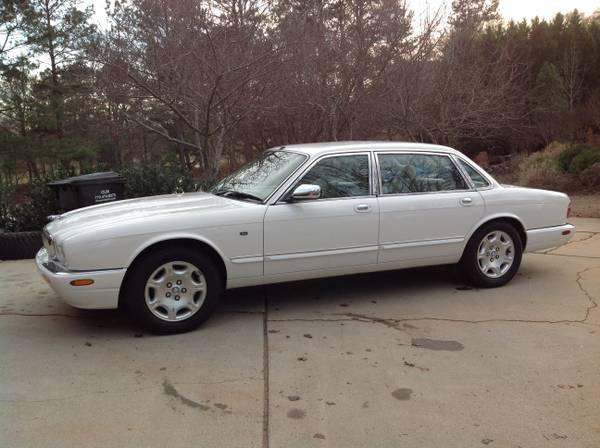
Take a look at my 2000 Jaguar XJ-V8-L touring sedan above; pristine!

Conclusion

Your thoughts and comments on this ME-P are appreciated. Feel free to review our top-left column, and top-right sidebar materials, links, URLs and related websites, too. Then, subscribe to the ME-P. It is fast, free and secure.

Link: http://feeds.feedburner.com/HealthcareFinancialsthePostForcxos

Speaker: If you need a moderator or speaker for an upcoming event, Dr. David E. Marcinko; MBA – Publisher-in-Chief of the Medical Executive-Post – is available for seminar or speaking engagements. Contact: MarcinkoAdvisors@msn.com

OUR OTHER PRINT BOOKS AND RELATED INFORMATION SOURCES:

DICTIONARIES: http://www.springerpub.com/Search/marcinko
PHYSICIANS: www.MedicalBusinessAdvisors.com
PRACTICES: www.BusinessofMedicalPractice.com
HOSPITALS: http://www.crcpress.com/product/isbn/9781466558731
CLINICS: http://www.crcpress.com/product/isbn/9781439879900
BLOG: www.MedicalExecutivePost.com
FINANCE: Financial Planning for Physicians and Advisors
INSURANCE: Risk Management and Insurance Strategies for Physicians and Advisors

Product DetailsProduct DetailsProduct Details

Product Details  Product Details

Product DetailsProduct Details

Product Details

The “Die-Brokers”

Join Our Mailing List

Results of an HBSC Survey

By Rick Kahler CFP® http://www.KahlerFinancial.com

Rick Kahler CFP

In recent ME-P columns I reported on a survey done by the financial services company HBSC that found only 59% of US parents intend to leave their children an inheritance, the lowest of the 15 nations in the survey. The fact the US is last came as no surprise to me. What did surprise me was that 59% seemed high.

My Average Clients

My average client is someone who has saved over one million dollars. I am guessing that less than 2% of them have any intention or goal of constraining their current lifestyle in order to maximize their kids’ inheritance. Consuming their last penny of savings about the time they take that last breath is their spending plan of choice. There is even a name for these folks: “Die Brokers.”

If they did a good job of planning for retirement, however, most Die Brokers will leave something behind. Almost all of these I work with intend to divide what remains equally among their children. The point is that leaving an inheritance just isn’t a priority or a goal that constrains their current spending. As a side note, I rarely see any intention to leave any significant portion of their estate to charity.

The Survey

Why did the survey find such a high number of parents who intend on leaving their kids an inheritance, as compared to my observations that almost none intend to? My experience is that most people have a money script of, “Good parents should leave something to their children.” It is similar to another money script of, “Good parents should pay for their children’s college education.” These are seen as things “good” parents do. My hunch is that when most respondents answered the survey question, they let their money script do the talking, rather than their true intention.

The Explanation

Still, this does not explain why US parents intend to leave their children less than parents in any other country. One reason could be that more parents in other countries have money scripts that it’s necessary to leave their kids an inheritance.

One of the most common themes among my affluent clients is a desire to see their children “make it on their own.” Over 90 percent of these clients are first-generation wealth builders, meaning they didn’t inherit their money but accumulated it from saving, investing, or building a business. They value hard work and frugality and feel leaving a large inheritance to a child is more hurtful than helpful.

First Generation Millionaires

Many of these first-generation millionaires also feel accumulating wealth in the US is very attainable with hard work, discipline, and frugality. This is not the case worldwide. In many countries, it doesn’t matter how hard you work or how frugal you are, confiscatory taxes and oppressive regulations insure that those people not fortunate enough to be born into money will never have a chance to become affluent. The only way to have a comfortable net worth in many countries is to either inherit it or work for the government.

Sadly, the US is closer to adopting a model that makes accumulating wealth increasingly difficult. I can’t name a politician currently campaigning who advocates lowering income taxes on wealth builders. Yet I can name scores who are running on increasing taxes on “the rich.”

staitns572x0

Assessment

Affluent parents in the US may soon begin to feel that, without an inheritance, their children may never have the means to get ahead. If more US parents begin believing this, we will probably see increasing numbers intending to leave money to their kids. The money script of “Good parents should leave something to their children” might become the truth.

More:

Conclusion

Your thoughts and comments on this ME-P are appreciated. Feel free to review our top-left column, and top-right sidebar materials, links, URLs and related websites, too. Then, subscribe to the ME-P. It is fast, free and secure.

Link: http://feeds.feedburner.com/HealthcareFinancialsthePostForcxos

Speaker: If you need a moderator or speaker for an upcoming event, Dr. David E. Marcinko; MBA – Publisher-in-Chief of the Medical Executive-Post – is available for seminar or speaking engagements. Contact: MarcinkoAdvisors@msn.com

OUR OTHER PRINT BOOKS AND RELATED INFORMATION SOURCES:

DICTIONARIES: http://www.springerpub.com/Search/marcinko
PHYSICIANS: www.MedicalBusinessAdvisors.com
PRACTICES: www.BusinessofMedicalPractice.com
HOSPITALS: http://www.crcpress.com/product/isbn/9781466558731
CLINICS: http://www.crcpress.com/product/isbn/9781439879900
BLOG: www.MedicalExecutivePost.com
FINANCE: Financial Planning for Physicians and Advisors
INSURANCE: Risk Management and Insurance Strategies for Physicians and Advisors

Product Details  Product Details

Determining Intrinsic Stock Value Using the Dividend Discount Model

Join Our Mailing List

What it is – How it works?

By Dr. David Edward Marcinko MBA CMP™

http://www.CertifiedMedicalPlanner.org

DEMM high-def White

The Dividend Discount Model (DDM) is one of the most widely used valuation methods for estimating a stock’s intrinsic value.  A stock can be thought of as the right to receive future dividends. A stock’s intrinsic value is defined as the present value of its dividends under the DDM.

In its simplest form (i.e., zero-growth), the DDM determines a stock’s value by dividing the stock’s dividend by the investor’s required rate of return.  The investor’s required rate of return should reflect current interest rates plus the risk associated with investing in the stock.

Rate of Return

The rate of return determined under the CAP-M [Capital Asset Pricing Model] is frequently used in the DDM.

For example, assuming that ABC Corporation pays a $2.00 dividend per share and that an investor requires a 10 percent return for holding ABC stock, the stock’s intrinsic value is $20 ($2/0.10).

Shortcomings

Shortcomings of the zero growth DDM include the following:

  • The model assumes that the stock’s dividends will remain constant over time.
  • The model assumes that dividends are the only source of return available to stock investors, ignoring the effect of reinvested earnings.
  • The model can only be used to value stocks that pay dividends.
  • The model assumes that the company and the dividends last forever.

Despite its shortcomings, the DDM highlights the point that the stock market is discounting mechanism and that financial investments should be assessed in light of the future cash flows that they are expected to provide investors.

A Variation

One variation on the DDM that may be appealing to healthcare professionals involves determining the present value of a stock’s earnings rather than simply its dividends.

Theoretically, owning a stock entitles investors to a claim on the earnings that are left after accounting for the company’s costs (including interest costs).  A model accounting for a stock’s earnings rather than just dividends may help account for the capital appreciation element of owning stocks because a corporation can either invest its earnings back into the company to pursue growth opportunities or distribute the earnings to shareholders in the form of dividends.

Stock_Market

Conclusion

Your thoughts and comments on this ME-P are appreciated. Feel free to review our top-left column, and top-right sidebar materials, links, URLs and related websites, too. Then, subscribe to the ME-P. It is fast, free and secure.

Link: http://feeds.feedburner.com/HealthcareFinancialsthePostForcxos

Speaker: If you need a moderator or speaker for an upcoming event, Dr. David E. Marcinko; MBA – Publisher-in-Chief of the Medical Executive-Post – is available for seminar or speaking engagements. Contact: MarcinkoAdvisors@msn.com

OUR OTHER PRINT BOOKS AND RELATED INFORMATION SOURCES:

DICTIONARIES: http://www.springerpub.com/Search/marcinko
PHYSICIANS: www.MedicalBusinessAdvisors.com
PRACTICES: www.BusinessofMedicalPractice.com
HOSPITALS: http://www.crcpress.com/product/isbn/9781466558731
CLINICS: http://www.crcpress.com/product/isbn/9781439879900
BLOG: www.MedicalExecutivePost.com
FINANCE: Financial Planning for Physicians and Advisors
INSURANCE: Risk Management and Insurance Strategies for Physicians and Advisors

Product Details  Product Details

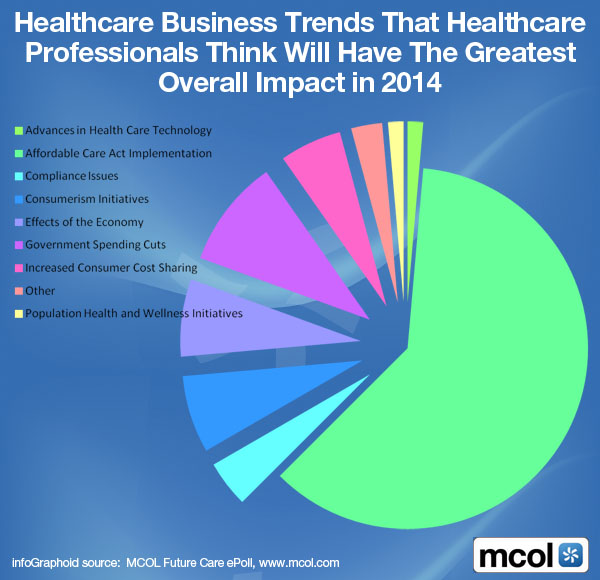
Healthcare Business Trends of Greatest Impact for 2014

Join Our Mailing List

According to Healthcare Professionals

By www.MCOL.com

ImageProxy

Conclusion

Your thoughts and comments on this ME-P are appreciated. Feel free to review our top-left column, and top-right sidebar materials, links, URLs and related websites, too. Then, subscribe to the ME-P. It is fast, free and secure.

Link: http://feeds.feedburner.com/HealthcareFinancialsthePostForcxos

Speaker: If you need a moderator or speaker for an upcoming event, Dr. David E. Marcinko; MBA – Publisher-in-Chief of the Medical Executive-Post – is available for seminar or speaking engagements. Contact: MarcinkoAdvisors@msn.com

OUR OTHER PRINT BOOKS AND RELATED INFORMATION SOURCES:

DICTIONARIES: http://www.springerpub.com/Search/marcinko
PHYSICIANS: www.MedicalBusinessAdvisors.com
PRACTICES: www.BusinessofMedicalPractice.com
HOSPITALS: http://www.crcpress.com/product/isbn/9781466558731
CLINICS: http://www.crcpress.com/product/isbn/9781439879900
BLOG: www.MedicalExecutivePost.com
FINANCE: Financial Planning for Physicians and Advisors
INSURANCE: Risk Management and Insurance Strategies for Physicians and Advisors

Product DetailsProduct Details

Product Details

Do Doctors RV?

Join Our Mailing List

On Recreation Vehicles?

By Rick Kahler CFP® http://www.KahlerFinancial.com

Rick Kahler CFP“See new places!”

In my experience, the number-one activity most people look forward to when they retire from earning an income is travel. Seeing and experiencing the world has never been easier. True, air travel is rarely easy or pleasurable, and it can be expensive. Yet, with a little planning and work, travel can fit easily into many retirees’ budgets.

Affordable

The most affordable option is becoming a part-time or full-time RVer. While to me driving around the country in a motorhome or hauling a camper sounds like a lot of work, it’s very pleasurable for a lot of folks. There are no security lines, tour schedules to keep, or nights spent stranded in airports. You may not go fast, but you get to go where you want, when you want.

Options

RVing doesn’t mean you need to buy a motorhome as long or as pricy as a semi-trailer truck. It can be as simple as pulling a small camper/trailer or a fifth wheel. While you will need a heavier gas-guzzling vehicle than a Toyota Avalon to pull your rig, the costs can be significantly lower than staying in motels. This is the case even when you consider costs like auto insurance, depreciation, tires, maintenance, and camping fees. You can even minimize the camping fees as long as you’re okay with a view of the local Walmart’s parking lot.

A Lifestyle?

Judging from retirees I know, RVing can become a lifestyle very quickly. RVers develop networks and associations with other RVers to share experiences, costs, and information. Some of my clients enjoy the lifestyle so much they have actually sold their homes, preferring the RV as their primary residence.

This is when RVing can take financial efficiency to new levels. By not owning a home, you can take the money previously tied up in a personal asset and make it produce income.

Example:

Let’s illustrate with some numbers. It isn’t uncommon for couples in the Black Hills who are in their 50’s or 60’s to own a paid-for home worth $250,000. That amount, invested in passively-managed mutual funds diversified in five or more asset classes, reasonably produced an annualized return of 6% over the past 10, 20,or even 30 years. If you leave half this return to help keep up with inflation and withdraw the other half, you’ll have  about $625 a month in new income.

The good news is you don’t need a lot of money to retire to an RV lifestyle. The extra $625 a month from selling a home, combined with Social Security and a modest IRA, can go a long way. I know several RVers who do nicely on such income.

Economic Organization

Here’s how it might work for a typical couple. A total amount saved to IRA’s of $450,000, plus the proceeds from selling their home for $250,000, would produce income of $21,000 a year. Adding this to their combined Social Security income of around $30,000 a year would give them $51,000. That’s more than enough to enjoy modest but comfortable RV living.

An added benefit for residents of a state like South Dakota, which has no income tax but relatively high property tax, is a lower tax bill.

Road to Retirement

Assessment

Just one word of caution. Before you sell your house, make sure full-time RVing is right for you. Take a trial period of at least a year, renting out your home while you travel. Then, once you decide the roving lifestyle is what you want, you can cut your ties to terra firma and set out to enjoy the freedom of the open road.

Conclusion

So, do doctors and other medical professionals, RV? Really?

Your thoughts and comments on this ME-P are appreciated. Feel free to review our top-left column, and top-right sidebar materials, links, URLs and related websites, too. Then, subscribe to the ME-P. It is fast, free and secure.

Link: http://feeds.feedburner.com/HealthcareFinancialsthePostForcxos

Speaker: If you need a moderator or speaker for an upcoming event, Dr. David E. Marcinko; MBA – Publisher-in-Chief of the Medical Executive-Post – is available for seminar or speaking engagements. Contact: MarcinkoAdvisors@msn.com

OUR OTHER PRINT BOOKS AND RELATED INFORMATION SOURCES:

DICTIONARIES: http://www.springerpub.com/Search/marcinko
PHYSICIANS: www.MedicalBusinessAdvisors.com
PRACTICES: www.BusinessofMedicalPractice.com
HOSPITALS: http://www.crcpress.com/product/isbn/9781466558731
CLINICS: http://www.crcpress.com/product/isbn/9781439879900
BLOG: www.MedicalExecutivePost.com
FINANCE: Financial Planning for Physicians and Advisors
INSURANCE: Risk Management and Insurance Strategies for Physicians and Advisors

Product Details  Product Details

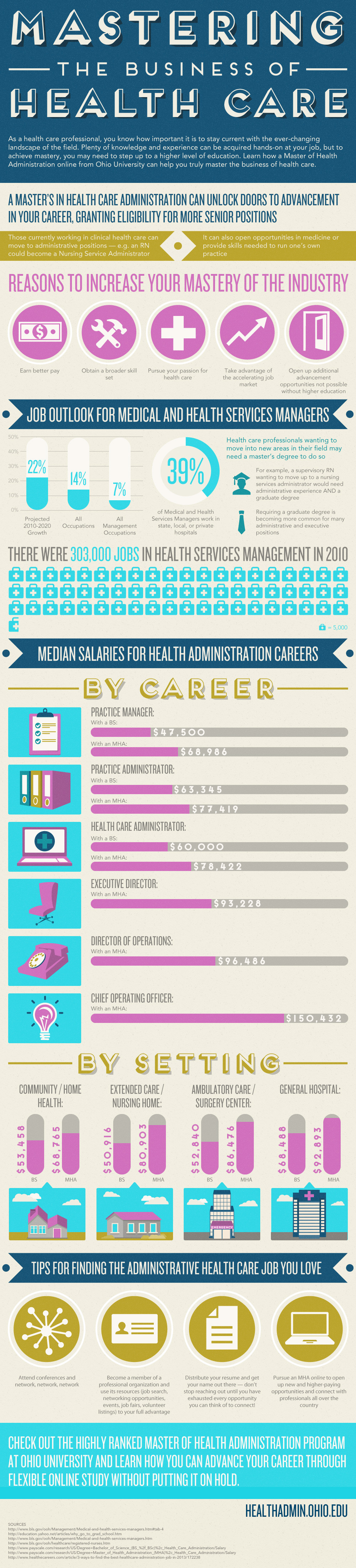
Mastering the Business of Healthcare

Ohio University Master of Health Administration Online

Join Our Mailing List

By Frankie Rendón

Ohio University online MHA

MBH

Link: Ohio University Master of Health Administration Online

Conclusion

Your thoughts and comments on this ME-P are appreciated. Feel free to review our top-left column, and top-right sidebar materials, links, URLs and related websites, too. Then, subscribe to the ME-P. It is fast, free and secure.

Link: http://feeds.feedburner.com/HealthcareFinancialsthePostForcxos

Speaker: If you need a moderator or speaker for an upcoming event, Dr. David E. Marcinko; MBA – Publisher-in-Chief of the Medical Executive-Post – is available for seminar or speaking engagements. Contact: MarcinkoAdvisors@msn.com

OUR OTHER PRINT BOOKS AND RELATED INFORMATION SOURCES:

DICTIONARIES: http://www.springerpub.com/Search/marcinko
PHYSICIANS: www.MedicalBusinessAdvisors.com
PRACTICES: www.BusinessofMedicalPractice.com
HOSPITALS: http://www.crcpress.com/product/isbn/9781466558731
CLINICS: http://www.crcpress.com/product/isbn/9781439879900
BLOG: www.MedicalExecutivePost.com
FINANCE: Financial Planning for Physicians and Advisors
INSURANCE: Risk Management and Insurance Strategies for Physicians and Advisors

Product DetailsProduct Details

Product Details

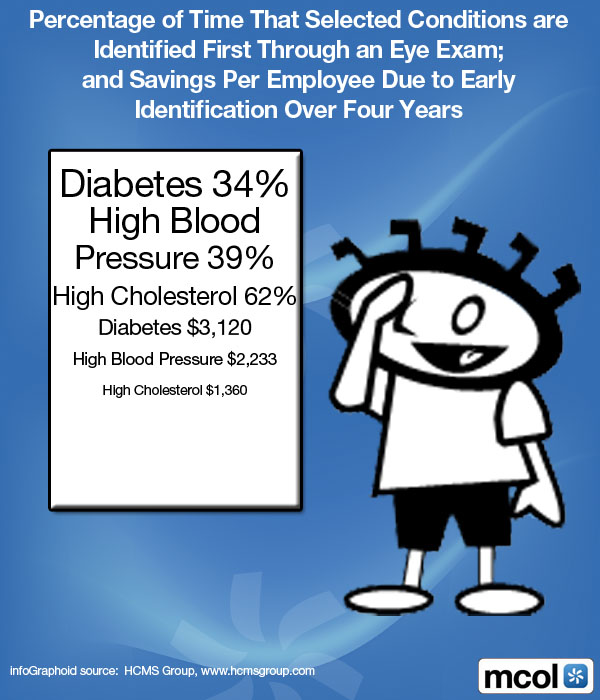
Are Eye Exams Diagnostic?

Join Our Mailing List

We Champion the Visually-Impaired

By www.MCOL.com

eye

Assessment

You bet they are!

Conclusion

Your thoughts and comments on this ME-P are appreciated. Feel free to review our top-left column, and top-right sidebar materials, links, URLs and related websites, too. Then, subscribe to the ME-P. It is fast, free and secure.

Link: http://feeds.feedburner.com/HealthcareFinancialsthePostForcxos

Speaker: If you need a moderator or speaker for an upcoming event, Dr. David E. Marcinko; MBA – Publisher-in-Chief of the Medical Executive-Post – is available for seminar or speaking engagements. Contact: MarcinkoAdvisors@msn.com

OUR OTHER PRINT BOOKS AND RELATED INFORMATION SOURCES:

DICTIONARIES: http://www.springerpub.com/Search/marcinko
PHYSICIANS: www.MedicalBusinessAdvisors.com
PRACTICES: www.BusinessofMedicalPractice.com
HOSPITALS: http://www.crcpress.com/product/isbn/9781466558731
CLINICS: http://www.crcpress.com/product/isbn/9781439879900
BLOG: www.MedicalExecutivePost.com
FINANCE: Financial Planning for Physicians and Advisors
INSURANCE: Risk Management and Insurance Strategies for Physicians and Advisors

Product DetailsProduct DetailsProduct Details

Join the 4th Global m-Health App Developer Economics Study

Join Our Mailing List

Invitation to Participate

By Flavio Zoppini

Dear Dr. Marcinko,

I am contacting you to ask the ME-P to become a partner for the 4th Global M-Health App Developer Economics.

The 4th Global MHealth App Developer Economics is conducted in partnership with Global Health Alliance and established global mHealth players and healthcare publishers like Happtique, HIMSS, WIP and Pharmaphorum.

Our partners will help us to make this project the largest mHealth app development study globally.  The target audience for the study is mHealth app developers and publishers as well as decision makers in the healthcare industry and institutions that oversees mHealth activities.

Results will be presented on the mHealth Summit in Berlin May 2014.

Partner benefits:

  • Our partners will get first hand insights from the study results.
  • Brand will be part of the largest study about mHealth apps.
  • Raise awareness for publications and blogs among a large target group.

We invite you to become a partner as well and help us to:

  • Invite survey participants. The study will be largely based on the results of a global online survey which has been launched last week.

Here is a link to the survey. Take the survey

Write about the results of the study once it is finished.

Here are some topics the study is covering:

  • Impact on healthcare: e.g. how will mHealth apps help to reduce healthcare costs?
  • Market potential: e.g. what are the mHealth app categories that offer the biggest market potential in the next five years?
  • Business models: e.g. what impact do sensors and wearable devices (e.g. glucometers and glasses) have on mHealth apps?
  • Trends: e.g. what will be the main distribution channels for mHealth apps in five years?
  • The market’s current status: e.g. what are the main reasons for publishing mHealth apps?
  • Innovation: e.g. how do APIs change the way mHealth apps deliver their services?

SONY DSC

Assessment

We would like you to join the team of partners for this project.  I look forward to your ME-P reader feedback.

Conclusion

Your thoughts and comments on this ME-P are appreciated. Feel free to review our top-left column, and top-right sidebar materials, links, URLs and related websites, too. Then, subscribe to the ME-P. It is fast, free and secure.

Link: http://feeds.feedburner.com/HealthcareFinancialsthePostForcxos

Speaker: If you need a moderator or speaker for an upcoming event, Dr. David E. Marcinko; MBA – Publisher-in-Chief of the Medical Executive-Post – is available for seminar or speaking engagements. Contact: MarcinkoAdvisors@msn.com

OUR OTHER PRINT BOOKS AND RELATED INFORMATION SOURCES:

DICTIONARIES: http://www.springerpub.com/Search/marcinko
PHYSICIANS: www.MedicalBusinessAdvisors.com
PRACTICES: www.BusinessofMedicalPractice.com
HOSPITALS: http://www.crcpress.com/product/isbn/9781466558731
CLINICS: http://www.crcpress.com/product/isbn/9781439879900
BLOG: www.MedicalExecutivePost.com
FINANCE: Financial Planning for Physicians and Advisors
INSURANCE: Risk Management and Insurance Strategies for Physicians and Advisors

Product DetailsProduct Details

Product Details

Do Medical Practices Really Like EHRs?

Join Our Mailing List

Do practices like functionality and cost?

By www.MCOL.com

EHR

More:

  1. The Percentage of Office-Based Doctors with EHRs
  2. Do Nurses like EHRs?
  3. EHRs – Still Not Ready For Prime Time
  4. The “Price” of eHRs

Conclusion

Your thoughts and comments on this ME-P are appreciated. Feel free to review our top-left column, and top-right sidebar materials, links, URLs and related websites, too. Then, subscribe to the ME-P. It is fast, free and secure.

Link: http://feeds.feedburner.com/HealthcareFinancialsthePostForcxos

Speaker: If you need a moderator or speaker for an upcoming event, Dr. David E. Marcinko; MBA – Publisher-in-Chief of the Medical Executive-Post – is available for seminar or speaking engagements. Contact: MarcinkoAdvisors@msn.com

OUR OTHER PRINT BOOKS AND RELATED INFORMATION SOURCES:

DICTIONARIES: http://www.springerpub.com/Search/marcinko
PHYSICIANS: www.MedicalBusinessAdvisors.com
PRACTICES: www.BusinessofMedicalPractice.com
HOSPITALS: http://www.crcpress.com/product/isbn/9781466558731
CLINICS: http://www.crcpress.com/product/isbn/9781439879900
BLOG: www.MedicalExecutivePost.com
FINANCE: Financial Planning for Physicians and Advisors
INSURANCE: Risk Management and Insurance Strategies for Physicians and Advisors

Product DetailsProduct Details

Product Details

Are Dentists Satisfied with their EDRs?

Join Our Mailing List

Major Discontent With EHR Adoption

[By D. Kellus Pruitt DDS]

1-darrellpruittUnlike physicians, dentists never complain. That means they are probably 100% satisfied with their electronic dental records.

What do you think, Doc?

MarketWatch 

Recently, the Wall Street Journal’s MarketWatch posted a press release titled, “Physicians Cite Major Discontent With Adoption And Use of Electronic Health Record Systems, Despite Government’s $27 Billion Incentive Program”

http://www.marketwatch.com/story/physicians-cite-major-discontent-with-adoption-and-use-of-electronic-health-record-systems-despite-governments-27-billion-incentive-program-2014-02-07

“CLEVELAND, Feb. 7, 2014 /PRNewswire/ — The $27 billion government experiment to incentivize physicians to convert to electronic health records (EHRs) has not been worth it, according to nearly 70% of physicians surveyed.

Medical Economics 

***

In fact, a national [Medical Economics] survey of nearly 1,000 physicians, set for release on February 10, 2014, shows widespread dissatisfaction related to the functionality and cost of these patient record systems. About 45% of physicians believe patient care is actually worse as a result of adopting EHR technology, two-thirds would not purchase their current EHR system again, and 43% of physicians say these systems have resulted in significant financial losses.

In addition, the current state of technology has not improved the coordination of care with hospitals, physicians say.”

***

It is probably better for HHS that very few dentists were able to participate in the ARRA stimulus giveaway. Otherwise, tax-paying citizens might have learned about the wastefulness of Meaningful Use requirements for dentists – which nobody has the guts to reveal. That pretty much rules out brilliant Meaningful Use ideas.

Those who might patriotically defend the benefits of the tasks would do so, if they were idiots.

So how do dentists feel about their electronic dental records? It’s hard to tell. Over 96% of them are HIPAA-covered entities, making them vulnerable to audits, which can be “random” now. As one can imagine, very few dentists openly discuss EDRs. Do you think the silence is more likely to improve or harm patient care?

doc

Even though thousands of physicians have participated in dozens of national surveys like Medical Economics’ over the last few years, as far as I know, not one survey of dentists’ opinions has ever been published. Perhaps someone can prove me wrong. I doubt it.

The Survey

The results from the Medical Economics survey include:

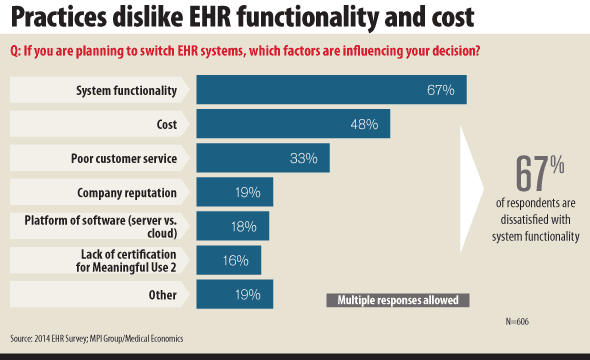
  • 67% say that system functionality influences their decisions to purchase or switch systems.
  • 48% say that cost is influencing their decisions to purchase or switch systems.
  • Nearly half of physicians say that implementation of EHR systems has made the quality of patient care worse.
  • 69% of respondents say that coordination of care with hospitals has not improved.
  • 45% say they have spent more than $100,000 on an EHR
  • 77% of the largest practices (more than 10 physicians) spent more than $200,000 on an EHR.
  • 38% doubt their systems will still be viable in 5 years.

Assessment

Not long ago, Wisconsin became the first state to outlaw paper dental records, which are both cheaper and safer than digital.

So, is it still too soon for dentists and patients demand more transparency in dentistry? When costs and danger are hidden in dental care, it is always the last in line who suffer the most – clueless, trusting dental patients.

Am I right, Doc?

More:

  1. Sales of Dental Equipment and eDRs Down
  2. Military Electronic Dental Records [eDRs]
  3. Dr. Pruitt Invites Dr. Cohen to Discuss eDRs
  4. Cyber Insurance for Dentists

Conclusion

Your thoughts and comments on this ME-P are appreciated. Feel free to review our top-left column, and top-right sidebar materials, links, URLs and related websites, too. Then, subscribe to the ME-P. It is fast, free and secure.

Link: http://feeds.feedburner.com/HealthcareFinancialsthePostForcxos

Speaker: If you need a moderator or speaker for an upcoming event, Dr. David E. Marcinko; MBA – Publisher-in-Chief of the Medical Executive-Post – is available for seminar or speaking engagements. Contact: MarcinkoAdvisors@msn.com

OUR OTHER PRINT BOOKS AND RELATED INFORMATION SOURCES:

DICTIONARIES: http://www.springerpub.com/Search/marcinko
PHYSICIANS: www.MedicalBusinessAdvisors.com
PRACTICES: www.BusinessofMedicalPractice.com
HOSPITALS: http://www.crcpress.com/product/isbn/9781466558731
CLINICS: http://www.crcpress.com/product/isbn/9781439879900
BLOG: www.MedicalExecutivePost.com
FINANCE: Financial Planning for Physicians and Advisors
INSURANCE: Risk Management and Insurance Strategies for Physicians and Advisors

Product DetailsProduct Details

Product Details

Who Gets Government Aid thru the HIEs?

Join Our Mailing List

The Premium Assistance Tax Credit

By Lon Jefferies MBA CFP®

Lon JeffriesThe Premium Assistance Tax Credit (PATC) is designed to help “lower” income individuals and families pay for health insurance plans purchased through the new health care exchange program.

However, more people may qualify for government assistance when purchasing health care through the exchange than may realize.

Terms and Definitions

The program defines “lower” income as households that earn less than 400% of the Federal Poverty Level (FPL), which is based on the number of individuals in the home. In 2013, the FPL for a single individual was $11,490.

Similarly, the FPL for a household of two people was $15,510 and the FPL for a home of four individuals was $23,550. Consequently, at least some premium assistance credit is available for individuals earning less than $45,960, couples earning less than $62,040, and a household of four earning less than $94,200. (Click here for more information on the Federal Poverty Level for households of various size.)

It’s important to note that for the purposes of the assistance program, income is defined as modified adjusted gross income. This means that a taxpayer’s adjusted gross income will include all Social Security benefits received (whether it was taxable or not), and all bond interest (tax-exempt or not). This factor will reduce a person’s eligibility for aid if he begins receiving Social Security before age 65 (at which point he qualifies for Medicare and can no longer participate in the health care exchange).

A Reverse Calculation

The amount of aid the government will provide is essentially calculated in reverse – the maximum amount that an individual or family can owe is calculated, and the government will pay the remaining premium. This table shows the Premium Assistance Tax Credit thresholds based on income relative to the Federal Poverty Level:

###

Income Relative To FPL: Premiums Limited To:
Up to 133% of FPL 2% of household income
133% to 150% of FPL 3% to 4% of income
150% to 200% of FPL 4% to 6.3% of income
200% to 250% of FPL 6.3% to 8.05% of income
250% to 300% of FPL 8.05% to 9.5% of income
300% to 400% of FPL 9.5% of income

###

Example:

For example, assume John is a single 62-year-old living in Utah and making $30,000 per year. (Again, remember that when calculating the PATC, it really doesn’t matter whether John’s $30,000 of income is from employment, a Social Security benefit, or a combination of the two.) John’s income is 261% of the FPL amount for singles [($30,000/$11,490) * 100], so this puts his threshold between 8.05% and 9.5% of his income. His exact threshold is 11/50ths of the way between 250% and 300% of the FPL, so his maximum premium is 11/50th of the way between 8.05% and 9.5%, which means his maximum premium is 8.37% of his $30,000 income, or $2,511 per year ($210 per month). This is the most John will need to pay for an adequate health insurance plan.

telehealth

What is Adequate Health Insurance?

What is deemed an adequate health insurance plan? The next relevant figure in the calculation involves determining the cost of the second least expensive Silver plan in the state. This can be determined by obtaining a quote at www.healthcare.gov. Assuming John lives in Salt Lake County, the second least expensive Silver plan available to him cost $5,100 per year ($425 per month). Whether or not John decides to purchase this exact policy, the $5,100 annual cost of the plan is significant.

Since the second least expensive Silver plan available to John cost $5,100, but the most John will be required to pay is $2,511 per year (8.37% of his income), the PATC program will cover the cost difference of $2,589. This amount will be the tax credit available to John for purchasing any health insurance policy through the exchange.

However, this does not mean that John is required to actually purchase and utilize the second least expensive Silver plan available to him. If John is so inclined, he can purchase a less expensive policy and he will still receive the $2,589 tax credit determined to be available to him.

Nevertheless, since the policy is less expensive, John would need to cover less of the cost of the inferior policy out of his own pocket. Similarly, John could also purchase a more expensive policy, but his tax credit would still be $2,589 and he would need to cover the additional cost of the superior policy with his own money.

Assessment

People are still familiarizing themselves with the options available within the health care exchange. Many will be surprised by their eligibility for assistance, and the amount of government aid available. Determining whether you qualify for a Premium Assistance Tax Credit will help you evaluate the attractiveness of the program.

More: Understanding Basics of the Health Insurance Exchanges [HIEs]

Conclusion

Your thoughts and comments on this ME-P are appreciated. Feel free to review our top-left column, and top-right sidebar materials, links, URLs and related websites, too. Then, subscribe to the ME-P. It is fast, free and secure.

Link: http://feeds.feedburner.com/HealthcareFinancialsthePostForcxos

Speaker: If you need a moderator or speaker for an upcoming event, Dr. David E. Marcinko; MBA – Publisher-in-Chief of the Medical Executive-Post – is available for seminar or speaking engagements. Contact: MarcinkoAdvisors@msn.com

OUR OTHER PRINT BOOKS AND RELATED INFORMATION SOURCES:

DICTIONARIES: http://www.springerpub.com/Search/marcinko
PHYSICIANS: www.MedicalBusinessAdvisors.com
PRACTICES: www.BusinessofMedicalPractice.com
HOSPITALS: http://www.crcpress.com/product/isbn/9781466558731
CLINICS: http://www.crcpress.com/product/isbn/9781439879900
BLOG: www.MedicalExecutivePost.com
FINANCE: Financial Planning for Physicians and Advisors
INSURANCE: Risk Management and Insurance Strategies for Physicians and Advisors

Product DetailsProduct Details

Product Details

Percentage of Families with Medical Care Financial Burdens

Join Our Mailing List

The CDC Definition

By www.MCOL.com

CDC

Conclusion

Your thoughts and comments on this ME-P are appreciated. Feel free to review our top-left column, and top-right sidebar materials, links, URLs and related websites, too. Then, subscribe to the ME-P. It is fast, free and secure.

Link: http://feeds.feedburner.com/HealthcareFinancialsthePostForcxos

Speaker: If you need a moderator or speaker for an upcoming event, Dr. David E. Marcinko; MBA – Publisher-in-Chief of the Medical Executive-Post – is available for seminar or speaking engagements. Contact: MarcinkoAdvisors@msn.com

OUR OTHER PRINT BOOKS AND RELATED INFORMATION SOURCES:

DICTIONARIES: http://www.springerpub.com/Search/marcinko
PHYSICIANS: www.MedicalBusinessAdvisors.com
PRACTICES: www.BusinessofMedicalPractice.com
HOSPITALS: http://www.crcpress.com/product/isbn/9781466558731
CLINICS: http://www.crcpress.com/product/isbn/9781439879900
BLOG: www.MedicalExecutivePost.com
FINANCE: Financial Planning for Physicians and Advisors
INSURANCE: Risk Management and Insurance Strategies for Physicians and Advisors

Product DetailsProduct DetailsProduct Details

Product Details  Product Details


Enrollment, Coverage and the PP-ACA

Join Our Mailing List
For Medicaid

By www.MCOL.com

ImageProxy

Assessment

1. Aetna CEO: Only 11% Of ObamaCare Signups Have Been Uninsured 
2. The Individual Mandate for Health Insurance in the U.S.
3. Survey of Americans’ Preparations for Health Care in Retirement
4. Medi-Cal at a Crossroads: What Enrollees Say About the Program 
5. The Affordable Care Act: The Exchanges Go Live

Conclusion

Your thoughts and comments on this ME-P are appreciated. Feel free to review our top-left column, and top-right sidebar materials, links, URLs and related websites, too. Then, subscribe to the ME-P. It is fast, free and secure.

Link: http://feeds.feedburner.com/HealthcareFinancialsthePostForcxos

Speaker: If you need a moderator or speaker for an upcoming event, Dr. David E. Marcinko; MBA – Publisher-in-Chief of the Medical Executive-Post – is available for seminar or speaking engagements. Contact: MarcinkoAdvisors@msn.com

OUR OTHER PRINT BOOKS AND RELATED INFORMATION SOURCES:

DICTIONARIES: http://www.springerpub.com/Search/marcinko
PHYSICIANS: www.MedicalBusinessAdvisors.com
PRACTICES: www.BusinessofMedicalPractice.com
HOSPITALS: http://www.crcpress.com/product/isbn/9781466558731
CLINICS: http://www.crcpress.com/product/isbn/9781439879900
BLOG: www.MedicalExecutivePost.com
FINANCE: Financial Planning for Physicians and Advisors
INSURANCE: Risk Management and Insurance Strategies for Physicians and Advisors

Product DetailsProduct Details

Product Details

How Have Bonds Responded to Higher Interest Rates?

Join Our Mailing List 

A Survey of Economists

By Lon Jefferies MBA CFP™

Lon JeffriesRecently, I pondered the possibility of interest rates rising and the impact it might have on bonds. The article was motivated by a Wall Street Journal survey of 50 top economists who forecasted the yield on the 10-year Treasury bond to rise to 3.47% by the end of 2014.

As you may know, the investment return of existing bonds tends to move inversely to interest rates. Consequently, there has been significant concern that bond values are due for a considerable drop, and investors have constantly questioned whether they should reduce their exposure to fixed-income investments.

The Forecast Results

So how has the economists’ forecast panned out through January? The 10-year Treasury bond began the year at 3.03%, but ended January at 2.65% — a significant decline.

As a result, bonds have generally increased in value. For instance, the iShares Investment Grade Corporate Bond ETF (LQD) is up 1.88% since the New Year, while the iShares Barclays 7-10 Year Treasury Bond (IEF) is up 3.06%. Even the SPDR Barclays International Treasury Bond ETF (BWX) is up .45% in 2014.

Why?

What has caused this unexpected result?

First, the historical inaccuracy of interest rate forecasts is well documented. A study by the University of North Carolina found economists predict future rates far less accurately than a random coin flip would fare as a predictor. Rising interest rates have been a general expectation since shortly after the market crash of 2008. Remember all the people who refinanced their homes away from an adjustable-rate mortgage to a fixed mortgage from 2010-2011 out of fear of rising rates? That rate hike still hasn’t come.

But, more important than the unpredictable nature of interest rates is the way bond performance has historically been related to the stock market’s performance.

In difficult market environments, the investment returns of stocks and bonds tend to have an inverse relationship. In fact, the S&P 500 (a broad measure of the U.S. stock market) has decreased in value during a calendar year five times since 1990 (1990, 2000, 2001, 2002, 2008). In all five instances, the value of U.S. Government Bonds (as measured by the Barclays Long-Term Government Bond Index) has increased (6.29%, 20.28%, 4.34%, 16.99%, and 22.69%, respectively).

RISK

Performance of Equities

How have risky stocks performed in 2014? The S&P 500 is down -3.46%, the Dow Jones Developed Market ex-U.S. market index (a measure of international stock performance) is down -3.64%, and the iShares MSCI Emerging Markets Index is down -8.63%.

It appears investors have fled stocks in a declining market and sought solace in the fixed income benefit that bonds provide, in-step with historic behavioral norms. Of course, higher demand for bonds means higher values. This last month has been a nice reminder of the stability bonds can add to a portfolio in a time of declining stock prices.

Assessment

While it is reasonable to expect interest rates to rise by some measure over the long-term, it would clearly be a mistake to dramatically shift your asset allocation away from bonds if they were determined to be a part of an investment portfolio that matches your risk tolerance.

January 2014 illustrated that bonds tend to increase in value and add benefit to a portfolio during market pullbacks, regardless of what interest rates are doing. In fact, bonds’ historical inverse relationship with stocks may be a larger determinate of performance than interest rate expectations.

More:

Conclusion

Your thoughts and comments on this ME-P are appreciated. Feel free to review our top-left column, and top-right sidebar materials, links, URLs and related websites, too. Then, subscribe to the ME-P. It is fast, free and secure.

Link: http://feeds.feedburner.com/HealthcareFinancialsthePostForcxos

Speaker: If you need a moderator or speaker for an upcoming event, Dr. David E. Marcinko; MBA – Publisher-in-Chief of the Medical Executive-Post – is available for seminar or speaking engagements. Contact: MarcinkoAdvisors@msn.com

OUR OTHER PRINT BOOKS AND RELATED INFORMATION SOURCES:

DICTIONARIES: http://www.springerpub.com/Search/marcinko
PHYSICIANS: www.MedicalBusinessAdvisors.com
PRACTICES: www.BusinessofMedicalPractice.com
HOSPITALS: http://www.crcpress.com/product/isbn/9781466558731
CLINICS: http://www.crcpress.com/product/isbn/9781439879900
BLOG: www.MedicalExecutivePost.com
FINANCE: Financial Planning for Physicians and Advisors
INSURANCE: Risk Management and Insurance Strategies for Physicians and Advisors

Product Details  Product Details

Before You Jump to a Full-Fledged EMR Check Out Other Options [Part 2]

Join Our Mailing List

HIT: PART TWO

By Shahid Shah MS

Shahid N. ShahWowsa!

What a year [2013] in the HIT business?

Because of all the talk about EMRs and medical records software you’ll have many reasons to start immediately looking for an EMR vendor.

Try to resist that urge and look at broader non-EMR solutions that can help remove some of the non-clinical burdens from your staff in 2014:

  • Fax Server – a fax server allows you to centrally manage all incoming and outgoing faxes. Since most medical practices live on fax, this is one of the fastest investments you can recoup.
  • Shared drives – start using shared drives either using your existing software or you can purchase inexpensive “network disks” for a few hundred dollars to share business forms, online directories, reports, scanned charts, and many other files.
  • Online backups and Internet PACS storage – there are online tools like JungleDisk.com that allow you to store gigabytes of encrypted data into the Internet “cloud” for just a few dollars a month.
  • E-mail (beware of HIPAA, though) – internal office messaging and email is a great place to start. If you haven’t started your office automation journey here you should. If you’re going to use it for patient communications you’ll need to make sure you have patient approvals and appropriate encryption. If you’re on Gmail today and you want to have customers immediately be able to communicate with you on Gmail, that’s generally HIPAA compliant because communications between two Gmail accounts stays within the Google data center and is not sent unencrypted over the Internet.
  • E-Prescribing – e-prescribing is a great place to start your automation journey because it’s a fast way to realize how much slower the digital process is in capturing clinical data. If e-prescribing alone makes you slower in your job, EMRs will likely affect you even more. If you’re productive with e-prescribing then EMRs in general will make you more productive too.
  • Office Online and Google Apps (scheduling, document sharing) – Google and Microsoft® have some very nice online tools for managing contacts (your patients are contacts), scheduling (appointments), dirt simple document management, and getting everyone in the office “on the same page”. Before you jump into full-fledged EMRs see if these basic free tools can do the job for you.
  • Modular clinical groupware – this is a new category of software that allows you to collaborate with colleagues on your most time-consuming or most-needy patients and leave the remainder of them as-is. By automating what’s taking the most of your time you don’t worry about the majority of patients who aren’t.
  • Patient registry and CCR bulletin boards – if you’re just looking for basic patient population management and not detailed office automation then patient registries and CCR databases are a great start. These don’t help with workflow but they do manage patient summaries.
  • Document imaging – scanning and storing your paper documents is something that affects everyone; all scanners come with some basic imaging software that you can use for free. Once you’re good at scanning and paper digitization you can move to “medical grade” document managements that can improve productivity even more.
  • Clinical content repository (CMS) – open source systems like DrupalModules.com and Joomla.org do a great job of content management and they can be adapted to do clinical content management.
  • Electronic lab reporting – if labs are taking up most of your time, you can automate that pretty easily with web-based lab reporting systems.
  • Electronic transcription – if clinical note taking is taking most of your time, you can automate that by using electronic transcribing.
  • Speech recognition – another “point solution” to helping with capturing clinical notes; you can get a system up and running for under $250.
  • Instant Messaging (IM) – IM gives you the ability to connect directly with multiple rooms within your office using free software; if you want, you can also connect with patients and other physicians during work hours.

working with computer

Assessment

Can you think of any others?

Part One: Before you Jump to a Full-Fledged EMR Check out Other Options [Part 1]

Conclusion

Your thoughts and comments on this ME-P are appreciated. Feel free to review our top-left column, and top-right sidebar materials, links, URLs and related websites, too. Then, subscribe to the ME-P. It is fast, free and secure.

Link: http://feeds.feedburner.com/HealthcareFinancialsthePostForcxos

Speaker: If you need a moderator or speaker for an upcoming event, Dr. David E. Marcinko; MBA – Publisher-in-Chief of the Medical Executive-Post – is available for seminar or speaking engagements. Contact: MarcinkoAdvisors@msn.com

OUR OTHER PRINT BOOKS AND RELATED INFORMATION SOURCES:

DICTIONARIES: http://www.springerpub.com/Search/marcinko
PHYSICIANS: www.MedicalBusinessAdvisors.com
PRACTICES: www.BusinessofMedicalPractice.com
HOSPITALS: http://www.crcpress.com/product/isbn/9781466558731
CLINICS: http://www.crcpress.com/product/isbn/9781439879900
BLOG: www.MedicalExecutivePost.com
FINANCE: Financial Planning for Physicians and Advisors
INSURANCE: Risk Management and Insurance Strategies for Physicians and Advisors

Product DetailsProduct Details

Can Physician-Patient Intimacy be Electronic?

Join Our Mailing List 

More on Emerging Information and Communication Technologies

[By Jennifer Tomasik MS, © iMBA Inc., All rights reserved. USA]

Jennifer TomasikToday’s electronic and social media make possible a certain kind of healthcare intimacy.

ICTs—information and communication technologies—enable 24/7 monitoring of basic information such as blood pressure, glucose levels, pulse, and respiration.

ICTs

In one study, an ICT not only made it easier for patients to stay in touch with their doctors, the outcomes were also significantly better. Today, Hippocrates is no longer trailing patients around the house to keep track of their snacks and moods.

But, Hippocrates has gone digital in the form of a wearable device that records subtle changes in biological markers and communicates them instantaneously to a health provider

Taking a Pause

While this is obviously a great advance, we suggest you pause for a moment before plugging in. Why? ICTs and social media tools can make a difference to one of the most important dimensions—physiological outcomes. But you can have the latest interactive technology at your disposal and still fail to be connected.

Example:

A story that a friend told us shows how. One morning, her elderly father was touching up the paint on his sailboat. Nearby, another boat-owner, who happened to be an emergency medical technician, noticed her father was struggling to breathe and that his lips had turned purple. A trip to the local community hospital led to a barrage of high-tech tests and procedures, a diagnosis of emphysema, later complications with cerebral hematomas, and hospitalizations and re-hospitalizations that brought him into contact with a neurologist, a neurosurgeon, a cardiologist, and a pulmonologist. Throughout her father’s medical ordeal, the team of specialists stayed in touch with each other and the primary care physician via various electronic media.

But, one person remained out of the loop—her father. One day, six months into the experience, the primary care physician phoned our friend’s mother to check on his patient. Her father recalls thinking, “Why was he calling her?” The physician was communicating, but he was emotionally disconnected.
eMRs and MU

The Moral

The moral of the story: communication needs to be patient-centered in both electronic and psychological terms. That means understanding how someone likes to communicate and making sure the medium fits the message. Electronic media are just part of the equation. The other is the doctor-patient relationship. Once a relationship is established, it may be fine to use e-mail to send information about dosage.

But, delivering a new diagnosis may require the extra effort of scheduling a phone call or a face-to-face visit.

Assessment

Today, since you have so many Health 2.0 choices, it takes some effort to select the right way to communicate in a particular situation.

ABOUT THE AUTHOR

Jennifer Tomasik is a Principal at CFAR, a boutique management consulting firm specializing in strategy, change and collaboration. Jennifer has worked in the health care sector for nearly 20 years, with expertise in strategic planning, large-scale organizational and cultural change, public health, and clinical quality measurement. She leads CFAR’s Health Care practice. Jennifer has a Master’s in Health Policy and Management from the Harvard School of Public Health. Her clients include some of the most prestigious hospitals, health systems and academic medical centers in the country.

Conclusion

Your thoughts and comments on this ME-P are appreciated. Feel free to review our top-left column, and top-right sidebar materials, links, URLs and related websites, too. Then, subscribe to the ME-P. It is fast, free and secure.

Link: http://feeds.feedburner.com/HealthcareFinancialsthePostForcxos

Speaker: If you need a moderator or speaker for an upcoming event, Dr. David E. Marcinko; MBA – Publisher-in-Chief of the Medical Executive-Post – is available for seminar or speaking engagements. Contact: MarcinkoAdvisors@msn.com

OUR OTHER PRINT BOOKS AND RELATED INFORMATION SOURCES:

DICTIONARIES: http://www.springerpub.com/Search/marcinko
PHYSICIANS: www.MedicalBusinessAdvisors.com
PRACTICES: www.BusinessofMedicalPractice.com
HOSPITALS: http://www.crcpress.com/product/isbn/9781466558731
CLINICS: http://www.crcpress.com/product/isbn/9781439879900
BLOG: www.MedicalExecutivePost.com
FINANCE: Financial Planning for Physicians and Advisors
INSURANCE: Risk Management and Insurance Strategies for Physicians and Advisors

Product Details

Product DetailsProduct Details

On Parents’ Inheritance Excuses

Join Our Mailing List 

An Estate Planning Follow-Up Discussion

By Rick Kahler CFP® http://www.KahlerFinancial.com

Rick Kahler CFPPreviously on this ME-P, we explored three fears that stop adult children from talking with parents about their estate plans, even though such conversations could greatly benefit both generations.

These are: “It’s none of my business,” “I don’t want them to think I am greedy,” and, “It will ruin our relationship.”

Parents Fear, Too!

Children aren’t alone in their fear of approaching this topic. Most parents are just as reluctant—and for the same basic reasons. In my experience, parents’ biggest reasons for not talking with kids about legacy intentions are: “It’s none of their business,” “If I share financial information, they will take advantage of me,” and “Talking about money will hurt our relationship.”

Let’s look at each of these:

“It’s none of their business.” This is certainly true, unless you’ve made it their business. If you name a child as an executor of a will, a successor trustee of a trust, or an agent in a Durable Power of Attorney, you have made it that child’s business to know your business.

Shared Decision Making  

To throw a child into suddenly having to make financial decisions in your best interest without knowing what they must manage, where assets are held, and what your wishes are is unfair to both you and your child. Any time you put someone in a position of authority in any of your estate documents, it’s essential to carefully go through the document with them and to disclose details of the assets they will make decisions on. Start with showing them your financial statements, the contact information of your trusted advisors, and a listing of where you hold all your accounts.

If you feel you can’t trust a child with such information today, then why do you feel you can trust them as your agent or executor tomorrow? If you don’t trust a child, you’re better off to name a bank trust office or trust company to these positions.

Bank

“If I share financial information, they will take advantage of me.” This fear may be justified if your child has a history of taking advantage of you. If not, they probably aren’t going to start now. Preparing a child for an inheritance is not only prudent, it’s also a loving act of kindness you can give your child.

Sudden Money

I have worked with several families where children had no idea of their parents’ net worth. In every case, it was much higher than the kids ever imagined. Suddenly, they learned they were about to inherit hundreds of thousands or millions of dollars in various investments they knew nothing about. I witnessed these heirs try to cope with a plethora of emotions and money scripts, in addition to needing to learn the mechanics of managing a portfolio of investments. Without proper preparation, it’s not uncommon for what parents intended as a loving gift of wealth to turn into a destructive force of misery.

“Talking about money will hurt our relationship.” Parents are just as terrified to have money conversations with their kids as kids are afraid to talk with them. And no wonder—it’s parents who teach kids the no-talk rule in the first place.

Parental Wisdom

As parents, you can exercise the wisdom of age and begin the family money conversations. It may be helpful to have the first meeting with your financial planner or estate attorney, or engage the help of a financial therapist. You might be amazed to find that talking with your kids about money in a straightforward and healthy way can actually help your relationships.

Assessment

Do your kids a favor and break the no-talk rule. It’s a gift to both generations.

Conclusion

Your thoughts and comments on this ME-P are appreciated. Feel free to review our top-left column, and top-right sidebar materials, links, URLs and related websites, too. Then, subscribe to the ME-P. It is fast, free and secure.

Link: http://feeds.feedburner.com/HealthcareFinancialsthePostForcxos

Speaker: If you need a moderator or speaker for an upcoming event, Dr. David E. Marcinko; MBA – Publisher-in-Chief of the Medical Executive-Post – is available for seminar or speaking engagements. Contact: MarcinkoAdvisors@msn.com

OUR OTHER PRINT BOOKS AND RELATED INFORMATION SOURCES:

DICTIONARIES: http://www.springerpub.com/Search/marcinko
PHYSICIANS: www.MedicalBusinessAdvisors.com
PRACTICES: www.BusinessofMedicalPractice.com
HOSPITALS: http://www.crcpress.com/product/isbn/9781466558731
CLINICS: http://www.crcpress.com/product/isbn/9781439879900
BLOG: www.MedicalExecutivePost.com
FINANCE: Financial Planning for Physicians and Advisors
INSURANCE: Risk Management and Insurance Strategies for Physicians and Advisors

Product Details  Product Details