NATIONAL DEBT: Defined

By AI

***

***

The National Debt Explained

The national debt is the amount of money the federal government has borrowed to cover the outstanding balance of expenses incurred over time. In a given fiscal year (FY), when spending (ex. money for roadways) exceeds revenue (ex. money from federal income tax), a budget deficit results. To pay for this deficit, the federal government borrows money by selling marketable securities such as Treasury bonds, bills, notes, floating rate notes, and Treasury inflation-protected securities (TIPS).

ELDERLY CPI: https://medicalexecutivepost.com/2024/07/13/what-is-the-elderly-cpi/

The national debt is the accumulation of this borrowing along with associated interest owed to the investors who purchased these securities. As the federal government experiences reoccurring deficits, which is common, the national debt grows.

MEDICAL DEBT: https://medicalexecutivepost.com/2024/07/25/on-medical-debt/

Simply put, the national debt is similar to a person using a credit card for purchases and not paying off the full balance each month. The cost of purchases exceeding the amount paid off represents a deficit, while accumulated deficits over time represents a person’s overall debt.

STAGFLATION: https://medicalexecutivepost.com/2022/10/14/what-is-stagflation/

COMMENTS APPRECIATED

Like and Subscribe

***

***

EARNED INCOME: Defined

By Staff Reporters

SPONSOR: http://www.MarcinkoAssociates.com

***

***

What Counts as ‘Earned Income’?

The IRS defines earned income as money you get for working, including the following:

  • Wages
  • Commissions
  • Bonuses
  • Tips
  • Honorariums for speaking, writing or taking part in a conference or convention
  • Self-employment income

Income that doesn’t qualify includes:

  • Taxable pension payments
  • Interest income
  • Dividends
  • Rental income
  • Alimony
  • Withdrawals from Roth IRAs or other non-taxable retirement accounts
  • Annuity income
  • Welfare benefits
  • Unemployment compensation
  • Worker’s compensation payments
  • Social Security income.

Cite: https://www.irs.gov/credits-deductions/individuals/earned-income-tax-credit/earned-income-and-earned-income-tax-credit-eitc-tables

COMMENTS APPRECIATED

Refer and Subscribe

***

***

PHANTOM: Income Tax on TIPS

By Staff Reporters

Sponsor: http://www.MarcinkoAssociates.com

***

***

“Phantom Tax” or “Phantom Income” for direct owners of Treasury inflation-protected securities (TIPS) TIPS adjust their principal values and interest payments for inflation. As with other directly owned Treasury securities, TIPS principal, including the inflation adjustments, is not paid back to investors until the securities mature.

However, the principal adjustments are taxed by the IRS as income in the year in which they occur, even though no actual payments are made in those years to investors who own TIPS directly. This is why this income is called “phantom income” and the tax on it is known as the “phantom tax.”

Investors can avoid the phantom income/tax issue for TIPS by holding TIPS in tax-deferred retirement accounts. Mutual funds and Exchange Traded Funds (ETFs) typically take the “phantom” factor out of TIPS ownership by distributing the principal adjustments as taxable dividends.

As with direct ownership of TIPS, the tax consequences of these distributions by mutual funds and ETFs can be reduced by holding TIPS-owning instruments in tax-deferred retirement accounts

COMMENTS APPRECIATED

Subscribe and Like

***

***

NOMINAL YIELD: Calculation

DEFINED

By Staff Reporters

SPONSOR: http://www.MarcinkoAssociates.com

***

***

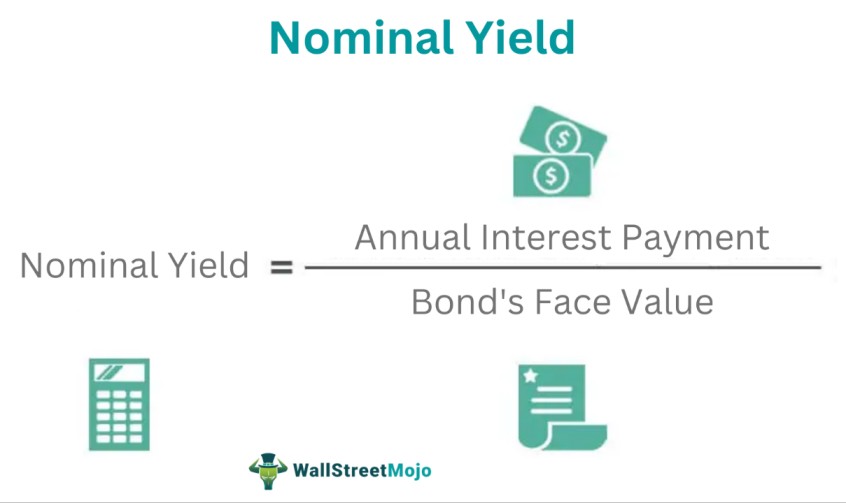
Nominal yield, for most bonds and other fixed-income securities, is simply the yield you see listed online or in newspapers. Most nominal fixed-income yields include some extra yield, an “inflation premium,” that is typically priced/added into the yields to help offset the effects of inflation.

Real yields, such as those for TIPS, don’t have the inflation premium. As a result, nominal yields are typically higher than TIPS yields and other real yields.

COMMENTS APPRECIATED

Like and Subscribe

***

***

BOND YIELDS: Real and Negative Returns

DEFINITIONS

By Dr. David Edward Marcinko MBA MEd

SPONSOR: http://www.MarcinkoAssociates.com

***

***

Real Bond Yield: For most bonds and other fixed-income securities, real yield is simply the yield you see listed online or in newspapers minus the premium added to help counteract the effects of inflation. Most “nominal” fixed-income yields include an “inflation premium” that is typically priced into the yields to help offset the effects of inflation.

Real yields, such as those for TIPS, don’t have the inflation premium. As a result, TIPS yields and other real yields are typically lower than most nominal yields

Negative Bond Yield: In a normal bond market environment, bond yields are positive, and bond issuers (including governments) make interest payments to investors who lend them money.

In an abnormal, or negative-yield environment, investors essentially pay the bond issuer to hold their money.

CITE: https://www.r2library.com/Resource/Title/0826102549

COMMENTS APPRECIATED

Subscribe Today!

***

***

HOLIDAY: Tip Etiquette 2023?

GRATUITIES

***

***
COMMENTS APPRECIATED

Thank You

***

***

Introducing US Treasury Floating Rate Notes

Join Our Mailing List

What they Are – How they Work?

[By Staff Reporters]

Back in January 2014, the US Treasury announced that it would hold an inaugural Floating Rate Notes (FRNs) auction this year, making FRNs the first new Treasury security since they introduced Treasury Inflation-Protected Securities (TIPS) more than 15 years ago.

Complimentary Products

FRNs will complement Treasury’s existing suite of securities, which include Treasury bills, notes, bonds, and TIPS.

The Treasury’s introduction of FRNs will provide a number of benefits to taxpayers including assisting Treasury in managing the maturity profile of the nation’s marketable debt outstanding, expanding Treasury’s investor base and, most importantly, helping to finance the government at the lowest cost over time.

Assessment

FRNs are a unique and attractive option for investors because the security features an interest payment that can adjust over time.

***

US Capitol

***

More:

Conclusion

Your thoughts and comments on this ME-P are appreciated. Feel free to review our top-left column, and top-right sidebar materials, links, URLs and related websites, too. Then, subscribe to the ME-P. It is fast, free and secure.

Speaker: If you need a moderator or speaker for an upcoming event, Dr. David E. Marcinko; MBA – Publisher-in-Chief of the Medical Executive-Post – is available for seminar or speaking engagements. Contact: MarcinkoAdvisors@msn.com

OUR OTHER PRINT BOOKS AND RELATED INFORMATION SOURCES:

Product Details  Product Details