BAYLOR PLAN: Nursing Shift Payments

By Dr. David Edward Marcinko MBA MEd and Copilot A.I.

***

***

The Baylor method of nurse payments is a scheduling and compensation model that allows nurses to work weekend shifts while receiving full-time pay and benefits, offering flexibility and helping healthcare facilities address staffing shortages.

The Baylor method, also known as the Baylor Plan or Baylor Shift, originated at Baylor University Medical Center in Dallas, Texas, as a strategic response to nurse shortages and burnout. It was designed to retain experienced nurses by offering a more flexible work schedule that still met the demands of patient care. Under this model, nurses typically work two 12-hour shifts on the weekend—Saturday and Sunday—and receive compensation equivalent to a full 40-hour workweek.

This approach has become increasingly popular in hospitals, long-term care facilities, and other healthcare settings. The core idea is simple: by concentrating work hours into the weekend, nurses gain more time off during the week while employers maintain adequate staffing during traditionally hard-to-fill shifts. For many nurses, this arrangement provides a better work-life balance, allowing them to pursue education, spend time with family, or take on additional employment during the week.

***

***

Financially, the Baylor method is attractive to both nurses and employers. Nurses benefit from full-time pay and benefits—including health insurance, retirement contributions, and paid time off—while only working two days per week. Employers, on the other hand, can reduce turnover and improve weekend staffing without increasing overall labor costs. Some facilities even offer Baylor shifts with added incentives, such as shift differentials or bonuses, to further encourage weekend coverage.

However, the Baylor method is not without its challenges. Working two consecutive 12-hour shifts can be physically and emotionally demanding, especially in high-acuity units. Nurses may experience fatigue or burnout if they are not adequately supported. Additionally, because Baylor nurses are paid for 40 hours while only working 24, scheduling extra shifts during the week can complicate overtime calculations. Typically, overtime pay only kicks in after 40 actual hours worked, not hours paid, which can lead to confusion or dissatisfaction if not clearly communicated.

From an operational standpoint, the Baylor method helps facilities maintain consistent staffing levels during weekends, which are often underserved due to lower availability of part-time or weekday-only staff. It also allows for more predictable scheduling and can improve patient outcomes by ensuring continuity of care. Facilities that adopt the Baylor model often report higher nurse satisfaction and retention rates.

In conclusion, the Baylor method of nurse payments is a creative and effective solution to some of the most persistent challenges in healthcare staffing. By offering full-time compensation for weekend work, it provides nurses with flexibility and financial stability while helping facilities maintain high-quality care. As healthcare continues to evolve, models like the Baylor shift demonstrate the importance of innovative scheduling strategies that support both caregivers and patients.

COMMENTS APPRECIATED

EDUCATION: Books

SPEAKING: Dr. Marcinko will be speaking and lecturing, signing and opining, teaching and preaching, storming and performing at many locations throughout the USA this year! His tour of witty and serious pontifications may be scheduled on a planned or ad-hoc basis; for public or private meetings and gatherings; formally, informally, or over lunch or dinner. All medical societies, financial advisory firms or Broker-Dealers are encouraged to submit an RFP for speaking engagements: CONTACT: Ann Miller RN MHA at MarcinkoAdvisors@outlook.com -OR- http://www.MarcinkoAssociates.com

Like, Subscribe and Refer

***

***

Why You Shouldn’t Trust Your Financial Advisor’s Awards

OVERHEARD IN THE DOCTOR’S LOUNGE

***

***

By D. Kellus Pruitt DDS

According to money journalists Max Tailwagger and Allan Roth of MoneyWatch, the trade publication Medical Economics Magazine [“advertising supplement”] nearly listed a dog on its’ 2013 list of Best Financial Advisors for Doctors.  Indeed, being listed as a top financial advisor in this publication would enhance any advisor’s credibility as well as reach a high income readership.

For example, several advisors in the Financial Planning Association, mentions this prestigious award year after year. And, the NAPFA organization of fee-only financial planners has issued press releases when member advisors make this annual list. In fact, in 2008, it touted that 52/150 listed FAs were NAPFA members. 

Yet, the dog is well known in the financial advisory world, having allegedly received a plaque as one of 2009 America’s Top Financial Planners by the Consumers’ Research Council of America, and has appeared in several books including Pound Foolish and Money for Life. The fee for Maxwell Tailwagger CFP® [a five year old Dachshund] was reported to be $750 with $1,000 for a bold listing. Colorado Securities Commissioner Fred Joseph is reported to have said, “Once again, Max is gaining national notoriety for his astute, and almost superhuman, abilities in the financial arena.”

The only two qualifications for the listing were to pay the fee and not have a complaint against them. In 2009, James Putman, then the NAPFA chairman who touted his own Medical Economics award, was charged by the SEC for securities fraud. NAPFA spokesperson Laura Fisher allegedly opined that “NAPFA no longer promotes the Medical Economics Top Advisors for Doctors list. We felt promoting a list that included stock-brokers was inconsistent with NAPFA’s mission to advance the fee-only profession.” When an advisor name drops an honor to you, congratulate him and then ask how s/he achieved the award. Ask how many nominees versus award recipients there were. What were the criteria for selection and how were they nominated. Ask if they had to pay for the honor, and go online to check out the organization.

Then ask yourself this question: If your financial advisor is buying credibility, do you really want to trust your financial future to him or her?

Source: http://www.cbsnews.com/news/dog-nearly-fetches-prestigious-financial-advisor-honor/

COMMENTS APPRECIATED

Read, Refer and Subscribe

EDUCATION: Books

***

***

FEBRUARY: National Children’s Dental Health Month

AMERICAN DENTAL ASSOCIATION

By ADA and Staff Reporters

***

Every day should be about children’s dental health

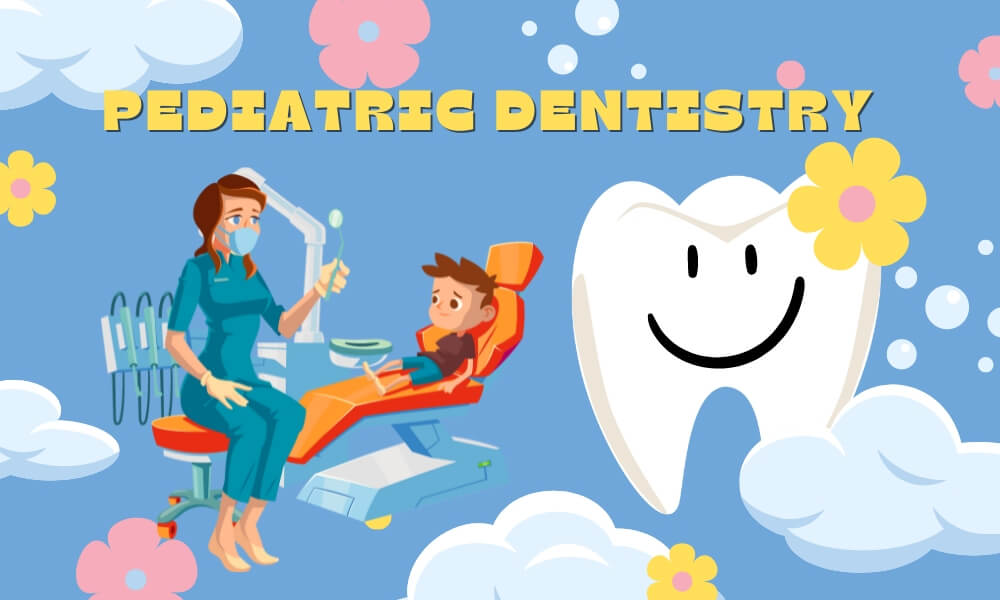
This is the message behind the ADA’s National Children’s Dental Health Month resources for 2025. Observed nationally each February, the recognition brings together thousands of dedicated professionals, health care providers and educators to promote the benefits of good oral health to children, their caregivers, teachers and many others.

The ADA is offering new materials to celebrate and promote the importance of children’s dental health, not only during the month of February, but all year.

Posters and flyers emphasizing the importance of brushing are available for free download in two kid-friendly, topical designs and two sizes, 8.5″x11″ and 11″x17″. Matching coloring sheets are offered in 8.5″x11″. All materials have instructions for proper brushing and are available in English and Spanish from ADA.org/NCDHM.

***

***

In addition, the ADA’s 2025 Brushing Calendar is available for free download. This 12-month calendar is valuable year-round for promoting healthy behaviors like brushing twice a day with a fluoride toothpaste to help prevent dental disease. Kids can track their daily brushing and flossing routines and exercise their creativity by coloring the calendar image for each month.

Another tool, the NCDHM Program Planning Guide, provides resources for program coordinators, dental societies, teachers and parents to promote the benefits of good oral health to children. The guide includes easy-to-do activities, program planning tips, a sample NCDHM proclamation and more.

“The sooner children understand the value of good oral health habits, the more likely they are to continue these habits well into adulthood,” said ADA President Brett Kessler, D.D.S. “The ADA is proud that NCDHM will once again equip some of the most influential figures in kids’ lives — like parents, educators and health care providers — to help set our nation’s kids on the path to a lifetime of healthy smiles and healthier lives.”

National Children’s Dental Health Month observances began with a one-day event in Cleveland and a one-week celebration in Akron, Ohio, in February 1941. Since then, the concept has evolved into a nationwide program.

The ADA held the first national observance of Children’s Dental Health Day on February 8th, 1949. The one-day event became a week long event in 1955, and in 1981 the program was extended to a month long celebration known today as National Children’s Dental Health Month.

For questions about NCDHM resources, please email ncdhm@ada.org. For oral health resources, visit MouthHealthy.org.

EDUCATION: Books

COMMENTS APPRECIATED

Refer and Subscribe

***

***

DAILY UPDATE: HSA Reform & BoA Paper Bond Losses as Wall Street Tanks!

MEDICAL EXECUTIVE-POST TODAY’S NEWSLETTER BRIEFING

***

Essays, Opinions and Curated News in Health Economics, Investing, Business, Management and Financial Planning for Physician Entrepreneurs and their Savvy Advisors and Consultants

Serving Almost One Million Doctors, Financial Advisors and Medical Management Consultants Daily

A Partner of the Institute of Medical Business Advisors , Inc.

http://www.MedicalBusinessAdvisors.com

SPONSORED BY: Marcinko & Associates, Inc.

***

http://www.MarcinkoAssociates.com

Daily Update Provided By Staff Reporters Since 2007.
How May We Serve You?
© Copyright Institute of Medical Business Advisors, Inc. All rights reserved. 2024

REFER A COLLEAGUE: MarcinkoAdvisors@outlook.com

SPONSORSHIPS AVAILABLE: https://medicalexecutivepost.com/sponsors/

ADVERTISE ON THE ME-P: https://tinyurl.com/ytb5955z

Your Referral Count -0-

 Healthcare insurance plans could undergo major changes under the incoming Trump administration thanks to a new bill being introduced this week seeking to reform health savings accounts. Rep. Chip Roy (R-TX) introduced the Healthcare Freedom Act on Thursday seeking to reform the healthcare system by expanding health savings accounts to broaden coverage for U.S. taxpayers and “give Americans the quality of care they deserve.”

CITE: https://www.r2library.com/Resource

Barron’s estimates that Bank of America’s paper losses on a portfolio of $568 billion of bonds, mostly U.S. agency mortgage securities, could widen to $111 billion or more, compared with $86 billion at the end of September.

CITE: https://tinyurl.com/2h47urt5

US stocks plunged Friday as investors digested a better-than-expected jobs report that soured expectations of future rate cuts from the Federal Reserve. The Dow dropped by 697 points, closing at 41,938, while the S&P 500 fell by 1.5% and the tech-heavy NASDAQ index was lower by 1.6%. The three indices all finished the week in the red as Friday’s selloff erased the week’s previous gains.

The selloff comes as the economy added 256,000 jobs in December, far outpacing expectations of around 153,000 jobs. While strong job growth signals a healthy economy, it raises the question of how soon the central bank needs to cut interest rates again. Traders now expect just a 2.7% chance the Fed will cut rates at its policy meeting later this month, according to the CME FedWatch Tool.

CITE: https://tinyurl.com/tj8smmes

Visualize: How private equity tangled banks in a web of debt, from the Financial Times.

COMMENTS APPRECIATED

PLEASE SUBSCRIBE: MarcinkoAdvisors@outlook.com

Thank You

***

***

***

***

EDUCATIONAL TEXTBOOKS: https://tinyurl.com/4zdxuuwf

***

PATTERNICITY: Apophenia vs. Pareidolia

By Staff Reporters

***

***

Patternicity is our brain’s tendency to find patterns in random data. It’s why we see faces in clouds or think the stock market follows our horoscope. According to colleague Dan Ariely PhD, this quirk helped our ancestors survive by recognizing predator shapes in the bushes, but in modern times, it can lead us astray. Our brains love making connections, sometimes too much, seeing patterns where none exist.

So, when you’re convinced that your lucky socks influence your team’s performance, remind yourself: it’s just your brain’s patternicity at work.

Apophenia vs. Pareidolia

Now, “Apophenia is the general term for the human tendency to see patterns in meaningless data that may involve visual, auditory, or other senses,” according to Dr. Harold Hong, a psychiatrist from Raleigh, North Carolina. He points out that pareidolia is a specific form of apophenia that refers to seeing visual patterns in random or ambiguous visual stimuli, such as seeing a face in the clouds.

Apophenia and pareidolia are common occurrences, says Hong, and challenges often only present when someone becomes fixated on specific patterns or details that others perceive as random. “While both phenomena are natural human tendencies, they can become concerning if someone starts to fixate on specific patterns excessively,” he says, noting that apophenia may be prevalent in certain mental health conditions, such as obsessive-compulsive disorder (OCD).

COMMENTS
Subscribe Today!

***

***

KENNETH ARROW: Information Paradox

To sell information you need to give it away before the sale

By Dr. David Edward Marcinko MBA MEd

SPONSOR: http://www.MarcinkoAssociates.com

***

***

THE FATHER OF HEALTH ECONOMICS

According to Wikipedia, a fundamental tenet of the paradox is that the customer, i.e. the potential purchaser of the information describing a technology (or other information having some value, such as facts), wants to know the technology and what it does in sufficient detail as to understand its capabilities or have information about the facts or products to decide whether or not to buy it. Once the customer has this detailed knowledge, however, the seller has in effect transferred the technology to the customer without any compensation. This has been argued to show the need for patent protection [HIPPA].

CITE: https://www.r2library.com/Resource/Title/0826102549

If the buyer trusts the seller or is protected via contract, then they only need to know the results that the technology will provide, along with any caveats for its usage in a given context. A problem is that sellers lie, they may be mistaken, one or both sides overlook side consequences for usage in a given context, or some unknown-unknown affects the actual outcome.

MORE :https://www.nobelprize.org/prizes/economic-sciences/1972/arrow/facts/

COMMENTS APPRECIATED

Subscribe Today!

***

***

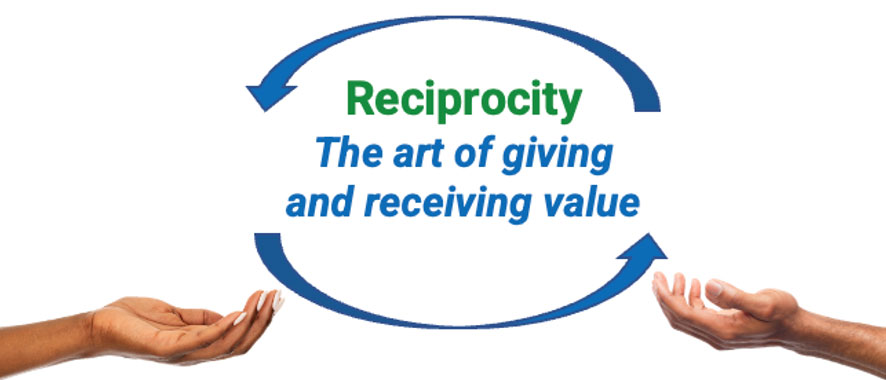
RECIPROCITY: Science “Sales” in Action

FREE SAMPLES

The Art of Giving – And Receiving – Value!

By Staff Reporters

***

***

Imagine you’re at a party, and someone hands you a drink. Your first instinct? Find something to give back. This is [sales] reciprocity in action – our built-in psychological urge to repay kindness.

According to colleague Dan Ariely PhD, it’s like a cosmic balance sheet in our brains, ensuring we don’t owe anyone a favor. This is why companies give out free samples. They’re not just being nice; they know you’ll feel a pang of guilt if you walk away without buying something.

THINK: Free financial planning dinner seminar and prospecting event. That’s you – the Sales Prospect!

So, next time someone does you a favor, remember: it’s not just seller kindness, it’s science!

COMMENTS APPRECIATED

Subscribe Today!

***

***

ARTIFICIAL INTELLIGENCE: Big Technology Stocks

By Staff Reporters

***

***

After its AI-related earnings disappointed Wall Street last quarter, Big Tech doubled down in the latest period:

  • Amazon spent $22.6 billion on property and equipment like data centers and chips. That’s an 81% spike from the same time last year.
  • Meta raised its low-end guidance for capex (capital expenditures), which could reach $40 billion by the end of the year. It beat earnings estimates, even with AR glasses subsidiary Reality Labs costing $4.4 billion in operating losses.
  • Apple is still betting on Apple Intelligence to boost sales. Most revenue came from the new iPhone 16, Apple Watch, and AirPods, but Apple services like TV+ and iCloud also grew massively to account for a quarter of the business.
  • Google crushed earnings estimates and revealed that more than 25% of all new code it writes is generated by AI (and reviewed by engineers).

CITE: https://www.r2library.com/Resource/Title/0826102549

COMMENTS APPRECIATED

Subscribe Today!

***

***

DAILY UPDATE: Stock Markets Fall

MEDICAL EXECUTIVE-POST TODAY’S NEWSLETTER BRIEFING

***

Essays, Opinions and Curated News in Health Economics, Investing, Business, Management and Financial Planning for Physician Entrepreneurs and their Savvy Advisors and Consultants

Serving Almost One Million Doctors, Financial Advisors and Medical Management Consultants Daily

A Partner of the Institute of Medical Business Advisors , Inc.

http://www.MedicalBusinessAdvisors.com

SPONSORED BY: Marcinko & Associates, Inc.

***

http://www.MarcinkoAssociates.com

Daily Update Provided By Staff Reporters Since 2007.
How May We Serve You?
© Copyright Institute of Medical Business Advisors, Inc. All rights reserved. 2024

REFER A COLLEAGUE: MarcinkoAdvisors@msn.com

SPONSORSHIPS AVAILABLE: https://medicalexecutivepost.com/sponsors/

ADVERTISE ON THE ME-P: https://tinyurl.com/ytb5955z

Your Referral Count -0-

Here’s where the major stock market benchmarks ended:

  • The S&P 500® index (SPX) fell10.69points (–0.18%) to 5,853.98; the Dow Jones Industrial Average® ($DJI) lost 344.31 points (–0.80%) to 42,931.60; and the NASDAQ Composite® ($COMP) rose 50.45 points (0.27%) to 18,540.01.
  • The 10-year Treasury note yield (TNX) climbed 11 basis points to 4.18%, outpacing a 7 basis-point rise for the 2-year Treasury note yield.
  • The CBOE Volatility Index®(VIX) climbed to 18.6 but remains below recent peaks.

CITE: https://www.r2library.com/Resource

STOCKS UP

  • Spirit Airlines soared like one of its bankrupt planes, rising 53.06% thanks to an extension for refinancing its debt.
  • Boeing popped 3.11% on the news that it has reached a tentative deal with the machinists union that has been on strike for over a month now. With Boeing’s earnings announcement coming Wednesday, shareholders are definitely breathing a sigh of relief.
  • Activist investor Starboard Value has taken a sizable stake in Tylenol-maker Kenvue, which was spun off of Johnson & Johnson just last year. Kenvue shares rose 5.52% on the news.
  • Warby Parker climbed 9.84% thanks to an upgrade from Goldman Sachs analysts, who like the company’s strong margin growth and improved operational efficiency.

CITE: https://tinyurl.com/2h47urt5

STOCKS DOWN

  • Cigna will once again attempt to acquire fellow health insurer Humana. Shareholders on both sides didn’t like the idea: Shares of Cigna sank 4.69%, and Humana fell 2.51%.
  • UPS dropped 3.38% on a downgrade from Barclays analysts citing pressures on the company’s margins, including higher competition and weaker demand. Management will have a chance to respond when earnings drop on Thursday.
  • Southwest Airlines fell 1.74% after Bloomberg reported that the beleaguered airline wants to call a truce with activist investor Elliott Investment Management.

CITE: https://tinyurl.com/tj8smmes

Visualize: How private equity tangled banks in a web of debt, from the Financial Times.

COMMENTS APPRECIATED

PLEASE SUBSCRIBE: MarcinkoAdvisors@msn.com

Thank You

***

***

***

***

EDUCATIONAL TEXTBOOKS: https://tinyurl.com/4zdxuuwf

***

AVOIDANT BEHAVIOR: Disease and Illness

COMMON SENSE PUBLIC AND POPULATION HEALTH

By Staff Reporters

***

***

According to colleague Dan Ariely PhD, Disease Avoidant Behavior are the actions we take to avoid illness, often driven by instinctive or learned responses. It’s why we wash our hands obsessively during flu season, wear a balaclava mask and/or avoid people who are sneezing or coughing.

Note: A balaclava is a form of cloth headgear designed to expose only part of the face, usually the eyes and mouth. Depending on style and how it is worn, only the eyes, mouth and nose, or just the front of the face are unprotected. Versions with enough of a full face opening may be rolled into a hat to cover the crown of the head or folded down as a collar around the neck.

This behavior is rooted in our evolutionary survival instincts, helping us steer clear of contagious health threats like RSV, COVID and the winter flu. While it’s usually a good thing, excessive disease avoidant behavior can lead to anxiety and social isolation.

So, balance caution with common sense and public/population health directives to stay healthy and sane.

COMMENTS APPRECIATED

Thank You

***

***