Understanding NASDAQ: The Digital Revolution in Stock Trading

By A.I. and Staff Reporters

SPONSOR: http://www.MarcinkoAssociates.com

***
***

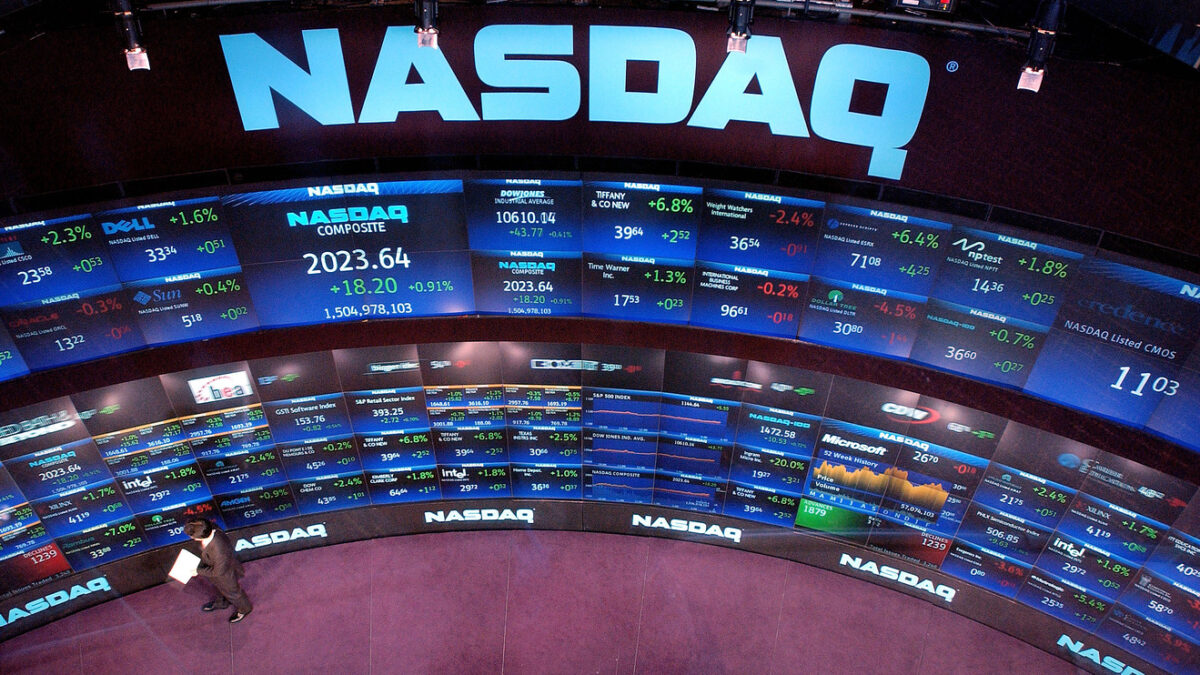
The NASDAQ, short for the National Association of Securities Dealers Automated Quotations, is one of the largest and most influential stock exchanges in the world. Founded in 1971, it was the first electronic stock market, revolutionizing how securities were traded by replacing traditional floor-based systems with computerized trading platforms. This innovation made transactions faster, more transparent, and accessible to a broader range of investors.

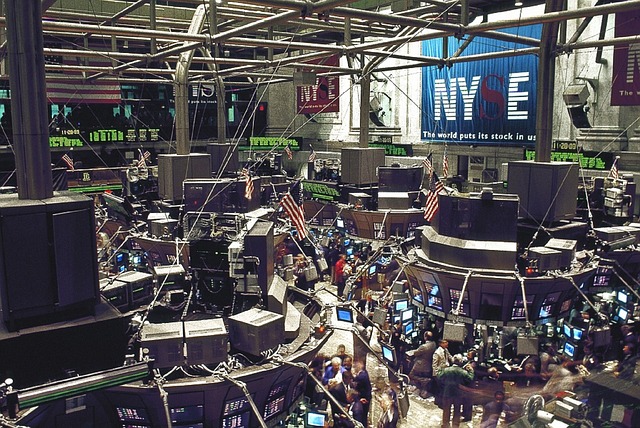
Unlike the New York Stock Exchange (NYSE), which historically operated through physical trading floors, the NASDAQ is entirely virtual. It connects buyers and sellers through a sophisticated network of computers, allowing for rapid execution of trades. This digital-first approach has made it particularly attractive to technology companies and growth-oriented firms, earning it a reputation as the go-to exchange for innovative and high-tech businesses.

Companies Listed on the NASDAQ The NASDAQ is home to some of the most prominent and influential companies in the world. Giants like Apple, Microsoft, Amazon, Google (Alphabet), Meta (formerly Facebook), and Tesla all trade on the NASDAQ. These companies are part of the NASDAQ-100, an index that tracks the performance of the 100 largest non-financial companies listed on the exchange. The NASDAQ Composite Index, which includes over 3,000 stocks, provides a broader snapshot of the market’s overall health and direction.

How It Works The NASDAQ operates as a dealer’s market, meaning transactions are facilitated by market makers—firms that stand ready to buy or sell securities at publicly quoted prices. These market makers help maintain liquidity and ensure that trades can be executed efficiently. Prices are determined by supply and demand, and the electronic nature of the exchange allows for real-time updates and high-speed trading.

Significance in the Global Economy The NASDAQ plays a vital role in the global financial system. It provides companies with access to capital by allowing them to issue shares to the public, and it offers investors a platform to buy and sell those shares. The performance of the NASDAQ is often seen as a barometer for the health of the technology sector and, more broadly, the innovation economy. When the NASDAQ rises, it typically signals investor confidence in growth and future earnings; when it falls, it may reflect concerns about economic stability or company performance.

Global Reach and Influence Though based in the United States, the NASDAQ’s influence extends worldwide. Many international companies choose to list on the NASDAQ to gain exposure to U.S. investors and benefit from the prestige associated with being part of a leading global exchange. Its technological infrastructure and regulatory standards make it a model for other exchanges around the world.

NASDAQ 100: https://medicalexecutivepost.com/2023/07/24/nasdaq-100-re-balanced-index/

In summary, the NASDAQ is more than just a stock exchange—it’s a symbol of innovation, speed, and global connectivity. Its pioneering approach to electronic trading has reshaped the financial landscape, and its roster of companies continues to drive technological progress and economic growth across the globe.

COMMENTS APPRECIATED

EDUCATION: Books

Like, Refer and Subscribe

***

***

Understanding Stockbrokers: Roles and Responsibilities

DEFINITION

By Staff Reporters

SPONSOR: http://www.MarcinkoAssociates.com

***

***

Buying or selling stocks requires access to one of the major exchanges, such as the New York Stock Exchange (NYSE) or the National Association of Securities Dealers Automated Quotations (NASDAQ). To trade on these exchanges, you must be a member of the exchange or belong to a member firm. Member firms and many individuals who work for them are licensed as brokers or broker-dealers by the Financial Industry Regulatory Authority (FINRA). 

INSURANCE AGENT: https://medicalexecutivepost.com/2025/04/27/insurance-agents-v-brokers/

And so, a stockbroker executes orders in the market on behalf of clients. A stockbroker may also be known as a registered representative or investment advisor. Most stockbrokers work for a brokerage firm and handle transactions for several individual and institutional customers. Stockbrokers are often paid on commission, although compensation methods vary by employer.

Remember: SBs work for their firm and not the client. Stock brokers are not fiduciaries.

FINANCIAL ADVISOR: https://medicalexecutivepost.com/2025/04/01/financial-advisors-vital-critical-thinking-skills-to-master/

COMMENTS APPRECIATED

The Medical Executive-Post is a  news and information aggregator and social media professional network for medical and financial service professionals.

Feel free to submit education content to the site as well as links, text posts, images, opinions and videos which are then voted up or down by other members. Comments and dialog are especially welcomed.

Daily posts are organized by subject. ME-P administrators moderate the activity. Moderation may also conducted by community-specific moderators who are unpaid volunteers.

Like and Refer

Invite Dr. Marcinko

***

***

OPEN / CLOSED: Today and Tomorrow?

By Staff Reporters

***

***

Is the Stock Market Open or Closed on New Year’s Eve?

Bond markets will close early at 2 p.m. Eastern on Tuesday, while the New York Stock Exchange and the NASDAQ Stock Market will hold regular hours from 9:30 a.m. to 4 p.m. Eastern. Over-the-counter markets, where securities trade over a broker-dealer network rather than a major exchange, will keep normal hours.

Is the Stock Market Open or Closed on New Year’s Day?

Both the U.S. bond and stock markets will be closed in observance of New Year’s Day. Over-the-counter markets will be shut, too.

What About International Markets?

Foreign exchanges, such as the London Stock Exchange, the Euronext Paris, the Stock Exchange of Hong Kong, the Shanghai Stock Exchange, and the Tokyo Stock Exchange, will be closed on Wednesday, January 1st.

Will Banks and Post Offices Be Open?

Federal Reserve banks and United States Post Service locations will be closed in observance of New Year’s Day.

COMMENTS APPRECIATED

Refer and Subscribe

***

WALL STREET HONORING: Jimmy Carter!

By Staff Reporters

***

***

The stock market may close next month to honor Former President Jimmy Carter, who died yesterday at his home in Plains, Georgia, at the age of 100.

Carter, the 39th and longest-living U.S. president, was honored with a moment of silence earlier today at the New York Stock Exchange (ICE) and the NASDAQ (NDAQ).

When he is laid to rest in January, Wall Street will likely take a break.

COMMENTS APPRECIATED

Subscribe and Refer

***

***

DAILY UPDATE: 24/7 NYSE Trading with Last Week’s Market Round-Up

MEDICAL EXECUTIVE-POST TODAY’S NEWSLETTER BRIEFING

***

Essays, Opinions and Curated News in Health Economics, Investing, Business, Management and Financial Planning for Physician Entrepreneurs and their Savvy Advisors and Consultants

Serving Almost One Million Doctors, Financial Advisors and Medical Management Consultants Daily

A Partner of the Institute of Medical Business Advisors , Inc.

http://www.MedicalBusinessAdvisors.com

SPONSORED BY: Marcinko & Associates, Inc.

***

http://www.MarcinkoAssociates.com

Daily Update Provided By Staff Reporters Since 2007.
How May We Serve You?
© Copyright Institute of Medical Business Advisors, Inc. All rights reserved. 2024

REFER A COLLEAGUE: MarcinkoAdvisors@msn.com

Your Referral Count -0-

SPONSORSHIPS AVAILABLE: https://medicalexecutivepost.com/sponsors/

ADVERTISE ON THE ME-P: https://tinyurl.com/ytb5955z

***

Last week stocks shrugged off the news that the Fed’s favorite inflation gauge ticked up last month as strong earnings reports from Big Tech pushed them higher giving the NASDAQ and the S&P 500 their best weeks since November. Google parent Alphabet had its best day since July 2015 after showing that some of its Artificial Intelligence investments are paying off for its first-ever dividend distribution.

CITE: https://www.r2library.com/Resource

The New York Stock Exchange (NYSE) recently asked market participants to share how they’d feel about trading 24/7.

According to Morning Brew, The tradition-shattering proposal by the world’s busiest stock exchange, which operates from 9:30am to 4pm ET Monday–Friday, would make stocks no different from other assets that never stop trading, like crypto and government bonds.

The NYSE’s curiosity comes as the startup 24 Exchange, backed by Mets owner Steve Cohen, is seeking SEC permission to launch a round-the-clock stock exchange. 24 Exchange wants to cater to the growing contingent of amateur investors, some of whom prefer to trade after their kids go to bed. If the NYSE decides to become an exchange that never sleeps, it’d likely upend the day-to-day of the pros on Wall Street. So, let’s consider what 24/7 trading would look like, who’d be in the green, and who’s kept up at night by the prospect. For example:

The NYSE currently allows people to trade stocks outside regular hours from 4am until the market opens and after the closing bell until 8pm, but there are fewer participants trading, and those transactions often come with higher fees. Meanwhile, brokerages like Robinhood and Interactive Brokers have found success in letting investors put in orders for many stocks and stock indexes overnight.

  • Robinhood recently said its overnight trading options are a hit, with trading outside of the NYSE’s regular hours accounting for as much as 25% of activity on the platform.
  • Many customers aren’t used to waiting around for the NYSE to “ding a bell two times a day,” Robinhood’s Chief Brokerage Officer Steve Quirk told Bloomberg.

Many of these nocturnal transactions on brokerage apps happen because of the time difference with the Asia Pacific region, where investors are increasingly eager to tap into the US stock market when most Americans are asleep. The trades are enabled by organizations like Blue Ocean, which are seeing skyrocketing demand for cross-border services. Having the NYSE run 24/7 would make it easier for investors in different time zones to participate in the US stock market.

Proponents also say it could make morning trading less volatile by allowing investors to react to big news (like an Elon Musk tweet about Tesla) as soon as it happens rather than waiting for markets to open.

CITE: https://tinyurl.com/2h47urt5

Meanwhile, stocks popped off last week thanks to Big Tech’s impressive earnings, with the S&P 500 and NASDAQ posting their best weeks since November. Nvidia notched its best weekly gain in almost a year (up 15%), adding nearly $290 billion in market capitalization.

COMMENTS APPRECIATED

PLEASE SUBSCRIBE: MarcinkoAdvisors@msns.com

Your Referral Count -0-

Thank You

***

***

***

***

EDUCATIONAL TEXTBOOKS: https://tinyurl.com/4zdxuuwf

***

Happy Birthday Irene Bergman [A 99-year-old financial advisor]

Join Our Mailing List 

Happy Birthday – Ring that NYSE Bell

[By staff reporters]

A 99-year-old financial advisor and holocaust survivor will be the oldest person to ring to the bell at the New York Stock Exchange in honor of her 100th birthday; today August. 2nd, 2015.

As a teen, Irene Bergman wanted to follow her private banker father to the Berlin stock exchange, but the Nazis chased them out of Europe in 1942. Now she is a financial advisor at Stralem & Co., overseeing institutional and individual clients, which she advises from her midtown apartment decorated with paintings from Dutch masters and pre-war European furniture.

***

stock-exchange-

***

Conclusion

Your thoughts and comments on this ME-P are appreciated. Feel free to review our top-left column, and top-right sidebar materials, links, URLs and related websites, too. Then, subscribe to the ME-P. It is fast, free and secure.

Speaker: If you need a moderator or speaker for an upcoming event, Dr. David E. Marcinko; MBA – Publisher-in-Chief of the Medical Executive-Post – is available for seminar or speaking engagements. Contact: MarcinkoAdvisors@msn.com

OUR OTHER PRINT BOOKS AND RELATED INFORMATION SOURCES:

Comprehensive Financial Planning Strategies for Doctors and Advisors: Best Practices from Leading Consultants and Certified Medical Planners(TM)

“In an era where doctors must have a solid understanding of the basics of financial management, this book is a must-have on every physician’s private book collection. Although not a substitute for a formal business education, this book will help physicians navigate effectively through the hurdles of day-to-day financial decisions with the help of an accountant, financial and legal advisors.

This book would make an excellent reference for teaching medical students and residents the basics of monetary management. I highly recommend this book and commend Dr. Marcinko and the Institute of Medical Business Advisors, Inc. on a job well done.”

Manuel J. Colón MD

Public Misconceptions of Private Equity

Join Our Mailing List

A Political Season Review

By Rick Kahler CFP® MS ChFC CCIM

www.kahlerfinancial.com

During tax time and this very political season, some of the attacks on Mitt Romney as a Presidential candidate have focused on his tenure with the private equity firm Bain Capital. Critics and rivals have denounced Romney as “profiteering off the backs of fired workers,” and running a “vulture capital” rather than a “venture capital” fund. A PAC supporting Newt Gingrich even produced a documentary about Bain which tries hard to leave viewers with the idea that capitalism isn’t evil, but private equity firms are.

The Negative Impressions

Some of this negativity may come from a lack of understanding as to what “private equity” really means. Here’s my explanation.

First, equity just means “common stock.” Whether equity is public or private depends on whether the company lists its shares on a public exchange, like the New York Stock Exchange or the NASDAQ, or is privately held.  When you purchase a share of common stock, either directly or through a mutual fund, you buy it from a public stock exchange where anyone can buy or sell shares of stock. Private equity shares, however, are bought and sold privately, just like houses or small businesses.

One of the benefits of a public exchange is that it makes owning a slice of a company exceedingly affordable. For example, for about $600 you can own a share of Apple, the largest company in the U.S. If Apple were privately held, you would need $500 billion to buy it. If you were a little short on cash but still wanted a piece of Apple, you and 999 of your closest friends could pool your resources. You’d only need $500 million each.

That is exactly what a private equity company does. It brings together substantial investors, usually institutions, pooling their money to purchase companies not available on public exchanges. This requires raising or borrowing amounts that may be in the billions of dollars. The minimum to invest in a public equity company is often one million to 25 million dollars or more, putting it out of reach of most Americans.

An Asset Class

However, that doesn’t mean John Q. Public doesn’t own a slice of the private equity pie. Public pension funds, like the South Dakota Retirement System, have invested over $200 billion in private equity funds. The SDRS invests over 10% of its $7.8 billion fund in private equity. Many investment officers and committees feel this is such an important asset class that not holding a portion of their portfolio in private equity would violate their fiduciary duty to the fund.

Why Invest Privately?

Why invest in companies that are privately held? They often are purchased for lower prices than their publicly traded cousins, which makes owning them more profitable. In other cases a private equity firm will purchase a company that is failing or purchase a public firm and make it private.

In most every case, the private equity company’s aim is to try and improve the profitability of the company in the hope of reselling it at a profit or taking it public. Sometimes this is successful; sometimes it isn’t.

Goals of Private Equity Firms

What is the goal of a private equity company? Why, to produce a return for its investors, of course. Like any other business, its ultimate goal is not to create jobs. While more jobs may be a byproduct of creating better profitability, that isn’t always the case. Nor should it be.

Assessment

Failing to turn around a struggling company or laying off a division that is sucking a company dry in order to save the company isn’t evil. It is a natural and crucial component of a competitive free market system, a system that has given the U.S. one of the highest standards of living the world has ever known.

Conclusion

Your thoughts and comments on this ME-P are appreciated. Feel free to review our top-left column, and top-right sidebar materials, links, URLs and related websites, too. Then, subscribe to the ME-P. It is fast, free and secure.

Link: http://feeds.feedburner.com/HealthcareFinancialsthePostForcxos

Our Other Print Books and Related Information Sources:

Health Dictionary Series: http://www.springerpub.com/Search/marcinko

Practice Management: http://www.springerpub.com/product/9780826105752

Physician Financial Planning: http://www.jbpub.com/catalog/0763745790

Medical Risk Management: http://www.jbpub.com/catalog/9780763733421

Healthcare Organizations: www.HealthcareFinancials.com

Physician Advisors: www.CertifiedMedicalPlanner.com

Subscribe Now: Did you like this Medical Executive-Post, or find it helpful, interesting and informative? Want to get the latest ME-Ps delivered to your email box each morning? Just subscribe using the link below. You can unsubscribe at any time. Security is assured.

Link: http://feeds.feedburner.com/HealthcareFinancialsthePostForcxos

Sponsors Welcomed: And, credible sponsors and like-minded advertisers are always welcomed.

Link: https://healthcarefinancials.wordpress.com/2007/11/11/advertise

Product Details  Product Details