DAILY UPDATE: Health Plan Costs Up and Stock Markets Upbeat

MEDICAL EXECUTIVE-POST TODAY’S NEWSLETTER BRIEFING

***

Essays, Opinions and Curated News in Health Economics, Investing, Business, Management and Financial Planning for Physician Entrepreneurs and their Savvy Advisors and Consultants

Serving Almost One Million Doctors, Financial Advisors and Medical Management Consultants Daily

A Partner of the Institute of Medical Business Advisors , Inc.

http://www.MedicalBusinessAdvisors.com

SPONSORED BY: Marcinko & Associates, Inc.

***

http://www.MarcinkoAssociates.com

Daily Update Provided By Staff Reporters Since 2007.
How May We Serve You?
© Copyright Institute of Medical Business Advisors, Inc. All rights reserved. 2024

REFER A COLLEAGUE: MarcinkoAdvisors@msn.com

SPONSORSHIPS AVAILABLE: https://medicalexecutivepost.com/sponsors/

ADVERTISE ON THE ME-P: https://tinyurl.com/ytb5955z

Your Referral Count -0-

Despite inflation cooling down, employer health plan costs are heating up, according to a September analysis from consulting firm consulting firm Mercer.

CITE: https://www.r2library.com/Resource

STOCKS UP

STOCKS DOWN

Stellantis, the European company behind Chrysler, Dodge, and Jeep sank 12.49% after it warned that sales in the second half of its fiscal year will come in lower than expected. The bad news pulled down shares of competitors Aston Martin (which fell 24.51%), Ford (a 2% drop), and GM (3.53% lower today).

  • Carnival beat top and bottom line estimates last quarter, and posted record revenue for the third quarter. But shares stumbled 0.32% on management’s forecast that earnings in the fourth quarter will disappoint. Rival cruise companies all dropped in sympathy: Royal Caribbean fell 0.10%, while Norwegian Cruise Line Holdings tumbled 2.10%.
  • Crypto stocks took a beating today after bitcoin’s latest rally fizzled out. Coinbase fell 6.83%, while MicroStrategy lost 4.32%.

CITE: https://tinyurl.com/2h47urt5

Here’s where the major stock market benchmarks ended:

  • The SPX gained 24.26 points (0.42%) to 5,762.48; the Dow Jones Industrial Average® ($DJI) rose 17.15 points (0.04%) to 42,330.15; the NASDAQ Composite® ($COMP) added 69.58 points (0.38%) to 18,189.17.
  • The 10-year Treasury note yield (TNX) climbed five basis points to 3.8%, near the high of its recent range.
  • The CBOE Volatility Index® (VIX) eased to 16.66 after climbing above 17 earlier today but remains up from a week ago.

CITE: https://tinyurl.com/tj8smmes

COMMENTS APPRECIATED

PLEASE SUBSCRIBE: MarcinkoAdvisors@msn.com

Thank You

***

***

***

***

EDUCATIONAL TEXTBOOKS: https://tinyurl.com/4zdxuuwf

***

MDs RETIRING: 23,000 Physicians Will Retire by 2026

By Staff Reporters

SPONSOR: http://www.CertifiedMedicalPlanner.org

***

***

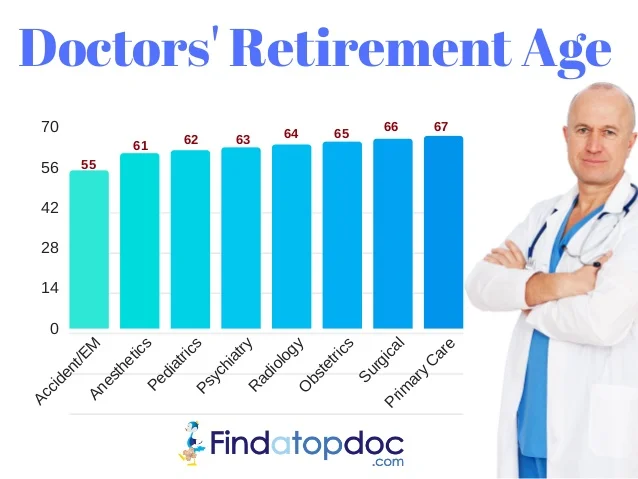
Thousands of doctors are expected to reach retirement age in the next three years, and their replacements won’t be physicians.

CITE: https://www.r2library.com/Resource/Title/0826102549

Instead, physician assistants (PAs) and nurse practitioners (NPs) will increasingly provide primary care services, according to a report from consulting firm Mercer.

MORE: https://www.healthcare-brew.com/stories/2023/03/16/non-mds-will-provide-primary-care?cid=31157347.24865&mid=349b552221c994e2540a304649746d7c&utm_campaign=hcb&utm_medium=newsletter&utm_source=morning_brew

***

RELATED: https://www.kevinmd.com/2023/04/rural-americas-health-care-crisis-unmasking-the-physician-shortage-epidemic.html

COMMENTS APPRECIATED

Thank You

***

***

HEALTH INSURANCE: Benefits Costs are Up!

By Staff Reporters

***

***

Employers expect health benefit costs to rise by more than 5% on average in 2024 as factors like high inflation, health labor shortages, and expensive new therapies put pressure on plan spending after years of 3%–4% annual growth, early data suggests.

Preliminary results from Mercer’s 2023 National Survey of Employer-Sponsored Health Plans found that total health benefit costs could increase by as much as 6.6% per employee if companies do nothing to control spending, or an average of 5.4% if employers take steps to hold down costs.

That slight gap suggests most employers don’t plan to make cost-cutting changes to their plans—likely due to concerns about healthcare affordability, the analysis noted. Many large companies (with 500+ employees) have avoided shifting costs to employees over the last five years, resulting in little growth in deductibles and other cost-sharing requirements.

CITE: https://www.r2library.com/Resource

COMMENTS APPRECIATED

Thank You

***

***

PHYSICIANS: “Aging Out”

By Staff Reporters

***

***

According to HealthcareBrew, thousands of doctors are expected to reach retirement age in the next three years, and their replacements won’t be physicians. Instead, physician assistants (PAs) and nurse practitioners (NPs) will increasingly provide primary care services, according to a report from consulting firm Mercer.

By 2026, 21% of family medicine, pediatric, and obstetrics and gynecology physicians—or about 32,000 doctors—will be 65 or older, and Mercer anticipates about 23,000 physicians will leave the profession permanently. At the same time, demand for primary care physicians is expected to grow 4%, the report found.

PAs and NPs—also called advanced practice providers (APPs) or physician extenders—are highly trained medical professionals. To become a PA, you have to have both a bachelor’s and a master’s, some clinical work experience, pass the Physician Assistant National Certifying Exam, and then apply to get licensed in your state (you know, easy peasy). It takes seven to nine years to go through that process, compared to 11+ years to become an MD.

CITE: https://www.r2library.com/Resource/Title/0826102549

To become an NP, you must have both a bachelor’s and a master’s in nursing, become a registered nurse, and pass a national NP board certification exam. It takes between six to eight years to become an NP.

Compared to physicians, PAs and NPs are “considerably younger professions with less than half the retirement risk,” the Mercer report stated. Roughly 40,000 PAs and NPs join the workforce annually.

“We’re certainly going to see increasing demand for APPs,” David Mitchell, a partner in Mercer’s career consulting business and a specialist in the healthcare industry, told Healthcare Brew.

While most state licensing boards require a physician to oversee APPs, both PAs and NPs have the authority to do many services primary care physicians do, like seeing and diagnosing patients, ordering lab tests, and writing prescriptions, said Mitchell.

READ HERE: https://www.healthcare-brew.com/stories/2023/03/16/non-mds-will-provide-primary-care?cid=30859907.17846&mid=349b552221c994e2540a304649746d7c&utm_campaign=hcb&utm_medium=newsletter&utm_source=morning_brew

MORE: https://www.aamc.org/data-reports/data/2022-physician-specialty-data-report-executive-summary

***
COMMENTS APPRECIATED

Thank You

***

ORDER: https://www.routledge.com/Risk-Management-Liability-Insurance-and-Asset-Protection-Strategies-for/Marcinko-Hetico/p/book/9781498725989

***

CEO Compensation is Down

Join Our Mailing List 

NO, IT’S UP – YOU BETTER JUDGE FOR YOURSELF        

ArtBy Arthur Chalekian GEPC

[Financial Consultant]

The New York Times reported the 200 most-highly-paid CEOs in the United States collectively experienced a pay cut last year!

CEOs’ average compensation – all CEOs compensation added together and then divided by 200 – fell by 15 percent from 2014 to 2015.

Of course, you know what they say about lies and statistics

Equilar, the company responsible for the study, reported CEO pay grew modestly in 2015. They looked at median CEO pay – the number in the middle. It was $16.6 million for fiscal 2015. That’s up 5 percent from the previous year.

No matter how you interpret the results, not one CEO earned more than $100 million. CEOs in the technology industry had the highest median pay while those in basic materials (which includes oil and gas companies) had the lowest, according to Equilar.

Many people have argued company performance should inform CEO pay, but there wasn’t much evidence this was the case. Although there may have been a basis for CEO pay changes, there was no clear correlation to shareholder returns or company revenues.

For instance:

  • A 702 percent increase in pay was awarded when total shareholder return was down 5 percent, and company revenues were down 1 percent.
  • A 286 percent increase in pay was awarded when total shareholder return was up 16 percent, and company revenues were up 9 percent.
  • A 48 percent reduction in pay occurred when total shareholder return was up 25 percent, and company revenues were up 4 percent.

Assessment

The portion of 2015 corporate budgets allotted to pay hikes for employees increased by 2.8 percent, on average, according to Mercer. The report said, “… the highest-performing employees received average base pay increases of 4.8 percent in 2015 compared to 2.7 percent for average performers and 0.2 percent for the lowest performers …”

Conclusion

Your thoughts and comments on this ME-P are appreciated. Feel free to review our top-left column, and top-right sidebar materials, links, URLs and related websites, too. Then, subscribe to the ME-P. It is fast, free and secure.

Speaker: If you need a moderator or speaker for an upcoming event, Dr. David E. Marcinko; MBA – Publisher-in-Chief of the Medical Executive-Post – is available for seminar or speaking engagements. Contact: MarcinkoAdvisors@msn.com

OUR OTHER PRINT BOOKS AND RELATED INFORMATION SOURCES:

Risk Management, Liability Insurance, and Asset Protection Strategies for Doctors and Advisors: Best Practices from Leading Consultants and Certified Medical Planners™ Risk Management, Liability Insurance, and Asset Protection Strategies for Doctors and Advisors: Best Practices from Leading Consultants and Certified Medical Planners™

***

Mercer Study Says CDHPs Rising

Join Our Mailing List

HSA / HRA Offerings Jump at Large Employers*

[By Staff Reporters] 


2005

2006

2007

2008

Very likely to offer in 2009

Small Employers (10-499 employees)

2%

5%

7%

9%

14%

Large Employers (500 or more employees)

5%

11%

14%

20%

25%

Jumbo Employers (20,000 or more employees)

22%

37%

41%

45%

45%

*Based on either a health savings account or health reimbursement arrangement.

Source: Mercer 2008 National Survey of Employer-Sponsored Health Plans.  www.mercer.com

Conclusion

Your thoughts and comments on this ME-P are appreciated. Feel free to review our top-left column, and top-right sidebar materials, links, URLs and related websites, too. Then, subscribe to the ME-P. It is fast, free and secure.

Link: http://feeds.feedburner.com/HealthcareFinancialsthePostForcxos

Speaker: If you need a moderator or speaker for an upcoming event, Dr. David E. Marcinko; MBA – Publisher-in-Chief of the Medical Executive-Post – is available for seminar or speaking engagements. Contact: MarcinkoAdvisors@msn.com

OUR OTHER PRINT BOOKS AND RELATED INFORMATION SOURCES:

DICTIONARIES: http://www.springerpub.com/Search/marcinko
PHYSICIANS: www.MedicalBusinessAdvisors.com
PRACTICES: www.BusinessofMedicalPractice.com
HOSPITALS: http://www.crcpress.com/product/isbn/9781466558731
CLINICS: http://www.crcpress.com/product/isbn/9781439879900
BLOG: www.MedicalExecutivePost.com
FINANCE: Financial Planning for Physicians and Advisors
INSURANCE: Risk Management and Insurance Strategies for Physicians and Advisors

Product DetailsProduct DetailsProduct Details