Beware of Borrowing That Helps Your Advisor – Not You

By Rick Kahler MSFP CFP

***

***

When Maria needed $400,000 for a down payment on a new home, her broker at a large Wall Street firm offered a solution: “Don’t sell investments and trigger capital gains. Just take out a margin loan.”

A margin loan is a line of credit from a brokerage firm, secured by the client’s investment portfolio. It offers quick access to cash with no immediate tax consequences and minimal paperwork. But the convenience comes at a cost. As of mid-2025, margin loan interest rates range from 6.25% to over 11%.

Margin loan recommendations are often presented by brokers as tax-savvy strategies that allow clients to access “tax-free” cash while keeping their portfolios intact. In many cases, however, the math benefits the advisor more than the investor. The cost of borrowing often exceeds what an investor is likely to earn by holding on.

For example, let’s assume an interest rate of 7.5% on Maria’s $400,000 margin loan. While borrowing delayed the payment of $20,000 in capital gains tax, she will eventually have to pay that tax anyway unless she holds the investments until her death. Two years later, with portfolio returns of 4% annually, she had earned around $32,000 from the $400,000 in investments she might have sold. Meanwhile, she had paid $60,000 in interest—leaving her some $28,000 worse off. That’s without factoring in ongoing interest payments, or the risks of a margin call if the investments securing the loan drop in value.

Why do advisors keep recommending margin loans? Because selling investments reduces the portfolio size and the advisor’s fee. Borrowing keeps the portfolio intact and the compensation unchanged—while the firm receives additional income from interest on the loan. In some cases, advisors suggest using margin loans to buy more investments, increasing both the portfolio and the fee they collect.

None of this is illegal. But when the borrowing cost is higher than expected returns and the advisor benefits financially, the ethics are questionable. The client takes the risk, while the advisor keeps the revenue.

This kind of conflict appears more often in portfolios where compensation is tied to asset volume and the company’s primary culture rewards gathering assets over delivering unbiased advice. By contrast, fee-only financial planning and investment advisors typically operate on simpler hourly, flat, or tiered fee structures. Their compensation doesn’t depend on whether a client borrows, sells, or holds. The culture of the firm focuses on conflict-free advice aligned with the client’s best interest.

Wall Street brokers are often held to a fiduciary standard, but structure still matters. In 2024 the SEC reported their examinations of brokers would continue to focus on advisor recommendations unduly influenced by the company’s compensation and incentives.

There are rare situations where a margin loan may be appropriate. A client with large unrealized gains might use a short-term margin loan to minimize taxes. An elderly investor might borrow tax-free rather than sell assets that will receive a step-up in basis at their death. Even in those cases, the math must be exact and the client must clearly understand the risks, including the possibility of a margin call.

If your advisor recommends a margin loan, especially to buy more investments, ask strong questions. What’s the interest rate? What return is realistic? What are the tax consequences of selling? How does this affect the advisor’s income?

If you don’t get direct answers, that’s a warning sign.

In a high-rate, low-return environment, margin loans rarely favor the client. The exceptions are narrow. The risks are significant. And the conflict of interest is measurable.

Sometimes the smartest move is the simplest: sell what you need, pay the tax, and leave leverage out of your plan.

COMMENTS APPRECIATED

Like and Subscribe

***

***

ACCOUNTING: Mark to Market [MTM] Fair Value

***

***

By Staff Reporters

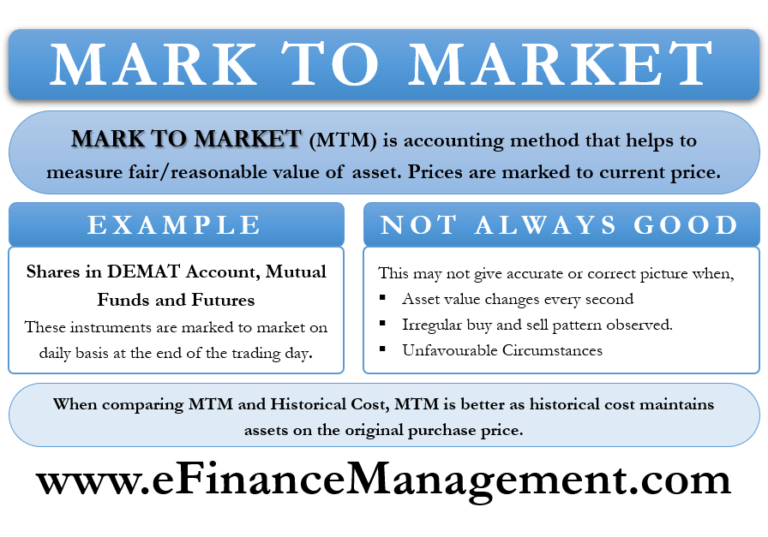
According to Wikipeida, Mark-to-market (MTM or M2M) or fair value accounting is accounting for the “fair value” of an asset or liability based on the current market price, or the price for similar assets and liabilities, or based on another objectively assessed “fair” value.[1] Fair value accounting has been a part of Generally Accepted Accounting Principles (GAAP) in the United States since the early 1990s. Failure to use it is viewed as the cause of the Orange County Bankruptcy,[2][3] even though its use is considered to be one of the reasons for the Enron scandal and the eventual bankruptcy of the company, as well as the closure of the accounting firm Arthur Andersen.[4]

Mark-to-market accounting can change values on the balance sheet as market conditions change. In contrast, historical cost accounting, based on the past transactions, is simpler, more stable, and easier to perform, but does not represent current market value. It summarizes past transactions instead. Mark-to-market accounting can become volatile if market prices fluctuate greatly or change unpredictably. Buyers and sellers may claim a number of specific instances when this is the case, including inability to value the future income and expenses both accurately and collectively, often due to unreliable information, or over-optimistic or over-pessimistic expectations of cash flow and earnings.[5]

Stock brokers allow their clients to access credit via margin accounts. These accounts allow clients to borrow funds to buy securities. Therefore, the amount of funds available is more than the value of cash (or equivalents). The credit is provided by charging a rate of interest and requiring a certain amount of collateral, in a similar way that banks provide loans. Even though the value of securities (stocks or other financial instruments such as options) fluctuates in the market, the value of accounts is not computed in real time. Marking-to-market is performed typically at the end of the trading day, and if the account value decreases below a given threshold (typically a ratio predefined by the broker), the broker issues a margin call that requires the client to deposit more funds or liquidate the account.

COMMENTS APPRECIATE

Thank You

***

***

INVESTMENT BANKING UPDATE: Rules, securities markets, brokerage accounts, margin and debt review

http://www.MARCINKOAssociates.com

A Primer for Investors and Entrepreneurial Medical Professionals

Dr. David Edward Marcinko; MBA, CMP™

SPONSOR: http://www.CertifiedMedicalPlanner.org

Investment banking is so back. All of the biggest banks have reported their first-quarter 2024 results, and their earnings have been as good as, if not better than, expected. Higher interest rates ate into the spoils—Bank of America reported yesterday that its profit dropped 18% compared to the same period last year—but investment banking arms did well, especially since many banks increased their fees, and deal making and IPOs started to pick up again. But despite perking up, investment banking activity is still below where it used to be. Strong consumer spending also helped banks out, with credit card income rising and people and businesses continuing to need loans.

[PART 1 OF 8]

BC Dr. Marcinko

NOTE: This is an eight part ME-P series based on a weekend lecture I gave more than a decade ago to an interested group of graduate, business and medical school students. The material is a bit dated and some facts and specifics may have changed since then. But, the overall thought-leadership information of the essay remains interesting and informative. We trust you will enjoy it.

Introduction

The history, function and processes of the investment banking industry, and the rules and regulations of the securities industry and their respective markets, as well as the use of  brokerage accounts, margin and debt, will be briefly reviewed in this ME-P series.

An understanding of these concepts is required of all doctors and medical professionals as they pursue a personal investment strategy.

INVESTMENT BANKING AND SECURITIES UNDERWRITING

New economy corporate events of the past several years have provided many financial signs and symptoms that indicate a creeping securitization of the for-profit healthcare industrial complex. Similarly, fixed income medical investors should understand how Federal and State regulations impact upon personal and public debt needs. For, without investment banking firms, it would be almost impossible for private industry, medical corporations and government to raise needed capital.

Introduction

When a corporation such as a physician practice management company (PPMC), or similar entity needs, to raise capital for growth or expansion, there are two methods. Raising debt or equity. If equity is used, the corporation can market securities directly to the public by contacting its current stockholders and asking them to purchase the new securities in a  rights offering, by advertising or by hiring salespeople. Although this last example is somewhat exaggerated, it illustrates that there is a cost to selling new securities, which may be considerable if the firm itself undertakes the task.

For this reason, most corporations employ help in marketing new securities by using the services of investment bankers who sell new securities to the general public.  Although the investment banking is an exciting and vital industry, many SEC rules regulating it are not. Nevertheless, it is important for all physician executives to understand basic concepts of the industry if raising public money is ever a possibility or anticipated goal. It is also important for individual healthcare investors  to understand something about securities underwriting to reduce the likelihood of fraudulent investment schemes or ill-conceived transactions which ultimately result in monetary loss.

Fundamentals of the Investment Banking Industry

Investment bankers are not really bankers at all. The fact that the word banker appears in the name is partially responsible for the  false impressions that exist in the medical community regarding the functions they perform.

For example, they are not permitted to accept deposit, provide checking accounts, or perform other activities normally construed to be commercial banking activities. An investment bank is simply a firm that specializes in helping other corporations obtain the money they need under the most advantageous terms possible.

When it comes to the actual process of having securities issued, the corporation approaches an investment banking firm, either directly, or through a competitive selection process and asks it to act as adviser and distributor.  Investment bankers, or under writers, as they are sometimes called, are middlemen in the capital markets for corporate securities.

The medical corporation requiring the funds discuss the amount, type of security to be issued, price and other features of the security, as well as the cost to issuing the securities. All of these factors are negotiated in a process known as known as negotiated underwriting. If mutually acceptable terms are reached, the investment banking firm will be the middle man through which the securities are sold to the general public. Since such firms have many customers, they are able to sell new securities, without the costly search that individual corporations may require to sell its own security. Thus, although the firm in need of  additional capital must pay for the service, it is usually able to raise the additional capital at less expense through the use of an investment banker, than by selling the securities itself.

The agreement between the investment banker and the corporation may be one of two types. The investment bank may agree to purchase, or underwrite, the entire issue of securities and to re-offer them to the general public. This is  known as a firm commitment.

When an investment banker agrees to underwrite such a sale,  it  agrees to supply the corporation with a specified amount of money. The firm buys the securities with the intention to resell them. If it fails to sell the securities, the investment banker must still pay the agreed upon sum. Thus, the risk of selling rests with the underwriter and not with the company issuing the securities.

The alternative agreement is a best efforts agreement in which the investment banker makes his best effort to sell the securities acting on behalf of the issuer, but does not guarantee a specified amount of money will be raised.

When a corporation raises new capital through a public offering of stock, on might inquire from where does the stock come? The only source the corporation has is authorized, but previously un-issued stock. Anytime authorized, but previously un-issued stock (new stock) is issued to the public, it is known as a primary offering. If it’s the very first time the corporation is making the offering, it’s also known as the Initial Public Offering (IPO). Anytime there is a primary offering of stock, the issuing corporation is raising additional equity capital.

A secondary offering, or distribution, on the other hand, is defied as an offering of a large block of outstanding stock. Most frequently, a secondary offering is the sale of a large block of stock owned by one or more stockholders. It is stock that has previously been issued and is now being re-sold by investors. Another case would be when a corporation re-sells its treasury stock.

Prior to any further discussions of investment banking, there are several industry terms that’s should  be defined.

For example, an agent buys or sells securities for the account and risk of another party, and charges a commission. In the securities business, the terms broker and agent are used synonymously. This is not true of the insurance industry.

On the other hand, a principal is one who acts as a dealer rather than an agent or broker. A dealer buys and sells for his own account Finally, the dealer makes money by buying at one price and selling at a higher price. Thus, it is easy to understand how an investment banking firm earns money handling a best efforts offering; they make a commission on every share they sell.

  Comprehensive Financial Planning Strategies for Doctors and Advisors: Best Practices from Leading Consultants and Certified Medical Planners™

The Securities Act of 1933 (Act of Full Disclosure)

When a corporation makes a public offering of its stock, it is bound by the provisions of the Securities Act of 1933, which is also known as the Act of Full Disclosure. The primary requirement of  the Act is that the corporation must file a registration statement (full disclosure) with the Securities and Exchange Commission (SEC); containing some of the following items:

  • Description of the business entity raising the money.
  • Biographical data regarding officers and directors of the issuer.
  • Listing of share holdings of officers, directors, and holders of more than 10% of the issuer’s securities (insiders).
  • Financial statements including a breakdown of existing capitalization (existing debt and equity structure).
  • Intended use of offering proceeds.
  • Legal proceedings involving the issuer, such as suits, antitrust actions or strikes.

Acting in its capacity as an adviser to the corporation, the investment banking firm files out the registration statement with the SEC. It then takes the SEC a period of time to review the information in the registration statement. This is the “cooling off period” and the issue is said to be “in registration” during this time. When the Act written in 1933, Congress thought that 20 days would be enough time from the filing date, until the effective date the sale of  securities is permitted.

In reality, it frequently takes much longer than 20 days for the SEC to complete its review. But, regardless of how long it lasts, it’s known as the cooling off period. At the end of the cooling off period, the SEC will either accept the issue or they will send a letter back to the issuer, and the underwriter, explaining that there is incomplete information in the registration statement. This letter is known as a deficiency letter. It will postpone the effectiveness of the registration statement until the deficiency is remedied. Even if initially, or eventually approved, an effective registration does not mean that the SEC has approved the issue.

For example, the following well known disclaimer statement written in bold red ink, is required to be placed in capital letters on the front cover page of every prospectus:

###

THESE SECURITIES HAVE NOT BEEN APPROVED OR DISAPPROVED BY THE SECURITIES AND EXCHANGE COMMISSION NOR HAS THE COMMISSION PASSED UPON THE ACCURACY OR ADEQUACY OF THIS PROSPECTUS. ANY REPRESENTATION TO THE CONTRARY IS A CRIMINAL OFFENSE.

###

During the cooling off period, the investment bank tries to create interest in the market place for the issue. In order to do that, it distributes a preliminary prospectus, more commonly known as a “red herring”. It is known as a red herring because of the red lettering on the front page.  The statement on the very top with the date is printed in red as well as the statements on the left hand margin of the preliminary prospectus.

The cost of printing the red herring is borne by the investment bank, since they are  trying to market it.. The red herring includes information from the registration statement that will be most helpful for potential medical investors trying to make a decision. It describes the company and the securities to be issued; includes the firm’s financial statements; its current activities; the regulatory bodies to which it is subject; the nature of its competition; the management of the corporation, and what the expected proceeds will be used for. Two very important items  missing from the red herring are the public offering price and the effective date of the issue, as neither are known for certain at this point in time.

The public offering price is generally determined on the date that the securities become effective for sale (effective date). Waiting until the last minute enables the investment bankers to price the new issue in line with current market conditions. Since the investment banker uses the red herring to try to create interest in the market place, stock brokers [aka: Registered Representatives (RRs) with a Series # 7 general securities license –  After a 2 hour multiple-choice computerize test, I held this license for a decade ) will send copies of the red herring to their clients for whom they feel the issue is a suitable investment. The SEC is very strict on what can be said about an issue, in registration.

In fact, during the pre-filing period (the time when the negotiations are going on between the issuer\and underwriter), absolutely nothing can be said about it to anyone.  For example, if the regulators find out that your stock broker discussed with you  the fact that his firm was negotiating with an issuer for a possible public offering, he could be fined, or jailed.

During the cooling off period (the time when the red herring is being distributed), nothing may be sent to you; not a research report, nor a recommendation from another firm, or even the sales literature. The only thing you are permitted to receive is the red herring. The red herring is used to acquaint prospects with essential information about the offering. If you are interested in purchasing the security, then you will receive an “indication of interest”, but you can still not make a purchase or send money.

No sales may be made until the effective date; all that can be used to generate interest is the red herring.

Conclusion

Your thoughts and comments on this ME-P are appreciated. Feel free to review our top-left column, and top-right sidebar materials, links, URLs and related websites, too. Then, subscribe to the ME-P. It is fast, free and secure.

Link: http://feeds.feedburner.com/HealthcareFinancialsthePostForcxos

Speaker: If you need a moderator or speaker for an upcoming event, Dr. David E. Marcinko; MBA – Publisher-in-Chief of the Medical Executive-Post – is available for seminar or speaking engagements. Contact: MarcinkoAdvisors@msn.com

OUR OTHER PRINT BOOKS AND RELATED INFORMATION SOURCES

Product DetailsProduct DetailsProduct Details

***

Understanding NYSE / NASD Minimum Credit Requirements

Join Our Mailing List

A Primer for Physician Investors and Medical Professionals

By: Dr. David Edward Marcinko; MBA, CMP™

[Editor-in-Chief]

[PART 8 OF 8]

NOTE: This is an eight part ME-P series based on a weekend lecture I gave more than a decade ago to an interested group of graduate, business and medical school students. The material is a bit dated and some facts and specifics may have changed since then. But, the overall thought-leadership information of the essay remains interesting and informative. We trust you will enjoy it.

Introduction

We have seen that there are rules which stipulate that no brokerage firm may arrange for any credit to any client whose margin account does not have an equity of at least $2,000. The principal application of this rule is to initial transactions in newly opened margin accounts, however, it does apply at all times. 

Example: A doctor buys 100 shares, at $15, in a new margin account. His margin call is $1,500.

Rationale: $2,000 would be too much to require as it exceeds the total purchase price. However, a loan to the doctor isn’t allowed to be extended until, and unless, the account has equity of $2,000. The trade is simply paid in full -100% of the purchase price is the margin call. 

Example: A doctor buys 200 shares, at $15, in a new margin account (assume Regulation T = 60%).

His margin call is $2,000 

Rational: Regulation T 60% would be $1,800 (60% x $3,000). Since this would be $200 shy of the minimum equity level of $2,000, the call is the $2,000 minimum equity. 

Example: A doctor buys 300 shares, at $15, in a new margin account. (assume Regulation T = 60%) His margin call is $2, 700. 

Rationale: The account will have equity of $2, 700 (60% x $4,500), which is more than the $2,000 minimum. Therefore, the Regulation T initial requirement prevails.

The important points to remember about minimum credit requirements are:

1. You are not called upon to pay more than the purchase price.

2. You cannot be granted a loan until the account has an equity of at least $2,000.

3. If a decline in the market value of an existing account puts the equity below $2,000, there is no requirement to bring the equity back up to $2,000.

4. You may not withdraw money or securities from the account, if in doing so, you either:

  1. bring the equity below $ 2,000, or
  2. bring the equity below the maintenance level

These are the only times SMA may not be withdrawn from an account

The Short Sale

Selling short is engaged in by medical professionals who anticipate a market decline. By selling borrowed property (shares of stock) at the current market value, the doctor expects to return the borrowed property (shares of the same issuer bought in the marketplace) to the lender, normally the investor’s brokerage firm, when the market price is lower, thus profiting from the drop in price.

Essentially this is the buy low, and sell high philosophy. However, when executing a short sale one is selling high initially, then buying low later to “cover”, or close out the deal by buying low and selling high in the reverse order .

Bear in mind that the short seller is borrowing property, not money. However, due to the high degree of risk inherent in short selling, it is permitted only in a margin account. A Regulation T call is required as a show of good faith, a way the client demonstrates the financial wherewithal to buy back the property. Let’s look at a short sale transaction and the subsequent effects of market fluctuations on equity, as we did previously with buying on margin (long margin).

Credit Balance and Equity

A doctor shorts (sells short) 100 shares at $100 per share with Regulation T at 60%. The margin account would be credited with the proceeds of the sale, though the doctor has no access to these monies at this point in the deal. The account should also be credited with the doctor’s required Regulation T margin call. Therefore, the credit balance in a doctor’s margin account is the sum of the  proceeds of the short sale, plus the Regulation T margin call. This number will not change, regardless of future market fluctuations. The credit balance in a short margin account is a constant.

What does change with market fluctuations?

  1. the cost of buying back the borrowed property to cover the short sale.
  2. the equity in the account.

Equity in a short margin account is computed as follows:

Credit of  $ 16,000 – CMV  $10,000 equals $ 6,000 equity.

Now, let’s evaluate the effect of appreciation in the market price

If the stock rises to $120 per share, then the credit of $16,000 – CMV $ 2, 000, equals $ 4,000 equity.

Remember, the credit balance does not change when CMV fluctuates. The equity in this account is no longer Regulation T.

Let’s determine the amount by which the account is restricted (remember, any margin account with equity below Regulation T is restricted). Or, 60% X $12,000 = $ 7,200 – $ 4,000 = $ 3,200

Also, it should be clear, the equity percentage of this account is less than 60%, by the formula:

Equity / CMV = $ 4,000/$ 12,000 = 33.33%

This is the basic principle of the short sale; as the market price of the shorted stock increases, the equity decreases. The reverse is also true; as the price declines, the equity rises. Remember, short sellers are anticipating a market decline. Also, when buying long, or selling short, any change in market value causes a dollar for dollar change in equity.

Minimum Maintenance Requirements (Short) 

If the market continues to appreciate to $160 per share, the equity drops to zero.

Suppose that the market price rose to its theoretical maximum, or infinity? The doctor’s loss would be infinite. Remember, the maximum potential loss on a short sale is unlimited!

To protect against such an occurrence, industry Self Regulatory Organizations (SROs) developed regarding the minimum equity that must be maintained in a margin account. The minimum maintenance in a short account is equity of 30% of CMV. Note that this is higher than the 25 % figure for long margin accounts due to the nature of extreme risk of loss in the short sale.

Given that the CMV has risen to $160 per share ($16,000 total CMV), the minimum equity required to be maintained under SRO rules is 30% x CMV or  $4,800 equity. The doctor would receive a $4,800 maintenance call to bring his equity from -0- to the $4,800 minimum.

Remember, as in (cash) long accounts, there is no requirement to bring a margin account up to Regulation T equity. The maintenance equity is the percentage up to which the account must be brought when and if equity drops below the 25% or 30% levels.

Excess Equity (SMA) and Buying Power

We have seen what market appreciation does to a short seller. Let’s evaluate the effects of market depreciation in value. If the declines to $85, per share, then $ 16,000 credit – CMV $ 8,500 = $ 7,500 equity. Again, market fluctuations don’t affect credit balance. The equity in the account is now higher than Regulation T, and SMA (excess equity) has just been created.

And, as before, excess equity (SMA) can be used to buy more securities. Couldn’t it also be used as the Regulation T down payment on another sale? Yes, this is another use of SMA that is called shorting power or “selling power”. The formula for buying power as well as shorting power is exactly the same: Remember, it’s SMA / RT to use buying power.

In this case, $2,400 / 60% = $4,000 of buying (shorting) power after the decline to $85, the doctor could buy long or sell short another $4,000 worth of stock and use his SMA to meet his 60% ($2,400) Regulation T Margin call. Recall, the margin call for a short sale is the same as for a long purchase.

Cheap Stock Rule

The SROs created a set of special maintenance rules in short margin accounts to protect against unreasonable risk in low-priced issues. These rules are appropriately labeled the “cheap stock” rules.

At all times, a doctor must maintain equity in a short margin account of the greater of the following:

  1. 30% of the CMV (SRO Minimum Maintenance Requirement)
  2. $2,000 (SRO Minimum Credit Requirement)

3.   Equity as required under the rules  below

The cheap stock rules are as follows:

Stock Price                                     Minimum Maintained Equity

0 – $2.50 per share             $ 2.50 per share

$2.50 – $5.00 per share      100% of per share price

$5.00 per share and up       $ 5.00 per share

Example: A doctor shorts 1,000 shares of a $1.50 per share stock. How much must he deposit initially and how much must be maintained in the account?

First, since Regulation T won’t come into play until equity hits $2,000, the SRO minimum credit requirement of $2,000 should come into play. However, since this is a cheap stock, we determine if the requirements of those special rules require more than $2,000. They do, and require a minimum be maintained in this short margin account of at least $2.50 per share sold short (1,000 shares at $2.50 each = $2,500 minimum that needs to be in this account at all times to comply with SRO rules).

Furthermore, if the market begins to rise, the cheap stock rules would require that at all times the amount of money in the account be at least 100% of the price per share until the stock hits $5. For example, if the stock rose to $4 per share, the doctor would have to have $4,000 in the account to carry the position (1,000 shares times 100% of CMV, $4 per share in this case).

Day Trading and the Internet

Internet day trading has become something of an, investment bubble of late, suggesting that something lighter than air can pop and disappear in an instant. This has occurred despite the fact that most lay and healthcare professionals who engage in such activities, do not appreciated even the basic rules of margin and debt, as reviewed review. History is filled with examples: from the tulip mania of 1630 Holland and the British South Sea Bubble of the 1700’s; to the Florida land boom of the roaring twenties and the Great Crash of 1929; and to $ 875 an ounce gold in the eighties and to the collapse of Japans stock and real estate market in  early 1990’s. To this list, one might now add day Internet trading

The cost of compulsive gambling, arising from internet day trading activities, may be high for the physician, his family and society at large. Compulsive gamblers, in the desperation phase of their gambling, exhibit high suicide ideation, as in the case of Mark O Barton’s the murderous day-trader in Atlanta. His idea actually became a final act of desperation. Less dramatically is a marked increase in subtle illegal activity. These acts include fraud, embezzlement, CPT up-coding, medical over utilization, excessive full risk HMO contracting, and other “alleged white collar crimes.”  Higher healthcare and social costs in police, judiciary (civil and criminal) and corrections result because of compulsive gambling. The impact on family members is devastating. Compulsive gamblers cause havoc and pain to all family members. The spouses and other family members also go through progressive deterioration in their lives. In this desperation phase, dysfunctional families are left with a legacy of anger, resentment, isolation and in many instances, outright hate.

Recent Updates

Since most people, including medical professions,  initially loose at day trading, they give up and decide not to do it anymore. As there is a minimum amount of money, about $ 25,000-50,000 of trading capital needed to start, this loss is a powerful de-motivator. Still, scared by the Barton incident, the NASD and NYSE have recently proposed new rules for those who engage in questionable day trading activities.  One proposal would provide that a minimum equity of $ 25,000 be maintained at all times, versus the current $ 2,000 for other margin accounts. If the amount of a pattern day trader fell below the new threshold, no further trading would be permitted until the threshold was maintained.

Options Trading

Stock options are contracts that obligate medical investors to either buy or sell a stock at a specific price, by a specific date. For example, a put option is a bet on falling prices. Let’s suppose Dr. Jane Smith holds a put option on XYZ stock, with a $ 50 exercise price, and the stock falls to $ 45. The value of the put rises in the options market because it lets her sell a $ 50 share, which is above the market price. A call option, on the other hand, is a bet on rising prices. Again, Dr. Smith holds a call option on XYZ stock, with an exercise price of $ 50. If the share rises to $ 55, the value of the option increase since she may buy for $ 50, a stock now worth $ 55.

In 1999, Charles Schwab, the biggest on-line brokerage executed more than 30 million option trades. Due to this demand, Schwab launched other complex services, such as the on-line simultaneous buying and selling of options. Also crowding the options field, are new upstart on-line brokerages, such as: Interactive Brokers, Preferred Capital Markets Technology and CyberCorp. They provide powerful software which will allow options in the future to trade as effortlessly and efficiently as stocks.

In  mid-2000 the Reuters Group PLC Instinet Corporation, the electronic network most widely used by institutional investors, opened an Internet brokerage aimed at consumers, including healthcare practitioners. Instinet will let retail clients place orders alongside institutions, and will offer access to charts, news and research. Thus, artificially empowering the individual investor, as well as again tempting the compulsive prone addict.

Acknowledgements

The assistance Mr. James Nash, of the Investment Training Institute, in Tucker, GA is acknowledged in the preparation of this ME-P.

Conclusion

Your thoughts and comments on this ME-P are appreciated. Feel free to review our top-left column, and top-right sidebar materials, links, URLs and related websites, too. Then, subscribe to the ME-P. It is fast, free and secure.

Link: http://feeds.feedburner.com/HealthcareFinancialsthePostForcxos

Speaker: If you need a moderator or speaker for an upcoming event, Dr. David E. Marcinko; MBA – Publisher-in-Chief of the Medical Executive-Post – is available for seminar or speaking engagements. Contact: MarcinkoAdvisors@msn.com

OUR OTHER PRINT BOOKS AND RELATED INFORMATION SOURCES:

LEXICONS: http://www.springerpub.com/Search/marcinko
PHYSICIANS: www.MedicalBusinessAdvisors.com
PRACTICES: www.BusinessofMedicalPractice.com
HOSPITALS: http://www.crcpress.com/product/isbn/9781466558731
CLINICS: http://www.crcpress.com/product/isbn/9781439879900
ADVISORS: www.CertifiedMedicalPlanner.org
PODIATRISTS: www.PodiatryPrep.com
BLOG: www.MedicalExecutivePost.com

Web Sites of Interest

http://www.tradehard.com

The ultimate super site for investment bankers and traders. Started by a group of well known stockbrokers, day traders, and money managers. This site offers advice about how to work the market to your advantage.

http://www.internetinvesting.com

This is an investor’s guide to on-line brokers, discount brokers, day trading and after hours investing. The site offers stock quotes, financial news, investment banking strategies, a book list and daily commentary about the market. This is a serious text heavy resource.

References and Readings

  • Atkinson,  W., and Crawford, AJ.:  On-line investing raises questions about suitability. Wall Street Journal, November, 28, 1999.
  • Farrell, C.: Day Trade On-line. John Wiley & Sons, New York, 1999.
  • Friedfertig, M.: Electronic Day Trader’s Secretes. McGraw-Hill, New York, 1999.
  • Gibowicz, Peter: Registered Representative (Study Program ,Volume II). Edward Fleur Financial Education Corporation, New York, 1998.
  • Gibowicz, Peter: Quick Seven. Edward Fleur Financial Education Corporation, New York, 1998.
  • Gibowicz, Peter: Registered Representative (Study Program, Volume I). Edward Fleur Financial Education Corporation, New York, 1998.
  • Kadlec, CW.: Dow 100,000: Fact or Fiction. New York Institute of Finance, New York, 1999
  • Nash, J: Securities Markets. In, Nash, J: (International Training Institute Manual). Atlanta, 1999.
  • Nassar, DS: How to Get Started in Electronic Day Trading. McGraw-Hill, New York,
  • 1999.
  • Schmuckler, E:  The Addictive Personality. In, Marcinko, DE (2001 Financial Planning for Medical Professionals. Harcourt Professional Publishing, New York, 2000. 

Product DetailsProduct DetailsProduct Details

Product Details  Product Details

Product DetailsProduct Details

Product Details


Margin Exchange Regulations

Government, Brokerage and Margin Exchange Requirements

By William H. Mears, CPA, JD 

Under the securities laws (the Securities & Exchange Act of 1934), the Federal Reserve Board is authorized to allow brokerage firms to lend against securities positions and charge interest, up to a legal limit, as outlined in Regulation T of the 1934 Act.

Regulation “T”

Under Regulation T, physicians and clients can borrow from a brokerage firm up to 50% of the long position value of their brokerage account. Under Regulation T, only securities listed on a registered stock exchange, the NASDAQ system, or certain approved over-the-counter stocks may be used in a margin account.

A physician investor who transacts in a margin account will be responsible for maintaining the equity in the account at the legal limit, i.e., the 50% level against a stock portfolio.

For example, if a physician investor has a margin loan of $500,000 against a $1 million stock account, and the value of the stock portfolio decreases to $500,000, the doctor-client will need to immediately repay $250,000 of the loan value, because the account no longer can support a $500,000 margin loan.

If the doctor-client is holding bonds in a margin account, the client may borrow under Regulation T up to 80% of the current market value of the securities. U.S. government and municipal bonds have even higher borrowing power.

Example:

Jim Hojo MD, owns a private healthcare equipment company that his father built into a $10 million business, would like to sell some of the equity of the company to long-time employees.

Jim is advised to sell 30% of his privately held company to an Employee Stock Ownership Plan. Jim was told that under Internal Revenue Code §1042, he will be afforded a tax deferral opportunity on the sale of a portion of the stock of the company to the employees. The delay in the recognition of the capital gains on the sale of a portion of the company to the employees is contingent upon compliance with certain criteria outlined in Code §1042.

Jim takes advantage of this transaction and, as advised, purchases domestic-issue floating rate bonds. He then borrows against the floating rate bonds in a margin account.

Because the bonds have a higher Reg T lending capacity, Jim is allowed to borrow 80% of the market value of the bonds. He takes his loan proceeds and invests in a diversified portfolio of equities.

If he had invested initially in stocks, his borrowing capacity against the stock position would have been limited to 50% of the market value of the account.

Failure to Maintain Regulation T Equity

If a doctor-client fails to maintain the Regulation T-required equity in an account, the client will get a “Reg T call” or a “margin call” from the brokerage firm. The Reg T call will require the doctor to meet the margin requirement through a deposit of cash or securities.

However, if the amount of the margin call is immaterial ($500 or less), the brokerage firm is not required to collect the additional margin requirement. Each brokerage firm will have house rules that further restrict the use and/or the availability of margin accounts.

Since securities in a margin account are held in a street name, a brokerage firm has the right to sell the securities if a Reg T or margin call is not met. Securities held in a street name are simply held for a customer’s account in the name of the brokerage house. If a margin call is not met, a customer will lose the securities in the account that are on margin.

Brokerage Credit Agreements

When opening a margin account, the physician investor must sign a credit agreement, which is not very different from any loan documentation, and a hypothecation agreement, giving the stock-broker the right to pledge the securities to a bank in order to provide for lending capacity. The loan consent agreement allows a brokerage firm to lend securities in a stock loan transaction.

Borrowing Capacity

To determine how much a physician-client can borrow, a series of complicated calculations must be made, and a number of key terms must be identified.

First, the doctor client’s equity in the account must be determined. The equity in the account will be the market value of the account less the debit balance (any outstanding debt). The long market value is the current market price of the securities in the account. The amount available for borrow will be limited by the Reg T restrictions, for example, 50% for securities. Whenever the market value of the securities in a margin account increases, the client will have increased borrowing capacity.

Next and conversely, whenever the value of the securities in a margin account decreases, the client will have a margin call. Excess cash in an account (cash from dividends, interest, or proceeds of sale of securities) will be included in the calculation of the margin call. An account holding cash will have increased buying power that cannot be reduced because of decreases in the market value of the account.

Finally, accounts that fall below the Federal Reserve Board requirements will be restricted in the execution of transactions. Stock exchanges also promulgate rules and regulations that must be complied with. The New York Stock Exchange and the National Association of Securities Dealers require an initial minimum equity of $2,000, or 100% of long market value, and a minimum maintenance requirement of 25% of the long market value [minimums may change without notice].

Assessment

The rules outlined above are for a long [owned securities] margin account. The rules for a short account [borrowed securities] are similar in that an uncovered (or naked) short margin requirement is still 50%, but a covered short sale has a Regulation T limit of 95%.

Conclusion

Have you, or a physician-client, ever been caught in one of these regulatory traps or “margin-calls”, and what was the outcome?

***

Risk Management, Liability Insurance, and Asset Protection Strategies for Doctors and Advisors: Best Practices from Leading Consultants and Certified Medical Planners™8Comprehensive Financial Planning Strategies for Doctors and Advisors: Best Practices from Leading Consultants and Certified Medical Planners™