ABOUT: Microsoft® Health Users Group

MSFT-HUG Update

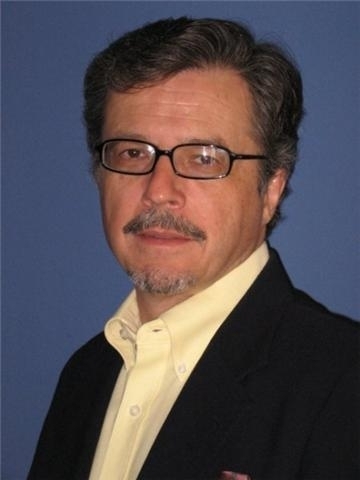
By Dr. David Edward Marcinko; MBA MEd

***

***

MSHUG: Microsoft Healthcare Users Group (MS-HUG) unified with the Healthcare Information and Management Systems Society (HIMSS) as part of the HIMSS Users Group Alliance Program in October 2003.

Today, the unification strengthens the commitment of HIMSS and MS-HUG to better serve their members and the industry through a shared strategic vision to provide leadership and healthcare information technology solutions that improve the delivery of patient care.

COMMENTS APPRECIATED

Refer and Subscribe

***

ONC: Push-Back Against Health IT Blocking Dis-Incentives

By Staff Reporters

***

Certified Health Information Technology Reported by Clinicians for ...

***

DEFINITION: The Office of the National Coordinator for Health Information Technology (ONC) is a staff division of the Office of the Secretary, within the U.S. Department of Health and Human Services. ONC leads national health IT efforts, charged as the principal federal entity to coordinate nationwide efforts to implement and use the most advanced health information technology [HIT] and the electronic exchange of health information.

CITE: https://www.r2library.com/Resource

***

***

And so, hospitals and medical groups are now pushing back on ONC’s proposed information blocking disincentives, arguing that the financial penalties are “excessive,” “unfair” and will discourage participation in value-based care programs [VBC].

VBC: https://medicalexecutivepost.com/2023/08/14/value-based-care-guidelines-and-best-practices/

COMMENTS APPRECIATED

Thank You

***

***

HIMSS REPORT: The State of Healthcare IT in 2022

***

By Staff Reporters

***

***

4 Takeaways from HIMSS

 •  84% of respondents say their organizations require them to use digital health tools and most clinicians see the value in digital transformation.
 •  99% of leaders in U.S.-based health systems say it is important for their organizations to invest in digital transformation and 95% of international health system leaders agree.
 •  93% of international payer respondents and 74% of U.S. payers say their organizations have a team focused on digital transformation.
 •  80% of health system leader respondents in the U.S. think that a physician visit deserves to be reimbursed at the same or higher levels than an in-person visit.

Source: HIMSS via Healthcare Innovation, March 18, 2022

NOTE: The Healthcare Information and Management Systems Society is an American not-for-profit organization dedicated to improving health care in quality, safety, cost-effectiveness and access through the best use of information technology and management systems.

CITE: https://www.r2library.com/Resource/Title/082610254

***

COMMENTS APPRECIATED

Thank You

***

***

List of Healthcare IT Trade Associations

Advancing Medical Practice Success with Strategic Relationships

By Staff ReportersHDS

To be efficient in healthcare delivery today, doctors must partner and understand the resources and affiliations that are available to them. Here is a brief list of several healthcare trade associations and leading industry vendors submitted for your review.

AHIMA
The American Health Information Management Association (AHIMA) is the premier association of health information management professionals. AHIMA’s 51,000 members are dedicated to the effective management of personal health information needed to deliver quality healthcare to the public. Founded in 1928 to improve the quality of medical records, AHIMA is committed to advancing the health information management profession in an increasingly electronic and global environment through leadership in advocacy, education, certification, and lifelong learning.

EHRA
HIMSS EHRA is a trade association of Electronic Health Record (EHR) vendors that addresses national efforts to create interoperable EHRs in hospital and ambulatory care settings. HIMSS EHRA operates on the premise that the rapid, widespread adoption of EHRs will help improve the quality of patient care and the productivity of the healthcare system. The primary mission of the association is to provide a forum for the EHR vendor community relative to standards development, the EHR certification process, interoperability, performance and quality measures, and other EHR issues that may become the subject of increasing government, insurance and physician association initiatives and requests.

HIMSS
HIMSS (Healthcare Information and Management Systems Society) is the healthcare industry’s membership organization exclusively focused on providing leadership for the optimal use of healthcare information technology and management systems for the betterment of human health. Founded in 1961 with offices in Chicago, Washington D.C., and other locations across the country, HIMSS represents approximately 17,000 individual members and some 275 member corporations that employ more than 1 million people. HIMSS frames and leads healthcare public policy and industry practices through its advocacy, educational and professional development initiatives designed to promote information and management systems’ contributions to ensuring quality patient care.

HITSP
The Healthcare Information Technology Standards Panel serves as a cooperative partnership between the public and private sectors for achieving a widely accepted and useful set of standards specifically to enable and support widespread interoperability among healthcare software applications, as they will interact in a local, regional, and national health information network for the United States. Comprised of a wide range of stakeholders, the Panel will assist in the development of the U.S. Nationwide Health Information Network (NHIN) by addressing issues such as privacy and security within a shared healthcare information system. The Panel is sponsored by the American National Standards Institute (ANSI) in cooperation with strategic partners such as the Healthcare Information and Management Systems Society (HIMSS), the Advanced Technology Institute (ATI), and Booz Allen Hamilton. Funding for the Panel is being provided via the ONCHIT contract award from the U.S. Department of Health and Human Services.

HL7
Health Level Seven is an American National Standards Institute (ANSI)-accredited Standards Developing Organization (SDO) operating in the healthcare clinical and administrative data arena. It is a not-for-profit volunteer organization made up of providers, vendors, payers, consultants, government groups, and others who develop clinical and administrative data standards for healthcare. Health Level Seven develops specifications; the most widely used being a messaging standard that enables disparate healthcare applications to exchange keys sets of clinical and administrative data.

MSHUG
Microsoft Healthcare Users Group (MS-HUG) unified with the Healthcare Information and Management Systems Society (HIMSS) as part of the HIMSS Users Group Alliance Program in October 2003. The unification strengthens the commitment of HIMSS and MS-HUG to better serve their members and the industry through a shared strategic vision to provide leadership and healthcare information technology solutions that improve the delivery of patient care.

WEDI
The Workgroup for Electronic Data Interchange [WEDI’s] goal is to improve the quality of healthcare through effective and efficient information exchange and management. They aim to provide leadership and guidance to the healthcare industry on how to use and leverage the industry’s collective knowledge, expertise, and information resources to improve the quality, affordability, and availability of healthcare.

Assessment

As the health information technology industry evolves, we will continue to contribute our expertise to foster ideas that shape the future of healthcare by offering more examples similar to the above.

Conclusion

And so, your thoughts and comments on this Medical Executive-Post are appreciated. Who did we miss? Feel free to review our top-left column, and top-right sidebar materials, links, URLs and related websites, too. Then, be sure to subscribe

Speaker: If you need a moderator or speaker for an upcoming event, Dr. David E. Marcinko; MBA – Publisher-in-Chief of the Medical Executive-Post – is available for seminar or speaking engagements. Contact: MarcinkoAdvisors@msn.com

OUR OTHER PRINT BOOKS AND RELATED INFORMATION SOURCES:

Product DetailsProduct DetailsProduct Details

Join the 4th Global m-Health App Developer Economics Study

Join Our Mailing List

Invitation to Participate

By Flavio Zoppini

Dear Dr. Marcinko,

I am contacting you to ask the ME-P to become a partner for the 4th Global M-Health App Developer Economics.

The 4th Global MHealth App Developer Economics is conducted in partnership with Global Health Alliance and established global mHealth players and healthcare publishers like Happtique, HIMSS, WIP and Pharmaphorum.

Our partners will help us to make this project the largest mHealth app development study globally.  The target audience for the study is mHealth app developers and publishers as well as decision makers in the healthcare industry and institutions that oversees mHealth activities.

Results will be presented on the mHealth Summit in Berlin May 2014.

Partner benefits:

  • Our partners will get first hand insights from the study results.
  • Brand will be part of the largest study about mHealth apps.
  • Raise awareness for publications and blogs among a large target group.

We invite you to become a partner as well and help us to:

  • Invite survey participants. The study will be largely based on the results of a global online survey which has been launched last week.

Here is a link to the survey. Take the survey

Write about the results of the study once it is finished.

Here are some topics the study is covering:

  • Impact on healthcare: e.g. how will mHealth apps help to reduce healthcare costs?
  • Market potential: e.g. what are the mHealth app categories that offer the biggest market potential in the next five years?
  • Business models: e.g. what impact do sensors and wearable devices (e.g. glucometers and glasses) have on mHealth apps?
  • Trends: e.g. what will be the main distribution channels for mHealth apps in five years?
  • The market’s current status: e.g. what are the main reasons for publishing mHealth apps?
  • Innovation: e.g. how do APIs change the way mHealth apps deliver their services?

SONY DSC

Assessment

We would like you to join the team of partners for this project.  I look forward to your ME-P reader feedback.

Conclusion

Your thoughts and comments on this ME-P are appreciated. Feel free to review our top-left column, and top-right sidebar materials, links, URLs and related websites, too. Then, subscribe to the ME-P. It is fast, free and secure.

Link: http://feeds.feedburner.com/HealthcareFinancialsthePostForcxos

Speaker: If you need a moderator or speaker for an upcoming event, Dr. David E. Marcinko; MBA – Publisher-in-Chief of the Medical Executive-Post – is available for seminar or speaking engagements. Contact: MarcinkoAdvisors@msn.com

OUR OTHER PRINT BOOKS AND RELATED INFORMATION SOURCES:

DICTIONARIES: http://www.springerpub.com/Search/marcinko
PHYSICIANS: www.MedicalBusinessAdvisors.com
PRACTICES: www.BusinessofMedicalPractice.com
HOSPITALS: http://www.crcpress.com/product/isbn/9781466558731
CLINICS: http://www.crcpress.com/product/isbn/9781439879900
BLOG: www.MedicalExecutivePost.com
FINANCE: Financial Planning for Physicians and Advisors
INSURANCE: Risk Management and Insurance Strategies for Physicians and Advisors

Product DetailsProduct Details

Product Details

Impact of Health Information Technology

Join Our Mailing List

An HIT Infographic

[By HIMSS Clinical Informatics Community]

Practicing clinicians have indicated strong support for the ability of health IT to overcome communication challenges among care providers. Considering that a series of Institute of Medicine reports on errors in healthcare have led to widespread recognition that siloed practices and inadequate communication are primary contributors to medical errors, continued endorsement for health IT will lead to better communication and enhanced quality of care.

The results come from the 2013 iHIT study conducted by HIMSS and HIMSS Analytics, released during HIMSS13, the organization’s annual conference and exhibition. The study was designed to explore the role of health IT from an inter-professional communication perspective. More than 500 clinician respondents working in a care delivery setting provided information on the value of health IT in support of quality care.

Read the Full Study & Final Report

HIMSS 2013 iHIT Study – Final Report
HIMSS 2013 iHIT Study – Executive Summary

 HIT

Assessment

According to the study, the health IT tools in place at the provider organizations of respondents support various clinical processes and provide improved access to the information needed to prepare for delivery of care. This includes having improved access to information needed on patients transferring to a clinician’s unit/caseload, ultimately resulting in enhanced levels of patient care.

Conclusion

Your thoughts and comments on this ME-P are appreciated. Feel free to review our top-left column, and top-right sidebar materials, links, URLs and related websites, too. Then, subscribe to the ME-P. It is fast, free and secure.

Link: http://feeds.feedburner.com/HealthcareFinancialsthePostForcxos

Speaker: If you need a moderator or speaker for an upcoming event, Dr. David E. Marcinko; MBA – Publisher-in-Chief of the Medical Executive-Post – is available for seminar or speaking engagements. Contact: MarcinkoAdvisors@msn.com

OUR OTHER PRINT BOOKS AND RELATED INFORMATION SOURCES:

Product DetailsProduct Details

Mobile Health Solutions Video from AT&T

Join Our Mailing List

From HIMSS 2012 and Physician Nexus


Video Link :http://physiciannexus.com/video/mobile-health-solutions-from-at-t

Conclusion

Your thoughts and comments on this ME-P are appreciated. Feel free to review our top-left column, and top-right sidebar materials, links, URLs and related websites, too. Then, subscribe to the ME-P. It is fast, free and secure.

Link: http://feeds.feedburner.com/HealthcareFinancialsthePostForcxos

Speaker: If you need a moderator or speaker for an upcoming event, Dr. David E. Marcinko; MBA – Publisher-in-Chief of the Medical Executive-Post – is available for seminar or speaking engagements. Contact: MarcinkoAdvisors@msn.com

Our Other Print Books and Related Information Sources:

Health Dictionary Series: http://www.springerpub.com/Search/marcinko

Practice Management: http://www.springerpub.com/product/9780826105752

Physician Financial Planning: http://www.jbpub.com/catalog/0763745790

Medical Risk Management: http://www.jbpub.com/catalog/9780763733421

Hospitals: http://www.crcpress.com/product/isbn/9781439879900

Physician Advisors: www.CertifiedMedicalPlanner.org

Product DetailsProduct DetailsProduct Details

Product Details  Product Details

Product Details

The Legal eHR [Extreme Caution Ahead]

Is there such a thing?

By Dr. David Edward Marcinko MBA CMP

[Editor-in-Chief]

Electronic medical and healthcare records [eMRs and eHRs] are a hot topic and the subject of many positive and negative posts and comments on this ME-P; and around the healthcare space. Personally, I am agnostic on the subject – trending against – for most physicians at this point in time.

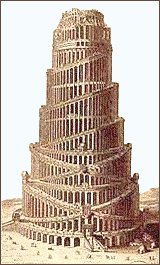
In other words, the technology is just not there yet regarding “ease of use”, inter-operability, common transmission and security standards, and common platform, etc. This is reminiscent of the early days of the word processing industry, when I first used Edix-Wordex, Leading Edge, Word Perfect, Word Star, ASCII, PFR-Write, PC-Write, etc.  It was both exciting and confusing, being a writer and editor, at that time. Sorta like working in an electronic Tower of Babel; or using the many disparate eHR systems existing today?

I am not a Luditte, however. I’m a former American Health Information Management Association (AHIMA), and Healthcare Information and Management Systems Society (HIMSS), member. And, I’m certain that eHRs will be pervasive one day, but I’ll reserve my opinions, my money and information security, and my patient’s data until then. After all, I am a MSFT-Word® guy today as I thank Bill Gates for consolidating the formerly competitive, and chaotic, word processing software space. Yes, sometimes monopolies are a good thing! 

Malpractice Issues

Moreover, it seems I have been a Cassandra [the daughter of King Priam and Queen Hecuba of Troy] of sorts, crying aloud about the professional liability and medical malpractice issues of eMRS; here on this ME-P, during my speeches and lectures, as wells as in our books and CDs. All to no avail; until now!

Links: https://medicalexecutivepost.com/2009/12/23/will-electronic-records-raise-the-legal-standard-of-care-and-increase-malpractice-risk/

I suppose this is a product of my prior work as a licensed insurance agent for the State of Georgia, a malpractice reviewer, a court approved medical-legal expert witness, and author of the book: “Risk Management and Insurance Planning for Physicians and their Advisors”.

Link: http://www.jbpub.com/catalog/9780763733421

Assessment

Q: And so, is there a legal eHR and is it different from traditional eHRs?

A: You bet there is!

Read Link: http://www.himss.org/content/files/LegalEMR_Flyer3.pdf

Conclusion

And so, your thoughts and comments on this ME-P are appreciated. Think I am still mis-guided, or worse, paranoid? Feel free to review our top-left column, and top-right sidebar materials, links, URLs and related websites, too. Then, subscribe to the ME-P. It is fast, free and secure.

Link: http://feeds.feedburner.com/HealthcareFinancialsthePostForcxos

Speaker: If you need a moderator or speaker for an upcoming event, Dr. David E. Marcinko; MBA – Publisher-in-Chief of the Medical Executive-Post – is available for seminar or speaking engagements. Contact: MarcinkoAdvisors@msn.com

Our Other Print Books and Related Information Sources:

Health Dictionary Series: http://www.springerpub.com/Search/marcinko

Practice Management: http://www.springerpub.com/product/9780826105752

Physician Financial Planning: http://www.jbpub.com/catalog/0763745790

Medical Risk Management: http://www.jbpub.com/catalog/9780763733421

Physician Advisors: www.CertifiedMedicalPlanner.org

   Product Details

The Continuing Debate over Electronic Medical Records Systems

Join Our Mailing List

Are We There Yet? – In Healthcare Organizations

[By Richard J. Mata MD, MS]

Dr. Mata

Paper-based medical records have been in existence for centuries and their gradual replacement by computer-based records has been slowly underway for over twenty years in western healthcare systems.

Computerized information systems have not achieved the same degree of penetration in healthcare as is seen in other sectors such as finance, transportation, and the manufacturing and retail industries.

Further, deployment has varied greatly from country to country and from specialty to specialty and in many cases has revolved around local systems designed for local use.

The DHHS

In a 2005 DHHS study, national penetration of electronic health records (EHRs) may have reached over 90% in primary care practices in Norway, Sweden, and Denmark (2003), but has been limited to 17% of physician office practices in the U.S. (2001-2003). By 2011, and the ACA, this number may now be approaching 20-25% in the US but adoption may actually be slowing.

The ISMS Vision

According to the Illinois State Medical Society there is a “Sweeping Vision for EHRs”:

  • EHRs will provide a comprehensive view of all patient information
  • Quality of care will be improved.
  • Physicians will more easily be able to review the “complete” medical record.
  • An appropriately configured EHR system will provide “alerts” and “notices” to help health care providers incorporate best practices into patient treatments. Ideally clinical decision support should be built in and be evidence-based.

Medical errors can be reduced:

  • Treatment and administrative costs will be reduced.
  • Public health will be improved.

Defining Electronic Records Systems

The 2003 Institute of Medicine (IOM) Patient Safety Report describes an EHR as encompassing:

  • a longitudinal collection of electronic health information for and about persons;
  • [immediate] electronic access to person- and population-level information by authorized users;
  • provision of knowledge and decision-support systems [that enhance the quality, safety, and efficiency of patient care] and
  • support for efficient processes for health care delivery.

IOM Report

A 1997 IOM report, The Computer-Based Patient Record: An Essential Technology for Health Care provides a more extensive definition:

A patient record system is a type of clinical information system, which is dedicated to collecting, storing, manipulating, and making available clinical information important to the delivery of patient care. The central focus of such systems is clinical data and not financial or billing information. Such systems may be limited in their scope to a single area of clinical information (e.g., dedicated to laboratory data), or they may be comprehensive and cover virtually every facet of clinical information pertinent to patient care (e.g., computer-based patient record systems).

The EHR definitional model document developed by the Health Information and Management Systems Society (HIMSS, 2003) includes “a working definition of an EHR, attributes, key requirements to meet attributes, and measures or ‘evidence’ to assess the degree to which essential requirements have been met once EHR is implemented.”

IOM Re-Deux

In another IOM report, Key Capabilities of an Electronic Health Record System [Tang, 2003], identifies a set of eight core care delivery functions that EHR systems should be capable of performing in order to promote greater safety, quality and efficiency in health care delivery. The eight core capabilities that EHRs should possess are:

  1. Health information and data. Having immediate access to key information – such as patients’ diagnoses, allergies, lab test results, and medications – would improve caregivers’ ability to make sound clinical decisions in a timely manner.
  2. Result management. The ability for all providers participating in the care of a patient in multiple settings to quickly access new and past test results would increase patient safety and the effectiveness of care.
  3. Order management. The ability to enter and store orders for prescriptions, tests, and other services in a computer-based system should enhance legibility, reduce duplication, and improve the speed with which orders are executed.
  4. Decision support. Using reminders, prompts, and alerts, computerized decision-support systems would help improve compliance with best clinical practices, ensure regular screenings and other preventive practices, identify possible drug interactions, and facilitate diagnoses and treatments.
  5. Electronic communication and connectivity. Efficient, secure, and readily accessible communication among providers and patients would improve the continuity of care, increase the timeliness of diagnoses and treatments, and reduce the frequency of adverse events.
  6. Patient support. Tools that give patients access to their health records, provide interactive patient education, and help them carry out home monitoring and self-testing can improve control of chronic conditions, such as diabetes.
  7. Administrative processes. Computerized administrative tools, such as scheduling systems, would greatly improve hospitals’ and clinics’ efficiency and provide more timely service to patients.
  8. Reporting. Electronic data storage that employs uniform data standards will enable health care organizations to respond more quickly to federal, state, and private reporting requirements, including those that support patient safety and disease surveillance.”

Assessment

After reviewing the above, are we there yet in – 2011?

Conclusion

Your thoughts and comments on this ME-P are appreciated. Feel free to review our top-left column, and top-right sidebar materials, links, URLs and related websites, too. Then, subscribe to the ME-P. It is fast, free and secure.

Speaker: If you need a moderator or speaker for an upcoming event, Dr. David E. Marcinko; MBA – Publisher-in-Chief of the Medical Executive-Post – is available for seminar or speaking engagements. Contact: MarcinkoAdvisors@msn.com

OUR OTHER PRINT BOOKS AND RELATED INFORMATION SOURCES:

Product DetailsProduct DetailsProduct Details

Product Details 

Defining Electronic Medical Record Systems

Join Our Mailing List

Does Linguistic Obfuscation Exacerbate our Use Ambivalence?

[By Dr. Richard J. Mata; CIS, CMP™]

[By Dr. David E. Marcinko; MBA, CMP™]

The 2003 Institute of Medicine (IOM) Patient Safety Report [1] described an EHR [2] as encompassing:

  • a longitudinal collection of electronic health information for and about persons;
  • [immediate] electronic access to person- and population-level information by authorized users;
  • provision of knowledge and decision-support systems [that enhance the quality, safety, and;
  • efficiency of patient care] with support for efficient processes for health care delivery.

The IOM Report

A 1997 IOM report, The Computer-Based Patient Record: An Essential Technology for Health Care, provides a more extensive definition:

A patient record system is a type of clinical information system, which is dedicated to collecting, storing, manipulating, and making available clinical information important to the delivery of patient care. The central focus of such systems is clinical data and not financial or billing information. Such systems may be limited in their scope to a single area of clinical information (e.g., dedicated to laboratory data), or they may be comprehensive and cover virtually every facet of clinical information pertinent to patient care (e.g., computer-based patient record systems).

The HIMSS Model

The EHR definitional model document developed by the Health Information and Management Systems Society (HIMSS, 2003) includes:

“a working definition of an EHR, attributes, key requirements to meet attributes, and measures or ‘evidence’ to assess the degree to which essential requirements have been met once EHR is implemented.”


The IOM Model

Another IOM report, Key Capabilities of an Electronic Health Record System [Tang, 2003], identifies a set of eight core care delivery functions that EHR systems should be capable of performing in order to promote greater safety, quality and efficiency in health care delivery:

8 Core Principles

Today, we realize that the eight core capabilities that Electronic Health [Medical] Records should possess are:

  1. — Health information and data. Having immediate access to key information – such as patients’ diagnoses, allergies, lab test results, and medications – would improve caregivers’ ability to make sound clinical decisions in a timely manner.
  2. — Result management. The ability for all providers participating in the care of a patient in multiple settings to quickly access new and past test results would increase patient safety and the effectiveness of care.
  3. — Order management. The ability to enter and store orders for prescriptions, tests, and other services in a computer-based system should enhance legibility, reduce duplication, and improve the speed with which orders are executed.
  4. — Decision support. Using reminders, prompts, and alerts, computerized decision-support systems would help improve compliance with best clinical practices, ensure regular screenings and other preventive practices, identify possible drug interactions, and facilitate diagnoses and treatments.
  5. — Electronic communication and connectivity. Efficient, secure, and readily accessible communication among providers and patients would improve the continuity of care, increase the timeliness of diagnoses and treatments, and reduce the frequency of adverse events.
  6. — Patient support. Tools that give patients access to their health records, provide interactive patient education, and help them carry out home monitoring and self-testing can improve control of chronic conditions, such as diabetes.
  7. — Administrative processes. Computerized administrative tools, such as scheduling systems, would greatly improve hospitals’ and clinics’ efficiency and provide more timely service to patients.
  8. — Reporting. Electronic data storage that employs uniform data standards will enable health care organizations to respond more quickly to federal, state, and private reporting requirements, including those that support patient safety and disease surveillance.” [3]

Assessment

With all the confusion surrounding terms like quality improvement and “meaningful use” which can mean major Federal dollars to the coffers of a medical practice, clinic or hospital; are we still confused about basic definitional terms?

And, does eMR linguistic obfuscation exacerbate our use ambivalence and encourage physician/dentist eMR avoidance?

Conclusion

Feel free to review our top-left column, and top-right sidebar materials, links, URLs and related websites, too. Then, be sure to subscribe. It is fast, free and secure.

References:

[1]   See http://www.himss.org/content/files/PatientSafetyFinalReport8252003.pdf.

[2]   EHR (electronic health record) is often used interchangeably with EMR (electronic medical record).  In this discussion, EHR will be used consistently.

[3]   See http://www.iom.edu/.

Product DetailsProduct DetailsProduct Details

About Remember It Now Patient-Centric Health Services

What it is – How it works – Where is it from?

By David Edward Marcinko; MBA CMP™

[Publisher-in-Chief]

RememberItNow was a featured company at the recent 10th annual HIMSS conference. It reports to be the best way for patients to take control of their health, or the health care of loved-ones. Their simple to use, patient-centric eHealth services are available online, anytime. There is no software to download, or upgrades to manage. The firm helps patients remember to take their medications, create a care community, get organized, provide long-distance care, and more. It is designed to be simple to use and make life easier http://www.rememberitnow.com

Mission

The folks at RememberItNow believe patients should spend more time doing the things they enjoy, and less time worrying about taking medications, remembering appointments, tracking prescriptions, reordering supplies and scheduling medical care, etc. RememberItNow is privately funded.

Video: http://prezi.com/irjw0cqiv1cu/introducing-rememberitnow/

My story – Back in the Day

Almost ten years ago, I was invited to attend a venture capitalist technology forum at Georgia Tech University, here in Atlanta. One of the very smallest firms [non-health care] I reviewed was called RememberIt.com. It was billed as a personalized email and online reminder service. I discussed the concept with a very young red-haired man-child named Jeffrey Tacca, president and chief executive officer. He had no employees at the time. Although Jeff was impressive, I was not a fan of his concept.

Nevertheless, if I recall correctly, he received first round funding in the amount of $1.5 million dollars and was accepted into the Georgia Tech start-up business incubator. I tried to keep track of his company throughout the years, to little avail. But, later I learned that RememberIt.com merged with Boardroom, Inc [a large paid subscription firm that publishes newsletters targeting personal, business, health and finance issues], enabling them to enhance users’ experience by providing personalized tips and information from its silo of newsletters. For example, if a RememberIt.com user requested weekly reminders to lose weight, they also received links to related articles on topics such as healthy living or finding the right fitness routine, etc. Users also were able to log-on to track events, special occasions and other commitments. This is no longer a unique concept today, but was state-of-the-art back then.

Assessment

According to my investigations, RememberitNow.com is unrelated to the RemembIt.com of above. The firm is based in Orinda, CA and is headed up by Pamela Swingley [Founder] and Phil Wang [Engineer]. So, if I am mistaken – please tell me. We’d love to share this success story on the ME-P and I’d like to know what ever happened to Jeff Tacca?

Conclusion

And so, your thoughts and comments on this ME-P are appreciated. Give em’ a click and tell us what you think? Is this a very sophisticated solution, to a very minor problem?  Do we simply need to exchange bad habits, for good habits, regarding self health responsibility?

Feel free to review our top-left column, and top-right sidebar materials, links, URLs and related websites, too. Then, be sure to subscribe to the ME-P. It is fast, free and secure.

Link: http://feeds.feedburner.com/HealthcareFinancialsthePostForcxos

Speaker: If you need a moderator or speaker for an upcoming event, Dr. David E. Marcinko; MBA – Publisher-in-Chief of the Medical Executive-Post – is available for seminar or speaking engagements. Contact: MarcinkoAdvisors@msn.com

Get our Widget: Get this widget!

Our Other Print Books and Related Information Sources:

Practice Management: http://www.springerpub.com/prod.aspx?prod_id=23759

Physician Financial Planning: http://www.jbpub.com/catalog/0763745790

Medical Risk Management: http://www.jbpub.com/catalog/9780763733421

Physician Advisors: www.CertifiedMedicalPlanner.org

Subscribe Now: Did you like this Medical Executive-Post, or find it helpful, interesting and informative? Want to get the latest ME-Ps delivered to your email box each morning? Just subscribe using the link below. You can unsubscribe at any time. Security is assured.

Link: http://feeds.feedburner.com/HealthcareFinancialsthePostForcxos

Sponsors Welcomed

And, credible sponsors and like-minded advertisers are always welcomed.

Link: https://healthcarefinancials.wordpress.com/2007/11/11/advertise


Product Details

Electronic Medical Records and Dentistry

A Note to Diane Rehm

[By Darrell K. Pruitt; DDS]

Dear Diane Rehm,

I always enjoy your show.

You add value to my drive to work.

As a dentist, I was especially interested in your March 10 show “Electronic Medical Records.”

http://wamu.org/programs/dr/10/03/10.php?utm_source=feedburner&utm_medium=feed&utm_campaign=Feed%3A+WAMU885DianeRehm+%28WAMU%3A+The+Diane+Rehm+Show%29&utm_content=FaceBook#30598

In all the excitement that surrounds the 19 billion dollars our grandchildren have unwittingly granted to physicians and hospitals for “meaningful” adoption of certified eMRs, you probably haven’t noticed that nobody is talking about including dentistry in the conversion from paper to digital. Do you find that odd?

Small and Mid Sized Practices

Like small and mid sized physicians’ practices, small dental practices are intended to be part of the federal mandate for interoperable eMR adoption – even without the help from stimulus money that physicians receive. You probably weren’t aware that the stimulus money will run out before HHS gets around to defining “meaningful use” of eMRs in dental office. That would be impossible, but nevertheless, I anticipate that the attempts will be entertaining. Physicians in small practices typically have tens of thousands of paper charts as thick as phone books. On the other hand, a busy solo dental practice, like the majority of practices in the US, might have 5,000 files that are very thin in comparison to files that involve the whole body instead of just the bottom third of the face. That makes sense, doesn’t it?

Marginal Benefits May Not Exceed Marginal Costs 

I listened to your guest Dr. Carol Horn, who practices internal medicine in private practice, as well as others involved in the actual delivery of healthcare. They list not only the benefits of eMR adoption, but in fairness, they also described the expense and liability of digital records that continue long after the tedious and dangerous conversion from paper to digital. In other words, it appears that the benefits for physicians barely make the effort worth the price, even with 19 billion dollars in help.

Editor’s Note: In economics, we say that the marginal benefits may not exceed the marginal costs; all things being equal.

Assessment 

And so, it occurs to me that if dentists are to be included in the plans for digital interoperability, we will be very, very slow adopters for natural reasons: like eMRs in physicians’ offices, eMRs in dentists’ offices are more expense and trouble than they are worth – even before considering the bankruptcy-level liability of a data breach.

Most of those who champion eMRs for the entire healthcare system in the nation don’t realize that the bottleneck in dental offices isn’t the front desk. It’s the dentist who is hopefully taking his or her time providing care with those hands instead of working a keyboard.

Conclusion

Your thoughts and comments on this ME-P are appreciated. Feel free to review our top-left column, and top-right sidebar materials, links, URLs and related websites, too. Then, subscribe to the ME-P. It is fast, free and secure.

Link: http://feeds.feedburner.com/HealthcareFinancialsthePostForcxos

Speaker: If you need a moderator or speaker for an upcoming event, Dr. David E. Marcinko; MBA – Publisher-in-Chief of the Medical Executive-Post – is available for seminar or speaking engagements. Contact: MarcinkoAdvisors@msn.com

OUR OTHER PRINT BOOKS AND RELATED INFORMATION SOURCES:

Product DetailsProduct DetailsProduct Details

About Microsoft HealthVault Community Connect

Join Our Mailing List

Connecting Hospitals with Patients and Referring Physicians

[By Staff Reporters]

At the recent 2010 Annual Healthcare Information and Management Systems Society (HIMSS) Conference & Exhibition here in Atlanta, Microsoft announced Microsoft HealthVault Community Connect, a new software solution for hospitals designed to help them improve care coordination and engage patients and their families in managing their own health.

Improving Coordination of Care

HealthVault Community Connect reports to enable hospitals to give patients and referring physician’s access, after discharge, to electronic copies of the patient’s personal health data generated at the hospital. The product also lets patients pre-register for hospital appointments online using their electronic personal health information to populate hospital forms in advance.

Assessment

Microsoft HealthVault Community Connect lets hospitals exchange electronic patient health information with patients and referring doctors. The new solution is scheduled to be available in the third quarter of 2010.

http://www.microsoft.com/presspass/press/2010/mar10/03-01MSMiamiPR.mspx

Conclusion

So, give em’ a click and tell us what you think.

Your thoughts and comments on this ME-P are appreciated. Feel free to review our top-left column, and top-right sidebar materials, links, URLs and related websites, too. Then, subscribe to the ME-P. It is fast, free and secure.

Speaker: If you need a moderator or speaker for an upcoming event, Dr. David E. Marcinko; MBA – Publisher-in-Chief of the Medical Executive-Post – is available for seminar or speaking engagements. Contact: MarcinkoAdvisors@msn.com

OUR OTHER PRINT BOOKS AND RELATED INFORMATION SOURCES:


Product DetailsProduct DetailsProduct Details

Events-Planner: March 2010

ADVERTISEMENT

Events-Planner: MARCH 2010

By Staff Writers

“Keeping track of important health economics and financial industry meetings, conferences and summits”

Welcome to this issue of the Medical Executive-Post and our Events-Planner. It contains the latest information on conferences, news, and relevant resources in healthcare finance, economics, research and development, business management, pharmaceutical pricing, and physician/entity reimbursement!  Watch for a new Events-Planner each month.

First, a little about us! The Medical Executive-Post is still a relative newcomer.  But today, we have almost 17,500 visitors and readers each month from all over the country, in addition to our growing subscriber base. We have been a successful collaborative effort, thanks to your contributions.  As a result, we are adding new resources daily.  And, we hope the website continues to provide the best place to go for journals, books, conferences, educational resources, tools, and other things you need to establish the value your healthcare consulting and financial advisory intervention. And so, enjoy the Medical Executive-Post and our monthly Events-Planner with our compliments. 

A Look Ahead this Month

March 1: Print Edition Healthcare Journalism: If you would like to “step-up-your-game” and be considered as a peer-reviewed contributor to the third print edition of: The Business of Medical Practice [Health 2.0 Profit Maximizing Techniques for Savvy Doctors]; contact Ann at: MarcinkoAdvisors@msn.com. There are several chapter topics still available. Now, the important dates:

  • March 1-4: HIMSS-10 Conference, Atlanta, GA
  • March 4-5: Medicare RAC Summit, Washington, DC 
  • March 6-9: BISA Annual Convention, Westin Diplomat, Hollywood, FLA
  • March 7-9: ABA Wealth Management and Trust Conference, Biltmore, AZ
  • March 11: Health Plan Innovations Conference, Orlando, FLA
  • March 13: AORN Congress, Denver, CO
  • March 14: Health Facility Planning, San Diego, CA
  • March 25: World Healthcare Congress on HI-TECH, Washington, DC
  • March 29: HIT and the Future of Managed Care Industry Forum, NY 

Please send in your meetings and dates for listing in the next issue of our ME-P Events-Planner: MarcinkoAdvisors@msn.com

Speaker: If you need a moderator or speaker for an upcoming event, Dr. David E. Marcinko; MBA – Publisher-in-Chief of the Executive-Post – is available for seminar or speaking engagements. Contact: MarcinkoAdvisors@msn.com 

Subscribe Now: Did you like this Medical Executive-Post, or find it helpful, interesting and informative? Want to get the latest E-Ps delivered to your email box each morning? Just subscribe using the link below. It’s free. You can unsubscribe at any time. Security is assured.

Link: http://feeds.feedburner.com/HealthcareFinancialsthePostForcxos

Webinar on Doctors and the Economic Stimulus Package

An ME-P TV First

By Ann Miller; RN, MHA

[Executive-Director]

Recently, we caught up with Houston Neal – of Software Advice – who thought our ME-P readers would like to see their new podcast on eHR stimulus funds. In-as-much as they are still hearing from doctors who want to know how to take advantage of the stimulus, they’ve teamed up with the Chairman of HIMSS to help answer questions via webinar. The final clip is now live on the blog.

And the Question … Is?

After talking with hundreds of physician practices each month, their biggest question seems to be: “What does the economic stimulus package mean for me?”  

Of course, practices understand that up to $45 billion is allocated to provide incentive for physicians to adopt eHRs. However, many questions remain about how and when providers will receive stimulus funds.

ME-P TV

The podcast, with Justin Barnes Chairman of the HIMSS Electronic Health Record Association and Vice President of Greenway Medical Technologies, seeks to answer these questions. The original presentation was delivered last week; however you can view the entire webinar here, as well.

In this hour webinar, we hope you’ll learn:

  • How the stimulus money will be paid out
  • What it takes to qualify for funding
  • Which specialties qualify for funding
  • How “meaningful use” is defined
  • What constitutes a “qualified EHR”

Assessment

There’s some great content here, so be sure to check it out.

http://www.softwareadvice.com/articles/medical/what-does-it-take-to-qualify-for-ehr-stimulus-funds-1122209/

Join Our Mailing List

Further Contact

512.364.0117
www.SoftwareAdvice.com
houston@softwareadvice.com

Conclusion

And so, your thoughts and comments on this video are appreciated. Feel free to review our top-left column, and top-right sidebar materials, links, URLs and related websites, too. Then, be sure to subscribe to the ME-P. It is fast, free and secure.

Get our Widget: Get this widget!

Our Other Print Books and Related Information Sources:

Practice Management: http://www.springerpub.com/prod.aspx?prod_id=23759

Physician Financial Planning: http://www.jbpub.com/catalog/0763745790

Medical Risk Management: http://www.jbpub.com/catalog/9780763733421

Healthcare Organizations: www.HealthcareFinancials.com

Health Administration Terms: www.HealthDictionarySeries.com

Physician Advisors: www.CertifiedMedicalPlanner.com

Subscribe Now: Did you like this Medical Executive-Post, or find it helpful, interesting and informative? Want to get the latest ME-Ps delivered to your email box each morning? Just subscribe using the link below. You can unsubscribe at any time. Security is assured.

Link: http://feeds.feedburner.com/HealthcareFinancialsthePostForcxos

Meet Shahid N. Shah MS [Our Newest IT Thought-Leader]

Join Our Mailing List

And Textbook Contributor, Too!

By Ann Miller; RN, MHA

[Executive Director]

Shahid N. Shah is an internationally recognized healthcare thought-leader across the Internet. He is a consultant to various federal agencies on technology matters and winner of Federal Computer Week’s coveted “Fed 100” Award, in 2009.

Professional Career

Over a twenty year career, Shahid built multiple clinical solutions and helped design-deploy an electronic health record solution for the American Red Cross and two web-based eMRs used by hundreds of physicians with many large groupware and collaboration sites. As ex-CTO for a billion dollar division of CardinalHealth, he helped design advanced clinical interfaces for medical devices and hospitals. Mr. Shah is senior technology strategy advisor to NIH’s SBIR/STTR program helping small businesses commercialize healthcare applications.

He runs four successful blogs: At http://shahid.shah.org he writes about architecture issues; at http://www.healthcareguy.com he provides valuable insights on applying technology in health care; at http://www.federalarchitect.com he advises senior federal technologists; and at http://www.hitsphere.com he gives a glimpse of HIT as an aggregator.

Industry Awards

Mr. Shah is a Microsoft MVP (Solutions Architect) Award Winner for 2007, and a Microsoft MVP (Solutions Architect) Award Winner for 2006. He also served as a HIMSS Enterprise IT Committee Member. Mr. Shah received a BS in computer science from the Pennsylvania State University and MS in Technology Management from the University of Maryland.

Assessment

Shahid is also contributing the chapter on HIT in the third edition of our book “Business of Medical Practice” [Transformational Health 2.0 Profit Maximization for Savvy Doctors], now in-progress www.BusinessofMedicalPractice.com

Channel Surfing

Have you visited our other topic channels? Established to facilitate idea exchange and link our community together, the value of these topics is dependent upon your input. Please take a minute to visit. And, to prevent that annoying spam, we ask that you register.

Link: http://feeds.feedburner.com/HealthcareFinancialsthePostForcxos

Conclusion

Your thoughts and comments on this ME-P are appreciated. Feel free to review our top-left column, and top-right sidebar materials, links, URLs and related websites, too. Then, subscribe to the ME-P. It is fast, free and secure.

Speaker: If you need a moderator or speaker for an upcoming event, Dr. David E. Marcinko; MBA – Publisher-in-Chief of the Medical Executive-Post – is available for seminar or speaking engagements. Contact: MarcinkoAdvisors@msn.com

OUR OTHER PRINT BOOKS AND RELATED INFORMATION SOURCES:

Product Details

Prominent Politician Views on Health Information Technology

A Guest Thought-Leader Op-Ed Piece

Ann Miller; RN, MHA [Executive-Director]  

By Alberto Borges; MD

In this review, ME-P thought-leader and colleague, Al Borges MD dissects and presents the political views of HIT by several prominent politicians.  WHY?

He believes that only a handful of politicians are questioning whether the cost of HIT will actually improve healthcare as promised, which can end up in wasted taxpayer money, and worse, become a slow-moving HIT blunder which puts patient lives at risk. Even President Obama’s staff quietly admits that these statements are unproven.

Assessment

For example, Dr. Ezekiel Emanuel, the brother of White House Chief of Staff Rahm Emanuel and the current health-policy adviser at the Office of Management and Budget and a member of Federal Council on Comparative Effectiveness Research stated last year that:

“Vague promises of savings from cutting waste, enhancing prevention and wellness, installing electronic medical records and improving quality are merely ‘lipstick’ cost control, more for show and public relations than for true change.”

Link: Politician Views of HIT [updated November 2009]

Conclusion

And so, your thoughts and comments on this ME-P are appreciated. Feel free to review our top-left column, and top-right sidebar materials, links, URLs and related websites, too.

Get our Widget: Get this widget!

Our Other Print Books and Related Information Sources:

Practice Management: http://www.springerpub.com/prod.aspx?prod_id=23759

Physician Financial Planning: http://www.jbpub.com/catalog/0763745790

Medical Risk Management: http://www.jbpub.com/catalog/9780763733421

Healthcare Organizations: www.HealthcareFinancials.com

Health Administration Terms: www.HealthDictionarySeries.com

Physician Advisors: www.CertifiedMedicalPlanner.com

The “Real Facts” about eMRs with .ppt Presentation

A Guest Thought-Leader Presentation

Ann Miller; RN, MHA [Executive Director]

By Alberto Borges; MD

In this colorful MSFT PowerPoint presentation, ME-P thought-leader and colleague, Al Borges MD dispels a plethora of eMR myths. He discusses the true cost of eMR implementation, and presents his views on the dark side of the eMR certification process.

Assessment

He concludes with an opinion on insider C-eMR politics in the USA.

Link: The Real Facts about eMRs [last updated April 2009].

Conclusion

And so, your thoughts and comments on this ME-P are appreciated. Feel free to review our top-left column, and top-right sidebar materials, links, URLs and related websites, too.

Our Other Print Books and Related Information Sources:

Practice Management: http://www.springerpub.com/prod.aspx?prod_id=23759

Physician Financial Planning: http://www.jbpub.com/catalog/0763745790

Medical Risk Management: http://www.jbpub.com/catalog/9780763733421

Product DetailsProduct Details


Allscript’s Glenn Tullman is Video Interviewed

Join Our Mailing List

Video Clip from the HIMSS Meeting

By Ann Miller; RN, MHA

[Executive-Director]

stk323168rknThere is a major controversy in the modern healthcare community over eMRs and how to pay for them; or even if they are effective in improving medical outcomes. Of course, by eMRs we mean interoperable medical records that span the pan-healthcare ecosystem; and not just the stand-alone digital records that many, if not most, physicians use in their daily practices to some degree or another.

Link: https://healthcarefinancials.wordpress.com/2009/03/10/on-the-hitech-act-of-2009/

Proponents

As readers of the ME-P are aware, one vocal camp supports certification and eMR industry mandates, standards, and governmental initiatives, etc. The recent $20 billion taxpayer input from the Obama Administration, courtesy of HITECH, further emboldens CCHIT and related wonks.

Opponents

One the other hand, one vocal ME-P opponent is dentist Darrell Pruitt. He and many others believe that current eMRs may be too expensive, unwieldy, and counter-productive. This camp advocates a mix of other data sources, technology processes and doctor/patient education to get us where we need to be in terms of improving medial outcomes; quicker and less expensively.

Assessment

Rather than read, research and write more on this controversy, which was apparently a red-hot topic at the recent HIMSS meeting, we have embedded a video link of Glen Tullman [CEO of Allscripts] and Mark Leavitt, [Chair of CCHIT], below.

Link: https://healthcarefinancials.wordpress.com/2009/03/02/cchit-is-prejudiced-and-lacks-diversity-%e2%80%93-an-indictment/

It even includes a clip of Jonathan Bush, CEO of AthenaHealth. And, although they don’t all agree; some common ground may be developing in this controversial issue.

Source: This link originally appeared on The Health Care Blog [THCB], by Matthew Holt.

Link: http://www.thehealthcareblog.com/the_health_care_blog/2009/04/cats-and-dogs-on-film–tullman-leavitt-bush.html#comments

Disclaimer:We are members of AHIMA, HIMSS, MS-HUG and SUNSHINE. We just released the Dictionary of Health Information Technology and Security, with Foreword by Chief Medical Information Officer Richard J. Mata; MD MS MS-CIS, of Johns Hopkins University; and the second edition of the Business of Medical Practice with Foreword by Ahmad Hashem; MD PhD, who was the Global Productivity Manager for the Microsoft Healthcare Solutions Group at the time.

Conclusion

Your thoughts and comments on this ME-P are appreciated. Feel free to review our top-left column, and top-right sidebar materials, links, URLs and related websites, too. Then, subscribe to the ME-P. It is fast, free and secure.

Speaker: If you need a moderator or speaker for an upcoming event, Dr. David E. Marcinko; MBA – Publisher-in-Chief of the Medical Executive-Post – is available for seminar or speaking engagements. Contact: MarcinkoAdvisors@msn.com

OUR OTHER PRINT BOOKS AND RELATED INFORMATION SOURCES:


Product Details 

On Continuity of Medical Care and HIMSS

Join Our Mailing List

Considering Pay-for-Retention [P-4-R]

By Darrell K Pruitt; DDSpruitt5

Here is the question on lots of minds these days; how can we change the way medical providers are paid so they are both incentivized and adequately compensated to provide consistent, high-quality, patient-centered medical homes?

My Novel Idea

Here is a solid, common sense idea; increase providers’ pay gradually according to how long the doctors retain patients – who are free to choose any doctor they wish.  Consistency is the mortar of a medical home [i.e., pay-4-retention]. 

An Ounce of Prevention 

If prevention, which predates eHRs by thousands of years, is more than just a modern buzzword, the nation can still shave much more expense from health care by promoting continual, personalized care for consumers than from digital health records alone – void of prevention incentives. Who in the audience still cannot understand that concept? Think of it this way. How do business leaders in the land of the free retain the best employees? They pay bonuses. Even waiters get tips to encourage interest in providing service consumers will return for. What do US physicians get?  Guaranteed cuts in their Medicaid payments over the next decade. Physicians no longer encourage their children to become doctors. Surprised? Scared? 

Consumers Should Rule 

In place of consumers ruling their healthcare in the US, well-positioned, giant stakeholders have persuaded lawmakers to offer physicians bonus money (that will later be taken away), not for curing patients, but for using digital records “in a meaningful manner.” It’s called “Mark and Michael Leavitts’ Clicking for Cash.”  Since the rules are made up along the way, they change like the weather. That is why the larger and more progressive medical facilities pay bonuses to retain their best “Coders” and other informatics specialists who keep up with the current Ingenix-styled games in order to maximize profits. It is my opinion that health care IT’s complexity works well with the economic stimulus plan to improve employment in the nation. Entrepreneurial stakeholders will continue to be movie-star popular right up until the complete collapse of Medicare.  Then they’ll be impossible to find www.HealthDictionarySeries.com

HIMSS 

Have you ever heard of HIMSS?

“The Healthcare Information and Management Systems Society (HIMSS) is the healthcare industry’s membership organization exclusively focused on providing leadership for the optimal use of healthcare information technology (IT) and management systems for the betterment of healthcare.”

– From the HIMSS Web site.

HIMSS Annual Meeting 

A week ago, HIMSS convened its annual convention in Chicago. The keynote speakers for the four day event were actor Dennis Quaid; followed by the Chairman and CEO of Kaiser Foundation Health Plan, George C. Halvorson; then the economist and former Chairman, Board of Governors of the Federal Reserve, Alan Greenspan, and finally; Jerry M. Linenger, MD, MSSM, MPH, PhD, Captain, Medical Corps, USN (Ret.), NASA Astronaut, and Space Analyst, NBC News. As one can tell, healthcare IT has lots of momentum. In fact, Dave Roberts, the HIMSS vice president for government relations confidently told Bob Brewin on NextGov.com

“The e-records initiative is an entitlement program like Social Security.” 

http://www.nextgov.com/nextgov/ng_20090406_1509.phpdhimc-book9

Another Entitlement Program – Entitlement for Whom

In Regina Herzlinger’s 2007 book “Who Killed Health Care?” the Harvard School of Business professor argues that entitled stakeholders, including a few ambitious members of HIMSS, are destroying health care in the name of reform. In the first half of her 260 page book, she spells out entrepreneurial malfeasance in simple well-annotated terms. In the last half, she describes why Consumer-Driven Health Care [CDHC] makes sense to her. Professor Herzlinger does not specifically mention the words “medical home” in her book, yet she emphasizes the importance of continuity of care. To promote continuity, she suggests that managed care insurance policies be extended to three years duration and longer.  Although she also does not mention dentistry, it is obvious to me that since chronic illnesses like diabetes are exacerbated by poor oral health, continuity of care in dentistry is of special importance.  It occasionally takes years to improve some patients’ oral health care. And sometimes we fail.

Assessment 

If these assumptions about continuity of care are accurate, it follows that the physical and economic health of the nation depends on long-term medical insurance contracts with employers and freedom-of-choice in providers. So is prevention worth holding ourselves accountable to consumers for once? Maybe it is just me, but I think unprecedented truth in healthcare will soon emerge regardless of stakeholders’ needs for confusion and obscurity.  It is called consumerism.  And it goes hand-in-hand with the Hippocratic Oath, the free-market and common sense.

Conclusion

Your thoughts and comments on this ME-P are appreciated. Feel free to review our top-left column, and top-right sidebar materials, links, URLs and related websites, too. Then, subscribe to the ME-P. It is fast, free and secure.

Link: http://feeds.feedburner.com/HealthcareFinancialsthePostForcxos

Speaker: If you need a moderator or speaker for an upcoming event, Dr. David E. Marcinko; MBA – Publisher-in-Chief of the Medical Executive-Post – is available for seminar or speaking engagements. Contact: MarcinkoAdvisors@msn.com

OUR OTHER PRINT BOOKS AND RELATED INFORMATION SOURCES:

Health Dictionary Series: http://www.springerpub.com/Search/marcinko

Practice Management: http://www.springerpub.com/product/9780826105752

Physician Financial Planning: http://www.jbpub.com/catalog/0763745790

Medical Risk Management: http://www.jbpub.com/catalog/9780763733421

Hospitals: http://www.crcpress.com/product/isbn/9781439879900

Physician Advisors: www.CertifiedMedicalPlanner.org

Product DetailsProduct DetailsProduct Details

Product Details  Product Details

Product DetailsProduct Details

Events-Planner: April 2009

ADVERTISEMENT

Events-Planner: APRIL 2009

Staff Writers

“Keeping track of important health economics and financial industry meetings, conferences and summits”

Welcome to this issue of the Medical Executive-Post and our Events-Planner. It contains the latest information on conferences, news, and relevant resources in healthcare finance, economics, research and development, business management, pharmaceutical pricing, and physician/entity reimbursement!  Watch for a new Events-Planner each month.

First, a little about us! The Executive-Post is still a newcomer. But today, we have almost 15,000 visitors and readers each month from all over the country, in addition to our growing subscriber base. We have been a successful collaborative effort, thanks to your contributions.  As a result, we are adding new resources daily.  And, we hope the website continues to provide the best place to go for journals, books, conferences, educational resources, tools, and other things you need to establish the value your healthcare consulting and financial advisory intervention. And so, enjoy the Executive-Post and our monthly Events-Planner with our compliments. 


A Look Ahead this Month


April 1: Print Edition Healthcare Journalism: If you would like to “step-up-your-game” and be considered as a peer-reviewed contributor to the third print edition of: The Business of Medical Practice [Advanced Profit Maximizing Techniques for Savvy Doctors]; contact Ann at: MarcinkoAdvisors@msn.com. There are several chapter topics still available. Now, the important dates:

April 1-3: Adv. Modeling Methods for Health Economic Evaluation, York, UK.

April 4-8: HIMSS Annual Conference, Chicago, IL.

April 6: Premier Forum on Medication Therapy Management and Patient Compliance Programs. CBI; Las Vegas, NV

April 7: FINRA Small Conference Series, New York, NY.

April 14: World health Care Congress; Washington, DC.

April 15-16: Tiburon CEO Summit, Ritz Carlton, New York, NY.

April 15-18: Academy of Managed Care Pharmacy’s 21st Annual Meeting and Showcase, Orlando, FL.

April 16-18: TIPAAA Annual Conference, Marriott River Center, San Antonio, TX.

April 20-24: Health Economics of Pharmaceuticals and Other Medical Interventions. Nice (Cannes) France.

April 21-22: Market Access Strategies for Personalized Medicines and Companion Diagnostics, Brussels, Belgium.

April 21-23: Introduction to Applied Health Economics: Methods for analysis of healthcare utilization and expenditure, University of York.
April 23-25: AIP Conference on Philanthropy, Rosemont, Ill.

April 25-29:  Society for Pain Practice Management Meeting, Phoenix, AZ.

April 26-29:  Wound Healing Society Symposium, Dallas, TX. 

Apr 27-28: 8th Annual Forum on Patient Compliance, Adherence and Persistency, Philadelphia, PA.

April 27-29: Workshop on Health Technology Assessment From Theory to Evidence to Policy, Toronto, CANADA.

April 28-May 1: Pharma Pricing and Market Access Outlook Europe, 2009, London.

April 29-May 2: American Geriatric Society Meeting, Chicago, IL.


Please send in your meetings and dates for listing in the next issue of our Events-Planner.

MarcinkoAdvisors@msn.com

Speaker: If you need a moderator or speaker for an upcoming event, Dr. David E. Marcinko; MBA – Publisher-in-Chief of the Executive-Post – is available for seminar or speaking engagements. Contact: MarcinkoAdvisors@msn.com  or Bio: www.stpub.com/pubs/authors/MARCINKO.htm

Subscribe Now: Did you like this Medical Executive-Post, or find it helpful, interesting and informative? Want to get the latest E-Ps delivered to your email box each morning? Just subscribe using the link below. It’s free. You can unsubscribe at any time. Security is assured.

Link: http://feeds.feedburner.com/HealthcareFinancialsthePostForcxos

Doctors Censoring Patients

Join Our Mailing List

Another Emerging Ethical Dilemma

[By Hope Rachel Hetico; RN, MHA, CMP™]hetico6

Much has been said, and much has been written, about the various healthcare 2.0 initiatives and the new-wave patient collaborative schemes among medical stakeholders. Even our federal government, vis-a-vie, the American Recovery and Reinvestment Act [ARRA], of 2009 [“stimulus”] has increased funding related to health information technology [HIT] for physicians, hospitals and healthcare organizations; hopefully to benefit us all.

Information Technology Money

In fact, according to Steve Lieber, President of the Health Information Management Systems Society [HIMSS], about $20 billion will be investment into health information technology [HIT] at one time. Some money will flow into the current calendar year, some dollars will flow in subsequent years, and some funding will be available until spent.

Consumer-Oriented Websites

And so, it comes with surprise and dismay to me that some doctors may be telling their patients to censor themselves – or find another physician. This, of course, is anathema to consumer oriented websites like RateMDs and Vitals.com, etc. These sites give internet users the chance to recommend and review physicians and hospitals nationwide.

Unethical Behavior

But, some ethicists believe that such self-interested behavior is not professional and when a doctor acts primarily out of self-interest, it is ethically suspect. For example, according to Fox News on February 19, 2009, among groups spearheading the move to censor is a company called Medical Justice® which says it’s only helping protect doctors from online libel as an “emerging threat” within the medical profession. Founder Dr. Jeffrey Segal, a former neurosurgeon robustly supports the consumer rating sites in theory, but in practice they aren’t properly monitored and can do irreparable harm to a doctor’s reputation – especially when people pretending to be former patients write phony reviews.

Assessment

Medical Justice® has been mentioned on this forum before, and according to its website

Medical Justice® creates a practice infrastructure to prevent, deter, and respond to frivolous medical malpractice suits.  A membership-based organization, Medical Justice® is relentlessly committed to protecting physicians’ reputations and practices.

Link: http://www.medicaljustice.com

The Center for Peer Review Justice is also a related group of physicians, podiatrists, dentists and osteopaths who have witnessed the perversion of medical peer review by malice and bad faith.

Link: https://healthcarefinancials.wordpress.com/2008/04/17/physician-peer-review

Industry Indignation Index: 65

Channel Surfing the ME-P

Have you visited our other topic channels? Established to facilitate idea exchange and link our community together, the value of these topics is dependent upon your input. Please take a minute to visit. And, to prevent that annoying spam, we ask that you register. It is fast, free and secure.

Conclusion

Your thoughts and comments on this ME-P are appreciated. Feel free to review our top-left column, and top-right sidebar materials, links, URLs and related websites, too. Then, subscribe to the ME-P. It is fast, free and secure.

Speaker: If you need a moderator or speaker for an upcoming event, Dr. David E. Marcinko; MBA – Publisher-in-Chief of the Medical Executive-Post – is available for seminar or speaking engagements. Contact: MarcinkoAdvisors@msn.com

OUR OTHER PRINT BOOKS AND RELATED INFORMATION SOURCES:

Product DetailsProduct DetailsProduct Details