Health Information Technology Security and Encryption

Join Our Mailing List

Understanding the Risks of eMRs and Internet Connectivity

[By Carol S. Miller; RN, MBA]Sun Micro

E-mails, PDA data, and Internet connectivity, unless encrypted, can be read by anyone.  Therefore, if these items are not encrypted, physicians should be careful of what they say and how they say it, especially when discussing any patient information with other providers, vendors, or managed care organizations. In addition, just because you deleted e-mail from the system does not mean that you have deleted it from the server or from the computers that maintain copies of your server’s data.  HIPAA regulations set forth the criteria in electronically transferring patient related data via the Internet.

Secure and Encrypt Messages and Health Information

If you want secure messages, an encryption program should be used. If the message is intercepted the text will be scrambled to anyone other than your intended recipient.  Most physicians feel encryption is too time consuming; however, programs such as Pretty Good Privacy at www.pgp.com provides an easy and nearly seamless integration into e-mail and operating systems, encrypting the sensitive files but still allowing ease of communication.  PCP software developed by MIT and endorsed by HIPAA, uses privacy and strong authentication.  Only the intended recipient can read the data.  If files were intercepted, they would be completely unreadable.  Other software programs are available in the marketplace that will work using a private key – similar to a password.  Tell the program the name of the file you want to encrypt and the private key, and the program uses a mathematical algorithm to encrypt the file.  For reference material on various encryption and security software programs, search the web under “encryption” or go to one of the following sites:  www.zixit.com, www.cisco.com, www.aspencrypt.com, or www.verisgn.com.  

Assessment

In addition to encryption, the office needs a good anti-virus program that is designed to detect and prevent viruses, such as Norton Anti Virus at www.symantec.com and McAfee VirusScan at www.mcafee.com 

Conclusion

Your thoughts and comments on this ME-P are appreciated. Feel free to review our top-left column, and top-right sidebar materials, links, URLs and related websites, too. Then, subscribe to the ME-P. It is fast, free and secure.

Speaker: If you need a moderator or speaker for an upcoming event, Dr. David E. Marcinko; MBA – Publisher-in-Chief of the Medical Executive-Post – is available for seminar or speaking engagements. Contact: MarcinkoAdvisors@msn.com

OUR OTHER PRINT BOOKS AND RELATED INFORMATION SOURCES:

The Business of Medical Practice: Transformational Health 2.0 Skills for Doctors, Third Edition

Physician Use of the Internet

The Slow Evolution of a Healthcare Tool

[By Carol S. Miller; RN, MBA]biz-book15

The Internet is a constantly evolving service that continues to grow at an exponential rate, especially in physician practices. Primarily, the Internet is used as a means to electronically and expeditiously transfer data via e-mail as well as obtain information from a variety of sites.  Initially, in the physician’s office, the primary use was e-mail communications with peers, hospitals and others. Next providers linked to hospitals and managed care organizations to obtain more direct connectivity for clinical information and benefit coverage. Today physicians are finding other beneficial avenues to expand their utilization of the Internet. Several examples include:


  • Direct e-mail inquiries from the patient to the physician.
  • Patient educational newsletters and links to other healthcare educational web sites.
  • Continuing medical education (CME).
  • Chat room consultations, conferences or presentations with other providers.
  • Nurse to patient e-mail connectivity.
  • Immediate data on lab results with alerts for abnormal high or low values.
  • CPOEs (Computerized Purchase Order Entry Systems).
  • Radiology images.
  • EMR (Electronic Medical Records).
  • Monitoring of patients blood sugars or EKGs via the Internet.
  • Appointment scheduling on-line by patients.
  • Patient appointment reminders via the Internet.
  • Secure physician portals such as Medicity, located at www.medicity.com, which allows access to pertinent and prioritized data from a wide range of sources and vendors to include, labs, imaging centers, hospitals, payers and others.
  • HIPAA compliant Application Service Providers (ASP) for dictation, recording, routing and speech recognition and transcription services, such as Speech Machines at http://www.speechmachines.com.

Access Management

Besides the value to the patient and the physician, the physician can utilize his or her Internet connection with software firms such as NextGen to automate the registration, scheduling, eligibility verification, billing and “clean” claims processing via innovative Web-base solutions in real-time scenarios. All the physician’s office needs is a PC, a standard Internet browser, and a connection to the Internet to take advantage of this service.

Assessment

snow-highway1These resources and more, via the Internet super highway, enable physicians to have quicker and easier access to clinical information and improve productivity. Furthermore, these tools will quickly assist providers with accurate and timely medical decision making, thus improving patient care and outcomes.

Conclusion

Your thoughts and comments on this ME-P are appreciated. Feel free to review our top-left column, and top-right sidebar materials, links, URLs and related websites, too. Then, subscribe to the ME-P. It is fast, free and secure.

Speaker: If you need a moderator or speaker for an upcoming event, Dr. David E. Marcinko; MBA – Publisher-in-Chief of the Medical Executive-Post – is available for seminar or speaking engagements. Contact: MarcinkoAdvisors@msn.com

OUR OTHER PRINT BOOKS AND RELATED INFORMATION SOURCES:


Product Details

http://www.BusinessofMedicalPractice.com

***

Become a Published Print Author with Us

The Business of Medical Practice [3rd Edition]

By Hope Rachel Hetico RN, MHA, CMP™

[Managing Editor]biz-book7

Dear Colleagues,

As you may know, we are commencing work on the third edition of our best selling book: The Business of Medical Practice

TOC 1st: http://www.amazon.com/Business-Medical-Practice-Maximizing-Doctors/dp/0826113117/ref=sr_1_8?ie=UTF8&s=books&qid=1231111232&sr=1-8

TOC 2nd: http://www.springerpub.com/prod.aspx?prod_id=23759

Invitation to Contribute

Accordingly, we would be honored for you to consider contributing a new or revised chapter, in your area of expertise, for a low-effort but high-yield contribution. Our goal is to help physician colleagues and management executives benefit from nationally known experts, as an essential platform for their success in the healthcare 2.0 business industry. Many topics are still available: [health accounting and costing; law, policy and administration; Medicare fraud and abuse; coding and insurance; HIT, grid and cloud computing; finance and economics, competitive models, collaboration and leadership, etc].

Support Always Available

Editorial support is available, and you would enjoy increasing subject-matter notoriety, exposure and public relations in an erudite and credible fashion. As a reader, or preferably a subscriber to the ME-P, your synergy in this space may be ideal. Time line for submission of a 5,000-7,500 word chapter is ample, and in a prose writing style that is “wide, not deep.” 

A Health 2.0 Initiative

And, be sure to address health 2.0 modernity. Update chapters from the second edition are also available. 

Definition: https://healthcarefinancials.wordpress.com/2008/09/12/emerging-healthcare-20-initiatives

Assessment

Please contact me for more details, if interested. A best selling-book is rare; while a third-edition volume even more so. Join us in this project. Regardless, we trust you will remain apostles of our core ME-P vision, “uniting medical mission and financial profit margin”, promoting it whenever possible.

Front Matter Link: frontmatter1advancedbusinessmedicine4 

Contact Info:

MarcinkoAdvisors@msn.com

770.448.0769

Conclusion

Your thoughts and comments on this ME-P are appreciated. Feel free to review our top-left column, and top-right sidebar materials, links, URLs and related websites, too. Then, subscribe to the ME-P. It is fast, free and secure.

Link: http://feeds.feedburner.com/HealthcareFinancialsthePostForcxos

Speaker: If you need a moderator or speaker for an upcoming event, Dr. David E. Marcinko; MBA – Publisher-in-Chief of the Medical Executive-Post – is available for seminar or speaking engagements. Contact: MarcinkoAdvisors@msn.com

OUR OTHER PRINT BOOKS AND RELATED INFORMATION SOURCES:

Collaborative Dental Health 2.0 [Part One of a Three Part Series]

Consumerism is the Hippocratic Way

By Darrell K. Pruitt; DDSpruitt1
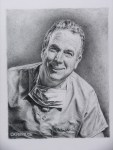
The Appearance of DR. Oogle

By September of 2005, when I finally worked up enough courage to ask a patient to post a review for me on DR. Oogle (doctoroogle.com) – a web-based patient referral site – my dental practice had been invisible and struggling for a few years and was still disappearing.  It was the most discouraging period in my career. 

Following the Golden Rule 

In spite of my efforts to always treat my patients like I would want to be treated myself, I was headed for either managed care, which I consider to be an unethical model for dentistry, or bankruptcy. The progressive betrayal of my profession and my patients by leaders in dentistry spawned bitterness and high blood pressure that I still suffer today – even though my practice has fully recovered. My hygienist and I are currently booked almost solid for the next two weeks. I know also that in the next three, misfortune could arise. I have no idea what is in store for dentistry in tomorrow’s economy. If I was in the business of selling advice, or DR. Oogle, I would probably be tempted to radiate much more confidence than I truly feel.

Back in the Day 

When I graduated from dental school in 1982, I was reassured by dentists I respected that one’s practice location is not important if one works hard to consistently provide patients with one’s best efforts.  Dr. Earl Estep, a practice development guru from Athens, Texas, taught me decades ago that word-of-mouth is much more effective for attracting patients who are ready to spend money than advertisements provide, and that one should never forget to ask for referrals, even if it feels “unprofessional.”  This is still solid advice.  For example, two days ago, in a special marketing feature on Jim Du Molin’s The Wealthy Dentist Blog, Chris Barnard suggested,

“Enlist your existing patients in your practice success. Actively seek those all-important word of mouth referrals from your patients.”

Link: http://www.thewealthydentist.com/blog/727/practice-marketing-in-down-times

Even though Barnard doesn’t mention patient referral sites such as DR. Oogle, his other ideas which may or may not fit one’s practice image include quarterly letters, $10 gas cards and iPod raffles in order to

“… Let them know who you are beyond that white lab coat …!”

Just Do it … and Ask

I personally think it is much less complicated, as well as much cheaper, to simply select a recently satisfied patient, look the person in the eye and ask,

“Would you mind putting in a good word for me on this website?” 

Handing a patient a business card with the website handwritten on it becomes easier to do after the first dozen or so, but don’t expect immediate results. My success rate was around 45% when I was actively pursuing favors. When I reached 90 reviews after around nine months, I quit pestering my patients with requests for reviews. Active participation in a patient referral site also provides the incentive to improve one’s practice by motivating both dentists and staff to become wrapped up in treating each patient with extra-special care in the hopes of a nice review. Before anyone knows it, personalized, attentive care becomes a habit, I have found. Other than those who sell ads and party favors, everyone wins.

Enter Dr. Oogle 

I came across DR. Oogle in March 2005. The open-source patient satisfaction measurement application was born in San Francisco at the very end of the .com bust, and had been actively gathering word-of-mouth data about dentists for over two years when I began observing its progress.  By then, DR. Oogle had already accumulated an impressive amount of information concerning patient satisfaction with many of nation’s dentists. I suspect that today, Dr. Oogle’s volume of data is insurmountable by potential competitors. 

Akin to Wikipedia 

I found DR Oogle’s revolutionary marketing concept fascinating simply because like Wikipedia, it is not supported by advertising – thus avoiding a tremendous built-in and transparent bias. The company’s profits are derived solely from dentists like me who agree to pay reasonable monthly fees for the opportunity to participate in the application by displaying their customers’ opinions for public scrutiny. It is what I call playing to win rather than playing not to lose. Five months before I purchased the service, I published an article about DR. Oogle in The Twelfth Night, the monthly newsletter of my local dental society. I believe mine was the first mention of such web-based patient referral sites in any dental publication. Here is the article:

Patient Driven Referral Services

[From: “The Twelfth Night” April, 2005]

In a small community people as a general rule know a lot more about their neighbors than do people in a city.  They also know a lot more about the doctors and dentists in town since there are only a few.  It is fairly common to talk to neighbors and friends to get opinions on who is the best dentist, who to avoid, who is the cheapest, who has the most up to date equipment. 

In a small community, as well as in a city, even a neighbor’s recommendation carries more weight than a dentist’s paid advertisement.  I would imagine that sales of 1 800 Dentist subscriptions are significantly lower in rural Texas than in the metropolitan areas on a per capita basis.  The dentists in small communities know that they are far too easy to find to need to spend money for a referral service or for much advertisement at all. 

Well, Fort Worth and cities across the nation are becoming smaller dental communities because of the internet.  If any of you have googled your name, you may have picked up a hit by one or more patient driven referral services (PDRS). And, if you have not done this lately, you should.  There is a good possibility that the information about your practice location may contain errors.  But more importantly, you may read something pleasingly flattering or terribly humbling about your practice written by a patient you saw last week.

Dr. Oogle is presently the most popular PDRS. A patient’s comments about his or her dentist is posted only after the patient accepts the terms of the agreement; which are that the patient is neither a relative nor an employee of the dentist and that the patient is not otherwise being compensated for the review. The website also requires an authentic e-mail address and other personal information for verification purposes.

There is a filtering system in place in which employees of Dr. Oogle reject (at their discretion) comments which are too good or too bad to be credible.  And there are other ways in which dentists can handle bad reviews and are described on their website. There is, I suppose, always room for an attorney or two if the other attempts at removing a bad review fail.

But, if the PDRS’s survive the lawsuits, and if the first review which comes up under your name happens to be a real stinker written by an easily disgruntled and fervently vindictive patient (I think his name is Fred. You probably know him as he changes dentists often), and if you cannot get it otherwise removed, perhaps you should bury it under as many good reviews as you can encourage your patients to submit. This reaction, not surprisingly, is the reaction recommended by Dr. Oogle.  In fact, they also recommend that we routinely ask our patients to submit reviews to them.  I imagine that there are already dentists who have had cards printed for this purpose. 

Like it or not, our patients are being given more power in the marketing of our practices and their influence is growing. Dr. Oogle’s first reviews of dentists in the greater Ft. Worth area occurred in September of ’04. By the first of February, 5½ months later, there were only 18 dentists who had been reviewed by at least one patient.  As of today, one month later (March 7), there are 16 more. By the time this is published the number could be close to 50. Who knows how many reviews will be posted a year from now if the public perceives value in this kind of information. Many more of us will be listed as either good or bad dentists; legitimately or not. 

Regardless of the outcome of Dr. Oogle’s venture into dentistry, the fact that the public has a thirst for “unbiased” sources of information concerning our practices tells us that more than ever before we have to treat each patient as our most important source of new business or a disappointed patient could soon become a significant obstacle for growth.

Another good thing is that a patient who has to choose a dentist from a list at least soon may have some guidance; other than the fact that his insurance company thinks they are all equally swell.

Darrell K. Pruitt; DDS

[April 2005]

Investigative Reporting 

Since writing the unprecedented article, I have performed numerous simple investigations comparing DR. Oogle’s ratings to dentists’ names on preferred provider lists for various cities.  Invariably, the vast majority of the dentists who sign managed care contracts are found in the bottom 50% of the ratings. Sorry if I hurt some colleagues’ feelings, but that is cold fact. Anyone with a preferred provider list can confirm it. I suspect it has been done thousands of times by many anxious people holding new annual lists of strangers’ names in just the last year. Alert dentists should note that humans are choosy when it comes to trusting someone to use sharp, rotating instruments in their mouths. Dentistry is not like buying a can of beans as discount brokers would have their naïve and trusting clients believe, and most importantly, ethics are not for free.

Apart from the common sense rule that a purchaser of intricate handwork to exacting tolerances generally gets what the dental patient pays for, what else causes fee-for-service dentists to be generally favored over preferred providers?  I think it has to do with hunger.  If one’s meals arrive daily without effort, one forgets how to fish.

Managed care and preferred provider lists protect contract dentists from the naturally cleansing free-market principles taught by economist Adam Smith centuries ago. The beauty of competition in the marketplace occurs every time a dis-satisfied patient shops for a new dentist. When reliable information about patient satisfaction is available, quality is rewarded and encouraged in the neighborhood. Free-market capitalism works as reliably as classical operant conditioning in the best of possible worlds.

Assessment 

It is my opinion that there has always been something dishonest and un-American about discount dentistry with no quality control. I think we need to expose the unfair and unethical managed care business model to free-market forces even if it involves the calculated promotion of a simple, foolproof scheme for dentists interested in graduating from preferred provider lists. Those who feel trapped can begin their escape immediately by preparing some business cards for their managed care dental patients who by now are easily impressed by compassion. I’ll share more in Part 2.

Conclusion

And so, your thoughts and comments on this Medical Executive-Post are appreciated. If US dental patients are lucky, Web 2.0 transparency arrived just in time. Consumerism rules naturally.

Speaker: If you need a moderator or speaker for an upcoming event, Dr. David E. Marcinko; MBA – Publisher-in-Chief of the Executive-Post – is available for seminar or speaking engagements. Contact: MarcinkoAdvisors@msn.com  or Bio: www.stpub.com/pubs/authors/MARCINKO.htm

Our Other Print Books and Related Information Sources:

Practice Management: http://www.springerpub.com/prod.aspx?prod_id=23759

Physician Financial Planning: http://www.jbpub.com/catalog/0763745790

Medical Risk Management: http://www.jbpub.com/catalog/9780763733421

Healthcare Organizations: www.HealthcareFinancials.com

Health Administration Terms: www.HealthDictionarySeries.com

Physician Advisors: www.CertifiedMedicalPlanner.com

Subscribe Now: Did you like this Medical Executive-Post, or find it helpful, interesting and informative? Want to get the latest E-Ps delivered to your email box each morning? Just subscribe using the link below. You can unsubscribe at any time. Security is assured.

Link: http://feeds.feedburner.com/HealthcareFinancialsthePostForcxos

Collaborative Dental Health 2.0 [Upcoming Three Part Series]

Hippocratic Dental Consumerism

By Darrell K. Pruitt; DDSpruitt

Even before the downturn in the economy sent dentists scrambling for new sources of patients, these were already times of revolutionary changes in the marketing of dental care. To those who are alert, the Internet-enabled chaos signals a rare opportunity if one sides with consumers rather than tradition. It takes confidence to welcome transparency, and it looks increasingly bad when dentists resist accountability in traditional ways – like suing. Yelp; because of a bad review that was posted on the patient referral site. That is the second stupidest thing one can do. Being perhaps a geeky student of the Internet, and sort of nosey, I have been tracking the popularity of dentists’ comments on a few Internet venues for quite a while, because of my own curiosity.  I also get ornery enjoyment from reporting to my friends my opinion of what is really happening in my profession that nobody else talks about. My hobby could be called fuzzy data mining based on a platform of precise subjectivity. 

For more intricate and dependable real-time information, I choose the surveys reported on The Wealthy Dentist Blog, hosted by Jim Du Molin. They are the best around.

Link: http://www.thewealthydentist.com/blog/

American Dental Association

The ADA also provides nice, formal presentations of even more accurate information, but it is often dated and not ground-level relevant like Du Molin’s studies. Until the Internet came along, gathering useful information about dentists’ prevailing attitudes outside one’s professional circle was virtually impossible, and dentists are well aware that even within these circles, colleagues’ opinions at dental meetings are sometimes intentionally misleading – perhaps mine are less reliable as well at social gatherings. I never talk this frankly in real life. 

Dental Information Silos 

Talk about information silos!  No less that 85% of dentists in the nation are owners of solo private practices (ADA News), and only 2% have bubbly personalities (my guess). Dentists’ quiet isolation, which is arguably favored by what I would guess would be around 85% of dentists in the nation, is a unique characteristic in modern healthcare that is part of a unique labor-intensive art – performed to exacting tolerances in an unpredictable environment – intricate work that most consumers know little about. Yet the ultra-personal accountability welcomed by almost all solo dentists is the way even neighborhood physicians once practiced their trade for thousands of years before modern stakeholders became involved. 

Hippocratic Oath

Is working alone with one’s chosen staff the most efficient way to provide dental care?  No way.  But for me personally, maintaining complete control of the care I provide from start-to-finish for those who depend on me is safer for them and a better business model for me than any alternative I have seen yet.  In my opinion, there is no room in the Hippocratic Oath for less than 100% devotion to the patients’ interests. More than two thousand years later, it is called consumerism, and it is 180 degrees counter to stakeholders’ interests, preferred provider lists and universal healthcare. And, it probably comes as no surprise that last October I observed that the most popular comments that were posted shifted from news about the benefits of high-tech inventions in dentistry to advice for how to survive in a tough economy. The whole nation is concerned about finances, and getting one’s teeth cleaned is commonly sacrificed when things get tough. Don’t even mention implants and crowns.

2009 Recession 

At the risk of sounding ostentatious as well as pedantic, I will offer that (for the time being) my practice is not suffering from a downturn that many of my local colleagues are enduring. In fact, I am actually busier than I was this time last year – and I made more profit in 2008 than ever before in 26 years of practice. I am also discovering that patients I lost long ago are returning now that they no longer have provider lists. They are also finding that my prices are not so high after all (in fairness, I should add that it has been longer than usual since I have raised fees – except for full gold restorations, of course). Since I am not in the business of selling advice, I am not afraid to also admit that my practice still experienced a couple of slow periods in the late fall – directly attributable to the initial shock of the downturn.  But I cannot say that the slowdown was any worse than other times in the last few years, and it certainly hasn’t been as bad as what dentists in Michigan must endure. My sympathy and best wishes go out to my colleagues up north. Things could all turn for the worse for me tomorrow, but for right now, I’m somewhere between surviving and thriving, for what that is worth; nothing spectacular, but solid.

Three Part Series 

This posting, which I hope some readers find useful, will be a multi-part series. I haven’t worked everything out yet, and my outline is subject to change, but here is what I have in mind.

In Part One, I’ll describe how my active participation in DR. Oogle (doctoroogle.com) has not only kept my name off of preferred provider lists, but it has also improved the quality of care my staff and I provide, as well as improved the working atmosphere in the office. Transparency will do that.

Then, in Part Two, I will offer my suggestion how one can use DR. Oogle or similar patient referral site to “graduate” from managed care into fee-for-service dentistry without losing patients or profit. As a naughty teaser, let me hint that over three years ago, I offered the idea as an article for the monthly newsletter of my local dental society, only to be refused publication for the first time in over two decades of submissions. I was told that an official nixed it as a transparent “scheme” to harm managed care dental companies, and was therefore below the standards of ADA publications.

“Image is everything”

-ADA/Intelligent Dental Marketing

Finally, in Part Three, I’ll describe how a good offense is also a handy defense – perhaps even in defense against malpractice litigation. Hopefully, a few sincere readers will consider playing to win rather than playing not to lose. And, for those who still don’t see my point, I will reveal how to play not to lose. Fair is fair.  It costs from $625 to $1995 per year, and in my opinion, is the stupidest thing one can do. Hope you enjoy this three part series. 

Assessment

Editor’s Note: This post was first published on PennWell. Dr. Pruitt blogs here and at others sites. His insights are applicable to most all medical specialties.

Conclusion

And so, your thoughts and comments on this Medical Executive-Post are appreciated.

Speaker: If you need a moderator or speaker for an upcoming event, Dr. David E. Marcinko; MBA – Publisher-in-Chief of the Executive-Post – is available for seminar or speaking engagements. Contact: MarcinkoAdvisors@msn.com  or Bio: www.stpub.com/pubs/authors/MARCINKO.htm

Our Other Print Books and Related Information Sources:

Practice Management: http://www.springerpub.com/prod.aspx?prod_id=23759

Physician Financial Planning: http://www.jbpub.com/catalog/0763745790

Medical Risk Management: http://www.jbpub.com/catalog/9780763733421

Healthcare Organizations: www.HealthcareFinancials.com

Health Administration Terms: www.HealthDictionarySeries.com

Physician Advisors: www.CertifiedMedicalPlanner.com

Subscribe Now: Did you like this Medical Executive-Post, or find it helpful, interesting and informative? Want to get the latest E-Ps delivered to your email box each morning? Just subscribe using the link below. You can unsubscribe at any time. Security is assured.

Link: http://feeds.feedburner.com/HealthcareFinancialsthePostForcxos

Emergence of Online Doctors

Health 2.0 e-Consultations

Staff Reporters

insurance-book3

Did you ever wish that you could talk to a doctor without schlepping all the way to a crowded medical office where you’ll probably pick up even more germs? Well, if you live in Hawaii, you may be in luck. 


Computerworld Speaks to the Healthcare Industry

According to Computerworld, January 15, 2009, the Hawaii Medical Service Association (HMSA) just launched a new program where patients can connect with doctors over a standard Internet connection or telephone. The service is available 24 hours a day to anyone in the state.

Several Medical Specialties Available

Customers of the insurer pay $10 and non-HMSA members pay $45 per session. About 140 local doctors, including family physicians, cardiologists, ophthalmologists, pediatricians, psychiatrists and surgeons, have signed up to be available for questions.

Is Hawaii the Vanguard?

“HMSA’s Online Care is making Hawaii’s health care system more accessible to patients by overcoming the constraints of time, distance, mobility or lack of insurance,” so says Michael Gold, HMSA’s executive vice president and chief operating officer.

Assessment

HMSA, an independent licensee of the Blue Cross and Blue Shield Association, also notes that this is the first health plan in the US to provide state residents with online service. Now, we ask, is it coincidental that Hawaii is President-elect Barack Obama’s home state?

Conclusion

And so, your thoughts and comments on this Medical Executive-Post are appreciated. For example, what are the liability issues of this new health 2.0 dialog?

Speaker: If you need a moderator or speaker for an upcoming event, Dr. David E. Marcinko; MBA – Publisher-in-Chief of the Executive-Post – is available for seminar or speaking engagements. Contact: MarcinkoAdvisors@msn.com  or Bio: www.stpub.com/pubs/authors/MARCINKO.htm

Our Other Print Books and Related Information Sources:

Practice Management: http://www.springerpub.com/prod.aspx?prod_id=23759

Physician Financial Planning: http://www.jbpub.com/catalog/0763745790

Medical Risk Management: http://www.jbpub.com/catalog/9780763733421

Healthcare Organizations: www.HealthcareFinancials.com

Health Administration Terms: www.HealthDictionarySeries.com

Physician Advisors: www.CertifiedMedicalPlanner.com

Subscribe Now: Did you like this Medical Executive-Post, or find it helpful, interesting and informative? Want to get the latest E-Ps delivered to your email box each morning? Just subscribe using the link below. You can unsubscribe at any time. Security is assured.

Link: http://feeds.feedburner.com/HealthcareFinancialsthePostForcxos

About Hyoumanity

The Persistent Non-Diagnosis Dilemma

By Dr. David Edward Marcinko; MBA, CMP™dr-david-marcinko4

It is well known that computerized information systems [CIS] are increasingly being used to analyze the cost-effectiveness and quality of care given by medical providers. And, providers are slowly receiving clarity in the methods used to track their practice patterns, whether the tracking includes the cost of the practice, quality of care (such as frequency of preventive services that a practice provides), and/or outcomes monitoring.

Using information systems for such purposes is part of the growing field of medical informatics, which can be defined as the applied science at the junction of the disciplines of medicine, business, and information technology, which supports the healthcare delivery process and promotes measurable improvements in both quality of care and cost-effectiveness [Source: Medical College of Wisconsin, and www.HealthDictionarySeries.com].

Health Risk Assessment Data

Although HRA data are not generally used to profile care processes per se, such measures help to determine which members are at highest risk for chronic illness in the future, such as heart disease. And, according to our Business of Medical Practice print-book colleague – Brent A. Metfessel MD, MIS – patients usually fill out such surveys directly, as many Internet sites have sprung up which include free HRAs and calculation of risk scores. Included in HRA surveys are smoking history, dietary habits, general health questions, energy levels, emotional health, driving habits, and other parameters. Providers may use these results as guides to ascertain which members need the most intensive intervention and thus help prevent poor future outcomes http://www.springerpub.com/prod.aspx?prod_id=23759

None address the emerging problem of persistent non-diagnosis, however.

The Problem

Therefore, Bradley Kittredge of Hyoumanity suggests that a significant dilemma is emerging when addressing – or not addressing – HRA data relative to persistent non-diagnosis. In other words, the persistent non-diagnosis dilemma may represent a significant under-recognized and under-addressed emerging problem in our healthcare system today.

Not Iatric

This situation is unlike iatrogenic conditions which may be defined as those conditions that are physician induced [complications, “never-events”, allergic reactions, un-necessary treatments, interventions and/or surgery, etc]. More formally; iatros means physician in Greek, and-genic, meaning induced-by, is derived from the International Scientific Vocabulary [ISV]. Combined, of course, they become iatrogenic, meaning physician-induced. Iatrogenic disease is obviously, then, disease which is caused by a physician [www.iatrogenic.org].

The Definition

Blogger Kittredge – an MBA/MPH candidate for 2009 at the Haas School of Business at UC Berkeley and a Brian Maxwell Fellow – defines persistent non-diagnosis as:

“any patient who experiences clinical symptoms that five or more doctors are unable to diagnose.”

And, he opines that every day, thousands of Americans are desperately seeking answers to complex medical conditions that doctors are unable to diagnose.

Quality Improvement Initiatives

Findings ways to improve the process of diagnosis and the handling of these tough cases for both patients and doctors will reduce costs, improve health outcomes, and dramatically impact lives. It is the stuff of such medical quality improvement icons like Robert M. Wachter MD, Professor and Associate Chairman of the Department of Medicine at UCSF and my colleague and print-journal Foreword contributor David B. Nash; MD, MBA of the Jefferson Medical College in Philadelphia, PA www.HealthcareFinancials.com

Assessment

Currently, Brad is working to build an online tool to assist with complex and difficult diagnoses, which he considers among the biggest problems in medical care. His technical off-spring, Hyoumanity, is committed to improving awareness and understanding of the prevalence, causes, and implications of persistent non-diagnosis – and misdiagnosis – and to the development of tools to assist and empower patients and doctors to resolve complex cases [http://hyoumanity.blogspot.com]. We wish him well.

Conclusion

And so, your thoughts and comments on this Medical Executive-Post are appreciated.

Speaker: If you need a moderator or speaker for an upcoming event, Dr. David E. Marcinko; MBA – Publisher-in-Chief of the Executive-Post – is available for seminar or speaking engagements. Contact: MarcinkoAdvisors@msn.com  or Bio: www.stpub.com/pubs/authors/MARCINKO.htm

Our Other Print Books and Related Information Sources:

Practice Management: http://www.springerpub.com/prod.aspx?prod_id=23759

Physician Financial Planning: http://www.jbpub.com/catalog/0763745790

Medical Risk Management: http://www.jbpub.com/catalog/9780763733421

Healthcare Organizations: www.HealthcareFinancials.com

Health Administration Terms: www.HealthDictionarySeries.com

Physician Advisors: www.CertifiedMedicalPlanner.com

Subscribe Now: Did you like this Medical Executive-Post, or find it helpful, interesting and informative? Want to get the latest E-Ps delivered to your email box each morning? Just subscribe using the link below. It’s free. You can unsubscribe at any time. Security is assured.

Link: http://feeds.feedburner.com/HealthcareFinancialsthePostForcxos

High-Tech Infection Tracking

The Hershey Experience or High-Tech Gamble?

Staff Reporters

gambling

At Hershey Medical Center, in Pennsylvania, a sophisticated computer program now serves as a watchdog for infection outbreaks.


Internet Enabled Health 2.0

According to the Associated Press, December 30 2008, with a few mouse clicks on a Web browser, the hospital’s infection-control staffers can quickly generate reports with charts and graphs illustrating how many patients within a particular unit are infected, and which lab specimen contained the germs; etc.

Assessment

Some Pennsylvania health officials view the nascent technology as a critical tool for helping hospitals reduce health care costs by identifying potential systemic infection-control problems sooner than is possible by reviewing paper records by hand. Other pundits may not agree!

Conclusion

And so, your thoughts and comments on this Medical Executive-Post are appreciated. Will the data be reported for hospital quality improvement initiatives; or cloistered from stakeholders? And, will infection tracking and rate reporting finally become something more than a high-tech gamble?

Speaker: If you need a moderator or speaker for an upcoming event, Dr. David E. Marcinko; MBA – Publisher-in-Chief of the Executive-Post – is available for seminar or speaking engagements. Contact: MarcinkoAdvisors@msn.com  or Bio: www.stpub.com/pubs/authors/MARCINKO.htm

Our Print Books and Related Information Sources:

Practice Management: http://www.springerpub.com/prod.aspx?prod_id=23759

Physician Financial Planning: http://www.jbpub.com/catalog/0763745790

Medical Risk Management: http://www.jbpub.com/catalog/9780763733421

Healthcare Organizations: www.HealthcareFinancials.com

Health Administration Terms: www.HealthDictionarySeries.com

Physician Advisors: www.CertifiedMedicalPlanner.com

Subscribe Now: Did you like this Medical Executive-Post, or find it helpful, interesting and informative? Want to get the latest E-Ps delivered to your email box each morning? Just subscribe using the link below. It’s free. You can unsubscribe at any time. Security is assured.

Link: http://feeds.feedburner.com/HealthcareFinancialsthePostForcxos

Introducing America Well™

Extending the New Health 2.0 Marketplace

Staff Reporters

America Well™ is a new healthcare marketplace where consumers and physicians come together online, to acquire and provide convenient and immediate healthcare services. Using the latest technologies in electronic communications and digital telephony, the company extends traditional healthcare services to the home setting www.AmericaWell.com

Origins

Based in Boston, Massachusetts, American Well was founded in 2006 by Drs. Roy and Ido Schoenberg. Previously, they successfully built and implemented three large-scale, mission-critical enterprise solutions for health 2.0 in both domestic and international markets.

Three Target Markets

According to its website, America Well is committed to supporting health plans in meeting consumer and employer demand for affordable, efficient and immediate access to quality care; by serving its three core market segments:

1] Patient-Consumers

Patients may talk to a doctor anytime, without leaving home or scheduling an appointment. Consumers may choose from a variety of specialties.

2] Physicians

Doctors can increase revenues and care for patients on their own terms. This introduces a new balance to the way medicine is practiced by offering medical services online for a fee.

3] Health Plans

Plans capture the value of consumerism by enabling online healthcare services and providing members appropriate access to physicians from home, the most convenient and least expensive care setting.

Assessment

For over 30 years, rising costs and increased demand have limited consumers’ ability to get affordable, quality health care. While other consumer industries have embraced Internet technology, bringing retail, travel, and entertainment services to consumers’ homes; healthcare delivery has remained unchanged – it is still delivered almost exclusively in physician offices and hospitals.

Conclusion

America Well™ aims to close this gap by offering real-time healthcare services through dependable and widely available communication channels. Using the Internet, digital telephony, and the latest interactive technologies, American Well helps consumers get the care they need, without ever leaving home. But, is this new service really a help – or hindrance – to its three core markets segments? Please comment and opine.

Speaker: If you need a moderator or speaker for an upcoming event, Dr. David E. Marcinko; MBA – Publisher-in-Chief of the Executive-Post – is available for seminar or speaking engagements. Contact: MarcinkoAdvisors@msn.com  or Bio: www.stpub.com/pubs/authors/MARCINKO.htm

Subscribe Now: Did you like this Medical Executive-Post, or find it helpful, interesting and informative? Want to get the latest E-Ps delivered to your email box each morning? Just subscribe using the link below. You can unsubscribe at any time. Security is assured.

Link: http://feeds.feedburner.com/HealthcareFinancialsthePostForcxos

About PatientsLikeMe.com

Empowering Health 2.0 Social Networks                                       stk178277rke

According to its website, www.PatientsLikeMe.com was founded in 2004 by three MIT engineers whose collective experience spanned from running the world’s only non-profit biotechnology laboratory – to large scale online commerce applications. Today, PatientsLikeMe is a privately funded company dedicated to making a difference in the lives of patients diagnosed with life-changing diseases.

A Personally Generated Idea

A personal experience with ALS [Amyotrophic Lateral Sclerosis] – Lou Gehrig’s Disease – was the inspiration to create this on line social community of patients, doctors and organizations that informs and empowers individuals. The firm has committed to providing patients with access to the tools, information and experiences they need to take control of their disease. Currently, it has signed-up 23,000 participants and membership is growing 35% per month.

The Promise

The promise of PatientsLikeMe is to provide a better, more effective way to capture valuable information and share it with patients, healthcare professionals and industry organizations trying to treat the disease.

The Goal

To reach its goals, the site created an internet based platform for collecting and sharing real world, outcome-based, patient data and is establishing data-sharing partnerships with doctors, pharmaceutical and medical device companies, research organizations, and non-profit organizations. And, since the HIPPA statutes don’t mute patients themselves, a regulatory escape clause – of sorts – enables the virtual dialog.

Cost Coverage

Operating costs are covered by partnerships with healthcare providers that use anonymous data from, and permission-based access, to the PatientsLikeMe community to drive treatment research and improve medical care. The site shares anonymous data with trusted partners and all patient information is kept safe and secure [to the extent possible].

Assessment

Traditionally, physicians, organized medicine and groups like the ALS Association [ALSA.org] assumed [or abrogated] the role of treatment and thought leadership in niche spaces like this. But, the social networking phenomenon, known as Health 2.0, could fundamentally change the practice and business model of all medicine. For example, related concept models include:

*SugarStats.com for diabetics,
*Oncolink.com for cancer patients,
*Eurodis.org for rare diseases,
*Vitals.com to rate physicians,
*Trusera.com for general medical information sharing, and
*Disaboom.com for the disabled; etc

And, many more demonstrate the growing trend of patient empowerment.

More info: Business Week, page 58, December 15, 2008.

Conclusion

What do you think? Let us know with a post, opinion or comment on this topic; either as a doctor, patient, payer, employer, economic or financial advisor, politician or healthcare social engineer.

Speaker: If you need a moderator or speaker for an upcoming event, Dr. David E. Marcinko; MBA – Publisher-in-Chief of the Executive-Post – is available for seminar or speaking engagements. Contact: MarcinkoAdvisors@msn.com or Bio: www.stpub.com/pubs/authors/MARCINKO.htm

Subscribe Now: Did you like this Medical Executive-Post, or find it helpful, interesting and informative? Want to get the latest E-Ps delivered to your email box each morning? Just subscribe using the link below. You can unsubscribe at any time. Security is assured.
Link: http://feeds.feedburner.com/HealthcareFinancialsthePostForcxos