MANAGED CARE ORGANIZATION: Fraudulent Faux (“Mirror”) Schemes

By Dr. David Edward Marcinko; MBA MEd

***
***

Physician Beware Fraudulent Faux (“Mirror”) MCO Schemes

A silent, non-directed, ghost, blind, faux, or “mirror” PPO, HMO, or other provider model is not really a formalized managed care organization [MCO] at all. Rather, it was simply an intermediary attempt, and Ponzi-like scheme, to negotiate practitioner fees downward, by promising a higher volume of patients in exchange for the discount.

Of course, the intermediary [discount-broker] then resells the packaged contract product to any willing insurance company, HMO, PPO or other payer, thereby pocketing the difference as a nice profit. Sometime, these virtual organizations are just indemnity companies in disguise.

CLEVELAND CLINIC: https://medicalexecutivepost.com/2025/05/17/cleveland-clinic-controversial-new-health-insurance-co-payment-policy/

***

NOTE: The term indemnity insurance refers to an insurance policy that compensates an insured party for certain unexpected damages or losses up to a certain limit—usually the amount of the loss itself. Insurance companies provide coverage in exchange for premiums paid by the insured parties.

These policies are commonly designed to protect professionals and business owners when they are found to be at fault for a specific event such as misjudgment or malpractice. They generally take the form of a letter o indemnity.

***

As part of a silent PPO scheme, insurers try to pass off the discount as legitimate on Explanation of Benefit [EOB] forms. Physicians should not fall for this ploy, since pricing pressure will be forced even lower in the next round of “real” PPO negotiations!

Medical providers should also be on guard for silent HMOs, MCOs and any other silent insurance variation, since these virtual organizations do not exist, except as exploitable arbitrage situations for the middleman.

PRE-PAID PLANS: https://medicalexecutivepost.com/2025/04/17/health-insurance-pre-paid-plans/

COMMENTS APPRECIATED

EDUCATION: Books

SPEAKING: Dr. Marcinko will be speaking and lecturing, signing and opining, teaching and preaching, storming and performing at many locations throughout the USA this year! His tour of witty and serious pontifications may be scheduled on a planned or ad-hoc basis; for public or private meetings and gatherings; formally, informally, or over lunch or dinner. All medical societies, financial advisory firms or Broker-Dealers are encouraged to submit an RFP for speaking engagements: CONTACT: Ann Miller RN MHA at MarcinkoAdvisors@outlook.com -OR- http://www.MarcinkoAssociates.com

Like and Subscribe

***

***

CLEVELAND CLINIC: Controversial New Health Insurance Co-Payment Policy

By Staff Reporters

***

***

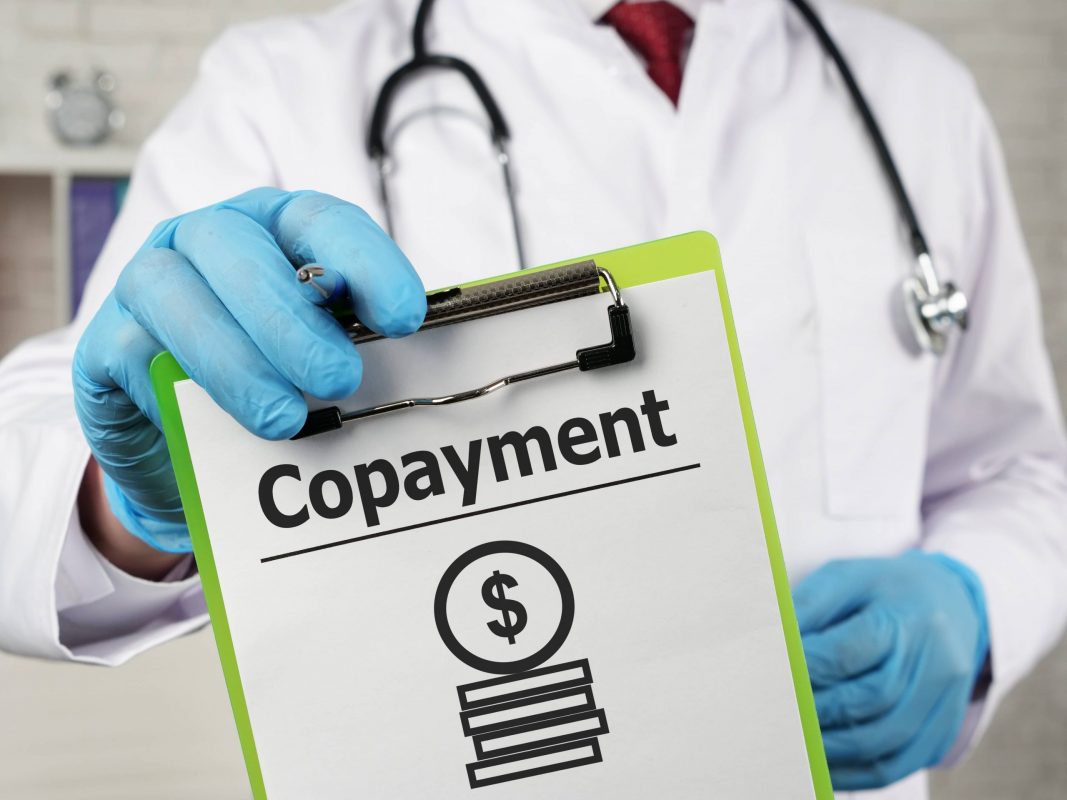
Health Insurance Co-Payments Upfront or Lose Your Appointment

Definition: A co-payment is a fixed amount you pay each time you get a particular type of healthcare service, and co-pays will generally be quite a bit smaller than deductibles. However, deductibles and co–pays are both fixed amounts, as opposed to coinsurance, which is a percentage of the claim.

***

On some health plans, certain services are covered with a co-pay before you’ve met the deductible, while other health insurance plans have co-pays only after you’ve met your deductible. And, the pre-deductible versus post-deductible co-pay rules often vary based on the type of medical service you’re receiving.

PRE-PAID PLANS: https://medicalexecutivepost.com/2025/04/17/health-insurance-pre-paid-plans/

***

Starting in June 2025, Cleveland Clinic patients who can’t pay their co-pay on the spot will have non-emergency appointments rescheduled or cancelled. This new policy could make it harder for low-income people who prefer to be billed to see a clinic doctor, and create delays that could lead to medical emergencies down the road.

For example, a delay in care can mean six to eight more weeks of a tumor growing or a blood clot developing or an infection brewing.

Source: Julie Washington, cleveland.com [5/13/25]

COMMENTS APPRECIATED

Like and Refer

***

***

DAILY UPDATE: Retirement Security Rule, National Drug Take Back Day, Spotify, Cleveland Clinic, NAR and the Mixed Stock Markets

MEDICAL EXECUTIVE-POST TODAY’S NEWSLETTER BRIEFING

***

Essays, Opinions and Curated News in Health Economics, Investing, Business, Management and Financial Planning for Physician Entrepreneurs and their Savvy Advisors and Consultants

Serving Almost One Million Doctors, Financial Advisors and Medical Management Consultants Daily

A Partner of the Institute of Medical Business Advisors , Inc.

http://www.MedicalBusinessAdvisors.com

SPONSORED BY: Marcinko & Associates, Inc.

***

http://www.MarcinkoAssociates.com

Daily Update Provided By Staff Reporters Since 2007.
How May We Serve You?
© Copyright Institute of Medical Business Advisors, Inc. All rights reserved. 20224

REFER A COLLEAGUE: MarcinkoAdvisors@msn.com

SPONSORSHIPS AVAILABLE: https://medicalexecutivepost.com/sponsors/

ADVERTISE ON THE ME-P: https://tinyurl.com/ytb5955z

***

Otherwise known as “National Prescription Drug Take Back Day,” National Drug Take Back Day on April 25th is sponsored by the Drug Enforcement Agency. Its goal is to keep the public aware of the dangers of prescription drug use and misuse. Many Americans don’t know how to safely dispose of the prescription drugs that have been sitting in the medicine cabinet past their prime. Using these expired drugs, or using someone else’s, is dangerous and puts both the public and the environment at risk.

CITE: https://www.r2library.com/Resource

Spotify made money in Q1. According to Morning Brew, the streaming music giant grew its revenue last quarter by 20% to $3.8 billion on a record $180 million in profit, it announced yesterday. The smash report comes after Spotify cut costs last year, which included laying off more than a quarter of its workforce. The company also raised prices in 2023 for the first time in a decade as it further expanded beyond music into audio books and other categories. Spotify shares soared ~11% following the news.

***

Here’s where the major benchmarks ended:

  • The S&P 500 index® (SPX) rose 1.08 points (0.02%) to 5,071.63; the Dow Jones Industrial Average® ($DJI) fell 42.77 points (0.1%) to 38,460.92; the NASDAQ Composite® ($COMP) added 16.11 points (0.1%) to 15,712.75.
  • The 10-year Treasury note yield rose more than 4 basis points to 4.644%.
  • The CBOE Volatility Index® (VIX) rose 0.28 to 15.97.

Transportation shares were among the market’s weakest performers Wednesday behind a drop of more than 10% in Old Dominion Freight Line (ODFL), which reported lighter-than-expected quarterly revenue. The shipper’s nosedive helped send the Dow Jones Transportation Average ($DJT) down 2.3%. Consumer staples, semiconductors, and utilities posted moderate advances. The Dow Jones Utility Index ($DJU) gained for the sixth straight day and ended at a three-and-a-half-month high.

***

The National Association of Realtors’ $418 million settlement over an alleged conspiracy to inflate commissions received preliminary approval yesterday. It’s a new world order: Sellers won’t have to pay buyers’ agents anymore. There’s been talk of a metaphorical death of real estate agents, or a mass extinction; the jury is still out, but RE/MAX cofounder and chairman Dave Liniger doesn’t seem too concerned. 

CITE: https://tinyurl.com/2h47urt5

The Labor Department announced it has finalized its Retirement Security Rule, which aims to protect American workers who are saving for retirement and relying on advice from fiduciaries for it. The new rule will update the definition of an investment advice fiduciary under the Employee Retirement Income Security Act and the Internal Revenue Code.

CITE: https://tinyurl.com/tj8smmes

Clinicians don’t always get it right, and their mistakes can be costly: Studies show misdiagnoses lead to roughly 800,000 patient deaths or permanent disabilities each year in the US and cost the healthcare system an estimated $20 billion annually. Cleveland Clinic is using telehealth to try to combat misdiagnoses via its virtual second opinions program, which has saved an average of $8,705 per patient by avoiding unnecessary treatments, according to an analysis released in March.

COMMENTS APPRECIATED

PLEASE SUBSCRIBE: MarcinkoAdvisors@msns.com

Thank You

***

***

***

***

EDUCATIONAL TEXTBOOKS: https://tinyurl.com/4zdxuuwf

***

2016 – 2019 Medical Innovation Summit

Join Our Mailing List

Hosted by the Cleveland Clinic

By A. Schreiber

***

 ***

Conclusion

Your thoughts and comments on this ME-P are appreciated. Feel free to review our top-left column, and top-right sidebar materials, links, URLs and related websites, too. Then, subscribe to the ME-P. It is fast, free and secure.

Speaker: If you need a moderator or speaker for an upcoming event, Dr. David E. Marcinko; MBA – Publisher-in-Chief of the Medical Executive-Post – is available for seminar or speaking engagements. Contact: MarcinkoAdvisors@msn.com

OUR OTHER PRINT BOOKS AND RELATED INFORMATION SOURCES:

Product DetailsProduct DetailsProduct Details

***

Empathy – the business of treating people [Video]

Join Our Mailing List

A Cleveland Clinic Initiative

[By staff reporters]

If you haven’t seen this viral video yet, you’re in for tear-jerking treat.

A production of Cleveland Clinic highlighting the need to “understand” people in the medical setting. The direct implication is that such understanding goes beyond the medical setting, and can be transferred to all settings where people interact.

Watch “If We Could See Inside Others’ Hearts” here:

Delacroix[DELACROIX]

Assessment

This short film captures the essence of the “business” of treating people: empathy.

More: www.CertifiedMedicalPlanner.org

Conclusion

Your thoughts and comments on this ME-P are appreciated. Feel free to review our top-left column, and top-right sidebar materials, links, URLs and related websites, too. Then, subscribe to the ME-P. It is fast, free and secure.

Link: http://feeds.feedburner.com/HealthcareFinancialsthePostForcxos

Speaker: If you need a moderator or speaker for an upcoming event, Dr. David E. Marcinko; MBA – Publisher-in-Chief of the Medical Executive-Post – is available for seminar or speaking engagements. Contact: MarcinkoAdvisors@msn.com

OUR OTHER PRINT BOOKS AND RELATED INFORMATION SOURCES:

LEXICONS: http://www.springerpub.com/Search/marcinko
PHYSICIANS: www.MedicalBusinessAdvisors.com
PRACTICES: www.BusinessofMedicalPractice.com
HOSPITALS: http://www.crcpress.com/product/isbn/9781466558731
CLINICS: http://www.crcpress.com/product/isbn/9781439879900
ADVISORS: www.CertifiedMedicalPlanner.org
BLOG: www.MedicalExecutivePost.com

Product DetailsProduct Details

Product Details

Frank Gehry, Health Reform and the Cleveland Clinic

Join Our Mailing List

Las Vegas Hospital Uses Celebrity Architecture to Fight Disease?

By Dr. David Edward Marcinko; MBA, CMP

[Publisher-in-Chief]

dr-david-marcinko6According to the Las Vegas Sun Newspaper on March 2, 2009, the Cleveland Clinic is the newest top-tier player in Sin-City with an emerging health care system that will shake up the status quo, supposedly creating a multitude of direct and residual benefits for patients throughout the region.

Lou Ruvo Center for Brain Health

In its role as partner with the Cleveland Clinic’s Lou Ruvo Center for Brain Health, the hospital — ranked fourth best nationally by U.S. News & World Report — is projected to influence medical care in Nevada on the strength of its immense organization. And, it is being designed by, none other than esteemed architect, Frank Gehry.

A Huge Project

And, if you believe numerous websites, the behemoth project will include office towers, a park, a 60-story tower for jewelry trading, a hotel conceived by celebrity chef Charlie Palmer, thousands of apartments and a $360 million performing arts center. Of course, in typically flamboyant Gehry fashion, the highly embellished main facility is said to model curvy metallic shapes and “folds of the brain.” Other nescient drawings of the Ruvo Center show it divided in two sections. Offices and examination rooms will be housed in stacked rectangular blocks set slightly off kilter, like a fortress wall built by children.

The Architect

Gehry used this method to design his world famous Guggenheim Museum in Bilbao, Spain (1997) and his Peter B. Lewis Building for the Weatherhead School of Management at Case Western Reserve University in 2002. His style is well known.

Misplaced Priorities

But, with an estimated 40 million uninsured citizens, one only can wonder if this facility could have been built more cost effectively and/or more utilitarian?

Assessment

Moreover, some Clevelanders are grumbling about the clinic’s involvement in such a glamorous project far away, and imagine that the project will drain local resources just as sun-parched Western states have fantasized about tapping the Great Lakes.

Industry Indignation Index: 70

Conclusion

Your thoughts and comments on this ME-P are appreciated. Feel free to review our top-left column, and top-right sidebar materials, links, URLs and related websites, too. Then, subscribe to the ME-P. It is fast, free and secure.

Link: http://feeds.feedburner.com/HealthcareFinancialsthePostForcxos

Speaker: If you need a moderator or speaker for an upcoming event, Dr. David E. Marcinko; MBA – Publisher-in-Chief of the Medical Executive-Post – is available for seminar or speaking engagements. Contact: MarcinkoAdvisors@msn.com

OUR OTHER PRINT BOOKS AND RELATED INFORMATION SOURCES:

Product DetailsProduct DetailsProduct Details

Product Details  Product Details

Product DetailsProduct Details