Recent EHR News

Join Our Mailing List

1-darrellpruitt

Recent EHR News

By Darrell K. Pruitt DDS

“Cerber ransomware decryption tool was available for 1 day before hackers rendered it useless – The authors of Cerber fixed the flaw in the ransomware’s code that made decryption possible.” By India Ashok for International Business Times, August 18, 2016.

http://www.ibtimes.co.uk/cerber-ransomware-decryption-tool-was-available-1-day-before-hackers-rendered-it-useless-1576662

“HIPAA Breach Case Results in Record $5.5 Million Penalty.” By Aldrin Brown for MSP Mentor, August 18, 2016.

http://mspmentor.net/msp-mentor/hipaa-breach-case-results-record-55-million-penalty

“HIT Costs Rose 40% Per Physician Since 2009.” By Christine Kern, contributing writer, Health IT Outcomes, August 19, 2016.

http://www.healthitoutcomes.com/doc/hit-costs-rose-per-physician-since-0001

Kern:  “Healthcare organizations are facing serious financial challenges as they are forced to convert their practices and patient records to digital formats.”

“Office for Civil Rights to Increase Investigations of Smaller HIPAA Breaches.” By National Law Review, August 19, 2016

http://www.natlawreview.com/article/office-civil-rights-to-increase-investigations-smaller-hipaa-breaches

NLR:  “HHS Office for Civil Rights will cast a wider net and increase its investigations into smaller HIPAA privacy breaches starting this month. OCR announced a new initiative to increase its efforts examining breaches that affect fewer than 500 individuals. OCR Regional Offices already investigate every reported breach affecting 500 or more individuals, and will continue to do so, but now they will intensify efforts to scrutinize smaller breaches.”

“2016 is the year to Go Paperless’ – Stop putting it off, going paperless can save you tens of thousands of dollars.” By Larry Emmott for Emmott on Technology, August 19, 2016.

http://emmottontechnology.com/

Conclusion

Your thoughts and comments on this ME-P are appreciated. Feel free to review our top-left column, and top-right sidebar materials, links, URLs and related websites, too. Then, subscribe to the ME-P. It is fast, free and secure.

Speaker: If you need a moderator or speaker for an upcoming event, Dr. David E. Marcinko; MBA – Publisher-in-Chief of the Medical Executive-Post – is available for seminar or speaking engagements. Contact: MarcinkoAdvisors@msn.com

OUR OTHER PRINT BOOKS AND RELATED INFORMATION SOURCES:

Risk Management, Liability Insurance, and Asset Protection Strategies for Doctors and Advisors: Best Practices from Leading Consultants and Certified Medical Planners™

***

Are Paper MRs Safer than EMRs?

Join Our Mailing List 

Paper is Safer!

1-darrellpruitt[By Darrell K. Puitt DDS]

“Ransomware Attacks Can’t Hide from HIPAA Anymore – Hospital and health system executives are on notice: Come clean about ransomware attacks as early as possible or be prepared to face sanctions.”

By Scott Mace, for HealthLeaders Media, July 19, 2016.

http://www.healthleadersmedia.com/technology/ransomware-attacks-cant-hide-hipaa-anymore#

Dean Sittig, a clinical informatics professor at University of Texas Health Science Center and the Houston UT-Memorial Hermann Center for Health Care Quality and Safety, tells HealthLeaders,

The new HHS guidance is going to really ratchet up people’s attention, because now you’re also talking about big fines from the government, as well as the effects of the ransomware.”

***

ext

***

Show Me the Money?

“Survey: Nearly Three Quarters of Physicians Say They Haven’t Seen ROI From Electronic Records.”

By Matt Goodman: [Dallas/Fort Worth Healthcare Daily, July 21, 2016]

http://healthcare.dmagazine.com/2016/07/21/survey-nearly-three-quarters-of-physicians-say-they-havent-seen-roi-from-electronic-records/

Conclusion

Your thoughts and comments on this ME-P are appreciated. Feel free to review our top-left column, and top-right sidebar materials, links, URLs and related websites, too. Then, subscribe to the ME-P. It is fast, free and secure.

Speaker: If you need a moderator or speaker for an upcoming event, Dr. David E. Marcinko; MBA – Publisher-in-Chief of the Medical Executive-Post – is available for seminar or speaking engagements. Contact: MarcinkoAdvisors@msn.com

OUR OTHER PRINT BOOKS AND RELATED INFORMATION SOURCES:

Product Details

http://www.BusinessofMedicalPractice.com

***

PHI RansomWare Just Went Up!

Join Our Mailing List

1-darrellpruitt

[By Darrell K. Pruitt DDS]

Expect malware entrepreneurs to charge what the market will bear, again and again.

“OCR Releases Guidance on Ransomware: ‘Your Money or Your PHI’”. By Dianne J. Bourque for The National Law Review,” July 12, 2016

http://www.natlawreview.com/article/ocr-releases-guidance-ransomware-your-money-or-your-phi

Bourque: “A key component of the guidance provides a ransomware attack that encrypts a Covered Entity’s ePHI is presumed to be a breach. As ransomware can infect a Covered Entity’s entire system, this presumption may lead to enormous breach notification obligations.”

Bourque adds: “OCR indicates that when ePHI is encrypted as a result of a ransomware attack, a breach has occurred because the ePHI encrypted by the ransomware was acquired (i.e., unauthorized individuals took possession of the information) and is thus a ‘disclosure’ not permitted under the HIPAA Privacy Rule has occurred.”

When patients are notified of data breaches – for any reason – many will quietly change providers. According to The Ponemon Institute, loss of future income is the most costly result of lawfully reporting data breaches…. and ransomware attacks are at “epidemic” levels. I have heard dentists are paying the ransom quickly.

The disincentives to do the right thing were overwhelming providers even before the OCR’s recent ruling. Such is the ugly nature of extortion.

Assessment

Cha-ching! 

Conclusion

Your thoughts and comments on this ME-P are appreciated. Feel free to review our top-left column, and top-right sidebar materials, links, URLs and related websites, too. Then, subscribe to the ME-P. It is fast, free and secure.

Speaker: If you need a moderator or speaker for an upcoming event, Dr. David E. Marcinko; MBA – Publisher-in-Chief of the Medical Executive-Post – is available for seminar or speaking engagements. Contact: MarcinkoAdvisors@msn.com

OUR OTHER PRINT BOOKS AND RELATED INFORMATION SOURCES:

Risk Management, Liability Insurance, and Asset Protection Strategies for Doctors and Advisors: Best Practices from Leading Consultants and Certified Medical Planners™

***

Protect Privacy – DO NOT Use EMRs!

Join Our Mailing List 

OCR pays its own way

1-darrellpruittSubmitted By‏ Darrell Pruitt DDS

“OCR unleashes second wave of HIPAA audits, but will it diminish patients’ privacy and security expectations?

Healthcare entities should expect the Office for Civil Rights to levy fines that help fund the program.  And until OCR delivers a draft audit protocol breaches will continue at patients’ expense.”

By Tom Sullivan for HealthcareIT News

[March 23, 2016]

http://www.healthcareitnews.com/news/ocr-unleashes-second-wave-hipaa-audits-will-it-diminish-patients-privacy-and-security

Sullivan: “Here come the HIPAA audits. And even though OCR has yet to clearly outline what healthcare providers should expect exactly, one thing to anticipate is plenty of financial penalties.”

And David Harlow, a health lawyer, consultant and founder of The Harlow Group, tells HealthcareIT News,

“Who loses out as a result? Patients. The breaches continue, free credit monitoring services are offered, and we all move forward with a diminished expectation of privacy and security.”

***

image002

***

Conclusion

Your thoughts and comments on this ME-P are appreciated. Feel free to review our top-left column, and top-right sidebar materials, links, URLs and related websites, too. Then, subscribe to the ME-P. It is fast, free and secure.

Speaker: If you need a moderator or speaker for an upcoming event, Dr. David E. Marcinko; MBA – Publisher-in-Chief of the Medical Executive-Post – is available for seminar or speaking engagements. Contact: MarcinkoAdvisors@msn.com

OUR OTHER PRINT BOOKS AND RELATED INFORMATION SOURCES:

Product DetailsProduct DetailsProduct Details

***

LinkedIn Ads Will Now Follow You Around The Web

View Ann Miller RN MHA CMP™'s profile on LinkedIn

Join Our Mailing List

OVER HEARD IN THE DOCTOR’S LOUNGE

[LinkedIn Ads Will Now Follow You Around The Web – Here’s How to Opt-Out]

1-darrellpruitt

 [By D. K. Pruitt DDS]

Because we can’t go anywhere online without some social network tracking our data and using it to cash in on targeted advertising, LinkedIn has created its own online ad network that will allow advertisers to follow you around the web based on the information that LinkedIn knows about you.

BusinessInsider reports that the new LinkedIn Network Display service is selling ads not just on the career-oriented networking site but on 2,500 other sites, using data on LinkedIn’s 347 million registered users to carve out niches of as few as 1,000 users for advertisers to target, according to AdAge.

[Source: Chris Morran-Consumerist, February 19, 2015]

***

Risk Management Protection Strategies for Doctors and their Advisors

[Best Practices from Leading Consultants and Certified Medical Planners™]

   Risk Management, Liability Insurance, and Asset Protection Strategies for Doctors and Advisors: Best Practices from Leading Consultants and Certified Medical Planners™
                                ***

Doctor-Patient RELATIONSHIPS in the MODERN Health 2.0 ERA

Join Our Mailing List 

[Can We Talk? – A Collaborative Shift in Bedside Manner]

By Mario Moussa PhD MS

By David E. Marcinko MBBS MBA CMP

By Jennifer Tomasik PhD MS

Jennifer Tomasik

“The single biggest problem in communication is the illusion that it has taken place.”

George Bernard Shaw 

Star Trek fans have seen the future of medicine.

Leonard McCoy, also known as “Bones,” describes himself as a “simple country doctor,” although he plies his trade using 23rd. century medical technology. A deeply caring humanist, Bones often spars with the hyper-logical Spock—half human, half Vulcan. But as the Star Trek saga unfolds through The Next Generation, Deep Space Nine, and finally Voyager, Star Fleet physicians become increasingly rational and less recognizably human. The Voyager’s “Doctor” is no person at all. “He” is an infallible computer program designed to mimic compassion, self-assurance, and other soulful qualities.[i]

Health/Web 2.0

Today, when patients communicate through instant messaging, Twitter, Facebook, and other Health/Web 2.0 electronic mediums, they might feel that health providers are already more like the virtual “Doctor” than the all-too-human “Bones.” Before long, according to one technology expert, 20% – 50% of all doctor-patient communication will be virtual.[ii] But we suggest you pause before rocketing ahead into this brave new future that advocates call Health 2.0—the application of social media tools to the health care environment.

Electronic technology

Electronic technology in all of its forms has obviously had a profound impact on medicine. We focus here on just one of its most notable effects: the changing doctor-patient relationship. We believe Health 2.0 has the potential to deepen this relationship—or not. It depends on how you use it.

There are an almost overwhelming number of social media tools for managing the doctor-patient relationship. How do you choose the right ones? We offer some guidance in this essay by focusing on three issues:

The issues

  1. What matters most in the doctor-patient relationship?
  2. What counts as a good relationship?
  3. How should you use social media tools to build a relationship?

We have found that there is no one best way to use Health 2.0 technology. But there is just one rule. As the novelist E.M. Forster said, “Only connect.”

***

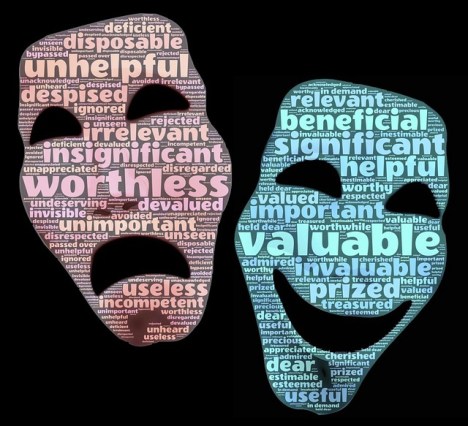
masks

***

Conclusion

Your thoughts and comments on this ME-P are appreciated. Feel free to review our top-left column, and top-right sidebar materials, links, URLs and related websites, too. Then, subscribe to the ME-P. It is fast, free and secure.

Speaker: If you need a moderator or speaker for an upcoming event, Dr. David E. Marcinko; MBA – Publisher-in-Chief of the Medical Executive-Post – is available for seminar or speaking engagements. Contact: MarcinkoAdvisors@msn.com

  • Petrany, Stephen M. “Star Trek and the Future of Family Medicine.” Family Medicine 40.2 (2008): 132 – 133.
  • Silverman, Jennifer. “Impact of Virtual Visits on Doctor-Patient Relationship Unclear: an end to ‘true medicine’?” Ob.Gyn. News 38.21 (2003): 29.

***

[PRIVATE MEDICAL PRACTICE BUSINESS MANAGEMENT TEXTBOOK – 3rd.  Edition]

Product DetailsProduct Details

  [Foreword Dr. Hashem MD PhD] *** [Foreword Dr. Silva MD MBA]

***

EHRs in the News – GAG!

Join Our Mailing List

A Recent Round-Up

1-darrellpruitt[By D. Kellus Pruitt DDS]

“Feds push forward with controversial health rule – The Obama administration is moving ahead with controversial new rules that require doctors to switch to electronic health records or face fees, resisting calls from both parties to delay implementation.”

By Sarah Ferris for The Hill, October 6, 2015

http://thehill.com/policy/healthcare/256120-feds-push-forward-with-controversial-health-it-rule?utm_content=buffer9cd4b&utm_medium=social&utm_source=twitter.com&utm_campaign=buffer

“The Gag Clause is Killing Us – Doctors are barred from discussing safety glitches in software…  And what if doctors — your doctor — is unable to make problems with EHR programs public, due to a so-called ‘gag clause’ written into the contract with the software company, which forbids sharing and publishing, in any form, of potentially dangerous flaws in the IT systems? This is already happening.”

By Deirdre Reilly for HealthZette, October 6, 2015

http://www.lifezette.com/healthzette/gag-clause-is-killing-us/

 “Hackers target Australian health sector, selling records for A$1,000 – Hackers are targeting the Australian health sector, with fully populated digital health records sold on the black market for up to A$1,000 each [$720 US].”

By Beverley Head for ComputerWeekly.com, October 7, 2015

http://www.computerweekly.com/news/4500254986/Hackers-target-Australian-health-sector-selling-records-for-A1000 

 “Electronic health records software often written without doctors’ input – The reason why many doctors find electronic health records (EHR) difficult to use might be that the software wasn’t properly tested, researchers suggests.”

By Kathryn Doyle for Reuters, October 7, 2015

http://www.reuters.com/article/2015/10/07/us-health-software-ehr-idUSKCN0S11OY20151007

 “EHRs provide long-term savings, convenience.”

(no byline), American Dental Association, ADA News, December 6, 2013

http://www.ada.org/en/publications/ada-news/2013-archive/december/ehrs-provide-long-term-savings-convenience

 ***EHR

***

More:

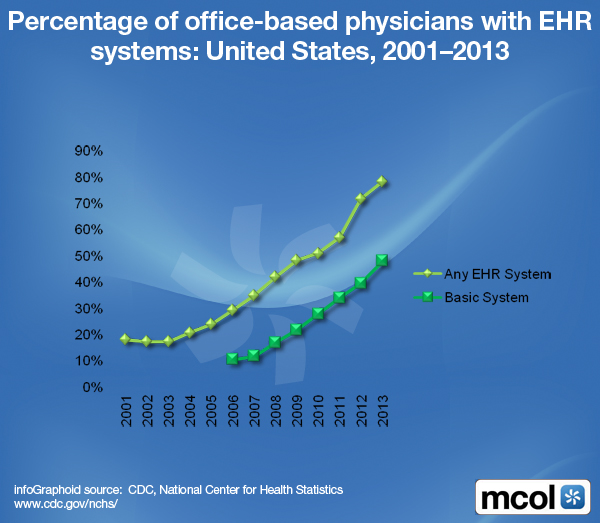
  1. The Percentage of Office-Based Doctors with EHRs
  2. Do Nurses like EHRs?
  3. EHRs – Still Not Ready For Prime Time
  4. The “Price” of eHRs

Conclusion

Your thoughts and comments on this ME-P are appreciated. Feel free to review our top-left column, and top-right sidebar materials, links, URLs and related websites, too. Then, subscribe to the ME-P. It is fast, free and secure.

Speaker: If you need a moderator or speaker for an upcoming event, Dr. David E. Marcinko; MBA – Publisher-in-Chief of the Medical Executive-Post – is available for seminar or speaking engagements. Contact: MarcinkoAdvisors@msn.com

OUR OTHER PRINT BOOKS AND RELATED INFORMATION SOURCES:

***

[HOSPITAL OPERATIONS, ORGANIZATIONAL BEHAVIOR, HIT AND FINANCIAL MANAGEMENT COMPANION TEXTBOOK SET]

Product DetailsProduct Details

[Foreword Dr. Phillips MD JD MBA LLM] *** [Foreword Dr. Nash MD MBA FACP]

***

Is there a Migration of Patients to Paper-Based Dentists?

Join Our Mailing List 

Paper Medical Records Become Popular Again?

[By Kellus Pruitt DDS]

1-darrellpruitt

Starting long ago, I warned that as more dental patients are notified of data breaches – some more than once – we are likely to witness an event mandate stakeholders said would never happen: A migration of patients to paper-based dentists.

Now, because of the rapidly escalating costs and liabilities, defiant, slow adopters of electronic dental records [EDRs] can not only expect to provide dental care at a lower cost than “paperless practices,” but patients are on course to learn that some dentists do not put their patients at risk of medical identity theft by putting identities on computers.

Just sit back and watch!

The Ponemon Institute

In February, the Ponemon Institute published  their “Fifth Annual Study on Medical Identity Theft.”

 “Consumers expect healthcare providers to be proactive in preventing and detecting medical identity theft. Although many respondents are not confident in the security practices of their healthcare provider, 79 percent of respondents say it is important for healthcare providers to ensure the privacy of their health records. Forty-eight percent say they would consider changing healthcare providers if their medical records were lost or stolen. If such a breach occurred, 40 percent say prompt notification by the organization responsible for safeguarding this information is important.”

The Paper-Gold Standard? 

So if your patients start asking you not to put their identities – including medical records – on your computers, what will you do, Doc?

Since encryption is a non-starter in dentistry for solid, business reasons, and will make paperless practices even less competitive with paper-based, would you consider employing staff which knows how to use pegboard, ledger cards and lots of carbon paper (The gold standard of security)?

Or, would you prefer not to give up computerization, yet keep your patients safe?

*** paper

***

More:

Assessment

De-identification of primary electronic dental records is sounding better all the time. Am I right? If patients’ identities are not available, they cannot be hacked.

Channel Surfing the ME-P

Have you visited our other topic channels? Established to facilitate idea exchange and link our community together, the value of these topics is dependent upon your input. Please take a minute to visit. And, to prevent that annoying spam, we ask that you register. It is fast, free and secure.

Conclusion

How does this relate to emails? Your thoughts and comments on this ME-P are appreciated. Feel free to review our top-left column, and top-right sidebar materials, links, URLs and related websites, too. Then, subscribe to the ME-P. It is fast, free and secure.

Speaker: If you need a moderator or speaker for an upcoming event, Dr. David E. Marcinko; MBA – Publisher-in-Chief of the Medical Executive-Post – is available for seminar or speaking engagements. Contact: MarcinkoAdvisors@msn.com

OUR OTHER PRINT BOOKS AND RELATED INFORMATION SOURCES:

Dentists for De-Identification

Join Our Mailing List 

A Start-Up Idea

[By Darrell K. Pruitt DDS]

1-darrellpruittAn early, shoestring proposal for a non-profit dedicated to common sense security solutions.

Why? if patients’ identities are unavailable, they cannot be hacked.

Recently, I’ve considered starting a non-profit dedicated to keeping patients’ identities off of dentists’ computers where they are far too easily fumbled thousands at a time. I think I might call it “Dentists for De-identification.” What do you think?

My son Ryan and I have discussed putting together an educational YouTube cartoon – comparing the cost, convenience and security of encrypted Protected Health Information (PHI), to storing PHI, including medical information, only on paper in bulky metal filing cabinets – leaving only nameless, unencrypted dental records on the computer. De-identification is the “other” HIPAA Safe Harbor, meaning if patients’ de-identified dental information is stolen or hacked, nobody has to be notified. And, since the patients’ nameless dental records remain unencrypted, de-ID should not slow down work flow like encryption does.

***

eHRs

***

One could call employing in-house reference numbers to re-connect patients’ digital dental information to paper-based PHI a hybrid solution to an otherwise intractable security problem. The solution is nothing new, and has a long history of success. For decades, police departments have been substituting in-house reference numbers for citizens’ names to protect the owners. I see no reason it cannot work for dental radiographs as well.

Depending on staff’s familiarity with the alphabet, pulling a patient’s thin paper record from a loud filing cabinet might even take less time than correctly typing in an encryption key (on the first try). What’s more, since there is a limit to the number of patients even the fastest dentists can treat in one day, 4000 or so active patients per dentist is a reasonable estimate of the number of records in a  busy dental practice – which is probably one third of the records in the average physician’s practice. Since the dental information remains digital and only a couple of sheets of paper are needed to reveal the patients’ reference number along with a brief medical history, very little filing space should be needed.

The problems with encryption don’t end with correctly entering the key. Once permitted access to encrypted ePHI, it will take much more time to de-crypt one radiograph than it takes to open a manila folder. Depending on the number of radiographs and other digital images – including complex cone-beam radiographs – a patients’ encrypted diagnostic history could require several minutes to view.

I would want to witness the De-ID non-profit professionally investigate whether de-identification indeed offers a cheaper and more secure solution to data breaches from dental offices. I think we all know by now that full disk encryption will never be the answer.

***

Medical Charts

***

Assessment 

Still too soon? Give it time. The FBI assures us that more massive data breaches are just around the corner.

Channel Surfing the ME-P

Have you visited our other topic channels? Established to facilitate idea exchange and link our community together, the value of these topics is dependent upon your input. Please take a minute to visit. And, to prevent that annoying spam, we ask that you register. It is fast, free and secure.

More:

Conclusion

Your thoughts and comments on this ME-P are appreciated. Feel free to review our top-left column, and top-right sidebar materials, links, URLs and related websites, too. Then, subscribe to the ME-P. It is fast, free and secure.

Speaker: If you need a moderator or speaker for an upcoming event, Dr. David E. Marcinko; MBA – Publisher-in-Chief of the Medical Executive-Post – is available for seminar or speaking engagements. Contact: MarcinkoAdvisors@msn.com

OUR OTHER PRINT BOOKS AND RELATED INFORMATION SOURCES:

Product Details


The “Selling-Out” of a Profession [Dentistry]?

Join Our Mailing List 

Dentistry …?

[By D. Kellus Pruitt DDS]

1-darrellpruittSeveral years ago, a president-elect of the American Dental Association proclaimed, “The electronic health record may not be the result of changes of our choice. They are going to be mandated. No one is going to ask, ‘Do you want to do this?’ No, it’s going to be, ‘You have to do this.’” (ADA News, October 2008).

Looking back, it is easy to recognize the ADA’s renegade capitulation to HHS as a warning sign of things to come.

The ADA is the same national healthcare institution whose leaders joined Delta Dental in persuading dentists to volunteer for HIPAA’s NPI numbers – never revealing what they are to be used for. It’s the same not-for-profit Chicago corporation which continues to protect non-dues revenue by misleading the nation about the “savings and convenience” of EHRs in dentistry. Among all healthcare organizations, the ADA is alone in their enthusiasm for EHRs and Meaningful Use requirements.

And to top it off, the ADA leadership has progressively become less accessible by the community it serves – NEVER entering into open discussions of urgent dental issues on the internet, even to the extent of ending its commitment to answering dental questions for visitors to Dr. Oz’s Sharecare.com. It’s only dentistry for crying out loud!

As a matter of fact, Dr. Maxine Feinberg, the new ADA President, recently suggested in an interview with the ADA’s Judy Jakush that telephone conversations are “The best kept secret of the ADA which members don’t understand.” What?

Dr. Feinberg: “The best-kept secret is that if you have a problem or complaint, you will likely walk away with a positive experience. And, on the rare occasion that the staff can’t help you, there is a good chance that you will speak to Dr. Kathy O’Loughlin, the executive director. That’s amazing customer service.”

***

Insightful or clueless dentist?

***

What’s not to understand? I understand that ADA membership numbers have taken a hit over the last few years, but nevertheless, the dues of a little over 150,000 dentists still help pay the salaries of ADA employees. That’s a lot of phone calls that will have to be transferred to the right person (the first time), scheduled to call back later or be completely ignored. Isn’t email, or even the US Mail a better idea? Or is lousy communication (unaccountability) with dentists and patients the goal?

About that NPI number

How do you feel about the ADA leading the effort to assess and report your value to your community without ever stepping into your office or talking with a satisfied patient? When you volunteered for your National Provider Identifier at the insistence of the ADA and Delta Dental, you agreed to CMS terms. What? Nobody mentioned that?:

“Spread the mission of the DQA – The DQA, formed in 2008 through a request from the Centers for Medicare & Medicaid Services, is comprised of multiple stakeholders from across the oral health community who are committed to development of consensus-based quality measures.” By Kelly Soderlund for the ADA News, November 3, 2014.

Does “multiple stakeholders” sound as costly to you as it does to me, Doc? I say we already have too many stakeholders. What about the principals (dentists and their patients) who pay the stakeholders’ bills?

***

eHRs

***

Does anyone disagree that DQA looks like the ADA’s desperate mission creep for cash? With the chronic drop in membership, the Chicago corporation has turned to vigorous pursuit of non-dues revenue – probably in the form of federal grants and stimulus money from HHS. The ADA (which prefers clumsy communication via telephone), is asking state and local dental leaders to put their own personal credibility at risk by persuading uninformed dentists to unquestioningly accept multiple stakeholders’ assessment of their value to society – just like clueless dentists cooperated in the NPI effort.

Dr. David Schirmer, chair of the DQA’s education committee, tells ADA News: “Eventually, all of dentistry will need to understand quality measures. But before we reach our grass roots membership, we need our leaders in dentistry to understand.” He adds, “I’m challenging those leaders to pave the way for their younger colleagues and help them understand the long-term impact this will have on dentistry.”

ADA Editor Soderlund: “The DQA has taken the lead on developing quality measures within oral health care. These measures touch every practicing dentist in the United States, and with dentistry, how it’s modeled and how it’s financed changes in the future — specifically as a result of the Affordable Care Act — they’ll become even more prevalent. The mission of the DQA is to advance performance measurement as a means to improve oral health, patient care and safety through a consensus-building process.”

“— specifically as a result of the Affordable Care Act —“ Since you never respond, ADA, how do we know you haven’t sold us out once again for taxpayers’ money?

Assessment

If it’s difficult for the ADA to hold onto membership now, just wait until the nation’s dentists figure out that Obamacare cannot give everyone A’s on their internet report cards. This means the majority of dentists are going to be pissed at the ADA for their bad grades, no matter what.

Conclusion

Your thoughts and comments on this ME-P are appreciated. Feel free to review our top-left column, and top-right sidebar materials, links, URLs and related websites, too. Then, subscribe to the ME-P. It is fast, free and secure.

Speaker: If you need a moderator or speaker for an upcoming event, Dr. David E. Marcinko; MBA – Publisher-in-Chief of the Medical Executive-Post – is available for seminar or speaking engagements. Contact: MarcinkoAdvisors@msn.com

OUR OTHER PRINT BOOKS AND RELATED INFORMATION SOURCES:

Product DetailsProduct Details

EHRs – AMA versus ADA

Join Our Mailing List 

Will Electronic Health Records Ever Be Usable?

[By Darrell K. Pruitt DDS]

1-darrellpruittThe American Medical Association

The AMA attempts to address the frustration EHRs create, especially for doctors and other healthcare workers. ‘It’s easy to use, once you know where everything is,’ the instructor said during an EHR training session I recently attended.

Most EHR companies seem to believe this is an acceptable way to design software. EHR usability has been greatly ignored by vendors, and last week the American Medical Association issued eight usability priorities in an attempt to address the issue.

This directive comes as a result of a joint study by the RAND Corporation and the AMA highlighting EHRs as a significant detractor from physicians’ professional satisfaction.” Commentary by Stephanie Kreml for InformationWeek, September 26, 2014.

http://www.informationweek.com/healthcare/electronic-health-records/will-electronic-health-records-ever-be-usable/a/d-id/1316071

The American Dental Association

On the other hand, “EHRs provide long-term savings and convenience,” no byline, ADA News, December 6, 2013.

http://www.ada.org/en/publications/ada-news/2013-archive/december/ehrs-provide-long-term-savings-convenience

boxing-gloves-1053702

[POW – SPLAT – BIFF – UGH]

More:

  1. The Percentage of Office-Based Doctors with EHRs
  2. Do Nurses like EHRs?
  3. EHRs – Still Not Ready For Prime Time
  4. The “Price” of eHRs
  5. Borges versus Kvedar Video eHR Debate

EHRs versus the Federal Government

Government mandated EHRs – what a waste!

“Doctors, Hospitals Went Digital, But Still Can’t Share Records – After spending billions to switch from paper to digital records — much of it taxpayer subsidized through the economic stimulus package — providers say the systems often do not share information with competitors.”

[Kaiser Health News, October 1, 2014]

http://www.kaiserhealthnews.org/Daily-Reports/2014/October/01/marketplace.aspx

Conclusion

Your thoughts and comments on this ME-P are appreciated. Feel free to review our top-left column, and top-right sidebar materials, links, URLs and related websites, too. Then, subscribe to the ME-P. It is fast, free and secure.

Speaker: If you need a moderator or speaker for an upcoming event, Dr. David E. Marcinko; MBA – Publisher-in-Chief of the Medical Executive-Post – is available for seminar or speaking engagements. Contact: MarcinkoAdvisors@msn.com

OUR OTHER PRINT BOOKS AND RELATED INFORMATION SOURCES:

Product DetailsProduct Details

There’s a New HIPAA Sheriff in Town

Join Our Mailing List 

On OCR Director Jocelyn Samuels

1-darrellpruitt

[By D. Kellus Pruitt DDS]

When the explosions of breaches of patients’ medical identities occur – as predicted by the FBI and others – will the new OCR Director Jocelyn Samuels continue to be as sympathetic and forgiving as Leon Rodriguez has been?

Or; will she take on the role of bad cop?


The Replacement

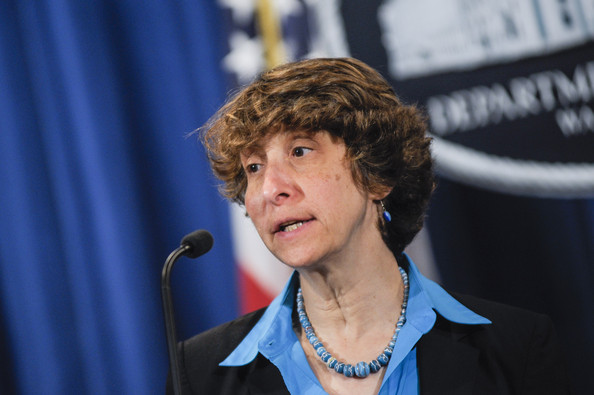
Samuels, who is tying up loose ends in her current position with the civil rights division at the Department of Justice, has replaced Rodriguez as the new head of the HHS’ Office for Civil Rights – which prosecutes HIPAA violations. Many are wondering about her level of enthusiasm for enforcement, especially since data breaches are only getting worse, not better.

Privacy and security attorney Adam Greene, who once served as a member of the OCR staff, tells GovInfo that the challenge for Samuels is “to strike the balance where HIPAA is seen as having ‘teeth’ but covered entities and business associates can still count on OCR as being reasonable when there are areas of ambiguity or privacy or security issues occur despite good efforts at compliance.”

(See: “Impact of New HIPAA Enforcement Leader – Are New Strategies, Directions on the Horizon?” by Marianne Kolbasuk McGee for GovInfoSecurity.com, July 11, 2014).

http://www.govinfosecurity.com/impact-new-hipaa-enforcement-leader-a-7049/op-1

Healthcare Harm

Principals in healthcare – providers and patients – continue to be harmed by EHRs designed to satisfy third-parties’ questionable Meaningful Use requirements rather than principals’ needs. For example, on April 8, the FBI warned that EHRs are becoming increasingly vulnerable to hackers. (See: “Health Care Systems and Medical Devices at Risk for Increased Cyber Intrusions for Financial Gain”).

http://www.illuminweb.com/wp-content/uploads/ill-mo-uploads/103/2418/health-systems-cyber-intrusions.pdf

Under Rodriguez, OCR has arguably spared the rod (mostly), choosing instead to discuss and correct HIPAA violations in an informal, private, non-punitive manner. I think both Rodriguez and Secretary Sebelius backed off of more aggressive enforcement because they recognized that without cooperation from doctors and patients, EHRs are certain to fail – mandate or no mandate. Nevertheless, it has proven to be far too easy for stakeholders who cannot be held accountable to patients, to marginalize their needs.

Jocelyn Samuels

[New OCR Director Jocelyn Samuels]

Example

Rodriguez did his best to appease all sides. For example, it was under his watch that the name of the HHS website listing breaches of 500 or more patients’ identities was changed from “Wall of Shame” to the more benign “HHS Breach Reporting Tool.”

For hapless providers whose data breaches were unavoidable, the name change eliminates some of the shame associated with being nationally recognized as a careless doctor who cannot keep thieves from stealing patients’ identities.

Assessment 

As long as there is nothing holding down the cost and liability of HIPAA compliance, there will always be room for more regulation, and the cost of healthcare will never be cheaper.

Conclusion

Your thoughts and comments on this ME-P are appreciated. Feel free to review our top-left column, and top-right sidebar materials, links, URLs and related websites, too. Then, subscribe to the ME-P. It is fast, free and secure.

Speaker: If you need a moderator or speaker for an upcoming event, Dr. David E. Marcinko; MBA – Publisher-in-Chief of the Medical Executive-Post – is available for seminar or speaking engagements. Contact: MarcinkoAdvisors@msn.com

OUR OTHER PRINT BOOKS AND RELATED INFORMATION SOURCES:

Product DetailsProduct Details

Can Politically-Correct Names Save Obamacare?

Join Our Mailing List

Saving Electronic Health Record Interoperability?

1-darrellpruittBy D. Kellus Pruitt DDS

If HHS successfully persuades Americans to use happy names for its bad ideas, will the cheap trick save electronic health record interoperability which is critical to the success of Obamacare?

Healthcare Lexicon 

According to the government’s modernized healthcare lexicon, doctors have been demoted to “providers,” insurance companies, including Medicare/Medicaid, have been promoted to “payers,” and patients’ position in the hierarchy has diminished from “principals” to “stakeholders” – a rank on par with 3rd parties such as insurers, HHS and other unaccountable parasites.

Wall of Shame

Ominously, HHS recently changed the contentious name “Wall of Shame” to a more innocuous“ breach reporting tool,” to describe the public list of data breaches involving the medical records of more than 500 patients. It turns out that the growing list of major data breaches is unexpectedly shaming  far too many providers and payers – including Medicare/Medicaid. Imagine that!

In fact, since Americans’ growing disgust with privacy breaches threatens the very success of Obamacare, there is evidence that HHS has turned to betraying its lawful obligation to the nation by hiding breaches from those who are most vulnerable – Americans.

HIPAA Failure

The half-baked plan to shame providers who experience data breaches – perhaps through no fault of their own – is not working out like HHS had hoped. Due to HIPAA’s abysmal failure to halt data breaches, the Wall of Shame has become a national embarrassment and an obstacle to EHR adoption. I expect the public listing of major breaches to be quietly scrapped soon in favor of keeping patients in the dark concerning their risks of identity theft.

Dentistry 

In dentistry, on the other hand, common sense as well as market resistance evidently caused HHS and other stakeholders to give up trying to prohibit use of the 8 syllable “electronic dental records” in favor of the 14 syllable “electronic health records for dental practices.”

Nevertheless, holdouts (including Dissent Doe) still occasionally feel it is important to correct this dentists when I use “EDR” instead of “EHR.” You got to love ‘em.

Obama Care 

Assessment 

Transparent silliness suggests that HHS is failing in its duties. Due to lack of accountability, we can expect EHRs and EDRs to become even more expensive and more dangerous, possibly bringing an end to Obamacare.

Conclusion

Your thoughts and comments on this ME-P are appreciated. Feel free to review our top-left column, and top-right sidebar materials, links, URLs and related websites, too. Then, subscribe to the ME-P. It is fast, free and secure.

Link: http://feeds.feedburner.com/HealthcareFinancialsthePostForcxos

Speaker: If you need a moderator or speaker for an upcoming event, Dr. David E. Marcinko; MBA – Publisher-in-Chief of the Medical Executive-Post – is available for seminar or speaking engagements. Contact: MarcinkoAdvisors@msn.com

OUR OTHER PRINT BOOKS AND RELATED INFORMATION SOURCES:

DICTIONARIES: http://www.springerpub.com/Search/marcinko
PHYSICIANS: www.MedicalBusinessAdvisors.com
PRACTICES: www.BusinessofMedicalPractice.com
HOSPITALS: http://www.crcpress.com/product/isbn/9781466558731
CLINICS: http://www.crcpress.com/product/isbn/9781439879900
BLOG: www.MedicalExecutivePost.com
FINANCE: Financial Planning for Physicians and Advisors
INSURANCE: Risk Management and Insurance Strategies for Physicians and Advisors

Product DetailsProduct DetailsProduct Details

Are Dentists Satisfied with their EDRs?

Join Our Mailing List

Major Discontent With EHR Adoption

[By D. Kellus Pruitt DDS]

1-darrellpruittUnlike physicians, dentists never complain. That means they are probably 100% satisfied with their electronic dental records.

What do you think, Doc?

MarketWatch 

Recently, the Wall Street Journal’s MarketWatch posted a press release titled, “Physicians Cite Major Discontent With Adoption And Use of Electronic Health Record Systems, Despite Government’s $27 Billion Incentive Program”

http://www.marketwatch.com/story/physicians-cite-major-discontent-with-adoption-and-use-of-electronic-health-record-systems-despite-governments-27-billion-incentive-program-2014-02-07

“CLEVELAND, Feb. 7, 2014 /PRNewswire/ — The $27 billion government experiment to incentivize physicians to convert to electronic health records (EHRs) has not been worth it, according to nearly 70% of physicians surveyed.

Medical Economics 

***

In fact, a national [Medical Economics] survey of nearly 1,000 physicians, set for release on February 10, 2014, shows widespread dissatisfaction related to the functionality and cost of these patient record systems. About 45% of physicians believe patient care is actually worse as a result of adopting EHR technology, two-thirds would not purchase their current EHR system again, and 43% of physicians say these systems have resulted in significant financial losses.

In addition, the current state of technology has not improved the coordination of care with hospitals, physicians say.”

***

It is probably better for HHS that very few dentists were able to participate in the ARRA stimulus giveaway. Otherwise, tax-paying citizens might have learned about the wastefulness of Meaningful Use requirements for dentists – which nobody has the guts to reveal. That pretty much rules out brilliant Meaningful Use ideas.

Those who might patriotically defend the benefits of the tasks would do so, if they were idiots.

So how do dentists feel about their electronic dental records? It’s hard to tell. Over 96% of them are HIPAA-covered entities, making them vulnerable to audits, which can be “random” now. As one can imagine, very few dentists openly discuss EDRs. Do you think the silence is more likely to improve or harm patient care?

doc

Even though thousands of physicians have participated in dozens of national surveys like Medical Economics’ over the last few years, as far as I know, not one survey of dentists’ opinions has ever been published. Perhaps someone can prove me wrong. I doubt it.

The Survey

The results from the Medical Economics survey include:

  • 67% say that system functionality influences their decisions to purchase or switch systems.
  • 48% say that cost is influencing their decisions to purchase or switch systems.
  • Nearly half of physicians say that implementation of EHR systems has made the quality of patient care worse.
  • 69% of respondents say that coordination of care with hospitals has not improved.
  • 45% say they have spent more than $100,000 on an EHR
  • 77% of the largest practices (more than 10 physicians) spent more than $200,000 on an EHR.
  • 38% doubt their systems will still be viable in 5 years.

Assessment

Not long ago, Wisconsin became the first state to outlaw paper dental records, which are both cheaper and safer than digital.

So, is it still too soon for dentists and patients demand more transparency in dentistry? When costs and danger are hidden in dental care, it is always the last in line who suffer the most – clueless, trusting dental patients.

Am I right, Doc?

More:

  1. Sales of Dental Equipment and eDRs Down
  2. Military Electronic Dental Records [eDRs]
  3. Dr. Pruitt Invites Dr. Cohen to Discuss eDRs
  4. Cyber Insurance for Dentists

Conclusion

Your thoughts and comments on this ME-P are appreciated. Feel free to review our top-left column, and top-right sidebar materials, links, URLs and related websites, too. Then, subscribe to the ME-P. It is fast, free and secure.

Link: http://feeds.feedburner.com/HealthcareFinancialsthePostForcxos

Speaker: If you need a moderator or speaker for an upcoming event, Dr. David E. Marcinko; MBA – Publisher-in-Chief of the Medical Executive-Post – is available for seminar or speaking engagements. Contact: MarcinkoAdvisors@msn.com

OUR OTHER PRINT BOOKS AND RELATED INFORMATION SOURCES:

DICTIONARIES: http://www.springerpub.com/Search/marcinko
PHYSICIANS: www.MedicalBusinessAdvisors.com
PRACTICES: www.BusinessofMedicalPractice.com
HOSPITALS: http://www.crcpress.com/product/isbn/9781466558731
CLINICS: http://www.crcpress.com/product/isbn/9781439879900
BLOG: www.MedicalExecutivePost.com
FINANCE: Financial Planning for Physicians and Advisors
INSURANCE: Risk Management and Insurance Strategies for Physicians and Advisors

Product DetailsProduct Details

Product Details

Pennsylvania dental patients’ stolen social security numbers posted online

Join Our Mailing List 

EDR Data breach in Williamsport, Pennsylvania

By D. Kellus Pruitt DDS

1-darrellpruittOver the last 7 years, I have absorbed a surprising amount of criticism for warning my community that electronic dental records continue to grow both more expensive and more dangerous than paper dental records. That chunk of bad news which not one dental leader is ready to acknowledge is becoming increasingly difficult for even the most popular practice management consultants and other 3rd parties to hide. Unresponsiveness from those who profit from EDR sales is unethical and has already harmed dental patients.

Vulnerability Notes

In the Vulnerability Notes that have been issued by the US Department of Homeland Security to dental software giant Dentrix in the last year, security expert Justin Shafer was thanked in both for alerting authorities to Dentrix’s weaknesses.

Though evasive EDR stakeholders were able to fend off transparency far too long, it is fast becoming obvious to the world that their free ride with no accountability has always been destined to end ugly, and greed is to blame. Unforgiving media coverage of the nation’s loss of confidence in EDRs just might start in day or so in the parking lot of dentist’s office near Williamsport, Pennsylvania. Take cover, Dentrix

Eyeing Dentrix 

In the last two years, Justin Shafer’s uninvited watchful eye over Dentrix’s vulnerabilities may have already helped protect millions of dental patients from identity theft. Nevertheless, Dentrix’s security problems which company officials apparently hide, continue to endanger the welfare of uninformed Americans. I have learned that Shafer doesn’t give up easily. He’s in HIT for the long haul.

Yesterday morning, he posted a heads-up on the City of Williamsport’s Facebook, as well four other local Facebooks, warning of the results of a dental office data breach of Dentrix software: Dental patients’ social security numbers have become available on a zip file from Piratebay.

Shafer: “I am willing to bet there are a lot of your citizens SSN’s in this database. Look at rsc_dat.dat and patient.dat… Seems a dental database ended up on piratebay. You may already know.. you may not.”

He explained it to me this way: “the practice info is in rsc_dat.dat, patient info is in pat_dat.dat. It’s a nightmare, and I told dentrix and the doctor a full year ago.”

Insightful or clueless dentist?

Assessment 

Did your opinion of censorship in dental care recently undergo change?

Conclusion

Your thoughts and comments on this ME-P are appreciated. Feel free to review our top-left column, and top-right sidebar materials, links, URLs and related websites, too. Then, subscribe to the ME-P. It is fast, free and secure.

Link: http://feeds.feedburner.com/HealthcareFinancialsthePostForcxos

Speaker: If you need a moderator or speaker for an upcoming event, Dr. David E. Marcinko; MBA – Publisher-in-Chief of the Medical Executive-Post – is available for seminar or speaking engagements. Contact: MarcinkoAdvisors@msn.com

OUR OTHER PRINT BOOKS AND RELATED INFORMATION SOURCES:

DICTIONARIES: http://www.springerpub.com/Search/marcinko
PHYSICIANS: www.MedicalBusinessAdvisors.com
PRACTICES: www.BusinessofMedicalPractice.com
HOSPITALS: http://www.crcpress.com/product/isbn/9781466558731
CLINICS: http://www.crcpress.com/product/isbn/9781439879900
BLOG: www.MedicalExecutivePost.com
FINANCE: Financial Planning for Physicians and Advisors
INSURANCE: Risk Management and Insurance Strategies for Physicians and Advisors

Product DetailsProduct Details

Product Details

The PP-ACA from Medicine to Dentistry

Obamacare and Dentistry

[By D. Kellus Pruitt DDS]

1-darrellpruitt It seems that problems with the PP-ACA have migrated from traditional medicine to the world of dentistry.

“MaineCare dentists hit with massive fines for minor clerical errors, they say – Some clinics face more than $200,000 in penalties under a new audit system that threatens to wipe out services for kids.”

-Joe Lawlor [Staff writer] Portland Press Herald [November 6, 2013]

http://www.pressherald.com/news/MaineCare_dentists_hit_with_massive_fines_for_minor_clerical_errors__they_say_.html

 “The new system gives auditors, who work for a private contractor, financial incentives to find small errors by paying them more for each mistake they discover.” Maine adopted the auditing system to comply with the federal Affordable Care Act, otherwise known as Obamacare.

 Lawlor continues: “The audits are intended to root out fraud and abuse, but dentists told the Portland Press Herald that auditors are finding typographical or clerical errors that do not compromise patients’ care or defraud the government.”

A Clawback?

Dr. Michael Dowling, co-owner of Falmouth Pediatric Dentistry, tells the Herald, “This is not finding fraud and abuse. This is a clawback. They (state officials) are trying to take back money that we billed them legitimately.”

Still want to help the poor so much that you are willing to take your chances with the ACA auditing system, Doc?

Dentists facing bankruptcy

According to Lawlor, some dentists are actually facing bankruptcy because of ridiculously expensive fines over minor errors. Other Maine dentists who are otherwise willing to work for charity-level fees in order to help children who have nowhere else to turn, are dropping out of MaineCare. President Obama’s plan to use outrageous fines to fund the state and federal coffers, as well as the bonuses of ambitious auditors, is destined to fail.

How can the Affordable Care Act [PP-ACA] possibly make care more affordable for children with toothaches, if it runs off all the dentists?

Mobile-Security

Assessment

Is it beginning to look to you like Obamacare might have been designed to serve the interests of unaccountable healthcare stakeholders rather than the interests of doctors and patients – the healthcare principals? Why do we put up with this crap, Doc?

Conclusion

Your thoughts and comments on this ME-P are appreciated. Feel free to review our top-left column, and top-right sidebar materials, links, URLs and related websites, too. Then, subscribe to the ME-P. It is fast, free and secure.

Link: http://feeds.feedburner.com/HealthcareFinancialsthePostForcxos

Speaker: If you need a moderator or speaker for an upcoming event, Dr. David E. Marcinko; MBA – Publisher-in-Chief of the Medical Executive-Post – is available for seminar or speaking engagements. Contact: MarcinkoAdvisors@msn.com

OUR OTHER PRINT BOOKS AND RELATED INFORMATION SOURCES:

LEXICONS: http://www.springerpub.com/Search/marcinko
PHYSICIANS: www.MedicalBusinessAdvisors.com
PRACTICES: www.BusinessofMedicalPractice.com
HOSPITALS: http://www.crcpress.com/product/isbn/9781466558731
CLINICS: http://www.crcpress.com/product/isbn/9781439879900
ADVISORS: www.CertifiedMedicalPlanner.org
BLOG: www.MedicalExecutivePost.com

Product DetailsProduct Details

The RAND Corporation’s Health IT Legacy‏

Join Our Mailing List 

Understanding ObamaCare and HIT Data Breaches

[By Darrell K. Pruitt DDS]

1-darrellpruittTwo current topics in the HIT industry: (1) A dishonest 2005 RAND study set up lawmakers for disappointment in electronic health records, which are essential to Obamacare, and (2) I told you so.

The Reports

Just the other day, there were reports of two data breaches of EHRs involving over 734,000 patients in Texas and California.

http://www.ihealthbeat.org/articles/2013/10/23/health-facilities-in-california-texas-report-health-data-breaches

For reasons like this, the wisdom of an ambitious mandate for paperless healthcare by 2014 is beginning to be questioned by the same lawmakers who were sucked in years ago by RAND’s tainted 2005 study.

According to the vendor-friendly results gleaned from vendor-friendly data supplied by vendors, EHRs should have started saving 100,000 lives and $77 billion a year, years ago. Predictably, that has not happened. Far from it!

The Findings 

The happy findings – discredited even by RAND in January of this year – were paid for by Cerner and GE, who profited immensely from their RAND investment. Since nationwide adoption of EHRs became a bi-partisan goal with bubbly beginnings and millions of campaign dollars, the costs and danger of healthcare IT didn’t appear to bother conservatives until three months after RAND admitted the study was garbage.

In April, six GOP senators, led by Sen. John Thune (R-S.D.), released a detailed report criticizing HHS Secretary Kathleen Sebelius’ execution of a $35 billion initiative to promote EHRs as part of the ARRA stimulus package. (See: “GOP senators raise concerns with push for electronic medical records,” by Sam Baker, April 16, 2013, The Hill).

http://thehill.com/blogs/healthwatch/medicare/294273-gop-senators-raise-concerns-with-push-for-electronic-medical-records

Wither ARRA?

Have you ever wondered why ARRA was passed as a jobs bill rather than as part of healthcare reform? Any ideas?

More recently, with the conservatives’ failure to stop Obamacare even by shutting down government, EHRs have become recognized as the ACA’s next best weakness. Yesterday, Greg Scandlen, writing for RightSideNews.com, posted “The Tyranny of Electronic Systems.” It goes downhill from there.

http://www.rightsidenews.com/2013102333379/life-and-science/health-and-education/the-tyranny-of-electronic-systems.html

Even More

Also yesterday, Michelle Mailkin writing for Townhall.com, an ultra-conservative website similar to RightSideNews, posted, “Don’t Forget Obamacare’s Electronic Medical Records Wreck.

http://townhall.com/columnists/michellemalkin/2013/10/23/dont-forget-obamacares-electronic-medical-records-wreck-n1730172?utm_source=TopBreakingNewsCarousel&utm_medium=story&utm_campaign=BreakingNewsCarousel

Assessment 

Conservatives found traction: Without the anticipated healthcare savings from EHRs, Obamacare will not survive. These times are not as happy for EHR stake-holders as RAND led them to expect.

Conclusion

Your thoughts and comments on this ME-P are appreciated. Feel free to review our top-left column, and top-right sidebar materials, links, URLs and related websites, too. Then, subscribe to the ME-P. It is fast, free and secure.

Link: http://feeds.feedburner.com/HealthcareFinancialsthePostForcxos

Speaker: If you need a moderator or speaker for an upcoming event, Dr. David E. Marcinko; MBA – Publisher-in-Chief of the Medical Executive-Post – is available for seminar or speaking engagements. Contact: MarcinkoAdvisors@msn.com

OUR OTHER PRINT BOOKS AND RELATED INFORMATION SOURCES:

LEXICONS: http://www.springerpub.com/Search/marcinko
PHYSICIANS: www.MedicalBusinessAdvisors.com
PRACTICES: www.BusinessofMedicalPractice.com
HOSPITALS: http://www.crcpress.com/product/isbn/9781466558731
CLINICS: http://www.crcpress.com/product/isbn/9781439879900
ADVISORS: www.CertifiedMedicalPlanner.org
BLOG: www.MedicalExecutivePost.com

Product DetailsProduct DetailsProduct Details

Product Details  Product Details

Product DetailsProduct Details

Product Details

On the Notice of Privacy Practices

Join Our Mailing List 

Encryption and HHS are Taking Hits

[By D. Kellus Pruitt DDS]

1-darrellpruittIt is bad politics for the President’s Department of Health and Human Services to get caught deceiving voters.

Word gets around much faster than it did before transparency sucked the power from the entrenched.

The NoPP

You know those Notice of Privacy Practices (NoPP) forms we are asked to sign in doctors’ offices? Since it makes no difference to anyone whether patients sign them or not, why needlessly waste everyone’s time? The NoPP is not an agreement, and just because virtually everyone is tricked into signing it, does not mean anyone reads it. HIPAA has become a source of danger to patients, with no redeeming value.

HHS Estimates 

According to the US Department of Health and Human Services own recent estimate:

“… many centuries of time—nearly 35 centuries, in fact, or just short of 30.7 million hours—will be devoted each year by healthcare providers and patients for the dissemination to patients and their acknowledgement of HIPAA notices of privacy practices [NoPP] for protected healthcare information, HHS estimates. Even at just 3 minutes apiece, with 613 million of these routine privacy notices to be delivered, signed and stored, the time adds up…”

-Joseph Conn

… “HHS estimates 32.8 million hours of interaction required to comply with privacy, security rules” …

-ModernHealtcare.com [September 5, 2013]

http://www.modernhealthcare.com/article/20130904/BLOG/309049995?AllowView=VW8xUmo5Q21TcWJOb1gzb0tNN3RLZ0h0MWg5SVgra3NZRzROR3l0WWRMWGJYZjBGRWxyd01qUzMyWmVpNTNnWUpiV2s=&utm_source=link-20130904-BLOG-309049995&utm_medium=email&utm_campaign=hits

Censorship Concerns? 

I tried to bring attention to this absurdity over a year ago – back when HHS was still keeping unfavorable news about EHRs hidden from voters using censorship:

… “Put another way, the ONLY reason for a doctor to ask patients if they feel like signing the NoPP is to protect already busy doctors from a HIPAA fine. How is that not senseless, yet admittedly humorous bureaucratic waste?” …

On July 3, 2012, my opinion of the waste that HHS recently confirmed was censored by an HHS employee from the taxpayer-supported Linkedin site, Health IT and Electronic Health Records. If that is not against federal law, it damn sure should be.

http://www.linkedin.com/groups/IT-in-Healthcare-Why-Building-3993178.S.216432610?qid=bafac2e5-fb9c-4a39-8348-5a3074abff67&trk=groups_items_see_more-0-b-ttl

Among the items that HHS requires providers include in Notices of Privacy Practice is a one-sentence statement addressing data breaches:

…“We will let you know promptly if a breach occurs that may have compromised the privacy or security of your information [unless it is encrypted]”…

http://www.hhs.gov/ocr/privacy/hipaa/npp_booklet_hc_provider.pdf

Now that it is widely known that encryption is no longer acceptably secure, protection from accountability is encryption vendors’ only remaining selling point. HIPAA stipulates that if breached patient information is encrypted according to standards set forth by the National Institute of Standards and Technology (NIST), doctors are freed from the tremendous cost of notifying (former) patients – even though patients’ privacy and security have been nevertheless compromised.

For example, two weeks ago, the NIST abandoned the very encryption standards that HIPAA demands. Oops! (See: “Government Standards Agency ‘Strongly’ Suggests Dropping its Own Encryption Standard,” by Jeff Larson and Justin Elliott, ProPublica, September 13, 2013).

http://www.propublica.org/article/standards-agency-strongly-suggests-dropping-its-own-encryption-standard

###

eMR Privacy

###

NSA Secrets 

US spy agency NSA’s secret success at decrypting previously impenetrable codes – which was revealed by former NSA contractor Edward Snowden – proves that today’s best encryption is tomorrow’s crossword puzzle. What’s more, once an individual’s medical identity is lost in the cloud, it can never be reeled back in.

And, when DNA records are included, a breach today could put the welfare of generations of Americans at risk.

A Gut-Check 

The ultimate gut-check: If your encrypted identity were fumbled, wouldn’t you want to be notified? Of course you would.

Assessment 

In my opinion, the HIPAA Rule should be immediately amended to demand notification of all individuals involved in all data breaches unless they allow opt out. Who knows? Some might prefer not to be bothered.

What is your opinion; doctor, patient and/or consultant?

Conclusion

Your thoughts and comments on this ME-P are appreciated. Feel free to review our top-left column, and top-right sidebar materials, links, URLs and related websites, too. Then, subscribe to the ME-P. It is fast, free and secure.

Speaker: If you need a moderator or speaker for an upcoming event, Dr. David E. Marcinko; MBA – Publisher-in-Chief of the Medical Executive-Post – is available for seminar or speaking engagements. Contact: MarcinkoAdvisors@msn.com

OUR OTHER PRINT BOOKS AND RELATED INFORMATION SOURCES:

Product DetailsProduct Details

Did the NSA End Obamacare?

Join Our Mailing List

Did ambitious NSA officials unintentionally end Obamacare years ago?

[By D. Kellus Pruitt DDS]

1-darrellpruittIf loss of trust in encryption ends Obamacare, can whistleblower Edward Snowden be blamed for that as well? Yep.

What’s even more ominous, the former National Security Agency contractor’s news that encrypted medical records are no longer secure reached Alaska on a weekend.

“Risky electronic health records: Alaska should make information exchange system safer – Imagine: The National Security Agency slips into your doctor’s office and peeks at your medical records,”

by Alaska ACLU executive director Joshua Decker was posted hours ago on Newsminer.com, out of Fairbanks.

http://www.newsminer.com/opinion/community_perspectives/risky-electronic-health-records-alaska-should-make-information-exchange-system/article_a9947eb0-1863-11e3-8153-001a4bcf6878.html

Decker questions the security of the state’s Health Information Exchange (HIE), and offers common sense but costly steps which arguably lessen the danger of privacy breaches – including giving patients the choice of “opting-in” to permit their encrypted, but increasingly vulnerable identities to be shared online via Obamacare’s exchanges.

My POV 

In my opinion, if informed Americans are given the choice of volunteering to risk identity theft, HIEs won’t be around a year from now, and neither will Obamacare. If informed Americans are not given a choice, the costs are even greater. Americans deserve honesty.

National Obamacare Hangs in the Balance

In a related, slow-burning game-changer, Obamacare hangs in the balance, not just for Alaska, but for the nation.

It was September 5th when the Guardian Weekly posted: “Revealed: how US and UK spy agencies defeat internet privacy and security,” written by James Ball, Julian Borger and Glenn Greenwald, and based on top secret NSA information Snowden stole.

http://www.theguardian.com/world/2013/sep/05/nsa-gchq-encryption-codes-security

Snowden told the Guardian that years ago, the NSA joined with the UK’s spy agency GCHQ (Government Communications Headquarters) to successfully make encryption obsolete – including for medical records.

Naturally, if properly informed Americans fear that secrets they tell their doctors might be breached, incorrect EHRs become less than worthless. They become dangerous.

More on Health Information Exchanges

What’s more, even before the added expense of waiting for Americans to opt-in to the exchanges – instead of discouraging them from opting-out – the very funding for the increasingly-battered Obamacare is based on a rumor of savings.

Starting years ago, health IT lobbyists, including former Speaker of the House Newt Gingrich, told lawmakers to expect annual savings of $77 billion and 100,000 lives – quoting the results of a once popular, EHR-friendly 2005 RAND study which was funded by General Electric and Cerner Corporation.

Obamacare

As you can see, while we were not paying attention, we were had!

The RAND Study

Predictably, both GE and Cerner profited immensely from the development and sales of EHR systems before the RAND study was widely discredited months ago – even by RAND.

According to a NY Times article from January, “Cerner’s revenue has nearly tripled since the report was released, to a projected $3 billion in 2013, from $1 billion in 2005.”

(See: “In Second Look, Few Savings From Digital Health Records by Reed Abelson and Julie Creswell, January 10, 2013).

http://www.nytimes.com/2013/01/11/business/electronic-records-systems-have-not-reduced-health-costs-report-says.html?_r=0

Assessment

Last weekend’s bad news for Obamacare is still under the radar, but I predict within days it will become apparent that the mounting obstacle between President Obama and healthcare reform will be in regaining trust his administration squandered while helping GE and Cerner profits at the expense of soon-to-be pissed off American patients.

Conclusion

Your thoughts and comments on this ME-P are appreciated. Feel free to review our top-left column, and top-right sidebar materials, links, URLs and related websites, too. Then, subscribe to the ME-P. It is fast, free and secure.

Link: http://feeds.feedburner.com/HealthcareFinancialsthePostForcxos

Speaker: If you need a moderator or speaker for an upcoming event, Dr. David E. Marcinko; MBA – Publisher-in-Chief of the Medical Executive-Post – is available for seminar or speaking engagements. Contact: MarcinkoAdvisors@msn.com

OUR OTHER PRINT BOOKS AND RELATED INFORMATION SOURCES:

DICTIONARIES: http://www.springerpub.com/Search/marcinko
PHYSICIANS: www.MedicalBusinessAdvisors.com
PRACTICES: www.BusinessofMedicalPractice.com
HOSPITALS: http://www.crcpress.com/product/isbn/9781466558731
CLINICS: http://www.crcpress.com/product/isbn/9781439879900
BLOG: www.MedicalExecutivePost.com
FINANCE: Financial Planning for Physicians and Advisors
INSURANCE: Risk Management and Insurance Strategies for Physicians and Advisors

Product DetailsProduct Details

The Danger of Used Health Information Technology

Join Our Mailing List

Remember to destroy that hard drive!

By D. Kellus Pruitt DDS

1-darrellpruittNEWS FLASH!

Affinity Health Plan to Pay $1.2 Million+ for HIPAA Violations -The HHS Office for Civil Rights on August 14 sent the industry a message on the importance of erasing protected health information on hardware being sold, recycled or returned,” by Joseph Goedert, HealthDataManagement.

http://www.healthdatamanagement.com/news/breach-notification-hipaa-privacy-security-affinity-46483-1.html

Talk about bad luck

A photocopier once leased by Affinity Health was purchased by CBS Evening News – which discovered that the copier’s hard drive contains 344,579 individuals’ unencrypted Protected Health Information.

The Response

In response to the federal investigation triggered by the CBS discovery, the Office of Civil Rights announced: “OCR’s investigation indicated that Affinity impermissibly disclosed the protected health information of these affected individuals when it returned multiple photocopiers to leasing agents without erasing the data contained on the copier hard drives.

Moreover ….

In addition, the investigation revealed that Affinity failed to incorporate the electronic protected information stored on photocopier hard drives in its analysis of risks and vulnerabilities as required by the Security Rule, and failed to implement policies and procedures when returning the photocopiers to its leasing agents.”

Assessment

Before disposing of used technology, remember to destroy the hard drive.

Conclusion

Your thoughts and comments on this ME-P are appreciated. Feel free to review our top-left column, and top-right sidebar materials, links, URLs and related websites, too. Then, subscribe to the ME-P. It is fast, free and secure.

Link: http://feeds.feedburner.com/HealthcareFinancialsthePostForcxos

Speaker: If you need a moderator or speaker for an upcoming event, Dr. David E. Marcinko; MBA – Publisher-in-Chief of the Medical Executive-Post – is available for seminar or speaking engagements. Contact: MarcinkoAdvisors@msn.com

OUR OTHER PRINT BOOKS AND RELATED INFORMATION SOURCES:

DICTIONARIES: http://www.springerpub.com/Search/marcinko
PHYSICIANS: www.MedicalBusinessAdvisors.com
PRACTICES: www.BusinessofMedicalPractice.com
HOSPITALS: http://www.crcpress.com/product/isbn/9781466558731
CLINICS: http://www.crcpress.com/product/isbn/9781439879900
BLOG: www.MedicalExecutivePost.com
FINANCE: Financial Planning for Physicians and Advisors
INSURANCE: Risk Management and Insurance Strategies for Physicians and Advisors

Product DetailsProduct Details

Do Nurses like EHRs?

Join Our Mailing List

Do RNs like using electronic health records?

[A seldom considered POV]

1-darrellpruitt

BY Darrell K. Pruitt DDS

Some Facebook comments:

Big problems when you have unexpected “downtimes”.

July 15 at 3:10pm · Like · 4

It is an absolute train wreck. I haven’t seen one record of mine that is not riddled with mistakes. Especially the allergies, they show me taking meds I’m allergic to and not taking meds I’m actually on. A true mess!! And now the records are all intertwined. I don’t like it at all!!

July 15 at 3:10pm · Like · 2

It is a nightmare!

July 15 at 3:18pm · Like

I retired just in time so I don’t have to deal with this fiasco.

July 15 at 3:19pm via mobile · Like · 2

IT SUCKS

July 15 at 3:19pm · Like

I don’t like them; my doctors don’t like them; how it will affect patient care is still a ‘jury out’ matter, but we can guess it will NOT help.

July 15 at 3:30pm · Like

Our Rural Community Healthcare system is just now switching over to this .. along with our hospital switching over to a totally new computer system .. the 2 systems do not talk to each other..In my personal experience I find that the “computer” world takes us away from Direct Patient Care (to busy playing “ring around the Rosie” on the computer).

July 15 at 3:40pm · Like · 4

I like them, but it is frustrating having “downtime.”

July 15 at 3:41pm · Like

I hear patients stating things like “my doctors don’t know who I am because they don’t look at me they are glued to the computer”. It saddens me patients feel less valued. I’ve worked in places where they’ve had paper charts and places computerized. Seems the computers are redundant and I personally prefer paper charts. Chart one assessment not one assessment 4 different places.

July 15 at 3:44pm via mobile · Like · 3

It looks to me like physicians are cutting and pasting old histories and physicals, complete with the errors. Doctors in a local ER charted complete physicals on me when they did not get closer than 5 feet away. The records are difficult to read, difficult to find information; and it is not number in chronological order.

July 15 at 3:47pm · Like

I dislike it. Besides the down time, I find it very impersonal. I don’t feel as if I am giving my full attention to my pt, nor do I feel my PCP is hearing what I’m saying . They are too busy putting in info on the computer. As for the down time you then have to work late to put in the info gathered while the system is down.

July 15 at 3:47pm via mobile · Like · 2

eHRs

Assessment

https://www.facebook.com/friendanurse/posts/654085127954821

More: On DIgital Deaths

http://www.bloomberg.com/news/2013-06-25/digital-health-records-risks-emerge-as-deaths-blamed-on-systems.html

(50+ other comments)

Conclusion

Your thoughts and comments on this ME-P are appreciated. Feel free to review our top-left column, and top-right sidebar materials, links, URLs and related websites, too. Then, subscribe to the ME-P. It is fast, free and secure.

Speaker: If you need a moderator or speaker for an upcoming event, Dr. David E. Marcinko; MBA – Publisher-in-Chief of the Medical Executive-Post – is available for seminar or speaking engagements. Contact: MarcinkoAdvisors@msn.com

OUR OTHER PRINT BOOKS AND RELATED INFORMATION SOURCES:

Product DetailsProduct DetailsProduct Details

On the Future of Dentistry?

Join Our Mailing List 

Not good for the profession … as we know it!

By D. Kellus Pruitt DDS

1-darrellpruittIf you have not yet noticed, the future doesn’t look good for the dental profession as we know it.

Like far too many neighborhood primary care physicians who can no longer make a profit on their own, managed care is having its way with dentists as well.

Unfortunately, our patients remain clueless about downsides to discounted care sold by huge, insensitive corporations manned by executives who cannot be held accountable for their favorite providers’ level of care.

Since as a dentist I am somewhat transparent anyway, I would like to share some feelings with friends about an awkward subject that is on the minds of more dentists than one might expect, yet (almost) none feel comfortable revealing it: Regardless of the public’s perception of dentists’ wealth for the last few decades, it does not look like the anticipated economic recovery is likely to include the small dental practice down the street.

Schadenfreud

Not unlike Schadenfreude, I am certain at least some of dentistry’s disappointed customers may find this news addictingly pleasing to savor – up until one needs a dentist for a problem that cannot be handled safely by their designated dental therapist preferred by insurance MBAs.

I watch the dental news closer than most dentists, and sadly, my studied predictions have always proven to be very accurate, even if unpopular. Today I confidently predict that the profitability most dentists enjoyed for decades will not return for years – perhaps a decade or more.

On the other hand, as it becomes increasingly difficult to find dentists who allow time for gentle injections, patients should expect to pay them better than most. When an imbalance in the free market becomes unsustainable by artificial means such as managed care’s pay-for-performance algorithms, this is the way competition regulates quality in a natural way.

Personally, I’ve dealt with the downturn by working part time as an associate of another practice to make ends meet, and I feel fortunate to have found such a wonderful opportunity with a wonderful, patient-centered team. Marci, my wife, seems to be happier as well.

Assessment

Sorry if today’s news was a bummer, Doc. Maybe it is time others spoke up as well. Our leaders’ obvious lack of interaction on the internet exposes a tremendous vacuum, and they are incapable of rescuing the profession with silence… and neither will rushed therapists in huge dental clinics.

It’s up to you and me, Doctor. Come on out. The air is fine.

Conclusion

Your thoughts and comments on this ME-P are appreciated. Feel free to review our top-left column, and top-right sidebar materials, links, URLs and related websites, too. Then, subscribe to the ME-P. It is fast, free and secure.

Link: http://feeds.feedburner.com/HealthcareFinancialsthePostForcxos

Speaker: If you need a moderator or speaker for an upcoming event, Dr. David E. Marcinko; MBA – Publisher-in-Chief of the Medical Executive-Post – is available for seminar or speaking engagements. Contact: MarcinkoAdvisors@msn.com

OUR OTHER PRINT BOOKS AND RELATED INFORMATION SOURCES:

DICTIONARIES: http://www.springerpub.com/Search/marcinko
PHYSICIANS: www.MedicalBusinessAdvisors.com
PRACTICES: www.BusinessofMedicalPractice.com
HOSPITALS: http://www.crcpress.com/product/isbn/9781466558731
CLINICS: http://www.crcpress.com/product/isbn/9781439879900
BLOG: www.MedicalExecutivePost.com
FINANCE: Financial Planning for Physicians and Advisors
INSURANCE: Risk Management and Insurance Strategies for Physicians and Advisors

Product DetailsProduct Details

Healthcare Adversaries [video]

Join Our Mailing List

Of HHS and AHIP

By Darrell K. Pruitt DDS

pruitt6If HHS and AHIP continue to give doctors the bum’s rush, what languages can we expect migrant providers to speak well?

The Conference

Last week, I came across a video of a health care conference held a month ago at the University of Miami. During a discussion period, a Miami spinal surgeon named Dr. Nordham warned that more Medicare pay cuts will make small, solo practices like his unsustainable.

Karen Speaks

Panelist Karen Ignagni, who is president and the CEO of America’s Health Insurance Plans (AHIP), reacted defensively in favor of continued unsustainable discounts – but with a hasty, disingenuous response: “We’re seeing out of network charges of 95 times Medicare fees.” While as if on cue, former HHS Secretary Donna Shalala, who is also president of the university, offered her cold interpretation of the small business owner’s legitimate fears: “He’s really complaining that the price is going down [according to law].”

Shalala Speaks

After also ignoring the physician’s plea, “There needs to be more transparency,” Shalala and Ignagni continue an irrelevant, buzzword-filled discussion with each other using flowing hand gestures while shutting out the doctor’s attempts to bring the conversation back on topic. Then abruptly, without giving Dr. Nordham the opportunity to say another word, Shalala slammed the door: “…. I think we’ll take the next question, thank you.” Then she threw him a bone, “It’s a very important question, though.”

###

MD with eHR

Assessment

The 4 minutes of unvarnished disrespect of Dr. Nordham is so transparent that one wonders whether Shalala and Ignagni were even aware that their half-baked PR game was being recorded for C-span.

http://www.c-spanvideo.org/event/214023 (from 2:09:53 to 2:13:42)

They probably thought nobody stays up that late.

More: Chapter 13: IT, eMRs & GroupWare

Conclusion

Your thoughts and comments on this ME-P are appreciated. Feel free to review our top-left column, and top-right sidebar materials, links, URLs and related websites, too. Then, subscribe to the ME-P. It is fast, free and secure.

Link: http://feeds.feedburner.com/HealthcareFinancialsthePostForcxos

Speaker: If you need a moderator or speaker for an upcoming event, Dr. David E. Marcinko; MBA – Publisher-in-Chief of the Medical Executive-Post – is available for seminar or speaking engagements. Contact: MarcinkoAdvisors@msn.com

Our Other Print Books and Related Information Sources:

Health Dictionary Series: http://www.springerpub.com/Search/marcinko

Practice Management: http://www.springerpub.com/product/9780826105752

Physician Financial Planning: http://www.jbpub.com/catalog/0763745790

Medical Risk Management: http://www.jbpub.com/catalog/9780763733421

Hospitals: http://www.crcpress.com/product/isbn/9781439879900

Physician Advisors: www.CertifiedMedicalPlanner.org

Product Details

The Flaws of Electronic Records

Join Our Mailing List

Reporting on an Op-Ed by Drexel University’s Scot Silverstein

By Darrell K. Pruitt DDS

pruittRecently, on Philly.com, I read the following interesting essay and counter-opinion.

“The flaws of electronic records – Drexel University’s Scot Silverstein is a leading critic of the rapid switch to computerized medical charts, saying the notion that they prevent more mistakes than they cause is not proven.”

by Jay Hancock, writing in:

KAISER HEALTH NEWS.

http://www.philly.com/philly/entertainment/20130218_The_flaws_of_electronic_records.html

Do you recall that I advised dentists to wait a year or so before purchasing electronic dental records?

Dr. Silverstein warns Hancock that we’re in the midst of “a mania” as traditional patient charts are switched to computers. “We know it causes harm, and we don’t even know the level of magnitude. That statement alone should be the basis for the greatest of caution and slowing down.”

Silverstein Speaks

Silverstein tells Hancock that he doesn’t discount the potential of digital records to eliminate duplicate scans and alert doctors to drug interactions and unsuspected dangers.

“But, the rush to implementation has produced badly designed products that may be more likely to confound doctors than enlighten them, he says. Electronic health records, Silverstein believes, should be rigorously tested under government supervision before being used in life-and-death situations, much like medical hardware or airplanes.”

Physician George Lundberg, editor at large for MedPage Today, says Silverstein “is an essential critic of the field,” and that “It’s too easy for those of us in medicine to get excessively enthusiastic about things that look like they’re going to work out really well. Sometimes we go too far and don’t see the downside of things.”

Hancock Writes

Hancock writes. “Many say he comes on too strong.” Remind you of anyone? It’s easy to fall into a habit of “coming on too strong” once politeness proves ineffective and not nearly as much fun.

Silverstein points out that since the government doesn’t require caregivers to report problems, “many computer-induced mistakes may never surface.”

In dentistry, EHR stakeholders bury computer-induced mistakes even deeper by ignoring and even censoring dentists’ concerns about cost and safety.

Shah Opines

Furthermore, ME-P thought-leader Shahid N. Shah MS opines in Chapter 4 of the book: www.BusinessofMedicalPractice.com

Chapter 13: IT, eMRs & GroupWare

And … Pruitt Wonders?

I sincerely wonder how many dentists have been kicked off of DrBicuspid, DentalTown, Dental Economics and LinkedIn for pointing out dangerous flaws in advertisers’ dental products. I offered to start a listing of the censored, but got no response. Nevertheless, I bet I’m not the only one.

Assessment

More opinions from ME-P contributors and essayists:

Conclusion

Your thoughts and comments on this ME-P are appreciated. Feel free to review our top-left column, and top-right sidebar materials, links, URLs and related websites, too. Then, subscribe to the ME-P. It is fast, free and secure.

Link: http://feeds.feedburner.com/HealthcareFinancialsthePostForcxos

Speaker: If you need a moderator or speaker for an upcoming event, Dr. David E. Marcinko; MBA – Publisher-in-Chief of the Medical Executive-Post – is available for seminar or speaking engagements. Contact: MarcinkoAdvisors@msn.com

OUR OTHER PRINT BOOKS AND RELATED INFORMATION SOURCES:

DICTIONARIES: http://www.springerpub.com/Search/marcinko
PHYSICIANS: www.MedicalBusinessAdvisors.com
PRACTICES: www.BusinessofMedicalPractice.com
HOSPITALS: http://www.crcpress.com/product/isbn/9781466558731
CLINICS: http://www.crcpress.com/product/isbn/9781439879900
BLOG: www.MedicalExecutivePost.com
FINANCE: Financial Planning for Physicians and Advisors
INSURANCE: Risk Management and Insurance Strategies for Physicians and Advisors

Product DetailsProduct Details

How I Lost my Battle Against the NPI

Join Our Mailing List

Refusing a National Provider Identifier Number

By Darrell K. Pruitt DDS

pruittI can no longer refuse to apply for a National Provider Identifier (NPI). I lost that long battle. Anyone rejoicing?

I’m spent. My leverage has vanished. Telling insurers “I have no NPI” held much more inherent power than “I have an NPI but I won’t share it with you on principle.” Far too many words. My profession has become dominated by unresponsive, unaccountable 3rd parties that dental leaders in the ADA welcome as policy. Working together, they promote and commandeer the technology dentists purchase and clueless patients pay for in increased fees. I have painfully learned that principles are only for dentists who can still afford them, and it’s a bad economy for luxuries.

Non-HIPAA Entity

Since I am not a HIPAA-covered entity and therefore not required by law to adopt an NPI, my capitulation to extortion disappoints me as an American citizen. I still find it hard to believe that an anti-consumer HIPAA rule enthusiastically enforced by the dental benefits industry could force me to “volunteer” for a PERMANENT identifier. As I and 96% of dentists become jerked around by our NPIs, I hope dental historians note that I am the ONLY dentist who publicly asked “Why?” instead of “Why not?” After 6 years, I’m still awaiting an answer to that question from leaders who continue to promote the NPI to dentists while ignoring their questions.

Dental Benefits Providers

I was able to hold out up until Aetna, Delta Dental and other dental benefits providers deprived my office of access to details of patients’ dental benefits unless I have an NPI. I’m waiting for someone – anyone – to tell me how the identifier can possibly improve the dental care of those who pay Aetna and Delta Dental premiums, especially if their benefits are intentionally kept secret from their dentists. I am certain that if the nation’s employers who purchase dental benefits were aware of the transparent nonsense, they would never purchase such products. Where’s the US Chamber of Commerce? Where’s the FTC? How about the US Constitution?

This is exactly why there needs to be more openness in our profession, Doc. The cockroaches who were invited to quietly overrun dentistry cannot withstand transparency, yet I don’t know how much longer I can fight for it without further risking the health of my practice.

As anyone can understand – and as anticipated by corporate executives in the insurance industry as well as by those with vested interests in the ADA Department of Dental Informatics – to have to explain to new patients why I cannot estimate how much they will owe for treatment would destroy my practice. Outside the US, other societies deem it unethical to deny patients informed consent to treatment for any reason. The NPI is such an egregious blunder that I never expect those who promoted to accept ownership.

###

NPI

Assessment

If I lost the battle, who won? Do EDR enthusiasts in the ADA call this a glorious victory and a likely source of ADA pride for decades to come? Or is it much more shameful? Since I lost freedom, I want to know who won?

Conclusion

Your thoughts and comments on this ME-P are appreciated. Feel free to review our top-left column, and top-right sidebar materials, links, URLs and related websites, too. Then, subscribe to the ME-P. It is fast, free and secure.

Link: http://feeds.feedburner.com/HealthcareFinancialsthePostForcxos

Speaker: If you need a moderator or speaker for an upcoming event, Dr. David E. Marcinko; MBA – Publisher-in-Chief of the Medical Executive-Post – is available for seminar or speaking engagements. Contact: MarcinkoAdvisors@msn.com

Our Other Print Books and Related Information Sources:

Health Dictionary Series: http://www.springerpub.com/Search/marcinko

Practice Management: http://www.springerpub.com/product/9780826105752

Physician Financial Planning: http://www.jbpub.com/catalog/0763745790

Medical Risk Management: http://www.jbpub.com/catalog/9780763733421

Hospitals: http://www.crcpress.com/product/isbn/9781439879900

Physician Advisors: www.CertifiedMedicalPlanner.org

Product DetailsProduct Details

Confusion About “Meaningful Use” Reigns

Join Our Mailing List

Are Doctors Embracing or Ignoring ARRA?

By D. Kellus Pruitt DDS

pruittAre physicians embracing ARRA Meaningful Use cash incentives or ignoring them? That depends on whom one asks.

Doctors versus the Feds

National progress towards Meaningful Use of expensive EHRs depends on whether one talks to federal employees whose jobs depend on the stimulus mandate, or doctors who purchase EHRs to improve care rather than to use them … Meaningfully.

The Feds

Today, Joseph Conn, writing for ModernHealthcare, posted a rosy outlook for MU adoption according to researchers working for HHS’ Office of the National Coordinator (ONC). They base their optimism for job security on a recent National Center for Health Statistics (NCHS) survey:

“A growing number of office-based physicians are using more-robust EHRs that have higher-level functions needed to help the doctors qualify for federal EHR incentive payments [for Meaningful Use] and assist them in providing better, safer care for patients, the researchers reported.” (See “Researchers: More doctors using more-sophisticated EHRs”).

http://www.modernhealthcare.com/article/20121212/NEWS/312129956/researchers-more-doctors-using-more-sophisticated-ehrsJust

eMR and HIT Security

The Doctors

However, yesterday, in an InformationWeek article by Ken Terry titled, “Meaningful Use Doesn’t Drive Doctors’ EHR Selection,” doctors suggested a more depressing future for MU sophistication based on the same NCHS survey:

“Jason Mitchell, MD, assistant director of the Center for Health IT at the American Academy of Family Physicians (AAFP), told InformationWeek Healthcare that he found [the lagging adoption of MU-capable EHRs] puzzling. While there’s no doubt that Meaningful Use has driven much of the increase in EHR use, he said, it seems strange that so many physicians would buy and implement EHRs that could not be used to show Meaningful Use.”

http://www.informationweek.com/healthcare/electronic-medical-records/meaningful-use-doesnt-drive-doctors-ehr/240144093

Assessment

Whom should doctors believe – HHS employees who give away billions of stimulus dollars for Meaningful Use, or family physicians who have determined that the subsidy isn’t worth the cost and effort?

Conclusion

Your thoughts and comments on this ME-P are appreciated. Feel free to review our top-left column, and top-right sidebar materials, links, URLs and related websites, too. Then, subscribe to the ME-P. It is fast, free and secure.

Link: http://feeds.feedburner.com/HealthcareFinancialsthePostForcxos

Speaker: If you need a moderator or speaker for an upcoming event, Dr. David E. Marcinko; MBA – Publisher-in-Chief of the Medical Executive-Post – is available for seminar or speaking engagements. Contact: MarcinkoAdvisors@msn.com

OUR OTHER PRINT BOOKS AND RELATED INFORMATION SOURCES:

DICTIONARIES: http://www.springerpub.com/Search/marcinko
PHYSICIANS: www.MedicalBusinessAdvisors.com
PRACTICES: www.BusinessofMedicalPractice.com
HOSPITALS: http://www.crcpress.com/product/isbn/9781466558731
CLINICS: http://www.crcpress.com/product/isbn/9781439879900
BLOG: www.MedicalExecutivePost.com
FINANCE: Financial Planning for Physicians and Advisors
INSURANCE: Risk Management and Insurance Strategies for Physicians and Advisors


Product Details

Doctors’ Use of For-Profit Algorithms Considered UnSportsManLike Conduct

Join Our Mailing List

On Protecting Medical Coding Jobs

By Darrell K. Pruitt DDS

The US government moves quickly to protect tedious upcoding jobs from being taken over by upcoding software.

Medical Billing and Coding for Dummies

In coding expert Karen Smiley’s July 2012 book, “Medical Billing and Coding for Dummies,” she writes: “It really does pay to be a certified medical biller/coder, no matter what designation you choose to pursue. Surveys conducted by the AAPC [American Academy of Professional Coders] indicate that coder salaries have continued to increase despite economic downturns. One possible reason for this is that getting payers to pay claims is becoming increasingly difficult.”

Call me cynical, but to me, her defense of the coding profession confirms that healthcare’s increasing demand for highly-paid coders (who have nothing to do with directly providing care to patients) is artificial, and originates with an administration which complicates providers’ payments in order to create new, high-paying jobs in the HIT industry – quietly adding to the cost of healthcare to cosmetically boost employment figures before an election. Who ultimately pays the bill for all non-productive healthcare costs?

Amazon Morphs

Less than 3 months following the appearance of “Medical Billing and Coding for Dummies” on Amazon for under $25 (paperback), EMR software suddenly changed or morphed the entire game, and the administration reacts by changing the rules to protect political investments.

Similar to algorithmic trading’s proven advantage over low-tech investors on Wall Street, the computation capabilities of modern EMRs allegedly provide an unfair advantage to doctors and hospitals, and at taxpayers’ expense – according to HHS and Justice Department officials.

Enter Eric Holder and Kathleen Sebelius

“On Monday [September 24], Attorney General Eric Holder and HHS Secretary Kathleen Sebelius sent a strongly worded letter warning that the Obama administration will not tolerate hospitals’ attempts to ‘game the system’ by using EHR systems to boost Medicare and Medicaid payments.” – iHealthBeat, September 26, 2012.

http://www.ihealthbeat.org/articles/2012/9/26/stakeholders-react-to-warning-on-use-of-ehrs-for-upcoding.aspx#ixzz29fYzjPUH

This was followed by an article posted yesterday, also on iHealthBeat titled, “Mostashari To Launch Review of Using EHRs for ‘Upcoding,’”

http://www.ihealthbeat.org/articles/2012/10/17/mostashari-to-launch-review-of-using-ehrs-for-upcoding.aspx#ixzz29fDElIKL

Enter the NCHIT

“National Coordinator for Health IT Farzad Mostashari MD plans to launch an internal review to determine whether electronic health record systems are prompting some health care providers to overbill Medicare by selecting higher-paying treatment codes, a process known as ‘upcoding,’ the Center for Public Integrity reports.”

Apparently, it only recently occurred to lawmakers that the EMRs they promote greatly simplify Medicare’s intentionally tedious and time-consuming reimbursement requirements mentioned by Karen Smiley – making profits much easier for providers without having to hire even more staff just to get paid for work done long ago. In addition, the alleged upcoding software threatens to eliminate the need for recently-graduated coding professionals – whose education was backed by ARRA stimulus (taxpayer) money. While our nation’s leaders might wink at institutional investors’ highly-profitable algorithmic trading on the stock market, unemployed coding specialists with outstanding college loans would only increase the potential embarrassment for the administration should doctors and hospitals be permitted to computerize billing decisions – leading to payment for services previously given away because they weren’t worth the hassle and expense of documentation!

Assessment

Unlike investors playing the stock market, according to Medicare’s emerging rules, doctors’ use of algorithms to increase profits is considered unsportsmanlike conduct. With the election only days away, can you blame them?

Conclusion

Your thoughts and comments on this ME-P are appreciated. Feel free to review our top-left column, and top-right sidebar materials, links, URLs and related websites, too. Then, subscribe to the ME-P. It is fast, free and secure.

Link: http://feeds.feedburner.com/HealthcareFinancialsthePostForcxos

Speaker: If you need a moderator or speaker for an upcoming event, Dr. David E. Marcinko; MBA – Publisher-in-Chief of the Medical Executive-Post – is available for seminar or speaking engagements. Contact: MarcinkoAdvisors@msn.com

Our Other Print Books and Related Information Sources:

Health Dictionary Series: http://www.springerpub.com/Search/marcinko

Practice Management: http://www.springerpub.com/product/9780826105752

Physician Financial Planning: http://www.jbpub.com/catalog/0763745790

Medical Risk Management: http://www.jbpub.com/catalog/9780763733421

Hospitals: http://www.crcpress.com/product/isbn/9781439879900

Physician Advisors: www.CertifiedMedicalPlanner.org

Product Details

Transparency Emerges in Dentistry

Join Our Mailing List

Cavities Blamed on Patients

[By D. Kellus Pruitt DDS]

If your car repeatedly requires costly repairs because you never change the oil, would you blame your mechanic?

PBS Frontline

Dentists are justifiably upset because the recent PBS Frontline documentary “Dollars and Dentists” blames them for our nation’s deteriorating oral health.

http://www.pbs.org/wgbh/pages/frontline/dollars-and-dentists/

When in reality, good oral hygiene habits are the very basics of personal accountability – reinforced by painful and embarrassing lessons as needed.

Tradition Dentists Usually Silent

Traditionally, dentists seldom speak up. But at a time when they are finding it difficult to keep their chairs filled, even by discounting their fees, “Dollars and Dentists” struck an inflamed nerve – causing dentists to publicly react in defense of the profession like never before.

As an example, here is Dr. Alan Mead’s blunt response which he posted for his patients to read on his Mead Family Dental website:

“If you have dental problems, it’s mostly your fault. And if you want to have less dental problems, it’s your responsibility. It’s not the fault of the dental insurance company. It’s not the government’s responsibility. It’s on you.”

http://meadfamilydental.com/2012/07/preventable/

Responses

According to other responses, apparently far fewer blameless people are born with “soft teeth” than one might be led to believe by people with lots of cavities. Dentists have politely, but futilely reminded people for decades that it’s refined sugar, bacteria and poor brushing habits that rots teeth.

Assessment

I think the demand for truth in healthcare is going to continue. Over the next few months watch for one or more recognized leaders in the dental profession to actually mention the word “transparency” for the first time since 2008 when an ADA President-elect candidate from California used the word in his campaign platform. He lost. But now that dentists are finally becoming sufficiently annoyed by reporters’ broad accusations of greed and malfeasance, it could be interesting to watch the predictable emergence from obscurity of this perky little healthcare niche – one agitated dentist at a time.

Conclusion

If openness were popular, someone would have long ago told Grandpa his breath smells like death.

Your thoughts and comments on this ME-P are appreciated. Feel free to review our top-left column, and top-right sidebar materials, links, URLs and related websites, too. Then, subscribe to the ME-P. It is fast, free and secure.

Speaker: If you need a moderator or speaker for an upcoming event, Dr. David E. Marcinko; MBA – Publisher-in-Chief of the Medical Executive-Post – is available for seminar or speaking engagements. Contact: MarcinkoAdvisors@msn.com

OUR OTHER PRINT BOOKS AND RELATED INFORMATION SOURCES:


Product Details

Enter the HIPAA Fear Mongers

Join Our Mailing List

Fear of HIPAA Sells

[By Darrelkl K. Pruitt DDS]

“The HHS Office for Civil Rights (OCR) can show up at your door and ask to perform an audit on short notice, and your organization will need to be ready, or face fines of up to $50,000 per day for each regulatory provision violated.”

– Gene Kraemer [Customer Relationship Director at The Coding Institute]

http://www.audioeducator.com/hipaa-audits-and-enforcement-042412.html?utm_medium=email&utm_source=E99NAGAJ&utm_campaign=E99NAGAJ

The most successful of opportunistic HIPAA consultants are the scariest

As a dentist for almost 30 years, I’ve noticed that along with even rumors of mandate enforcement, ambitious compliance consultants’ fear-inspiring ads start interrupting happier thoughts. It happened with OSHA’s push into dentistry 20 years ago and we clearly see the aggressive sales pitches with HIPAA as well.

The scariest part of Gene Kraemer’s description of HIPAA’s tedious requirements and bankruptcy-level liabilities is that he is simply telling the truth. So if you are a HIPAA covered dentist, be scared.

On the other hand, if you don’t store or send your patients’ digital PHI – choosing instead to use the US Mail – you are increasingly fortunate in the dentistry market. For one thing, our patients are fed up with identity thefts, and paper dental records are the gold standard in security. In addition, nothing is holding down your competitors’ costs for HIPAA compliance and it is increasing much faster than the cost of postage.

De-identify now or lose computerization, Doc. If your patients’ PHI is not present it simply cannot be hacked by an identity thief. Guaranteed more secure than Cloud. Arguably more secure than even paper dental records.

Or … You can hire The Coding Institute.

You can bet Gene Kraemer isn’t someone who would hold down the cost of compliance.


From: Gene_Kraemer@mail.vresp.com

Subject: HIPAA Audits & Enforcement: New Penalties & Push for Compliance – Final Notice!

Good Morning,

The US Department of Health and Human Services (HHS) is currently implementing audits to meet requirements in the HITECH Act in the American Recovery and Reinvestment Act of 2009 (ARRA) for performing periodic audits of compliance with the HIPAA Privacy and Security Rules, and up to 150 random HIPAA compliance audits will be performed by the end of 2012.  While in the past, audits had been performed only at entities that had had a complaint filed against them, the new rule calls for audits whether or not there is a complaint.  This means, the HHS Office for Civil Rights (OCR) can show up at your door and ask to perform an audit on short notice, and your organization will need to be ready, or face fines of up to $50,000 per day for each regulatory provision violated.

Join us for this live audio conference on Tuesday, April 24, 2012 at 1 pm ET | 12 pm CT | 11 am MT | 10 am PT. This conference is being presented by Jim Sheldon-Dean, the founder and director of compliance services at Lewis Creek Systems, LLC, a Vermont-based consulting firm founded in 1982, providing information privacy and security regulatory compliance services to health care firms and businesses throughout the Northeast and nationally. He serves on the HIMSS Information Systems Security Workgroup, the Workgroup for Electronic Data Interchange Privacy and Security Workgroup, and co-chairs the WEDI HIPAA Updates sub-workgroup.  Sheldon-Dean is a participating member of the advisory board of Vermont Information Technology Leaders (VITL), and has participated in VITL’s Vermont Health Information Technology Plan working group, VITL’s Physician EMR adoption project, and the Security Workgroup of the New Hampshire/Vermont Strategic HIPAA Implementation Plan (NHVSHIP).

Highlights of the session :

• Fines and penalties for violations of the HIPAA regulations have been significantly increased and now include mandatory fines for willful negligence that begin at $10,000 minimum.

• HIPAA Audits have been few and far between in the past, but that’s now changing – the HHS will be auditing HIPAA covered entities and business associates even if there have been no complaints or problems reported.

• What HHS OCR is likely to ask you if you are selected for an audit, and what you’ll have to have prepared already when they do.

• The rules are that you need to comply with will be explained. Learn about the policies you can adopt that can help you come into compliance and be prepared for an audit.

• How the HIPAA rules have changed and how you may need to change. How you work to keep up with them.

• How having a good compliance process can help you stay compliant and respond to audits more easily.

• The documentation needed to survive an audit and avoid fines will be described.

• A discussion on what you’ll need to think about to deal with current and future threats to the security of patient information.

If interested, please click the following link to register and get your early bird discount : –

http://www.audioeducator.com/hipaa-audits-and-enforcement-042412.html?utm_medium=email&utm_source=E99NAGAJ&utm_campaign=E99NAGAJ

Please apply discount code “GENE20” at checkout to get your $20 discount on early registration.

Looking forward to having you onboard here.

Thanks,

Gene Kraemer

Customer Relationship Director

The Coding Institute LLC

2222 Sedwick Drive,

Durham, NC 27713

************************************************************************************8*************************

Conclusion

Your thoughts and comments on this ME-P are appreciated. Feel free to review our top-left column, and top-right sidebar materials, links, URLs and related websites, too. Then, subscribe to the ME-P. It is fast, free and secure.

Speaker: If you need a moderator or speaker for an upcoming event, Dr. David E. Marcinko; MBA – Publisher-in-Chief of the Medical Executive-Post – is available for seminar or speaking engagements. Contact: MarcinkoAdvisors@msn.com

OUR OTHER PRINT BOOKS AND RELATED INFORMATION SOURCES:

Product Details

Product Details

On the Protecting Access to Healthcare (PATH) Act

Join Our Mailing List

ADA Makes Progress Against McCarran-Ferguson

By D. Kellus Pruitt DDS

The ADA makes real progress against McCarran-Ferguson. I’ve watched the American Dental Association fight long and hard against the unfair McCarran-Ferguson Act of 1945. ADA leaders and I still don’t agree on the need for transparency in the professional organization instead of proud unresponsiveness, but nevertheless, I’ve always been publicly supportive of their efforts to repeal the M-F Act.

Insurance Industry

The insurance industry is powerful in Washington. Over the short term, common sense has proven to be far less influential than their generous campaign contributions – making this a long haul for ADA officials. Yet the amendment to H.R. 5, Protecting Access to Healthcare (PATH) Act, which was offered by Rep. Paul Gosar (R-Ariz.), a dentist, is finally scheduled to come up for a vote on Thursday, March 22, 2012

Good Work – ADA

http://www.ada.org/news/6926.aspx

If passed, the legislation will restore the application of antitrust laws to the business of health insurance. Makes sense, right? After all, if every other business in the nation, including professional organizations, can be prosecuted by the FTC for collusion, why should Delta Dental, BCBSTX and other members of the National Association of Dental Plans (NADP) be exempt from antitrust laws which protect their clients.

I and others are hopeful that this will end many of dental insurers’ current business practices which unfairly force dentists to accept take it or leave it terms that would be unacceptable in a fair market. Maybe the repeal will also make insurance lawyers think twice before alerting the FTC when ADA News speaks honestly about the harm caused by suspiciously similar policies of numerous NADP members.

Assessment

Even if the M-F is repealed, here is an example of truth in dental care that I bet ADA leaders still won’t be able to share with Americans: Unfair downward pressure on contracted dentists’ payments always hurts clueless dental patients the most. Delta Dental’s greed will never be satisfied and dentists’ ethics aren’t free.

NADP, meet the FTC.

Conclusion

Your thoughts and comments on this ME-P are appreciated. Feel free to review our top-left column, and top-right sidebar materials, links, URLs and related websites, too. Then, subscribe to the ME-P. It is fast, free and secure.

Link: http://feeds.feedburner.com/HealthcareFinancialsthePostForcxos

Our Other Print Books and Related Information Sources:

Health Dictionary Series: http://www.springerpub.com/Search/marcinko

Practice Management: http://www.springerpub.com/product/9780826105752

Physician Financial Planning: http://www.jbpub.com/catalog/0763745790

Medical Risk Management: http://www.jbpub.com/catalog/9780763733421

Healthcare Organizations: www.HealthcareFinancials.com

Physician Advisors: www.CertifiedMedicalPlanner.com

Subscribe Now: Did you like this Medical Executive-Post, or find it helpful, interesting and informative? Want to get the latest ME-Ps delivered to your email box each morning? Just subscribe using the link below. You can unsubscribe at any time. Security is assured.

Link: http://feeds.feedburner.com/HealthcareFinancialsthePostForcxos

Sponsors Welcomed: And, credible sponsors and like-minded advertisers are always welcomed.

Link: https://healthcarefinancials.wordpress.com/2007/11/11/advertise

Product DetailsProduct DetailsProduct Details

Anatomy of a “Best Doctors and Dentists Award” [Marketing] Scam

Join Our Mailing List

What is the value of an honor if it costs $6,000?

By D. Kellus Pruitt DDS

I apologize for misleading those I recklessly told that my name will appear in the December edition of TIME magazine as one of the winners of the Texas Best Doctors and Dentists Award. It’s been an embarrassing learning experience, and my pride is a little wounded from not recognizing signs that an ambitious salesperson in California was lying to me. But I’ll get over it, and will be wiser for the experience.

Wishful Thinking

Looking back on my wishful thinking, I should have known the honor of appearing in TIME magazine simply sounded too good to be true. On the bright side, in preparation for photos that weren’t taken, I did get my hair cut and vacuumed my office for this morning’s interview-turned-sales pitch.

About a month ago, a Texas Best Doctors and Dentists representative calling from a few feet south of the San Francisco Ethics Commission made it past my office manager and got me on the phone. Anthony, whose last name is unintelligible in the recording of our conversation, told me that I had been chosen by the Tarrant County Community to receive the 2012 Award, and would be featured along with other winners in TIME.

“Alright, how much does this cost?”

“There’s no cost to receive the award Doctor, or to appear in TIME magazine. You’ve been chosen based on your reputation in the Tarrant County community.

“OK, what are you selling?”

“We’re not selling anything, Doctor. You know this is the first time TIME magazine is featuring this award and what they are trying to do is they are trying to conduct their readers to the best doctors and dentists from local communities in America.”

Surveys Determine Award Winners?

When I asked him how I was chosen, he explained that the Texas Best Doctors and Dentists Awards firm was hired by TIME to conduct surveys of local specialists and research the popular dentist ratings websites to determine the award winners. Up until he said, “You may be familiar with droogle … “ in two syllables instead of four (DR.Oogle – doctoroogle.com), his pitch was credible. Even though I recognized the faux pas instantly, rather than probing a little deeper and asking him just one more common sense question – perhaps about how the “advertorial” insert in the Texas edition of TIME will be paid for – I apologized to Anthony for rudely assuming he was trying to sell me something. It was then that he knew I wanted to believe him more than experience. That’s the anatomy of a scam, even though no money was exchanged in the lesson.

A Legitimate [Free] Award

The award is indeed legitimate. I won it because of the kindness of my wonderful staff, patients and local colleagues. But I’m by far not the only dentist interviewed in Tarrant County like Anthony said. That was just one more lie targeting my pride – enticing me to consent to today’s interview. Only hours ago, I learned that 100 dentists in the state won the award, so there are probably a couple of dozen award winning dentists like me in Tarrant County.

Declining the Paid Upgrade

Even though I declined to purchase advertisement from Texas Best Doctors and Dentist today, my name will still be listed on the Texas Best Doctors and Dentists Website free of charge, and I’ll also receive a “nice plaque” in the mail in a week or so that will have the TIME magazine logo on it. All I had to do was listen to a 30 minute sales pitch for upgrading my free, ordinary listing on Texas Best Doctors and Dentists Website to something that might attract patients.

Who Needs It?

As far as my name appearing in the advertorial insert in the December edition of TIME magazine, statewide recognition of dentists’ efforts to please patients naturally can’t be given away. Oh hell no. In spite of what Anthony said, a write-up in TIME costs award winners $6,000. I’m certain those who say nice things about my staff and me don’t want us to raise fees to cover the expense of statewide advertising. Who needs it?

Assessment

I don’t think I have room on my wall for a Texas Best Doctors and Dentists Award plaque with a TIME magazine logo. I’m trying to find a place to hang my 1972, B – Team high school basketball plaque I came across while cleaning my office for a surprise sales pitch with no photos.

Conclusion

Your thoughts and comments on this ME-P are appreciated. Feel free to review our top-left column, and top-right sidebar materials, links, URLs and related websites, too. Then, subscribe to the ME-P. It is fast, free and secure.

Link: http://feeds.feedburner.com/HealthcareFinancialsthePostForcxos

Speaker: If you need a moderator or speaker for an upcoming event, Dr. David E. Marcinko; MBA – Publisher-in-Chief of the Medical Executive-Post – is available for seminar or speaking engagements. Contact: MarcinkoAdvisors@msn.com

OUR OTHER PRINT BOOKS AND RELATED INFORMATION SOURCES:

DICTIONARIES: http://www.springerpub.com/Search/marcinko
PHYSICIANS: www.MedicalBusinessAdvisors.com
PRACTICES: www.BusinessofMedicalPractice.com
HOSPITALS: http://www.crcpress.com/product/isbn/9781466558731
CLINICS: http://www.crcpress.com/product/isbn/9781439879900
BLOG: www.MedicalExecutivePost.com
FINANCE: Financial Planning for Physicians and Advisors
INSURANCE: Risk Management and Insurance Strategies for Physicians and Advisors

Product Details

Challenging the NPI Requirement of Blue Cross Blue Shield of Texas Again

Join Our Mailing List

How Far Can They be Pushed?

By D. Kellus Pruitt DDS

Command-and-control organizations like BCBSTX find Facebook difficult to control. Even a small nidus of a complaint posted by a client named Mark about poor service can attract a huge bolus of payback by a dentist, and nobody respects anonymous gatekeepers for huge, unresponsive companies like BCBSTX anyway:

https://www.facebook.com/bluecrossblueshieldoftexas

Mark, as a dentist, I’m very familiar with BCBSTX’s inconsiderate behavior in our communities. At least the anonymous moderator invited your feedback. When I sincerely asked her on Wednesday what federal employees are told about BCBSTX’s NPI requirement, she acted as if the absurd policy hadn’t already wasted enough of my time that day when she provided me an irrelevant link to nowhere – just to get rid of me.

Secret Requirement?

I would actually love to treat federal employees who have BCBSTX insurance because they are some of the nicest people I’ve met. But, BCBSTX’s secret requirement that their clients see only dentists with arbitrary NPI identification numbers (not required by law) makes their employment benefit purchased with taxpayer money worthless if they receive treatment in my office. My office has been told that it has become impossible for paper claims to enter BCBSTX’s modern, computerized system without NPI numbers, and nothing humanly possible can be done to correct the unfortunate problem for dentists who choose not to be HIPAA covered entities.

Evasion?

The moderator’s evasion confirms that even though BCBSTX’s federal customers are led to believe that they can use their dental benefits to help pay for treatment at any licensed dentist’s office, they are not being informed of the NPI requirement, and if they pay the dental bill in full for work done by a dentist without an NPI number, BCBXTX pockets the reimbursement. It just cannot be helped. That’s technology. Tough-luck!

BCBSTX executives naturally prefer that my office manager tell their clients about the obscure restrictions of the dental plans they sell. She catches most federal employees before blocking out time in our schedule to treat them, but nevertheless, one got through on Wednesday morning. It wasted my time as well as the federal employee’s.

Congressional Action?

It’s troublesome to know that the government callously encourages such waste of small business owner’s time and money, not to mention the inconvenience to patients. I’m simply fed up with open appointments for uninformed BCBSTX clients. What’s it take to force BCBSTX to take some responsibility in the community and warn their customers about the limitations of their dental policy before they call my office? Congressional action?

Assessment

I do hope the anonymous BCBSTX employee doesn’t choose to delete this post. Since it seems obvious that their windfall profit is a powerful disincentive for BCBSTX to warn their clients about the NPI restriction any time soon, the more federal employees I can ethically warn through BCBSTX Facebook, the fewer open appointments I’ll have, and less taxpayer money will be wasted on silliness.

cc: Senator John Cornyn

Conclusion

Your thoughts and comments on this ME-P are appreciated. Feel free to review our top-left column, and top-right sidebar materials, links, URLs and related websites, too. Then, subscribe to the ME-P. It is fast, free and secure.

Speaker: If you need a moderator or speaker for an upcoming event, Dr. David E. Marcinko; MBA – Publisher-in-Chief of the Medical Executive-Post – is available for seminar or speaking engagements. Contact: MarcinkoAdvisors@msn.com

OUR OTHER PRINT BOOKS AND RELATED INFORMATION SOURCES:

Product Details

Product Details  Product Details

Product Details

Don’t Co-operate with eDR Vendors, Doc!

Join Our Mailing List

My Opinion of eDRs and eDR  Vendors

By D. Kellus Pruitt DDS

Don’t cooperate with those you don’t trust, Doc.

eDR Stakeholders

If you allow Dentrix, the W. K. Kellogg Foundation, the ADA and other ambitious EDR stakeholders talk you into switching from paper dental records to digital before 2014, it will be the most regrettable business decision you have ever made.

PHI Breaches

Regardless if a data breach of your patients’ Protected Health Information (PHI) is your fault or not, it can easily cause bankruptcy, and the odds aren’t in your favor. According to a recent Redspin study, the number of breaches doubled between 2010 and 2011. (See “Health data breaches up 97% in 2011” by Diana Manos in Healthcare IT News, February 1, 2012).

http://www.healthcareitnews.com/news/health-data-breaches-97-percent-2011

Procrastination and Late Adopters

So even if unlike Americans who enjoy freedom, professionalism keeps you from publicly expressing an opinion, there’s never been a better time to drag your feet in our usual way. Besides, what have you got to lose by waiting? If consumers prefer EDRs, don’t you think we would see dentists touting their safety in their ads?

RedSpin

Daniel W. Berger, President and CEO of Redspin, is quoted in Diana Manos’ article: “Information security breach is the Achilles’ heel of PHI. Without further protective measures, data breaches will continue to increase and could derail the implementation, adoption and usage of electronic health records.” So why allow selfish EDR stakeholders who cannot be held accountable for harming your patients rush you into buying their favorite technology?

Note that the ineffective “further protective measures” will make EDRs even more expensive compared to paper dental records – allowing paper dentists to charge less than paperless practices, while still making more profit. Indeed, Doc. What have you got to lose by waiting?

Over the last 6 years, virtually all of my predictions about HIPAA have been right, and following the recent Redspin report, I feel even stronger about this one: The national failure of HIPAA will become noticeable in dentistry first.

OCR Culture

Not only is the Rule ineffective at protecting dental patients’ identities, but the tedious, mostly worthless compliancy requirements are so unreasonably time consuming and costly that no dentist can ever be 100% compliant. What’s more, eager HIPAA auditors working on commission to enforce the Office of Civil Rights’ “culture of compliance,” can find a dentist “willfully negligent.” Is that not subjective? The fines for such an auditor’s opinion are obscene. If you unfortunately experience a data breach, you don’t want to lose even more sleep over an audit that you cannot win, do you? Dentists don’t have to take this.

Dentistry Is Billing Simple

Unlike the complex administrative tasks in physicians’ offices, the business of dentistry is simple: Billing involves ten times fewer patients and CDT codes cover fees for procedures only involving the lower third of patients’ faces. Ledger cards, pegboards and lots of carbon paper have functioned adequately and safely for busy dental practices for decades. Besides, computers still haven’t shortened the time it takes to do a technique-sensitive filling in a squirmy kid’s mouth. If the front desk is the bottleneck rather than the speed of the dentist’s hands, someone needs to brush up on their alphabet skills.

If you think you might miss your computer, now is a perfect time to encourage dentistry’s leaders to consider de-identifying EDRs… Or if like me, you aren’t a HIPAA covered entity, we could wait a little longer if you’d like. Within a year, Americans will be noticeably seeking dentists who don’t put their PHI on computers.

Assessment

The hope for miracle discoveries derived from safely data-mining interoperable dental data doesn’t have to end like this, but I certainly don’t mind the windfall profits that expensive HIPAA regulations and patients’ fear of identity theft will bring to my practice.

Conclusion

Your thoughts and comments on this ME-P are appreciated. Feel free to review our top-left column, and top-right sidebar materials, links, URLs and related websites, too. Then, subscribe to the ME-P. It is fast, free and secure.

Link: http://feeds.feedburner.com/HealthcareFinancialsthePostForcxos

Speaker: If you need a moderator or speaker for an upcoming event, Dr. David E. Marcinko; MBA – Publisher-in-Chief of the Medical Executive-Post – is available for seminar or speaking engagements. Contact: MarcinkoAdvisors@msn.com

OUR OTHER PRINT BOOKS AND RELATED INFORMATION SOURCES:

DICTIONARIES: http://www.springerpub.com/Search/marcinko
PHYSICIANS: www.MedicalBusinessAdvisors.com
PRACTICES: www.BusinessofMedicalPractice.com
HOSPITALS: http://www.crcpress.com/product/isbn/9781466558731
CLINICS: http://www.crcpress.com/product/isbn/9781439879900
BLOG: www.MedicalExecutivePost.com
FINANCE: Financial Planning for Physicians and Advisors
INSURANCE: Risk Management and Insurance Strategies for Physicians and Advisors

   Product Details

The Healthcare Industry’s Unrecognized Cancer

The Untreated Cancer of Health Informatics Leads to Painful and Unrestrained Growth

By D. Kellus Pruitt DDS

A few days ago, Daniel Palestrant MD, Founder of par8o & SERMO, compared the American healthcare system to a patient with cancer.

The clinically blunt article includes a graphic photo of a fresh tumor the size of a cantaloupe, labeled “AMA.” It is appropriately titled, “I Know Cancer When I See It.”

I believe him. What’s more, Dr. Palestrant shows no respect for cancerous growth in healthcare. That’s Hippocratic cool.

http://par8o.com/wordpress/i-know-cancer-when-i-see-it/

I think we all know which presidential candidate’s think tank is to blame for selfishly stimulating metastasis of their harmful information. Like the American Medical Association, the ADA unwittingly developed informatics cancer years ago. Now, a similar, energy-sapping tumor is becoming increasingly difficult for stoic ADA officials to quietly schlepp around.

My Dental Analogy

If one replaces every mention of “AMA” in Dr. Palestrant’s excerpt below with “ADA,” every “CPT® code” with “CDT® code” and every “physician” with “dentist,” his analogy becomes strikingly similar to one I wore out long ago, but without an ugly photo (My apology to Dr. Palestrant):

1. Divert resources – The ADA’s CDT system creates a maze of payment infrastructure and rules that diverts resources to administration and makes transparency impossible.

2. Fool the immune system – The ADA has fooled the American public into believing they represent the opinion of America’s dentists.

3. Self perpetuate – Like a cancer, the ADA perpetuates itself through special interest lobbying, and most importantly, by updating the CDT codes as frequently as possible and forcing the entire dentalcare system to use them.

Assessment

If it weren’t for CDT® copyright royalties, ADA members’ dues would double – undoubtedly causing members to naturally demand better accountability to their patients’ welfare instead of HIT goals even Newt Gingrich abandoned a few months ago.

He’s a smart politician – arguably smarter than dentistry’s embarrassed leaders who own autographed photos of him.

Conclusion

And so, your thoughts and comments on this ME-P are appreciated. Please review our top-left column, and top-right sidebar materials, links, URLs and related websites, too. Then, subscribe to the ME-P. It is fast, free and secure.

Link: http://feeds.feedburner.com/HealthcareFinancialsthePostForcxos

Speaker: If you need a moderator or speaker for an upcoming event, Dr. Darrell K. Pruitt and Dr. David E. Marcinko MBA – Publisher-in-Chief of the Medical Executive-Post – is available for seminar or speaking engagements. Contact: MarcinkoAdvisors@msn.com

Our Other Print Books and Related Information Sources:

Health Dictionary Series: http://www.springerpub.com/Search/marcinko

Practice Management: http://www.springerpub.com/product/9780826105752

Physician Financial Planning: http://www.jbpub.com/catalog/0763745790

Medical Risk Management: http://www.jbpub.com/catalog/9780763733421

Healthcare Organizations: www.HealthcareFinancials.com

Physician Advisors: www.CertifiedMedicalPlanner.com

Subscribe Now: Did you like this Medical Executive-Post, or find it helpful, interesting and informative? Want to get the latest ME-Ps delivered to your email box each morning? Just subscribe using the link below. You can unsubscribe at any time. Security is assured.

Link: http://feeds.feedburner.com/HealthcareFinancialsthePostForcxos

Sponsors Welcomed: And, credible sponsors and like-minded advertisers are always welcomed.

Link: https://healthcarefinancials.wordpress.com/2007/11/11/advertise

Product Details

On Open Letter to Dental Economics

Join Our Mailing List

Fun on a Slow Day [will that be paper or electrons?]

[By Darrell K. Pruitt DDS]

As anyone following the ME-P knows by now, Dental Economics’ officials have been suspiciously unhelpful in locating experts capable of responding to concerns about the cost and safety of EHRs in dentistry – quite the opposite.

The CR Foundation

In addition, Dr. Gordon Christensen’s CR Foundation has also suspiciously avoided discussion of EDRs with this dentist. Nevertheless, I’m certain that like most other EDR stakeholders, employees of DE and CRF at least secretly agree that this consumer has tolerated good ol’ boy behavior in the marketplace far longer than any vendor anywhere else in the free world could ever expect – no matter how important.

Dentrix, too!

At some point, Dental Economics, CR Foundation and Dentrix will either have to answer at least one dentist’s sincere questions about EDRs or censor me from their Facebooks. Over time, not-anonymous censorship would be second only to anonymous censorship as the worst possible choice. If I’m given the opportunity, I’ll prove it.

As readers can tell, sometimes on slow days, even silence from rude people who profit off of my profession irritates me – causing me to want to grab them by the attentions. I’m feeling especially itchy today, so I also posted the following on Dental Economics Facebook:

Dear Dental Economics:

If the AMA finally admits that EHRs are a poor substitute for thinking, don’t you agree it’s time for shy stakeholders in dentistry to accept ownership of their products’ weaknesses? And for other stakeholders to either help me or get out of the damn way?

“EHRs Linked to Errors, Harm, AMA Says — Clinicians can introduce errors when they copy and paste sensitive patient data into electronic health records, according to AMA research.”

http://www.informationweek.com/news/healthcare/EMR/232400325

Or, do you think if dentists remain silent like good little professionals, those who profit from EDRs and related advertisements will suddenly become honest with our patients? I’m not that optimistic. I think if interoperable EDRs are ever to succeed, dentists must pester the unresponsive leaders even while hangers-on would shield them for their own selfish reasons. For example, dentists are unlikely to ever read in Dental Economics the following hints of the imminent failure of EHRs in dentistry: 96% of EHR systems have been breached in the last 2 years and the frequency of breaches rose 32% in the last year – costing over $6.5 billion. The fantasy is over, DE. It’s becoming increasingly difficult for even stakeholders to get giddy about EDRs.

Once the high risks of identity theft from dental offices can no longer be suppressed by stakeholders, our patients’ trust will be forever lost – just to protect the most selfish of people in the healthcare industry from accountability.

Where are you Dentrix?

And what’s the opinion of your CRF investigators, Dr. Gordon Christensen? Are EDRs cheaper than paper dental records or not? As you know, a few months ago your former CEO stated in an article on Dentistry iQ that EDRs offer dentists a “high return on investment,” yet failed to produce evidence supporting his incredible claim.

http://www.dentaleconomics.com/index/display/article-display/2974000845/articles/dental-economics/volume-101/issue-10/features/digital-dentistry-is-this-the-future-of-dentistry.html

Regardless of an institution’s reputation and market share, deceiving doctors and patients for personal gain is just wrong.

Since the misleading statement from the influential CEO has never been corrected, his lie which is still featured on Dentistry iQ continues to harm naïve dentists and clueless patients – but not without the help of 8 Dental Economics editors who voted the CEO’s article as a tie for the “Most important story for the dental profession in 2011.”

http://www.dentistryiq.com/index/display/article-display/9721317527/articles/dentisryiq/hygiene-department/2011/12/best-of_2011_articles.html

Assessment

Way to go, Dental Economics editors! Any of you have enough confidence to discuss why you chose the former CEO’s article? I think your readers would like to hear your reasons. I certainly would. What could it hurt?

Conclusion

Your thoughts and comments on this ME-P are appreciated. Feel free to review our top-left column, and top-right sidebar materials, links, URLs and related websites, too. Then, subscribe to the ME-P. It is fast, free and secure.

Speaker: If you need a moderator or speaker for an upcoming event, Dr. David E. Marcinko; MBA – Publisher-in-Chief of the Medical Executive-Post – is available for seminar or speaking engagements. Contact: MarcinkoAdvisors@msn.com

OUR OTHER PRINT BOOKS AND RELATED INFORMATION SOURCES:


 Product Details

On e-Claim Only Dental Plans

About their Hidden Costs – I’m Talking PHI Breaches

By D. Kellus Pruitt DDS

If the rumor is true about Bluebell Ice Cream’s “e-claim-only” dental benefit plan that is to go into effect in March, how many in the east-central Texas town of Brenham (pop. 16,000) will be properly warned about the danger to themselves, their families and Bluebell officials’ reputations because of reckless policy?

Transmissions Risks

Each time their dentists send an electronic dental claim (e-claim) over the internet to insurance employees in Chicago as a favor to a patient – and especially the insurer – the Bluebell employee’s digital medical identity which is worth fifty bucks on the black market, rides along to destinations unknown. It’s my guess that very few Bluebell employees are yet aware of the increasing risk of medical identity theft from dentists’ e-claims – much less given the opportunity to opt out of the risk by simply visiting a dentist who still uses the telephone, fax and US Mail.

Security Risks Growing

It certainly won’t improve my popularity with 9 out of 10 dentists for saying this, but risks of identity theft from HIPAA-covered dental offices are climbing daily. In the introduction to a recent interview with Larry Ponemon, chairman and founder of the Ponemon Institute, GovernmentIT.com editor Tom Sullivan ominously described the ever-increasing risk of a massive “data spill” of perhaps millions of patients’ protected health information (PHI):

 “The street value of health information is 50 times greater than that of other data types. Even worse, the healthcare industry is among the weakest at protecting such information. With organized criminals trying to steal medical IDs, sloppy mistakes becoming more commonplace, mobile devices serving as single sign-on gateways to records and even bioterrorism now a factor, healthcare is ripe for some a wake-up call – one that just might come in the form a damaging ‘data spill.’” (See: “Q&A: How a health ‘data spill’ could be more damaging than what BP did to the Gulf.”

Tom Sullivan – Editor [December 05, 2011]

http://govhealthit.com/news/qa-how-health-data-spill-could-be-worse-what-bp-did-gulf?page=0,0

According to Dr. Ponemon:

“The basic issue, when you think about data theft not data loss – because it’s hard to know whether that lost data ultimately ends up in the hands of the cybercriminal and all of these bad things occur – but in the case of identity theft, the end goal has been historically to steal a person’s identity, and just like getting a financial record, getting a health record probably has your credit card, debit card, and payment information contained in that record.”

Of Credit Cards … and More!

But that’s not all. Credit cards are just chump change. He continues:

“The financial records are actually lucrative for the bad guy, but the health record is actually much, much more valuable item because it not only gives you the financial information but it also contains the health credential, and it’s very hard to detect a medical identity theft. What we’ve found in our studies is that medical identity theft is likely to be on the rise and, of course, there’s an awareness within the healthcare organizations that participate in our study that they’re starting to see this as more of a medical identity theft crime. It’s not just about stealing credit cards and buying goodies, it’s about stealing who you are, possibly getting medical treatment and, therefore, messing up your medical record.”

Dr. Ponemon suggests that the victim may not know about the theft until he or she “stumbles on something that alerts them their medical identity was stolen.” Perhaps something like death following anaphylactic shock from a medication that was once digitally highlighted as “Allergic to.” Understandably, Ponemon adds that respondents recognized altered medical histories as an emerging threat they believed was affecting the patients in their organizations. Such danger for dental patients is almost non-existent if their dentists simply don’t put PHI on office computers.

Should a data breach of Bluebell Ice Cream employees’ identities occur in Brenham or Chicago, which is more likely than not, the fact that electronic dental records do nothing to improve the quality of dental care won’t make Brenham citizens any happier with local Bluebell officials. 

Conclusion       

And so, your thoughts and comments on this ME-P are appreciated. Please review our top-left column, and top-right sidebar materials, links, URLs and related websites, too. Then, subscribe to the ME-P. It is fast, free and secure.

Link: http://feeds.feedburner.com/HealthcareFinancialsthePostForcxos

Speaker: If you need a moderator or speaker for an upcoming event, Dr. David E. Marcinko; MBA – Publisher-in-Chief of the Medical Executive-Post – is available for seminar or speaking engagements. Contact: MarcinkoAdvisors@msn.com

Our Other Print Books and Related Information Sources:

Health Dictionary Series: http://www.springerpub.com/Search/marcinko

Practice Management: http://www.springerpub.com/product/9780826105752

Physician Financial Planning: http://www.jbpub.com/catalog/0763745790

Medical Risk Management: http://www.jbpub.com/catalog/9780763733421

Healthcare Organizations: www.HealthcareFinancials.com

Physician Advisors: www.CertifiedMedicalPlanner.com

Subscribe Now: Did you like this Medical Executive-Post, or find it helpful, interesting and informative? Want to get the latest ME-Ps delivered to your email box each morning? Just subscribe using the link below. You can unsubscribe at any time. Security is assured.

Link: http://feeds.feedburner.com/HealthcareFinancialsthePostForcxos

Sponsors Welcomed: And, credible sponsors and like-minded advertisers are always welcomed.

Link: https://healthcarefinancials.wordpress.com/2007/11/11/advertise


Product Details

Medical Identity Theft on the Rise

Join Our Mailing List

Open Up Dentists – and Physicians, Too!

[By D. Kellus Pruitt DDS]

If I tell you that your patients’ insurance identities can be sold for $50 each, how much will you trust your employees on Monday, Doc?

The Experts Speak

According to a panel of cyber-security experts at a recent Digital Health Conference, medical identity theft has become one of the most lucrative forms of identity theft. “DHC: EHR Data Target for Identity Thieves” by MedPage Today Associate Staff Writer Cole Petrochko, was posted last week

http://www.medpagetoday.com/PracticeManagement/InformationTechnology/30074

“Presentations at the Digital Health Conference here indicated that a single patient’s electronic health records can fetch $50 on the black market — a much fatter target than more familiar forms of identity theft, such as Social Security numbers ($3), credit card information ($1.50), date of birth ($3), or mother’s maiden name ($6).”

eMRs Not Like Credit-Cards

“And, unlike a credit card number, patients’ healthcare records cannot be cancelled or changed to prevent stolen data from being used by criminals”, said John DeLuca, of EMC Corp., an information technology company.

The Street Value of eDRs 

What do you want to bet that medical identities downloaded from dentists’ computers bring $50; as well. I’d like to share a special, visceral sentiment with my shy, HIPAA covered colleagues:

I warned you, damn it! And, I assume, just like virtually all other silent dentists in the nation, you’ve done NOTHING to safeguard your patients’ identities. Even if you don’t like truth served bluntly, this dentist has your reputation in mind when I warn that if your practice experiences a reportable data breach of over 500 records, and your patients’ identities aren’t encrypted, those who choose to remain with your practice will never trust you as much as they do today – even if you properly report the breach. Of the estimated 20% who will never return, many will probably look for a gentle dentist who doesn’t store patients’ Protected Health Information (PHI) on computers …. Like me. (Yea, that was a sales pitch. As one might expect, I certainly welcome discussion of it with anyone).

ADA Laggards 

After 5 years of awaiting responses from unaccountable leaders inside and outside the American Dental Association concerning HIPAA and EDRs, It feels really good to aggravate 9 out of 10 dentists still reading this – challenging those who normally take offense with professional stoicism to loosen up and share their feelings with everyone for once … God help me, I do love this so.

More About the Black Market 

The black market price for EHRs has increased ten-fold in the last 5 years. In 2006, I warned in a guest column on WTN that it only takes one dishonest employee needing a couple of thousand quick dollars to potentially bankrupt a practice almost without risk of being caught. Back then, the black market price for a stolen medical identity was estimated at only $5 (See: “Careful with that electronic health record, Mr. Leavitt,” WTN News, October 18, 2006).

http://wtnnews.com/articles/3407/

It’s no secret that reticent ADA officials like President-elect Dr. Robert Faiella have suspiciously failed in their duty to be transparent with dues-paying members about the liabilities of the EHRs – even as they continue to recklessly promote paperless practices. The result: Almost all dentists in theUSstill maintain patients’ unencrypted medical identities on their office computers – often guarded by a flimsy password that is still cute a decade later. (Did I hear a gasp?).

Consider This!

Consider this, Doc! If a practice has 3000 active patients with identities worth $150,000, all one dishonest employee needs for dreams to come true is a flash drive and private time with your computer.

Assessment

Show me a dentist who thinks the benefits of EHRs to dental patients still outweigh the liabilities and I’ll show you a dangerously naive healthcare provider who probably doesn’t know about KPMG Auditors. Let’s face the facts bravely, Doc. Now would be a terrible time to invest in an EDR system – even cloud based. The proven, avoidable danger EDRs bring to American dental patients is unacceptable and only getting worse. Give it a year or so.

Channel Surfing the ME-P

Have you visited our other topic channels? Established to facilitate idea exchange and link our community together, the value of these topics is dependent upon your input. Please take a minute to visit. And, to prevent that annoying spam, we ask that you register. It is fast, free and secure.

Conclusion

Your thoughts and comments on this ME-P are appreciated. Feel free to review our top-left column, and top-right sidebar materials, links, URLs and related websites, too. Then, subscribe to the ME-P. It is fast, free and secure.

Speaker: If you need a moderator or speaker for an upcoming event, Dr. David E. Marcinko; MBA – Publisher-in-Chief of the Medical Executive-Post – is available for seminar or speaking engagements. Contact: MarcinkoAdvisors@msn.com

OUR OTHER PRINT BOOKS AND RELATED INFORMATION SOURCES:

Product DetailsProduct Details

Product Details

The Texas Dental Association Board Must Face the Truth

More on NPI Numbers

[By D. Kellus Pruitt DDS]

Dear Past TDA Board Members

I have some questions similar to the ones that got me suspended from the TDA a year ago: Who among you can defend your decision to persuade trusting TDA members to volunteer for National Provider Identifier (NPI) numbers?

And, why did you give up on the effort while BCBSTX continues to unfairly force dentists who aren’t even HIPAA covered entities to adopt the identifiers?

If you’re still unaware that everyone can see TDA leaders allowed themselves to be manipulated by stakeholders like BCBSTX, prepare yourself. It won’t be long before at least a few TDA members blame you personally for the bad things I warned would come to dentists with NPI numbers. Since the identifier does nothing to improve the quality of care, its promotion cannot be reconciled with the mission statement of the TDA, leaders. I hope angry dentists throughout the state seek the names of those of you who misled them.

A Non-Profit 

BCBSTX is a non-profit whose handsome profits are paid by taxpayers. The healthcare parasite sells dental insurance to theUSgovernment for federal employees. In their letter to me that I’ve attached, you can see for yourself that along with BCBSTX’s stated refusal to process any of their clients’ dental claims that come from my office, it says in capital letters, “DO NOT FORWARD THIS NOTIFICATION TO THE MEMBER!” How proud does it make you feel to know BCBSTX defines your level of ethics, TDA Board? Two years ago, your Director of Membership censored from the TDA Facebook this dentist’s criticism of BCBSTX’s NPI demands. Sometimes, you bozos are idiots.

I have no contractual relationship with BCBSTX, so as soon as could, I defied BCBSTX’s order and sent their client the letter – making sure to point out that BCBSTX ordered me to keep it secret from her. As you might expect, she’s pissed at BCBSTX! I hope she looks into a class action lawsuit. I bet BCBSTX has been secretly extorting their customers’ dentists by the thousands … but then, do you even care, TDA? What did BCBSTX offer the TDA that caused you to betray dentists and patients who used to have faith in your honesty?

BCBSTX is a Tyrant, and the TDA is an Enabler

There’s more: As a favor to our patients, my office has traditionally called their insurers for coverage information so that those who purchased the dental benefits will know how much of the bill they are responsible for before we start treatment. It’s called transparency.

Today, my office manager informed me that according to alerts she has received from insurers, if I don’t “volunteer” for a National Provider Identifier (NPI) number by 2012, my office will be deprived of the right to product information about BCBSTX’s plans. How does that help anyone, TDA?

Assessment 

Were you aware that this was the purpose of the NPI number when you pushed TDA members to sign up? Do you even care? Because of your silence inTexas’ dental community, it’s really hard to tell.

Conclusion

Your thoughts and comments on this ME-P are appreciated. Feel free to review our top-left column, and top-right sidebar materials, links, URLs and related websites, too. Then, subscribe to the ME-P. It is fast, free and secure.

Speaker: If you need a moderator or speaker for an upcoming event, Dr. David E. Marcinko; MBA – Publisher-in-Chief of the Medical Executive-Post – is available for seminar or speaking engagements. Contact: MarcinkoAdvisors@msn.com

OUR OTHER PRINT BOOKS AND RELATED INFORMATION SOURCES:

Product Details

Newt Gingrich has his Way with the ADA

Dentists should be furious with Gingrich for commandeering the ADA

By D. Kellus Pruitt DDS

On This Week roundtable discussion this morning [Sunday], George Will began his comments about Newt Gingrich, now a frontrunner, by saying that he “embodies everything disagreeable about modern Washington.”

Dentists should be furious with not only Gingrich, but with our inattentive dental leaders as well.

Why? 

A couple of days ago, Steve Chapman posted “Gingrich’s corruption” on the ChicagoTribune.com.

http://www.chicagotribune.com/news/opinion/chapman/chi-gingrichs-corruption-20111118,0,4581968.story

Chapman writes:

“Conservatives may be able to forgive Newt Gingrich for being an adulterer and for his flip-flops on climate change and mandatory health insurance. They are willing to put those aside because they think he’s shown a fierce attachment to their cause. But, the latest revelations will be harder to digest, because they suggest that his allegiance is for sale.”

He punctuates the condemnation with a quote from USA Today:

http://www.usatoday.com/news/politics/story/2011-11-16/newt-gingrich-think-tank-opeds/51246512/1  

“In a series of op-eds stretching over several years, Gingrich repeatedly advocated for various health-care related issues, including electronic health care records, ways to improve the health care sector, and medical malpractice reform without acknowledging the issues were directly connected to members of the Center for Health Transformation, a for-profit think tank he founded in 2003.”

Newt, for a Freddie Mac historian, you’re pretty sly!

According to information that Center for Health Transformation [CHT] spokeswoman Susan Meyers provided USA Today, healthcare stakeholders participating in Gingrich’s “think tank” can expect to pay Gingrich between $5,000 and $200,000, “depending on how many employees attend the center’s meetings and use other services.”

Wouldn’t you just love to ask Ms. Meyers if Gingrich’s think tank members are more likely to realize a return on their investment than their software offers dentists?

I suggested to the editor of the Chicago Tribune to specifically ask ADA President-elect Dr. Robert Faiella questions about the cost and safety of EHRs in dentistry. Then I followed the comment with,

 “And, be sure to tell Dr. Faiella that D. Kellus Pruitt DDS referred you to him. Though we’ve never met, he knows who I am. If you get around to it, you might ask him how much HIPAA compliance raises the cost of dentistry. There are thousands of dentists who would find the President-elect’s answer to that question truly enlightening.”

I Do Find this Fun

Psst…! Chicago Tribune Editor; want a hot tip? I know of a local but far-reaching lead concerning the malignant, corporate corruption described by Steve Chapman in his article. A reporter wouldn’t have to travel far to aggravate employees of a secretive, command and control organization. The ADA National Headquarters is just down the street at 211 East Chicago Avenue. In 2004, the widely-overlooked, not-for-profit’s lack of transparency made it especially vulnerable to Gingrich’s deceptive selling points!

ADA Officials

I think everyone agrees that asking ADA officials reasonable questions about the cost and safety of any high-tech dental product they recommend – including electronic dental record systems – is not unreasonable.

In fact, now that Steve Chapman has shown Newt Gingrich’s profit motives for misleading our dental leaders, caution seems prudent.

This could be ornery-fun if, like me, someone on your staff gets a kick out of asking shy good ol’ boys questions they are hardly ready to answer. I wish the Tribune luck getting past anonymous, unaccountable gatekeepers who shield ADA officials from accountability. I suggest sending your questions to Dr. Robert Faiella. He is not only the unresponsive Chair of the ADA Electronic Health Record Workgroup, but he is the ADA’s latest insensitive President-elect.

Dentists should be furious with Newt Gingrich for commandeering the ADA

Psst…! Chicago Tribune Editor! You interested in another hot tip? I know of a local but potentially far-reaching lead concerning the malignant, corporate corruption described by Steve Chapman in his article exposing Newt Gingrich’s poor manners.

Should you choose to do so, you won’t have to travel far to aggravate employees of a stoic, command and control organization. The national headquarters for the American Dental Association is just down the street at 211 East Chicago Avenue. The widely-forgotten, not-for-profit’s traditional lack of transparency made it especially vulnerable to Gingrich’s deception back in 2004.

I think everyone agrees that asking ADA leaders reasonable questions about the cost and safety of any high-tech dental product they recommend – including electronic dental record systems – is not unreasonable.

In fact, now that Steve Chapman has shown us Newt Gingrich’s motives for misleading our dental leaders, caution seems prudent.

This could be ornery-fun if someone on your staff gets a kick out of asking shy good ol’ boys questions they are not yet ready to answer.

Nevertheless, the ADA will refuse to respond to questions, Editor. Even while I was still a member of the professional organization up until a year ago, it clearly aggravated dental leaders when I repeatedly questioned the cost and safety of EDRs on local, state and national levels of the organization.

I always find evasion intriguing. Maybe you will have better luck getting past anonymous, unaccountable gatekeepers who shield the good ol’ boys from transparency.

Assessment 

Join Our Mailing List

Here’s the official to whom I suggest you futileyly address your questions: Dr. Robert Faiella. He is not only the unresponsive Chair of the ADA Electronic Health Record Workgroup, but he is theADA’s latest insensitive President-elect.

Conclusion

And so, your thoughts and comments on this ME-P are appreciated. Feel free to review our top-left column, and top-right sidebar materials, links, URLs and related websites, too. Then, subscribe to the ME-P. It is fast, free and secure.

Link: http://feeds.feedburner.com/HealthcareFinancialsthePostForcxos

Our Other Print Books and Related Information Sources:

Health Dictionary Series: http://www.springerpub.com/Search/marcinko

Practice Management: http://www.springerpub.com/product/9780826105752

Physician Financial Planning: http://www.jbpub.com/catalog/0763745790

Medical Risk Management: http://www.jbpub.com/catalog/9780763733421

Healthcare Organizations: www.HealthcareFinancials.com

Physician Advisors: www.CertifiedMedicalPlanner.com

Subscribe Now: Did you like this Medical Executive-Post, or find it helpful, interesting and informative? Want to get the latest ME-Ps delivered to your email box each morning? Just subscribe using the link below. You can unsubscribe at any time. Security is assured.

Link: http://feeds.feedburner.com/HealthcareFinancialsthePostForcxos

Sponsors Welcomed: And, credible sponsors and like-minded advertisers are always welcomed.

Link: https://healthcarefinancials.wordpress.com/2007/11/11/advertise

Product DetailsProduct DetailsProduct Details       

Product Details  Product Details

   Product Details

On the Leadership Shake-Up at the “Clinician’s Report” Foundation

Paul Child is now the Former CEO of the CR Foundation

[An Exclusive ME-P “Breaking” News Event]

By D. Kellus Pruitt DDS

If you work hard on a righteous pursuit long enough, in spite of what shy people might think of your motives, sometimes you win one for the community.

I wish Dr. Paul Child, former CEO of the Clinician’s Report [CR] Foundation, the best of luck in his new pursuits.

The Exiting CEO [Dr. Paul Child]

In my latest comment on CR Foundation Facebook, I demanded to speak with an anonymous employee’s supervisor because of her unexplained censorship of my three comments – including important questions about EDRs and HIPAA. A few hours ago, that comment was also censored without warning or explanation.

However, in its place I found an announcement that Dr. Child is no longer CEO, and that co-founder Dr. Gordon Christensen himself is taking over the position.

https://www.facebook.com/pages/CR-Foundation/160588080492

The CR Foundation Announcement

“Dr. Paul L. Child Jr., the CEO of Clinicians Report for the last 3-1/2 years, will be leaving CR at the end of 2011 to pursue other interests as he continues his contributions to the dental profession. We wish Paul the best in his new endeavors and are pleased that he will continue to serve CR Foundation as a member of the CR Board of Directors.”

The New CEO [Dr. Gordon J. Christensen]

“Dr. Gordon J. Christensen, the Co-Founder of CR, has been appointed to the position of CEO. He will lead the experienced team of over 400 clinicians in 19 countries and 40 son-site scientists, engineers, and support staff. Additionally, Gordon continues to practice, speak internationally, and provide leadership for needed research in CR.”

Link: http://www.cliniciansreport.org/

That looks to me like a heartfelt apology. I accept.

If any dental leader can be honest with dentists about important, time-sensitive issues nobody else will address it’s Dr. Christensen. He’s a good man with high ideals that don’t include hiding the truth about dental products from dentists in order to shield stakeholders from accountability. 

Assessment 

Now that you’ve witnessed in real time how even one dentist’s voice can improve our community on a national level, why in the hell aren’t you speaking up, Doc?

If your assertiveness is inhibited by traditional notions of “professional conduct,” let me remind you that in Alaska, high school grads are legally extracting large portions of teeth for US citizens who can-least afford complications.

Good luck with silence in a networked marketplace.

Conclusion                

And so, your thoughts and comments on this ME-P are appreciated. Is this new development related to the ME-P titled: In Defense of the eDR Industry?

Link:  https://medicalexecutivepost.com/2011/11/03/in-defense-of-the-edr-industry/

Feel free to review our top-left column, and top-right sidebar materials, links, URLs and related websites, too. Then, subscribe to the ME-P. It is fast, free and secure.

Link: http://feeds.feedburner.com/HealthcareFinancialsthePostForcxos

Our Other Print Books and Related Information Sources:

Health Dictionary Series: http://www.springerpub.com/Search/marcinko

Practice Management: http://www.springerpub.com/product/9780826105752

Physician Financial Planning: http://www.jbpub.com/catalog/0763745790

Medical Risk Management: http://www.jbpub.com/catalog/9780763733421

Healthcare Organizations: www.HealthcareFinancials.com

Physician Advisors: www.CertifiedMedicalPlanner.com

Subscribe Now: Did you like this Medical Executive-Post, or find it helpful, interesting and informative? Want to get the latest ME-Ps delivered to your email box each morning? Just subscribe using the link below. You can unsubscribe at any time. Security is assured.

Link: http://feeds.feedburner.com/HealthcareFinancialsthePostForcxos

Sponsors Welcomed: And, credible sponsors and like-minded advertisers are always welcomed.

Link: https://healthcarefinancials.wordpress.com/2007/11/11/advertise

Product DetailsProduct DetailsProduct Details       

Product Details  Product Details

   Product Details

In Defense of the eDR Industry

One Dentist Consultant’s Opinion

By Paul L. Child Jr, DMD, CDT
CR Foundation
3707 North Canyon Road, Building 7
Provo, UT 84604

Three days ago, I shared the email I sent to Dr. Paul Child and Kathleen Noll concerning their claims that electronic dental records offer dentists a return on investment (ROI). Dr. Child responded yesterday.

Darrell K. Pruitt DDS

———————————————

Dear Dr. Pruitt,

Thank you for your recent communication and questions regarding my recent article in Dental Economics, specifically your question: Does the ROI for Practice Management systems include the cost of HIPPA compliancy?

In regards to your communications with QSI, I cannot comment as I do not represent them. Unfortunately, I too am not able to give you the “proof” you are seeking, as I do not have a specific chart nor do I plan on fabricating one to “prove” the efficacy of computers in the dental office (although a controlled study would be interesting, I’m not sure it would be an effective use of funds to prove something that is already proven in every other industry).

However, I will provide you with information from thousands of our readers at CR as well as many more in our lectures worldwide.

The section of the article to which you are referring is under the title of: Practice and patient records management and patient education. Specifically, the paragraph states:

“Implementation of computers into each operatory and throughout the practice is the first and most frequent adoption of digital dentistry. In North America and most developed countries, this has reached the “early majority” stage as all of the criteria for being an advantage have been met. Dentists who have not yet adopted this prerequisite for digital dentistry should do so now! Daily advances and improved software adapted from other industries allow this technology to be affordable, attain the fastest adop¬tion rate, and offer a high return on investment. Current and highly effective systems include Eaglesoft (Patterson), Dentrix (Schein), PracticeWorks (Carestream Dental), and Web-based software such as Curve Dental” (underlines added for emphasis).

Please note that the sentence in which “high return on investment” is mentioned is referring to “advances and improved software adapted from other industries”. As such, other industries (too many to count) have proved without a doubt, the massive improvement in return on investment in the following areas: improved efficiency (eg. Legible records vs. scribbles, or worse off, incomplete records), improved accuracy of records, use of computers for rapid recollection of stored data, rapid recording of data, time savings, standardization, and many more. A brief look at the medical industry and literature (our closest industry – of which we are a part of) can demonstrate the above. In addition, the observations I made are directed to the use of computers in a practice.

Finally, proper implementation of practice and patient management systems can easily improve ROI, via better record taking, accurate financial statements that can be easily generated daily for better practice management, treatment planning with all options, benefits, and risks recorded – then printed for the patient, and most of all – time savings. What is a dentists time worth? My time is priceless (as is most dentists I know). Yes, there are clearly unknown aspects of this digital transformation from paper to digital. Government and controlling organizations may make new rules and regulations that can positively or negatively affect this process.

But, from our observations of thousands of other dentists that have made this transition, very few – if any, would even think about reverting back to paper.

To your question regarding HIPPA compliance, YES, the overall ROI would include even this. HIPPA compliance is still relatively new to many dentists, even though it has existed for years. This compliance in important for all the reasons you already know. As dentistry evolves and new technologies are introduced (and ruling bodies continue to make new rules and regulations), this digital evolution will continue to prove itself an EXCELLENT ROI for today’s and tomorrow’s dentists.

Best regards,

Paul L. Child Jr., DMD, CDT

Conclusion

Your thoughts and comments on this ME-P are appreciated. Feel free to review our top-left column, and top-right sidebar materials, links, URLs and related websites, too. Then, subscribe to the ME-P. It is fast, free and secure.

Speaker: If you need a moderator or speaker for an upcoming event, Dr. David E. Marcinko; MBA – Publisher-in-Chief of the Medical Executive-Post – is available for seminar or speaking engagements. Contact: MarcinkoAdvisors@msn.com

OUR OTHER PRINT BOOKS AND RELATED INFORMATION SOURCES:

Product Details

On Practice-Based Research Networks

In Dentistry – if only it were that easy

By D. Kellus Pruitt DDS

I like the concept of a Practice-Based Research Network for teasing out latent miracles from dentalcare data, but I’m afraid any hope of networking success is limited by insurmountable cost and safety concerns of EDRs that few in the dental industry are yet willing to recognize.

Dr. Schleyer 

Titus Schleyer, DMD, PhD, Associate Professor and Director, Center for Dental Informatics, University of Pittsburgh published “The feasibility of an electronic dental practice-based research network” a few days ago.

“The long-term goal of our research is to use data from EDRs to improve patient care and its outcomes. The objective of this project is to develop a generalizable method for extracting EDR data for practice-based clinical research, using Dentrix as the test system.

In our first specific aim, we will determine the utilization of clinical data elements useful for research by practitioners by mining the electronic dental records of 100 Dentrix users and generating summary statistics about patient documentation patterns by data field.

The second specific aim will develop a technical Infrastructure for extracting data from Dentrix and integrating them with manually collected research data. The main outcome of this project will be the electronic Dental Practice-Based Research Network (ePBRN), a generalizable method for extracting clinical data from EDRs and reusing them for practice-based research. This project is a first step in making the increasing amount of electronic clinical data available for improving research, clinical care and patient outcomes.”

-Abstract: September 30, 2011

http://halley.exp.sis.pitt.edu/comet/presentColloquium.do?col_id=2348

I agree with Dr. Schleyer. However, until dentists perceive value in EDRs instead of liabilities, the dreams that he and I share about real-time, evidence-based research on an internet platform will be nothing more than just a cool-sounding fantasy of a handful of geeky dentists hoping to get a better peek at an obscure healthcare niche.

On Transparency 

Transparency in dentistry, rather than NPI numbers, has a better chance of revealing cost-effective solutions for painful and even life-threatening health problems. In addition, nothing is holding down the cost of HIPAA compliance, and data breaches from healthcare facilities – including dental offices – are only becoming more common.

Assessment 

Sidestep liability. De-identify now. If a dentist’s EDR system is breached, yet it contains no Protected Health Information [PHI], who cares?

Conclusion

And so, your thoughts and comments on this ME-P are appreciated. Feel free to review our top-left column, and top-right sidebar materials, links, URLs and related websites, too. Then, subscribe to the ME-P. It is fast, free and secure.

Link: http://feeds.feedburner.com/HealthcareFinancialsthePostForcxos

Our Other Print Books and Related Information Sources:

Health Dictionary Series: http://www.springerpub.com/Search/marcinko

Practice Management: http://www.springerpub.com/product/9780826105752

Physician Financial Planning: http://www.jbpub.com/catalog/0763745790

Medical Risk Management: http://www.jbpub.com/catalog/9780763733421

Healthcare Organizations: www.HealthcareFinancials.com

Physician Advisors: www.CertifiedMedicalPlanner.com

Subscribe Now: Did you like this Medical Executive-Post, or find it helpful, interesting and informative? Want to get the latest ME-Ps delivered to your email box each morning? Just subscribe using the link below. You can unsubscribe at any time. Security is assured.

Link: http://feeds.feedburner.com/HealthcareFinancialsthePostForcxos

Sponsors Welcomed: And, credible sponsors and like-minded advertisers are always welcomed.

Link: https://healthcarefinancials.wordpress.com/2007/11/11/advertise

Product DetailsProduct DetailsProduct Details       

Product Details  Product Details

   Product Details 

USN&WR – Meet the ADA President

Dr. Raymond Gist

By Kellus Pruitt DDS

I just found a US News Health article by Angela Haupt titled, “The Era of Electronic Medical Records.”

http://health.usnews.com/health-news/most-connected-hospitals/articles/2011/07/18/most-connected-hospitals?PageNr=1 

Even though dentistry wasn’t mentioned even once, I took liberties with the comment I posted. Besides, dentistry is never mentioned anywhere in the healthcare press, and that’s just not healthy. That is the point I hope I got across to Angela Haupt when I suggested she become Dr. Gist’s 7th Facebook friend.


Dear US News and World Report:

Last year, President Barack Obama promised that digitizing America’s health records will go beyond just improving care. He said transforming from paper to digital is a “panacea for the economy.” Somehow, illness became a renewable national resource.

I’m pretty sure neither the President nor US News have a clue about the business of dentistry.

Defying your common, misinformed bias for EHRs over paper records, here is a bite of reality from a dentist who actually treats patients: Other than me, the nation’s other 170,000 dentists are stone-silent about adoption of electronic dental records. Don’t you find that odd? What’s more, stakeholders inside and outside the American Dental Association, including even software vendors, avoid public discussions of EDRs. Dr. Oz’s Sharecare.com won’t even touch the topic. Why?…  a reporter might ask.

Do you trust that the widely-respected ADA always represents first and foremost the safety of dental care for both dentists and their patients? Let me fix that for you: ADA President Dr. Raymond Gist recently opened a Facebook, and two days ago, I was fortunate enough to be his second fan and the first to post a comment.

https://www.facebook.com/pages/Raymond-F-Gist/165275266868843

I took advantage of an unprecedented opportunity to speak directly to a vetted ADA official and asked the President, “Are electronic dental records more or less dangerous for dentists and patients than paper records?” I’m disappointed that Dr. Gist still has not responded. Why did he even bother opening a Facebook, one might ask.

Here’s what I think:

Because of the cost and safety issues with digital records that I warned each ADA President about since 2006, EDRs, and especially HIPAA, have become so difficult to defend in a free-market that nobody even tries any more. I think a handful of ADA leaders expected pigs to fly much sooner than this.

Assessment 

Want to do some real reporting, US News? Become Dr. Raymond F. Gist’s 7th Facebook fan and ask him on behalf of your publisher if EDRs are safer than paper dental records. Sure. It’s unconventional, and as far as journalism goes, it’s kind of kinky to post a question on someone’s Facebook. Nevertheless, it could be fun to watch a USN&WR reporter be treated with the same level of respect ADA officials offer dues-paying members.

Conclusion

And so, your thoughts and comments on this ME-P are appreciated. Feel free to review our top-left column, and top-right sidebar materials, links, URLs and related websites, too. Then, subscribe to the ME-P. It is fast, free and secure.

Link: http://feeds.feedburner.com/HealthcareFinancialsthePostForcxos

Our Other Print Books and Related Information Sources:

Health Dictionary Series: http://www.springerpub.com/Search/marcinko

Practice Management: http://www.springerpub.com/product/9780826105752

Physician Financial Planning: http://www.jbpub.com/catalog/0763745790

Medical Risk Management: http://www.jbpub.com/catalog/9780763733421

Healthcare Organizations: www.HealthcareFinancials.com

Physician Advisors: www.CertifiedMedicalPlanner.com

Subscribe Now: Did you like this Medical Executive-Post, or find it helpful, interesting and informative? Want to get the latest ME-Ps delivered to your email box each morning? Just subscribe using the link below. You can unsubscribe at any time. Security is assured.

Link: http://feeds.feedburner.com/HealthcareFinancialsthePostForcxos

Sponsors Welcomed: And, credible sponsors and like-minded advertisers are always welcomed.

Link: https://healthcarefinancials.wordpress.com/2007/11/11/advertise

Product DetailsProduct DetailsProduct Details       

Product Details  Product Details

   Product Details 

Can Americans Trust the ADA?

Join Our Mailing List

Trusting the American Dental Association?

[By D. Kellus Pruitt DDS]

In January 2011 – the same month a new Minnesota law demanded dentists purchase e-prescription software whether they want it or not – the ADA Standards Committee on Dental Informatics published White Paper No. 1070: “Implementation of the Electronic Prescription Standard for Dentistry.”

Minnesota lawmakers who logically turned to the respected ADA for what they expected to be reliable and unbiased professional advice, were assured by the Committee that e-prescribing  will not only “insure the elimination of illegible prescriptions” but it will also “reduce preventable errors such as drug to drug interactions, drug-allergy reactions, dosing errors, therapeutic duplication, and other error types.”

http://www.ada.org/sections/scienceAndResearch/pdfs/ADA_White_Paper_No._1070.pdf

Really, ADA? On what evidence did the ADA Department of Dental Informatics base their self-serving claims?

This week, MedicalNewsToday.com reporter Christian Nordqvist posted “11.7% Medication Error Rate In E-Prescribing,” which directly contradicts the ADA’s advice to trusting Minnesota lawmakers and ADA members. Nordqvist writes: “The chances of mistakes occurring in prescriptions sent electronically are no lower than in those written out by hand, a researcher from Massachusetts General Hospital in Boston wrote in the Journal of American Medical Information Association. This will be a disappointment for health reform experts and policymakers [and ADA officials] who assured that E-prescribing would have fewer medication errors, as well as saving the government billions of dollars.”

http://www.medicalnewstoday.com/articles/230296.php

If one considers the JAMIA a credible Journal, research clearly suggests that e-prescribing is a bust for physicians who write many more prescriptions than dentists. Yet ADA officials continue to encourage dentists to adopt paperless practices without mentioning that e-prescriptions not only produce just as many errors as paper, but that they are hundreds of times more expensive because of the cost of computers, software and HIPAA requirements.

In addition, if a dentist’s computer is stolen or hacked – even if he or she properly reports a breach of e-prescription records – the tragedy can easily bankrupt a practice between the HIPAA fines, state attorneys general lawsuits, patient notifications and local media coverage of the breach (as required by HIPAA/HITECH). The Ponemon Institute estimates the cost to be over $200 per dental patient. And the price is only increasing. I just read that HHS is to conduct 150 HIPAA audits in 2012. Ka-ching!!!

https://www.fbo.gov/index?s=opportunity&mode=form&id=9e045aa4f7e6f8499c5b6f74d5b211e9&tab=core&_cview=0

That announcement from HHS should also conveniently boost sales of “The ADA Practical Guide to HIPAA Compliance” (on sale now at ADA.org for $220 while supplies last).

Sounding the Alarm

I personally started warning ADA leaders about this over 5 years ago. Yet as far as I can tell, they continue to blissfully ignore the IT disaster in dentistry. They don’t have to listen to nobody. And it shows.

As illogical as it sounds for an organization whose only purpose is to serve the interests of dues-paying members, the ADA hasn’t a single “vetted” EDR expert who will allow him or herself to be accessed on the internet. One such rumored expert is long-time ADA Trustee Dr. Robert Faiella. Since the Osterville, Massachusetts periodontist is so secretive with the ADA members he serves, like Soviet leaders of the 1970s, it’s hard to tell for sure if he is still in power or even alive.

Suspiciously, in these days of rapidly-expanding openness through social networks, the ADA cannot even contribute experts’ answers to Sharecare.com as promised – much less open a Facebook with over 12,000 waiting fans. So instead of ADA members’ questions about e-prescribing being answered by ADA experts on a convenient venue like a Facebook, ADA members must turn to irrelevant, Committee-approved publications… just like the Soviet Union of the 1970s.

I have personally found it is easier to obtain responses from my US Senator John Cornyn than from shy ADA officials. But then, I’ve discovered that Senator Cornyn is a remarkably caring individual. Not an evasive not-for-profit apparatchik with nice teeth.

Assessment

How long before dentistry’s handful of entrenched ADA leaders apologize for the harm they’ve caused and stop deceiving Americans about electronic dental records? It’s the least Dr. Robert Faiella could do before resigning his ADA position.

As long as obsolete ADA officials wink at a bankrupt policy of deception, can the reclusive not-for-profit organization ever regain America’s trust?

Conclusion

Your thoughts and comments on this ME-P are appreciated. Feel free to review our top-left column, and top-right sidebar materials, links, URLs and related websites, too. Then, subscribe to the ME-P. It is fast, free and secure.

Speaker: If you need a moderator or speaker for an upcoming event, Dr. David E. Marcinko; MBA – Publisher-in-Chief of the Medical Executive-Post – is available for seminar or speaking engagements. Contact: MarcinkoAdvisors@msn.com

OUR OTHER PRINT BOOKS AND RELATED INFORMATION SOURCES:

   Product Details 

Paper Medical Records Keep Good Dentists [and Physicians] Honest

Join Our Mailing List

Good Fences Keep Good Neighbors

[By D Kellus Pruitt DDS]

“Changes to an EHR (electronic health record) can go unnoticed and can be harder to trace than changes made to paper records”

Sen. Mark Leno [D-San Francisco, the author of SB 850]

Yesterday, Kendall Taggart posted “Bill would require ‘track changes’ on electronic medical records” on California Watch.com.

http://www.chron.com/disp/story.mpl/deadbymistake/ca/6555170.html

It seems there is a growing problem with providers in California who cannot be held accountable for altering patients’ digital health records to protect themselves rather than their patients. With paper records on the other hand, erasures, ink and even handwriting can be scrutinized should a court of law need reliable evidence. What’s more, Sen. Leno’s feel-good law will not make EDRs any cheaper. Meanwhile, the multifaceted safety of paper dental records is not only proven by a very long track record, but it is irrefutable and free. Hard evidence is the innocent dentist’s friend. Otherwise it’s “he said, she said” and an unpredictable jury that might not like dentists anyway.

Tagggart writes: “A bill working its way through the state Legislature would make it more difficult for health care providers [including dentists] to modify or delete electronic medical records and leave no record of the change … The bill would require providers to automatically record any change or deletion of electronically stored medical information and identify who made the change. Furthermore, the bill would make it possible for patients to see the changes if they requested their medical records.” Do Democrats from California ever consider the price tag of their ideas? Is there any wonder why healthcare costs continue to rise?

Kaiser Responds 

Teresa Stark of Kaiser Permanente responds: “Our system can’t do that, and we’re not aware of any system that can. Given the level of investment required to bring our EHR up to that level, is this really what we want to be spending our money on?”

Regulatory expenses in healthcare are like tsunamis to dentists. Big boats like Kaiser in deep water might hardly notice the swell that will overwhelm our inflatable water wings in the shallows.

And, if it is too expensive for Kaiser – one of the largest healthcare systems in the nation with thousands of staff – imagine how expensive and time-consuming the new law will make electronic dental records? Since California often leads the nation in swell regulatory ideas, will California dentists be the first to flee to paper records should the costs of digital keep rising?

Even before California’s latest regulatory patch is slapped on EDRs, they offer no return on investment. That means paperless practices are more expensive to maintain than paper practices, and ultimately, patients will pay an increased price for paperless dentistry.

Assessment 

Micromanagement of small practices is expensive even if performed using the EDRs dentists themselves purchase. Swell ideas from well-meaning lawmakers are pricing miracle discoveries from safely interconnected EDRs out of reach. Why is HIT incompatible with common sense?

Conclusion

Your thoughts and comments on this ME-P are appreciated. Feel free to review our top-left column, and top-right sidebar materials, links, URLs and related websites, too. Then, subscribe to the ME-P. It is fast, free and secure.

Speaker: If you need a moderator or speaker for an upcoming event, Dr. David E. Marcinko; MBA – Publisher-in-Chief of the Medical Executive-Post – is available for seminar or speaking engagements. Contact: MarcinkoAdvisors@msn.com

OUR OTHER PRINT BOOKS AND RELATED INFORMATION SOURCES:

 Join Our Mailing List

Product Details 


Dentistry’s Low Hanging Fruit – Podcast on “What We Fix First”

An Internet Radio Interview with a ME-P “Mover and Shaker”

By Ann Miller RN MHA and The Whole Tooth

As announced last week, we are privileged to have Dr. Darrell Pruitt share his topic is “Dentistry’s Low Hanging Fruit – What We Fix First”.

About Dr. Pruitt

If you know Dr. Pruitt thru this ME-P, or elsewhere, then you know that he doesn’t hold anything back! Like always, join your hosts Hogan Allen & Richard Train, along with occasional clinical guest hosts, for “The Whole Tooth”. The show airs every Tuesday at 8 P.M. EST, with a weekly conversation with not only the “who’s who” in dentistry, but many other experts who you ‘should’ get to know.

About The Whole Tooth

“The Whole Tooth” is the premier internet radio show for dental practices which discusses how you can make more money, save more money and improve processes for everyone in your dental office. Topics include: clinical dentistry, what’s “hot” in hygiene, practice management, internet strategies, finance and more.

Assessment

“The Whole Tooth” is a fun half hour filled with great information and can fit into any schedule. If you miss a show, feel free to download the archive, or catch us on iTunes for FREE!

Podcast link: http://www.blogtalkradio.com/thewholetooth/2011/06/01/dentistrys-low-hanging-fruit-what-we-fix-1st-wdr-pruitt

Conclusion

And so, your thoughts and comments on this ME-P are appreciated. Feel free to review our top-left column, and top-right sidebar materials, links, URLs and related websites, too. Then, subscribe to the ME-P. It is fast, free and secure.

Link: http://feeds.feedburner.com/HealthcareFinancialsthePostForcxos

Our Other Print Books and Related Information Sources:

Health Dictionary Series: http://www.springerpub.com/Search/marcinko

Practice Management: http://www.springerpub.com/product/9780826105752

Physician Financial Planning: http://www.jbpub.com/catalog/0763745790

Medical Risk Management: http://www.jbpub.com/catalog/9780763733421

Healthcare Organizations: www.HealthcareFinancials.com

Physician Advisors: www.CertifiedMedicalPlanner.com

Subscribe Now: Did you like this Medical Executive-Post, or find it helpful, interesting and informative? Want to get the latest ME-Ps delivered to your email box each morning? Just subscribe using the link below. You can unsubscribe at any time. Security is assured.

Link: http://feeds.feedburner.com/HealthcareFinancialsthePostForcxos

Sponsors Welcomed: And, credible sponsors and like-minded advertisers are always welcomed.

Link: https://healthcarefinancials.wordpress.com/2007/11/11/advertise

Product DetailsProduct DetailsProduct Details       

Product Details  Product Details

   Product Details 

The “Whole Tooth” Blog Talk Radio to Interview Dr. Darrell Pruitt on eHRs

Join Our Mailing List

Plugging my Interview and Otherwise Clogging Things

[By D. Kellus Pruitt DDS]

Where are the EDR cheerleaders when I need them? On Tuesday May 31st, I’ve got a show to put on!

http://www.blogtalkradio.com/thewholetooth

Where are the EDR Cheerleaders?

Every now and then I still come across EDR vendors on the internet who would mislead naïve dentists about their product to make a sale. Today, I held FirstEMR representative Robert Evans accountable for self-serving misinformation he posted on EMR and HIPAA forum. (My dad would be proud that I told him “Get that garbage out of here!”). Then, remembering my manners, I invited Mr. Evans to please call into The Whole Tooth Blogtalkradio program on May 31 to further discuss the future of EHRs in dentistry. Unfortunately, because of things like the reflexive “garbage” statement, I don’t think he’ll show.

I try my best to be “collegial,” but I simply cannot pretend unethical sales techniques are acceptable in my neighborhood, and I want to help my friends easily recognize them… so what if I have a little fun.

http://www.emrandhipaa.com/emr-and-hipaa/2010/11/18/emr-stimulus-q-and-a-emr-stimulus-money-and-dentists/comment-page-1/#comment-133132

Of Robert Evans

Thanks for your response, Robert Evans.

As I read your list of 6 rationalizations for electronic dental records here on the EMR and HIPAA forum , it occurred to me that you haven’t had a chance to read my detailed post on this thread from November 22 (Number 14) in which I de-bunked 28 similar myths – substantially including your 6. But since I never tire of doing this, let’s once again go through the details of a popular national blunder in dentistry you and other well-intentioned stakeholders in the HIT industry were sucked into.

“My personal background is medical administration and operations.” That would explain your misconceptions about EHRs in the unique field of dentistry.

For your first mistake, you say “Dentists can qualify as eligible providers for ARRA incentives” You really should have gone on to explain that for a dentist to qualify for the stimulus money, 30% of his or her practice has to be from Medicare/Medicaid. Since you surely should have known that, to fail to mention it could easily be interpreted as deceptive.

This is just a guess, but I’d say less than 10% of the dentists in the nation in private practice would make it on that qualification alone even if it made business sense to accept government money and the expensive demands that come with it. Since you are in the EHR business, you may have more accurate figures on that. What’s more, our grandchildren’s money will be gone long before the stimulus makes it to dentistry. You should already know that as well.

“All of our clients, including Dentists, Endodontists, Periodontists, Implant Surgeons and more are extremely pleased that they made the transition “ All of them, Robert? Really?

The ME-P Forum 

This ME-P forum right here is full of stories about disappointed providers – perhaps other than your clients – who are finding huge problems with the transition. De-installations are far too common. It seems like a while back it was close to 30%. Then again, since you are in the business, you probably have more accurate figures for that as well.

Even the stimulus money isn’t sufficient subsidy for physicians to realize a return on investment in EMRs. And virtually nobody is interoperable as planned. That means the office tools you sell raise the cost of healthcare rather than lower it. What’s more, physicians stand to benefit from interoperability much more than dentists regardless of stimulus money. And if a dentist can’t expect ROI from an office tool, it’s called a hobby.

By the way, have you looked at the Stage 2 Meaningful Use requirements that stand between dentists and disappearing ARRA money? Well-meaning outsiders with plans for the common good just don’t realize that someone has to enter every piece of irrelevant detail about dental patients that CMS requires in order to receive full payment.

It’s a trap, Robert. And it’s not very well hidden. Dentists don’t take candy from strangers.

The Benefits

“The benefits to your office are numerous and too many to mention here; but, please take into account the following”:

1. Never having to worry about compliance issues, as we are 100% compliant with all standards and formats that CMS is mandating.

– You are 100% scary. As long as a provider stores or transmits electronic PHI he or she clearly must be concerned about HIPAA compliance issues. What’s more, as a Business Entity for the dentists you serve, if your computer system is hacked or someone on your end otherwise fumbles or steals 500 or more of a dentists’ patients’ PHI, all of the dentist’s patients must be notified of the danger of identity theft. In addition, federal law stipulates that news of the data breach must be broadcast as a press release in the dentist’s local media. This can easily bankrupt a dentist… You just had to know about this before today.

Your compliancy claim is not only wrong, but it is irresponsible and unethical advertising. You are not 100% compliant. Since the Rule is intentionally vague, nobody is. Get that garbage out of here!

2. Greatly reduce or even eliminate human error. Some offices have brought back billing into their control and terminated the outsourcing.

– Are you kidding? Eliminate human error? Someone put you up to this didn’t they. And “outsourcing”? Once again, this is misleading and irresponsible information, Robert. What about keystroke errors? Only frustrated vendors wish computers would replace human intelligence.

3. Facilitate lab and prescription orders. Offices using e-scribe services are already on board into accepting the benefits of an EMR.

– So does this mean that when the lab delivery person comes to my office to pick up plaster models of a patient’s teeth, the prescription for the restoration must be sent separately by email instead of inserting a short hand-written note in the package… with the relevant patient’s models?

– I don’t sign enough prescriptions to make e-prescribing worth it. I really, really don’t. So how expensive would you make dental care?

4. Simple and efficient scheduling. The reception and schedulers are not tied to the telephone, fax and charting tasks as well as insurance verifications.

– That’s never before been a significant problem. Dental offices were run surprisingly efficient for decades before computers were around. Since dentistry is intricate handwork, the bottleneck in dental offices isn’t the front desk. It’s the dentist.

– What’s so wrong with telephone and fax, by the way? One doesn’t have to be a HIPAA-covered entity to use those tools.

– As for insurance verification, is the EDR intended to help the patient or the insurance company?

5. No fumbling for charts, paperwork, etc. (significant cost savings)

– Prove it.

6. Gain 15+ hours per week, back!

– Where did find this chunk of information? Please don’t insult us with wild, irresponsible statements to improve sales of your product. That would be unethical.

“Again, there are too many to list here, but contact me anytime for a quick on-site or online demonstration and let us prove to you that FirstEMR is the most appropriate solution to meet your required EMR needs.”

eDR Mandate? 

Did you intentionally say my “required” EMR needs? You wouldn’t be implying that EMRs are somehow “mandated” in dentistry are you, Robert? That would be called a rookie mistake and you would be about a year behind information published in the ADA News, which was wrong to mislead members on this point in 2008.

http://www.ada.org/5348.aspx

Rather than contacting you for a quick on-site or online demonstration, I’ll do you one better. I am to be interviewed on “The Whole Tooth” blogtalkradio on May 31 concerning the future of EHRs in dentistry. It promises to be an unprecedented discussion about the obscure topic, and is certain to be educational to thousands of dentists who have been misled for years about HIPAA and EDRs.

http://www.blogtalkradio.com/thewholetooth

Assessment

When the time comes, a telephone number will be provided for live questions. I invite you to call in, Robert, and we can discuss EHRs in dentistry before an audience of around 15,000.

Conclusion

Your thoughts and comments on this ME-P are appreciated. Feel free to review our top-left column, and top-right sidebar materials, links, URLs and related websites, too. Then, subscribe to the ME-P. It is fast, free and secure.

Speaker: If you need a moderator or speaker for an upcoming event, Dr. David E. Marcinko; MBA – Publisher-in-Chief of the Medical Executive-Post – is available for seminar or speaking engagements. Contact: MarcinkoAdvisors@msn.com

OUR OTHER PRINT BOOKS AND RELATED INFORMATION SOURCES:

Product DetailsProduct DetailsProduct Details

Product Details  Product Details

   Product Details 


Is HI-TECH Dead?

Join Our Mailing List

You Decide!

[By D. Kellus Pruitt DDS]

Yesterday, Don Fluckinger, Features Writer for SearchhealthIT, posted “Blumenthal: Building national health network could take decades”

“When Dr. David Blumenthal was national health IT coordinator, he focused on 2015, the HITECH Act’s original target date for meeting meaningful use criteria. Now that he’s back in civilian life, he’s taking a longer view of the initiative to create a national health network triggered by the HITECH Act’s cash incentives to physicians and hospitals using electronic health record (EHR) systems.”

http://searchhealthit.techtarget.com/news/2240035845/Blumenthal-Building-national-health-network-could-take-decades

Even though Fluckinger assures us that post-ONC, Blumenthal is still a “HITECH Act champion,” I’m not so sure. Perhaps in spirit only!

A Multi-Decade Project?

Last week, Dr. Blumenthal was the keynote speaker at the Massachusetts annual health IT conference. According to Fluckinger, he told the audience that building a secure, national, interoperable health information system “was always going to be a multi-year, maybe even multi-decade project.” That’s not what I remember. I remember being told that if I didn’t purchase a network-ready EHR for my dental practice by 2014, I wouldn’t be paid by insurance companies.

What Happened?

So, what happened to President Bush’s 2004 Executive Order of “interoperability (even with dentists) by 2014”? Is it too soon to say that he failed? So who is going to tell the thousands of HIT stakeholders who have been attracted by the smell of stimulus billions? Blumenthal?

Assessment 

I can only imagine that now that Dr. Blumenthal left his job as head of the ONC for a new job as a health policy professor at Harvard School of Public Health, the openness of life outside government makes him uncomfortable with the lame talking points he once pushed as part of his job, without cracking a smile.

Conclusion

Your thoughts and comments on this ME-P are appreciated. Feel free to review our top-left column, and top-right sidebar materials, links, URLs and related websites, too. Then, subscribe to the ME-P. It is fast, free and secure.

Speaker: If you need a moderator or speaker for an upcoming event, Dr. David E. Marcinko; MBA – Publisher-in-Chief of the Medical Executive-Post – is available for seminar or speaking engagements. Contact: MarcinkoAdvisors@msn.com

OUR OTHER PRINT BOOKS AND RELATED INFORMATION SOURCES:

Product DetailsProduct DetailsProduct Details

Product Details  Product Details

   Product Details 

Bitching about Dental Insurance

Join Our Mailing List

Both Hippocratic and Patriotic

By D. Kellus Pruitt DDS

For the benefit of our trusting patients, let’s start openly discussing the unethical practices of dental insurance companies’ right here. Marketplace conversation about deceit in healthcare is not only the Hippocratic thing to do, but once the awkwardness wears off, it’s really, really fun sport. We simply must lower the cost of dental care in the nation, and I say we start with dental insurance executives’ salaries and bonuses. Are you with me; Doctor? And let’s not forget all the non-productive busywork insurance companies never reimburse us for.

Are you Fed Up?

Are you fed up with successfully doing intricate handwork to exacting tolerances in mouths of anxious patients and then having to fight to get the patients’ insurance company to pay what they rightfully owe THEIR CLIENT? Are you tired of the way anonymous and unaccountable insurance employees treat you and your staff when their company’s contractual relationship is not with anyone in your office?

In my opinion, Delta Dental, United Concordia, UnitedHealth, BCBSTX and most other secretive dental insurance companies have been cheating Americans for decades under the cover of the McCarran-Ferguson Act of 1945 – which protects them from prosecution by the FTC and cries out to be repealed (tell your Congressperson).

The Age of Transparency

Even in the age of transparency, old habits die hard, especially when there is a profit and campaign funds involved. Dental “insurance” has always harbored fraudulent business activities and has never made sense as a wise purchase – even if one doesn’t brush their teeth. It’s a business built on complicated rules, client deceit and intrusion into their relationship with their dentist.

Dental insurance crime as policy has long avoided market correction because up until now, dentists had no control over the media (and dentistry is boring). Not unexpectedly, when business entities are shielded from accountability in an otherwise free market, it is always the clueless consumer who wastes money on lousy dental insurance policies.

IMHO

In my opinion, employers should be offering their employees the choice of cash or dental insurance. Then let Adam Smith’s invisible hand of competition spank the butts of the greedy and deceitful.

Dentists

Dentists, if you were given the opportunity to effectively voice your opinion directly to employers who carelessly purchase bad dental plans they know nothing about according to the appearance of an ad, what would you say? So why aren’t you saying it right here, right now? If not now, when, Doc?

Assessment

If you don’t make your complaints known, do you think MBA benevolence will eventually improve the dental insurance industry in the nation? I say we do what feels natural and bitch. Let’s live on the wild side and take our chances on someone calling us “unprofessional.” We owe it to our patients to promote honesty in our community. Otherwise, how can your silence possibly help your patients?

Conclusion

Your thoughts and comments on this ME-P are appreciated. Feel free to review our top-left column, and top-right sidebar materials, links, URLs and related websites, too. Then, subscribe to the ME-P. It is fast, free and secure.

Speaker: If you need a moderator or speaker for an upcoming event, Dr. David E. Marcinko; MBA – Publisher-in-Chief of the Medical Executive-Post – is available for seminar or speaking engagements. Contact: MarcinkoAdvisors@msn.com

OUR OTHER PRINT BOOKS AND RELATED INFORMATION SOURCES:

Product Details