23 and Me

Join Our Mailing List

Personal DNA Analysis and Reporting 

[By Staff Reporters]

Ever wondered why you were left-handed and your sibling or parent wasn’t?

A not-so-new new company, 23andMe, provides an analysis of DNA, where you can learn more about yourself, your immediate family and even your ancestry.

Target Markets

Those who would be especially interested in this personal genome service include:

Methodology

Customers [sic patients] submit a small saliva sample that is processed using a proprietary custom DNA chip. The resulting data is then presented on a secure website using interactive tools that offer information about ancestry, inherited traits and disease risk.

Board of Directors

This is no lightweight company. It technology founders include:

  • Linda Avey
  • Anne Wojcicki
  • Esther Dyson

While its’ medical advisors are:

  • Uta Francke; MD [Professor of Genetics and Pediatrics, Stanford University].
  • Itsik Pe’er; PhD [Assistant Professor of Computer Science, Columbia University].
  • Peter A. Underhill; PhD [Senior Research Scientist, Stanford University].

Assessment

You can also better understand your genetic tendencies for things like obesity or health issues.

There is even an interactive blog: http://spittoon.23andme.com

Users can find other members with similar genetic makeup and start discussions. And, it is $999 to order a kit for the DNA test. 

Conclusion

Your thoughts and comments on this ME-P are appreciated. Feel free to review our top-left column, and top-right sidebar materials, links, URLs and related websites, too. Then, subscribe to the ME-P. It is fast, free and secure.

Link: http://feeds.feedburner.com/HealthcareFinancialsthePostForcxos

Speaker: If you need a moderator or speaker for an upcoming event, Dr. David E. Marcinko; MBA – Publisher-in-Chief of the Medical Executive-Post – is available for seminar or speaking engagements. Contact: MarcinkoAdvisors@msn.com

OUR OTHER PRINT BOOKS AND RELATED INFORMATION SOURCES:

DICTIONARIES: http://www.springerpub.com/Search/marcinko
PHYSICIANS: www.MedicalBusinessAdvisors.com
PRACTICES: www.BusinessofMedicalPractice.com
HOSPITALS: http://www.crcpress.com/product/isbn/9781466558731
CLINICS: http://www.crcpress.com/product/isbn/9781439879900
ADVISORS: www.CertifiedMedicalPlanner.org
PODIATRISTS: www.PodiatryPrep.com
BLOG: www.MedicalExecutivePost.com
FINANCE: Financial Planning for Physicians and Advisors
INSURANCE: Risk Management and Insurance Strategies for Physicians and Advisors

Product DetailsProduct DetailsProduct Details

The NPI and One DDS’s Opinion

A Dentist Offers his View on the NPI Deadline Issue

pruitt

By Darrell Pruitt, DDS

I have a unique perspective of the National Provider Identifier [NPI] issue. 

As a dentist who has no contracts with any insurance company, I refuse to apply for an NPI number. Legally, I am not compelled to “volunteer” for the number, regardless of whether it is a mandate or not.  HHS does not license dentists. States do. Texas says that it is fine by them for me to practice here on the east side of Fort Worth.

Why Volunteer?

Why should I volunteer for the NPI mess?

The NPI does nothing to improve the quality of care I provide. It benefits only payers, and any time anyone fouls up at National Plan & Provider Enumeration System [NPPES], it can only mean one thing – payments will be delayed, earning insurers even more interest on money meant to pay for work already done and long gone out the door.

I should remind you that inflation is due to soar soon as well, making the reimbursement worth even less to the provider the longer it is delayed.

The IRS

And, there is more.

I assume you heard about the IRS sticking their fat fingers into the pie. That happened just recently, completely unexpectedly.

Now the IRS can delay claims as well if one has an NPI number. What a mess. Why would I want to be part of it? If having an NPI forces me to raise my fees, it hurts my patients.

Part of the Hippocratic Oath is to do no harm. It is clearly unethical for a doctor to have an NPI number. Allow me to show you how far ethics will take a Texas dentist these days.

My Situation

Since I am not on any managed care plans, my BCBSTX-covered dental patients who I have treated for years did not pick me off of BCBSTX’s annual preferred provider list. They chose my practice as a consistent dental home, year after year, because they were more than likely referred by a satisfied patient.

When the BCBSTX agents sold my patients’ employers their dental plans, the insured was told to tell employees that they could see any dentist they choose. This is called a traditional indemnity plan, which honors freedom of choice as opposed to the cheaper managed care plans that penalize clients for not going to dentists that the insurance company prefers.

The Managed Care Misnomer

Calling managed care in dentistry “insurance” is a misnomer. It is actually nothing more than a discount dental brokerage service with annual lists of the lowest bidders in the market, and there is no quality control.

Until recently, I have had an unwritten agreement with BCBSTX that I would honor their insurance by allowing their clients to pay only their estimated part of the dental bills, and I would wait for BCBSTX’s share to come later in the mail – however long that takes.

That is called “accepting assignment,” and it is based on trust between dentists and BCBSTX, and is a favor to patients, not a requirement.

I have to say that BCBSTX is so slow at paying their part of their clients’ bills that patients would soon become very impatient if they had to wait as long for their money as I have to wait for mine. My practice, as well as my patience, can tolerate delays … up to a point.

In the end, if a claim is unreasonably delayed by an insurer, I can ultimately call on the state insurance commission to fight for fairness for my patient. Who can I complain to if payment is delayed by the IRS?

Assessment

In the last week, BCBSTX rejected three of my claims because I don’t have an NPI.  What am I to do?  

Ultimately, I may have to go against my own ethics and apply for an NPI number in order to stay in business.

The NPI does nothing to improve the quality of care I provide to my patients. It only delays payment.

Conclusion

Your thoughts and comments on this ME-P are appreciated. Feel free to review our top-left column, and top-right sidebar materials, links, URLs and related websites, too. Then, subscribe to the ME-P. It is fast, free and secure.

Speaker: If you need a moderator or speaker for an upcoming event, Dr. David E. Marcinko; MBA – Publisher-in-Chief of the Medical Executive-Post – is available for seminar or speaking engagements. Contact: MarcinkoAdvisors@msn.com

OUR OTHER PRINT BOOKS AND RELATED INFORMATION SOURCES:

Product Details


ICD-10 Code Set Disagreements

MGMA Targets Implementation Date

Staff Reporters

The Medical Group Management Association [MGMA], who previously has published commentary and material from our Executive-Post Editor-in-Chief, Dr. David Edward Marcinko, believes that the Centers for Medicare & Medicaid Services’ [CMS] proposed Oct. 1, 2011 compliance date for full implementation of the International Classification of Diseases, Tenth Revision (ICD-10) code sets is not workable.

Numerous Challenges

According to an August 19th edict, the MGMA said the government must overcome numerous challenges before the health care industry can fully implement ICD-10. The proposed rule for the next generation of the Health Insurance Portability and Accountability Act (HIPAA) electronic transactions (ANSI X12 version 5010), released with the ICD-10 proposed rule, must be put in place prior to ICD-10 and MGMA believes this will take several years for full implementation and testing.

Assessment

Because ICD-10 contains 10 times the number of codes as ICD-9, the newer code set will require vast changes for medical groups, hospitals and other health care facilities. MGMA surveys found that 95 percent of medical practices would have to purchase software upgrades for their practice management systems or buy all new software, while 64 percent concluded that they would have to purchase code-selection software, and 84 percent stated that they did not think public and private health plans would be ready to accept claims with ICD-10 codes by October 2011.

Conclusion

Your thoughts are appreciated. Will you be ready for ICD-10; please opine and comment.


Practice Management:
http://www.springerpub.com/prod.aspx?prod_id=23759

Physician Financial Planning: http://www.jbpub.com/catalog/0763745790

Medical Risk Management: http://www.jbpub.com/catalog/9780763733421

Healthcare Organizations: www.HealthcareFinancials.com

Physician Advisors: www.CertifiedMedicalPlanner.com

Speaker:If you need a moderator or speaker for an upcoming event, Dr. David E. Marcinko; MBA – Publisher-in-Chief of the Medical Executive-Post – is available for seminar or speaking engagements. Contact: MarcinkoAdvisors@msn.com  or Bio: www.stpub.com/pubs/authors/MARCINKO.htm

Subscribe Now:Did you like this Medical Executive-Post, or find it helpful, interesting and informative? Want to get the latest ME-Ps delivered to your email box each morning? Just subscribe using the link below. You can unsubscribe at any time. Security is assured.

Link: http://feeds.feedburner.com/HealthcareFinancialsthePostForcxos

Copyright 2008 iMBA Inc:All rights reserved, USA, unless otherwise noted. Use is restricted to Executive-Post subscribers only. No redistribution is allowed. To avoid violation of iMBA Inc copyright restrictions and redistribution policy, please register for your own free Medical  Executive-Post membership. Detailed information and registration links are available at:

Link: http://feeds.feedburner.com/HealthcareFinancialsthePostForcxos

Referrals: Thank you in advance for your electronic referrals to the Medical Executive-Post

Product DetailsProduct DetailsProduct Details

IT Start-Up QWAQ

Introducing QWAQ Forums

By Dr. David Edward Marcinko; MBA, CMP™

Publisher-in-Chief

QWAQ Forums, yes that name is spelled correctly, is a new start-up company in Palo Alto, California. Founded in 2006 by CEO Gregory Nuyens and CTO David Smith, it just raised $7 million in venture capital funding. Early customers include industry giants Intel and BP.

What It Is?

QWAQ is a [Software-as-a-Service [SaaS] provider that combines enterprise-wide collaboration with a three-dimensional interface environment, akin to Second Life, etc. It provides virtual workspaces for program management, virtual offices and virtual operations centers. Most interestingly, its users create virtual avatars, and meet with co-workers in a 3-D environment to share and edit documents and use other business applications.

For example, QWAQ users upload, share and edits documents like MSFT® WORD files, MSFT-PowerPoint® slides, Open Office® and MSFT-Office® documents. Users can launch FireFox® in a forum to browse the web. There are also VOIP and text chat capabilities 

The Healthcare Connection

QWAQ, it seems, is already popular with some doctors like radiologists in different locations who use medical imaging applications inside its forums. And, applications can be co-located and employed behind hospital or health enterprise firewalls, for added security protection.

Assessment

This new-wave application currently lacks granular permissions as all documents can be copied by anyone in the Forums; which are self-invited and self-hosted. Yet, it does seem to possess, next-generational “fly.”

Link: www.QWAQ.com

Conclusion

Current cloud computing competitors include Central Desktop, Basecamp and PBwiki; while MSFT-SharePoint dominates the collaboration space.

But, since no one else offers the 3-D experience of QWAQ, your opinions and comments are appreciated; especially from radiologists and all those HIT experts “out there.”  

Practice Management: http://www.springerpub.com/prod.aspx?prod_id=23759

Physician Financial Planning: http://www.jbpub.com/catalog/0763745790

Medical Risk Management: http://www.jbpub.com/catalog/9780763733421

Healthcare Organizations: www.HealthcareFinancials.com

Health Administration Terms: www.HealthDictionarySeries.com

Physician Advisors: www.CertifiedMedicalPlanner.com

Speaker: If you need a moderator or speaker for an upcoming event, Dr. David E. Marcinko; MBA – Publisher-in-Chief of the Executive-Post – is available for seminar or speaking engagements. Contact: MarcinkoAdvisors@msn.com  or Bio: www.stpub.com/pubs/authors/MARCINKO.htm

Subscribe Now: Did you like this Executive-Post, or find it helpful, interesting and informative? Want to get the latest E-Ps delivered to your email box each morning? Just subscribe using the link below. You can unsubscribe at any time. Security is assured.

Link: http://feeds.feedburner.com/HealthcareFinancialsthePostForcxos

Copyright 2008 iMBA Inc: All rights reserved, USA, unless otherwise noted. Use is restricted to Executive-Post subscribers only. No redistribution is allowed. To avoid violation of iMBA Inc copyright restrictions and redistribution policy, please register for your own free Executive-Post membership. Detailed information and registration links are available at:

Link: http://feeds.feedburner.com/HealthcareFinancialsthePostForcxos

Referrals: Thank you in advance for your electronic referrals to the Executive-Post

Introducing and Explaining “Knol”

Another Not-So New Idea!

By Dr. David Edward Marcinko; MBA, CMP™

[Publisher-in-Chief]

By Hope Rachel Hetico; RN, MHA, CMP™

[Managing Editor]

Just launched in December 2007, Knol is a new online competitor of Wikipedia. And, interestingly, it is becoming a haven for physicians.

According to its Website

A “knoll” is an authoritative article about a specific topic; or “unit of knowledge.”  Knol is limited by invitation to contributors and readers, to-date.

The Wikipedia Difference

In a key departure from Wikipedia’s all-comers sensibility, however, the new service will be edited as a “moderated collaboration”, where any reader can make suggested edits to a knoll, which the author may then choose to accept, reject or modify before becoming visible to the public.

Behemoth Backing

The site is backed by Google®, but the company may not even own its URL.

Our Opinion

As former and current traditional-media publishers, editors, and writers, we love the idea that authors and contributors remain in control of their content. It creates somewhat of a crowd-sourcing buzz to Knol.

And, much like a wiki, there are community tools which allow multiple nodes of interactions between readers and authors; i.e., read, rant, rave or write, etc.

But, the concept and execution is not new, radical or as innovative as its originator’s seem to suggest. And obviously, not so for the healthcare space where doctors, nurses, scientists and researchers, and all sorts of medical providers are used to more stringent peer-review standards.

An Earlier Healthcare Success Story

For example, the Comprehensive Health Dictionary Series was started by email collaboration in 2005.  Its genesis sprang from those who suggested that changes in health and managed care appeared malignant, as many industry segments, professionals and patients suffered because of it. This tumult was so great, that many Americans and the HDS founders realized that they could no longer assume definitional stability of non-clinical health administrative terms. The resulting managerial and business chaos was legion.

And so, since knowledge is power in times of great flux, codified information protects us all from physical, economic, financial and emotional harm!

Coupled with a Collaborative Lexicon Query Serviceand a modified and moderated interactive social network, we maintained continuous subject-matter expertise, professional and user input, with peer-reviewed editors and experts; just like the Knol of today.

In fact, after our internet and email collaboration, three successful printed dictionaries were ultimately released in 2006 and 2007 as a result of the initial successful initiative; and more are to come in 2008 and 2009.

Detailed information, including Tables of Contents, Celebrity Forewords, unique features, reviews and ordering access may be obtained from: www.HealthDictionarySeries.com

Assessment

Moderation is also important to keep posting vandals out of any serious knowledge aggregation effort. This moderated and collaborative Executive-Post blog, for example, is attacked at least a dozen times daily; most are usually repelled automatically, but human intervention is constantly required for its posts and comments.

You just can’t lie and get away with impunity; here.

Conclusion

We certainly congratulate the righteous “new” old-school founders of Knol on its recent launch. It may not replace wikipedia as your search engine of choice, but it is nice to have an alternative.

And, doctor-colleagues sure do seem to like it, although a better medical alternative might be MEDSCAPE, MEDDialog, WebMD, or the new Medpedia service [www.medpedia.com], as previously described on the Executive-Post:

Yet, a singular query remains, considering the educational networking phenomena that are electronic blogs, journals, wikis, online diaries, etc. “What took you so long – seriously?

Moreover, we believe the marketing driven advertising nature of the Knoll beast will make its integrity, highly suspect [vis-a-vie Google’s AdSense program].

In other words, if eyeballs can be reached and /or monetized … they can be slanted.

Link: https://healthcarefinancials.wordpress.com/2008/08/12/

Please opine on this method of edited knowledge aggregation; pro or con. Your comments are appreciated.

Related Information Sources:

Practice Management: http://www.springerpub.com/prod.aspx?prod_id=23759

Physician Financial Planning: http://www.jbpub.com/catalog/0763745790

Medical Risk Management: http://www.jbpub.com/catalog/9780763733421

Healthcare Organizations: www.HealthcareFinancials.com

Health Administration Terms: www.HealthDictionarySeries.com

Physician Advisors: www.CertifiedMedicalPlanner.com

Speaker:If you need a moderator or speaker for an upcoming event, Dr. David E. Marcinko; MBA – Publisher-in-Chief of the Medical Executive-Post – is available for seminar or speaking engagements. Contact: MarcinkoAdvisors@msn.com  or Bio: www.stpub.com/pubs/authors/MARCINKO.htm

Subscribe Now:Did you like this Medical Executive-Post, or find it helpful, interesting and informative? Want to get the latest ME-Ps delivered to your email box each morning? Just subscribe using the link below. You can unsubscribe at any time. Security is assured.

Link: http://feeds.feedburner.com/HealthcareFinancialsthePostForcxos

Copyright 2008 iMBA Inc:All rights reserved, USA, unless otherwise noted. Use is restricted to Medical Executive-Post subscribers only. No redistribution is allowed. To avoid violation of iMBA Inc copyright restrictions and redistribution policy, please register for your own free Medical Executive-Post membership. Detailed information and registration links are available at:

Link: http://feeds.feedburner.com/HealthcareFinancialsthePostForcxos


Referrals: Thank you in advance for your electronic referrals to the Medical Executive-Post.


Product DetailsProduct DetailsProduct Details       


Introducing Medpedia

A Not-So New Idea!

By Dr. David Edward Marcinko; MBA, CMP™

[Publisher-in-Chief]

By Hope Rachel Hetico; RN, MHA, CMP™

[Managing Editor]

Medpedia, an online medical encyclopedia launching later this year, aims to have the open-source, evolving, and comprehensive nature of Wikipedia.

According to its Website

The Medpedia Project is an extraordinary global effort to collect, organize and make understandable, the world’s best information about health, medicine and the body and make it freely available on the website www.Medpedia.com

Physicians, health organizations, medical schools, hospitals, health professionals, and dedicated individuals are coming together to build the most comprehensive medical resource in the world that will benefit millions of people every year.”

The Wikipedia Difference

In a key departure from Wikipedia’s all-comers sensibility, however, the new encyclopedia will be edited only by those with advanced degrees in medicine and biomedical science, and the site is taking online applications from would-be volunteer editors – MDs, biomedical research PhDs, and clinicians who will be screened in a rigorous internal review process, according to a July 23rd press release.

Incubator Backing

The site is backed by an incubator, called Ooga Labs, and it will run text ads, while Harvard Medical School is giving the site some seed content.

Medpedia’s advisers include current and former deans from the medical schools at Harvard, Stanford and Michigan and the school of public health at UC Berkeley, while the site will pull in public domain content from the likes of the Center for Disease Control and Prevention [CDC], the National Institute of Health [NIH] and the Food and Drug Administration [FDA].

Other health and medical organizations that are supporting Medpedia include the American College of Physicians [ACP], the [Oxford Health Alliance (OxHA.org)], the Federation of Clinical Immunology Societies, [FOCIS], and the European Federation of Neurological Associations [EFNA]. These groups are contributing content and promoting participation in Medpedia to their members.

Assessment

A wiki is an electronic collection of web pages designed to enable anyone who accesses it to contribute or modify content, using a simplified internet markup language. It is named after the Hawaiian term for “quick.”

But, the concept and execution in late 2008 of www.Medpedia.com is not new or exactly as innovative as its originator’s seem to suggest; in the healthcare or any other space.

An Earlier Healthcare Success Story

For example, the Comprehensive Health Dictionary Series was started by email collaboration in 2005.  Its genesis sprang from those who suggested that changes in health and managed care appeared malignant, as many industry segments, professionals and patients suffered because of it. This tumult was so great, that many Americans and the HDS founders realized that they could no longer assume definitional stability of non-clinical health administrative terms. The resulting managerial and business chaos was legion.

And so, since knowledge is power in times of great flux, codified information protects us all from physical, economic, financial and emotional harm!

By its very nature, the Comprehensive Health Dictionary Series was ripe for electronic aggregation and modified wiki-styled creation; with periodic updates by engaged-readers working in the fluctuating health care industrial complex. Internet connectivity was the best way for the Health Dictionary Series to be edited and revised to reflect the changing lexicon of terms, as older words were retired, and newer ones continually created. 

Moreover, we did not simply listen to our colleagues, visitors, submitters and clients; we believed that true innovation means putting development tools in their hands, stepping back, and allowing them to lead the way!  And, it was so.

Coupled with our Collaborative Lexicon Query Service and a modified and moderated interactive social network, we maintained continuous subject-matter expertise, professional and user input, with peer-reviewed editors and experts; just like the Medpedia’s of today.

In fact, after our internet and email collaboration, three successful printed dictionaries were ultimately released in 2006 and 2007 as a result of the initial successful initiative; and more are to come:

The Dictionary of Health Insurance and Managed Care

http://www.amazon.com/Dictionary-Health-Insurance-Managed-Care/dp/0826149944/ref=sr_1_5?ie=UTF8&s=books&qid=1217414309&sr=1-5

The Dictionary of Health Economics and Finance

http://www.amazon.com/Dictionary-Health-Economics-Finance-Marcinko/dp/0826102549/ref=sr_1_3?ie=UTF8&s=books&qid=1217414309&sr=1-3

The Dictionary of Health Information Technology and Security

http://www.amazon.com/Dictionary-Health-Information-Technology-Security/dp/0826149952/ref=sr_1_2?ie=UTF8&s=books&qid=1217414309&sr=1-2

Detailed information, including Tables of Contents, Celebrity Forewords, unique features, reviews and ordering access may be obtained from: www.HealthDictionarySeries.com

Conclusion

And so, we certainly congratulate the righteous old-school founders of Medpedia on its upcoming launch. Yet, a singular query remains, considering the social networking cultural phenomena that are Facebook, MySpace, Twitter etc. “What took you so long – seriously?”

Moreover, we believe the marketing driven advertising nature of the beast will make its integrity, highly suspect [vis-a-vie big pharma].

In other words, if eyeballs can be reached and/or monetized … they can be slanted.

Please opine on this method of edited medical; knowledge aggregation; pro or con. Your comments are appreciated.

Related Information Sources:

Practice Management: http://www.springerpub.com/prod.aspx?prod_id=23759

Physician Financial Planning: http://www.jbpub.com/catalog/0763745790

Medical Risk Management: http://www.jbpub.com/catalog/9780763733421

Healthcare Organizations: www.HealthcareFinancials.com

Health Administration Terms: www.HealthDictionarySeries.com

Physician Advisors: www.CertifiedMedicalPlanner.com

Speaker: If you need a moderator or speaker for an upcoming event, Dr. David E. Marcinko; MBA – Publisher-in-Chief of the Executive-Post – is available for seminar or speaking engagements. Contact: MarcinkoAdvisors@msn.com  or Bio: www.stpub.com/pubs/authors/MARCINKO.htm

Subscribe Now: Did you like this Executive-Post, or find it helpful, interesting and informative? Want to get the latest E-Ps delivered to your email box each morning? Just subscribe using the link below. You can unsubscribe at any time. Security is assured.

Link: http://feeds.feedburner.com/HealthcareFinancialsthePostForcxos

Copyright 2008 iMBA Inc: All rights reserved, USA, unless otherwise noted. Use is restricted to Executive-Post subscribers only. No redistribution is allowed. To avoid violation of iMBA Inc copyright restrictions and redistribution policy, please register for your own free Executive-Post membership. Detailed information and registration links are available at:

Link: http://feeds.feedburner.com/HealthcareFinancialsthePostForcxos

Referrals: Thank you in advance for your electronic referrals to the Executive-Post.

Prescription Data-Mines and Insurance “Credit-Reports”

Join Our Mailing List

The End to “Rx” Privacy? 

[By Staff Reporters}

Collecting and analyzing [HIPAA protected?] personal health information [PHI] in commercial databases is a fledgling, but exploding industry, despite privacy concerns.

Industry Leaders

For example, Milliman’s IntelliScript provides personal drug profiles to insurers. And, Ingenix’s MedPoint is owned by UnitedHealth, the corporation that owns UnitedHealthCare. UHC is also the nation’s second-largest health insurance company.

Large Data Bases

Both firms created their large profiles by mining rich databases of prescription drug histories [eRXs], kept by pharmacy benefit managers [PBMs], which help insurer’s process drug claims. The data-base then aggregates and ranks the information, based on the drugs and dosages, dates filled and refilled, therapeutic class, and the name and address of prescribing doctor; etc. Higher scores imply higher health insurance premium costs.

Thus, prescription data is used to “rate” or economically judge potential insured patients via these “health credit-reports.”

***

matrix pills

***

Assessment

And so, while politician’s debate how to regulate electronic medical records [EMRs], and attorneys monitor HIPAA policies, some health insurers have already begun tapping into other information sources such as clinical and pathological laboratories, as well. And, other sources are sure to follow.

Conclusion

Your thoughts and comments on this ME-P are appreciated. Feel free to review our top-left column, and top-right sidebar materials, links, URLs and related websites, too. Then, subscribe to the ME-P. It is fast, free and secure.

Speaker: If you need a moderator or speaker for an upcoming event, Dr. David E. Marcinko; MBA – Publisher-in-Chief of the Medical Executive-Post – is available for seminar or speaking engagements. Contact: MarcinkoAdvisors@msn.com

OUR OTHER PRINT BOOKS AND RELATED INFORMATION SOURCES:

Product DetailsProduct Details

Internet Drug Rx Abuse

NCASA Study

Staff Reporters

A large majority of 365 Internet sites that advertise or sell controlled medications by mail are offering to supply the drugs without a proper prescription, while the online trade is stoking the rising abuse of addictive and dangerous prescription drugs, according to a National Center on Addiction and Substance Abuse [NCASA] at Columbia University.

The Study

Federal and state efforts to crack down on Internet sales appear to have reduced the number of sites offering such drugs, from 581 last year, according to a New York Times report on July 9, 2008. Drugs offered online include generic versions of opiates like OxyContin, methadone and Vicodin, which are legitimately prescribed as painkillers; benzodiazepines like Xanax and Valium, which are prescribed for anxiety; and stimulants like Ritalin.

DEA Assessment

The Drug Enforcement Administration [DEA] found that 85 percent of all Internet prescription sales involved controlled drugs, compared with just 11 percent of those filled through regular pharmacies, suggesting that online sales often are destined for misuse.

Conclusion

Do you think the current eRx initiatives will drive or reduce this phenomenon; please opine and comment?

Related Information Sources:

Practice Management: http://www.springerpub.com/prod.aspx?prod_id=23759

Physician Financial Planning: http://www.jbpub.com/catalog/0763745790

Medical Risk Management: http://www.jbpub.com/catalog/9780763733421

Healthcare Organizations: www.HealthcareFinancials.com

Health Administration Terms: www.HealthDictionarySeries.com

Physician Advisors: www.CertifiedMedicalPlanner.com

Subscribe Now: Did you like this Executive-Post, or find it helpful, interesting and informative? Want to get the latest E-Ps delivered to your email box each morning? Just subscribe using the link below. You can unsubscribe at any time. Security is assured.

Link: http://feeds.feedburner.com/HealthcareFinancialsthePostForcxos

Copyright 2008 iMBA Inc: All rights reserved, USA, unless otherwise noted. Use is restricted to Executive-Post subscribers only. No redistribution is allowed. To avoid violation of iMBA Inc copyright restrictions and redistribution policy, please register for your own free Executive-Post membership. Detailed information and registration links are available at:

Link: http://feeds.feedburner.com/HealthcareFinancialsthePostForcxos

Referrals: Thank you in advance for your electronic referrals to the Executive-Post.


MD Compensation and Benchmarking Tools

MGMA and ValueSource Release Software

Staff Reporters

Free online compensation and productivity benchmarking tools for physician practices are now available from ValueSource Software and the Medical Group Management Association [MGMA].

Dashboards in the Cloud

The two web-based [internet computing] dashboards enable physicians and group practices to enter a few easy-to-find variables about physician compensation, and production and costs, and then compare themselves to national norms. Practice managers select their specialty from a pull-down menu, enter information about compensation, collections, gross charges, ambulatory encounters, surgery/anesthesia cases, and work RVUs, etc.

Assessment

The internet based cloud dashboards compare that data to national norms and produce a series of six gauges that measure physician performance in specific areas.

Conclusion

Please opine if you have used these new tools in your practice, clinic or hospital setting; and tell us what you think. Your review and evaluation is appreciated and will assist Executive-Post readers.

Related Information Sources:

Practice Management: http://www.springerpub.com/prod.aspx?prod_id=23759

Physician Financial Planning: http://www.jbpub.com/catalog/0763745790

Medical Risk Management: http://www.jbpub.com/catalog/9780763733421

Healthcare Organizations: www.HealthcareFinancials.com

Health Administration Terms: www.HealthDictionarySeries.com

Physician Advisors: www.CertifiedMedicalPlanner.com

Speaker: If you need a moderator or speaker for an upcoming event, Dr. David E. Marcinko; MBA – Publisher-in-Chief of the Executive-Post – is available for seminar or speaking engagements. Contact: MarcinkoAdvisors@msn.com  or Bio: www.stpub.com/pubs/authors/MARCINKO.htm

Subscribe Now: Did you like this Executive-Post, or find it helpful, interesting and informative? Want to get the latest E-Ps delivered to your email box each morning? Just subscribe using the link below. You can unsubscribe at any time. Security is assured.

Link: http://feeds.feedburner.com/HealthcareFinancialsthePostForcxos

Referrals: Thank you in advance for your electronic referrals to the Executive-Post.

Perceptions of Electronic Health Records

Join Our Mailing List

New Awareness Study

[By Staff Writers]

Kaiser Permanente, through independent market research company StrategyOne, conducted a nationwide survey between May 8-11, 2008 to gauge the awareness and perceptions of electronic health records.

Survey Findings:

  • 38 percent have used their insurance company’s online tools to learn more about their care, up from 29 percent in 2007.
  • 47 percent had a preference for doctors who use EHRs and 61 percent had a preference for insurance companies who employed EHRs.
  • 51 percent agreed that health IT should be a top priority for the next president to ensure that all Americans have access to their own personal medical records [PMRs] electronically.

Assessment

Americans continue to have concerns about privacy issues. Assurance is required, from all who store personal medical data, that patient information is secure.

Source: Kaiser Permanente, June 12, 2008.

Conclusion

Your thoughts and comments on this ME-P are appreciated. Feel free to review our top-left column, and top-right sidebar materials, links, URLs and related websites, too. Then, subscribe to the ME-P. It is fast, free and secure.

Speaker: If you need a moderator or speaker for an upcoming event, Dr. David E. Marcinko; MBA – Publisher-in-Chief of the Medical Executive-Post – is available for seminar or speaking engagements. Contact: MarcinkoAdvisors@msn.com

OUR OTHER PRINT BOOKS AND RELATED INFORMATION SOURCES:

Product DetailsProduct Details

Ending Governmental Barriers to e-Prescribing

Join Our Mailing List
AMA’s – HOD Wants End to Governmental e-Prescribing Barriers
[By Staff Writers]

According to Modern Healthcare [June, 2008] the American Medical Association’s-House of Delegates [HODs] adopted a resolution calling for an end to government-imposed barriers to e-prescribing.

The Resolution

The resolution called for the removal of all federal Medicare and state Medicaid requirements mandating the use of paper prescription forms for certain drugs – that the AMA initiate discussions with the federal Drug Enforcement Administration to allow e-prescribing of schedule 2 drugs – and that Medicare or Medicaid payments not be contingent upon adoption of e-prescribing.

Assessment

The resolution also called on the AMA to work with federal and private entities to ensure universal acceptance by pharmacies of electronically transmitted prescriptions.

Pills

Assessment

Should we really bite the [Medicare] “hand that feeds us?”

Conclusion

Your thoughts and comments on this ME-P are appreciated. Feel free to review our top-left column, and top-right sidebar materials, links, URLs and related websites, too. Then, subscribe to the ME-P. It is fast, free and secure.

Link: http://feeds.feedburner.com/HealthcareFinancialsthePostForcxos

Speaker: If you need a moderator or speaker for an upcoming event, Dr. David E. Marcinko; MBA – Publisher-in-Chief of the Medical Executive-Post – is available for seminar or speaking engagements. Contact: MarcinkoAdvisors@msn.com

OUR OTHER PRINT BOOKS AND RELATED INFORMATION SOURCES:

Product DetailsProduct DetailsProduct Details


Electronic Patients

Revolutionizing Healthcare

Staff Reporters

Included among our most popular Executive-Post topics are: medical practice valuations, Wal-Mart, DNPs, business and medical marketing plan, investments, asset returns, medical ethics, the financial services industry and various op-ed posts.

We believe however, there will soon be another very popular post, with comments on how e-patients will revolutionize healthcare!

Revolutionize Healthcare

According to Susannah Fox, by taking advantage of new online health tools, e-patients and health professionals now have the ability to create equal partnerships that enable individuals to be equipped, enabled, empowered and engaged in their health and health care decisions.

Tom Ferguson MD

At least, that that was the vision of Dr. Tom Ferguson. He coined the term e-patients and launched www.e-patients.net in 2006. At the time, Ferguson intended to upload his book-length overview of the online health revolution, “E-patients: How They Can Help Us Heal Health Care.”

Link: http://www.e-patients.net/e-Patients_White_Paper.pdf

Unfortunately however, he died a month later after losing a fifteen-year battle with multiple myeloma.

Health 2.0 Developments

Following Ferguson’s death, a group of his friends and colleagues completed the paper and adopted the blog to carry on his work, as well as their own perspectives on various Health 2.0 developments.

Assessment

We think the “E-patients” paper remains relevant in 2008, as his apostles hope to extend the findings into the future.

Wiki version: http://www.acor.org/e-patients

Conclusion

Your comments and opinions on the paper, and related matters, are appreciated.

Related Information Sources:

Practice Management: http://www.springerpub.com/prod.aspx?prod_id=23759

Physician Financial Planning: http://www.jbpub.com/catalog/0763745790

Medical Risk Management: http://www.jbpub.com/catalog/9780763733421

Healthcare Organizations: www.HealthcareFinancials.com

Health Administration Terms: www.HealthDictionarySeries.com

Physician Advisors: www.CertifiedMedicalPlanner.com

Speaker: If you need a moderator or speaker for an upcoming event, Dr. David E. Marcinko; MBA – Publisher-in-Chief of the Executive-Post – is available for seminar or speaking engagements. Contact: MarcinkoAdvisors@msn.com  or Bio: www.stpub.com/pubs/authors/MARCINKO.htm

Subscribe Now: Did you like this Executive-Post, or find it helpful, interesting and informative? Want to get the latest E-Ps delivered to your email box each morning? Just subscribe using the link below. You can unsubscribe at any time. Security is assured.

Link: http://feeds.feedburner.com/HealthcareFinancialsthePostForcxos

Nurses in e-Charge

Trends in Clinical Information Systems Technology 

Staff Reporters

Recently, iMBA Inc www.MedicalBusinessAdvisors.com and the Executive-Post participated in a Healthcare Informatics survey on nursing clinical information systems [CIS].

The top five CIS functions were:

  1. Electronic documentation
  2. PACS
  3. EMR/EHRs
  4. Automated alerts
  5. Cross-continuum patient records

Assessment

The following link has a summary of white-paper results from that survey
http://survey.opinionresearch.com/surveys/J35584NOV2007/First_Look.pdf

Conclusion

You thoughts and comments are appreciated.

Related Information Sources:

Practice Management: http://www.springerpub.com/prod.aspx?prod_id=23759

Physician Financial Planning: http://www.jbpub.com/catalog/0763745790

Medical Risk Management: http://www.jbpub.com/catalog/9780763733421

Healthcare Organizations: www.HealthcareFinancials.com

Health Administration Terms: www.HealthDictionarySeries.com

Physician Advisors: www.CertifiedMedicalPlanner.com

Source: “New WSJ.com/Harris Interactive Study Finds Satisfaction with Retail-Based Health Clinics Remains High.” Harris Interactive, May 21, 2008. http://www.harrisinteractive.com

Speaker: If you need a moderator or speaker for an upcoming event, Dr. David E. Marcinko; MBA – Publisher-in-Chief of the Executive-Post – is available for seminar or speaking engagements. Contact: MarcinkoAdvisors@msn.com  or Bio: www.stpub.com/pubs/authors/MARCINKO.htm

Subscribe Now: Did you like this Executive-Post, or find it helpful, interesting and informative? Want to get the latest E-Ps delivered to your email box each morning? Just subscribe using the link below. You can unsubscribe at any time. Security is assured.

Link: http://feeds.feedburner.com/HealthcareFinancialsthePostForcxos

eMR Military Speech Recognition Technology

HIT in Military Medicine

By Staff Reporters

Did you know that physicians are using speech recognition tools to enhance patient electronic Medical Records [eMR] in the military?

Assessment

It’s true! According to Information Week, and by 2011, the Defense Department expects its integrated, interoperable electronic medical records system to be in place at 500+ military medical facilities worldwide.

More info link: www.informationweek.com/1188/ehealth.htm

Conclusion

Your thoughts are appreciated?

Speaker: If you need a moderator or speaker for an upcoming event, Dr. David E. Marcinko; MBA – Publisher-in-Chief of the Executive-Post – is available for seminar or speaking engagements. Contact: MarcinkoAdvisors@msn.com  or Bio: www.stpub.com/pubs/authors/MARCINKO.htm

Link: http://feeds.feedburner.com/HealthcareFinancialsthePostForcxos

Subscribe Now: Did you like this Executive-Post, or find it helpful, interesting and informative? Want to get the latest E-Ps delivered to your email box each morning? Just subscribe using the link below. You can unsubscribe at any time. Security is assured.


HIT Congressional News

New CBO Report

Staff Reporters

Official congressional analysts just dealt a blow to the prospects of broad legislation to boost health information technology, by taking a skeptical view of the savings that would likely result.

Yet, iMBA Inc www.MedicalBusinessAdvisors.com – a sponsor of the Executive Post – took the opposite posture this past summer with release of the Dictionary of Health Information Technology and Security.

Link: www.amazon.com/Dictionary-Health-Information-Technology-Security/dp/0826149952/ref=sr_1_4?ie=UTF8&s=books&qid=1211753612&sr=1-4

The Report

In an analysis released this week, the Congressional Budget Office [CBO] discounted earlier projections of large cost savings that might result from the adoption of information technology, such as digital health and patient records, particularly questioning an estimate of $77 billion a year that appeared in a widely cited RAND Corporation analysis.

The CBO has an important voice in such debates because of its role in calculating how much legislation will cost the federal government.

Assessment

Although the CBO found savings potential under certain circumstances – particularly when information technology was combined with broader reforms – it found that the technology itself was unlikely to generate sizable financial benefits; according to the Wall Street Journal.

Conclusion

Is any practicing physician today surprised with this report; why or why not?

Related Information Sources:

Practice Management: http://www.springerpub.com/prod.aspx?prod_id=23759

Physician Financial Planning: http://www.jbpub.com/catalog/0763745790

Medical Risk Management: http://www.jbpub.com/catalog/9780763733421

Healthcare Organizations: www.HealthcareFinancials.com

Health Administration Terms: www.HealthDictionarySeries.com

Physician Advisors: www.CertifiedMedicalPlanner.com

Speaker: If you need a moderator or speaker for an upcoming event, Dr. David E. Marcinko; MBA – Publisher-in-Chief of the Executive-Post – is available for seminar or speaking engagements. Contact: MarcinkoAdvisors@msn.com  or Bio: http://www.stpub.com/pubs/authors/MARCINKO.htm

Subscribe Now: Did you like this Executive-Post, or find it helpful, interesting and informative? Want to get the latest E-Ps delivered to your email box each morning? Just subscribe using the link below. You can unsubscribe at any time. Security is assured.

Link: http://feeds.feedburner.com/HealthcareFinancialsthePostForcxos

Patients Desperately Seeking EMRs

A New P4P Twist?

Staff Reporters

The Department of Health and Human Services [DHHS] recently received more than 30 applications from communities seeking to participate in a Medicare pilot program that uses electronic health records [EHRs]; according to CQ HealthBeat reports.

Pilot Program

Under the new experimental pilot program, DHHS and the Centers for Medicare and Medicaid Services [CMS] will recruit 100 physician practices in 12 communities to participate, with an additional 100 practices in the communities selected to serve as a randomized control study group.

Assessment

Physician practices that participate in the pilot program will receive bonuses of as much as $58,000 per physician – or as much as $290,000 per practice – after they implement EHRs and meet certain quality standards over a period of five years. This equates to about one thousand dollars, per month, per doctor.

Conclusion

DHHS will announce the 12 selected communities in June, 2008. But, for now, what is your current opinion of this controversial program? Or, is it just another twist on the P4P concept?

Please comment.

Related Information Sources:

Practice Management: http://www.springerpub.com/prod.aspx?prod_id=23759

Physician Financial Planning: http://www.jbpub.com/catalog/0763745790

Medical Risk Management: http://www.jbpub.com/catalog/9780763733421

Healthcare Organizations: www.HealthcareFinancials.com

Health Administration Terms: www.HealthDictionarySeries.com

Physician Advisors: www.CertifiedMedicalPlanner.com

Speaker: If you need a moderator or speaker for an upcoming event, Dr. David E. Marcinko; MBA – Publisher-in-Chief of the Executive-Post – is available for seminar or speaking engagements. Contact him at: MarcinkoAdvisors@msn.com  or Bio: http://www.stpub.com/pubs/authors/MARCINKO.htm

Subscribe Now: Did you like this Executive-Post, or find it helpful, interesting and informative? Want to get the latest E-Ps delivered to your email box each morning? Just subscribe using the link below. You can unsubscribe at any time. Security is assured.

Link: http://feeds.feedburner.com/HealthcareFinancialsthePostForcxos


External HIT Data Storage

Enter Cloud Computing

By Dr. David Edward Marcinko; MBA, CMP™

After a long time in development, Google publicly launched its free, Web 2.0 collaborative, online personal health records platform on Monday. It joins the likes of RevolutionHealth and Dossia. The operation first made headlines when Google announced it at the Healthcare Information and Management Systems Society [HIMSS] meeting a few months ago. Much like the “non-PHR” HealthVault initiative of the Microsoft Corporation, Google allows consumers to download records from its eight initial partners and store them for free.

A Minority of “in-vivo” EMRs

But, as readers of the Executive-Post know, only a few medical practices keep records electronically. The good news, on the other hand, is that Google has been thinking not just about EMRs, but also about the rest of data that’s most useful (Rx and lab results) and has some big players, such as Medco, Walgreens and Quest on its list of initial partners.

The bad news is that Google will also have to spend more time dealing with privacy zealots and storage space hogs.

Enter the Cloud

But, few health IT gurus talk about data storage in the web 2.0 cloud. And so, here is a list of technology leaders in the external disk storage, and data-recovery space. 

  1. EMC
  2. IBM
  3. HP
  4. Dell
  5. Hitachi
  6. NetApp

Assessment

Most of these firms take “data-snapshots” every fifteen minutes, so that if there is a blackout or other systems problem, no more than 14 minutes of data would be lost. And, there is no doubt that the need for more storage space will increase, going forward.

Conclusion

What do you think of these new HIT initiatives for personal EMRs; or the concept of cloud computing with data storage and recovery, in general?

Related Information Sources:

Practice Management: http://www.springerpub.com/prod.aspx?prod_id=23759

Physician Financial Planning: http://www.jbpub.com/catalog/0763745790

Medical Risk Management: http://www.jbpub.com/catalog/9780763733421

Healthcare Organizations: www.HealthcareFinancials.com

Health Administration Terms: www.HealthDictionarySeries.com

Physician Advisors: www.CertifiedMedicalPlanner.com

Speaker: If you need a moderator or speaker for an upcoming event, Dr. David E. Marcinko; MBA – Publisher-in-Chief of the Executive-Post – is available for seminar or speaking engagements. Contact him at: MarcinkoAdvisors@msn.com  or Bio: http://www.stpub.com/pubs/authors/MARCINKO.htm

Subscribe Now: Did you like this Executive-Post, or find it helpful, interesting and informative? Want to get the latest E-Ps delivered to your email box each morning? Just subscribe using the link below. You can unsubscribe at any time. Security is assured.

Link: http://feeds.feedburner.com/HealthcareFinancialsthePostForcxos


Value-Driven [IT] Healthcare

Leavitt Pitches Financial Transparency

Staff Reporters

According to Diana Manor, Senior Editor for Healthcare Finance News, the Department of Health and Human Services [HHS] Secretary Michael Leavitt was reported to say that he has no intention of slacking off in efforts to drive transparency into the US healthcare system, despite the winding down of the Bush Administration.  

World Health Care Congress

At the Fifth Annual World Health Care Congress, held last week in Washington, DC, Leavitt reported that in his 272 days left as HHS secretary, he has “a continued sense of urgency” and plans on picking up the pace to drive much-needed change. “I am among those who believe our unbridled healthcare costs will bring our economic system to its knees.”

Among initiatives in the works, Leavitt said HHS is consolidating all healthcare quality standards used across its agencies and will publish them in an effort to boost their market-wide use.

Competitive Bidding

HHS is also experimenting with competitive bidding for bundled services, beginning with a Medicaid demo that HHS officials hope to expand in the future.

The Bush value-driven healthcare plan relies on healthcare IT adoption to record quality measures and aggregate and provide cost and quality information to consumers, but adoption by small physician practices remains at, or below, 10 percent. HHS plans in June to push Congress to tie physician Medicare payment incentives to the use of healthcare IT.

Assessment

Apparently, many HIT standards have been developed over the past few years, but are not being developed fast enough. Leavitt pushed for these HIT initiative back in December 2008, without success.

Conclusion

And so, do you think the next HIT push will be successful or not; and please comment why?

Related Information Sources:

Practice Management: http://www.springerpub.com/prod.aspx?prod_id=23759

Financial Planning: http://www.jbpub.com/catalog/0763745790

Risk Management: http://www.jbpub.com/catalog/9780763733421

Healthcare Organizations: www.HealthcareFinancials.com

Administrative Terms: www.HealthDictionarySeries.com

Subscribe Now: Did you like this Executive-Post, or find it helpful, interesting and informative? Want to get the latest E-Ps delivered to your email box each morning? Just subscribe using the link below. You can unsubscribe at any time. Security is assured.

Link: http://feeds.feedburner.com/HealthcareFinancialsthePostForcxos

Speaker: If you need a moderator or a speaker for an upcoming event, Dr. David Edward Marcinko; MBA – Editor and Publisher-in-Chief – is available for speaking engagements. Contact him at: MarcinkoAdvisors@msn.com  or Bio: http://www.stpub.com/pubs/authors/MARCINKO.htm

Medicare Part D Electronic Prescribing

Join Our Mailing List

New Four Part Standards

[By Staff Writers]

The Centers for Medicare & Medicaid Services [CMS] finally published regulations which establish Part D electronic prescribing standards for four types of information: 

  • formulary and benefits,
  • medication history,
  • fill status notification, and
  • identification of individual health care providers.

All Need Not Comply

Drug prescribers, dispensers and plan sponsors are not required to implement e­-prescribing under Part D.

But, those who do must comply with the new Medicare standards when using e-prescribing to send prescriptions and prescription related information for covered drugs prescribed for Part D eligible individuals.

Assessment

These new standards supplement the 2006 “foundation” standards that first addressed the exchange of Part D information related to eligibility inquiries and responses; new prescriptions; and changes, renewals, and cancellations of existing prescriptions; according to the Health Industry Watch, in Washington, DC.

Conclusion

Your thoughts and comments on this ME-P are appreciated. Feel free to review our top-left column, and top-right sidebar materials, links, URLs and related websites, too. Then, subscribe to the ME-P. It is fast, free and secure.

Link: http://feeds.feedburner.com/HealthcareFinancialsthePostForcxos

Speaker: If you need a moderator or speaker for an upcoming event, Dr. David E. Marcinko; MBA – Publisher-in-Chief of the Medical Executive-Post – is available for seminar or speaking engagements. Contact: MarcinkoAdvisors@msn.com

OUR OTHER PRINT BOOKS AND RELATED INFORMATION SOURCES:

Product DetailsProduct DetailsProduct Details

Retail Medical Clinics and IT

Join Our Mailing List

Competitive HIT Issues Emerging by Default

[By Dr. David Edward Marcinko; MBA CMP™]

Publisher-in-Chief

dem2

Health entities of the Physician Practice Management Corporation [PPMC] era might be termed the originators of corporate medicine despite contentious legal policies and prohibitions. Since then, there have been other modifications to the business model, as those PPMCs left for dead by the year 1999 made a modest comeback thru 2003-04.

They did so by evolving from first generation multi-specialty national concerns, to second generation regional single specialty groups, to third generation regional concerns, and finally to fourth generation Internet enabled service companies, providing both business-to-business [B2B] solutions to affiliated medical practices, as well as business-to-consumer [B2C] health solutions to plan members.  

Prior machinations were ambulatory surgery centers [ASCs] and out-patient treatment centers [OPTCs], while the newer twists are specialty owned hospitals.

Social Transformation of Medicine 

And so, I believe that Paul Starr, author of the Pulitzer-prize-winning book “The Social Transformation of American Medicine” who first predicted healthcare corporatization was more correct, than not.

But, his vision was early in the evolutionary game. And, while corporate medicine seems inevitable in 2008 and beyond, the marketplace is still struggling for the correct business mode. It needs something that bridges the gap between medical professionalism and ROI.

The Balancing Act 

In-other-words, a better balancing act is needed. Slowly, like capitalism itself, the pendulum will swing back and forth between paucity and excess, until a point is reached where all concerned are moderately satisfied, ethical, and marginally profitable; while delivering quality medical care that is more needed by the citizenry-many [i.e., more pediatricians, internists, primary care doctors, OB-GYNs, nurse-practitioners, PAs, etc]; than the vital-few [neuro-surgeons, pediatric endocrinologists, super specialists, etc].

Maybe this “missing balance link” is the retail medical clinic model.

Retail Clinics 

As most doctors, payers, patients and consumers are aware, the retail quick-service medical care concept has found a familiar place in national chains such as Target, Wal-Mart and CVS, where pharmacies and patients already exist, and space is inexpensive and abundant.

These clinics are typically staffed by nurse practitioners and offer a limited menu of walk-in medical services with insurance co-payments between $10 and $30. And, unlike some physician practices, private pay patients are welcomed with fees ranging from $55 to $85 cash in many parts of the country!  Prescription drugs are nearby at robust generic discounts, or even for free in some cases. Office hours are extended, and convenience reigns.

HIT Issues by Default? 

Ironically, as one positive side-effect of this innovative next-gen corporate practice model, may be the goading of late adopting, tight-fisted and/or refusing MD-niks to enter into the modern health-information-technology [HIT] age.

Thus, one way to get margin compressed private medical practices up and running with electronic medical records [EMRs] may be these same retail clinics.

***

doctor-37707_640

***

Projected Growth of the Retail Industry 

Today, more than 800 retail clinics are open for business, and analysts predict that 85 percent of the U.S. population will have a clinic within five miles of home in five years. And, the number of retail health clinics is expected to multiply in 2009; as recently reported by the Washington Times

Illustration

Now, ponder the current state of affairs where a retail clinic [say Walgreen’s, etc] treats a vacationing patient for $65; who then receives the medical-record instantly on a flash-drive or securely uploaded to some virtual storage facility?

Just how will that patient’s premium priced private practitioner back-home explain his/her lack of EMR technology, and ages-old anchor to the hand-written paper-based medical records of yore?

Can you say Dossia.org, HealthVault.com, etc?

Competitive Assessment 

The ideological leap from technical buffoonery – to clinical distrust – will not be great in the minds of the modern, intelligent, educated and insightful patients that we all crave.

Assessment

Of course, one wonders how long will it take for EMRs to become a strategic competitive advantage for early adopting physicians. Will late adopters even survive as EMTs become main-stream?    

Channel Surfing the ME-P

Have you visited our other topic channels? Established to facilitate idea exchange and link our community together, the value of these topics is dependent upon your input. Please take a minute to visit. And, to prevent that annoying spam, we ask that you register. It is fast, free and secure.

Conclusion

Your thoughts and comments on this ME-P are appreciated. Feel free to review our top-left column, and top-right sidebar materials, links, URLs and related websites, too. Then, subscribe to the ME-P. It is fast, free and secure.

Speaker: If you need a moderator or speaker for an upcoming event, Dr. David E. Marcinko; MBA – Publisher-in-Chief of the Medical Executive-Post – is available for seminar or speaking engagements. Contact: MarcinkoAdvisors@msn.com

OUR OTHER PRINT BOOKS AND RELATED INFORMATION SOURCES:

Product DetailsProduct Details

About Dossia.org

Power to the Patients?

By Dr. David Edward Marcinko; MBA, CMP™

[Publisher-in-Chief]

Join Our Mailing List 

A common rallying cry of the turbulent sixties was “power to the people”. It embodied the zeitgeist of a generation that never seemed content until the democratizing electronic era emerged. In the healthcare space however, power still seems to rest in control of a select few; medical providers, employers, insurance companies, the government and other third-party intermediaries. Everyone, but the patient, until now!

And so, as a doctor, medical and nurse executive, health economists and scions of that era, the recent founding of Dossia.org, is particularly gratifying. Why? Because Dossia is an independent and nonprofit internet based platform that is personally controlled by patients, and patients alone? It is a voluntary, private, portable, secure, lifelong and decentralized repository of electronic medical information archived from many sources.

Early Adopters

Of course, as with any new technology, we wonder if patients and stakeholders are ready for it? Unfortunately, most are not; but increasingly more are. And, supporters of consumer directed healthcare, concierge medicine, marketplace competition, medical price transparency, retail clinics and the like, often respond in the affirmative. Therefore, allow us to ask if your clinic, facility, hospital or healthcare organization is aware and ready forDossia.org?

Inevitable

Ready or not, the promise of Dossia [or similar] is complete information about your patient’s medical history — information that they alone control — that will become available whenever needed: for routine office visits, away from home, in an emergency, for hospital admission or after a disaster that could destroy paper records. Dossia enables patients to become your active partner in their healthcare management. In short, it will allow them to:

  • Share information with  doctors, clinics, outpatient centers, hospitals and healthcare systems
  • Avoid delays, mistakes and miscommunication when more than one doctor is involved
  • Help reduce medical communication errors and eliminate waste, costs and redundancy
  • Help track, manage and treat chronic illnesses and enhance evidence-based best practices
  • More effectively utilize physician and patient-provider face-time
  • Help family members manage their health care; and more!

The key feature of Dossia is its personal and private nature. Only the patient is allowed to include or exclude information in a health record, and determine what parts will be shared with others. The patient will choose how much data is collected and how the record is shared – with whom – and in what form.

And, while we recommended patients share a complete medical history with their providers, the decision will always rest with them. Others can not access information without permission, including employers and insurance companies. 

Assessment

In brief, the mission of Dossia is nothing less than the complete transformation of health information technology, to reduce costs and improve quality, by developing a lifelong personal health record [LPHR].

Of course, the Dossia Founders Group is highly suited for this Herculean task. Thus far it includes: AT&T, Applied Materials, BP America, Inc., Cardinal Health, Intel Corporation, Pitney Bowes, sanofi-aventis and Wal-Mart. It is growing and has been endorsed by the American Academy of Pediatrics, the American Academy of Family Physicians, the Centers for Disease Control and Prevention [CDC] and the National Association of Manufacturers. Initially, Founders will work with Children’s Hospital in Boston, and other qualified experienced vendors to develop and implement the Dossia Network infrastructure.  

Conclusion

And so, your thoughts on patient controlled eMRS are appreciated. Of course, regular readers of the Executive-Post know that according to the HIPAA statutes, patients have had similar medical records power for more than a decade now.

It’s just that the electronic platform seems to make it so much more appealing, doesn’t it; or is it the anytime-anywhere instantaneous nature of it all? Please opine.

Institutional: www.HealthcareFinancials.com 

Speaker: If you need a moderator or a speaker for an upcoming event, Dr. David Edward Marcinko; MBA – Editor and Publisher-in-Chief – is available for speaking engagements. Contact him at: MarcinkoAdvisors@msn.com or Bio: http://www.stpub.com/pubs/authors/MARCINKO.htm

Product DetailsProduct DetailsProduct Details


Modern Hospital IT Systems

Join Our Mailing List

Overview of System Architectures

Dr. Mata

By Dr. Richard J. Mata; MS, CIS, CMP™ (Hon)

Hospitals can use a variety of configurations for Health Information System [HIS] implementation depending on business needs and budgetary constraints.

Staffing needed for these systems can range from a few full-time equivalents (FTEs) per 100 beds for very basic off-site processing systems to 15 or more FTEs per 100 beds for sophisticated systems that attempt to combine several architectures into one system (e.g., combination of client-server systems with mainframe processing).

Resource use and customizability tends to vary in tandem; the greater the flexibility of the system to meet unique user needs, the greater the cost outlay for capital and/or additional FTEs.  

Relationship of Resource Use and Customizability Based on System Architecture Selected

Values range from one (low) to four (high) stars

Architecture

Hospital resource use

Customizability

Off-site processing

*

*

Turnkey systems

**

**

Mainframe systems

***

***

Client-server

***

****


The basic system architecture possibilities are as follows:

  • Off-site (remote) processing: In this case the hospital contracts with a vendor external to the hospital. The hospital sends data over to the vendor site where the actual processing takes place. When processing is complete, the vendor sends the data back to the hospital, usually in electronic form.
  • Turnkey systems: A vendor provides the hospital with systems that are “pre-packaged” so that hospital-based system development is minimal. Limited customization of the system is possible using systems analysts or programmers.
  • Mainframe systems: Most applicable to large hospitals, this configuration is highly centralized. A large and powerful computer performs basically all the information processing for the institution and connects to multiple terminals that communicate with the mainframe to display the information at the user sites. Hospital Information Technology (IT) departments usually use programmers to modify the core operating systems or applications programs such as billing and scheduling programs.
  • Client-server systems: In this configuration one or more “repository” computers exist, known as “servers,” that store large amounts of data and perform limited processing. Communicating with the server(s) are client workstations that perform much of the data processing and often have graphical user interfaces (GUIs) for ease of use. Both customizability and resource use is high, depending on the desired sophistication. Many clinical information systems that process data directly related to patient care use this configuration.

Assessment

The above architectures are broad categories. Modifications and combinations of the above also exist, such as the use of client-server technology with mainframe systems and the addition of wireless technology and personal digital assistants (PDAs) to supplement the core computing functionality. In considering the optimal architecture for a hospital, management needs to take into account factors such as size of the institution, desired sophistication of the application, IT budget, and anticipated level of user community involvement.

Can you improve on the basic system architecture outlined above; or does your institutional have a different HIS architecture?

Conclusion

Your thoughts and comments on this ME-P are appreciated. Feel free to review our top-left column, and top-right sidebar materials, links, URLs and related websites, too. Then, subscribe to the ME-P. It is fast, free and secure.

Speaker: If you need a moderator or speaker for an upcoming event, Dr. David E. Marcinko; MBA – Publisher-in-Chief of the Medical Executive-Post – is available for seminar or speaking engagements. Contact: MarcinkoAdvisors@msn.com

OUR OTHER PRINT BOOKS AND RELATED INFORMATION SOURCES:

Product DetailsProduct Details


Resource use refers to the need for FTEs and hospital capital expenditure.
Customizability refers to the ability for users to alter the system structure or function to meet the unique needs of the institution.

Office Based EMR Cost Report

A Preliminary BC/BS Cost-Benefit Analysis

By Staff Reporters  Stethoscope

BlueCross-BlueShield of Massachusetts recently announced that it will not require physicians to install or use electronic medical records [EMRs] to participate in its new bonus program. The health plan came to the conclusion that the financial benefits of office-based electronic medical records systems are just not worth the cost to doctors.  

Little Office-Based Value 

Relying on information from past studies, the American Medical Association [AMA] estimated that office-based doctors see only 11 cents of every dollar saved through the use of information technology, according to AMNews reports. 

More Hospital Value 

But, the Massachusetts Blues did find value in health information technology [HIT] that physicians would need to use, as its own cost-benefit analysis concluded that computerized physician order entry makes financial sense in the hospital and enterprise-wide healthcare setting. 

Assessment 

The MA-Blues will require hospitals and health systems to install computerized physician order entry systems [CPOEs] by 2012, in order to participate in the bonus program.

Conclusion

Your thoughts and comments on this ME-P are appreciated. Feel free to review our top-left column, and top-right sidebar materials, links, URLs and related websites, too. Then, subscribe to the ME-P. It is fast, free and secure.

Link: http://feeds.feedburner.com/HealthcareFinancialsthePostForcxos

Speaker: If you need a moderator or speaker for an upcoming event, Dr. David E. Marcinko; MBA – Publisher-in-Chief of the Medical Executive-Post – is available for seminar or speaking engagements. Contact: MarcinkoAdvisors@msn.com

OUR OTHER PRINT BOOKS AND RELATED INFORMATION SOURCES:


Richard J. Mata; MD, MS, MS-CIS, CMP™ (Hon)

Join Our Mailing List

Dr. Mata

About: Dictionary of Health Information Technology and Security?

Whither the Dictionary of Health Information Technology and Security?  A simple query that demands a cogent answer! 

There is a myth that all stakeholders in the healthcare space understand the meaning of basic information technology jargon.

In truth, the vernacular of contemporary medical information systems is unique, and often misused or misunderstood. It is sometimes altogether confounding.

Terms such as, “RSS”, “DRAM”, “ROM”, “USB”, “PDA”, and “DNS” are common acronyms, but is their functionality truly understood? 

Computer technology and online security is also changing, and with its rapid growth comes an internal “lingo” that demands still more attention from the healthcare sector.

Legislation, such as the Health Insurance Portability and Accountability Act (HIPAA) of 1996, the Wired for Health Care Quality Act (WHCQA) of the Senate in 2005, the Health Information Technology Promotion Act (HITPA) of the House in 2006, and the National ePrescribing Patient Safety Initiative (NEPSI) of 2007 has brought a plethora of new phrases like “electronic data interchange,” “EDI translator,” “ANSI X-12” and “X12 277 Claim Status Notification Transactions” etc., to the profession.  

Hence, healthcare informatics is now being taught in medical, dental, graduate and business schools as its importance is finally recognized. 

Moreover, an emerging national Heath Information Technology (HIT) architecture; in the guise of terms, definitions, acronyms, abbreviations and standards; often puts the non-expert medical, nursing, public policy administrator or paraprofessional in a position of maximum uncertainty and minimum productivity.

Unfortunately, this opinion stems from the under appreciation of HIT as a prima-fascia resource that needs to be managed by others.

The Dictionary of Health Information Technology and Security will therefore help define, clarify and explain. 

So too, embryonic corporate positions like Chief Medical Information Officer (CMIO) or Chief Medical Technology Officer (CMTO) continue to grow as hospitals, clinics and health systems become more committed to IT projects that demand technology savvy physician-executives.

Many medical errors can be prevented, and guesswork eliminated when the Dictionary of Health Information Technology and Security is used by informed cognoscenti as well as the masses.

The work contains more than 10,000 entries and code-names, with extensive bibliographic references that increase its utility as a useful tool and illustrated compendium. 

Of course, authoritative linguistic sources like the Dictionary serve a vast niche. Electronic Health Records (EHRs) and e-prescribing has languished, and more than nine in ten hospitals have not yet implemented Computerized Physician Order Entry systems (CPOEs)*. And, HIT lags far behind other sectors in ease-of-use.

As an educator, my task is to help students, late-adopters and adult-learners understand key medical information concepts.

This daunting task is aided by the Dictionary as my charges use it, become more conscientious in their studies, and recognize its value as a tool for virtually every healthcare worker. 

My suggestion is to use the Dictionary of Health Information Technology and Security frequently. You will refer to it daily.  

I also recommend the entire Health Dictionary Series© by Dr. David Edward Marcinko and his colleagues from the Institute of Medical Business Advisors, Inc. 

*Healthcare Informatics and The Leapfrog Group, Top Hospital List, January 2007, Volume 24, No 1, page 64, Skokie, Ill.  

Richard J. Mata; MD, MS, MS-CIS

Certified Medical Planner™ (Hon) 

Chief Medical Information Officer [CMIO]

Ricktelmed Information Systems

Assistant Professor Texas State University-San Marcos, Texas USA

Speaker: If you need a moderator or a speaker for an upcoming event, Dr. David Edward Marcinko; MBA – Editor and Publisher-in-Chief – is available for speaking engagements. Contact him at: MarcinkoAdvisors@msn.com

***

Dictionary of Health Information Technology and Security [Paperback]

Dictionary of Health Information Technology and Security

 ***

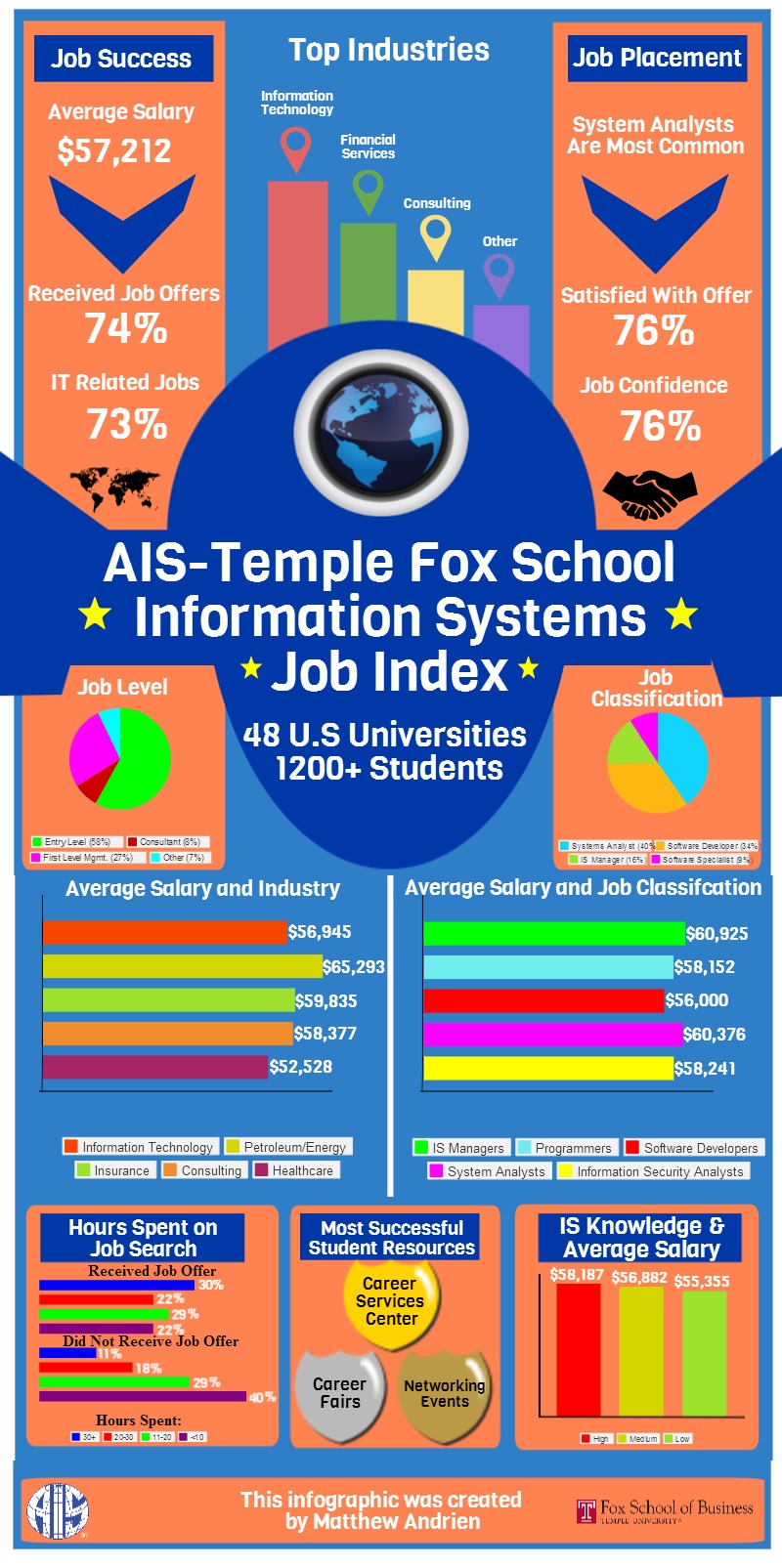
Job_Index_Inforgraphic

***


Using Fraud Detection Software to Review Medical Claims

MDs May be Slow HIT Adopters – CMS and Insurers are Not!

Staff WritersShadows

Did you know that Medicare and private health plans increasingly have been “mining” medical claims data for potential fraud – for some time now – and with the help of sophisticated computer technology? 

Yes, it seems true – and such IT may be needed more than ever in 2008!

How Much Fraud? 

Fraud accounts for an estimated 3% to 10% of the $2 trillion spent annually on healthcare in the U.S. Within the past few years, companies including Fair Isaac, IBM, ViPS and Ingenix, a subsidiary of UnitedHealth Group, have developed software that detects suspicious patterns in claims data.  

“Spider-Web” Technology

According to the CMS, their technique is called “spider-webbing. 

IOW: Find one common denominator and follow the thread. 

“Red flags” indicating possible fraud include medical providers charging more than peers; providers who administer more tests or procedures per patient than peers; providers who conduct medically “unlikely” procedures; providers who bill for more expensive procedures and equipment when there are cheaper options; and patients who travel long distances for treatment. 

Private Insurers to Follow CMS

For example, Aetna reported its fraud-detection software helped the insurer prevent more than $89 million in fraudulent reimbursements from being paid last year, compared with $15 million it was able to recover after fraudulent payments were already made.

Companies are able to save far more money by detecting fraud before claims are paid than recovering the money after the fact. 

Conclusion 

And so, what are your thoughts on this HIT initiative? Are the private insurance companies and CMS taking advantage of the slow HIT adoption of medical providers? Who is to blame, if anyone? 

Please comment: 

More info: www.HealthcareFinancials.com

Related info: http://www.jbpub.com/catalog/9780763733421/ 

Original source: USA Today 11/07/06

Product DetailsProduct DetailsProduct Details      

Physicians Expanding HIT Expenditures for 2008

A New Study from the Gantry Group

Staff Reporters


According to a new study from the Gantry Group, physicians and medical providers will be spending more money on health information technology tools and applications this year. And, their statistics suggest that healthcare providers are allocating forty percent or more of their current technology budget to clinical technology, in 2008.

This includes health information technology [HIT] expenditures for digital medical imaging, medication management, e-prescribing, RFID solutions, electronic medical records, patient care planning tools, patient documentation and various mobile applications.

Generally speaking doctors, physician-executives, CTOs, CIOs and most all organizational CXOs are moving away from custom, in-house created applications and looking for commercial packages that suit their needs.

By the end of 2008, over 80 percent of facilities will have invested in key clinical technologies, the Gantry Group predicted. The costliest items on provider budgets were digital medical imaging and electronic medical records, which in combination, ate up 64 percent of medical providers’ clinical technology budgets. 

Conclusion

And so, what does your HIT budget look like for 2008; is it fixed, flexible, hybrid, zero-based or some other type? 

More information: www.HealthcareFinancials.com 

Related information: www.HealthDictionarySeries.com


Medicare Mandating Electronic Prescriptions

Join Our Mailing List

Proposed Legislation for 2011

[By Staff Writers]

In one of their final acts for 2007, the American Medical News just reported that US House of Representatives and Senate lawmakers introduced new legislation mandating e-prescribing for Medicare participating providers, beginning in 2011. The bill, if enacted, would fine physicians who continued writing paper prescriptions after January 1, 2011.

Paradoxically, it would also allow the Department of Health and Human Services [HHS] to grant one or two year financial hardship exemptions for not using the appropriate technology. Of course, the definition of “hardship” would be left up to HHS discretion.

The proposal also provides one-time Medicare grants to offset the costs of technology: $2,000 in the first two years of implementation, $1,500 in the next two years, and $1,000 permanently thereafter. 

Assessment

Finally, doctors would also receive a one percent bonus on Medicare Evaluation and Management {E&M] services provided in conjunction with an e-prescription. Compensation for E&M services provided during a visit using a paper prescription would be cut by 10 percent if the prescription could have been handled electronically.

Conclusion

Your thoughts and comments on this ME-P are appreciated. Feel free to review our top-left column, and top-right sidebar materials, links, URLs and related websites, too. Then, subscribe to the ME-P. It is fast, free and secure.

Link: http://feeds.feedburner.com/HealthcareFinancialsthePostForcxos

Speaker: If you need a moderator or speaker for an upcoming event, Dr. David E. Marcinko; MBA – Publisher-in-Chief of the Medical Executive-Post – is available for seminar or speaking engagements. Contact: MarcinkoAdvisors@msn.com

OUR OTHER PRINT BOOKS AND RELATED INFORMATION SOURCES:

Product DetailsProduct DetailsProduct Details

Product DetailsProduct Details

Product Details

Maine Overturns Medical Data Restrictions

Prescription Information Dissemination OK’d

Associated Press, December 24, 2007 

A federal judge in Maine recently overturned a new state law that restricts access by medical data companies to doctors’ prescription information.  

U.S. District Judge John Woodcock concluded that the law, which was scheduled to take effect Jan. 1, would prohibit “the transfer of truthful commercial information” and “violate the free speech guarantee of the First Amendment.”   

The law had been challenged on constitutional grounds by IMS Health Inc. of Norwalk, Conn., Wolters Kluwer Health of Conshohocken, Pa., and Verispan of Yardley, Pa., which collect, analyze and sell medical data to pharmaceutical companies for use in their marketing programs. 

Judge Woodcock noted that he relied heavily on an April 30 ruling by a U.S. District Judge in New Hampshire that shot down a similar law in that state, while a similar case is pending in Vermont. 

And so, what is your opinion on physician prescription information privacy? Will other states follow Maine?  

EMRs and Patient Safety

Exploring the Shibboleths

Staff Writers

A new study by University of Alberta and the Canadian Health System suggests that while Electronic Medical Records [EMRs] might provide a patient safety boost, not much is known about the full benefits of this technology.  

Despite assumptions that EMRs improve clinical workflow and medical care quality, there’s little evidence-based research to document this outcome. 

It was also noted that there’s a definite cultural impact on health organizations when they adopt EMRs. And so, it seems there’s a need to go out and challenge some shibboleths and EMR assumptions a bit more. What are your experienced impressions?

Conclusion

What do you think? On face value, the study does more to document the unknown impact of EMRs, than it does known patient care outcomes. And so, your thoughts and comments on this Executive-Post are appreciated.

Related Information Sources:

Practice Management: http://www.springerpub.com/prod.aspx?prod_id=23759

Physician Financial Planning: http://www.jbpub.com/catalog/0763745790

Medical Risk Management: http://www.jbpub.com/catalog/9780763733421

Healthcare Organizations: www.HealthcareFinancials.com

Health Administration Terms: www.HealthDictionarySeries.com

Physician Advisors: www.CertifiedMedicalPlanner.com

Speaker: If you need a moderator or speaker for an upcoming event, Dr. David E. Marcinko; MBA – Publisher-in-Chief of the Executive-Post – is available for seminar or speaking engagements. Contact: MarcinkoAdvisors@msn.com  or Bio: www.stpub.com/pubs/authors/MARCINKO.htm

Subscribe Now: Did you like this Executive-Post, or find it helpful, interesting and informative? Want to get the latest E-Ps delivered to your email box each morning? Just subscribe using the link below. You can unsubscribe at any time. Security is assured.

Link: http://feeds.feedburner.com/HealthcareFinancialsthePostForcxos

CMS to Purchase Software for Docs

Doctors to be Paid for EMR Adoption

Staff Reporters 

The CMS recently reported that it wants 1,200 small physician practices to participate in a new government pilot project that will give higher Medicare payments to doctors who adopt electronic medical records.

The agency has not determined how it will choose the practices or its incentive payments.  

The AMA emphasized the financial challenges health information technology poses for physician practices and noted that, while HIT will save money for the health care system, only 11 percent of the return on investment will go to the physicians who are expected to pay for it.

The AMA urged Congress to consider financial help, such as grants, loans, increased reimbursement for HIT use, as well as tax credits for doctors purchasing EMR technology.  

Is this fair? In what other industry does the government pay for IT investments; any thoughts?

A New EMR Consortium

Boost for EMR Security?

Staff Writers


Nine companies in the health care industry have banded together to create a set of security standards to better protect the information in electronic medical records [EMRs].  

The companies, including HCA, Humana and Highmark Inc., have committed to use the security practices which they will develop along with Health Information Trust Alliance LLC (Hitrust), a Texas- based organization created to oversee the project. To date, Hitrust has received 40 more applications from other companies hoping to participate; with a goal of 155 by the end of February, 2008. 

Although health care companies are currently required by HIPAA to secure protected health information (PHI), the law is vague and each organization is allowed to determine what steps to take on its own. This often requires health entities to audit the data protection practices of business partners and related covered entities.

And so, will this new consortium be a boon to HIT, or just another “new” consortium boon-dongle?

More info: http://www.amazon.com/Dictionary-Health-Information-Technology-Security/dp/0826149952/ref=pd_bbs_sr_4?ie=UTF8&s=books&qid=1197123377&sr=8-4

HIT and Virtual Medical Visits?

Join Our Mailing List

Compensation for e-mail – A New Payment Model for Doctors?

By Staff Writers

It’s been a long wait, but we have recently learned that – ever so slowly – some health plans are beginning to pay doctors for ‘virtual visits’ with patients.

Vendors like McKesson-owned RelayHealth, Epic Systems and Web portal vendor Medfusion have offered the technology for some time, but payer acceptance has been slow. However, a consensus is building that such visits may be a good idea, despite lingering questions over billing and the ability of physicians to legally offer e-care from out of their home state. These visits might save substantial amounts of money while keeping patients healthy–including a Kaiser study concluding that it saves $70 to $120 on each virtual visit.

  1. And so, are hospitals to follow this physician trend?
  2. How about CMS and the various state Medicaid systems?
  3. What about private insurance companies, HMOs and MCOs, etc?

Please opine!

The Moderators 

Product DetailsProduct Details

***

NPI Numbers

The Impending NPI Deadline 

By Staff Reporters

www.HealthcareFinancials.com

Join Our Mailing List 

Most of us know that until now, hospitals and other healthcare organizations had until May 23, 2008 to implement the National Provider Identifier (NPI) scheme for Medicare claims; but we were apparantly wrong! 

CMS said today that hospitals must get their NPI in place for submitting Medicare fee-for-service claims by January 1, 2008. If not, CMS will begin rejecting such claims. (CMS is will still accept non-NPI claims from professional services providers like doctors, labs and clinics).

CMS officials say they’re moving up the deadline because most providers are already on board with the NPI.

Really! Are they sure? Not from my view of the universe!

To be sure, providers who aren’t using the NPI are already technically in trouble already, as the original deadline is long past. However, as part of the transition to full NPI rollout, CMS has been letting them slide if (in essence) they promised to work on it by filing a contingency plan.

Anyone caught off guard with this announcement?

– A Healthcare CTO