RFID: Defined for Hospital Inventory Tracking

A Supply Chain Management Strategy

By Staff Reporters

***

***

RADIO FREQUENCY IDENTIFICATION

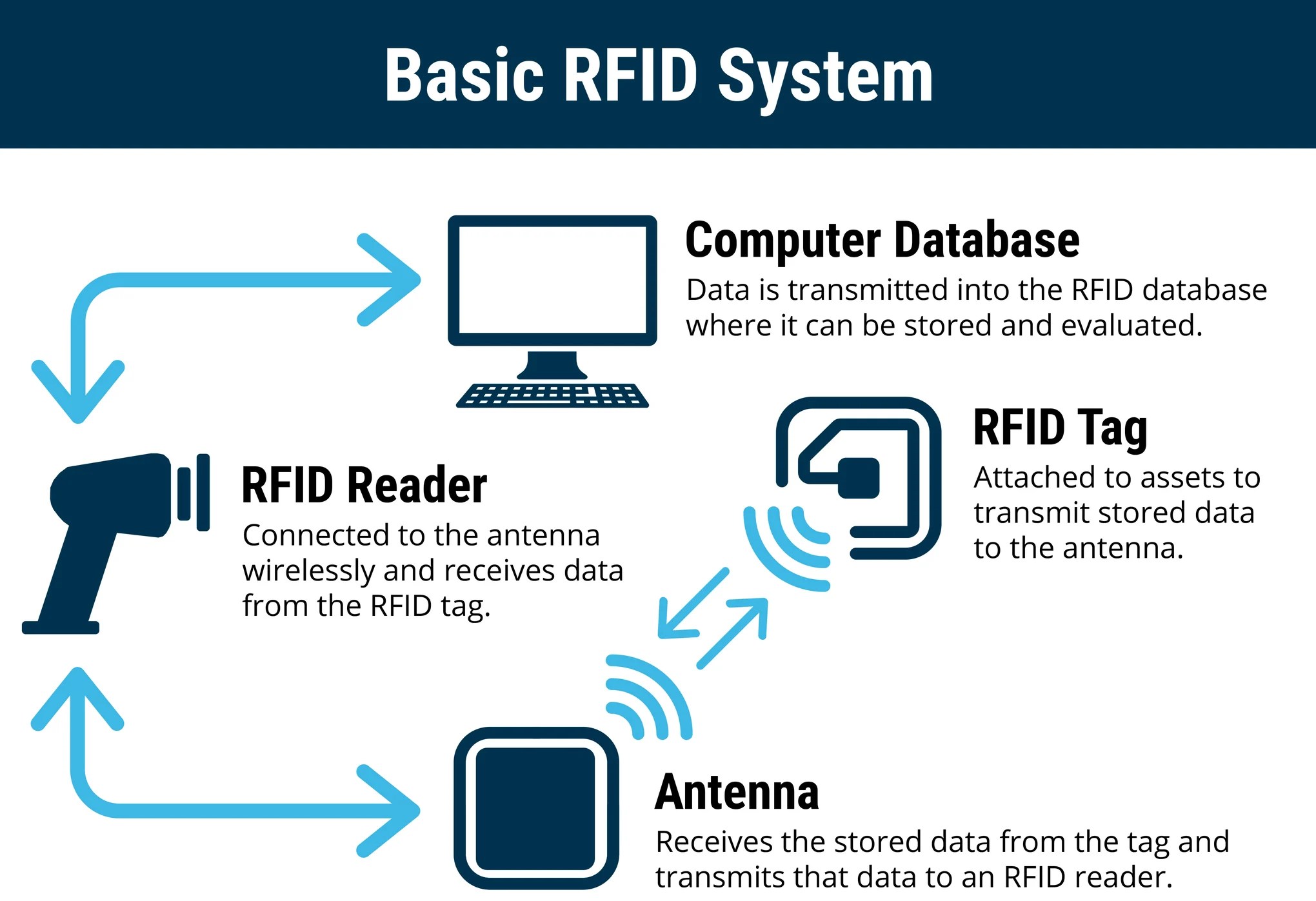
RFID refers to a device attached to an object that transmits data to an RFID receiver. A device can be a large piece of hospital hardware the size of a small book like those attached to ocean containers, or a very small device inserted into a label on a package. RFID has advantages over bar codes such as the ability to hold more data, and to change the stored data as processing occurs. Moreover, it does not require line-of-sight to transfer data, and is very effective in harsh environments where bar-code labels will not work. RFID is not without its own problems, however, as RF signals can be compromised by materials such as metals and liquids.

SCM: https://medicalexecutivepost.com/2011/06/09/supply-chain-management-in-healthcare/

Although RFID technology is receiving much current attention, it still tends to be cost-prohibitive for some hospital inventory tracking applications. As chip prices go down, there will be continued growth in the application of RFID, but, as in the case of 2D bar codes, many hospital warehouse applications simply do not require this added functionality. The low-cost 1D bar code may continue to be the technology of choice for many hospital inventory tracking applications in the short term.

Smart labels are labels with integrated RFID chips. The idea is to produce labels (probably with bar codes) as well as programming the RFID chips embedded in the label. This would provide all current functionality (human- and machine-readable text and bar codes) as well as adding RFID functionality.

Slap-and-ship describes an approach to complying with vendor requirements for physical identification of shipped goods. More recently, slap-and-ship has been used to describe complying With RFID requirements (such as those from large health care systems); however, it is also applicable to any compliance labeling requirement (such as compliance bar-code labels). Slap-and-ship implies meeting the customer’s requirement by applying the bar-code labels or RFID tags, but not utilizing the technology internally.

SCM PODCAST: https://medicalexecutivepost.com/2022/03/16/podcast-medical-supply-chain-management/

Finally, anti-skimming bills were first approved by California and Washington State relative to RFID privacy and are focused on making it illegal for criminals or businesses (or criminal businesses) to read and use personal information from RFID-enabled items such as driver’s licenses and credit cards without the owner’s consent.

COMMENTS APPRECIATED

Like and Subscribe

***

***

BLACK FRIDAY: Profiting From “Reverse Supply Chain Logistics”

By Staff Reporters

***

Black Friday, one of the biggest shopping days of the year, is a half day for the stock market. Both stock exchanges close at 1:00 p.m. ET, with eligible options trading until 1:15 p.m. Normal trading hours resume on the Monday after Thanksgiving, also known as Cyber Monday, when many online retailers host major sales.

***

SPONSOR: http://www.MarcinkoAssociates.com

***

DEFINITION: Reverse logistics—or the supply-chain processes of returns—is a little-known but rapidly growing sector of the economy that’s booming alongside the rise in online shopping that started during the pandemic.

Now, as retailers crack down on returns to avoid hearing another “it was broken when I got it” excuse, some companies are counting on you to send your holiday gifts back. A “reverse logistics” industry has sprung up in recent years to take advantage of the more than $300 billion in returns Americans make every holiday season.

  • Venture capital firms pumped nearly $200 million into reverse logistics startups last year—over 2.5x as much as in 2021, according to Bloomberg.
  • Loop Returns, which sells software to companies looking to streamline the return process on the customer side, raised $115 million at the end of 2022.

Established companies see potential in reverse logistics as well. Last year, Uber launched a feature enabling drivers to pick up your packages and bring them to a returns center. Meanwhile, UPS, whose returns business has grown 25% since 2020, recently acquired the startup Happy Returns.

COMMENTS APPRECIATED

Thank You

***

***

CHARGE MASTER: Medical Bills Paradox

By Dr. David Edward Marcinko MBA MEd CMP™

SPONSOR: http://www.CertifiedMedicalPlanner.org

***

***

CHARGE MASTER MEDICAL BILLS

Classic Definition: A comprehensive review of a physician, clinic, facility, medical provider or hospital’s charges to ensure Medicare billing compliance through complete and accurate HCPCS/CPT and UB-92 revenue code assignments for all items including supplies and pharmaceuticals. The charge master captures the costs of each procedure, service, supply, prescription drug, and diagnostic test provided at the hospital, as well as any fees associated with services, such as equipment fees and room charges

Modern Circumstance: A charge master quizlet (charge description master [CDM]) document that contains a computer-generated list of procedures, services, and supplies with charges for each. Charge master rates are essentially the health care market equivalent of Manufacturer’s Suggested Retail Price (MSRP) in the car buying market. Poor charge master maintenance can lead to overpayments or underpayments. It can also lead to claim rejections from insurance companies, poor patient experience, or compliance violations.

Paradox Examples:

  • Superbills: An encounter form that is the financial record source document used by healthcare providers and other personnel to record treated diagnoses and services rendered to the patient during the current encounter. It is also called a superbill.
  • Payment rates: Almost no one actually pays the publicized charge master rates. The vast majority of health care consumers are represented by a payer of some kind, such as a commercial health insurance company, Medicaid, or Medicare. Commercial insurers negotiate the actual prices they pay during the process of contracting with providers. Medicare and Medicaid establish their own payment levels independent of hospitals’ charge master lists – Medicare through the federal government and Medicaid through state governments.
  • Cash pay: The sad irony of the charge master is that the uninsured are the most likely to be billed charge master rates because they are not represented by a third-party payer.
  • Problematic features: Other items also impede the ability of payers to have a comprehensive and accurate understanding of hospitals’ financial positions. For example, nonprofit hospitals are required to report charity care, bad debt expenses, community benefit initiatives, and uncompensated care. When these expenses are reported at the charge master level, expenses can be paradoxically overstated, potentially making a hospital’s financial position look worse than it actually is.

COMMENTS APPRECIATED

Subscribe Today!

***

***

***

National Supply Chain Management Day: Health Care “White Paper”

By Staff Reporters

Dr. David Edward Marcinko MBA MEd CMP

***

National Supply Chain Management Day is celebrated on April 29th every year to mark the binding importance of the global supply chain in the everyday lives of people. National Supply Chain Day brings all stakeholders together to share recent developments in the field. Introduced in 2020 by a Georgia-based packaging outlet, this holiday aims to raise awareness about the way a supply chain affects all of us, and how we can be better partners and benefactors of the global supply chain management system.

***

***

One of the most iconic symbols of the COVID economy was the epic backlog of container ships waiting to dock at the ports of Los Angeles and Long Beach. At one point this year, that backup was longer than the line at Trader Joe’s on a Saturday, stretching 109 ships deep and almost 60 miles from the coast.

But now, the shipping situation is almost back to normal. As of last week, the number of ships waiting to drop off their goods stood at just four, according to the WSJ. Plus, the cost of sending a 40-foot container from Shanghai to LA has plummeted from its peak of more than $12,000 to almost $2,000, nearing its pre-COVID average.

The fact that goods are once again flowing smoothly through US ports is a hopeful sign that inflation, which was instigated in part by supply chain snarls, could start to abate.

CITE: https://www.r2library.com/Resource/Title/082610254

READ MORE: https://medicalexecutivepost.com/2011/06/09/supply-chain-management-in-healthcare

WHITE PAPER: https://medicalexecutivepost.com/wp-content/uploads/2011/06/scm-dr.-dem-sample.pdf

***

COMMENTS APPRECIATED

Thank You

***

ORDER: https://www.amazon.com/Hospitals-Healthcare-Organizations-Management-Operational/dp/1439879907/ref=sr_1_4?s=books&ie=UTF8&qid=1334193619&sr=1-4

****

PODCAST: Hospital SUPPLY CHAIN Status

By Staff Reporters

***

Hospital Supply Chain Optimization Status: Survey Results

A recent survey from Syft of 100 hospital and supply chain leaders found:

 •  65% said better supply chain management could improve margins by 1-3%, with 23% of respondents believing margins can improve by more than 3%.
 •  94% agreed that supply chain analytics can reduce supply chain costs. 76% said it can improve quality.
 •  24% said their organizations identify supply standardization opportunities very well.
 •  32% said it would cost their organizations more than $500,000 annually to meet new supply chain regulations like California Assembly Bill 2357.

Source: Syft via. PRNewswire, December 8, 2021

***

PODCAST: https://medicalexecutivepost.com/2021/08/04/podcast-medical-supply-chain-management/

COMMENTS APPRECIATED.

***

MORE: https://www.amazon.com/Hospitals-Healthcare-Organizations-Management-Operational/dp/1439879907/ref=sr_1_4?s=books&ie=UTF8&qid=1334193619&sr=1-4

***

HOSPITALS https://www.amazon.com/Financial-Management-Strategies-Healthcare-Organizations/dp/1466558733/ref=sr_1_3?ie=UTF8&qid=1380743521&sr=8-3&keywords=david+marcinko

***

THANK YOU

Healthcare LOGISTICS Survey

By MCOL

***

***

4 Key Take-Aways

 •  87% of nurses said that medical courier deliveries—or lack thereof—impacted their work weekly.
 •  32% of nurses have created a “secret stash” of supplies.
 •  27% have personally transported an item to another facility in the past year to overcome courier issues.
 •  19% said that errors or delays impacted their ability to provide patient care five or more times per month.

Source: American Nurse Journal via Businesswire

***

COMMENTS APPRECIATED

Thank You

***

***

****

PODCAST: Medical Supply Chain Management?

Our broken healthcare supply chain – what can be done

By Dr. Marion Mass MD

Dr. Marion Mass graduated from Medical School at Duke University. She completed internship and residency at Northwestern University’s Robert Lurie Children’s Hospital in Chicago. Dr. Mass has worked in the Philadelphia area as a pediatrician for 21 years.

Fixing Common Medical Device Supply Chain Break Points - # ...

PODCAST: https://www.youtube.com/watch?v=-BZEVnkkRAE

MARCINKO on SCM: https://medicalexecutivepost.com/2011/06/09/supply-chain-management-in-healthcare/

Your comments are appreciated.

THANK YOU

BUSINESS: https://www.amazon.com/Business-Medical-Practice-Transformational-Doctors/dp/0826105750/ref=sr_1_9?ie=UTF8&qid=1448163039&sr=8-9&keywords=david+marcinko

***

HIT: https://www.amazon.com/Dictionary-Health-Information-Technology-Security/dp/0826149952/ref=sr_1_5?ie=UTF8&s=books&qid=1254413315&sr=1-5

***

Supply-Chain Management in Healthcare

Understanding Competitive Trends

By Dr. David Edward Marcinko MBA MEd

[Editor-in-Chief]

Improved management of the supply chain has long been a focus in many industries; it is now having an impact on the healthcare industry.

For instance, one study has shown that hospitals in the United States have been more successful than hospitals in France in reducing levels of supplies inventory.

Just In Time Inventory Management

Just-in-time approaches to inventory management can improve financial performance. Improved supply chain management can reduce costs by eliminating unnecessary delays and eliminating defects in healthcare supplies.

Competitive Trends

Current competitive trends will likely make supply chain management more important. For example, the emergence of complementary medicine has implications for the supply function in hospitals, as these therapies require supplies of rather exotic items such as acupuncture needles, herbs, beads and so on. Of course, DME is the obvious example.

Thus, improvements in patient care often require concomitant improvements in operations management processes.

Patient Focused Care

Improving the quality of care using patient-focused care can also improve the financial performance of a facility. Patient-focused care not only refers to a holistic approach to care, but it also refers to the re-engineering of processes to facilitate patient care. This re-engineering may lead to increased efficiency of healthcare providers that result in lower costs.

In another example, in an effort to provide patient-focused care, a hospital may conduct job analyses leading to cross-training of personnel and the elimination of the duplication of performance of tasks.

Strategic Management Improvement

SCM Dr. DEM SAMPLE

Conclusion

Your thoughts and comments on this ME-P are appreciated. Feel free to review our top-left column, and top-right sidebar materials, links, URLs and related websites, too. Then, subscribe to the ME-P. It is fast, free and secure.

Speaker: If you need a moderator or speaker for an upcoming event, Dr. David E. Marcinko; MBA – Publisher-in-Chief of the Medical Executive-Post – is available for seminar or speaking engagements. Contact: MarcinkoAdvisors@msn.com

OUR OTHER PRINT BOOKS AND RELATED INFORMATION SOURCES:

Product DetailsProduct Details

Hospital Materials Management Information Systems [Part 2]

Fundamentals of Software Implementation

By David J. Piasecki; CPIM

By Hope Rachel Hetico; RN, MHA

Dr. David Edward Marcinko; MBA

www.HealthcareFinancials.com

The singular focus of any Hospital Materials Management Information System (HMMIS) is to deliver significant improvements in the ability of hospital facilities, networks, and other healthcare organizations to optimize the processes and work flows associated with materials management systems and reduce the costs related to inventory, durable medical equipment, pharmaceuticals and supply chain management (SCM).

Understanding Strategies

Strategically, hospitals must exploit contemporary technologies and connectivity with suppliers and trading partners to:

  • improve patient care and safety,
  • increase efficiency,
  • drive down costs, and
  • optimize inventory levels.

Software Implementation

As with the selection process written about previously, ERP software implementation may also require outside assistance.  Whether you use consultants from the software vendor, a business partner, or an independent firm, the implementation plan will likely be the same.  It’s very important to listen to consultants and be prepared to dedicate the resources outlined in the implementation plan.  A common mistake made by healthcare entities going through their first major implementation is to underestimate the complexity of their operations, the extent of system setup and testing, and the impact the implementation will have on their operation.

ERP Implementation

Here is an outline of a common scenario in single-hospital ERP implementations.

  • The consultants warn of the consequences of not dedicating adequate resources.
  • Management publicly agrees but privately thinks the consultants are crying wolf.
  • Implementation fails or goes poorly.
  • Management claims “how could we have known?”

Don’t let this be you.  The only thing to assume about the implementation is that it that it will be much more difficult than expected, it will take longer than you expected, and it will cost more than expected.

Like most other projects, the success of a software implementation will be based upon the skill of the people involved, training, planning, and the effort put forth.  Plan to have the most knowledgeable employees heavily involved in the system setup and testing.  

Testing Programs

Adequate time should be dedicated to make sure every aspect of every process is thoroughly tested.  An example of a detailed testing program is listed below:

  • Does the purchase order [PO] receipt screen have all the information needed to perform the receipt such as vendor item number, item description, unit of measure?
  • What happens when we receive more than the PO quantity?
  • What happens when we receive less than the PO quantity?
  • What happens when we enter multiple receipts against the same line?
  • What happens if someone tries to change the PO quantity after we have entered a receipt?
  • What happens if one changes the PO quantity at the same time we are entering a receipt?
  • What happens when we reverse a receipt?
  • What happens when we reverse a receipt after it has been paid?
  • What happens if the ordered unit of measure is different from the stocking unit of measure?
  • What happens when we receive an early shipment?
  • What happens when we try to receive against a cancelled PO?
  • What happens when we change the receipt location?

After the system has been thoroughly tested, employee training begins. Remember, dealing with unexpected issues is the norm; you don’t also need to be training employees after the system is supposed to be operating.

Hands-On Training

The training should consist of hands-on training and include written procedures for the tasks performed.  For most positions, make sure that each employee has entered the equivalent of at least a full day’s transactions during the training.  Using an actual day’s transactions is a good way to make sure the variety of transactions an employee is likely to encounter have been experienced. The most common mistake made in training is a lack of adequate repetition. Just because someone was able to perform the task once, during a training session on a Saturday three weeks prior to “going-live” does not mean they will be able to perform the task with system start-up. If they have repeated the task many times over a series of training sessions, they are much more likely to remember how to do it. 

Assessment

Join Our Mailing List

Watch the data. During and immediately after the implementation it is incredibly important to watch the data and make sure everything is working as planned. Monitor the status of orders, purchase orders, and delivery orders paying specific attention to “stuck orders” or other exceptions. Conduct some aggressive cycle counting of fast-moving items to make sure transactions are working correctly. 

Conclusion

So, tell us what you think about your hospital’s SCM software implementation? Feel free to review our top-left column, and top-right sidebar materials, links, URLs and related websites, too. Then, be sure to subscribe to the ME-P. It is fast, free and secure.

Get our Widget: Get this widget!

Our Other Print Books and Related Information Sources:

Practice Management: http://www.springerpub.com/prod.aspx?prod_id=23759

Physician Financial Planning: http://www.jbpub.com/catalog/0763745790

Medical Risk Management: http://www.jbpub.com/catalog/9780763733421

Healthcare Organizations: www.HealthcareFinancials.com

Health Administration Terms: www.HealthDictionarySeries.com

Physician Advisors: www.CertifiedMedicalPlanner.com

Subscribe Now: Did you like this Medical Executive-Post, or find it helpful, interesting and informative? Want to get the latest ME-Ps delivered to your email box each morning? Just subscribe using the link below. You can unsubscribe at any time. Security is assured.

Link: http://feeds.feedburner.com/HealthcareFinancialsthePostForcxos

Sponsors Welcomed

And, credible sponsors and like-minded advertisers are always welcomed.

Link: https://healthcarefinancials.wordpress.com/2007/11/11/advertise

Hospital Materials Management Information Systems [Part 1]

Join Our Mailing List

Fundamentals of Inventory Software Selection

By David J. Piasecki; CPIM

By Hope Rachel Hetico; RN, MHA

By Dr. David Edward Marcinko; MBA

The singular focus of any Hospital Materials Management Information System (HMMIS) is to deliver significant improvements in the ability of hospital facilities, networks, and other healthcare organizations to optimize the processes and work flows associated with materials management systems and reduce the costs related to inventory, durable medical equipment, pharmaceuticals and supply chain management (SCM).

Understanding Strategies

Strategically, hospitals must exploit contemporary technologies and connectivity with suppliers and trading partners to:

  •  improve patient care and safety,
  •  increase efficiency,
  •  drive down costs, and
  •  optimize inventory levels.

Software Selection

Software selection and implementation services have become big business for consulting firms as well as the software vendors themselves.  Even with outside assistance, selecting the right software for hospital operations and having a successful implementation can be an extremely difficult undertaking. Horror stories of failed enterprise resource planning (ERP) system implementations are unfortunately very common.  Anyone who frequently reads business publications have read stories where large healthcare corporations, posting smaller than forecasted profits, cite problems associated with the implementation of a new software system as one of the causes.  Whether these claims are legitimate or not is up to debate. What is true is that hospitals are highly dependent on information systems and failures in the selection and implementations of systems can result in anything from a minor nuisance to a complete operational shutdown.

Those unfamiliar with business inventory management software should be prepared to be bombarded with acronyms and buzz words.  E-business, web-enabled, E-procurement, E-fulfillment, E-manufacturing, collaborative, modular, and scaleable are just a sampling of the terms used to describe (sell) hospital software inventory products.

Inventory Tracking Software

Healthcare enterprise inventory tracking software with implementation ranges in price from a few thousand dollars to millions.  In fact, up until recently, if you were a medical clinic with annual revenues of less than $200 million, many of the top enterprise software vendors didn’t even consider you a potential customer.  Fortunately, this arrogance has been tempered recently due to economic conditions (primarily the software vendors’ cash flow). Unlike five years ago, when the software vendors felt they held all the cards, today it is truly a buyer’s market. No matter how big or small an entity, many vendors will be vying for software dollars. That’s the good news. The bad news is that you must sift through all these products to find the one that best meets your business needs.

Process Definition

The most important part of the software selection process is defining the processes within your health organization and determining functionality that is critical to your medical operation.  Many times clients get distracted by the bells and whistles and forget about their core healthcare business functions.  As a healthcare entity in the DME distribution fulfillment business – focus on functionality related to order processing, as well as warehouse and transportation management. Be wary of the software vendor that claims packages that work equally well in all environments.  Most software packages are initially designed with specific situations in mind; asking the vendor about their biggest customers will often give you an idea as to the type of operation the software was designed to work in.

Product Functionality

When you look at the detailed functionality of a product it will be important to have listed detailed functionality requirements of your healthcare operation.  This is where hospitals often make mistakes by emphasizing functionality that they currently don’t have, but would like, and overlooking core healthcare processes that their current system handles well.

Example:

For example, if you are awestruck with functionality that allows remote access to a medical charting system from an Internet browser on an ambulatory device – and as a result – overlook critical functionality related to order entry or demand planning, you may end up with a system that provides great visibility to the fact that patient revenues are failing. Never assume a software package “must” be capable of handling something considered a standard function.  Some examples of detailed functional requirements are as follows:

  • E-commerce capabilities
  • Multi-facility demand planning
  • Postponement and configure-to-order functionality
  • Forecasting and demand planning
  • Back-order processing
  • Lot or serial number tracking
  • Forward pick location replenishment
  • Batch or wave order picking
  • Returns processing
  • Back flushing DME inventory
  • Co-product processing
  • Outsourcing specific operations
  • Multiple stocking units of measure
  • Product substitutions
  • Blanket orders
  • Shipment consolidation
  • Multi-carrier rate shopping and manifesting
  • First-in first-out processing

documents

Assessment

Don’t settle for “yes, we can do that” responses from the software vendor. It’s your responsibility to verify that not only can they do it, but also that they can do it to the level required. Ask detailed questions as to exactly how it works in their system. Look at the specific programs used to achieve the task and verify that the data elements required to achieve the task are present. Don’t allow the software vendor to sidestep your questions by retreating into obfuscating technical jargon

Conclusion

Your thoughts and comments on this ME-P are appreciated. Feel free to review our top-left column, and top-right sidebar materials, links, URLs and related websites, too. Then, subscribe to the ME-P. It is fast, free and secure.

Speaker: If you need a moderator or speaker for an upcoming event, Dr. David E. Marcinko; MBA – Publisher-in-Chief of the Medical Executive-Post – is available for seminar or speaking engagements. Contact: MarcinkoAdvisors@msn.com

OUR OTHER PRINT BOOKS AND RELATED INFORMATION SOURCES:

Product DetailsProduct DetailsProduct Details

Product DetailsProduct Details

Medical Inventory Supplies and Management

Join Our Mailing List

Understanding Traditional D.M.E. and Turn-Over Rates

[By Staff Reporters]

Healthcare inventory represents tangible medical items used in the delivery of healthcare services, or for patient use and resale, or durable medical equipment [DME]. A certain quantity of safety stock should always be available. Inventory ranges from normal administrative office supplies to highly specialized chemicals and reagents used in the clinical laboratory.

Capital Supplies

Inventory should be distinguished from capital supplies, such as major equipment, instruments, and other items that are not used up faster than inventory or related inventory wastes.

Understanding Inventory Turnover

Historically, asset utilization ratios provided information on how effectively the enterprise used its inventory assets to produce revenues, or deplete its cash. For example, the inventory turnover ratio (ITR) determines the total volume of inventory turnover (change) during a pre-determined accounting period (month or quarter). It is defined as cost of inventory purchased for the period, divided by average inventory (AI) at cost.

Supply Chain Management

Dunn and Bradstreet, the supply chain management and consulting company; does not provide exact comparatives for private healthcare ITR. Nonetheless, ITR is useful as an internal performance indicator of inventory turnover speed and cash flow enhancement. Currently however, for public hospitals, 60 – 75 days is estimated to be the average time for inventory turnover.

Assessment

The main problem with traditional ITR, similar analyses such as AI, and the usual inventory costing methods (e.g., last-in first-out, first-in first-out, specific identification, average costs), and even just-in-time inventory costing, is that they do not embrace supply chain inventory management models. This occurs because sources of profit or loss are not recognized in the traditional inventory cost accounting equation:

Cost of goods sold = beginning inventory + net purchases – ending inventory. 

Conclusion

Your thoughts and comments on this ME-P are appreciated. Feel free to review our top-left column, and top-right sidebar materials, links, URLs and related websites, too. Then, subscribe to the ME-P. It is fast, free and secure.

Speaker: If you need a moderator or speaker for an upcoming event, Dr. David E. Marcinko; MBA – Publisher-in-Chief of the Medical Executive-Post – is available for seminar or speaking engagements. Contact: MarcinkoAdvisors@msn.com

OUR OTHER PRINT BOOKS AND RELATED INFORMATION SOURCES:

Product DetailsProduct DetailsProduct Details

Product DetailsProduct Details