USA HEALTHCARE QUALITY: Confidence Down

Confidence in the caliber of the American health system has never been lower

A GALLUP POLL

***

***

ANNUAL GALLUP HEALTHCARE QUALITY REPORT

More than one in five adults (21%) living in the US now rate the country’s healthcare as “poor” quality—a record high, according to Gallup’s annual health and healthcare poll.

Less than half of all respondents (48%) surveyed in 2022 said they’d rank the quality of healthcare in the US as “excellent/good”—a new low since Gallup began tracking the issue in 2001. (That’s down from 50% in 2021 and a record high of 62% in 2010 and 2012.) About a third (31%), meanwhile, said they’d rate the quality of US healthcare as “only fair,” a slight drop from 35% in 2021.

Gallup partially attributed the drop in perceived quality to politics, noting that “Republicans’ positive ratings have been subdued since President Donald Trump left office.” Other likely factors, the organization offered, could be “changes to healthcare that have taken place amid the Covid-19 pandemic or curtailed access to abortion since the Supreme Court’s Dobbs decision.”

Survey Reports:

  • Respondents reported a rosier take on the care they personally receive. Over 70% rated it as “excellent/good” compared to 6% who rated it as “poor.” But that high “excellent/good” mark is still down from 76% in 2021 and 82% in 2020.
  • Costs remained a point of contention in 2022. Less than a quarter (24%) of respondents said they were “satisfied” with the total cost of healthcare in the US, and this proportion is on par with rates from the past two decades. But only 56% of those surveyed reported being satisfied with the total cost they pay for care—the lowest level since 2016.
  • One in five respondents think the US healthcare system is in a “state of crisis” (20%) or has “major problems” (48%).

EDITOR’S NOTE: As a former CPHQ [Certified Physician in Healthcare Quality], I find this report alarming and confusing – David EdwardMarcinko MBA CMP

CMP Program: http://www.CertifiedMedicalPlanner.org

***

Product Details

***

ORDER: https://www.amazon.com/Financial-Management-Strategies-Healthcare-Organizations/dp/1466558733/ref=sr_1_3?ie=UTF8&qid=1380743521&sr=8-3&keywords=david+marcinko

ORDER: https://www.amazon.com/Hospitals-Healthcare-Organizations-Management-Operational/dp/1439879907/ref=sr_1_4?s=books&ie=UTF8&qid=1334193619&sr=1-4

COMMENTS APPRECIATED

Thank You

***

PODCAST: The Healthcare Price versus Quality Disconnect

By Dr. Eric Bricker MD

***

***

COMMENTS APPRECIATED

Thank You

Subscribe to the Medical Executive-Post

***

CITATION: https://www.r2library.com/Resource/Title/0826102549

***

***

***

PODCAST: NCQA and HEDIS [Health Effectiveness Data Information Set]

90 NCQI MEASUREMENTS

BY ERIC BRICKER MD

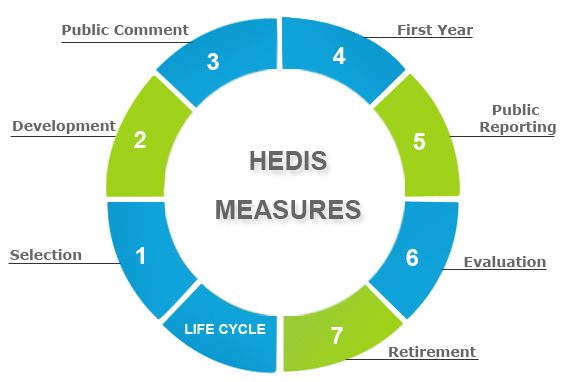
The Healthcare Effectiveness Data and Information Set (HEDIS) is a tool used by more than 90 percent of U.S. health plans to measure performance on important dimensions of care and service. More than 190 million people are enrolled in health plans that report quality results using HEDIS.

***

HEDIS Explained - BHM Healthcare Solutions

CITE: https://www.r2library.com/Resource/Title/0826102549

***

The National Committee for Quality Assurance is an independent 501 nonprofit organization in the United States that works to improve health care quality through the administration of evidence-based standards, measures, programs, and accreditation.

CITE: https://www.r2library.com/Resource/Title/0826102549

MORE: https://www.dhcs.ca.gov/provgovpart/Documents/6422/NCQAAccreditationOverview-1-21-20.pdf

****

Qualit8 | Pulse8 | Revolutionizing Healthcare Analytics Platform

***

PODCAST: https://www.ahealthcarez.com/how-hedis-quality-scores-work

YOUR COMMENTS ARE APPRECIATED

HOSPITALS: https://www.amazon.com/Hospitals-Healthcare-Organizations-Management-Operational/dp/1439879907/ref=sr_1_4?s=books&ie=UTF8&qid=1334193619&sr=1-4

HIT: https://www.amazon.com/Dictionary-Health-Information-Technology-Security/dp/0826149952/ref=sr_1_5?ie=UTF8&s=books&qid=1254413315&sr=1-5

***

Need Quality Health Care?

FOR ALL … ALL!

[By staff reporters]

***

***

Product DetailsProduct Details

***

Top 12 Articles [Health Administration Reading List]

Join Our Mailing List

By Staff Reporters via Austin Frakt PhD

On Health Economics, Finance and Insurance, Quality Care and Organizational Behavior

1. Substantial Health And Economic Returns From Delayed Aging May Warrant A New Focus For Medical Research

By Dana Goldman and others (Health Affairs)

2. Trends Underlying Employer Sponsored Health Insurance Growth For Americans Younger Than Age Sixty-Five

By Carolina-Nicole Herrera and others (Health Affairs)

3. Accountable Care Organization Formation Is Associated With Integrated Systems But Not High Medical Spending

By David Auerbach, Hangsheng Liu, Peter Hussey, Christopher Lau, and Ateev Mehrotra (Health Affairs)

4. The Quality Of Care Delivered To Patients Within The Same Hospital Varies By Insurance Type

By Christine S. Spencer, Darrell J. Gaskin, and Eric T. Roberts  (Health Affairs)

5. Understanding State Variation In Health Insurance Dynamics Can Help Tailor Enrollment Strategies For ACA Expansion

By John Graves and Katherine Swartz (Health Affairs)

6. When Medicare Cuts Hospital Prices, Seniors Use Less Inpatient Care

By Chapin White and Tracy Yee (Health Affairs)

7. More Americans Living Longer With Cardiovascular Disease Will Increase Costs While Lowering Quality Of Life

By Ankur Pandya, Thomas Gaziano, Milton Weinstein, and David Cutler (Health Affairs)

8. Surgical Skill and Complication Rates after Bariatric Surgery

By John Birkmeyer and others (New England Journal of Medicine)

Reading list

9. Who Is in Control? The Determinants of Patient Adherence with Medication Therapy

By Sergei Koulayev, Niels Skipper and Emilia Simeonova (National Bureau of Economic Research)

10. Fifty Years of Family Planning: New Evidence on the Long-Run Effects of Increasing Access to Contraception

By Martha Bailey (National Bureau of Economic Research)

11. Identifying the Health Production Function: The Case of Hospitals

By John Romley and Neeraj Sood (National Bureau of Economic Research)

12. ACA Standoff

By Jeffrey Drazen and Gregory Curfman (New England Journal of Medicine)

Assessment

Feel free to send us links to your own hot topic reading list so that we may share.

Conclusion

Your thoughts and comments on this ME-P are appreciated. Feel free to review our top-left column, and top-right sidebar materials, links, URLs and related websites, too. Then, subscribe to the ME-P. It is fast, free and secure.

Link: http://feeds.feedburner.com/HealthcareFinancialsthePostForcxos

Speaker: If you need a moderator or speaker for an upcoming event, Dr. David E. Marcinko; MBA – Publisher-in-Chief of the Medical Executive-Post – is available for seminar or speaking engagements. Contact: MarcinkoAdvisors@msn.com

OUR OTHER PRINT BOOKS AND RELATED INFORMATION SOURCES:

LEXICONS: http://www.springerpub.com/Search/marcinko
PHYSICIANS: www.MedicalBusinessAdvisors.com
PRACTICES: www.BusinessofMedicalPractice.com
HOSPITALS: http://www.crcpress.com/product/isbn/9781466558731
CLINICS: http://www.crcpress.com/product/isbn/9781439879900
ADVISORS: www.CertifiedMedicalPlanner.org
PODIATRISTS: www.PodiatryPrep.com
BLOG: www.MedicalExecutivePost.com

Product DetailsProduct Details

Product Details

The Marcinko Method of Improving Quality while Reducing Medical Errors and Healthcare Costs

Join Our Mailing List

Dr. David Edward Marcinko FACFAS MBA CMP

[Former – Certified Physician in Healthcare Quality]

[Former – Certified Financial Planner]

www.CertifiedMedicalPlanner.org

[Publisher-in-Chief]

THINK TWICE!

Doctor’s Orders

Life Corollaries:

Marcinko’s Rx for Obesity: Eat less – Exercise more – Avoid noxious lifestyles.

Marcinko’s Rx for Practice Success: Treat sick patients – Be humble – Keep faith.

Marcinko’s Rx for Financial Success: Spend less – Earn more – Be a fiduciary. 

Marcinko’s Rx for Wealth & Happiness: Don’t divorce – Love kids – Practice philanthropy.

Professional Medical Corollary:

The Choosing Wisely® list, which is aimed at cutting down on unnecessary testing by doctors and patients.

Assessment  

I am not an oracle. What else can you ad to the list?

Conclusion

Your thoughts and comments on this ME-P are appreciated. Feel free to review our top-left column, and top-right sidebar materials, links, URLs and related websites, too. Then, subscribe to the ME-P. It is fast, free and secure.

Link: http://feeds.feedburner.com/HealthcareFinancialsthePostForcxos

Speaker: If you need a moderator or speaker for an upcoming event, Dr. David E. Marcinko; MBA – Publisher-in-Chief of the Medical Executive-Post – is available for seminar or speaking engagements. Contact: MarcinkoAdvisors@msn.com

OUR OTHER PRINT BOOKS AND RELATED INFORMATION SOURCES:

DICTIONARIES: http://www.springerpub.com/Search/marcinko
PHYSICIANS: www.MedicalBusinessAdvisors.com
PRACTICES: www.BusinessofMedicalPractice.com
HOSPITALS: http://www.crcpress.com/product/isbn/9781466558731
CLINICS: http://www.crcpress.com/product/isbn/9781439879900
BLOG: www.MedicalExecutivePost.com
FINANCE: Financial Planning for Physicians and Advisors
INSURANCE: Risk Management and Insurance Strategies for Physicians and Advisors

Certified Medical Planner

Why Healthcare Variations are Expensive

The Cost of Medical Quality

By Daniel L. Gee; MD MBA

The cost of medical quality actually goes up when the variation and error rate of a process goes up. For example, the costs of pharmaceutical errors alone, in terms of lives and money, are huge. Consider the legal implications of incorrect procedures to an institution. Coding errors that lead to variability in reimbursements costs physicians and other providers, lost revenue.

Think also of the cost of additional safeguards, such as inspectors, that must be put into place to oversee defective processes. When a process is improved, the cost of quality goes down. There are fewer costs due to redundancy, lost time and lost labor.

A Variations Analogue

The concept of looking at medical variations in a process is analogous to the process of teaching a child to ride a bicycle for the first time. The child will be wobbly when he or she gets on the bicycle, at first and, may even fall, several times. As long as you are watching closely, to help the child back on the bicycle, help steer a little and provide encouragement, the child soon learns to ride smoothly and it appears all so natural. The child soon learns to balance from the feedback gained from you and the internal feedback from the brain. After studying the learning process closer, you may find the child to be more successful learning on a set of training wheels or on a bicycle a little smaller in size.

Regardless, the closed loop feedback, analysis, and monitoring by a teacher or process “champion,” keeps the child from wobbling too much and to stay on a straight and narrow course.

A Closed Feedback Loop

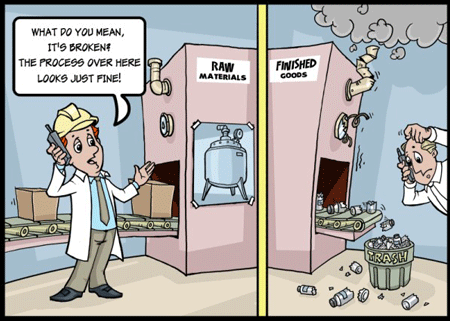
Businesses and medical practices wobble too in their processes and, in Six Sigma terminology, this wobbling is the variation that needs continual feedback to help correct and stabilize. Unlike riding a bike, where when once learned it becomes natural and smooth, businesses continue to wobble in their processes and may fall without ever being able to get back up. The institution of Six Sigma methodology is a closed feedback loop to prevent instability in processes.

More: http://businessofmedicalpractice.com/bonus-e-material/

Assessment

Virtual perfection may not be as easily attainable in an industry – like medicine – as computer chips coming off an assembly line; and the healthcare industry certainly has its share of “wobbliness;”

It is, nonetheless, the desire to constantly improve operations, perfect the way healthcare business is done – and tune in to what the patient needs – that separates the Six Sigma Sx improvement method from those QI techniques that have come before.

Moreover, the benefits of setting high performance goals, is a strategic decision to accelerate improvement, promote continual learning and sustaining efforts to succeed. It is a cultural change in medical mind-set to attain quality at its highest level.

Join Our Mailing List

Conclusion

And so, your thoughts and comments on this ME-P are appreciated. What is your SS experience with medical variations? How should we define cost; in economic or human terms? Feel free to review our top-left column, and top-right sidebar materials, links, URLs and related websites, too. Then, be sure to subscribe. It is fast, free and secure.

Speaker: If you need a moderator or speaker for an upcoming event, Dr. David E. Marcinko; MBA – Publisher-in-Chief of the Medical Executive-Post – is available for seminar or speaking engagements. Contact: MarcinkoAdvisors@msn.com

Our Other Print Books and Related Information Sources:

Practice Management: http://www.springerpub.com/prod.aspx?prod_id=23759

Physician Financial Planning: http://www.jbpub.com/catalog/0763745790

Subscribe Now: Did you like this Medical Executive-Post, or find it helpful, interesting and informative? Want to get the latest ME-Ps delivered to your email box each morning? Just subscribe using the link below. You can unsubscribe at any time. Security is assured.

Link: http://feeds.feedburner.com/HealthcareFinancialsthePostForcxos

Sponsors Welcomed

And, credible sponsors and like-minded advertisers are always welcomed.

Link: https://healthcarefinancials.wordpress.com/2007/11/11/advertise

Product DetailsProduct DetailsProduct Details

Product Details  Product Details

Product Details

About the County Health Rankings Project

Mobilizing Action Toward Community Health

By Staff Reporters

The County Health Rankings projects aims to demonstrate that where we live matters to our health.

For example, the health of a community depends on many different factors – ranging from individual health behaviors, education and jobs, to quality of health care, to the environment. This first-of-its-kind collection of 50 reports – one per state – is reported to help community leaders see that where we live, learn, work, and play influences how healthy we are and how long we live.

And – perhaps ever more importantly, the type and quality of the medical care we receive.

A Collaborative

The Robert Wood Johnson Foundation is collaborating with the University of Wisconsin Population Health Institute to develop rankings for each state’s counties. This model has been used to rank the health of counties in Wisconsin for the past six years.

Mobilizing Action Toward Community Health 

The County Health Rankings are a key component of the Mobilizing Action Toward Community Health (MATCH) project. MATCH is a collaboration between the Robert Wood Johnson Foundation and the University of Wisconsin Population Health Institute.

The Website

The project’s web site provides access to the 50 state reports, ranking each county within the 50 states according to its health outcomes and the multiple health factors that determine a county’s health. Each county receives a summary rank for its health outcomes and health factors and also for the four different types of health factors: health behaviors, clinical care, social and economic factors, and the physical environment. Each county can also drill down to see specific county-level data (as well as state benchmarks) for the measures upon which the rankings are based.

The Ratings and Rankings

It is hoped that the Rankings will serve as a real “call to action” for state and local health departments to develop broad-based solutions in their community so all residents can be healthy. The Rankings team works with health departments to help take advantage of the discussions and opportunities that will arise from the release of the Rankings.

But, efforts must also be made to mobilize community leaders outside the public health sector to take action and invest in programs and policy changes that address barriers to good health and help residents lead healthier lives. This includes education officials; elected and appointed officials, including mayors, governors, health commissioners, city/county councils, legislators, and staff; businesses and employers; the health care sector, and others.

Assessment

Join Our Mailing List 

The founders believe that the County Health Rankings web site will serve as a corner stone of the project, a place where people from all these sectors can find Rankings data, as well as action steps and the latest news about the multiple factors that determine our health.

Conclusion

And so, your thoughts and comments on this ME-P are appreciated. Give em’ a click and tell us what you think: http://www.countyhealthrankings.org How similar, or dissimilar, is the 20 year old Dartmouth Atlas Project that has documented glaring variations in how medical resources are distributed and used in the United States. The DAP uses Medicare data to provide comprehensive information and analysis about national, regional, and local markets, as well as individual hospitals and their affiliated physicians? http://www.dartmouthatlas.org

Feel free to review our top-left column, and top-right sidebar materials, links, URLs and related websites, too. Then, be sure to subscribe to the ME-P. It is fast, free and secure.

Link: http://feeds.feedburner.com/HealthcareFinancialsthePostForcxos

Speaker: If you need a moderator or speaker for an upcoming event, Dr. David E. Marcinko; MBA – Publisher-in-Chief of the Medical Executive-Post – is available for seminar or speaking engagements. Contact: MarcinkoAdvisors@msn.com 

Get our Widget: Get this widget!

Our Other Print Books and Related Information Sources:

Practice Management: http://www.springerpub.com/prod.aspx?prod_id=23759

Physician Financial Planning: http://www.jbpub.com/catalog/0763745790

Medical Risk Management: http://www.jbpub.com/catalog/9780763733421

Healthcare Organizations: www.HealthcareFinancials.com

Health Administration Terms: www.HealthDictionarySeries.com

Physician Advisors: www.CertifiedMedicalPlanner.com

Subscribe Now: Did you like this Medical Executive-Post, or find it helpful, interesting and informative? Want to get the latest ME-Ps delivered to your email box each morning? Just subscribe using the link below. You can unsubscribe at any time. Security is assured.

Link: http://feeds.feedburner.com/HealthcareFinancialsthePostForcxos

Sponsors Welcomed

And, credible sponsors and like-minded advertisers are always welcomed.

Link: https://healthcarefinancials.wordpress.com/2007/11/11/advertise

A Quality Story all Doctors and Patients Should Re-Read

[Mis] Adventures in Cardiology

Reposted by Ann Miller RN MHA

[Executive Director]

According to the author of this re-posted e-journal, Johns Hopkins Medicine has a long tradition of prioritizing patients, and striving for the bottom rung that are the anonymous poor.

And, many agree this is true. In fact, our Publisher-in-Chief grew up in Baltimore Maryland and has written about this venerable institution on the ME-P before.

Outliers

If, for example, you catch a bullet on a Baltimore street corner, or your mother presents you at the ER as a feverish welfare child, then it us open season for the medical students, well meaning as they may be. They can practice on you because if  their actions result in an adverse outcome—which is to say that if you are mangled or killed—nobody will question said outcome, precisely because … you are a nobody.

At the other end of the spectrum are wealthy and prominent patients, who get treated by doctors who have already learned what not to do from the mistakes inflicted upon the lower classes.

Of … Quality Medical Care

However, sometimes mistakes happen, and medical errors do occur as we all are human. But, what is reported to have happened to one journalists’ wife – Pam – at Johns Hopkins Hospital in March of 2002 is beyond the pale.

As a middle class citizen, she landed somewhere in the middle of the bell shaped curve. Maybe she got snookered by all the hype from US News into thinking that she was going to be treated by the best doctor at “The Best Hospital in America” … You decide.

Assessment

This is the story of what happened to Pam; as reported by her journalist husband Don.

Link: http://adventuresincardiology.com/

Conclusion

Indignation Index: 96

We trust medical quality guru Bob Wachter MD will opine. And so, your additional thoughts and comments on this ME-Pare also appreciated. Feel free to review our top-left column, and top-right sidebar materials, links, URLs and related websites, too. Then, be sure to subscribe to the ME-P. It is fast, free and secure.

Subscribe Now: Did you like this Medical Executive-Post, or find it helpful, interesting and informative? Want to get the latest ME-Ps delivered to your email box each morning? Just subscribe using the link below. You can unsubscribe at any time. Security is assured.

Link: http://feeds.feedburner.com/HealthcareFinancialsthePostForcxos

Speaker: If you need a moderator or speaker for an upcoming event, Dr. David E. Marcinko; MBA – Publisher-in-Chief of the Medical Executive-Post – is available for seminar or speaking engagements. Contact: MarcinkoAdvisors@msn.com

OUR OTHER PRINT BOOKS AND RELATED INFORMATION SOURCES:


Product DetailsProduct Details

Product Details

Remembering the IOM Medical Quality Report

Join Our Mailing List

Despite the IOM Warning, Medical Errors May Have Killed 1 Million Plus In Past Decade

[By Fard Johnmar: First posted May 20, 2009]

IOM Report

Much like remembering the fallen Berlin Wall, it is fitting during this time of political healthcare reform debate, to again consider the IOM report – now more than a decade old.

In a scathing report, Consumers Union estimates that more than 1 million people have died over the last decade due to preventable medical harm.  The newly released report, “To Err is Human — To Delay is Deadly,” suggests that since the Institute of Medicine’s influential 1999 report on medical errors, “98,000 people die each year needlessly because of preventable medical harm, including healthcare-acquired infections. Ten years after To Err is Human, we have no national entity comprehensively tracking patient safety events or progress.”

While some hospitals have made great strides in the effort to reduce medical errors and the U.S. government has taken steps to limit reimbursement for preventable medical events, the nation still has a long way to go.  Consumers Union is recommending that we develop a national system for tracking medical errors.  The organization suggests that concerns about malpractice lawsuits due to reports of medical harm may be overstated.

Assessment

To learn more about the Consumer Union report, please click here.

Channel Surfing

Have you visited our other topic channels? Established to facilitate idea exchange and link our community together, the value of these topics is dependent upon your input. Please take a minute to visit. And, to prevent that annoying spam, we ask that you . You can unsubscribe at any time. Security is assured.

Conclusion

Your thoughts and comments on this ME-P are appreciated. Feel free to review our top-left column, and top-right sidebar materials, links, URLs and related websites, too. Then, subscribe to the ME-P. It is fast, free and secure.

Speaker: If you need a moderator or speaker for an upcoming event, Dr. David E. Marcinko; MBA – Publisher-in-Chief of the Medical Executive-Post – is available for seminar or speaking engagements. Contact: MarcinkoAdvisors@msn.com

OUR OTHER PRINT BOOKS AND RELATED INFORMATION SOURCES:


A Six Sigma Emergency Department Case Report

Emergency Department Diversions

By Staff Writersbiz-book1

According to Daniel L. Gee MD MBA, Scottsdale Healthcare in Arizona used consultants from Creative Healthcare USA on a recent project, rather than doing a full deployment of Six Sigma in its organization, to analyze its problem of emergency department (ED) “diversions.”

Emergency Department Diversions

Diversions happen when emergency departments are too full in capacity to handle acute emergencies and a decision is made to close its doors to patients and ambulances are diverted elsewhere. The issue of closed and diverted emergency rooms is a growing nationwide phenomenon because of fewer EDs and a growing aged and uninsured population. The consultants, using Six Sigma principles, mapped the ED process and found multiple bottlenecks that have a direct effect on the probability of evoking a “diversionary” status in the emergency room.

Out of Control Bottlenecks

One bottleneck process deemed “out of control,” in Six Sigma jargon, was the issue of bed control. A process is considered “in control” when operating within acceptable specification limits. It was found that the average transfer time for a patient admitted to a hospital bed from the emergency department was 80 minutes, of which half of this time, a bed is available and waiting. The process was a significant “waste of time” and, moreover, complicated by an Administrative Nurse “inspector” locating beds on different floors.

Sig Sigma Tenants

Two tenements of Six Sigma level of quality were violated: one is that having an inspection is a correction for an inefficient process and two, the more steps involved the less is the potential yield of a process. Through this revelation, the hospital eliminated the Administrative Nurse, reduced cycle time by 10% in bed control, and improvement ED throughput with greater turnover thereby, improving revenue by nearly $600,000.

Little’s Law

The addition of a nurse inspector and waiting patients in a busy ED is an example of “Little’s Law” or sometimes referred to as the first fundamental law of system behavior. When more and more inputs are put into a system, such as more ED patients and an additional nurse employee, and when there is variation in their arrival time (no control over patient arrivals) or process variation (different people doing the same things differently), there becomes an exponential rise in “cycle time.” Productivity of the system begins to fall and inefficiency and variation creeps in.

Assessment

An examination of the project types to which health care provider organizations have utilized Six Sigma methodology reveals almost any hospital or medical clinic process is a candidate.

Conclusion

And so, your thoughts and comments on this Medical Executive-Post are appreciated. Is Six Sigma a real medical quality control initiative that’s here to stay; or just another passing fad?

Speaker:If you need a moderator or speaker for an upcoming event, Dr. David E. Marcinko; MBA – Publisher-in-Chief of the Medical Executive-Post – is available for seminar or speaking engagements. Contact: MarcinkoAdvisors@msn.com  or Bio: www.stpub.com/pubs/authors/MARCINKO.htm

Our Other Print Books and Related Information Sources:

Practice Management: http://www.springerpub.com/prod.aspx?prod_id=23759

Physician Financial Planning: http://www.jbpub.com/catalog/0763745790

Medical Risk Management: http://www.jbpub.com/catalog/9780763733421

Healthcare Organizations: www.HealthcareFinancials.com

Physician Advisors: www.CertifiedMedicalPlanner.com

Subscribe Now:Did you like this Medical Executive-Post, or find it helpful, interesting and informative? Want to get the latest ME-Ps delivered to your email box each morning? Just subscribe using the link below. You can unsubscribe at any time. Security is assured.

Link: http://feeds.feedburner.com/HealthcareFinancialsthePostForcxos

Product DetailsProduct DetailsProduct Details

Checklists: Homer Simpson’s Moment of Clarity on Medical Quality

Accountants do it – Attorneys do it – Why Not Docs?

By Dr. David Edward Marcinko; MBA, CPHQ, CMP™insurance-book2

Like the Nike slogan, hospitals should just do-it! Make checklists, that is! A new report by the Associated Press, on January 15, 2009, suggests simple checklists might improve medical quality and save hospitals $15 billion a year.  

NEJM Study

The study was led by Atul Gawande MD, now a Harvard surgeon and medical journalist, and just published in the New England Journal of Medicine [NEJM]. The 19-item checklist, used in the study, was far more detailed than what is required for most institutions. In summary, doctors who followed a checklist of steps cut death rates from surgery, almost in half, and complications by more than a third in a large study on how to avoid blatant operating room mistakes.

The Checklist

The 19 point surgical checklist was developed by the World Health Organization [WHO] and includes common sense, and inexpensive, measures like these two:

  • Prior to the patient being given anesthesia, make sure relevant anatomy is marked, and everyone knows if the patient has an allergy.
  • After surgery, check that all the needles, sponges and instruments are accounted for.
  • Before the checklist was introduced, 1.5 percent of patients in a comparison group died within 30 days of surgery at eight hospitals. Afterward, the rate dropped to 0.8 percent — a 47 percent decrease. Duh; as Homer Simpson might say! Not exactly rocket science; is it?

Skeptics Exist

However, Dr. Peter Pronovost – a Johns Hopkins University researcher in my hometown of Baltimore – led a highly influential checklist study a few years back on cutting infection rates from various intravenous tubes. He was a skeptic of this study because the researchers collected their own data and acknowledged the possibility that results were partly skewed because folks perform better when observed.

A Next-Gen Quality Proponent

I have been a fan of Atul since his medical school and surgical training days as a resident at Brigham and Women’s Hospital in Boston. I even cited him as a precocious young up-start in the preface of my book, Insurance and Risk Management Strategies for Physicians and Advisors. His own works, of course, are best-sellers: Complications: A Surgeon’s Notes on an Imperfect Science, and Better: A Surgeon’s Notes on Performance. In fact, I often posit that he is a leading example of next-gen quality gurus, following in the foot-steps of Robert Wachter MD before him, and John E. Wennberg MD, MPH of the Dartmouth Atlas, before Bob.

My Experiences

Yet, far too many medical quality issues are being blindly addressed with powerful information technology systems. But, do we really need RFID tags to ensure proper side surgery, or bar codes bracelets for newborns? For example, while a medical student from Temple University back in the late seventies, I was observing surgery during an orthopedic rotation and noted the wrong extremity had been prepped and draped, awaiting the surgeons’ incision. Luckily, my big mouth was an advantage at the time. Decades later, at birth, I helped deliver my own daughter and immediately splashed a (far-too-large) swatch of gentian-violet on her left heel as an identifier; cheap … effective … simple. It did horrify the youngish nursing staff, but not so the more mature PICU staff. These, and related issues, might be alleviated with some managerial common sense; along with a dose of mindset change.

Assessment

With the Obama administration about to spend massive amounts of money on eHRs and other sophisticated – but largely unproven and non inter-operable HIT systems – medical quality improvement measures; perhaps it’s time to take a breath, think and KISS! 

Most medical practices, clinics and hospitals ought not [should not] operate at full capacity, and maybe the best patient care is driven by demand (needs) – and not the supply driven (wants) of administrators, doctors, stockholders and private [physician owned] hospitals and/or other stakeholders. Still, financial advisors do-it, automobile mechanics do-it; so why don’t docs and hospitals do it… the checklist-thing?

Conclusion

Your thoughts and comments on this ME-P are appreciated. Feel free to review our top-left column, and top-right sidebar materials, links, URLs and related websites, too. Then, subscribe to the ME-P. It is fast, free and secure.

Speaker: If you need a moderator or speaker for an upcoming event, Dr. David E. Marcinko; MBA – Publisher-in-Chief of the Medical Executive-Post – is available for seminar or speaking engagements. Contact: MarcinkoAdvisors@msn.com

OUR OTHER PRINT BOOKS AND RELATED INFORMATION SOURCES:

Product Details  Product Details

Product DetailsProduct Details

The Consumer-Patient Purchaser Disclosure Project

Advancing Healthcare Transparency and Advocacy

Staff ReportersVooDoo

The Consumer-Purchaser Disclosure Project http://healthcaredisclosure.org, and various collaborating organizations, recently announced that a “comprehensive national agreement” has been reached with “leading physician groups and health insurers on principles to guide how health plans measure doctors’ performance and report the information to consumers.”

Stakeholders-on-Board

Stakeholders signing on to support the initiative include AARP, AFL-CIO, the Leapfrog Group, the National Business Coalition on Health, the National Partnership for Women and Families, the Pacific Business Group on Health, the American College of Physicians, the American Academy of Family Physicians, the American Medical Association, the American College of Cardiology, the American College of Surgeons, America’s Health Insurance Plans, Aetna, Cigna, UnitedHealthcare and WellPoint; etc.

Goals and Objectives

According to website and PR announcements, the goal of the “Patient Charter for Physician Performance Measurement, Reporting and Tiering Programs” is to create a national set of principles regarding measuring doctors’ performance and reporting such information to consumers. Health plans adopting the Patient Charter agree to a standard set of performance measurement principles and reporting. The also agree to have their consumer reporting assessed by an independent review organization.

Assessment

The CP-DP is not a new idea. There is a multitude of provider ranking and data comparison initiatives that are available to patients-consumers. Some significant other initiatives include: 

  • CMS provides comparative data tools for Hospitals, Nursing Homes, Home Health, and Dialysis at www.medicare.gov
  • The Leapfrog Group (www.leapfrog.org ) annually publishes their national list of “Top Hospitals” 
  • Thomson annually publishes the national list of 100 Top Hospitals based upon proprietary benchmarks and AHRQ patient safety measures, available at www.100tophospitals.com 
  • NCQA publishes listings of “NCQA-Recognized physicians” that “have met the highest standards of quality care in the areas of heart/stroke care, diabetes care, back pain and systematic processes.” at www.ncqa.org
  • WellPoint (www.wellpoint.com) now provides Zagat consumer rating tools for physicians for its health plan members in selected markets.

And, the new program hopes to bring increased credibility, security, transparency and fairness to the process, and to benefit all stake holders of the healthcare industrial complex.

Conclusion

Your thoughts and comments are appreciated; as a medical provider, financial advisor, healthcare executive, economist and ultimate patient? Is this VooDoo advocacy; or not?

Related Information Sources:

Practice Management: http://www.springerpub.com/prod.aspx?prod_id=23759

Physician Financial Planning: http://www.jbpub.com/catalog/0763745790

Medical Risk Management: http://www.jbpub.com/catalog/9780763733421

Healthcare Organizations: www.HealthcareFinancials.com

Health Administration Terms: www.HealthDictionarySeries.com

Physician Advisors: www.CertifiedMedicalPlanner.com

Subscribe Now: Did you like this Executive-Post, or find it helpful, interesting and informative? Want to get the latest E-Ps delivered to your email box each morning? Just subscribe using the link below. You can unsubscribe at any time. Security is assured.

Link: http://feeds.feedburner.com/HealthcareFinancialsthePostForcxos

Referrals: Thank you in advance for your electronic referrals to the Executive-Post.