Say’s Law in Classical Economics

By Dr. David Edward Marcinko MBA MEd

***

***

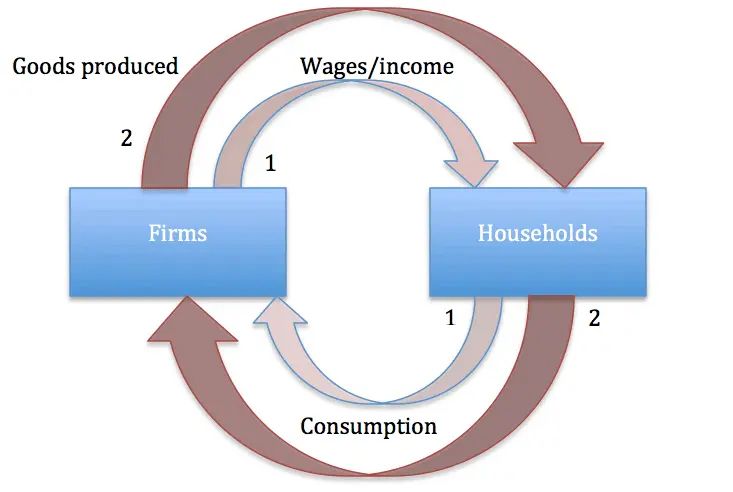
Say’s Law, named after the French economist Jean‑Baptiste Say, is a foundational idea in classical economics. Often summarized as “supply creates its own demand,” the law suggests that the act of producing goods and services inherently generates the income necessary to purchase them. This principle shaped economic thought throughout the 19th century and continues to influence debates about markets, government intervention, and the causes of economic crises.

Origins and Meaning Jean‑Baptiste Say introduced his law in the early 1800s in his Treatise on Political Economy. He argued that production is the source of demand: when producers create goods, they pay wages, rents, and profits, which in turn become purchasing power. In this view, general overproduction is impossible because every supply of goods corresponds to an equivalent demand. If imbalances occur, they are temporary and limited to specific sectors, not the economy as a whole.

Core Principles Say’s Law rests on several assumptions:

  • Markets are self‑correcting: Any surplus in one area leads to adjustments in prices and production.
  • Money is neutral: It serves only as a medium of exchange, not as a driver of demand.
  • Production drives prosperity: Economic growth depends on increasing output, not stimulating consumption.
  • No long‑term unemployment: Since supply creates demand, workers displaced in one industry will eventually find employment elsewhere.

These ideas aligned with classical economists’ belief in minimal government intervention and the efficiency of free markets.

Influence on Classical Economics Say’s Law became a cornerstone of classical economics, reinforcing the belief that recessions or depressions were temporary and self‑correcting. Economists like David Ricardo and John Stuart Mill adopted versions of the law, using it to argue against policies aimed at stimulating demand. The law supported laissez‑faire approaches, suggesting that governments should avoid interfering with markets, as production itself would ensure economic balance.

Criticism and Keynesian Revolution Say’s Law faced its greatest challenge during the Great Depression of the 1930s. Widespread unemployment and idle factories contradicted the idea that supply automatically generates demand. John Maynard Keynes famously rejected Say’s Law in his General Theory of Employment, Interest, and Money (1936). Keynes argued that demand, not supply, drives economic activity. He showed that insufficient aggregate demand could lead to prolonged recessions, requiring government intervention through fiscal and monetary policies.

Keynes’s critique marked a turning point in economics. While Say’s Law emphasized production, Keynesian economics highlighted consumption and demand management. This shift reshaped economic policy, leading to active government roles in stabilizing economies.

Modern Perspectives Today, Say’s Law is not accepted in its original form, but elements of it remain relevant. Supply‑side economists, for example, argue that policies encouraging production—such as tax cuts and deregulation—can stimulate growth. In contrast, Keynesians stress the importance of demand management. The debate reflects a broader tension in economics: whether prosperity depends more on producing goods or ensuring people have the means and willingness to buy them.

Conclusion: Say’s Law was a bold attempt to explain the self‑sustaining nature of markets. While its claim that “supply creates its own demand” proved too simplistic in the face of modern economic realities, it remains a vital part of the history of economic thought. The controversy surrounding Say’s Law highlights the evolving nature of economics, where theories are tested against real‑world crises and adapted to new circumstances. Even today, discussions of supply‑side versus demand‑side policies echo the enduring influence of Say’s original insight.

COMMENTS APPRECIATED

EDUCATION: Books

SPEAKING: Dr. Marcinko will be speaking and lecturing, signing and opining, teaching and preaching, storming and performing at many locations throughout the USA this year! His tour of witty and serious pontifications may be scheduled on a planned or ad-hoc basis; for public or private meetings and gatherings; formally, informally, or over lunch or dinner. All medical societies, financial advisory firms or Broker-Dealers are encouraged to submit an RFP for speaking engagements: CONTACT: Ann Miller RN MHA at MarcinkoAdvisors@outlook.com -OR- http://www.MarcinkoAssociates.com

Like, Refer and Subscribe

***

***

The Sraffa–Hayek Economic Debate

By Dr. David Edward Marcinko MBA MEd

***

***

The Sraffa–Hayek debate stands as a pivotal moment in the history of economic thought, highlighting deep philosophical and methodological differences between two influential schools: the Austrian School, represented by Friedrich Hayek, and the neo-Ricardian or Cambridge School, represented by Piero Sraffa. Taking place primarily in the 1930s, this intellectual exchange centered on the nature of capital, the role of equilibrium, and the validity of marginalist theory.

Friedrich Hayek, a staunch advocate of Austrian economics, had developed a theory of business cycles rooted in the mis allocation of capital due to artificially low interest rates. In his framework, interest rates serve as signals that coordinate inter temporal production decisions. When central banks distort these signals, they cause over investment in capital-intensive industries, leading to unsustainable booms followed by inevitable busts. Hayek’s theory was grounded in a time-structured view of capital, emphasizing the importance of temporal coordination in production.

Piero Sraffa, a Cambridge economist and close associate of John Maynard Keynes, challenged Hayek’s assumptions in a 1932 review of Hayek’s book Prices and Production. Sraffa’s critique was both technical and philosophical. He questioned the coherence of Hayek’s notion of a uniform natural rate of interest in a complex economy with heterogeneous capital goods. Sraffa argued that in such an economy, there could be multiple natural rates of interest, making it impossible to define a single rate that equilibrates savings and investment across all sectors.

Moreover, Sraffa criticized the Austrian reliance on equilibrium analysis in a world characterized by uncertainty and institutional complexity. He contended that Hayek’s model was overly abstract and detached from real-world dynamics. This critique foreshadowed Sraffa’s later work, Production of Commodities by Means of Commodities (1960), which laid the foundation for the neo-Ricardian critique of marginalist economics. In that work, Sraffa demonstrated that prices and distribution could be determined without recourse to subjective utility or marginal productivity, challenging the core of neoclassical theory.

The debate had far-reaching implications. For the Austrian School, it exposed vulnerabilities in their capital theory and prompted refinements in their approach to intertemporal coordination. For the broader economics profession, Sraffa’s critique contributed to a growing skepticism about the internal consistency of marginalist value theory, influencing the Cambridge capital controversies of the 1950s and 1960s.

While the Sraffa–Hayek debate did not produce a definitive victor, it underscored the importance of foundational assumptions in economic modeling. It also highlighted the tension between abstract theoretical elegance and empirical relevance—a tension that continues to shape economic discourse today. Ultimately, the debate enriched the intellectual landscape by forcing economists to confront the limitations of their models and to grapple with the complex realities of capital, time, and uncertainty.

COMMENTS APPRECIATED

EDUCATION: Books

SPEAKING: Dr. Marcinko will be speaking and lecturing, signing and opining, teaching and preaching, storming and performing at many locations throughout the USA this year! His tour of witty and serious pontifications may be scheduled on a planned or ad-hoc basis; for public or private meetings and gatherings; formally, informally, or over lunch or dinner. All medical societies, financial advisory firms or Broker-Dealers are encouraged to submit an RFP for speaking engagements: CONTACT: Ann Miller RN MHA at MarcinkoAdvisors@outlook.com 

Like, Refer and Subscribe

***

***

Austrian vs Keynesian Economics Explained

Austrian Economics vs. Keynesian Economics in One Simple Chart

Courtesy of 

***

AE-vs_-KE-326x1024

***

***

***

***

***

Conclusion

Your thoughts and comments on this ME-P are appreciated. Feel free to review our top-left column, and top-right sidebar materials, links, URLs and related websites, too. Then, subscribe to the ME-P. It is fast, free and secure.

Speaker: If you need a moderator or speaker for an upcoming event, Dr. David E. Marcinko; MBA – Publisher-in-Chief of the Medical Executive-Post – is available for seminar or speaking engagements.

OUR OTHER PRINT BOOKS AND RELATED INFORMATION SOURCES:

Risk Management, Liability Insurance, and Asset Protection Strategies for Doctors and Advisors: Best Practices from Leading Consultants and Certified Medical Planners™8Comprehensive Financial Planning Strategies for Doctors and Advisors: Best Practices from Leading Consultants and Certified Medical Planners™

***

ECONOMICS: Free Market Resource Allocation

By Staff Reporters

SPONSOR: http://www.HealthDictionarySeries.org

***

***

Free-market economists are those who believe that the market is better at allocating resources than governments and that excessive regulation and high public spending tend to diminish growth in the long run.

In Medicine: https://medicalexecutivepost.com/2024/09/19/dr-michel-accad-can-austrian-economics-save-medicine/

Austrian Economics: https://medicalexecutivepost.com/2024/06/07/the-entrepreneur-according-to-austrian-economists/

Keynsian v. Austrian Economics: https://medicalexecutivepost.com/2024/09/19/keynesian-versus-austrian-economics/

MORE: See also Austrian school, Chicago school, laissez-faire and neoliberalism.

COMMENTS APPRECIATED

Like and Refer

***

“Medical economics and finance is an integral component of the health care industrial complex. Its language is a diverse and broad-based concept covering many other industries: accounting, insurance, mathematics and statistics, public health, provider recruitment and retention, Medicare, health policy, forecasting, aging and long-term care, are all commingled arenas …. The Dictionary of Health Economics and Finance will be an essential tool for doctors, nurses and clinicians, benefits managers, executives and health care administrators, as well as graduate students and patients. With more than 5,000 definitions, 3,000 abbreviations and acronyms, and a 2,000 item oeuvre of resources, readings, and nomenclature derivatives, it covers the financial and economics language of every health care industry sector.”

ORDER DICTIONARY OF HEALTH ECONOMICS AND FINANCE: https://www.allbookstores.com/Dictionary-Health-Economics-Finance-David/9780826102546

***

EDUCATION: Books

SPEAKING: Dr. Marcinko will be speaking and lecturing, signing and opining, teaching and preaching, storming and performing at many locations throughout the USA this year! His tour of witty and serious pontifications may be scheduled on a planned or ad-hoc basis; for public or private meetings and gatherings; formally, informally, or over lunch or dinner. All medical societies, financial advisory firms or Broker-Dealers are encouraged to submit a RFP for speaking engagements: MarcinkoAdvisors@outlook.com 

***

***

What is an [Famous] ECONOMIST?

The Top 15 Most Famous?

By Staff Reporters
***

***

15 Famous Economists and Their Contributions That’ll Truly Amaze You

According to Wikipedia, an economist is a professional and practitioner in the social science discipline of economics. The individual may also study, develop, and apply theories and concepts from economics and write about economic policy. Within this field there are many sub-fields, ranging from the broad philosophical theories to the focused study of minutiae within specific markets, macroeconomic analysis, microeconomic analysis or financial statement analysis, involving analytical methods and tools such as econometrics, statistics, economics computational models, financial economics, mathematical finance and mathematical economics.

CITE: https://www.r2library.com/Resource/Title/082610254

***

The Famous 15

READ: https://historyplex.com/famous-economists

***

COMMENTS APPRECIATED

Thank You

***

***

“TRICKLE DOWN” ECONOMICS

What it is – How it Works

By Staff Reporters

****

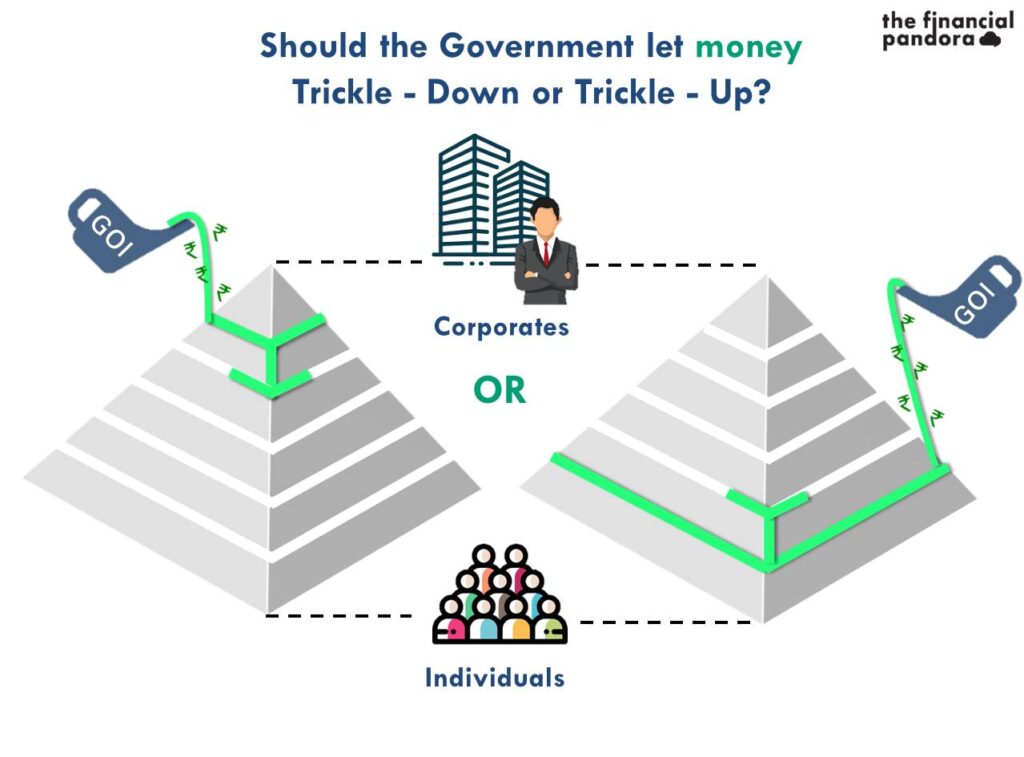
DEFINITION: Trickle-down economics is a colloquial term for supply-side economic policies. In recent history, the term has been used by critics of supply-side economic policies, such as “Reaganomics”. Whereas general supply-side theory favors lowering taxes overall, trickle-down theory more specifically advocates for a lower tax burden on the upper end of the economic spectrum. Empirical evidence shows that the proposition is regressive and has never managed to achieve all of its stated goals as described by the Reagan administration.

CITE: https://www.r2library.com/Resource/Title/082610254

SAY’S LAW: In classical economics, Say’s law, or the law of markets, is the claim that the production of a product creates demand for another product by providing something of value which can be exchanged for that other product. Thus, production is the source of demand

***

Trickle-up And Trickle-down Economics - The Financial Pandora

***

PODCAST: https://www.bing.com/videos/search?q=what+is+trickle+down+economics%3f&&view=detail&mid=EEBE43A22EFCD31576BDEEBE43A22EFCD31576BD&&FORM=VRDGAR&ru=%2Fvideos%2Fsearch%3Fq%3Dwhat%2Bis%2Btrickle%2Bdown%2Beconomics%253f%26FORM%3DHDRSC3

***

CITE: https://www.r2library.com/Resource/Title/0826102549

https://medicalexecutivepost.com/2018/01/23/about-the-laffer-curve/

***

***

What is the Economic CONSUMPTION FUNCTION Theory?

WE ARE NOT CONSUMING AND THE MARKETS ARE DOWN

By Staff Reporters

***

A Theory of the Consumption Function

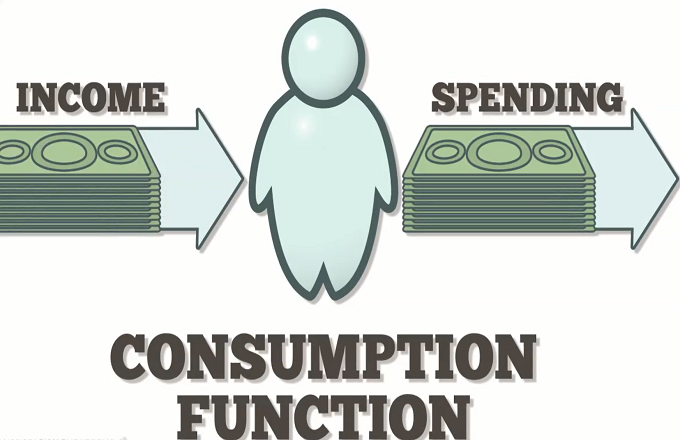
One of Milton Friedman’s most popular works, A Theory of the Consumption Function, challenged traditional Keynesian viewpoints about the household. This work was originally published in 1957 by Princeton University Press, and it reanalyzed the relationship displayed “between aggregate consumption or aggregate savings and aggregate income.”

CITE: https://www.r2library.com/Resource/Title/082610254

Keynes: https://medicalexecutivepost.com/2016/05/25/keynesian-versus-austrian-economics/

***

Consumption Function Definition

***

Now, according to Wikipedia, Friedman’s counterpart Keynes believed people would modify their household consumption expenditures to relate to their existing income levels. Friedman’s research introduced the term “permanent income” to the world, which was the average of a household’s expected income over several years, and he also developed the permanent income hypothesis. Friedman thought income consisted of several components, namely transitory and permanent. He established the formula y = y p + y t {\displaystyle y=y_{p}+y_{t}} {\displaystyle y=y_{p}+y_{t}} in order to calculate income, with p representing the permanent component, and t representing the transitory component.

A model of the Permanent Income Hypothesis

Milton Friedman’s research changed how economists interpreted the consumption function, and his work pushed the idea that current income was not the only factor affecting people’s adjustment household consumption expenditures. Instead, expected income levels also affected how households would change their consumption expenditures. Friedman’s contributions strongly influenced research on consumer behavior, and he further defined how to predict consumption smoothing, which contradicts Keynes’ marginal propensity to consume. Although this work presented many controversial points of view which differed from existing viewpoints established by Keynes, A Theory of the Consumption Function helped Friedman gain respect in the field of economics. His work on the Permanent Income Hypothesis is among the many contributions which were listed as reasons for his Sveriges-Riskbank Prize in Economic Sciences. His work was later expanded on by Christopher D. Carroll, especially in regards to the absence of liquidity constraints.

READ MORE HERE:

Of course, the Permanent Income Hypothesis faced some criticism, mainly from Keynesian economists. The primary criticism of the hypothesis is based on a lack of liquidity constraints.

HAYEK: https://medicalexecutivepost.com/2011/05/06/john-maynard-keynes-v-s-fa-hayek/

***

Your comments are appreciated.

QUERY: What is the CF for Healthcare?

MORE: https://medicalexecutivepost.com/2018/09/18/are-doctors-practitioners-of-conspicuous-consumption/

THANK YOU

Subscribe to the Medical Executive-Post

***

***