PODIATRIST: Types, Specialization and Salary

THE FOOT & ANKLE DOCTORS

By A.I.

***

***

Podiatry offers a promising career with a balanced mix of specialization and income. By understanding the factors that influence salaries—such as location, experience, and practice type—a doctor can strategically enhance his/er earning potential. Staying informed about healthcare policies and market trends is crucial for maximizing income.

With an aging population and advancements in technology, the demand for podiatrists is expected to grow, making it a rewarding field both professionally and financially. Investing in specialized training and adapting to policy changes will help doctors remain competitive and successful in the evolving healthcare landscape.

MORE: https://medicalexecutivepost.com/2024/12/03/12-investing-mistakes-of-physicians/

Frequently Asked Questions

What is a podiatrist?

A podiatrist is a healthcare professional specialized in diagnosing and treating conditions related to the feet and ankles. Their responsibilities include performing surgeries, prescribing orthotics, and providing preventive care.

MORE: https://medicalexecutivepost.com/2024/03/20/is-a-podiatrist-a-physician/

What education is required to become a podiatrist?

To become a podiatrist, one must complete a Doctor of Podiatric Medicine (DPM) degree, which typically takes four years after earning a bachelor’s degree. Following this, a residency program lasting 2-3 years is required for practical training.

What factors influence the salary of a podiatrist?

Geographic location, level of experience, specialization, and type of practice significantly affect a podiatrist’s salary. Areas with a higher cost of living or demand for services usually offer higher salaries.

How does the salary of a podiatrist compare to other medical professions?

Podiatrists generally earn more than general practitioners but less than specialty surgeons. This disparity is due to differences in training length, specialization, and practice complexity among these professions.

Can the salary of a podiatrist increase over time?

Yes, a podiatrist’s salary can increase with additional experience, further specialization, and strategic practice location choices. Continuing education and staying updated on healthcare policies can also enhance earning potential.

What impact do healthcare policies have on podiatrist salaries?

Healthcare policies, including changes in insurance reimbursement rates and government health initiatives, can affect podiatrist salaries. Adapting to these policy shifts is crucial for maximizing earning potential in the field.

What are the future trends in podiatry salaries?

Future trends suggest potential salary growth due to increasing demand from an aging population, technological advancements, and geographic disparities in healthcare access. Keeping informed about these trends can help podiatrists plan their careers strategically.

MORE: https://medicalexecutivepost.com/2011/09/22/is-the-mutual-fund-company-invesco-dis-respecting-podiatrists/

COMMENTS APPRECIATED

http://www.MarcinkoAssociates.com

Like and Subscribe

EDUCATION: Books

SPEAKING: Dr. Marcinko will be speaking and lecturing, signing and opining, teaching and preaching, storming and performing at many locations throughout the USA this year! His tour of witty and serious pontifications may be scheduled on a planned or ad-hoc basis; for public or private meetings and gatherings; formally, informally, or over lunch or dinner. All medical societies, hospitals, financial advisory firms, RIAs, or Broker-Dealers are encouraged to submit an RFP for speaking engagements: CONTACT: Ann Miller RN MHA at MarcinkoAdvisors@outlook.com -OR- http://www.MarcinkoAssociates.com

***

***

Why Doctors Must Consider Fees When Building A Retirement Nest Egg

Join Our Mailing List

Understanding Mutual Fund Share Classes and Costs

[By Rick Kahler MS CFP® ChFC CCIM]

www.KahlerFinancial.com

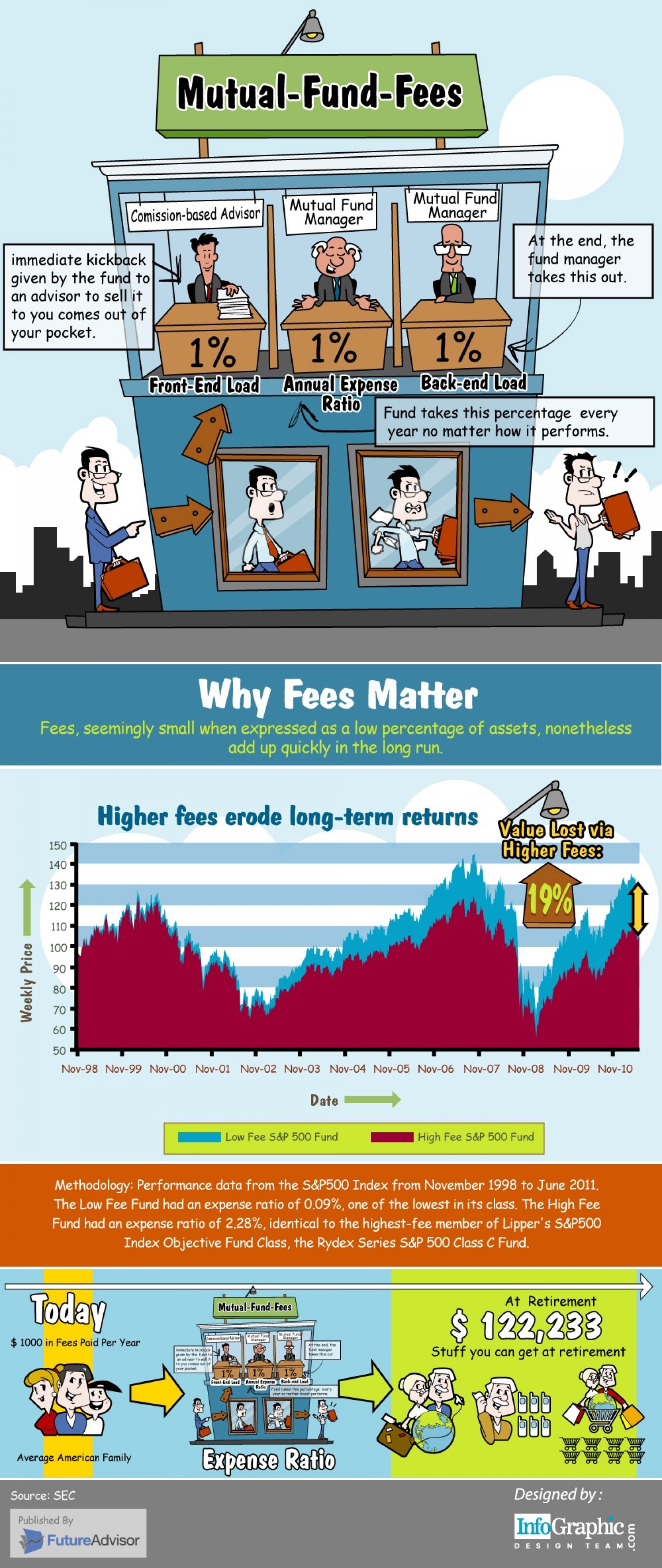
Doctors – Do you want to add $500,000 or more to your retirement nest egg? Pay attention to the fees that mutual funds charge you for investing your money. Few physicians or small investors understand that the same mutual fund can charge a wide range of fees, depending on the share class you select.

For many medical professionals and most Americans, the best way to build wealth is to live on less than you make and invest 15% to 35% of your paycheck into mutual funds. It’s essential to find funds that are diversified among five or more asset classes.

The Choice After Mutual Fund Selection

Once you’ve found a mutual fund with a mix of appropriate asset classes, there’s one more choice to make. What class of shares should you buy? The most popular classes are A, B, and I shares; however, many funds offer even more classes like C, F, and R shares.

The difference between the classes has nothing to do with the underlying management or structure of the mutual fund. All share classes own the same stocks or bonds. The difference lies in the fees you pay the mutual fund for their services and for commissions to brokers who sell the funds.

Types of Share Classes

Many A shares and almost all B, C, F, and R shares impose sales commissions, often called “loads,” which are based on the amount you invest. For example, A shares usually charge you a one-time commission ranging from 4.0% to 5.75% of your initial investment. With B shares there is no up-front commission, but they will charge you a stiff penalty to sell the funds in the early years and will impose an additional annual commission often ranging from .25% to 1.00% a year. Some discount brokers will waive the upfront commission on A shares for their customers.

Typically the best shares to purchase are the I class, which don’t have any commissions associated with them and offer the lowest management fees of any other share class. The downside is that I shares often require a minimum investment ranging from $10,000 to $1,000,000. Financial advisors often have relationships with discount brokers that allow them to purchase the shares for clients in smaller amounts.

Fee Comparisons

It pays to compare fees.

For example, a comparison of fees available at the website of the Financial Industry Regulatory Authority (finra.org/fundanalyzer) shows that a $10,000 investment in the Invesco S&P 500 Index fund’s A shares will cost you $129 a year, while the same investment in the C shares will run $163. If instead you invest in the Fidelity Spartan 500 Index fund you will pay just $11.50 annually, which is over 1% less than the Invesco A shares.

The Savings

It’s surprising what a 1% savings means to your retirement nest egg. According to a study by the Vanguard Group reported by Jack Hough in SmartMoney.com, if a 25-year old saves 9% of his pay in a mutual fund, paying .25% a year in expenses versus 1.25% amounts to having an additional $500,000 by age 65.

Assessment

With all that said, most investors don’t have either the knowledge or the time to construct a diversified portfolio of mutual funds that will carry them through to retirement. Paying a fee or commission for advice can ultimately save you a lot of money. There are advisors who will help smaller investors select investments for an hourly or flat fee. Others charge fees based on the size of your portfolio, which normally range from .3% to 1.5%.

Conclusion

Your thoughts and comments on this ME-P are appreciated. Feel free to review our top-left column, and top-right sidebar materials, links, URLs and related websites, too. Then, subscribe to the ME-P. It is fast, free and secure.

Speaker: If you need a moderator or speaker for an upcoming event, Dr. David E. Marcinko; MBA – Publisher-in-Chief of the Medical Executive-Post – is available for seminar or speaking engagements. Contact: MarcinkoAdvisors@msn.com

OUR OTHER PRINT BOOKS AND RELATED INFORMATION SOURCES:

Product Details  Product Details

Comprehensive Financial Planning Strategies for Doctors and Advisors: Best Practices from Leading Consultants and Certified Medical Planners(TM)

Is the Mutual Fund Company “Invesco” Dissing Podiatrists?

Attacking One of Us = Attacking all of Us

By Ann Miller RN MHA

[Executive-Director]

Join Our Mailing List 

Dear ME-P Readers, Subscribers and Visitors,

As you know, here at the Medical Executive-Post, we champion all hard working, honest and ethical medical professionals, regardless of specialty or degree designation. From the ME-P corporate executive suite, to the mailroom, we appreciate their laborious ministrations under increasingly difficult cultural, political and financial conditions on behalf of the US citizenry.

And so, it was with much dismay when this new advertisement from the behemoth mutual fund company Invesco, headquartered right here in Atlanta GA, was brought to our attention. Rest assured. We are not amused and request your input!

You Input Requested

Do you agree with the Ad? Is it an attack on one medical specialty – or on all of us? Would your opinion differ if the ad mentioned a proctologist – or a dentist? How about a brain surgeon or a nurse? Is the dated impression of doctors being on the golf-course still accurate?

More importantly, does the ad affect your impression of Invesco as a contemporaneous company aware of the modern Health 2.0 culture, or a backward thinking dinosaur resting on its [glorious or in-glorious] past?

Is it Time to Close the Door on Invesco?

Are they Aware?

Do you think that the huge and costly marketing department at Invesco is is even aware that our iMBA Inc sponsored, and ME-P promoted textbooks and handbooks, dictionaries, white papers and CD-ROMs on investing, financial planning, insurance, and risk and wealth management for physicians, was largely written by medical professionals of all stripes? Many holding dual degrees and designations like MBA, CFP®, CMP™, JD, MHA, CFA, etc.

Link: http://www.CertifiedMedicalPlanner.org

Or, that they have been used in [non-clinical] continuing education programs for medical professionals, for more than a decade?

Of course, this includes allopaths, osteopaths, podiatrists, nurses, physical therapists and other related members of the healthcare ecosystem? After all, it often takes a team to treat a poly-systemically ill patient.

Link: www.BusinessofMedicalPractice.com

Assessment

Feel free to contact Invesco directly and tell em’ what you think about their new ad campaign [positive or negative]:

Inveso Client Services:

  • Calls within the United States 800.959.4246
  • Calls outside of the United States 713.626.1919 (Call Collect)

Hours of Service – Monday-Friday, 7:00am-6:00pm CST; subject to change due to NYSE holidays or early market closings.

Contact Link: https://www.invesco.com/portal/site/us/menuitem.33e9ce03dea2c250a83af864f14bfba0/

Industry Indignation Index: 65/100 [probably smelly]

Conclusion

Over the next few weeks we will aggregate your thoughts and may report back to you, and Invesco, about the results. Till then, be sure to also tell us what you think. right here? Feel free to review our top-left column, and top-right sidebar materials, links, URLs and related websites, too. Then, subscribe to the ME-P. It is fast, free and secure.

Link: http://feeds.feedburner.com/HealthcareFinancialsthePostForcxos

Speaker: If you need a moderator or speaker for an upcoming event, Dr. David E. Marcinko; MBA – Publisher-in-Chief of the Medical Executive-Post – is available for seminar or speaking engagements. Contact: MarcinkoAdvisors@msn.com

OUR OTHER PRINT BOOKS AND RELATED INFORMATION SOURCES:


Product DetailsProduct DetailsProduct Details

Product Details  Product Details

   Product Details