Understanding the Capital Asset Pricing Model

CAP-M

***

***

By Dr. David Edward Marcinko MBA MED CMP

SPONSOR: http://www.CertifiedMedicalPlanner.org

***
***

Dr. Harry Markowitz is credited with developing the framework for constructing investment portfolios based on the risk-return tradeoff. William Sharpe, John Lintner, and Jan Mossin are credited with developing the Capital Asset Pricing Model (CAPM).

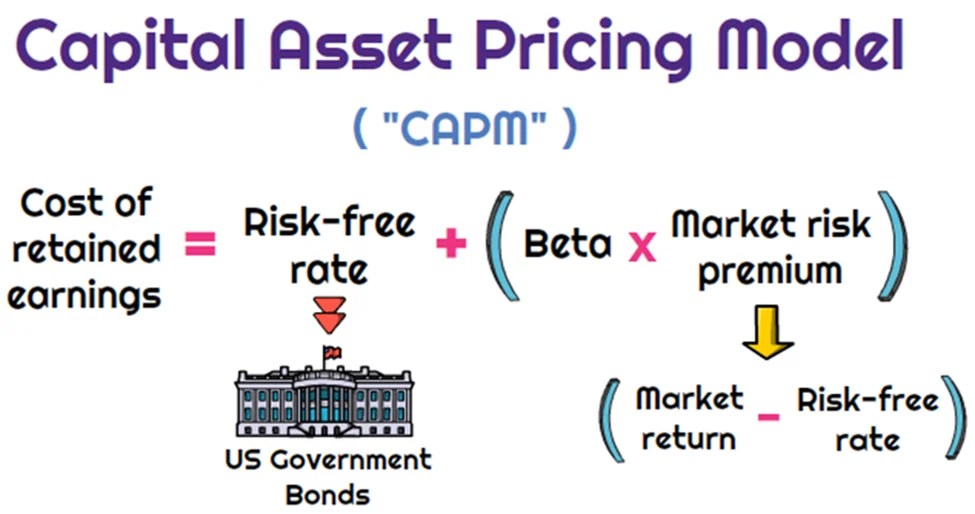
CAPM is an economic model based upon the idea that there is a single portfolio representing all investments (i.e., the market portfolio) at the point of the optimal portfolio on the Capital Market Line (CML) and a single source of systematic risk, beta, to that market portfolio.  The resulting conclusion is that there should be a “fair” return investors should expect to receive given the level of risk (beta) they are willing to assume. 

The excess return, or return above the risk-free rate, that may be expected from an asset is equal to the risk-free return plus the excess return of the market portfolio times the sensitivity of the asset’s excess return to the market portfolio excess return.  Beta, then, is a measure of the sensitivity of an asset’s returns to the market as a whole.  A particular security’s beta depends on the volatility of the individual security’s returns relative to the volatility of the market’s returns, as well as the correlation between the security’s returns and the markets returns. 

While a stock may have significantly greater volatility than the market, if that stock’s returns are not highly correlated with the returns of the overall market (i.e., the stock’s returns are independent of the overall market’s returns), then the stock’s beta would be relatively low.  A beta in excess of 1.0 implies that the security is more exposed to systematic risk than the overall market portfolio, and likewise, a beta of less 1.0 means that the security has less exposure to systematic risk than the overall market. 

MPT has helped focus investors on two extremely critical elements of investing that are central to successful investment strategies. 

First, MPT offers the first framework for investors to build a diversified portfolio.  Furthermore, an important conclusion that can be drawn from MPT is that diversification does in fact help reduce portfolio risk. 

Thus, MPT approaches are generally consistent with the first investment rule of thumb, “understand and diversify risk to the extent possible.” 

Additionally, the risk/return tradeoff (i.e., higher returns are generally consistent with higher risk) central to MPT based strategies has helped investors recognize that if it looks too good to be true, it probably is.

Passive Investing

Passive investing is a monetary plan in which an investor invests in accordance with a pre-determined strategy that doesn’t necessitate any forecasting of the economy or an individual company’s prospects.  The primary premise is to minimize investing fees and to avoid the unpleasant consequences of failing to correctly predict the future. The most accepted method to invest passively is to mimic the performance of a particular index. Investors typically do this today by purchasing one or more ‘index funds’. By tracking an index, an investor will achieve solid diversification with low expenses. 

An ivestor could potentially earn a higher rate of return than an investor paying higher management fees.  Passive management is most widespread in the stock markets.  But  with the explosion of exchange traded funds on the major exchanges, index investing has become more popular in other categories of investing.  There are now literally hundreds of different index funds.  

Passive management is based upon the Efficient Market Hypothesis theory.  The Efficient Market Hypothesis (EMH) states that securities are fairly priced based on information regarding their underlying cash flows and that investors should not anticipate to consistently out-perform the market over the long-term.

The Efficient Market Hypothesis evolved in the 1960s from the Ph.D. dissertation of Eugene Fama.  Fama persuasively made the case that in an active market that includes many well-informed and intelligent investors, securities will be appropriately priced and reflect all available information. If a market is efficient, no information or analysis can be expected to result in out-performance of an appropriate benchmark. There are three distinct forms of EMH that vary by the type of information that is reflected in a security’s price:

  • Weak Form

This form holds that investors will not be able to use historical data to earn superior returns on a consistent basis.  In other words, the financial markets price securities in a manner that fully reflects all information contained in past prices. 

  • Semi-Strong Form

This form asserts that security prices fully reflect all publicly available information.  Therefore, investors cannot consistently earn above normal returns based solely on publicly available information, such as earnings, dividend, and sales data. 

  • Strong Form

This form states that the financial markets price securities such that, all information (public and non-public) is fully reflected in the securities price; investors should not expect to earn superior returns on a consistent basis, no matter what insight or research they may bring to the table.

While a rich literature has been established regarding whether EMH actually applies in any of its three forms in real world markets, probably the most difficult evidence to overcome for backers of EMH is the existence of a vibrant money management and mutual fund industry charging value-added fees for their services. 

The notion of passive management is counterintuitive to many investors.  Passive investing proponents follow the strong market theory of EMH.  These proponents argue several points including;

  1. In the long term, the average investor will have a typical before-costs performance equal to the market average. Therefore the standard investor will gain more from reducing investment costs than from attempting to beat the market over time. 
  • The efficient-market hypothesis argues that equilibrium market prices fully reflect all existing market information.  Even in the case where some of the market information is not currently reflected in the price level, EMH indicates that an individual investor still cannot make use of that information. It is widely interpreted by many academics that to try and systematically “beat the market” through active management is a fools game.

Not everyone believes in the efficient market.  Numerous researchers over the previous decades have found stock market anomalies that indicate a contradiction with the hypothesis.  The search for anomalies is effectively the hunt for market patterns that can be utilized to outperform passive strategies.  Such stock market anomalies that have been proven to go against the findings of the EMH theory include;

  1. Low Price to Book Effect
  2. January Effect
  3. The Size Effect
  4. Insider Transaction Effect
  5. The Value Line Effect

All the above anomalies have been proven over time to outperform the market.  For example, the first anomaly listed above is the Low Price to Book Effect.  The first and most discussed study on the performance of low price to book value stocks was by Dr. Eugene Fama and Dr. Kenneth R. French.  The study covered the time period from 1963-1990 and included nearly all the stocks on the NYSE, AMEX and NASDAQ. The stocks were divided into ten subgroups by book/market and were re-ranked annually. In the study, Fama and French found that the lowest book/market stocks outperformed the highest book/market stocks by a substantial margin (21.4 percent vs. 8 percent).  Remarkably, as they examined each upward decile, performance for that decile was below that of the higher book value decile.  Fama and French also ordered the deciles by beta (measure of systematic risk) and found that the stocks with the lowest book value also had the lowest risk. 

Today, most researchers now deem that “value” represents a hazard feature that investors are compensated for over time.  The theory being that value stocks trading at very low price book ratios are inherently risky, thus investors are simply compensated with higher returns in exchange for taking the risk of investing in these value stocks. The Fama and French research has been confirmed through several additional studies.  In a Forbes Magazine 5/6/96 column titled “Ben Graham was right–again,” author David Dreman published his data from the largest 1500 stocks on Compustat for the 25 years ending 1994. He found that the lowest 20 percent of price/book stocks appreciably outperformed the market.  

One item a medical professional should be aware of is the strong paradox of the efficient market theory.   If each investor believes the stock market were efficient, then all investors would give up analyzing and forecasting.  All investors would then accept passive management and invest in index funds.  But if this were to happen, the market would no longer be efficient because no one would be scrutinizing the markets.  In actuality, the efficient market hypothesis actually depends on active investors attempting to outperform the market through diligent research.

The case for passive investing and in favor of the EMH is that a preponderance of active managers do actually underperform the markets over time.  The latest study by Standard and Poor’s (S&P) confirms this fact.  S&P recently compared the performance of actively-managed mutual funds to passive market indexes twice per year. The 2012 S&P study indicated that indexes were once again outperforming actively-managed funds in nearly every asset class, style and fund category. The lone exception in the 2012 report was international equity, where active outperformed the index that S&P chose.  The study examined one-year, three-year and five-year time periods. Within the U.S. equity space, active equity managers in all the categories failed to outperform the corresponding benchmarks in the past five year period.  More than 65 percent of the large-cap active managers lagged behind the S&P 500 stock index.  More than 81 percent of mid-cap mutual funds were outperformed by the S&P MidCap 400 index. 

Lastly, 77 percent of the small-cap mutual funds were outperformed by the S&P SmallCap 600 index.  U.S. bond active managers fared no better that equity managers over a five year period. More than 83 percent of general municipal mutual funds under-performed the S&P National AMT-Free Municipal Bond index, 93 percent of government long-term funds under-performed the Barclays Long Government index, nearly 95 percent of high yield corporate bond funds under-performed the Barclays High Yield index.  Although the performance measurements for index investing are very strong, many analysts find three negative elements of passive investing;

  1. Downside Protection:  When the stock market collapses like in 2008, an index investor will assume the same loss as the market.  In the case of 2008, the S&P 500 stock index fell by more than 50 percent, offering index investors no downside protection.
  • Portfolio Control:  An index investor has no control over the holdings in the fund. In the event that a certain sector becomes over-owned (i.e. technology stocks in 2000), an index investor maintains the same weight as the index.
  • Average Returns:  An index investor will never have the opportunity to outperform the market, but will always follow.  Although the markets are very efficient, an investor can perhaps take advantage of market anomalies and invest with those managers who have maintained a long-term performance edge over the respective index. 

COMMENTS APPRECIATED

EDUCATION: Books

SPEAKING: Dr. Marcinko will be speaking and lecturing, signing and opining, teaching and preaching, storming and performing at many locations throughout the USA this year! His tour of witty and serious pontifications may be scheduled on a planned or ad-hoc basis; for public or private meetings and gatherings; formally, informally, or over lunch or dinner. All medical societies, financial advisory firms or Broker-Dealers are encouraged to submit an RFP for speaking engagements: CONTACT: Ann Miller RN MHA at MarcinkoAdvisors@outlook.com -OR- http://www.MarcinkoAssociates.com

Like, Refer and Subscribe

***

***

Efficient Market Hypothesis – or Perhaps Not?

Contradicting the Hypothesis

[A SPECIAL ME-P REPORT]

[By Timothy J McIntosh MBA CFP® MPH CMP™ [Hon]

[By Dr. David Edward Marcinko MBA MEd CMP™]

http://www.CertifiedMedicalPlanner.org

http://www.MarcinkoAssociates.com

***

Not everyone believes in the efficient market.  Numerous researchers over the previous decades have found stock market anomalies that indicate a contradiction with the hypothesis.  The search for anomalies is effectively the hunt for market patterns that can be utilized to outperform passive strategies.

white swan

[White Swan of the EMH]

Such stock market anomalies that have been proven to go against the findings of the EMH theory include:

  1. Low Price to Book Effect
  2. January Effect
  3. The Size Effect
  4. Insider Transaction Effect
  5. The Value Line Effect

The Anomalies

All the above anomalies have been proven over time to outperform the market.  For example, the first anomaly listed above is the Low Price to Book Effect.  The first and most discussed study on the performance of low price to book value stocks was by Dr. Eugene Fama and Dr. Kenneth R. French.  The study covered the time period from 1963-1990 and included nearly all the stocks on the NYSE, AMEX and NASDAQ. The stocks were divided into ten subgroups by book/market and were re-ranked annually.

In the study, Fama and French found that the lowest book/market stocks outperformed the highest book/market stocks by a substantial margin (21.4 percent vs. 8 percent).  Remarkably, as they examined each upward decile, performance for that decile was below that of the higher book value decile.  Fama and French also ordered the deciles by beta (measure of systematic risk) and found that the stocks with the lowest book value also had the lowest risk.

What is Value?

Today, most researchers now deem that “value” represents a hazard feature that investors are compensated for over time.  The theory being that value stocks trading at very low price book ratios are inherently risky, thus investors are simply compensated with higher returns in exchange for taking the risk of investing in these value stocks.

The Fama and French research has been confirmed through several additional studies.  In a Forbes Magazine 5/6/96 column titled “Ben Graham was right–again,” author David Dreman published his data from the largest 1500 stocks on Compustat for the 25 years ending 1994. He found that the lowest 20 percent of price/book stocks appreciably outperformed the market.

***

Ex-Cathedra black swan

[Ex-Cathedra or Black Swan Event]

Assessment

One item a medical professional should be aware of is the strong paradox of the efficient market theory.   If each investor believes the stock market were efficient, then all investors would give up analyzing and forecasting.  All investors would then accept passive management and invest in index funds.

But, if this were to happen, the market would no longer be efficient because no one would be scrutinizing the markets.  In actuality, the efficient market hypothesis actually depends on active investors attempting to outperform the market through diligent research

Channel Surfing the ME-P

Have you visited our other topic channels? Established to facilitate idea exchange and link our community together, the value of these topics is dependent upon your input. Please take a minute to visit. And, to prevent that annoying spam, we ask that you register. It is fast, free and secure.

More:

The Author

Timothy J. McIntosh is Chief Investment Officer and founder of SIPCO.  As chairman of the firm’s investment committee, he oversees all aspects of major client accounts and serves as lead portfolio manager for the firm’s equity and bond portfolios. Mr. McIntosh was a Professor of Finance at Eckerd College from 1998 to 2008. He is the author of The Bear Market Survival Guide and the The Sector Strategist.  He is featured in publications like the Wall Street Journal, New York Times, USA Today, Investment Advisor, Fortune, MD News, Tampa Doctor’s Life, and The St. Petersburg Times.  He has been recognized as a Five Star Wealth Manager in Texas Monthly magazine; and continuously named as Medical Economics’ “Best Financial Advisors for Physicians since 2004.  And, he is a contributor to SeekingAlpha.com., a premier website of investment opinion. Mr. McIntosh earned a Bachelor of Science Degree in Economics from Florida State University; Master of Business Administration (M.B.A) degree from the University of Sarasota; Master of Public Health Degree (M.P.H) from the University of South Florida and is a CERTIFIED FINANCIAL PLANNER® practitioner. His previous experience includes employment with Blue Cross/Blue Shield of Florida, Enterprise Leasing Company, and the United States Army Military Intelligence.

Conclusion

So, what about the “January Effect for 2025“?

Your thoughts and comments on this ME-P are appreciated. Feel free to review our top-left column, and top-right sidebar materials, links, URLs and related websites, too. Then, subscribe to the ME-P. It is fast, free and secure.

Speaker: If you need a moderator or speaker for an upcoming event, Dr. David E. Marcinko; MBA – Publisher-in-Chief of the Medical Executive-Post – is available for seminar or speaking engagements. Contact: MarcinkoAdvisors@msn.com

OUR OTHER PRINT BOOKS AND RELATED INFORMATION SOURCES:

Comprehensive Financial Planning Strategies for Doctors and Advisors: Best Practices from Leading Consultants and Certified Medical Planners(TM)

Invite Dr. Marcinko

What is the Investing “EFFICIENT MARKET ” Hypothesis?

By Dr. David Edward Marcinko MBA MEd CMP

SPONSOR: http://www.MarcinkoAssociates.com

According to colleagues Jeffrey S. Coons PhD CFA, the Efficient Market Hypothesis (EMH) states that securities are fairly priced based on information about their underlying cash flows and that physician investors should not expect to consistently outperform the market over the long-term. 

There are three distinct forms of EMH that vary by the type of information that is reflected in a security’s price:

Weak Form: This form holds that investors will not be able to use historical data to earn superior returns on a consistent basis.  In other words, the financial markets price securities in a manner that fully reflects all information contained in past prices.

Semi-Strong Form: This form asserts that security prices fully reflect all publicly available information. Therefore, investors cannot consistently earn above normal returns based solely on publicly available information, such as earnings, dividend, and sales data.

Strong Form: This form states that the financial markets price securities such that, all information (public and non-public) is fully reflected in the securities price; investors should not expect to earn superior returns on a consistent basis, no matter what insight or research they may bring to the table. 

While a rich literature has been established for doctors regarding to test whether EMH actually applies in any of its three forms in real world markets – probably the most difficult evidence to overcome for backers of EMH is the existence of a vibrant money management and mutual fund industry charging value-added fees for their services. 

In fact, no less than Warren Buffett has suggested that the markets are decidedly not efficient. 

COMMENTS APPRECIATED

Thank You

***

***

The Active v. Passive Investing Dichotomy

The Controversy Continues

LINK: http://www.CertifiedMedicalPlanner.org

[By Amaury S. Cifuentes CFP® CMP®]

Physician and all investors are often overloaded with information regarding this debate, and many advisors differ in the conclusion of which strategy is best.

Stock Picking

Stock picking is typically a waist of time and few investors or advisors demonstrate the constant ability in picking winning stocks. Timing the market also becomes difficult and typically has negative effects in a portfolio. Investors will also find that they will usually have very little luck finding money mangers that can consistently out perform the market. Investors over a long period of investing time horizon would benefit from passive investing vs. active trading, with some exceptions.

Active Investors

Active investors spend time analyzing stocks or mutual funds based on a mismatch of the price relative to its value. In an efficient market, there is little or no mismatch between the current price and the true value of the investment. Also, real cost and expenses of active management are rarely calculated;  some consider the stock market a zero sum game, if the total market returns eleven percent then the investors must deduct the cost of the transaction, which would lower their return relative to the market.

Mutual Fund Performance

For example, Mark Carhart’s comprehensive study of 1,892 mutual funds title “On Persistence in Mutual Fund Performance” showed that on average mutual fund manager under performs by 1.8% to their relative index.  In addition, William Sharpe Nobel laureate article “The Arithmetic of Active Management” stated that after cost, the return of active management dollars would be less than passive dollars.

Market Timing

Timing of markets is also very difficult. Timing the market can be defined by moving your asset from risky to non risky assets before negative events happen. The Random Walk Theory basically states that there are no patterns in the stock market prices. Basically, information moves the markets and information is random, so logic would suggest that timing the markets effectively is futile. Many reports demonstrate this effect, for example, a report form Javier Estrada, a finance professor at IESE Business School in Barcelona, Spain. He studied the DJIA form 1900-2008 and concluded that if you subtracted the ten best days from the market two thirds of the cumulative gains would disappear (10/29694 or .03%), almost impossible to predict even by the most astute investors. Much more extensive research showing that market timing does not work, Wei Jiang paper “A Nonparametric Test of Market Timing” concluded that timing ability on average is negative. There are countless of studies showing that there is no evidence that timing the markets can produce superior returns.

***

Investing Difficulties Continue

To make thing even more difficult, investors that seek profession help cannot guarantee that the active managers they hire can consistently over long period of time outperform their benchmarks.  Obviously, it is evident that past performance is no indication of future results as advertised by all financial institution, and most active managers who outperform their bench market do not do consistently over long periods of time. John Boggle’s comprehensive study in 1992 of the Forbes Honor Roll title “Selecting Equity Mutual Funds” concluded that after commissions loads were taken into account the honor roll under performed the market between 1974 and 1990 by a difference of 193.75% cumulative.

Of Professor Burton Malkiel

Furthermore, investors over long periods of time will find that stock picking, timing the market and selecting active managers do not produce superior returns. John Stossel of ABC’s 20/20 interview Professor Burton Malkiel of Princeton University and stated in the interview that “All the information an analyst can learn about a company, from balance sheets to marketing material, is already built into the stock price, because all of the other thousands of analysts have the same information. What they don’t have is the knowledge that will move the stock, knowledge such as a news event, which is unpredictable and impossible to forecast.”

Assessment

Physicians and all investors may be better off concentrating on asset allocation, picking low cost investment, deciding on tactical or strategic rebalancing and implementing models like the three factor model as pioneered by Professor Eugene Fama and Professor Kenneth French in lieu active management.

Conclusion

Your thoughts and comments on this ME-P are appreciated. Feel free to review our top-left column, and top-right sidebar materials, links, URLs and related websites, too. Then, subscribe to the ME-P. It is fast, free and secure.

Speaker: If you need a moderator or speaker for an upcoming event, Dr. David E. Marcinko; MBA – Publisher-in-Chief of the Medical Executive-Post – is available for seminar or speaking engagements. Contact: MarcinkoAdvisors@msn.com

Comprehensive Financial Planning Strategies for Doctors and Advisors: Best Practices from Leading Consultants and Certified Medical Planners™

***

“ACTIVE” INVESTMENT STRATEGIES: For Physicians

And … why doctors are different?

By Dr. David Edward Marcinko MBA MEd CMP

SPONSOR: http://www.MarcinkoAssociates.com

By Dr. David Edward Marcinko MBA CMP

There are two distinct forms of financial analysis investment strategies often used by medical colleague investors who desire to pursue an active investment strategy.

Technical Analysis: Technical analysts, sometimes referred to as chartists, use historical price data and transaction volume data to identify mis-priced securities. A key belief shared by technical analysts is that stock prices follow recurring patterns and that once these historical patterns are identified, they can be used to identify future security prices. The heart of technical analysis is identifying significant shifts in the macro/micro economic supply and demand factors for a particular securities investment.

Skeptics of technical analysis generally subscribe to the notion that the markets efficiently and accurately price securities. In fact, the weak form of the Efficient Market Hypothesis [EMH] is based on the view that investors cannot consistently earn superior returns using historical data and technical analysis alone.

Fundamental Analysis: In contrast to technical analysis – which relies on historical market returns / transactions data – fundamental analysis focuses on the underlying company’s assets, earnings, risks, dividends and intrinsic security factors to identify mis-priced securities.

Furthermore, investors using fundamental analysis can use either a top-down or bottom-up approach:

  • The top-down investor starts with global economics, including both international and national economic indicators. These may include GDP growth rates, inflation, interest rates, exchange rates, productivity and energy prices. They subsequently narrow their search to regional / industry analysis of total sales, price levels, the effects of competing products, foreign competition and entry or exit from the industry. Often they refine their search to the best business in the area being studied.
  • The bottom-up investor starts with specific businesses, regardless of their industry / region, and proceeds in reverse of the top-down approach. Bottom-up investing is an approach that focuses on analyzing individual stocks and de-emphasizes the significance of macroeconomic and market cycles. In other words, bottom-up investing typically involves focusing on a specific company’s fundamentals, such as revenue or earnings, versus the industry or the overall economy. The bottom-up investing approach assumes individual companies can perform well even in an industry that is under performing, at least on a relative basis.

And so, a medical professional utilizing fundamental analysis is attempting to find securities that are trading at market prices below their intrinsic value. Skeptics suggest this is difficult or almost impossible to achieve.

Thus, while technical analysis focuses on market price history, a security’s intrinsic fundamental analysis is determined independent of the security’s market value. Of course, a combination of both fundamental and technical analysis can also be considered.

DOCTORS ARE DIFFERENT: https://marcinkoassociates.com/doctors-unique/

CMP: http://www.CertifiedMedicalPlanner.org

COMMENTS APPRECIATED

Thank You

***

***

More on “Passive Investing” for Physicians

Join Our Mailing List 

Basic Financial Concepts

tim

By Timothy J. McIntosh; CFPMBA MPH CMP [hon]

By Jeffery S. Coons; PhD CFA

By Dr. David E. Marcinko; MBA CMP™

Passive investing is a monetary plan in which an investor invests in accordance with a pre-determined strategy that doesn’t necessitate any forecasting of the economy or an individual company’s prospects.

Premise

The primary premise is to minimize investing fees and to avoid the unpleasant consequences of failing to correctly predict the future. The most accepted method to invest passively is to mimic the performance of a particular index. Investors typically do this today by purchasing one or more ‘index funds’. By tracking an index, an investor will achieve solid diversification with low expenses.  Thus, a physician-investor could potentially earn a higher rate of return than an investor paying higher management fees.

Passive management is most widespread in the stock markets.  But; with the explosion of exchange traded funds on the major exchanges, index investing has become more popular in other categories of investing. There are now literally hundreds of different index funds.

***

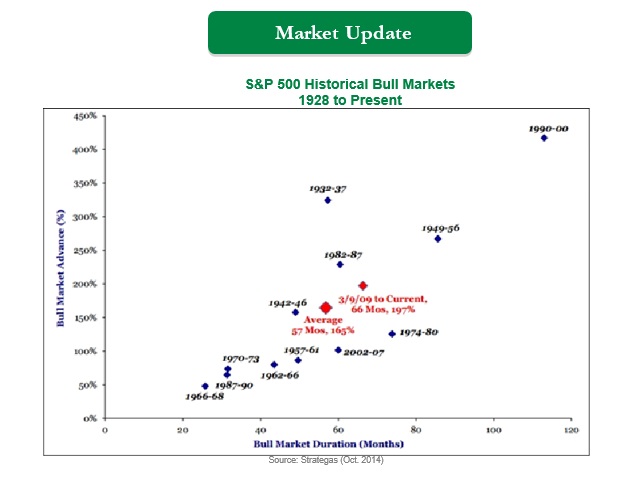
Bull Markets

[Domestic Bull Markets – Historical USA]

***

Passive management is based upon the Efficient Market Hypothesis theory.  The Efficient Market Hypothesis (EMH) states that securities are fairly priced based on information regarding their underlying cash flows and that investors should not anticipate to consistently out-perform the market over the long-term.

The Efficient Market Hypothesis evolved in the 1960s from the Ph.D. dissertation of Eugene Fama.  Fama persuasively made the case that in an active market that includes many well-informed and intelligent investors, securities will be appropriately priced and reflect all available information. If a market is efficient [even emerging and/or world markets], no information or analysis can be expected to result in outperformance of an appropriate benchmark.

***

World Markets

[USA versus World Index]

***

Channel Surfing the ME-P

Have you visited our other topic channels? Established to facilitate idea exchange and link our community together, the value of these topics is dependent upon your input. Please take a minute to visit. And, to prevent that annoying spam, we ask that you register. It is fast, free and secure.

More:

The Author

Timothy J. McIntosh is Chief Investment Officer and founder of SIPCO.  As chairman of the firm’s investment committee, he oversees all aspects of major client accounts and serves as lead portfolio manager for the firm’s equity and bond portfolios. Mr. McIntosh was a Professor of Finance at Eckerd College from 1998 to 2008. He is the author of The Bear Market Survival Guide and the The Sector Strategist.  He is featured in publications like the Wall Street Journal, New York Times, USA Today, Investment Advisor, Fortune, MD News, Tampa Doctor’s Life, and The St. Petersburg Times.  He has been recognized as a Five Star Wealth Manager in Texas Monthly magazine; and continuously named as Medical Economics’ “Best Financial Advisors for Physicians since 2004.  And, he is a contributor to SeekingAlpha.com., a premier website of investment opinion. Mr. McIntosh earned a Bachelor of Science Degree in Economics from Florida State University; Master of Business Administration (M.B.A) degree from the University of Sarasota; Master of Public Health Degree (M.P.H) from the University of South Florida and is a CERTIFIED FINANCIAL PLANNER® practitioner. His previous experience includes employment with Blue Cross/Blue Shield of Florida, Enterprise Leasing Company, and the United States Army Military Intelligence.

Conclusion

Your thoughts and comments on this ME-P are appreciated. Feel free to review our top-left column, and top-right sidebar materials, links, URLs and related websites, too. Then, subscribe to the ME-P. It is fast, free and secure.

Speaker: If you need a moderator or speaker for an upcoming event, Dr. David E. Marcinko; MBA – Publisher-in-Chief of the Medical Executive-Post – is available for seminar or speaking engagements. Contact: MarcinkoAdvisors@msn.com

OUR OTHER PRINT BOOKS AND RELATED INFORMATION SOURCES:

Comprehensive Financial Planning Strategies for Doctors and Advisors: Best Practices from Leading Consultants and Certified Medical Planners(TM)

Understanding Absolute Investment Returns

Exploiting Market Inefficiencies

By J. Wayne Firebaugh CPA, CFP® CMP™

By Dr. David E. Marcinko MBA, CMP™

Source: www.HealthcareFinancials.com

This class of investments seeks to exploit market inefficiencies and generate positive returns regardless of broader market performance. Often, investments in this class are made through the use of hedge funds. Hedge funds will often employ leverage, short-selling, and arbitrage to take advantage of pricing distortions in their targeted strategy area.

Relation to Healthcare Endowments

When investing an endowment’s assets in this category, the physician director or money manager should be aware of fee structures that commonly include performance-related incentive fees, hurdle rates, and claw-back clauses. The endowment managers should also remember that these types of investments generally have much less transparency than other asset classes with which they may be more familiar.

Assessment

Finally, since many of these investments are offered only to accredited investors, the physician or investment manager is often free to pursue much more aggressive strategies than would otherwise be pursued for retail or lay customers.

Join Our Mailing List 

Conclusion

But, can we [anyone] exploit market inefficiencies? Is the market efficient or inefficient? What about Modern Portfolio Theory [MPT] or the Arbitrage Pricing Model? Did we really learn anything from the market crash of 2008?

Your comments on this ME-P are appreciated. Feel free to review our top-left column, and top-right sidebar materials, links, URLs and related websites, too. Then, be sure to subscribe. It is fast, free and secure.

Speaker: If you need a moderator or speaker for an upcoming event, Dr. David E. Marcinko; MBA – Publisher-in-Chief of the Medical Executive-Post – is available for seminar or speaking engagements. Contact: MarcinkoAdvisors@msn.com 

Get our Widget: Get this widget!

Our Other Print Books and Related Information Sources:

Practice Management: http://www.springerpub.com/prod.aspx?prod_id=23759

Physician Financial Planning: http://www.jbpub.com/catalog/0763745790

Medical Risk Management: http://www.jbpub.com/catalog/9780763733421

Healthcare Organizations: www.HealthcareFinancials.com

Health Administration Terms: www.HealthDictionarySeries.com

Physician Advisors: www.CertifiedMedicalPlanner.com

Subscribe Now: Did you like this Medical Executive-Post, or find it helpful, interesting and informative? Want to get the latest ME-Ps delivered to your email box each morning? Just subscribe using the link below. You can unsubscribe at any time. Security is assured.

Link: http://feeds.feedburner.com/HealthcareFinancialsthePostForcxos

Sponsors Welcomed: And, credible sponsors and like-minded advertisers are always welcomed.

Link: https://healthcarefinancials.wordpress.com/2007/11/11/advertise

Are Capital Markets Efficient?

Join Our Mailing List

What is the Efficient Market Hypothesis?

[By Jeffrey S. Coons; PhD, CFA]

[By Christopher J. Cummings; CFA, CFP™]fp-book1

The Efficient Market Hypothesis (EMH) states that securities are fairly priced based on information about their underlying cash flows and that physician investors should not expect to consistently outperform the market over the long-term. 

 EMH Types 

There are three distinct forms of EMH that vary by the type of information that is reflected in a security’s price:

·  Weak Form: This form holds that investors will not be able to use historical data to earn superior returns on a consistent basis.  In other words, the financial markets price securities in a manner that fully reflects all information contained in past prices.

·  Semi-Strong Form: This form asserts that security prices fully reflect all publicly available information. Therefore, investors cannot consistently earn above normal returns based solely on publicly available information, such as earnings, dividend, and sales data.

·  Strong Form: This form states that the financial markets price securities such that, all information (public and non-public) is fully reflected in the securities price; investors should not expect to earn superior returns on a consistent basis, no matter what insight or research they may bring to the table. 

While a rich literature has been established regarding to test whether EMH actually applies in any of its three forms in real world markets – probably the most difficult evidence to overcome for backers of EMH is the existence of a vibrant money management and mutual fund industry charging value-added fees for their services. 

In fact, no less than Warren Buffett has suggested that the markets are decidedly not efficient. 

Assessment

And so, while there has been a growing move towards index funds – as well as ETFs – the strength of the money management industry may reflect investor’s concern with risk management and asset allocation – as much as any view that a manager or individual can “beat the market.”   

Conclusion

Your thoughts and comments on this ME-P are appreciated. Feel free to review our top-left column, and top-right sidebar materials, links, URLs and related websites, too. Then, subscribe to the ME-P. It is fast, free and secure.

Link: http://feeds.feedburner.com/HealthcareFinancialsthePostForcxos

Speaker: If you need a moderator or speaker for an upcoming event, Dr. David E. Marcinko; MBA – Publisher-in-Chief of the Medical Executive-Post – is available for seminar or speaking engagements. Contact: MarcinkoAdvisors@msn.com

OUR OTHER PRINT BOOKS AND RELATED INFORMATION SOURCES:

LEXICONS: http://www.springerpub.com/Search/marcinko
PHYSICIANS: www.MedicalBusinessAdvisors.com
PRACTICES: www.BusinessofMedicalPractice.com
HOSPITALS: http://www.crcpress.com/product/isbn/9781466558731
CLINICS: http://www.crcpress.com/product/isbn/9781439879900
ADVISORS: www.CertifiedMedicalPlanner.org
PODIATRISTS: www.PodiatryPrep.com
BLOG: www.MedicalExecutivePost.com

Product Details  Product Details

Invite Dr. Marcinko

***