When to Change Portfolio Managers

Some Considerations for Medical Professionalsfp-book
By Clifton N. McIntire, Jr.; CIMA, CFP®

By Lisa Ellen McIntire; CIMA, CFP®

Sometimes even the best made physician financial plans just don’t work out. And, despite extensive time and energy spent on due diligence before hiring an investment or portfolio manager, it becomes evident that you must change managers.

Some Thoughts for Doctors

Here are a few thoughts when considering a portfolio manager change:

  • You should have initially hired the manager with a long-term relationship in mind. Realizing that styles go in and out of favor, we were not simply buying last quarter’s best numbers; in 2009.
  • Market statistics often mask “real” performance of money managers, both good and bad. The S&P 500’s 2007 performance can be attributed to a few very large companies.
  • Generally, a full market cycle would be required to assess money manager performance. Having said that, what could happen that would warrant changing managers? Here is a brief list:
  1. Style Drift: You have a growth manager and when growth stocks turn down, you begin to see the purchase of “value” stocks.
  2. Not Sticking to Previously Established Disciplines: If the process is to sell if the price declines 20 percent down from the original buy range and now they are holding because, “This time, it is different.”
  3. Personnel Changes: New analysts are hired with a different philosophy. Recent transactions seem 180 degrees off course.
  4. Principals Leave: Like professional sports figures, good money managers are in demand and sometimes change firms. The replacement may be a 29-year-old MBA with little experience.
  5. The Firm is Sold: This may be good new if it broadens ownership and helps retain good people.  Look for long-term incentive driven “staying” bonus plans.
  6. Loss of Major Accounts: Reduced revenues may force cut backs in personnel and services. Attention may shift from portfolio management to marketing.

Assessment

Finally, sometimes it is just not working. Misjudgments in asset allocation and poor stock selection over a reasonable period of time can be reason enough to change managers.

Join Our Mailing List

Conclusion

Your thoughts and comments on this ME-P are appreciated. Feel free to review our top-left column, and top-right sidebar materials, links, URLs and related websites, too. Then, subscribe to the ME-P. It is fast, free and secure.

Link: http://feeds.feedburner.com/HealthcareFinancialsthePostForcxos

Speaker: If you need a moderator or speaker for an upcoming event, Dr. David E. Marcinko; MBA – Publisher-in-Chief of the Medical Executive-Post – is available for seminar or speaking engagements. Contact: MarcinkoAdvisors@msn.com

OUR OTHER PRINT BOOKS AND RELATED INFORMATION SOURCES:

DICTIONARIES: http://www.springerpub.com/Search/marcinko
PHYSICIANS: www.MedicalBusinessAdvisors.com
PRACTICES: www.BusinessofMedicalPractice.com
HOSPITALS: http://www.crcpress.com/product/isbn/9781466558731
CLINICS: http://www.crcpress.com/product/isbn/9781439879900
BLOG: www.MedicalExecutivePost.com
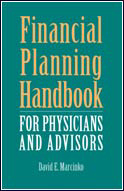
FINANCE: Financial Planning for Physicians and Advisors
INSURANCE: Risk Management and Insurance Strategies for Physicians and Advisors

Product Details  Product Details

Comprehensive Financial Planning Strategies for Doctors and Advisors: Best Practices from Leading Consultants and Certified Medical Planners(TM)

Understanding Expenses and Investment Portfolio Performance

A Direct Relationship

By Clifton N. McIntire, Jr.; CIMA, CFP®

By Lisa Ellen McIntire; CIMA, CFP®fp-book

Expenses can play an important role in portfolio performance. You don’t hear much about expense ratios in an up market, like early 2007. If your account was up +28 percent, whether the expense was 3 percent or 1 percent doesn’t seem to make much difference. But, let the market decline, like it did later on in October 2007 and we change our perspective. A 10 percent portfolio decline plus charges of 3 percent equals a 13 percent decline. Now we need a 15 percent increase net of fees just to get even.

The Four Cost Horsemen

Basically you have four cost areas:

  1. Custody—someone must hold the stocks and bonds, collect dividends and interest, prepare tax information for the government, issue monthly statements, and send checks.
  2. Commissions—orders must be executed, transfer securities into and out of your account, trades settled.
  3. Investment Decisions—the money manager must be paid.
  4. Monitoring Performance and Advice—usually an investment management analyst is engaged to provide this service; as well as write the investment policy statement and prepare the asset allocation study.

Portfolio Size

Naturally, size makes a difference. For a doctor’s stock account with a $200,000 total value, all of the above can be accomplished for annual fees between 2.00 and 3.00 percent. An account with $1,500,000 in total assets part bonds and part stocks would pay annual fees between 1.25 and 1.75 percent depending on the ratio of stocks and bonds. These are annual fees and are all-inclusive. Commissions, portfolio management fees, and statements check charges are all included. One quarter of the annual fee is charged every three months. Family related accounts are generally grouped for a quantity fee discount.

Assessment

Some financial consultants prefer to use mutual funds with smaller accounts. A charge of 1 percent per year for their service with a stated minimal fee is common practice. This does not include fees deducted from the account by the mutual fund (anywhere from .50 to 2.50 percent) or commissions paid by the fund managers for trade executions. 

Morningstar Report: Morningstar Expense Ratio Results

Conclusion

And so, your thoughts and comments on this Medical Executive-Post are appreciated. How much do you pay for this service? Feel free to review our top-left column, and top-right sidebar materials, links, URLs and related websites, too. Then, be sure to subscribe to the ME-P. It is fast, free and secure.

Link: http://feeds.feedburner.com/HealthcareFinancialsthePostForcxos

Speaker: If you need a moderator or speaker for an upcoming event, Dr. David E. Marcinko; MBA – Publisher-in-Chief of the Executive-Post – is available for seminar or speaking engagements. Contact: MarcinkoAdvisors@msn.com 

Get our Widget: Get this widget!

Our Other Print Books and Related Information Sources:

Practice Management: http://www.springerpub.com/prod.aspx?prod_id=23759

Physician Financial Planning: http://www.jbpub.com/catalog/0763745790

Medical Risk Management: http://www.jbpub.com/catalog/9780763733421

Healthcare Organizations: www.HealthcareFinancials.com

Health Administration Terms: www.HealthDictionarySeries.com

Physician Advisors: www.CertifiedMedicalPlanner.com

Physician Cash Maximization Rules

One Doctor- Advisor’s [How-To] Diatribe

[By Dr. David Edward Marcinko; MBA]

[Publisher-in-Chief] www.CertifiedMedicalPlanner.orgdr-david-marcinko4

For some doctors – even more than laymen – cash management is the pivotal issue in the financial planning process. Accumulation of investment assets cannot occur if cash inflows do not exceed cash outflows. On the other hand, accumulated assets are eventually spent to fund expenses during planned time periods when cash outflow exceeds inflow.

Inflation

Traditionally, financial advisors have opined that inflation has a dramatic impact on both ends of the cash management spectrum because inflation has a compounding effect. That compounding effect means that a mere ¼% change in planning assumptions about anticipated inflation can have more significant influence over long-term projected outcomes than a 5% change in the amount of a particular item of budgeted income or expense. Well, true enough if projected linearly using some Monte-Carlo type software simulation. But, in the real word, economists appreciate cost and efficiency improvements [email over snail mail] and the potential for substitution of goods [diesel fuel for gasoline – chicken for steak, etc].

fp-book2

Be More Like … my Dad

On the other hand, far too few of my fellow medical colleagues – and financial advisors – are like my dad. Not well educated by academic standards, but with common sense that seems a precious commodity, today.

Dave, he used to tell me – and still does at age 84:

“Invest your money for growth carefully – and take some risks – but don’t be too afraid of inflation.”

 Why not, dad?

“Because; if you’re not a conspicuous consumer, you’ll have less to worry about.”

Cash Management

Well, most of us are not like my dad; me included. But, his depression-mentality has never completely worn off. A doctor’s household can maximize the cash available for investing by setting up the account in this manner.

1. The first step is to open a checking account, money market account, and a brokerage account. The money market account is often included in a brokerage account.

2. The second step is to initiate electronic direct deposit of the paycheck into the money market account.

3. The third step is to determine the amount of cash reserve needed. As mentioned elsewhere on this ME-P, we are suggesting 3-5 years of cash-reserves on-hand, as an emergency fund for most medical professionals.

Once, when, and if, the amount of the reserve is determined and achieved, any extra money should be transferred to the brokerage account and invested according to personal goals, objectives and risk-tolerance. A small balance of a few thousand dollars can be kept in the checking account to prevent overdrafts. Beyond the few thousand dollars, the checking account should serve as a pass-through account where money is transferred from the money market account to cover checks written for the budgeted expenses.

Example of Managing Cash Reserve Amountsbiz-book1

A physician client recently asked me to help him increase his savings. He explained that he had a very detailed realistic budget, but had a hard time staying within the budget when cash was available; as he lectured occasionally and was fortunate to have a few extra dollars every now and then.

Recommendations

As a financial planner, and the founder of an online educational-certification program for physician focused advisors, I recommend that he set up his checking, money market and investment accounts and have his medical practice directly deposit his paycheck in the money market account. He then was to transfer only enough money to his checking account each month, to cover his very carefully budgeted and spread-sheet driven expenses. Furthermore, his money market account was to be equal to our predetermined cash reserve needs, with any excess cash transferred to his investment account and according to his financial and investing plan.

Assessment

Of course, his carefully constructed budget included no cash reserves or emergency fund!  He forgot to budget cash! And so; the usual conundrum ensued.

Conclusion

Your thoughts and comments on this ME-P are appreciated. Feel free to review our top-left column, and top-right sidebar materials, links, URLs and related websites, too. Then, subscribe to the ME-P. It is fast, free and secure.

Link: http://feeds.feedburner.com/HealthcareFinancialsthePostForcxos

Speaker: If you need a moderator or speaker for an upcoming event, Dr. David E. Marcinko; MBA – Publisher-in-Chief of the Medical Executive-Post – is available for seminar or speaking engagements. Contact: MarcinkoAdvisors@msn.com

OUR OTHER PRINT BOOKS AND RELATED INFORMATION SOURCES:

LEXICONS: http://www.springerpub.com/Search/marcinko
PHYSICIANS: www.MedicalBusinessAdvisors.com
PRACTICES: www.BusinessofMedicalPractice.com
HOSPITALS: http://www.crcpress.com/product/isbn/9781466558731
CLINICS: http://www.crcpress.com/product/isbn/9781439879900
ADVISORS: www.CertifiedMedicalPlanner.org
BLOG: www.MedicalExecutivePost.com

Product Details  Product Details

Comprehensive Financial Planning Strategies for Doctors and Advisors: Best Practices from Leading Consultants and Certified Medical Planners™

On Emergency Funds for Physicians

dr-david-marcinko3Cash Reserves Now More Important Than Ever!

By Dr. David Edward Marcinko; MBA, CMP™

[Publisher-in-Chief]

CEO: www.MedicalBusinessAdvisors.com

This is a basic question in financial planning circles that has generated much activity in the medical community, of late. Previously considered so mundane – as to be dismissed by some haughty physicians – it has acquired increased urgency with the current financial meltdown.

What Security Level Desired?

Yet, the answer to this question is dependent upon the security level desired by the medical provider and his/her family. Traditionally, financial planners suggested most people with solid employment, and transferrable skills, have at least three months of living expenses (not including taxes) in a reserve fund that is easily accessible (i.e., liquid). The amount needed for a one-month reserve is equal to the amount of expenses for the month, rather than the amount of monthly income. This is because during no-income months – there is no income tax.

The Usual Checklist

We suggest the following questions as helpful in determining the amount of reserve needed by medical professionals:

1. How many incomes do you have in your household?

2. How secure is your current practice, or medical job?

3. Do you have other unrelated sources of income; medically or non-medically related?

4. How long would it take you to find another position in your specialty, if suddenly unemployed? [Hint: Assume one month per ten grand of income; at $150-k annually, this means searching for 15 months].

5. How much money do you spend, and save, each month?

6. Would you be willing [able] to lower your monthly [fixed or variable] expenses, if you were unemployed?

Many Factors to Considerinsurance-book1

But, many other factors come into play when determining how much money a particular physician and his/her family should have on hand. Does the family have one income or two? How stable is this income source? Does the doctor work for himself [managing partner], or is she employed [minority partner, associate, etc]? What kind of firm, company or hospital employs him; private, HMO, MCO, Federal or State entity? Does the family use all of the income each month? What about, life, health, disability or LTC insurance as fringe benefits? Does the family anticipate the possibility of large liability exposures and expenses occurring in the future (i.e., medical school or practice start-up debt, private tuition for the kids, medical expenses, liability suits etc.)? Are you willing to relocate for a new job?

Family Situation Appraisal

If the doctor is in a dual-income family – with stable incomes – and/or lives on a single income – the need for a liquid reserve is minimal; but still much more than for the average layman. On the other hand, if the doctor is a single individual, with an unstable income and she spends everything each month, the need for a liquid cash reserve is higher.

In the previous example, and in the stable past, the doctor may have opted for a six-to-nine month reserve if the need for security was high; and a three-to-six month reserve if the need for security was low. For the last five to seven years however, we have suggested to our medical clients that they expand this reserve cash corpus to 12-24 months; and as a blanket rule of thumb for all medical professionals. Of course, I was roundly criticized for it; until now.

Today, we are suggesting 3-5 years; with considerably less criticism. Cash is power, choice, swagger, potency, freedom and represents options. Acquire it!

Stashing the Cash

Once the amount of reserve is determined, the doctor should consider the appropriate investment vehicles for the reserve fund. At minimum, the reserve should be invested in a money market mutual fund with NAV @ 1.00 USD. Larger income earners may opt for tax-exempt money market mutual funds, as needed.  For larger reserves, an ultra-short term, no-low bond fund, might be appropriate for amounts over three months – in periods of deflation; not so during inflationary periods.

Assessment

Today, we recommend doctors keep 3-5 years of cash-on-hand. Yes, I am aware of the “paradox-of-thrift” conundrum. But, do you want to help the domestic GDP, or your family; you decide? Personally, my own concern is not the macro-economic milieu.

Full disclosure: I am a former insurance agent, registered investment advisor; board certified surgeon and Certified Financial Planner™

Conclusion

And so, your thoughts and comments on this Medical Executive-Post are appreciated. How stressed out are you, right now? You are sleepless if previously considered cash, as trash.

But, if sitting on a little pile; you should be sleeping like a baby.    

Link: http://feeds.feedburner.com/HealthcareFinancialsthePostForcxos

Speaker: If you need a moderator or speaker for an upcoming event, Dr. David E. Marcinko; MBA – Publisher-in-Chief of the Medical Executive-Post – is available for seminar or speaking engagements. Contact: MarcinkoAdvisors@msn.com

OUR OTHER PRINT BOOKS AND RELATED INFORMATION SOURCES:

LEXICONS: http://www.springerpub.com/Search/marcinko
PHYSICIANS: www.MedicalBusinessAdvisors.com
PRACTICES: www.BusinessofMedicalPractice.com
HOSPITALS: http://www.crcpress.com/product/isbn/9781466558731
CLINICS: http://www.crcpress.com/product/isbn/9781439879900
ADVISORS: www.CertifiedMedicalPlanner.org
BLOG: www.MedicalExecutivePost.com

***

Comprehensive Financial Planning Strategies for Doctors and Advisors: Best Practices from Leading Consultants and Certified Medical Planners(TM) 

Front Matter with Foreword by Jason Dyken MD MBA

logos

“BY DOCTORS – FOR DOCTORS – PEER REVIEWED – FIDUCIARY FOCUSED”

***

Upcoming Health Economics Interview with Dr. David Marcinko

Coming Soon from Medical Business News, Inc

By Ann Miller; RN, MHA

ME-P Executive-Directordr-david-marcinko22

Medical Business News, Inc., the publisher of Medical News of Arkansas, is a leading source for healthcare industry news that is truly useful. With a professional readership comprised of physicians and key industry decision makers, Medical News publications are devoted entirely to healthcare issues that impact both clinical and administrative best practices. Written and edited specifically for healthcare professionals, MBN writers work with experts at the local, regional and national level to keep stakeholders informed about the ever-evolving healthcare system.

Out Reach

It is no wonder then, why local market MNA editor Jennifer Boulden recently contacted us to arrange an interview with Dr. David Edward Marcinko, our Publisher-in-Chief, who is also a former insurance agent, registered investment advisor, health economist and Certified Financial Planner™

Link: www.MedicalBusinessAdvisors.com  

Interview Topics

The wide open topic in this environment of medically specific lethargy and macro economic insecurity – personal and business planning for physicians. Of course, since this is a broad field, we will use the rating and ranking system of this blog to help Jennifer and her staff, winnow down categories to top-of-mind concerns of our ME-P subscribers and her MNA readers.

Link: www.HealthcareFinancials.com

Assessment

But, we also ask you to send in any particular issues that you may have in order to make the interview helpful and exciting for all concerned.

Link: www.HealthDictionarySeries.com

Conclusion

And so, your thoughts and comments on this Medical Executive-Post are appreciated.

Link: www.CertifiedMedicalPlanner.com

Speaker: If you need a moderator or speaker for an upcoming event, Dr. David E. Marcinko; MBA – Publisher-in-Chief of the Executive-Post – is available for seminar or speaking engagements. Contact: MarcinkoAdvisors@msn.com  or Bio: www.stpub.com/pubs/authors/MARCINKO.htm

Get our Widget: Get this widget!

Subscribe Now: Did you like this Medical Executive-Post, or find it helpful, interesting and informative? Want to get the latest E-Ps delivered to your email box each morning? Just subscribe using the link below. You can unsubscribe at any time. Security is assured.

Link: http://feeds.feedburner.com/HealthcareFinancialsthePostForcxos