Registered Investment Advisor VERSUS Hedge Fund Manager

SPONSOR: http://www.CertifiedMedicalPlanner.org

By Staff Reporters

***

***

A hedge fund is a limited partnership of private investors whose money is pooled and managed by professional fund managers. These managers use a wide range of strategies, including leverage (borrowed money) and the trading of nontraditional assets, to earn above-average investment returns. A hedge fund investment is often considered a risky, alternative investment choice and usually requires a high minimum investment or net worth. Hedge funds typically target wealthy investors.

***

The Hedge Fund manager I am considering is a Registered Investment Adviser [RIA]

QUESTION: What is a Registered Investment Advisor?

If the fund manager is an entity, then any individual you deal with will be a registered investment adviser representative. If the fund manager is an individual, then that individual is a registered investment adviser. In either case, the designation implies several steps have been taken.

In order to become a registered investment adviser, an individual must register for and pass the Series 65 Uniform Investment Adviser Law Exam, a three-hour, 130-question computer-based exam administered by the North American Securities Administrators Association. Topics covered include economics and analysis, investment vehicles, investment recommendations and strategies, and ethics and legal guidelines. A passing score is 70 percent or higher.

Once an individual has passed the Series 65, he or she must then apply via Form ADV to become a registered investment adviser. This application is made to either a state authority or to the SEC, depending on the adviser’s assets under management. If assets under management exceed $30 million, then the adviser must register with the SEC.

Form ADV consists of two parts. Part I provides general information to the regulatory authority. Part II is designed to be distributed to potential clients, and includes disclosure of a decent amount of information about the adviser. If the manager is a registered investment adviser, then you should expect to receive as part of the offering documentation either a current copy of Part II of the adviser’s Form ADV or a brochure that contains all the current information in Part II of Form ADV.

In addition to filing Form ADV and paying a small fee, the registered investment adviser becomes subject to extra administrative/regulatory burden as well as capital adequacy requirements that state the Adviser must maintain certain net worth levels.

By and large, because of the extra administrative burden as well as restrictions on certain activities, hedge fund managers attempt to avoid registering as investment advisers. Whether such managers can or cannot avoid such registration is largely dependent upon the state in which the manager operates. In California, for instance, hedge fund managers must register as investment advisers. In New York, such registration is not necessary. Not surprisingly, hedge fund managers located in California are rare, while they are quite plentiful in New York. 

COMMENTS APPRECIATED

Read, Like, Subscribe and Refer

***

***

HEDGE FUND: Wrap Fees?

Staff Reporters

SPONSOR: http://www.CertifiedMedicalPlanner.org

***

***

A hedge fund is a limited partnership of private investors whose money is pooled and managed by professional fund managers. These managers use a wide range of strategies, including leverage (borrowed money) and the trading of nontraditional assets, to earn above-average investment returns. A hedge fund investment is often considered a risky, alternative investment choice and usually requires a high minimum investment or net worth. Hedge funds typically target wealthy investors.

***

My stock broker is telling me about a “wrap-fee” program involving a hedge fund manager.

QUESTION: What is a Wrap Fee?

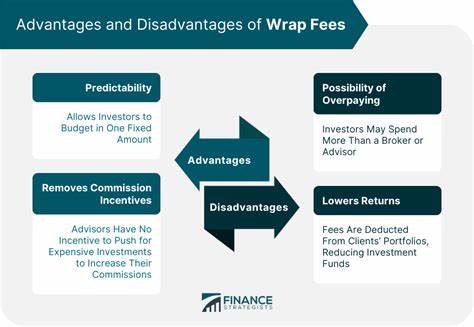
A wrap fee program is a service that provides investment advice and portfolio management to clients for one all-inclusive fee. The fee pays for the services provided to the client, including but not limited to securities transactions, portfolio management, research, brokerage, and administrative services. Wrap fee programs also provide an understanding of a client’s financial goals and objectives; research and selection of assets; implementation of investment decisions; account statements, and access to real-time financial data.

The Investment Advisers Act of 1940 regulates investment advisors when they offer these wrap fee programs and requires them to provide comprehensive disclosure documents before investing. This act helps ensure clients have access to all important information that affects their investment decisions.

QUESTION: Why do I need my stock broker? Can I just go directly to the hedge fund manager?

Yes, you can, but you may find a different fee arrangement when you reach the hedge fund manager, and you may be participating in an unethical transaction. When hedge fund managers set up separate accounts for wrap-fee clients, they agree to take a set fee in exchange for managing this money. They also enter into agreements with one or more brokers to help market this aspect of their money management business. A portion of the wrap fee you pay goes to the broker, and a portion goes to the manager. Incentive compensation is not generally used.

When approached directly, hedge fund managers will typically offer only the hedge fund, complete with incentive compensation and pooled investment features. However, if the hedge fund manager is willing to set up a separate account, it is possible that the investor will find the set fee much less than what he or she would have paid in a wrap fee account through a broker.

Finally, the very large caveat to all this is that the ethics of a hedge fund manager who steals clients from brokers with whom he has a marketing relationship ought to be called into question. And when it comes to hedge funds, the ethics of the manager are of paramount importance.

COMMENTS APPRECIATED

Read, Refer, Like and Subscribe

***

***

Investment Advisor [IA] VERSUS Financial Advisor [FA]

DEFINITIONS

By Staff Reporters

SPONSOR: http://www.MarcinkoAssociates.com

***

***

While IAs and FAs may seem the same, they are not the same. The Financial Industry Regulatory Authority (FINRA) and the Securities Exchange Commission (SEC) have clearly defined investment advisors as distinct from financial advisors.

The term financial advisor is a generic one that can encompass many different financial professionals, although it most commonly refers to stock brokers (individuals or companies that buy and sell securities).

Investment advisor, on the other hand, is a legal term and thus has a more clear-cut definition – or at least as clear as legalese is apt to be.

KEY DIFFERENCES:

  • Financial advisors help with all aspects of your finances, including saving, budgeting, insurance, retirement planning, and taxes.
  • Investment advisors focus specifically on choosing and managing investment portfolios.
  • Financial advisors offer broader financial guidance, while investment advisors concentrate solely on investments.
  • Investment advisors are held to the fiduciary standard, while financial advisors who work as brokers may operate under different rules.

MORE: https://www.financestrategists.com/financial-advisor/advisor-types/investment-advisor/

COMMENTS APPRECIATED

Refer and Subscribe

***

***

On the Financial Advice “Suitability” Standard

 It  Does Not Mean What You Think

By Rick Kahkler CFP® 

If you wanted hiking footwear, you probably would be surprised if a salesperson at an outdoors store suggested flip-flops. You would expect someone knowledgeable about hiking to recommend sturdy boots or shoes more suitable for your needs.

In the same way, if you consulted someone who sells financial products, you probably would expect them to recommend investments that are suitable for your needs. In fact, securities law provides a “suitability” standard for financial advisers who receive commissions for selling products like insurance, annuities, or non-public REITs.

Definition

Unfortunately, when it comes to investments, the word “suitability” does not mean what you probably think it means. It requires only that the adviser is honest with you and that you are legally able to evaluate and purchase the product. It does not require that the product be good for you to own in terms of being best for or even appropriate for your needs.

On the other hand, securities law requires advisers who charge fees for financial advice to be held to a “fiduciary” standard, which means they must be impartial, unbiased, and work as an advocate for clients.

http://www.HealthDictionarySeries.org

Assuming a financial representative is giving you “fiduciary” advice when in fact that person is only required to provide “suitable” advice could mean the difference between investment success or financial disaster. I mean for that to sound dire and alarming, because it is. I will even dare to say that understanding the difference between fiduciary and suitable advice is more important than the investment itself.

My alarmist opinion is supported by a recent article, “The Real Cost(s) of Suitability,” by financial editor Bob Veres. To find out whether consumers are actually harmed by relying on “suitable” advice, he gathered stories from over 100 subscribers to his Inside Information newsletter, most of whom are fiduciaries.

These examples are heartbreaking.

They include:

  • Financial advisers who sold high-premium, high-commission life insurance “investments” to customers who, in some cases, had to borrow from retirement accounts or take distributions to pay the premiums—as well as pay income taxes and penalties on the distributions.
  • Financial advisers who moved customers’ conservatively invested retirements funds into high-fee annuities, promising guarantees of no losses and returns of 5% that under scrutiny proved fictitious and will never be realized.
  • Financial advisers who made excessive numbers of trades, not to benefit customers but to generate transaction fees.
  • Financial advisers whose “suitable” recommendations, in too many cases, not only reduced clients’ investment returns, but actually drained clients’ portfolios and greatly damaged their ability to provide adequately for themselves in retirement.

Veres quoted Kathleen Campbell, of Campbell Financial Partners in Fort Myers, FL, as saying, “Suitable means plenty suitable for the broker and not so suitable for the client.” She called suitability “one of the biggest farces in the financial advisory world.”

I absolutely agree. It is essential to know whether a financial representative is held to a fiduciary or suitability standard.

Here’s how to tell the difference:

  • If you pay a fee for financial advice, with no sale or obligation to purchase a product, that’s a fiduciary adviser.
  • If there is no fee, you are dealing with a “suitability standard” broker, agent, or representative who has no legal requirement to give you unbiased advice.

Assessment

Understanding when you are getting impartial advice that’s in your best interests, and when you are getting conflicted and biased advice that is in the adviser’s best interest, is critical to your financial health.

Please, be wary of advisers whose recommendations emphasize “no fees.” Their “suitable” advice may leave you in a perilous situation—one much worse than wandering through the wilderness in flip-flops instead of hiking shoes. 

Conclusion

Your thoughts and comments on this ME-P are appreciated. Feel free to review our top-left column, and top-right sidebar materials, links, URLs and related websites, too. Then, subscribe to the ME-P. It is fast, free and secure.

Speaker: If you need a moderator or speaker for an upcoming event, Dr. David E. Marcinko; MBA – Publisher-in-Chief of the Medical Executive-Post – is available for seminar or speaking engagements.

Book Marcinko: https://medicalexecutivepost.com/dr-david-marcinkos-bookings/

Subscribe: MEDICAL EXECUTIVE POST for curated news, essays, opinions and analysis from the public health, economics, finance, marketing, IT, business and policy management ecosystem.

***

Risk Management, Liability Insurance, and Asset Protection Strategies for Doctors and Advisors: Best Practices from Leading Consultants and Certified Medical Planners™8Comprehensive Financial Planning Strategies for Doctors and Advisors: Best Practices from Leading Consultants and Certified Medical Planners™

***

Broker Compensation for Debt-Based Securities

Understanding Commission Methods for Selling Investments

By Staff Reporters

steveBrokers earn commissions on debt instruments based on the spread, or markup, between the price at which the broker can secure the bond and the price at which it is sold.

Bond Funds

In the case of bond funds, the fund charges a management fee and/or an expense fee. There may or may not be a load, or commission, paid to a broker.

Assessmentdhimc-book10

For more terminology information, please refer to the Dictionary of Health Economics and Finance.

www.HealthDictionarySeries.com

Conclusion

And so, your thoughts and comments on this Medical Executive-Post are appreciated?

Link: http://feeds.feedburner.com/HealthcareFinancialsthePostForcxos

Speaker: If you need a moderator or speaker for an upcoming event, Dr. David E. Marcinko; MBA – Publisher-in-Chief of the Executive-Post – is available for seminar or speaking engagements. Contact: MarcinkoAdvisors@msn.com  or Bio: www.stpub.com/pubs/authors/MARCINKO.htm

Get our Widget: Get this widget!

Our Other Print Books and Related Information Sources:

Practice Management: http://www.springerpub.com/prod.aspx?prod_id=23759

Physician Financial Planning: http://www.jbpub.com/catalog/0763745790

Medical Risk Management: http://www.jbpub.com/catalog/9780763733421

Healthcare Organizations: www.HealthcareFinancials.com

Health Administration Terms: www.HealthDictionarySeries.com

Physician Advisors: www.CertifiedMedicalPlanner.com

Subscribe Now: Did you like this Medical Executive-Post, or find it helpful, interesting and informative? Want to get the latest E-Ps delivered to your email box each morning? Just subscribe using the link below. You can unsubscribe at any time. Security is assured.

Link: http://feeds.feedburner.com/HealthcareFinancialsthePostForcxos

Advisors Fees vs. Brokerage Commissions

Join Our Mailing List

Beware Assets-under-Management [AUMs]

[Dr. David Edward Marcinko MBA, CMP™]

dem-thinking

I don’t think that doctor-colleagues realize how much more a fee-based financial planner – or financial advisor – might take from a physician-client using an assets-under-management [AUM] subscription business model; than a traditional commission-based stock broker? Of course, commissions are what stock-brokers earn; and “broker” is a bad word today. The more politically correct term seems to be “planner” or “advisor” or “vice-president” or ‘wealth manager”; and these folks earn “fees” along with their confusing nom de plumes. But should they?

Example:

Look at 1% of $100,000 which comes to $1,000 per year. If a doctor-client is in it “for the long haul,” we can see why financial advisors want this money for the “long haul.” Twenty years of this model comes out to nearly $20,000 in fees [assuming zero growth]. If a financial advisor was going to stick the doctor in some investment and leave him alone, would it not have been better to take a one-time $5,000 commission, say at 5%? This way the doctor-client keeps the remaining $15,000. If the money actually grows over time – which it should in the long run – the advisor earns even more.

False Arguments

Now, don’t try to accept the false argument that this puts financial advisors “on the same side of the fence”, as the physician-client or that it allows advisors to take better care them. First off, clients should be taken care of, well. But, it also encourages the advisor to “risk-more to earn more”, and/or to goad the doctor-client into putting more money into the subscription-based account, rather than paying off the mortgage, for example. In fact, the recent mortgage crisis and stock market meltdown suggests that this deceptive argument may have been more common than realized. So, why not ask your advisor/broker to explain both ways s/he gets paid; and then decide for yourself – fees versus commissions?

Assessment

Of course, in today’s world of “assets-under-management,” the word “commission” is taboo. No “real financial planner” takes commissions; he or she would rather manage investments for a “fee” that lasts forever.

PS: Financial advisors really don’t mange most of these accounts, anyway. They are aggregated and outsourced to other firms, for a small sub-fee [a bit less than the original 1%]. The advisor then sends a nice quarterly report to the doctor, as if they did all the work!  Now, do you realize why the best name for these folks is “asset gatherers”; they often do little more than market and sell.

Conclusion

Your thoughts and comments on this ME-P are appreciated. Feel free to review our top-left column, and top-right sidebar materials, links, URLs and related websites, too. Then, subscribe to the ME-P. It is fast, free and secure.

Speaker: If you need a moderator or speaker for an upcoming event, Dr. David E. Marcinko; MBA – Publisher-in-Chief of the Medical Executive-Post – is available for seminar or speaking engagements. Contact: MarcinkoAdvisors@msn.com

OUR OTHER PRINT BOOKS AND RELATED INFORMATION SOURCES:

Product Details  Product Details

Product Details