DAILY UPDATE: Pfizer, MSFT and the NASDAQ Collapse

MEDICAL EXECUTIVE-POST TODAY’S NEWSLETTER BRIEFING

***

Essays, Opinions and Curated News in Health Economics, Investing, Business, Management and Financial Planning for Physician Entrepreneurs and their Savvy Advisors and Consultants

Serving Almost One Million Doctors, Financial Advisors and Medical Management Consultants Daily

A Partner of the Institute of Medical Business Advisors , Inc.

http://www.MedicalBusinessAdvisors.com

SPONSORED BY: Marcinko & Associates, Inc.

***

http://www.MarcinkoAssociates.com

Daily Update Provided By Staff Reporters Since 2007.
How May We Serve You?
© Copyright Institute of Medical Business Advisors, Inc. All rights reserved. 2024

REFER A COLLEAGUE: MarcinkoAdvisors@msn.com

SPONSORSHIPS AVAILABLE: https://medicalexecutivepost.com/sponsors/

ADVERTISE ON THE ME-P: https://tinyurl.com/ytb5955z

***

As drugs like Wegovy and Zepbound that help people slim down have enlarged its competitors’ bottom lines, Pfizer has struggled to keep up. But now it’s moving forward with the development of a once-daily version.

Here’s where the major benchmarks ended:

  • The S&P 500 index fell 49.37 points (0.8%) to 5,584.54; the Dow Jones Industrial Average® ($DJI) rose 32.39 points (0.1%) to 39,753.75; the NASDAQ Composite® ($COMP) collapsed and lost 364.04 points (1.95%) to 18,283.41 but remains up 22% year to date. The SPX is still up 17% this year.
  • The 10-year Treasury note yield dropped eight basis points to 4.19%.
  • The CBOE Volatility Index® (VIX) climbed to 12.99.

CITE: https://www.r2library.com/Resource

  • More specifically, the S&P 500 and NASDAQ broke their winning streaks today, closing in the red for the first time in over a week—though both did hit intraday highs at one point. The Dow finished the afternoon in the green, just barely.
  • Gold breached $2,400, and is closing in on a record high of $2,449.89 set back in May.
  • Oil rose on today’s CPI news, with the idea being that if inflation slows and the Fed cuts rates then economic activity will pick up, as will demand for crude.
  • Bond yields sank on CPI data while prices rose.

CITE: https://tinyurl.com/2h47urt5

According to the Wall Street Journal, Microsoft abandoned its post as an observer on the board after realizing it was bothering antitrust officials who were looking into the relationship between the two companies. Apple, which was expected to take a similar seat on the OpenAI board, will reportedly no longer do s

CITE: https://tinyurl.com/tj8smmes

COMMENTS APPRECIATED

PLEASE SUBSCRIBE: MarcinkoAdvisors@msn.com

Thank You

***

***

***

***

EDUCATIONAL TEXTBOOKS: https://tinyurl.com/4zdxuuwf

***

PODCAST: How to be a DEBT FREE Direct Primary Care Physician?

***

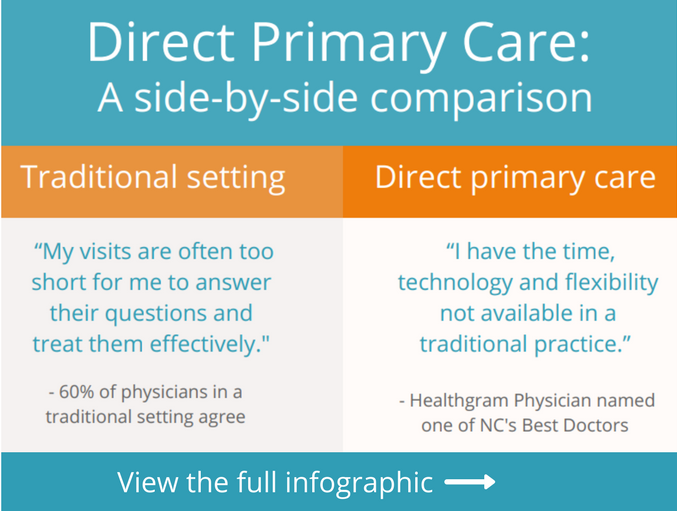
DEFINITION: The DPC model was created to allow for a singular focus upon the Primary Care Physician-2-Patient relationship. To achieve this, DPC removes the hassles and overhead expenses created by insurance and replaces it with a fixed monthly membership fee. This simplified approach frees the physician from meaningless paperwork and allows them to only see 8-10 patients a day. This level of personalized engagement allows them to develop a meaningful and enduring relationship with each patient.

CITE: https://www.r2library.com/Resource/Title/0826102549

By James Hawkes MD

***

Dr. James Hawkes grew up in a large family. His father was a U.S. diplomat, which exposed him to different models of healthcare. In addition to exposure, his grandmother encouraged him to become a doctor. He followed her recommendation but to his surprise, the definition of a good doctor wasn’t about improving patients’ quality of life it was about hierarchies, documentation, administrative requirements, and quality measures. 

***

Shortly after saying goodbye to the traditional healthcare model, he launched his own direct care practice. Fast forward to today, he is a 100% debt-free direct care physician. He shares his story of how it’s possible to achieve this goal.

PODCAST: https://healthcareamericana.com/episode/how-to-become-a-debt-free-direct-care-physician/

***

COMMENTS APPRECIATED

Thank You

Subscribe to the Medical Executive-Post

***

***

****

Doctors, Sole Proprietors and Taxes

On the Self-Employment Tax

By Perry D’Alessio CPA

perry-dalessio-cpaA sole proprietor is an individual business owner [medical practice] physician-executive whose business [practice] is accounted for on a separate schedule of the owner’s individual income tax return.

Typically, owners filing their business returns via the use of Schedule C of Form 1040 have the lowest level of reporting requirements and also (in general) do the poorest job of keeping good records of business activity.

There is only one level of tax for the sole proprietor. The net profit (or loss) from the Schedule C business is reported on page one of Form 1040 and is combined with all of the other income items reported to arrive at gross income.

Different from interest and dividend income, or investment income that is typically considered passive in nature, self-employment income is income considered to be generated by ones’ own actions.

Self Employment Tax

There is “Self Employment” tax to be paid on virtually all self-employment income reported in the tax return.  Many sole proprietors get into trouble because they neglect to take this tax into account when estimating their tax liability for the year and this tax is significant as noted below.

How SET Works

Self-employment tax is paid on 92.35 percent of all self-employment net profits.  This tax is the equivalent of the combination of the employer’s and employee’s Social Security tax and Medicare tax.  Social Security tax is 12.4 percent of the first $117,000 (in 2014) in net income and Medicare tax is paid 2.90 percent of net income without any upper income limit. There is also no maximum for the .9% additional Medicare tax under the PP-ACA [Obamacare] that applies when adjusted gross income exceeds $250,000 for joint filers, $200,000 for single filers, or $125,000 on married-filing-separate returns.

2024

The most you will have to pay in Social Security taxes for 2024 will be $10,453. That’s what you will pay if you earn $168,600 or more. As its name suggests, the Social Security tax goes to the Social Security program. For 2024, it amounts to 6.2% for employees on all income up to $168,600. Employers deduct the tax from paychecks and match it, so that 12.4% goes to the program for each employee. If you’re self-employed, you’ll pay the full 12.4%, though you can deduct half on your tax return.

solo

Social Security Limit

The Social Security income limit is indexed and adjusted (upward) annually.  The sole proprietor is allowed to deduct one half of the self-employment tax against income; however, this deduction is worth far less than the actual tax.

More: Changes   in The Health Care Marketplace and Their Likelihood Over The Next   Five Years

Conclusion

Your thoughts and comments on this ME-P are appreciated. Feel free to review our top-left column, and top-right sidebar materials, links, URLs and related websites, too. Then, subscribe to the ME-P. It is fast, free and secure.

Speaker: If you need a moderator or speaker for an upcoming event, Dr. David E. Marcinko; MBA – Publisher-in-Chief of the Medical Executive-Post – is available for seminar or speaking engagements. Contact: MarcinkoAdvisors@msn.com

OUR OTHER PRINT BOOKS AND RELATED INFORMATION SOURCES:

HOSPITALS: http://www.crcpress.com/product/isbn/9781466558731
CLINICS: http://www.crcpress.com/product/isbn/9781439879900
BLOG: www.MedicalExecutivePost.com
FINANCE: Financial Planning for Physicians and Advisors
INSURANCE: Risk Management and Insurance Strategies for Physicians and Advisors

Product DetailsProduct Details

PODCAST: Independent Physicians Will Win!

By Eric Bricker MD

***

***

COMMENTS APPRECIATED

Thank You

***

***

PODCAST: “Real ACOs Haven’t Been Tried Yet!”

What is an Accountable Care Organization?

DEFINITION: ACOs are groups of doctors, hospitals, and other health care providers, who come together voluntarily to give coordinated high-quality care to their patients. The goal of coordinated care is to ensure that patients get the right care at the right time, while avoiding unnecessary duplication of services and preventing medical errors. When an ACO succeeds both in delivering high-quality care and spending health care dollars more wisely, the ACO will share in the savings.

Citation: https://www.r2library.com/Resource/Title/0826102549

****

QUESTION: What happens when you’re a healthcare policy wonk and the pilot study for your pet program has failed miserably? 

ANSWER: You declare “Success!” in the editorial pages of the New England Journal of Medicine and demand that the program become nationwide and mandatory. I kid you not.  This is exactly what happens.

Thankfully, Anish Koka is vigilant and explains the blatant obfuscations and manipulations that the central planners engage in to have their way.

***

And so, In this video, Anish and colleague Michel Accad, MD, will reveal the machinations, take the culprits to task, and discuss pertinent questions regarding health care organization: 

  • Does “capitation” reduce costs? 
  • Do employed physicians necessarily utilize fewer resources? 
  • What happens when a HMO and a traditional fee-for-service health system operate side-by-side in a community?
BMC and Accountable Care - Boston Medical Center

Enjoy!

PODCAST: http://alertandoriented.com/real-acos-havent-been-tried-yet/

Your thoughts are appreciated.

THANK YOU

***

***

77% of Surveyed ACOs Use 6 or More EHR Systems

By Staff Reporters

***

77% of Surveyed ACOs Use 6 or More EHR Systems

***

All roads lead to the EHR - MedCity News

According to a recent AJMC survey of 163 MSSP ACOs

 •  Just 9% of surveyed ACOs use a single EHR system throughout their entire organization.
 •  77% of surveyed ACOs use 6 or more EHR systems.
 •  Among the 37% of Medicare Shared Savings Program ACOs with 16 or more EHR systems, concerns about EHR-based quality measures include access to data, standardization of data elements, and cost of integrating across systems.

Source: AJMC, “Use of Electronic Health Record Systems in Accountable Care Organizations”, January 18th 2022

***

***

***

COMMENTS APPRECIATED

Thank You

Subscribe to the Medical Executive-Post

***

ACOs: Regulatory Environment Scrutiny

By Health Capital Consultants, LLC

***

Because of the federal government’s preference for, and reliance on the success of, accountable care organizations (ACOs), some ACOs assume their legal status shields the organization from legal scrutiny on all issues.

However, since the 2010 advent of ACOs, the law has adapted uniquely to these organizations. This fourth installment of a five-part series on the valuation of ACOs will discuss this unique regulatory environment in which ACOs operate. (Read more…) 

COMMENTS APPRECIATED

Thank You

***

***

***

ACOs: A Brief History of Accountable Care Organizations

ACOs to the Rescue – Not Yet!

DEM white shirt

By Dr. David E. Marcinko MBA CMP®

SPONSOR: http://www.CertifiedMedicalPlanner.org

According to the Health Dictionary Series of administrative terms; valuation expert and colleague Robert James Cimasi MHA, ASA, AVA CMP of www.HealthCapital.com; an ACO is a healthcare organization in which a set of providers, usually large physician groups and hospitals, are held accountable for the cost and quality of care delivered to a specific local population. ACOs aim to affect provider’s patient expenditures and outcomes by integrating clinical and administrative departments to coordinate care and share financial risk [personal communication]

***

Product DetailsProduct DetailsProduct Details

***

Enter the PP-ACA

Since their four-page introduction in the PP-ACA of 2010, ACOs have been implemented in both the Federal and commercial healthcare markets, with 32 Pioneer ACOs selected (on December 19, 2011), 116 Federal applications accepted (on April 10, 2012 and July 9, 2012), and at least 160 or more Commercial ACOs in existence today.

Federal Contracts

More recently, Donna Marbury writing in Medical Economics, revealed that Federal ACO contracts are established between an ACO and CMS, and are regulated under the CMS Medicare Shared Savings Program (MSSP) Final Rule, published November 2, 2011.  ACOs participating in the MSSP are accountable for the health outcomes, represented by 33 quality metrics, and Medicare beneficiary expenditures of a prospectively assigned population of Medicare beneficiaries. If a Federal ACO achieves Medicare beneficiary expenditures below a CMS established benchmark (and meets quality targets), they are eligible to receive a portion of the achieved Medicare beneficiary expenditure savings, in the form of a shared savings payment.

***

thumb

***

Commercial Contracts

Commercial ACO contracts are not limited by any specific legislation, only by the contract between the ACO and a commercial payer. In addition to shared savings models which may not be in effect for another 3-5 years, Commercial ACOs may incentivize lower costs and improved patient outcomes through reimbursement models that share risk between the payer and the providers, i.e., pay for performance compensation arrangements and/or partial to full capitation.

Although commercial ACOs experience a greater degree of flexibility in their structure and reimbursement, the principals for success for both Federal ACOs and Commercial ACOs are similar. And, nearly any healthcare enterprise can integrate and become an ACO, larger enterprises, may be best suited for ACO status.

Medicare Contracts

Assessment

Larger organizations are more able to accommodate the significant capital requirements of ACO development, implementation, and operation (e.g., healthcare information technology), and sustain the sufficient number of beneficiaries to have a significant impact on quality and cost metrics.

More:

Conclusion

Your thoughts and comments on this ME-P are appreciated. Feel free to review our top-left column, and top-right sidebar materials, links, URLs and related websites, too. Then, subscribe to the ME-P. It is fast, free and secure.

Speaker: If you need a moderator or speaker for an upcoming event, Dr. David E. Marcinko; MBA – Publisher-in-Chief of the Medical Executive-Post – is available for seminar or speaking engagements. Contact: MarcinkoAdvisors@msn.com

OUR OTHER PRINT BOOKS AND RELATED INFORMATION SOURCES:

***

[HOSPITAL OPERATIONS, ORGANIZATIONAL BEHAVIOR AND FINANCIAL MANAGEMENT COMPANION TEXTBOOK SET]

Product DetailsProduct Details

[Foreword Dr. Phillips MD JD MBA LLM] *** [Foreword Dr. Nash MD MBA FACP]

***