PRIVATE EQUITY: Ownership in Physician Practices

By NIHCM

***

***

Private equity acquisition of physician practices continues to grow nationwide. New research focused on specialists in dermatology, gastroenterology, and ophthalmology shows the impact of the trend.

CITE: https://www.r2library.com/Resource/Title/0826102549

Novel evidence by NIHCM grantee Jane Zhu, MD, and her team, reveals shifts in workforce composition and hiring patterns after private equity firms obtain physician practices. The researchers’ findings are particularly important for policymakers and practices considering selling to private equity firms. Highlights include:

  • A significant yearly increase in the number of advanced practice providers at private equity-acquired practices, specifically nurse practitioners and physician assistants. 
  • In acquired practices, entering clinicians replaced exiting clinicians at a higher rate than at non-private equity-acquired practices.

This work adds to the research team’s previous findings, including the geographic variations in private equity ownership across six medical specialties, and the impact of private equity on health care costs and utilization.

***

ORDER: https://www.routledge.com/Comprehensive-Financial-Planning-Strategies-for-Doctors-and-Advisors-Best/Marcinko-Hetico/p/book/9781482240283

***

COMMENTS APPRECIATED

Thank You

***

DAILY UPDATE: Health Insurers & Hospital Mergers with Light Stock Market Trading

MEDICAL EXECUTIVE-POST TODAY’S NEWSLETTER BRIEFING

***

Essays, Opinions and Curated News in Health Economics, Investing, Business, Management and Financial Planning for Physician Entrepreneurs and their Savvy Advisors and Consultants

Serving Almost One Million Doctors, Financial Advisors and Medical Management Consultants Daily

A Partner of the Institute of Medical Business Advisors , Inc.

http://www.MedicalBusinessAdvisors.com

SPONSORED BY: Marcinko & Associates, Inc.

***

http://www.MarcinkoAssociates.com

Daily Update Provided By Staff Reporters Since 2007.
How May We Serve You?
© Copyright Institute of Medical Business Advisors, Inc. All rights reserved. 2024

REFER A COLLEAGUE: MarcinkoAdvisors@msn.com

SPONSORSHIPS AVAILABLE: https://medicalexecutivepost.com/sponsors/

ADVERTISE ON THE ME-P: https://tinyurl.com/ytb5955z

***

Here’s where the major benchmarks ended:

The CBOE Volatility Index® (VIX) climbed slightly to 12.37.

The S&P 500 index®(SPX) rose 5.66points (0.1%) to 5,572.85; the Dow Jones Industrial Average® ($DJI) dropped 31.08 points (0.1%) to 39,344.79; the NASDAQ Composite® ($COMP) gained 50.98 points (0.3%) to 18,403.74.

The 10-year Treasury note yield (TNX) was roughly flat at 4.27%.

CITE: https://www.r2library.com/Resource

What’s up

  • Intel popped 6.15% after an analyst at Melius Research declared the company could be one of the big AI winners in the second half of this year.
  • Morphic Holding skyrocketed 75.06% on the news that Eli Lilly will acquire the drugmaker for $3.2 billion in cash.
  • SolarEdge climbed 9.26% thanks to an upgrade from “underperform” to “neutral” by Bank of America analysts, who see big upside and few downside risks ahead.
  • Corning rose 11.98% after management raised earnings guidance for the coming quarter thanks to higher demand due to the AI boom.
  • Lucid rose 7.85% on the news that its deliveries rose 70% in the second quarter.

What’s down

CITE: https://tinyurl.com/2h47urt5

Stat: 27. That’s a tally of some of the hospital mergers, acquisitions, joint ventures, affiliations, and partnerships that have been canceled since January 2022. (Becker’s Hospital Review)

Read: Health insurers received $50 billion from Medicare for diseases that doctors did not treat over three years, according to a recent analysis. (Wall Street Journal)

CITE: https://tinyurl.com/tj8smmes

COMMENTS APPRECIATED

PLEASE SUBSCRIBE: MarcinkoAdvisors@msn.com

Thank You

***

***

***

***

EDUCATIONAL TEXTBOOKS: https://tinyurl.com/4zdxuuwf

***

HEDGE FUNDS: Understanding Fees and Costs

SPONSOR: http://www.MARCINKOASSOCIATES.com

***

***

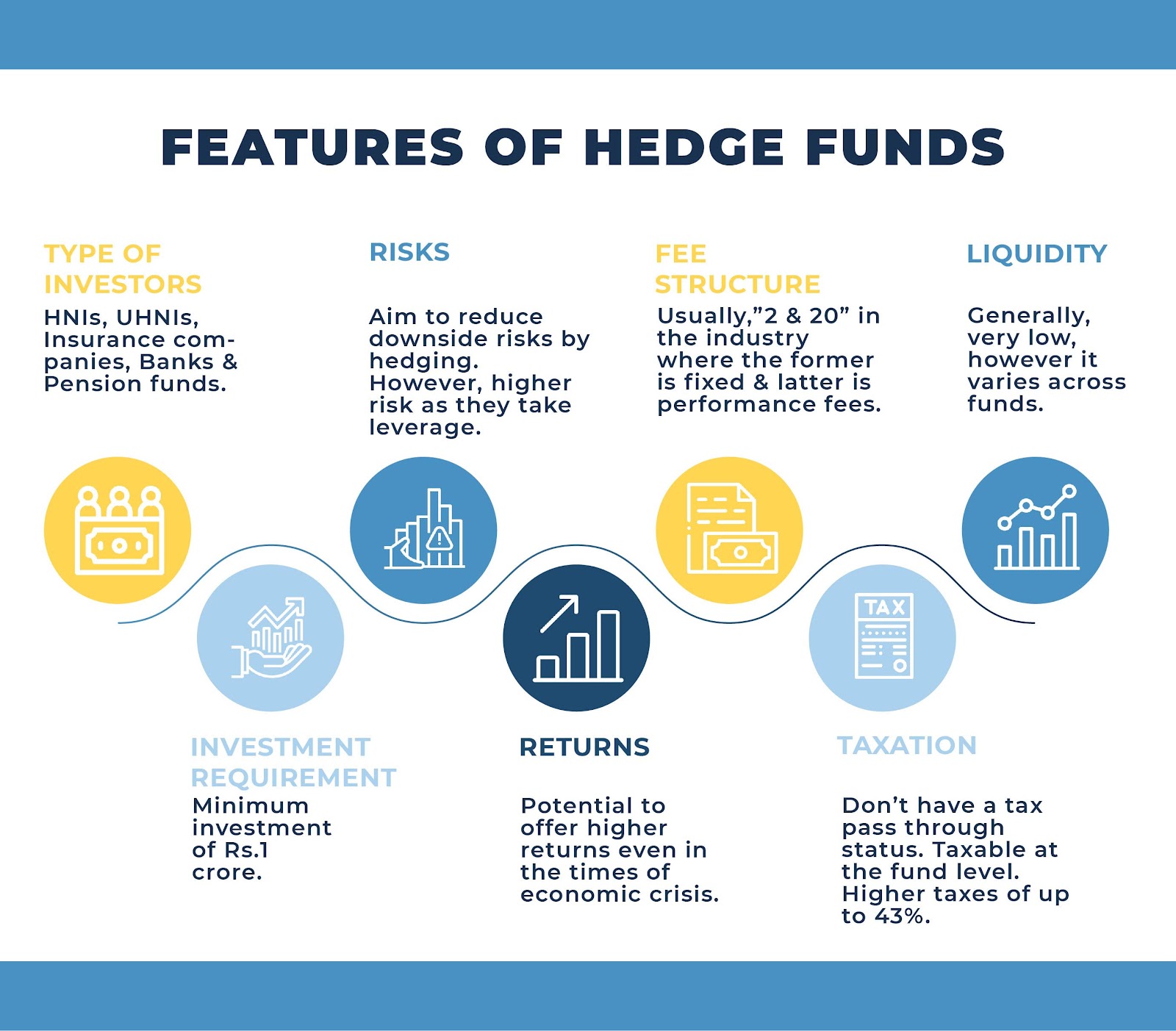
DEFINITION: A Hedge fund is an investment partnership with freer rein to invest aggressively in a wider variety of financial products than most mutual funds. A hedge fund’s purpose is to pool funds, maximize investor returns, and eliminate risk with hedging strategies. Hedge funds are generally considered more aggressive, risky, and exclusive than mutual funds. The hedge fund industry has grown tremendously since its inception. There are trillions of dollars of assets under management, more than 8,800 hedge fund managers, and over 27,000 funds globally

CITE: https://www.r2library.com/Resource/Title/082610254

***

Many physicians and other investors — even those that meet net worth guidelines — are surprised to learn that there exists a $500 – 999 billion, or more, alternative investment industry that is not generally marketed to the public. Such alternative investments have also been known as hedge funds or private investment funds.

Unlike mutual funds, these alternative investments can be structured in a wide variety of ways. Because of the very same regulations discussed above, these funds cannot be advertised, but they are far from illegal or illicit.

READ MORE: https://marcinkoassociates.com/hedge-funds/

***

COMMENTS APPRECIATED

Thank You

***

***

Novant/CHS Deal Scrapped after FTC Intervenes

By Health Capital Consultants LLC

In February 2023, Novant Health, a 19-hospital, non-profit health system operating throughout the Carolinas, agreed to acquire two North Carolina hospitals – Davis Regional Medical Center and Lake Norman Regional Medical Center – from Community Health System (CHS), a publicly-traded mega-system operating in 15 states.

After the $320 million deal was announced, the Federal Trade Commission (FTC) began an extensive review of the acquisition, and concluded that: (1) the transaction may substantially reduce competition; (2) create a monopoly; and (3) constitute an unfair method of competition. (Read more…)

***

***

COMMENTS APPRECIATED

Thank You

***

***

How to Monitor Hedge Funds

Four Ways to Monitor after Purchase

By Dr. David Edward Marcinko MBA, MEd, CMP™

SPONSOR: www.CertifiedMedicalPlanner.org

[Publisher-in-Chief]

Hedge funds (broadly defined as private investment vehicles that trade a variety of long and short equities, derivatives, futures contracts, and options in a variety of capital markets) have grown in size and importance in client portfolios because of superior performance, until late [2008-09 and 2022], and readily available investor capital.

Risk Factors

Physicians and clients often ask us to assess certain risk factors and a variety of investment entity structural characteristics associated with hedge funds. Accordingly, we must often be involved in discussing clients’ specific risk/return desires and expectations as they consider such investments.

Four Key Post-Investment Issues:

  1. A change in core investment strategies or risk postures from those which are documented in the investment policy statement—Among these are the specific markets to be traded, the degree of financial leverage to be employed or allowable, the underlying instruments or contracts to be used, and the investment strategies to be pursued under various conditions. Hence, there is no substitute for careful and regular assessment by the planner of changes in how and what an investment manager is trading and communication of such to the client.
  2. Use of financial leverage can dramatically increase returns just as poor performance can be accentuated—The key issue for the planner is whether a given investment manager’s use of leverage changes over the life of the hedge-fund investment, thereby possibly affecting the client’s initial desired risk/return profile.
  3. The composition of the performance return, particularly with respect to the long-term capital gain component.
  4. Asset growth—Regularly monitor and evaluate whether it is detrimental to performance and capable of causing an erosion of performance over a long-term horizon.

Assessment

http://www.MarcinkoAssociates.com

Often, after a hedge-fund investment has been made, if performance over time is good (or even adequate), both the doctor client and the financial advisors or planner may assume that there has been no material changes in investment strategy or structural characteristics that warrant attention or concern. Such changes often occur subtly over time and, if performance erodes, and the client may feel that the planner did not adequately monitor the investment. Hence the necessity for the above warning post

Note: “Post investment Issues Regarding Hedge Funds,” by Richard L. Fisher, Personal Financial Planning, November/December 1996, pp. 14–19, Warren, Gorham & Lamont, 1-800-950-1205.)

Conclusion

Your thoughts and comments on this ME-P are appreciated. Feel free to review our top-left column, and top-right sidebar materials, links, URLs and related websites, too. Then, subscribe to the ME-P. It is fast, free and secure.

Speaker: If you need a moderator or speaker for an upcoming event, Dr. David E. Marcinko; MBA – Publisher-in-Chief of the Medical Executive-Post – is available for seminar or speaking engagements. Contact: MarcinkoAdvisors@msn.com

OUR OTHER PRINT BOOKS AND RELATED INFORMATION SOURCES:

HOSPITALS: http://www.crcpress.com/product/isbn/9781466558731
CLINICS: http://www.crcpress.com/product/isbn/9781439879900
BLOG: www.MedicalExecutivePost.com
FINANCE: Financial Planning for Physicians and Advisors
INSURANCE: Risk Management and Insurance Strategies for Physicians and Advisors

Product DetailsProduct DetailsProduct Details

Product Details  Product Details