MUTUAL FUNDS: Institutional Shares

Institutional Shares

By Rick Kahler CFP®

One of the low points of my career was the day I lost a client because another advisor “had found a way to put their clients into the lowest cost shares available only to large institutions.”

This experience was especially painful because, through my office, the client already was invested in those same low-cost shares. I just hadn’t made sure the client knew that. It was a significant mistake in my personal communication.

Mutual Fund Classes

Many investors don’t know that most mutual fund companies offer a special class of share available only to investors with sizable minimum investments (usually over $1 million per fund). These shares carry the lowest expense ratio (annual fees paid to the fund manager) of any other share class and usually waive any front-end or trailing sales charges. Because it’s generally large private and public intuitions that have the large sums to meet the minimum investment, these are called institutional shares.

Most Registered Investment Advisers (RIAs) who don’t receive commissions have special access to institutional shares through their custodian. Over the life of your investments, these low-cost shares can result in thousands upon thousands of dollars of savings.

If you are in class A, B, C, or R shares, the expense ratio is higher than the fund’s institutional shares, often called I shares. The other share classes often include a commission paid to the broker/advisor. The average annual expense ratio of these funds is around 1.25%. That charge can drop to as little as 0.03% when an advisor places clients in institutional shares.

Example:

For example, take the Rydex S&P 500 Fund, Class C (RYSYX). The Rydex fund tracks the S&P 500, just like hundreds of other index funds. It charges investors 2.33 percent. As an alternative, you can buy the retail share of Vanguard’s S&P 500 Index Fund (VFINX) with a cost of just 0.14 percent, a 94% savings. But you can still save another 71% if your advisor places you in Vanguard’s institutional share of the same fund (VINIX), with a expense ratio of just 0.04 percent.

Any RIA who doesn’t accept commissions and who uses a major custodian like TD Ameritrade, Schwab, or Fidelity has access to institutional class shares. These advisers not only can use them, but are strongly encouraged by the SEC to use them if at all possible. RIAs who don’t put clients in institutional shares had better have a good reason: perhaps a company doesn’t have that class of share, or the client is so small that using a higher cost class of share which eliminates a transaction fee to the investor is actually cheaper.

Selling Point

t had never occurred to me to use our firm’s use of institutional shares as a selling point to prospective clients. After all, every other RIA not only does the same, but is basically required to do so by the SEC.

If you don’t use the services of a RIA and don’t have the $1 million minimum per fund to get into the I shares of the funds, you have several options.

  • One would be to look for a similar fund with a lower expense ratio, like the example above of replacing the Rydex 500 with the Vanguard 500.
  • You can also consider an online robo advisor that for 0.25 to 0.50 will put you in institutional shares.
  • Or you can consider engaging an advice-only planner who is an RIA.

Assessment

Whatever you do, check the share class of your mutual funds. If they are not I shares, ask your fund company or advisor why they are not and how you can move into the I shares. The savings could be phenomenal.

Conclusion

Your thoughts and comments on this ME-P are appreciated. Feel free to review our top-left column, and top-right sidebar materials, links, urls and related websites, too. Then, subscribe to the ME-P. It is fast, free and secure.

Speaker: If you need a moderator or speaker for an upcoming event, Dr. David E. Marcinko; MBA – Publisher-in-Chief of the Medical Executive-Post – is available for seminar or speaking engagements.

Contact: MarcinkoAdvisors@msn.com

Subscribe: MEDICAL EXECUTIVE POST for curated news, essays, opinions and analysis from the public health, economics, finance, marketing, I.T, business and policy management ecosystem.

***

DAILY UPDATE: Tenet, Rivian, Yen, Public Companies and the Light Stock Markets

MEDICAL EXECUTIVE-POST TODAY’S NEWSLETTER BRIEFING

***

Essays, Opinions and Curated News in Health Economics, Investing, Business, Management and Financial Planning for Physician Entrepreneurs and their Savvy Advisors and Consultants

Serving Almost One Million Doctors, Financial Advisors and Medical Management Consultants Daily

A Partner of the Institute of Medical Business Advisors , Inc.

http://www.MedicalBusinessAdvisors.com

SPONSORED BY: Marcinko & Associates, Inc.

***

http://www.MarcinkoAssociates.com

Daily Update Provided By Staff Reporters Since 2007.
How May We Serve You?
© Copyright Institute of Medical Business Advisors, Inc. All rights reserved. 2024

REFER A COLLEAGUE: MarcinkoAdvisors@msn.com

SPONSORSHIPS AVAILABLE: https://medicalexecutivepost.com/sponsors/

ADVERTISE ON THE ME-P: https://tinyurl.com/ytb5955z

***

Stat: 40%. That’s how much Tenet Healthcare’s shares jumped in Q1. (Yahoo Finance)

Stat: 12%. This is how much the yen has weakened so far this year against the US dollar, which has people wondering whether the Japanese government will need to intervene. (Bloomberg)

Quote: “We believe the opportunity ahead is significant.”—RJ Scaringe, CEO and co-founder of Rivian, commenting on Volkswagen Group’s plans to invest as much as $5 billion in the EV company. (CNBC)

CITE: https://www.r2library.com/Resource

What’s up

  • McCormick & Co rose 4.34% after the company posted spicy earnings results, absolutely crushing estimates.
  • Arista Networks rose 3.92% after Citigroup reiterated its buy rating for the cloud company but increased its price target from $330 to $385.
  • BlackBerry is still a company, and rose 10.41% after a berry good first quarter.

What’s down

  • Walgreens Boots Alliance plummeted 22.16% due to a worse-than-expected earnings report that saw the company slash its full-year guidance.
  • Hims & Hers dropped 7.19% after Hunter Growth Capital accused the company of using a shady supplier for its new weight-loss drugs.
  • Levi Strauss crashed 15.27% in a denim downfall for the ages, with second quarter earnings missing expectations after consumers spent less on blue jeans.
  • Micron Technology slid 7.12% despite beating analyst expectations in the third quarter. Unfortunately, management isn’t as bullish as analysts about the rest of the year.
  • Chewy fell 0.03% despite a tweet from Roaring Kitty of a cartoon dog—which is apparently all it takes to move markets these days.

CITE: https://tinyurl.com/2h47urt5

The U.S. government’s final gross domestic product (GDP) estimate announced early Thursday included a downward revision to quarterly consumer spending.

Treasury yields could move on the data, especially if the report is “hotter” than expected. Yields fell Thursday following mostly soft U.S. economic readings this morning.

Here’s where the major benchmarks ended:

  • The S&P 500® index (SPX) rose 4.97 points (0.1%) to 5,482.87; the Dow Jones Industrial Average® ($DJI) rose 36.26 points (0.1%) to 39,164.06; the NASDAQ Composite® ($COMP) rose 53.53 points (0.3%) to 17,858.68.
  • The 10-year Treasury note yield lost two basis points to 4.29%.
  • The CBOE Volatility Index® (VIX) fell to 12.29, its lowest close since June 13.

CITE: https://tinyurl.com/tj8smmes

COMMENTS APPRECIATED

PLEASE SUBSCRIBE: MarcinkoAdvisors@msn.com

Thank You

***

***

***

***

EDUCATIONAL TEXTBOOKS: https://tinyurl.com/4zdxuuwf

***

SPDRs vs. Index Mutual Funds

Understanding Vehicular Pros and Cons

By Dr. David Edward Marcinko MBA MEd CMP™

[Publisher-in-Chief]

It is possible to buy or sell during a trading day with SPDRs, just as one would with a common stock, and, accordingly, the trading price may be set anytime during the day. This could prove valuable in a sudden market downturn. Also, they may be traded using the same types of orders used for stocks (market, limit, at the close, and at the opening) and sold short, even on a downtick.

However, dividend reinvestment is provided by only a few brokers. Since SPDRs represent passive equity portfolios, they tend to be fully invested in the stock market, which removes a significant drag on performance; their expense ratios are significantly below that of stock mutual funds in general, and below many index mutual funds; and they have virtually no turnover and accordingly, minimal capital gains.

Index Mutual Funds

Index funds, on the other hand, may only be purchased or redeemed at the net asset value (NAV) at the end of the trading day. Short sales are not possible; however, dividend reinvestment is available.

The Disadvantages

On the down side, SPDRs are sold like common stocks and, therefore, incur brokerage commissions, but this can be minimized by using discount brokers. SPDRs have been so successful that both the American and New York Stock Exchanges launched internationally indexed products modeled after SPDRs in the spring of 1996. They are termed World Equity Benchmark Shares (WEBS) and Country Baskets.

Note: “Index Stocks: An Introduction to SPDRs—S&P 500 Depository Receipts,” Robert T. Kleiman, in his article, AAII Journal, January 1997, pp. 23–26, American Association of Individual Investors [312] 280-0170).

Conclusion

Your thoughts and comments on this ME-P are appreciated. Feel free to review our top-left column, and top-right sidebar materials, links, URLs and related websites, too. Then, subscribe to the ME-P. It is fast, free and secure.

Speaker: If you need a moderator or speaker for an upcoming event, Dr. David E. Marcinko; MBA – Publisher-in-Chief of the Medical Executive-Post – is available for seminar or speaking engagements. Contact: MarcinkoAdvisors@msn.com

OUR OTHER PRINT BOOKS AND RELATED INFORMATION SOURCES:

PRACTICES: www.BusinessofMedicalPractice.com
HOSPITALS: http://www.crcpress.com/product/isbn/9781466558731
CLINICS: http://www.crcpress.com/product/isbn/9781439879900
BLOG: www.MedicalExecutivePost.com
FINANCE: Financial Planning for Physicians and Advisors
INSURANCE: Risk Management and Insurance Strategies for Physicians and Advisors

Product DetailsProduct DetailsProduct Details

Product Details  Product Details

   Product Details 

ETFs and Tax Efficiency

A Better Financial Product than Mutual Funds?

[By JD Steinhilber]

Exchange-traded funds are inherently more tax efficient than actively managed mutual funds, which have been rightly criticized for their tax-inefficiency. Tax-efficiency is a critical issue for financial advisors and physician-investors because delaying the taxation of appreciating assets normally enhances after-tax returns over time.

For example, it is estimated that between 1994 and 1999, investors in diversified U.S. stock mutual funds lost, on average, 15% of their annual gains to taxes. The tax inefficiency of mutual funds is the result of portfolio turnover at the fund level caused by two factors: the trading activity of the portfolio manager and the activity of other shareholders in the fund.       

The Mutual Fund Performance / Redemption Problem

Due to fund manager efforts to outperform benchmarks, actively managed mutual funds almost invariably experience more “manager-driven” portfolio turnover than ETFs, where trading is generally driven by change in the composition of the underlying indexes being replicated. Mutual fund portfolio turnover can also be caused by the actions of shareholders in the fund. 

In a mutual fund structure, redemption requests by shareholders can force the fund to sell securities to raise cash. These sales may give rise to gains that, by law, must be distributed and will be taxed to all shareholders in the fund.

Unique Architectural Structure

ETFs, in contrast, are structured in such a way that the actions of one shareholder do not result in tax consequences to another shareholder.  ETFs accomplish this through the innovative architecture in which ETF “units” (which are subdivided into individual ETF shares) are created and redeemed to accommodate the fluctuating demand for the shares of a particular ETF.

ETF units are created and redeemed by institutional investors though non-taxable, “in-kind” transactions, which means that only securities – not cash – change hands in the creation and redemption process. 

An example of this process would be an institution exchanging a portfolio of stocks constituting the S&P 500 index for an S&P 500 ETF “creation unit”. And, once created, the S&P 500 ETF can be subdivided into individual shares that are tradable by investors on the exchange.   

Assessment

As a result of the above – physicians may be insulated from a tax standpoint by the actions of other investors – because taxable transactions don’t take place at the fund level.  Instead, ETF shares are traded between retail investors in transactions on the exchanges, so the tax accounting becomes very similar to that associated with individual stocks.    

Have you used ETFs in your own portfolio, and what is your tax efficiency experience with them; truth or hype? 

Conclusion

Your thoughts and comments on this ME-P are appreciated. Feel free to review our top-left column, and top-right sidebar materials, links, URLs and related websites, too. Then, subscribe to the ME-P. It is fast, free and secure.

Speaker: If you need a moderator or speaker for an upcoming event, Dr. David E. Marcinko; MBA – Publisher-in-Chief of the Medical Executive-Post – is available for seminar or speaking engagements. Contact: MarcinkoAdvisors@msn.com

OUR OTHER PRINT BOOKS AND RELATED INFORMATION SOURCES:

Product Details

Comprehensive Financial Planning Strategies for Doctors and Advisors: Best Practices from Leading Consultants and Certified Medical Planners(TM)

***

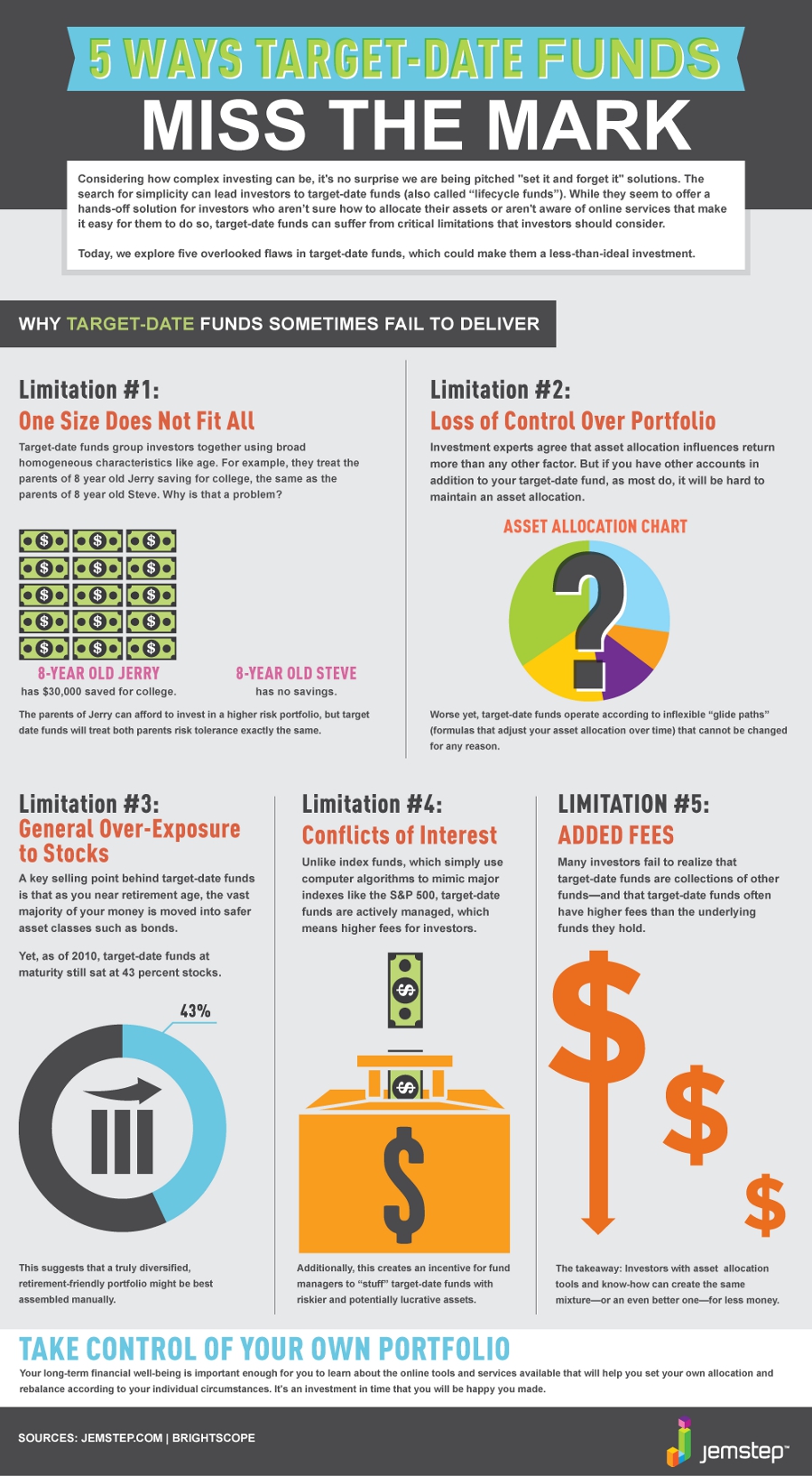
Are Target Date Mutual Funds a Good Choice?

An Easy Answer to Retirement Planning -or- MisStep?

By David Wallace [Search and social media marketer from Anthem, Arizona]

Investing in a target date mutual fund seems like the easy answer to retirement planning.

But, how can a single fund be appropriate for thousands of investors, doctors and medical professionals?

Assessment

Check out the above infographic to see the limitations of target date funds.

Conclusion

Your thoughts and comments on this ME-P are appreciated. Feel free to review our top-left column, and top-right sidebar materials, links, URLs and related websites, too. Then, subscribe to the ME-P. It is fast, free and secure.

Speaker: If you need a moderator or speaker for an upcoming event, Dr. David E. Marcinko; MBA – Publisher-in-Chief of the Medical Executive-Post – is available for seminar or speaking engagements. Contact: MarcinkoAdvisors@msn.com

Product DetailsProduct DetailsProduct Details

 ***